5 The Paths to Permanent Resident Status
United States immigration law details the avenues available to gain lawful permanent resident (LPR) status in the country. The law can create a new path of entry, which may benefit some groups, or constrain the entry of others, depending on U.S. priorities. Immigration law determines not only the number and characteristics of entering immigrants but helps contextualize the shifting composition of immigrants over time. This chapter examines how immigrants settling in New York City navigate the paths made available by U.S. immigration law to gain LPR status.
The landmark Immigration and Nationality Act of 1965, also known as the Hart-Celler Act (hereafter referred to as the 1965 Act), came on the heels of the Civil Rights Act of 1964. The new law made immigration more equitable. It eliminated the 1920s national origin quotas, which privileged northern and western Europe, and implemented annual numerical limits that applied equally to all countries. The 1965 Act (as amended in 1976 and 1978), which is the basis of the current immigration system, had classes of admission that prioritized family reunification, skills needed for the U.S. economy, and the admission of refugees and asylees.
The 1990 Immigration Act (1990 Act), which took effect in 1992, was the last significant amendment to the Immigration and Nationality Act. The legislation expanded the number of employment-based visas and sought to permanently diversify the sources of immigrants to the country. Under the new law, most prospective immigrants could enter under one of four tracks: family, employment, diversity (intended for countries with relatively low levels of immigration to the United States), or as refugees/asylees. In the first decade of this century, the Real ID Act of 2005 set the standards for the issuance of official documents of identification, but also had immigration provisions that allowed unused employment-based visas from previous years to be made available again, and increased the number of visas for asylees.
This chapter begins with an analysis of the administrative data used (see Box 5.1), contrasting it with the American Community Survey data used in other chapters, followed by four sections. The first section (Section 5.1) dissects current immigration law, its various classes of admission, and how they have changed over time. The next section (Section 5.2) analyzes the classes of admission used by immigrants to the city and the United States and how the shares entering through these various avenues have changed since the 1980s. The third section (Section 5.3) takes a deep dive into the paths of entry to the city in the 2010s, examining the countries that are the major users of each class of admission. The final section (Section 5.4) focuses on the top 20 recently admitted immigrant groups and examines their immigration trajectories and paths of admission over the past four decades. It groups these countries by their trajectory—some have seen admissions increase over this period, while others have reached a plateau or are in decline—and by the primary mechanism used to gain admission to the United States.
5.1 Visa Allocation Under the 1990 Immigration Act
Immigrants seeking to live in the United States must obtain a visa from one of the visa pools defined by immigration law. These visa pools, referred to as classes of admission, represent categories through which one gains permanent resident status, and have an order of preference, many with a set number of available visas. Thus, classes of admission, as defined by immigration law, have a direct bearing on the size and characteristics of the flow of immigrants, promoting immigration from some places and inhibiting it from others. This helps explain not only how groups have come to settle in the United States, but also provides insight into future flows. Comprehending the pivotal role of the law through an analysis of classes of admission is essential for those seeking to understand immigration flows to New York City.
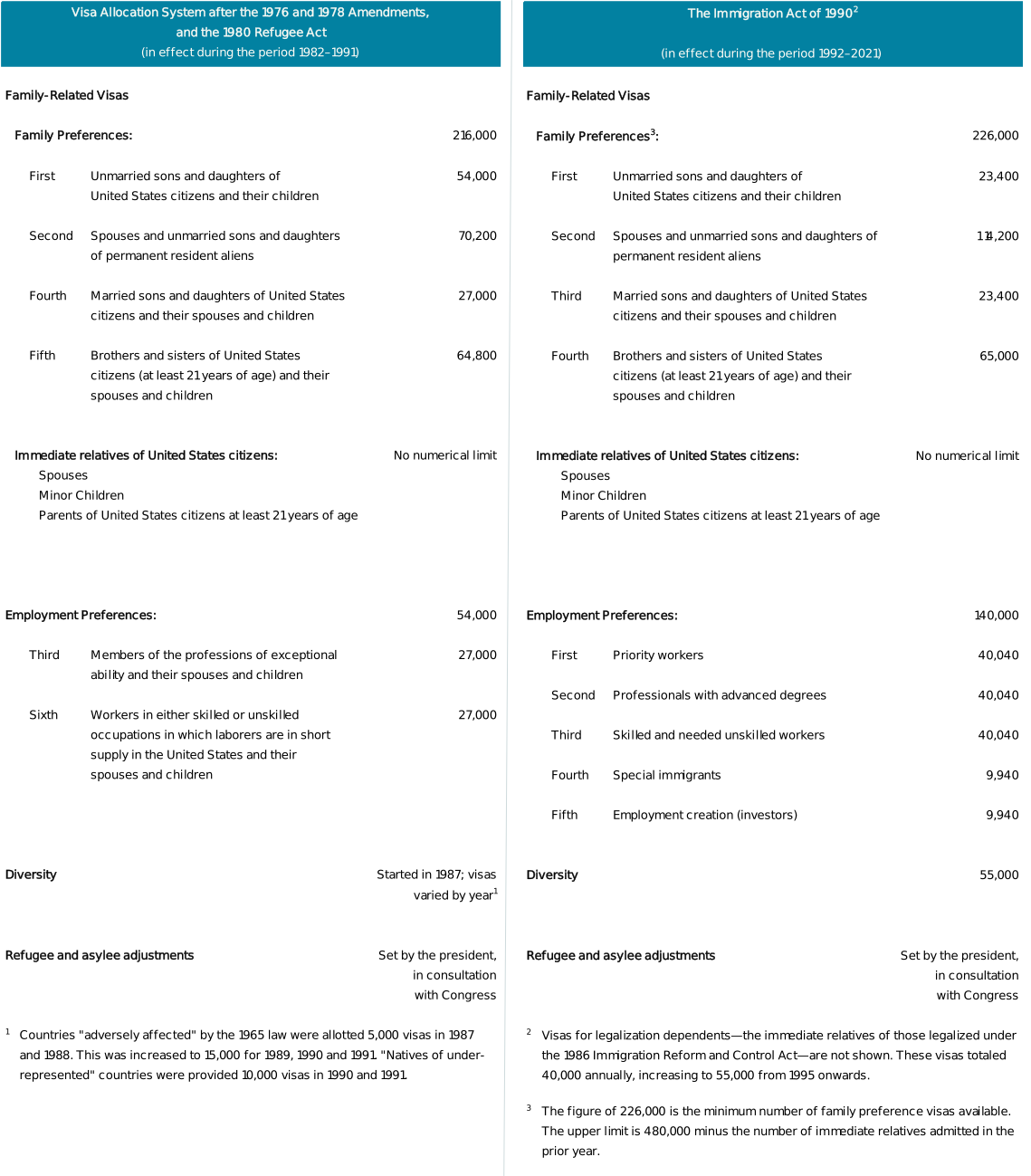
The visa allocation system established by the 1965 Immigration and Nationality Act—modified by the 1976 and 1978 amendments and the 1980 Refugee Act—remained in effect from 1982 to 1991; the Immigration Act of 1990 established the categories of admission and set numerical limits for each, beginning in 1992 (Table 5.1).
Outline of the United States Visa Allocation System for Fiscal Years 1982 to 2021
5.1.2 Employment Preference
Under the 1965 Act, employment visas were allocated equally to professionals of exceptional ability (27,000) and skilled or unskilled occupations where labor was in short supply (27,000). The 1990 Act significantly altered the employment preference categories to prioritize skills that would give the United States a competitive edge in the global market. In response to appeals from employers, the number of employment-based visas increased from 54,000 to 140,000, with most of these visas reserved for persons of extraordinary ability or exceptional skills and their families; the number of visas for the less skilled was reduced to just 10,000, part of the third employment preference category.
The 1990 Act established five new employment-based preferences. The first preference designated 40,040 visas for priority workers or immigrants of extraordinary ability, outstanding academics and researchers, and multinational executives, while the second preference allotted a similar number of visas for professionals holding advanced degrees and persons of exceptional ability. Professionals with a bachelor’s degree, skilled workers with a college degree or specialized experience, and needed unskilled workers could petition for admission under the third preference. The number of visas available in this category is 40,040 with a limited subcategory of 10,000 visas reserved for unskilled workers. The fourth preference (9,940 visas) was aimed at special immigrants such as special immigrant juveniles, religious workers, certain employees of the U.S. government abroad, and members of the U.S. armed forces. The fifth preference allotted 9,940 visas to employment-creating entrepreneurs willing to invest at least $500,000 in targeted businesses. In FY2019 that figure was increased to $900,0006 to account for inflation, and as of this report, a further increase is proposed.7
5.1.3 Diversity
The 1965 Act ended the bias favoring Europe in U.S. immigration law and resulted in dramatically increased immigration from other regions of the world. By the late 1970s European immigration began to decline, and the 1965 law’s emphasis on family reunification began to adversely affect prospective European immigrants as many no longer had close family in the United States. Various attempts were made in the 1980s to reinvigorate European immigration by instituting programs aimed at diversifying the pool of potential immigrants. As part of the 1986 Immigration Reform and Control Act (IRCA), 5,000 visas were allotted in 1987 and 1988 to 36 countries deemed “adversely affected” by the 1965 law. The Immigration Amendments of 1988 increased the annual allotment for adversely affected countries to 15,000 for 1989, 1990, and 1991. Also included as part of these amendments was a program for “natives of underrepresented” countries, which provided 10,000 visas to immigrants in 1990 and 1991 for countries where immigration was less than 5,000 in 1988.
A permanent diversity visa lottery program was enacted in the 1990 Act. It offered an entry path for those with no close relatives in the United States and was meant to sustain a diverse mix of immigrants, thereby redressing some of the perceived inequities in a system based on reunification with close relatives. The 1990 Act awarded 40,000 visas based on a lottery during a transition period (1992 to 1994), with 40 percent of all visas reserved for Ireland. Beginning in 1995, 50,000 visas were available each fiscal year for countries where fewer than 50,000 individuals were granted LPR status in the United States over the previous 5 years, with a 7 percent per-country limit of the total pool. (The 50,000-immigrant threshold did not include immigrants who were exempt from numerical limits, such as immediate relatives or refugees.) Applicants selected for diversity visas must have at least a high school education or equivalent, or a minimum of two years in a skilled occupation within five years of the application date.
5.1.4 Refugees and Asylees
The Refugee Act of 1980 defines a refugee as a person with a “well-founded fear of persecution on account of race, religion, nationality, membership in a particular social group, or political opinion.” The U.S. president in consultation with Congress sets the number of refugees who can be admitted to the United States each fiscal year. Granting refugee status is complementary to U.S. foreign-policy objectives, making admission in this category a political decision as much as a humanitarian one. For example, persons from communist countries have historically been given refugee status, while other victims of political oppression have not been afforded the same privilege. In general, poverty alone does not qualify someone for refugee status.
Eligible petitioners for a refugee visa can apply from outside of the United States; if they are already in the United States, they can petition for protection as an asylee. Prior to 2005, the law limited the number of persons authorized to adjust status as asylees to 10,000 annually. The REAL ID Act of 2005 removed that cap thereby clearing out the existing backlog in addition to paving the way for an increase in the annual number of asylees adjusting status. Both refugees and asylees are given temporary visas and are permitted to adjust their status to LPR after one year.
5.2 Paths to Admission to New York City and the United States, 1982 to 2021
This section examines how lawful paths to admission have changed over the past four decades. The first period, 1982 to 1991, largely represents the years when the 1965 Act (and subsequent amendments) defined the classes of admission. The 1990 Act took effect in 1992, and thus the next period, 1992 to 2001, corresponds to the first 10 years this law was in operation. The most recent periods, 2002 to 2011 and 2012 to 2021, reflect the second and third decades since the 1990 law went into effect. These four periods hereafter will be referred to as the 1980s, 1990s, 2000s, and 2010s. For the above four periods, Figure 5.2 and Figure 5.3 show the share of immigrants to New York City and the United States, respectively, entering under each of the major classes of admission, while Table 5.2 and Table 5.3 detail the number and share of immigrants entering under each preference within each broad class of admission for the city and the United States.
In the 1980s, 82 percent of immigrants arrived in New York City on family-related visas (entering under the family preferences or as immediate relatives) (Figure 5.2 and Table 5.2). With the expansion of the number of employment visas and the introduction of new paths of entry, such as diversity visas, the share of family-related visas declined to 77 percent in the 2010s, though notably still higher than that of the United States share of 65 percent (Figure 5.3 and Table 5.3). Immigrants to the city were less likely to enter on employment visas or as refugees compared to immigrants to the country as a whole.
The higher use of family-related visas in New York was primarily due to the disproportionate reliance on family preferences, which was most stark in the 1980s, when 57 percent of immigrants to the city were admitted under this class of admission, compared with 35 percent for the United States. But the use of family preference visas declined by approximately one-half during the 2010s (Table 5.2), narrowing the gap between the city (30 percent) and the nation (19 percent) (Table 5.3).
Immigrants Admitted by Major Classes of Admission
New York City, 1982 to 2021
Newly Admitted Immigrants by Major Classes of Admission
New York City, 1982 to 2021
While the numerically limited family preference visas are often oversubscribed, entailing long waiting periods, visas for immediate relatives are not subject to numerical limits. Thus, someone who is eligible for an immediate relative visa can be admitted to permanent residence as soon as the visa processing is completed. In the 1980s, 24 percent of immigrants to New York City and 34 percent of immigrants to the United States entered under the immediate relatives category (Figure 5.2). This category saw dramatic growth as naturalized immigrants became eligible to sponsor immediate family members under this admission pathway. The increase over the last four decades in the share of immediate relatives has been in concert with the decline in the share of the numerically limited family preference visas (Table 5.2 and Table 5.3). In New York City, the share entering as immediate relatives nearly doubled to 47 percent by the 2010s, now slightly exceeding the U.S. share of 46 percent.
As noted earlier, the city receives a lower proportion of immigrants arriving with an employment visa or as a refugee/asylee, compared to the United States, a pattern that has been true for most decades. In the most recent period, 8 percent of immigrants to the city arrived on an employment visa, compared to 15 percent for the nation, while the share for refugees/asylees was 8 percent and 13 percent for the city and nation, respectively. In contrast, the city receives slightly more immigrants arriving on diversity visas—6 percent versus 4 percent for the United States.
Immigrants Admitted by Major Classes of Admission
United States, 1982 to 2021
Newly Admitted Immigrants by Major Classes of Admission
United States, 1982 to 2021
5.3 Analysis of Class of Admission in the 2010s by Country of Birth
This analysis is divided into four subsections, each corresponding to a central feature of recent immigration law outlined in the previous section: family-related visas, including family preferences and immediate relatives of U.S. citizens; employment preferences; diversity visas; and refugees/asylees. Table 5.4, Table 5.5, and Table 5.6 detail the classes of admission by country of birth for New York’s largest sources of LPRs in the 2010s, presenting detailed categories of admission for family preferences, immediate relatives, and employment preferences, respectively. Table 5.7 and Table 5.8 present the major recipients of diversity visas and the largest sources of refugees/asylees, respectively, in the 2010s. Finally, Box 5.2 through Box 5.24 trace the class of admission pattern over the past four decades for each of the top sources of LPRs in the 2010s.
For broader context, the number of visas over the past four decades for each class of admission is first examined (Table 5.2 and Table 5.3). As stated earlier, processing delays contribute to annual fluctuations in the administrative data, which is why data are combined into 10-year periods and changes are measured decade over decade. A change in the number of LPRs, it is important to note, can vary depending on how the data are compiled. Table 5.2 shows 954,500 lawful permanent residents arrived in the city in the 2010s, down 7.5 percent compared to the prior decade. But if a 12-year period were examined, it would show a 5.7 percent growth in LPRs between 1998-2009 and 2010-2021. Thus, rather than be seen as a change in the overall propensity of immigrants to apply to come to New York, the 7.5 percent decline in LPRs should be used as a benchmark when examining changes in the classes of admission used by immigrants entering the city during this period.
5.3.2 Employment Preferences
The 1990 Act’s increased emphasis on the entry of those with job skills required in the United States was reflected in 57 percent growth in employment visas used by immigrants to the city, from 67,900 in the 1980s to 106,900 in the 1990s (Table 5.2). But employment entrants have fallen substantially in subsequent periods, down to 80,300 in the 2010s, a drop of 16 percent over the prior decade. Employment visas now account for just 8 percent of entrants, compared with 9 percent in the 2000s and 11 percent in the 1990s (though marginally higher than the share in the 1980s, before the law took effect). In contrast, not only is the share of employment entrants substantially higher among immigrants to the United States, but it has increased each decade, reaching 15 percent in the 2010s (Table 5.3).
Employment Preference Visas
New York City and the United States, 1992 to 2021
As intended by the 1990 law, those entering with an employment visa were increasingly skilled,8 with substantial increases in highly skilled workers admitted under the first (priority workers) and second (professionals with advanced degrees or persons of exceptional ability) preference categories. While the overall number of employment visas has fallen since the 1990s for those immigrating to New York City, the number of first and second employment preference entrants has increased each decade. By the 2010s, together they accounted for over one-half of all employment entrants, more than twice their share in the 1990s (Table 5.2 and Figure 5.4). An even higher share of employment entrants to the United States is admitted on highly skilled visas with first and second preferences accounting for 60 percent of employment visas in the 2010s, up from 41 percent in the 1990s (Table 5.3).
The number of third preference visas (skilled and unskilled workers) fell 56 percent in the city over the prior decade, to 22,900 visas in the 2010s. This was the only employment preference with a decline in visas, accounting for the overall decline in employment visas for the city.
Over the past decade, fourth preference employment visas (special immigrants) increased by one-third to 10,100, while the fifth preference (employment creation) more than doubled to 5,900 visas. The fifth employment preference was designed specifically to encourage foreign investment and create employment; these are also known as investor visas. Immigrants with fifth preference visas from China (4,800) comprised four-fifths of the city’s investor visas; Korea and India were the next largest groups with 260 and 180, respectively.
Table 5.6 shows the top 20 recipients of employment visas in the city, led by China (12,000) and Korea (6,100), followed by the Philippines and India, with 4,700 each. Employment visas were used by 8 percent of immigrants from China, around the city average, but represented a much larger share for others: about one-half of Koreans, one-third of Filipinos, and one-fifth of Indians entered with an employment visa. While one-half of entrants to the city using employment visas were highly skilled—admitted under the first (priority workers) or second (professionals with advanced degrees or persons of exceptional ability) preference—this proportion varied by country. Among Indian immigrants, 60 percent qualified under these top two categories, compared with only one-third of Koreans and one-quarter of Filipinos, the majority of whom entered under the third preference.
The United Kingdom and France, which were not among the city’s overall top 20 sources of LPRs, had high numerical usage of employment visas, ranking fifth and sixth, respectively. Employment visas were the route of entry for roughly one-half of LPRs from these two countries, most of whom were highly skilled.
Employment Preference Visas by Country of Birth
New York City, 2012 to 2021
5.3.3 Diversity Visas
Top 20 Recipients of Diversity Visas
New York City, 2012 to 2021
The diversity visa program created a new path to entry for prospective immigrants from countries with small flows to the United States. Nationwide, the number of diversity visas peaked in the 2000s, declining 9 percent in the most recent decade, to 417,800 (Table 5.3). In contrast, diversity visas obtained by LPRs in the city peaked in the 1990s at 88,900, declined to 72,000 in the 2000s, and fell by another 25 percent in the past decade to 53,700 (Table 5.2). Nevertheless, the share of all immigrants receiving diversity visas remains higher in New York City in the 2010s than in the country overall (6 percent versus 4 percent).
Part of the numerical decline in the use of diversity visas by LPRs to the city was due to the changing profile of the top recipients of diversity visas to the nation. In the 1990s, Poland and Ireland were the top sending countries for diversity visas, due to special provisions established to boost their flows during a three-year transitional period in the early 1990s. These two countries sent a disproportionate share of their diversity visa holders to New York, and the elimination of these provisions in 1995 saw a gradual decline in diversity visas for these sources. Overall flows from Bangladesh, another country with a disproportionate presence in the city relative to the nation, reached a numerical threshold in 2012 that made it ineligible to participate in the program during the rest of the period. After being the largest source of diversity visa recipients to the city in the 1980s and 2000s, it ranked 19th in the 2010s (Table 5.7). (The number of immigrants from Bangladesh to New York City continues to rise, however, due to their access to the much larger pool of family-related visas.) By the 2010s, the top 10 recipients of diversity visas to the United States had changed substantially. Some of the top countries of birth for diversity visas to the United States send relatively few migrants to New York City—the Democratic Republic of the Congo, Ethiopia, Iran, and Cameroon (Figure 5.5), 4 of the top 10 senders nationally, send just 1 percent of their diversity visa holders to New York City. This particularly explains the steep drop in diversity visa entrants to New York City relative to the nation.
Some countries, however, continued to send a large share of their diversity visa holders to New York City. Chief among them was Uzbekistan, with two-thirds of its diversity visa recipients—13,800 LPRs—settling in New York, accounting for one-quarter of all diversity entrants to the city (Figure 5.5). Diversity visas provided a pathway for 71 percent of Uzbek immigrants to the city. Egypt ranked a distant second, with 3,700 diversity entrants, accounting for one-third of the Egyptian flow and helping bring Egypt into the top 20 sources of LPRs. Albania was third (2,800), with these visas facilitating the entry of one-third of Albanian immigrants to the city. Ukraine (2,800) and Nepal (2,300) rounded out the top five, affording about one-quarter of immigrants from these countries a pathway to the city.
Thus, the diversity visa lottery expanded immigration opportunities to many countries that previously had limited or no access to U.S. immigration visas. What started as a program in the late 1980s to reinvigorate immigration from Europe, with visas set aside specifically for Ireland and Poland, has turned into a gateway for immigrants from all over the world who did not qualify under the family or employment preferences. Bangladesh’s experience highlights the impact of the diversity program in supporting the entry of a previously underrepresented country that subsequently established a substantial presence. This process is likely to continue, with diversity visas helping some countries sustain their flows to the city, as with Egypt, Albania, and Georgia. Large increases in diversity visas (albeit from small bases) have allowed other countries to establish a small presence in the city. Immigrants from Tajikistan, for example, experienced a near six-fold increase in diversity visas in the 2010s, while Nepalese and Georgian entrants saw a near doubling of these visas. Also notable was that 7 of the top 20 source countries for diversity visas in New York City were African, including 4 from sub-Saharan Africa: Ghana, Guinea, Nigeria, and Togo. Over time, diversity visa recipients are likely to bring in their extended families, helping new countries become a part of New York’s immigration landscape.
Top 10 Recipients of Diversity Visas
New York City and the United States, 2012 to 2021
5.3.4 Refugees/Asylees
Refugee/asylee flows to the city in the 2010s declined by 42 percent over the prior decade, to a near historic low of 76,200 (Table 5.2). (For conciseness, refugees/asylees will be referred to as refugees.) Refugees accounted for 8 percent of immigrants to the city, down substantially from 13 percent in the prior decade. In contrast, refugee flows to the United States declined only modestly, with refugees maintaining their 13 percent share of immigrants to the nation (Table 5.3). These trends, however, belie within-decade fluctuations. Refugee admissions sharply increased during the first half of the 2010s reaching a peak in 2016, but they declined to near historic lows during the second half of the decade (data not shown). This reflected several policy changes, including a record-low admission cap, enhanced vetting and screening procedures, as well as a suspension of admissions in October of fiscal years 2019 and 2020 (corresponding to October 2018 and October 2019). Processing of applications was also affected by Covid-19-related restrictions. While the annual ceiling for refugees was raised in 2021, a surge of applications has contributed to a lengthy backlog of pending claims.
Top Five Sources of Refugees/Asylees
New York City and the United States, 2012 to 2021
With respect to the sources of refugee flows, foreign policy often plays a role in determining who is granted refugee status. Historically the Refugee Act favored persons fleeing from communist countries over those facing persecution in other countries. This interest is reflected by Cuba and China’s presence as the top two countries of origin for refugees to the United States, together accounting for nearly 40 percent of all refugees to the nation (Figure 5.6). Iraq, Burma (Myanmar), and Bhutan rounded out the top five sources of refugees to the United States.
China accounted for nearly two-thirds of the city’s refugee flow (Table 5.8). Nearly all of the 47,900 refugees from China were from the mainland. The next largest sources of refugees were Nepal (3,000) and Guinea (2,100). For each of these countries, refugees comprised approximately one-third of their immigrant flow. Egypt (1,500) and India (1,400) rounded out the top five sources of refugees to the city.
In the 2000s, countries such as China, Russia, and Uzbekistan were major sources of refugees to the United States, with a disproportionate share settling in the city. While China continued to rank second nationally in the 2010s, Russia and Uzbekistan no longer appeared among the nation’s top 20 countries of origin for refugees (data not shown). Refugee flows from all three countries declined substantially, contributing to a significant reduction in arrivals to the city. Notably, the number of Chinese refugees settling in the city fell by 24,000 compared to the previous decade—accounting for 40 percent of the overall decline in the city’s refugee population.
Top 20 Sources of Refugees/Asylees
New York City, 2012 to 2021
Note: The OHSS data for “Soviet Union (former)” rreflect the country of birth recorded at the time of initial entry into the United States.
5.4 The Trajectory of Immigrant Groups Settling in New York: Changing Lawful Pathways and Emerging Source Countries
This section focuses on how the pathways to admission for the top 20 recently admitted immigrant groups have changed over time (Table 5.9). Each country is at its own stage with respect to immigration to the city, with flows that may be emerging, holding steady, or ebbing. At each stage, each country establishes its own pathway to admission to the United States, and these pathways often evolve over time.
Bangladesh is a good example of how the primary class of admission for a country can evolve over a few decades, enabling flows to increase. As previously noted, the diversity visa program enabled immigrants from Bangladesh to establish a base in New York in the 1980s, when almost one-half of those from Bangladesh were admitted with a diversity visa, but the share dropped to just 1 percent in the most recent period. Once naturalized, diversity immigrants from the 1980s and later were able to bring in their family using the much larger pool of family-related visas, which now account for 96 percent of Bangladeshi flows to the city. Consequently, the number of LPRs from Bangladesh increased from 8,700 in the 1980s to 60,600 in the 2010s. This section groups countries based on their shared set of experiences: whether their flows to the city are increasing or decreasing, whether they use a specific class of admission disproportionately, or whether they have stopped using a specific class of admission as their immigration trajectories to the city change. This allows for a more integrated view of how classes of admission are used by New York City’s largest immigrant groups, as well as by those who are relative newcomers to the city.
Top 20 Sources of Lawful Permanent Residents in the 2010s Ranked Over Time
New York City, 1982 to 2021
Note: Click on column to sort
5.4.2 Countries with a Declining Flow Due to a Drop in Refugee Admissions—Ukraine, Russia, and China
In the 1990s, large refugee flows accounted for 80 percent of immigrants from Ukraine (Box 5.8) and 66 percent from Russia (Box 5.9).
Over the next two decades, refugee flows from Ukraine and Russia plummeted, resulting in overall flows declining by three-quarters and over one-half, respectively. As a result, the LPR ranking for Russia moved from 12th in the 1990s to 19th in the 2010s, while Ukraine dropped from 5th to 20th. While Russians and Ukrainians entering as immediate relatives sharply increased during this period, it was insufficient to compensate for the huge decrease in refugee admissions. China (Box 5.10) was another country that saw a steep decline in refugee flows, down one-third in the past decade, resulting in China’s rank as the second largest country of birth for LPRs in the 2010s after holding the top spot in the 2000s. However, Mainland China, Taiwan and Hong Kong pattern differently, as shown in the next section.
5.4.3 Countries that Disproportionately Use Employment Visas—Korea, Philippines, India, and Mexico
Although just 8 percent of all immigrants to the city in the 2010s arrived with an employment visa, this pathway was used by one-half of Koreans (Box 5.11), nearly one-third of Filipinos (Box 5.12), and over one-fifth of Indians (Box 5.13). For each of these countries, the share arriving with an employment visa has consistently exceeded the citywide average across the past four decades, though peaks occurred at different times. The share of Koreans entering with an employment visa reached a new high in the 2010s, whereas the peak for Indian immigrants came in the 2000s (27 percent), and for Filipinos in the 1990s (47 percent). Sixteen percent of Mexican immigrants (Box 5.14) arrived with an employment visa, the fourth highest share in the 2010s.
In absolute numbers, Chinese immigrants (Box 5.10) were the largest beneficiaries of employment visas with over 12,000 entering under this preference in the 2010s. However, with respect to the proportion arriving with these visas, there were large differences by birthplace. As discussed above, immigrants from China primarily entered as refugees, but those from Taiwan and Hong Kong disproportionately used employment visas. While 7 percent of those born on the mainland (Box 5.15) entered with an employment visa, this was true of 38 percent of LPRs from Taiwan (Box 5.16) and 21 percent of those from Hong Kong (Box 5.17).
5.4.4 Countries that Disproportionately Use Diversity Visas—Uzbekistan and Egypt
In the 2010s, over 70 percent of immigrants from Uzbekistan (Box 5.18) entered with a diversity visa, the highest share of any country, and helped Uzbekistan emerge as a top 10 source country of LPRs. Diversity visas also accounted for a large share of Egyptian LPRs (32 percent), aiding Egypt’s move into the top 20 (Box 5.19).
5.4.5 Countries with Large Declines and Emerging Source Countries
In the last decade, newly admitted LPRs to New York City fell by 7.5 percent during a period that overlapped with the Covid-19 pandemic. Of the top 20 source countries, 14 experienced declines, with flows from Trinidad and Tobago (Box 5.20) dropping by nearly one-half, continuing a long-term trend. This resulted in Trinidad and Tobago exiting the top 10 sources of LPRs to the city, moving from 9th to 14th. Ukraine’s (Box 5.8) decline of 39 percent was the second largest, and as noted earlier, resulted in the country shifting to 20th in the rankings. Newly admitted LPRs from Guyana (Box 5.3) and Colombia (Box 5.21) dropped by over one-third, those from India (Box 5.13) and Ecuador (Box 5.22) dropped by one-fifth, and LPRs from Pakistan (Box 5.23) fell by one-seventh. Despite these above-average declines, each of these countries maintained their rankings on the top 20 list.
Just six countries in the top 20 experienced growth between the 2000s and the 2010s. The 15 percent growth in Dominican (Box 5.2) flows helped the country regain the top position, after falling to second in the 2000s. Bangladesh (Box 5.7) remained the third largest sender in the 2010s, also with 15 percent growth. In an earlier edition of this publication, Bangladesh was labeled as an emerging source country when it was ranked 23rd in the 1980s.9 It has now emerged as a major source country and has consistently ranked third for the past two decades.
While we can never be certain about patterns of immigration going forward, there are countries that have consistently increased over the past four decades. Continued growth could solidify these countries as major sources of immigration to New York. Major recent trends in immigration to New York City include Uzbekistan’s (Box 5.18) emergence as a top 10 source country (ranked ninth) of LPRs, and of two Arab countries, Yemen (Box 5.6) and Egypt (Box 5.19), breaking into the top 20. Flows from Yemen were up 66 percent, the highest increase among the major sources of immigration, while those from Egypt increased 14 percent, helping propel their rankings to 15th and 18th, respectively.
The city’s Mexican (Box 5.14) immigrant population took off in the late 1980s and 1990s due to large domestic inflows from other parts of the country. The number of newly admitted LPRs was small during most of that period, but by the 2000s LPRs from Mexico were in the top 20 (ranked 19th) and ranked 13th in the 2010s due to a 12 percent increase. New York City is now an established destination for Mexican LPRs arriving in the United States and given the large Mexican population in the city, Mexico is likely to become one of the city’s 10 largest sources of LPRs.
Another country that is likely to increase is Ghana (Box 5.24), the only sub-Saharan African country on New York’s top 20 list. It ranked 52nd in the 1980s, rose into the top 20 in the 1990s (ranked 20th), and has continued its ascent in the rankings, to 16th in the 2010s.
5.5 Summary
The number of lawful permanent residents (LPRs) arriving in New York City in the 2010s was 954,500, down 7.5 percent over the prior decade; the U.S. flow saw a 5 percent decline during this period to 9.98 million. In the 2010s, just under 10 percent of LPRs to the nation made their home in the city.
Historically, LPRs to the city have disproportionately relied on family-related visas, with about four-fifths of the city’s immigrants availing themselves of these visas in the 1980s. As the number of available employment visas was increased and new paths of entry, such as diversity visas, became available, the share of family-related visas declined to about three-quarters in the 2010s, though notably higher than the U.S. share of 65 percent. The higher use of family-related visas in New York is due to the continued reliance on family preference visas, which were the pathway of entry for 30 percent of immigrants to the city, compared to 19 percent for the nation, while 47 percent entered as immediate relatives, slightly higher than the U.S. share.
While immigrants to the city relied heavily on family-related visas, compared to the United States, they were less likely to enter on employment visas or as refugees/asylees. In the most recent period, 8 percent of immigrants to the city arrived on an employment visa, compared to 15 percent for the nation. Similarly, refugees/asylees accounted for 8 percent of the city’s LPR flow, well below the national share of 13 percent. In contrast, the city received a slightly greater share of immigrants arriving on diversity visas—just under 6 percent compared to 4 percent nationwide. The 8 percent share of refugees/asylees among all LPRs in New York during the 2010s marks a nearly 5-percentage point decline from the previous decade. This decrease partly reflects a widely fluctuating federal refugee admissions ceiling in recent years, along with other administrative factors.
Though the flow of LPRs to the city declined by 7.5 percent over the past decade, six countries in the top 20 experienced growth: the Dominican Republic, Bangladesh, Uzbekistan, Mexico, Yemen, and Egypt. The Dominican Republic was able to reestablish itself as the largest source of LPRs in the 2010s due to a substantial increase in flows, in particular from family preference and immediate relative visas. In contrast, declining flows from China caused it to drop from the largest group in the 2000s to the second largest in the 2010s. Flows from Bangladesh grew by 15 percent and the country has emerged as a major source, ranked third for the past two decades. Bangladeshis used the diversity visa program to establish a presence in New York in the 1980s, when almost one-half of them were admitted using this path. The share of Bangladeshis entering with a diversity visa has dropped to just 1 percent in the most recent period as many are now eligible to bring in their family using the much larger pool of family-related visas, which accounted for 96 percent of Bangladeshi flows to the city in the 2010s. Unique among immigrant groups, the city’s Mexican immigrant population took off in the late 1980s and 1990s thanks to large domestic inflows from other parts of the country, but by the 2010s Mexican LPRs were ranked 13th, due to immediate relative and employment visas. If current trends hold, Mexico would be among the city’s top 10 sources of LPRs in the next decade.
Another recent trend is Uzbekistan’s emergence as a top 10 source of LPRs, and of two Arab countries, Yemen and Egypt, joining the top 20. Diversity visas were primarily responsible for the large flows from Uzbekistan and, to a lesser extent, Egypt, creating a pathway for 7-in-10 immigrants from Uzbekistan and one-third of Egyptian immigrants. The growth in immigration from Yemen was overwhelmingly fueled by family-related visas. Diversity visas have also helped countries with historically small flows, such as Albania, Georgia, Nepal, and Tajikistan establish and grow a presence in the city’s immigration landscape. Seven of the top 20 source countries for diversity visas were African, including 4 from sub-Saharan Africa: Ghana, Guinea, Nigeria, and Togo. Flows from Ghana, the only African country on the city’s top 20 LPR list, as well as from Nigeria, which currently ranks 21st are likely to grow in the coming years.
New York City’s immigration landscape is one of constant evolution. While New York has long been a city of immigrants, where immigrants come from has changed from one period to the next. Many major countries of origin in past decades had smaller flows in the 2010s, while new countries establish themselves as top sources of immigrants. Of the top 20 source countries in the 2010s, only 11 were in the top 20 in the 1980s. Meanwhile, flows have emerged and grown from a range of countries, creating strengthened and lasting connections between New York City and places across the globe.
Lawful permanent residents (LPRs) have the right to live and work in the United States indefinitely. They can also sponsor spouses and unmarried children for permanent residency and apply for U.S. citizenship once they have met certain eligibility requirements.↩︎
Citywide LPR totals for fiscal years 2020 onward were derived from county-level country of birth data that have undergone suppression to limit the disclosure of admissions fewer than four. Readers should be aware of potential differences when comparing suppressed data from 2020 and after to unsuppressed data from prior fiscal years.↩︎
U.S. Department of Homeland Security. (2022). Yearbook of immigration statistics: 2021.↩︎
Figure 5.1 shows the wide fluctuations in the number of immigrants newly admitted for lawful permanent residence over the 40-year period, 1982 to 2021. The flow of immigrants to New York City grew steadily from 75,400 in 1982 to 125,600 in 1996. The flow then dropped precipitously, to 66,100 in 2003, increasing to a high of 137,000 in 2006. Processing delays as well as restricted travel during the Covid-19 pandemic resulted in only 57,300 and 50,800 new LPRs in 2020 and 2021, respectively—the lowest levels since the passage of the 1965 Act. The peaks and valleys of admissions to New York City closely mirror those of the United States as a whole. This chapter combines LPR data into 10-year periods to smooth out annual fluctuations in the data.↩︎
While there is no cap on the total number of immediate relative visas available, a minimum of 254,000 is set by law. If any of the 254,000 visas for immediate relatives are unused, they are allotted to family preferences, though the number of immediate family visas given has never fallen below the minimum threshold since it was put in place.↩︎
84 Fed. Reg. 35750, 35808 (July 24, 2019)↩︎
90 Fed. Reg. 48516 (October 23, 2025)↩︎
It is important to note many immigrants arriving on nonemployment visas have skills similar to those arriving on employment visas, so generalizations about the skill levels of immigrants cannot be made solely using information on those arriving with employment visas.↩︎
New York City Department of City Planning. 1997. The newest New Yorkers 1990-1994: An analysis of immigration to NYC in the early 1990s.↩︎