
 Human Rights311Search all NYC.gov websites



Inside the NYC Commission on Human Rights
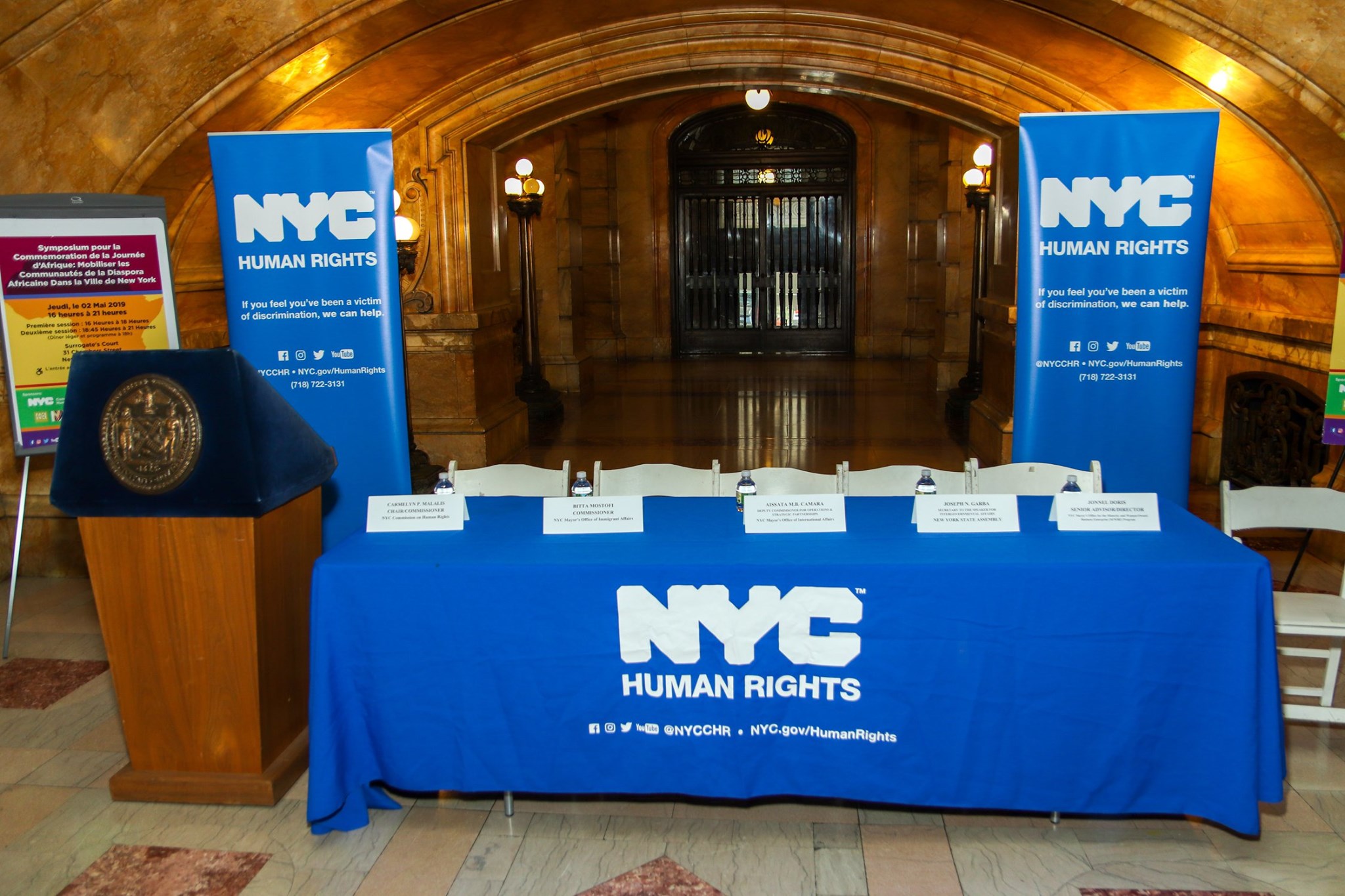
Panel set-up at Commission’s Africa Day Symposium, "Engaging Communities of the African Diaspora in NYC,” May 2019 (Photo credit: Afrikanspot Photography, Isseu Diouf Campbell).
The New York City Commission on Human Rights is charged with the enforcement of the Human Rights Law, Title 8 of the Administrative Code of the City of New York, and with educating the public and encouraging positive community relations. The Commission is divided into two major bureaus -- Law Enforcement and Community Relations:
- The Law Enforcement Bureau is responsible for the intake, investigation, and prosecution of complaints alleging violations of the Law. Learn more about the Law Enforcement Bureau .
- The Community Relations Bureau provides public education about the Human Rights Law and helps cultivate understanding and respect among the City’s many diverse communities through its borough-based Community Service Centers and numerous educational and outreach programs. Learn more about the Community Relations Bureau.
- The Commission utilizes restorative justice principles to address the harm caused by discrimination and bias, both in its handling of complaints and in its community partnerships. Learn more about our commitment to restorative justice.
The New York City Human Rights Law is one of the most comprehensive civil rights laws in the nation. The Law prohibits discrimination in employment, housing, and public accommodations based on race, color, religion/creed, age, national origin, immigration or citizenship status, gender (including sexual harassment), gender identity, sexual orientation, disability, pregnancy, marital status, and partnership status. Interns, whether paid or not, are considered employees under the Law.
In addition, the Law affords protection against discrimination in employment based on unemployment status; arrest or conviction record; credit history; caregiver status; status as a victim of domestic violence, stalking, and sex offenses; and sexual and reproductive health decisions.
The Law affords additional protections in housing based on lawful occupation, family status, any lawful source of income, criminal records, and status as a victim of domestic violence, stalking, and sex offenses.
The City Human Rights Law also prohibits retaliation, discriminatory harassment, and bias-based profiling by law enforcement.