
What you should know
- Fiscally responsible budget invests in essential services, advances affordability agenda and strengthens City’s long-term fiscal future
- City creates public portal with post-9/11 air quality and health records
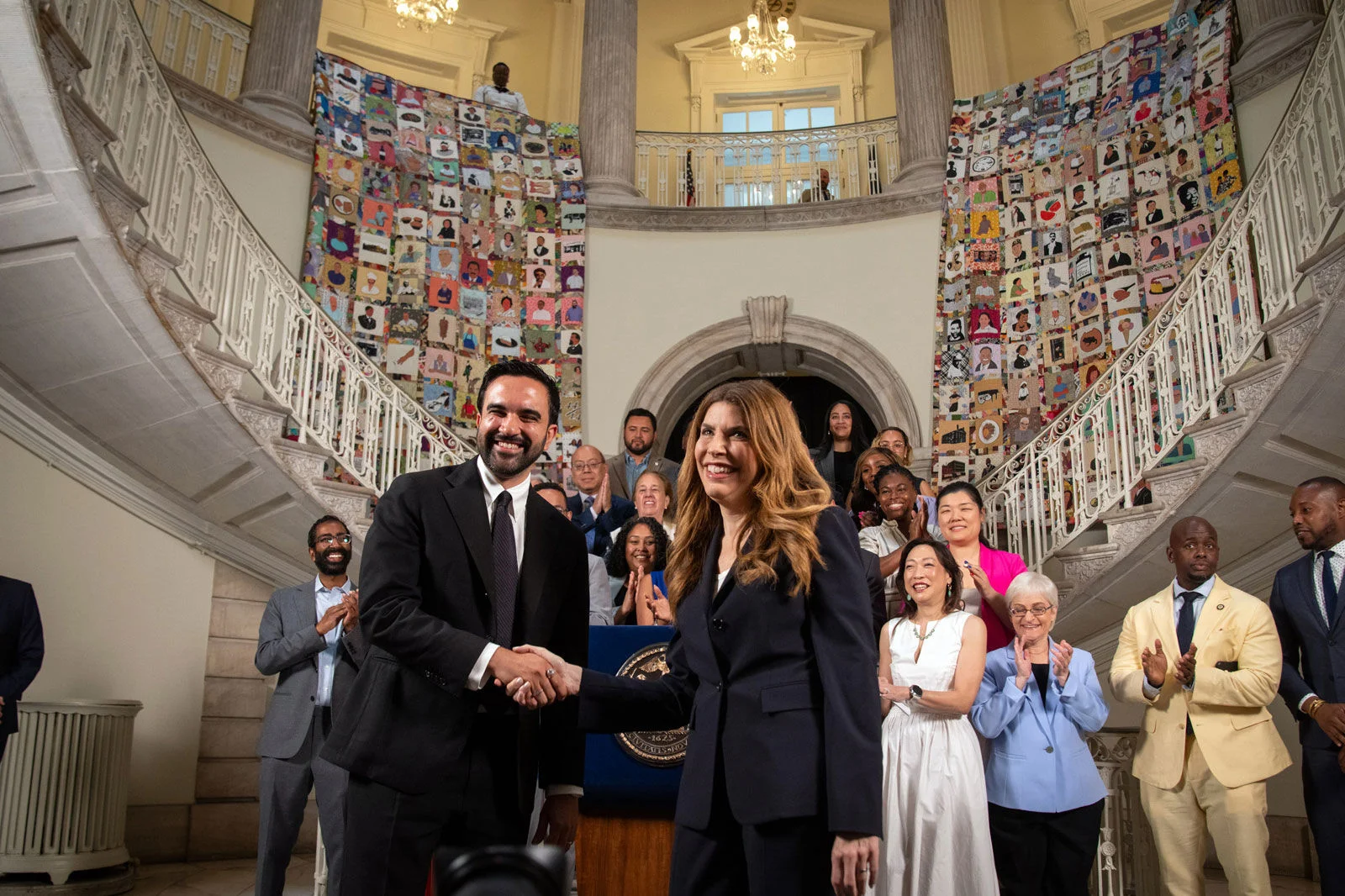
NEW YORK – Mayor Zohran Kwame Mamdani, City Council Speaker Julie Menin, Council Finance Chair Linda Lee, Director of the Mayor’s Office of Management and Budget Sherif Soliman and members of the City Council today announced a handshake agreement on a balanced $125.8 billion Fiscal Year (FY) 2027 budget.
The agreement pairs fiscal responsibility, including adding $350 million to the City’s General Reserve, with bold investments that make New York more affordable, strengthen essential public services and improve quality of life for working class New Yorkers in every borough.
The budget creates a public, online portal that will house documents from across City government related to post-9/11 air quality and health risks. The first batch of records will be released before the 25th anniversary of Sept. 11, with additional documents added on a rolling basis.
“Our Administration inherited a budget crisis built on years of undercounting the true cost of running our city. We made a different choice. We balanced this budget without resorting to austerity. We protected the services New Yorkers rely on, while restoring honesty to the City’s finances. We accelerated the affordability agenda by investing in housing, mental health services, parks, libraries and students of all ages. This agreement proves that fiscal responsibility and public excellence can go hand in hand,” said Mayor Mamdani. “New Yorkers deserve a government that works as hard as they do – and a government as careful with their money as they are. I want to thank Speaker Julie Menin and the City Council for their partnership in getting this budget across the finish line.”
“With this budget, the Council proved that we could responsibly manage the City’s finances while making transformative investments that lower costs for working families, prevent homelessness, expand opportunity for children, and strengthen the services New Yorkers rely on every day,” said Speaker Julie Menin. “This budget reflects what the Council has believed from the very beginning: New York City does not have to choose between fiscal responsibility and investing in our communities. I want to thank my Council colleagues for their partnership throughout this process and Mayor Mamdani and his administration for working with us to reach an agreement that delivers meaningful results for New Yorkers.”
When Mayor Mamdani took office, he inherited one of the largest structural budget challenges in modern city history. The prior administration had substantially underbudgeted for core City services and long-term obligations, masking the true cost of governance.
Mayor Mamdani committed to restoring fiscal honesty and building a government that delivers public excellence on his first day in office, and in January ordered each City agency to appoint a Chief Savings Officer (CSO). Charged with finding efficiencies and protecting essential services, CSOs generated $1.77 billion in savings across Fiscal Years 2026 and 2027.
Rather than balancing the budget by slashing services, the Mamdani administration worked with the City Council and state partners to close budget gaps through disciplined savings, new tax revenue and a historic partnership with Albany to correct the City’s long-imbalanced fiscal relationship with the State.
On top of strengthening the City’s long-term fiscal outlook, the budget includes investments in the services New Yorkers rely on every day. It expands access to affordable housing, improves public health and safety and protects the beloved public places that make New York the greatest city in the world.
For years, libraries, parks, public transit discounts, cultural organizations and CUNY faced annual uncertainty as workers and advocates were forced to fight each budget cycle to restore funding. The Mayor’s Executive Budget permanently baselined $31.7 million for the City’s library systems, $15 million for the Parks Department, $25 million for Fair Fares, $10 million for cultural organizations and $15 million for the City University of New York (CUNY). New Yorkers should not have to wonder every July whether their neighborhood library will stay open, their parks will be maintained, or affordable transit and higher education will remain within reach.
Investment highlights include:
Tackling Housing & Affordability Crisis:
- Accelerates the preservation of affordable housing by increasing funding for rental assistance and support services, preserving more than 200 units annually ($4.2 million in FY27, growing to $17.5 million in FY30).
- Expands on the baselined $54 million investment made in the Preliminary Budget in the Community Food Connection, which supports more than 700 community kitchens and food pantries serving more than 1 million New Yorkers each year ($5 million, baselined).
- Invests in a new rental assistance program at the Department of Housing Preservation & Development ($175 million in FY27, $125 million baselined as of FY28).
- Build upon the $2.3 million baseline established in the Executive Budget for the Housing Stability Support program that provides low-barrier microgrants to survivors of domestic, sexual, and gender-based violence with the aim of helping impacted individuals maintain safe and stable housing ($1.4 million in FY27).
- Additional funding to support the Homeowner Help Desk which, in partnership with the Center for New York City Neighborhoods, provides support to NYC homeowners at risk of displacement, including technical assistance, financial and legal counseling, and more ($500,000 in FY27).
- Build upon the investment made in the Executive Budget in Fair Fares NYC to make public transportation more affordable for even more New Yorkers by increasing eligibility to 200% percent of the federal poverty level ($54 million, baselined).
Improving New Yorkers’ Health, Safety & Well-Being:
- Creates a public online portal for documents related to post-9/11 air quality and health risks ($34.2 million in FY27).
- Expands mobile mental health treatment to reduce waitlists, including a new step-down mobile treatment program for New Yorkers continuing their recovery ($20 million, baselined).
- At adoption we added $81 million in partnership with council for Immigrant Legal Services to the $32 million included in the Preliminary Budget, bringing the City’s total FY27 budget to $153 million in FY27.
- Add nine staff, including civil rights case specialists and a Director of Investigations, and additional resources to strengthen CCHR’s investigation and enforcement capacity ($1.6 million, baselined).
Protecting NYC’s Beloved Public Institutions:
- Establishes a Cultural Stability Fund that will be administered by the Department of Cultural Affairs to assist eligible organizations experiencing unexpected or emergency circumstances ($10 million in FY27, FY28, and FY29).
- Baseline funding for Parks that had previously been added one year at a time including 100 PEP officers, 15 staff and additional funding for GreenThumb Community Gardens, and tree stump removal ($14.4 million, baselined).
- Establishes a Parks “Renew Crew” pilot program to make quick targeted improvements for sites (such as playgrounds, courts, fields, etc.) that do not yet rise to the level of a capital project ($2.3 million in FY27, FY28, and FY29).
- Support for CUNY’s “Accelerate, Complete, and Engage” (ACE) academic support program designed to help students complete their academic journey to a bachelor’s degree on time ($9.1 million in FY27).
- Support for CUNY Accelerated Study in Associate Programs (ASAP) which helps students stay on track and graduate by providing financial, academic, and personal support ($4.5 million in FY27).
- Expand support for CUNY students with disabilities by increasing access to critical services ($800,000 in FY27).
###