NYC Housing Recovery311Search all NYC.gov websites



Build It Back
One year after Hurricane Sandy, the Mayor’s Office of Housing Recovery Operations (HRO) launched the Build It Back program to assist homeowners, landlords, renters, and tenants affected by Hurricane Sandy within the five boroughs. Funded with Community Development Block Grant-Disaster Recovery (CDBG-DR) funds from the U.S. Department of Housing and Urban Development (HUD), the program offered multiple pathways of assistance, including property rehabilitation or reconstruction, reimbursement for repair work already carried out, and acquisition of homes. The program’s primary goal was to make Sandy-affected New Yorkers and communities safer and more resilient in the face of future flooding.
Construction
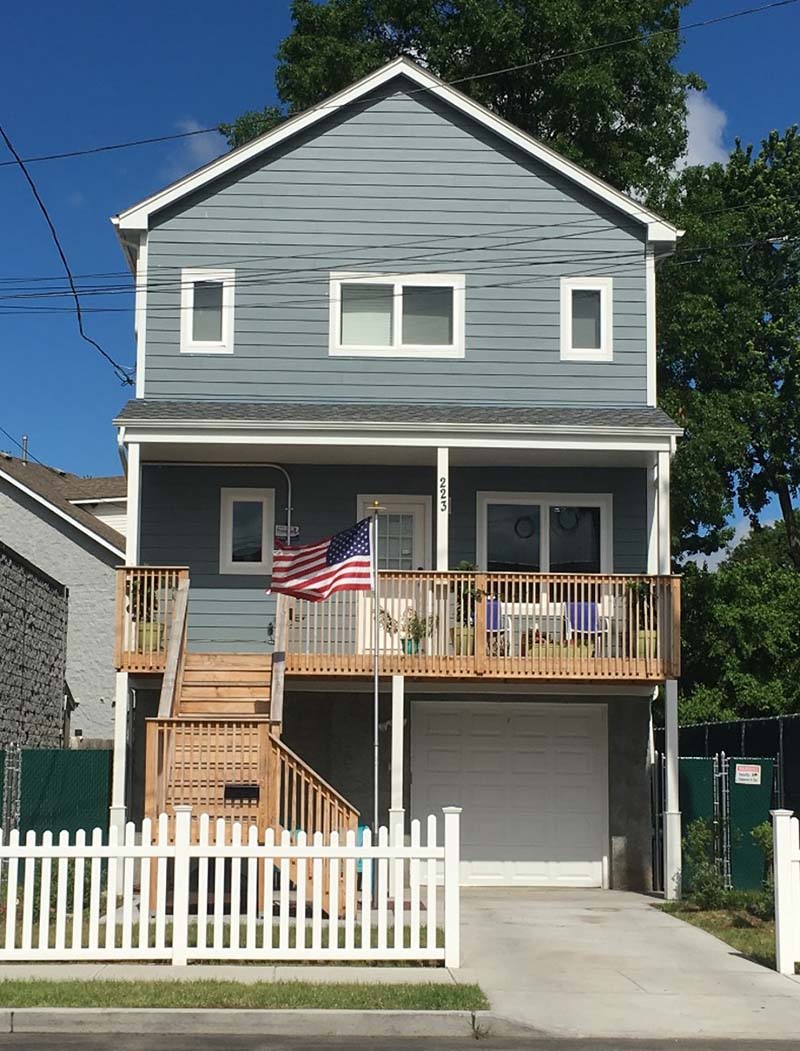
NYC’s Build It Back Single-Family Program has completed construction work; all homeowners have been given their keys and returned to newly resilient homes.
- 8,319 homeowners served citywide
- Brooklyn – 2,669
- Bronx – 58
- Manhattan – 13
- Queens – 3,597
- Staten Island – 1,982
- 838 homes repaired and elevated above base flood elevation
- 492 completely rebuilt homes, including 103 modular homes
- 3,914 homes repaired
- 247 homes acquired through buyouts and acquisition for redevelopment
Reimbursement
Through Build It Back, the City implemented a first-of-its-kind reimbursement program to reimburse impacted homeowners for uninsured losses by paying them up to 100% of the out-of-pocket costs that they incurred repairing their homes. This was critically important, particularly for low-income homeowners who faced possibly losing their homes to foreclosure or losing their life savings trying to pay for repairs. A federally funded reimbursement program had never been done before, and the methodology that NYC decided upon has now become the national standard for reimbursement. A total of $135,177,755 in reimbursements was distributed to 6,138 homeowners, including 3,310 homeowners who also received a construction or acquisition benefit.
Build It Back Outreach & Community Events
Between 2013-2017—the period of program outreach and intake—HRO staff conducted 2,205 outreach and community events, including meetings with civic associations, community board meetings, and town halls.
- Brooklyn – 917
- Bronx – 32
- Manhattan – 25
- Queens – 822
- Staten Island – 361
- Citywide Events – 48
Overall Customer Service
Build It Back opened large-scale recovery centers in Brooklyn, Queens and Staten Island and several smaller construction offices in multiple neighborhoods throughout the city for homeowners.
- Build It Back program staff handled over 200,000 phone calls to engage applicants and schedule intake appointments and support them through the program.
- Customer Service staff scheduled more than 45,000 appointments with homeowners across six neighborhood field offices.
- Staff made 1,800 customer service site visits, including meetings with homeowners, home walk-throughs and key turnovers.
- Over 30,000 damage assessments and construction inspections were done over the course of the program.
Temporary Housing Services (THS) & Temporary Relocation Assistance (TRA)
Early on, HRO understood that not all homeowners and tenants had the ability to cover the expense of temporary relocation during the construction process. To support these families, HRO, with nonprofit partner New York Disaster Interfaith Services (NYDIS), developed a unique suite of wrap-around programs that assisted 1,150 households and distributed $50,304,786 in HUD funds for rental, moving and storage assistance, and other related temporary relocation and reimbursement costs.
These assistance programs were another “first-of-its-kind” housing recovery effort created by Build It Back and have subsequently been adopted nationwide in other HUD disaster recovery programs.
Legal and Financial Counseling
The nonprofit Center for New York City Neighborhoods (CNYCN) partnered with HRO to provide homeowners working through the Build It Back program with legal and financial counseling. HRO applicants took advantage of 9,378 counseling sessions. Of these, more than 1,600 sessions focused on mortgage foreclosure prevention for homeowners at risk of losing their homes.
Learn More About Build It Back
- Single-Family Program
- Multifamily Program
- Workforce Development
- Policies & Procedures
- Public Testimony