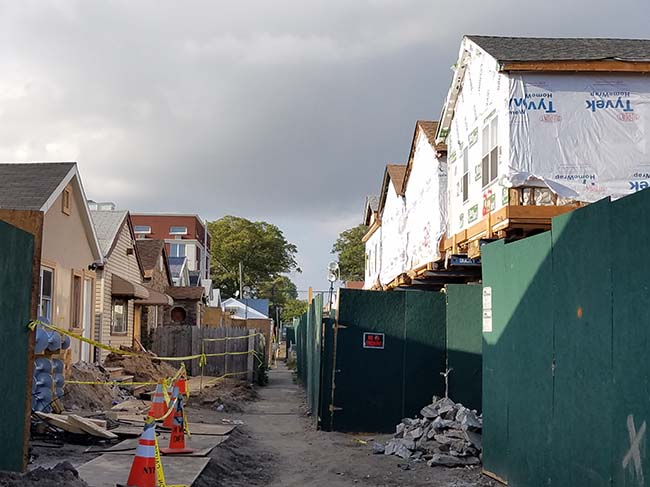
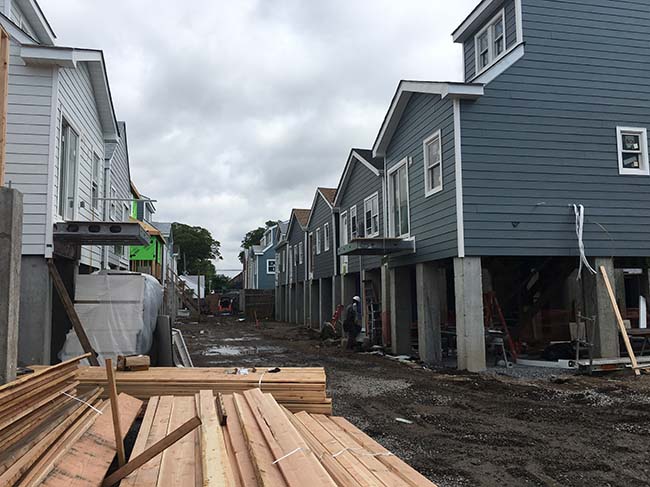
The Build It Back Single-Family Program was designed to assist owners of properties with one-to-four units affected by Hurricane Sandy. Homeowners who were eligible proceeded through one of the Program’s pathways:
In addition, the Mayor's Office of Housing Recovery Operations (HRO) undertook some special initiatives including to address unique conditions:
Click a topic, or press the enter key on a topic, to reveal its answer.
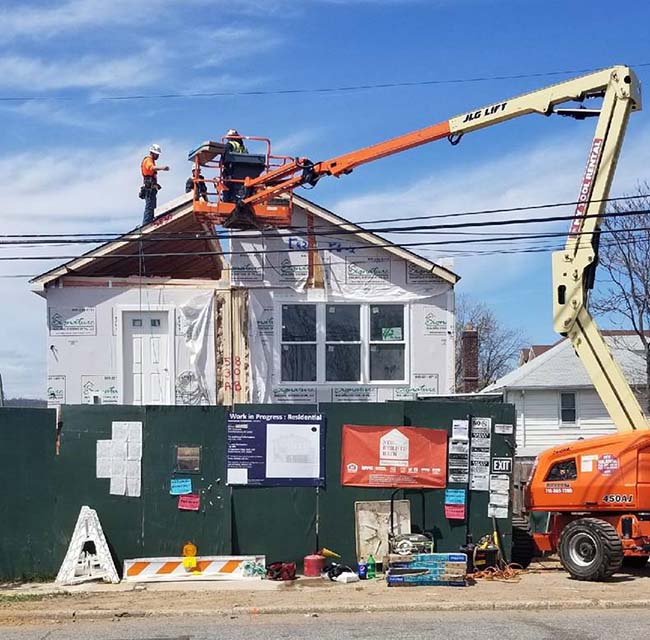
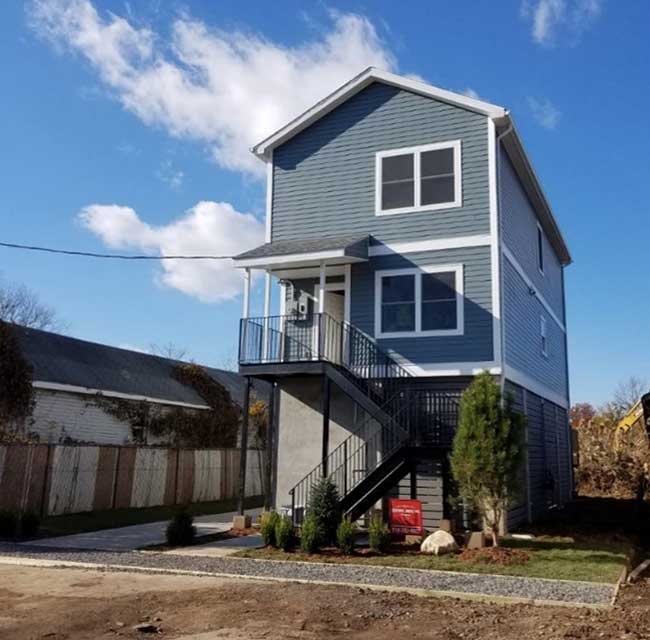
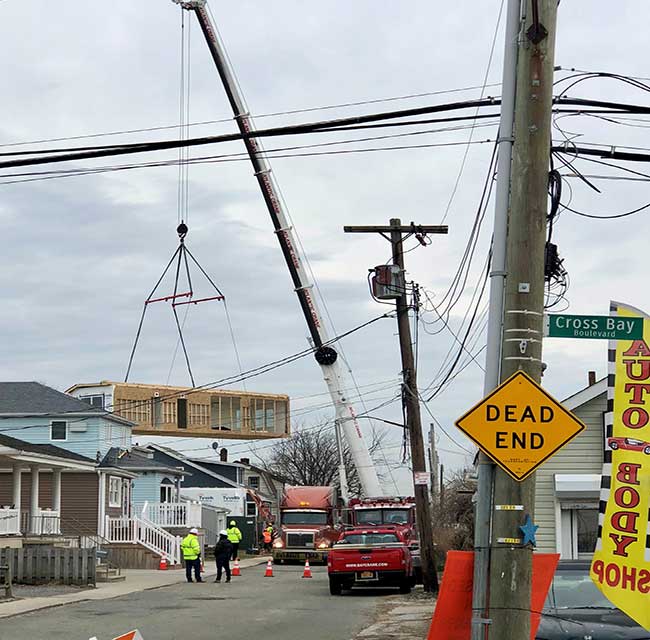
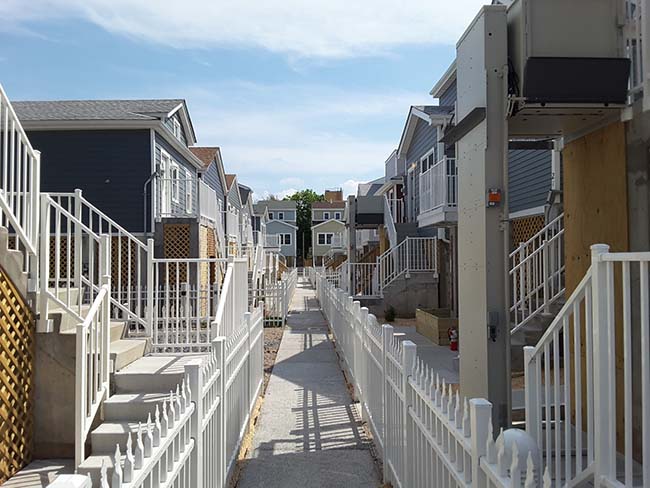
In an effort to speed up the construction process and reduce costs, a Modular Housing initiative was launched in 2017. These prefabricated structures were built off-site in factories in Pennsylvania, and were delivered complete with full kitchens, bathrooms, electrical wiring, and plumbing. The units were installed atop elevated concrete foundations using a mobile crane, often in very narrow, challenging sites.
By the end of the pilot, 103 one- and two-family modular homes had been constructed in Queens (70 homes), Staten Island (32 homes) and Brooklyn (1 home).
For time-lapse videos of modular housing, please click on the links below.
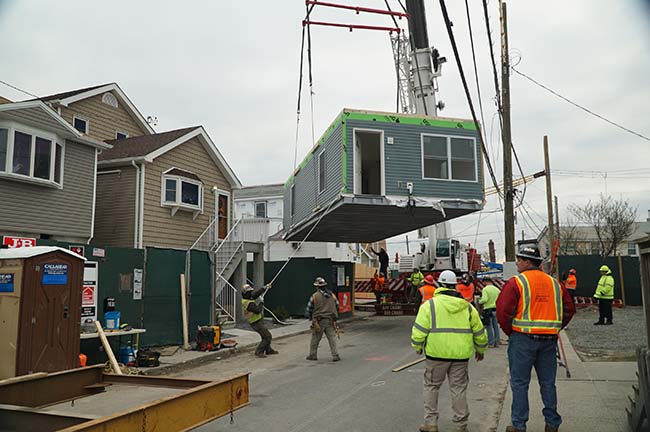
New York City’s neighborhoods are characterized by attached homes. Hundreds of attached homes were damaged by Hurricane Sandy, presenting Build It Back with a unique challenge: how to help homeowners make their homes more resilient while also preserving the ability to continue living in them.
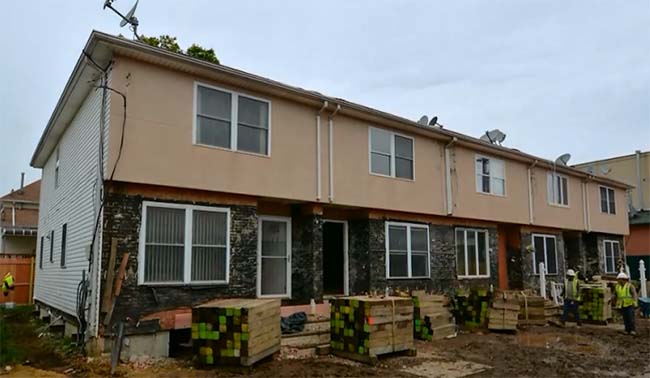
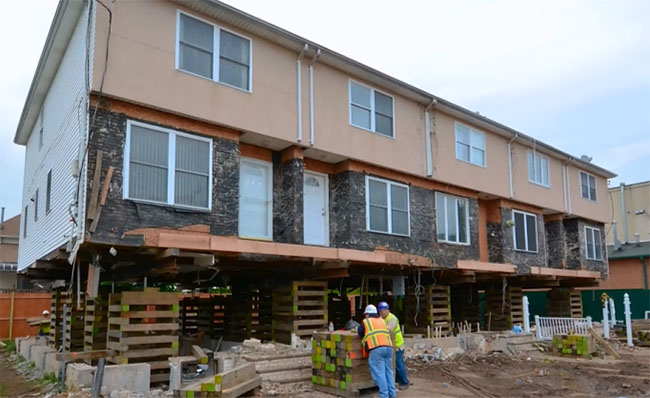
Attached homes pose design, engineering, and legal challenges, requiring neighbors to agree on how to move forward together. Build It Back performed extensive outreach to groups of homeowners living in substantially‐damaged attached homes, resulting in over 110 attached homes that were elevated or reconstructed by the program.
Attached home elevations composed of more than two homes are among the most challenging. Click on these links to see time-lapsed videos of three different elevations projects led by HRO’s partner agency the NYC Department of Design and Construction (DDC), including one project of five attached homes.
For time-lapse videos of attached homes being elevated, please click on the links below.
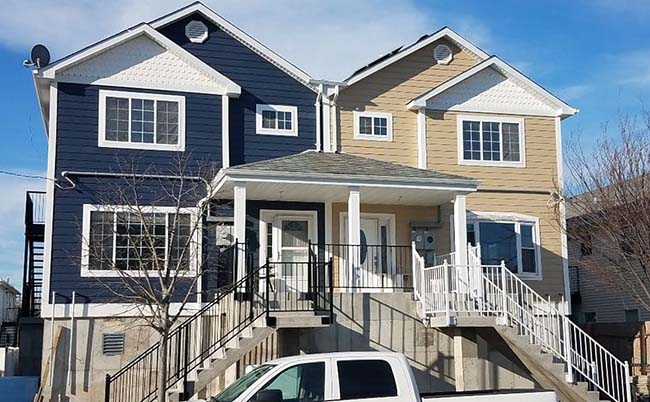
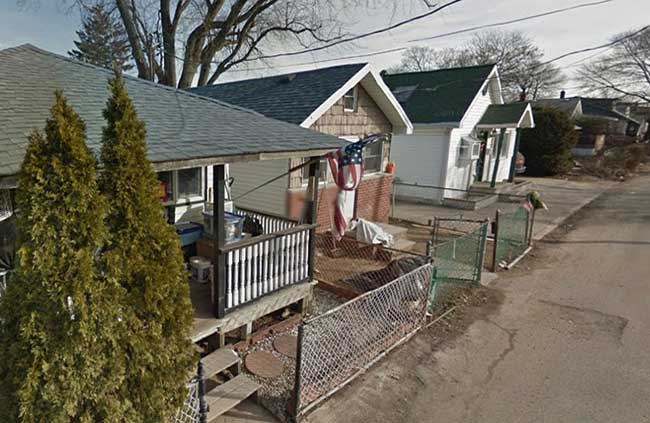
The Sheepshead Bay Courts is a neighborhood in Brooklyn of nearly 80 homes built in the 1920s as summer bungalow communities, which were later modified for year-round use. These homes were built off the city’s grid on unmapped streets with clay pipe sewers, which were soon five feet below grade as a result of street raising done in the 1950s. Even prior to Hurricane Sandy, the Courts faced regular flooding and sewage backflow after heavy rains and homeowners paid out-of-pocket for repairs and clean-up after each event with no permanent solution in sight.
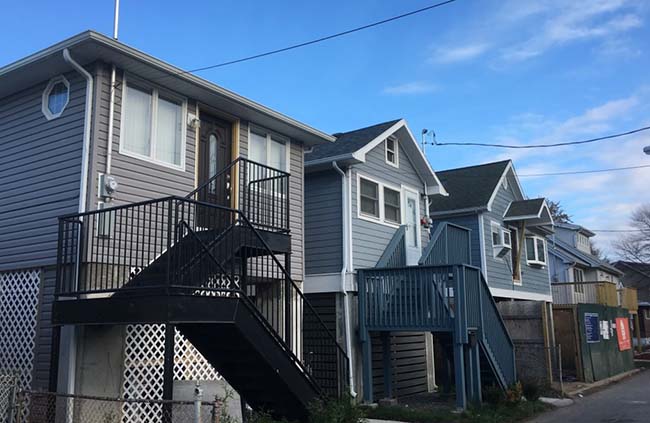
With funding from the CDBG-DR Hurricane Sandy grant and extensive partnerships with City agencies including the Department of Environmental Protection, Department of Buildings, and the Board of Standards & Appeals, elected officials, and utility companies, and working closely with homeowners, HRO deployed a combination of strategies to reposition the community for long-term resiliency. Work included elevation of existing homes, the new construction of 46 homes, the acquisition of seven homes, and the installation of critical infrastructure including new sewer and storm water lines, high-pressure gas lines, and new underground electric and telecommunication lines.

 NYC Housing Recovery311