
 Food Policy311Search all NYC.gov websites


NYC Food and Climate Strategy
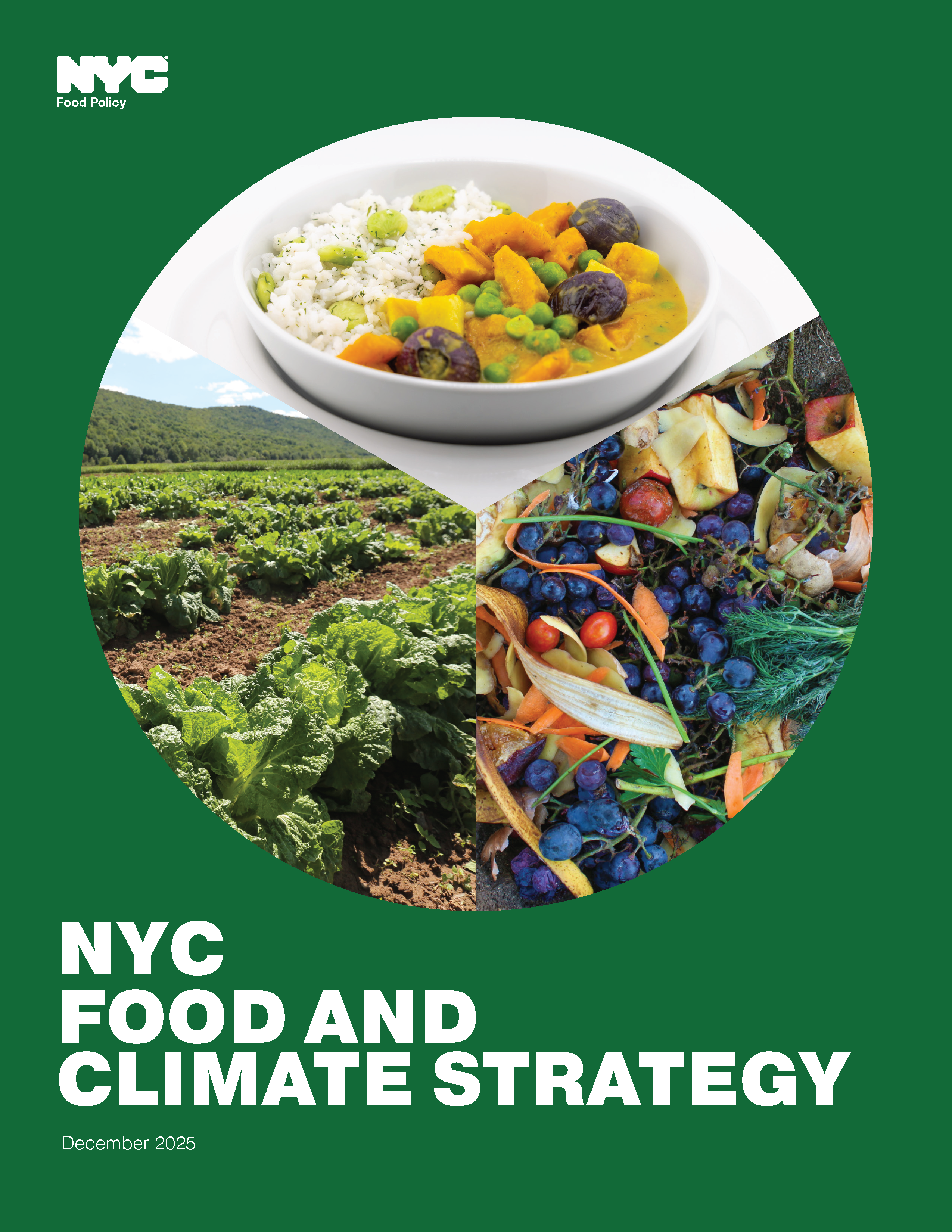
The world faces the urgent challenge of feeding a growing population while addressing the significant greenhouse gas emissions from food and agriculture production.
Meals do not have to contribute to the climate crisis—they can be part of the climate solution. Food system transformation can address food and nutrition security as well as drive climate mitigation, adaptation, and resilience.
Here in New York City, we're applying our determination to take bold climate action to our food system. The NYC Food and Climate Strategy presents a vision for the city to contribute to global climate efforts, as well as continue learning from others' expertise. Across three goals, the Strategy details the City's existing work as well as an ambitious direction for future improvements, leveraging tools available to local governments that can drive substantial change throughout our food system. Throughout all these areas, we can and must incorporate mechanisms to operationalize equity, focusing on communities most affected by food inequity and neighborhoods that have experienced historical disinvestment and bear the brunt of climate burdens.
Food systems change can serve both our communities and our climate goals. We can transform how New York City eats and solve the climate crisis, one bite at a time.
NYC Food and Climate Strategy At A Glance
Goal 1: Mitigate the climate and environmental impacts of food consumed by New Yorkers.
- Strategy 1: Reduce GHG emissions and environmental impacts associated with the City’s food procurement and agency-served meals.
- Reduce GHG emissions from City agency food procurement by 33% by 2030.
- Reduce non-GHG environmental impacts of City agency food procurement.
- Strategy 2: Increase consumption of whole and minimally processed fruits, vegetables and plant proteins in homes and food businesses.
- Encourage increased consumption of whole and minimally processed fruits, vegetables, and plant proteins.
- Strategy 3: Increase efficiency and electrification of food distribution, transportation, and storage infrastructure.
- Increase the efficiency of food distribution, transportation, and storage infrastructure.
- Continue to encourage electrification of food production and transportation.
Goal 2: Reduce food waste and divert all food waste from landfills.
- Strategy 1: Reduce citywide and per capita food waste by 50% by 2030.
- Reduce food waste from agency-served meals while maintaining high quality and nutritional standards.
- Reduce food waste from private sector food retail, service and wholesale operations.
- Support redistribution and consumption of surplus food across the City.
- Reduce household food waste.
- Support efforts to reduce single-use foodservice items.
- Strategy 2: Divert 100% of food waste from landfills.
- Successfully divert 100% of food waste generated at home and City properties.
- Enable and incentivize increased food waste diversion from businesses.
- Expand food waste processing capacity locally and regionally.
Goal 3: Adapt NYC’s food system to be resilient to shocks and disruptions due to climate change.
- Strategy 1: Diversify our City’s food sources and help build a strong regional and local foodshed.
- Adopt a flexible and resilient sourcing strategy for City food purchasing.
- Champion regional food production and encourage regional sourcing across the public and private sectors in NYC.
- Increase the supply and consumption of foods produced in NYC.
- Strategy 2: Support adaptation of food distribution and transportation systems for acute and long-term disruptions.
- Support the diversification of local food distribution infrastructure with multi-modal and resilient transportation options.
- Support the implementation of recommendations from the Special Initiative for Rebuilding and Resiliency (SIRR) Report for increasing resiliency in the food supply system.
- Improve protections for food worker health in light of potential climate-related risks.
- Strategy 3: Support resilient and sustainable on-farm and watershed management practices in the region.
- Support and incentivize the adoption of climate-smart and regenerative agricultural practices on regional farms including those in the NYC watershed.
- Track and champion city, state, and federal policies that support sustainable agricultural practices.