
 Department of Design and Construction311Search all NYC.gov websites



City Completes $108 Million Historic Restoration and Upgrade in DUMBO
Project brings 26 blocks of restored or new cobblestone streets; the new Pearl Street Plaza; new bike lanes; improved storm drainage; better harbor water quality; 2,800 artifacts unearthed
DOT: 212-839-4850, press@dot.nyc.gov
DEP: 718-595-6600, DEPPressOffice@dep.nyc.gov
DDC: Ian Michaels, 646-939-6514, michaelia@ddc.nyc.gov
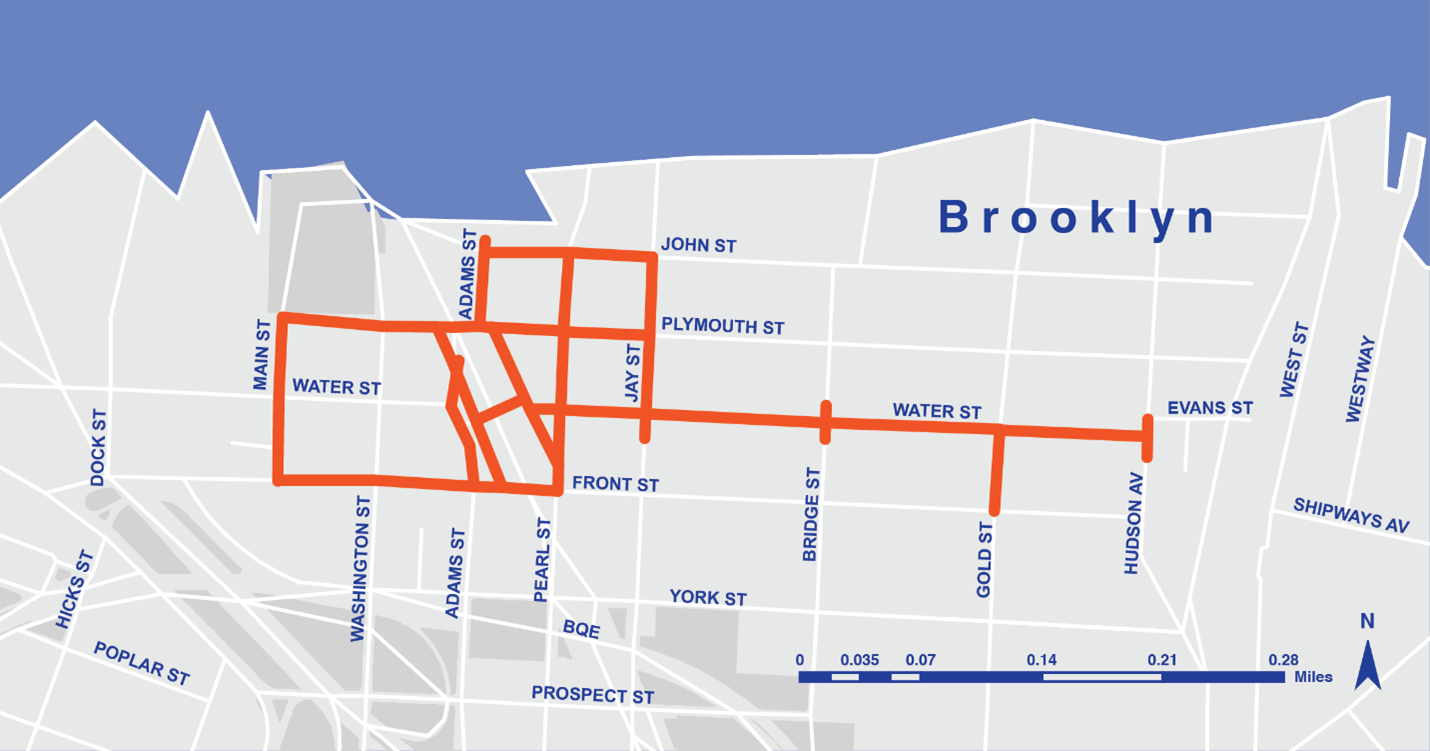
(Brooklyn, NY – November 19, 2025) The NYC Department of Transportation (DOT), the NYC Department of Environmental Protection (DEP) and the NYC Department of Design and Construction (DDC) today joined local elected officials, staff of the Landmarks Preservation Commission (LPC), and the DUMBO Business Improvement District to celebrate the end of a $108 million infrastructure project that completed a historic restoration of 26 blocks in Brooklyn’s DUMBO neighborhood, rebuilt cobblestoned streets, improved stormwater drainage, reduced combined sewer loading into the harbor, added new bike lanes, and created the new Pearl Street Plaza. The project, which was largely funded by DOT and DEP with additional funding from private utilities and the federal government, began in 2019 and was recently completed by DDC.
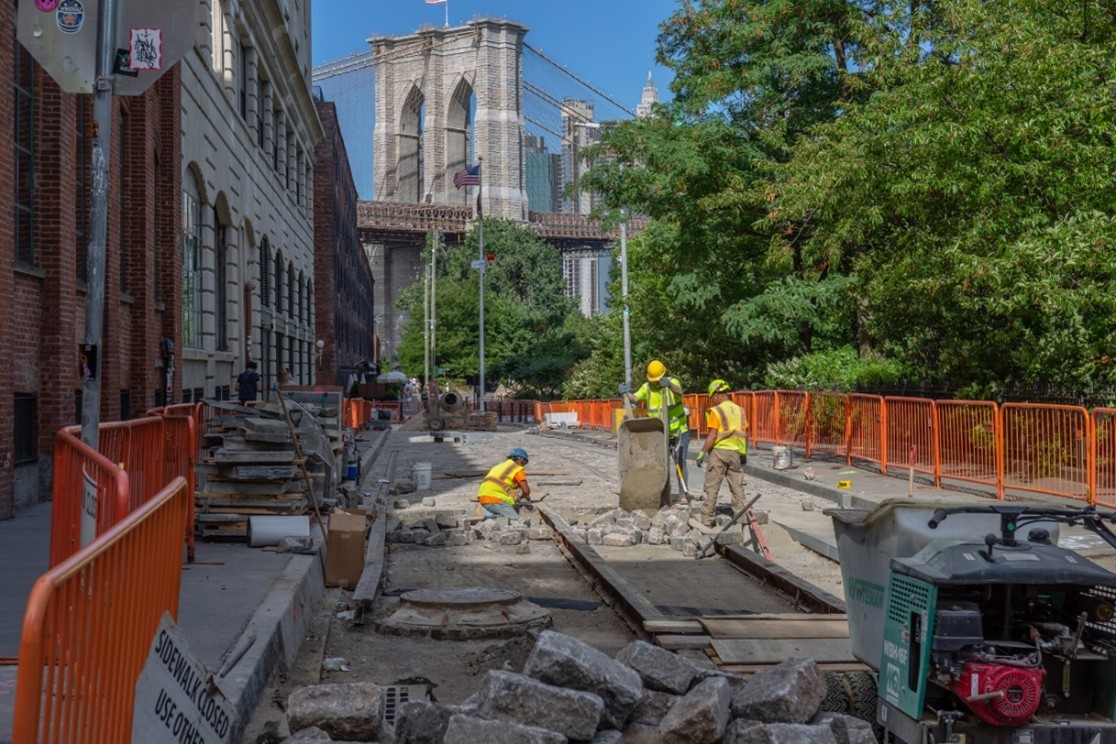
“This special project helped preserve the historic feel of DUMBO, establish a world-class permanent plaza on Pearl Street, and create a new neighborhood bike network of smooth, granite paths built into the cobblestone streets,” said NYC DOT Commissioner Ydanis Rodriguez. “We thank the DDC and DEP for their work and appreciate the patience of residents during the construction.”
“This project is a great example of how we can modernize critical infrastructure while preserving the historic character that makes neighborhoods like DUMBO so special,” said DEP Commissioner Rohit T. Aggarwala. “By restoring the cobblestone streets while simultaneously upgrading the sewer and stormwater systems beneath them, we’re improving harbor water quality and enhancing quality of life for this vibrant waterfront community.”
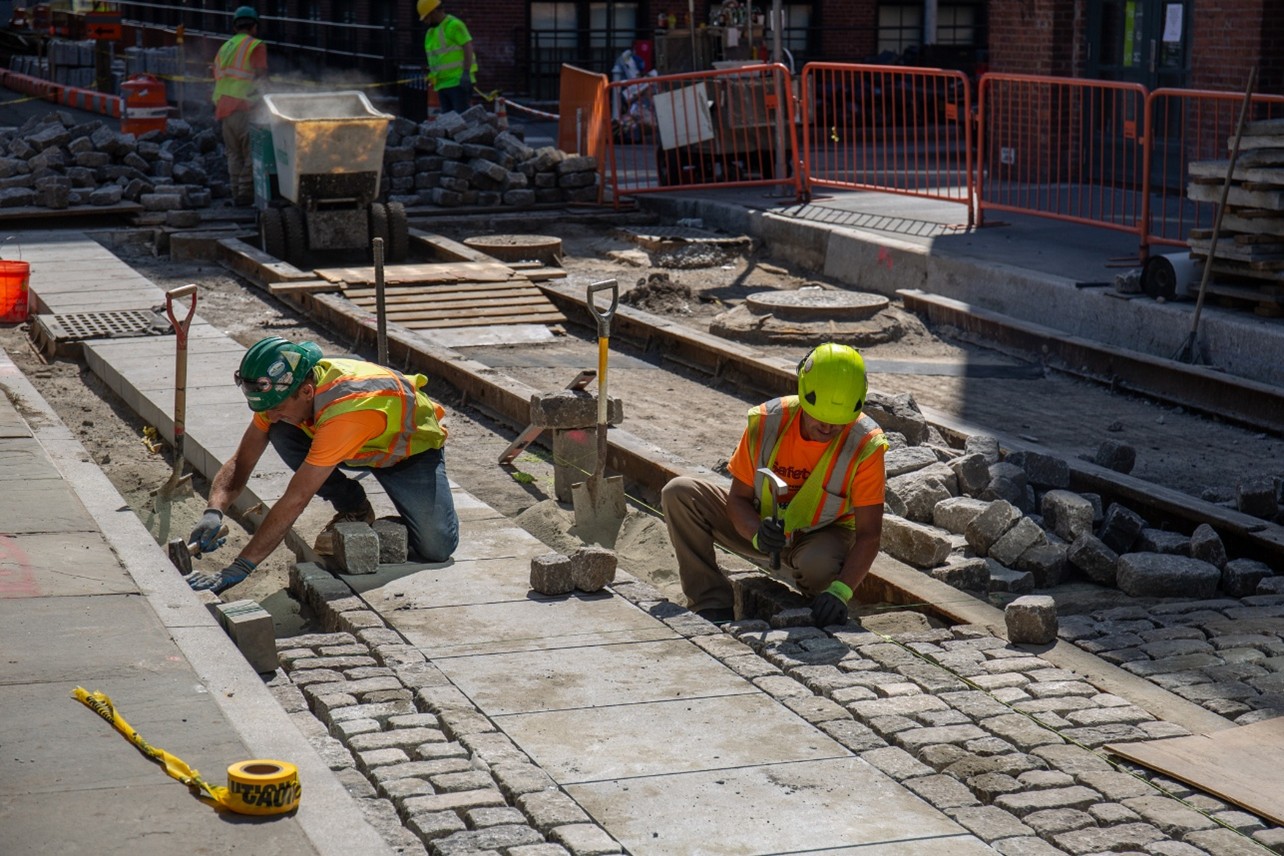
“This was a very complicated project in one of the City’s oldest and most historic neighborhoods, with very old infrastructure and narrow cobblestoned streets, and it accomplished multiple goals for residents and visitors alike,” said DDC Acting Commissioner Eduardo del Valle. “Below the streets there are new storm sewers and water mains, while the streets themselves are restored with full cobblestones, granite curbs and pavers and a new large plaza area. We appreciate the collaboration with the community, the private utilities and our agency partners – without cooperation, this project would not have been so successful. Congratulations to the DDC team that completed this project and thank you to the residents for their patience while work took place.”
“Working closely with our partners at DDC, DOT, and DEP, LPC approved careful restoration of historic Belgian block, paired with the installation of new materials designed to harmonize with the iconic streetscape in the DUMBO and Vinegar Hill Historic Districts,” said Landmarks Preservation Commission Vice Chair Angie Master. “This work improves the safety and accessibility of these neighborhoods while preserving their historic character.”
Project Details
Twenty-six blocks of DUMBO were worked on, with most located in two historic districts, all being restored with full cobblestones and historically accurate granite curbs. One block, Gold Street between Front Street and Water Street, was originally asphalt but was converted to cobblestones during the project. The other 25 blocks had originally been all cobblestones, but over the decades many of those stones had been disturbed, moved aside for various reasons and in some cases taken away. In numerous areas cobblestones had been paved over with asphalt. Overall, the project team removed and replaced more than 800,000 cobblestones and brought in approximately 8,000 additional stones from off-site to complete the work.
DDC’s historic preservation team held numerous outreach sessions with the local community while the project was being designed, and community members expressed strongly that they would prefer for old cobblestones to remain in their original locations. As a result, cobblestones that were removed during work were taken off-site for storage and then returned to the original block where they were found.
Overall, the project installed more than 12,000 feet of new granite curbs, 117,000 square feet of new pigmented concrete sidewalks, plus 114 new ADA-compliant pedestrian ramps. Additionally, 8,800 feet of new granite bike lanes were installed.
The project also created the new Pearl Street Plaza adjacent to the Manhattan Bridge. The Plaza is 2,500 square yards and includes a new lighting system and fencing, plus numerous planters, umbrellas and seating areas. The archway under the bridge that connects to the plaza has also been restored with new lighting. The surface of the new plaza is granite pavers, and many of the cobblestones from this location were repurposed by the project team to other blocks where needed.
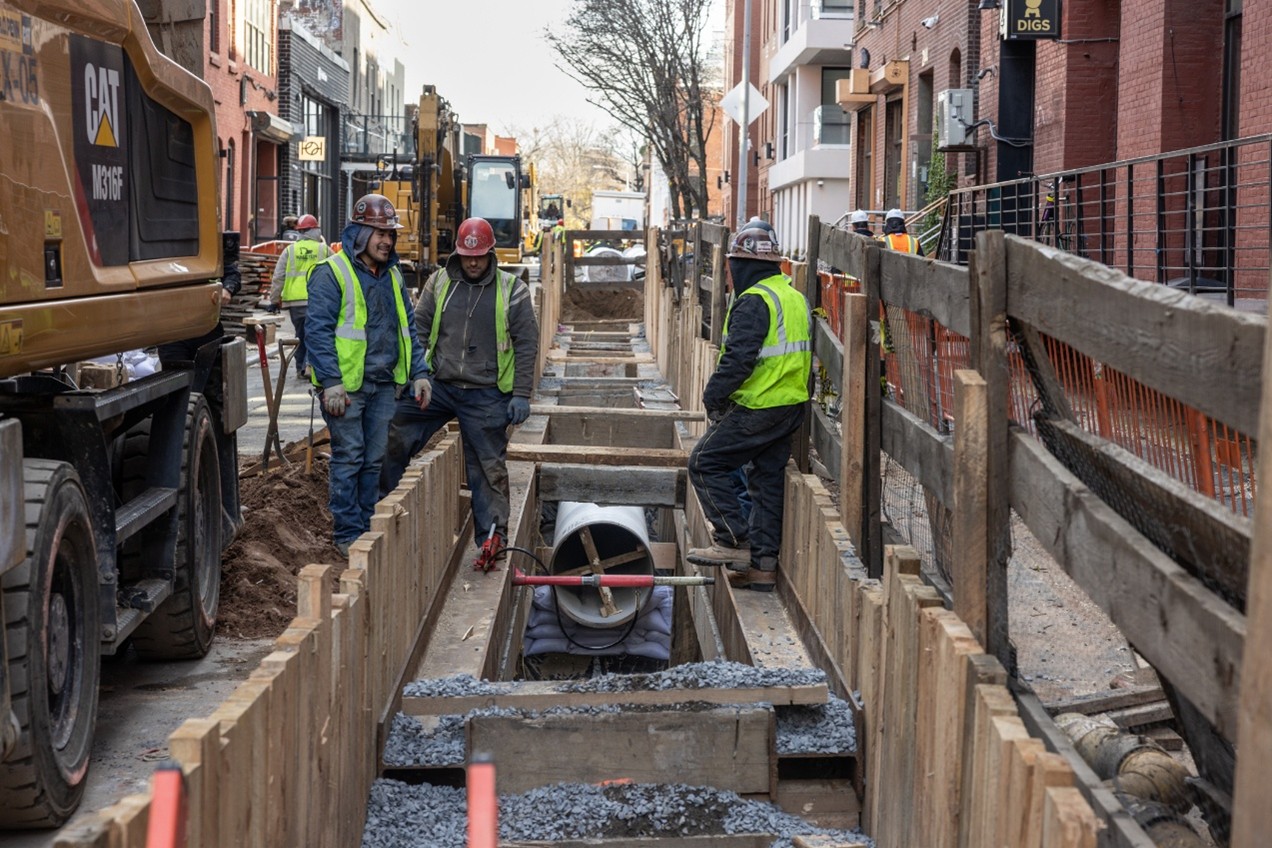
Beneath the streets, to improve stormwater drainage, the project installed 2,735 feet of new storm sewers in areas that previously had none, with the largest segment measuring 5-foot-wide by 2-foot-high. All 32 existing catch basins were upgraded and another 46 new ones were added to direct stormwater into the new system.
To further reduce sewage from entering the harbor from combined sewer overflows, 2,121 feet of old combined sewers were converted into dedicated sanitary sewers. The project also replaced more than 1,300 feet of existing sanitary sewers, upgraded 6,600 feet of water mains, and added 3,140 feet of new water mains to strengthen service reliability.
The project also built a new stormwater outfall and removed an outdated combined-sewer outfall and its regulator chamber, which previously diverted mixed sewage and stormwater during heavy rain. Replacing this infrastructure will reduce sewer backups and improve harbor water quality.
Nine new fire hydrants were also added to the neighborhood, as were two additional trees.
Artifacts
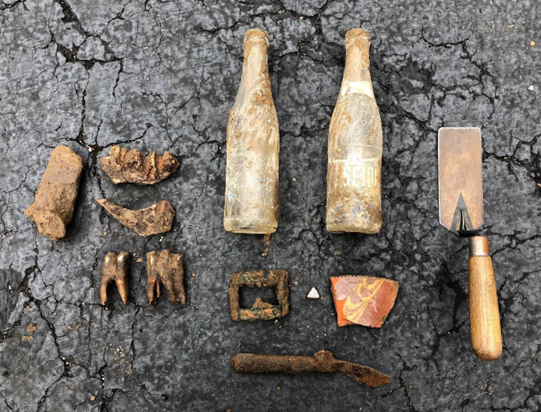
The City worked closely with archaeologists during the planning and the construction of the project, which uncovered approximately 2,800 artifacts during construction, some as old as the late-1600s but most dating from the mid-1800s to the mid-1900s. The majority of the collection comprises various types of domestic, utilitarian, and architectural ceramics, including objects made of earthenware, stoneware, and porcelain. Artifacts made of glass, metal, wood, stone, and leather, along with faunal remains like animal bones, teeth, and shell make up the remainder. Two of the most significant artifacts found were a copper button from the 1860s-1900s with the New York State Excelsior symbol and a clay smoking pipe from the 1820s-1860s stamped with a Liberty Eagle motif. Once the artifacts are analyzed, the collection will likely be curated by LPC’s NYC Archaeological Repository: The Nan A. Rothschild Research Center.
About the NYC Department of Environmental Protection
DEP manages New York City’s water supply, providing approximately 1 billion gallons of high-quality drinking water each day to nearly 10 million residents, including 8.5 million in New York City. The water is delivered from a watershed that extends more than 125 miles from the city, comprising 19 reservoirs and three controlled lakes. Approximately 7,000 miles of water mains, tunnels and aqueducts bring water to homes and businesses throughout the five boroughs, and 7,500 miles of sewer lines and 96 pump stations take wastewater to 14 in-city treatment plants. DEP also protects the health and safety of New Yorkers by enforcing the Air and Noise Codes and asbestos rules. For more information, visit nyc.gov/dep, like us on Facebook, or follow us on X, formerly known as Twitter.
About the NYC Department of Transportation
The New York City Department of Transportation’s (NYC DOT) mission is to provide for the safe, efficient, and environmentally responsible movement of people and goods in the City of New York and to maintain and enhance the transportation infrastructure crucial to the economic vitality and quality of life of our primary customers, City residents. NYC DOT’s staff manage an annual operating budget of $1.4 billion and a ten-year $33 billion capital program, along with 6,300 miles of streets and highways, over 12,000 miles of sidewalk, and approximately 800 bridges and tunnels, including the iconic East River bridges. NYC DOT’s staff also installs and maintains nearly one million street signs, 13,250 signalized intersections, over 315,000 street lights, and over 350 million linear feet of markings.
About the NYC Department of Design and Construction
The Department of Design and Construction is the City’s primary capital construction project manager. In supporting Mayor Adams’ long-term vision of growth, sustainability, resiliency, equity and healthy living, DDC provides communities with new or renovated public buildings such as firehouses, libraries, police precincts, and new or upgraded roads, sewers and water mains in all five boroughs. To manage this $34 billion portfolio, DDC partners with other City agencies, architects and consultants, whose experience bring efficient, innovative and environmentally-conscious design and construction strategies to City projects. For more information, please visit nyc.gov/ddc.