Official websites use .gov
A .gov website belongs to an official government organization in the United States.

Some SNAP recipients who are Able-Bodied Adults Without Dependents (ABAWDs) are at risk of losing their benefits. Learn what you can do.
Last updated September 15, 2026
If you are an ABAWD, there are seven ways to follow the rules. You must do one of them to avoid losing your benefits. Use the links below to jump to the part of the guide that is most relevant to you.
Not sure if these rules apply to your household? Learn how to find out if you’re ABAWD
Generally, an ABAWD is:
“Able-bodied,” meaning not disabled
“Adult,” meaning 18 to 64 years old
“Without dependents,” meaning not living with a child under 14
If you have an active SNAP case, the NYC Human Resources Administration (HRA) determined whether anyone in your household is an ABAWD based on your case information. HRA sent physical letters and e-notices via ACCESS HRA to all households where anyone is an ABAWD.
If you didn’t receive a letter, you can check your household’s official ABAWD status using ACCESS HRA.
If you are under 18 or over 64, live with a child under 14, or receive any disability benefits, you can stop reading this guide and ignore these requirements.
You can only check this information using the web version of ACCESS HRA. Log in using a desktop or laptop or your mobile device's web browser instead of the ACCESS HRA mobile app.
It’s possible to get an exemption to ABAWD work rules. Even if you think you have an exemption, you must make sure HRA has it officially documented.
You could be exempt if you:
Use the exemption checker above to see which of these processes to follow.
Note that additional household income will affect your SNAP benefit amount.
To report your unemployment benefits, file a case change in ACCESS HRA.
Video shows general process for how to request a case change in ACCESS HRA. Read specific instructions above.
To request an exemption due to medical reasons, first download and print the ABAWD Medical Statement Form [PDF]
Have a health care provider complete the form. A health care provider can be a physician, physician’s assistant, nurse practitioner, osteopath, licensed or certified psychologist, substance use counselor, certified mental health counselor, licensed independent clinical social worker, licensed certified social worker, or certified midwife.
Then, upload the form using the document upload feature in the ACCESS HRA mobile app.
From the Dashboard, tap the “More” tab
Tap “My Uploads”
Tap “+” or “Add” at the top right corner
Accept the disclaimer terms
Tap the SNAP (Food Stamps) case from the case list
Scroll down to find the “FIA-1021w ABAWD Medical Statement” form and select it
Upload your form using a new photo, image, or file
To be found unfit to work, you must talk to an HRA representative about your circumstances that prevent you from working.
You can contact HRA using any of the following methods:
Hours required: Depends on your SNAP benefit amount.
Pros: Volunteering has a much lower hours requirement than working. You can also give back to your community while following ABAWD rules.
Cons: You will have to find a volunteer opportunity, get a form signed by a supervisor, and file it every month. If you don’t file your form, you’ll get a strike.
If you’re not exempt from ABAWD rules, enrolled in school, or working enough hours at a job, you can meet ABAWD requirements by volunteering.
Volunteering at a community organization is a great way to follow ABAWD rules and give back at the same time.
The number of hours you must volunteer each month is based on this formula:
Monthly household SNAP benefit amount
÷ the number of adults in your household
÷ the NYC minimum wage (currently $17)
= monthly hours requirement
Volunteer hours requirements are much lower than job hours requirements.
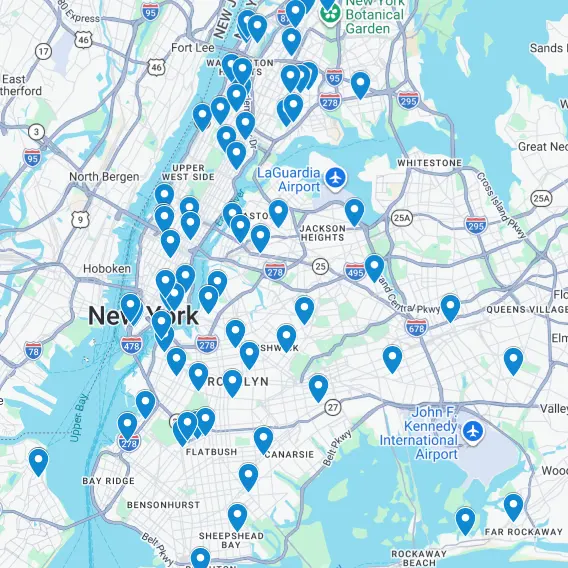
To find volunteer opportunities:
Community organizations in your neighborhood need volunteers. Contact them by phone or email for more information.
You must report your volunteer activities to HRA every month that you are considered an ABAWD.
Follow your PACE provider’s instructions.
First, download and print the The Monthly ABAWD Volunteer Participation Record [PDF]
Also available in:
Then fill out your portion of the form and have a supervisor at the community organization fill out their portion.
Then, upload the form using the document upload feature in the ACCESS HRA mobile app.
From the Dashboard, tap the “More” tab
Tap “My Uploads”
Tap “+” or “Add” at the top right corner
Accept the disclaimer terms
Tap the SNAP (Food Stamps) case from the case list
Scroll down to find the “FIA-1021z Monthly ABAWD Volunteer Participation” form and select it
Upload your form using a new photo, image, or file
You can meet ABAWD work rules by having a job where you work at least 80 hours per month.
A job can be paid, unpaid, or “in-kind”. An example of an in-kind job is helping a landlord with household maintenance in exchange for reduced rent.
You can also work fewer than 80 hours per month if you make more than $942.50 per month.
When you report that you’re working, you’ll be exempt from ABAWD reporting until the next time you recertify your SNAP case.
File a case change in ACCESS HRA.
Note that additional household income will affect your SNAP benefit amount.
You must talk to an HRA representative to add this information to your case.
You can contact HRA using any of the following methods:
Go to your PACE appointment and talk to a representative from your PACE program, or
Call 718-SNAP-NOW (718-762-7669), or
Go to a SNAP center, or
If you are due to recertify your SNAP case in the next month, talk to your interviewer about this during your interview
Hours required: At least 80 hours per month
Pros: You’ll only have to tell HRA about your school enrollment during regular recertification and reporting. You won’t have to file monthly paperwork.
Cons: You have to attend school for at least 80 hours per month.
You can meet ABAWD work rules by being enrolled in an ongoing education program (such as a degree program) for at least 80 hours per month.
When you are enrolled in school, you’ll be exempt from ABAWD reporting until the next time you recertify your SNAP case.
Contact HRA to report your enrollment. Do any of the following to contact HRA:
Hours required: At least 80 hours per month of work activities, or fewer hours if volunteering.
Pros: Your PACE provider is responsible for assigning you work or volunteer activities and filing your paperwork for you each month.
Cons: You will have fewer opportunities to choose from than if you volunteer on your own.
HRA works with career services organizations throughout the city. These are called Pathways for Access to Careers and Employment (PACE) providers.
If you are an ABAWD, HRA already assigned you a PACE provider. HRA sent you a letter that had information about your PACE provider assignment.
If you don’t have that letter, you can also check which PACE provider is assigned to you by looking at your appointments in ACCESS HRA.
Your PACE provider’s goal is to help you meet your ABAWD work rules and keep your SNAP benefits. All PACE programs are free to SNAP recipients. They can help you meet the ABAWD requirements by doing any of the following:
Figuring out if you should be exempt from ABAWD work rules and filing your exemption paperwork for you
Providing education and training programs such as resume help, ESL classes, and tech skills training
Finding you volunteer opportunities with community-based organizations like BronxWorks, Housing Works, Volunteers of America, Food Bank for New York City, the Salvation Army, and many others
Helping you search for jobs
Hours required: At least 80 hours per month
Pros: You can file paperwork yourself without needing a supervisor signature.
Cons: You will have to fill out a detailed activity record and file it every month. If you don’t file your form, you’ll get a strike.
You can follow ABAWD rules by looking for jobs for at least 80 hours per month.
The following count as job search activities:
Looking for a job on JobZone or New York State Job Bank
Researching available jobs
Completing and submitting job applications (online or in person)
Preparing for or participating in job interviews
Attending job search workshops or working with a job placement specialist
You must report your job search activities to HRA every month that you are considered an ABAWD.
Follow your PACE provider’s instructions.
First, download and print the Monthly Workforce Innovation and Opportunity Act (WIOA) Job Search Activity Record [PDF]
Also available in:
Fill out the form following the instructions on the document.
Then, upload the form using the document upload feature in the ACCESS HRA mobile app.
From the Dashboard, tap the “More” tab
Tap “My Uploads”
Tap “+” or “Add” at the top right corner
Accept the disclaimer terms
Tap the SNAP (Food Stamps) case from the case list
Scroll down to find the “FIA-1021x Monthly WIOA Job Search Activity Record” form and select it
Video shows general process for uploading a document in ACCESS HRA. Read specific instructions above.
Hours required: At least 80 hours per month
Pros: You can get credit toward your ABAWD hours by attending classes and professional training.
Cons: You will have to do education activities each month and get a form signed by a staff member. You’ll have to file this every month. If you don’t file your form, you’ll get a strike.
You can follow ABAWD rules by doing education and training activities for at least 80 hours per month.
If you’re enrolled as a full-time or part-time student in an ongoing program, such as a college degree program, see the section about enrolling in school.
You must report your education activities to HRA every month that you are considered an ABAWD.
Follow your PACE provider’s instructions.
First, download and print the Monthly ABAWD Education & Training Participation Record [PDF]
Also available in:
Fill out the form following the instructions on the document.
Then, upload the form using the document upload feature in the ACCESS HRA mobile app.
From the Dashboard, tap the “More” tab
Tap “My Uploads”
Tap “+” or “Add” at the top right corner
Accept the disclaimer terms
Tap the SNAP (Food Stamps) case from the case list
Scroll down to find the “FIA-1021y Monthly ABAWD Education and Training Participation Record” form and select it
Upload your form using a new photo, image, or file
Able-Bodied Adults Without Dependents (ABAWD) work rules are federal government requirements that affect some SNAP recipients. HRA is enforcing these rules as of March 1, 2026.
Most SNAP recipients are not affected by these rules. If you are not an ABAWD, these rules do not apply to you. But if you are an ABAWD, you must follow the rules or you will lose your SNAP benefits.
The basic ABAWD rules are:
You must work for at least 80 hours per month
If you are not working, you must do an HRA-approved education, training, volunteering, or job search activity for a certain number of hours each month
You must report these activities to HRA each month
If you don’t do enough hours or report them correctly for a month, you’ll get a “strike” on your SNAP case. A strike is a notice of non-compliance with the ABAWD rules.
If you get three strikes within 36 months, your SNAP payments will stop.
You can get SNAP benefits again if you start following the work rules.
ABAWD rules are complicated and confusing. HRA’s goal is to help you follow them so you don’t lose your benefits.
If you are an ABAWD and you haven’t been following ABAWD rules, you could be close to losing your benefits. Contact HRA to see how you can avoid losing your benefits.
If you’ve already lost your benefits because you didn’t follow ABAWD rules, it’s possible to get them back.
To get your benefits back, you must apply for SNAP again or ask HRA to add you back to a case. During your interview, you must tell HRA how you plan to follow the ABAWD rules.
You can tell HRA that you will do any of the following:
Work a job for at least 80 hours in the 30 days after you apply, or
Enroll in school for at least 80 hours in the 30 days after you apply, or
Document at least 12 hours of job search and participate in an HRA work placement activity
You can also choose to volunteer. However, to get benefits back by volunteering, you must volunteer for at least 80 hours in any 30-day period since losing your benefits. You must complete these hours before you can get SNAP again.
If the whole SNAP household had their case closed because they didn’t follow ABAWD rules, they should reapply for SNAP. If one or more members of a household had cases closed, but the household is still getting reduced SNAP, the head of household can submit a case change to add the person back to the case.
The SNAP on demand interview phone line is currently accepting calls related to ABAWD issues.
Call 718-SNAP-NOW (718-762-7669)
Hours: Monday to Friday: 8:30 a.m. to 5 p.m.
Languages: Free interpretation is available
Visit a SNAP center for in-person assistance
You can also get help from a community-based partner organization
Here are quick links to some ABAWD forms.
Jump to information about exemptions
Jump to information about volunteering
Jump to information about searching for jobs