
BQE Central Project

The Brooklyn-Queens Expressway (BQE) is an essential component of the region's transportation network. It not only serves to connect Brooklyn with key access points in Manhattan, Queens, and on Staten Island, but it also carries regional trucks and other traffic, keeping this traffic off local Brooklyn streets.
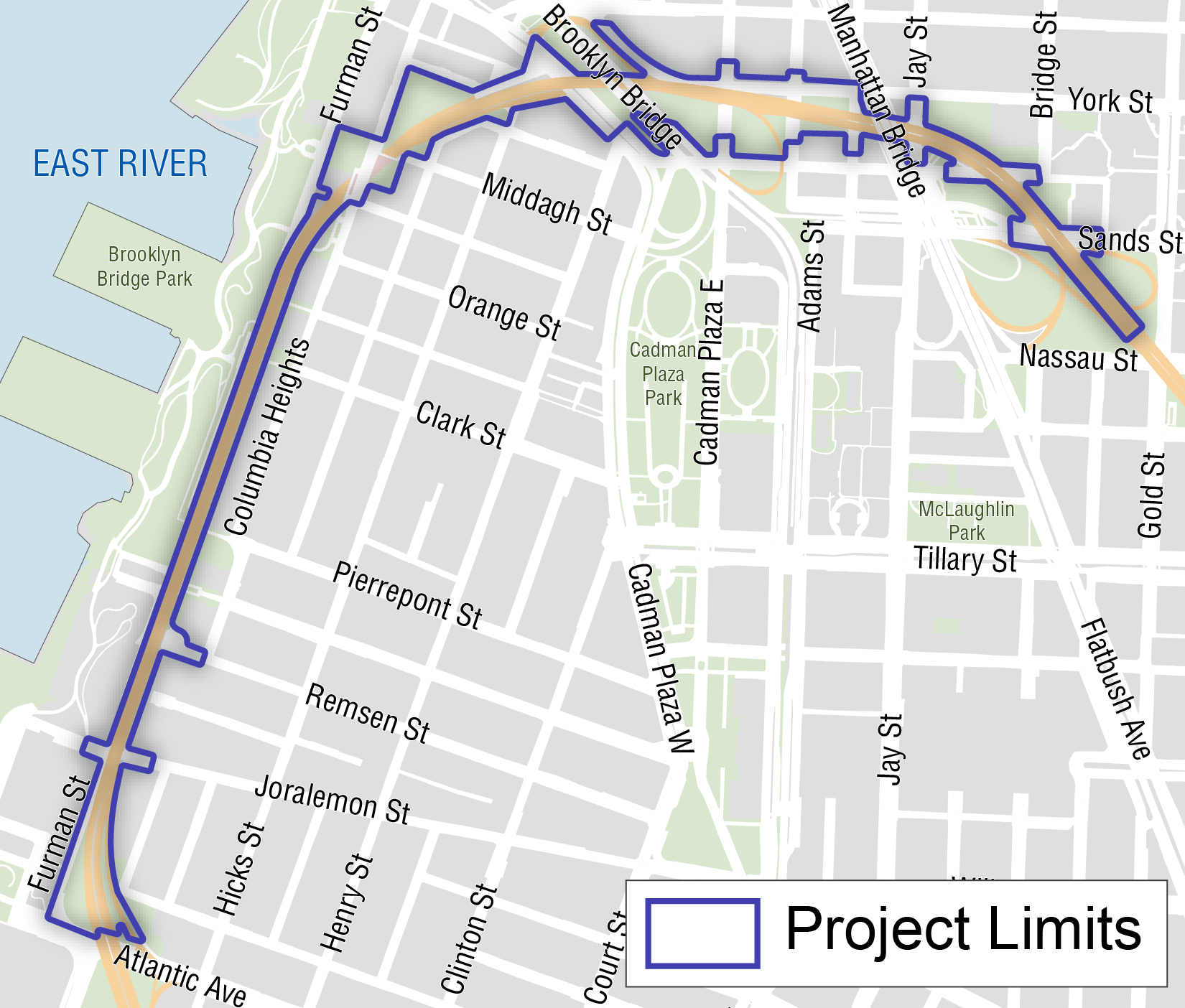
BQE Central is the approximately 1.5-mile City-owned section of the BQE (Interstate-278) between Atlantic Avenue and Sands Street in Brooklyn. This section includes multiple bridge structures – including the historic 0.4-mile-long "Triple Cantilever". The BQE Central Project focuses on rehabilitating the structure to keep it safe for travelers.
NYC DOT is proposing to rehabilitate BQE Central to address aging infrastructure, improve safety and reliability, and maintain this important connection for people and goods moving through Brooklyn and the region.
The project is preparing to enter the City Environmental Quality Review (CEQR) process. Through the CEQR process, NYC DOT will study the project's potential environmental effects and provide opportunities for public input.
On This Page
- Proposed Rehabilitation
- Project Materials
- Upcoming Community Events
- Environmental Review and Public Input
- Agency Coordination
- BQE Background
Proposed Rehabilitation
NYC DOT is proposing to repair and strengthen the existing BQE Central structure. This work is called rehabilitation. NYC DOT will fix deteriorated parts of the structure, including repairs to the highway deck, walls, joints, and other structural elements. The rehabilitation project will also improve drainage, replace or upgrade railings, and improve lighting. The highway will remain two lanes and will not expand, nor will interchanges be altered.
To avoid traffic diverting to local streets during construction, NYC DOT expects to use temporary bypass structures in some locations. The two-level bypass required for Triple Cantilever rehabilitation would travel over Furman Street and be no higher than the existing Queens-bound level. North of Columbia Heights, the current design shows a Queens-bound bypass that will go over the existing BQE and the approach to the Brooklyn Bridge. These temporary structures would carry traffic while repair work is underway. NYC DOT continues to review alternate design options at this stage of the project. Regardless of the final design, these structures would be removed after construction is complete.
The proposed rehabilitation is intended to:
- Improve safety and reliability
- Extend the service life of BQE Central for 40 more years
- Reduce the need for repeated interim repairs
- Maintain connectivity off local streets for thousands of regional trips
- Protect the Brooklyn Heights Promenade as part of the structure
- Maintain the option for future reenvisioning of the full BQE corridor
Project Materials
NYC DOT prepared project materials to help the public understand the proposed project, why it is needed, and how to get involved.
BQE Central Project Overview
The BQE Central Project Overview provides a high-level perspective of the project, the proposed rehabilitation, the project area, and what the public can expect as the project moves forward into construction.
Download a printable version of the BQE Central Project Overview (pdf)
BQE Central is the approximately 1.5-mile stretch of the Brooklyn-Queens Expressway between Atlantic Avenue and Sands Street. NYC DOT owns BQE Central (12% of the BQE in Brooklyn) and New York State owns the rest. BQE Central has 21 bridges and structures, including the "triple cantilever", which has two levels of highway with the Brooklyn Heights Promenade above and a local street, Furman Street, below.
What is NYC DOT proposing?
NYC DOT is proposing to repair and strengthen BQE Central: this work is called rehabilitation. This would extend the life of the structure by approximately 40 years. NYC DOT will fix deteriorated parts of the structures, improve drainage and lighting, and replace or upgrade railings. The highway will remain two lanes and will not expand, nor will interchanges be altered.
Construction Overview
To avoid traffic diverting to local streets while making repairs, NYC DOT will build temporary roads, called bypasses*, next to parts of the existing highway. The bypasses will be removed after construction is complete.
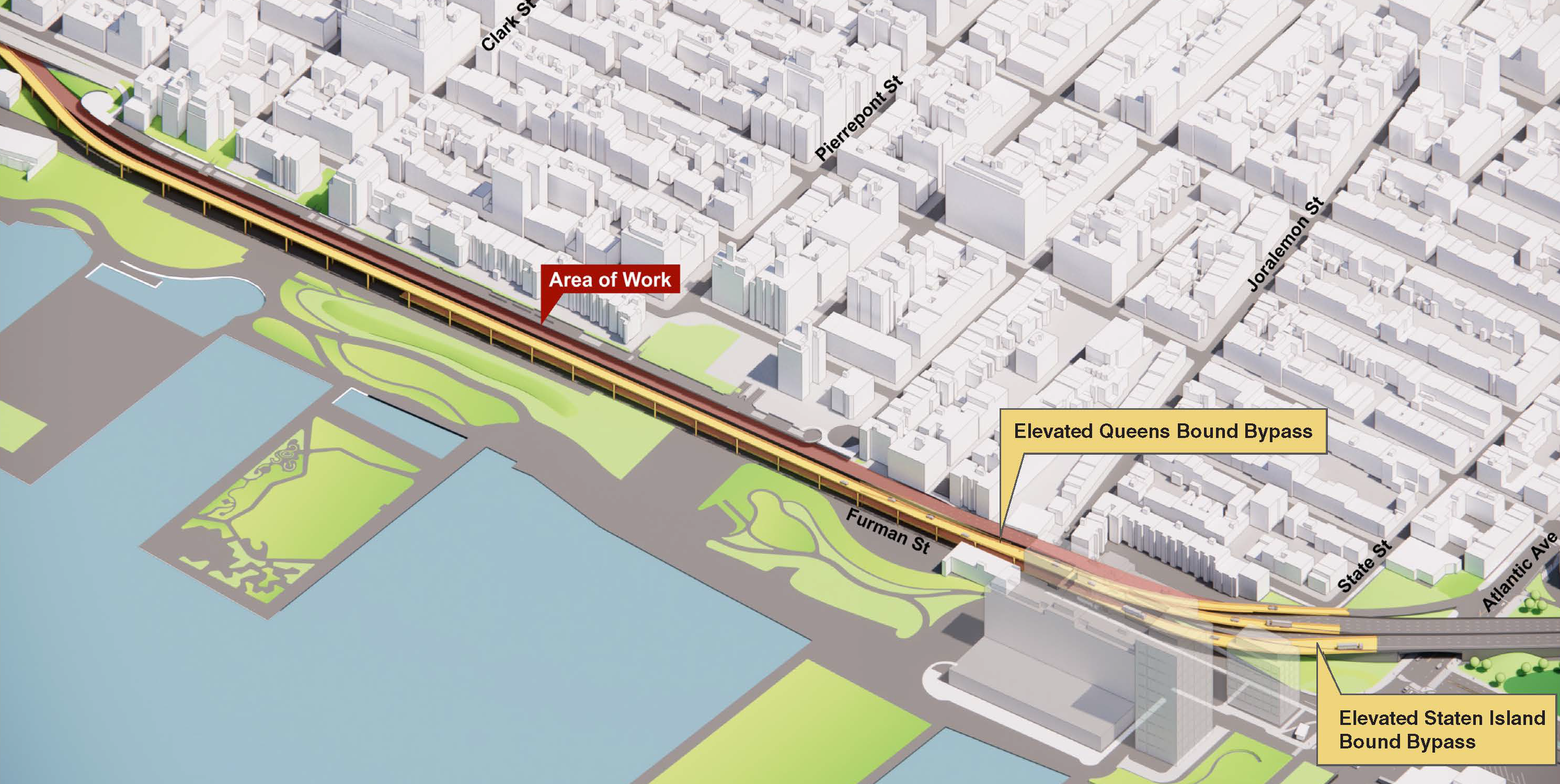
A double bypass would travel over Furman Street from Atlantic Avenue to Columbia Heights, maintaining both directions of traffic. This bypass would be no higher than the existing Queens-bound level.
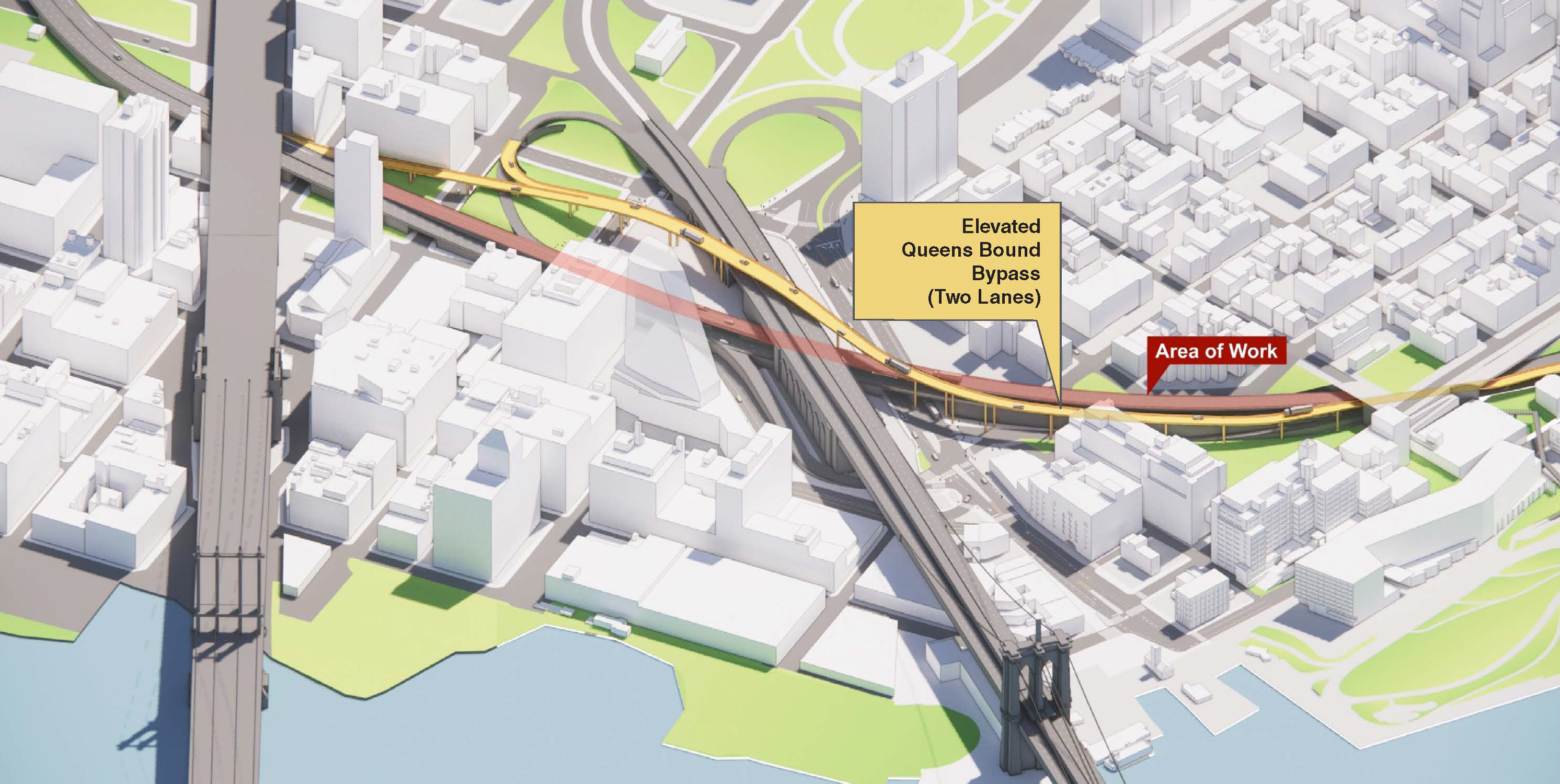
The current design shows a Queens-bound only bypass that would travel from Columbia Heights to just before the Manhattan Bridge, travelling over the BQE itself as well as the approach to the Brooklyn Bridge.
Construction is expected to begin in 2029 and finish by 2040. This includes building and dismantling the bypass.
Why is this project needed?
BQE Central carries people, goods, emergency vehicles, and freight through Brooklyn and the region. However, BQE Central is over 70 years old and needs repairs to remain safe for the traveling public and keep all these vehicles off local streets. This project would:
- Address structural deterioration
- Maintain regional connectivity and mobility
- Rehabilitate the Brooklyn Heights Promenade to keep it in a state of good repair
- Maintain the option for future long-term planning of the BQE corridor
Long-term construction activities will be underway for several years. That is why NYC DOT encourages your participation in the environmental review process.
Why is the City Rehabilitating BQE Central?
This section explains why major repairs are needed, why NYC DOT is proposing rehabilitation, and how this work fits into longer-term planning for the BQE corridor.
Download a printable version of Why is the City Rehabilitating BQE Central? (pdf)
Work is Needed Now
BQE Central is more than 70 years old. Many parts of the structure have worn down over time. NYC DOT inspections have found cracked concrete, exposed steel, rust, water damage, and other signs of age. Some of the damage is on parts of the structure that supports the highway.
The highway is currently safe because NYC DOT has made targeted interim repairs and limited stress on the structure by implementing automated enforcement against overweight trucks and reducing traffic to two lanes on the triple cantilever. However, these steps do not address the level of repair needed in the long-term and a larger scale project is needed to safely maintain the infrastructure.
-
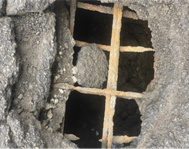
Deck through holes over Old Fulton Street. -
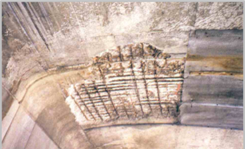
Typical joint condition along the triple cantilever.
Why not wait for a bigger plan?
The can has been kicked down the road for too long. The result is serious deterioration that can no longer be managed through temporary fixes. The City must pivot towards a rehabilitation plan to keep the structure safe and stable.
Waiting too long would make repairs harder, more expensive, and more disruptive to nearby communities and the region. 130,000 vehicles travel on the BQE daily, including 13,000 trucks. Further delay would result in removing trucks or all traffic from the highway and diverting them to local streets, creating unsafe conditions and severely impacting quality-of-life in surrounding neighborhoods.
NYC DOT will rehabilitate BQE Central now, while continuing to advance policies and initiatives that reduce long-term travel demand on the BQE and working with government and community partners on a longer-term plan for the full BQE corridor.
What Rehabilitation Means
Rehabilitation means repairing and strengthening the existing structure (extending its use for approximately 40 years), instead of replacing it (which would extend its use for 75+ years). The proposed work would repair the highway deck, walls, joints, and other parts of the structure. It would also improve drainage, lighting, and railings. The goal is to make BQE Central safer, extend its service life, and reduce the need for constant short-term repairs.
What are the public benefits of this project?
The main benefit is a safer and more reliable structure for 40 years. While the City and our partners work to shift more movement of people and goods to sustainable travel modes, right now we need to keep trucks and other traffic on the highway and off our local streets.
During this project, NYC DOT will also consider local street improvements near BQE Central where possible. We recognize the BQE's legacy and the burden it has placed on surrounding neighborhoods.
As the project moves forward, NYC DOT will pair this work with investments in safety, public space, and quality of life for communities with a focus on neighborhoods that have been most historically harmed by the impacts of the BQE.
How Can I Participate?
Explains the environmental review process, upcoming opportunities to learn more, and how the public can provide comments during CEQR.
Download a printable version of How Can I Participate? (pdf)
Environmental Review
Before the project can move forward, NYC DOT must study the short- and long-term effects of the project on the environment through a process called the City Environmental Quality Review, or CEQR. The review will look at how the project could affect nearby communities during construction and after construction. It will study topics such as:
- Open Space
- Air Quality
- Noise
- Historic Resources
- Transportation (including traffic)
- Neighborhood Character
- Construction Effects
- Any Potential Effects on Disenfranchised Communities
CEQR results in an Environmental Impact Statement, or EIS, which is a public document. It explains what the project is, what impacts it might have, and how those impacts could be avoided, minimized or otherwise mitigated.
Types of Comments During Scoping
We encourage you to provide comments related to:
- Project scope and rehabilitation measures
- Traffic, parking, walking, and biking
- Parks, public space, and the Brooklyn Heights Promenade
- Construction activities and their effects on the community
- Local safety and quality-of-life improvements
- Ways to reduce impacts on nearby residents, workers, businesses, and visitors
CEQR Timeline
- September 2026: Publish scoping notice
- November 2026: Public Scoping Meetings
- Early 2027: Final Scoping Report
- Late 2027: Draft EIS Release & Public Meetings
- Early 2028: Final EIS & Scoping Report
How to Get Involved
Public scoping meetings are an early and important step in the environmental review process. During scoping, the public can comment on what the EIS should study. This is a chance to raise concerns, ask questions, and suggest topics that should be reviewed.
NYC DOT plans to hold CEQR Public Scoping Meetings later this fall.
During these meetings, the public is invited to provide official comments. There will also be ways to provide comment outside of these meetings. Meeting details and comment instructions will be posted here, on the project website: nyc.gov/bqe.
How can I stay informed?
Check the project website for updates or attend a virtual or in-person Q&A. NYC DOT will also share information with community groups.
Formal comments should be submitted during the CEQR Public Comment Period, which will start later this fall. Information will be posted on this website about how to formally submit comments.
Stay Involved During Construction
Once the project starts, NYC DOT will implement a community advisory committee and hold regular office hours to address any quality-of-life concerns.
FAQ
Answering common questions about the proposed project, construction, temporary bypass structures, public benefits, and how to stay informed.
Download a printable version of the BQE Central FAQ (pdf)
What is happening with the BQE?
NYC DOT is proposing major repairs through rehabilitation to BQE Central. This is the section from just north of Atlantic Avenue to Sands Street.
What is the goal of the project?
The goal is to make BQE Central safer, extend the life of the structure, reduce repeated short-term repairs, and keep an important travel and freight route functioning.
Will the project make the highway bigger?
No. The proposed project is focused on repairing the existing highway. It would not add new highway capacity. The highway will remain two lanes, as it is currently.
How long would construction last?
Construction is currently expected to begin in 2029 and finish by 2040. The schedule will be studied and updated as the project moves forward.
What will things look like during construction?
Temporary bypass structures would be built near parts of the existing highway. The two-level bypass required for triple cantilever rehabilitation would travel over Furman Street and be no higher than the existing Queens-bound level. North of Columbia Heights, the current design shows a Queens-bound bypass that will go over the existing BQE and the approach to the Brooklyn Bridge. Traffic would use these bypasses while repair work happens. NYC DOT continues to review alternate design options at this stage of the project. Regardless, the bypasses would be removed after construction is complete.
What disruptions should people expect?
The project could affect traffic, parking, noise, air quality, sidewalks, bike routes, parks, views, and access during construction. These issues will be studied in the environmental review. Throughout construction, mitigation measures will be implemented, and NYC DOT will provide a community liaison and ongoing engagement opportunities to address any concerns.
What about the Brooklyn Heights Promenade?
The Promenade is part of the triple cantilever structure. The project is intended to repair and protect the structure, including the Promenade above the highway. During construction, NYC DOT will maintain access to portions of the Promenade at all times, to the extent feasible.
What about other nearby parks?
During construction, NYC DOT will maintain access to Squibb Park, Hillside Dog Park, and the Harry Chapin Playground to the extent feasible. Harry Chapin Playground will be reconstructed in conjunction with the Columbia Heights overpass rehabilitation.
Why not do a bigger transformation now?
The can has been kicked down the road for too long. The result is serious deterioration that can no longer be managed through temporary fixes. We must pivot to a shorter-term rehabilitation plan needed to keep the structure safe and stable, while continuing to consider longer term plans for the BQE corridor.
How much will this project cost?
NYC DOT's top priority is always safety. The highway is a critical regional connector, and we need to invest in a state of good repair. Rehabilitation is estimated to cost $3.5-$4 billion, a cost that will be refined through the environmental review process, as well as through continued project design stages. The City currently has $1.6 billion allocated to this project in the Capital Plan and will allocate additional necessary funding.
Will there be public benefits?
The main benefit is a safer and more reliable structure that will last for approximately 40 years. Keeping the BQE open and safe ensures that more trucks are kept off of local streets. Where feasible, NYC DOT will consider local street improvements near BQE Central. The environmental review and public comments will help shape that work.
How can I provide input?
You can comment during the CEQR public scoping period. You can also attend public meetings, visit this project website, sign up for updates, and take part in outreach events before formal public meetings. Check this project website to learn more.
Isn't this project just another short-term fix for what should be a comprehensive, corridor-wide project?
This project provides the urgent rehabilitation needed to keep the structure safe and stable while keeping the door open to more transformative changes in the future. The BQE Central Project will protect the highway structures, including the triple cantilever, for approximately 40 years. This project addresses the structure's immediate needs in a comprehensive way, while leaving the door open for future decision-making on a more comprehensive project.
Will there be parkland alienation or a need for ULURP as a requirement for this project?
Uniform Land Use Review Procedure (ULRUP) will be required for the BQE Central Project. There is a portion of parkland within the bounds of this project that would need to go through the New York State parkland alienation (transfer of ownership or changing the use of) and NYC ULURP processes.
The Brooklyn Marine Terminal (BMT) project is happening adjacent to the BQE Central Project. How will this work impact that project or vice versa?
We know the BMT development will shape the area's transportation needs for decades to come, which is why we have taken a comprehensive and coordinated approach with New York City Economic Development Corporation (NYCEDC). We continue to work closely with our NYCEDC partners to ensure that both the BQE project and the BMT plan move forward in harmony to maximize benefits for the neighborhood and the city as a whole.
What will happen to the on- and off-ramps to the BQE at Atlantic Avenue as part of the BQE Central Project?
The on- and off-ramps to the BQE at Atlantic Avenue will not be closed to facilitate the BQE Central Project. Closing the ramps is not feasible as part of a City-led project at this time. Future decisions to close the ramps would require federal-level intervention and environmental review. Given the pressing need for repairs of the cantilever structure, the City has decided to move forward with the BQE Central Project as currently designed.
Upcoming Community Events
Before the formal CEQR public comment period begins, NYC DOT will host public information events to help community members learn more about the proposed rehabilitation and upcoming environmental review process.
These events are only intended to share information and answer questions. To learn more about providing formal comments, please review the Environmental Review and Public Input section below.
Q&A Sessions
NYC DOT will host Q&A sessions where members of the public can learn more about the proposed rehabilitation, the environmental review process, and upcoming opportunities to provide input. We invite you to review the Project Materials section as well as the Draft Scope of Work before attending a session. Registration in advance is required to attend these sessions.
Virtual Q&A #1
Date: Tuesday, October 6, 2026
Time: 7 p.m. to 8 p.m.
Registration: bit.ly/bqecentral-oct6
Download the BQE Central Virtual Q&A presentation from October 6, 2026 (pdf)
Virtual Q&A #2
Date: Thursday, October 22, 2026
Time: 11 a.m. to 12 p.m.
Registration: bit.ly/bqecentral-oct22
BQE Central Info Session
Date: Thursday, October 29, 2026
Time: 6 p.m. to 8 p.m.
Location: Brooklyn Borough Hall, 209 Joralemon St, Brooklyn, NY 11201
Registration: bit.ly/bqecentral-oct29
Pop-Up Events
NYC DOT will also host in-person pop-up events where members of the public can speak with project team members. These events will not feature a presentation, so members of the public can attend at any time during the event. More events will be added soon.
Atlantic Antic
Date: Sunday, October 4, 2026
Time: 12 p.m. to 6 p.m.
Location: Atlantic Avenue, near the intersection of Atlantic Avenue and Clinton Street
Brooklyn Heights Library Pop-Up Office Hours
Date: Tuesday, October 13, 2026
Time: 4 p.m. to 7 p.m.
Location: 286 Cadman Plaza West, Brooklyn, NY 11201
DUMBO Archway Plaza
Date: Wednesday, October 21, 2026
Time: 11 a.m. to 2 p.m.
Location: DUMBO Archway Plaza, at the intersection of Pearl Street and Water Street (near 155 Water St, Brooklyn, NY
11201)
Montague Street Open Street
*New Date*: Sunday, October 25, 2026 (event was originally scheduled for October 11 but postponed due to
inclement weather)
Time: 12 p.m. to 3 p.m.
Location: Montague Street between Clinton Street and Hicks Street, Brooklyn Heights
Environmental Review and Public Input
NYC DOT has begun the City Environmental Quality Review (CEQR) process for the BQE Central Project. CEQR is New York City's process for studying how a proposed project could affect nearby communities and the environment.
As part of this process, NYC DOT will prepare an Environmental Impact Statement (EIS). The EIS will study potential effects during construction and after the project is complete, including effects related to transportation, noise, air quality, parks and open space, historic resources, neighborhood character, and other environmental topics.
In accordance with CEQR, NYSDOT has issued an Environmental Assessment Statement, which provides basic project information and an early identification of potential environmental effects, and a Positive Declaration, which identifies NYC DOT's intent to prepare an EIS and the reasons it believes an EIS is necessary.
Review the Environmental Assessment Statement (pdf) Review the Positive Declaration (pdf) Review the Disadvantaged Communities Engagement Plan (pdf)
Draft Scope of Work
NYC DOT released the Draft Scope of Work for the BQE Central Project. The Draft Scope explains what NYC DOT plans to study in the Environmental Impact Statement and how those studies will be conducted. It also describes the proposed project, its purpose and need, and the process to be followed.
Review the Draft Scope of Work for the BQE Central Project (pdf)
Public Scoping
Public scoping is an early step in the environmental review process. It gives members of the public, community organizations, and other stakeholders an opportunity to comment on what should be studied in the Environmental Impact Statement.
During the public scoping period, you can comment on:
- Environmental issues or potential impacts that you think should be studied;
- The topics and study areas included in the Draft Scope of Work; and
- Other information that you think NYC DOT should consider as part of the environmental review.
After the public comment period ends, NYC DOT will review the comments received and prepare a Final Scope of Work. The Final Scope will respond to comments and identify the environmental studies that will be included in the Draft Environmental Impact Statement, which will be completed in 2027.
How to Submit an Official CEQR Public Comment
Public comments on the Draft Scope of Work must be received by November 23, 2026. Comments received during the comment period will be addressed in the Final Scope of Work. Comments can be provided in one of four ways:
- By online comment form: submit your comment via our online
contact form
- Note that the online contact form limits comments to 512 characters
- By email: submit your comment via email at BQECentral@dot.nyc.gov
- By U.S. mail: send your written comment to:
- In-person or virtually: attend a CEQR public scoping meeting
Division of Bridges – BQE Central Project Team
Attention: Albert Silvestri
55 Water Street, 5th Floor
New York, NY 10041
CEQR Public Scoping Meetings
NYC DOT will hold public scoping meetings where you can learn more about the Draft Scope of Work and provide an official CEQR public comment. The same information will be presented at each meeting. You only need to attend one meeting, but you are welcome to attend either. Please note that registration in advance is required for the virtual public scoping meeting. If you require language interpretation services for the virtual meeting, you must register by Thursday, November 5. Register at the link below.
Public Scoping Meeting #1 (In-person)
Date: Tuesday, November 10, 2026
Time: 6:30 p.m. to 8:30 p.m.
Location: To be announced
Language interpretation services for Spanish, Chinese (Mandarin/Cantonese), Arabic, and ASL will be provided.
Public Scoping Meeting #2 (Virtual)
Date: Thursday, November 12, 2026
Time: 6:30 p.m. to 8:30 p.m.
Location: Zoom
Registration: bit.ly/bqecentral-nov12
Language interpretation services available upon request. If you require language interpretation services for this
virtual meeting, you must register by Thursday, November 5.
Agency Coordination
NYC DOT is leading the BQE Central Project and this CEQR process. As the project moves forward, NYC DOT will coordinate with other city and state agencies, including agencies responsible for parks, environmental protection, land use, and historic resources, and will seek other approvals that may be needed for the project.
NYC DOT will also continue to share information with elected officials, community boards, community organizations, and the public.
BQE Background
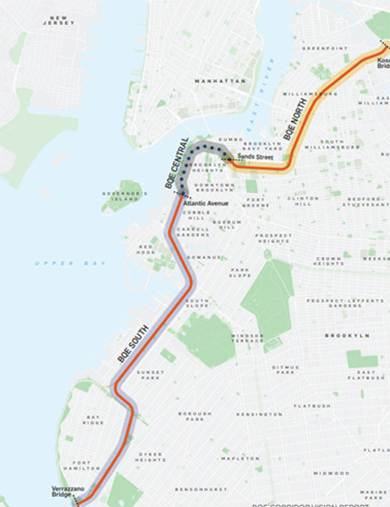
Built between 1937 and 1964, the BQE is Brooklyn's only interstate highway and plays a major role in moving people and goods locally and regionally. Approximately 130,000 vehicles use the BQE daily – 13,000 of them trucks, making this a vital freight corridor. The highway is integral to keeping these vehicles off local Brooklyn streets.
Both the City of New York and the State of New York own various sections of the BQE:
The City owns the approximately 1.5-mile section of the BQE from Atlantic Avenue to Sands Street, known as BQE Central, that is the focus of this project. BQE Central includes the "Triple Cantilever" in Brooklyn Heights.
The State owns the rest of the 10.6 miles of BQE in Brooklyn that are outside of the scope of this project, including:
- Areas in north and south Brooklyn where the highway is below street level (trenches)
- Areas where the highway is on a structure above street level (viaducts)
From 2022 to 2024, NYC DOT led a community visioning process that included the State-owned sections that are outside of the BQE Central scope. Information on that effort can be found on the BQE Corridor Vision website.