
 Landmarks Preservation Commission311Search all NYC.gov websites



FOR IMMEDIATE RELEASE: February 20, 2026
CONTACT: lpcpressoffice@lpc.nyc.gov, (212) 669-7938
LPC Unveils New Historic District Markers Commemorating Central Harlem – West 130th-132nd Streets Historic District’s Legacy of Leadership and Activism
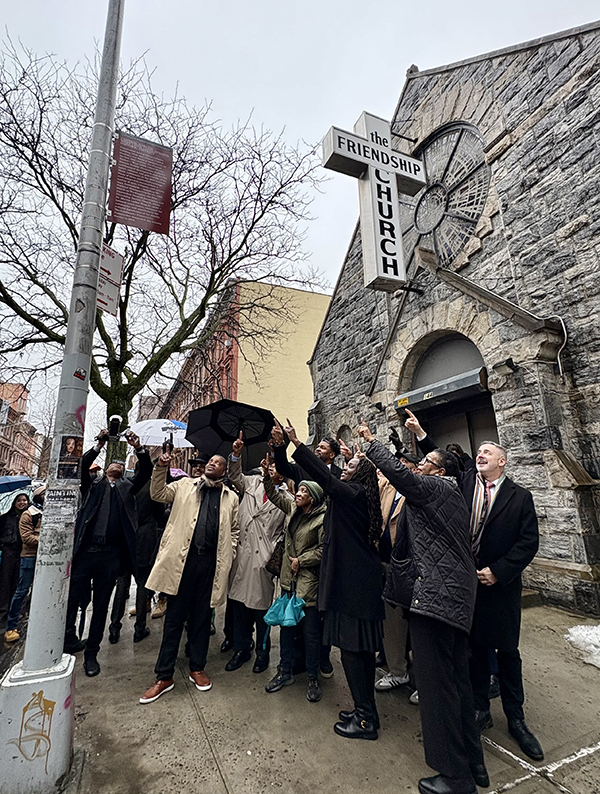
LPC joined New York State Senator Cleare, New York State Assemblymember Wright, New York City Councilmember Salaam, New York Landmarks Preservation Foundation, Manhattan Community Board 10 and Save Harlem Now! for today’s marker unveiling
Central Harlem – West 130th-132nd Streets Historic District served as a hub for Black artists, leaders, and institutions central to the Harlem Renaissance and the Civil Rights Movement
More photos and video available here
NEW YORK – Today, New York City Landmarks Preservation Commission (LPC) Executive Director Lisa Kersavage joined New York State Senator Cordell Cleare, New York State Assemblymember Jordan Wright, New York City Councilmember Yusef Salaam, Manhattan Community Board 10, the New York Landmarks Preservation Foundation (NYLPF), and Save Harlem Now! to unveil new markers commemorating Central Harlem – West 130th-132nd Streets Historic District’s remarkable history and distinct sense of place.
Central Harlem – West 130th-132nd Streets Historic District represents both Harlem’s architectural development and the profound role that Harlem’s Black community played in creating political and social change. In designating it as a historic district in 2018, LPC highlighted its significant contributions to the social and political history not just of New York City, but to the nation as a whole.
Developed in the late 19th century as a suburban community of multi-family row houses, in the early 20th century Harlem transitioned from a majority white neighborhood into the nation’s largest Black urban community, and from the 1920s through the 1960s the Central Harlem–West 130th–132nd Streets Historic District became home to an extraordinary concentration of Black leaders, activists, and artists, as well as influential cultural, religious, civic, and political organizations that were central to the fight for social justice and civil rights.
Musicians like pioneering ragtime and jazz composers Scott Joplin and James Hubert “Eubie” Blake called the district home, as did many organizations and institutions at the forefront of the fight for equal rights, like the National Headquarters for the 1963 March on Washington, the New Amsterdam Musical Association (NAMA), and the Friendship Baptist Church, where Dr. Martin Luther King Jr. gave a sermon in 1957.
"If the sidewalks and stoops of Harlem could speak, they would sing. They would tell a story of ragtime and jazz, of tenant meetings and mass marches, of block parties and hard-won victories. They would tell us that Harlem has always been more than a neighborhood; it is a movement. What rises in Harlem can't be contained by its borders — it moves, it organizes, it transforms this city and inspires the world. As we honor Black History Month, and commemorate this historic district, we affirm that Harlem is not just part of New York’s story — it is its beating heart, and its conscience," said Mayor Zohran Kwame Mamdani.
“Central Harlem has been a home to arts, culture, design, and social change for decades. Thanks to these new historic district markers, the history of this remarkable district will be more accessible and legible to the public than ever before," said Leila Bozorg, Deputy Mayor for Housing and Planning.
“When LPC designated the Central Harlem – West 130th–132nd Streets Historic District in 2018, we recognized both the distinguished architecture and also the critical role these buildings played in the cultural, and political life of Harlem’s Black population in the 20th century,” said Landmarks Preservation Commission Executive Director Lisa Kersavage. “The new historic district markers unveiled today honor and share the history of these blocks and how they sustained Harlem’s community and fostered social justice.”
“The Central Harlem – West 130th–132nd Streets Historic District reflects LPC’s dedication to preserving the places that tell the story of New York and its people,” said Landmarks Preservation Commission Vice Chair Angie Master. “With the installation of these historic markers, we honor the district’s pivotal role in history from the Harlem Renaissance to the Civil Rights Movement, and recognize the leadership and courage of the community that built and sustained this neighborhood, ensuring these stories are preserved and shared for generations to come.”
“I am overjoyed at both the designation and marker unveiling for the Central Harlem — West 130th-132nd Streets Historic District, said New York State Senator Cordell Cleare. “These blocks and buildings tell the quintessential story of Black Harlem from the first days of the Renaissance in the 1920’s to the planning of 1963 March on Washington for Jobs and Freedom. They hold within them well over 100 years of absolute Black Excellence!”
“The Central Harlem – West 130th–132nd Streets Historic District stands as a powerful testament to Harlem’s architectural legacy and the transformative role its Black community played in shaping political and social change across New York and our nation,” said New York State Assemblymember Jordan J.G. Wright. “From the Harlem Renaissance through the Civil Rights Movement, this neighborhood was home to visionary leaders, artists, and institutions — including the National Headquarters for the 1963 March on Washington and Friendship Baptist Church, where Dr. King preached in 1957. As we honor this historic designation, we reaffirm our commitment to preserving Harlem’s rich cultural heritage and the enduring legacy of those who advanced justice, equality, and opportunity for all.”
“Today’s unveiling is a powerful reminder that Harlem’s history is not just preserved in books — it lives in our streets, our buildings, and our institutions. I want to thank Lisa Kersavage and the New York City Landmarks Preservation Commission, along with the New York Landmarks Preservation Foundation and Save Harlem Now!, for recognizing what has meant so much to generations of families who have called Harlem home,” said New York City Councilmember Yusef Salaam. “Preservation is about more than protecting buildings. It is about protecting memory, identity, and legacy. And today, Harlem’s legacy is being honored in a way that will endure.”
“The New York Landmarks Preservation Foundation today celebrates the designation of this significant Harlem neighborhood where block by block these architecturally beautiful townhomes were also the host to the cultural movement that is known worldwide as the Harlem Renaissance,” said New York Landmarks Preservation Foundation Chair Tom Krizmanic. “The impact of the past events in this now designated Historic District is still felt today in Black leadership, politics, art, music and faith.
Save Harlem Now! is pleased to be participating in the unveiling of the marker that celebrates the Central Harlem West 130th to 132nd Street Historic District,” said Save Harlem Now! President Valerie Jo Bradley. “In addition to being architecturally engaging, this district is significant because it is a reminder of the role African Americans in Harlem played in creating political and social change in New York City and the nation.
The Central Harlem – West 130th-132nd Streets Historic District includes more than 160 buildings, primarily row houses, stretching from West 130th to West 132nd Streets between Lenox and Seventh Avenues. Residents adapted many of these residential buildings to accommodate a variety of cultural, religious, civic, and political uses. Together, the institutions based in this historic district shaped Harlem’s history and culture, and helped advance social change nationwide.
Notable organizations and institutions located in the Central Harlem – West 130th-132nd Streets Historic District include:
National Headquarters for the 1963 March on Washington, 170 West 130th Street:
Originally constructed as private home, this row house became the Sojourner Truth House in 1920, providing temporary care for young girls. In 1928, the Utopia Club hired Vertner Woodson Tandy, the first Black architect registered in New York State, to redesign the facade of the building, and it became the Utopia Children’s House and the Utopia Neighborhood Club, which provided a safe environment for local youth. In 1963, the building’s first floor was used as the National Headquarters for the March on Washington, where chief organizer Bayard Rustin planned the route of the march, participated in news conferences and outreach, and oversaw transportation and fundraising for what would become the nation’s largest political demonstration.
Friendship Baptist Church, 144-146 West 131st Street
Under the leadership of Pastor Dr. Thomas Kilgore, Jr., Friendship Baptist Church was actively involved in mobilizing its membership to support the fight for civil rights. Dr. Martin Luther King, Jr delivered a sermon at the church in July 1955, and during the planning of the March on Washington, the church provided office space in the building that became its headquarters (at 170 West 130th Street) and helped organize food and supplies for the marchers.
New Amsterdam Musical Association (NAMA), 107 West 130th Street
Founded in 1904, NAMA is the nation’s oldest African-American musical association. Established in response to Black musicians being denied admission into white-only local unions, NAMA worked to provide benefits to their members like higher pay, better access to musical education, and protections against abusive contractors. The building at 107 West 130th Street continues to serve as the organization’s headquarters, and is currently undergoing restoration work funded in part by LPC’s Historic Preservation Grant Program, which provides critical funding and ongoing support for low-to-moderate-income homeowners and non-profit organizations looking to repair and restore their landmark properties.
The Frogs, 111 West 132nd Street
Founded in 1908 in response to the exclusion of Black professionals from membership in the American Actors Beneficial Association, The Frogs worked to book events and venues for its members, as well as offering benefits like funds for medical expenses. The West 132nd Street row house was used as the group’s clubhouse and housing for members.
The Colored Branch of the YWCA in Harlem, 121 and 123 West 132nd Street
One of the key institutions created by Black women in New York City in the early 20th century, this branch was considered the most visible and developed of all YWCAs created for the Black community in the country. The branch was based on West 132nd Street from 1913-1921.
Today’s marker installation is part of the NYLPF’s Historic District Marker Program, which fosters public awareness and civic pride in designated historic districts in the five boroughs. A total of three markers sponsored by NYLPF were installed today across the historic district.
The markers, which are produced and installed by the NYC Department of Transportation, are 19-by-36-inch terra cotta-colored signs and feature a map on one side and a brief description and history of the district on the other.
The Central Harlem – West 130th-132nd Streets Historic District marker text read as follows:
Constructed during the speculative building boom that created Central Harlem’s row house neighborhoods in the late 19th century, the Central Harlem – West 130th-132nd Streets Historic District is a highly intact district that illustrates Harlem’s architectural development and the rich social, cultural, and political life of its Black community in the 20th century. Many of these residential buildings were adapted to accommodate a variety of civic, religious, and artistic uses. Institutions in this district – including the National Headquarters for the 1963 March on Washington, the New Amsterdam Musical Association, and Friendship Baptist Church, where Dr. Martin Luther King Jr. spoke – fostered social justice, sustained the community, and contribute to the cultural significance of the district. The Landmarks Preservation Commission designated this historic district on May 29, 2018.
More Information:
Photos and video of the Central Harlem – West 130th-132nd Streets Historic District and today’s marker unveiling event can be found here: https://app.box.com/s/9v7ftsyj4zifmm2ezfv3wl4lpfgqumdc
The Central Harlem – West 130th-132nd Streets Historic District designation report: http://s-media.nyc.gov/agencies/lpc/lp/2607.pdf
###
About the Landmarks Preservation Commission (LPC)
The Landmarks Preservation Commission is the mayoral agency responsible for protecting and preserving New York City’s architecturally, historically, and culturally significant buildings and sites. Since its creation in 1965, LPC has granted landmark status to more than 38,000 buildings and sites, including 1,470 individual landmarks, 125 interior landmarks, 12 scenic landmarks, and 159 historic districts and extensions in all five boroughs. For more information, visit LPC's website and connect with us at Facebook, Instagram, X (Twitter), and LinkedIn.
About the New York Landmarks Preservation Foundation (NYLPF)
The New York Landmarks Preservation Foundation is a not-for-profit organization that supports work that relates to the designation of New York City landmarks, including the well-recognized Bronze Plaque Program for individual landmarks, the Street Sign Program, and the Historic District Marker Program. For more information, visit http://www.nylpf.org