




NYC DEP Celebrates National Source Water Protection Week With Tour of 450th Stream Management Project
September 30, 2021
City and watershed partners are considered worldwide leaders in protecting water at its source
Photos Available on DEP’s Flickr page
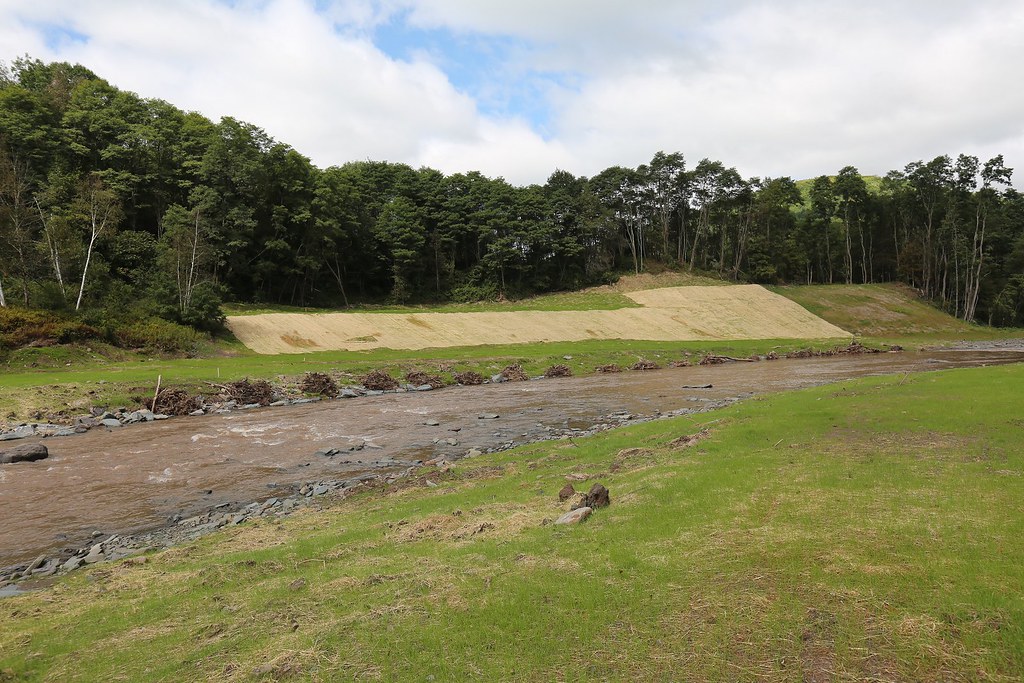
New York City Department of Environmental Protection (DEP) Commissioner Vincent Sapienza today joined the Greene County Soil and Water Conservation District (GCSWCD) and local leaders in the Catskills to celebrate the nation’s first Source Water Protection Week, which highlights efforts to protect the sources of drinking water that sustain communities across the United States. Participants toured the ongoing stream management project at Red Falls, along the Batavia Kill, in the towns of Ashland and Prattsville. The project to improve more than 6,000 feet of the Batavia Kill through this portion of Greene County is one of the largest and most complex projects in the history of the DEP stream management program, and it marks the 450th stream project funded by the program since it started in 1996.
“The stream management project at Red Falls underscores why New York City and its watershed partners are considered worldwide leaders in source water protection,” DEP Commissioner Vincent Sapienza said. “New York City has invested more than $2 billion since 1993 to protect our drinking water at its source in the Catskills. The science-based programs funded by DEP have maintained, safeguarded and improved water quality across the reservoir system that now sustains nearly 10 million New Yorkers each day. The success of the source water protection program is worth celebrating with our many partners in the watershed, without whom these efforts would not be possible or effective.”
“The Greene County Soil and Water Conservation District is pleased to be able to offer source water protection programming through our partnership with DEP,” GCSWCD Executive Director Joel DuBois said. “The improvements to our waterways and infrastructure assets that are made possible through this partnership put us in the best possible position to be resilient during future extreme weather events.”
“The New York Section American Water Works Association (NYSAWWA) is excited to kick off the inaugural Source Water Protection Week, during which we raise awareness and recognize that protecting sources of drinking water is essential to a sustainable supply for future generations,” said Jenny Ingrao, executive director of NYSAWWA. “NYCDEP is helping to lead the charge with their innovative approach to safeguarding their source water and delivering high-quality water to roughly half the state.”
On Thursday, DEP and the GCSWCD led a tour of the $3.7 million project to restore more than a mile of the Batavia Kill in northwestern Greene County. This section of the stream has long been eroding the glacial clay and till that surrounds it, making it the largest single source of sediment in the watershed of Schoharie Reservoir. The force of several storms, including tropical storms Irene and Lee in 2011, caused multiple hillslopes to fail along the Batavia Kill, including some that exceeded 50 feet in height. The Red Falls project gets its name from a waterfall that is located along the Batavia Kill, on property owned by the City and managed for passive recreation.
The stream restoration project at Batavia Kill was broken into several segments because of its overall size and complexity. The first segment was completed this year, and construction on the final sections will start as early as 2022.
During the first two phases of work, stream experts and local excavators built a 1,250-foot-long channel to dewater the section of stream that was rehabilitated, used hundreds of boulders to build grade controls, riffles and other flow-control features, graded and stabilized more than 1,600 feet of the streambank and created a floodplain to help reduce the erosive power of the stream during large runoff events. Native plant species were also planted along the streambanks to help hold the soil tight and provide a vegetated buffer.
The design and long-term monitoring of the project site are both guided by sound science. The upper and lower limits of the entire restoration project are equipped with real-time water quality monitoring instruments, allowing scientists to measure the effect of the stream management project on suspended sediment in the stream under different volumes of flow. The project aims to restore stable stream function and reduce the impacts to water quality from the erosion of fine sediment along the streambanks and streambed.
The work near Red Falls on the Batavia Kill is the 450th stream project since DEP began its stream management program in 1996. Those projects have restored the channel stability or vegetation at more than 50 miles of streams across the Catskills. The City has invested more than $200 million in its stream management programs, which are carried out in partnership with the soil and water conservation districts in Delaware, Greene, Sullivan and Ulster counties, along with the Cornell Cooperative Extension of Ulster County. The program seeks to manage streams to limit erosion and flood-hazard risk, protect infrastructure, improve habitat, and protect and improve water quality.
New York City Reservoir System a Model of Source Water Protection
New York City’s Catskill and Delaware water supply systems comprise the largest unfiltered water supply in the United States, delivering 1 billion gallons of high-quality drinking water to nearly 10 million people each day. These two systems are operated under a Filtration Avoidance Determination—a permit that sets stringent criteria for water quality and outlines a number of projects the City must fund or administer to protect its drinking water.
For decades, the City has implemented a strategy of source water protection to maintain the quality of water in its reservoirs. The science-based programs in DEP’s source water protection program are rooted in the concept that it is most cost-effective and environmentally sound to protect the quality of water at its natural source. DEP’s programs in the watershed have become a national and international model for protecting water at its source. Each year, water utility managers and public health professionals come from around the globe to study the City’s watershed programs.
A key element of New York City’s success in watershed protection has been the development of strong relationships with watershed communities, locally based organizations, environmental groups, and federal, state and local government agencies. While the City funds its watershed protection programs, most of them are administered by watershed-based agencies that partner with DEP to protect the water supply from environmental degradation or potential sources of contamination.
The City has spent and committed approximately $2.7 billion toward its source water protection programs since 1993. Its initiatives and achievements have included:
- DEP has paid to build or upgrade 99 community wastewater facilities in the watershed, recognizing that the adequate collection and treatment of wastewater is key to the protection of drinking water. It has also funded, through the Catskill Watershed Corporation, the repair or replacement of more than 6,100 residential septic systems for homeowners living in the Catskills.
- The City has also funded significant work on watershed farms to improve the quality of runoff from agriculture lands. DEP has partnered with the Watershed Agricultural Council to develop 464 whole farm plans and implement 8,586 best management practices that protect water quality while promoting the efficient use of working lands across the entire watershed.
- DEP has also funded or constructed nearly 200 stormwater control projects to control nutrient-rich runoff that can affect the quality of water in its reservoirs.
- DEP has administered a land acquisition program that has preserved more than 154,000 acres of land through fee-simple purchases or conservation easements since 1997. In addition, the City already owned nearly 45,000 acres of land surrounding its reservoirs, the State of New York owns and permanently protects 213,000 acres as parkland or forestland, and other entities own and protect nearly 25,000 acres as parkland or forestland. This land—much of it along streams and steep slopes—preserves forests that act as the natural filter of the drinking water.
- DEP’s Stream Management Program has completed 450 projects that restored the channel stability or vegetation along more than 50 miles of streams in the Catskills.
- DEP has completed 57 forest management projects on city-owned lands across the watershed. This work has improved the overall health of our watershed forests by diversifying the age and species of trees that are found within them.
- The City also maintains a robust water quality monitoring program that examines water quality in the reservoirs, streams and other key points across the watershed to monitor the success of its source water protection efforts. Combined with its water quality monitoring in the five boroughs of New York City, DEP scientists collect about 60,000 samples each year and perform 700,000 analyses of those samples. A network of robotic monitoring instruments provide more than 2 million additional water quality measurements throughout the year.
DEP manages New York City’s water supply, providing more than 1 billion gallons of high-quality water each day to nearly 10 million New Yorkers. This includes more than 70 upstate communities and institutions in Ulster, Orange, Putnam and Westchester counties who consume an average of 110 million total gallons of drinking water daily from New York City’s water supply system. This water comes from the Catskill, Delaware, and Croton watersheds that extend more than 125 miles from the City, and the system comprises 19 reservoirs, three controlled lakes, and numerous tunnels and aqueducts. DEP has nearly 6,000 employees, including almost 1,000 scientists, engineers, surveyors, watershed maintainers and other professionals in the watershed. In addition to its $70 million payroll and $168.9 million in annual taxes paid in upstate counties, DEP has invested more than $2.7 billion in watershed protection programs—including partnership organizations such as the Catskill Watershed Corporation and the Watershed Agricultural Council—that support sustainable farming practices, environmentally sensitive economic development, and local economic opportunity. In addition, DEP has a robust capital program with $20.1 billion in investments planned over the next decade that will create up to 3,000 construction-related jobs per year. For more information, visit nyc.gov/dep, like us on Facebook, or follow us on Twitter.