




Microcephaly
Microcephaly is a birth defect in which a baby’s head size is smaller than expected when compared to other babies of the same age and sex. In severe microcephaly, a baby’s head is much smaller when compared to other babies of the same age and sex. The baby's brain does not develop properly in many cases.
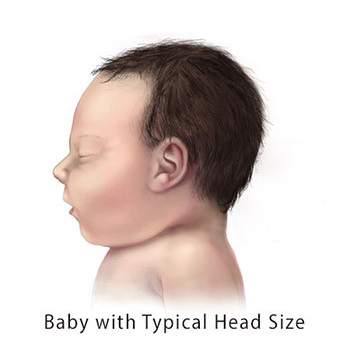
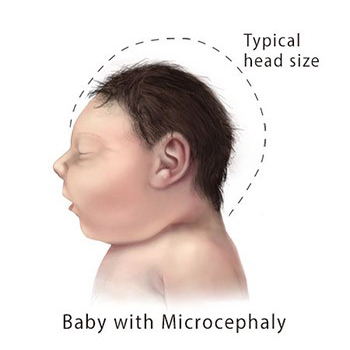
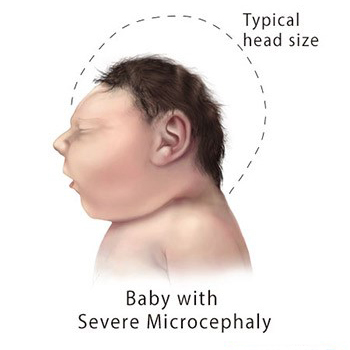
Photo Credit: Centers for Disease Control and Prevention, National Center on Birth Defects and Developmental Disabilities
Causes and Risk Factors
The cause of microcephaly is often unknown, but pregnant people should avoid:
- Infections such as Zika virus, rubella, toxoplasmosis or cytomegalovirus
- Severe malnutrition, meaning a lack of nutrients or not getting enough food
- Exposure to harmful substances such as alcohol or toxic chemicals
- Interruption of the blood supply to the baby’s brain during development
Diagnosis
Health care providers can diagnose microcephaly during pregnancy with an ultrasound test. To diagnose microcephaly after birth, a health care provider will measure the distance around the baby’s head and compare the measurement to standards for babies of the same sex and age.
Complications
Some babies with mild microcephaly have no problems apart from small head size. Babies who have microcephaly due to poor brain development during pregnancy or other birth defects may have medical problems including:
- Seizures
- Problems with sitting, standing, walking or speaking
- Learning or intellectual disabilities
- Problems with movement and balance
- Feeding problems, such as difficulty swallowing
- Hearing loss
- Vision problems
Babies with severe microcephaly may get more complications, or struggle more with them, than babies with milder microcephaly. Severe microcephaly can be fatal.
Caring for a Child with Microcephaly
There is no cure or standard treatment for microcephaly. Babies with microcephaly need regular check-ups with a health care provider to monitor their development and to manage any health complications.
Babies with microcephaly qualify for the New York City Early Intervention Program. This program provides evaluations, therapy (such as physical, occupational and speech therapy, and special instruction) and support services to families with children who have disabilities or developmental delays. The program is available at no out-of-pocket cost, regardless of race, ethnicity, income or immigration status.