

 1
NEW YORK CITY
RACIAL
EQUITY
PLAN
2026
2
This first-ever New York City Racial Equity Plan is dedicated to New
York City’s resilient communities whose voices have often gone
unheard and unanswered.
We honor the individuals and organizations, past and present, who
have tirelessly advocated for justice and equity—whose
experiences and insights have shaped our understanding of racism,
illuminated our city’s history of complicity, and pushed us to do
better.
May this work serve as a catalyst for change, fostering a future where
all individuals can thrive in an inclusive and equitable society.
Together, we commit to listening, learning, and taking action.
3
Table of Contents
Table of Contents
.............................................................................................................................
3
Statement from the New York City Mayor
..................................................................................
6
Statement from NYC Deputy Mayor for Economic Justice
.......................................................
7
Statement from NYC Chief Equity Officer & Commissioner
……………………………….....
8
Vision: A Path Towards Racial Equity (North Stars)
.
……………………………………...
9
Executive
Summary
……………………………………………………………………………...
11
Introduction
………………………………………………………………………………………
21
Framework
.....................................................................................................................................
26
Citywide Racial Equity Goals
………….……………………………………………………...
29
Snapshot:
Areas
of
Focus
and
Common
Themes
.....................................................................
40
Children, Youth, Older Adults, and Families
………………………………………………
.
…
42
Administration for Children’s Services
………………………………………………………………
48
Department for the Aging
......................................................................................................................
59
Department of Social Services – Human Resources Administration and Department of
Homeless Services
.................................................................................................................................
65
Department of Veterans’ Services
.......................................................................................................
74
Department of Youth and Community Development
........................................................................
77
NYC Public Schools
................................................................................................................................
82
Economy
........................................................................................................................................
95
Brooklyn Navy Yard Development Corporation
……………………………………………………
.
100
Department of Consumer and Worker Protection
…………………………………………………
103
Department of Cultural Affairs
………………………………………………………………………
109
Department of Small Business Services
……………………………………………………………
118
Economic Development Corporation
………………………………………………………………
.
123
Mayor’s Office of Contract Services
.................................................................................................
134
Mayor’s Office of Media and Entertainment
.....................................................................................
140
Housing
and
Preservation
………………………………………………………………………
.
147
Department of Buildings
....................................................................................................................
152
Department of City Planning
..............................................................................................................
159
4
Department of Finance
.......................................................................................................................
166
Housing Preservation and Development
...........................................................................................
171
Landmarks Preservation Commission
..............................................................................................
179
NYC
Housing
Authority
.........................................................................................................................
185
Infrastructure and Environment
...............................................................................................
194
Business
Integrity
Commission
...........................................................................................................
202
Department of Design and Construction
..........................................................................................
207
Department of Environmental Protection
........................................................................................
212
Department of Parks and Recreation
................................................................................................
218
Department of Sanitation
...................................................................................................................
227
Department of Transportation
...........................................................................................................
238
Office
of
Technology
and
Innovation
..................................................................................................
250
Taxi
and
Limousine
Commission
.........................................................................................................
256
Health and Wellbeing
.................................................................................................................
261
Department of Health and Mental Hygiene
.....................................................................................
265
NYC Health + Hospitals
.......................................................................................................................
273
Office of Chief Medical Examiner
......................................................................................................
279
Community Safety, Rights, and Accountability
......................................................................
286
Department of Correction
...................................................................................................................
290
Department of Probation
....................................................................................................................
297
Fire Department of the City of New York
..........................................................................................
307
Mayor’s Office of Criminal Justice
....................................................................................................
313
NYC
Emergency
Management
..............................................................................................................
322
New York City Police Department
......................................................................................................
332
Good Governance and Inclusive Decision-Making
...............................................................
341
Civic
Engagement
Commission
...........................................................................................................
348
Commission on Human Rights
..........................................................................................................
354
Department of Citywide Administrative Services
...........................................................................
357
Department of Investigation
..............................................................................................................
365
Department of Records and Information Services
.........................................................................
369
Law
Department
...................................................................................................................................
376
Mayor’s Office of Management and Budget
.....................................................................................
380
5
Office of Administrative Trials and Hearings
...................................................................................
385
Office of Labor Relations
.....................................................................................................................
392
Looking
Ahead
.............................................................................................................................
398
Acknowledgments
.....................................................................................................................
406
Appendix
......................................................................................................................................
411
Appendix A: Glossary
............................................................................................................................
411
Appendix B: Preamble and Statement of Values
.............................................................................
414
Appendix C: Historical Timeline
…………………………………………………………………..
416
Appendix
D:
NYC
Neighborhood
Maps
..............................................................................................
424
Appendix E: Citywide Policies on Employment
...............................................................................
429
Appendix F: Community Equity Priorities
.........................................................................................
431
End
Notes
.................................................................................................................................... ..
433
6
Statement from the New York City Mayor
New York is one of the wealthiest cities in the world. But too many working people still
cannot afford rent, child care, food, transportation or even the time to spend with their
families. Those pressures do not fall evenly. They reflect decades of disinvestment,
exclusion and policy choices that have left some neighborhoods — especially Black,
Brown and immigrant communities — with far less than others.
That’s why, in 2022, New Yorkers overwhelmingly voted to make racial equity planning
a core part of how city government works. They demanded that the City take a harder
look at where inequities persist, how government contributes to them and what it will
take to change course. Today, we are releasing the Final Citywide Racial Equity Plan
— New York City’s first — and delivering on that mandate.
This plan gives City government a framework to examine how decisions about housing,
health, economic opportunity, community safety, infrastructure and public services
shape outcomes across communities. It establishes eight citywide goals, strengthens
commitments across 45 agency-specific plans and creates a clearer way to measure
whether government action is actually closing the gaps it identifies.
We built this plan alongside New Yorkers. After releasing the preliminary plan in April,
the Mayor’s Office of Equity & Racial Justice (MOERJ) held 30 days of public feedback
open to residents across all five boroughs, including 10 engagement sessions, written
submissions, and conversations with community leaders. New Yorkers asked for
measurable outcomes and a plan grounded in the conditions people actually live with.
This plan reflects that.
The Commission on Racial Equity’s (CORE) preliminary plan feedback and Community
Equity Priorities have also continued to inform the planning process, with updated
priorities incorporated in this final plan.
A plan is only as strong as its follow-through. City agencies are now expected to
implement it, report on progress every two years and use it to guide policy, operations
and accountability across government. Naming disparities was never the hard part.
Eliminating them is.
New Yorkers called for a government that is more transparent, more accountable and
more responsive to the communities it serves. We intend to deliver that — and build a
city where every New Yorker has the opportunity to live with dignity and security.
Zohran K. Mamdani
Mayor
7
Statement from NYC Deputy Mayor for Economic Justice
There is no economic justice without racial equity. Too many families in our city cannot
afford the basics. And when those burdens fall hardest on communities that have faced
generations of disinvestment and exclusion, government has to do more than make
broad commitments. It has to measure the problem clearly, identify the causes
honestly, diagnose where systems are falling short or contributing to inequities and
make better decisions.
The Final Citywide Racial Equity Plan is the product of that work. It recognizes that
government is not a bystander or a monolith. City agencies now have a plan for
addressing the ways public policy, public investment and agency practice affect New
Yorkers differently across race, neighborhood, income, language, disability and
immigration status — with eight citywide goals and 45 agency-specific commitments to
track progress.
As the first Deputy Mayor for Economic Justice in our city’s history, I know we must ask
— whether the issue is jobs, small business support, housing stability, consumer
protection, health, access to arts and culture or neighborhood investment — not just
whether our city is working, but who it’s working for, who is being left out and where we
need to do better.
This plan is stronger because New Yorkers helped shape it. After the preliminary plan’s
release, New Yorkers weighed in through public feedback sessions across all five
boroughs, asking for measurable outcomes and a plan built around the people most
affected by these disparities. That input is reflected in the plan we are releasing today.
Now the work shifts to implementation — and to holding agencies accountable for
results. Racial equity is not achieved by a document on a shelf. It is achieved when
government changes how it makes decisions and delivers for New Yorkers.
Julie Su
Deputy Mayor for Economic Justice
8
Statement from NYC Chief Equity Officer & Commissioner
New Yorkers have always pushed progress forward by organizing, demanding more
from their government, and challenging institutions to live up to the promise of our city.
The creation of the Mayor’s Office of Equity & Racial Justice and the Citywide Racial
Equity Plan is a result of that organizing and advocacy. Through the Charter
amendments approved by New York City voters in 2022, New Yorkers made clear that
racial equity must be a responsibility of government, and that government must
examine how its own systems shape opportunity and outcomes. The release of the
Final Citywide Racial Equity Plan is an important step in fulfilling that mandate.
This plan reflects what is possible when government takes that responsibility seriously.
Hundreds of employees across 45 city agencies contributed their expertise, examined
how government systems affect New Yorkers, and identified where we must do better. I
am deeply grateful to the equity practitioners and agency partners who brought their
knowledge, commitment, and persistence to this work. This plan was also shaped by
New Yorkers themselves. Following the release of the preliminary plan, New Yorkers
across all five boroughs participated in public meetings, shared their experiences,
submitted feedback, and offered their vision for a more equitable city. I want to thank
everyone who engaged in that process. Your voices made this plan stronger and more
grounded in the realities of the communities we serve.
The work is not done. In many ways, this is where the hard work begins. The inequities
we face are rooted in decades of policies and systems that have shaped different
opportunities and outcomes across our city. A plan alone cannot undo them, and
progress will not always be easy or fast. But we cannot shy away from what is hard.
This plan gives us a stronger foundation to act, learn, measure progress, and remain
accountable to the communities we serve.
I am excited to continue this work alongside New Yorkers and every community that
has pushed our city toward greater equity. We enter this next chapter with urgency,
humility, and resolve.
Forward,
Afua Atta-Mensah, Esq.
New York City Chief Equity Officer
Commissioner, NYC Mayor’s Office of Equity & Racial Justice
9
Vision: Path Towards Racial Equity (North Stars)
Imagine New York City helping every New Yorker reach their full potential. Its
services uplifting and empowering each person, reinforcing their dignity.
The Final Citywide Racial Equity Plan include “North Stars” established in the
Preliminary Plan to provide us with an aspirational long-term vision that serves to
guide the City's racial equity work.
It is grounded in a long-term vision: every person who lives in New York City
should have the opportunity to thrive, regardless of race, identity, or zip code. The
Racial Equity North Stars provide an aspirational vision and a compass for each
planning cycle. They represent where the City needs to go, independent of where it
stands today, and may evolve as the City’s understanding of racial equity and
community priorities develops.
The North Stars include:
•
Children and youth receive a quality public education that prepares them for
college and/or their career, regardless of zip code.
•
The child welfare system is equitable, prevention-oriented, and supportive of
all families.
•
No child lives in poverty, and all residents have economic security.
•
All residents live in safe, dignified, and affordable housing free of hazardous
conditions.
•
All residents have access to healthy air and a sustainable living environment
in their communities.
•
All residents can live a full and healthy life regardless of identity or zip code.
•
Every resident has access to quality, reliable, and affordable connectivity –
from transportation to broadband – to freely live, work, and play in their
communities and across the city.
•
Every resident feels safe and protected in their communities, regardless of
their identity or zip code.
•
Every resident impacted by the criminal justice system can reclaim their
lives.
•
All local government employees are paid equitably for service to their City.
•
Minority-owned business enterprises are not underutilized in City
contracting.
•
Local government promotes and trains its employees and contractors on
anti- racism principles to ensure its decisions do not sustain and grow
historical inequities.
•
Local government breaks down (or disaggregates) data by race, ethnicity,
and other identities to understand and act on unaddressed needs and
historical inequities impacting communities today.
•
Local government seeks equity and accessibility across City agencies and
10
systems.
These North Stars provide the long-term direction for the City’s racial equity work,
while each planning cycle translates that vision into concrete goals, strategies, and
measures of progress.
11
Executive Summary
A First for New York City: Why this Plan Exists
New York City's first Citywide Racial Equity Plan is a historic milestone: the first time
the City has set out, agency by agency, how it will identify and address the racial
disparities embedded in government policies, practices, and institutions.
The Plan was mandated directly by voters. In 2022, New Yorkers passed racial
justice ballot measures creating the Office of Racial Equity and requiring a citywide
racial equity plan. Today's disparities in housing, education, economic security,
health, safety, transportation, and civic participation are long-standing and have
deep historical roots. They are the product of 400 years of city history, and
generations of New Yorkers have pushed their City to close the gap between its
stated values and its actions. This first-ever Racial Equity Plan places us on a path
to answer that mandate together.
We intentionally call this the first Racial Equity Plan: it marks the City’s first
sustained effort to organize 45 agencies around a shared commitment, grounded in
data and community input available today. It is not a final answer or perfect solution
to racial inequity in New York City. It is a foundation for the work ahead. The Plan is
designed as a living document: it will continue to evolve in each cycle as we
measure progress, learn from implementation, and continue to incorporate ongoing
community input. This living process is part of our City’s commitment to
accountability and continuous improvement.
This plan is grounded in three foundational values from the New York City Charter’s
preamble: that our government justly values all talents and contributions; that our
government ensures the conditions of thriving for every person; and that our
government embraces vigilance, remedy, and reconstruction. In practice that means
that across City agencies and systems we must examine who is reached by policies
and services, direct or redirect resources and attention to disparities that persist, and
confront the historical harm that produced those disparities, not just the symptoms
visible today. The following sections outline how we will move in this direction
together.
All of Government, Moving Together
This is the largest coordinated equity planning effort in City history:
•
Forty-five City agencies, more than 200 staff involved in development
•
Seven areas of City government: Children, Youth, Older Adults & Families;
Economy; Housing and Preservation; Infrastructure and Environment; Health
and Wellbeing; Community Safety, Rights, and Accountability; and Good
Governance and Inclusive Decision-Making
12
•
200+ agency goals and outcomes
•
800+ implementation strategies
•
600+ indicators that will be used to track progress
These commitments span across every core lever of government: service delivery,
staffing, contracting, budgeting, and land use.
Shaped by New Yorkers: What Changed from Preliminary to Final
On April 6, 2026, the Mayor’s Office released the Preliminary Racial Equity Plan for
public review, the first citywide racial equity plan ever made public in draft form. Over
the following 30 days, MOERJ led its first public engagement process, gathering
input through an online survey, town halls, and virtual and in-person community
conversations. In total, MOERJ received hundreds of survey responses and engaged
hundreds of residents across 10 community conversations focused on health,
education, culture, and other issue areas.
The NYC Commission on Racial Equity (CORE), an independent 15-member
commission that serves as an accountability partner in the City’s racial equity
planning process, also contributed by gathering feedback from its commissioners
and residents across the city, and offering recommendations for strengthening the
Plan. Together, this input helped shape a plan designed to improve the lives of New
Yorkers most affected by racial inequities.
Below are several key insights from New Yorkers on what the Preliminary Plan
needed
1
:
•
Clear, cross-cutting goals connecting priorities across agencies
•
Stronger, more direct links between agency goals, outcomes, and indicators
•
Greater data disaggregation to better identify and act on racial disparities
•
Language that more accurately reflects communities' lived experience
•
The final Community Equity Priorities, as promised in the Preliminary Plan
These key insights are reflected directly in the final Racial Equity Plan. The City
added the first-ever set of Citywide goals described in this section, increased data
disaggregation by race and ethnicity, gender identity, and/or neighborhood where
possible throughout, strengthened the link between goals and outcome-connected
indicators, refined language across the Plan, and incorporated the final Community
Equity Priorities. The final Plan is both a substantially larger set of agency
commitments than the preliminary version and the first iteration of a citywide
framework built directly from what New Yorkers told us.
1
This is not an exhaustive list.
13
What We’re Building Towards
The final Plan operates at two levels. First, each of the 45 agencies has its own
Racial Equity Plan, grounded in its mission, core business, and services, with
indicators to measure progress. These plans use a shared planning framework with
each agency assessing its work across core levers of government—service delivery,
staffing, contracting, budgeting, and land use—crucial to advancing racial equity and
structural change.
Second, the Plan establishes eight new Citywide Goals that bring the City together
around disparities that cannot be addressed by any single agency on its own. These
priorities focus collective attention on specific outcomes and provide a clear direction
for measuring progress toward racial equity across the city. Agency plans include
strategies that contribute to these goals, alongside Administration-wide strategies
that may not be represented in individual plans, together establishing a shared
commitment to racial equity in both breadth and depth. Achieving meaningful
progress will require continued coordination across agencies, communities, and
external partners, as well as new strategies and investments, and sustained action
beyond a single planning cycle.
Equity in Action: Agency-Level Commitments
Agency-level commitments illustrate how racial equity is being embedded into the
daily work of government, not treated as a separate initiative. Guided by our
foundational values and a shared planning framework, agencies use short-, medium-
and long-term goals to work towards reforming core services, targeting investments,
addressing historical harms, and more. Full agency-level goals, strategies, and
indicators are available in each agency's individual plan.
•
Advancing pay equity
o
Department of Citywide Administrative Services:
Conduct a
citywide pay equity analysis of selected civil service job titles and
develop recommendations to address identified disparities.
o
Office of Management and Budget:
Advance pay equity across all
roles to address the effects of occupational segregation and gender
discrimination.
•
Building disaggregated data and analytics
o
Department of Correction:
Build and improve data pipelines to be
disaggregated by various demographics, like race, age, and gender
identity to identify disparities in service provision.
o
Department of Sanitation:
Establish baseline datasets for
diversion, containerization, and commercial waste reform to
measure progress over time, better understand impacts across
neighborhoods and historically underserved communities, and
14
support data-driven decision making and community response.
•
Dedicated commitment to language access & plain language:
o
Civic Engagement Commission:
Reduce language barriers for
voters who prefer interpreter assistance in elections to increase
voting participation.
o
Mayor’s Office of Contract Services:
Expand and standardize the
use of plain language across NYC contracting and PASSPort
resources so vendors can more easily understand how to do
business with NYC and identify opportunities that align with the
offerings they provide.
o
Taxi Limousine Commission:
Address digital and language
access barriers faced by TLC-licensed drivers and the public in
navigating agency services.
•
Centering community voice and advancing equitable outcomes
o
Department of City Planning:
Support communities by advocating for
community needs and capital investment in neighborhoods with
concentrated poverty and historic segregation.
•
Centering innovation, prevention, and pilot programs
o
Department of Finance
: Through the newly formed Mayor’s Office of
Deed Theft Prevention, decrease incidents of deed theft and fraud.
o
Mayor’s Office of Criminal Justice:
Direct prevention and supportive-
service strategies toward communities disproportionately affected by
violence, enforcement, and chronic disinvestment.
•
Pursuing compliance and analyzing the impact of fees and fines
o
Department of Transportation:
Review the impact of NYC DOT’s
transportation-related fees, fines, and enforcement programs on
different communities for any racial and ethnic disparities.
•
Guiding investment into historically underserved communities
o
Department of Youth and Community Development:
Prioritize
investments in communities with the highest needs using a data
driven approach, applying DYCD’s equitable investment
methodology to 100% of City Tax Levy (CTL) funded DYCD
programs.
o
Department of Environmental Protection:
Prioritize agency
investment in resilience projects for communities disproportionately
impacted by flooding to better protect them from becoming more
vulnerable to climate change.
•
Pursuing structural and systemic reform
o
Fire Department for the City of New York:
Analyze Citywide medical
emergency response times alongside neighborhood demographics to
assess potential racial disparities and identify opportunities for resource
allocation or reallocation to ensure equitable service delivery.
o
Office of Technology and Innovation:
Build a coordinated citywide
approach to advancing digital equity
to better align investments and
improve outcomes for New Yorkers.
15
o
NYC Public Schools:
Ensure all students experience equitable, safe,
and culturally responsive learning environments by reducing
disproportionate disciplinary practices impacting students of color and
fostering inclusive school communities.
•
Addressing historical harms and advancing equity
o
Administration for Children’s Services
: Support reduction of
disproportionate representation of Black and Latino children in foster
care by protecting child and family rights during initial contact through
Front Door Notification.
2
o
Small Business Services:
Reduce racial and gender wealth
gaps/disparities that stem from the historical harms from cannabis
prohibition through entrepreneurship opportunities.
•
Reducing affordability barriers and increasing economic stability
o
Housing and Preservation Department:
Increase share of affordable
homes financed in Limited Affordability Areas (LAAs) in alignment with
the goals of
Where We Live NYC
, relative to total new construction
housing production.
o
Department of Consumer and Worker Protection:
Increase access
to Free Tax Prep and critical tax credits and refunds to keep money in
the pockets of working families, lower filing costs, and support low-
income communities in progressing towards meeting the city’s True
Cost of Living.
o
Department of Social Services:
Advance equitable access to
benefits, services, and employment opportunities that reduce
economic instability, with a focus on closing employment disparities for
clients from underserved communities including Black and Latino
clients.
A Citywide Undertaking - How the Citywide Goals Were
Developed
The first full set of Citywide cross-cutting goals were not the starting point in this first
cycle. The first-ever Preliminary Plan started by establishing overarching North Stars
as a preliminary citywide framework and agencies spent time developing individual
plans and goals, based on a shared racial equity framework, as well as their core
business and services. This provided the public with an important opportunity to
engage with the preliminary citywide framework alongside agency plans and provide
input to further shape more detailed citywide goals. Leveraging feedback from the
Preliminary Racial Equity Plan, the Mayor’s Office further articulated that citywide
framework into a shared layer of cross-cutting priorities that connect agency-level
work and focus attention on addressing disparities that no single agency can solve
alone. The eight goals below are the product of that process.
The
Citywide goals are cross-cutting, aim to provide a shared direction, and
16
serve as an initial set of priorities
.
They are not an exhaustive list of all disparities
or all of the work ahead to advance towards our vision for racial equity. They
complement agency plans; they do not replace them. Agencies remain fully
accountable for every goal, outcome, strategy, and indicator in their own plans,
including priorities the cross-cutting goals do not capture. Where an agency's work is
relevant to and helps advance a cross-cutting goal, that connection is called out,
creating two levels of accountability: agencies for their own commitments and the
City overall for the eight shared goals in this section.
Progress for each of these goals will be monitored using available data by race,
ethnicity, neighborhood, and/or other categories, where data are consistently
available. Where needed, we will work to strengthen data systems and build capacity
to disaggregate data more consistently.
Citywide Goals
1. Connectivity
Goal:
By 2034, increase home broadband adoption in the most under-connected
neighborhoods, with data disaggregated by neighborhood.
•
Reliable, affordable internet is essential to employment, education, health
care, and easier access to government services, yet close to 30% of
households lack a home broadband subscription and the percentage is even
higher in Black, Latino, low income, and older adult households. For some
neighborhoods – many in the Bronx and high poverty areas – nearly 40% of
households do not have high speed broadband subscription. Led by the
Office of Technology and Innovation, with support from agencies including
HPD and NYCHA and community institutions, this goal focuses resources
on neighborhoods with the greatest home broadband adoption gaps so that
where a New Yorker lives does not determine their access to opportunity.
2. Unemployment
Goal:
By 2034, reduce unemployment rates for Black, Latino, and Asian American
populations relative to 2026 rates, including but not limited to by improving
workforce development program outcomes.
•
Citywide economic growth does not benefit all New Yorkers equally. This
goal aims to address documented racial disparities in unemployment
through a range of strategies over time, including investments in
economic mobility and workforce development, targeted supports for
people facing elevated barriers to education and employment, as well as
efforts to modernize outdated requirements for City jobs while
17
maintaining essential job qualifications. Key agencies include NYC EDC,
SBS, DSS, NYCHA, and DCAS, among others.
Our city has an interest in addressing demonstrated disparities and an
obligation to know where disparities are growing. We will work to ensure that
economic growth that creates good jobs is widely shared and will work to use all
available levers to address the myriad reasons for unequal unemployment
outcomes, including discrimination, occupational segregation, and systemic
exclusion from opportunity. At the same time, we know that broader economic
conditions (e.g. recessions, labor-market shifts, changes in federal policy)
impact the availability of jobs, the rise and fall of unemployment rates, and our
ability to address disparities.
3. Housing
Goal:
By 2034, address racial disparities in rent burden and homelessness by
dramatically increasing the production of new affordable housing opportunities in
New York City.
•
Decades of policies and procedures have prevented the equitable
development of affordable housing across the five boroughs, leading to an
extreme shortage of available homes and some of the nation’s highest
housing prices. This crisis
affects the daily lives of nearly all New Yorkers,
but it has particularly strong
impact on Black and Latino New Yorkers.
Through the Mayor’s
Block by Block
housing plan, the City is using an all-of-
the-above approach to increase affordable housing opportunities for
households seeking to move and for households seeking to stay in their
neighborhoods. In addition to tracking growth in the production of affordable
housing, the City will also continue to evaluate the racial and ethnic
composition of applicants to the City’s affordable housing lotteries and the
dynamics of neighborhood change through its fair housing planning
processes.
Ultimately, this goal expands the availability of affordable housing across the city
and works to tackle disparities in rent burden and homelessness, so New Yorkers
can live in housing they can afford and are better positioned to meet other essential
needs. Key agencies include HPD and DCP, with supporting agencies such as
DSS, among others.
4. Early Childhood Education
Goal:
By 2034, reduce achievement gaps and racial disparities in literacy,
numeracy, and social-emotional development for students by expanding and
improving early childhood education and promoting job quality for childcare
18
workers.
5. K-12 Education
Goal:
By 2034, increase the number of integrated NYC public schools with
sufficient and stable enrollment, equitable access to academic programs and
services, and culturally responsive and adaptive leadership that improve student
belonging, engagement, and equitable academic outcomes for Black and Latino
students, multi-lingual learners, students with disabilities, and other historically
underserved communities.
Long-standing disparities in education have persisted in our city and they are
heavily shaped by our city’s history of residential and school segregation. Led by
NYCPS, these goals aim to:
•
Ensure every child accesses high-quality early learning and all the supports
that embrace their uniqueness and allow them to thrive. This means
stronger educational foundations, diverse learning experiences, and a well-
supported early childhood workforce.
•
Expand access to integrated schools while ensuring equitable access to
strong academic programs, culturally responsive education, supportive
student services, and opportunities to thrive.
6. Transportation
Goal
: By 2034, reduce racial disparities in transportation access by prioritizing
faster, more reliable and accessible bus service in Taskforce on Racial Inclusion &
Equity (TRIE) neighborhoods and communities experiencing the greatest
transportation burdens.
•
When New Yorkers don’t have access to reliable transportation, it limits
access to employment, education, health care, and other opportunities and
influences economic mobility. This goal aims to reduce racial disparities in
transportation by prioritizing faster, more reliable and accessible bus service
in communities that have faced some of the greatest transportation and
economic burdens. The Administration’s
Fast Buses, Better Service
plan
centers racial equity by directing investment toward 50 priority corridors
where need is highest, many of which serve neighborhoods with limited
transportation alternatives, and 34 of which serve TRIE neighborhoods.
7. Justice System Contact
Goal:
By 2034, reduce the jail population, which is disproportionately comprised of
New Yorkers of color, and operationalize smaller borough-based jail facilities.
19
•
Black and Latino New Yorkers are disproportionately represented in the
justice system, making up approximately 88% of the population in custody.
This goal aims to reduce unnecessary incarceration and help those who are
jailed remain connected to their children, families, and communities. This
also allows people to receive other everyday support vital to their stability,
including employment, housing and health care. The borough-based
facilities and therapeutic hospital beds aim to strengthen community
connections by keeping people closer to their homes, building bridges to
local networks and improving access to services. Key agencies include DOC
as well as supporting agencies like MOCJ and DOP, among others.
8. Health
Goal
: By 2034, improve pregnancy-related health outcomes for Black New
Yorkers, including but not limited to reducing Black maternal mortality, with
progress monitored by race and ethnicity.
•
Pregnancy and childbirth should be safe for everyone, yet Black New
Yorkers experience substantially higher rates of maternal mortality,
severe maternal morbidity, and other pregnancy-related complications
than white New Yorkers. Led by DOHMH, and supported by City agency
and community partners, this goal focuses on improving access to timely,
respectful, and high-quality care before, during, and after pregnancy,
while ensuring continuous pathways to affordable primary, preventative,
and specialty care.
From Plan to Practice
This Plan is a foundation for sustained action, not an endpoint, and its success will
be judged by what actually changes for New Yorkers, not by the existence of the
Plan itself.
Key requirements for implementation include the following:
•
Continued coordination across all 45 agencies and with MOERJ
•
Alignment of resources and budget decisions, including embedding equity in
budgeting through appropriate processes, to support the goals in this Plan
•
Stronger, more consistent, and more disaggregated data across systems
•
Ongoing, meaningful community engagement, not a one-time input period
•
Regular assessment of whether strategies are producing real results, with
course correction where they are not
City agencies, with guidance and standards from MOERJ, will use their own goals,
strategies, and indicators to track progress. MOERJ, through direct support of Equity
Planning Managers as well as agency leadership vision, will provide support, tools,
training, and technical assistance throughout implementation, including assisting
20
agencies in developing templates and approaches for data disaggregation as well as
convening agencies and stakeholders to identify opportunities for coordination and
collective action.
MOERJ will also work with agencies to recommend changes to existing policies and
develop new policies that can fundamentally address and transform the systems and
institutions in which racial disparities are embedded. In partnership with City
agencies, MOERJ will be responsible for continuing to refine the plan every two
years, reporting on City progress, incorporating new data, priorities, lessons learned,
and continued input from New Yorkers into each planning cycle.
Ultimately, advancing racial equity requires the City to look beyond whether
programs and initiatives exist and ask whether they are changing outcomes. The
Citywide Racial Equity Plan establishes that expectation: to identify disparities, act on
their underlying causes, measure progress transparently, and remain accountable to
the communities the City serves each day.
21
Introduction
Over the course of its history, New York City has been at the forefront of advancing
racial equity in the U.S. – shaping pivotal moments of progress while also facing
backlash and setbacks along the way. It has been a historical and present battleground
to a clash of ideas and a symbol of the arc of justice within United States history in
confronting the contradictions of our declared values, creating a “values gap.” A
country that proclaims “all men are created equal…with inalienable rights…life, liberty,
and the pursuit of happiness”
i
in its Declaration of Independence, is also a country
which greatly profited off practices and systems of slavery, since the founding of
settlements and colonies in the 17
th
century.
New York City’s past is deeply intertwined with the structural racial inequities
experienced by its communities of color. This first-ever Citywide Racial Equity Plan
comes within this context and reflects an evolution of 400 years of history shaping
how the City responds and meets the moment of ensuring New York City centers
racial equity in every facet of life.
This report serves to contextualize the deep-rooted challenges that marginalized
communities have experienced in their lived experience, both present and past. It
provides a roadmap for the governing bodies of the City of New York to actively
acknowledge and address historical harms, and through a unified plan, move our city
in the direction of progress. Every preliminary City agency plan documented here
works together to build a strong foundation within our municipal government and
outline a path toward racial equity.
Racial Equity: A Mandate by the People, for the People, and of
the People
Following the murder of George Floyd in 2020 and the ensuing racial reckoning and
uprisings across the nation, New York City formed the NYC Racial Justice
Commission (RJC).
A charter revision commission, the RJC was tasked with identifying and dismantling
the structural barriers to racial equity that exist within the City’s governance.
ii
Following an extensive public engagement process, the commission proposed
significant changes to the City Charter, resulting in three historic ballot measures
which overwhelmingly passed in November 2022.
These measures included:
•
Adding a
preamble
to the City Charter that recognizes and commits to clearly
outlined values and a vision for a just and equitable city for all;
•
Forming an
Office of Racial Equity
,
creating the City’s first racial equity plan, and
creating a
Commission on Racial Equity
to establish and sustain a new city
22
government infrastructure that advances and evaluates racial equity to ensure
accountability; and
•
Creating a
True Cost of Living
measure to track the cost of meeting essential needs
and thriving in NYC.
These milestones and our new charter amendments represent foundational steps in
the City’s efforts to institutionalize racial equity across City services and systems.
New York City's history is one of both progress and profound injustice. The journey
towards racial equity cannot be understood without acknowledging the pivotal moments
and themes that have brought us to the present.
1624: Settler-Colonization and Establishment of Slavery
New York’s history has been one of colonization, exploitation, and racial oppression.
The land New York City stands on today once belonged to the Lenape people, who
were forcibly displaced through settler colonialism. From the era of Dutch colonization
to modern times, systemic racism has shaped the experiences of Black, Indigenous,
Latino, Asian, Pacific Islander, Middle Eastern, and other communities of color.
The story of racial injustice in New York City begins with the arrival of Dutch colonists in
1624, who established New Amsterdam on Lenape land, part of a larger Indigenous
territory known as Lenapehoking. The Lenape people, the original stewards of this
land, were forcibly displaced by European settlers who claimed exclusive possession
of the land, devastating the local environment and using military force to assert
dominance.
iii,iv
Prior to Dutch settlements, the pre-colonization Lenape civilization was
dense and populous, with as many as 15,000-20,000 people living in what became the
five boroughs. The Lenape built travel and trade routes through this land, including
roads that later became Broadway in Manhattan and Flatbush Avenue in Brooklyn.
Due to its strategic location, Manhattan was a trading hub and seat of government in
Lenapehoking.
As the colony expanded, the Dutch introduced slavery in 1626, using enslaved labor
from Africa to build the colony’s infrastructure. The establishment of Wall Street as a
hub for trade included the buying and selling of enslaved people, solidifying the City's
role in the Transatlantic Slave Trade and the development of the United States
economy. When the British took control of New Amsterdam in 1664, renaming it New
York, they further entrenched the system of slavery, making New York the largest
slaveholding city in the North by the early 1700s.
The era of Dutch and British colonization entrenched a system of slavery that
exploited Black labor to build much of the City's early infrastructure, including the wall
associated with present-day Wall Street.
v
The slave market as we know it was deeply
prominent on Wall Street. As New York transitioned into a commercial and economic
23
powerhouse, the exploitation of Black labor continued, and racial inequities were
codified in law.
In 1703, about 42 percent of the city’s households enslaved at least one person.
vi
By
1741, the city witnessed one of its first major uprisings of enslaved people known as
the New York Slave Rebellion, a direct response to the harsh conditions of slavery and
systemic violence. Despite the formal Wall Street slave trade ending in 1762,
enslaved people were bought and sold informally throughout the City.
Although New York formally abolished slavery in 1827, the legacy of slavery
continued to shape the City’s economy and social structures long after.
Wall Street and the Economic Legacy of Slavery in New York
City (19
th
Century)
New York’s economic rise in the 19th century was built on the backs of enslaved
people and the exploitation of Black labor. Even after slavery was abolished in the
state, Black New Yorkers continued to face systemic exclusion from economic
opportunities. The legacy of slavery persisted through Jim Crow laws, segregation,
and economic disenfranchisement.
However, during this period New York also became a hub for abolitionist activities
and developing the movement. Frederick Douglass gave lectures and mobilized
communities in New York City to call for an end to slavery permanently. The
Underground Railroad had various routes and safe houses that protected enslaved
people in New York, led by New Yorkers like Harriet Tubman.
Free, Black communities like Weeksville in Brooklyn established in 1838, and
Seneca Village established in the 1820s in Manhattan, flourished as places of
refuge and self- determination. However, these communities experienced violence
from governing bodies of New York City. Seneca Village, for instance, was destroyed
through eminent domain in the 1850s to make way for Central Park, displacing free
Black communities in upper Manhattan.
Civil War: Emancipation and Draft Riots
While slavery was formally abolished in 1827, the City still played a role in
facilitating slavery in the South up until the Civil War.
The Civil War deeply divided the City of New York. In the same year that the
Emancipation Proclamation was issued, declaring enslaved people free, New York
City witnessed one of the worst draft riots in the North. Eleven Black men were
lynched and entire Black neighborhoods were destroyed, fundamentally changing
how Black New Yorkers lived and functioned in the city.
24
After Emancipation, NYC continued to experience significant growth during the
Reconstruction Era, developing and building out its infrastructure and expanding its
industries. With great wealth coming from new industries, industrialization also
brought great inequality, impacting who received what, how, and why. Reconstruction
also led to progressive protections and organizing with the growth of labor unions. New
York City itself hosted some of the largest labor union protests and demonstrations.
The Great Migration and Harlem Renaissance
The Great Migration starting in the 1910s and 1920s led to a large influx of Black
migrants moving from the rural South, where Jim Crow systems dehumanized and
continued to hold systems of slavery and exploitation against Black Americans. The
mass migration altered Harlem and created the conditions for the Harlem
Renaissance, a moment of great significance where Black artists, musicians, and
community members produced some of the United States’ defining work and shaped
U.S. history and culture through music, arts, sciences, diplomacy and so much more.
Despite these contributions and advancements, the Harlem Uprisings of 1935 and
1943 signify how economic exploitation and police brutality impeded Black liberation
in New York City.
Segregation and Desegregation: The Struggle for Racial Equity
As New York City entered the 20th century, racial segregation was entrenched
through policies such as redlining, which prevented Black and immigrant
communities from accessing homeownership and financial stability. The Home
Owners Loan Corporation (HOLC) and the Federal Housing Administration (FHA)
systematically denied loans to neighborhoods with predominantly Black populations,
contributing to cycles of poverty and disinvestment that have persisted to this day.
HOLC provided maps that set guidelines for banks when deciding where to offer
mortgages.
The consequences of these policies are evident today: median household net worth
of white New Yorkers is roughly $276,900, nearly 15 times that of Black New Yorkers,
at $18,870.
vii
Much of this stems from a housing policy meant to privilege and favor
one set of New Yorkers over another.
The Civil Rights Movement of the 1960s saw significant victories, such as the
desegregation of public spaces and schools, but the battle for racial equity in housing,
education, and employment remained unfinished. The Civil Rights movement also
ushered in advocacy for immigration protections, leading to the passage of the
Immigration and Nationality Act of 1965 and fundamentally altering New York City’s
population.
While these civil rights advancements occurred, the City of New York and its governing
25
bodies also played a role in the mass displacement of Black and Latino New Yorkers in
the Bronx, with the construction of the Cross Bronx Expressway, created by public
builders. The construction of these new highways in the 1950s and 1960s led to the mass
displacement of at least 40,000 Bronx residents, and the redlining of newly built
environments.
And yet, New York City agencies and bodies also played a role in the creation of
human rights laws in the 1960s, amid the broader civil rights-era movements. At the
time, Black and Puerto Rican communities strategically organized for better services
and Lincoln Hospital became an important focal point. In 1969 roughly 200 mental-
health workers at the Hospital took control of its mental-health program, demanding
greater community control and in 1970 the Young Lords and allies occupied the
Hospital to protest inadequate health care and greater community control. During this
period (1960s-1970s), NYC also reorganized and expanded social services and other
institutions, including the Department of Social Services and Human Resources
Administration. These developments reflect broader changes in the city’s approach to
services alongside growing pressure from communities for better services and
accountability. The Black Panther Party – which influenced the Young Lords – also built
models of mutual aid in New York City in the 1960s, including its Free Breakfast
Program for Children. Decades later, such models demonstrated the feasibility and
importance of universal free school meals and the principle that no child should go
hungry.
The Modern
Era:
From
Civil
Rights
to
Black
Lives
Matter
(1960s-present)
The latter half of the 20th century saw New York City become a battleground for
racial justice.
The Civil Rights Movement brought about significant legal changes, but racial
disparities persisted. The fiscal crisis of the 1970s hit communities of color hardest,
and the introduction of punitive policing policies in the 1990s further marginalized
Black and Latino communities. This led to mass incarceration and systemic over-
policing, where Black and Latino men were stopped and frisked on average three to
five times more than any other group.
More recently, the killings of Eric Garner in 2014 and George Floyd in 2020 reignited
the fight for racial justice, leading to widespread protests and a renewed focus on
systemic racism in policing, housing, education, and health care. The Black Lives
Matter movement has galvanized a new generation of activists, who continue to
demand not only the end of police violence, but also the dismantling of all forms of
systemic racism that pervade every aspect of life in New York City.
This has all led us to the creation of this moment, right here, right now, to
operationalize racial equity into every aspect of City life.
26
Framework
Building a Framework for Citywide Racial Equity Planning
Following the passage of the 2022 racial justice ballot measures—including the
creation of the City’s first-ever Citywide Racial Equity Plan—the City established the
Mayor’s Office of Equity & Racial Justice (MOERJ) in October 2023 to build the
foundation for this work and advance a vision of government guided by racial justice.
In developing this framework, the City drew lessons from nearly a dozen localities that
have undertaken racial equity planning, including Philadelphia, Dallas, and Chicago.
New York City also recognized the unique opportunity and responsibility created by its
Charter to establish, implement, and sustain a citywide process for addressing
systemic inequities through concrete goals, strategies, and structural reforms.
To help guide this work, the City convened a Racial Equity Advisory Board of nonprofit
leaders, civil rights advocates, and former government leaders with experience in
community engagement and municipal operations. The Board helped shape the
citywide planning process, which supported 45 City agencies and entities in
developing their first preliminary racial equity plans.
The framework is grounded in the foundational values established in the Charter’s
preamble, which declares New York City a multiracial democracy and sets out three
core values
viii
:
•
Our government justly values all talents and contributions.
•
Our government ensures the conditions of thriving for every person.
•
Our government embraces vigilance, remedy, and reconstruction.
These values guide how City agencies understand their role in advancing racial equity
and transforming government.
To put these values into practice, MOERJ worked with agencies to establish cross-
divisional racial equity planning teams. More than 200 City agency leaders participated
in full-day onboarding workshops covering the Charter amendments, structural racism
and government transformation, disaggregated data, community equity priorities
developed by the Commission on Racial Equity (CORE)
ix
, and tools and technical
assistance available to planning teams.
Across the plans, four elements are central to the framework: acknowledging the past,
setting measurable goals, developing strategies, and measuring results. Agencies
were guided to establish two-, four-, and ten-year goals, outcomes, strategies, and
indicators designed to improve equity outcomes for New Yorkers and drive lasting
27
structural change. These efforts focus on core levers of government, including
budgeting, staffing, service delivery, and contracting, to embed racial equity into how
government operates.
Building a Shared Language Towards Racial Equity
Shared language is critical when we are working to acknowledge and act on long
histories of exclusion and marginalization in relation to identity. While a full list of
terms and concepts important to this Racial Equity Plan is described in the Glossary
found in Appendix A, below are foundational definitions.
As you read in these pages, it is important to acknowledge and understand that
there are different forms of
racism
frequently interacting and functioning at the
same time. The term racism can describe the idea that a particular racial group is
better than others and is commonly recognized as an individual or group’s
negative beliefs and/or behavior towards others motivated by such ideas
(
interpersonal
). But, just as often, it refers to policies and practices that create
unequal outcomes, whether or not those institutions intend to do so (
institutional
),
existing inequities that spread within a system of various institutions (
systemic
),
as well as different systems that interact to perpetuate widespread racial inequality
(
structural
).
We define
racial equity
to refer to an outcome, the achievement of equity with a
particular focus on race, or the intersection of race with other characteristics of
identity.
Working toward
racial equity
means the intentional closing of gaps in policy,
practice, and allocation of city resources through the prioritization of access,
opportunities, and resources to those people and communities who, based on or at
least in part due to race, have historically faced or currently face marginalization or
oppression, underinvestment, disinvestment, or under-resourcing. The practice of
racial equity strives to build a city in which outcomes for every group are just as
strong as they are for white New Yorkers, so that all New Yorkers, including Black
people, Latino people, Asian people, Indigenous people, and other people of color,
can thrive.
The term
disparity
means a lack of equality and is used in this plan to refer to a
disparity between the experiences, circumstances, or outcomes of white New Yorkers
and New Yorkers of color except where the context indicates otherwise. For example,
Black New Yorkers have the lowest life expectancy among racial/ethnic groups at 76.1
years, while white New Yorkers have the highest at 81.8 years.
x
Racial disparities can
demonstrate unequal treatment and/or access for people of color, often rooted in
historical discriminatory policies and practices within institutions, regardless of whether
an institution and its actors intend to discriminate or not. These disparities are perpetuated
– and in some cases, exacerbated – because they spread and are deeply embedded
28
within a single system (e.g. health care) and interact across systems (e.g. housing,
education, health care).
Racial disparities can be found in virtually all facets of society, including government
services and outcomes in various issue areas, including but not limited to health,
education, public safety, environment, infrastructure, housing, and economic
wellbeing. Disparities compound over time within and across systems. It takes
significant, meaningful, and consistent work and resource allocation by various
actors to undo and repair them.
When referencing a
diverse workforce
, we are referring to one that includes
people with a broad variety of backgrounds and experiences, relating to a wide
range of characteristics, such as (among other things) race, national origin, gender
(including gender identity), economic status, education institutions attended, family
circumstances, languages spoken, neighborhood(s) of residence, cultural
awareness, challenges faced, and prior work experiences.
These terms are crucial to building a shared language together to actively and
tangibly advance racial equity for the City and create an equity-based approach
to our methodology.
29
Citywide Racial Equity Goals
The Preliminary Citywide Racial Equity Plan established a foundation for racial equity
planning across New York City government. Forty-five City agencies developed more
than 200 goals, along with more than 800 strategies and 600 indicators to track
progress. Together, these agency-level commitments identify the many ways that City
policies, programs, services, investments, and internal systems can affect racial
disparities—either by reducing them or reinforcing them.
New Yorkers were clear in their feedback. They wanted an answer to a simple
question: how will this work improve the conditions people experience in their daily
lives, particularly in communities most affected by inequities and structural racism?
The Final Plan responds with an initial set of Citywide Racial Equity Goals, built from
the Plan's North Stars—a long-term vision for racial equity shared earlier in the plan—
and shaped by New Yorkers’ desire to see a plan that speaks to lived experience.
These goals do not replace agency-level goals, and no single agency can advance
them alone. They are this first Racial Equity Plan’s shared goals which speak to
conditions we are collectively working to change.
These goals are intended to be directional. They identify an initial set of key areas
where the City will work together to improve conditions, reduce disparities, and
establish a measurable trajectory for progress. They also recognize that racial
inequities are the result of complex and longstanding conditions that cannot be
changed through the actions of a single agency or strategy. The goals therefore serve
as a commitment to sustained action: to measure disparities, understand where
government can make a difference, change policies and practices when they are not
producing equitable outcomes, and hold ourselves accountable for whether conditions
are improving over time. This approach reflects the central purpose of the Racial
Equity Plan—to move beyond naming inequity and toward changing how government
makes decisions, allocates resources, delivers services, and measures results.
The eight goals included in this section, spanning connectivity, employment, housing,
justice system contact, education, transportation, and health, are intentionally cross-
cutting: each draws on relevant work from multiple agency plans as well as other
existing City strategies and requires coordination across government. They represent a
starting point for action, investment, and adaptation over time, recognizing that
meaningful progress will require sustained work beyond a single racial equity planning
cycle.
Connectivity
Goal:
By 2034, increase home broadband adoption in the most under-connected
30
neighborhoods, with data disaggregated by neighborhood.
By the Numbers
:
•
Close to 30% of NYC households, roughly 981,000, lack a home broadband
subscription, with even higher rates among Black, Hispanic, low-income, and
older adult households.
•
For some neighborhoods – particularly in the Bronx and other high poverty
communities – nearly 40% of households do not have high speed broadband
subscription.
•
Over one third of households headed by Black or Hispanic New Yorkers and
nearly half of low income and older adult households are not fully connected
(home broadband subscription and mobile broadband).
•
Citywide, approximately 75% of households have full connectivity.
What This Means for New Yorkers
Reliable, affordable internet is essential for finding a job, attending school, seeing a
doctor, and accessing government services more easily. Yet access often still
depends heavily on where you live. This goal targets the specific neighborhoods with
the lowest connectivity, so that no New Yorker's zip code determines their access to
opportunity.
This goal and the work documented in this plan is a steppingstone, and we recognize
that reaching and sustaining true digital equity in the most under-connected
neighborhoods will require continued investment, support, and ongoing work.
REP highlighted strategies include, but are not limited to, the following:
•
Office of Technology and Innovation (OTI): Publish a citywide Internet Access
and Adoption Plan, connect 90%+ of NYCHA households to free home internet
by 2028, and allocate $2.4 million in Public Computer Centers offering digital-
skills and online-safety training.
Connectivity is anchored primarily in OTI's REP, but this goal's reach is supported by
collaboration with partner agencies (HPD, NYCHA) and community institutions
promoting uptake of these programs among residents.
Unemployment
Goal:
By 2034, reduce unemployment rates for Black, Latino, and Asian American
populations relative to 2026 rates, including but not limited to by improving workforce
development program outcomes.
31
By the Numbers
2
:
•
Citywide unemployment is 5.2%, but the racial disparity is profound: Black New
Yorkers face 8.5% unemployment, more than three times the white
unemployment rate of 2.5%.
•
Latino unemployment is 6.8%, more than double the white unemployment rate.
•
The unemployment rate for Asian New Yorkers is 4.9%, nearly double the white
unemployment rate and trending upward.
What This Means for New Yorkers
A resilient citywide economy can mask gaps and obscure who benefits from it. The
unemployment rate for Black, Latino, and Asian American New Yorkers is higher than
that for white New Yorkers. This goal tackles that inequity head-on, so the City stays
honest about whether economic opportunity is reaching Black, Latino, and Asian
American New Yorkers in addition to white New Yorkers.
Our city has an interest in addressing demonstrated disparities and an obligation to
know where disparities are changing. We will work to ensure that economic growth
that creates good jobs is widely shared and use all available levers to address the
myriad reasons for unequal unemployment outcomes, including discrimination,
occupational segregation, and systemic exclusion from opportunity. At the same
time, we know that broader economic conditions (e.g. recessions, labor-market
shifts, changes in federal policy, etc.) impact the availability of jobs, the rise and fall
of unemployment rates, and our ability as a City to address disparities.
REP highlighted strategies include, but are not limited to, the following:
•
Small Business Services (SBS): Connect people from economically
disadvantaged communities with high unemployment to quality workforce
services, with a goal of registering 5,000 jobseekers in the Workforce1 system
by 2028.
•
NYC Housing Authority (NYCHA): Expand resident connection to high-quality
employment and educational services to increase opportunities for
underserved, low-income, primarily black and brown communities, including
Childcare Business Pathways Program, NYCHA Residency Training Academy
construction track, and more.
•
NYC Economic Development Corporation (EDC): Expand access to career
pipelines that lead to long-term economic mobility for underserved communities,
including investing $2 million in economic mobility networks in Sunset Park and
Hunts Point and grow financial investment in workforce and entrepreneurship
programs to $7 million by 2028.
2
Data reflects unemployment for the second quarter (Q2) of 2026.
32
•
Department of Citywide Administrative Services (DCAS): Review approximately
150 civil service titles by 2028 to reform outdated minimum-qualification
requirements that screen out qualified candidates.
Housing
Goal:
By 2034, address racial disparities in rent burden and homelessness by
dramatically increasing the production of new affordable housing opportunities in New
York City.
By the Numbers:
•
Approximately 70% of New Yorkers in low-income, renter households are
Black or Latino.
•
36% of Black- or Latino-headed households are severely rent burdened,
meaning they pay at least 50% of their income each month toward rent,
compared with 28% of white-headed and 29% of Asian-headed households.
Latino-headed households have the highest overall rent-burden rate, meaning
they pay at least 30% of their income each month toward rent, at 59%.
•
People of color, particularly Black and Latino New Yorkers, are
overrepresented among people experiencing homelessness in our city,
underscoring racial and economic inequities and disparities in access to
affordable and supportive housing.
•
In recent years, the vast majority (83%) of New Yorkers who have received
City-financed, new construction homes have been people of color –
approximately 35% Black, 32% Latino, 10% Asian, and 6% multi-racial.
What This Means for New Yorkers
Decades of policies and procedures have prevented the equitable development of
affordable housing across the five boroughs, leading to an extreme shortage of
available homes and some of the nation’s highest housing prices.
The most recent
NYC Housing and Vacancy Survey found a rental vacancy rate of 1.4%, the lowest in
half a century, and a mere 0.4% for the lowest-rent apartments were available. This
crisis
affects the daily lives of nearly all New Yorkers, but it has particularly strong
impact on low-income households, who are
disproportionately
Black and Latino.
Through the Mayor’s
Block by Block
housing plan, the City is using an all-of-the-
above approach to increase affordable housing opportunities for households seeking
to move and for households seeking to stay in their neighborhoods. In addition to
tracking growth in the production of affordable housing, the City will also continue to
evaluate the racial and ethnic composition of applicants to the City’s affordable
housing lotteries and the dynamics of neighborhood change through its fair housing
planning processes. For example, when looking back at the decade from 2010 to
33
2020, the Department of City Planning found that the neighborhoods with the highest
housing growth rates also experienced the highest population gains among Black and
Latino New Yorkers, while the neighborhoods with the lowest
housing growth rates
experienced Black population loss.
REP highlighted strategies include, but are not limited to, the following:
•
Department of City Planning (DCP): Advance fair housing growth by
implementing the 2025 Charter Revision Commission amendments, which will
permit the creation of affordable housing in community districts that historically
excluded New Yorkers who have experienced economic or racial
marginalization.
•
Housing Preservation and Development (HPD): Increase the share of
affordable homes financed in areas with limited affordable housing options by
prioritizing affordable housing financing projects that combat segregation and
foster inclusive communities.
•
DCP: Implement the City of Yes for Housing Opportunity plan, which replaces
outdated zoning laws with equitable policies that promote affordable housing,
particularly in neighborhoods that have not produced significant new housing in
recent decades, by creating additional zoned capacity for 82,000 homes.
•
HPD: Publish the first Fair Housing Growth Strategy, in accordance with Local
Law 167 of 2023, which will set housing production targets across the city and
for each community district, with the greatest growth changes identified in the
community districts that have grown the least over the past decade. The plan
will also identify obstacles to achieving these targets and strategies to
overcome them.
•
Department of Social Services (DSS/HRA/DHS): Create 1,000 deeply
affordable homes through the Affordable Housing Services program by the end
of 2026, helping extremely low-income households afford permanent housing.
Early and K-12 Education
Goal:
By 2034, reduce achievement gaps and racial disparities in literacy, numeracy,
and social-emotional development for students by expanding and improving early
childhood education and promoting job quality for childcare workers.
Goal:
By 2034, increase the number of integrated NYC public schools with sufficient
and stable enrollment, equitable access to academic programs and services, and
culturally responsive and adaptive leadership that improve student belonging,
engagement, and equitable academic outcomes for Black and Latino students, multi-
lingual learners, students with disabilities, and other historically underserved
communities.
34
By the Numbers:
•
Approximately 80% of households in New York City cannot afford child care,
and affording care is often more challenging for Black and Hispanic households
who on average earn less than the median income.
•
Racial and economic segregation across NYC schools exacerbates disparities
in access to high-quality learning opportunities, with inequities intersecting
across race, poverty, disability, and English learner status.
•
In the 2025-26 school year, Citywide proficiency among students in grades 3-8
was 50.3% in ELA and 57% in math, but racial disparities persist.
o
ELA and math proficiency among Black and Latino students was
substantially lower than among white and Asian students, with
proficiency gaps of roughly 24-36 percentage points across the two
subjects and racial and ethnic groups.
What This Means for New Yorkers
Long-standing disparities in education have persisted in our city and they are heavily
shaped by our city’s history of residential and school segregation. These goals aim to:
•
Ensure that every child has access to high-quality early learning and all the
supports that embrace their uniqueness and allow them to thrive. This means
stronger educational foundations, diverse learning experiences, and a well-
supported early childhood workforce.
•
Advance educational equity by increasing access to integrated schools and
equitable access to strong academic programs, supportive student services,
and opportunities to thrive. In addition, emphasize culturally responsive
education, student belonging, and leadership practices to recognize the value of
students’ racial, cultural, linguistic, and other identities.
Existing and future investments focused on these priorities can help address
disparities before they widen, strengthen academic foundations, and improve a
student’s ability to succeed in school and life.
REP highlighted strategies include, but are not limited to, the following:
•
NYC Public Schools (NYCPS):
o
Successfully launch 2-K programming to serve 2,000 students in five
selected school districts, building the foundation for further expansion in
SY 2027-28, and broadening 3-K capacity to elevate the number of
families that have reasonable travel from home to school.
o
Implement an evidence-based curriculum and culturally responsive
assessment systems and strengthen community-based partnerships,
providing targeted support for new providers, and designing professional
learning for diverse models and communities.
35
o
Five school districts will hold superintendent-led working groups in fall of
2026, bringing together school leaders, educators, families, students,
and community partners to examine enrollment, student demographic,
program access, and academic data and develop locally driven
proposals to better align school programs, enrollment, and resources to
advance integration and equitable access to opportunity.
o
All 32 school districts will have superintendent-led working groups by fall
of 2028, implementing locally driven strategies to advance integrated,
sustainably enrolled schools and equitable access to high-quality
programming.
o
Ensure that curriculum and materials reflect the diversity of the families
and communities served in NYC, including integration of culturally
relevant curriculum such as Black Studies, Latinidad in Schools, and
Hidden Voices Resources into literacy and Social Studies instruction,
accompanied by professional learning and district support to ensure
systemic equitability across districts.
These goals are anchored in NYCPS’s work; However, their success is heavily
supported by collaboration with partner agencies and community providers.
Transportation
Goal:
By 2034, reduce racial disparities in transportation access by prioritizing faster,
more reliable and accessible bus service in Taskforce on Racial Inclusion & Equity
(TRIE) neighborhoods and communities experiencing the greatest transportation
burdens.
By the Numbers:
•
Approximately 75% of bus commuters are people of color, compared with 67%
of overall New Yorkers.
•
Lower income New Yorkers ride the bus most frequently but face slower and
less reliable service. Additionally, the city’s most bus-dependent neighborhoods
have longer commutes, fewer bus lanes, and are disproportionately majority
Black and Latino communities.
•
The average white New Yorker can reach over 990,000 jobs within a 45-min
transit commute, while Black, Latino, and Asian New Yorkers reach 44%, 22%,
and 14% fewer jobs, respectively.
•
Bus commuters also tend to have lower incomes, making reliable access to
transportation essential to employment and economic opportunities.
36
What This Means for New Yorkers
When New Yorkers don’t have access to reliable transportation, it limits access to
employment, education, health care, and other opportunities that can influence
economic mobility.
This goal focuses on reducing racial disparities in transportation access and requires
prioritizing faster, more reliable and accessible bus service within communities that
have faced some of the greatest transportation and economic burdens. By centering
these neighborhoods, the City can help remove a structural barrier to opportunity and
support pathways to greater economic stability and mobility.
The Administration’s
Fast Buses, Better Service
plan will have profound impacts on
New Yorkers of color by directing investment toward 50 priority corridors where need is
highest, many of which serve neighborhoods with limited transportation alternatives,
and 34 of which serve TRIE neighborhoods.
Highlighted strategies include, but are not limited to, the following:
•
Increase access to fast and reliable bus service by prioritizing priority bus
corridor infrastructure—including dedicated bus lanes, busways, transit signal
priority, queue jumps, and other treatments—in TRIE neighborhoods and
corridors that provide critical connections to those communities.
•
Improve the bus-rider experience in TRIE communities by pairing priority bus
corridor investments with accessible bus stops, shelters, seating, lighting, real-
time passenger information, safe pedestrian connections, accessible boarding
infrastructure, and more.
•
Strengthen partnerships with CBOs and residents in TRIE neighborhoods by
giving bus riders, youth, older adults, and other community stakeholders a
meaningful role in identifying bus needs, shaping project proposals, and
evaluating outcomes.
•
Measure whether faster buses reduce racial and socioeconomic disparities in
transportation access by tracking travel time, reliability, wait times, bus speeds,
accessibility, and connections to jobs with data disaggregated by neighborhood
and demographic characteristics
.
This goal is anchored in DOT’s work; However, their success is heavily supported by
collaboration with City and community partners, including the Office of Mass
Engagement (OME).
Justice System Contact
Goal:
By 2034, reduce the jail population, which is disproportionately comprised of
37
New Yorkers of color, and operationalize smaller borough-based jail facilities.
By the Numbers:
•
There are approximately 6,542 people in custody (6,767 on 1/1/26)
•
83% of people in custody are pre-trial.
•
The median length of stay is approximately 138 days and the average length of
stay is approximately 251 days.
•
Approximately 88% of the population are Black/African American and
Hispanic/Latino (55.9% and 32.1%, respectively)
What This Means for New Yorkers
This goal focuses on reducing the number of people who are jailed and how long they
spend in jail, a change that would significantly impact Black and Brown communities
given the disproportionate representation of Black and Latino people among those in
custody, the negative impact it has on their employment, housing, and health, and the
intergenerational trauma it causes. This goal aims to reduce unnecessary
incarceration and help those who are jailed remain connected to their children,
families, and communities, as well as everyday supports vital to their stability, including
employment, housing and health care. For those who are held, the borough-based
facilities and therapeutic hospital beds aim to strengthen community connections by
keeping people closer to their homes, building bridges to local networks, and
improving access to services.
Taken together, existing and future strategies can reduce the harm caused by
unnecessary incarceration, strengthen the services and support that produce stability,
and help prevent future contact with the justice system.
Progress will be tracked by race and ethnicity, including changes in the number of
people of color in custody, disparities in length of stay, and other measures of justice-
system involvement.
REP highlighted strategies include, but are not limited to, the following:
•
Department of Correction (DOC): Center community voices to inform design,
improvement of operations, and overall human experience in all borough-based
jail facilities as well as operationalize all facilities, centering safety and well-
being for those in custody and staff through space for quality education, health,
and therapeutic programming.
•
Mayor's Office of Criminal Justice (MOCJ): Work to ensure equitable access to
outcomes from City-funded programs, including diversion and alternatives to
incarceration, supporting the overall goal of expanding diversion opportunities
and reducing racial disparities. A focus on measuring diversion program
38
utilization and disaggregated participant outcomes helps understand whether
eligible young people are accessing and benefiting from opportunities equitably.
Health
Goal
: By 2034, improve pregnancy-related health outcomes for Black New Yorkers,
including, but not limited to, reducing Black maternal mortality, with progress
monitored by race and ethnicity.
By the Numbers:
•
In 2017, NYC DOHMH recorded 284 cases of severe maternal morbidity
3
for
every 10,000 live births. Black women experienced the highest rate of severe
maternal morbidity, at 457 cases per 10,000 births.
•
Black New Yorkers were about five times more likely to die from pregnancy-
associated causes than white women and pregnant people.
•
The five-year pregnancy-associated mortality ratio for Black New Yorkers was
127.3 deaths per 100,000 live births in 2022, compared with 52.3 citywide—
about 2.4 times the citywide rate.
•
In 2022, 28 of the city's 66 pregnancy-associated deaths (42.4%) were among
Black New Yorkers, despite Black New Yorkers accounting for 17.5% of live
births.
What This Means for New Yorkers
Pregnancy and childbirth should be safe for everyone, yet persistent racial disparities
demonstrate this is not the reality for Black people. Structural racism, longstanding
inequities, and disparities in access to and quality of care contribute to inequitable
outcomes. This includes maternal mortality, severe maternal morbidity, pregnancy and
childbirth complications, and other serious health consequences.
This goal is about making sure Black New Yorkers get safe, timely, quality, and
respectful care before, during, and after pregnancy, because no one should have to
face preventable long-term health consequences or death as a result of pregnancy or
childbirth. This includes continuous pathways to affordable primary, preventative, and
specialty care.
Progress will be monitored by race and ethnicity across key pregnancy-related health
outcomes, including maternal mortality and severe maternal morbidity. Data should
help us understand whether interventions are working, where gaps in care persist, and
if strategies need to be adjusted to improve outcomes for Black people.
3
Defined as life-threatening complications of labor and delivery that result in significant short- or long-term
consequences to a woman or pregnant person’s health.
39
REP highlighted strategies include, but are not limited to, the following:
•
Department of Health and Mental Hygiene (DOHMH): Invest in place-based
approaches that reduce health care segregation and improve access to care,
and to work directly with the communities most affected to improve the quality
of pregnancy and postpartum care.
•
NYC Health + Hospitals (H+H): Work to increase the number of uninsured New
Yorkers connected to affordable, high-quality primary, preventative, and
specialty care, regardless of their ability to pay, helping to ensure a continuous
pathway to care.
Together, these eight goals begin to translate the Racial Equity Plan's North Stars into
measurable standards of progress. They are cross-cutting and directional, providing a
foundation that can evolve over time. Advancing them will take ongoing investment,
support, as well as coordination and partnership inside and outside of government, but
the City is accountable for monitoring whether conditions are improving over time and
disparities are being addressed.
40
Snapshot: Areas of Focus and Common Themes
Background
In the City’s first-ever Citywide Racial Equity Planning process, 45 city agencies
worked with MOERJ and within their agency to build their first racial equity plan.
The core business of these 45 agencies includes one or more of the following:
•
Children, Youth, Older Adults, and Families
•
Economy
•
Housing and Preservation
•
Infrastructure and Environment
•
Health and Wellbeing
•
Community Safety, Rights, and Accountability
•
Good Governance and Inclusive Decision-Making
Goals, strategies, outcomes, and indicators varied across racial equity plans, but
common themes were established early on due to the framework that guided
agencies to not only work towards improved equity outcomes for New Yorkers, but
structural reforms that create lasting change and new norms in our city
government.
Common Themes
•
Budget Reallocation
– Shifting existing resources to address equity
priorities outlined in plans
•
Equitable Service Delivery
– Analysis and reform of core services to
address racial disparities in access and/or outcomes
•
Targeted Investment
– Directing budget resources towards
target neighborhoods and/or populations historically
underserved
•
Reversing Past Harms
– Specific acknowledgment of past harms and
strategies to reverse or mitigate community impact
•
Reducing Disproportionate Enforcement
– Promote
preventative and alternative actions that avoid disproportionate
enforcement
•
Supporting Business Diversity
– Administering M/WBE programs to
meet City M/WBE goals identified in disparity studies in compliance with
local, state, and federal law
•
Disaggregating Data
–
Commitment to begin or expand data
disaggregation by race and other characteristics to continually identify
and address inequities
41
•
Building Organizational Capacity & Diversity
– Diverse workplace
culture and training as well as equitable recruitment, retention, and
promotion practices.
•
Advancing Pay Equity
– Analyzing and addressing equitable
compensation as well as occupational segregation
4
4
Occupational segregation is the under-representation or over-representation of a group, identified
on the basis of a shared characteristic protected by the employment related provisions of the City's
human rights law, in a position or field of work to the detriment of that group's ability to obtain higher
levels of pay, responsibility, flexibility, stability, or other indicators of job desirability.
1
NEW YORK CITY
RACIAL
EQUITY
PLAN
2026
2
This first-ever New York City Racial Equity Plan is dedicated to New
York City’s resilient communities whose voices have often gone
unheard and unanswered.
We honor the individuals and organizations, past and present, who
have tirelessly advocated for justice and equity—whose
experiences and insights have shaped our understanding of racism,
illuminated our city’s history of complicity, and pushed us to do
better.
May this work serve as a catalyst for change, fostering a future where
all individuals can thrive in an inclusive and equitable society.
Together, we commit to listening, learning, and taking action.
3
Table of Contents
Table of Contents
.............................................................................................................................
3
Statement from the New York City Mayor
..................................................................................
6
Statement from NYC Deputy Mayor for Economic Justice
.......................................................
7
Statement from NYC Chief Equity Officer & Commissioner
……………………………….....
8
Vision: A Path Towards Racial Equity (North Stars)
.
……………………………………...
9
Executive
Summary
……………………………………………………………………………...
11
Introduction
………………………………………………………………………………………
21
Framework
.....................................................................................................................................
26
Citywide Racial Equity Goals
………….……………………………………………………...
29
Snapshot:
Areas
of
Focus
and
Common
Themes
.....................................................................
40
Children, Youth, Older Adults, and Families
………………………………………………
.
…
42
Administration for Children’s Services
………………………………………………………………
48
Department for the Aging
......................................................................................................................
59
Department of Social Services – Human Resources Administration and Department of
Homeless Services
.................................................................................................................................
65
Department of Veterans’ Services
.......................................................................................................
74
Department of Youth and Community Development
........................................................................
77
NYC Public Schools
................................................................................................................................
82
Economy
........................................................................................................................................
95
Brooklyn Navy Yard Development Corporation
……………………………………………………
.
100
Department of Consumer and Worker Protection
…………………………………………………
103
Department of Cultural Affairs
………………………………………………………………………
109
Department of Small Business Services
……………………………………………………………
118
Economic Development Corporation
………………………………………………………………
.
123
Mayor’s Office of Contract Services
.................................................................................................
134
Mayor’s Office of Media and Entertainment
.....................................................................................
140
Housing
and
Preservation
………………………………………………………………………
.
147
Department of Buildings
....................................................................................................................
152
Department of City Planning
..............................................................................................................
159
4
Department of Finance
.......................................................................................................................
166
Housing Preservation and Development
...........................................................................................
171
Landmarks Preservation Commission
..............................................................................................
179
NYC
Housing
Authority
.........................................................................................................................
185
Infrastructure and Environment
...............................................................................................
194
Business
Integrity
Commission
...........................................................................................................
202
Department of Design and Construction
..........................................................................................
207
Department of Environmental Protection
........................................................................................
212
Department of Parks and Recreation
................................................................................................
218
Department of Sanitation
...................................................................................................................
227
Department of Transportation
...........................................................................................................
238
Office
of
Technology
and
Innovation
..................................................................................................
250
Taxi
and
Limousine
Commission
.........................................................................................................
256
Health and Wellbeing
.................................................................................................................
261
Department of Health and Mental Hygiene
.....................................................................................
265
NYC Health + Hospitals
.......................................................................................................................
273
Office of Chief Medical Examiner
......................................................................................................
279
Community Safety, Rights, and Accountability
......................................................................
286
Department of Correction
...................................................................................................................
290
Department of Probation
....................................................................................................................
297
Fire Department of the City of New York
..........................................................................................
307
Mayor’s Office of Criminal Justice
....................................................................................................
313
NYC
Emergency
Management
..............................................................................................................
322
New York City Police Department
......................................................................................................
332
Good Governance and Inclusive Decision-Making
...............................................................
341
Civic
Engagement
Commission
...........................................................................................................
348
Commission on Human Rights
..........................................................................................................
354
Department of Citywide Administrative Services
...........................................................................
357
Department of Investigation
..............................................................................................................
365
Department of Records and Information Services
.........................................................................
369
Law
Department
...................................................................................................................................
376
Mayor’s Office of Management and Budget
.....................................................................................
380
5
Office of Administrative Trials and Hearings
...................................................................................
385
Office of Labor Relations
.....................................................................................................................
392
Looking
Ahead
.............................................................................................................................
398
Acknowledgments
.....................................................................................................................
406
Appendix
......................................................................................................................................
411
Appendix A: Glossary
............................................................................................................................
411
Appendix B: Preamble and Statement of Values
.............................................................................
414
Appendix C: Historical Timeline
…………………………………………………………………..
416
Appendix
D:
NYC
Neighborhood
Maps
..............................................................................................
424
Appendix E: Citywide Policies on Employment
...............................................................................
429
Appendix F: Community Equity Priorities
.........................................................................................
431
End
Notes
.................................................................................................................................... ..
433
6
Statement from the New York City Mayor
New York is one of the wealthiest cities in the world. But too many working people still
cannot afford rent, child care, food, transportation or even the time to spend with their
families. Those pressures do not fall evenly. They reflect decades of disinvestment,
exclusion and policy choices that have left some neighborhoods — especially Black,
Brown and immigrant communities — with far less than others.
That’s why, in 2022, New Yorkers overwhelmingly voted to make racial equity planning
a core part of how city government works. They demanded that the City take a harder
look at where inequities persist, how government contributes to them and what it will
take to change course. Today, we are releasing the Final Citywide Racial Equity Plan
— New York City’s first — and delivering on that mandate.
This plan gives City government a framework to examine how decisions about housing,
health, economic opportunity, community safety, infrastructure and public services
shape outcomes across communities. It establishes eight citywide goals, strengthens
commitments across 45 agency-specific plans and creates a clearer way to measure
whether government action is actually closing the gaps it identifies.
We built this plan alongside New Yorkers. After releasing the preliminary plan in April,
the Mayor’s Office of Equity & Racial Justice (MOERJ) held 30 days of public feedback
open to residents across all five boroughs, including 10 engagement sessions, written
submissions, and conversations with community leaders. New Yorkers asked for
measurable outcomes and a plan grounded in the conditions people actually live with.
This plan reflects that.
The Commission on Racial Equity’s (CORE) preliminary plan feedback and Community
Equity Priorities have also continued to inform the planning process, with updated
priorities incorporated in this final plan.
A plan is only as strong as its follow-through. City agencies are now expected to
implement it, report on progress every two years and use it to guide policy, operations
and accountability across government. Naming disparities was never the hard part.
Eliminating them is.
New Yorkers called for a government that is more transparent, more accountable and
more responsive to the communities it serves. We intend to deliver that — and build a
city where every New Yorker has the opportunity to live with dignity and security.
Zohran K. Mamdani
Mayor
7
Statement from NYC Deputy Mayor for Economic Justice
There is no economic justice without racial equity. Too many families in our city cannot
afford the basics. And when those burdens fall hardest on communities that have faced
generations of disinvestment and exclusion, government has to do more than make
broad commitments. It has to measure the problem clearly, identify the causes
honestly, diagnose where systems are falling short or contributing to inequities and
make better decisions.
The Final Citywide Racial Equity Plan is the product of that work. It recognizes that
government is not a bystander or a monolith. City agencies now have a plan for
addressing the ways public policy, public investment and agency practice affect New
Yorkers differently across race, neighborhood, income, language, disability and
immigration status — with eight citywide goals and 45 agency-specific commitments to
track progress.
As the first Deputy Mayor for Economic Justice in our city’s history, I know we must ask
— whether the issue is jobs, small business support, housing stability, consumer
protection, health, access to arts and culture or neighborhood investment — not just
whether our city is working, but who it’s working for, who is being left out and where we
need to do better.
This plan is stronger because New Yorkers helped shape it. After the preliminary plan’s
release, New Yorkers weighed in through public feedback sessions across all five
boroughs, asking for measurable outcomes and a plan built around the people most
affected by these disparities. That input is reflected in the plan we are releasing today.
Now the work shifts to implementation — and to holding agencies accountable for
results. Racial equity is not achieved by a document on a shelf. It is achieved when
government changes how it makes decisions and delivers for New Yorkers.
Julie Su
Deputy Mayor for Economic Justice
8
Statement from NYC Chief Equity Officer & Commissioner
New Yorkers have always pushed progress forward by organizing, demanding more
from their government, and challenging institutions to live up to the promise of our city.
The creation of the Mayor’s Office of Equity & Racial Justice and the Citywide Racial
Equity Plan is a result of that organizing and advocacy. Through the Charter
amendments approved by New York City voters in 2022, New Yorkers made clear that
racial equity must be a responsibility of government, and that government must
examine how its own systems shape opportunity and outcomes. The release of the
Final Citywide Racial Equity Plan is an important step in fulfilling that mandate.
This plan reflects what is possible when government takes that responsibility seriously.
Hundreds of employees across 45 city agencies contributed their expertise, examined
how government systems affect New Yorkers, and identified where we must do better. I
am deeply grateful to the equity practitioners and agency partners who brought their
knowledge, commitment, and persistence to this work. This plan was also shaped by
New Yorkers themselves. Following the release of the preliminary plan, New Yorkers
across all five boroughs participated in public meetings, shared their experiences,
submitted feedback, and offered their vision for a more equitable city. I want to thank
everyone who engaged in that process. Your voices made this plan stronger and more
grounded in the realities of the communities we serve.
The work is not done. In many ways, this is where the hard work begins. The inequities
we face are rooted in decades of policies and systems that have shaped different
opportunities and outcomes across our city. A plan alone cannot undo them, and
progress will not always be easy or fast. But we cannot shy away from what is hard.
This plan gives us a stronger foundation to act, learn, measure progress, and remain
accountable to the communities we serve.
I am excited to continue this work alongside New Yorkers and every community that
has pushed our city toward greater equity. We enter this next chapter with urgency,
humility, and resolve.
Forward,
Afua Atta-Mensah, Esq.
New York City Chief Equity Officer
Commissioner, NYC Mayor’s Office of Equity & Racial Justice
9
Vision: Path Towards Racial Equity (North Stars)
Imagine New York City helping every New Yorker reach their full potential. Its
services uplifting and empowering each person, reinforcing their dignity.
The Final Citywide Racial Equity Plan include “North Stars” established in the
Preliminary Plan to provide us with an aspirational long-term vision that serves to
guide the City's racial equity work.
It is grounded in a long-term vision: every person who lives in New York City
should have the opportunity to thrive, regardless of race, identity, or zip code. The
Racial Equity North Stars provide an aspirational vision and a compass for each
planning cycle. They represent where the City needs to go, independent of where it
stands today, and may evolve as the City’s understanding of racial equity and
community priorities develops.
The North Stars include:
•
Children and youth receive a quality public education that prepares them for
college and/or their career, regardless of zip code.
•
The child welfare system is equitable, prevention-oriented, and supportive of
all families.
•
No child lives in poverty, and all residents have economic security.
•
All residents live in safe, dignified, and affordable housing free of hazardous
conditions.
•
All residents have access to healthy air and a sustainable living environment
in their communities.
•
All residents can live a full and healthy life regardless of identity or zip code.
•
Every resident has access to quality, reliable, and affordable connectivity –
from transportation to broadband – to freely live, work, and play in their
communities and across the city.
•
Every resident feels safe and protected in their communities, regardless of
their identity or zip code.
•
Every resident impacted by the criminal justice system can reclaim their
lives.
•
All local government employees are paid equitably for service to their City.
•
Minority-owned business enterprises are not underutilized in City
contracting.
•
Local government promotes and trains its employees and contractors on
anti- racism principles to ensure its decisions do not sustain and grow
historical inequities.
•
Local government breaks down (or disaggregates) data by race, ethnicity,
and other identities to understand and act on unaddressed needs and
historical inequities impacting communities today.
•
Local government seeks equity and accessibility across City agencies and
10
systems.
These North Stars provide the long-term direction for the City’s racial equity work,
while each planning cycle translates that vision into concrete goals, strategies, and
measures of progress.
11
Executive Summary
A First for New York City: Why this Plan Exists
New York City's first Citywide Racial Equity Plan is a historic milestone: the first time
the City has set out, agency by agency, how it will identify and address the racial
disparities embedded in government policies, practices, and institutions.
The Plan was mandated directly by voters. In 2022, New Yorkers passed racial
justice ballot measures creating the Office of Racial Equity and requiring a citywide
racial equity plan. Today's disparities in housing, education, economic security,
health, safety, transportation, and civic participation are long-standing and have
deep historical roots. They are the product of 400 years of city history, and
generations of New Yorkers have pushed their City to close the gap between its
stated values and its actions. This first-ever Racial Equity Plan places us on a path
to answer that mandate together.
We intentionally call this the first Racial Equity Plan: it marks the City’s first
sustained effort to organize 45 agencies around a shared commitment, grounded in
data and community input available today. It is not a final answer or perfect solution
to racial inequity in New York City. It is a foundation for the work ahead. The Plan is
designed as a living document: it will continue to evolve in each cycle as we
measure progress, learn from implementation, and continue to incorporate ongoing
community input. This living process is part of our City’s commitment to
accountability and continuous improvement.
This plan is grounded in three foundational values from the New York City Charter’s
preamble: that our government justly values all talents and contributions; that our
government ensures the conditions of thriving for every person; and that our
government embraces vigilance, remedy, and reconstruction. In practice that means
that across City agencies and systems we must examine who is reached by policies
and services, direct or redirect resources and attention to disparities that persist, and
confront the historical harm that produced those disparities, not just the symptoms
visible today. The following sections outline how we will move in this direction
together.
All of Government, Moving Together
This is the largest coordinated equity planning effort in City history:
•
Forty-five City agencies, more than 200 staff involved in development
•
Seven areas of City government: Children, Youth, Older Adults & Families;
Economy; Housing and Preservation; Infrastructure and Environment; Health
and Wellbeing; Community Safety, Rights, and Accountability; and Good
Governance and Inclusive Decision-Making
12
•
200+ agency goals and outcomes
•
800+ implementation strategies
•
600+ indicators that will be used to track progress
These commitments span across every core lever of government: service delivery,
staffing, contracting, budgeting, and land use.
Shaped by New Yorkers: What Changed from Preliminary to Final
On April 6, 2026, the Mayor’s Office released the Preliminary Racial Equity Plan for
public review, the first citywide racial equity plan ever made public in draft form. Over
the following 30 days, MOERJ led its first public engagement process, gathering
input through an online survey, town halls, and virtual and in-person community
conversations. In total, MOERJ received hundreds of survey responses and engaged
hundreds of residents across 10 community conversations focused on health,
education, culture, and other issue areas.
The NYC Commission on Racial Equity (CORE), an independent 15-member
commission that serves as an accountability partner in the City’s racial equity
planning process, also contributed by gathering feedback from its commissioners
and residents across the city, and offering recommendations for strengthening the
Plan. Together, this input helped shape a plan designed to improve the lives of New
Yorkers most affected by racial inequities.
Below are several key insights from New Yorkers on what the Preliminary Plan
needed
1
:
•
Clear, cross-cutting goals connecting priorities across agencies
•
Stronger, more direct links between agency goals, outcomes, and indicators
•
Greater data disaggregation to better identify and act on racial disparities
•
Language that more accurately reflects communities' lived experience
•
The final Community Equity Priorities, as promised in the Preliminary Plan
These key insights are reflected directly in the final Racial Equity Plan. The City
added the first-ever set of Citywide goals described in this section, increased data
disaggregation by race and ethnicity, gender identity, and/or neighborhood where
possible throughout, strengthened the link between goals and outcome-connected
indicators, refined language across the Plan, and incorporated the final Community
Equity Priorities. The final Plan is both a substantially larger set of agency
commitments than the preliminary version and the first iteration of a citywide
framework built directly from what New Yorkers told us.
1
This is not an exhaustive list.
13
What We’re Building Towards
The final Plan operates at two levels. First, each of the 45 agencies has its own
Racial Equity Plan, grounded in its mission, core business, and services, with
indicators to measure progress. These plans use a shared planning framework with
each agency assessing its work across core levers of government—service delivery,
staffing, contracting, budgeting, and land use—crucial to advancing racial equity and
structural change.
Second, the Plan establishes eight new Citywide Goals that bring the City together
around disparities that cannot be addressed by any single agency on its own. These
priorities focus collective attention on specific outcomes and provide a clear direction
for measuring progress toward racial equity across the city. Agency plans include
strategies that contribute to these goals, alongside Administration-wide strategies
that may not be represented in individual plans, together establishing a shared
commitment to racial equity in both breadth and depth. Achieving meaningful
progress will require continued coordination across agencies, communities, and
external partners, as well as new strategies and investments, and sustained action
beyond a single planning cycle.
Equity in Action: Agency-Level Commitments
Agency-level commitments illustrate how racial equity is being embedded into the
daily work of government, not treated as a separate initiative. Guided by our
foundational values and a shared planning framework, agencies use short-, medium-
and long-term goals to work towards reforming core services, targeting investments,
addressing historical harms, and more. Full agency-level goals, strategies, and
indicators are available in each agency's individual plan.
•
Advancing pay equity
o
Department of Citywide Administrative Services:
Conduct a
citywide pay equity analysis of selected civil service job titles and
develop recommendations to address identified disparities.
o
Office of Management and Budget:
Advance pay equity across all
roles to address the effects of occupational segregation and gender
discrimination.
•
Building disaggregated data and analytics
o
Department of Correction:
Build and improve data pipelines to be
disaggregated by various demographics, like race, age, and gender
identity to identify disparities in service provision.
o
Department of Sanitation:
Establish baseline datasets for
diversion, containerization, and commercial waste reform to
measure progress over time, better understand impacts across
neighborhoods and historically underserved communities, and
14
support data-driven decision making and community response.
•
Dedicated commitment to language access & plain language:
o
Civic Engagement Commission:
Reduce language barriers for
voters who prefer interpreter assistance in elections to increase
voting participation.
o
Mayor’s Office of Contract Services:
Expand and standardize the
use of plain language across NYC contracting and PASSPort
resources so vendors can more easily understand how to do
business with NYC and identify opportunities that align with the
offerings they provide.
o
Taxi Limousine Commission:
Address digital and language
access barriers faced by TLC-licensed drivers and the public in
navigating agency services.
•
Centering community voice and advancing equitable outcomes
o
Department of City Planning:
Support communities by advocating for
community needs and capital investment in neighborhoods with
concentrated poverty and historic segregation.
•
Centering innovation, prevention, and pilot programs
o
Department of Finance
: Through the newly formed Mayor’s Office of
Deed Theft Prevention, decrease incidents of deed theft and fraud.
o
Mayor’s Office of Criminal Justice:
Direct prevention and supportive-
service strategies toward communities disproportionately affected by
violence, enforcement, and chronic disinvestment.
•
Pursuing compliance and analyzing the impact of fees and fines
o
Department of Transportation:
Review the impact of NYC DOT’s
transportation-related fees, fines, and enforcement programs on
different communities for any racial and ethnic disparities.
•
Guiding investment into historically underserved communities
o
Department of Youth and Community Development:
Prioritize
investments in communities with the highest needs using a data
driven approach, applying DYCD’s equitable investment
methodology to 100% of City Tax Levy (CTL) funded DYCD
programs.
o
Department of Environmental Protection:
Prioritize agency
investment in resilience projects for communities disproportionately
impacted by flooding to better protect them from becoming more
vulnerable to climate change.
•
Pursuing structural and systemic reform
o
Fire Department for the City of New York:
Analyze Citywide medical
emergency response times alongside neighborhood demographics to
assess potential racial disparities and identify opportunities for resource
allocation or reallocation to ensure equitable service delivery.
o
Office of Technology and Innovation:
Build a coordinated citywide
approach to advancing digital equity
to better align investments and
improve outcomes for New Yorkers.
15
o
NYC Public Schools:
Ensure all students experience equitable, safe,
and culturally responsive learning environments by reducing
disproportionate disciplinary practices impacting students of color and
fostering inclusive school communities.
•
Addressing historical harms and advancing equity
o
Administration for Children’s Services
: Support reduction of
disproportionate representation of Black and Latino children in foster
care by protecting child and family rights during initial contact through
Front Door Notification.
2
o
Small Business Services:
Reduce racial and gender wealth
gaps/disparities that stem from the historical harms from cannabis
prohibition through entrepreneurship opportunities.
•
Reducing affordability barriers and increasing economic stability
o
Housing and Preservation Department:
Increase share of affordable
homes financed in Limited Affordability Areas (LAAs) in alignment with
the goals of
Where We Live NYC
, relative to total new construction
housing production.
o
Department of Consumer and Worker Protection:
Increase access
to Free Tax Prep and critical tax credits and refunds to keep money in
the pockets of working families, lower filing costs, and support low-
income communities in progressing towards meeting the city’s True
Cost of Living.
o
Department of Social Services:
Advance equitable access to
benefits, services, and employment opportunities that reduce
economic instability, with a focus on closing employment disparities for
clients from underserved communities including Black and Latino
clients.
A Citywide Undertaking - How the Citywide Goals Were
Developed
The first full set of Citywide cross-cutting goals were not the starting point in this first
cycle. The first-ever Preliminary Plan started by establishing overarching North Stars
as a preliminary citywide framework and agencies spent time developing individual
plans and goals, based on a shared racial equity framework, as well as their core
business and services. This provided the public with an important opportunity to
engage with the preliminary citywide framework alongside agency plans and provide
input to further shape more detailed citywide goals. Leveraging feedback from the
Preliminary Racial Equity Plan, the Mayor’s Office further articulated that citywide
framework into a shared layer of cross-cutting priorities that connect agency-level
work and focus attention on addressing disparities that no single agency can solve
alone. The eight goals below are the product of that process.
The
Citywide goals are cross-cutting, aim to provide a shared direction, and
16
serve as an initial set of priorities
.
They are not an exhaustive list of all disparities
or all of the work ahead to advance towards our vision for racial equity. They
complement agency plans; they do not replace them. Agencies remain fully
accountable for every goal, outcome, strategy, and indicator in their own plans,
including priorities the cross-cutting goals do not capture. Where an agency's work is
relevant to and helps advance a cross-cutting goal, that connection is called out,
creating two levels of accountability: agencies for their own commitments and the
City overall for the eight shared goals in this section.
Progress for each of these goals will be monitored using available data by race,
ethnicity, neighborhood, and/or other categories, where data are consistently
available. Where needed, we will work to strengthen data systems and build capacity
to disaggregate data more consistently.
Citywide Goals
1. Connectivity
Goal:
By 2034, increase home broadband adoption in the most under-connected
neighborhoods, with data disaggregated by neighborhood.
•
Reliable, affordable internet is essential to employment, education, health
care, and easier access to government services, yet close to 30% of
households lack a home broadband subscription and the percentage is even
higher in Black, Latino, low income, and older adult households. For some
neighborhoods – many in the Bronx and high poverty areas – nearly 40% of
households do not have high speed broadband subscription. Led by the
Office of Technology and Innovation, with support from agencies including
HPD and NYCHA and community institutions, this goal focuses resources
on neighborhoods with the greatest home broadband adoption gaps so that
where a New Yorker lives does not determine their access to opportunity.
2. Unemployment
Goal:
By 2034, reduce unemployment rates for Black, Latino, and Asian American
populations relative to 2026 rates, including but not limited to by improving
workforce development program outcomes.
•
Citywide economic growth does not benefit all New Yorkers equally. This
goal aims to address documented racial disparities in unemployment
through a range of strategies over time, including investments in
economic mobility and workforce development, targeted supports for
people facing elevated barriers to education and employment, as well as
efforts to modernize outdated requirements for City jobs while
17
maintaining essential job qualifications. Key agencies include NYC EDC,
SBS, DSS, NYCHA, and DCAS, among others.
Our city has an interest in addressing demonstrated disparities and an
obligation to know where disparities are growing. We will work to ensure that
economic growth that creates good jobs is widely shared and will work to use all
available levers to address the myriad reasons for unequal unemployment
outcomes, including discrimination, occupational segregation, and systemic
exclusion from opportunity. At the same time, we know that broader economic
conditions (e.g. recessions, labor-market shifts, changes in federal policy)
impact the availability of jobs, the rise and fall of unemployment rates, and our
ability to address disparities.
3. Housing
Goal:
By 2034, address racial disparities in rent burden and homelessness by
dramatically increasing the production of new affordable housing opportunities in
New York City.
•
Decades of policies and procedures have prevented the equitable
development of affordable housing across the five boroughs, leading to an
extreme shortage of available homes and some of the nation’s highest
housing prices. This crisis
affects the daily lives of nearly all New Yorkers,
but it has particularly strong
impact on Black and Latino New Yorkers.
Through the Mayor’s
Block by Block
housing plan, the City is using an all-of-
the-above approach to increase affordable housing opportunities for
households seeking to move and for households seeking to stay in their
neighborhoods. In addition to tracking growth in the production of affordable
housing, the City will also continue to evaluate the racial and ethnic
composition of applicants to the City’s affordable housing lotteries and the
dynamics of neighborhood change through its fair housing planning
processes.
Ultimately, this goal expands the availability of affordable housing across the city
and works to tackle disparities in rent burden and homelessness, so New Yorkers
can live in housing they can afford and are better positioned to meet other essential
needs. Key agencies include HPD and DCP, with supporting agencies such as
DSS, among others.
4. Early Childhood Education
Goal:
By 2034, reduce achievement gaps and racial disparities in literacy,
numeracy, and social-emotional development for students by expanding and
improving early childhood education and promoting job quality for childcare
18
workers.
5. K-12 Education
Goal:
By 2034, increase the number of integrated NYC public schools with
sufficient and stable enrollment, equitable access to academic programs and
services, and culturally responsive and adaptive leadership that improve student
belonging, engagement, and equitable academic outcomes for Black and Latino
students, multi-lingual learners, students with disabilities, and other historically
underserved communities.
Long-standing disparities in education have persisted in our city and they are
heavily shaped by our city’s history of residential and school segregation. Led by
NYCPS, these goals aim to:
•
Ensure every child accesses high-quality early learning and all the supports
that embrace their uniqueness and allow them to thrive. This means
stronger educational foundations, diverse learning experiences, and a well-
supported early childhood workforce.
•
Expand access to integrated schools while ensuring equitable access to
strong academic programs, culturally responsive education, supportive
student services, and opportunities to thrive.
6. Transportation
Goal
: By 2034, reduce racial disparities in transportation access by prioritizing
faster, more reliable and accessible bus service in Taskforce on Racial Inclusion &
Equity (TRIE) neighborhoods and communities experiencing the greatest
transportation burdens.
•
When New Yorkers don’t have access to reliable transportation, it limits
access to employment, education, health care, and other opportunities and
influences economic mobility. This goal aims to reduce racial disparities in
transportation by prioritizing faster, more reliable and accessible bus service
in communities that have faced some of the greatest transportation and
economic burdens. The Administration’s
Fast Buses, Better Service
plan
centers racial equity by directing investment toward 50 priority corridors
where need is highest, many of which serve neighborhoods with limited
transportation alternatives, and 34 of which serve TRIE neighborhoods.
7. Justice System Contact
Goal:
By 2034, reduce the jail population, which is disproportionately comprised of
New Yorkers of color, and operationalize smaller borough-based jail facilities.
19
•
Black and Latino New Yorkers are disproportionately represented in the
justice system, making up approximately 88% of the population in custody.
This goal aims to reduce unnecessary incarceration and help those who are
jailed remain connected to their children, families, and communities. This
also allows people to receive other everyday support vital to their stability,
including employment, housing and health care. The borough-based
facilities and therapeutic hospital beds aim to strengthen community
connections by keeping people closer to their homes, building bridges to
local networks and improving access to services. Key agencies include DOC
as well as supporting agencies like MOCJ and DOP, among others.
8. Health
Goal
: By 2034, improve pregnancy-related health outcomes for Black New
Yorkers, including but not limited to reducing Black maternal mortality, with
progress monitored by race and ethnicity.
•
Pregnancy and childbirth should be safe for everyone, yet Black New
Yorkers experience substantially higher rates of maternal mortality,
severe maternal morbidity, and other pregnancy-related complications
than white New Yorkers. Led by DOHMH, and supported by City agency
and community partners, this goal focuses on improving access to timely,
respectful, and high-quality care before, during, and after pregnancy,
while ensuring continuous pathways to affordable primary, preventative,
and specialty care.
From Plan to Practice
This Plan is a foundation for sustained action, not an endpoint, and its success will
be judged by what actually changes for New Yorkers, not by the existence of the
Plan itself.
Key requirements for implementation include the following:
•
Continued coordination across all 45 agencies and with MOERJ
•
Alignment of resources and budget decisions, including embedding equity in
budgeting through appropriate processes, to support the goals in this Plan
•
Stronger, more consistent, and more disaggregated data across systems
•
Ongoing, meaningful community engagement, not a one-time input period
•
Regular assessment of whether strategies are producing real results, with
course correction where they are not
City agencies, with guidance and standards from MOERJ, will use their own goals,
strategies, and indicators to track progress. MOERJ, through direct support of Equity
Planning Managers as well as agency leadership vision, will provide support, tools,
training, and technical assistance throughout implementation, including assisting
20
agencies in developing templates and approaches for data disaggregation as well as
convening agencies and stakeholders to identify opportunities for coordination and
collective action.
MOERJ will also work with agencies to recommend changes to existing policies and
develop new policies that can fundamentally address and transform the systems and
institutions in which racial disparities are embedded. In partnership with City
agencies, MOERJ will be responsible for continuing to refine the plan every two
years, reporting on City progress, incorporating new data, priorities, lessons learned,
and continued input from New Yorkers into each planning cycle.
Ultimately, advancing racial equity requires the City to look beyond whether
programs and initiatives exist and ask whether they are changing outcomes. The
Citywide Racial Equity Plan establishes that expectation: to identify disparities, act on
their underlying causes, measure progress transparently, and remain accountable to
the communities the City serves each day.
21
Introduction
Over the course of its history, New York City has been at the forefront of advancing
racial equity in the U.S. – shaping pivotal moments of progress while also facing
backlash and setbacks along the way. It has been a historical and present battleground
to a clash of ideas and a symbol of the arc of justice within United States history in
confronting the contradictions of our declared values, creating a “values gap.” A
country that proclaims “all men are created equal…with inalienable rights…life, liberty,
and the pursuit of happiness”
i
in its Declaration of Independence, is also a country
which greatly profited off practices and systems of slavery, since the founding of
settlements and colonies in the 17
th
century.
New York City’s past is deeply intertwined with the structural racial inequities
experienced by its communities of color. This first-ever Citywide Racial Equity Plan
comes within this context and reflects an evolution of 400 years of history shaping
how the City responds and meets the moment of ensuring New York City centers
racial equity in every facet of life.
This report serves to contextualize the deep-rooted challenges that marginalized
communities have experienced in their lived experience, both present and past. It
provides a roadmap for the governing bodies of the City of New York to actively
acknowledge and address historical harms, and through a unified plan, move our city
in the direction of progress. Every preliminary City agency plan documented here
works together to build a strong foundation within our municipal government and
outline a path toward racial equity.
Racial Equity: A Mandate by the People, for the People, and of
the People
Following the murder of George Floyd in 2020 and the ensuing racial reckoning and
uprisings across the nation, New York City formed the NYC Racial Justice
Commission (RJC).
A charter revision commission, the RJC was tasked with identifying and dismantling
the structural barriers to racial equity that exist within the City’s governance.
ii
Following an extensive public engagement process, the commission proposed
significant changes to the City Charter, resulting in three historic ballot measures
which overwhelmingly passed in November 2022.
These measures included:
•
Adding a
preamble
to the City Charter that recognizes and commits to clearly
outlined values and a vision for a just and equitable city for all;
•
Forming an
Office of Racial Equity
,
creating the City’s first racial equity plan, and
creating a
Commission on Racial Equity
to establish and sustain a new city
22
government infrastructure that advances and evaluates racial equity to ensure
accountability; and
•
Creating a
True Cost of Living
measure to track the cost of meeting essential needs
and thriving in NYC.
These milestones and our new charter amendments represent foundational steps in
the City’s efforts to institutionalize racial equity across City services and systems.
New York City's history is one of both progress and profound injustice. The journey
towards racial equity cannot be understood without acknowledging the pivotal moments
and themes that have brought us to the present.
1624: Settler-Colonization and Establishment of Slavery
New York’s history has been one of colonization, exploitation, and racial oppression.
The land New York City stands on today once belonged to the Lenape people, who
were forcibly displaced through settler colonialism. From the era of Dutch colonization
to modern times, systemic racism has shaped the experiences of Black, Indigenous,
Latino, Asian, Pacific Islander, Middle Eastern, and other communities of color.
The story of racial injustice in New York City begins with the arrival of Dutch colonists in
1624, who established New Amsterdam on Lenape land, part of a larger Indigenous
territory known as Lenapehoking. The Lenape people, the original stewards of this
land, were forcibly displaced by European settlers who claimed exclusive possession
of the land, devastating the local environment and using military force to assert
dominance.
iii,iv
Prior to Dutch settlements, the pre-colonization Lenape civilization was
dense and populous, with as many as 15,000-20,000 people living in what became the
five boroughs. The Lenape built travel and trade routes through this land, including
roads that later became Broadway in Manhattan and Flatbush Avenue in Brooklyn.
Due to its strategic location, Manhattan was a trading hub and seat of government in
Lenapehoking.
As the colony expanded, the Dutch introduced slavery in 1626, using enslaved labor
from Africa to build the colony’s infrastructure. The establishment of Wall Street as a
hub for trade included the buying and selling of enslaved people, solidifying the City's
role in the Transatlantic Slave Trade and the development of the United States
economy. When the British took control of New Amsterdam in 1664, renaming it New
York, they further entrenched the system of slavery, making New York the largest
slaveholding city in the North by the early 1700s.
The era of Dutch and British colonization entrenched a system of slavery that
exploited Black labor to build much of the City's early infrastructure, including the wall
associated with present-day Wall Street.
v
The slave market as we know it was deeply
prominent on Wall Street. As New York transitioned into a commercial and economic
23
powerhouse, the exploitation of Black labor continued, and racial inequities were
codified in law.
In 1703, about 42 percent of the city’s households enslaved at least one person.
vi
By
1741, the city witnessed one of its first major uprisings of enslaved people known as
the New York Slave Rebellion, a direct response to the harsh conditions of slavery and
systemic violence. Despite the formal Wall Street slave trade ending in 1762,
enslaved people were bought and sold informally throughout the City.
Although New York formally abolished slavery in 1827, the legacy of slavery
continued to shape the City’s economy and social structures long after.
Wall Street and the Economic Legacy of Slavery in New York
City (19
th
Century)
New York’s economic rise in the 19th century was built on the backs of enslaved
people and the exploitation of Black labor. Even after slavery was abolished in the
state, Black New Yorkers continued to face systemic exclusion from economic
opportunities. The legacy of slavery persisted through Jim Crow laws, segregation,
and economic disenfranchisement.
However, during this period New York also became a hub for abolitionist activities
and developing the movement. Frederick Douglass gave lectures and mobilized
communities in New York City to call for an end to slavery permanently. The
Underground Railroad had various routes and safe houses that protected enslaved
people in New York, led by New Yorkers like Harriet Tubman.
Free, Black communities like Weeksville in Brooklyn established in 1838, and
Seneca Village established in the 1820s in Manhattan, flourished as places of
refuge and self- determination. However, these communities experienced violence
from governing bodies of New York City. Seneca Village, for instance, was destroyed
through eminent domain in the 1850s to make way for Central Park, displacing free
Black communities in upper Manhattan.
Civil War: Emancipation and Draft Riots
While slavery was formally abolished in 1827, the City still played a role in
facilitating slavery in the South up until the Civil War.
The Civil War deeply divided the City of New York. In the same year that the
Emancipation Proclamation was issued, declaring enslaved people free, New York
City witnessed one of the worst draft riots in the North. Eleven Black men were
lynched and entire Black neighborhoods were destroyed, fundamentally changing
how Black New Yorkers lived and functioned in the city.
24
After Emancipation, NYC continued to experience significant growth during the
Reconstruction Era, developing and building out its infrastructure and expanding its
industries. With great wealth coming from new industries, industrialization also
brought great inequality, impacting who received what, how, and why. Reconstruction
also led to progressive protections and organizing with the growth of labor unions. New
York City itself hosted some of the largest labor union protests and demonstrations.
The Great Migration and Harlem Renaissance
The Great Migration starting in the 1910s and 1920s led to a large influx of Black
migrants moving from the rural South, where Jim Crow systems dehumanized and
continued to hold systems of slavery and exploitation against Black Americans. The
mass migration altered Harlem and created the conditions for the Harlem
Renaissance, a moment of great significance where Black artists, musicians, and
community members produced some of the United States’ defining work and shaped
U.S. history and culture through music, arts, sciences, diplomacy and so much more.
Despite these contributions and advancements, the Harlem Uprisings of 1935 and
1943 signify how economic exploitation and police brutality impeded Black liberation
in New York City.
Segregation and Desegregation: The Struggle for Racial Equity
As New York City entered the 20th century, racial segregation was entrenched
through policies such as redlining, which prevented Black and immigrant
communities from accessing homeownership and financial stability. The Home
Owners Loan Corporation (HOLC) and the Federal Housing Administration (FHA)
systematically denied loans to neighborhoods with predominantly Black populations,
contributing to cycles of poverty and disinvestment that have persisted to this day.
HOLC provided maps that set guidelines for banks when deciding where to offer
mortgages.
The consequences of these policies are evident today: median household net worth
of white New Yorkers is roughly $276,900, nearly 15 times that of Black New Yorkers,
at $18,870.
vii
Much of this stems from a housing policy meant to privilege and favor
one set of New Yorkers over another.
The Civil Rights Movement of the 1960s saw significant victories, such as the
desegregation of public spaces and schools, but the battle for racial equity in housing,
education, and employment remained unfinished. The Civil Rights movement also
ushered in advocacy for immigration protections, leading to the passage of the
Immigration and Nationality Act of 1965 and fundamentally altering New York City’s
population.
While these civil rights advancements occurred, the City of New York and its governing
25
bodies also played a role in the mass displacement of Black and Latino New Yorkers in
the Bronx, with the construction of the Cross Bronx Expressway, created by public
builders. The construction of these new highways in the 1950s and 1960s led to the mass
displacement of at least 40,000 Bronx residents, and the redlining of newly built
environments.
And yet, New York City agencies and bodies also played a role in the creation of
human rights laws in the 1960s, amid the broader civil rights-era movements. At the
time, Black and Puerto Rican communities strategically organized for better services
and Lincoln Hospital became an important focal point. In 1969 roughly 200 mental-
health workers at the Hospital took control of its mental-health program, demanding
greater community control and in 1970 the Young Lords and allies occupied the
Hospital to protest inadequate health care and greater community control. During this
period (1960s-1970s), NYC also reorganized and expanded social services and other
institutions, including the Department of Social Services and Human Resources
Administration. These developments reflect broader changes in the city’s approach to
services alongside growing pressure from communities for better services and
accountability. The Black Panther Party – which influenced the Young Lords – also built
models of mutual aid in New York City in the 1960s, including its Free Breakfast
Program for Children. Decades later, such models demonstrated the feasibility and
importance of universal free school meals and the principle that no child should go
hungry.
The Modern
Era:
From
Civil
Rights
to
Black
Lives
Matter
(1960s-present)
The latter half of the 20th century saw New York City become a battleground for
racial justice.
The Civil Rights Movement brought about significant legal changes, but racial
disparities persisted. The fiscal crisis of the 1970s hit communities of color hardest,
and the introduction of punitive policing policies in the 1990s further marginalized
Black and Latino communities. This led to mass incarceration and systemic over-
policing, where Black and Latino men were stopped and frisked on average three to
five times more than any other group.
More recently, the killings of Eric Garner in 2014 and George Floyd in 2020 reignited
the fight for racial justice, leading to widespread protests and a renewed focus on
systemic racism in policing, housing, education, and health care. The Black Lives
Matter movement has galvanized a new generation of activists, who continue to
demand not only the end of police violence, but also the dismantling of all forms of
systemic racism that pervade every aspect of life in New York City.
This has all led us to the creation of this moment, right here, right now, to
operationalize racial equity into every aspect of City life.
26
Framework
Building a Framework for Citywide Racial Equity Planning
Following the passage of the 2022 racial justice ballot measures—including the
creation of the City’s first-ever Citywide Racial Equity Plan—the City established the
Mayor’s Office of Equity & Racial Justice (MOERJ) in October 2023 to build the
foundation for this work and advance a vision of government guided by racial justice.
In developing this framework, the City drew lessons from nearly a dozen localities that
have undertaken racial equity planning, including Philadelphia, Dallas, and Chicago.
New York City also recognized the unique opportunity and responsibility created by its
Charter to establish, implement, and sustain a citywide process for addressing
systemic inequities through concrete goals, strategies, and structural reforms.
To help guide this work, the City convened a Racial Equity Advisory Board of nonprofit
leaders, civil rights advocates, and former government leaders with experience in
community engagement and municipal operations. The Board helped shape the
citywide planning process, which supported 45 City agencies and entities in
developing their first preliminary racial equity plans.
The framework is grounded in the foundational values established in the Charter’s
preamble, which declares New York City a multiracial democracy and sets out three
core values
viii
:
•
Our government justly values all talents and contributions.
•
Our government ensures the conditions of thriving for every person.
•
Our government embraces vigilance, remedy, and reconstruction.
These values guide how City agencies understand their role in advancing racial equity
and transforming government.
To put these values into practice, MOERJ worked with agencies to establish cross-
divisional racial equity planning teams. More than 200 City agency leaders participated
in full-day onboarding workshops covering the Charter amendments, structural racism
and government transformation, disaggregated data, community equity priorities
developed by the Commission on Racial Equity (CORE)
ix
, and tools and technical
assistance available to planning teams.
Across the plans, four elements are central to the framework: acknowledging the past,
setting measurable goals, developing strategies, and measuring results. Agencies
were guided to establish two-, four-, and ten-year goals, outcomes, strategies, and
indicators designed to improve equity outcomes for New Yorkers and drive lasting
27
structural change. These efforts focus on core levers of government, including
budgeting, staffing, service delivery, and contracting, to embed racial equity into how
government operates.
Building a Shared Language Towards Racial Equity
Shared language is critical when we are working to acknowledge and act on long
histories of exclusion and marginalization in relation to identity. While a full list of
terms and concepts important to this Racial Equity Plan is described in the Glossary
found in Appendix A, below are foundational definitions.
As you read in these pages, it is important to acknowledge and understand that
there are different forms of
racism
frequently interacting and functioning at the
same time. The term racism can describe the idea that a particular racial group is
better than others and is commonly recognized as an individual or group’s
negative beliefs and/or behavior towards others motivated by such ideas
(
interpersonal
). But, just as often, it refers to policies and practices that create
unequal outcomes, whether or not those institutions intend to do so (
institutional
),
existing inequities that spread within a system of various institutions (
systemic
),
as well as different systems that interact to perpetuate widespread racial inequality
(
structural
).
We define
racial equity
to refer to an outcome, the achievement of equity with a
particular focus on race, or the intersection of race with other characteristics of
identity.
Working toward
racial equity
means the intentional closing of gaps in policy,
practice, and allocation of city resources through the prioritization of access,
opportunities, and resources to those people and communities who, based on or at
least in part due to race, have historically faced or currently face marginalization or
oppression, underinvestment, disinvestment, or under-resourcing. The practice of
racial equity strives to build a city in which outcomes for every group are just as
strong as they are for white New Yorkers, so that all New Yorkers, including Black
people, Latino people, Asian people, Indigenous people, and other people of color,
can thrive.
The term
disparity
means a lack of equality and is used in this plan to refer to a
disparity between the experiences, circumstances, or outcomes of white New Yorkers
and New Yorkers of color except where the context indicates otherwise. For example,
Black New Yorkers have the lowest life expectancy among racial/ethnic groups at 76.1
years, while white New Yorkers have the highest at 81.8 years.
x
Racial disparities can
demonstrate unequal treatment and/or access for people of color, often rooted in
historical discriminatory policies and practices within institutions, regardless of whether
an institution and its actors intend to discriminate or not. These disparities are perpetuated
– and in some cases, exacerbated – because they spread and are deeply embedded
28
within a single system (e.g. health care) and interact across systems (e.g. housing,
education, health care).
Racial disparities can be found in virtually all facets of society, including government
services and outcomes in various issue areas, including but not limited to health,
education, public safety, environment, infrastructure, housing, and economic
wellbeing. Disparities compound over time within and across systems. It takes
significant, meaningful, and consistent work and resource allocation by various
actors to undo and repair them.
When referencing a
diverse workforce
, we are referring to one that includes
people with a broad variety of backgrounds and experiences, relating to a wide
range of characteristics, such as (among other things) race, national origin, gender
(including gender identity), economic status, education institutions attended, family
circumstances, languages spoken, neighborhood(s) of residence, cultural
awareness, challenges faced, and prior work experiences.
These terms are crucial to building a shared language together to actively and
tangibly advance racial equity for the City and create an equity-based approach
to our methodology.
29
Citywide Racial Equity Goals
The Preliminary Citywide Racial Equity Plan established a foundation for racial equity
planning across New York City government. Forty-five City agencies developed more
than 200 goals, along with more than 800 strategies and 600 indicators to track
progress. Together, these agency-level commitments identify the many ways that City
policies, programs, services, investments, and internal systems can affect racial
disparities—either by reducing them or reinforcing them.
New Yorkers were clear in their feedback. They wanted an answer to a simple
question: how will this work improve the conditions people experience in their daily
lives, particularly in communities most affected by inequities and structural racism?
The Final Plan responds with an initial set of Citywide Racial Equity Goals, built from
the Plan's North Stars—a long-term vision for racial equity shared earlier in the plan—
and shaped by New Yorkers’ desire to see a plan that speaks to lived experience.
These goals do not replace agency-level goals, and no single agency can advance
them alone. They are this first Racial Equity Plan’s shared goals which speak to
conditions we are collectively working to change.
These goals are intended to be directional. They identify an initial set of key areas
where the City will work together to improve conditions, reduce disparities, and
establish a measurable trajectory for progress. They also recognize that racial
inequities are the result of complex and longstanding conditions that cannot be
changed through the actions of a single agency or strategy. The goals therefore serve
as a commitment to sustained action: to measure disparities, understand where
government can make a difference, change policies and practices when they are not
producing equitable outcomes, and hold ourselves accountable for whether conditions
are improving over time. This approach reflects the central purpose of the Racial
Equity Plan—to move beyond naming inequity and toward changing how government
makes decisions, allocates resources, delivers services, and measures results.
The eight goals included in this section, spanning connectivity, employment, housing,
justice system contact, education, transportation, and health, are intentionally cross-
cutting: each draws on relevant work from multiple agency plans as well as other
existing City strategies and requires coordination across government. They represent a
starting point for action, investment, and adaptation over time, recognizing that
meaningful progress will require sustained work beyond a single racial equity planning
cycle.
Connectivity
Goal:
By 2034, increase home broadband adoption in the most under-connected
30
neighborhoods, with data disaggregated by neighborhood.
By the Numbers
:
•
Close to 30% of NYC households, roughly 981,000, lack a home broadband
subscription, with even higher rates among Black, Hispanic, low-income, and
older adult households.
•
For some neighborhoods – particularly in the Bronx and other high poverty
communities – nearly 40% of households do not have high speed broadband
subscription.
•
Over one third of households headed by Black or Hispanic New Yorkers and
nearly half of low income and older adult households are not fully connected
(home broadband subscription and mobile broadband).
•
Citywide, approximately 75% of households have full connectivity.
What This Means for New Yorkers
Reliable, affordable internet is essential for finding a job, attending school, seeing a
doctor, and accessing government services more easily. Yet access often still
depends heavily on where you live. This goal targets the specific neighborhoods with
the lowest connectivity, so that no New Yorker's zip code determines their access to
opportunity.
This goal and the work documented in this plan is a steppingstone, and we recognize
that reaching and sustaining true digital equity in the most under-connected
neighborhoods will require continued investment, support, and ongoing work.
REP highlighted strategies include, but are not limited to, the following:
•
Office of Technology and Innovation (OTI): Publish a citywide Internet Access
and Adoption Plan, connect 90%+ of NYCHA households to free home internet
by 2028, and allocate $2.4 million in Public Computer Centers offering digital-
skills and online-safety training.
Connectivity is anchored primarily in OTI's REP, but this goal's reach is supported by
collaboration with partner agencies (HPD, NYCHA) and community institutions
promoting uptake of these programs among residents.
Unemployment
Goal:
By 2034, reduce unemployment rates for Black, Latino, and Asian American
populations relative to 2026 rates, including but not limited to by improving workforce
development program outcomes.
31
By the Numbers
2
:
•
Citywide unemployment is 5.2%, but the racial disparity is profound: Black New
Yorkers face 8.5% unemployment, more than three times the white
unemployment rate of 2.5%.
•
Latino unemployment is 6.8%, more than double the white unemployment rate.
•
The unemployment rate for Asian New Yorkers is 4.9%, nearly double the white
unemployment rate and trending upward.
What This Means for New Yorkers
A resilient citywide economy can mask gaps and obscure who benefits from it. The
unemployment rate for Black, Latino, and Asian American New Yorkers is higher than
that for white New Yorkers. This goal tackles that inequity head-on, so the City stays
honest about whether economic opportunity is reaching Black, Latino, and Asian
American New Yorkers in addition to white New Yorkers.
Our city has an interest in addressing demonstrated disparities and an obligation to
know where disparities are changing. We will work to ensure that economic growth
that creates good jobs is widely shared and use all available levers to address the
myriad reasons for unequal unemployment outcomes, including discrimination,
occupational segregation, and systemic exclusion from opportunity. At the same
time, we know that broader economic conditions (e.g. recessions, labor-market
shifts, changes in federal policy, etc.) impact the availability of jobs, the rise and fall
of unemployment rates, and our ability as a City to address disparities.
REP highlighted strategies include, but are not limited to, the following:
•
Small Business Services (SBS): Connect people from economically
disadvantaged communities with high unemployment to quality workforce
services, with a goal of registering 5,000 jobseekers in the Workforce1 system
by 2028.
•
NYC Housing Authority (NYCHA): Expand resident connection to high-quality
employment and educational services to increase opportunities for
underserved, low-income, primarily black and brown communities, including
Childcare Business Pathways Program, NYCHA Residency Training Academy
construction track, and more.
•
NYC Economic Development Corporation (EDC): Expand access to career
pipelines that lead to long-term economic mobility for underserved communities,
including investing $2 million in economic mobility networks in Sunset Park and
Hunts Point and grow financial investment in workforce and entrepreneurship
programs to $7 million by 2028.
2
Data reflects unemployment for the second quarter (Q2) of 2026.
32
•
Department of Citywide Administrative Services (DCAS): Review approximately
150 civil service titles by 2028 to reform outdated minimum-qualification
requirements that screen out qualified candidates.
Housing
Goal:
By 2034, address racial disparities in rent burden and homelessness by
dramatically increasing the production of new affordable housing opportunities in New
York City.
By the Numbers:
•
Approximately 70% of New Yorkers in low-income, renter households are
Black or Latino.
•
36% of Black- or Latino-headed households are severely rent burdened,
meaning they pay at least 50% of their income each month toward rent,
compared with 28% of white-headed and 29% of Asian-headed households.
Latino-headed households have the highest overall rent-burden rate, meaning
they pay at least 30% of their income each month toward rent, at 59%.
•
People of color, particularly Black and Latino New Yorkers, are
overrepresented among people experiencing homelessness in our city,
underscoring racial and economic inequities and disparities in access to
affordable and supportive housing.
•
In recent years, the vast majority (83%) of New Yorkers who have received
City-financed, new construction homes have been people of color –
approximately 35% Black, 32% Latino, 10% Asian, and 6% multi-racial.
What This Means for New Yorkers
Decades of policies and procedures have prevented the equitable development of
affordable housing across the five boroughs, leading to an extreme shortage of
available homes and some of the nation’s highest housing prices.
The most recent
NYC Housing and Vacancy Survey found a rental vacancy rate of 1.4%, the lowest in
half a century, and a mere 0.4% for the lowest-rent apartments were available. This
crisis
affects the daily lives of nearly all New Yorkers, but it has particularly strong
impact on low-income households, who are
disproportionately
Black and Latino.
Through the Mayor’s
Block by Block
housing plan, the City is using an all-of-the-
above approach to increase affordable housing opportunities for households seeking
to move and for households seeking to stay in their neighborhoods. In addition to
tracking growth in the production of affordable housing, the City will also continue to
evaluate the racial and ethnic composition of applicants to the City’s affordable
housing lotteries and the dynamics of neighborhood change through its fair housing
planning processes. For example, when looking back at the decade from 2010 to
33
2020, the Department of City Planning found that the neighborhoods with the highest
housing growth rates also experienced the highest population gains among Black and
Latino New Yorkers, while the neighborhoods with the lowest
housing growth rates
experienced Black population loss.
REP highlighted strategies include, but are not limited to, the following:
•
Department of City Planning (DCP): Advance fair housing growth by
implementing the 2025 Charter Revision Commission amendments, which will
permit the creation of affordable housing in community districts that historically
excluded New Yorkers who have experienced economic or racial
marginalization.
•
Housing Preservation and Development (HPD): Increase the share of
affordable homes financed in areas with limited affordable housing options by
prioritizing affordable housing financing projects that combat segregation and
foster inclusive communities.
•
DCP: Implement the City of Yes for Housing Opportunity plan, which replaces
outdated zoning laws with equitable policies that promote affordable housing,
particularly in neighborhoods that have not produced significant new housing in
recent decades, by creating additional zoned capacity for 82,000 homes.
•
HPD: Publish the first Fair Housing Growth Strategy, in accordance with Local
Law 167 of 2023, which will set housing production targets across the city and
for each community district, with the greatest growth changes identified in the
community districts that have grown the least over the past decade. The plan
will also identify obstacles to achieving these targets and strategies to
overcome them.
•
Department of Social Services (DSS/HRA/DHS): Create 1,000 deeply
affordable homes through the Affordable Housing Services program by the end
of 2026, helping extremely low-income households afford permanent housing.
Early and K-12 Education
Goal:
By 2034, reduce achievement gaps and racial disparities in literacy, numeracy,
and social-emotional development for students by expanding and improving early
childhood education and promoting job quality for childcare workers.
Goal:
By 2034, increase the number of integrated NYC public schools with sufficient
and stable enrollment, equitable access to academic programs and services, and
culturally responsive and adaptive leadership that improve student belonging,
engagement, and equitable academic outcomes for Black and Latino students, multi-
lingual learners, students with disabilities, and other historically underserved
communities.
34
By the Numbers:
•
Approximately 80% of households in New York City cannot afford child care,
and affording care is often more challenging for Black and Hispanic households
who on average earn less than the median income.
•
Racial and economic segregation across NYC schools exacerbates disparities
in access to high-quality learning opportunities, with inequities intersecting
across race, poverty, disability, and English learner status.
•
In the 2025-26 school year, Citywide proficiency among students in grades 3-8
was 50.3% in ELA and 57% in math, but racial disparities persist.
o
ELA and math proficiency among Black and Latino students was
substantially lower than among white and Asian students, with
proficiency gaps of roughly 24-36 percentage points across the two
subjects and racial and ethnic groups.
What This Means for New Yorkers
Long-standing disparities in education have persisted in our city and they are heavily
shaped by our city’s history of residential and school segregation. These goals aim to:
•
Ensure that every child has access to high-quality early learning and all the
supports that embrace their uniqueness and allow them to thrive. This means
stronger educational foundations, diverse learning experiences, and a well-
supported early childhood workforce.
•
Advance educational equity by increasing access to integrated schools and
equitable access to strong academic programs, supportive student services,
and opportunities to thrive. In addition, emphasize culturally responsive
education, student belonging, and leadership practices to recognize the value of
students’ racial, cultural, linguistic, and other identities.
Existing and future investments focused on these priorities can help address
disparities before they widen, strengthen academic foundations, and improve a
student’s ability to succeed in school and life.
REP highlighted strategies include, but are not limited to, the following:
•
NYC Public Schools (NYCPS):
o
Successfully launch 2-K programming to serve 2,000 students in five
selected school districts, building the foundation for further expansion in
SY 2027-28, and broadening 3-K capacity to elevate the number of
families that have reasonable travel from home to school.
o
Implement an evidence-based curriculum and culturally responsive
assessment systems and strengthen community-based partnerships,
providing targeted support for new providers, and designing professional
learning for diverse models and communities.
35
o
Five school districts will hold superintendent-led working groups in fall of
2026, bringing together school leaders, educators, families, students,
and community partners to examine enrollment, student demographic,
program access, and academic data and develop locally driven
proposals to better align school programs, enrollment, and resources to
advance integration and equitable access to opportunity.
o
All 32 school districts will have superintendent-led working groups by fall
of 2028, implementing locally driven strategies to advance integrated,
sustainably enrolled schools and equitable access to high-quality
programming.
o
Ensure that curriculum and materials reflect the diversity of the families
and communities served in NYC, including integration of culturally
relevant curriculum such as Black Studies, Latinidad in Schools, and
Hidden Voices Resources into literacy and Social Studies instruction,
accompanied by professional learning and district support to ensure
systemic equitability across districts.
These goals are anchored in NYCPS’s work; However, their success is heavily
supported by collaboration with partner agencies and community providers.
Transportation
Goal:
By 2034, reduce racial disparities in transportation access by prioritizing faster,
more reliable and accessible bus service in Taskforce on Racial Inclusion & Equity
(TRIE) neighborhoods and communities experiencing the greatest transportation
burdens.
By the Numbers:
•
Approximately 75% of bus commuters are people of color, compared with 67%
of overall New Yorkers.
•
Lower income New Yorkers ride the bus most frequently but face slower and
less reliable service. Additionally, the city’s most bus-dependent neighborhoods
have longer commutes, fewer bus lanes, and are disproportionately majority
Black and Latino communities.
•
The average white New Yorker can reach over 990,000 jobs within a 45-min
transit commute, while Black, Latino, and Asian New Yorkers reach 44%, 22%,
and 14% fewer jobs, respectively.
•
Bus commuters also tend to have lower incomes, making reliable access to
transportation essential to employment and economic opportunities.
36
What This Means for New Yorkers
When New Yorkers don’t have access to reliable transportation, it limits access to
employment, education, health care, and other opportunities that can influence
economic mobility.
This goal focuses on reducing racial disparities in transportation access and requires
prioritizing faster, more reliable and accessible bus service within communities that
have faced some of the greatest transportation and economic burdens. By centering
these neighborhoods, the City can help remove a structural barrier to opportunity and
support pathways to greater economic stability and mobility.
The Administration’s
Fast Buses, Better Service
plan will have profound impacts on
New Yorkers of color by directing investment toward 50 priority corridors where need is
highest, many of which serve neighborhoods with limited transportation alternatives,
and 34 of which serve TRIE neighborhoods.
Highlighted strategies include, but are not limited to, the following:
•
Increase access to fast and reliable bus service by prioritizing priority bus
corridor infrastructure—including dedicated bus lanes, busways, transit signal
priority, queue jumps, and other treatments—in TRIE neighborhoods and
corridors that provide critical connections to those communities.
•
Improve the bus-rider experience in TRIE communities by pairing priority bus
corridor investments with accessible bus stops, shelters, seating, lighting, real-
time passenger information, safe pedestrian connections, accessible boarding
infrastructure, and more.
•
Strengthen partnerships with CBOs and residents in TRIE neighborhoods by
giving bus riders, youth, older adults, and other community stakeholders a
meaningful role in identifying bus needs, shaping project proposals, and
evaluating outcomes.
•
Measure whether faster buses reduce racial and socioeconomic disparities in
transportation access by tracking travel time, reliability, wait times, bus speeds,
accessibility, and connections to jobs with data disaggregated by neighborhood
and demographic characteristics
.
This goal is anchored in DOT’s work; However, their success is heavily supported by
collaboration with City and community partners, including the Office of Mass
Engagement (OME).
Justice System Contact
Goal:
By 2034, reduce the jail population, which is disproportionately comprised of
37
New Yorkers of color, and operationalize smaller borough-based jail facilities.
By the Numbers:
•
There are approximately 6,542 people in custody (6,767 on 1/1/26)
•
83% of people in custody are pre-trial.
•
The median length of stay is approximately 138 days and the average length of
stay is approximately 251 days.
•
Approximately 88% of the population are Black/African American and
Hispanic/Latino (55.9% and 32.1%, respectively)
What This Means for New Yorkers
This goal focuses on reducing the number of people who are jailed and how long they
spend in jail, a change that would significantly impact Black and Brown communities
given the disproportionate representation of Black and Latino people among those in
custody, the negative impact it has on their employment, housing, and health, and the
intergenerational trauma it causes. This goal aims to reduce unnecessary
incarceration and help those who are jailed remain connected to their children,
families, and communities, as well as everyday supports vital to their stability, including
employment, housing and health care. For those who are held, the borough-based
facilities and therapeutic hospital beds aim to strengthen community connections by
keeping people closer to their homes, building bridges to local networks, and
improving access to services.
Taken together, existing and future strategies can reduce the harm caused by
unnecessary incarceration, strengthen the services and support that produce stability,
and help prevent future contact with the justice system.
Progress will be tracked by race and ethnicity, including changes in the number of
people of color in custody, disparities in length of stay, and other measures of justice-
system involvement.
REP highlighted strategies include, but are not limited to, the following:
•
Department of Correction (DOC): Center community voices to inform design,
improvement of operations, and overall human experience in all borough-based
jail facilities as well as operationalize all facilities, centering safety and well-
being for those in custody and staff through space for quality education, health,
and therapeutic programming.
•
Mayor's Office of Criminal Justice (MOCJ): Work to ensure equitable access to
outcomes from City-funded programs, including diversion and alternatives to
incarceration, supporting the overall goal of expanding diversion opportunities
and reducing racial disparities. A focus on measuring diversion program
38
utilization and disaggregated participant outcomes helps understand whether
eligible young people are accessing and benefiting from opportunities equitably.
Health
Goal
: By 2034, improve pregnancy-related health outcomes for Black New Yorkers,
including, but not limited to, reducing Black maternal mortality, with progress
monitored by race and ethnicity.
By the Numbers:
•
In 2017, NYC DOHMH recorded 284 cases of severe maternal morbidity
3
for
every 10,000 live births. Black women experienced the highest rate of severe
maternal morbidity, at 457 cases per 10,000 births.
•
Black New Yorkers were about five times more likely to die from pregnancy-
associated causes than white women and pregnant people.
•
The five-year pregnancy-associated mortality ratio for Black New Yorkers was
127.3 deaths per 100,000 live births in 2022, compared with 52.3 citywide—
about 2.4 times the citywide rate.
•
In 2022, 28 of the city's 66 pregnancy-associated deaths (42.4%) were among
Black New Yorkers, despite Black New Yorkers accounting for 17.5% of live
births.
What This Means for New Yorkers
Pregnancy and childbirth should be safe for everyone, yet persistent racial disparities
demonstrate this is not the reality for Black people. Structural racism, longstanding
inequities, and disparities in access to and quality of care contribute to inequitable
outcomes. This includes maternal mortality, severe maternal morbidity, pregnancy and
childbirth complications, and other serious health consequences.
This goal is about making sure Black New Yorkers get safe, timely, quality, and
respectful care before, during, and after pregnancy, because no one should have to
face preventable long-term health consequences or death as a result of pregnancy or
childbirth. This includes continuous pathways to affordable primary, preventative, and
specialty care.
Progress will be monitored by race and ethnicity across key pregnancy-related health
outcomes, including maternal mortality and severe maternal morbidity. Data should
help us understand whether interventions are working, where gaps in care persist, and
if strategies need to be adjusted to improve outcomes for Black people.
3
Defined as life-threatening complications of labor and delivery that result in significant short- or long-term
consequences to a woman or pregnant person’s health.
39
REP highlighted strategies include, but are not limited to, the following:
•
Department of Health and Mental Hygiene (DOHMH): Invest in place-based
approaches that reduce health care segregation and improve access to care,
and to work directly with the communities most affected to improve the quality
of pregnancy and postpartum care.
•
NYC Health + Hospitals (H+H): Work to increase the number of uninsured New
Yorkers connected to affordable, high-quality primary, preventative, and
specialty care, regardless of their ability to pay, helping to ensure a continuous
pathway to care.
Together, these eight goals begin to translate the Racial Equity Plan's North Stars into
measurable standards of progress. They are cross-cutting and directional, providing a
foundation that can evolve over time. Advancing them will take ongoing investment,
support, as well as coordination and partnership inside and outside of government, but
the City is accountable for monitoring whether conditions are improving over time and
disparities are being addressed.
40
Snapshot: Areas of Focus and Common Themes
Background
In the City’s first-ever Citywide Racial Equity Planning process, 45 city agencies
worked with MOERJ and within their agency to build their first racial equity plan.
The core business of these 45 agencies includes one or more of the following:
•
Children, Youth, Older Adults, and Families
•
Economy
•
Housing and Preservation
•
Infrastructure and Environment
•
Health and Wellbeing
•
Community Safety, Rights, and Accountability
•
Good Governance and Inclusive Decision-Making
Goals, strategies, outcomes, and indicators varied across racial equity plans, but
common themes were established early on due to the framework that guided
agencies to not only work towards improved equity outcomes for New Yorkers, but
structural reforms that create lasting change and new norms in our city
government.
Common Themes
•
Budget Reallocation
– Shifting existing resources to address equity
priorities outlined in plans
•
Equitable Service Delivery
– Analysis and reform of core services to
address racial disparities in access and/or outcomes
•
Targeted Investment
– Directing budget resources towards
target neighborhoods and/or populations historically
underserved
•
Reversing Past Harms
– Specific acknowledgment of past harms and
strategies to reverse or mitigate community impact
•
Reducing Disproportionate Enforcement
– Promote
preventative and alternative actions that avoid disproportionate
enforcement
•
Supporting Business Diversity
– Administering M/WBE programs to
meet City M/WBE goals identified in disparity studies in compliance with
local, state, and federal law
•
Disaggregating Data
–
Commitment to begin or expand data
disaggregation by race and other characteristics to continually identify
and address inequities
41
•
Building Organizational Capacity & Diversity
– Diverse workplace
culture and training as well as equitable recruitment, retention, and
promotion practices.
•
Advancing Pay Equity
– Analyzing and addressing equitable
compensation as well as occupational segregation
4
4
Occupational segregation is the under-representation or over-representation of a group, identified
on the basis of a shared characteristic protected by the employment related provisions of the City's
human rights law, in a position or field of work to the detriment of that group's ability to obtain higher
levels of pay, responsibility, flexibility, stability, or other indicators of job desirability.
 42
Children, Youth,
Older Adults, and
Families
43
Children, Youth, Older Adults, and Families
Structural racism has profoundly impacted the opportunities available to children,
youth, older adults, and families of color across our city. Generations of
discriminatory policies and practices in education and social support have created
barriers that prevent many families from thriving. The resulting disparities leave
many children, youth, older adults, and families disproportionately impacted by
poverty, instability, and limited access to vital resources.
Inequities in Education
For children and youth in New York City, educational inequities have long been a
defining issue. The roots of these disparities trace back to the origins of free public
schooling in the early 19
th
century, where access was initially limited to white
children. Over time, racism concentrated families of color in underfunded areas,
resulting in stark contrasts in educational opportunities. Children of color continue
to face barriers to accessing quality early education, disproportionate rates of
inappropriate discipline, over-referral for special education, and lower levels of
academic readiness, all of which have profound life-long effects on students of
color, limiting their career options, earnings potential, and overall sense of well-
being and happiness.
Today, over 70 years after the Supreme Court unanimously ruled in
Brown v.
Board of Education
that “separate but equal” education is inherently unequal, that
reality continues to be borne out. Disparities persist even after numerous ambitious
attempts to remedy them, including court-ordered school desegregation orders,
federal Title I funding aimed at narrowing school budget gaps, the bipartisan No
Child Left Behind legislation early in this century, and innovations like school
vouchers and charter schools. A McKinsey & Company analysis shows that, at the
pre-pandemic pace, achieving educational parity would take between 60 to 160
years.
xi
The pandemic only exacerbated those gaps, with much larger declines for
Black students in National Assessment of Education Progress math scores
compared to their white peers.
Disparities in Child Welfare and Juvenile Justice
Additionally, systemic racism in the child welfare and juvenile justice systems have
Condition of Thriving:
We endeavor to ensure that every person who resides in New
York City has the opportunity to thrive with:
Quality and culturally relevant child and
youth supports, including early childhood and pre-kindergarten through twelfth
grade education
.
44
disproportionately harmed Black and Hispanic
5
children and families. In the child
welfare system, racism and biases against these communities influence the reports
made to the Statewide Central Register (SCR), with racial disparities established at
the earliest stages of child welfare contact. In fiscal year (FY) 2025, African
American/Black non-Hispanic and Hispanic/Latinx children represented 36.1
percent and 46.2 percent of SCR intakes, respectively, compared with 6.3 percent
of white and 3.6 percent of Asian/Pacific Islander children.
xii
Similar patterns
appeared in FY 2023, when African American/Black non-Hispanic and
Hispanic/Latinx children accounted for 36.8 percent and 46.3 percent of SCR
intakes, respectively, compared to 6.8 percent of white and 5.1 percent of
Asian/Pacific Islander children.
xiii
Despite these disparities at the intake stage,
families of different racial and ethnic backgrounds were referred to prevention
services at roughly equal rates. There are many instances where a family is
reported to the SCR unnecessarily, causing the City to respond. When a child is not
in danger of maltreatment, families would be better supported with services or
concrete resources rather than a child protection response.
The result is undue stress for largely Black and Hispanic families. As a result of the
high rates of reporting, African American/Black non-Hispanic and Hispanic/Latinx
children and families are overrepresented at virtually every stage of the child
welfare process. Although the disparity decreases once the City receives the
report and begins a response, it is essential to eliminate disparate outcomes that
can be traced to an individual’s or family’s race or ethnicity throughout systems.
The impact is also visible in the juvenile justice system. From 2021 to 2024, the
number of youth in detention rose dramatically, widening the disparity for youth of
color.
xiv
Barriers to Social Services
The pervasive impacts of poverty on families in New York City are exacerbated by
systemic racial inequities, creating profound disparities in social services and
support for families of color. For decades, welfare policies and systems
systematically excluded people of color, often due to racial discrimination in
employment practices and eligibility criteria. Programs such as work-based social
insurance under the 1935 Social Security Act required formal employment with
payroll contributions, excluding many Black Americans who often were employed
informally and paid in cash.
xv
Additionally, public assistance programs such as the
Aid to Dependent Children primarily benefitted white widows, further marginalizing
people of color who needed support.
New York City is home to over 8.3 million residents with about two-thirds
identifying as people of color, 18 percent living below the poverty threshold, and 23
percent reporting they don’t speak English very well or at all.
xvi
Through anti-
5
Data sources and historical documents may use different language to describe people, identities, and
communities. When quoting, citing, or otherwise referring to these sources, we retain the terminology used in
the original source to remain faithful to the data and context.
45
poverty programs and initiatives, the City serves low-income New Yorkers, a
disproportionate number of whom are people of color, reflecting the ongoing
impact of structural racism. For example, poverty rates among Black, Asian, and
Latino, New Yorkers are significantly higher than for white New Yorkers, with 23
percent, 24 percent, and 26 percent respectively, compared to 13 percent.
xvii
These
disparities reflect generations of discrimination including redlining that limited
intergenerational wealth transfer and unequal access to education. Poverty is also
a strong predictor of homelessness, coupled with higher incarceration rates, lack of
affordable housing, and income inequality. In New York City and throughout the
country, people of color, particularly Black Americans are over-represented among
homeless populations, and Black families and individuals are more likely to
experience deep poverty than their white counterparts.
People of color are also disproportionately represented among residents receiving
certain forms of City assistance and social services, including shelter services for
families and single adults. These patterns also carry over to specific programs such
as Cash Assistance and Supplemental Nutrition Assistance Program (SNAP),
highlighting the persistent racial and socioeconomic disparities in poverty and the
need for social services.
xviii, xix, xx
Spotlight:
Barriers for Youth
Through a competitive process with community-based organizations, the City offers
organizations an opportunity to propose citywide services that support NYC youth
and their families. However, youth and families often experience multiple barriers to
services and remain underserved. Moreover, gaps in the diversity of nonprofit
leadership further exacerbate existing disparities in service delivery for youth.
Research has shown that youth-serving organizations with diverse leadership and
staff are better positioned to understand and address the needs of young people of
color,
xviii
who make up approximately 70 percent of NYC's youth population.
xix
Studies also indicate these youth often face greater barriers accessing culturally
responsive programming and support services. More broadly, a 2023 analysis of
nonprofit demographics in the New York City metropolitan area found that white
CEOs and leadership teams represent 64 percent and 61 percent of nonprofit
leadership, respectively, while making up only 39 percent of the region’s population.
Conversely, Black, Indigenous, and People of Color (BIPOC), who make up 61
percent of the population, are significantly underrepresented, accounting for only 36
percent of nonprofit CEOs.
xx
It remains vital to support organizations that have
diverse experiences, cultural competency, local knowledge, and connections to
foster the development of programs that meet the unique needs of NYC’s
communities.
46
Spotlight:
Barriers for Veterans
Veterans of color and their families have also been affected by discriminatory
policies. Veterans of color often face additional hurdles in accessing housing, health,
and disability benefits due to systemic biases in military discharge statuses.
According to a 2022 report from the Connecticut Veterans Legal Center, between
2014 and 2020, Black service members accounted for nearly 18 percent of
separations while also accounting for over 25 percent of Other Than Honorable
discharges and more than 30 percent of General discharges.
xxi
These non-honorable
discharge statuses create a barrier to accessing VA healthcare as they prevent
Veterans from accessing the full suite of benefits they could be entitled to. A Yale
statistician’s analysis of VA records revealed that, over a two-decade period, the VA
denied Black Veterans disability compensation claims at an average rate of 29.5
percent, compared to 24.2 percent of white veterans.
xxii
VA officials often relied on
discharge status for disability determination despite federal government studies
concluding that Black service members were substantially more likely than their
white counterparts to face military justice or disciplinary action due to racial bias.
This disparity also limits the ability of Black Veterans to file and obtain VA disability
claim compensation, which negatively impacts their income and economic stability.
Moreover, studies have shown that Black Veterans are overrepresented in the
nation’s homeless Veteran population, suggesting that race is an important risk factor
for housing insecurity. Being Black is associated with a 1.5 times increased risk of
homelessness among VA Health Administration service users. In addition, Black
Veterans are four times more likely to be homeless than white Veterans.
xxiii
In urban
centers, which are home to some of the country’s largest communities of color, co-
ops often serve as a “housing ladder” entry point for first-time home buyers, allowing
middle class residents to own real estate that is more affordable. However, not being
able to use the VA home loan to purchase co-ops significantly limits homeownership
opportunities particularly for communities of color in dense urban centers where co-
op stock is high.
In 2006, legislation introduced by Congress Member Carolyn Maloney and Senator
Chuck Schumer allowed the U.S. Department of Veterans Affairs (VA) Home Loan
Program to guarantee share loans for co-ops. However, a five-year sunset clause
was placed in the U.S. Code, and the VA did not effectively notify the public that co-
ops were only temporarily included in the VA Home Loan Program. Consequently, no
transactions occurred during the five-year pilot period, leading to the lack of renewal
of VA guarantees for co-ops after 2011 due to the lack of activity. This oversight
effectively excluded affordable cooperative housing from the VA Home Loan
Program, which is particularly significant since co-ops represent a critical pathway to
homeownership in major urban centers where many veterans reside and where
single-family homes are often financially out of reach.
xxi, xxii, xxiii
47
Spotlight:
Older Adults
Racial disparities across education, support infrastructure, and other realms
compound over time, leading to significant harm and poor outcomes for communities
of
color. According to the 2021 American Community Survey, from 2010 to 2021,
New York City’s ethnic and/or racial populations grew rapidly in comparison to the
white non- Hispanic older population. The Black non-Hispanic population increased by
22.9 percent, the Hispanic population by 39.5 percent, and the Asian non-Hispanic
population alone by 66.5 percent. By 2021, 61 percent of older New Yorkers belonged
to non-white ethnic and/or racial groups, compared to 56 percent in 2010. Despite this
demographic shift, older adults from these communities have historically experienced
inadequate or imbalanced service delivery, resulting in negative consequences that
must be urgently addressed.
The COVID-19 public health emergency further showcased these disparities, leading
to the most significant drop in the average lifespan in the century, from 82.6 years in
2019 to 78 years in 2020. However, the decreases in life expectancy were not
experienced equally among all New Yorkers, with Black and Hispanic/Latino New
Yorkers bearing the brunt of this impact and underscoring the urgent need for
coordinated, systemic change.
xxiv
xxiv
Unified Commitment
The agencies in this section are committed to addressing these longstanding
inequities across public systems and to ensuring that every child, youth, older
adult, and family has equitable access to the resources needed to thrive.
48
Administration for Children’s Services
Mission and Commitment
The Administration for Children's Services (ACS) protects and promotes the safety and
well-being of New York City's children, young people, families, and communities by
providing high-quality child welfare, juvenile justice, and childcare assistance.
ACS acknowledges the complex and difficult history of the child welfare and juvenile
justice systems, which have contributed to systemic harm for Black and Latino children
and families in New York City. Fulfilling our protective mission requires an equitable
system where an individual’s or family’s race or ethnicity does not impact their
experience, path, or outcomes. In the child welfare system, we see the greatest
disproportionality and disparity at the “front door,” meaning systemic racism and
biases against African American/Black and Hispanic/Latino people may influence the
reports made to Statewide Central Register of Child Abuse and Maltreatment (SCR).
There are many instances where a family is reported to the state unnecessarily—
reports that ACS must respond to by law—as a child is not in danger of maltreatment,
and the family would be better served by supportive services or concrete resources
rather than a child protection response.
ACS is committed to addressing this disparity at the front door by collaborating with
system partners and communities to eliminate bias in the reporting of child abuse and
neglect, while also educating mandated reporters to better understand when a report
is and isn’t required.
ACS understands that reducing racial disparities in child welfare and juvenile justice
requires addressing the structural conditions—including economic insecurity,
inadequate access to housing, and historically underfunded community supports—that
too often bring families to the attention of the child welfare system. Our prevention and
diversion strategies are designed to support efforts across City government and the
nonprofit sector to strengthen the community infrastructure that helps families thrive.
ACS is dedicated to equitable services by embedding linguistic accessibility across all
of its programs. ACS provides professional interpretation and translates vital materials
for all families navigating prevention, child protection, foster care, and the juvenile
justice system.
ACS extends our deepest gratitude to the late Tyler James, Director of Race Equity
Strategies. Tyler’s leadership and vital contributions during the development of this
report were instrumental to its completion. He is greatly missed by his colleagues at
ACS.
49
Racial Equity Goals
The broader indicators below serve as key measures of progress toward reducing
racial disparities across all goals and strategies, supplementing the specific metrics
tracked under each individual goal.
•
Percent of children involved in investigations disaggregated by race and
ethnicity compared to their proportion in the NYC child population
•
Percent of children in indicated investigations that have Article 10
6
placements
disaggregated by race and ethnicity
•
Percent of children in indicated investigations that have Court Ordered
Supervision (COS) case openings disaggregated by race and ethnicity
•
Percent of children in care for two or more years with permanency within a year
disaggregated by race and ethnicity
•
Family Services case openings during or within 60 days of an indicated
investigation disaggregated by race and ethnicity
•
Detention and Close to Home admissions disaggregated by race and ethnicity
In addition to what is found in this plan, ACS publishes disaggregated data indicating
racial disparities on the
EquityNYC website
, which is updated on an annual basis.
7
Short-Term
1.
Goal
: Launch school-based early support prevention services to help reduce racial
disproportionality at the “front door” by minimizing the risk of involvement with child
protection. Through school-based early support prevention services ACS partners
closely with schools to connect families to supports and services well before
concerns warrant a call to the SCR. The partnering schools are concentrated in the
Taskforce on Racial Inclusion & Equity (TRIE) neighborhoods and other areas of
need
a.
Outcome
: By FY 2027, serve at least 800 families annually through these
upstream, non-investigative services, focusing heavily on historically over-
reported communities.
b.
Strategies
:
•
Monitor and support the development and implementation of this
program model for the 11 community providers who received a total
of 16 programs
6
Under Article 10 of the Family Court Act, ACS may file a petition in Family Court on behalf of a child who is
alleged to be abused or neglected. This allows ACS to seek child protective orders that may include Court
Ordered Supervision, which means the child remains at home with their parent or in the care of another safe
adult, with court oversight and orders in place to address the risks of harm to the child. ACS may also seek
temporary placement into foster care, which involves placement with a kinship foster parent or placement in
another appropriate foster care setting to meet the child’s needs, while ACS works with the family to plan for
reunification or another appropriate permanency goal.
7
https://equity.nyc.gov/all-indicators
50
•
Collect and analyze data systematically to identify trends and make
informed recommendations for expanding this model, if appropriate
•
Continue to train staff in ACS’s “you can support a family without
having to report a family” approach to connecting families to
resources before child welfare involvement (detail provided in
medium-term goal #3)
c.
Indicators:
•
Number of families supported with prevention services,
disaggregated by race and ethnicity
•
Number of community-based referrals to prevention
•
Percent of referred families from school-based early support
prevention services connected to services
2.
Goal
: Increase community-based referrals to prevention services to help reduce
racial disproportionality at the “front door” by minimizing the risk of involvement with
child protection
a.
Outcome
: By the end of 2027, increase referrals from community-based
pathways.
b.
Strategies
:
•
Collaborate with Health & Hospitals to train social workers,
physicians, and staff at select hospitals to best identify and connect
patients to beneficial family support services
•
Increase awareness amongst families of the Prevention Support Line
(212-676-7667) via community tabling, localized media, and inter-
agency events to allow parents, caregivers and youth to directly self-
refer for concrete items (food, clothing, and household items) without
need of a child welfare investigation
c.
Indicators
:
•
Number of families supported with prevention services disaggregated
by race and ethnicity
•
Number of community-based referrals to prevention
•
Percent of community-based referred families connected to services
Medium-Term
1.
Goal:
Advance workforce operational capacity, equity literacy and psychological
safety to provide quality services to the communities most impacted by ACS
a.
Outcome
: By 2029, increase in staff participating in ACS Leadership
Institute programming ensuring equity principles and psychological safety
are integrated into supervision and casework.
b.
Strategies
:
•
ACS’s Workforce Institute provides motivational interviewing training
to direct service staff, leadership, and providers to listen to the
perspectives of families and accurately identify their needs
51
•
ACS’s Workforce Institute offers Building Coaching Competency
training for all direct service staff to support critical thinking. The
Workforce Institute will continue to assess the impact of this training
on practice and retention.
•
Strengthen the organizational and leadership culture to support open
discussions without fear of retaliation, facilitate learning, and increase
engagement
•
Continue development of programs under the ACS Leadership
Institute including Executive Coaching (6-hour coaching sessions for
senior leaders), Leading and Exploring Through Accountability and
Development (LEAD, an 11-month program for mid-level leaders),
and Learning, Evolving and Advancing Professionally (LEAP, a
program for supervisors in child protection)
•
Continue providing Understanding and Undoing Implicit Bias learning
curriculum to ACS staff and provider agency staff to improve bias-
mitigated critical thinking
c.
Indicators
:
•
Number of applications to ACS Leadership Institute
•
Number of participants in ACS Leadership Institute
•
Percent of Leadership Institute participants reporting increased
confidence in applying equity principles and supportive supervision
practices
2.
Goal:
Prioritize City investment into community-driven strategies and spaces that
contribute to healthy child development and family strengthening, including but not
limited to priority neighborhoods identified by TRIE
a.
Outcomes
:
•
By 2028,
o
Ensure all 30 contracted Family Enrichment Centers (FECs)
are operating.
o
Commence 11 new Community Partnership contracts to
deepen coalition-based work to refer families to community
resources, implement well-being programming, and inform City
policy and practice.
8
b.
Strategies
:
•
Support the launch of 27 new Family Enrichment Centers (for a total
of 30 citywide).
9
Family Enrichment Centers are walk-in centers that
are co-designed with and for local families and community members
with the goal of strengthening family protective factors, including
8
ACS's Annual Community District Snapshots (CY 2024) provide data on SCR intakes and investigations,
enabling the agency to identify overlaps between high-need areas and TRIE neighborhoods.
9
More information on FECs can be found at
https://www.nyc.gov/site/acs/about/fec.page
.
52
social connection, access to concrete resources, and parental
resilience.
10
•
Support implementation of new contracts for 11 community
partnerships. Community Partnerships create inclusive spaces for
residents, organizations, and government partners (including ACS) to
collaborate to improve service connections, design and carry out
community engagement initiatives (like clothing drives, resource fairs,
holiday giveaways) to help families learn about resources in their
neighborhoods, and let families know who they can reach out to for
housing, food, childcare, mental health care, and other services.
c.
Indicators
:
•
Number of operational FECs
•
Number of FEC offerings
•
Registration of 11 new Community Partnership contracts
•
Number of organizations and agencies participating in Community
Partnership coalitions
3.
Goal:
Continue to decrease unnecessary reports to the State Central Register
(SCR) child abuse hotline, including those based in racial bias, by promoting a
citywide culture shift among mandated reporters from “when in doubt, call the SCR”
to “you can support a family without having to report a family,” when a child is not in
danger of maltreatment
a.
Outcome
: By 2029, partner with City and State agencies to ensure that both
the legal requirements about what must be reported to the SCR, and how
mandated reporters can support families who need help, are included in
trainings for mandated reporters across public schools, health and mental
health providers, and social service providers.
b.
Strategies
:
•
Continue to partner with City and State agencies to expand ACS
training for mandated reporters on “The Evolving Focus of Child
Welfare: Addressing Over-Reporting and Providing Family-Centered
Supports” across public schools, health and mental health providers,
and social services, including those contracted with ACS
c.
Indicators
:
•
Number of presentations or training sessions provided to mandated
reporters
•
SCR reports disaggregated by type of mandated reporter
•
Percent changes of SCR reports by these reporter types over time
11
4.
Goal:
Strengthen restorative approaches to addressing conflict in juvenile justice
settings
10
The city utilized the Center for the Study of Social Policy's Strengthening Families framework, which identifies
protective factors that build family resilience and community well-being.
11
“Reporter types” means the various types of mandated reporters such as public schools, health and mental
health providers, etc.
53
a.
Outcome
: By 2028, ensure restorative justice practices are embedded
within secure detention.
b.
Strategies
:
•
Continue recruiting, training, and developing restorative justice
facilitators within the Division of Youth and Family Justice
•
Convene restorative justice circles to collectively repair harm between
youth, family members, and employees
c.
Indicators
:
•
Number of actively trained restorative justice facilitators
•
Description of restorative practices in the secure facilities
•
Youth-on-youth assaults and altercations with injury rate in detention
(per 100 average daily population)
•
Youth-on-staff assaults and altercations with injury rate in detention
(per 100 average daily population)
5.
Goal:
Maintain a fully staffed workforce, prioritizing recruitment of critical frontline
titles and essential support staff, to facilitate high-quality service delivery and
prevent high caseloads from leading to inequitable outcomes for families
a.
Outcome:
By 2029, on a continuous basis, hire critical frontline staff ahead
of attrition so that actual headcount is not below 85% of budgeted
headcount.
b.
Strategies:
•
Expand and implement recruitment strategies to support efficient
hiring and onboarding for critical frontline titles ahead of attrition
•
Continue to hire operational support staff in key positions to support
critical frontline staff
•
Ensure the onboarding of Youth Development Specialists (YDS) and
Child Protective Specialists (CPS) continuously reflects the
demographic diversity of the families served by attending
neighborhood-centered career fairs and localized outreach
c.
Indicators:
•
Attrition rates for critical frontline and support titles
•
Hiring rates for critical frontline and support titles
•
Headcounts for critical frontline and support titles
•
Percent of actual headcount compared to budgeted headcount
Long-Term
1.
Goal:
Support young people in preventing contact with the juvenile justice system,
strengthen re-entry for those in the juvenile justice system, and provide support in
their communities
a.
Outcome
: By 2034, ensure that 100% of juvenile justice strategies have a
focus on prevention, rehabilitation, and expansion of community-based
programs.
54
b.
Strategies
:
•
Assess the efficacy of existing juvenile justice prevention and early
intervention strategies
•
Explore the expansion of community-based programs to serve young
people before they come to the attention of the Family Court
•
Expand Fair Futures to provide youth with coaches, and housing and
educational specialists to put them on a path to success and
independent living
c.
Indicators
:
•
Number of youth participating in Alternatives to Detention
•
Enrollment in Fair Futures
•
Percentage of youth admitted to detention with previous admission(s)
to detention
•
Utilization of Family Assessment Program (FAP)
2.
Goal:
Support reduction of disproportionate representation of Black and Latino
children in foster care by protecting child and family rights during initial contact
through Front Door Notification
12
a.
Outcome
: By 2032, 100% of active and onboarding Division of Child
Protection (DCP) staff consistently and equitably distribute Front Door
Notification information, ensuring families understand their rights at the
onset of an investigation.
b.
Strategies
:
•
Continue training Child Protective Specialists (CPS) in providing
families with Front Door Notification information about their rights and
requests to enter homes to assess the safety of children, as well as
resources available within their community
•
Institutionalize semi-annual virtual refreshers to sustain the practice
c.
Indicators:
•
100% of newly hired CPS complete Front Door Notification training
during onboarding and 90% of active staff complete semi-annual
refreshers
•
An increase in the percentage of case files showing documented
Front Door Notification was provided to the family during initial
contact
3.
Goal:
Advance equitable foster care practices that maximize kinship placements
and expedite safe and permanent placements
a.
Outcome
: By 2030, ensure that 100% of foster care practices and
strategies prioritize timely permanency, safety, and stability and enhanced
wellbeing.
12
Front Door Notification provides families with written information about their rights and supportive services
regarding ACS requests to enter and assess the safety of the children.
55
b.
Strategies
:
•
Expand kinship foster care placement to support successful
reunification of children to their families
•
Continue to work with Foster Care Providers to advance respectful
and effective practices with families that lead to timely, safe, and
stable placements
•
Continue to leverage initiatives such as Fair Futures, College Choice,
and Career Choice to bolster youth well-being
c.
Indicators
:
•
Proportion of all children in foster care placed with kin
•
Moves in foster care per 1,000 care days
•
Children maltreated during family foster care placement per 100,000
care days
4.
Goal:
Continued development of Collaborative Assessment, Response,
Engagement and Support (CARES) which is a non-investigative response for low-
to-moderate risk reported concerns of child abuse and maltreatment. CARES is a
core strategy for combating racial disparity and promoting social justice in NYC’s
child welfare system by shifting low-to-moderate risk cases away from a traditional
investigation to a collaborative and less intrusive response for families with service
needs which enables families to drive solutions for themselves.
a.
Outcome
: By 2034, ensure that more than 30% of cases are diverted to the
CARES program.
b.
Strategies
:
•
Continued promotion of increased percentage of cases assigned to
CARES track. ACS has implemented practices and case assignment
supports for intake teams to assist with identification of cases that are
eligible for CARES upon assignment. Practice supports include
guidance to assist staff to identify cases initially assigned to
investigations to identify when cases can be re-tracked to CARES. A
growing percentage of new reports forwarded to ACS from the NY
State Central Register are being assigned to the CARES track. ACS
launched the program in 2013 as a pilot and has steadily expanded it
since 2018. With CARES, there is no court involvement or
determination (which can impact employment for confirmed subjects).
Instead, specially trained child protective staff assess the safety of
the children; partner with the family to identify their needs; empower
the family to make decisions about their needs and their children’s
needs and connect families to appropriate services. The CARES
approach is family-centered, family-driven, and solution-focused.
c.
Indicators:
•
Number of CARES cases
•
Percent of new child protection cases that are CARES
56
5.
Goal:
Strive to ensure that first-hand experiences of families and youth impacted
by child welfare and juvenile justice guide our work
a.
Outcome
: By 2034, ensure robust infrastructure and processes for working
with parent advocates and parents/youth involved or formerly involved with
our systems and continue to use youth experience and family experience
surveys to guide decision-making.
b.
Strategies
:
•
Continued development of Parents Empowering Parents, which
embeds parent advocates in all Enhanced Family Foster Care
(EFFC) case planning units
•
Continued development of ACS Youth Leadership Council and
support of Parent Advocacy Council which provides platforms for
young people and parents formerly involved with the child welfare
and juvenile justice system to participate in planning, policy
development, and decision-making within the agency
•
Continued use of annual
Prevention Services: Family Experience
Survey
, asking families receiving prevention services about their
experiences, and the biannual
Foster Care Youth Experience Survey
,
asking youth about their experiences in care, to provide feedback
guiding policy planning and program development
•
Collaborate with Commission on Racial Equity (CORE) to engage
stakeholders with lived experience around systems improvement and
accountability
c.
Indicators
:
•
Number of meetings and events held with parent and youth advisory
bodies
•
Percent of family survey participants who reported prevention
services are helping them achieve their goals
•
Percent of youth survey participants who reported receiving various
types of support from their foster care agencies (support can include
the following: education, job readiness, independent living
workshops, housing support, and connecting with attorneys)
Community Equity Priorities Referenced
•
#2: Fund communities harmed by racism and injustice to shape and get updates on
NYC government plans.
•
#11: Expand health, mental health, substance use, and disability services. They
must meet the needs of families and individuals harmed by racism and social
injustice.
57
Spotlight Wins
•
School Based Early Support request for proposal (RFP) resulted in 16 awards for
programs that began at the start of FY25, which is part of ACS’ efforts to increase
community-based supports. ACS re-envisioned the model for our programs
formerly known as ACS Beacon Prevention to partner closely with schools and
connect families to supports and services well before concerns warrant a call to the
SCR. Providers will connect families to community resources that can meet
concrete needs, assist with case management, support caregivers, and avoid
unnecessary child welfare investigations. The partnering schools are concentrated
in TRIE neighborhoods and other areas of need.
•
Successful RFP resulting in 27 new contracts for FECs, which is part of ACS’
efforts to increase community-based supports.
13
FECs, which are in TRIE
neighborhoods, are walk-in centers co-designed with and for local families and
community members with the goal of strengthening family protective factors,
including social connectivity, access to concrete resources, and economic mobility.
•
Expanded Parents Empowering Parents (PEP) citywide. As of November 30, 2025,
over 90 parent advocates have been hired across 20 foster care agencies. The
Parents Empowering Parents strategy embeds parent advocates in all Enhanced
Family Foster Care (EFFC) case planning units. Parent Advocates work closely
with parents to engage and support their partnership in service and permanency
planning. ACS sees PEP as a race equity strategy because parents who are better
engaged can reach service planning milestones and address the issues that
brought the family to the child welfare system sooner, creating opportunities for
safe reunification in a timely manner.
•
Since January 2023, ACS has conducted or co-led 450 presentations reaching
more than 29,000+ mandated reporters in New York City. Titled “The Evolving
Focus of Child Welfare: Addressing Over-Reporting and Providing Family-Centered
Supports,” these sessions provide information about new training requirements for
mandated reporters in New York State and guidance on how to assess when a
report to the State Central Register for Child Abuse and Maltreatment (SCR) is and
is not necessary. We explain a shift underway within child welfare in New York,
which is moving the messaging to mandated reporters from “when in doubt, call the
SCR” to “you can support a family without having to report a family.” The sessions
provide detailed information on ACS-funded and other supports and services
available for families in New York City and ways to build towards a culture shift
from reporting to supporting families with successful engagement, relationship-
building, and service referrals. ACS has conducted over 230 sessions reaching
13
A list of FECs and their locations is available at
https://airtable.com/appWIEPGTQbHDihnX/shrwPOWtGcZPBUHqS/tblwKiw56M1296Ugf
58
16,000+ school and childcare staff; over 110 sessions reaching 6,000+ social
services staff; and over 70 sessions reaching 3,000+ health and mental health
staff. As a result of this work, SCR reports from these three sectors declined by 14
percent between 2023 and 2025 and the Support Line now receives over 4,000
inquiries per year.
59
Department for the Aging
Mission and Commitment
The NYC Department for the Aging (NYC Aging) promotes and supports inclusive,
safe, affordable, healthy aging. NYC Aging remains steadfast in its role and
responsibility to preserve the dignity and quality of life for approximately 1.8 million
diverse older New Yorkers by eliminating food insecurity, providing access to
affordable, stable housing, enhancing access to quality healthcare services and
protecting older New Yorkers from harm and abuse with the ultimate goal of a more
age-friendly city in which older adults can age gracefully with respect.
Research shows that older New Yorkers live longer and are happier when they age in
a city without barriers to services such as healthcare, housing, food, and employment.
NYC Aging recognizes its role in addressing these inequities and is proud to have
provided services to 3,336 Caregivers, secured employment for 345 older adults,
served 6,340,477 meals at Older Adult Centers (OAC) and 4,068,777 meals through
the Home Delivered Meals (HDM) programming totaling 10,409,254 meals (in City
Fiscal Year 2026).
NYC Aging remains committed to addressing the impacts of structural racism on older
adults and advancing an equitable New York City where everyone can thrive and age
in place with dignity.
Racial Equity Goals
Short-Term
1.
Goal:
Prioritize training staff on inclusive program delivery that enhance
productivity, support career advancement; and fosters a culture of belonging.
Training will equip staff with the knowledge and skills needed to effectively serve
the rapidly growing and increasingly diverse older adult community
a.
Outcome
: By the end of 2027, strengthen workforce capability by ensuring
at least 85% of selected staff complete required professional development,
increase their knowledge and confidence in inclusive service delivery, and
are satisfied with the quality and relevance of the training.
b.
Strategies
:
•
Implement a multi-month Learning Academy for non-supervisors and
new frontline supervisors, with a curriculum that includes
communication, technical, leadership, and self-improvement skills
•
Deliver required personnel compliance training to all selected staff
•
Incorporate pre- and post-training assessments to measure learning
and identify opportunities for continuous improvement
60
c.
Indicators
:
•
Percentage of selected staff who complete required training
•
Training completion rate by program
•
Pre- and post-training assessment score improvements
•
Participant satisfaction ratings
•
Percentage of staff reporting increased confidence in applying
inclusive practices in their work
Medium-Term
1.
Goal
: Prioritize agency resources to address historical inequities in underserved
neighborhoods
a.
Outcome
: By 2028, ensure that the demographic served by agency-funded
Older Adult Centers (OACs) mirrors each community district’s racial and
ethnic demographics.
b.
Strategies
:
•
Establish new contracts with Providers that require programming that
aligns with the cultural interests of the population being served
•
Develop targeted outreach and engagement efforts to historically
underserved neighborhoods by partnering with trusted community
organizations, faith-based groups and local leaders to recruit
participants whose demographics reflect the community
•
Establish demographic participation benchmarks based on
community population data, regularly monitor participant
demographics, and adjust outreach, program locations, scheduling,
language access, and other resources as needed to ensure equitable
representation and participation
c.
Indicators:
•
Number of average daily participants at Older Adult Centers
•
Demographics of OAC populations and community districts, including
race, gender identity, and ethnicity
2.
Goal:
Ensure that diverse communities feel a sense of inclusion and belonging at
Older Adult Centers and through home delivered meal (HDM) programs by
prioritizing cultural competency standards, especially through meals served
a.
Outcome
: By 2028, OACs and HDM programs verify via surveys that older
adults are satisfied with the meals served at OACs and through the HDM
program.
b.
Strategies:
•
Ensure that meals at OAC and those that are home delivered are
appropriate to the older adult participants’ cultural and religious
backgrounds
61
•
Continue gathering data through a five-year research grant from the
Administration for Community Living (ACL) to implement 18 pop-up
cafes, which serve culturally appropriate meals to the older adults
•
Utilize assessment and survey results to inform future meal
programming
c.
Indicators
:
•
Number of OAC total meals
•
Percent of older adults stating “always” or “often” that the menu at
their OAC “has enough food or dishes that represent my culture”
•
Increase in Client and neighborhood demographic data, including
race and ethnicity
3.
Goal:
Expand the NYC Aging workforce to meet the needs of the growing older
adult population through equitable recruitment and standardized, bias-aware hiring
practices
a.
Outcome
: By 2028, ensure 100% of agency vacancies include an equitable
recruitment plan and are filled using a standardized, structured interview
process designed to reduce bias.
b.
Strategies
:
•
Maintain diverse recruitment pipelines to increase the pool of
qualified candidates
•
Use structured interviews for 100% of hiring processes
•
Monitor recruitment and hiring practices to ensure consistent
implementation of equitable hiring standards
c.
Indicators
:
•
Percentage of vacancies that include an equitable recruitment plan
•
Percentage of hiring processes that use structured interviews
•
Annual workforce demographic profile (race, ethnicity, and gender
identity) tracked to monitor workforce composition and trends
14
4.
Goal:
Ensure that older adults with limited English proficiency (LEP) and those who
communicate in languages other than English have equitable access to high-
quality, culturally and linguistically appropriate services that support their health,
independence, and well-being
a.
Outcome
: By 2028, improvements made in older adults’ understanding of
available services, effective communication of their needs, informed
decision-making, and access to programs without language barriers,
resulting in improved service utilization, satisfaction, and outcomes.
b.
Strategies
:
•
Strengthen Language Access Policies and Procedures
•
Expand Interpretation and Translation Services
•
Develop and implement a comprehensive language access plan
•
Establish clear protocols for identifying language preferences
14
For informational and communications purpose only.
62
•
Ensure compliance with federal, state, and local language access
requirements
c.
Indicators
:
•
Status of language access plan implementation
•
Percentage of language access policies reviewed and updated
annually and percentage of staff completing language access training
•
Percentage of clients with language access needs who receive
interpretation or translation services
•
Number of multilingual outreach and community engagement
activities conducted
•
Number of languages supported through interpretation services
•
Percentage of vital documents translated
•
Reduction in missed appointments or service delays related to
language barriers
•
Number of bilingual or multilingual staff hired or retained
•
Number of outreach events conducted in multiple languages
•
Increased participation by older adults from linguistically diverse
communities
•
Client satisfaction scores related to language access
•
Increased utilization of services by older adults with limited English
proficiency
Long-Term
1.
Goal
: Increase the participation of underserved older adults in NYC Aging services
to build an age inclusive city for all New Yorkers
a.
Outcome
: By 2035, expand NYC Aging’s reach from the current 12% to
15% of the older adult population, ensuring that interested clients from
communities of color are proportionally represented.
b.
Strategies
:
•
Implement programming that matches neighborhood demographics
and addresses age and racial disparities in service delivery
•
Prioritize public engagement and ensure that older adults and
providers have an accessible and efficient feedback loop with the
agency
•
Continue to identify grant opportunities within our existing network
and pursue public-private cross-sector partnerships to reach new and
isolated populations
c.
Indicators:
•
Percentage of older adults residing in New York City who receive
NYC Aging service(s), by race, ethnicity, and gender identity
•
Percentage of program participants whose demographics reflect the
communities served
63
•
Percentage of underserved older adults who report that NYC Aging
services are accessible, welcoming, and responsive to their needs
Community Equity Priorities Referenced
•
#4: Ensure NYC offices and partners get funds for community-based language
access services in the city's most spoken languages.
Spotlight Wins
•
NYC Aging has published and continues to build upon its Community Care Plan
(“the Plan”) which is a guide or blueprint to help eliminate silos and ensure older
adults age-in-place in their community. Additionally, the Plan provides useful data
on NYC demographics, partner organizations, and national statistics. The Plan
seeks to ensure the following elements in NYC Aging operations:
More multi-cultural programming to appeal to the interests of varied groups,
including immigrants;
Services that better reflect demographic changes in the older adult
population, specifically requiring providers to consider language and cultural
competencies; and
Fairly, but intentionally award OAC contracts in neighborhoods that are
underserved and needing an infusion of resources to promote greater equity
for low income, ethnically diverse, immigrant and other groups with
particular needs.
•
NYC Aging has developed language, specifically citing racial and cultural needs, to
be used in nearly all NYC Aging solicitations. For example, proposers for
solicitations are asked to explain how they will be “sensitive and responsive to
issues relating to culture, religion, socioeconomic status, gender equity, sexual
orientation and immigrant adjustment.”
•
The Cabinet for Older New Yorkers (Cabinet) was established in September 2022,
which is an interagency collaborative established to realize and institutionalize an
age-inclusive New York City through structural, legislative and systemic solutions.
The Cabinet includes over 30 New York City government agencies covering health,
housing, public safety, social services, transportation, and more. The New York
City Council passed legislation in 2024 to codify the Cabinet and expand agency
membership to include five additional Mayoral offices, including the Mayor’s Office
of Equity & Racial Justice, and the three library systems. The Cabinet’s age-
inclusive inter-agency work helps to ensure that City government as a whole is
responsive to the needs of older New Yorkers, who are diverse, more likely to
64
speak a language other than English, live alone, experience frailty, and live below
the poverty line.
15
15
According to the 2021 American Community Survey 5-year Estimate, 61% of older adults in NYC identify as
Asian or Pacific Islander, Black, Hispanic, or Other or Multiracial, in comparison to 26% nationally. In addition,
48% of older adults in NYC primarily speak languages other than English at home, compared to 16% nationally.
It is also known that older adults in NYC are more likely to live below the poverty line at 17% of older adults
ages 60+ living at 100% below the poverty level compared to 10% of older adults nationally.
65
Department of Social Services – Human Resources
Administration and Department of Homeless Services
Mission and Commitment
The Department of Social Services (DSS) enhances the quality of life for all New
Yorkers by providing temporary help to eligible individuals and families with social
service and economic needs to assist them in leading independent lives. These goals
are accomplished by effectively administering a broad range of social welfare
programs and services.
DSS is comprised of the administrative units of the NYC Human Resources
Administration (HRA) and the Department of Homeless Services (DHS). Through
integrated management of HRA and DHS, client services can be provided more
seamlessly and effectively. The city leverages shared services functions across
agencies, which results in better day-to-day management and building an integrated
mission across agencies. HRA promotes equity for New Yorkers through its
commitment to services that fight poverty and income inequality, prevent
homelessness, and promote employment. DHS addresses homelessness that is
driven by social and structural factors such as income inequality, lack of affordable and
supportive housing, stagnant wages, eviction, domestic violence, and lack of
community services for mentally ill and formerly incarcerated persons.
DSS recognizes the need for a deeper understanding of the underlying causes and
potential solutions to address these disparities. Established by Executive Order No. 28
in 1966, DSS is responsible for addressing homelessness, food insecurity, and poverty
in the city. The agency is committed to addressing disparities across the city and in our
systems by reforming how we deliver services to better center clients and modernize
access to benefits, as well as expanding legal and program services for vulnerable
populations such as those facing eviction and immigration challenges. Our ongoing
work to rectify systemic inequalities through programs and resources reflects our role
in addressing historical disinvestment and supporting individuals to have access to the
resources and opportunities they need to thrive.
Racial Equity Goals
Short-Term
1.
Goal
: Advance equitable access to benefits, services, and employment
opportunities that reduce economic instability, with a focus on closing employment
disparities for clients from underserved communities including Black and Latino
clients
66
a.
Outcome
: By 2027, increase the number of clients in unsubsidized
employment by 5% from the current caseload in FY28.
b.
Strategies:
•
Monitor and facilitate the compliance of agency subcontractors
through the HireNYC initiative and that requires organizations that
enter contracts with the City of New York to hire one Public
Assistance (PA) recipient for every $250,000 of annualized contract
value
•
Oversee contractor compliance with Community Hiring workforce
goals by monitoring hiring and apprenticeship commitments,
coordinating with referral partners, and supporting the placement of
low-income New Yorkers and local residents into employment
opportunities generated through City procurement contracts
•
Conduct targeted outreach to individuals who appear eligible for
benefits, including SNAP, Cash Assistance, and childcare subsidies,
but are not currently enrolled, to reduce gaps in benefit uptake and
improve equitable access to essential supports
•
Analyze benefit application approval and denial rates, including
reasons for denial, disaggregated by race and ethnicity, to identify
potential barriers in eligibility determination, application processing, or
program access and inform continuous improvement efforts
•
Strengthen partnerships with community-based organizations serving
historically underserved communities, including Black and Latino New
Yorkers, to expand trusted referral pathways into HireNYC,
Community Hiring, and other workforce development opportunities
c.
Indicators:
•
Percent increase in HireNYC participants
•
Percentage of clients employed for at least one-year post-placement
through HireNYC, disaggregated by race and ethnicity
•
Increase in at-risk individuals entering the workforce within a year of
support
•
Percentage of employers participating in job fairs for clients who
receive services
•
Number and percentage of clients placed into employment,
disaggregated by race and ethnicity
2.
Goal
: Promote inclusive and equitable access to stable housing by empowering
individuals and families, strengthening connections from shelter to permanent
housing, and expanding engagement with community-based homelessness
prevention services to reduce racial inequities
a.
Outcome:
By the end of 2026, reduce the number of long-term stayers and
repeat homelessness instances among clients who accessed support
services across 100% of facilities.
67
b.
Strategies:
•
Expand Affordable Housing Services contracts to add 1,000 more
units
c.
Indicators:
•
Number of new units contracted
•
Number of individuals in shelter connected to new units,
disaggregated by race and ethnicity
•
Average time from submission to approval and checks
•
Clients receiving preventive services who did not enter the shelter
system, disaggregated by race and ethnicity
3.
Goal:
Strengthen a culture of equity, belonging, and well-being by advancing a
trauma-informed, culturally responsive, inclusive workforce equipped to recognize
and address individual and structural bias, secondary traumatic stress, and the
disparate impacts of trauma on staff and clients
a.
Outcome:
By the end of 2026, create stress reduction plans and programs
that are available to 100% of client-facing and non-client-facing staff.
b.
Strategies
:
•
Build on existing initiatives including Anti-Bias Trauma-Informed
(ABTI) trauma and bias trainings, microaggression workshops,
gender identity and inclusion trainings
•
Expand wellness resources through the Wellness Office and
Employee Assistance Program (EAP)
•
Invest in ongoing learning, staff wellness, and resilience-building
opportunities
•
Continue to partner with public and private sector agencies to provide
a series of health and wellness programs throughout the year to
reduce traumatic stress that all staff face in our client-facing and non-
client-facing offices
c.
Indicators:
•
Percent of employee participation in health and wellness programs
•
Percent of employees reporting reduced stress levels
•
Percent of employees reporting greater productivity levels
•
Percentage of frontline staff accessing wellness, counseling, peer-
support, or trauma-informed supervision resources
•
Annual retention rate for frontline staff working in shelters,
public assistance centers, domestic violence programs, and other
high-trauma environments
•
Average overtime hours worked by frontline staff (housing placement
staff, case management staff, street outreach staff, laborers, and fleet
staff)
68
4.
Goal:
A
dvance food equity and reduce racial and geographic disparities in food
insecurity by expanding access to nutritious, culturally responsive food options for
New Yorkers experiencing economic hardship
a.
Outcome:
By FY27, launch the Pantry Link pilot, an innovative voucher- or
credit-based model designed to reduce food insecurity among participating
families in targeted critical neighborhoods who are not receiving SNAP
benefits and rely on emergency food assistance, while increasing choice,
dignity, and accessibility.
b.
Strategies:
•
Identify barriers to food pantry access, including physical, logistical,
geographic, dietary, religious, and food preparation limitations
•
Invest in anti-hunger initiatives in historically underserved
communities and implement participant-centered strategies that
promote equitable access to food resources
c.
Indicators
:
•
Rate of voucher redemption by participants (with a goal of 90%+)
•
Rate of household food security among participants
•
Rate of economic stress among participants
•
Percentage of participants reporting improved access to foods that
meet their household's cultural, dietary, or nutritional needs
•
Participant-reported grocery purchasing patterns, food preferences,
and barriers to food access used to inform future program design
Medium-Term
1.
Goal
: Advance housing equity by providing tailored, person-centered support to
individuals and families transitioning from shelter to permanent housing, promoting
community integration and reducing time spent in shelter
a.
Outcome
: By 2028, increase the percentage of clients transitioned from
hotels to permanent living arrangements up to 35%.
b.
Strategies
:
•
Offer tailored support to vulnerable clients to transition from shelter to
permanent placement
•
Equitably distribute borough-based shelters near schools, healthcare,
and other community services and resources that provide specific
accommodations, such as legal services and interpretation or
translation capabilities outside of the shelter
c.
Indicators
:
•
Percent of clients in new shelters connected to services
•
Percent of clients transitioning to permanent living arrangements
•
Percentage of shelter clients remaining in shelter longer than 2 years,
disaggregated by race and ethnicity
•
Subsidized housing retention rate 12 months after placement for DHS
exits, disaggregated by race and ethnicity
69
2.
Goal
: Connect clients to Pathways for Access to Careers and Employment (PACE)
and other workforce development programs to expand access to career pathways,
family-supporting wages, and opportunities for economic mobility
a.
Outcome:
By 2028, increase the number of clients who experience income
stability or growth through PACE by 25%.
b.
Strategies:
•
Conduct a needs assessment to identify specific workforce
development needs in underserved populations
•
Develop and customize career pathway plans and industry-
recognized training programs based on the assessment
•
Collaborate with agency partners to align resources and expertise
•
Launch pilot programs in select underserved communities
•
Monitor and evaluate the impact of the programs
c.
Indicators
:
•
Percent of clients reporting satisfaction with career pathway programs
•
Percent of clients connected with employment that increases or
stabilizes their income
•
Number of pilot programs launched in underserved communities
•
Percentage of clients who secure employment with wages that
meet the definition of “good jobs” as defined by the U.S. Economic
Development Administration, disaggregated by race and ethnicity
3.
Goal
: Leverage agency recruitment efforts to expand equitable access to career
pathways and inclusive employment opportunities
a.
Outcome:
By 2028, ensure that robust recruitment plans are developed for
80% of vacancies to increase the percentage of new agency hires that are
from the communities we serve.
b.
Strategies
:
•
Build stronger communication channels to notify existing clients of
agency job vacancies
•
Increase our flexibility in hiring and compensation through working to
offer additional civil service exams for key titles, ensure job
qualifications are relevant and up to date, convert some multiple-
choice exams to an “experience and education” format, and
designate several frontline positions as “hard to recruit”
•
Leverage partnerships with community-based organizations, faith-
based organizations, and local universities, as well as programs such
as the Summer Youth Employment Program, to build diverse
recruitment pipelines
•
Increase agency participation in local career fairs and targeted
recruitment initiatives, with agency staff providing candidate
recruitment, resume screening, and referral support in collaboration
with DCAS and Business Link to fill essential frontline positions
70
•
Encourage employment of people with disabilities through the DSS
Office of Disabilities Affairs and HRA’s We CARE program
c.
Indicators
:
•
Number of community events, career fairs, and workshops attended
to promote DSS vacancies
•
Number of newly developed community partners and stakeholders in
workforce development
•
Demographics of the workforce and new staff
•
Number of community events, career fairs, and workshops attended
•
Number of newly developed community partners and stakeholders
•
New hire demographics by race and ethnicity, compared against DSS
client caseload demographics
16
•
Number of civil service titles converted to experience-and-education
format, and change in pass/hire rates for those titles disaggregated
by race and ethnicity
•
One-year retention rate for new hires from underrepresented
communities, disaggregated by race and ethnicity
4.
Goal
: Strengthen equitable pathways to accessible and affordable housing by
proactively identifying and connecting individuals in the DHS system with mobility
and sensory disabilities who require reasonable accommodations
a.
Outcome:
By 2028, successfully place at least 70% of people with mobility
and/or sensory disabilities in the DHS system in affordable housing with
reasonable accommodations.
b.
Strategies
:
•
Identify the number of individuals in the DHS system requiring
reasonable accommodations for mobility and sensory disabilities
•
Develop a system for identifying and flagging individuals in the
system who require these accommodations
•
Coordinate with HPD to identify affordable housing buildings with
available disability set-asides
•
Train staff on how to use the identification system and ensure that
individuals are appropriately matched with supportive housing
•
Regularly monitor and evaluate the effectiveness of the system and
adjust as necessary
c.
Indicators:
•
Number of DHS clients with an approved supportive housing
application, mobility and/or sensory disabilities and a reasonable
accommodation granted by DHS placed in supportive housing
16
This information is used for informational and communications purposes only.
71
Long-Term
1.
Goal
: In collaboration with New York State, modernize public assistance policies,
benefit levels, and administrative processes that contribute to household poverty
and racial disparities in economic security
a.
Outcome
: By 2034, decrease the number of households living below the
poverty line due to antiquated public assistance benefit by 25%.
b.
Strategies
:
•
Develop key list of priorities to increase antiquated benefit levels
•
Create multi-year stakeholder engagement plan and legislative and
state agency strategy
•
Leverage other poverty reduction efforts to coordinate strategy to
increase public benefit levels to adequate levels to support
households’ self-sufficiency
c.
Indicators
:
•
Percent of clients receiving public assistance who have more access
to benefits
•
Percent reduction in number of people entering shelter in NYC
•
Percent unemployment in NYC
•
Average call center wait times and service access measures
2.
Goal:
Enhance homelessness prevention by refining Homebase's risk assessment
and targeting processes to identify households at greatest risk of housing
instability, improve access to prevention services, and expand equitable outcomes
for historically underserved and disproportionately impacted communities
a.
Outcome
: By 2034, increase the early intervention rate for households
identified as being at risk of housing instability.
b.
Strategies
:
•
Conduct a needs assessment of the target population for Homebase
program Prevent chronic homelessness among multisystem-involved
single adults
•
Continuously evaluate and adjust the targeting and delivery of
services based on feedback and outcomes
•
Develop intervention plans for individuals at risk of chronic
homelessness, focusing on early intervention and support
c.
Indicators
:
•
Percent decrease in emergency shelter usage
•
Clients receiving preventive services who did not enter the shelter
system, disaggregated by race and ethnicity
72
Community Equity Priorities Referenced
•
#1: Remove the gaps in race, gender identity, sexual orientation, age, and disability
in city jobs. Ensure that government work and staff reflect the city's commitment to
equity and social justice.
•
#4: Ensure NYC offices and partners get funds for community-based language
access services in the city's most spoken languages.
•
#7: Expand access to safe, stable housing for those at risk of homelessness,
eviction, and deed theft without delay. Access should be available to individuals
and families.
•
#13: Increase access and lower the cost to basic needs such as quality food,
transportation, medical, and housing.
Spotlight Wins
•
Protecting SNAP Access Amid Federal Policy Changes:
In response to
expanded federal SNAP work requirements that threatened eligible New Yorkers'
access to food assistance, DSS and the Mayor's Office of Mass Engagement led a
citywide outreach effort to help residents maintain their benefits. Working with
community organizations and City partners, the initiative connected New Yorkers
with resources, documented eligible exemptions, and reduced by 65 percent the
number of people projected to lose SNAP benefits.
•
Expanding Safe, Affirming Housing for Transgender New Yorkers:
Amid
increasing attacks on transgender rights nationwide and longstanding disparities in
homelessness, DSS partnered with Destination Tomorrow to open the nation's first
city-funded shelter for transgender and gender non-conforming New Yorkers. The
program provides affirming transitional housing alongside trauma-informed
services, mental health support, workforce development, and housing assistance to
help residents achieve long-term stability.
•
Improving Access to Public Benefits:
DSS streamlined benefit application and
recertification processes to make it easier for eligible New Yorkers to access and
maintain public benefits. Process improvements, staff training, and technology
investments increased the timeliness of SNAP applications to nearly 90 percent
and Cash Assistance applications to 67 percent, reducing administrative barriers
and improving client experience.
•
Strengthening Housing Stability Through CityFHEPS:
DSS expanded access to
the CityFHEPS rental assistance program, helping more New Yorkers secure and
maintain permanent housing. As the nation's largest municipally-funded rental
subsidy, CityFHEPS supported more than 64,000 households in October 2025, a
31 percent increase from the previous year.
73
•
Supporting Community Food Access:
Through the Community Food Connection
program, DSS funded more than 700 community kitchens and food pantries that
distributed 14.5 million pounds of food during the first four months of Fiscal Year
2026, helping address food insecurity across New York City.
74
Department of Veterans’ Services
Mission and Commitment
The NYC Department of Veterans’ Services (DVS) connects, mobilizes, and
empowers New York City's Veteran community in order to foster purpose-driven lives
for US Military Service Members – past and present – in addition to their caregivers,
survivors, and families.
DVS has a crucial role to play in advancing racial equity among Veterans in New York
City by addressing systemic disparities that affect marginalized Service Members. By
ensuring equitable access to benefits, information, and opportunities, the agency can
actively combat historical injustices and promote inclusive policies that recognize the
unique challenges faced by Veterans of color. Through outreach, education, and
targeted support services, the agency is committed to fostering an environment where
all Veterans can live a life with purpose and stability.
Racial Equity Goals
Short-Term
1.
Goal
: Support Veterans in gaining greater awareness of affordable and supportive
housing opportunities, in a manner informed by agency disparity analysis
a.
Outcome
: By the end of 2026, operationalize 100% of affordable housing
outreach strategies.
b.
Strategies
:
•
Expand outreach capacity through onboarding an Affordable Housing
Specialist staff member
•
Devise inclusive and effective outreach and education strategies that
expand our agency’s work in historically underserved and
underinvested neighborhoods
•
Connect Veterans and their families to affordable housing counseling,
presentations, and marketing materials, with a focus on those of
underrepresented backgrounds
c.
Indicators
:
•
Number of Veterans and their families who live in historically
underserved and underinvested, council districts that accessed
housing services from DVS, disaggregated by race, gender identity,
and ethnicity
•
Number of outreach engagements conducted in underserved and
underinvested council districts
75
Medium-Term
1.
Goal:
Pursue structural reform to rectify policies that have consistently been
harmful to the socio-economic mobility of Veterans, including Veterans of color
a.
Outcome
: By 2030, inform and support Veterans, particularly those who live
in historically underserved and underinvested neighborhoods, with all
changes in laws and policies related to the VA Home Loan and co-op
ownership.
b.
Strategies
:
•
Partner with Congressional Legislators to advocate for a rule change
that would allow the VA Home Loan to be used for purchasing co-op
apartments in an effort to create more opportunity for first time
homebuying particularly for Veterans of color
•
Inform Veterans in New York City with information about changes to
the VA Home Loan and other financing resources
c.
Indicators
:
•
Number of Veterans and their families who access VA home loans to
purchase co-ops in historically underserved and underinvested ZIP
codes in New York City, with participant data disaggregated by race,
ethnicity, and gender identity
Long-Term
1.
Goal
: Enhance the city’s capacity to assist Veterans who seek to have their
discharge status upgraded and identify and address any systemic harms
contributing to the rates of homelessness for Veterans, who often face housing
insecurity due to ineligibility for VA care and housing support because of their
discharge status
a.
Outcome
: By 2034, expand the number of legal service providers that offer
free legal services to Veterans living in underserved and underinvested zip
codes, including those living in shelter and supportive housing, for the
purposes of upgrading their discharge status.
b.
Strategies
:
•
Advocate for more legal service providers to offer discharge upgrade
services to expand the DVS Discharge Upgrade Assistance Legal
Services (DUALS) program
•
Increase the number of veterans’ benefits claims and housing claims
filed in a manner informed by agency disparity analysis
c.
Indicators:
•
Number of legal services providers providing free legal services to
Veterans living in underserved and underinvested zip codes,
including those living in shelter and supportive housing, for the
purposes of upgrading their discharge status
76
•
VetStat data of claims filed for Veterans disaggregated by race,
gender identity, and ethnicity
Community Equity Priorities Referenced
•
#7: Expand access to safe, stable housing for those at risk of homelessness,
eviction, and deed theft without delay. Access should be available to individuals
and families.
•
#15: Remove barriers and increase access for people harmed by racial and social
injustice to learn about buy and keep ownership of property.
Spotlight Win
•
Since 2016, the New York City Department of Veterans’ Service has placed more
than 1,400 Veterans in supportive and permanent housing.
77
Department of Youth and Community Development
Mission and Commitment
The New York City Department of Youth and Community Development (DYCD)
invests in a network of community-based organizations (CBOs) and programs to
alleviate the effects of poverty. DYCD’s programs provide opportunities for New
Yorkers and communities to flourish. DYCD supports New York City youth, families,
and communities by funding a wide range of high-quality youth and community
development programs. These include after-school and summer programs in schools
and community centers, as well as workforce development, health and safety
initiatives, family support and literacy services. This network also includes Beacon and
Cornerstone Community Centers, which provide year-round spaces where youth,
families, and community members can access educational, recreational, workforce,
and other supportive services in neighborhoods across New York City.
DYCD advances this work through partnerships with community-based organizations
across the five boroughs, connecting New Yorkers to programs, employment
opportunities, and neighborhood resources while expanding access through tools such
as Discover DYCD and Community Connect. Complementing these efforts, Workforce
Connect supports workforce development by connecting youth and adults to paid work
experiences, career exploration opportunities, and information about available
employer tax credits that encourage businesses to hire eligible individuals within the
local workforce. As the City’s largest investor in capacity building for human services
providers, DYCD also strengthens nonprofit organizations by providing technical
assistance, training, and organizational development support so they can better serve
communities and successfully manage sister agency contracts.
DYCD is committed to ensuring all New Yorkers have opportunities to reach their full
potential. This includes expanding opportunities for individuals, communities, minority
and women small business owners, and emerging nonprofits led by leaders with deep
cultural community knowledge and experience. Through this plan, DYCD will
strengthen equity in its programs, outreach, contracting, and investments by focusing
on three priorities: helping emerging nonprofits compete for and manage City
contracts, expanding meaningful public engagement, and using data to guide resource
allocation to communities with the highest needs.
78
Racial Equity Goals
Short-Term
1.
Goal
: Increase capacity building of emerging nonprofit organizations
17
to compete
for opportunities and effectively manage contracts
a.
Outcome
: By the end of 2026, create and promote knowledge and skill-
based opportunities to nonprofit organizations in DYCD's contracting
process.
b.
Strategies:
•
Establish an internal workgroup to identify barriers in contracting for
nonprofit organizations
•
Establish a training program that addresses the needs of these
organizations
•
Provide technical assistance to these organizations
c.
Indicators
:
•
Number of capacity building offerings and interventions
•
Percent of participants who report increased skills or readiness
•
Number of organizations that received interventions and felt prepared
to apply for a DYCD or NYC agency solicitation
Medium-Term
1.
Goal:
Increase awareness and understanding of DYCD’s programs and strengthen
community voice by expanding opportunities for input that informs decision-making
a.
Outcome
: By 2028, increase awareness of DYCD programs among
underserved communities. DYCD has established clear, accessible ways for
community members to share feedback and that feedback is tracked and
used to guide outreach, planning, and programmatic decisions.
b.
Strategies:
•
Create an inventory of current public engagement practices across
the organization to understand who is being reached, how feedback
is collected, and where gaps exist, and use this information to
improve outreach and decision-making
•
Perform targeted outreach to communities with the highest need for
DYCD’s programming and ensure outreach is accessible to those
who do not speak English well or at all
•
Leverage DYCD networks (such as coalitions, councils, and boards)
to build awareness and receive community feedback
•
Establish public engagement tracker and feedback loops for new
outreach efforts
17
Emerging nonprofits are defined as those with a revenue of under $3 million.
79
•
Establish a language bank program of multilingual staff who can
provide input from a language and cultural competency perspective
on outreach strategies and participate in content development
c.
Indicators
:
•
Number of engagement touchpoints and participant mix by
geography, language, and target populations
•
Percent of outreach that reaches high-need
geographies/communities
•
Number of partner events with DYCD networks as outreach
multipliers
2.
Goal
: Improve public understanding of DYCD's role in contracting, procurement,
and reimbursement by providing accessible information about agency processes,
expectations and responsibilities
a.
Outcome
: By 2028, CBOs have a greater understanding of DYCD's
contracting, procurement and reimbursement processes, and available
opportunities for engagement and support.
b.
Strategies
:
•
Leverage data collected from providers and community members to
identify recurring knowledge gaps for CBOs
•
Analyze and improve existing educational materials on contracting,
procurement, and reimbursement processes. Ensure materials are
written in plain language, understandable and comprehensive
•
Expand informational sessions for CBOs
c.
Indicators
:
•
Number of organizations/community members participating in
contracting education sessions
•
Percent of participants reporting increased understanding after
trainings or informational sessions
•
Number of educational resources that are evaluated and updated
Long-Term
1.
Goal
: Prioritize DYCD’s investments in communities with the highest needs using a
data driven approach
a.
Outcome
: By 2034, apply DYCD’s equitable investment methodology to
100% of City Tax Levy (CTL) funded DYCD programs.
b.
Strategies
:
•
Calculate needs based on poverty data and program specific data
•
Conduct outreach and engagement to solicit input on refining the
methodology for the applicable solicitations
c.
Indicators
:
•
Number and percent of participants slots allocated to top 10% of
neighborhoods with the highest levels of poverty
80
•
Number, percent, and demographics of participants enrolled in our
programs
Community Equity Priorities Referenced
•
#2: Fund communities harmed by racism and injustice to shape and get updates on
NYC government plans.
Spotlight Wins
•
Transformative Social Emotional Learning (SEL):
Social and emotional learning
(SEL) is the process through which people apply knowledge and skills to develop
healthy identities. It is also a process where they learn to manage emotions and set
and achieve goals. Individuals also learn to feel and show empathy for others,
establish and maintain supportive relationships, and make responsible and caring
decisions. DYCD expects all programs to help participants develop the core SEL
competencies that they need to thrive and grow. DYCD revised the SEL framework
to include an equity lens. This revised approach is Transformative SEL.
Transformative SEL includes developing a sense of identity, agency, belonging,
curiosity, and problem-solving. This can empower individuals to address inequities
and build safe and healthy communities. DYCD is currently working on applying
this framework to DYCD program areas.
•
Equitable Investment Methodology:
DYCD contracts with nonprofit organizations
to deliver programs and services. Organizations are selected through a competitive
process. In 2021, DYCD began developing an equitable investment methodology.
This approach prioritized places with the highest concentration of people living in
poverty. This approach aligns with DYCD's mission as an anti-poverty agency. This
method also takes into account the targeted population for program goals. DYCD is
currently working on applying this methodology to program solicitations. DYCD
expects that this approach will bring programs closer to communities with the
highest need.
•
Summer Youth Employment Program Expanded Initiatives:
DYCD’s Summer
Youth Employment Program (SYEP) is the nation’s largest youth employment
program. In 2025, it provided 100,000 NYC youth between the ages of 14 and 24
with career exploration opportunities and paid work experience. DYCD ensures
that SYEP serves young people who need this experience the most, by doing
targeted outreach. SYEP prioritizes residents who live in New York City Housing
Authority (NYCHA). It also prioritizes youth who live in the six precincts with the
highest levels of gun violence. After the application was released in January 2025,
DYCD conducted recruitment events in these precincts. DYCD also targeted youth
with barriers to employment. Through these specialized programs, over 14,000
81
youth participated in tailored SYEP experiences designed for participants with
specific needs, including young people with disabilities and those experiencing
homelessness. Approximately 20,000 were from communities at risk of gun
violence and 15,000 were from NYCHA developments, the highest number served
to date. More than 22,000 participated in the CareerReady program, which works
with the New York Public Schools to identify schools that have youth at highest risk
of dropping out. After the online application closed, DYCD continued targeted
recruitment to allow those experiencing barriers to employment the opportunity to
apply until all designated slots were filled.
82
NYC Public Schools
Mission and Commitment
New York City Public Schools (NYCPS) are committed to the ongoing development of
safe, academically rigorous, and truly integrated schools. During his first 100 days,
Chancellor Kamar H. Samuels conducted ten in-depth Community Conversations
across the five boroughs; individual visits to all 45 superintendent districts; and
continued public feedback sessions with the community to shape the mission and
commitment towards equity and integration of our public schools.
The overarching goal of this plan is to ensure academic success for all NYCPS
students, with a deliberate focus on eliminating long-standing racial disparities that
disproportionately impact Black and Brown scholars. As we continue forward, every
action, investment, and policy must be designed in a thoughtful and community-centric
framework that creates learning environments where every student—regardless of
race or socioeconomic status—has equitable access to rigorous instruction, safe and
supportive schools, and meaningful opportunities to thrive in a truly integrated
environment.
This work has already begun, and NYCPS will never stop turning policy into practice.
That includes launching targeted 2-K, expanding 3-K, broadening access to
academically rigorous and culturally responsive curriculums (e.g., NYC Reads, NYC
Solves, Hidden Voices, and Black Studies), strengthening restorative practices, and
inaugurating district working groups. NYCPS serves a diverse student body with 19.3
percent identifying as Black, 18.7 percent as Asian and Pacific Islander, 42.3 percent
as Hispanic, 16.1 percent as White, and 3.6 percent as Multiracial or Native American.
Our students and communities encompass over 180 distinct languages with deeply
diverse cultural backgrounds and ethnicities. Among NYCPS students, English
Language Learners (ELLs) comprise 16.8 percent, students with disabilities (SWDs)
22.4 percent, and economically disadvantaged 75.3 percent. NYCPS is a truly rich
environment that reflects and invites all New Yorkers.
Community feedback and data continuously highlight the importance of every student
attending a school that is safe, academically rigorous, and truly integrated. NYCPS is
committed to aligning its words and actions to break down systemic barriers, confront
historic inequities, and authentically partner with the community to build upon the
Racial Equity Plan (REP) to meet these goals.
83
Racial Equity Goals
Short-Term
1.
Goal
: Ensure timely payments and address systemic inequities in the fiscal
processes for early childhood Community Based Organizations (CBOs), Family
Child Care Networks, and other partners who play a pivotal role in serving
historically under-resourced communities
a.
Outcome
: By FY2027, increase the percentage of early childhood providers
with fully registered contracts and correctly submitted invoices paid within
two weeks from the baseline of 78% to 88%, specifically reducing disparities
in payment timelines across provider types and communities.
b.
Strategies:
•
Operationalize performance management using tracking systems:
o
Generate routine reports to create bi-monthly exception lists for
programs not meeting expectations pertaining to invoicing and
budget submission
o
Create a targeted support and tiered escalation pathway with
defined response and engagement timelines to prioritize providers
with historically late or incorrect budget and/or invoice
submissions
o
Release an enhanced tool that supports tracking, analyzing, and
organizing resources for communications
•
Incorporate provider voice and feedback: engage providers in at least
one structured feedback loop within FY2027 and integrate that
feedback into ongoing process improvements
•
Increase internal capacity by hiring Operations Analysts in order to
lower individual caseloads and improve response time support and
assistance
•
Launch the Early Childhood Management System (ECMS) to
increase fiscal process transparency for providers across various
care settings
c.
Indicators:
•
Average number of days between invoice submission and provider
payment
•
Percent of monthly payments processed
•
Total number and percentage of targeted providers showing
improved performance
2.
Goal
: Reduce racial disparities in access to the full continuum of special education
services by expanding access to high-quality specialized and inclusive programs in
84
community schools closer to students’ homes, while preserving District 75 as an
essential option for students whose needs are best served there
18
a.
Outcome:
Expand access to inclusive and specialized program options for
Black students with disabilities in their home districts through the
Kindergarten IEP Process (KIP), increasing the percentage of students with
access to inclusive programs from approximately 76% in SY 2025–26 to
78% in SY 2026–27.
b.
Strategies:
•
Ensure that all students participating in the Kindergarten IEP Process
(KIP) are considered for the full continuum of special education
program options, including specialized neighborhood-based
programs and, when appropriate, District 75
•
Expand specialized programs, particularly AIMS, in historically under-
resourced communities and communities of color, with sufficient
planning time, staffing, space, related services, behavioral supports,
resources, and school-based implementation support to increase
equitable access to high-quality program options closer to home
•
Enhance district-level monitoring and accountability structures to
track student recommendations, enrollment, and access across the
continuum of special education program options that allows ongoing
assessment and adjustment of practices, with a particular focus on
KIP
•
Deepen sustained professional learning and coaching for educators
and school leaders to address implicit bias and strengthen culturally
responsive assessment practices, fair referral processes, and
culturally responsive supports
•
Sequence implementation so specialized programs are built, staffed,
and supported before making changes intended to reduce reliance on
District 75 or other distant placements
•
Engage families and communities in the referral process to ensure
transparency, awareness, and cultural relevance
c.
Indicators
:
•
Number and percentage of Black students with equitable access to
the full continuum of specialized program options, including
neighborhood-based specialized programs and District 75, as
appropriate
•
Number and percentage of Black students recommended to receive
supportive and necessary Assistive Technology devices at KIP
18
Each year, approximately 2,500 students enter kindergarten through the Kindergarten IEP Process (KIP) with
recommendations for highly specialized services. In the 2024–25 school year, 17% of students participating in
KIP were recommended for District 75, compared with more than 23% of Black students, highlighting racial
disparities in access to the full continuum of special education program options.
85
3.
Goal
: Reduce barriers to the participation of Minority- and Women-Owned
Business Enterprises (M/WBEs) in procurement by implementing targeted policy
reforms, strengthening accountability structures, and expanding vendor access to
contracting opportunities, consistent with federal, state, and local law
a.
Outcome
: By FY27, 85% of NYCPS Small Businesses that are M/WBE
vendors certified by the Department of Small Business Services (SBS) will
be incorporated into the Customer Relationship Management (CRM) tool.
b.
Strategies
:
•
Develop a CRM tool that will support tracking, analyzing, storing, and
organizing small businesses by M/WBE status, engagement, and
communication with NYCPS
•
Improve timely payments for M/WBE vendors (and all NYCPS
vendors) by pursuing changes in the Polaris Invoicing System to
streamline the payment and invoicing process, as well as providing
immediate support for troubleshooting novel challenges
•
Launch an Opportunity Advisory Council by December 2026 that will
guide NYCPS on the identification of barriers that prevent M/WBEs
from successfully competing in the contracting process; develop
policies and strategies that increase M/WBE participation; and
recommend solutions that help foster collaboration between NYCPS,
the business community, and M/WBE advocates
•
Develop and implement pre-qualified lists (PQLs) in NYCPS
procurement by December 2026
c.
Indicators
:
•
Total number of M/WBE vendors receiving purchase orders and
contract awards within a fiscal year
Medium-Term
1.
Goal:
Ensure all students experience equitable, safe, and culturally responsive
learning environments by reducing disciplinary practices that disproportionately
impact students of color and fostering inclusive school communities
a.
Outcome:
By 2028, increase the number of schools and programs that
have access to high-quality, culturally responsive training sessions and
resources that support students’ social-emotional growth and restorative
practices.
b.
Strategies:
•
Early Childhood settings
o
Provide high-quality professional learning focused on social-
emotional learning (SEL) to early childhood program leaders and
staff across all NYCPS early care and education settings,
equipping educators with evidence-based strategies that foster
positive relationships, supportive learning environments, and
children's social-emotional development
86
o
Provide additional support to early childhood program staff, such
as practice-based coaching, with an emphasis on equity and
culturally sustaining practices to ensure successful
implementation
o
Provide differentiated implementation support, including practice-
based coaching and technical assistance, with an emphasis on
equity and culturally sustaining practices to strengthen educators'
capacity to implement high-quality social-emotional learning
practices
•
K-12 settings
o
Implement equitable, clear, and consistent discipline policies by
educating students, families, and educators in the
DisciplineCode
and increase the use of restorative practices in addressing
student behavior
o
Increase education and awareness to ensure school communities
understand discipline through an educational, growth mindset
rather than as punishment
o
Re-design restorative practices to increase access for all NYCPS
communities
o
Propose amendments to the Discipline Code that promote
supportive responses to behavior and address areas of
disproportionality
o
Create training modules for principals on the development and
implementation of best practices that improve school
environments, increase student voice, and heighten student
belonging
o
Strengthen monitoring systems to ensure schools are in full
compliance with the training of designated liaisons responsible for
supporting students
•
Develop and facilitate targeted professional learning to selected
partners (district and school leadership and their teams) to build upon
and deepen their leadership practice around culturally responsive and
adaptive leadership
c.
Indicators
:
•
Number and percentage of early childhood leadership coaches (LCs),
social workers (SWs), and instructional coordinators (ICs) who have
become master cadre teachers and will have completed Pyramid
Model Equity Coaching training
•
Number and percentage of early childhood LCs, ICs, and SWs
offering ongoing professional learning to support curriculum
implementation
•
Percentage of positive responses to students’ perception of safety
surveys for continued and ongoing development
•
Number and percentage of staff participating in both required and
optional training sessions
87
•
Number and percentage of schools with clear, visual presence of
welcoming environments during school visits by central staff
•
Number and percentage of safety incidents and suspensions for
students of color, disaggregated by race, ethnicity, and gender
identity
•
Number and percentage of families facing a superintendent's
suspension who choose to waive the hearing rather than exercising
their due process right to contest the suspension
2.
Goal
: Close achievement gaps and racial disparities in literacy, numeracy, and
social-emotional development for students by expanding and improving early
childhood education
a.
Outcome
: By the end of SY 2026-27, launch 2-K programming to serve
2,000 students in five selected school districts,
19
building the foundation for
further expansion in SY 2027-28, and broadening 3-K capacity to elevate
the number of families that have reasonable travel from home to school.
b.
Strategies
:
•
Increase access to early childhood programming by growing seat
availability for 2-K and 3-K in targeted communities, using an
evidence-based approach to demographic, economic, enrollment,
and waitlist data
•
Implement an evidence-based curriculum and authentic, culturally
responsive assessment systems that embrace children’s uniqueness
and offer differentiated instructional supports
•
Strengthen and expand partnerships with community-based providers
through NYCPS, the Mayor’s Office, and the Office of the Governor
by prioritizing early childhood growth through CBOs and FCC
networks rooted in the communities they serve
•
Provide targeted support for new providers to participate in and
succeed as part of the 2-K and 3-K expansions
•
Design professional learning for diverse models and communities
while coaching staff engage with teaching teams and leaders in
interventions, learning walks, and on-site debriefs to share and
strengthen systems, structures, and practices that promote racial
equity and cultural responsiveness across programs
c.
Indicators
:
•
Number of 2-K seats launched, operationalized, and filled by FY28,
laying the foundation for Universal 2-K access citywide by fall 2029
•
Number and percentage of 3-K families with shorter travel times from
home to school
•
3-K seats filled in high-need communities
•
Racial disparities in achievement for students entering Kindergarten
19
https://www.schools.nyc.gov/enrollment/enroll-grade-by-grade/2-k
88
•
The number of students who enroll with NYCPS both at kindergarten
and the end of their elementary school experience
3.
Goal
: Expand equitable access to high-quality specialized programs in community
schools, particularly in districts with high rates of District 75 recommendations, so
that more students can receive specialized supports closer to home and in the
setting that best meets their individual needs, while preserving District 75 as an
essential part of the continuum of services
20
a.
Outcome
: Increase the percentage of Black students with disabilities who
have access to high-quality program options in their home districts as they
transition to kindergarten by 8% in SY 2029-30.
b.
Strategies
:
•
Seek funding models and financial investment strategies, in
partnership with the Office of the Mayor, that creates a long-term
specialized program pathway for Black students with disabilities
•
Launch preschool specialized programs in communities across New
York City
•
Include space for AIMS, Nest, and Horizon programs in new schools,
ensuring students needing specialized programs have access to a
broader continuum of high-quality program options in new school
communities
•
Expand high-quality specialized and inclusive programs throughout
NYCPS through a sequenced, capacity-building approach that
ensures schools have the staffing, services, resources, leadership
support, and implementation readiness necessary to provide students
and families with equitable access to the full continuum of program
options across communities
•
Increase coaching and implementation support provided by the
Division of Inclusive and Accessible Learning (DIAL) while expanding
the use of evidence-based practices from specialized programs
across NYCPS
c.
Indicators
:
•
Number of specialized coaches employed by NYCPS
•
Number of pedagogical staff serving in Applied Behavior Analysis
(ABA) positions to support specialized programs and other
developmental disabilities
•
Number of specialized program seats available citywide
20
During the 2024–25 school year, 86.5% of students recommended to District 75 through the Kindergarten IEP
Process were identified as autistic, underscoring the need to expand high-quality specialized program options across
students’ home districts.
89
Long-Term
1.
Goal
: Build culturally responsive, sustaining, and truly integrated schools that
address both composition and instructional practices by reducing the number of
schools with higher concentration of needs and creating more robustly enrolled,
fiscally sustainable schools. Simultaneously, spearhead system-wide leadership
and instructional practices by building inclusive and affirming learning
environments where student engagement, belonging, and equitable outcomes are
consistently strong for all students
a.
Outcome
: By 2034, all schools will be sustainably enrolled and truly
integrated to support student achievement and access to high-quality
programming and services. Programs, schools, districts, and central
leaders will demonstrate a growing proficiency in culturally responsive and
adaptive leadership practices that advance racial equity.
b.
Strategies
:
•
By 2028,
all
community school districts (CSDs) will have
superintendent-led Working Groups, to develop locally driven
strategies that expand equitable access to high-quality academic
opportunities and sustainably enrolled, integrated schools
•
Develop district-based, community-developed strategies for school
utilization proposals that foster holistic integration and high-quality
schools
•
Ensure that curriculum and materials reflect the diversity of the
families and communities served in NYC
•
Integrate culturally relevant curriculum such as Black Studies,
Latinidad in Schools, and Hidden Voices Resources into literacy and
Social Studies instruction through curriculum crosswalks, leadership
development, implementation supports, and sample lessons
developed in partnership with educators. Curriculum implementation
accompanied by professional learning and district support to ensure
systemic equitability across districts
•
Facilitate tailored professional learning opportunities—such as job-
embedded coaching cycles, leadership coaching and collaborative
planning with grade-level teams to district and school leadership and
their teams—building upon and deepening leadership practices to
advance equity and facilitate courageous conversations
c.
Indicators
:
•
Number of high-enrolled and sustainable schools with diverse student
populations overlapped with student proficiency in key subject
disciplines
•
Increased school enrollment data across each district
•
Number of students with access to advanced coursework, arts
programs, and strong teachers available through sustainably enrolled
and integrated school communities
90
•
Percentage of school and district leaders who complete professional
learning around culturally responsive and adaptive leadership and
demonstrate the use of adaptive leadership strategies through
coaching notes, reflections, and artifacts
•
Reflection and survey data that establishes an increase in leadership
confidence and skill for the facilitation of difficult conversations
•
Schools and district partners who consistently utilize planning and
monitoring systems as well as engage in structured walkthrough and
reflection cycles
•
New York City School Survey data for measurable, statistical
progress in belonging, safety, and inclusion
2.
Goal
: Prioritize evidence-based, culturally responsive, literacy, and mathematics
instruction for elementary, middle, and high school students with a focus on
addressing racial disparities in academic achievement that develops students as
thriving readers, writers, and mathematicians
a.
Outcome:
By 2035, 100% of students in grades 3-8 demonstrate English
Language Arts (ELA) and math proficiency.
b.
Strategies:
•
Integrate Black Studies, Latinidad in Schools, and Hidden Voices
Resources into Literacy and Social Studies instruction through
curriculum coherence, crosswalks, implementation support, and
sample lessons developed in partnership with educators, that
coincides with professional learning and district support
•
Institute instructional shifts through the implementation of high-quality
instructional materials
•
Provide teachers and leaders with professional learning and culturally
responsive job-embedded support
•
Build system-wide coherence of core curriculums, supplemental
programs, academic resources, interventions, and assessments to
support high-quality literacy and mathematics instruction
•
Spearhead professional learning and support for all districts on how
to use multi-tiered systems of support to address literacy and
numeracy gaps
•
Provide citywide training to school and district leaders, as well as
academic (math and literacy teams) on how to review and synthesize
assessment data to identify students who need support
c.
Indicators
:
•
Percentage of students in grades 3-8 achieving ELA and math
proficiency overall and by race
•
Percentage of students scoring at the lowest performance level on
New York State ELA and math assessments, disaggregated by race,
gender identity, and ethnicity, and the resulting racial achievement
gaps
91
•
The percentage of classroom teachers who have attended NYC
Reads and Solves curriculum training
•
Total number of community school districts that have adopted NYC
Reads and Solves
•
Percentage of teachers, parents, and school leaders who perceive
increased academic rigor and student progress
•
Survey and feedback results showing school leader and teacher
satisfaction with NYC Reads and Solves coaching, specific to its
impact on instructional quality
3.
Goal
: NYCPS has had a 30% goal for M/WBE utilization and will continue to
implement and evaluate goals going forward to ensure they are consistent with
federal, state, and local law
a.
Outcome:
By 2034, support participation of M/WBEs in compliance with
city, state, and federal laws while maintaining and tracking consistent
implementation and assessment of M/WBE utilization.
b.
Strategies:
•
Create formal M/WBE mentorship programs across prioritized
industries, beyond construction, that will support and build the capacity
of small businesses by industry: facilities, transportation, food,
educational resources, professional development, etc.
•
Build vendor and employee relationships through intentional,
structured matchmaking, including pitch sessions for large, contracted
opportunities
•
Devise and refine sets of policies that synthesize M/WBE into all
procurement programs and Panel for Educational Policy activities,
integrating M/WBEs as active participants in all business processes,
workflows, and systems
•
Launch the “Get the Word Out” campaign to increase vendor
participation in trainings and pre-bid, proposal conferences.
•
Identify and retain M/WBE legal expert consultants to support the
implementation and evaluation of goals to ensure consistency and
compliance with federal, state, and local laws
c.
Indicators:
•
Number and percentage of M/WBE participating in the procurement
solicitation process and awarded contracts, disaggregated by race,
ethnicity, and gender identity
•
Total percentage increase of contracts awarded to M/WBE vendors
•
Number of M/WBE Small Purchase Contracts disaggregated by race,
ethnicity gender identity
•
Total dollar amounts awarded to M/WBE contractors disaggregated by
race, ethnicity, and gender identity
92
4.
Goal
: Close achievement gaps and racial disparities in literacy, numeracy, and
social-emotional development to strengthen student outcomes and career
pathways for English Language Learners (ELLs)
a.
Outcome
: By 2035, ELLs in grades 3–8 who are at the Transitioning or
Expanding levels of English language proficiency will demonstrate 63%
English language proficiency, 61% math proficiency, an 89% five-year
graduation rate, and an increase in students graduating with the New York
State Seal of Biliteracy (NYSSB).
b.
Strategies
:
•
Establish high-quality pathways to multilingualism from Preschool to
graduation
•
Strengthen language and literacy across grades and subjects for
multilingual learners
•
Build a culturally and linguistically responsive workforce that
appropriately reflects the students of NYCPS
•
Recognize multilingualism as a core competency for college, career,
and civic readiness
•
Increase provision of English as a New Language (ENL) per New
York State (NYS) Commissioners Regulation Part 154
c.
Indicators
:
•
Annual progress of English Language Proficiency (ELP) for ELLs as
measured by NYSESLAT (until 2026) and WIDA (post 2026)
•
Total number of ELLs participating in bilingual education programs
•
Number of ELLs with postsecondary readiness plans
•
Year-over-year (YoY) test score proficiency rates in math and ELA for
ELLs
•
YoY increase of ELLs graduating from NYCPS with a high school
diploma
5.
Goal
: Disrupt historical inequities in college and career success by ensuring all
NYCPS students graduate with a pathway to a rewarding career and long-term
economic security
a.
Outcome
: By 2030, ensure that 100% of NYCPS graduates have
foundational skills for career readiness, computer science, and financial
literacy, as well as a plan to gain early college credits and/or career
credentials.
b.
Strategies
:
•
Scale FutureReadyNYC to increase access to early college credits,
Pathways-aligned advising, financial literacy, and career-readiness
courses
•
Increase the number of apprenticeships and internships available
through FutureReadyNYC, Career Readiness, and Modern Youth
Apprenticeships
93
c.
Indicators
:
•
Percentage of high schoolers with paid work-based learning
experiences such as internships or apprenticeships in high-growth,
high opportunity fields
•
Percentage of students who have received 1:1 advising across
grades 9-12, including Individualized Progress Reviews
•
Percentage of students completing courses in financial literacy,
career readiness, and digital fluency
•
Percentage of students with access to early college credit
opportunities
•
Percent of students enrolled in market-aligned pathways
Community Equity Priorities Referenced
•
#2: Fund communities harmed by racism and injustice to shape and get updates on
NYC government plans.
•
#4: Ensure NYC offices and partners get funds for community-based language
access services in the city's most spoken languages.
•
#10: Reduce racial and economic segregation and education gap by increasing
support to schools. Help every student and family with education and other health-
related social needs.
•
#17: Remove the gaps in racial, gender identity, sexual orientation, age, and
disability access to job training and funds to start businesses.
Spotlight Wins
•
Expanding Black Studies Across NYC Public Schools (NYCPS)
In the 2025–26 school year, the Division of Inclusive and Accessible Learning
(DIAL) expanded implementation of the NYCPS Black Studies Curriculum (BSC)
across 35 of 45 community school districts and nearly 475 schools and programs.
Through supporting resources, leadership development, curriculum crosswalks,
and professional learning, more than 6000 educators integrated the BSC into their
core curricula citywide.
•
Inclusive History Through the Hidden Voices Project
The NYCPS Social Studies and Civics Department advances culturally responsive-
sustaining education through The Hidden Voices Project, a collaboration with
educational and cultural institutions, artists, and scholars.
Hidden Voices helps students learn about the many people often overlooked in
traditional historical narratives who have shaped and continue to shape our history
and identity. Through these resources, students analyze the past and make
meaningful connections to the present.
94
Aligned to the Passport to Social Studies curriculum, Hidden Voices supports inclusive
learning across content areas. The project encourages educators to teach from
multiple perspectives and ensure instructional materials reflect diverse racial, ethnic,
and cultural backgrounds.
During the 2025-26 school year, approximately 2,200 educators participated in
citywide professional learning on the Hidden Voices Project, expanding access to
inclusive and culturally responsive instruction across NYC Public Schools.
•
Math and ELA proficiency rates increased from the previous school year
across key student groups.
Math Proficiency Gains:
o
Black students: +4.6 percentage points
o
Hispanic students: +3.4 percentage points
o
Asian students: +1.1 percentage points
o
Students with disabilities: +1.7 percentage points
English Language Arts (ELA) Proficiency Gains:
o
Black students: +8.3 percentage points
o
Hispanic students: +7.1 percentage points
o
Asian students: +4.9 percentage points
o
Students with disabilities: +5.6 percentage points
For more Spotlight Wins visit
schools.nyc.gov/racialequityspotlights.
42
Children, Youth,
Older Adults, and
Families
43
Children, Youth, Older Adults, and Families
Structural racism has profoundly impacted the opportunities available to children,
youth, older adults, and families of color across our city. Generations of
discriminatory policies and practices in education and social support have created
barriers that prevent many families from thriving. The resulting disparities leave
many children, youth, older adults, and families disproportionately impacted by
poverty, instability, and limited access to vital resources.
Inequities in Education
For children and youth in New York City, educational inequities have long been a
defining issue. The roots of these disparities trace back to the origins of free public
schooling in the early 19
th
century, where access was initially limited to white
children. Over time, racism concentrated families of color in underfunded areas,
resulting in stark contrasts in educational opportunities. Children of color continue
to face barriers to accessing quality early education, disproportionate rates of
inappropriate discipline, over-referral for special education, and lower levels of
academic readiness, all of which have profound life-long effects on students of
color, limiting their career options, earnings potential, and overall sense of well-
being and happiness.
Today, over 70 years after the Supreme Court unanimously ruled in
Brown v.
Board of Education
that “separate but equal” education is inherently unequal, that
reality continues to be borne out. Disparities persist even after numerous ambitious
attempts to remedy them, including court-ordered school desegregation orders,
federal Title I funding aimed at narrowing school budget gaps, the bipartisan No
Child Left Behind legislation early in this century, and innovations like school
vouchers and charter schools. A McKinsey & Company analysis shows that, at the
pre-pandemic pace, achieving educational parity would take between 60 to 160
years.
xi
The pandemic only exacerbated those gaps, with much larger declines for
Black students in National Assessment of Education Progress math scores
compared to their white peers.
Disparities in Child Welfare and Juvenile Justice
Additionally, systemic racism in the child welfare and juvenile justice systems have
Condition of Thriving:
We endeavor to ensure that every person who resides in New
York City has the opportunity to thrive with:
Quality and culturally relevant child and
youth supports, including early childhood and pre-kindergarten through twelfth
grade education
.
44
disproportionately harmed Black and Hispanic
5
children and families. In the child
welfare system, racism and biases against these communities influence the reports
made to the Statewide Central Register (SCR), with racial disparities established at
the earliest stages of child welfare contact. In fiscal year (FY) 2025, African
American/Black non-Hispanic and Hispanic/Latinx children represented 36.1
percent and 46.2 percent of SCR intakes, respectively, compared with 6.3 percent
of white and 3.6 percent of Asian/Pacific Islander children.
xii
Similar patterns
appeared in FY 2023, when African American/Black non-Hispanic and
Hispanic/Latinx children accounted for 36.8 percent and 46.3 percent of SCR
intakes, respectively, compared to 6.8 percent of white and 5.1 percent of
Asian/Pacific Islander children.
xiii
Despite these disparities at the intake stage,
families of different racial and ethnic backgrounds were referred to prevention
services at roughly equal rates. There are many instances where a family is
reported to the SCR unnecessarily, causing the City to respond. When a child is not
in danger of maltreatment, families would be better supported with services or
concrete resources rather than a child protection response.
The result is undue stress for largely Black and Hispanic families. As a result of the
high rates of reporting, African American/Black non-Hispanic and Hispanic/Latinx
children and families are overrepresented at virtually every stage of the child
welfare process. Although the disparity decreases once the City receives the
report and begins a response, it is essential to eliminate disparate outcomes that
can be traced to an individual’s or family’s race or ethnicity throughout systems.
The impact is also visible in the juvenile justice system. From 2021 to 2024, the
number of youth in detention rose dramatically, widening the disparity for youth of
color.
xiv
Barriers to Social Services
The pervasive impacts of poverty on families in New York City are exacerbated by
systemic racial inequities, creating profound disparities in social services and
support for families of color. For decades, welfare policies and systems
systematically excluded people of color, often due to racial discrimination in
employment practices and eligibility criteria. Programs such as work-based social
insurance under the 1935 Social Security Act required formal employment with
payroll contributions, excluding many Black Americans who often were employed
informally and paid in cash.
xv
Additionally, public assistance programs such as the
Aid to Dependent Children primarily benefitted white widows, further marginalizing
people of color who needed support.
New York City is home to over 8.3 million residents with about two-thirds
identifying as people of color, 18 percent living below the poverty threshold, and 23
percent reporting they don’t speak English very well or at all.
xvi
Through anti-
5
Data sources and historical documents may use different language to describe people, identities, and
communities. When quoting, citing, or otherwise referring to these sources, we retain the terminology used in
the original source to remain faithful to the data and context.
45
poverty programs and initiatives, the City serves low-income New Yorkers, a
disproportionate number of whom are people of color, reflecting the ongoing
impact of structural racism. For example, poverty rates among Black, Asian, and
Latino, New Yorkers are significantly higher than for white New Yorkers, with 23
percent, 24 percent, and 26 percent respectively, compared to 13 percent.
xvii
These
disparities reflect generations of discrimination including redlining that limited
intergenerational wealth transfer and unequal access to education. Poverty is also
a strong predictor of homelessness, coupled with higher incarceration rates, lack of
affordable housing, and income inequality. In New York City and throughout the
country, people of color, particularly Black Americans are over-represented among
homeless populations, and Black families and individuals are more likely to
experience deep poverty than their white counterparts.
People of color are also disproportionately represented among residents receiving
certain forms of City assistance and social services, including shelter services for
families and single adults. These patterns also carry over to specific programs such
as Cash Assistance and Supplemental Nutrition Assistance Program (SNAP),
highlighting the persistent racial and socioeconomic disparities in poverty and the
need for social services.
xviii, xix, xx
Spotlight:
Barriers for Youth
Through a competitive process with community-based organizations, the City offers
organizations an opportunity to propose citywide services that support NYC youth
and their families. However, youth and families often experience multiple barriers to
services and remain underserved. Moreover, gaps in the diversity of nonprofit
leadership further exacerbate existing disparities in service delivery for youth.
Research has shown that youth-serving organizations with diverse leadership and
staff are better positioned to understand and address the needs of young people of
color,
xviii
who make up approximately 70 percent of NYC's youth population.
xix
Studies also indicate these youth often face greater barriers accessing culturally
responsive programming and support services. More broadly, a 2023 analysis of
nonprofit demographics in the New York City metropolitan area found that white
CEOs and leadership teams represent 64 percent and 61 percent of nonprofit
leadership, respectively, while making up only 39 percent of the region’s population.
Conversely, Black, Indigenous, and People of Color (BIPOC), who make up 61
percent of the population, are significantly underrepresented, accounting for only 36
percent of nonprofit CEOs.
xx
It remains vital to support organizations that have
diverse experiences, cultural competency, local knowledge, and connections to
foster the development of programs that meet the unique needs of NYC’s
communities.
46
Spotlight:
Barriers for Veterans
Veterans of color and their families have also been affected by discriminatory
policies. Veterans of color often face additional hurdles in accessing housing, health,
and disability benefits due to systemic biases in military discharge statuses.
According to a 2022 report from the Connecticut Veterans Legal Center, between
2014 and 2020, Black service members accounted for nearly 18 percent of
separations while also accounting for over 25 percent of Other Than Honorable
discharges and more than 30 percent of General discharges.
xxi
These non-honorable
discharge statuses create a barrier to accessing VA healthcare as they prevent
Veterans from accessing the full suite of benefits they could be entitled to. A Yale
statistician’s analysis of VA records revealed that, over a two-decade period, the VA
denied Black Veterans disability compensation claims at an average rate of 29.5
percent, compared to 24.2 percent of white veterans.
xxii
VA officials often relied on
discharge status for disability determination despite federal government studies
concluding that Black service members were substantially more likely than their
white counterparts to face military justice or disciplinary action due to racial bias.
This disparity also limits the ability of Black Veterans to file and obtain VA disability
claim compensation, which negatively impacts their income and economic stability.
Moreover, studies have shown that Black Veterans are overrepresented in the
nation’s homeless Veteran population, suggesting that race is an important risk factor
for housing insecurity. Being Black is associated with a 1.5 times increased risk of
homelessness among VA Health Administration service users. In addition, Black
Veterans are four times more likely to be homeless than white Veterans.
xxiii
In urban
centers, which are home to some of the country’s largest communities of color, co-
ops often serve as a “housing ladder” entry point for first-time home buyers, allowing
middle class residents to own real estate that is more affordable. However, not being
able to use the VA home loan to purchase co-ops significantly limits homeownership
opportunities particularly for communities of color in dense urban centers where co-
op stock is high.
In 2006, legislation introduced by Congress Member Carolyn Maloney and Senator
Chuck Schumer allowed the U.S. Department of Veterans Affairs (VA) Home Loan
Program to guarantee share loans for co-ops. However, a five-year sunset clause
was placed in the U.S. Code, and the VA did not effectively notify the public that co-
ops were only temporarily included in the VA Home Loan Program. Consequently, no
transactions occurred during the five-year pilot period, leading to the lack of renewal
of VA guarantees for co-ops after 2011 due to the lack of activity. This oversight
effectively excluded affordable cooperative housing from the VA Home Loan
Program, which is particularly significant since co-ops represent a critical pathway to
homeownership in major urban centers where many veterans reside and where
single-family homes are often financially out of reach.
xxi, xxii, xxiii
47
Spotlight:
Older Adults
Racial disparities across education, support infrastructure, and other realms
compound over time, leading to significant harm and poor outcomes for communities
of
color. According to the 2021 American Community Survey, from 2010 to 2021,
New York City’s ethnic and/or racial populations grew rapidly in comparison to the
white non- Hispanic older population. The Black non-Hispanic population increased by
22.9 percent, the Hispanic population by 39.5 percent, and the Asian non-Hispanic
population alone by 66.5 percent. By 2021, 61 percent of older New Yorkers belonged
to non-white ethnic and/or racial groups, compared to 56 percent in 2010. Despite this
demographic shift, older adults from these communities have historically experienced
inadequate or imbalanced service delivery, resulting in negative consequences that
must be urgently addressed.
The COVID-19 public health emergency further showcased these disparities, leading
to the most significant drop in the average lifespan in the century, from 82.6 years in
2019 to 78 years in 2020. However, the decreases in life expectancy were not
experienced equally among all New Yorkers, with Black and Hispanic/Latino New
Yorkers bearing the brunt of this impact and underscoring the urgent need for
coordinated, systemic change.
xxiv
xxiv
Unified Commitment
The agencies in this section are committed to addressing these longstanding
inequities across public systems and to ensuring that every child, youth, older
adult, and family has equitable access to the resources needed to thrive.
48
Administration for Children’s Services
Mission and Commitment
The Administration for Children's Services (ACS) protects and promotes the safety and
well-being of New York City's children, young people, families, and communities by
providing high-quality child welfare, juvenile justice, and childcare assistance.
ACS acknowledges the complex and difficult history of the child welfare and juvenile
justice systems, which have contributed to systemic harm for Black and Latino children
and families in New York City. Fulfilling our protective mission requires an equitable
system where an individual’s or family’s race or ethnicity does not impact their
experience, path, or outcomes. In the child welfare system, we see the greatest
disproportionality and disparity at the “front door,” meaning systemic racism and
biases against African American/Black and Hispanic/Latino people may influence the
reports made to Statewide Central Register of Child Abuse and Maltreatment (SCR).
There are many instances where a family is reported to the state unnecessarily—
reports that ACS must respond to by law—as a child is not in danger of maltreatment,
and the family would be better served by supportive services or concrete resources
rather than a child protection response.
ACS is committed to addressing this disparity at the front door by collaborating with
system partners and communities to eliminate bias in the reporting of child abuse and
neglect, while also educating mandated reporters to better understand when a report
is and isn’t required.
ACS understands that reducing racial disparities in child welfare and juvenile justice
requires addressing the structural conditions—including economic insecurity,
inadequate access to housing, and historically underfunded community supports—that
too often bring families to the attention of the child welfare system. Our prevention and
diversion strategies are designed to support efforts across City government and the
nonprofit sector to strengthen the community infrastructure that helps families thrive.
ACS is dedicated to equitable services by embedding linguistic accessibility across all
of its programs. ACS provides professional interpretation and translates vital materials
for all families navigating prevention, child protection, foster care, and the juvenile
justice system.
ACS extends our deepest gratitude to the late Tyler James, Director of Race Equity
Strategies. Tyler’s leadership and vital contributions during the development of this
report were instrumental to its completion. He is greatly missed by his colleagues at
ACS.
49
Racial Equity Goals
The broader indicators below serve as key measures of progress toward reducing
racial disparities across all goals and strategies, supplementing the specific metrics
tracked under each individual goal.
•
Percent of children involved in investigations disaggregated by race and
ethnicity compared to their proportion in the NYC child population
•
Percent of children in indicated investigations that have Article 10
6
placements
disaggregated by race and ethnicity
•
Percent of children in indicated investigations that have Court Ordered
Supervision (COS) case openings disaggregated by race and ethnicity
•
Percent of children in care for two or more years with permanency within a year
disaggregated by race and ethnicity
•
Family Services case openings during or within 60 days of an indicated
investigation disaggregated by race and ethnicity
•
Detention and Close to Home admissions disaggregated by race and ethnicity
In addition to what is found in this plan, ACS publishes disaggregated data indicating
racial disparities on the
EquityNYC website
, which is updated on an annual basis.
7
Short-Term
1.
Goal
: Launch school-based early support prevention services to help reduce racial
disproportionality at the “front door” by minimizing the risk of involvement with child
protection. Through school-based early support prevention services ACS partners
closely with schools to connect families to supports and services well before
concerns warrant a call to the SCR. The partnering schools are concentrated in the
Taskforce on Racial Inclusion & Equity (TRIE) neighborhoods and other areas of
need
a.
Outcome
: By FY 2027, serve at least 800 families annually through these
upstream, non-investigative services, focusing heavily on historically over-
reported communities.
b.
Strategies
:
•
Monitor and support the development and implementation of this
program model for the 11 community providers who received a total
of 16 programs
6
Under Article 10 of the Family Court Act, ACS may file a petition in Family Court on behalf of a child who is
alleged to be abused or neglected. This allows ACS to seek child protective orders that may include Court
Ordered Supervision, which means the child remains at home with their parent or in the care of another safe
adult, with court oversight and orders in place to address the risks of harm to the child. ACS may also seek
temporary placement into foster care, which involves placement with a kinship foster parent or placement in
another appropriate foster care setting to meet the child’s needs, while ACS works with the family to plan for
reunification or another appropriate permanency goal.
7
https://equity.nyc.gov/all-indicators
50
•
Collect and analyze data systematically to identify trends and make
informed recommendations for expanding this model, if appropriate
•
Continue to train staff in ACS’s “you can support a family without
having to report a family” approach to connecting families to
resources before child welfare involvement (detail provided in
medium-term goal #3)
c.
Indicators:
•
Number of families supported with prevention services,
disaggregated by race and ethnicity
•
Number of community-based referrals to prevention
•
Percent of referred families from school-based early support
prevention services connected to services
2.
Goal
: Increase community-based referrals to prevention services to help reduce
racial disproportionality at the “front door” by minimizing the risk of involvement with
child protection
a.
Outcome
: By the end of 2027, increase referrals from community-based
pathways.
b.
Strategies
:
•
Collaborate with Health & Hospitals to train social workers,
physicians, and staff at select hospitals to best identify and connect
patients to beneficial family support services
•
Increase awareness amongst families of the Prevention Support Line
(212-676-7667) via community tabling, localized media, and inter-
agency events to allow parents, caregivers and youth to directly self-
refer for concrete items (food, clothing, and household items) without
need of a child welfare investigation
c.
Indicators
:
•
Number of families supported with prevention services disaggregated
by race and ethnicity
•
Number of community-based referrals to prevention
•
Percent of community-based referred families connected to services
Medium-Term
1.
Goal:
Advance workforce operational capacity, equity literacy and psychological
safety to provide quality services to the communities most impacted by ACS
a.
Outcome
: By 2029, increase in staff participating in ACS Leadership
Institute programming ensuring equity principles and psychological safety
are integrated into supervision and casework.
b.
Strategies
:
•
ACS’s Workforce Institute provides motivational interviewing training
to direct service staff, leadership, and providers to listen to the
perspectives of families and accurately identify their needs
51
•
ACS’s Workforce Institute offers Building Coaching Competency
training for all direct service staff to support critical thinking. The
Workforce Institute will continue to assess the impact of this training
on practice and retention.
•
Strengthen the organizational and leadership culture to support open
discussions without fear of retaliation, facilitate learning, and increase
engagement
•
Continue development of programs under the ACS Leadership
Institute including Executive Coaching (6-hour coaching sessions for
senior leaders), Leading and Exploring Through Accountability and
Development (LEAD, an 11-month program for mid-level leaders),
and Learning, Evolving and Advancing Professionally (LEAP, a
program for supervisors in child protection)
•
Continue providing Understanding and Undoing Implicit Bias learning
curriculum to ACS staff and provider agency staff to improve bias-
mitigated critical thinking
c.
Indicators
:
•
Number of applications to ACS Leadership Institute
•
Number of participants in ACS Leadership Institute
•
Percent of Leadership Institute participants reporting increased
confidence in applying equity principles and supportive supervision
practices
2.
Goal:
Prioritize City investment into community-driven strategies and spaces that
contribute to healthy child development and family strengthening, including but not
limited to priority neighborhoods identified by TRIE
a.
Outcomes
:
•
By 2028,
o
Ensure all 30 contracted Family Enrichment Centers (FECs)
are operating.
o
Commence 11 new Community Partnership contracts to
deepen coalition-based work to refer families to community
resources, implement well-being programming, and inform City
policy and practice.
8
b.
Strategies
:
•
Support the launch of 27 new Family Enrichment Centers (for a total
of 30 citywide).
9
Family Enrichment Centers are walk-in centers that
are co-designed with and for local families and community members
with the goal of strengthening family protective factors, including
8
ACS's Annual Community District Snapshots (CY 2024) provide data on SCR intakes and investigations,
enabling the agency to identify overlaps between high-need areas and TRIE neighborhoods.
9
More information on FECs can be found at
https://www.nyc.gov/site/acs/about/fec.page
.
52
social connection, access to concrete resources, and parental
resilience.
10
•
Support implementation of new contracts for 11 community
partnerships. Community Partnerships create inclusive spaces for
residents, organizations, and government partners (including ACS) to
collaborate to improve service connections, design and carry out
community engagement initiatives (like clothing drives, resource fairs,
holiday giveaways) to help families learn about resources in their
neighborhoods, and let families know who they can reach out to for
housing, food, childcare, mental health care, and other services.
c.
Indicators
:
•
Number of operational FECs
•
Number of FEC offerings
•
Registration of 11 new Community Partnership contracts
•
Number of organizations and agencies participating in Community
Partnership coalitions
3.
Goal:
Continue to decrease unnecessary reports to the State Central Register
(SCR) child abuse hotline, including those based in racial bias, by promoting a
citywide culture shift among mandated reporters from “when in doubt, call the SCR”
to “you can support a family without having to report a family,” when a child is not in
danger of maltreatment
a.
Outcome
: By 2029, partner with City and State agencies to ensure that both
the legal requirements about what must be reported to the SCR, and how
mandated reporters can support families who need help, are included in
trainings for mandated reporters across public schools, health and mental
health providers, and social service providers.
b.
Strategies
:
•
Continue to partner with City and State agencies to expand ACS
training for mandated reporters on “The Evolving Focus of Child
Welfare: Addressing Over-Reporting and Providing Family-Centered
Supports” across public schools, health and mental health providers,
and social services, including those contracted with ACS
c.
Indicators
:
•
Number of presentations or training sessions provided to mandated
reporters
•
SCR reports disaggregated by type of mandated reporter
•
Percent changes of SCR reports by these reporter types over time
11
4.
Goal:
Strengthen restorative approaches to addressing conflict in juvenile justice
settings
10
The city utilized the Center for the Study of Social Policy's Strengthening Families framework, which identifies
protective factors that build family resilience and community well-being.
11
“Reporter types” means the various types of mandated reporters such as public schools, health and mental
health providers, etc.
53
a.
Outcome
: By 2028, ensure restorative justice practices are embedded
within secure detention.
b.
Strategies
:
•
Continue recruiting, training, and developing restorative justice
facilitators within the Division of Youth and Family Justice
•
Convene restorative justice circles to collectively repair harm between
youth, family members, and employees
c.
Indicators
:
•
Number of actively trained restorative justice facilitators
•
Description of restorative practices in the secure facilities
•
Youth-on-youth assaults and altercations with injury rate in detention
(per 100 average daily population)
•
Youth-on-staff assaults and altercations with injury rate in detention
(per 100 average daily population)
5.
Goal:
Maintain a fully staffed workforce, prioritizing recruitment of critical frontline
titles and essential support staff, to facilitate high-quality service delivery and
prevent high caseloads from leading to inequitable outcomes for families
a.
Outcome:
By 2029, on a continuous basis, hire critical frontline staff ahead
of attrition so that actual headcount is not below 85% of budgeted
headcount.
b.
Strategies:
•
Expand and implement recruitment strategies to support efficient
hiring and onboarding for critical frontline titles ahead of attrition
•
Continue to hire operational support staff in key positions to support
critical frontline staff
•
Ensure the onboarding of Youth Development Specialists (YDS) and
Child Protective Specialists (CPS) continuously reflects the
demographic diversity of the families served by attending
neighborhood-centered career fairs and localized outreach
c.
Indicators:
•
Attrition rates for critical frontline and support titles
•
Hiring rates for critical frontline and support titles
•
Headcounts for critical frontline and support titles
•
Percent of actual headcount compared to budgeted headcount
Long-Term
1.
Goal:
Support young people in preventing contact with the juvenile justice system,
strengthen re-entry for those in the juvenile justice system, and provide support in
their communities
a.
Outcome
: By 2034, ensure that 100% of juvenile justice strategies have a
focus on prevention, rehabilitation, and expansion of community-based
programs.
54
b.
Strategies
:
•
Assess the efficacy of existing juvenile justice prevention and early
intervention strategies
•
Explore the expansion of community-based programs to serve young
people before they come to the attention of the Family Court
•
Expand Fair Futures to provide youth with coaches, and housing and
educational specialists to put them on a path to success and
independent living
c.
Indicators
:
•
Number of youth participating in Alternatives to Detention
•
Enrollment in Fair Futures
•
Percentage of youth admitted to detention with previous admission(s)
to detention
•
Utilization of Family Assessment Program (FAP)
2.
Goal:
Support reduction of disproportionate representation of Black and Latino
children in foster care by protecting child and family rights during initial contact
through Front Door Notification
12
a.
Outcome
: By 2032, 100% of active and onboarding Division of Child
Protection (DCP) staff consistently and equitably distribute Front Door
Notification information, ensuring families understand their rights at the
onset of an investigation.
b.
Strategies
:
•
Continue training Child Protective Specialists (CPS) in providing
families with Front Door Notification information about their rights and
requests to enter homes to assess the safety of children, as well as
resources available within their community
•
Institutionalize semi-annual virtual refreshers to sustain the practice
c.
Indicators:
•
100% of newly hired CPS complete Front Door Notification training
during onboarding and 90% of active staff complete semi-annual
refreshers
•
An increase in the percentage of case files showing documented
Front Door Notification was provided to the family during initial
contact
3.
Goal:
Advance equitable foster care practices that maximize kinship placements
and expedite safe and permanent placements
a.
Outcome
: By 2030, ensure that 100% of foster care practices and
strategies prioritize timely permanency, safety, and stability and enhanced
wellbeing.
12
Front Door Notification provides families with written information about their rights and supportive services
regarding ACS requests to enter and assess the safety of the children.
55
b.
Strategies
:
•
Expand kinship foster care placement to support successful
reunification of children to their families
•
Continue to work with Foster Care Providers to advance respectful
and effective practices with families that lead to timely, safe, and
stable placements
•
Continue to leverage initiatives such as Fair Futures, College Choice,
and Career Choice to bolster youth well-being
c.
Indicators
:
•
Proportion of all children in foster care placed with kin
•
Moves in foster care per 1,000 care days
•
Children maltreated during family foster care placement per 100,000
care days
4.
Goal:
Continued development of Collaborative Assessment, Response,
Engagement and Support (CARES) which is a non-investigative response for low-
to-moderate risk reported concerns of child abuse and maltreatment. CARES is a
core strategy for combating racial disparity and promoting social justice in NYC’s
child welfare system by shifting low-to-moderate risk cases away from a traditional
investigation to a collaborative and less intrusive response for families with service
needs which enables families to drive solutions for themselves.
a.
Outcome
: By 2034, ensure that more than 30% of cases are diverted to the
CARES program.
b.
Strategies
:
•
Continued promotion of increased percentage of cases assigned to
CARES track. ACS has implemented practices and case assignment
supports for intake teams to assist with identification of cases that are
eligible for CARES upon assignment. Practice supports include
guidance to assist staff to identify cases initially assigned to
investigations to identify when cases can be re-tracked to CARES. A
growing percentage of new reports forwarded to ACS from the NY
State Central Register are being assigned to the CARES track. ACS
launched the program in 2013 as a pilot and has steadily expanded it
since 2018. With CARES, there is no court involvement or
determination (which can impact employment for confirmed subjects).
Instead, specially trained child protective staff assess the safety of
the children; partner with the family to identify their needs; empower
the family to make decisions about their needs and their children’s
needs and connect families to appropriate services. The CARES
approach is family-centered, family-driven, and solution-focused.
c.
Indicators:
•
Number of CARES cases
•
Percent of new child protection cases that are CARES
56
5.
Goal:
Strive to ensure that first-hand experiences of families and youth impacted
by child welfare and juvenile justice guide our work
a.
Outcome
: By 2034, ensure robust infrastructure and processes for working
with parent advocates and parents/youth involved or formerly involved with
our systems and continue to use youth experience and family experience
surveys to guide decision-making.
b.
Strategies
:
•
Continued development of Parents Empowering Parents, which
embeds parent advocates in all Enhanced Family Foster Care
(EFFC) case planning units
•
Continued development of ACS Youth Leadership Council and
support of Parent Advocacy Council which provides platforms for
young people and parents formerly involved with the child welfare
and juvenile justice system to participate in planning, policy
development, and decision-making within the agency
•
Continued use of annual
Prevention Services: Family Experience
Survey
, asking families receiving prevention services about their
experiences, and the biannual
Foster Care Youth Experience Survey
,
asking youth about their experiences in care, to provide feedback
guiding policy planning and program development
•
Collaborate with Commission on Racial Equity (CORE) to engage
stakeholders with lived experience around systems improvement and
accountability
c.
Indicators
:
•
Number of meetings and events held with parent and youth advisory
bodies
•
Percent of family survey participants who reported prevention
services are helping them achieve their goals
•
Percent of youth survey participants who reported receiving various
types of support from their foster care agencies (support can include
the following: education, job readiness, independent living
workshops, housing support, and connecting with attorneys)
Community Equity Priorities Referenced
•
#2: Fund communities harmed by racism and injustice to shape and get updates on
NYC government plans.
•
#11: Expand health, mental health, substance use, and disability services. They
must meet the needs of families and individuals harmed by racism and social
injustice.
57
Spotlight Wins
•
School Based Early Support request for proposal (RFP) resulted in 16 awards for
programs that began at the start of FY25, which is part of ACS’ efforts to increase
community-based supports. ACS re-envisioned the model for our programs
formerly known as ACS Beacon Prevention to partner closely with schools and
connect families to supports and services well before concerns warrant a call to the
SCR. Providers will connect families to community resources that can meet
concrete needs, assist with case management, support caregivers, and avoid
unnecessary child welfare investigations. The partnering schools are concentrated
in TRIE neighborhoods and other areas of need.
•
Successful RFP resulting in 27 new contracts for FECs, which is part of ACS’
efforts to increase community-based supports.
13
FECs, which are in TRIE
neighborhoods, are walk-in centers co-designed with and for local families and
community members with the goal of strengthening family protective factors,
including social connectivity, access to concrete resources, and economic mobility.
•
Expanded Parents Empowering Parents (PEP) citywide. As of November 30, 2025,
over 90 parent advocates have been hired across 20 foster care agencies. The
Parents Empowering Parents strategy embeds parent advocates in all Enhanced
Family Foster Care (EFFC) case planning units. Parent Advocates work closely
with parents to engage and support their partnership in service and permanency
planning. ACS sees PEP as a race equity strategy because parents who are better
engaged can reach service planning milestones and address the issues that
brought the family to the child welfare system sooner, creating opportunities for
safe reunification in a timely manner.
•
Since January 2023, ACS has conducted or co-led 450 presentations reaching
more than 29,000+ mandated reporters in New York City. Titled “The Evolving
Focus of Child Welfare: Addressing Over-Reporting and Providing Family-Centered
Supports,” these sessions provide information about new training requirements for
mandated reporters in New York State and guidance on how to assess when a
report to the State Central Register for Child Abuse and Maltreatment (SCR) is and
is not necessary. We explain a shift underway within child welfare in New York,
which is moving the messaging to mandated reporters from “when in doubt, call the
SCR” to “you can support a family without having to report a family.” The sessions
provide detailed information on ACS-funded and other supports and services
available for families in New York City and ways to build towards a culture shift
from reporting to supporting families with successful engagement, relationship-
building, and service referrals. ACS has conducted over 230 sessions reaching
13
A list of FECs and their locations is available at
https://airtable.com/appWIEPGTQbHDihnX/shrwPOWtGcZPBUHqS/tblwKiw56M1296Ugf
58
16,000+ school and childcare staff; over 110 sessions reaching 6,000+ social
services staff; and over 70 sessions reaching 3,000+ health and mental health
staff. As a result of this work, SCR reports from these three sectors declined by 14
percent between 2023 and 2025 and the Support Line now receives over 4,000
inquiries per year.
59
Department for the Aging
Mission and Commitment
The NYC Department for the Aging (NYC Aging) promotes and supports inclusive,
safe, affordable, healthy aging. NYC Aging remains steadfast in its role and
responsibility to preserve the dignity and quality of life for approximately 1.8 million
diverse older New Yorkers by eliminating food insecurity, providing access to
affordable, stable housing, enhancing access to quality healthcare services and
protecting older New Yorkers from harm and abuse with the ultimate goal of a more
age-friendly city in which older adults can age gracefully with respect.
Research shows that older New Yorkers live longer and are happier when they age in
a city without barriers to services such as healthcare, housing, food, and employment.
NYC Aging recognizes its role in addressing these inequities and is proud to have
provided services to 3,336 Caregivers, secured employment for 345 older adults,
served 6,340,477 meals at Older Adult Centers (OAC) and 4,068,777 meals through
the Home Delivered Meals (HDM) programming totaling 10,409,254 meals (in City
Fiscal Year 2026).
NYC Aging remains committed to addressing the impacts of structural racism on older
adults and advancing an equitable New York City where everyone can thrive and age
in place with dignity.
Racial Equity Goals
Short-Term
1.
Goal:
Prioritize training staff on inclusive program delivery that enhance
productivity, support career advancement; and fosters a culture of belonging.
Training will equip staff with the knowledge and skills needed to effectively serve
the rapidly growing and increasingly diverse older adult community
a.
Outcome
: By the end of 2027, strengthen workforce capability by ensuring
at least 85% of selected staff complete required professional development,
increase their knowledge and confidence in inclusive service delivery, and
are satisfied with the quality and relevance of the training.
b.
Strategies
:
•
Implement a multi-month Learning Academy for non-supervisors and
new frontline supervisors, with a curriculum that includes
communication, technical, leadership, and self-improvement skills
•
Deliver required personnel compliance training to all selected staff
•
Incorporate pre- and post-training assessments to measure learning
and identify opportunities for continuous improvement
60
c.
Indicators
:
•
Percentage of selected staff who complete required training
•
Training completion rate by program
•
Pre- and post-training assessment score improvements
•
Participant satisfaction ratings
•
Percentage of staff reporting increased confidence in applying
inclusive practices in their work
Medium-Term
1.
Goal
: Prioritize agency resources to address historical inequities in underserved
neighborhoods
a.
Outcome
: By 2028, ensure that the demographic served by agency-funded
Older Adult Centers (OACs) mirrors each community district’s racial and
ethnic demographics.
b.
Strategies
:
•
Establish new contracts with Providers that require programming that
aligns with the cultural interests of the population being served
•
Develop targeted outreach and engagement efforts to historically
underserved neighborhoods by partnering with trusted community
organizations, faith-based groups and local leaders to recruit
participants whose demographics reflect the community
•
Establish demographic participation benchmarks based on
community population data, regularly monitor participant
demographics, and adjust outreach, program locations, scheduling,
language access, and other resources as needed to ensure equitable
representation and participation
c.
Indicators:
•
Number of average daily participants at Older Adult Centers
•
Demographics of OAC populations and community districts, including
race, gender identity, and ethnicity
2.
Goal:
Ensure that diverse communities feel a sense of inclusion and belonging at
Older Adult Centers and through home delivered meal (HDM) programs by
prioritizing cultural competency standards, especially through meals served
a.
Outcome
: By 2028, OACs and HDM programs verify via surveys that older
adults are satisfied with the meals served at OACs and through the HDM
program.
b.
Strategies:
•
Ensure that meals at OAC and those that are home delivered are
appropriate to the older adult participants’ cultural and religious
backgrounds
61
•
Continue gathering data through a five-year research grant from the
Administration for Community Living (ACL) to implement 18 pop-up
cafes, which serve culturally appropriate meals to the older adults
•
Utilize assessment and survey results to inform future meal
programming
c.
Indicators
:
•
Number of OAC total meals
•
Percent of older adults stating “always” or “often” that the menu at
their OAC “has enough food or dishes that represent my culture”
•
Increase in Client and neighborhood demographic data, including
race and ethnicity
3.
Goal:
Expand the NYC Aging workforce to meet the needs of the growing older
adult population through equitable recruitment and standardized, bias-aware hiring
practices
a.
Outcome
: By 2028, ensure 100% of agency vacancies include an equitable
recruitment plan and are filled using a standardized, structured interview
process designed to reduce bias.
b.
Strategies
:
•
Maintain diverse recruitment pipelines to increase the pool of
qualified candidates
•
Use structured interviews for 100% of hiring processes
•
Monitor recruitment and hiring practices to ensure consistent
implementation of equitable hiring standards
c.
Indicators
:
•
Percentage of vacancies that include an equitable recruitment plan
•
Percentage of hiring processes that use structured interviews
•
Annual workforce demographic profile (race, ethnicity, and gender
identity) tracked to monitor workforce composition and trends
14
4.
Goal:
Ensure that older adults with limited English proficiency (LEP) and those who
communicate in languages other than English have equitable access to high-
quality, culturally and linguistically appropriate services that support their health,
independence, and well-being
a.
Outcome
: By 2028, improvements made in older adults’ understanding of
available services, effective communication of their needs, informed
decision-making, and access to programs without language barriers,
resulting in improved service utilization, satisfaction, and outcomes.
b.
Strategies
:
•
Strengthen Language Access Policies and Procedures
•
Expand Interpretation and Translation Services
•
Develop and implement a comprehensive language access plan
•
Establish clear protocols for identifying language preferences
14
For informational and communications purpose only.
62
•
Ensure compliance with federal, state, and local language access
requirements
c.
Indicators
:
•
Status of language access plan implementation
•
Percentage of language access policies reviewed and updated
annually and percentage of staff completing language access training
•
Percentage of clients with language access needs who receive
interpretation or translation services
•
Number of multilingual outreach and community engagement
activities conducted
•
Number of languages supported through interpretation services
•
Percentage of vital documents translated
•
Reduction in missed appointments or service delays related to
language barriers
•
Number of bilingual or multilingual staff hired or retained
•
Number of outreach events conducted in multiple languages
•
Increased participation by older adults from linguistically diverse
communities
•
Client satisfaction scores related to language access
•
Increased utilization of services by older adults with limited English
proficiency
Long-Term
1.
Goal
: Increase the participation of underserved older adults in NYC Aging services
to build an age inclusive city for all New Yorkers
a.
Outcome
: By 2035, expand NYC Aging’s reach from the current 12% to
15% of the older adult population, ensuring that interested clients from
communities of color are proportionally represented.
b.
Strategies
:
•
Implement programming that matches neighborhood demographics
and addresses age and racial disparities in service delivery
•
Prioritize public engagement and ensure that older adults and
providers have an accessible and efficient feedback loop with the
agency
•
Continue to identify grant opportunities within our existing network
and pursue public-private cross-sector partnerships to reach new and
isolated populations
c.
Indicators:
•
Percentage of older adults residing in New York City who receive
NYC Aging service(s), by race, ethnicity, and gender identity
•
Percentage of program participants whose demographics reflect the
communities served
63
•
Percentage of underserved older adults who report that NYC Aging
services are accessible, welcoming, and responsive to their needs
Community Equity Priorities Referenced
•
#4: Ensure NYC offices and partners get funds for community-based language
access services in the city's most spoken languages.
Spotlight Wins
•
NYC Aging has published and continues to build upon its Community Care Plan
(“the Plan”) which is a guide or blueprint to help eliminate silos and ensure older
adults age-in-place in their community. Additionally, the Plan provides useful data
on NYC demographics, partner organizations, and national statistics. The Plan
seeks to ensure the following elements in NYC Aging operations:
More multi-cultural programming to appeal to the interests of varied groups,
including immigrants;
Services that better reflect demographic changes in the older adult
population, specifically requiring providers to consider language and cultural
competencies; and
Fairly, but intentionally award OAC contracts in neighborhoods that are
underserved and needing an infusion of resources to promote greater equity
for low income, ethnically diverse, immigrant and other groups with
particular needs.
•
NYC Aging has developed language, specifically citing racial and cultural needs, to
be used in nearly all NYC Aging solicitations. For example, proposers for
solicitations are asked to explain how they will be “sensitive and responsive to
issues relating to culture, religion, socioeconomic status, gender equity, sexual
orientation and immigrant adjustment.”
•
The Cabinet for Older New Yorkers (Cabinet) was established in September 2022,
which is an interagency collaborative established to realize and institutionalize an
age-inclusive New York City through structural, legislative and systemic solutions.
The Cabinet includes over 30 New York City government agencies covering health,
housing, public safety, social services, transportation, and more. The New York
City Council passed legislation in 2024 to codify the Cabinet and expand agency
membership to include five additional Mayoral offices, including the Mayor’s Office
of Equity & Racial Justice, and the three library systems. The Cabinet’s age-
inclusive inter-agency work helps to ensure that City government as a whole is
responsive to the needs of older New Yorkers, who are diverse, more likely to
64
speak a language other than English, live alone, experience frailty, and live below
the poverty line.
15
15
According to the 2021 American Community Survey 5-year Estimate, 61% of older adults in NYC identify as
Asian or Pacific Islander, Black, Hispanic, or Other or Multiracial, in comparison to 26% nationally. In addition,
48% of older adults in NYC primarily speak languages other than English at home, compared to 16% nationally.
It is also known that older adults in NYC are more likely to live below the poverty line at 17% of older adults
ages 60+ living at 100% below the poverty level compared to 10% of older adults nationally.
65
Department of Social Services – Human Resources
Administration and Department of Homeless Services
Mission and Commitment
The Department of Social Services (DSS) enhances the quality of life for all New
Yorkers by providing temporary help to eligible individuals and families with social
service and economic needs to assist them in leading independent lives. These goals
are accomplished by effectively administering a broad range of social welfare
programs and services.
DSS is comprised of the administrative units of the NYC Human Resources
Administration (HRA) and the Department of Homeless Services (DHS). Through
integrated management of HRA and DHS, client services can be provided more
seamlessly and effectively. The city leverages shared services functions across
agencies, which results in better day-to-day management and building an integrated
mission across agencies. HRA promotes equity for New Yorkers through its
commitment to services that fight poverty and income inequality, prevent
homelessness, and promote employment. DHS addresses homelessness that is
driven by social and structural factors such as income inequality, lack of affordable and
supportive housing, stagnant wages, eviction, domestic violence, and lack of
community services for mentally ill and formerly incarcerated persons.
DSS recognizes the need for a deeper understanding of the underlying causes and
potential solutions to address these disparities. Established by Executive Order No. 28
in 1966, DSS is responsible for addressing homelessness, food insecurity, and poverty
in the city. The agency is committed to addressing disparities across the city and in our
systems by reforming how we deliver services to better center clients and modernize
access to benefits, as well as expanding legal and program services for vulnerable
populations such as those facing eviction and immigration challenges. Our ongoing
work to rectify systemic inequalities through programs and resources reflects our role
in addressing historical disinvestment and supporting individuals to have access to the
resources and opportunities they need to thrive.
Racial Equity Goals
Short-Term
1.
Goal
: Advance equitable access to benefits, services, and employment
opportunities that reduce economic instability, with a focus on closing employment
disparities for clients from underserved communities including Black and Latino
clients
66
a.
Outcome
: By 2027, increase the number of clients in unsubsidized
employment by 5% from the current caseload in FY28.
b.
Strategies:
•
Monitor and facilitate the compliance of agency subcontractors
through the HireNYC initiative and that requires organizations that
enter contracts with the City of New York to hire one Public
Assistance (PA) recipient for every $250,000 of annualized contract
value
•
Oversee contractor compliance with Community Hiring workforce
goals by monitoring hiring and apprenticeship commitments,
coordinating with referral partners, and supporting the placement of
low-income New Yorkers and local residents into employment
opportunities generated through City procurement contracts
•
Conduct targeted outreach to individuals who appear eligible for
benefits, including SNAP, Cash Assistance, and childcare subsidies,
but are not currently enrolled, to reduce gaps in benefit uptake and
improve equitable access to essential supports
•
Analyze benefit application approval and denial rates, including
reasons for denial, disaggregated by race and ethnicity, to identify
potential barriers in eligibility determination, application processing, or
program access and inform continuous improvement efforts
•
Strengthen partnerships with community-based organizations serving
historically underserved communities, including Black and Latino New
Yorkers, to expand trusted referral pathways into HireNYC,
Community Hiring, and other workforce development opportunities
c.
Indicators:
•
Percent increase in HireNYC participants
•
Percentage of clients employed for at least one-year post-placement
through HireNYC, disaggregated by race and ethnicity
•
Increase in at-risk individuals entering the workforce within a year of
support
•
Percentage of employers participating in job fairs for clients who
receive services
•
Number and percentage of clients placed into employment,
disaggregated by race and ethnicity
2.
Goal
: Promote inclusive and equitable access to stable housing by empowering
individuals and families, strengthening connections from shelter to permanent
housing, and expanding engagement with community-based homelessness
prevention services to reduce racial inequities
a.
Outcome:
By the end of 2026, reduce the number of long-term stayers and
repeat homelessness instances among clients who accessed support
services across 100% of facilities.
67
b.
Strategies:
•
Expand Affordable Housing Services contracts to add 1,000 more
units
c.
Indicators:
•
Number of new units contracted
•
Number of individuals in shelter connected to new units,
disaggregated by race and ethnicity
•
Average time from submission to approval and checks
•
Clients receiving preventive services who did not enter the shelter
system, disaggregated by race and ethnicity
3.
Goal:
Strengthen a culture of equity, belonging, and well-being by advancing a
trauma-informed, culturally responsive, inclusive workforce equipped to recognize
and address individual and structural bias, secondary traumatic stress, and the
disparate impacts of trauma on staff and clients
a.
Outcome:
By the end of 2026, create stress reduction plans and programs
that are available to 100% of client-facing and non-client-facing staff.
b.
Strategies
:
•
Build on existing initiatives including Anti-Bias Trauma-Informed
(ABTI) trauma and bias trainings, microaggression workshops,
gender identity and inclusion trainings
•
Expand wellness resources through the Wellness Office and
Employee Assistance Program (EAP)
•
Invest in ongoing learning, staff wellness, and resilience-building
opportunities
•
Continue to partner with public and private sector agencies to provide
a series of health and wellness programs throughout the year to
reduce traumatic stress that all staff face in our client-facing and non-
client-facing offices
c.
Indicators:
•
Percent of employee participation in health and wellness programs
•
Percent of employees reporting reduced stress levels
•
Percent of employees reporting greater productivity levels
•
Percentage of frontline staff accessing wellness, counseling, peer-
support, or trauma-informed supervision resources
•
Annual retention rate for frontline staff working in shelters,
public assistance centers, domestic violence programs, and other
high-trauma environments
•
Average overtime hours worked by frontline staff (housing placement
staff, case management staff, street outreach staff, laborers, and fleet
staff)
68
4.
Goal:
A
dvance food equity and reduce racial and geographic disparities in food
insecurity by expanding access to nutritious, culturally responsive food options for
New Yorkers experiencing economic hardship
a.
Outcome:
By FY27, launch the Pantry Link pilot, an innovative voucher- or
credit-based model designed to reduce food insecurity among participating
families in targeted critical neighborhoods who are not receiving SNAP
benefits and rely on emergency food assistance, while increasing choice,
dignity, and accessibility.
b.
Strategies:
•
Identify barriers to food pantry access, including physical, logistical,
geographic, dietary, religious, and food preparation limitations
•
Invest in anti-hunger initiatives in historically underserved
communities and implement participant-centered strategies that
promote equitable access to food resources
c.
Indicators
:
•
Rate of voucher redemption by participants (with a goal of 90%+)
•
Rate of household food security among participants
•
Rate of economic stress among participants
•
Percentage of participants reporting improved access to foods that
meet their household's cultural, dietary, or nutritional needs
•
Participant-reported grocery purchasing patterns, food preferences,
and barriers to food access used to inform future program design
Medium-Term
1.
Goal
: Advance housing equity by providing tailored, person-centered support to
individuals and families transitioning from shelter to permanent housing, promoting
community integration and reducing time spent in shelter
a.
Outcome
: By 2028, increase the percentage of clients transitioned from
hotels to permanent living arrangements up to 35%.
b.
Strategies
:
•
Offer tailored support to vulnerable clients to transition from shelter to
permanent placement
•
Equitably distribute borough-based shelters near schools, healthcare,
and other community services and resources that provide specific
accommodations, such as legal services and interpretation or
translation capabilities outside of the shelter
c.
Indicators
:
•
Percent of clients in new shelters connected to services
•
Percent of clients transitioning to permanent living arrangements
•
Percentage of shelter clients remaining in shelter longer than 2 years,
disaggregated by race and ethnicity
•
Subsidized housing retention rate 12 months after placement for DHS
exits, disaggregated by race and ethnicity
69
2.
Goal
: Connect clients to Pathways for Access to Careers and Employment (PACE)
and other workforce development programs to expand access to career pathways,
family-supporting wages, and opportunities for economic mobility
a.
Outcome:
By 2028, increase the number of clients who experience income
stability or growth through PACE by 25%.
b.
Strategies:
•
Conduct a needs assessment to identify specific workforce
development needs in underserved populations
•
Develop and customize career pathway plans and industry-
recognized training programs based on the assessment
•
Collaborate with agency partners to align resources and expertise
•
Launch pilot programs in select underserved communities
•
Monitor and evaluate the impact of the programs
c.
Indicators
:
•
Percent of clients reporting satisfaction with career pathway programs
•
Percent of clients connected with employment that increases or
stabilizes their income
•
Number of pilot programs launched in underserved communities
•
Percentage of clients who secure employment with wages that
meet the definition of “good jobs” as defined by the U.S. Economic
Development Administration, disaggregated by race and ethnicity
3.
Goal
: Leverage agency recruitment efforts to expand equitable access to career
pathways and inclusive employment opportunities
a.
Outcome:
By 2028, ensure that robust recruitment plans are developed for
80% of vacancies to increase the percentage of new agency hires that are
from the communities we serve.
b.
Strategies
:
•
Build stronger communication channels to notify existing clients of
agency job vacancies
•
Increase our flexibility in hiring and compensation through working to
offer additional civil service exams for key titles, ensure job
qualifications are relevant and up to date, convert some multiple-
choice exams to an “experience and education” format, and
designate several frontline positions as “hard to recruit”
•
Leverage partnerships with community-based organizations, faith-
based organizations, and local universities, as well as programs such
as the Summer Youth Employment Program, to build diverse
recruitment pipelines
•
Increase agency participation in local career fairs and targeted
recruitment initiatives, with agency staff providing candidate
recruitment, resume screening, and referral support in collaboration
with DCAS and Business Link to fill essential frontline positions
70
•
Encourage employment of people with disabilities through the DSS
Office of Disabilities Affairs and HRA’s We CARE program
c.
Indicators
:
•
Number of community events, career fairs, and workshops attended
to promote DSS vacancies
•
Number of newly developed community partners and stakeholders in
workforce development
•
Demographics of the workforce and new staff
•
Number of community events, career fairs, and workshops attended
•
Number of newly developed community partners and stakeholders
•
New hire demographics by race and ethnicity, compared against DSS
client caseload demographics
16
•
Number of civil service titles converted to experience-and-education
format, and change in pass/hire rates for those titles disaggregated
by race and ethnicity
•
One-year retention rate for new hires from underrepresented
communities, disaggregated by race and ethnicity
4.
Goal
: Strengthen equitable pathways to accessible and affordable housing by
proactively identifying and connecting individuals in the DHS system with mobility
and sensory disabilities who require reasonable accommodations
a.
Outcome:
By 2028, successfully place at least 70% of people with mobility
and/or sensory disabilities in the DHS system in affordable housing with
reasonable accommodations.
b.
Strategies
:
•
Identify the number of individuals in the DHS system requiring
reasonable accommodations for mobility and sensory disabilities
•
Develop a system for identifying and flagging individuals in the
system who require these accommodations
•
Coordinate with HPD to identify affordable housing buildings with
available disability set-asides
•
Train staff on how to use the identification system and ensure that
individuals are appropriately matched with supportive housing
•
Regularly monitor and evaluate the effectiveness of the system and
adjust as necessary
c.
Indicators:
•
Number of DHS clients with an approved supportive housing
application, mobility and/or sensory disabilities and a reasonable
accommodation granted by DHS placed in supportive housing
16
This information is used for informational and communications purposes only.
71
Long-Term
1.
Goal
: In collaboration with New York State, modernize public assistance policies,
benefit levels, and administrative processes that contribute to household poverty
and racial disparities in economic security
a.
Outcome
: By 2034, decrease the number of households living below the
poverty line due to antiquated public assistance benefit by 25%.
b.
Strategies
:
•
Develop key list of priorities to increase antiquated benefit levels
•
Create multi-year stakeholder engagement plan and legislative and
state agency strategy
•
Leverage other poverty reduction efforts to coordinate strategy to
increase public benefit levels to adequate levels to support
households’ self-sufficiency
c.
Indicators
:
•
Percent of clients receiving public assistance who have more access
to benefits
•
Percent reduction in number of people entering shelter in NYC
•
Percent unemployment in NYC
•
Average call center wait times and service access measures
2.
Goal:
Enhance homelessness prevention by refining Homebase's risk assessment
and targeting processes to identify households at greatest risk of housing
instability, improve access to prevention services, and expand equitable outcomes
for historically underserved and disproportionately impacted communities
a.
Outcome
: By 2034, increase the early intervention rate for households
identified as being at risk of housing instability.
b.
Strategies
:
•
Conduct a needs assessment of the target population for Homebase
program Prevent chronic homelessness among multisystem-involved
single adults
•
Continuously evaluate and adjust the targeting and delivery of
services based on feedback and outcomes
•
Develop intervention plans for individuals at risk of chronic
homelessness, focusing on early intervention and support
c.
Indicators
:
•
Percent decrease in emergency shelter usage
•
Clients receiving preventive services who did not enter the shelter
system, disaggregated by race and ethnicity
72
Community Equity Priorities Referenced
•
#1: Remove the gaps in race, gender identity, sexual orientation, age, and disability
in city jobs. Ensure that government work and staff reflect the city's commitment to
equity and social justice.
•
#4: Ensure NYC offices and partners get funds for community-based language
access services in the city's most spoken languages.
•
#7: Expand access to safe, stable housing for those at risk of homelessness,
eviction, and deed theft without delay. Access should be available to individuals
and families.
•
#13: Increase access and lower the cost to basic needs such as quality food,
transportation, medical, and housing.
Spotlight Wins
•
Protecting SNAP Access Amid Federal Policy Changes:
In response to
expanded federal SNAP work requirements that threatened eligible New Yorkers'
access to food assistance, DSS and the Mayor's Office of Mass Engagement led a
citywide outreach effort to help residents maintain their benefits. Working with
community organizations and City partners, the initiative connected New Yorkers
with resources, documented eligible exemptions, and reduced by 65 percent the
number of people projected to lose SNAP benefits.
•
Expanding Safe, Affirming Housing for Transgender New Yorkers:
Amid
increasing attacks on transgender rights nationwide and longstanding disparities in
homelessness, DSS partnered with Destination Tomorrow to open the nation's first
city-funded shelter for transgender and gender non-conforming New Yorkers. The
program provides affirming transitional housing alongside trauma-informed
services, mental health support, workforce development, and housing assistance to
help residents achieve long-term stability.
•
Improving Access to Public Benefits:
DSS streamlined benefit application and
recertification processes to make it easier for eligible New Yorkers to access and
maintain public benefits. Process improvements, staff training, and technology
investments increased the timeliness of SNAP applications to nearly 90 percent
and Cash Assistance applications to 67 percent, reducing administrative barriers
and improving client experience.
•
Strengthening Housing Stability Through CityFHEPS:
DSS expanded access to
the CityFHEPS rental assistance program, helping more New Yorkers secure and
maintain permanent housing. As the nation's largest municipally-funded rental
subsidy, CityFHEPS supported more than 64,000 households in October 2025, a
31 percent increase from the previous year.
73
•
Supporting Community Food Access:
Through the Community Food Connection
program, DSS funded more than 700 community kitchens and food pantries that
distributed 14.5 million pounds of food during the first four months of Fiscal Year
2026, helping address food insecurity across New York City.
74
Department of Veterans’ Services
Mission and Commitment
The NYC Department of Veterans’ Services (DVS) connects, mobilizes, and
empowers New York City's Veteran community in order to foster purpose-driven lives
for US Military Service Members – past and present – in addition to their caregivers,
survivors, and families.
DVS has a crucial role to play in advancing racial equity among Veterans in New York
City by addressing systemic disparities that affect marginalized Service Members. By
ensuring equitable access to benefits, information, and opportunities, the agency can
actively combat historical injustices and promote inclusive policies that recognize the
unique challenges faced by Veterans of color. Through outreach, education, and
targeted support services, the agency is committed to fostering an environment where
all Veterans can live a life with purpose and stability.
Racial Equity Goals
Short-Term
1.
Goal
: Support Veterans in gaining greater awareness of affordable and supportive
housing opportunities, in a manner informed by agency disparity analysis
a.
Outcome
: By the end of 2026, operationalize 100% of affordable housing
outreach strategies.
b.
Strategies
:
•
Expand outreach capacity through onboarding an Affordable Housing
Specialist staff member
•
Devise inclusive and effective outreach and education strategies that
expand our agency’s work in historically underserved and
underinvested neighborhoods
•
Connect Veterans and their families to affordable housing counseling,
presentations, and marketing materials, with a focus on those of
underrepresented backgrounds
c.
Indicators
:
•
Number of Veterans and their families who live in historically
underserved and underinvested, council districts that accessed
housing services from DVS, disaggregated by race, gender identity,
and ethnicity
•
Number of outreach engagements conducted in underserved and
underinvested council districts
75
Medium-Term
1.
Goal:
Pursue structural reform to rectify policies that have consistently been
harmful to the socio-economic mobility of Veterans, including Veterans of color
a.
Outcome
: By 2030, inform and support Veterans, particularly those who live
in historically underserved and underinvested neighborhoods, with all
changes in laws and policies related to the VA Home Loan and co-op
ownership.
b.
Strategies
:
•
Partner with Congressional Legislators to advocate for a rule change
that would allow the VA Home Loan to be used for purchasing co-op
apartments in an effort to create more opportunity for first time
homebuying particularly for Veterans of color
•
Inform Veterans in New York City with information about changes to
the VA Home Loan and other financing resources
c.
Indicators
:
•
Number of Veterans and their families who access VA home loans to
purchase co-ops in historically underserved and underinvested ZIP
codes in New York City, with participant data disaggregated by race,
ethnicity, and gender identity
Long-Term
1.
Goal
: Enhance the city’s capacity to assist Veterans who seek to have their
discharge status upgraded and identify and address any systemic harms
contributing to the rates of homelessness for Veterans, who often face housing
insecurity due to ineligibility for VA care and housing support because of their
discharge status
a.
Outcome
: By 2034, expand the number of legal service providers that offer
free legal services to Veterans living in underserved and underinvested zip
codes, including those living in shelter and supportive housing, for the
purposes of upgrading their discharge status.
b.
Strategies
:
•
Advocate for more legal service providers to offer discharge upgrade
services to expand the DVS Discharge Upgrade Assistance Legal
Services (DUALS) program
•
Increase the number of veterans’ benefits claims and housing claims
filed in a manner informed by agency disparity analysis
c.
Indicators:
•
Number of legal services providers providing free legal services to
Veterans living in underserved and underinvested zip codes,
including those living in shelter and supportive housing, for the
purposes of upgrading their discharge status
76
•
VetStat data of claims filed for Veterans disaggregated by race,
gender identity, and ethnicity
Community Equity Priorities Referenced
•
#7: Expand access to safe, stable housing for those at risk of homelessness,
eviction, and deed theft without delay. Access should be available to individuals
and families.
•
#15: Remove barriers and increase access for people harmed by racial and social
injustice to learn about buy and keep ownership of property.
Spotlight Win
•
Since 2016, the New York City Department of Veterans’ Service has placed more
than 1,400 Veterans in supportive and permanent housing.
77
Department of Youth and Community Development
Mission and Commitment
The New York City Department of Youth and Community Development (DYCD)
invests in a network of community-based organizations (CBOs) and programs to
alleviate the effects of poverty. DYCD’s programs provide opportunities for New
Yorkers and communities to flourish. DYCD supports New York City youth, families,
and communities by funding a wide range of high-quality youth and community
development programs. These include after-school and summer programs in schools
and community centers, as well as workforce development, health and safety
initiatives, family support and literacy services. This network also includes Beacon and
Cornerstone Community Centers, which provide year-round spaces where youth,
families, and community members can access educational, recreational, workforce,
and other supportive services in neighborhoods across New York City.
DYCD advances this work through partnerships with community-based organizations
across the five boroughs, connecting New Yorkers to programs, employment
opportunities, and neighborhood resources while expanding access through tools such
as Discover DYCD and Community Connect. Complementing these efforts, Workforce
Connect supports workforce development by connecting youth and adults to paid work
experiences, career exploration opportunities, and information about available
employer tax credits that encourage businesses to hire eligible individuals within the
local workforce. As the City’s largest investor in capacity building for human services
providers, DYCD also strengthens nonprofit organizations by providing technical
assistance, training, and organizational development support so they can better serve
communities and successfully manage sister agency contracts.
DYCD is committed to ensuring all New Yorkers have opportunities to reach their full
potential. This includes expanding opportunities for individuals, communities, minority
and women small business owners, and emerging nonprofits led by leaders with deep
cultural community knowledge and experience. Through this plan, DYCD will
strengthen equity in its programs, outreach, contracting, and investments by focusing
on three priorities: helping emerging nonprofits compete for and manage City
contracts, expanding meaningful public engagement, and using data to guide resource
allocation to communities with the highest needs.
78
Racial Equity Goals
Short-Term
1.
Goal
: Increase capacity building of emerging nonprofit organizations
17
to compete
for opportunities and effectively manage contracts
a.
Outcome
: By the end of 2026, create and promote knowledge and skill-
based opportunities to nonprofit organizations in DYCD's contracting
process.
b.
Strategies:
•
Establish an internal workgroup to identify barriers in contracting for
nonprofit organizations
•
Establish a training program that addresses the needs of these
organizations
•
Provide technical assistance to these organizations
c.
Indicators
:
•
Number of capacity building offerings and interventions
•
Percent of participants who report increased skills or readiness
•
Number of organizations that received interventions and felt prepared
to apply for a DYCD or NYC agency solicitation
Medium-Term
1.
Goal:
Increase awareness and understanding of DYCD’s programs and strengthen
community voice by expanding opportunities for input that informs decision-making
a.
Outcome
: By 2028, increase awareness of DYCD programs among
underserved communities. DYCD has established clear, accessible ways for
community members to share feedback and that feedback is tracked and
used to guide outreach, planning, and programmatic decisions.
b.
Strategies:
•
Create an inventory of current public engagement practices across
the organization to understand who is being reached, how feedback
is collected, and where gaps exist, and use this information to
improve outreach and decision-making
•
Perform targeted outreach to communities with the highest need for
DYCD’s programming and ensure outreach is accessible to those
who do not speak English well or at all
•
Leverage DYCD networks (such as coalitions, councils, and boards)
to build awareness and receive community feedback
•
Establish public engagement tracker and feedback loops for new
outreach efforts
17
Emerging nonprofits are defined as those with a revenue of under $3 million.
79
•
Establish a language bank program of multilingual staff who can
provide input from a language and cultural competency perspective
on outreach strategies and participate in content development
c.
Indicators
:
•
Number of engagement touchpoints and participant mix by
geography, language, and target populations
•
Percent of outreach that reaches high-need
geographies/communities
•
Number of partner events with DYCD networks as outreach
multipliers
2.
Goal
: Improve public understanding of DYCD's role in contracting, procurement,
and reimbursement by providing accessible information about agency processes,
expectations and responsibilities
a.
Outcome
: By 2028, CBOs have a greater understanding of DYCD's
contracting, procurement and reimbursement processes, and available
opportunities for engagement and support.
b.
Strategies
:
•
Leverage data collected from providers and community members to
identify recurring knowledge gaps for CBOs
•
Analyze and improve existing educational materials on contracting,
procurement, and reimbursement processes. Ensure materials are
written in plain language, understandable and comprehensive
•
Expand informational sessions for CBOs
c.
Indicators
:
•
Number of organizations/community members participating in
contracting education sessions
•
Percent of participants reporting increased understanding after
trainings or informational sessions
•
Number of educational resources that are evaluated and updated
Long-Term
1.
Goal
: Prioritize DYCD’s investments in communities with the highest needs using a
data driven approach
a.
Outcome
: By 2034, apply DYCD’s equitable investment methodology to
100% of City Tax Levy (CTL) funded DYCD programs.
b.
Strategies
:
•
Calculate needs based on poverty data and program specific data
•
Conduct outreach and engagement to solicit input on refining the
methodology for the applicable solicitations
c.
Indicators
:
•
Number and percent of participants slots allocated to top 10% of
neighborhoods with the highest levels of poverty
80
•
Number, percent, and demographics of participants enrolled in our
programs
Community Equity Priorities Referenced
•
#2: Fund communities harmed by racism and injustice to shape and get updates on
NYC government plans.
Spotlight Wins
•
Transformative Social Emotional Learning (SEL):
Social and emotional learning
(SEL) is the process through which people apply knowledge and skills to develop
healthy identities. It is also a process where they learn to manage emotions and set
and achieve goals. Individuals also learn to feel and show empathy for others,
establish and maintain supportive relationships, and make responsible and caring
decisions. DYCD expects all programs to help participants develop the core SEL
competencies that they need to thrive and grow. DYCD revised the SEL framework
to include an equity lens. This revised approach is Transformative SEL.
Transformative SEL includes developing a sense of identity, agency, belonging,
curiosity, and problem-solving. This can empower individuals to address inequities
and build safe and healthy communities. DYCD is currently working on applying
this framework to DYCD program areas.
•
Equitable Investment Methodology:
DYCD contracts with nonprofit organizations
to deliver programs and services. Organizations are selected through a competitive
process. In 2021, DYCD began developing an equitable investment methodology.
This approach prioritized places with the highest concentration of people living in
poverty. This approach aligns with DYCD's mission as an anti-poverty agency. This
method also takes into account the targeted population for program goals. DYCD is
currently working on applying this methodology to program solicitations. DYCD
expects that this approach will bring programs closer to communities with the
highest need.
•
Summer Youth Employment Program Expanded Initiatives:
DYCD’s Summer
Youth Employment Program (SYEP) is the nation’s largest youth employment
program. In 2025, it provided 100,000 NYC youth between the ages of 14 and 24
with career exploration opportunities and paid work experience. DYCD ensures
that SYEP serves young people who need this experience the most, by doing
targeted outreach. SYEP prioritizes residents who live in New York City Housing
Authority (NYCHA). It also prioritizes youth who live in the six precincts with the
highest levels of gun violence. After the application was released in January 2025,
DYCD conducted recruitment events in these precincts. DYCD also targeted youth
with barriers to employment. Through these specialized programs, over 14,000
81
youth participated in tailored SYEP experiences designed for participants with
specific needs, including young people with disabilities and those experiencing
homelessness. Approximately 20,000 were from communities at risk of gun
violence and 15,000 were from NYCHA developments, the highest number served
to date. More than 22,000 participated in the CareerReady program, which works
with the New York Public Schools to identify schools that have youth at highest risk
of dropping out. After the online application closed, DYCD continued targeted
recruitment to allow those experiencing barriers to employment the opportunity to
apply until all designated slots were filled.
82
NYC Public Schools
Mission and Commitment
New York City Public Schools (NYCPS) are committed to the ongoing development of
safe, academically rigorous, and truly integrated schools. During his first 100 days,
Chancellor Kamar H. Samuels conducted ten in-depth Community Conversations
across the five boroughs; individual visits to all 45 superintendent districts; and
continued public feedback sessions with the community to shape the mission and
commitment towards equity and integration of our public schools.
The overarching goal of this plan is to ensure academic success for all NYCPS
students, with a deliberate focus on eliminating long-standing racial disparities that
disproportionately impact Black and Brown scholars. As we continue forward, every
action, investment, and policy must be designed in a thoughtful and community-centric
framework that creates learning environments where every student—regardless of
race or socioeconomic status—has equitable access to rigorous instruction, safe and
supportive schools, and meaningful opportunities to thrive in a truly integrated
environment.
This work has already begun, and NYCPS will never stop turning policy into practice.
That includes launching targeted 2-K, expanding 3-K, broadening access to
academically rigorous and culturally responsive curriculums (e.g., NYC Reads, NYC
Solves, Hidden Voices, and Black Studies), strengthening restorative practices, and
inaugurating district working groups. NYCPS serves a diverse student body with 19.3
percent identifying as Black, 18.7 percent as Asian and Pacific Islander, 42.3 percent
as Hispanic, 16.1 percent as White, and 3.6 percent as Multiracial or Native American.
Our students and communities encompass over 180 distinct languages with deeply
diverse cultural backgrounds and ethnicities. Among NYCPS students, English
Language Learners (ELLs) comprise 16.8 percent, students with disabilities (SWDs)
22.4 percent, and economically disadvantaged 75.3 percent. NYCPS is a truly rich
environment that reflects and invites all New Yorkers.
Community feedback and data continuously highlight the importance of every student
attending a school that is safe, academically rigorous, and truly integrated. NYCPS is
committed to aligning its words and actions to break down systemic barriers, confront
historic inequities, and authentically partner with the community to build upon the
Racial Equity Plan (REP) to meet these goals.
83
Racial Equity Goals
Short-Term
1.
Goal
: Ensure timely payments and address systemic inequities in the fiscal
processes for early childhood Community Based Organizations (CBOs), Family
Child Care Networks, and other partners who play a pivotal role in serving
historically under-resourced communities
a.
Outcome
: By FY2027, increase the percentage of early childhood providers
with fully registered contracts and correctly submitted invoices paid within
two weeks from the baseline of 78% to 88%, specifically reducing disparities
in payment timelines across provider types and communities.
b.
Strategies:
•
Operationalize performance management using tracking systems:
o
Generate routine reports to create bi-monthly exception lists for
programs not meeting expectations pertaining to invoicing and
budget submission
o
Create a targeted support and tiered escalation pathway with
defined response and engagement timelines to prioritize providers
with historically late or incorrect budget and/or invoice
submissions
o
Release an enhanced tool that supports tracking, analyzing, and
organizing resources for communications
•
Incorporate provider voice and feedback: engage providers in at least
one structured feedback loop within FY2027 and integrate that
feedback into ongoing process improvements
•
Increase internal capacity by hiring Operations Analysts in order to
lower individual caseloads and improve response time support and
assistance
•
Launch the Early Childhood Management System (ECMS) to
increase fiscal process transparency for providers across various
care settings
c.
Indicators:
•
Average number of days between invoice submission and provider
payment
•
Percent of monthly payments processed
•
Total number and percentage of targeted providers showing
improved performance
2.
Goal
: Reduce racial disparities in access to the full continuum of special education
services by expanding access to high-quality specialized and inclusive programs in
84
community schools closer to students’ homes, while preserving District 75 as an
essential option for students whose needs are best served there
18
a.
Outcome:
Expand access to inclusive and specialized program options for
Black students with disabilities in their home districts through the
Kindergarten IEP Process (KIP), increasing the percentage of students with
access to inclusive programs from approximately 76% in SY 2025–26 to
78% in SY 2026–27.
b.
Strategies:
•
Ensure that all students participating in the Kindergarten IEP Process
(KIP) are considered for the full continuum of special education
program options, including specialized neighborhood-based
programs and, when appropriate, District 75
•
Expand specialized programs, particularly AIMS, in historically under-
resourced communities and communities of color, with sufficient
planning time, staffing, space, related services, behavioral supports,
resources, and school-based implementation support to increase
equitable access to high-quality program options closer to home
•
Enhance district-level monitoring and accountability structures to
track student recommendations, enrollment, and access across the
continuum of special education program options that allows ongoing
assessment and adjustment of practices, with a particular focus on
KIP
•
Deepen sustained professional learning and coaching for educators
and school leaders to address implicit bias and strengthen culturally
responsive assessment practices, fair referral processes, and
culturally responsive supports
•
Sequence implementation so specialized programs are built, staffed,
and supported before making changes intended to reduce reliance on
District 75 or other distant placements
•
Engage families and communities in the referral process to ensure
transparency, awareness, and cultural relevance
c.
Indicators
:
•
Number and percentage of Black students with equitable access to
the full continuum of specialized program options, including
neighborhood-based specialized programs and District 75, as
appropriate
•
Number and percentage of Black students recommended to receive
supportive and necessary Assistive Technology devices at KIP
18
Each year, approximately 2,500 students enter kindergarten through the Kindergarten IEP Process (KIP) with
recommendations for highly specialized services. In the 2024–25 school year, 17% of students participating in
KIP were recommended for District 75, compared with more than 23% of Black students, highlighting racial
disparities in access to the full continuum of special education program options.
85
3.
Goal
: Reduce barriers to the participation of Minority- and Women-Owned
Business Enterprises (M/WBEs) in procurement by implementing targeted policy
reforms, strengthening accountability structures, and expanding vendor access to
contracting opportunities, consistent with federal, state, and local law
a.
Outcome
: By FY27, 85% of NYCPS Small Businesses that are M/WBE
vendors certified by the Department of Small Business Services (SBS) will
be incorporated into the Customer Relationship Management (CRM) tool.
b.
Strategies
:
•
Develop a CRM tool that will support tracking, analyzing, storing, and
organizing small businesses by M/WBE status, engagement, and
communication with NYCPS
•
Improve timely payments for M/WBE vendors (and all NYCPS
vendors) by pursuing changes in the Polaris Invoicing System to
streamline the payment and invoicing process, as well as providing
immediate support for troubleshooting novel challenges
•
Launch an Opportunity Advisory Council by December 2026 that will
guide NYCPS on the identification of barriers that prevent M/WBEs
from successfully competing in the contracting process; develop
policies and strategies that increase M/WBE participation; and
recommend solutions that help foster collaboration between NYCPS,
the business community, and M/WBE advocates
•
Develop and implement pre-qualified lists (PQLs) in NYCPS
procurement by December 2026
c.
Indicators
:
•
Total number of M/WBE vendors receiving purchase orders and
contract awards within a fiscal year
Medium-Term
1.
Goal:
Ensure all students experience equitable, safe, and culturally responsive
learning environments by reducing disciplinary practices that disproportionately
impact students of color and fostering inclusive school communities
a.
Outcome:
By 2028, increase the number of schools and programs that
have access to high-quality, culturally responsive training sessions and
resources that support students’ social-emotional growth and restorative
practices.
b.
Strategies:
•
Early Childhood settings
o
Provide high-quality professional learning focused on social-
emotional learning (SEL) to early childhood program leaders and
staff across all NYCPS early care and education settings,
equipping educators with evidence-based strategies that foster
positive relationships, supportive learning environments, and
children's social-emotional development
86
o
Provide additional support to early childhood program staff, such
as practice-based coaching, with an emphasis on equity and
culturally sustaining practices to ensure successful
implementation
o
Provide differentiated implementation support, including practice-
based coaching and technical assistance, with an emphasis on
equity and culturally sustaining practices to strengthen educators'
capacity to implement high-quality social-emotional learning
practices
•
K-12 settings
o
Implement equitable, clear, and consistent discipline policies by
educating students, families, and educators in the
DisciplineCode
and increase the use of restorative practices in addressing
student behavior
o
Increase education and awareness to ensure school communities
understand discipline through an educational, growth mindset
rather than as punishment
o
Re-design restorative practices to increase access for all NYCPS
communities
o
Propose amendments to the Discipline Code that promote
supportive responses to behavior and address areas of
disproportionality
o
Create training modules for principals on the development and
implementation of best practices that improve school
environments, increase student voice, and heighten student
belonging
o
Strengthen monitoring systems to ensure schools are in full
compliance with the training of designated liaisons responsible for
supporting students
•
Develop and facilitate targeted professional learning to selected
partners (district and school leadership and their teams) to build upon
and deepen their leadership practice around culturally responsive and
adaptive leadership
c.
Indicators
:
•
Number and percentage of early childhood leadership coaches (LCs),
social workers (SWs), and instructional coordinators (ICs) who have
become master cadre teachers and will have completed Pyramid
Model Equity Coaching training
•
Number and percentage of early childhood LCs, ICs, and SWs
offering ongoing professional learning to support curriculum
implementation
•
Percentage of positive responses to students’ perception of safety
surveys for continued and ongoing development
•
Number and percentage of staff participating in both required and
optional training sessions
87
•
Number and percentage of schools with clear, visual presence of
welcoming environments during school visits by central staff
•
Number and percentage of safety incidents and suspensions for
students of color, disaggregated by race, ethnicity, and gender
identity
•
Number and percentage of families facing a superintendent's
suspension who choose to waive the hearing rather than exercising
their due process right to contest the suspension
2.
Goal
: Close achievement gaps and racial disparities in literacy, numeracy, and
social-emotional development for students by expanding and improving early
childhood education
a.
Outcome
: By the end of SY 2026-27, launch 2-K programming to serve
2,000 students in five selected school districts,
19
building the foundation for
further expansion in SY 2027-28, and broadening 3-K capacity to elevate
the number of families that have reasonable travel from home to school.
b.
Strategies
:
•
Increase access to early childhood programming by growing seat
availability for 2-K and 3-K in targeted communities, using an
evidence-based approach to demographic, economic, enrollment,
and waitlist data
•
Implement an evidence-based curriculum and authentic, culturally
responsive assessment systems that embrace children’s uniqueness
and offer differentiated instructional supports
•
Strengthen and expand partnerships with community-based providers
through NYCPS, the Mayor’s Office, and the Office of the Governor
by prioritizing early childhood growth through CBOs and FCC
networks rooted in the communities they serve
•
Provide targeted support for new providers to participate in and
succeed as part of the 2-K and 3-K expansions
•
Design professional learning for diverse models and communities
while coaching staff engage with teaching teams and leaders in
interventions, learning walks, and on-site debriefs to share and
strengthen systems, structures, and practices that promote racial
equity and cultural responsiveness across programs
c.
Indicators
:
•
Number of 2-K seats launched, operationalized, and filled by FY28,
laying the foundation for Universal 2-K access citywide by fall 2029
•
Number and percentage of 3-K families with shorter travel times from
home to school
•
3-K seats filled in high-need communities
•
Racial disparities in achievement for students entering Kindergarten
19
https://www.schools.nyc.gov/enrollment/enroll-grade-by-grade/2-k
88
•
The number of students who enroll with NYCPS both at kindergarten
and the end of their elementary school experience
3.
Goal
: Expand equitable access to high-quality specialized programs in community
schools, particularly in districts with high rates of District 75 recommendations, so
that more students can receive specialized supports closer to home and in the
setting that best meets their individual needs, while preserving District 75 as an
essential part of the continuum of services
20
a.
Outcome
: Increase the percentage of Black students with disabilities who
have access to high-quality program options in their home districts as they
transition to kindergarten by 8% in SY 2029-30.
b.
Strategies
:
•
Seek funding models and financial investment strategies, in
partnership with the Office of the Mayor, that creates a long-term
specialized program pathway for Black students with disabilities
•
Launch preschool specialized programs in communities across New
York City
•
Include space for AIMS, Nest, and Horizon programs in new schools,
ensuring students needing specialized programs have access to a
broader continuum of high-quality program options in new school
communities
•
Expand high-quality specialized and inclusive programs throughout
NYCPS through a sequenced, capacity-building approach that
ensures schools have the staffing, services, resources, leadership
support, and implementation readiness necessary to provide students
and families with equitable access to the full continuum of program
options across communities
•
Increase coaching and implementation support provided by the
Division of Inclusive and Accessible Learning (DIAL) while expanding
the use of evidence-based practices from specialized programs
across NYCPS
c.
Indicators
:
•
Number of specialized coaches employed by NYCPS
•
Number of pedagogical staff serving in Applied Behavior Analysis
(ABA) positions to support specialized programs and other
developmental disabilities
•
Number of specialized program seats available citywide
20
During the 2024–25 school year, 86.5% of students recommended to District 75 through the Kindergarten IEP
Process were identified as autistic, underscoring the need to expand high-quality specialized program options across
students’ home districts.
89
Long-Term
1.
Goal
: Build culturally responsive, sustaining, and truly integrated schools that
address both composition and instructional practices by reducing the number of
schools with higher concentration of needs and creating more robustly enrolled,
fiscally sustainable schools. Simultaneously, spearhead system-wide leadership
and instructional practices by building inclusive and affirming learning
environments where student engagement, belonging, and equitable outcomes are
consistently strong for all students
a.
Outcome
: By 2034, all schools will be sustainably enrolled and truly
integrated to support student achievement and access to high-quality
programming and services. Programs, schools, districts, and central
leaders will demonstrate a growing proficiency in culturally responsive and
adaptive leadership practices that advance racial equity.
b.
Strategies
:
•
By 2028,
all
community school districts (CSDs) will have
superintendent-led Working Groups, to develop locally driven
strategies that expand equitable access to high-quality academic
opportunities and sustainably enrolled, integrated schools
•
Develop district-based, community-developed strategies for school
utilization proposals that foster holistic integration and high-quality
schools
•
Ensure that curriculum and materials reflect the diversity of the
families and communities served in NYC
•
Integrate culturally relevant curriculum such as Black Studies,
Latinidad in Schools, and Hidden Voices Resources into literacy and
Social Studies instruction through curriculum crosswalks, leadership
development, implementation supports, and sample lessons
developed in partnership with educators. Curriculum implementation
accompanied by professional learning and district support to ensure
systemic equitability across districts
•
Facilitate tailored professional learning opportunities—such as job-
embedded coaching cycles, leadership coaching and collaborative
planning with grade-level teams to district and school leadership and
their teams—building upon and deepening leadership practices to
advance equity and facilitate courageous conversations
c.
Indicators
:
•
Number of high-enrolled and sustainable schools with diverse student
populations overlapped with student proficiency in key subject
disciplines
•
Increased school enrollment data across each district
•
Number of students with access to advanced coursework, arts
programs, and strong teachers available through sustainably enrolled
and integrated school communities
90
•
Percentage of school and district leaders who complete professional
learning around culturally responsive and adaptive leadership and
demonstrate the use of adaptive leadership strategies through
coaching notes, reflections, and artifacts
•
Reflection and survey data that establishes an increase in leadership
confidence and skill for the facilitation of difficult conversations
•
Schools and district partners who consistently utilize planning and
monitoring systems as well as engage in structured walkthrough and
reflection cycles
•
New York City School Survey data for measurable, statistical
progress in belonging, safety, and inclusion
2.
Goal
: Prioritize evidence-based, culturally responsive, literacy, and mathematics
instruction for elementary, middle, and high school students with a focus on
addressing racial disparities in academic achievement that develops students as
thriving readers, writers, and mathematicians
a.
Outcome:
By 2035, 100% of students in grades 3-8 demonstrate English
Language Arts (ELA) and math proficiency.
b.
Strategies:
•
Integrate Black Studies, Latinidad in Schools, and Hidden Voices
Resources into Literacy and Social Studies instruction through
curriculum coherence, crosswalks, implementation support, and
sample lessons developed in partnership with educators, that
coincides with professional learning and district support
•
Institute instructional shifts through the implementation of high-quality
instructional materials
•
Provide teachers and leaders with professional learning and culturally
responsive job-embedded support
•
Build system-wide coherence of core curriculums, supplemental
programs, academic resources, interventions, and assessments to
support high-quality literacy and mathematics instruction
•
Spearhead professional learning and support for all districts on how
to use multi-tiered systems of support to address literacy and
numeracy gaps
•
Provide citywide training to school and district leaders, as well as
academic (math and literacy teams) on how to review and synthesize
assessment data to identify students who need support
c.
Indicators
:
•
Percentage of students in grades 3-8 achieving ELA and math
proficiency overall and by race
•
Percentage of students scoring at the lowest performance level on
New York State ELA and math assessments, disaggregated by race,
gender identity, and ethnicity, and the resulting racial achievement
gaps
91
•
The percentage of classroom teachers who have attended NYC
Reads and Solves curriculum training
•
Total number of community school districts that have adopted NYC
Reads and Solves
•
Percentage of teachers, parents, and school leaders who perceive
increased academic rigor and student progress
•
Survey and feedback results showing school leader and teacher
satisfaction with NYC Reads and Solves coaching, specific to its
impact on instructional quality
3.
Goal
: NYCPS has had a 30% goal for M/WBE utilization and will continue to
implement and evaluate goals going forward to ensure they are consistent with
federal, state, and local law
a.
Outcome:
By 2034, support participation of M/WBEs in compliance with
city, state, and federal laws while maintaining and tracking consistent
implementation and assessment of M/WBE utilization.
b.
Strategies:
•
Create formal M/WBE mentorship programs across prioritized
industries, beyond construction, that will support and build the capacity
of small businesses by industry: facilities, transportation, food,
educational resources, professional development, etc.
•
Build vendor and employee relationships through intentional,
structured matchmaking, including pitch sessions for large, contracted
opportunities
•
Devise and refine sets of policies that synthesize M/WBE into all
procurement programs and Panel for Educational Policy activities,
integrating M/WBEs as active participants in all business processes,
workflows, and systems
•
Launch the “Get the Word Out” campaign to increase vendor
participation in trainings and pre-bid, proposal conferences.
•
Identify and retain M/WBE legal expert consultants to support the
implementation and evaluation of goals to ensure consistency and
compliance with federal, state, and local laws
c.
Indicators:
•
Number and percentage of M/WBE participating in the procurement
solicitation process and awarded contracts, disaggregated by race,
ethnicity, and gender identity
•
Total percentage increase of contracts awarded to M/WBE vendors
•
Number of M/WBE Small Purchase Contracts disaggregated by race,
ethnicity gender identity
•
Total dollar amounts awarded to M/WBE contractors disaggregated by
race, ethnicity, and gender identity
92
4.
Goal
: Close achievement gaps and racial disparities in literacy, numeracy, and
social-emotional development to strengthen student outcomes and career
pathways for English Language Learners (ELLs)
a.
Outcome
: By 2035, ELLs in grades 3–8 who are at the Transitioning or
Expanding levels of English language proficiency will demonstrate 63%
English language proficiency, 61% math proficiency, an 89% five-year
graduation rate, and an increase in students graduating with the New York
State Seal of Biliteracy (NYSSB).
b.
Strategies
:
•
Establish high-quality pathways to multilingualism from Preschool to
graduation
•
Strengthen language and literacy across grades and subjects for
multilingual learners
•
Build a culturally and linguistically responsive workforce that
appropriately reflects the students of NYCPS
•
Recognize multilingualism as a core competency for college, career,
and civic readiness
•
Increase provision of English as a New Language (ENL) per New
York State (NYS) Commissioners Regulation Part 154
c.
Indicators
:
•
Annual progress of English Language Proficiency (ELP) for ELLs as
measured by NYSESLAT (until 2026) and WIDA (post 2026)
•
Total number of ELLs participating in bilingual education programs
•
Number of ELLs with postsecondary readiness plans
•
Year-over-year (YoY) test score proficiency rates in math and ELA for
ELLs
•
YoY increase of ELLs graduating from NYCPS with a high school
diploma
5.
Goal
: Disrupt historical inequities in college and career success by ensuring all
NYCPS students graduate with a pathway to a rewarding career and long-term
economic security
a.
Outcome
: By 2030, ensure that 100% of NYCPS graduates have
foundational skills for career readiness, computer science, and financial
literacy, as well as a plan to gain early college credits and/or career
credentials.
b.
Strategies
:
•
Scale FutureReadyNYC to increase access to early college credits,
Pathways-aligned advising, financial literacy, and career-readiness
courses
•
Increase the number of apprenticeships and internships available
through FutureReadyNYC, Career Readiness, and Modern Youth
Apprenticeships
93
c.
Indicators
:
•
Percentage of high schoolers with paid work-based learning
experiences such as internships or apprenticeships in high-growth,
high opportunity fields
•
Percentage of students who have received 1:1 advising across
grades 9-12, including Individualized Progress Reviews
•
Percentage of students completing courses in financial literacy,
career readiness, and digital fluency
•
Percentage of students with access to early college credit
opportunities
•
Percent of students enrolled in market-aligned pathways
Community Equity Priorities Referenced
•
#2: Fund communities harmed by racism and injustice to shape and get updates on
NYC government plans.
•
#4: Ensure NYC offices and partners get funds for community-based language
access services in the city's most spoken languages.
•
#10: Reduce racial and economic segregation and education gap by increasing
support to schools. Help every student and family with education and other health-
related social needs.
•
#17: Remove the gaps in racial, gender identity, sexual orientation, age, and
disability access to job training and funds to start businesses.
Spotlight Wins
•
Expanding Black Studies Across NYC Public Schools (NYCPS)
In the 2025–26 school year, the Division of Inclusive and Accessible Learning
(DIAL) expanded implementation of the NYCPS Black Studies Curriculum (BSC)
across 35 of 45 community school districts and nearly 475 schools and programs.
Through supporting resources, leadership development, curriculum crosswalks,
and professional learning, more than 6000 educators integrated the BSC into their
core curricula citywide.
•
Inclusive History Through the Hidden Voices Project
The NYCPS Social Studies and Civics Department advances culturally responsive-
sustaining education through The Hidden Voices Project, a collaboration with
educational and cultural institutions, artists, and scholars.
Hidden Voices helps students learn about the many people often overlooked in
traditional historical narratives who have shaped and continue to shape our history
and identity. Through these resources, students analyze the past and make
meaningful connections to the present.
94
Aligned to the Passport to Social Studies curriculum, Hidden Voices supports inclusive
learning across content areas. The project encourages educators to teach from
multiple perspectives and ensure instructional materials reflect diverse racial, ethnic,
and cultural backgrounds.
During the 2025-26 school year, approximately 2,200 educators participated in
citywide professional learning on the Hidden Voices Project, expanding access to
inclusive and culturally responsive instruction across NYC Public Schools.
•
Math and ELA proficiency rates increased from the previous school year
across key student groups.
Math Proficiency Gains:
o
Black students: +4.6 percentage points
o
Hispanic students: +3.4 percentage points
o
Asian students: +1.1 percentage points
o
Students with disabilities: +1.7 percentage points
English Language Arts (ELA) Proficiency Gains:
o
Black students: +8.3 percentage points
o
Hispanic students: +7.1 percentage points
o
Asian students: +4.9 percentage points
o
Students with disabilities: +5.6 percentage points
For more Spotlight Wins visit
schools.nyc.gov/racialequityspotlights.
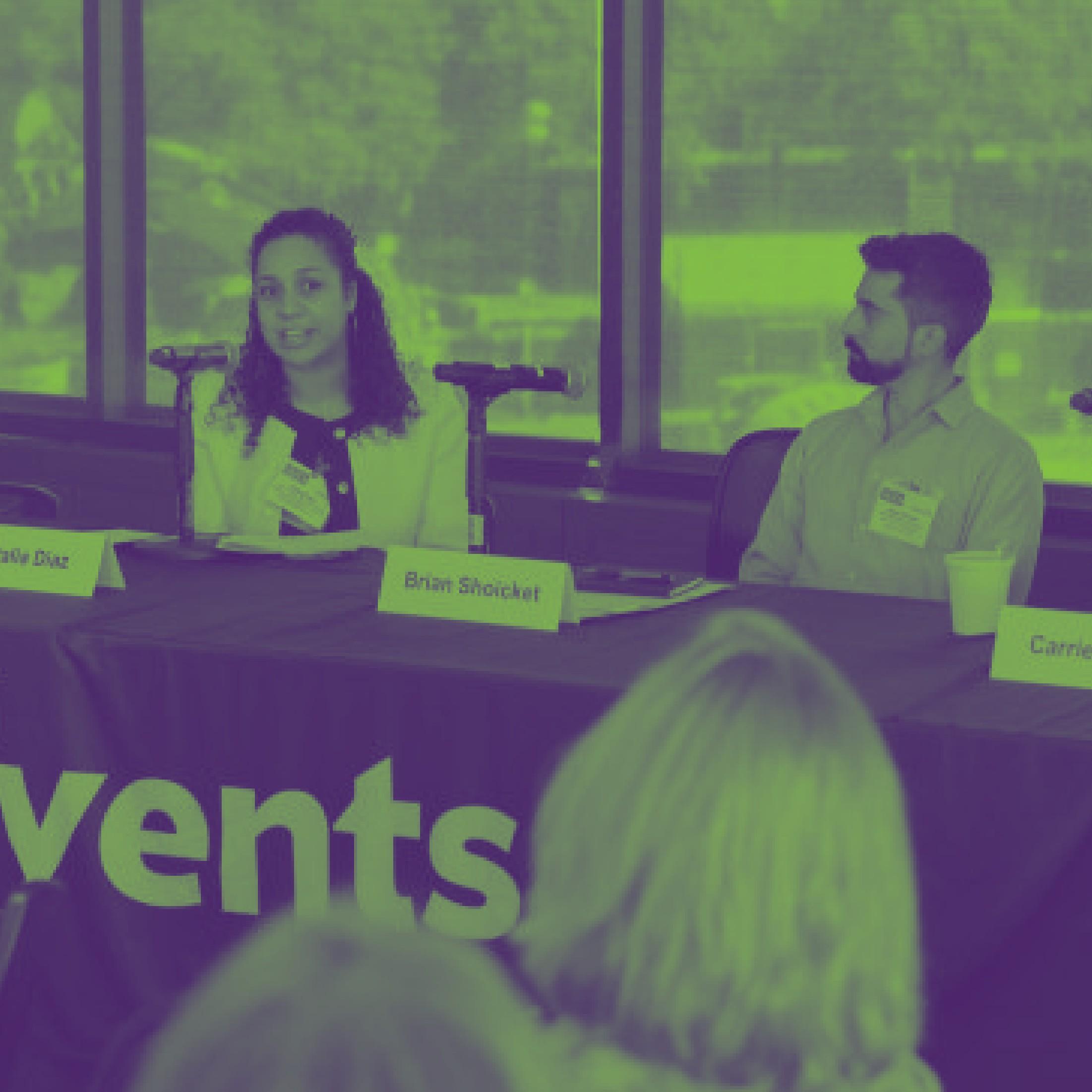 95
Economy
96
Economy
Systemic racism has created profound and lasting economic disparities that continue to
affect New Yorkers’ economic well-being today.
Disparities in Employment and Benefits
The history of labor exploitation in the United States, including the enslavement of
African people from whom trillions of dollars in unpaid labor were extracted,
followed by Jim Crow laws that restricted Black workers to specific occupations,
has created deep- rooted inequities in economic opportunity.
xxv
Even
transformative worker-protection legislation like the New Deal deliberately
excluded occupations predominantly held by Black individuals, such as domestic
and agricultural work, from crucial wage and labor protections.
These historical injustices laid the foundation for persistent racial disparities in
employment, wages, benefits, and wealth accumulation that we see today. Black
workers continue to face systematically higher unemployment rates than white
workers, with Black women in particular experiencing persistently higher
unemployment rates than white women.
xxvi
This burden is especially significant given
that 84 percent of Black mothers serve as breadwinners for their families.
xxvii
Latino
and Asian American workers also face substantial wage gaps and barriers to
advancement, while immigrant workers are disproportionately vulnerable to workplace
exploitation and wage theft.
Spotlight:
Innovation Industries
Black, Indigenous, and People of Color (BIPOC) communities are underrepresented
in innovation industries, including life sciences, technology, and the green economy
(i.e., the jobs and activities that reduce emissions and protect against climate
change), among others. For example, although in 2021 BIPOC workers made up 60
percent of the total NYC workforce, white workers accounted for approximately 46.5
percent of the technology and technical workforce (computer, mathematical,
architecture, and engineering occupations).
xxviii
Spotlight:
Entertainment and Media Industries
In the entertainment and media industries, systemic racism continues to shape both
representation and opportunities. People of color remain underrepresented in entry-
level and leadership roles both on-screen and behind the scenes, comprising only
17 percent of theatrical film directors and 12 percent of film writers, according to
Condition of Thriving:
We endeavor to ensure that every person who resides in New
York City has the opportunity to thrive with:
Resources necessary to prosper
economically and build wealth
.
97
the 2023 Hollywood Diversity Report.
xxix
On-screen representation is similarly
limited, with Asians characters comprising just 5.9 percent of speaking characters
in 1300 popular films from 2007 to 2019.
xxx
Similarly, Latinos account for only 4 to
7 percent of on-screen talent in U.S. television and streaming, according to a 2024
report by McKinsey & Company,
xxxi
and Native Americans were nearly invisible in
top-grossing films from 2007 to 2022.
xxxii
On Broadway, the Black Theatre Coalition
reports that professionals of color make up less than 1 percent of offstage talent.
In the music industry, according to a 2021 report by USC Annenberg, only 13.9
percent of executives at 70 major and independent companies were people of
color,
xxxiii
and, according to a 2024 USC Annenberg report, in 2023 only six women
of color were producers.
xxxiv
The inequalities in representation extend to the gaming
industry; among respondents to a 2023 survey from the International Game
Developers Association, 79 percent were white, suggesting a significant racial
gap.
xxxv
In journalism, a 2023 Pew Research study found that 76 percent of
reporting journalists were white, while only 8 percent were Hispanic, 6 percent were
Black, and 3 percent were Asian.
xxxvi
These disparities not only harm individuals but also contribute to stereotypical and
harmful depictions of people of color in entertainment. For example, the
underrepresentation in journalism shapes how stories are told, and 63 percent of
Black Americans say news about Black people is more negative than news about
other groups.
xxxvii
The digital divide also limits access to critical information with
broadband access continuing to vary significantly by race and ethnicity in New York
City. With less access to information, as well as financing, mentorship, networking,
and training, people of color have limited opportunities for growth in the
entertainment industry.
Beyond employment, communities of color face systemic barriers in accessing
financial services and building intergenerational wealth. They are more likely to be
unbanked or underbanked, face predatory lending practices, and carry
disproportionate debt burdens. Medical debt, the leading cause of bankruptcy in
the United States, falls most heavily on Black, Latino, and immigrant communities
who are more likely to be uninsured or underinsured. These communities also face
higher rates of consumer fraud and deceptive business practices, compounding
the economic challenges they face.
xxxviii, xxix, xxx, xxxi, xxxii, xxxiii, xxxiv, xxxv, xxxvi
Obstacles to Small Business Ownership, Entrepreneurship,
and Partnership Opportunities
These barriers have also hindered those in historically underserved communities
from accessing opportunities for economic growth, such as support for small
businesses, entrepreneurship, manufacturing, and City contracting. NYC has one of
98
the strongest small business ecosystems in the world, with over 200,000 small
businesses employing more than half of the City’s private sector workforce. Small
business owners strengthen the City’s economy, create jobs in the communities
they serve, and reflect the diverse population that makes up NYC.
Since 1992, NYC government has hired consultants to perform disparity studies on
the utilization of minority and women-owned businesses (M/WBE) in the relevant
market relative to their availability. From the 2018 Disparity Study, which analyzed
data from July 1, 2006, through June 30, 2015, total M/WBE utilization was 10.4
percent of all NYC contracts. When compared to an availability estimate of 50.7
percent of businesses that met the racial, ethnic, and gender ownership classes
within the five general procurement categories, this yields a disparity index of
20.4.
xxxviii
NYC has over 11,000 certified M/WBEs benefiting from the City's M/WBE Program
through focused procurement training, capacity building training, and access to
capital. While progress has been made, in FY23 M/WBEs accounted for only 5.3
percent of the estimated $40 billion in annual contract spending in new City
contracts and purchase orders. The City is committed to addressing historic
disparities in City contracting, and in FY24, awarded $6.4 billion in M/WBE
contracts through a multi-agency effort. An M/WBE Advisory Council was also
announced to support the City’s OneNYC goal of awarding $25 billion in M/WBE
contracts by the end of FY26.
However, small business owners of color encounter significant obstacles in
establishing and growing their enterprises, including limited access to capital, higher
denial rates for business loans, and complex regulatory requirements that can be
particularly burdensome for immigrant entrepreneurs who speak a language other
than English. Moreover, despite Black New Yorkers making up 22 percent of NYC’s
population, only 3.5 percent of businesses are owned by Black entrepreneurs
xxxix
and BIPOC entrepreneurs are still largely concentrated in lower-wage sectors.
xl
Spotlight:
Manufacturing Sector
Within the manufacturing sector, Black-owned and Hispanic-owned manufacturers only
account for a small percentage (0.5 percent and 0.8 percent respectively) of supply
chains supported by three key pieces of federal legislation enacted in 2021 and 2022:
the Infrastructure Investment and Jobs Act (IIJA), CHIPS and Science Act (CHIPS
Act), and Inflation Reduction Act (IRA).
While the City has made efforts to streamline procurement processes and make it
easier to do business with the City, many providers, particularly small businesses
99
and M/WBEs, continue to face challenges navigating the procurement process.
Delays at various stages can create cash-flow pressures for smaller providers and
affect their ability to sustain operations and pursue growth. Continued efforts to
improve efficiency, transparency, and provider experience remain important to
ensuring that City contracting works effectively for all participants.
Spotlight:
Partnerships with Arts and Culture Organizations
New York City leads the nation in arts and culture investment, supporting over
1,000 nonprofit organizations annually. However, there are gaps in resource
distribution that have generated inequities in access for all New Yorkers to benefit
from the transformative power of the arts. Specific neighborhoods and communities,
often those with larger populations of people of color, have long received less arts
and cultural funding, mirroring broader systemic inequities.
Arts organizations often face obstacles in securing consistent, unrestricted
funding. Despite their critical local impact and cultural relevance, smaller
community-rooted organizations frequently struggle to meet funding criteria that
favor "scale" and "reach". This affects organizational growth and hinders
community development, as studies show that access to cultural resources is
linked to improved outcomes in education, health, and social cohesion. Moreover,
systemic barriers limit the growth of culturally specific organizations, crucial for
preserving and promoting marginalized communities' heritage and stories.
Organizations rooted in communities of color often lack the resources to secure
larger grants, resulting in a cycle of under-resourcing that curtails innovation and
engagement.
Building a representative, diverse cultural workforce is critical to achieving equitable
arts access. People of color are underrepresented in arts leadership, limiting
opportunities for individuals from diverse backgrounds to lead, influence, and
participate fully in shaping New York City's cultural landscape. Barriers to entry,
like low or unpaid entry- level positions and inequitable hiring practices including
those that do not consciously and effectively consider talent from all communities,
restrict career paths for people with less privileged backgrounds and perpetuate
disparities in the arts workforce.
Unified Commitment
The agencies in this section recognize the critical need to address these systemic
barriers and are committed to creating an inclusive, equitable economy where all
New Yorkers can thrive.
100
Brooklyn Navy Yard Development Corporation
Mission and Commitment
The Brooklyn Navy Yard Development Corporation’s (BNYDC) mission is to fuel
New York City’s economic vitality by creating and preserving quality jobs, growing
the City’s modern industrial sector and its businesses, and connecting the local
community with the economic opportunity and resources of the Yard.
Through our work managing the Brooklyn Navy Yard industrial campus on the City
of New York’s behalf, we are committed to building new, inclusive paths to
economic opportunity that result in greater access and improved economic
outcomes for business owners and workers, including other diverse business
owners and workers.
To accomplish these responsibilities, BNYDC is implementing targeted efforts to
ensure that our organizational practices are shaped through the lens of equity.
We are committed to leveraging the Yard for creating and preserving accessible
opportunities through industrial and manufacturing jobs, growing the City’s
modern industrial sector and its businesses, and connecting diverse
communities with the economic opportunity and resources of the Yard.
Racial Equity Goals
Short-Term
1.
Goal:
Implement new training and professional development opportunities for
staff, tenant employees, and BNY’s community, with a focus on participation
and access for those underrepresented in BNYDC’s programming
a.
Outcome
: By the end of 2026, offer training and professional
development opportunities for staff, tenant employees, and BNY’s
community, in a manner that is reflective of the diversity of NYC.
b.
Strategies
:
•
Develop an internal professional development policy and offer
new programs to best meet staff needs
•
Launch new external training to support additional New Yorkers in
receiving the skills needed to obtain “green jobs”
c.
Indicators
:
•
Number of staff trained, disaggregated by demographic information
available, including race, ethnicity, and gender identity, and compare
to total staff population
•
Number of training programs offered externally, number of
101
program participants.
Medium-Term
1.
Goal:
Support M/WBE participation in agency procurements while continuing
to implement and evaluate goals going forward to ensure they are consistent
with federal, state, and local law
a.
Outcome
: By 2028, maintain consistent implementation and
assessment for M/WBE utilization.
b.
Strategies
:
•
Collaborate with SBS to support outreach and engagement with
certified M/WBE vendors in connection with BNYDC
procurements
•
Utilize procurement tools that facilitate participation by certified
M/WBE vendors in agency contracting opportunities
c.
Indicators
:
•
Number of M/WBE vendors responding to BNYDC procurements,
disaggregated by race, ethnicity, and gender identity
2.
Goal:
Increase the number of first-generation college students from local New
York City Housing Authority (NYCHA) developments participating in workforce
and education programs, to support elimination of disparities in employment
and education
a.
Outcome
: By 2028, increase the number of first-generation college
students from local NYCHA developments participation in workforce
and/or education programs by 20%.
b.
Strategies
:
•
Initiate targeted outreach to the four surrounding NYCHA
developments and local school partners to increase the youth
and community resident engagement at BNYDC events and
public programs
c.
Indicators
:
•
Number of first-generation college students from local NYCHA
developments participating in workforce and education programs
Long-Term
1.
Goal:
Support new and growing businesses in advanced manufacturing, clean
technology, and emerging industries’ ecosystems by increasing awareness of
opportunities for tenancy among potential small business tenants and
positioning BNYDC to be a centralized and coordinating hub for small
businesses, including M/WBEs
a.
Outcome
: By 2034, achieve a tenanting strategy that attracts
diverse tenants underrepresented to the Yard.
b.
Strategies
:
102
•
Develop a small-space program where we match small
businesses with smaller spaces (>1,000 sf) to create new
pathways for business growth at the Yard
•
Develop a small business Tenant Improvement Fund to
support renovation of spaces to meet business needs,
starting with a pilot using $3 million of City capital earmarked
for tenant improvements for incoming small business tenants
c.
Indicators
:
•
Tenant data, disaggregated by identity of owners, including race,
ethnicity, and gender identity; analyzed with job density, job creation,
and other mission-aligned metrics
Community Equity Priority Referenced
•
#3: Remove the gaps in race, gender identity, sexual orientation, age, and
disability in city pay, promotions, and contracts.
•
#17: Remove the gaps in racial, gender identity, sexual orientation, age,
and disability access to job training and funds to start businesses.
Spotlight Wins
•
As part of New York City’s Climate Week in September 2024, the Brooklyn
Navy Yard partnered with the Eunoia Group on the
Bold Eco Solutions:
Diverse Minds Forum at Climate Week
. With the aim to address the
disparities for visibility and funding for entrepreneurs in the climate space,
this event convened a panel of industry influencers to explore how
technologies and strategies led by diverse leaders are redefining and
expanding the landscape of climate technology. The audience was filled
with investors, innovators and ecosystem builders primed to learn from
industry experts and to delve into a transformative discussion. The event
closed with a robust networking session with 60+ attendees.
•
In September 2024, the Brooklyn Navy Yard hosted its first-ever Green
Skills Summit, bringing together workforce development leaders to shape
the future of green-collar jobs training, including increasing access to job
opportunities for underrepresented groups in the tech and innovation
sectors. The event included 150 attendees representing 40+ different
organizations and featured a diverse set of speakers addressing talent
development and training issues in renewable wind power, electrification,
and building decarbonization. This summit was designed to support the
City’s commitment of building NYC’s green-collar workforce to 400,000
employees by 2040 and connecting New Yorkers to family- sustaining jobs
through the industries that help combat climate change.
103
Department of Consumer and Worker Protection
Mission and Commitment
The NYC Department of Consumer and Worker Protection (DCWP) is the nation’s
leading municipal enforcement agency, charged with delivering economic justice. We
bring New Yorkers real economic relief and protect them from predatory, deceptive,
and unfair practices that violate their rights as consumers and workers. This includes
pioneering cutting-edge protections for New Yorkers, such as the City’s Consumer
Protection Law, Protected Time Off Law, Fair Workweek Law, and Delivery Worker
Laws. Across New York City, DCWP levels the economic playing field by licensing
more than 45,000 businesses in over 45 industries and providing essential services
including free tax preparation and financial counseling to ensure New Yorkers Keep
more of what they earn and can plan for their futures. This work ensures that New
York City is a fairer, more affordable place to live for all.
DCWP embraces our role in advancing economic justice through our work in
consumer protection, worker rights, licensing and business support, and financial
empowerment. We recognize the challenges ahead, including resource constraints,
evolving economic conditions, and the need to build trust with communities that have
historically been underserved by government institutions. DCWP has continued to
champion New Yorkers in every phase of their daily lives, and we will continue this
legacy of restoring fairness, dignity, and opportunity for New Yorkers. In a U.S.
Congress Joint Economic Committee report, people of color, specifically Black and
Latino consumers, are more likely to face barriers to mainstream banking and
financing, with fewer options to find affordable credit and build wealth, making them
more vulnerable to predatory and expensive lending practices.
xli
Despite these challenges, we remain committed to centering racial equity in our work
to ensure that all New Yorkers, particularly those from historically marginalized
communities, can access economic opportunity and protection under the law.
Racial Equity Goals
Short-Term
1.
Goal
: Expand equitable access to financial empowerment resources to youth
under 18 to build generational wealth and economic stability
a.
Outcome
: By the end of 2026, establish comprehensive youth financial
empowerment and consumer protection programming reaching students
and their families across NYC in 15 NYC Public School districts.
Programming will focus on financial empowerment and consumer protection
education for students and their families. Through this pilot phase, New
104
Yorkers in these 15 districts will have access to workshops and safe and
affordable financial products for savings and banking.
b.
Strategies
:
•
Develop age-appropriate financial empowerment interventions for
youth under 18, including foundational financial concepts, consumer
protection concepts, and hands-on experience with banking and
savings
•
Partner with schools and youth programs to deliver financial
empowerment education
•
Create targeted programs to reduce Summer Youth Employment
(SYEP) participants’ reliance on non-bank fintech for direct deposit
•
Collaborate with financial institutions to increase youth banking
access to safe and affordable financial products
c.
Indicators
:
•
Number of students receiving financial empowerment and consumer
protection education
•
Number of families participating in financial and consumer education
workshops
•
Number of schools/programs participating in financial empowerment
and consumer protection education initiatives provided by DCWP
2.
Goal
:
Reduce barriers
to medical debt relief and increase access to financial
assistance and financial counseling for New Yorkers so they can reduce expenses
and better afford living in the city
a.
Outcome
: By the end of 2026, medical debt counseling is accessible
through Financial Empowerment Centers at key H+H locations and provided
at all NYC Financial Empowerment Centers.
b.
Strategies
:
•
Train and place financial counselors at H+H locations
•
Develop specialized counseling protocols for medical debt
•
Create partnerships with healthcare providers for referrals
c.
Indicators
:
•
Number of New Yorkers served through NYC Financial
Empowerment Centers citing medical debt as a presenting issue,
disaggregated by neighborhood or zip code
•
Number of financial counselors trained to assist with medical debt
concerns
•
Number of referrals to medical debt assistance
•
Percentage of clients successfully connected to medical debt
resources
105
Medium-Term
1.
Goal
: Streamline business licensing processes to reduce barriers for small
business owners
a.
Outcome
: By 2028, reduce administrative burdens for small business
owners by reforming licensing requirements including removal of
unnecessary fingerprinting requirements while maintaining consumer
protections.
b.
Strategies
:
•
Review and propose revisions to current licensing requirements
•
Work with City Council to eliminate unnecessary fingerprinting
requirements
•
Create streamlined application processes centering the needs of our
regulated community
•
Develop clear guidance materials in multiple languages
•
Refine feedback loop to improve processes for small business
owners
c.
Indicators
:
•
Number of requirements eliminated or simplified
2.
Goal:
Increase access to NYC Free Tax Prep program and critical tax credits and
refunds to keep more money in the pockets of working families, lower filing costs,
and support low-income communities in progressing towards meeting NYC True
Cost of Living standards
a.
Outcome
: By 2028, increase the number of Earned Income Tax Credit
(EITC)-eligible New Yorkers served through NYC Free Tax Prep by 25%.
b.
Strategies:
•
Strengthen service locations in underserved communities by
increasing diverse language access
•
Enhance culturally responsive outreach about available tax credits
•
Partner with community organizations for referrals
•
Strengthen referral pathways between NYC Free Tax Prep, Financial
Empowerment Centers, NYC Benefits, and workforce development
programs
•
Expand virtual and facilitated self-assistance filing options to reduce
barriers to access
c.
Indicators:
•
Number of tax returns filed through program
•
Dollar amount saved in tax preparation fees
•
Estimated dollar amount of tax credits claimed
•
Number of returns claiming EITC
•
Number of self-employed filers served
106
Long-Term
1.
Goal
: Reduce the rate of unbanked and underbanked New Yorkers to build
financial stability
a.
Outcome
: By 2034, the number of unbanked households will reduce by 7%
across New York City, with a special focus for the persistently high unbanked
neighborhoods of communities of color in the Bronx and Brooklyn.
b.
Strategies
:
•
Expand Financial Empowerment Centers' locations in underserved
communities
•
Expand or strengthen investments in Financial Empowerment
Centers marketing
•
Partner with community organizations serving unbanked and
underbanked communities for referrals
•
Partner with financial institutions to develop accessible, safe and
affordable financial products that recognize the challenges of financial
inclusion technology, innovative and low-cost models, and embedded
with culturally relevant approaches
•
Utilize NYC Free Tax Prep and Financial Empowerment Centers to
screen for banking status and provide referrals to NYC SafeStart
accounts, Bank On-certified accounts, and other safe and affordable
financial products and services
c.
Indicators
:
•
Percent reduction in citywide unbanked/underbanked rates
•
Number of clients receiving financial counseling
•
Percentage of Financial Empowerment Center clients who open a
safe, affordable bank account
•
Disaggregated data on banking outcomes at the Financial
Empowerment Centers by population
2.
Goal
: Support the City workforce’s financial health and address the
disproportionate impact of student loan debt by working with a city-contracted
vendor and DCAS to leverage the Public Service Loan Forgiveness (PSLF)
program
a.
Outcome
: By 2034, increase the number of City Employees who participate
in the PSLF program by 300%.
b.
Strategies
:
•
Expand access to student loan debt assistance through additional
supports to city agencies and at the Financial Empowerment Centers
•
Provide targeted outreach to eligible employees working with
Department of Citywide Administrative Services and Agency
Personnel Officers
107
•
Track and support successful NYC employee loan forgiveness
completion working with Department of Citywide Administrative
Services and Agency Personnel Officers
•
Identify and address barriers to PSLF enrollment through participant
feedback
c.
Indicators
:
•
Percent of eligible NYC employees enrolled in PSLF
•
Number of eligible employees receiving PSLF counseling or
assistance
•
Dollar amount of student loan debt relieved
•
Number of NYC employees using free debt relief services
•
Number of employees successfully receiving PSLF loan forgiveness
Community Equity Priorities Referenced
•
#8: Evaluate and remove fines and fees to reduce the impact on low-income
people of all ages.
•
#13: Increase access and lower the cost to basic needs such as quality food,
transportation, medical, and housing.
Spotlight Wins
•
Over the first two years, the enhanced NYC EITC provided a total of $712.2 million
in benefits, reaching more than 760,000 filers each year, following its expansion for
the first time in nearly 20 years in 2022.
•
In 2026, DCWP and its partners celebrated the fourth year of NYC Free Tax Prep
for Self-Employed Filers, one of the nation’s first dedicated free tax preparation
programs for freelancers, gig workers, independent contractors, and small
business owners. The program provides free annual and quarterly tax preparation
assistance, workshops, and one-on-one consultations to help self-employed New
Yorkers navigate complex tax obligations, improve financial recordkeeping, and
access critical tax benefits to build financial health. Since its launch in 2023, the
program has expanded access to tax preparation services for workers who have
historically faced barriers to affordable tax assistance. The program has also
contributed to increased utilization of the Earned Income Tax Credit (EITC) among
eligible self-employed workers, helping connect historically underserved New
Yorkers to valuable tax benefits that support household financial stability, asset
building, and economic mobility.
•
In 2024, DCWP expanded its partnership with NYC Health + Hospitals to bring
NYC Free Tax Prep services directly into the City’s public healthcare system. By
integrating free tax preparation services into trusted healthcare settings and
offering both in-person and virtual filing options, the partnership helped connect
108
historically underserved New Yorkers to critical tax credits, refunds, and other
financial resources that support household financial stability and economic mobility.
This partnership expanded again in 2025 when eight Financial Empowerment
Centers were opened at Health + Hospital locations to help New Yorkers better
plan and avoid going into medical debt in the future. This collaboration ensures that
more New Yorkers can access the financial care they need to improve their lives
and achieve their goals. In June 2025, DCWP, in partnership with NYC Public
Schools, announced the Financial Literacy for Youth Initiative with the goal to
expand financial empowerment resources to youth under 18 and their families to
build generational wealth and economic stability. With a focus on Taskforce on
Racial Inclusion & Equity (TRIE) neighborhoods, the Initiative embeds financial
educators in school districts to provide financial counseling, lead workshops, and
help educators and families foster a financially healthy environment for all school
children. The Initiative also brings an innovative In-School Banking program to
increase access to safe, affordable banking directly to high school students by
partnering with more than 15 local financial institutions including credit unions.
•
DCWP released its third research brief on the Unbanked in NYC in Fall 2025. The
research brief, which is updated biennially based on FDIC survey data, describes
geographic and demographic characteristics of the city’s unbanked population,
spotlighting systemic barriers to banking access. Although the City’s unbanked
rates have fallen, it is still significantly higher than national averages. The data
highlights persistent unbanked rates by boroughs and neighborhoods, primarily in
the Bronx and Brooklyn.
•
DCWP released the update to our Neighborhood Financial Health (NFH) Digital
Mapping and Data Tool. This data tool is a framework for understanding
neighborhood financial health, based on direct input from residents, consisting of a
definition of neighborhood financial health and five goals for a financially healthy
neighborhood. The NFH Index provides an easy reference tool for comparing
neighborhoods and establishes patterns in the relationship of NFH indicators to
economic and demographic factors, such as race and income. Understanding
these connections is potentially useful for identifying racial equity patterns and
uncovering systems that perpetuate the racial wealth gap which has helped
DCWP’s program targeting and site setting plans.
109
Department of Cultural Affairs
Mission and Commitment
The Department of Cultural Affairs (DCLA) is the largest municipal funder of arts and
culture in the United States and works to ensure that every New Yorker can participate
in the cultural life of the city as artists, cultural workers, and audiences. DCLA
advances this mission through grantmaking from the Cultural Development Fund
(CDF), capital funding, support for the Cultural Institutions Group (CIG), Materials for
the Arts (MFTA), workforce development initiatives, policy leadership, public art, and
partnerships that strengthen New York City’s cultural sector.
New York’s cultural landscape has been shaped not only by extraordinary artists and
communities who have carried traditions to our city from around the world, but by
generations of advocates who fought to ensure public support reached those too often
excluded from it. Their work helped establish landmark public investments and
programs that have reshaped
and immeasurably enriched
our city’s cultural life. These
victories affirmed that public support is essential to ensuring artists, cultural workers,
organizations, and audiences of color - especially as they intersect with the LGBTQ+
and disabled communities - can fully participate in the cultural life of our city.
Yet despite that progress, public funding and resources have remained uneven,
inconsistent, and insufficient for the organizations and neighborhoods that have
experienced generations of underinvestment.
A plan for racial equity in our city must be grounded in the understanding that cultural
equity, racial equity, and economic justice are inseparable.
This plan advances racial equity not as a standalone initiative, but as an overarching
approach to strengthen how DCLA invests public resources, designs programs, and
measures success.
Racial Equity Goals
Short-Term
1.
Goal
:
Eliminate barriers and give people back their time by reducing administrative
burdens and improving access
a.
Outcome
: By the end of 2027, conduct a comprehensive review of all DCLA
application and reporting requirements to simplify processes, improve
accessibility, and reduce unnecessary paperwork needed to complete reports
and applications.
110
•
Inequities are shaped not only by where public resources flow, but
also often by government processes themselves. Administrative
complexity and limited transparency create confusion and roadblocks
to access public funding for arts and culture, especially for smaller
organizations, many of which are culturally specific. This goal will give
staff of organizations back their time and will enable more
organizations to participate more fully in the agency’s programs.
b.
Strategies
: Based on existing agency information and knowledge, which the
comprehensive review will build on, the following strategies are expected,
and additional strategies will be added following the review:
•
Expand multilingual outreach, workshops, and technical assistance for
first-time and returning applicants across all DCLA funding
opportunities
•
Expand DCLA’s direct engagement efforts by engaging in at least six
community outreach events in historically underinvested communities
by end of 2027
•
Strengthen partnerships with local arts councils and community-based
organizations to expand awareness of DCLA funding opportunities
and available resources in communities that have experienced historic
under investment
•
Solicit community feedback from organizations in historically
underinvested communities to identify additional ways to improve
access to DCLA funding opportunities and agency resources
•
Expand the role of the CDF Panel Advisory Group to provide ongoing
guidance on program design, eligibility criteria, funding structures, and
program definitions
•
Increase outreach by MFTA to organizations serving historically
underinvested communities
•
Expand MFTA residencies to additional Title One schools without arts
programming
•
Continue to expand open call outreach to artists of color and artists
based in historically under resourced neighborhoods for Percent for
Art commissions
•
Grow the agency’s engagement with Deaf and disabled artists to help
ensure these communities can fully participate fully in the city’s
cultural life
c.
Indicators
:
•
Reduced administrative burden for applicants and grantees based on
reduced amount of time needed to complete application
•
Applicant satisfaction and accessibility measures, based on applicant
feedback
•
Participation rates in technical assistance and outreach activities
•
Application rates among organizations and artists from historically
underinvested communities
111
2.
Goal:
Demystify the process and empower advocates by providing data,
transparency, and accountability
a.
Outcome
: By the end of 2027, collect, analyze and share data in order to
fully understand the current distribution, impact, and gaps in DCLA’s funding
and programs, enabling more transparent decision-making and ongoing
improvement.
•
DCLA will measure success not only by the breadth of organizations
served, but through the depth, consistency, and duration of public
support. Providing more robust and complete data sets on agency
funding to strengthen accountability and give researchers and
advocates the tools they need to analyze impact and build public trust.
Ultimately, this will lead to better equity-based policy decisions.
b.
Strategies
:
•
Establish a baseline study of Cultural Development Fund (CDF)
support that analyzes:
o
Primary community served
o
Borough
o
Organizational budget size
o
Arts discipline
o
Organizational age
o
Funding amount
•
Where feasible, collect data on DCLA funding serving Taskforce on
Racial Inclusion & Equity (TRIE) neighborhoods
•
Where feasible and legally permissible, analyze CDF and capital
funding patterns affecting organizations from historically marginalized
communities, including culturally specific organizations and
organizations founded, led, or governed by people of color,
immigrants, disabled people, and LGBTQ+ New Yorkers
•
Measure depth of public investment in addition to overall distribution,
including:
o
Average grant size by budget tier
o
Percentage of multi-year versus single-year awards
o
Grantee retention rates over three- and five-year periods
o
Continuous funding patterns
o
Organizational funding stability over time.
•
Hire a dedicated DCLA data specialist to support data analysis,
transparency, and public reporting
•
Publish baseline racial equity funding data beginning in FY28 and
update it biennially
•
Where feasible and legally permissible, expand data collection and
public reporting for capital funding, public art, MFTA, and CIG
programs
c.
Indicators
:
•
Baseline equity data completed
112
•
Public reporting framework published
•
Biennial racial equity data published
•
Expanded reporting on capital, public art, MFTA, and CIG investments
•
Funding stability and organizational retention measures established
3.
Goal:
Align our values with our practice by integrating racial equity as a governing
approach
21
a.
Outcome
: By 2027, apply a racial equity lens
22
to review agency policies,
practices, and processes including identifying any potential bias in decision-
making, staff development, public resource allocation processes, and
evaluation of work at all agency levels.
•
DCLA can strengthen its ability to serve all New Yorkers while
ensuring that advancing racial equity is a shared responsibility across
every division of the agency.
b.
Strategies
:
•
Re-establish an internal Diversity, Equity, Inclusion, and Accessibility
Staff Culture Committee with voluntary participation from staff across
the agency, led by the DCLA Deputy Commissioner
•
Support ongoing staff learning, collaboration, and accountability
through expert-led training, current best practices, and the integration
of racial equity principles into agency policies and procedures that
lead to equity-driven decision-making and evaluation strategies
•
Engage the internal Staff Culture Committee and the external Cultural
Affairs Advisory Commission in providing ongoing guidance on agency
programs, initiatives, policies, workplace culture, and opportunities to
strengthen racially equitable practices across the agency and to
influence racial equity within the cultural field
•
Provide unconscious bias training for all staff and panelists
c.
Indicators
:
•
Participation across agency divisions
•
Recommendations from Staff Culture Committee developed and
implemented
•
Active staff engagement, feedback, and buy-in as measured by staff
and panelist learning and participation rates
•
Integration of racial equity considerations into agency operations,
policies, and decision-making processes
•
One Hundred percent of DCLA staff and external decision-makers
(e.g., CDF panelists) complete unconscious bias training
21
Racial equity as a governing approach is defined here as applying a racial equity framework for improving
decision making, accountability, and service delivery.
22
A data-driven analytical process created and used to identify how policy, decisions, and programs might
create intentional and unintentional disparate impacts or reinforce historical inequities.
113
•
Development and adoption of a racial equity prime - a framework, list
of questions, or visual reminder to consciously center racial equity in
daily decision-making processes
Medium-Term
1.
Goal
: Create economic opportunity for cultural workers by ensuring we advance
workforce equity and leadership development
a.
Outcome
: By 2029, through supporting leadership development through a
racial equity lens, DCLA seeks to build leadership pipelines and engage the
sector to shape a cultural workforce that is more just and better equipped to
build New York City’s cultural future.
•
A thriving cultural sector depends on artists, cultural workers,
educators, administrators, fabricators, technicians, union workers,
nonprofit leaders, and other cultural professionals who reflect the
diversity of New York City and have meaningful opportunities to grow,
lead, and remain in the field.
b.
Strategies
:
•
Proactively partner with and reenergize the CUNY Cultural Corps
program to ensure it continues to build an equitable pipeline for the
cultural workforce
•
Continue requiring ongoing CIG workforce diversity, equity, inclusion,
and accessibility plans while expanding assessment to include
organizational partnerships, artist participation and compensation,
union collaboration, institutional financial investments, and continued
progress toward equitable workplace practices
•
Create, bolster, or amplify five to ten pipeline programs for cultural
workers
•
Support professional development opportunities for mid-career cultural
workers and emerging leaders through executive leadership training,
board governance education, fellowship opportunities, and other
career advancement initiatives
•
Support and encourage equitable and worker-centered human
resources practices across the cultural sector by promoting technical
assistance, peer learning, and other approaches related to anti-racist
hiring practices, disability-centered accessibility, trans-inclusive
workplace policies, pay equity, employee retention, and high-quality
workplaces
•
Convene cultural organizations, artists, labor representatives,
philanthropy, and other sector partners to advance dialogue and
shared action around compensation, workforce sustainability, and pay
equity across the cultural sector
c.
Indicators
:
•
Participation in workforce development programs
114
•
Leadership pipeline opportunities created or supported
•
Utilization of workplace equity resources
•
Sector engagement on compensation, workforce sustainability, and
workforce equity through a published report and/or a series of
workshops or convenings for organizations based on discipline and
budget size
2.
Goal
: With culture as a public good, build stronger neighborhood cultural
infrastructure and expand access to New York City’s cultural life
a.
Outcome
: By 2029, increase access to local assets, integrate culture into
neighborhood planning, and ensure residents are connected to free and
affordable cultural opportunities available to them at institutions across the
city, helping all New Yorkers recognize that the cumulative cultural identity
of New York City is built by and for them.
•
A city where New Yorkers can afford to live, work, and create is also a
city where culture remains within reach in every neighborhood, treated
as the civic infrastructure and public good that it represents. Every
New Yorker—regardless of race, income, language, disability, or ZIP
code—should be able to experience the full breadth of New York
City’s cultural life: from neighborhood cultural organizations that
sustain community identity to the city’s world-renowned cultural
institutions.
b.
Strategies
:
•
Through interagency and external partnerships, integrate arts and
cultural infrastructure into neighborhood planning, housing, economic
development, and public investment initiatives, particularly in
communities that have historically experienced racial and economic
disinvestment – delivering local, community-oriented cultural assets in
neighborhoods across the city and recognizing culture as essential to
the city’s life and social wellbeing
•
Expand City-supported marketing of arts and culture to connect
residents of all backgrounds with cultural opportunities in partnership
with the Mayor’s Office of Mass Engagement, NYC Tourism +
Conventions, Department of Citywide Administrative Services, and the
Mayor’s Office of Media and Entertainment
•
Reduce financial and other barriers to cultural access for New Yorkers
by supporting cultural organizations in their work to foster greater
participation in arts, strengthen meaningful community partnerships,
and broaden participation among New Yorkers who have historically
faced barriers to engaging with the city’s cultural institutions,
programs, and resources
•
Through Materials for the Arts, increase the amount of free supplies,
education opportunities, and other resources delivered directly to
schools and nonprofit organizations located in TRIE neighborhoods
115
c.
Indicators
:
•
Strengthened, routine, and established interagency collaboration to
advance the integration of arts, culture, and cultural infrastructure into
neighborhood planning and public investment initiatives
•
Geographic distribution of cultural infrastructure investments made
possible through neighborhood planning, rezoning, and city capital
funding
•
One or more new initiatives launched by FY29 that meaningfully
integrates arts and culture into civic infrastructure
•
Participation rates in free and low-cost cultural programming.
•
Diversity of organizations represented in City-supported cultural
marketing, including demographic, geographic, disciplinary, and
organizational diversity
•
Increased participation and attendance rates in New York City’s arts
and cultural life across communities and neighborhoods
Long-Term
1.
Goal:
Building community power and strengthening long-term stability through
sustained public investment
a.
Outcome
: By the end of 2035, conduct extensive research to support the
development of workable proposals for sustainable long-term public
investment.
•
Lasting racial equity requires sustained public investment that allows
culturally specific organizations, organizations founded by led by, and
serving people of color, and neighborhood anchor organizations to
plan beyond a single fiscal year, retain staff, steward cultural spaces,
deepen their relationships with the communities they serve, and
ultimately repair the cumulative effects of historic underinvestment.
b.
Strategies
:
•
Research opportunities to introduce general operating support within
CDF
•
Assess opportunities for increasing the share of CDF funding awarded
through multi-year support
•
Develop strategies to prioritize organizations located in, or primarily
serving, communities that have historically experienced racial and
economic disinvestment
23
, including culturally specific organizations
and organizations founded by and led by people of color, where
feasible and consistent with applicable law and program requirements
•
Explore development of a Sector Stability Index to assess the long-
term health of New York City’s cultural ecosystem, including the
23
Racial disinvestment refers to the systematic reduction or withholding of resources, investment, and/or
opportunities from specific geographical areas, driven by and reinforcing racial segregation.
116
stability of cultural spaces, workforce retention, financial sustainability,
organizational capacity, and continuity of public investment over time
c.
Indicators:
•
Completion of research and development of proposals related to multi-
year general operating support
•
Assessment of opportunities to expand multi-year sustained funding
approaches within CDF
•
Completion of developed framework for measuring sector-wide
stability, continuity, and organizational resilience
Community Equity Priorities Referenced
•
#2: Fund communities harmed by racism and injustice to shape and get updates on
NYC government plans.
•
#6: Collect, analyze, and share data on access to government services with the
public, categorizing it by specific groups harmed by racism and social injustice
•
#17: Remove the gaps in racial, gender identity, sexual orientation, age, and
disability access to job training and funds to start businesses.
Spotlight Wins
•
Grantmaking
: Since 2018, we have embarked on a holistic evaluation of our
Cultural Development Fund (CDF) award process to introduce a range of new
reforms that promote equity. We are committed to increasing access to DCLA’s
competitive grantmaking process. For example, our minimum funding level
increased from $5,000 to $10,000, and we introduced multi-year grants to enhance
financial stability for our partners. This plan builds on this progress and
strengthens our mission to reach and support organizations in communities that
previously received limited funding.
•
Capital Spending
: We are committed to leveraging our capital spending to
preserve, renovate, and celebrate arts and cultural spaces to ensure that all New
Yorkers can see their stories represented in our cultural sector. For one recent
example, on February 27, 2026, DCLA
joined Mayor Mamdani to announce
the
completion of a $3.9 million restoration project for the historic Hunterfly Road
Houses in the Weeksville Heritage Center in Brooklyn, which educates and
preserves the history of Weeksville, one of the largest pre-Civil War free Black
communities in the United States.
•
Public Art
: DCLA’s Percent for Art program commissions permanent, site-specific
artworks for publicly funded infrastructure and capital projects across the city,
working with communities and artists to tell stories that reflect the full breadth of our
city’s past, present, and future. In April 2026, DCLA joined the Parks Department
and Washington Street Historical Society to unveil “Al Qalam: Poets in the Park,” a
117
new monument in Lower Manhattan by artist Sara Ouhaddou that pays tribute to
the writers and poets of Little Syria, New York’s first Arabic-speaking community
which thrived in Lower Manhattan from the 1880s to the 1940s.
•
The CUNY Cultural Corps –
a program funded by DCLA - provides paid
internships to CUNY’s diverse and talented student body at dozens of the city’s
most renowned cultural institutions. Since launching in 2016, hundreds of CUNY
students have gained work experience at institutions like the Bronx Council on the
Arts, Brooklyn Museum, the American Museum of Natural History, Primary Stages
Company, Museum of the Moving Image, and more. Cultural organizations get
access to the next generation of leaders in our city, and students get paid
experience at iconic cultural institutions.
•
Cultural Institutions Group Diversity, Equity, and Inclusion plans
: Starting in
2017, DCLA required all members of the city’s Cultural Institutions Group – 39
organizations on city-owned property – to develop and implement strategic plans to
foster more diverse audiences, artists, and cultural workers at their institutions. In
New York City, having staff and programming that reflect the diversity of the city is
critical for organizations to fully connect with the city they serve. Cultural
institutions, for their part, have embraced the opportunity to grow, expand, and
accelerate a range of programs and initiatives aimed at welcoming people in as
leaders and audiences who reflect the full diversity of New York City.
118
Department of Small Business Services
Mission and Commitment
The NYC Department of Small Business Services (SBS) helps unlock economic
potential and create economic security for all New Yorkers by connecting New Yorkers
to good jobs, creating stronger businesses, and building thriving neighborhoods across
the five boroughs.
SBS is dedicated to promoting equitable economic development and enhancing
economic mobility. SBS acknowledges that there are historically underserved and
underrepresented populations within the three targets of our work: jobseekers,
businesses, and neighborhoods.
To achieve our mission, creating economic security for all New Yorkers, SBS places a
strong emphasis on tailoring employment and business services for low-to-moderate
income (LMI) individuals and underserved small businesses. As evidenced through the
NYC True Cost of Living Report, those from underserved neighborhoods and outer
boroughs face significant barriers in meeting cost of living standards. SBS recognizes
that providing resources for economic mobility can enhance the lives of individuals and
grant them greater access to a dignified life.
SBS draws inspiration in our approach to equity of opportunity from a speech given by
Congresswoman Shirley Chisholm to the House of Representatives (May 1969).
Congresswoman Chisholm outlines the interconnectedness of economic justice and
nondiscrimination, saying: "Unless
we … defeat the enemies of poverty and racism in
our own country and make our talk of equality and opportunity ring true, we are
exposed as hypocrites in the eyes of the world when we talk about making other
people free.”
SBS is committed to pursuing these goals of reducing barriers for underserved
businesses, jobseekers, and neighborhoods because we believe the vast power of
government should be deployed to address and reduce longstanding disparities, thus
creating greater opportunities for success and economic growth for individuals, their
households and the broader economy of New York City.
Racial Equity Goals
Short-Term
1.
Goal
: Reduce barriers to capital for underserved businesses
119
a.
Outcome
: By the end of 2026, expand equitable access to capital for
underserved businesses by launching at least two new programs designed
to address barriers to financing.
b.
Strategies
:
•
Increase awareness and usage of Funds Finder tool amongst
underserved businesses and add additional local Community
Development Financial Institution (CDFI) partners
•
In partnership with the NYC Economic Development Corporation
(EDC), launch NYC Future Fund and Cannabis NYC Loan Fund
programs to provide access to capital to underserved small
businesses that have historically faced barriers to accessing traditional
lending
c.
Indicators
:
•
Number of new capital access programs launched that are focused on
underserved businesses
•
Percent of financial awards to underserved businesses
2.
Goal
: Expand the Jobs NYC initiative through a community-centered approach to
advance employment opportunities for historically underserved communities
a.
Outcome
: By the end of 2026, reduce barriers to employment for priority
populations by partnering with five Community-Based Organizations (CBOs)
to co-develop hiring halls that connect jobseekers to quality employment in
growth sectors.
b.
Strategies
:
•
Increase community-based engagement with jobseekers to
understand gaps in experience and other challenges in finding
employment
•
Host hiring events in designated Jobs NYC zip codes
c.
Indicators
:
•
Number of Jobs NYC events conducted in designated Jobs NYC zip
codes
•
Number of direct services delivered through Jobs NYC
•
Percent of target Jobs NYC zip codes engaged
3.
Goal
: Build equitable recruitment pathways within SBS's talent pipeline
a.
Outcome
: By the end of 2026, establish partnerships with at least five
institutions of higher education to expand equitable recruitment pathways.
b.
Strategies
:
•
Strengthen recruitment and outreach efforts with institutions that serve
diverse student populations including The City University of New York
(CUNY), Historically Black Colleges and Universities (HBCUs), and
Hispanic-Serving Institutions (HSIs)
•
Host interns from local institutions that serve diverse student
populations, including CUNY, HBCUs, and HSIs
120
c.
Indicators
:
•
Number of interns hosted from local institutions that serve diverse
student populations, including CUNY, HBCUs, and HSIs
•
Number of partnered local institutions that serve diverse student
populations, including CUNY, HBCUs, and HSIs
Medium-Term
1.
Goal
: Expand access to financial assistance for underserved businesses to
address historical disparities in financing and growth opportunities
a.
Outcome
: By 2028, expand access to financial assistance for underserved
businesses by providing 4,000 financial consultations that connect
businesses to capital and growth opportunities.
b.
Strategies:
•
Conduct research to identify financial challenges among underserved
businesses
•
Inform underserved businesses of responsible financial habits and the
risks of predatory lending
•
Expand notification of capital access opportunities through press
releases, social media, and partnerships with local CBOs and
community development financial institutions
c.
Indicators
:
•
Number of financial consultations with underserved businesses
2.
Goal:
Connect individuals from economically disadvantaged communities facing
high unemployment to quality workforce services through the Jobs NYC initiative
a.
Outcome
: By 2028, increase access to workforce services for individuals
from economically disadvantaged communities by registering 5,000
jobseekers in the Workforce1 system.
b.
Strategies
:
•
Leverage hiring halls in disadvantaged communities to engage
jobseekers
•
Engage local employers from Jobs NYC communities
•
Tailor outreach and engagement to meet the needs of individual
communities to increase registration and connect individuals to jobs
and trainings
c.
Indicators
:
•
Number of New Yorkers from Jobs NYC communities registered into
the Workforce1 system, disaggregated by Jobs NYC zip code
•
Percent of all new Workforce1 system registrants from Jobs NYC zip
codes
3.
Goal:
Reduce racial and gender wealth gaps/disparities that stem from the
historical harms from cannabis prohibition through entrepreneurship opportunities
121
a.
Outcome
: By 2028, expand equitable access to cannabis entrepreneurship
and employment opportunities by engaging justice-involved populations and
assisting 1,000 individuals in starting a cannabis business or receiving paid
industry employment.
b.
Strategies
:
•
Provide no-cost support for entrepreneurs and jobseekers looking to
enter the cannabis market
•
Train entrepreneurs and jobseekers on the tools and regulatory
education they require to succeed in the cannabis industry
•
Leverage additional, non-cannabis specific programming for emerging
small businesses
c.
Indicators
:
•
Number of entrepreneurs and jobseekers assisted in entering or
navigating the cannabis industry
Long-Term
1.
Goal:
Expand efforts to notify small businesses and M/WBEs about agency
solicitations and contracts
a.
Outcome
: By 2034, achieve a citywide increase in engagement with
underutilized firms.
b.
Strategies
:
•
Provide tailored capacity-building services that help M/WBEs and
Emerging Business Enterprises (EBEs) successfully compete for
contracts
•
Analyze the sectors where sizable procurements are anticipated and
assist firms in connecting with contracting opportunities
c.
Indicators
:
•
Number of New Yorkers engaged about agency solicitations and
contracts through capacity building events and resources
•
Number of businesses awarded city contracts
•
Number of M/WBEs awarded city contracts
Community Equity Priorities Referenced
•
#1: Remove the gaps in race, gender identity, sexual orientation, age, and disability
in city jobs. Ensure that government work and staff reflect the city's commitment to
equity and social justice.
•
#17: Remove the gaps in racial, gender identity, sexual orientation, age, and
disability access to job training and funds to start businesses.
122
Spotlight Wins
•
In 2026, SBS and the NYC Economic Development Corporation expanded the
Cannabis NYC Loan Fund to offer loans of up to $500,000 to NYC Cannabis
Entrepreneurs.
•
In 2026, SBS launched the $80M NYC Future Fund, expanding affordable
financing for small businesses.
•
In 2026, SBS launched the Office of Street Vendor Services, advancing economic
justice and supporting an equitable street vending ecosystem across all five
boroughs.
•
Since 2022, SBS and LinkNYC have provided eligible businesses with free
marketing and promotion through the LinkLocal program.
123
Economic Development Corporation
Mission and Commitment
The New York City Economic Development Corporation (“NYCEDC” or “Corporation”)
aims to create a vibrant, inclusive, and globally competitive economy for all New
Yorkers by strengthening confidence in NYC as a prime business location, fostering
innovative sectors with an emphasis on equity, developing healthy neighborhoods as
places to live, learn, work, and play, and delivering sustainable infrastructure for
communities and New York City’s future. NYCEDC is dedicated to advancing a more
equitable, resilient, and sustainable economy that lifts every community, ensuring that
all New Yorkers can participate in and benefit from New York City’s economic growth.
In advancing this mission, NYCEDC is committed to addressing economic disparities
in diverse entrepreneurship, M/W/DBE
24
contracting, and workforce development to
create an inclusive economy for all New Yorkers. This commitment is critical to
overcoming the recognized historical and ongoing barriers faced by underserved
communities in New York City.
Racial Equity Goals
Short-Term
1.
Goal
: EDC has a 30% goal for M/W/DBE utilization and will continue to implement
and evaluate goals going forward to ensure they are consistent with federal, state,
and local law.
a.
Outcome:
By the end of 2026, maintain consistent implementation and
assessment for M/W/DBE utilization.
b.
Strategies:
•
In industry sectors where disparities have been shown to exist, rate
more favorably procurement proposals that actively promote
M/W/DBE utilization and create opportunities for historically
underutilized M/W/DBEs
•
Integrate the M/W/DBE small purchase procurement method into the
procurement process in industry sectors where disparities have been
shown to exist, offering more avenues for M/W/DBE participation
•
Advance the use of M/W/DBEs in internal discretionary spending
activities that do not require competitive procurement processes
•
Expand capacity-building program offerings, adapting to evolving
market conditions and ensuring M/W/DBEs have the resources and
24
Minority, Women, and Disadvantaged Business Enterprise.
124
support they need to successfully bid on NYCEDC contracts and other
procurements
c.
Indicators:
•
Number of M/W/DBEs served by M/W/DBE capacity building
programs
•
Percent and Dollars of contract amounts awarded to M/W/DBE firms
•
Percent and Dollars of contract amounts awarded disaggregated by
race, ethnicity, and gender
2.
Goal:
Expand access to career pipelines that lead to long-term economic mobility
for underserved communities
a.
Outcome:
By the end of 2026, establish economic mobility networks in
priority neighborhoods.
b.
Strategies:
•
Invest approximately $2 million to create an economic mobility network
– a coalition of workforce providers that will create programs tailored
to the unique needs of the neighborhood
•
Pilot locations for the economic mobility network will include Sunset
Park and Hunts Point
c.
Indicators:
•
Number of economic mobility networks established in priority
neighborhoods
•
Number of workforce programs launched by the economic mobility
networks
•
Percent of individuals of color receiving training from and/or job
placement through economic mobility networks
•
Demographics of individuals receiving training from and/or job
placement through economic mobility networks by race, ethnicity, and
gender identity
3.
Goal:
Build a diverse NYCEDC workforce through equitable recruitment, hiring,
and retention practices
a.
Outcome:
By the end of 2026, ensure that 100% of hiring managers have
completed the interview training sessions, develop partnerships with at least
two institutions to increase diverse representation of interns and fellows
placed across departments, evaluate the current mentorship program, and
continue to build Employee Resource Group programming.
b.
Strategies
:
•
Establish equitable interviewing practices and offer equitable interview
training sessions twice a year for all hiring managers to ensure fair,
consistent, and equitable approaches to interviewing
•
Identify and develop new pipeline partnerships with targeted
institutions, foundations, and local schools, to strengthen recruitment
efforts of interns and fellows from underrepresented communities
125
•
Evaluate and restructure current mentorship program to ensure it is
equitably serving employees of different backgrounds and experiences
by formalizing objective setting and learning offerings, and
implementing evaluation and impact measures
•
Establish a structured Employee Resource Group (ERG) program,
which celebrates the inclusion of diverse perspectives, identities, and
experiences in the workplace
c.
Indicators:
•
Percent of hiring managers who have completed interview training
•
Number of new partnerships created for Pipeline Programs
•
Percent of interns and fellows who are from underrepresented
groups
25
•
Percent of staff participation in the ERG program, and the number of
cultural events planned and supported by ERG leaders to celebrate
diverse experiences and backgrounds
Medium-Term
1.
Goal:
Expand NYCEDC’s financial investment into economic mobility strategies to
support disadvantaged New York City communities and reduce income and wealth
disparities
a.
Outcome:
By 2028, increase total investment into economic mobility
(entrepreneurship and workforce development) programs to $7 million to
reduce income and wealth disparities in priority neighborhoods.
b.
Strategies:
•
Produce an internal needs assessment for economic mobility
programs and present to leadership to inform budget allocation
requests
c.
Indicators
:
•
Amount of NYCEDC budget allocated to economic mobility programs
2.
Goal:
Increase exposure to career opportunities for New Yorkers within NYCEDC’s
innovation industries (i.e., life sciences, technology, creative, and green economy)
a.
Outcome
: By 2028, increase diverse representation within 100% of
NYCEDC’s innovation industries workforce programs.
b.
Strategies:
•
Standardize reporting and stakeholder requirements for all operators
of NYCEDC innovation industries workforce programs to maximize
participation
•
Conduct inclusive outreach efforts to students of color
c.
Indicators:
25
For informational and communication purposes only.
126
•
Percent of New Yorkers participating in NYCEDC innovation industries
workforce programs, disaggregated by race, ethnicity, and gender
identity
22
3.
Goal:
Establish measurement and evaluation infrastructure that allows NYCEDC to
continuously monitor and evaluate NYCEDC’s impact and performance from an
equity perspective
a.
Outcome
By 2028, ensure that 100% of applicable divisions build data
pipelines that assess internal and external equity metrics and submit
department level equity data annually.
b.
Strategies:
•
Establish internal data infrastructure that centralizes the Corporation’s
project including data disaggregated by race, ethnicity, and zip code,
at both the department level and companywide
•
Leverage NYCEDC’s existing measurement and evaluation
infrastructure to inform NYCEDC’s leadership’s decision-making on
budget allocation and program operations
c.
Indicator
:
•
Percent of departments that have collected, assessed, and submitted
equity metrics
4.
Goal:
Evaluate and strengthen NYCEDC’s employee benefits programs to ensure
equitable access, remove barriers to utilization, and support internal economic
mobility across all employee groups
a.
Outcome:
By 2028, ensure that 100% of NYCEDC employee benefits
programs are evaluated for equity and accessibility, and implement
improvements.
b.
Strategies:
•
Conduct a comprehensive equity and accessibility audit of all
NYCEDC employee benefits, including medical, financial, wellness,
and leave programs, and develop a report with recommendations and
prioritized improvements to increase utilization
•
Conduct a benchmark study on affordability based on regional market
plans within similar organizations
c.
Indicators
:
•
Percentage of benefits programs evaluated for equity and accessibility
5.
Goal:
Expand and enhance NYCEDC’s apprenticeship, internship, and fellowship
programs to increase access to workforce opportunities for New Yorkers,
strengthen employment readiness, and support long-term financial mobility and
career advancement
a.
Outcome:
By 2028, expand NYCEDC’s workforce development portfolio by
launching at least one new apprenticeship, Returnship, or similar program
that increases access to high-quality career opportunities for New Yorkers.
127
b.
Strategies:
•
Implement an expansion plan for NYCEDC’s pipeline programs,
including new partnerships with education and workforce
organizations across NYC communities, to strengthen economic
mobility and long-term career opportunities for New Yorkers
c.
Indicators:
•
Number of participants who move through the pipeline to full-time
positions
•
Post-program employment in NYC or career advancement rate (within
6–12 months)
Long-Term
1.
Goal:
Identify and address pay disparities by race, gender, and experience across
all NYCEDC’s positions
a.
Outcome
: By 2034, assess all positions across departments for pay equity
and achieve 100% pay equity across departments by race, gender, and
experience where disparities have been found to exist.
b.
Strategies
:
•
Conduct a companywide pay equity analysis by race, gender, and
experience across all levels within the Corporation every two years
•
Upon completion of such analysis, NYCEDC will (1) make salary
adjustments to the positions, if any, which are not in parity compared
to their counterparts and (2) update all job descriptions to reflect new
compensation ranges and education requirements, as applicable
c.
Indicators
:
•
Percent of positions whose salaries are at pay parity compared to
counterparts
•
Percent of positions that received salary adjustments
Community Equity Priorities Referenced
•
#1: Remove the gaps in race, gender identity, sexual orientation, age, and disability
in city jobs. Ensure that government work and staff reflect the city's commitment to
equity and social justice.
•
#3: Remove the gaps in race, gender identity, sexual orientation, age, and disability
in city pay, promotions, and contracts.
•
#6: Collect, analyze, and share data on access to government services with the
public, categorizing it by specific groups harmed by racism and social injustice.
•
#17: Remove the gaps in racial, gender identity, sexual orientation, age, and
disability access to job training and funds to start businesses.
128
Spotlight Wins
Organizational Wins
•
Equity & Community Impact Division:
In 2022, NYCEDC created a new division,
Equity & Community Impact, to ensure the Corporation advances equity across its
projects and contracting activities by providing technical assistance, measurement
and evaluation, strategy, and stakeholder engagement.
•
Diversity, Inclusion & Learning Department:
In 2022, NYCEDC created a new
department, Diversity, Inclusion & Learning to advance equitable programming and
career development while ensuring equity across organizational policies and
employee metrics and reporting.
•
Future Innovators in Real Estate (FIRE) Fellowship Program:
Launched by
NYCEDC in 2023, this paid 16-month program prepares CUNY and SUNY
graduates for careers in real estate development. In FY26, NYCEDC began its
second FIRE Fellows cohort and placed all four inaugural fellows in full-time roles.
By FY25, 73 percent of NYCEDC interns were BIPOC, and in 2025, all four FIRE
Fellows, along with six other program participants, secured full-time positions at
NYCEDC.
•
Housing and Planning Fellowship:
Launched in 2021 by NYCEDC with DCP,
HDC, and HPD, this two-year rotational program develops diverse planning talent
by offering hands-on experience in affordable housing, city planning, and economic
development. Fellows rotate through four city agencies, gaining practical skills and
supporting neighborhood revitalization. Two fellows have joined NYCEDC full-time,
with others placed at partner agencies. The program is now in its third cohort.
•
Undesign the Redline: Redlining in New York City Training
:
In 2023, NYCEDC
launched a Redlining in New York City Training across the Corporation. This
training aims to equip employees with knowledge of discriminatory policies and
practices, like redlining, that have historically impacted under-resourced
communities and have led to disparities in housing, education, income, criminal
justice, and health. By learning about the systemic challenges that New Yorkers
face, NYCEDC employees are better equipped to engage in projects that aim to
develop a more equitable economy today. This training was offered by Designing
the WE and is a required training for all NYCEDC staff. In FY2026, NYCEDC
continues to offer this session, and had 173 staff in attendance in a recent session,
with plans to hold another session this fiscal year.
•
Equitable Economic Development Training:
In 2024, NYCEDC launched a
corporation-wide equitable economic development training. The training equipped
staff with core competencies in equitable economic development principles across
129
industries and provided subject matter application to core pillar and role functions.
The training was provided by Race Forward and was required for all NYCEDC
staff; 94 percent (481) of staff completed the training.
•
Pay Equity Study:
NYCEDC has conducted four pay equity studies over the past
six years. Pay equity is a framework whereby pay for employees performing the
same duties, regardless of gender, race, or any other defining characteristics, is
analyzed. We review our salaries and pay structure regularly to ensure that we are
paying employees fairly and equitably across the board, ensuring equal pay for
similar work. NYCEDC has committed to conducting a pay equity study every two
years to ensure salaries are also aligned with market rates.
•
Employee Population:
NYCEDC’s employee population was composed of 55
percent BIPOC representation in FY25, upholding its commitment to mirror the
racial demographics of New York City’s population. This progress was further
supported by updates to job descriptions that removed unnecessary educational
requirements and emphasized experience and skills-based hiring, as well as an
intentional decision to refrain from using AI assessment tools in résumé reviews,
application screenings, or interviews.
Citywide Economic Mobility Initiatives: Workforce
•
Sunset Park Economic Mobility Network:
Launched in 2025, NYCEDC is
investing
1.4 million dollars
into workforce development programming in Sunset
Park, Brooklyn. The Sunset Park Economic Mobility Network is a coalition of local
workforce providers collaborating to identify shared workforce priorities and to
launch place-based programs tailored to community needs and employer hiring
demand.
Southwest Brooklyn Industrial Development Corporation
(SBIDC), leads
the Sunset Park Economic Mobility Network, partnering with Brooklyn Workforce
Innovations (BWI), Opportunities for a Better Tomorrow (OBT), Los Angeles
Cleantech Incubator, Solar One, the Chinese-American Planning Council, and the
Center for Family Life.
•
The Hunts Point Economic Mobility Network:
Launching in 2025, NYCEDC is
investing $1.4 million
to support workforce development initiatives in Hunts Point,
Bronx. The Hunts Point Economic Mobility Network, led by the Greater Hunts Point
Economic Development Corporation (GHPEDC), focuses on expanding local
training programs and creating career pathways to increase South Bronx residents’
access to employment opportunities in the area’s business community. GHPEDC
collaborates with a range of partners such as The Point CDC, The Hope Program,
Bronx River Alliance, Rocking the Boat, Fulton Fish Market Cooperative, Empire
Clean Cities, Workforce1 ITC, and the Hunts Point Longwood Community
Coalition—to connect community members with jobs at the Hunts Point Food
Distribution Center and to explore future prospects at the Hunts Point Marine
Terminal.
130
•
East Brooklyn Workforce Fund:
In April 2024, NYCEDC awarded
$1.4 million to
the recipients of its East Brooklyn Workforce Development Fund—advancing its
commitment to long-term equitable growth in the neighborhoods surrounding
Broadway Junction. The fund expands local workforce development programs that
connect East Brooklyn jobseekers to employment opportunities in existing
industrial and emerging construction and green economy industries. Each of the
five awardees has made a significant impact within their community, with a
demonstrated commitment to investing in and empowering the local East Brooklyn
workforce.
•
BIOBUS:
NYCEDC's partnership with BioBus brings mobile, hands-on STEM
education to K-12 and college students in the Bronx, helping them to discover,
explore, and pursue science. Focusing on students excluded from the scientific
community due to factors such as race, gender, economic status, and physical
access, BioBus has served over 13,000 Bronx students since 2023: 22 percent of
students served were Black, 68 percent were Hispanic, 6 percent were Asian, 1
percent were Native American, and 3 percent were white.
•
Break into Biotech Program:
NYCEDC runs the Break into Biotech program
which is a 3-month, paid life sciences training program for NYC adults from any
and all backgrounds combining hands-on classes, mentored research, and
professional development to democratize access to careers in science. Across the
first four cohorts served since 2024, 65 percent of participants identified as people
of color
(Black/African American, Hispanic/Latino/Spanish Origin, Middle Eastern or
North African, or American Indian or Alaska Native).
Citywide Economic Mobility Initiatives: Diverse Entrepreneurship
•
NYC Catalyst Fund (NYCCF):
Since launching in 2023, the NYC Catalyst Fund
(NYCCF) has deployed $40 million with impact
-
aligned fund managers, each
required to align with at least one equity pillar: diverse entrepreneurship, emerging
sectors, or community development. Many aligned with multiple pillars, intentionally
directing capital to historically underinvested founders, geographies, and industries.
The Fund now spans 11 investment vehicles, with allocations between $2M–$5M,
expanding EDC’s ability to contribute to racially equitable economic mobility. By
2025, NYCCF funds had deployed over $4 million, invested in 35 NYC
-
based
companies and supported 266 jobs, with impact expected to grow as more capital
is deployed. These investments strengthen pathways for diverse and
community
-
rooted entrepreneurs historically excluded from traditional venture and
lending markets.
•
Cannabis NYC Loan Fund:
In 2024, NYCEDC and Small Business Services
(SBS) launched the $9 million Cannabis NYC Loan Fund, a racially equitable
lending program designed to counteract the lasting economic harms of cannabis
criminalization. The fund provides below
-
market loans at 9.5 percent with flexible
131
terms to licensed cannabis entrepreneurs, many of whom face barriers to capital
because federal prohibition restricts traditional lending. $1 million has already been
deployed to 10 Conditional Adult-Use Retail Dispensary (CAURD) licensees,
supporting entrepreneurs directly impacted by past prohibition and enabling them
to build wealth and stability within a newly legalized industry.
•
Founder’s Fellowship:
A NYCEDC initiative, cohort-based accelerator under the
Venture Access NYC initiative that supports underrepresented tech and tech-
enabled startup founders in New York City. Since its launch in 2022, alumni have
collectively raised over $170 million and built companies now valued at more than
$1 billion. Since commencing in 2022, 240 startups have participated. In the 2025
cohort, over 66 percent of firms were led by women and 77 percent by BIPOC
founders.
•
Women.NYC:
NYCEDC is home to Women.NYC, the flagship City initiative for
women’s economic mobility to increasing women’s representation in innovation
industries and ensure New York City's future economy benefits from the full
spectrum of talent, especially women of color. Women.NYC's reaches a community
of over 100,000 people and in the past three years, over 5,000 women have
participated in Women.NYC programs with over 70 percent of participants
identifying as women of color, 30 percent Hispanic, and over 90 percent low-and-
moderate income. Women.NYC programs are open to all, without regard to
gender or gender identity.
Citywide Economic Mobility Initiatives: M/WBE
•
Commercial Real Estate Developer Disparity Study
: In 2024, NYCEDC
commissioned a Commercial Real Estate Developer Disparity Study to examine
how racial inequities shape opportunity across EDC’s development portfolio.
Completed in December 2025, the study now serves as a foundational tool to
develop interventions that support historically underrepresented developers and
ensure that EDC’s policies, programs, and investments drive fair, inclusive, and
racially equitable growth.
•
Diverse Utilization Goal-Setting:
In FY24, NYCEDC launched the Diverse
Utilization Goal-Setting initiative, establishing a more equitable procurement
framework by setting targeted, data
-
driven M/WBE participation goals based on
certified group availability and past utilization patterns. This marked a shift from
generic goal
-
setting toward a race
-
and gender
-
conscious model that actively
addresses historic underutilization.
•
M/WBE Capacity Building Programs:
Construct NYC and Waterfront Pathways
delivered strong equity outcomes. Both programs scaled significantly in size and
diversity and produced measurable economic mobility for M/WBEs through deeper
132
technical training, improved industry alignment, and expanded opportunity
pathways.
o
Capacity
-
building alumni secured $35.7 million in EDC contract awards in
FY25, which demonstrated a direct and powerful link between training and
equitable procurement outcomes.
o
Over 1,157 hours of technical assistance were delivered in FY25,
significantly expanding the pool of market
-
ready M/WBEs across multiple
sectors and reducing historical barriers to contracting.
•
Construction Management:
In 2025, EDC achieved a major structural milestone
in its Construction Manager (CM) portfolio.
o
Six (6) of 12 CM Retainer awardees (50 percent) were M/WBE firms,
including graduates of EDC’s own capacity building programs. This marked
a significant shift toward racial equity in core project delivery roles,
embedding M/WBE representation in long
-
term, high
-
value CM contracts.
Measurement and Evaluation
In 2023, NYCEDC launched a company-wide effort to monitor and evaluate equity by
establishing a Measurement and Evaluation (M&E) role. This role is a core pillar of the
Equity & Community Impact Division, leading the Corporation to quantify its impact
across company-wide key performance metrics.
•
Disadvantaged Communities Index:
NYCEDC has developed a Disadvantaged
Community Index, a neighborhood-based index aggregating key indicators of
economic vulnerability, enabling EDC to assess how projects and investments
align with community need and economic justice priorities.
•
Social Impact Dashboard
: Launched in 2024 as an expansion of EDC’s agency-
wide outcome reporting efforts, with an intentional focus on equity and community
impact. The dashboard sets out 25-30 metrics across five pillars, focused on social
and economic outcomes, with the goal of further disaggregating data to highlight
equity gaps. The dashboard aims to map and measure all of EDC’s projects,
programs, and investments against the Disadvantaged Communities Index to
better understand how EDC’s investments align to community disadvantage and
need. The index itself was designed to incorporate key pillars needed for an
individual to achieve economic security to support their individual and family well-
being.
•
Business Owner Survey:
In 2024, NYCEDC conducted a Sunset Park Business
Owner Survey to better understand the diversity of the business community within
the EDC assets and how we can be more supportive in expanding access to
entrepreneurship opportunities. Results of such study found that overall, 4,160
people are employed, 41
percent
of businesses are diverse-owned, 27 percent
of
businesses are woman-owned, and 5 percent of businesses are LGBTQIA-owned.
133
•
Industry Equity Analysis
: To better inform industry strategy with an eye towards
economic justice, EDC’s Economic Research and Policy Team often collaborates
with other EDC teams to analyze gaps in representation and opportunities for
economic mobility in our priority sectors, which serves to inform strategic decision-
making on policy and projects.
134
Mayor’s Office of Contract Services
Mission and Commitment
The Mayor’s Office of Contract Services (MOCS) is an
oversight and service agency
dedicated to optimizing existing NYC procurement operations and transforming
procurement processes to make it easier, fairer, and more efficient to do business with
the City.
MOCS leads procurement transformation by leveraging expertise, innovation, data,
and a results-oriented approach. Our vision is a procurement system grounded in
transparency, accountability, and efficiency.
Each city agency has its own Agency Chief Contracting Officer (ACCO), a position
delegated authority by the agency head to organize and supervise the agency’s
procurement activity. The City Chief Procurement Officer (CCPO) is delegated
authority by the mayor to coordinate and oversee the procurement activity across
mayoral agencies, including the work of ACCOs. The mayor has designated the
Director of MOCS as the CCPO. MOCS does not procure on behalf of City agencies.
Rather, MOCS provides the technology, guidance, and support agencies need to
manage their own procurement activities effectively.
The Procurement Policy Board (PPB) establishes the rules that govern the methods of
selecting procurement types, soliciting bids and proposals, awarding and administering
contracts, determining responsibility, retaining records, and resolving contract
disputes. MOCS works closely with the PPB to support implementation of the City’s
procurement rules and advance improvements to procurement policy and practice.
MOCS is committed to
increasing economic opportunity by reducing barriers to
participation in city contracting and improving access to procurement opportunities for
historically underrepresented vendors.
MOCS intends to leverage its strategic partnerships across the City’s procurement
ecosystem to inform policy decisions, identify barriers to equitable access, and
measure the effectiveness of equity initiatives in procurement. Because procurement
is a citywide process, MOCS’ role is not limited to direct service delivery; rather,
MOCS leads, guides, supports, standardizes, reports on, and improves transparency
across a system that depends on multiple actors, including City Hall, City Council,
oversight partners, agency procurement staff, providers, vendors, and the public.
MOCS engages government stakeholders through policy development, legislative
review and testimony, procurement guidance, reporting, data-sharing, PASSPort
support, interagency working groups, and trainings. MOCS also engages external
stakeholders, including nonprofit and community-based providers, human service
organizations, M/WBEs, construction firms, small and local vendors and prospective
135
vendors, through the MOCS Service Desk, PASSPort resources, public notices and
comments, capacity-building trainings, targeted virtual and in-person presentations,
community-based tabling, MOCS in the Streets, vendor outreach, newsletters, and
other communications. These engagements help strengthen contracting readiness and
procurement capacity while recognizing that equitable procurement outcomes depend
on coordinated action by agencies, vendors, oversight bodies, elected officials, and
other partners across the contracting lifecycle.
This work aligns with MOCS’ broader equity commitments by supporting fairer access
to information, improving vendor readiness among M/WBEs and small local
businesses, and ensuring that procurement systems are more navigable for
communities that have historically faced structural barriers to participation in City
contracting. During fiscal year 2025, MOCS’ Learning and Development (L&D) team
has conducted and/or participated in over 40 events reaching over 500 M/WBE
certified vendors.
MOCS recognizes that advancing
equity in City contracting requires leadership effort,
collaboration with equity practitioners, and a demonstrated willingness to challenge
and transform outdated systems and practices. MOCS strives to create a fair and
equitable procurement environment by acknowledging persistent challenges, including
payment delays affecting small community-based organizations and vendors led by
people of color, and by committing to concrete actions that reduce barriers, improve
accountability, and strengthen access to City contracting opportunities.
Racial Equity Goals
Short-Term
1.
Goal
: Prioritize engaging underutilized businesses based on agency disparity
analysis to reach vendors who may not currently do business with the City
a.
Outcome
: By the end of 2026, increase outreach campaigns, trainings, and
tabling at events that focus on increasing awareness for underutilized
businesses by 10%.
b.
Strategies
:
•
Expand tabling events in Taskforce on Racial Inclusion & Equity
(TRIE) neighborhoods and encourage training attendance
•
Develop targeted outreach campaigns to NYC Mayoral Agencies,
umbrella groups such as Human Services Council and Homeless
Services United
•
Increase impact by engaging agencies and partners to help spread
awareness of training opportunities
c.
Indicators
:
•
Number of underutilized and disadvantaged vendors, including
M/WBEs (disaggregated by race, ethnicity, and gender identity),
136
responding to solicitations annually
•
Percentage of contracts awarded to underutilized vendors
•
Percentage of solicitation responses received from underutilized
vendors
•
Number of procurement opportunities targeted to industries with
identified racial disparities
•
Number of awards for first time contract recipients
•
Vendor event attendance
2.
Goal:
Expand and standardize the use of plain language across NYC contracting
and PASSPort learning resources so that vendors can more easily understand how
to do business with New York City and identify opportunities that align with the
goods or services they provide
a.
Outcome:
By the end of 2027, optimize all vendor-facing learning resources
to meet plain language requirements. The focus will be on new PASSPort
vendor onboarding materials and contracting guidance that help vendors
understand agency needs, identify contracting opportunities, and navigate
City procurement processes.
b.
Strategies:
•
Deepen Plain Language Knowledge Among MOCS Staff:
Build on
the strong foundation that already exists by providing training
opportunities for relevant staff to develop their plain language skills,
especially the teams involved in developing learning resources for the
general public and vendors
•
Enhance Vendor Contracting Roadmap & Resource Library:
Enhance the existing Contracting Roadmap for vendors by
incorporating more plain-language content and regularly updating
resources to help vendors understand how City contracting works,
what agencies purchase, and how to identify contracting and
subcontracting opportunities
•
Pilot Vendor Onboarding Campaign:
Implement a structured
onboarding experience for new users to the City’s Procurement
System, including welcome communications, instructional videos,
next-step guidance, and timely resources that help vendors become
procurement-ready
•
Expand Regular Dedicated Vendor Communications:
Provide
regular communications and learning resources related to vendor
onboarding, budget readiness, procurement timelines and other
topics that support vendor participation in City contracting
c.
Indicators:
•
Vendor satisfaction with plain language resources (survey feedback)
•
Number of plain language materials accessed or downloaded by
vendors
•
Targeted in-person interviews with new/specific vendors with frequent
137
ticket inquiries to access understanding and plain language success
Medium-Term
1.
Goal:
Pursue a human-centered design
1
approach to City’s Procurement System
to make user experience more accessible and user-friendly for prospective small,
disadvantaged, and M/WBE vendors by reducing barriers throughout the
application process
a.
Outcome:
By 2028, improve the accessibility and usability of City’s
Procurement System for small, disadvantaged, and M/WBE vendors by
implementing changes informed by vendor feedback and reducing barriers
throughout the procurement process.
b.
Strategies
:
•
Engage vendors through 1:1 discussions and focus groups to identify
challenges and ensure changes to City’s Procurement System that
address their experiences
•
Provide transparency on system updates through e-newsletters and
other forms of communication such as notifying vendors about
changes based on their feedback, and sharing out resolved issues,
updated resources, and new issues for vendor awareness
•
Activate feedback loops to notify vendors about changes based on
their input
•
Equip City contracting staff with resources and education needed to
reduce cycle times
•
Identify vendor challenges trends (Service Desk tickets) and apply
feedback to MOCS’ training and materials offerings proactively;
update relevant guides, add training guidance based on this
increased inflow of tickets in a specific challenge area
c.
Indicators
:
•
Reduction in the number of incomplete or returned vendor enrollment
submissions due to errors
•
Decrease in City’s Procurement System enrollment cycle time
•
Decrease in City’s Procurement System account enrollment cycle
time
•
Increase in vendors subscribed to MOCS newsletters and
communications
•
Increase in Open and Click rates for MOCS vendor communications
Long-Term
1.
Goal
: Support more transparent vendor payments by working with City agencies to
reduce payment cycle times and pending payments and identify opportunities to
1
Human-centered design is a problem-solving approach which prioritizes people, their context, and their
experience to ensure developed solutions work for them.
138
address delays across the procurement and payment lifecycle
a.
Outcome
: By 2036, support citywide efforts to reduce the number of
invoices pending more than 30 days from the prompt payment date and
develop financial indicators to monitor Agencies’ progress, including invoice
aging and pending invoice count. MOCS will support agency procurement
staff by providing guidance, information, and technical assistance needed to
identify payment delays and improve invoice processing timelines.
b.
Strategies:
•
In partnership with the New York City Council and City Hall, identify
and address existing barriers to advance more equitable access to
resources and contracting opportunities, including by reducing
administrative burdens
•
Lead on key initiatives such as the Joint Task Force to Get Nonprofits
Paid on Time and the NYC Capital Process Reform Task Force.
These initiatives focus on bringing down cycle times, untangling the
regulatory web, and getting bureaucracy out of the way so
contractors can do the work they are hired to do
•
Develop Citywide payment metrics to understand how quickly
vendors are getting paid and where payment delays may be growing
across the system. Capturing volume, dollar value, and invoice aging
metrics in one snapshot
•
Provide agency by agency support (i.e. office hours) to identify and
resolve specific budget and invoice issues to help expedite budget
and invoice submissions, shorten resolution time and reduce the
burden on providers to repeatedly escalate issues across different
points of contact
c.
Indicators:
•
Total Pending Count of Invoices
•
Total Pending Value (Dollars)
•
Average Pending Invoice Cycle Time (Days)
•
Count of Invoices Pending over 30 Days
•
Value or Invoices Pending over 30 Days
Community Equity Priorities Referenced
•
#5: Check for and remove any formulas and computer processes that may be
biased based on race, ethnicity, or poverty. This will prevent inequities in health
care, housing, policing, criminal justice, employment, social service and more.
•
#17: Remove the gaps in racial, gender identity, sexual orientation, age, and
disability access to job training and funds to start businesses.
Spotlight Wins
139
•
MOCS launched a comprehensive communications and training plan for City’s
Procurement System’s new release, including web guides that are more
accessible.
•
In Fiscal Year 2025 MOCS held a total of 41 trainings (webinars, in-person
workshops and in-person office hours) with 1,472 attendees.
•
For PASSPort New Release (Release 6) there were a total of 12 webinars,
758 M/WBEs attended.
•
Getting Started in PASSPort: 9 webinars, 269 M/WBEs attended.
•
MOCS In Your Neighborhood: 20 in-person events for M/WBEs, 445 attended.
•
MOCS has hosted 27 M/WBE-related outreach events, half of which were in-
person, for nearly 3,000 vendors, including M/WBEs.
140
Mayor’s Office of Media and Entertainment
Mission and Commitment
To support and strengthen New York City’s creative economy and make it accessible
to all.
The Mayor’s Office of Media and Entertainment (MOME) is comprised of four
divisions:
•
the Film Office, which facilitates film and television production throughout
the five boroughs;
•
NYC Media, the City’s official broadcast network and production group;
•
the Press Credentials Office, which issues press cards; and
•
Creative Sector Programs, which advance industry and workforce
development across NYC’s creative sectors.
MOME is committed to addressing the longstanding racial disparities in New York
City’s entertainment and media industries. We recognize the historical
underrepresentation of people of color in both on-screen and behind-the-scenes roles,
and we are dedicated to increasing diversity in the industry. MOME will continue to
support initiatives that create equitable access to opportunities in media, combat
harmful stereotypes, and ensure that the entertainment sector reflects the true
diversity of New York City’s residents.
This commitment extends to addressing issues such as the underrepresentation of
women of color in leadership roles and the challenges of the digital divide that limit
access to critical information.
Racial Equity Goals
Short-Term
1.
Goal:
Increase awareness of agency programming in communities of color and
immigrant communities to increase engagement with government-supported
creative sector opportunities
a.
Outcome
: By the end of 2026, aim to target at least a 25% expansion of
new relationships with communities of color and immigrant communities.
b.
Strategies:
•
Aim to target at least 10 percent program marketing spending for ads
in community and ethnic media publications
•
Track the names and numbers of community and ethnic media
publications where we place ads
141
•
Publish disaggregated data annually of film permits by community
districts and duration, Made in NY grants and designations by
recipient demographics, training program enrollment, completion, and
placement, to assess equity across agency programs
c.
Indicators:
•
Percentage of program marketing budget spent on community and
ethnic media publications
•
Number of increased community partners and engaged community
participation disaggregated by race, ethnicity, and neighborhood
2.
Goal
: Improve access to government proceedings and mayoral press events so
that lack of access to broadband does not impede marginalized communities’
opportunity to receive information and engage in the democratic process
a.
Outcome
: By the end of 2027, MOME’s NYC Media aims to increase
coverage and access by leveraging our new TV channel, NYC Gov 2.
b.
Strategy:
•
Launch a new broadcast channel, NYC Gov 2, that will nearly double
live City Council proceedings and mayoral events offered
•
Obtained a location for the new master control facilities and are in the
process of building out the space and coordinating with city agencies
c.
Indicators:
•
Number of viewers of NYC Gov 2 disaggregated by race, ethnicity,
and county
3.
Goal
: Facilitate access to training and placement based on real-time labor market
shifts through certificate programs
a.
Outcome:
By the end of 2026, achieve an increase in opportunities for New
Yorkers from diverse and underrepresented communities to be hired to
creative industry jobs in NYC based on agency disparity analysis.
b.
Strategy:
•
Engage groups, including but not limited to, Directors Guild of
America members, the Black TV and Film Collective, and the Ghetto
Film School to source candidates for training programs
•
Launch the “Made in NY” Media Academy program
•
Engage priority populations including NYCHA residents, people with
disabilities, veterans and justice-involved youth to source candidates
for training programs
c.
Indicators:
•
Number of New Yorkers disaggregated by age, ethnicity, gender
identity, and race, that have enrolled, completed, and placed through
the new “Made in NY” Media Academy program and all other training
programs supported by MOME
142
Medium-Term
1.
Goal:
Invest agency programmatic spending in historically underserved New
Yorkers through initiatives and programs that seek to increase access and
opportunity to quality careers in the entertainment industry
a.
Outcome:
By 2028,
•
Aim to invest at least 50% of spending for workforce development
and education in programs that work to increase access to
entertainment careers for historically underserved communities based
on disparity analysis.
•
Increase access to entertainment careers and reduce disparate
barriers for historically underserved communities based on disparity
analysis.
b.
Strategies:
•
Provide funding to CUNY Brooklyn College to launch the first public
music business BA program in NYC in FY2026
•
Implement networking events to introduce graduates to some of our
workforce programs and to entertainment companies that are hiring
•
Collect lessons learned about access to good jobs from providers and
participants in MOME-funded programs
•
Analyze published disaggregated data of film permits by community
districts and duration, Made in NY grants and designations by
recipient demographics, training program enrollment, completion, and
placement to identify concentrated production burdens, designation
disparities, and hiring/retention rates
•
Advocate for, in partnership with DCLA, a Portable Benefits Program
for freelance workers in the creative sector
c.
Indicators:
•
Dollars allocated to entertainment workforce development and
educational programs that predominantly enroll members of
underserved communities
•
Number of actionable recommendations provided by community
members
•
Number of applicants placed disaggregated by neighborhood
•
Number of alumni with at least one-year position retention rate by
neighborhood
2.
Goal:
Conduct outreach to attract diverse candidates for openings in the agency’s
production/editing team and continue to help ensure that the programs broadcast
on NYC Life represent NYC’s diverse population
a.
Outcome:
By 2028, achieve an increase in qualified underrepresented
applicants for the positions, subject to OTI’s hiring practices, policies and
approval processes.
143
b.
Strategies:
•
Expand the websites and organizations where job postings are listed
to attract more underrepresented candidates based on agency
disparity analysis
•
Implement a structured interview technique to reduce any instances
of bias in hiring
c.
Indicators:
•
Number of diverse job boards where positions are posted
•
Demographics of workforce, new hires, and applicants
26
•
Demographics of applicants and staff hired for open positions
27
3.
Goal
: Analyze salary stratification
28
and compensation structures across the
MOME workforce to identify trends and inform equitable compensation,
classification, and workforce practices
a.
Outcome:
By 2028, complete a comprehensive pay and workforce
assessment that examines the following to develop recommendations that
advance equitable workforce practices.
29
•
Compensation patterns, workforce trends, and any potential
disparities across classifications, pay bands, and demographic
groups
•
Alignment with the NYC True Cost of Living (TCOL) threshold for a
single adult
b.
Strategies
:
•
Begin salary stratification analysis to examine patterns across pay
bands, job classifications, demographic groups, including race and
ethnicity, to understand workforce composition and compensation
trends
•
Review title assignment, promotion, and discretionary raise patterns
and disaggregate by race, ethnicity, and gender identity
•
In 2026, review all full-time salaries against the single-adult TCOL
threshold, identify all full-time positions or salary levels not meeting
the threshold, and establish as a baseline
•
Review salaries against the threshold with annual updates of TCOL
c.
Indicators:
•
Percent of
full-time salaries meeting or above the NYC True Cost of
Living single-adult threshold (see MOERJ threshold table),
26
For informational and communication purposes only.
27
MOME may be limited with the data that it can collect because demographics are voluntary for the applicants
to provide. For informational and communication purposes only.
28
Salary stratification analysis may include examining patterns across pay bands, job classifications,
demographic groups, including race and ethnicity, to understand workforce composition and compensation
trends, inform recommendations, and support equitable practices. Analysis does not determine individual
compensation decisions.
29
Implementation of any workforce-related changes in furtherance of equity goals related to salary adjustments
highlighted in this report must be consistent with collective bargaining obligations. See p. 424 for further
information.
144
disaggregated by race/ethnicity and title series, reviewed annually
•
Percent of approved full-time job postings with a minimum salary that
meets or exceeds the NYC True Cost of Living threshold for a single
adult, reviewed annually
•
Median full-time salary disaggregated by job classification, race,
ethnicity, and gender identity, including representation among the
highest and lowest salary quartiles,
30
reviewed annually
Long-Term
1.
Goal:
Assess whether disparities exist in denials of press cards based on the race
and ethnicity of the applicant and/or for ethnic newsgathering organizations, the
prevalence of any such disparities found, and address any such disparities
a.
Outcome
: By 2034, identify any racial disparities in denials of press cards
that may exist among ethnic newsgathering organizations and determine
how many disparities found could be addressed by additional training, rule
changes, and other strategies.
b.
Strategies
:
•
Collect and analyze data from press card applicants to determine if
applicants who are people of color and/or speak a language other
than English, and community and ethnic newsgathering
organizations, are more likely to be denied
•
Collect data through emailed invitation to complete an online survey
31
on a platform such as “SurveyMonkey” or “Qualtrics”
•
In conjunction with the survey responses MOME can also assess
disparities by tracking denial rates of applicants that provide media
submissions in foreign languages
c.
Indicators:
•
Press card denial rate disaggregated by race and ethnicity
•
Ethnic newsgathering denial rate
2.
Goal:
Implement and sustain equitable compensation and classification practices
informed by the workforce assessment to address any identified salary disparities
32
and support competitive, livable wages
a.
Outcome:
By 2034, compensation practices promote equitable pay across
agency, any identified salary disparities are being addressed where
appropriate, and any identified gap between minimum full-time permanent
30
For informational and communication purposes only.
31
The survey will depend on the response rate and may not be a complete representation of all applicants.
32
Salary disparities refer to differences in compensation identified through workforce assessment for review and
evaluation.
145
salary and the NYC True Cost of Living threshold for a single adult has
narrowed.
33
b.
Strategies:
•
Share assessment findings and recommendations with internal
stakeholders for action planning
•
Implement priority recommendations from the workforce assessment
•
Evaluate existing compensation and workforce data collection
practices for effectiveness
•
Establish ongoing process to monitor compensation equity and
workforce trends
c.
Indicators:
•
Number and percentage of salary disparities from assessment
•
Number and percentage of salary disparities from assessment
reviewed, and where appropriate, addressed
•
Percent of full-time salaries at or above the NYC True Cost of Living
single-adult threshold (see MOERJ threshold table), disaggregated
by race, ethnicity, and title series, reviewed annually
•
Percent of approved full-time job postings with a minimum salary that
meets or exceeds the NYC True Cost of Living threshold for a single
adult, reviewed annually
Community Equity Priority Referenced
•
#17: Remove the gaps in racial, gender identity, sexual orientation, age, and
disability access to job training and funds to start businesses.
Spotlight Wins
•
Workforce:
By partnering with CUNY, SBS, and training providers on several
workforce training programs in the media and entertainment industry, MOME has
been able to increase diversity in employment by training over 2,639 and placing
1,980 New Yorkers from underrepresented backgrounds in jobs and internships
throughout the entertainment industry. For example:
o
The Made in NY
34
Production Assistant (PA) Training Program by Brooklyn
Workforce Innovations has provided people of color with training and
placement support for jobs on film and television sets throughout New York
City. From 2006 to 2024, the PA Training Program trained 1,208 New
Yorkers and placed 1,044 (86 percent) in jobs.
33
Subject to OMB policies. Additionally, implementation of any workforce-related changes in furtherance of
equity goals related to salary adjustments highlighted in this report must be consistent with collective bargaining
obligations. See p. 424 for further information.
34
“Made in NY” or “Made in New York” is the name of a trademarked MOME program.
146
o
The Made in NY Stagecraft Bootcamp, part of the Theatrical Workforce
Development Program (TWDP) by the Roundabout Theater Company, has
provided people of color with training and backstage jobs in theatre. From
September 1, 2017, to June 30, 2024, TWDP trained 152 New Yorkers and
placed 127 (84 percent) in jobs in the entertainment industry.
o
The Made in NY Animation Project by The Animation Project (TAP) has
provided people with training in 3D animation. From 2017 to 2024, TAP
trained over 10,000 14- to 24-year-old New Yorkers and placed 108 in jobs.
o
The MediaMKRS Program by Reel Works and CUNY has provided people
of color with training for technical and administrative jobs in media &
entertainment. From 2019 to 2024, MediaMKRS trained 650 New Yorkers
and placed 415 in internships.
o
The Sound Thinking NYC Program by CUNY Creative Arts has provided
people of color with training for technical jobs in the music industry. From
2018 to 2024, Sound Thinking trained 372 New Yorkers and placed 104 in
internships.
•
Digital Gaming:
The 2021 International Game Developers Association survey
indicated that only 5 percent of game developers identified as Black, while the
majority were white. To increase exposure to the field amongst diverse audiences,
MOME currently supports the establishment of Gaming Pathways, a new program
offering a bachelor's degree in digital game design at the CUNY City College of
New York. Also, MOME currently supports the Game Devs of Color Expo by
providing a “Made in NY” Grant each year to a game developer selected by that
group. Recently, the competitive process resulted in MOME providing grants to two
Black developers in New York City to support development and promotion of their
games.
•
Spanish-Language TV Content:
In 2022, NYC Media began televising eight
hours of non-commercial Spanish-language programming per day, and NYC Media
is continuing to work with diverse local producers to air their programs on NYC
Media’s lifestyle channel, NYC Life. From July 1, 2023, to June 30, 2024, this
Spanish-language programming reached 44,601 households and each household
tuned into the programming 42.5 times on average.
95
Economy
96
Economy
Systemic racism has created profound and lasting economic disparities that continue to
affect New Yorkers’ economic well-being today.
Disparities in Employment and Benefits
The history of labor exploitation in the United States, including the enslavement of
African people from whom trillions of dollars in unpaid labor were extracted,
followed by Jim Crow laws that restricted Black workers to specific occupations,
has created deep- rooted inequities in economic opportunity.
xxv
Even
transformative worker-protection legislation like the New Deal deliberately
excluded occupations predominantly held by Black individuals, such as domestic
and agricultural work, from crucial wage and labor protections.
These historical injustices laid the foundation for persistent racial disparities in
employment, wages, benefits, and wealth accumulation that we see today. Black
workers continue to face systematically higher unemployment rates than white
workers, with Black women in particular experiencing persistently higher
unemployment rates than white women.
xxvi
This burden is especially significant given
that 84 percent of Black mothers serve as breadwinners for their families.
xxvii
Latino
and Asian American workers also face substantial wage gaps and barriers to
advancement, while immigrant workers are disproportionately vulnerable to workplace
exploitation and wage theft.
Spotlight:
Innovation Industries
Black, Indigenous, and People of Color (BIPOC) communities are underrepresented
in innovation industries, including life sciences, technology, and the green economy
(i.e., the jobs and activities that reduce emissions and protect against climate
change), among others. For example, although in 2021 BIPOC workers made up 60
percent of the total NYC workforce, white workers accounted for approximately 46.5
percent of the technology and technical workforce (computer, mathematical,
architecture, and engineering occupations).
xxviii
Spotlight:
Entertainment and Media Industries
In the entertainment and media industries, systemic racism continues to shape both
representation and opportunities. People of color remain underrepresented in entry-
level and leadership roles both on-screen and behind the scenes, comprising only
17 percent of theatrical film directors and 12 percent of film writers, according to
Condition of Thriving:
We endeavor to ensure that every person who resides in New
York City has the opportunity to thrive with:
Resources necessary to prosper
economically and build wealth
.
97
the 2023 Hollywood Diversity Report.
xxix
On-screen representation is similarly
limited, with Asians characters comprising just 5.9 percent of speaking characters
in 1300 popular films from 2007 to 2019.
xxx
Similarly, Latinos account for only 4 to
7 percent of on-screen talent in U.S. television and streaming, according to a 2024
report by McKinsey & Company,
xxxi
and Native Americans were nearly invisible in
top-grossing films from 2007 to 2022.
xxxii
On Broadway, the Black Theatre Coalition
reports that professionals of color make up less than 1 percent of offstage talent.
In the music industry, according to a 2021 report by USC Annenberg, only 13.9
percent of executives at 70 major and independent companies were people of
color,
xxxiii
and, according to a 2024 USC Annenberg report, in 2023 only six women
of color were producers.
xxxiv
The inequalities in representation extend to the gaming
industry; among respondents to a 2023 survey from the International Game
Developers Association, 79 percent were white, suggesting a significant racial
gap.
xxxv
In journalism, a 2023 Pew Research study found that 76 percent of
reporting journalists were white, while only 8 percent were Hispanic, 6 percent were
Black, and 3 percent were Asian.
xxxvi
These disparities not only harm individuals but also contribute to stereotypical and
harmful depictions of people of color in entertainment. For example, the
underrepresentation in journalism shapes how stories are told, and 63 percent of
Black Americans say news about Black people is more negative than news about
other groups.
xxxvii
The digital divide also limits access to critical information with
broadband access continuing to vary significantly by race and ethnicity in New York
City. With less access to information, as well as financing, mentorship, networking,
and training, people of color have limited opportunities for growth in the
entertainment industry.
Beyond employment, communities of color face systemic barriers in accessing
financial services and building intergenerational wealth. They are more likely to be
unbanked or underbanked, face predatory lending practices, and carry
disproportionate debt burdens. Medical debt, the leading cause of bankruptcy in
the United States, falls most heavily on Black, Latino, and immigrant communities
who are more likely to be uninsured or underinsured. These communities also face
higher rates of consumer fraud and deceptive business practices, compounding
the economic challenges they face.
xxxviii, xxix, xxx, xxxi, xxxii, xxxiii, xxxiv, xxxv, xxxvi
Obstacles to Small Business Ownership, Entrepreneurship,
and Partnership Opportunities
These barriers have also hindered those in historically underserved communities
from accessing opportunities for economic growth, such as support for small
businesses, entrepreneurship, manufacturing, and City contracting. NYC has one of
98
the strongest small business ecosystems in the world, with over 200,000 small
businesses employing more than half of the City’s private sector workforce. Small
business owners strengthen the City’s economy, create jobs in the communities
they serve, and reflect the diverse population that makes up NYC.
Since 1992, NYC government has hired consultants to perform disparity studies on
the utilization of minority and women-owned businesses (M/WBE) in the relevant
market relative to their availability. From the 2018 Disparity Study, which analyzed
data from July 1, 2006, through June 30, 2015, total M/WBE utilization was 10.4
percent of all NYC contracts. When compared to an availability estimate of 50.7
percent of businesses that met the racial, ethnic, and gender ownership classes
within the five general procurement categories, this yields a disparity index of
20.4.
xxxviii
NYC has over 11,000 certified M/WBEs benefiting from the City's M/WBE Program
through focused procurement training, capacity building training, and access to
capital. While progress has been made, in FY23 M/WBEs accounted for only 5.3
percent of the estimated $40 billion in annual contract spending in new City
contracts and purchase orders. The City is committed to addressing historic
disparities in City contracting, and in FY24, awarded $6.4 billion in M/WBE
contracts through a multi-agency effort. An M/WBE Advisory Council was also
announced to support the City’s OneNYC goal of awarding $25 billion in M/WBE
contracts by the end of FY26.
However, small business owners of color encounter significant obstacles in
establishing and growing their enterprises, including limited access to capital, higher
denial rates for business loans, and complex regulatory requirements that can be
particularly burdensome for immigrant entrepreneurs who speak a language other
than English. Moreover, despite Black New Yorkers making up 22 percent of NYC’s
population, only 3.5 percent of businesses are owned by Black entrepreneurs
xxxix
and BIPOC entrepreneurs are still largely concentrated in lower-wage sectors.
xl
Spotlight:
Manufacturing Sector
Within the manufacturing sector, Black-owned and Hispanic-owned manufacturers only
account for a small percentage (0.5 percent and 0.8 percent respectively) of supply
chains supported by three key pieces of federal legislation enacted in 2021 and 2022:
the Infrastructure Investment and Jobs Act (IIJA), CHIPS and Science Act (CHIPS
Act), and Inflation Reduction Act (IRA).
While the City has made efforts to streamline procurement processes and make it
easier to do business with the City, many providers, particularly small businesses
99
and M/WBEs, continue to face challenges navigating the procurement process.
Delays at various stages can create cash-flow pressures for smaller providers and
affect their ability to sustain operations and pursue growth. Continued efforts to
improve efficiency, transparency, and provider experience remain important to
ensuring that City contracting works effectively for all participants.
Spotlight:
Partnerships with Arts and Culture Organizations
New York City leads the nation in arts and culture investment, supporting over
1,000 nonprofit organizations annually. However, there are gaps in resource
distribution that have generated inequities in access for all New Yorkers to benefit
from the transformative power of the arts. Specific neighborhoods and communities,
often those with larger populations of people of color, have long received less arts
and cultural funding, mirroring broader systemic inequities.
Arts organizations often face obstacles in securing consistent, unrestricted
funding. Despite their critical local impact and cultural relevance, smaller
community-rooted organizations frequently struggle to meet funding criteria that
favor "scale" and "reach". This affects organizational growth and hinders
community development, as studies show that access to cultural resources is
linked to improved outcomes in education, health, and social cohesion. Moreover,
systemic barriers limit the growth of culturally specific organizations, crucial for
preserving and promoting marginalized communities' heritage and stories.
Organizations rooted in communities of color often lack the resources to secure
larger grants, resulting in a cycle of under-resourcing that curtails innovation and
engagement.
Building a representative, diverse cultural workforce is critical to achieving equitable
arts access. People of color are underrepresented in arts leadership, limiting
opportunities for individuals from diverse backgrounds to lead, influence, and
participate fully in shaping New York City's cultural landscape. Barriers to entry,
like low or unpaid entry- level positions and inequitable hiring practices including
those that do not consciously and effectively consider talent from all communities,
restrict career paths for people with less privileged backgrounds and perpetuate
disparities in the arts workforce.
Unified Commitment
The agencies in this section recognize the critical need to address these systemic
barriers and are committed to creating an inclusive, equitable economy where all
New Yorkers can thrive.
100
Brooklyn Navy Yard Development Corporation
Mission and Commitment
The Brooklyn Navy Yard Development Corporation’s (BNYDC) mission is to fuel
New York City’s economic vitality by creating and preserving quality jobs, growing
the City’s modern industrial sector and its businesses, and connecting the local
community with the economic opportunity and resources of the Yard.
Through our work managing the Brooklyn Navy Yard industrial campus on the City
of New York’s behalf, we are committed to building new, inclusive paths to
economic opportunity that result in greater access and improved economic
outcomes for business owners and workers, including other diverse business
owners and workers.
To accomplish these responsibilities, BNYDC is implementing targeted efforts to
ensure that our organizational practices are shaped through the lens of equity.
We are committed to leveraging the Yard for creating and preserving accessible
opportunities through industrial and manufacturing jobs, growing the City’s
modern industrial sector and its businesses, and connecting diverse
communities with the economic opportunity and resources of the Yard.
Racial Equity Goals
Short-Term
1.
Goal:
Implement new training and professional development opportunities for
staff, tenant employees, and BNY’s community, with a focus on participation
and access for those underrepresented in BNYDC’s programming
a.
Outcome
: By the end of 2026, offer training and professional
development opportunities for staff, tenant employees, and BNY’s
community, in a manner that is reflective of the diversity of NYC.
b.
Strategies
:
•
Develop an internal professional development policy and offer
new programs to best meet staff needs
•
Launch new external training to support additional New Yorkers in
receiving the skills needed to obtain “green jobs”
c.
Indicators
:
•
Number of staff trained, disaggregated by demographic information
available, including race, ethnicity, and gender identity, and compare
to total staff population
•
Number of training programs offered externally, number of
101
program participants.
Medium-Term
1.
Goal:
Support M/WBE participation in agency procurements while continuing
to implement and evaluate goals going forward to ensure they are consistent
with federal, state, and local law
a.
Outcome
: By 2028, maintain consistent implementation and
assessment for M/WBE utilization.
b.
Strategies
:
•
Collaborate with SBS to support outreach and engagement with
certified M/WBE vendors in connection with BNYDC
procurements
•
Utilize procurement tools that facilitate participation by certified
M/WBE vendors in agency contracting opportunities
c.
Indicators
:
•
Number of M/WBE vendors responding to BNYDC procurements,
disaggregated by race, ethnicity, and gender identity
2.
Goal:
Increase the number of first-generation college students from local New
York City Housing Authority (NYCHA) developments participating in workforce
and education programs, to support elimination of disparities in employment
and education
a.
Outcome
: By 2028, increase the number of first-generation college
students from local NYCHA developments participation in workforce
and/or education programs by 20%.
b.
Strategies
:
•
Initiate targeted outreach to the four surrounding NYCHA
developments and local school partners to increase the youth
and community resident engagement at BNYDC events and
public programs
c.
Indicators
:
•
Number of first-generation college students from local NYCHA
developments participating in workforce and education programs
Long-Term
1.
Goal:
Support new and growing businesses in advanced manufacturing, clean
technology, and emerging industries’ ecosystems by increasing awareness of
opportunities for tenancy among potential small business tenants and
positioning BNYDC to be a centralized and coordinating hub for small
businesses, including M/WBEs
a.
Outcome
: By 2034, achieve a tenanting strategy that attracts
diverse tenants underrepresented to the Yard.
b.
Strategies
:
102
•
Develop a small-space program where we match small
businesses with smaller spaces (>1,000 sf) to create new
pathways for business growth at the Yard
•
Develop a small business Tenant Improvement Fund to
support renovation of spaces to meet business needs,
starting with a pilot using $3 million of City capital earmarked
for tenant improvements for incoming small business tenants
c.
Indicators
:
•
Tenant data, disaggregated by identity of owners, including race,
ethnicity, and gender identity; analyzed with job density, job creation,
and other mission-aligned metrics
Community Equity Priority Referenced
•
#3: Remove the gaps in race, gender identity, sexual orientation, age, and
disability in city pay, promotions, and contracts.
•
#17: Remove the gaps in racial, gender identity, sexual orientation, age,
and disability access to job training and funds to start businesses.
Spotlight Wins
•
As part of New York City’s Climate Week in September 2024, the Brooklyn
Navy Yard partnered with the Eunoia Group on the
Bold Eco Solutions:
Diverse Minds Forum at Climate Week
. With the aim to address the
disparities for visibility and funding for entrepreneurs in the climate space,
this event convened a panel of industry influencers to explore how
technologies and strategies led by diverse leaders are redefining and
expanding the landscape of climate technology. The audience was filled
with investors, innovators and ecosystem builders primed to learn from
industry experts and to delve into a transformative discussion. The event
closed with a robust networking session with 60+ attendees.
•
In September 2024, the Brooklyn Navy Yard hosted its first-ever Green
Skills Summit, bringing together workforce development leaders to shape
the future of green-collar jobs training, including increasing access to job
opportunities for underrepresented groups in the tech and innovation
sectors. The event included 150 attendees representing 40+ different
organizations and featured a diverse set of speakers addressing talent
development and training issues in renewable wind power, electrification,
and building decarbonization. This summit was designed to support the
City’s commitment of building NYC’s green-collar workforce to 400,000
employees by 2040 and connecting New Yorkers to family- sustaining jobs
through the industries that help combat climate change.
103
Department of Consumer and Worker Protection
Mission and Commitment
The NYC Department of Consumer and Worker Protection (DCWP) is the nation’s
leading municipal enforcement agency, charged with delivering economic justice. We
bring New Yorkers real economic relief and protect them from predatory, deceptive,
and unfair practices that violate their rights as consumers and workers. This includes
pioneering cutting-edge protections for New Yorkers, such as the City’s Consumer
Protection Law, Protected Time Off Law, Fair Workweek Law, and Delivery Worker
Laws. Across New York City, DCWP levels the economic playing field by licensing
more than 45,000 businesses in over 45 industries and providing essential services
including free tax preparation and financial counseling to ensure New Yorkers Keep
more of what they earn and can plan for their futures. This work ensures that New
York City is a fairer, more affordable place to live for all.
DCWP embraces our role in advancing economic justice through our work in
consumer protection, worker rights, licensing and business support, and financial
empowerment. We recognize the challenges ahead, including resource constraints,
evolving economic conditions, and the need to build trust with communities that have
historically been underserved by government institutions. DCWP has continued to
champion New Yorkers in every phase of their daily lives, and we will continue this
legacy of restoring fairness, dignity, and opportunity for New Yorkers. In a U.S.
Congress Joint Economic Committee report, people of color, specifically Black and
Latino consumers, are more likely to face barriers to mainstream banking and
financing, with fewer options to find affordable credit and build wealth, making them
more vulnerable to predatory and expensive lending practices.
xli
Despite these challenges, we remain committed to centering racial equity in our work
to ensure that all New Yorkers, particularly those from historically marginalized
communities, can access economic opportunity and protection under the law.
Racial Equity Goals
Short-Term
1.
Goal
: Expand equitable access to financial empowerment resources to youth
under 18 to build generational wealth and economic stability
a.
Outcome
: By the end of 2026, establish comprehensive youth financial
empowerment and consumer protection programming reaching students
and their families across NYC in 15 NYC Public School districts.
Programming will focus on financial empowerment and consumer protection
education for students and their families. Through this pilot phase, New
104
Yorkers in these 15 districts will have access to workshops and safe and
affordable financial products for savings and banking.
b.
Strategies
:
•
Develop age-appropriate financial empowerment interventions for
youth under 18, including foundational financial concepts, consumer
protection concepts, and hands-on experience with banking and
savings
•
Partner with schools and youth programs to deliver financial
empowerment education
•
Create targeted programs to reduce Summer Youth Employment
(SYEP) participants’ reliance on non-bank fintech for direct deposit
•
Collaborate with financial institutions to increase youth banking
access to safe and affordable financial products
c.
Indicators
:
•
Number of students receiving financial empowerment and consumer
protection education
•
Number of families participating in financial and consumer education
workshops
•
Number of schools/programs participating in financial empowerment
and consumer protection education initiatives provided by DCWP
2.
Goal
:
Reduce barriers
to medical debt relief and increase access to financial
assistance and financial counseling for New Yorkers so they can reduce expenses
and better afford living in the city
a.
Outcome
: By the end of 2026, medical debt counseling is accessible
through Financial Empowerment Centers at key H+H locations and provided
at all NYC Financial Empowerment Centers.
b.
Strategies
:
•
Train and place financial counselors at H+H locations
•
Develop specialized counseling protocols for medical debt
•
Create partnerships with healthcare providers for referrals
c.
Indicators
:
•
Number of New Yorkers served through NYC Financial
Empowerment Centers citing medical debt as a presenting issue,
disaggregated by neighborhood or zip code
•
Number of financial counselors trained to assist with medical debt
concerns
•
Number of referrals to medical debt assistance
•
Percentage of clients successfully connected to medical debt
resources
105
Medium-Term
1.
Goal
: Streamline business licensing processes to reduce barriers for small
business owners
a.
Outcome
: By 2028, reduce administrative burdens for small business
owners by reforming licensing requirements including removal of
unnecessary fingerprinting requirements while maintaining consumer
protections.
b.
Strategies
:
•
Review and propose revisions to current licensing requirements
•
Work with City Council to eliminate unnecessary fingerprinting
requirements
•
Create streamlined application processes centering the needs of our
regulated community
•
Develop clear guidance materials in multiple languages
•
Refine feedback loop to improve processes for small business
owners
c.
Indicators
:
•
Number of requirements eliminated or simplified
2.
Goal:
Increase access to NYC Free Tax Prep program and critical tax credits and
refunds to keep more money in the pockets of working families, lower filing costs,
and support low-income communities in progressing towards meeting NYC True
Cost of Living standards
a.
Outcome
: By 2028, increase the number of Earned Income Tax Credit
(EITC)-eligible New Yorkers served through NYC Free Tax Prep by 25%.
b.
Strategies:
•
Strengthen service locations in underserved communities by
increasing diverse language access
•
Enhance culturally responsive outreach about available tax credits
•
Partner with community organizations for referrals
•
Strengthen referral pathways between NYC Free Tax Prep, Financial
Empowerment Centers, NYC Benefits, and workforce development
programs
•
Expand virtual and facilitated self-assistance filing options to reduce
barriers to access
c.
Indicators:
•
Number of tax returns filed through program
•
Dollar amount saved in tax preparation fees
•
Estimated dollar amount of tax credits claimed
•
Number of returns claiming EITC
•
Number of self-employed filers served
106
Long-Term
1.
Goal
: Reduce the rate of unbanked and underbanked New Yorkers to build
financial stability
a.
Outcome
: By 2034, the number of unbanked households will reduce by 7%
across New York City, with a special focus for the persistently high unbanked
neighborhoods of communities of color in the Bronx and Brooklyn.
b.
Strategies
:
•
Expand Financial Empowerment Centers' locations in underserved
communities
•
Expand or strengthen investments in Financial Empowerment
Centers marketing
•
Partner with community organizations serving unbanked and
underbanked communities for referrals
•
Partner with financial institutions to develop accessible, safe and
affordable financial products that recognize the challenges of financial
inclusion technology, innovative and low-cost models, and embedded
with culturally relevant approaches
•
Utilize NYC Free Tax Prep and Financial Empowerment Centers to
screen for banking status and provide referrals to NYC SafeStart
accounts, Bank On-certified accounts, and other safe and affordable
financial products and services
c.
Indicators
:
•
Percent reduction in citywide unbanked/underbanked rates
•
Number of clients receiving financial counseling
•
Percentage of Financial Empowerment Center clients who open a
safe, affordable bank account
•
Disaggregated data on banking outcomes at the Financial
Empowerment Centers by population
2.
Goal
: Support the City workforce’s financial health and address the
disproportionate impact of student loan debt by working with a city-contracted
vendor and DCAS to leverage the Public Service Loan Forgiveness (PSLF)
program
a.
Outcome
: By 2034, increase the number of City Employees who participate
in the PSLF program by 300%.
b.
Strategies
:
•
Expand access to student loan debt assistance through additional
supports to city agencies and at the Financial Empowerment Centers
•
Provide targeted outreach to eligible employees working with
Department of Citywide Administrative Services and Agency
Personnel Officers
107
•
Track and support successful NYC employee loan forgiveness
completion working with Department of Citywide Administrative
Services and Agency Personnel Officers
•
Identify and address barriers to PSLF enrollment through participant
feedback
c.
Indicators
:
•
Percent of eligible NYC employees enrolled in PSLF
•
Number of eligible employees receiving PSLF counseling or
assistance
•
Dollar amount of student loan debt relieved
•
Number of NYC employees using free debt relief services
•
Number of employees successfully receiving PSLF loan forgiveness
Community Equity Priorities Referenced
•
#8: Evaluate and remove fines and fees to reduce the impact on low-income
people of all ages.
•
#13: Increase access and lower the cost to basic needs such as quality food,
transportation, medical, and housing.
Spotlight Wins
•
Over the first two years, the enhanced NYC EITC provided a total of $712.2 million
in benefits, reaching more than 760,000 filers each year, following its expansion for
the first time in nearly 20 years in 2022.
•
In 2026, DCWP and its partners celebrated the fourth year of NYC Free Tax Prep
for Self-Employed Filers, one of the nation’s first dedicated free tax preparation
programs for freelancers, gig workers, independent contractors, and small
business owners. The program provides free annual and quarterly tax preparation
assistance, workshops, and one-on-one consultations to help self-employed New
Yorkers navigate complex tax obligations, improve financial recordkeeping, and
access critical tax benefits to build financial health. Since its launch in 2023, the
program has expanded access to tax preparation services for workers who have
historically faced barriers to affordable tax assistance. The program has also
contributed to increased utilization of the Earned Income Tax Credit (EITC) among
eligible self-employed workers, helping connect historically underserved New
Yorkers to valuable tax benefits that support household financial stability, asset
building, and economic mobility.
•
In 2024, DCWP expanded its partnership with NYC Health + Hospitals to bring
NYC Free Tax Prep services directly into the City’s public healthcare system. By
integrating free tax preparation services into trusted healthcare settings and
offering both in-person and virtual filing options, the partnership helped connect
108
historically underserved New Yorkers to critical tax credits, refunds, and other
financial resources that support household financial stability and economic mobility.
This partnership expanded again in 2025 when eight Financial Empowerment
Centers were opened at Health + Hospital locations to help New Yorkers better
plan and avoid going into medical debt in the future. This collaboration ensures that
more New Yorkers can access the financial care they need to improve their lives
and achieve their goals. In June 2025, DCWP, in partnership with NYC Public
Schools, announced the Financial Literacy for Youth Initiative with the goal to
expand financial empowerment resources to youth under 18 and their families to
build generational wealth and economic stability. With a focus on Taskforce on
Racial Inclusion & Equity (TRIE) neighborhoods, the Initiative embeds financial
educators in school districts to provide financial counseling, lead workshops, and
help educators and families foster a financially healthy environment for all school
children. The Initiative also brings an innovative In-School Banking program to
increase access to safe, affordable banking directly to high school students by
partnering with more than 15 local financial institutions including credit unions.
•
DCWP released its third research brief on the Unbanked in NYC in Fall 2025. The
research brief, which is updated biennially based on FDIC survey data, describes
geographic and demographic characteristics of the city’s unbanked population,
spotlighting systemic barriers to banking access. Although the City’s unbanked
rates have fallen, it is still significantly higher than national averages. The data
highlights persistent unbanked rates by boroughs and neighborhoods, primarily in
the Bronx and Brooklyn.
•
DCWP released the update to our Neighborhood Financial Health (NFH) Digital
Mapping and Data Tool. This data tool is a framework for understanding
neighborhood financial health, based on direct input from residents, consisting of a
definition of neighborhood financial health and five goals for a financially healthy
neighborhood. The NFH Index provides an easy reference tool for comparing
neighborhoods and establishes patterns in the relationship of NFH indicators to
economic and demographic factors, such as race and income. Understanding
these connections is potentially useful for identifying racial equity patterns and
uncovering systems that perpetuate the racial wealth gap which has helped
DCWP’s program targeting and site setting plans.
109
Department of Cultural Affairs
Mission and Commitment
The Department of Cultural Affairs (DCLA) is the largest municipal funder of arts and
culture in the United States and works to ensure that every New Yorker can participate
in the cultural life of the city as artists, cultural workers, and audiences. DCLA
advances this mission through grantmaking from the Cultural Development Fund
(CDF), capital funding, support for the Cultural Institutions Group (CIG), Materials for
the Arts (MFTA), workforce development initiatives, policy leadership, public art, and
partnerships that strengthen New York City’s cultural sector.
New York’s cultural landscape has been shaped not only by extraordinary artists and
communities who have carried traditions to our city from around the world, but by
generations of advocates who fought to ensure public support reached those too often
excluded from it. Their work helped establish landmark public investments and
programs that have reshaped
and immeasurably enriched
our city’s cultural life. These
victories affirmed that public support is essential to ensuring artists, cultural workers,
organizations, and audiences of color - especially as they intersect with the LGBTQ+
and disabled communities - can fully participate in the cultural life of our city.
Yet despite that progress, public funding and resources have remained uneven,
inconsistent, and insufficient for the organizations and neighborhoods that have
experienced generations of underinvestment.
A plan for racial equity in our city must be grounded in the understanding that cultural
equity, racial equity, and economic justice are inseparable.
This plan advances racial equity not as a standalone initiative, but as an overarching
approach to strengthen how DCLA invests public resources, designs programs, and
measures success.
Racial Equity Goals
Short-Term
1.
Goal
:
Eliminate barriers and give people back their time by reducing administrative
burdens and improving access
a.
Outcome
: By the end of 2027, conduct a comprehensive review of all DCLA
application and reporting requirements to simplify processes, improve
accessibility, and reduce unnecessary paperwork needed to complete reports
and applications.
110
•
Inequities are shaped not only by where public resources flow, but
also often by government processes themselves. Administrative
complexity and limited transparency create confusion and roadblocks
to access public funding for arts and culture, especially for smaller
organizations, many of which are culturally specific. This goal will give
staff of organizations back their time and will enable more
organizations to participate more fully in the agency’s programs.
b.
Strategies
: Based on existing agency information and knowledge, which the
comprehensive review will build on, the following strategies are expected,
and additional strategies will be added following the review:
•
Expand multilingual outreach, workshops, and technical assistance for
first-time and returning applicants across all DCLA funding
opportunities
•
Expand DCLA’s direct engagement efforts by engaging in at least six
community outreach events in historically underinvested communities
by end of 2027
•
Strengthen partnerships with local arts councils and community-based
organizations to expand awareness of DCLA funding opportunities
and available resources in communities that have experienced historic
under investment
•
Solicit community feedback from organizations in historically
underinvested communities to identify additional ways to improve
access to DCLA funding opportunities and agency resources
•
Expand the role of the CDF Panel Advisory Group to provide ongoing
guidance on program design, eligibility criteria, funding structures, and
program definitions
•
Increase outreach by MFTA to organizations serving historically
underinvested communities
•
Expand MFTA residencies to additional Title One schools without arts
programming
•
Continue to expand open call outreach to artists of color and artists
based in historically under resourced neighborhoods for Percent for
Art commissions
•
Grow the agency’s engagement with Deaf and disabled artists to help
ensure these communities can fully participate fully in the city’s
cultural life
c.
Indicators
:
•
Reduced administrative burden for applicants and grantees based on
reduced amount of time needed to complete application
•
Applicant satisfaction and accessibility measures, based on applicant
feedback
•
Participation rates in technical assistance and outreach activities
•
Application rates among organizations and artists from historically
underinvested communities
111
2.
Goal:
Demystify the process and empower advocates by providing data,
transparency, and accountability
a.
Outcome
: By the end of 2027, collect, analyze and share data in order to
fully understand the current distribution, impact, and gaps in DCLA’s funding
and programs, enabling more transparent decision-making and ongoing
improvement.
•
DCLA will measure success not only by the breadth of organizations
served, but through the depth, consistency, and duration of public
support. Providing more robust and complete data sets on agency
funding to strengthen accountability and give researchers and
advocates the tools they need to analyze impact and build public trust.
Ultimately, this will lead to better equity-based policy decisions.
b.
Strategies
:
•
Establish a baseline study of Cultural Development Fund (CDF)
support that analyzes:
o
Primary community served
o
Borough
o
Organizational budget size
o
Arts discipline
o
Organizational age
o
Funding amount
•
Where feasible, collect data on DCLA funding serving Taskforce on
Racial Inclusion & Equity (TRIE) neighborhoods
•
Where feasible and legally permissible, analyze CDF and capital
funding patterns affecting organizations from historically marginalized
communities, including culturally specific organizations and
organizations founded, led, or governed by people of color,
immigrants, disabled people, and LGBTQ+ New Yorkers
•
Measure depth of public investment in addition to overall distribution,
including:
o
Average grant size by budget tier
o
Percentage of multi-year versus single-year awards
o
Grantee retention rates over three- and five-year periods
o
Continuous funding patterns
o
Organizational funding stability over time.
•
Hire a dedicated DCLA data specialist to support data analysis,
transparency, and public reporting
•
Publish baseline racial equity funding data beginning in FY28 and
update it biennially
•
Where feasible and legally permissible, expand data collection and
public reporting for capital funding, public art, MFTA, and CIG
programs
c.
Indicators
:
•
Baseline equity data completed
112
•
Public reporting framework published
•
Biennial racial equity data published
•
Expanded reporting on capital, public art, MFTA, and CIG investments
•
Funding stability and organizational retention measures established
3.
Goal:
Align our values with our practice by integrating racial equity as a governing
approach
21
a.
Outcome
: By 2027, apply a racial equity lens
22
to review agency policies,
practices, and processes including identifying any potential bias in decision-
making, staff development, public resource allocation processes, and
evaluation of work at all agency levels.
•
DCLA can strengthen its ability to serve all New Yorkers while
ensuring that advancing racial equity is a shared responsibility across
every division of the agency.
b.
Strategies
:
•
Re-establish an internal Diversity, Equity, Inclusion, and Accessibility
Staff Culture Committee with voluntary participation from staff across
the agency, led by the DCLA Deputy Commissioner
•
Support ongoing staff learning, collaboration, and accountability
through expert-led training, current best practices, and the integration
of racial equity principles into agency policies and procedures that
lead to equity-driven decision-making and evaluation strategies
•
Engage the internal Staff Culture Committee and the external Cultural
Affairs Advisory Commission in providing ongoing guidance on agency
programs, initiatives, policies, workplace culture, and opportunities to
strengthen racially equitable practices across the agency and to
influence racial equity within the cultural field
•
Provide unconscious bias training for all staff and panelists
c.
Indicators
:
•
Participation across agency divisions
•
Recommendations from Staff Culture Committee developed and
implemented
•
Active staff engagement, feedback, and buy-in as measured by staff
and panelist learning and participation rates
•
Integration of racial equity considerations into agency operations,
policies, and decision-making processes
•
One Hundred percent of DCLA staff and external decision-makers
(e.g., CDF panelists) complete unconscious bias training
21
Racial equity as a governing approach is defined here as applying a racial equity framework for improving
decision making, accountability, and service delivery.
22
A data-driven analytical process created and used to identify how policy, decisions, and programs might
create intentional and unintentional disparate impacts or reinforce historical inequities.
113
•
Development and adoption of a racial equity prime - a framework, list
of questions, or visual reminder to consciously center racial equity in
daily decision-making processes
Medium-Term
1.
Goal
: Create economic opportunity for cultural workers by ensuring we advance
workforce equity and leadership development
a.
Outcome
: By 2029, through supporting leadership development through a
racial equity lens, DCLA seeks to build leadership pipelines and engage the
sector to shape a cultural workforce that is more just and better equipped to
build New York City’s cultural future.
•
A thriving cultural sector depends on artists, cultural workers,
educators, administrators, fabricators, technicians, union workers,
nonprofit leaders, and other cultural professionals who reflect the
diversity of New York City and have meaningful opportunities to grow,
lead, and remain in the field.
b.
Strategies
:
•
Proactively partner with and reenergize the CUNY Cultural Corps
program to ensure it continues to build an equitable pipeline for the
cultural workforce
•
Continue requiring ongoing CIG workforce diversity, equity, inclusion,
and accessibility plans while expanding assessment to include
organizational partnerships, artist participation and compensation,
union collaboration, institutional financial investments, and continued
progress toward equitable workplace practices
•
Create, bolster, or amplify five to ten pipeline programs for cultural
workers
•
Support professional development opportunities for mid-career cultural
workers and emerging leaders through executive leadership training,
board governance education, fellowship opportunities, and other
career advancement initiatives
•
Support and encourage equitable and worker-centered human
resources practices across the cultural sector by promoting technical
assistance, peer learning, and other approaches related to anti-racist
hiring practices, disability-centered accessibility, trans-inclusive
workplace policies, pay equity, employee retention, and high-quality
workplaces
•
Convene cultural organizations, artists, labor representatives,
philanthropy, and other sector partners to advance dialogue and
shared action around compensation, workforce sustainability, and pay
equity across the cultural sector
c.
Indicators
:
•
Participation in workforce development programs
114
•
Leadership pipeline opportunities created or supported
•
Utilization of workplace equity resources
•
Sector engagement on compensation, workforce sustainability, and
workforce equity through a published report and/or a series of
workshops or convenings for organizations based on discipline and
budget size
2.
Goal
: With culture as a public good, build stronger neighborhood cultural
infrastructure and expand access to New York City’s cultural life
a.
Outcome
: By 2029, increase access to local assets, integrate culture into
neighborhood planning, and ensure residents are connected to free and
affordable cultural opportunities available to them at institutions across the
city, helping all New Yorkers recognize that the cumulative cultural identity
of New York City is built by and for them.
•
A city where New Yorkers can afford to live, work, and create is also a
city where culture remains within reach in every neighborhood, treated
as the civic infrastructure and public good that it represents. Every
New Yorker—regardless of race, income, language, disability, or ZIP
code—should be able to experience the full breadth of New York
City’s cultural life: from neighborhood cultural organizations that
sustain community identity to the city’s world-renowned cultural
institutions.
b.
Strategies
:
•
Through interagency and external partnerships, integrate arts and
cultural infrastructure into neighborhood planning, housing, economic
development, and public investment initiatives, particularly in
communities that have historically experienced racial and economic
disinvestment – delivering local, community-oriented cultural assets in
neighborhoods across the city and recognizing culture as essential to
the city’s life and social wellbeing
•
Expand City-supported marketing of arts and culture to connect
residents of all backgrounds with cultural opportunities in partnership
with the Mayor’s Office of Mass Engagement, NYC Tourism +
Conventions, Department of Citywide Administrative Services, and the
Mayor’s Office of Media and Entertainment
•
Reduce financial and other barriers to cultural access for New Yorkers
by supporting cultural organizations in their work to foster greater
participation in arts, strengthen meaningful community partnerships,
and broaden participation among New Yorkers who have historically
faced barriers to engaging with the city’s cultural institutions,
programs, and resources
•
Through Materials for the Arts, increase the amount of free supplies,
education opportunities, and other resources delivered directly to
schools and nonprofit organizations located in TRIE neighborhoods
115
c.
Indicators
:
•
Strengthened, routine, and established interagency collaboration to
advance the integration of arts, culture, and cultural infrastructure into
neighborhood planning and public investment initiatives
•
Geographic distribution of cultural infrastructure investments made
possible through neighborhood planning, rezoning, and city capital
funding
•
One or more new initiatives launched by FY29 that meaningfully
integrates arts and culture into civic infrastructure
•
Participation rates in free and low-cost cultural programming.
•
Diversity of organizations represented in City-supported cultural
marketing, including demographic, geographic, disciplinary, and
organizational diversity
•
Increased participation and attendance rates in New York City’s arts
and cultural life across communities and neighborhoods
Long-Term
1.
Goal:
Building community power and strengthening long-term stability through
sustained public investment
a.
Outcome
: By the end of 2035, conduct extensive research to support the
development of workable proposals for sustainable long-term public
investment.
•
Lasting racial equity requires sustained public investment that allows
culturally specific organizations, organizations founded by led by, and
serving people of color, and neighborhood anchor organizations to
plan beyond a single fiscal year, retain staff, steward cultural spaces,
deepen their relationships with the communities they serve, and
ultimately repair the cumulative effects of historic underinvestment.
b.
Strategies
:
•
Research opportunities to introduce general operating support within
CDF
•
Assess opportunities for increasing the share of CDF funding awarded
through multi-year support
•
Develop strategies to prioritize organizations located in, or primarily
serving, communities that have historically experienced racial and
economic disinvestment
23
, including culturally specific organizations
and organizations founded by and led by people of color, where
feasible and consistent with applicable law and program requirements
•
Explore development of a Sector Stability Index to assess the long-
term health of New York City’s cultural ecosystem, including the
23
Racial disinvestment refers to the systematic reduction or withholding of resources, investment, and/or
opportunities from specific geographical areas, driven by and reinforcing racial segregation.
116
stability of cultural spaces, workforce retention, financial sustainability,
organizational capacity, and continuity of public investment over time
c.
Indicators:
•
Completion of research and development of proposals related to multi-
year general operating support
•
Assessment of opportunities to expand multi-year sustained funding
approaches within CDF
•
Completion of developed framework for measuring sector-wide
stability, continuity, and organizational resilience
Community Equity Priorities Referenced
•
#2: Fund communities harmed by racism and injustice to shape and get updates on
NYC government plans.
•
#6: Collect, analyze, and share data on access to government services with the
public, categorizing it by specific groups harmed by racism and social injustice
•
#17: Remove the gaps in racial, gender identity, sexual orientation, age, and
disability access to job training and funds to start businesses.
Spotlight Wins
•
Grantmaking
: Since 2018, we have embarked on a holistic evaluation of our
Cultural Development Fund (CDF) award process to introduce a range of new
reforms that promote equity. We are committed to increasing access to DCLA’s
competitive grantmaking process. For example, our minimum funding level
increased from $5,000 to $10,000, and we introduced multi-year grants to enhance
financial stability for our partners. This plan builds on this progress and
strengthens our mission to reach and support organizations in communities that
previously received limited funding.
•
Capital Spending
: We are committed to leveraging our capital spending to
preserve, renovate, and celebrate arts and cultural spaces to ensure that all New
Yorkers can see their stories represented in our cultural sector. For one recent
example, on February 27, 2026, DCLA
joined Mayor Mamdani to announce
the
completion of a $3.9 million restoration project for the historic Hunterfly Road
Houses in the Weeksville Heritage Center in Brooklyn, which educates and
preserves the history of Weeksville, one of the largest pre-Civil War free Black
communities in the United States.
•
Public Art
: DCLA’s Percent for Art program commissions permanent, site-specific
artworks for publicly funded infrastructure and capital projects across the city,
working with communities and artists to tell stories that reflect the full breadth of our
city’s past, present, and future. In April 2026, DCLA joined the Parks Department
and Washington Street Historical Society to unveil “Al Qalam: Poets in the Park,” a
117
new monument in Lower Manhattan by artist Sara Ouhaddou that pays tribute to
the writers and poets of Little Syria, New York’s first Arabic-speaking community
which thrived in Lower Manhattan from the 1880s to the 1940s.
•
The CUNY Cultural Corps –
a program funded by DCLA - provides paid
internships to CUNY’s diverse and talented student body at dozens of the city’s
most renowned cultural institutions. Since launching in 2016, hundreds of CUNY
students have gained work experience at institutions like the Bronx Council on the
Arts, Brooklyn Museum, the American Museum of Natural History, Primary Stages
Company, Museum of the Moving Image, and more. Cultural organizations get
access to the next generation of leaders in our city, and students get paid
experience at iconic cultural institutions.
•
Cultural Institutions Group Diversity, Equity, and Inclusion plans
: Starting in
2017, DCLA required all members of the city’s Cultural Institutions Group – 39
organizations on city-owned property – to develop and implement strategic plans to
foster more diverse audiences, artists, and cultural workers at their institutions. In
New York City, having staff and programming that reflect the diversity of the city is
critical for organizations to fully connect with the city they serve. Cultural
institutions, for their part, have embraced the opportunity to grow, expand, and
accelerate a range of programs and initiatives aimed at welcoming people in as
leaders and audiences who reflect the full diversity of New York City.
118
Department of Small Business Services
Mission and Commitment
The NYC Department of Small Business Services (SBS) helps unlock economic
potential and create economic security for all New Yorkers by connecting New Yorkers
to good jobs, creating stronger businesses, and building thriving neighborhoods across
the five boroughs.
SBS is dedicated to promoting equitable economic development and enhancing
economic mobility. SBS acknowledges that there are historically underserved and
underrepresented populations within the three targets of our work: jobseekers,
businesses, and neighborhoods.
To achieve our mission, creating economic security for all New Yorkers, SBS places a
strong emphasis on tailoring employment and business services for low-to-moderate
income (LMI) individuals and underserved small businesses. As evidenced through the
NYC True Cost of Living Report, those from underserved neighborhoods and outer
boroughs face significant barriers in meeting cost of living standards. SBS recognizes
that providing resources for economic mobility can enhance the lives of individuals and
grant them greater access to a dignified life.
SBS draws inspiration in our approach to equity of opportunity from a speech given by
Congresswoman Shirley Chisholm to the House of Representatives (May 1969).
Congresswoman Chisholm outlines the interconnectedness of economic justice and
nondiscrimination, saying: "Unless
we … defeat the enemies of poverty and racism in
our own country and make our talk of equality and opportunity ring true, we are
exposed as hypocrites in the eyes of the world when we talk about making other
people free.”
SBS is committed to pursuing these goals of reducing barriers for underserved
businesses, jobseekers, and neighborhoods because we believe the vast power of
government should be deployed to address and reduce longstanding disparities, thus
creating greater opportunities for success and economic growth for individuals, their
households and the broader economy of New York City.
Racial Equity Goals
Short-Term
1.
Goal
: Reduce barriers to capital for underserved businesses
119
a.
Outcome
: By the end of 2026, expand equitable access to capital for
underserved businesses by launching at least two new programs designed
to address barriers to financing.
b.
Strategies
:
•
Increase awareness and usage of Funds Finder tool amongst
underserved businesses and add additional local Community
Development Financial Institution (CDFI) partners
•
In partnership with the NYC Economic Development Corporation
(EDC), launch NYC Future Fund and Cannabis NYC Loan Fund
programs to provide access to capital to underserved small
businesses that have historically faced barriers to accessing traditional
lending
c.
Indicators
:
•
Number of new capital access programs launched that are focused on
underserved businesses
•
Percent of financial awards to underserved businesses
2.
Goal
: Expand the Jobs NYC initiative through a community-centered approach to
advance employment opportunities for historically underserved communities
a.
Outcome
: By the end of 2026, reduce barriers to employment for priority
populations by partnering with five Community-Based Organizations (CBOs)
to co-develop hiring halls that connect jobseekers to quality employment in
growth sectors.
b.
Strategies
:
•
Increase community-based engagement with jobseekers to
understand gaps in experience and other challenges in finding
employment
•
Host hiring events in designated Jobs NYC zip codes
c.
Indicators
:
•
Number of Jobs NYC events conducted in designated Jobs NYC zip
codes
•
Number of direct services delivered through Jobs NYC
•
Percent of target Jobs NYC zip codes engaged
3.
Goal
: Build equitable recruitment pathways within SBS's talent pipeline
a.
Outcome
: By the end of 2026, establish partnerships with at least five
institutions of higher education to expand equitable recruitment pathways.
b.
Strategies
:
•
Strengthen recruitment and outreach efforts with institutions that serve
diverse student populations including The City University of New York
(CUNY), Historically Black Colleges and Universities (HBCUs), and
Hispanic-Serving Institutions (HSIs)
•
Host interns from local institutions that serve diverse student
populations, including CUNY, HBCUs, and HSIs
120
c.
Indicators
:
•
Number of interns hosted from local institutions that serve diverse
student populations, including CUNY, HBCUs, and HSIs
•
Number of partnered local institutions that serve diverse student
populations, including CUNY, HBCUs, and HSIs
Medium-Term
1.
Goal
: Expand access to financial assistance for underserved businesses to
address historical disparities in financing and growth opportunities
a.
Outcome
: By 2028, expand access to financial assistance for underserved
businesses by providing 4,000 financial consultations that connect
businesses to capital and growth opportunities.
b.
Strategies:
•
Conduct research to identify financial challenges among underserved
businesses
•
Inform underserved businesses of responsible financial habits and the
risks of predatory lending
•
Expand notification of capital access opportunities through press
releases, social media, and partnerships with local CBOs and
community development financial institutions
c.
Indicators
:
•
Number of financial consultations with underserved businesses
2.
Goal:
Connect individuals from economically disadvantaged communities facing
high unemployment to quality workforce services through the Jobs NYC initiative
a.
Outcome
: By 2028, increase access to workforce services for individuals
from economically disadvantaged communities by registering 5,000
jobseekers in the Workforce1 system.
b.
Strategies
:
•
Leverage hiring halls in disadvantaged communities to engage
jobseekers
•
Engage local employers from Jobs NYC communities
•
Tailor outreach and engagement to meet the needs of individual
communities to increase registration and connect individuals to jobs
and trainings
c.
Indicators
:
•
Number of New Yorkers from Jobs NYC communities registered into
the Workforce1 system, disaggregated by Jobs NYC zip code
•
Percent of all new Workforce1 system registrants from Jobs NYC zip
codes
3.
Goal:
Reduce racial and gender wealth gaps/disparities that stem from the
historical harms from cannabis prohibition through entrepreneurship opportunities
121
a.
Outcome
: By 2028, expand equitable access to cannabis entrepreneurship
and employment opportunities by engaging justice-involved populations and
assisting 1,000 individuals in starting a cannabis business or receiving paid
industry employment.
b.
Strategies
:
•
Provide no-cost support for entrepreneurs and jobseekers looking to
enter the cannabis market
•
Train entrepreneurs and jobseekers on the tools and regulatory
education they require to succeed in the cannabis industry
•
Leverage additional, non-cannabis specific programming for emerging
small businesses
c.
Indicators
:
•
Number of entrepreneurs and jobseekers assisted in entering or
navigating the cannabis industry
Long-Term
1.
Goal:
Expand efforts to notify small businesses and M/WBEs about agency
solicitations and contracts
a.
Outcome
: By 2034, achieve a citywide increase in engagement with
underutilized firms.
b.
Strategies
:
•
Provide tailored capacity-building services that help M/WBEs and
Emerging Business Enterprises (EBEs) successfully compete for
contracts
•
Analyze the sectors where sizable procurements are anticipated and
assist firms in connecting with contracting opportunities
c.
Indicators
:
•
Number of New Yorkers engaged about agency solicitations and
contracts through capacity building events and resources
•
Number of businesses awarded city contracts
•
Number of M/WBEs awarded city contracts
Community Equity Priorities Referenced
•
#1: Remove the gaps in race, gender identity, sexual orientation, age, and disability
in city jobs. Ensure that government work and staff reflect the city's commitment to
equity and social justice.
•
#17: Remove the gaps in racial, gender identity, sexual orientation, age, and
disability access to job training and funds to start businesses.
122
Spotlight Wins
•
In 2026, SBS and the NYC Economic Development Corporation expanded the
Cannabis NYC Loan Fund to offer loans of up to $500,000 to NYC Cannabis
Entrepreneurs.
•
In 2026, SBS launched the $80M NYC Future Fund, expanding affordable
financing for small businesses.
•
In 2026, SBS launched the Office of Street Vendor Services, advancing economic
justice and supporting an equitable street vending ecosystem across all five
boroughs.
•
Since 2022, SBS and LinkNYC have provided eligible businesses with free
marketing and promotion through the LinkLocal program.
123
Economic Development Corporation
Mission and Commitment
The New York City Economic Development Corporation (“NYCEDC” or “Corporation”)
aims to create a vibrant, inclusive, and globally competitive economy for all New
Yorkers by strengthening confidence in NYC as a prime business location, fostering
innovative sectors with an emphasis on equity, developing healthy neighborhoods as
places to live, learn, work, and play, and delivering sustainable infrastructure for
communities and New York City’s future. NYCEDC is dedicated to advancing a more
equitable, resilient, and sustainable economy that lifts every community, ensuring that
all New Yorkers can participate in and benefit from New York City’s economic growth.
In advancing this mission, NYCEDC is committed to addressing economic disparities
in diverse entrepreneurship, M/W/DBE
24
contracting, and workforce development to
create an inclusive economy for all New Yorkers. This commitment is critical to
overcoming the recognized historical and ongoing barriers faced by underserved
communities in New York City.
Racial Equity Goals
Short-Term
1.
Goal
: EDC has a 30% goal for M/W/DBE utilization and will continue to implement
and evaluate goals going forward to ensure they are consistent with federal, state,
and local law.
a.
Outcome:
By the end of 2026, maintain consistent implementation and
assessment for M/W/DBE utilization.
b.
Strategies:
•
In industry sectors where disparities have been shown to exist, rate
more favorably procurement proposals that actively promote
M/W/DBE utilization and create opportunities for historically
underutilized M/W/DBEs
•
Integrate the M/W/DBE small purchase procurement method into the
procurement process in industry sectors where disparities have been
shown to exist, offering more avenues for M/W/DBE participation
•
Advance the use of M/W/DBEs in internal discretionary spending
activities that do not require competitive procurement processes
•
Expand capacity-building program offerings, adapting to evolving
market conditions and ensuring M/W/DBEs have the resources and
24
Minority, Women, and Disadvantaged Business Enterprise.
124
support they need to successfully bid on NYCEDC contracts and other
procurements
c.
Indicators:
•
Number of M/W/DBEs served by M/W/DBE capacity building
programs
•
Percent and Dollars of contract amounts awarded to M/W/DBE firms
•
Percent and Dollars of contract amounts awarded disaggregated by
race, ethnicity, and gender
2.
Goal:
Expand access to career pipelines that lead to long-term economic mobility
for underserved communities
a.
Outcome:
By the end of 2026, establish economic mobility networks in
priority neighborhoods.
b.
Strategies:
•
Invest approximately $2 million to create an economic mobility network
– a coalition of workforce providers that will create programs tailored
to the unique needs of the neighborhood
•
Pilot locations for the economic mobility network will include Sunset
Park and Hunts Point
c.
Indicators:
•
Number of economic mobility networks established in priority
neighborhoods
•
Number of workforce programs launched by the economic mobility
networks
•
Percent of individuals of color receiving training from and/or job
placement through economic mobility networks
•
Demographics of individuals receiving training from and/or job
placement through economic mobility networks by race, ethnicity, and
gender identity
3.
Goal:
Build a diverse NYCEDC workforce through equitable recruitment, hiring,
and retention practices
a.
Outcome:
By the end of 2026, ensure that 100% of hiring managers have
completed the interview training sessions, develop partnerships with at least
two institutions to increase diverse representation of interns and fellows
placed across departments, evaluate the current mentorship program, and
continue to build Employee Resource Group programming.
b.
Strategies
:
•
Establish equitable interviewing practices and offer equitable interview
training sessions twice a year for all hiring managers to ensure fair,
consistent, and equitable approaches to interviewing
•
Identify and develop new pipeline partnerships with targeted
institutions, foundations, and local schools, to strengthen recruitment
efforts of interns and fellows from underrepresented communities
125
•
Evaluate and restructure current mentorship program to ensure it is
equitably serving employees of different backgrounds and experiences
by formalizing objective setting and learning offerings, and
implementing evaluation and impact measures
•
Establish a structured Employee Resource Group (ERG) program,
which celebrates the inclusion of diverse perspectives, identities, and
experiences in the workplace
c.
Indicators:
•
Percent of hiring managers who have completed interview training
•
Number of new partnerships created for Pipeline Programs
•
Percent of interns and fellows who are from underrepresented
groups
25
•
Percent of staff participation in the ERG program, and the number of
cultural events planned and supported by ERG leaders to celebrate
diverse experiences and backgrounds
Medium-Term
1.
Goal:
Expand NYCEDC’s financial investment into economic mobility strategies to
support disadvantaged New York City communities and reduce income and wealth
disparities
a.
Outcome:
By 2028, increase total investment into economic mobility
(entrepreneurship and workforce development) programs to $7 million to
reduce income and wealth disparities in priority neighborhoods.
b.
Strategies:
•
Produce an internal needs assessment for economic mobility
programs and present to leadership to inform budget allocation
requests
c.
Indicators
:
•
Amount of NYCEDC budget allocated to economic mobility programs
2.
Goal:
Increase exposure to career opportunities for New Yorkers within NYCEDC’s
innovation industries (i.e., life sciences, technology, creative, and green economy)
a.
Outcome
: By 2028, increase diverse representation within 100% of
NYCEDC’s innovation industries workforce programs.
b.
Strategies:
•
Standardize reporting and stakeholder requirements for all operators
of NYCEDC innovation industries workforce programs to maximize
participation
•
Conduct inclusive outreach efforts to students of color
c.
Indicators:
25
For informational and communication purposes only.
126
•
Percent of New Yorkers participating in NYCEDC innovation industries
workforce programs, disaggregated by race, ethnicity, and gender
identity
22
3.
Goal:
Establish measurement and evaluation infrastructure that allows NYCEDC to
continuously monitor and evaluate NYCEDC’s impact and performance from an
equity perspective
a.
Outcome
By 2028, ensure that 100% of applicable divisions build data
pipelines that assess internal and external equity metrics and submit
department level equity data annually.
b.
Strategies:
•
Establish internal data infrastructure that centralizes the Corporation’s
project including data disaggregated by race, ethnicity, and zip code,
at both the department level and companywide
•
Leverage NYCEDC’s existing measurement and evaluation
infrastructure to inform NYCEDC’s leadership’s decision-making on
budget allocation and program operations
c.
Indicator
:
•
Percent of departments that have collected, assessed, and submitted
equity metrics
4.
Goal:
Evaluate and strengthen NYCEDC’s employee benefits programs to ensure
equitable access, remove barriers to utilization, and support internal economic
mobility across all employee groups
a.
Outcome:
By 2028, ensure that 100% of NYCEDC employee benefits
programs are evaluated for equity and accessibility, and implement
improvements.
b.
Strategies:
•
Conduct a comprehensive equity and accessibility audit of all
NYCEDC employee benefits, including medical, financial, wellness,
and leave programs, and develop a report with recommendations and
prioritized improvements to increase utilization
•
Conduct a benchmark study on affordability based on regional market
plans within similar organizations
c.
Indicators
:
•
Percentage of benefits programs evaluated for equity and accessibility
5.
Goal:
Expand and enhance NYCEDC’s apprenticeship, internship, and fellowship
programs to increase access to workforce opportunities for New Yorkers,
strengthen employment readiness, and support long-term financial mobility and
career advancement
a.
Outcome:
By 2028, expand NYCEDC’s workforce development portfolio by
launching at least one new apprenticeship, Returnship, or similar program
that increases access to high-quality career opportunities for New Yorkers.
127
b.
Strategies:
•
Implement an expansion plan for NYCEDC’s pipeline programs,
including new partnerships with education and workforce
organizations across NYC communities, to strengthen economic
mobility and long-term career opportunities for New Yorkers
c.
Indicators:
•
Number of participants who move through the pipeline to full-time
positions
•
Post-program employment in NYC or career advancement rate (within
6–12 months)
Long-Term
1.
Goal:
Identify and address pay disparities by race, gender, and experience across
all NYCEDC’s positions
a.
Outcome
: By 2034, assess all positions across departments for pay equity
and achieve 100% pay equity across departments by race, gender, and
experience where disparities have been found to exist.
b.
Strategies
:
•
Conduct a companywide pay equity analysis by race, gender, and
experience across all levels within the Corporation every two years
•
Upon completion of such analysis, NYCEDC will (1) make salary
adjustments to the positions, if any, which are not in parity compared
to their counterparts and (2) update all job descriptions to reflect new
compensation ranges and education requirements, as applicable
c.
Indicators
:
•
Percent of positions whose salaries are at pay parity compared to
counterparts
•
Percent of positions that received salary adjustments
Community Equity Priorities Referenced
•
#1: Remove the gaps in race, gender identity, sexual orientation, age, and disability
in city jobs. Ensure that government work and staff reflect the city's commitment to
equity and social justice.
•
#3: Remove the gaps in race, gender identity, sexual orientation, age, and disability
in city pay, promotions, and contracts.
•
#6: Collect, analyze, and share data on access to government services with the
public, categorizing it by specific groups harmed by racism and social injustice.
•
#17: Remove the gaps in racial, gender identity, sexual orientation, age, and
disability access to job training and funds to start businesses.
128
Spotlight Wins
Organizational Wins
•
Equity & Community Impact Division:
In 2022, NYCEDC created a new division,
Equity & Community Impact, to ensure the Corporation advances equity across its
projects and contracting activities by providing technical assistance, measurement
and evaluation, strategy, and stakeholder engagement.
•
Diversity, Inclusion & Learning Department:
In 2022, NYCEDC created a new
department, Diversity, Inclusion & Learning to advance equitable programming and
career development while ensuring equity across organizational policies and
employee metrics and reporting.
•
Future Innovators in Real Estate (FIRE) Fellowship Program:
Launched by
NYCEDC in 2023, this paid 16-month program prepares CUNY and SUNY
graduates for careers in real estate development. In FY26, NYCEDC began its
second FIRE Fellows cohort and placed all four inaugural fellows in full-time roles.
By FY25, 73 percent of NYCEDC interns were BIPOC, and in 2025, all four FIRE
Fellows, along with six other program participants, secured full-time positions at
NYCEDC.
•
Housing and Planning Fellowship:
Launched in 2021 by NYCEDC with DCP,
HDC, and HPD, this two-year rotational program develops diverse planning talent
by offering hands-on experience in affordable housing, city planning, and economic
development. Fellows rotate through four city agencies, gaining practical skills and
supporting neighborhood revitalization. Two fellows have joined NYCEDC full-time,
with others placed at partner agencies. The program is now in its third cohort.
•
Undesign the Redline: Redlining in New York City Training
:
In 2023, NYCEDC
launched a Redlining in New York City Training across the Corporation. This
training aims to equip employees with knowledge of discriminatory policies and
practices, like redlining, that have historically impacted under-resourced
communities and have led to disparities in housing, education, income, criminal
justice, and health. By learning about the systemic challenges that New Yorkers
face, NYCEDC employees are better equipped to engage in projects that aim to
develop a more equitable economy today. This training was offered by Designing
the WE and is a required training for all NYCEDC staff. In FY2026, NYCEDC
continues to offer this session, and had 173 staff in attendance in a recent session,
with plans to hold another session this fiscal year.
•
Equitable Economic Development Training:
In 2024, NYCEDC launched a
corporation-wide equitable economic development training. The training equipped
staff with core competencies in equitable economic development principles across
129
industries and provided subject matter application to core pillar and role functions.
The training was provided by Race Forward and was required for all NYCEDC
staff; 94 percent (481) of staff completed the training.
•
Pay Equity Study:
NYCEDC has conducted four pay equity studies over the past
six years. Pay equity is a framework whereby pay for employees performing the
same duties, regardless of gender, race, or any other defining characteristics, is
analyzed. We review our salaries and pay structure regularly to ensure that we are
paying employees fairly and equitably across the board, ensuring equal pay for
similar work. NYCEDC has committed to conducting a pay equity study every two
years to ensure salaries are also aligned with market rates.
•
Employee Population:
NYCEDC’s employee population was composed of 55
percent BIPOC representation in FY25, upholding its commitment to mirror the
racial demographics of New York City’s population. This progress was further
supported by updates to job descriptions that removed unnecessary educational
requirements and emphasized experience and skills-based hiring, as well as an
intentional decision to refrain from using AI assessment tools in résumé reviews,
application screenings, or interviews.
Citywide Economic Mobility Initiatives: Workforce
•
Sunset Park Economic Mobility Network:
Launched in 2025, NYCEDC is
investing
1.4 million dollars
into workforce development programming in Sunset
Park, Brooklyn. The Sunset Park Economic Mobility Network is a coalition of local
workforce providers collaborating to identify shared workforce priorities and to
launch place-based programs tailored to community needs and employer hiring
demand.
Southwest Brooklyn Industrial Development Corporation
(SBIDC), leads
the Sunset Park Economic Mobility Network, partnering with Brooklyn Workforce
Innovations (BWI), Opportunities for a Better Tomorrow (OBT), Los Angeles
Cleantech Incubator, Solar One, the Chinese-American Planning Council, and the
Center for Family Life.
•
The Hunts Point Economic Mobility Network:
Launching in 2025, NYCEDC is
investing $1.4 million
to support workforce development initiatives in Hunts Point,
Bronx. The Hunts Point Economic Mobility Network, led by the Greater Hunts Point
Economic Development Corporation (GHPEDC), focuses on expanding local
training programs and creating career pathways to increase South Bronx residents’
access to employment opportunities in the area’s business community. GHPEDC
collaborates with a range of partners such as The Point CDC, The Hope Program,
Bronx River Alliance, Rocking the Boat, Fulton Fish Market Cooperative, Empire
Clean Cities, Workforce1 ITC, and the Hunts Point Longwood Community
Coalition—to connect community members with jobs at the Hunts Point Food
Distribution Center and to explore future prospects at the Hunts Point Marine
Terminal.
130
•
East Brooklyn Workforce Fund:
In April 2024, NYCEDC awarded
$1.4 million to
the recipients of its East Brooklyn Workforce Development Fund—advancing its
commitment to long-term equitable growth in the neighborhoods surrounding
Broadway Junction. The fund expands local workforce development programs that
connect East Brooklyn jobseekers to employment opportunities in existing
industrial and emerging construction and green economy industries. Each of the
five awardees has made a significant impact within their community, with a
demonstrated commitment to investing in and empowering the local East Brooklyn
workforce.
•
BIOBUS:
NYCEDC's partnership with BioBus brings mobile, hands-on STEM
education to K-12 and college students in the Bronx, helping them to discover,
explore, and pursue science. Focusing on students excluded from the scientific
community due to factors such as race, gender, economic status, and physical
access, BioBus has served over 13,000 Bronx students since 2023: 22 percent of
students served were Black, 68 percent were Hispanic, 6 percent were Asian, 1
percent were Native American, and 3 percent were white.
•
Break into Biotech Program:
NYCEDC runs the Break into Biotech program
which is a 3-month, paid life sciences training program for NYC adults from any
and all backgrounds combining hands-on classes, mentored research, and
professional development to democratize access to careers in science. Across the
first four cohorts served since 2024, 65 percent of participants identified as people
of color
(Black/African American, Hispanic/Latino/Spanish Origin, Middle Eastern or
North African, or American Indian or Alaska Native).
Citywide Economic Mobility Initiatives: Diverse Entrepreneurship
•
NYC Catalyst Fund (NYCCF):
Since launching in 2023, the NYC Catalyst Fund
(NYCCF) has deployed $40 million with impact
-
aligned fund managers, each
required to align with at least one equity pillar: diverse entrepreneurship, emerging
sectors, or community development. Many aligned with multiple pillars, intentionally
directing capital to historically underinvested founders, geographies, and industries.
The Fund now spans 11 investment vehicles, with allocations between $2M–$5M,
expanding EDC’s ability to contribute to racially equitable economic mobility. By
2025, NYCCF funds had deployed over $4 million, invested in 35 NYC
-
based
companies and supported 266 jobs, with impact expected to grow as more capital
is deployed. These investments strengthen pathways for diverse and
community
-
rooted entrepreneurs historically excluded from traditional venture and
lending markets.
•
Cannabis NYC Loan Fund:
In 2024, NYCEDC and Small Business Services
(SBS) launched the $9 million Cannabis NYC Loan Fund, a racially equitable
lending program designed to counteract the lasting economic harms of cannabis
criminalization. The fund provides below
-
market loans at 9.5 percent with flexible
131
terms to licensed cannabis entrepreneurs, many of whom face barriers to capital
because federal prohibition restricts traditional lending. $1 million has already been
deployed to 10 Conditional Adult-Use Retail Dispensary (CAURD) licensees,
supporting entrepreneurs directly impacted by past prohibition and enabling them
to build wealth and stability within a newly legalized industry.
•
Founder’s Fellowship:
A NYCEDC initiative, cohort-based accelerator under the
Venture Access NYC initiative that supports underrepresented tech and tech-
enabled startup founders in New York City. Since its launch in 2022, alumni have
collectively raised over $170 million and built companies now valued at more than
$1 billion. Since commencing in 2022, 240 startups have participated. In the 2025
cohort, over 66 percent of firms were led by women and 77 percent by BIPOC
founders.
•
Women.NYC:
NYCEDC is home to Women.NYC, the flagship City initiative for
women’s economic mobility to increasing women’s representation in innovation
industries and ensure New York City's future economy benefits from the full
spectrum of talent, especially women of color. Women.NYC's reaches a community
of over 100,000 people and in the past three years, over 5,000 women have
participated in Women.NYC programs with over 70 percent of participants
identifying as women of color, 30 percent Hispanic, and over 90 percent low-and-
moderate income. Women.NYC programs are open to all, without regard to
gender or gender identity.
Citywide Economic Mobility Initiatives: M/WBE
•
Commercial Real Estate Developer Disparity Study
: In 2024, NYCEDC
commissioned a Commercial Real Estate Developer Disparity Study to examine
how racial inequities shape opportunity across EDC’s development portfolio.
Completed in December 2025, the study now serves as a foundational tool to
develop interventions that support historically underrepresented developers and
ensure that EDC’s policies, programs, and investments drive fair, inclusive, and
racially equitable growth.
•
Diverse Utilization Goal-Setting:
In FY24, NYCEDC launched the Diverse
Utilization Goal-Setting initiative, establishing a more equitable procurement
framework by setting targeted, data
-
driven M/WBE participation goals based on
certified group availability and past utilization patterns. This marked a shift from
generic goal
-
setting toward a race
-
and gender
-
conscious model that actively
addresses historic underutilization.
•
M/WBE Capacity Building Programs:
Construct NYC and Waterfront Pathways
delivered strong equity outcomes. Both programs scaled significantly in size and
diversity and produced measurable economic mobility for M/WBEs through deeper
132
technical training, improved industry alignment, and expanded opportunity
pathways.
o
Capacity
-
building alumni secured $35.7 million in EDC contract awards in
FY25, which demonstrated a direct and powerful link between training and
equitable procurement outcomes.
o
Over 1,157 hours of technical assistance were delivered in FY25,
significantly expanding the pool of market
-
ready M/WBEs across multiple
sectors and reducing historical barriers to contracting.
•
Construction Management:
In 2025, EDC achieved a major structural milestone
in its Construction Manager (CM) portfolio.
o
Six (6) of 12 CM Retainer awardees (50 percent) were M/WBE firms,
including graduates of EDC’s own capacity building programs. This marked
a significant shift toward racial equity in core project delivery roles,
embedding M/WBE representation in long
-
term, high
-
value CM contracts.
Measurement and Evaluation
In 2023, NYCEDC launched a company-wide effort to monitor and evaluate equity by
establishing a Measurement and Evaluation (M&E) role. This role is a core pillar of the
Equity & Community Impact Division, leading the Corporation to quantify its impact
across company-wide key performance metrics.
•
Disadvantaged Communities Index:
NYCEDC has developed a Disadvantaged
Community Index, a neighborhood-based index aggregating key indicators of
economic vulnerability, enabling EDC to assess how projects and investments
align with community need and economic justice priorities.
•
Social Impact Dashboard
: Launched in 2024 as an expansion of EDC’s agency-
wide outcome reporting efforts, with an intentional focus on equity and community
impact. The dashboard sets out 25-30 metrics across five pillars, focused on social
and economic outcomes, with the goal of further disaggregating data to highlight
equity gaps. The dashboard aims to map and measure all of EDC’s projects,
programs, and investments against the Disadvantaged Communities Index to
better understand how EDC’s investments align to community disadvantage and
need. The index itself was designed to incorporate key pillars needed for an
individual to achieve economic security to support their individual and family well-
being.
•
Business Owner Survey:
In 2024, NYCEDC conducted a Sunset Park Business
Owner Survey to better understand the diversity of the business community within
the EDC assets and how we can be more supportive in expanding access to
entrepreneurship opportunities. Results of such study found that overall, 4,160
people are employed, 41
percent
of businesses are diverse-owned, 27 percent
of
businesses are woman-owned, and 5 percent of businesses are LGBTQIA-owned.
133
•
Industry Equity Analysis
: To better inform industry strategy with an eye towards
economic justice, EDC’s Economic Research and Policy Team often collaborates
with other EDC teams to analyze gaps in representation and opportunities for
economic mobility in our priority sectors, which serves to inform strategic decision-
making on policy and projects.
134
Mayor’s Office of Contract Services
Mission and Commitment
The Mayor’s Office of Contract Services (MOCS) is an
oversight and service agency
dedicated to optimizing existing NYC procurement operations and transforming
procurement processes to make it easier, fairer, and more efficient to do business with
the City.
MOCS leads procurement transformation by leveraging expertise, innovation, data,
and a results-oriented approach. Our vision is a procurement system grounded in
transparency, accountability, and efficiency.
Each city agency has its own Agency Chief Contracting Officer (ACCO), a position
delegated authority by the agency head to organize and supervise the agency’s
procurement activity. The City Chief Procurement Officer (CCPO) is delegated
authority by the mayor to coordinate and oversee the procurement activity across
mayoral agencies, including the work of ACCOs. The mayor has designated the
Director of MOCS as the CCPO. MOCS does not procure on behalf of City agencies.
Rather, MOCS provides the technology, guidance, and support agencies need to
manage their own procurement activities effectively.
The Procurement Policy Board (PPB) establishes the rules that govern the methods of
selecting procurement types, soliciting bids and proposals, awarding and administering
contracts, determining responsibility, retaining records, and resolving contract
disputes. MOCS works closely with the PPB to support implementation of the City’s
procurement rules and advance improvements to procurement policy and practice.
MOCS is committed to
increasing economic opportunity by reducing barriers to
participation in city contracting and improving access to procurement opportunities for
historically underrepresented vendors.
MOCS intends to leverage its strategic partnerships across the City’s procurement
ecosystem to inform policy decisions, identify barriers to equitable access, and
measure the effectiveness of equity initiatives in procurement. Because procurement
is a citywide process, MOCS’ role is not limited to direct service delivery; rather,
MOCS leads, guides, supports, standardizes, reports on, and improves transparency
across a system that depends on multiple actors, including City Hall, City Council,
oversight partners, agency procurement staff, providers, vendors, and the public.
MOCS engages government stakeholders through policy development, legislative
review and testimony, procurement guidance, reporting, data-sharing, PASSPort
support, interagency working groups, and trainings. MOCS also engages external
stakeholders, including nonprofit and community-based providers, human service
organizations, M/WBEs, construction firms, small and local vendors and prospective
135
vendors, through the MOCS Service Desk, PASSPort resources, public notices and
comments, capacity-building trainings, targeted virtual and in-person presentations,
community-based tabling, MOCS in the Streets, vendor outreach, newsletters, and
other communications. These engagements help strengthen contracting readiness and
procurement capacity while recognizing that equitable procurement outcomes depend
on coordinated action by agencies, vendors, oversight bodies, elected officials, and
other partners across the contracting lifecycle.
This work aligns with MOCS’ broader equity commitments by supporting fairer access
to information, improving vendor readiness among M/WBEs and small local
businesses, and ensuring that procurement systems are more navigable for
communities that have historically faced structural barriers to participation in City
contracting. During fiscal year 2025, MOCS’ Learning and Development (L&D) team
has conducted and/or participated in over 40 events reaching over 500 M/WBE
certified vendors.
MOCS recognizes that advancing
equity in City contracting requires leadership effort,
collaboration with equity practitioners, and a demonstrated willingness to challenge
and transform outdated systems and practices. MOCS strives to create a fair and
equitable procurement environment by acknowledging persistent challenges, including
payment delays affecting small community-based organizations and vendors led by
people of color, and by committing to concrete actions that reduce barriers, improve
accountability, and strengthen access to City contracting opportunities.
Racial Equity Goals
Short-Term
1.
Goal
: Prioritize engaging underutilized businesses based on agency disparity
analysis to reach vendors who may not currently do business with the City
a.
Outcome
: By the end of 2026, increase outreach campaigns, trainings, and
tabling at events that focus on increasing awareness for underutilized
businesses by 10%.
b.
Strategies
:
•
Expand tabling events in Taskforce on Racial Inclusion & Equity
(TRIE) neighborhoods and encourage training attendance
•
Develop targeted outreach campaigns to NYC Mayoral Agencies,
umbrella groups such as Human Services Council and Homeless
Services United
•
Increase impact by engaging agencies and partners to help spread
awareness of training opportunities
c.
Indicators
:
•
Number of underutilized and disadvantaged vendors, including
M/WBEs (disaggregated by race, ethnicity, and gender identity),
136
responding to solicitations annually
•
Percentage of contracts awarded to underutilized vendors
•
Percentage of solicitation responses received from underutilized
vendors
•
Number of procurement opportunities targeted to industries with
identified racial disparities
•
Number of awards for first time contract recipients
•
Vendor event attendance
2.
Goal:
Expand and standardize the use of plain language across NYC contracting
and PASSPort learning resources so that vendors can more easily understand how
to do business with New York City and identify opportunities that align with the
goods or services they provide
a.
Outcome:
By the end of 2027, optimize all vendor-facing learning resources
to meet plain language requirements. The focus will be on new PASSPort
vendor onboarding materials and contracting guidance that help vendors
understand agency needs, identify contracting opportunities, and navigate
City procurement processes.
b.
Strategies:
•
Deepen Plain Language Knowledge Among MOCS Staff:
Build on
the strong foundation that already exists by providing training
opportunities for relevant staff to develop their plain language skills,
especially the teams involved in developing learning resources for the
general public and vendors
•
Enhance Vendor Contracting Roadmap & Resource Library:
Enhance the existing Contracting Roadmap for vendors by
incorporating more plain-language content and regularly updating
resources to help vendors understand how City contracting works,
what agencies purchase, and how to identify contracting and
subcontracting opportunities
•
Pilot Vendor Onboarding Campaign:
Implement a structured
onboarding experience for new users to the City’s Procurement
System, including welcome communications, instructional videos,
next-step guidance, and timely resources that help vendors become
procurement-ready
•
Expand Regular Dedicated Vendor Communications:
Provide
regular communications and learning resources related to vendor
onboarding, budget readiness, procurement timelines and other
topics that support vendor participation in City contracting
c.
Indicators:
•
Vendor satisfaction with plain language resources (survey feedback)
•
Number of plain language materials accessed or downloaded by
vendors
•
Targeted in-person interviews with new/specific vendors with frequent
137
ticket inquiries to access understanding and plain language success
Medium-Term
1.
Goal:
Pursue a human-centered design
1
approach to City’s Procurement System
to make user experience more accessible and user-friendly for prospective small,
disadvantaged, and M/WBE vendors by reducing barriers throughout the
application process
a.
Outcome:
By 2028, improve the accessibility and usability of City’s
Procurement System for small, disadvantaged, and M/WBE vendors by
implementing changes informed by vendor feedback and reducing barriers
throughout the procurement process.
b.
Strategies
:
•
Engage vendors through 1:1 discussions and focus groups to identify
challenges and ensure changes to City’s Procurement System that
address their experiences
•
Provide transparency on system updates through e-newsletters and
other forms of communication such as notifying vendors about
changes based on their feedback, and sharing out resolved issues,
updated resources, and new issues for vendor awareness
•
Activate feedback loops to notify vendors about changes based on
their input
•
Equip City contracting staff with resources and education needed to
reduce cycle times
•
Identify vendor challenges trends (Service Desk tickets) and apply
feedback to MOCS’ training and materials offerings proactively;
update relevant guides, add training guidance based on this
increased inflow of tickets in a specific challenge area
c.
Indicators
:
•
Reduction in the number of incomplete or returned vendor enrollment
submissions due to errors
•
Decrease in City’s Procurement System enrollment cycle time
•
Decrease in City’s Procurement System account enrollment cycle
time
•
Increase in vendors subscribed to MOCS newsletters and
communications
•
Increase in Open and Click rates for MOCS vendor communications
Long-Term
1.
Goal
: Support more transparent vendor payments by working with City agencies to
reduce payment cycle times and pending payments and identify opportunities to
1
Human-centered design is a problem-solving approach which prioritizes people, their context, and their
experience to ensure developed solutions work for them.
138
address delays across the procurement and payment lifecycle
a.
Outcome
: By 2036, support citywide efforts to reduce the number of
invoices pending more than 30 days from the prompt payment date and
develop financial indicators to monitor Agencies’ progress, including invoice
aging and pending invoice count. MOCS will support agency procurement
staff by providing guidance, information, and technical assistance needed to
identify payment delays and improve invoice processing timelines.
b.
Strategies:
•
In partnership with the New York City Council and City Hall, identify
and address existing barriers to advance more equitable access to
resources and contracting opportunities, including by reducing
administrative burdens
•
Lead on key initiatives such as the Joint Task Force to Get Nonprofits
Paid on Time and the NYC Capital Process Reform Task Force.
These initiatives focus on bringing down cycle times, untangling the
regulatory web, and getting bureaucracy out of the way so
contractors can do the work they are hired to do
•
Develop Citywide payment metrics to understand how quickly
vendors are getting paid and where payment delays may be growing
across the system. Capturing volume, dollar value, and invoice aging
metrics in one snapshot
•
Provide agency by agency support (i.e. office hours) to identify and
resolve specific budget and invoice issues to help expedite budget
and invoice submissions, shorten resolution time and reduce the
burden on providers to repeatedly escalate issues across different
points of contact
c.
Indicators:
•
Total Pending Count of Invoices
•
Total Pending Value (Dollars)
•
Average Pending Invoice Cycle Time (Days)
•
Count of Invoices Pending over 30 Days
•
Value or Invoices Pending over 30 Days
Community Equity Priorities Referenced
•
#5: Check for and remove any formulas and computer processes that may be
biased based on race, ethnicity, or poverty. This will prevent inequities in health
care, housing, policing, criminal justice, employment, social service and more.
•
#17: Remove the gaps in racial, gender identity, sexual orientation, age, and
disability access to job training and funds to start businesses.
Spotlight Wins
139
•
MOCS launched a comprehensive communications and training plan for City’s
Procurement System’s new release, including web guides that are more
accessible.
•
In Fiscal Year 2025 MOCS held a total of 41 trainings (webinars, in-person
workshops and in-person office hours) with 1,472 attendees.
•
For PASSPort New Release (Release 6) there were a total of 12 webinars,
758 M/WBEs attended.
•
Getting Started in PASSPort: 9 webinars, 269 M/WBEs attended.
•
MOCS In Your Neighborhood: 20 in-person events for M/WBEs, 445 attended.
•
MOCS has hosted 27 M/WBE-related outreach events, half of which were in-
person, for nearly 3,000 vendors, including M/WBEs.
140
Mayor’s Office of Media and Entertainment
Mission and Commitment
To support and strengthen New York City’s creative economy and make it accessible
to all.
The Mayor’s Office of Media and Entertainment (MOME) is comprised of four
divisions:
•
the Film Office, which facilitates film and television production throughout
the five boroughs;
•
NYC Media, the City’s official broadcast network and production group;
•
the Press Credentials Office, which issues press cards; and
•
Creative Sector Programs, which advance industry and workforce
development across NYC’s creative sectors.
MOME is committed to addressing the longstanding racial disparities in New York
City’s entertainment and media industries. We recognize the historical
underrepresentation of people of color in both on-screen and behind-the-scenes roles,
and we are dedicated to increasing diversity in the industry. MOME will continue to
support initiatives that create equitable access to opportunities in media, combat
harmful stereotypes, and ensure that the entertainment sector reflects the true
diversity of New York City’s residents.
This commitment extends to addressing issues such as the underrepresentation of
women of color in leadership roles and the challenges of the digital divide that limit
access to critical information.
Racial Equity Goals
Short-Term
1.
Goal:
Increase awareness of agency programming in communities of color and
immigrant communities to increase engagement with government-supported
creative sector opportunities
a.
Outcome
: By the end of 2026, aim to target at least a 25% expansion of
new relationships with communities of color and immigrant communities.
b.
Strategies:
•
Aim to target at least 10 percent program marketing spending for ads
in community and ethnic media publications
•
Track the names and numbers of community and ethnic media
publications where we place ads
141
•
Publish disaggregated data annually of film permits by community
districts and duration, Made in NY grants and designations by
recipient demographics, training program enrollment, completion, and
placement, to assess equity across agency programs
c.
Indicators:
•
Percentage of program marketing budget spent on community and
ethnic media publications
•
Number of increased community partners and engaged community
participation disaggregated by race, ethnicity, and neighborhood
2.
Goal
: Improve access to government proceedings and mayoral press events so
that lack of access to broadband does not impede marginalized communities’
opportunity to receive information and engage in the democratic process
a.
Outcome
: By the end of 2027, MOME’s NYC Media aims to increase
coverage and access by leveraging our new TV channel, NYC Gov 2.
b.
Strategy:
•
Launch a new broadcast channel, NYC Gov 2, that will nearly double
live City Council proceedings and mayoral events offered
•
Obtained a location for the new master control facilities and are in the
process of building out the space and coordinating with city agencies
c.
Indicators:
•
Number of viewers of NYC Gov 2 disaggregated by race, ethnicity,
and county
3.
Goal
: Facilitate access to training and placement based on real-time labor market
shifts through certificate programs
a.
Outcome:
By the end of 2026, achieve an increase in opportunities for New
Yorkers from diverse and underrepresented communities to be hired to
creative industry jobs in NYC based on agency disparity analysis.
b.
Strategy:
•
Engage groups, including but not limited to, Directors Guild of
America members, the Black TV and Film Collective, and the Ghetto
Film School to source candidates for training programs
•
Launch the “Made in NY” Media Academy program
•
Engage priority populations including NYCHA residents, people with
disabilities, veterans and justice-involved youth to source candidates
for training programs
c.
Indicators:
•
Number of New Yorkers disaggregated by age, ethnicity, gender
identity, and race, that have enrolled, completed, and placed through
the new “Made in NY” Media Academy program and all other training
programs supported by MOME
142
Medium-Term
1.
Goal:
Invest agency programmatic spending in historically underserved New
Yorkers through initiatives and programs that seek to increase access and
opportunity to quality careers in the entertainment industry
a.
Outcome:
By 2028,
•
Aim to invest at least 50% of spending for workforce development
and education in programs that work to increase access to
entertainment careers for historically underserved communities based
on disparity analysis.
•
Increase access to entertainment careers and reduce disparate
barriers for historically underserved communities based on disparity
analysis.
b.
Strategies:
•
Provide funding to CUNY Brooklyn College to launch the first public
music business BA program in NYC in FY2026
•
Implement networking events to introduce graduates to some of our
workforce programs and to entertainment companies that are hiring
•
Collect lessons learned about access to good jobs from providers and
participants in MOME-funded programs
•
Analyze published disaggregated data of film permits by community
districts and duration, Made in NY grants and designations by
recipient demographics, training program enrollment, completion, and
placement to identify concentrated production burdens, designation
disparities, and hiring/retention rates
•
Advocate for, in partnership with DCLA, a Portable Benefits Program
for freelance workers in the creative sector
c.
Indicators:
•
Dollars allocated to entertainment workforce development and
educational programs that predominantly enroll members of
underserved communities
•
Number of actionable recommendations provided by community
members
•
Number of applicants placed disaggregated by neighborhood
•
Number of alumni with at least one-year position retention rate by
neighborhood
2.
Goal:
Conduct outreach to attract diverse candidates for openings in the agency’s
production/editing team and continue to help ensure that the programs broadcast
on NYC Life represent NYC’s diverse population
a.
Outcome:
By 2028, achieve an increase in qualified underrepresented
applicants for the positions, subject to OTI’s hiring practices, policies and
approval processes.
143
b.
Strategies:
•
Expand the websites and organizations where job postings are listed
to attract more underrepresented candidates based on agency
disparity analysis
•
Implement a structured interview technique to reduce any instances
of bias in hiring
c.
Indicators:
•
Number of diverse job boards where positions are posted
•
Demographics of workforce, new hires, and applicants
26
•
Demographics of applicants and staff hired for open positions
27
3.
Goal
: Analyze salary stratification
28
and compensation structures across the
MOME workforce to identify trends and inform equitable compensation,
classification, and workforce practices
a.
Outcome:
By 2028, complete a comprehensive pay and workforce
assessment that examines the following to develop recommendations that
advance equitable workforce practices.
29
•
Compensation patterns, workforce trends, and any potential
disparities across classifications, pay bands, and demographic
groups
•
Alignment with the NYC True Cost of Living (TCOL) threshold for a
single adult
b.
Strategies
:
•
Begin salary stratification analysis to examine patterns across pay
bands, job classifications, demographic groups, including race and
ethnicity, to understand workforce composition and compensation
trends
•
Review title assignment, promotion, and discretionary raise patterns
and disaggregate by race, ethnicity, and gender identity
•
In 2026, review all full-time salaries against the single-adult TCOL
threshold, identify all full-time positions or salary levels not meeting
the threshold, and establish as a baseline
•
Review salaries against the threshold with annual updates of TCOL
c.
Indicators:
•
Percent of
full-time salaries meeting or above the NYC True Cost of
Living single-adult threshold (see MOERJ threshold table),
26
For informational and communication purposes only.
27
MOME may be limited with the data that it can collect because demographics are voluntary for the applicants
to provide. For informational and communication purposes only.
28
Salary stratification analysis may include examining patterns across pay bands, job classifications,
demographic groups, including race and ethnicity, to understand workforce composition and compensation
trends, inform recommendations, and support equitable practices. Analysis does not determine individual
compensation decisions.
29
Implementation of any workforce-related changes in furtherance of equity goals related to salary adjustments
highlighted in this report must be consistent with collective bargaining obligations. See p. 424 for further
information.
144
disaggregated by race/ethnicity and title series, reviewed annually
•
Percent of approved full-time job postings with a minimum salary that
meets or exceeds the NYC True Cost of Living threshold for a single
adult, reviewed annually
•
Median full-time salary disaggregated by job classification, race,
ethnicity, and gender identity, including representation among the
highest and lowest salary quartiles,
30
reviewed annually
Long-Term
1.
Goal:
Assess whether disparities exist in denials of press cards based on the race
and ethnicity of the applicant and/or for ethnic newsgathering organizations, the
prevalence of any such disparities found, and address any such disparities
a.
Outcome
: By 2034, identify any racial disparities in denials of press cards
that may exist among ethnic newsgathering organizations and determine
how many disparities found could be addressed by additional training, rule
changes, and other strategies.
b.
Strategies
:
•
Collect and analyze data from press card applicants to determine if
applicants who are people of color and/or speak a language other
than English, and community and ethnic newsgathering
organizations, are more likely to be denied
•
Collect data through emailed invitation to complete an online survey
31
on a platform such as “SurveyMonkey” or “Qualtrics”
•
In conjunction with the survey responses MOME can also assess
disparities by tracking denial rates of applicants that provide media
submissions in foreign languages
c.
Indicators:
•
Press card denial rate disaggregated by race and ethnicity
•
Ethnic newsgathering denial rate
2.
Goal:
Implement and sustain equitable compensation and classification practices
informed by the workforce assessment to address any identified salary disparities
32
and support competitive, livable wages
a.
Outcome:
By 2034, compensation practices promote equitable pay across
agency, any identified salary disparities are being addressed where
appropriate, and any identified gap between minimum full-time permanent
30
For informational and communication purposes only.
31
The survey will depend on the response rate and may not be a complete representation of all applicants.
32
Salary disparities refer to differences in compensation identified through workforce assessment for review and
evaluation.
145
salary and the NYC True Cost of Living threshold for a single adult has
narrowed.
33
b.
Strategies:
•
Share assessment findings and recommendations with internal
stakeholders for action planning
•
Implement priority recommendations from the workforce assessment
•
Evaluate existing compensation and workforce data collection
practices for effectiveness
•
Establish ongoing process to monitor compensation equity and
workforce trends
c.
Indicators:
•
Number and percentage of salary disparities from assessment
•
Number and percentage of salary disparities from assessment
reviewed, and where appropriate, addressed
•
Percent of full-time salaries at or above the NYC True Cost of Living
single-adult threshold (see MOERJ threshold table), disaggregated
by race, ethnicity, and title series, reviewed annually
•
Percent of approved full-time job postings with a minimum salary that
meets or exceeds the NYC True Cost of Living threshold for a single
adult, reviewed annually
Community Equity Priority Referenced
•
#17: Remove the gaps in racial, gender identity, sexual orientation, age, and
disability access to job training and funds to start businesses.
Spotlight Wins
•
Workforce:
By partnering with CUNY, SBS, and training providers on several
workforce training programs in the media and entertainment industry, MOME has
been able to increase diversity in employment by training over 2,639 and placing
1,980 New Yorkers from underrepresented backgrounds in jobs and internships
throughout the entertainment industry. For example:
o
The Made in NY
34
Production Assistant (PA) Training Program by Brooklyn
Workforce Innovations has provided people of color with training and
placement support for jobs on film and television sets throughout New York
City. From 2006 to 2024, the PA Training Program trained 1,208 New
Yorkers and placed 1,044 (86 percent) in jobs.
33
Subject to OMB policies. Additionally, implementation of any workforce-related changes in furtherance of
equity goals related to salary adjustments highlighted in this report must be consistent with collective bargaining
obligations. See p. 424 for further information.
34
“Made in NY” or “Made in New York” is the name of a trademarked MOME program.
146
o
The Made in NY Stagecraft Bootcamp, part of the Theatrical Workforce
Development Program (TWDP) by the Roundabout Theater Company, has
provided people of color with training and backstage jobs in theatre. From
September 1, 2017, to June 30, 2024, TWDP trained 152 New Yorkers and
placed 127 (84 percent) in jobs in the entertainment industry.
o
The Made in NY Animation Project by The Animation Project (TAP) has
provided people with training in 3D animation. From 2017 to 2024, TAP
trained over 10,000 14- to 24-year-old New Yorkers and placed 108 in jobs.
o
The MediaMKRS Program by Reel Works and CUNY has provided people
of color with training for technical and administrative jobs in media &
entertainment. From 2019 to 2024, MediaMKRS trained 650 New Yorkers
and placed 415 in internships.
o
The Sound Thinking NYC Program by CUNY Creative Arts has provided
people of color with training for technical jobs in the music industry. From
2018 to 2024, Sound Thinking trained 372 New Yorkers and placed 104 in
internships.
•
Digital Gaming:
The 2021 International Game Developers Association survey
indicated that only 5 percent of game developers identified as Black, while the
majority were white. To increase exposure to the field amongst diverse audiences,
MOME currently supports the establishment of Gaming Pathways, a new program
offering a bachelor's degree in digital game design at the CUNY City College of
New York. Also, MOME currently supports the Game Devs of Color Expo by
providing a “Made in NY” Grant each year to a game developer selected by that
group. Recently, the competitive process resulted in MOME providing grants to two
Black developers in New York City to support development and promotion of their
games.
•
Spanish-Language TV Content:
In 2022, NYC Media began televising eight
hours of non-commercial Spanish-language programming per day, and NYC Media
is continuing to work with diverse local producers to air their programs on NYC
Media’s lifestyle channel, NYC Life. From July 1, 2023, to June 30, 2024, this
Spanish-language programming reached 44,601 households and each household
tuned into the programming 42.5 times on average.
 Housing
and
Preservation
148
Housing and Preservation
New York City’s housing landscape is deeply influenced by a long history of laws,
policies, and customs, which for generations deprived communities of color and other
marginalized communities of access to safe, affordable, and quality housing.
Discriminatory Housing Policies and Practices
Like most major cities, New York City experienced a period of “Jim Crow,” where
discriminatory laws, which were not limited to the South, regulated where
residents could live, the jobs they could hold, and even the pools in which they
could swim. Government, at all levels, owned or financed segregated housing
developments beginning in the early 20
th
century, entrenching segregation.
Access to capital has also shaped our housing market, with a mortgage-lending
process that came to be known as “redlining”, contributing to long-standing
patterns of segregation across New York and other metropolitan areas. In the
1930s, the federal government, through the Home Owners Loan Corporation
(HOLC), developed color-coded maps, commonly known as redlining maps, that
classified neighborhoods according to perceived levels of lending risk across cities
in the United States.
xlii
The maps categorized neighborhoods as “Best”, “Still
Desirable”, “Definitely Declining”, and “Hazardous”, with race and ethnicity being
central determinants of rankings. Areas with higher percentages of Black, Jewish,
or immigrant populations were treated as less desirable, reinforcing the racist
perception among some New Yorkers that the mere presence of Black residents
and other racial and ethnic minorities was enough to depreciate property values.
The practice of redlining created the belief that there was a risk in issuing
mortgages in neighborhoods with Black populations greater than 5 percent. This
restricted financial resources and investment into redlined neighborhoods,
hindering the ability of residents to purchase homes, invest in properties, and start
businesses. This practice subsequently suppressed land values and limited
economic opportunities, creating a cycle of disinvestment in communities of color
and low-income communities.
Simultaneously, “white flight” from inner cities and the expansion of segregated
suburban developments also pushed government officials to take drastic steps to
alter some of the city’s central neighborhoods deemed blighted through massive
redevelopment projects, often displacing people of color from their homes. The
combined influence of redlining, segregated housing developments, and evidence
of discrimination in the employment and education fields concentrated low-income
people of color in small geographic areas, leading to significant disparities in the
Condition of Thriving:
We endeavor to ensure that every person who resides in
New York City has the opportunity to live where they would like to live and thrive
with:
Safe, secure, and affordable housing
.
149
housing options and neighborhood amenities.
Affordable Housing and Property Maintenance
In the 1960s community development corporations emerged in New York City and
across other major cities as part of a larger community-led social justice and anti-
poverty movement. These community-led efforts also responded to longstanding
disinvestment and inadequate housing conditions in many neighborhoods. As
neighborhoods lacked investment and resources over decades, many buildings
developed maintenance issues, which also contributed to health, safety, and
quality of life. These stark contrasts in maintenance deficiencies fall along racial
lines, with households headed by Black Non-Hispanic and Hispanic New Yorkers
having three times the rate of deficiencies when compared to those headed by
white or Asian New Yorkers (20-21 percent compared to 7-8 percent).
xliii
While enforcing the City’s Construction and Housing Codes, it remains important
to analyze the context of how these historical harms and current day disparities
affect marginalized communities’ ability to live, work and thrive in safe, quality
buildings, and the impact the issuance of violations and associated penalties can
have on owners of small properties particularly in marginalized communities.
Disparities in awareness of regulatory processes further emphasize the
importance of educating New Yorkers, whether they own or rent, so they
understand the regulatory framework with which owners must comply and
ensuring that outreach efforts are tailored to communities.
Limited Access to Homeownership Opportunities and
Generating Wealth
Homeownership is a core asset-building tool for most Americans; however past
practices have negatively impacted the ability of residents of color to own homes,
obtain financing, and have equal asset value.
Our country has a history of racially restrictive covenants written into property deeds
by those within the real estate industry. These covenants included legally binding
language that prevented people of color from buying, renting or living in certain
neighborhoods. Examples of this language read:
“…
no part of said property nor any portion thereof shall be, for said
term of fifty-years, occupied by any person not of the Caucasian
race
…
”
xliv
; or
“
…
said lots nor any portion thereof shall ever be lived
upon or occupied by any person other than the Caucasian in Race;
provided, however that if
persons not of the Caucasian Race be kept
thereon by a Caucasian strictly in the capacity of servants or
employees
actually engaged in the service of such occupant
”
xlv
150
In addition, predatory loans to communities of color often lead to foreclosure, loss
of homes, and compound disparities in the racial wealth gap. According to the
Census’ American Community Survey, 67 percent of white households own their
homes, compared to only 34 percent of households of color. New York City suffers
from substantial racial and ethnic homeownership gaps to this day: In 2023, 46
percent of households were headed by non-Hispanic white New Yorkers,
compared to 16 percent headed by Black non-Hispanic New Yorkers and 14
percent of Hispanic New Yorkers.
xlvi
On top of that, in recent years, research has shown nationally that appraisers
disproportionately undervalue the homes in majority-Black neighborhoods. Studies
have shown that the valuation of homes in majority-Black neighborhoods is 21 to
23 percent less than in neighborhoods with few or no Black residents.
xlvii
In New
York City, the median Black New York City homeowner’s home value of $500,000
is significantly lower than that of the median white New York City homeowner’s,
value at $750,000.
xlviii
Addressing racial bias in home appraisals is key to tackling
the racial wealth gap and making the benefits of homeownership more equitable. In
the U.S., the median white family possesses approximately eight times the wealth
of a typical Black family and five times the wealth of a typical Hispanic family. The
differences in home-ownership rates and home values both contribute to this gap.
Under-Resourced Public Housing
These historical and ongoing inequities have also dramatically contributed to
public housing having a high concentration of Black and Hispanic residents. As
of January 2024, the City’s public housing developments are home to 312,422
residents with approximately 90 percent Black or Hispanic, and in comparison,
52 percent of the population in NYC are Black or Hispanic. Federal law and
regulations impose income limits for admission to public housing to ensure this
affordable resource is available to those who need it. The median household
income for public housing residents is about $26,000,
xlix
compared to the overall
NYC median household income of nearly $77,000.
l
Over the past few decades, Congress has not provided the resources necessary
to properly maintain aging public housing infrastructure across the country.
Today, this generational funding deficiency has led to a nearly $80 billion capital
need and growing operational needs that are essential in addressing racial
equity and improving living conditions for residents.
li
Disparities in Historic Preservation
As these inequities have shaped housing access, they have also influenced the field of
historic preservation, which has struggled to equitably represent the nation’s diverse
cultural heritage. Early efforts, by organizations such as the Mount Vernon Ladies’
Association, focused on preserving sites tied to early American history and the
Founding Fathers, a practice that neglected the history and contributions of
underrecognized and marginalized communities to American history. In the 1960s,
151
rising social consciousness, concerns about the loss of the urban historic built
environment, and opposition to Urban Renewal programs, which displaced
communities and destroyed historic neighborhoods, led to the formalization of the
field through the 1966 National Historic Preservation Act and the adoption of local
landmark laws across the country. However, preservation practices often favored
high-style, architecturally distinguished sites, making it difficult for communities to
advocate for culturally important, yet less architecturally prominent sites.
While the City has a long history of formally recognizing historic resources with
strong social and cultural associations to underrecognized and marginalized
communities, significant work remains. Designations over 59 years have not
always adequately reflected the diversity of New York City, nor did the historic
narratives, which interpret past events, adequately include information on the
systemic inequities, discrimination, racial segregation, economic disparities, and
other forms of injustices that were experienced by marginalized groups.
Preservation efforts must not only protect resources but also empower
communities.
Further compounding this disparity, the lack of diversity among preservation
professionals limits the field’s ability to identify sites significant to a wide range of
communities. Furthermore, disparities in outreach for regulatory work did not
always adequately address people in lower-income communities, nor individuals
with other language preferences, which led to an uneven level of knowledge about
regulatory processes and the resources available to help property owners and
expedite permits. Ensuring fairness, transparency, and efficiency in regulation
helps create a level playing field for all applicants but is particularly important for
those property owners who may not have equal access to paid consultants.
Unified Commitment
The agencies in this section recognize the importance in addressing these entrenched
inequities to create an environment in which all New Yorkers have access to affordable
housing, economic opportunity, and equitable representation in preservation.
152
Department of Buildings
Mission and Commitment
The mission of the NYC Department of Buildings (DOB) is to ensure the safe and
lawful use of buildings, properties, and construction sites across the five boroughs by
enforcing the City’s Building Code, Zoning Resolution, Multiple Dwelling Law, and New
York State Labor Law, with a focus on facilitating compliant development, and worker
and public safety, all to make our City a safer place to build, work, and live.
In this racial equity plan, we aim to address various disparities and issues to advance
racial equity both internally and in relation to our role as a regulatory agency.
DOB acknowledges structural racism has indirectly and directly impacted the lives of
people in marginalized communities in numerous ways, including with respect to the
built environment. Over time, certain government policies and practices, such as
redlining, have impacted Black, Indigenous, People of Color (BIPOC) communities’
access to safe, affordable, and quality housing.
In the 1930s, the Federal Government, through the Homeowners Lending Corporation
(HOLC) developed color-coded maps, referred to as redlining maps, to guide how
loans were issued to potential home buyers across all cities in the United States. The
maps were divided into four (4) categories: Best, Still Desirable, Definitely Declining,
and Hazardous. The latter was predominantly assigned to neighborhoods that were
home to communities of color. Redlining designated predominantly minority
neighborhoods as risky for mortgage lending. It systematically denied public and
private resources to people of color while simultaneously investing in predominantly
white suburban communities.
Throughout the 20th century, redlined neighborhoods deteriorated as they were
deprived of investment and resources, causing many buildings to develop
maintenance issues, which could also contribute to health hazards. Although redlining
is now illegal, it remains a significant factor in the disparities that still exist with respect
to the availability and quality of housing options in marginalized communities.
As an agency whose mission is to ensure public safety while fostering development
throughout the city and enforcing compliance with the Construction Codes, we
recognize these historical harms and current-day disparities that affect marginalized
communities’ ability to live, work and thrive in safe, quality buildings. The Department
is the regulatory authority charged with enforcing the Construction Codes. It ensures
buildings, construction sites, and other properties around the city are safe. When
property owners, contractors, licensees, and registered design professionals fail to
comply with applicable laws and rules, the agency will issue summonses and
violations. These summonses and violations have associated penalties. While the
153
Department does not have a direct role in addressing disparities in access to housing,
it recognizes the impact the issuance of violations and associated penalties can have
on owners of small properties particularly in marginalized communities.
The Department also recognizes that some owners may be unaware of certain
requirements including those pertaining to various periodic inspections. As an agency
charged with public safety, the Department has a role in educating New Yorkers,
whether they own or rent, so they have an understanding of the regulatory framework
with which owners must comply. To that end, the Department believes outreach and
community engagement are critical tools in educating owners and tenants. The
Department is committed to evaluating its outreach efforts to determine whether and
how such efforts can be expanded or modified to more effectively engage with
marginalized communities to address disparities that may exist in various boroughs as
a result of historical harms.
We also recognize that, internally, there are various disparities to address including
with respect to employee salaries, promotions, and professional development
opportunities. The pay disparity and lack of professional development opportunities
particularly impact employees of color, especially women of color (who represent the
highest percentage of administrative roles in the agency) and BIPOC employees. In
this racial equity plan, we aim to address these various issues in order to advance
racial equity both internally and in relation to our role as a regulatory agency.
Racial Equity Goals
Short-Term
1.
Goal
: Assess and improve outreach strategies to increase engagement with
homeowners and small businesses in marginalized communities to ensure
awareness regarding available DOB resources and applicable DOB regulatory
requirements to improve compliance and avoid potential enforcement action
a.
Outcome:
By the end of 2026, develop metrics to track community
engagement comprehensively, and increase engagement activities in
marginalized communities by 20% by the end of 2027.
b.
Strategies
:
•
Review existing metrics to determine baseline engagement statistics
•
Utilizing the baseline data, tailor metrics to improve tracking of
engagement and to identify gaps in engagement
•
Employ surveys/questionnaires to identify the specific
issues/concerns relevant to particular communities to develop
targeted engagement strategies and materials
•
Partner with community-based organizations to reach target
audiences with the goal of educating communities regarding
154
prevalent violations that are specific to their respective zip
codes/community boards
c.
Indicators
:
•
Percent of community events in marginalized communities
•
Number of borough-specific outreach and community engagement
plans
•
Number of active partnerships with community-based organizations
•
Number of property owners who, based on completed surveys, report
increased awareness and understanding of the regulatory
requirements and available DOB resources
•
Number of small business owners who, based on completed surveys,
report increased awareness and understanding of the regulatory
requirements and available DOB resources
2.
Goal
: Identify and address pay disparity at all levels of the agency by ethnicity,
gender, and race
a.
Outcome:
By end of calendar year 2027, ensure that the agency has
established a transparent pay structure, which includes periodic pay equity
reviews, and developed a framework and procedure for implementing salary
adjustments for impacted employees.
35
b.
Strategies
:
•
Conduct a salary analysis for all employees to identify any pay
disparities with respect to ethnicity, gender, and race
•
Develop and implement a transparent and equitable process that
includes clear criteria for employee promotions and salary increases
•
Track percent change in salary disparity over time using 2027 salary
data as the baseline
c.
Indicators
:
•
Percent of titles that have been assessed in the disparity analysis in
relation to the total universe of titles used at the agency
•
Percent of employees found to have been impacted by salary
disparity
•
Percent of employees found to have been impacted by salary
disparity who have received a salary adjustment
•
Percent change in salary disparity over time across ethnicity, race,
and gender identity
Medium-Term
1.
Goal:
Address underrepresentation of staff in certain titles based on available data
from oversight agency through equitable recruitment and hiring practices for all
35
Implementation of any workforce-related changes in furtherance of the equity goals related to salary
adjustments highlighted in this report must be consistent with collective bargaining obligations. See p. 430 for
further information.
155
vacancies
a.
Outcome
: By 2028, implement inclusive workforce practices that attract
diverse applicants and monitor workforce trends (e.g. hiring, promotion,
retention, and workforce composition) on a quarterly and annual basis to
reduce underrepresentation in identified titles.
b.
Strategies
:
•
Create a recruitment pipeline for Inspector, Plan Examiner, Architect,
and Engineer positions by partnering with local high schools, colleges
and universities
•
Establish a recruitment committee/working group comprised of
Human Resources and supervisors from various units across the
agency
•
Require all supervisors to undergo supervisory training that
addresses diversity and inclusion concerns such as managing a
multi-generational workforce
c.
Indicators
:
•
Number of partnerships established with local educational institutions
and HBCU’s
•
Demographics of applicants agencywide, in technical titles (e.g. Plan
Examiner), and in supervisory, managerial, and leadership positions
36
•
Percent change in workforce composition in identified titles over a 5-
year, 10-year and 20-year period
2.
Goal:
Build upon equity and inclusion in the workplace through ensuring equitable
access to mental health, stress management, wellness, and conflict resolution
across all levels
a.
Outcome
: By end of calendar year 2028, establish an internal committee
that includes health and wellness liaisons to conduct outreach to ensure all
employees are aware of the available resources and provide assistance in
connecting with those resources, where necessary.
b.
Strategies:
•
Establish a committee to identify specific concerns as well as
potential strategies and resources in developing the program
•
Conduct employee engagement possibly through an anonymous
survey to ascertain specific areas of need
•
Develop training for staff to serve as liaisons in each borough,
focusing on topics such as mediation and peer support
•
Partner with the City’s Employee Assistance Program to conduct
workshops and streamline process for accessing available resources
c.
Indicators:
•
Total number of employees who participate in onsite workshops
36
For informational and communication purposes.
156
•
Percent of employees participating in the internal program
disaggregated by ethnicity, race, gender, etc.
•
Total number of employees trained and serving as liaisons
•
Percent of employees reporting satisfaction with wellness programs
based on completed survey results
3.
Goal
: Establish regulatory requirements and training to improve the working
conditions of individuals employed in the construction trades industry
a.
Outcome:
By the end of 2028, implement policies to improve working
conditions for the construction workforce.
b.
Strategies:
•
Develop course curriculum and mandate training related to mental
health and wellness, suicide risk and prevention, and substance-
misuse
•
Identify hidden fees that construction workers are charged in
connection with required site safety training courses and implement
corrective measures
•
Establish requirements and implement a program focused on
protecting workers from extreme weather conditions
•
Evaluate existing regulatory requirements to identify gaps and
propose operational, code, or rule changes to improve construction
safety
c.
Indicators:
•
Total number of construction workers who’ve completed the required
mental health and wellness, suicide risk and prevention, and
substance-misuse training
•
Total number of course providers who have eliminated hidden fees
•
Percent of construction workers who, based on completed surveys,
report that they are aware of protocols for working in extreme heat to
avoid heat-related incidents
•
Number of heat-related incidents reported
Long-Term
1.
Goal
: Analyze the impact of agency penalties with the goal of reducing penalties
for smaller properties and establishing a scaled penalty structure
a.
Outcome
: By the end of 2034, apply an equity lens in evaluating the
agency’s penalty structure and, where feasible, implement changes to
address disproportionate impact.
b.
Strategies
:
•
Analyze and identify any disproportionate patterns in violation
issuance and penalty amounts disaggregated by borough, zip code,
community board, occupancy type, and building size etc.
157
•
Analyze Homeowner Relief Program (HRP) statistics to determine
efficacy of such program as an alternative mechanism for achieving
compliance with applicable code and rules with respect to owners of
smaller properties
•
Develop metrics to determine impact of the HRP program on
reduction in future violations
c.
Indicators
:
•
Percent of owners issued an order for corrective action who correct
the condition within the required timeframe avoiding the issuance of a
violation
•
Percent of owners issued a violation after failing to comply with the
terms of the HRP program
•
Percent of penalties reduced for smaller properties
Community Equity Priorities Referenced
•
#3: Remove the gaps in race, gender identity, sexual orientation, age, and disability
in city pay, promotions, and contracts.
Spotlight Wins
•
Professional Development:
In 2025, the Department launched new Professional
Development trainings in response to staff feedback, through employee
engagement surveys, that highlighted the need for clear career advancement
opportunities. The Department is working to create structured promotion pathways
and succession planning frameworks, enabling equitable professional growth
throughout the agency.
•
Pay Equity Analysis:
Commenced a comprehensive pay parity analysis in 2024.
This systemic analysis examines compensation patterns across all titles and levels
to identify and address disparities, ensuring fair and equitable pay practices. The
work includes developing standardized processes for salary adjustments to create
lasting institutional change.
•
Community Engagement Expansion:
The Department is working on expanding
its community presence through strategic outreach to various neighborhoods
including those in marginalized communities. The Community Affairs unit will work
to foster partnerships with local organizations by attending resource fairs and other
community-focused events.
•
Homeowner Relief Program (HRP):
Understanding that summonses/violations
and associated penalties may have a disproportionate impact on small
homeowners, the Department implemented the Homeowner Relief Program as an
alternative to penalties. It provides owners of one- and two-family homes in all
158
boroughs (who have not received a DOB-issued violation in the past five years)
and new owners who recently purchased a one- or two-family home the opportunity
to avoid penalties if the violating conditions are corrected within a specified
timeframe. The Department’s ultimate goal is compliance, and it recognizes that
issuing violations to owners of these smaller properties, who likely have limited
resources, is not necessarily the best path to compliance in all cases.
159
Department of City Planning
Mission and Commitment
The Department of City Planning (DCP) plans for the future of New York City, working
to create thriving and dynamic neighborhoods with access to housing and jobs,
resilient infrastructure, and a vibrant public realm.
DCP is committed to dismantling institutionalized racism within the planning profession
by critically examining its own policies, practices, and assumptions. This includes a
thorough evaluation of how past decisions have shaped present inequities and a
resolve to implement more inclusive practices moving forward. Internally, DCP is also
focused on cultivating a workplace culture that actively rejects racial bias, ensuring
that its workforce not only reflects the rich diversity of New York City but also amplifies
and honors the voices of all communities.
The challenge ahead is to develop, implement, and advocate for planning policies that
actively address racial inequities, creating conditions where all New Yorkers can thrive
regardless of race or ethnicity. This commitment extends to ensuring that DCP’s
workforce, especially within its planning divisions and leadership, mirrors the city’s
broad diversity.
Advocating for racial equity in city planning is essential to correcting the deep-rooted
injustices that have shaped urban development and perpetuated systemic disparities.
By prioritizing equity, DCP can help dismantle barriers that have disproportionately
impacted Black and Brown communities, ensuring that all residents have fair access to
housing, transportation, and public services. This focus on equity fosters not only a
more inclusive and just city but also strengthens New York’s overall resilience and
vitality. Inclusive planning leads to better decision-making by integrating diverse
perspectives, resulting in policies that genuinely reflect the needs and aspirations of all
New Yorkers.
By championing racial equity, DCP can contribute to healing and reconciliation,
fostering trust within communities, and promoting social cohesion—key elements for a
thriving city. In this way, DCP can play a crucial role in creating a just and equitable
New York, setting a standard for urban planning practices nationwide.
Racial Equity Goals
Short-Term
1.
Goal:
Support communities by advocating for community needs and capital
investment in neighborhoods with concentrated poverty and historic segregation
160
a.
Outcome
: By 2026, achieve 100% of Community Boards participating in the
annual Community District Needs and Budget Request process, to support
communities advocating for their needs and capital investment in
neighborhoods with concentrated poverty and historic segregation.
b.
Strategies
:
•
Focus outreach and support efforts on historically marginalized
communities
•
Coordinate with the Mayor’s Office of Management and Budget and
other partner agencies to identify funded projects as having appeared
in prior district needs statements
c.
Indicators:
•
Percent of Community Boards that participate in the submission of the
annual Community District Needs Statement
•
Percent of approved requests by Community District, by income
quintile, and by CD racial composition
2.
Goal:
Address any underrepresentation of staff in certain roles within the agency
through equitable hiring and recruitment practices for all vacancies
a.
Outcome
: By 2028, implement inclusive workforce practices that attract
diverse applicants and undergo hiring processes free of unconscious bias.
b.
Strategies
:
•
Broaden our external posting sites, enhance our in-person recruitment
efforts at college fairs, and utilize citywide civil service list to attract
diverse staff and retain staff who are currently with the agency and
who took and passed the exams
•
To inspire students from underrepresented backgrounds to explore
careers in planning, DCP will proactively engage with local schools
that have diverse student communities
•
Through our partnerships with City University of New York (CUNY)
and the Mayor’s Office for People with Disabilities (MOPD), we aim to
further diversify our candidate pool
•
Conduct a quarterly equity review to identify and address any biases
in job descriptions, recruitment methods, and selection criteria
•
Ensure structured interview and unconscious bias training for all hiring
managers involved in the recruitment, hiring, and promotion process
•
Announce senior staff/leadership opportunities internally so that all
staff are aware of advancement opportunities
c.
Indicators
:
•
Number of new workforce practices
•
Demographics of applicants and new staff
37
3.
Goal:
Implement the City of Yes for Housing Opportunity plan to replace outdated
zoning laws with equitable policies that promote affordable housing, particularly in
37
For informational and communication purposes only.
161
neighborhoods that have not produced significant new housing, including new
affordable housing, in recent decades
a.
Outcome
: By 2028, implement any additional steps necessary to help the
City of Yes for Housing Opportunity plan achieve its estimated impact of
82,000 new homes across the city.
b.
Strategies:
•
Educate property owners on how to utilize the City’s new tools to build
more housing, particularly in high income neighborhoods
•
Prepare studies or plans, typically requested by the City Council to
deepen implementation of these reforms
c.
Indicators:
•
Number of affordable housing units created in high-income
Community Districts
•
Number of new housing units created through City Planning
Commission actions
4.
Goal
: Advance fair housing growth by implementing the 2025 Charter Revision
Commission amendments
a.
Outcome
: By 2028, ensure that voter-approved charter amendments are
supported by rules and processes that permit the creation of affordable
housing in community districts that historically excluded New Yorkers who
have experienced economic or racial marginalization
38
.
b.
Strategies:
•
Promulgate rules to ensure that applications with affordable housing
can clearly and efficiently access commission-created fast tracks,
such as ELURP and AHAB
•
Develop internal processes by which the agency will expedite the
review of applications utilizing these tools
•
Educate prospective builders and landowners about the benefits of
using these tools and how they can advance fair housing and racial
equity by doing so
c.
Indicators
:
•
Number of new units created using these tools
•
Number of new affordable housing units built in community districts
that have historically underdeveloped affordable housing
Medium-Term
1.
Goal:
Equip all agency staff, including Commissioners and executive leadership,
with an understanding of the discriminatory history of urban planning, its lasting
impacts on New York City's communities, and the agency's role in advancing more
38
Systemic barriers to housing, economic opportunity, or full participation in community due to economic
circumstance, race, ethnicity, or an intersection of these factors.
162
equitable planning practices. This knowledge will be integrated into everyday
decision-making, community engagement, and policy development
a.
Outcome
: By the end of 2028, 100% of DCP staff, leadership, and
Commissioners will complete training on anti-racism, the discriminatory
history of urban planning and demonstrate the ability to apply racial equity
principles in their work through ongoing learning, discussion, and
accountability measures.
b.
Strategies
:
•
Partner with DCAS, MOERJ, other city agencies, our ERGS/employee
groups, and subject matter experts to develop a training curriculum
that addresses anti-racism, examines the history of discriminatory
planning practices, and creates a forum for the ongoing discussion of
best practices in community engagement and agency operations.
Institutionalize the training as part of onboarding, leadership
development, and continuing professional education for all employees,
with bi-annual refresher training
•
Facilitate division-level discussions and learning sessions that
encourage staff to reflect on how historical inequities relate to current
planning projects, policies, and community engagement practices
•
Evaluate the effectiveness of the training regularly and revise the
curriculum based on participant feedback, emerging best practices,
and lessons learned
c.
Indicators
:
•
Percent of DCP staff trained
•
Percentage of participants demonstrating increased knowledge
through pre- and post-training assessments
•
Participant feedback on the relevance, quality, and usefulness of the
training
•
Percentage of divisions documenting how racial equity principles were
incorporated into internal team discussion/communication, projects, or
community engagement efforts
2.
Goal:
Through the work of DCP’s Community Planning and Engagement (CPE),
continue to build relationships, to increase trust and transparency, and to facilitate
stronger partnerships with the communities we serve and our stakeholders to
create avenues for shared decision-making
a.
Outcome
: By 2028, demonstrate progress towards achieving at least 50% of
all exit surveys from DCP events indicating that participants feel they
understood the information that was shared, felt their voices were heard, and
knew the next steps.
b.
Strategies:
•
Train staff on active listening and trauma-informed techniques to
ensure community voices are genuinely heard and valued during
engagements
163
•
Develop easy-to-understand resources that explain land use planning
concepts and the role of DCP, tailored to different community
demographics
•
Share regular updates on community feedback, engagement efforts,
and how input has influenced planning initiatives through newsletters
and public meetings
c.
Indicators
:
•
Percent of surveys with positive responses “N=total responses”
Long-Term
1.
Goal:
Identify and address any racial, gender, gender identity, age, and disability
gaps in DCP positions and ensure pay equity for all
a.
Outcome
: By 2034, strengthen the agency’s commitment to diversity by
ensuring equitable outreach to recruit for all vacancies in staff and leadership
positions and ensuring all promotions at DCP are considered fairly, equitably,
and inclusively, in alignment with City best practices and applicable
employment laws.
b.
Strategies
:
•
Leverage equity-focused budgeting to address staff pay equity by
systematically reviewing and adjusting compensation structures to
ensure fairness and inclusivity
39
•
Conduct an annual review of pay scales to identify disparities based
on gender, race, and other demographic factors
•
By reallocating resources and prioritizing budget adjustments, the
agency will address any inequities found, ensuring that all staff are
compensated fairly for their roles and contributions
•
Additionally, implementing transparent salary bands and providing
clear criteria for pay increases will help sustain equitable
compensation practices
c.
Indicators:
•
Demographic composition of staff (e.g., race, gender, etc.) at various
levels of the agency
40
•
Rates at which diverse staff members are promoted compared to
their peers
•
Turnover rates of different demographic groups to identify any
disparities
2.
Goal:
Strengthen equity, transparency, and public trust by incorporating racial
equity considerations into DCP's planning, policy development, and agency
39
Implementation of any workforce-related changes in furtherance of the equity goals related to salary
adjustments highlighted in this report must be consistent with collective bargaining obligations. See p. 430 for
further information.
40
For informational and communication purposes only.
164
operations. Through collaboration with staff, community members, and agency
partners, DCP will examine how planning decisions affect different communities,
identify opportunities to reduce inequities, and continuously improve planning
practices
a.
Outcome:
By 2034, DCP will update the neighborhood planning playbook to
incorporate equity considerations into each phase of the planning process
for neighborhoods and citywide initiatives. This will include strategies for
disaggregating data, engaging communities, and developing shared
narratives about the role of planning in achieving more fair and equitable
outcomes.
b.
Strategies
:
•
Integrate equity into planning by periodically reviewing selected
planning initiatives, policies, and operational practices through an
equity lens and using the findings to inform future planning and
decision-making
•
Promote cross-divisional collaboration by engaging divisions across
DCP to share expertise, identify opportunities to improve planning
practices, and incorporate equity considerations into projects and
agency operations
•
Strengthen community partnerships by engaging residents, community
boards, community-based organizations, advocacy groups, and
agency partners early and throughout the planning process to better
understand community priorities and incorporate feedback into policy
development
•
Increase transparency by clearly communicating planning processes,
decision-making considerations, and opportunities for public
participation, while periodically sharing how community feedback
informed planning recommendations and agency decisions
•
Support continuous improvement by documenting lessons learned,
identifying opportunities to improve planning practices, and developing
practical recommendations that divisions can implement and monitor
over time
c.
Indicators:
•
Number of cross-divisional collaborations or working groups
established to support equitable planning practices
•
Number of community engagement activities conducted and diversity
of stakeholders engaged during planning initiatives
Community Equity Priorities Referenced
•
#1: Remove the gaps in race, gender identity, sexual orientation, age, and disability
in city jobs. Ensure that government work and staff reflect the city's commitment to
equity and social justice.
165
Spotlight Wins
•
Since 2021, equity staffing initiatives at DCP have significantly diversified the
workforce, a notable shift from four years ago. This diversity enriches the agency
with new perspectives, enabling it to better serve New York City’s communities.
•
DCP provides equity training, and the Housing and Preservation Division provides
training on equity and racism in housing to new employees through the “Land Use
Academy”.
•
DCP has also enhanced hiring processes by implementing structured interviews
and unconscious bias training for hiring managers, promoting fair candidate
evaluations and mitigating biases. Employee resource groups (ERGs) further
support staff with shared experiences, fostering community, advocacy, and
feedback channels for leadership.
•
To broaden recruitment efforts, DCP partners with CUNY and other local schools,
creating pathways for professionals from underrepresented backgrounds to enter
the planning field.
•
The recent adoption of the
City of Yes for Housing Opportunity
amendment marks
a transformative step in addressing racial inequities in housing. This initiative
revises zoning regulations and streamlines approvals to promote affordable
housing in high-opportunity neighborhoods historically inaccessible to low-income
families. By dismantling restrictive zoning laws and discriminatory practices, the
amendment encourages economic mobility and access to better schools,
healthcare, and job opportunities. This initiative is a crucial part of DCP’s strategy
to combat inequality in housing policy, fostering more inclusive communities and
equitable access to housing. Ultimately, the
City of Yes
initiative aims to build a
more just and resilient city for all New Yorkers.
166
Department of Finance
Mission and Commitment
The Department of Finance (DOF) administers the tax and revenue laws of the city
fairly, efficiently, and transparently to instill public confidence and encourage
compliance while providing exceptional customer service. DOF collects the revenues
that make every city service possible, including public education, police and fire
protection, hospitals and healthcare facilities, and parks and recreation centers.
DOF advances racial equity by ensuring fair and equitable administration of the city’s
property tax system, expanding access to tax relief programs, and improving customer
services. The agency protects renters and homeowners through education, outreach,
and property activity notification, as well as by providing investigative support through
the Mayor’s Office of Deed Theft Prevention. Through its policies, programs, and
services, DOF supports historically disadvantaged communities by reducing barriers to
accessing benefits, services, and tax relief programs while addressing racial
disparities and advancing equitable outcomes.
Under the Mayor’s leadership, DOF is committed to advancing property tax reform to
reduce systemic inequities while maintaining and enforcing equitable property
assessment and appraisal policies and practices to allow all New Yorkers equal
opportunity to rent and own homes.
Additionally, in response to the ongoing threat of theft and fraud, the mayor announced
the Mayor’s Office of Deed Theft Prevention in April of 2026. This office, housed within
DOF, will work to reach homeowners who have been or are at risk of being victimized
by deed theft. The Mayor’s Office of Deed Theft Prevention will liaise across agencies
and stakeholders to detect, investigate, and respond to deed theft and advocate for
future enhancements to protect vulnerable New Yorkers.
Racial Equity Goals
Short-Term
1.
Goal:
Identify and address barriers to accessing DOF services, particularly in
historically underserved communities, to improve equitable access to benefits,
services, and support
a.
Outcome:
By the end of 2026, expand customer access to DOF services,
benefits, and resources by reducing identified barriers and increasing
awareness and utilization in historically underserved communities.
b.
Strategies
:
167
•
Implement “Information Equity” for all available DOF services and
notices
•
Notices and written materials are drafted, designed, and disseminated
with various underserved populations and subgroups in mind
•
Expansion of technology designed for New Yorkers that thoughtfully
addresses language barriers, cultural awareness, disability, and ease-
of-use, rather than imposing tools on New Yorkers
•
Expand physical customer service locations in all five boroughs
•
Deploy staff to community events, subway stops, senior centers, and
community spaces
•
Foster a service culture of going to where New Yorkers need DOF the
most and providing services that meet the needs of those who seek
assistance
•
Simplify forms, notices, and online applications using plain language
•
Increase targeted outreach regarding property tax exemptions and
deed theft prevention
•
Ongoing assessment and reassessment of services to determine
ways to improve customer service in all forms
c.
Indicators
:
•
Percentage and neighborhood affiliation of customers who
successfully receive DOF benefits and services
•
Customer inquiry trends across all service points
2.
Goal
: Protect the licensed retail cannabis industry by continuing enforcement
against unlicensed sellers to the benefit of communities historically impacted by
criminalization
a.
Outcome
: Reduce the number of unlicensed sellers in all five boroughs,
thereby supporting legally licensed retail sellers of cannabis products.
b.
Strategies
:
•
Continued enforcement, product seizure, and closure of unlicensed
retail locations in underserved communities throughout the five
boroughs
c.
Indicators
:
•
Number of inspections conducted
•
Number of violations issued
•
Number of sealings of unlicensed retail locations
Medium-Term
1.
Goal:
DOF has a 30% goal for M/WBE utilization and will continue to implement
and evaluate goals going forward to ensure they are consistent with federal, state,
and local law
168
a.
Outcome:
By 2028, sustain M/WBE participation through ongoing outreach,
equitable procurement practices, and continuous evaluation of contracting
opportunities.
b.
Strategies:
•
Continue to advertise all upcoming M/WBE procurement opportunities
on the agency’s website and other outreach channels
•
Attend and participate in citywide M/WBE networking and procurement
events to expand the pool of qualified vendors
•
Maintain procurement practices that have historically supported
M/WBE utilization
c.
Indicators:
•
Percentage of all contracts awarded to M/WBE vendors
•
Number of certified M/WBEs participating in procurements
•
Number of M/WBE contracts awarded by race, ethnicity, and gender
identity
2.
Goal:
Expand outreach efforts citywide, prioritizing historically underserved
neighborhoods based on disparity analysis, to increase awareness of and
participation in property tax exemptions and the Rent Freeze Program, payment
plan options for property taxes and other city debt, and deed theft prevention
efforts
a.
Outcome:
By 2028, increase awareness and utilization of DOF programs,
benefits, and services throughout New York City through expanded outreach
and education efforts.
b.
Strategies:
•
Provide clear and targeted information and guidance regarding
property tax exemptions, the Rent Freeze Program, and other
programs and services provided by DOF
•
Partner with community-based organizations to increase awareness of
available programs, benefits, and services
c.
Indicators:
•
Number of Senior Citizen Homeowners’ Exemption (SCHE) and
Disabled Homeowners’ Exemption (DHE) recipients
•
Number of Rent Freeze Program (SCRIE & DRIE) participants
•
Number of in-person outreach events
3.
Goal:
Through the newly formed Mayor’s Office of Deed Theft Prevention,
decrease incidents of deed theft and fraud
a.
Outcome:
By 2034, increase the percentage of property owners registered
for the Notice of Recorded Document Program by 25% or more in all city
neighborhoods, particularly those identified as historically underserved. This
will protect property owners from deed theft by alerting them to potentially
unauthorized changes or transactions regarding their property’s deed.
169
b.
Strategies:
•
During outreach events, conducted in all five boroughs, DOF will
encourage property owners to register for the Notice of Recorded
Document Program
•
Encourage homeowners from all city neighborhoods, including those
identified as underserved, to check and review their property’s deed
using the Automated City Register Information System (ACRIS)
c.
Indicators:
•
Percentage increase in use of ACRIS
•
Percentage increase in number of registrations for the Notice of
Recorded Document Program
Long-Term
1.
Goal
: Address workforce disparities and advance representation through equitable
recruitment, hiring, promotion, and retention practices
a.
Outcome
: By 2034, strengthen the agency’s commitment to diversity by
ensuring equitable outreach to recruit staff for 100% of vacancies in staff
and leadership positions and ensure that candidates for all promotions are
considered fairly, equitably, and inclusively, in alignment with city best
practices and applicable employment laws.
b.
Strategies
:
•
Conduct targeted recruitment and participate in diverse hiring pools
throughout the five boroughs
•
Continue to work with OMB and DCAS to receive budget and civil
service support and approval to fill vacancies
•
Monitor applicant, hiring, promotion, and retention trends by
demographic group
1
•
Expand professional development and advancement opportunities for
underrepresented staff
c.
Indicators
:
•
Workforce demographics by race, ethnicity, gender, and job group
•
Number of vacancies filled to reduce the number of underutilizations
•
Retention rates by demographic group
•
Leadership representation by demographic group
Community Equity Priorities Referenced
•
#4: Ensure NYC offices and partners get funds for community-based language
access services in the city's most spoken languages.
1
For informational and communications purposes only.
170
Spotlight Wins
•
In June 2026, DOF launched the Mayor’s Office of Deed Theft Prevention as a
resource for enforcement and to protect property owners from deed theft and other
deed-related fraud.
•
DOF conducted 232 community outreach events on tax exemptions, the Rent
Freeze Program, payment plans, and other homeowner protections in all 51
Council districts.
•
DOF partnered with elected officials and community-based organizations.
•
DOF expanded payment options and customer services in all five boroughs.
171
Housing Preservation and Development
Mission and Commitment
The New York City Department of Housing Preservation and Development’s (HPD)
mission is to deliver safe, quality, affordable, and equitable housing in the city’s
housing and neighborhoods.
HPD is committed to addressing disparities in access to safe, affordable, high-
quality housing by creating, preserving, and planning for housing investments that
meet the housing needs of all New Yorkers. Through this work, HPD strives to
combat the legacy impacts of inequitable housing policies and investment practices
of decades past, which still shape access to housing and opportunity for too many
New Yorkers today. In addition to our planning and development work, HPD
advances policies and programs to combat discrimination in the housing market,
promote tenant protections, and speed government processing times to address
housing quality issues and respond to needs on the ground.
In addressing these disparities, HPD is committed to promoting a diverse and
equitable workforce, both within the agency and across the entire development
sector. HPD is making efforts to recruit diverse candidates and maintain an
inclusive work environment that promotes retention. In addition, HPD promotes
access to economic opportunity by growing affordable housing development
opportunities for Minority- and Women-Owned Business Enterprises (M/WBEs) and
supporting a diverse workforce in the construction and development sectors.
Racial Equity Goals
Short-Term
1.
Goal:
Ensure that the agency's hiring practices are free of bias to promote
equitable opportunities for all
a.
Outcome
: By the end of 2026, ensure that hiring managers are
compliant with any new anti-bias tools and training.
b.
Strategies
:
•
Promote the DCAS “Structured interviewing and Unconscious
Bias” training to all staff involved in the interview, selection and
hiring process
•
Provide standardized interview tools including a question bank and
candidate interview evaluation form
•
Develop tracking mechanisms to monitor completion and ensure
compliance
172
c.
Indicators
:
•
Percent of hiring managers briefed on updated hiring practices
•
Percent of hiring managers utilizing updated interview evaluation
form
•
Percent of hiring managers who have successfully used updated
guidelines in a recent hiring process
2.
Goal
: Publish the Fair Housing Growth Strategy to set housing production
targets and identify obstacles to fair housing
a.
Outcome
: By 2026,
•
All Community Districts will have 5-year targets for housing
production.
•
All levels of government involved in the land use process will
understand the obstacles to fair housing in their community
and the strategies necessary to overcome them.
b.
Strategies
:
•
Publish the Fair Housing Growth Strategy in accordance with
Local Law 167 of 2023
•
Encourage all levels of local government involved in the land
use process to incorporate strategies
c.
Indicators
:
•
Completion of the Fair Housing Growth Strategy report and
required updates and progress reports
Medium-Term
1.
Goal:
Strengthen staff awareness, knowledge and commitment to addressing
racism and unconscious bias in order to foster a more inclusive, equitable and
culturally competent workforce
a.
Outcome
: By 2028, ensure that all staff complete any available citywide
anti-racism and unconscious bias training.
b.
Strategies
:
•
Align the agency's efforts with any citywide anti-racism training
requirements and related initiatives established by DCAS
Integrate anti-racism, unconscious bias, and microaggression
training into the agency's new employee onboarding process
by requiring all newly hired staff to complete any available
citywide or agency-approved training as part of their
onboarding curriculum
•
Establish ongoing employee engagement opportunities,
including working/focus groups and agency-wide climate
surveys to assess and strengthen workplace culture, and
identify areas for improvement across the agency
173
c.
Indicators
:
•
Percent of staff trained quarterly
•
Review of climate survey responses quarterly
2.
Goal
: Examine the housing lottery system to identify and address whether there are
disparities in outcomes for participants or barriers in the process
a.
Outcome
: By 2028, assess whether disparities in outcomes for participants
in the housing lottery system exist, what the root causes of those disparities
might be, and strategies to mitigate those causes.
b.
Strategies
:
•
Use existing data to understand whether different racial and
ethnic groups experience differences in participation and
outcomes in the lottery system
•
Consider the real vs. perceived impact of criminal background
checks, credit checks and judgments, and other potential barriers
to the lottery process
•
Find ways to implement anti-marginalization elements such as
reducing barriers to using the housing lottery system
c.
Indicators
:
•
Number of lottery applications submitted, and subsequent leases
signed—broken into categories to identify potential racial disparities
3.
Goal
: Expand new homeownership opportunities in underserved
communities, particularly communities of color, and provide support for
existing homeowners in those communities to ensure homeownership
retention and preservation of generational assets
a.
Outcome
: By 2028, increase equitable access to homeownership
opportunities, assistance, and stabilization resources for eligible
residents in historically underserved communities.
b.
Strategies
:
•
Launch the
Our Home
program, a new affordable housing
program to facilitate the conversion of rental buildings into
resident-controlled cooperatives
•
Expand the
Open Door
program, which promotes access to
homeownership by funding the construction of cooperative
buildings and 1-4 family homes affordable to low-,
moderate-, and middle-income families
•
Grow the
Home First
downpayment assistance program,
which allows low- and moderate-income families to receive
up to $100,000 in City support toward the purchase of a
home
•
Launch the
Mortgage Assistance Program
(MAP), will
provide repayable, no-interest loans to help low-income
homeowners resolve mortgage arrears, bring their
174
payments current, and avoid foreclosure
•
Expand the
HomeFix
program, so homeowners can
address critical repair needs in aging 1-to-4 family homes
•
Expand the number of Section 8 recipients (including
NYCHA residents) who are converting their rental subsidy
to homeownership vouchers
c.
Indicator
:
•
Number of new affordable homeownership opportunities
created annually
•
Number of people who receive new homeownership
opportunities, disaggregated by race, ethnicity, and
neighborhood of residence at program entry and at home
purchase, where sample sizes permit, with appropriate
privacy restrictions
•
Number of existing homeowners who receive
homeownership retention assistance annually,
disaggregated by race, ethnicity, and neighborhood, where
sample sizes permit, with appropriate privacy restrictions
4.
Goal
: Ensure all New Yorkers have access to safe housing by reducing
disparities in housing code enforcement
a.
Outcome
: By 2028, develop strategies to re-align criteria for proactive
enforcement such that it addresses any disparities in housing code
enforcement.
b.
Strategies
:
•
Assess whether proactive enforcement of the housing code is
appropriately targeted such that neighborhoods experiencing
housing quality issues receive appropriate focus and, if not,
develop strategies to re-align criteria for proactive enforcement
c.
Indicators
:
•
Percent of properties in each neighborhood in which HPD currently
conducts proactive enforcement activities
•
Percent of properties that should be targeted by proactive
enforcement activity based on indicators of distressed housing
•
Difference between the above two indicators
5.
Goal
: Ensure all New Yorkers, regardless of background, have access to the
economic opportunities available in the housing sector
a.
Outcomes
: By 2028,
•
Continue to support participation of Minority- and Women-owned
Enterprise (M/WBE) businesses in agency contracting
opportunities, such as the utilization of M/WBEs on affordable
housing construction projects and procurement opportunities
provided by HPD.
175
•
Continue to execute our Section 3 obligations, with a target of at
least 25% of labor hours on Section 3 projects being performed by
low-income New Yorkers who meet Section 3 requirements.
b.
Strategies:
•
Maintain an inclusive procurement environment through outreach,
collaboration, technical assistance, and creating pathways for
M/WBEs through a variety of HPD programs such as M/WBE Build-
up, Community Hiring, Jobs Outreach Plans, and Housing Pathways
to Opportunity
•
Continue to support and develop new workforce training programs
to create a pipeline for a diverse workforce to enter the housing field
•
Monitor Section 3 requirements for developers and contractors worki
ng on housing projects in HPD’s portfolio
c.
Indicators
•
M/WBE program participation
•
Labor hours performed by low-income New Yorkers who meet
Section 3 requirements
6.
Goal
: Conditional on federal resources being available, ensure federal Section 8
housing voucher holders have access to neighborhoods that best suit their needs
a.
Outcome
: By 2028, Section 8 voucher holders will have a choice to live in
a diverse array of New York City neighborhoods.
b.
Strategies
:
•
Prioritize programs that empower Section 8 voucher holders to
access new neighborhoods
•
Continue to operate and evolve the Section 8 Mobility Program and
seek federal funding to provide Housing search support services for
the Section 8 population
c.
Indicators
:
•
Number of Section 8 voucher holders offered financial and other
support in their housing search to successfully use their vouchers
•
Dollars secured to fund search support services
Long-Term
1.
Goal
: Increase share of affordable homes financed in Limited Affordability Areas
(LAAs) in alignment with the goals of Where We Live NYC, relative to total new
construction housing production
a.
Outcome
: By 2034,
•
Prioritize affordable housing financing projects that combat
segregation and foster inclusive communities.
•
Increase the availability of affordable housing in areas with few
affordable homes gives low-income New Yorkers more
neighborhood choice.
176
b.
Strategies
:
•
Evaluate barriers and create incentives for developing new
construction affordable housing in LAAs
•
Expand awareness of LAAs and the Fair Housing goals behind
increasing affordable housing in those areas
c.
Indicators
:
•
Number of new affordable homes financed in LAAs
•
Increased share of affordable homes financed in LAAs, relative to
total new construction housing production
2.
Goal
: Increase the equitable distribution of city investments through coordinated,
community-involved neighborhood planning for housing, infrastructure and
services in neighborhoods that have experienced disinvestment and
discrimination
a.
Outcome
: By 2034, make neighborhood investments guided by HPD’s
neighborhood plans. Investments will contribute to increasing racial,
economic and environmental justice in areas impacted by historic
disinvestment.
b.
Strategies
:
•
Continue to conduct and implement neighborhood-wide planning
efforts in collaboration with community partners in areas that have
experienced disinvestment and structural barriers to opportunity
c.
Indicators
:
•
Dollars of investment and planned investment in neighborhood
planning areas
Community Equity Priorities Referenced
•
#1: Remove the gaps in race, gender identity, sexual orientation, age, and
disability in city jobs. Ensure that government work and staff reflect the city's
commitment to equity and social justice.
•
#3: Remove the gaps in race, gender identity, sexual orientation, age, and disability
in city pay, promotions, and contracts.
•
#13: Increase access and lower the cost to basic needs such as quality food,
transportation, medical, and housing.
•
#15: Remove barriers and increase access for people harmed by racial and social
injustice to learn about buy and keep ownership of property.
Spotlight Wins
•
HPD launched its Structured Interview Training initiative as part of the agency's
ongoing commitment to reducing bias and promoting consistency, fairness, and
equity in the hiring process. All staff involved in interviewing, selecting, or hiring
candidates were scheduled to complete this training. The training examines the
177
impact of unconscious bias on the interview and selection process and provides
participants with the foundational skills needed to conduct effective structured
interviews. It also reinforces applicable best practices to support objective and
equitable hiring decisions. To align with citywide training efforts and avoid
duplicative instruction, HPD has paused its internal scheduling of this training to
allow staff to register for and complete the "Structured Interviewing and
Unconscious Bias" course now offered through DCAS.
•
In 2021, HPD increased the maximum HomeFirst down payment assistance loan
amount from $40,000 to $100,000, helping more lower-income New Yorkers
become homeowners in a greater variety of neighborhoods city-wide. In 2025, the
City added $41 million, for a total of $82 million, in City funding over five years, to
increase income eligibility from 80% AMI to 120% AMI and to allow the program to
serve up to 300 first-time homebuyers annually.
•
As part of its commitment to increasing contracting opportunities for diverse
businesses and reducing barriers to participation in publicly financed development,
HPD:
o
Monitored over 250 active affordable housing construction projects with
M/WBE participation targets, resulting in over $250 million going to M/WBE
firms since the inception of the Build-up program.
o
Expanded access to HPD opportunities by conducting seven outreach
events, within Fiscal Year 2026, that connected more than 300 potential
M/WBE vendors with agency contracting opportunities.
•
In 2021, HPD and the Center for New York City Neighborhoods launched a pilot
Homeowner Help Desk to provide direct assistance to homeowners in Southeast
Queens, East New York, and the Northern Bronx, with a focus on supporting
homeowners at risk of displacement due to foreclosures scams, municipal tax
liens, rising operating and maintenance costs, or lack of real estate planning. The
Homeowner Help Desk has been expanded citywide and launched at the end of
2024. The agency has successfully launched a public awareness campaign, a new
website, and a Handbook for homeowners. The Help Desk has tailored its outreach
and services to the most at-risk communities of color, focusing on the specific need
to disrupt patterns of fraud, speculation, displacement, and protect home equity
built over decades.
•
Successfully piloted from 2019 to 2021 and now expanded across much of the
City, Partners in Preservation (PiP) supports tenants in combating harassment and
displacement by fostering greater coordination and collaboration between
government agencies, community-based organizations, and legal service
providers. Focused specifically on rent-stabilized housing—an essential resource
for many New Yorkers—PiP empowers community organizations by offering both
technical and financial assistance from HPD, helping them strengthen efforts in
tenant outreach, education, and organizing. PiP funds tenant organizers at 20
178
trusted tenant organizing groups in 39 community districts who engage residents to
form tenant associations and take collective action to hold landlords accountable
and protect their rights. During the first two years of the program, the tenant
organizers and HPD achieved the following (as of July 2026):
o
Canvassed 782 buildings
o
Formed 128 new tenant associations
o
Hosted 692 trainings and workshops
o
Conducted 1,401 one-on-one leadership training with tenants
179
Landmarks Preservation Commission
Mission and Commitment
The New York City Landmarks Preservation Commission (LPC) is responsible for
protecting New York City's architecturally, historically, and culturally significant
buildings and sites by granting them landmark or historic district status and regulating
them after designation to safeguard the buildings and places that represent New York
City's cultural, social, economic, political, and architectural history.
LPC is a charter-mandated New York City commission. The Commission was created
in 1965 through groundbreaking legislation signed by the late Mayor Robert F. Wagner
in response to the losses of historically significant buildings in New York City.
LPC is committed to fostering a more inclusive preservation practice ensuring
equitable representation in landmark designations, so the benefits of preservation are
shared across all communities. By promoting diversity among preservation
professionals and inclusive research, LPC aims to center equity in its work and ensure
that the stories of all New Yorkers are told.
Racial Equity Goals
Short-Term
1.
Goal:
Improve property owner understanding and experience of LPC's permit
process to ensure fairness and transparency
a.
Outcome
: By 2027, assess LPC's permit process and outreach efforts,
using applicant feedback to identify potential ways to reduce barriers and
enhance applicant experience.
b.
Strategies
:
•
By 2027, send the inaugural survey on LPC’s permitting process and
outreach efforts to 100% of applicants, monitoring and encouraging
participation
•
Analyze survey results, including optional demographic data to inform
policies, practices, and outreach, and create baseline metrics
•
Assess current baseline educational outreach events on low interest
loan and grant opportunities, and the permit application process and
increase by 25%
•
Begin work on phase two of our permitting portal, Portico, to provide
even greater efficiency to the process
•
Identify any variation in applicant processing time across
neighborhoods and applicant groups
180
•
Implement process improvements, where possible, based on survey
findings to reduce identified barriers
c.
Indicators
:
•
Percent of applicants reporting understanding of the permitting
process
•
Percent of applicants reporting barriers to access in LPC permitting
and regulatory processes
•
Percent of applicants reporting ease in navigating the LPC permitting
and regulatory process
•
Percent of property owners participating in permit process survey
•
Percent of survey participants reporting demographic data
•
Percent increase in outreach educational events in
underserved/underrecognized neighborhoods
2.
Goal
: Tell the stories of all New Yorkers, particularly in communities and
neighborhoods that have been historically underrepresented by landmark
designation
a.
Outcome
: By the end of 2027, enhance public programs, resources, and/or
outreach focused on communities and neighborhoods that have been
underrepresented by landmark designation.
b.
Strategies
:
•
Create a methodology for including a history of past harms and racial
injustices that were endured on the landmark or historic district site
and begin including them in every new designation report
•
When new designations are primarily associated with specific
communities, develop targeted promotional events and initiatives to
highlight their significance, ensuring that these important stories are
shared widely and celebrated
•
Create new educational tools to share the diverse history of New York
City, to ensure we are telling the story of all New Yorkers through a
variety of media, including story maps and social media campaigns
c.
Indicators
:
•
Number of new educational tools related to designations publicly
launched
•
Percent of new designation reports that include a history of past harms
and racial injustices
3.
Goal:
Ensure equitable representation in landmark designations by increasing the
number of historic resource surveys in underrecognized communities in New York
City
a.
Outcome:
By the end of 2027, achieve a 20% increase in LPC historic
resource surveys located in historically underserved neighborhoods and/or
underrepresented communities and examine existing cultural assumptions
in interpretation of designation criteria.
181
b.
Strategies:
•
Analyze existing landmark designations and historic resource surveys,
to inform areas for future surveys undertaken by LPC research
department staff
•
Evaluate the agency’s framework for determining value of cultural
characteristics
•
Seek grant funding to hire consultants for specialized surveys and
historic context statements related to New York City’s Latino and
Asian American communities
c.
Indicators:
•
Percent increase in geographic and/or thematic surveys identifying
buildings and sites in underrecognized communities
Medium-Term
1.
Goal:
Grow LPC’s
Historic Preservation Grant Program (HPGP)
to assist income-
eligible property owners and not-for-profit organizations in restoration work,
particularly in underserved neighborhoods. Established in 1977 with federal
Community Development Block Grant funds, HPGP provides grants of $10,000 to
$35,000 for façade restorations
41
a.
Outcome
: By 2029, increase LPC’s budget for grants it provides to income-
eligible New Yorkers and not-for-profit organizations in underserved areas
by 20%.
b.
Strategies
:
•
Conduct targeted outreach in underserved neighborhoods to increase
HPGP grant awareness and applications
•
Develop an online form for grant applications to facilitate the submittal
of complete applications and to enhance the customer experience
•
Build and implement a funding strategy for the grant program to meet
the needs in underserved communities
c.
Indicators
:
•
Percent increase in HPGF grants in underserved areas
•
Total dollar amount of HPGP funding allocated annually
2.
Goal:
LPC has had 30% goal for M/WBE utilization and will continue to implement
and evaluate goals going forward to ensure they are consistent with federal, state,
and local law
41
The program supports not-for-profit organizations serving low- and moderate-income communities, as well as
eligible low-to-moderate income owners of buildings in historic districts or designated as landmarks. To date, the
program has awarded over $5.7 million, assisting 177 homeowners and 147 not- for-profits citywide. This is
LPC’s only capital expenditure program.
182
a.
Outcome:
By 2029, maintain consistent implementation and assessment
for M/WBE utilization, while expanding engagement with underrepresented
contractor groups.
b.
Strategies:
•
Work with NGO and agency partners to identify opportunities and
challenges in building a larger pool of M/WBE contractors with historic
preservation expertise, particularly Black M/WBE contractors who have
had the greatest underutilization
42
•
Increase LPC participation in outreach events, conventions, and
trade
shows to connect with qualified contractors
•
Develop and execute a plan to host preservation-specific outreach
events to contractors to build supply of M/WBE contractors through
encouraging certification
c.
Indicators:
•
Percent of agency awarded contracts to M/WBEs, disaggregated by
race, ethnicity, and gender identity
•
Number of outreach events, conventions, and trade shows attended
•
Number of contractors encouraged to apply for M/WBE certification
Long-Term
1.
Goal:
Address any underrepresentation of staff in roles within the agency through
equitable hiring and recruitment practices for all vacancies
a.
Outcome
: By 2035, develop a workforce pipeline for the field of historic
preservation through targeted recruitment.
b.
Strategies
:
•
Continue utilizing The NYC Department of Youth and Community
Development (DYCD) Summer Youth Employment Program (SYEP)
interns and seek to increase LPC’s participation in the program
•
Seek creative opportunities for internships that will attract a diverse
pool of applicants
•
Grow LPC’s outreach and educational programs in New York City
High Schools to explain to students what a career in historic
preservation entails, and develop new ways to reach local students to
explain the profession
•
Increase outreach for the Landmarks Preservationist civil service
exam to encourage more diverse candidates
c.
Indicators
:
•
Percent increase in SYEP interns
•
Number of events at NYC high schools
•
Number of events related to LPC’s civil service exams for Landmark
Preservationist positions
42
LPC will continue to review data on an ongoing basis and adjust strategy accordingly.
183
•
Change in workforce composition by role and demographic
characteristics over time
Community Equity Priorities Referenced
•
#1: Remove the gaps in race, gender identity, sexual orientation, age, and disability
in city jobs. Ensure that government work and staff reflect the city's commitment to
equity and social justice.
•
#3: Remove the gaps in race, gender identity, sexual orientation, age, and disability
in city pay, promotions, and contracts.
•
#5: Check for and remove any formulas and computer processes that may be
biased based on race, ethnicity, or poverty. This will prevent inequities in health
care, housing, policing, criminal justice, employment, social service and more.
•
#17: Remove the gaps in racial, gender identity, sexual orientation, age, and
disability access to job training and funds to start businesses.
Spotlight Wins
•
LPC launched an initiative in January 2021 to guide agency priorities into the
future. This includes prioritizing designations that represent New York City’s
diversity, with a particular focus on preserving historic places associated with
underrepresented communities; robust outreach and public dialogue with the city’s
diverse communities; and fairness, transparency, and efficiency in regulation so
that all property owners have equal access to resources, technical assistance, and
expertise.
•
LPC has focused designations on places that broaden the representation of the
City’s diverse history and communities. LPC’s ongoing commitment to telling the
complete story of New York City’s Black history through landmark designations
was advanced through several designations, including the (Former) Colored
School No. 4, the only known surviving building in Manhattan that exclusively
served Black Americans during mandated racial segregation in New York City
public schools. LPC also designated performance venues and residences
associated with famous Black jazz musicians, including “Dizzy” Gillespie’s house in
Corona, Queens, and Harlem’s Hotel Cecil & Minton’s Playhouse Building. In
addition, LPC designations also included two buildings with significance to
LGBTQ+ history, Julius’ Bar Building in Manhattan and the Lesbian Herstory
Archives. LPC also advanced its goal of increasing designations in areas less
represented by landmarks, particularly in the Bronx, with six new designations in
the Bronx, including the borough’s first scenic landmark, Old Croton Aqueduct
Walk and the Bronx Opera House.
•
LPC has taken actionable steps to streamline rules and processes to allow for
more efficient permitting, furthering equity to enhance transparency, accessibility,
184
and efficiency in our permitting process. In March 2024
,
LPC launched
Portico
, a
new web-based permit application portal that provides a user-friendly customer
experience for owners of landmark buildings applying for permits to do work on
their designated properties.
•
In 2024, LPC launched "
More Than a Brook: Brooklyn Abolitionist Heritage Walk
,"
an interactive audio tour that explores Brooklyn’s history as a critical neighborhood
for the National Abolitionist Movement and the Underground Railroad.
185
NYC Housing Authority
Mission and Commitment
The NYC Housing Authority’s (NYCHA) mission is to provide quality housing for New
Yorkers that is sustainable and safe, while fostering opportunities for economic
mobility.
As a public housing agency (PHA), NYCHA acknowledges its role and responsibility to
Provide Safe and Affordable Housing: Fulfilling its core mission to provide quality,
affordable housing that is sustainable and safe for low-income families, the elderly,
and persons with disabilities. As of January 2026, 90% of NYCHA’s public housing
program participants are Black or Hispanic and 19% of the population self-report a
disability. NYCHA works hard to comply with all federal, state, and local regulations,
including lead-based paint regulations and inspection standards, to ensure the health
and safety of our residents. NYCHA is uniquely situated to support developing and
implementing additional programs that foster opportunities for economic mobility
among residents, including in its implementation of grants connecting residents to
employment and educational services as well as the federal Section 3 Program.
NYCHA is also committed to transparent operations and decision-making processes,
building on the trust NYCHA is creating with residents and the broader community.
NYCHA is actively engaging residents in its decision-making and policy development
processes and in fostering a sense of community ownership. Separately, NYCHA is
addressing environmental health concerns in its developments, recognizing the
historical impact poor environmental conditions can have on low-income communities.
Racial Equity Goals
Short-Term
1.
Goal:
Educate supervisors and managers on their roles and responsibilities
concerning employees or residents with disabilities. As of January 2026, 19% of
NYCHA’s residents self-reported they experience a disability
a.
Outcome
: By November 2026, achieve expanded knowledge and
awareness of current applicable reasonable accommodation processes and
laws, as well as accessibility requirements pursuant to the Americans with
Disabilities Act and broader Fair Housing regulations.
b.
Strategies:
•
Targeted training to NYCHA supervisors and managers on employee
reasonable accommodation processes and resident services for ASL
interpretations. As of January 2026, about 1 percent (3,646) of
186
NYCHA’s public housing residents self-reported they are hard of
hearing or deaf
c.
Indicators
:
•
Percent of supervisors and managers completing the training
2.
Goal:
Enhance current processes in place to provide on-demand video remote
interpretation for deaf or hard of hearing residents who require American Sign
Language (ASL) interpretation, thereby supporting NYCHA efforts to ensure all
low-income New Yorkers can fully participate in NYCHA services and support
programs. Black and Hispanic individuals make up about 90% of NYCHA’s
population and 45% of the City’s population of New Yorkers with a hearing difficulty
a.
Outcome:
By November 2026, implement enhanced processes and
technical support for NYCHA staff communicating with residents or housing
applicants who require ASL interpretation to effectively communicate.
b.
Strategies:
•
Onboard vendor who provides on-demand video remote
interpretation services and train applicable NYCHA staff who
regularly interface with residents on how to request such services on
these residents’ behalf
c.
Indicators:
•
Number of ASL on-demand requests made; number of ASL on-
demand requests successfully completed; number of staff trained
3.
Goal
: Improve access to and effectiveness of services and support available to
Public Housing residents struggling with remaining current on necessary rental
payments to enable them to maintain housing stability
a.
Outcome
: By the end of 2026, meet or exceed 10 resident inquiries for each
HRA benefits enrollment event, target communication related to rent arrears
payment options and connect residents with administrative hearings and
housing court with legal professionals.
b.
Strategies
:
•
Collaborate with HRA to continue HRA Enrollment events hosted on
NYCHA campuses, targeting benefit enrollment efforts at
developments with the highest rent delinquency rates
•
Launch targeted communication efforts to residents with persistent
arrears through direct email, phones, flyers, door knocking, and one
on one office meetings to raise awareness of available payment
options
•
Connect residents to Right-to-Counsel services by referring them to
nonprofit legal services organizations for free legal representation
and advice during administrative and Housing Court proceedings
•
Refer potentially-eligible residents with rental arrears to apply to HRA
for emergency assistance both before and during legal proceedings,
as well as in the 30 days after winning nonpayment cases so that
residents can avoid eviction
187
c.
Indicators
:
•
Number of HRA enrollment events in 2026
•
Number of residents applying for HRA assistance through enrollment
events in 2026
•
Number of appointments per enrollment event in 2026
Medium-Term
1.
Goal:
Provide safe and healthy housing to underserved communities through
expanding timely response to lead based paint, mold, and pests, improving
environmental health in a city in which asthma disproportionately affects Black and
Hispanic children and individuals residing in high poverty neighborhoods
a.
Outcome
: By 2028, remedy deficient physical conditions in NYCHA
properties by making physical and operational improvements to deliver
results for residents across the city.
b.
Strategies
:
•
Address issues of pests at developments through Integrated Pest
Management (IPM), which is focused on prevention and directs
resources to address the root causes of infestations, including
ensuring that NYCHA timely collects and properly stores and
disposes of waste, limiting the use of toxic pesticides to the minimum
necessary to achieve pest control, and requiring NYCHA
maintenance staff to prevent pests from harboring in NYCHA’s
buildings
•
Continue the Mold and Leaks Restore and Renew (“MLRR”) program,
which provides skilled trades and administrative resources to select
high-need developments with a high volume of aged, open mold and
leak work orders. This focused approach aims to address deficiencies
and reduce the mold and leaks work order backlog
•
Continue Operation Mold Clean Up (OMC) to prioritize and reduce
the backlog of open Caretaker X and Painter mold removal work
orders and outstanding mold resistant paint work orders, to ultimately
prevent second verified mold complaints in the same unit or same
common area room or hallway within a 12-month period
•
Abate all lead-based paint in apartment units that contain lead-based
paint and interior common areas that contain lead-based paint in the
same building as those units by 2039
•
Continue commitments for over 100 new waste yards at 83
developments and nearly 1,200 interior compactors at 92
developments, targeted for completion by end of 2028
•
Launch the Critical Repairs Initiative (CRI), modeled after the
successful Ombudsperson Call Center for mold and leak complaints,
that will provide enhanced communication and case management for
residents who are experiencing critical, long-standing conditions in
188
their homes that impact habitability, including open walls, missing or
unusable fixtures or cabinetry, significant floor or ceiling damage, or
other serious deficiencies identified through inspection
c.
Indicators
:
•
Percent rat complaints responded within 5 days
•
Percent other pest complaints responded within 10 days
•
Percent mold cases with recurrence
•
Number of apartments abated for lead
2.
Goal:
Expand resident connection to high-quality employment and educational
services by leveraging federal grant, city, and partner resources to increase
opportunities for underserved low-income, primarily Black and Brown communities
a.
Outcome
: By 2028, launch and complete five (5) funded no-cost economic
opportunity initiatives for low-income New Yorkers.
b.
Strategies
:
•
Continue implementation of U.S. DOL funding for the NYCHA
YouthBuild program to provide job training, educational services,
occupational skills training, leadership development, and high-quality
post-program placement services for at risk young adults from
Brownsville, Brooklyn. As of 2024, Brownsville’s population is roughly
68% Black and 21% Hispanic, and its unemployment rate of 14%
exceeds the citywide rate
•
Continue implementation of received HUD funding for the Coney
Island Jobs-Plus program which provides customized employment
services, financial counseling, rent-based incentives, and peer to
peer support to working age residents in targeted NYCHA
Developments Coney Island Houses I, Surfside Gardens, and Coney
Island Houses I (Site 4 & 5). As of January 2026, 75% of the
residents in the targeted developments on Coney Island are Black or
Hispanic
•
Collaborate with the Mayor’s Office of Equity & Racial Justice
(MOERJ) on the Bronx Expansion programs which include: NYCHA’s
Family Self Sufficiency (FSS) program, the NYCHA Resident Training
Academy (NRTA) construction track, and Food Business Pathways
Meal Expansion programs through the funding cycle ending on June
30, 2027. As of January 2026, 97% of the public housing residents in
the Bronx are Black or Hispanic
•
Expand the Childcare Business Pathways Program, a 10-week
training and technical assistance program that equips NYCHA
residents and Section 8 voucher holders to launch home-based
childcare businesses
c.
Indicators
:
•
Number of Youth Build enrollees
•
Number of Youth Build enrollees placed in employment/education
189
•
Number of residents enrolled in Coney Island Jobs-Plus
•
Number of Coney Island Jobs-Plus members assessed
•
Number of Coney Island Jobs-Plus members who become employed
•
Number of NYCHA FSS enrollees
•
Average FSS escrow amount (enrollees)
•
Number of NYCHA FSS graduates
•
Number of residents enrolled in NRTA- Bronx Expansion
•
Number of residents who complete NRTA- Bronx Expansion
•
Number of NRTA- Bronx Expansion graduates placed in employment
or union apprenticeship
•
Number of NYCHA residents who completed the Childcare Business
Pathways program
2.
Goal:
Continue to expand language access to NYCHA residents, Section 8
participants, and members of the public who participate or are exploring
participation in NYCHA’s affordable housing
a.
Outcome
: By end of 2028, release an updated Language Access
Implementation Plan as well as implement necessary improvements and
enhancements to NYCHA’s provision of language access services.
b.
Strategies
:
•
Utilize self-reporting data submitted by residents and applicants to
determine current language access needs
•
Review requests for interpretation and translation to determine
current language access needs
•
Ensure necessary awareness, including via signage and notifications,
exists so that those who would like to utilize such services
understand that such services are available and how they may be
accessed
c.
Indicators:
•
Number of requests for language services
•
Number of complaints for failure to provide services
Long-Term
1.
Goal:
Through a resident-engagement focused process, address historical
infrastructural challenges in underserved communities by prioritizing rehabilitation
or redevelopment in the highest need NYCHA housing units
a.
Outcome
: By 2034, transition up to 100,000 units to Project-Based Section
8 under the PACT or Trust programs to leverage additional funding for
rehabilitation or redevelopment.
b.
Strategies
:
•
Transfer up to 25,000 apartments to the New York City Public
Housing Preservation Trust (the Trust) to improve residents’ quality of
life through comprehensive building renovations while preserving all
190
their rights and protections including permanently affordable rent. As
of January 2026, 84% of the residents in the four Trust sites (Bronx
River Addition, Coney Island Site 1B (Unity Tower), Hylan and
Nostrand) are Black or Hispanic
•
Continue to implement the Comprehensive Modernization (Comp
Mod) Program to integrate comprehensive renovations spanning
multiple building systems, interiors and exteriors, and grounds
improvements at several developments including Todt Hill, Saint
Nicholas Houses, Gowanus Houses, and Wyckoff Gardens. As of
January 2026, over 90% of the residents in the Comp Mod
developments are Black or Hispanic
•
Continue to prioritize resident engagement and communication in the
renovation processes through on-site engagement offices, meetings,
flyers, and canvassing
•
Continue rehabilitation and redevelopment through the Permanent
Affordability Commitment Together (PACT) model to reinvest in,
restore and rebuild publicly controlled affordable housing in a way
that reflects the priorities of the communities we serve. As of January
2026, over 93% of the residents in developments converted to PACT
are Black or Hispanic
•
Strengthen the PACT program by launching “Post-Conversion
Resident Partnership Meetings,” delivering expanded outreach at
PACT developments through resident meetings and devoted
resources from the Mayor’s Office to Protect Tenants
c.
Indicators
:
•
Number of apartments preserved or rebuilt as low-income, rent-
restricted housing
•
Number of apartments rehabbed or rebuilt (Trust, PACT, Comp Mod)
2.
Goal:
Promote economic mobility and job opportunities for low-income residents
and equitable access to agency contracting opportunities by meeting required
commitments to Section 3 and other resident hiring goals. Only 3.5 percent of NYC
businesses are owned by Black entrepreneurs, even though Black New Yorkers
make up 22 percent of the City’s population
a.
Outcome
: By 2034, continue to make best efforts to achieve Federal
Section 3 benchmarks.
b.
Strategies
:
•
Continue adhering to the Section 3 federal regulation and ensuring
the compliance of contractors to increase employment opportunities
among NYCHA residents
•
Update the interim standard procedure to incorporate key changes to
Section 3 and work on training materials for NYCHA
•
Ensure consistency with federal, state, and local law through the
continued implementation and evaluation of goals
191
•
Continue providing no-cost employment-linked training opportunities
to new cohorts through the NYCHA Resident Training Academy and
explore private and agency partnerships to provide supportive
services and resources to participants to improve retention
•
Support NYCHA Entrepreneurs (“NYCHAPreneurs”) by expanding
participation in NYCHA’s free business accelerator programs that
empower residents and Section 8 voucher holders to start and grow
profitable food and home-based childcare businesses
c.
Indicators
:
•
Number of residents enrolled in NRTA
•
Number of residents who complete NRTA
•
Number of NRTA graduates placed in employment or union
apprenticeship
•
Total Number of residents who complete NYCHA Food or Childcare
Business Pathways Programs
•
Total number of new NYCHA resident Food/Childcare business
registered and/or licensed
•
Total number of Section 3 Hires / Labor Hours
Community Equity Priorities Referenced
•
#4: Ensure NYC offices and partners get funds for community-based language
access services in the city's most spoken languages.
•
#7: Expand access to safe, stable housing for those at risk of homelessness,
eviction, and deed theft without delay. Access should be available to individuals
and families.
•
#8: Evaluate and remove fines and fees to reduce the impact on low-income
people of all ages.
Spotlight Wins
•
NYCHA has made significant progress in addressing mold and leak issues in
NYCHA Public Housing Apartments:
Approximately 92% decline in the median days to inspect for mold from 24.6
days in March 2022 to 1.8 days in July 2026
Approximately 79% reduction in the number of open Ombudsperson Call
Center cases managed by MRU from over 2,000 open cases in March 2022
(at its highest) to ~425 cases as of July 2026
Approximately 81% decline in the average number of mold inspections
created per week from ~508 WOs in 2020 to ~ 97 WOs in July 2026
•
In the 2025-2026 heat season, NYCHA resolved its heat outages on average in 7.2
hours. 99% of outages (644 out of 652) were resolved within 24 hours.
192
•
As of June 1, 2026, NYCHA has converted 32,151 apartments to the Project-
Based Section 8 program through PACT. 119 developments have converted
through PACT.
Of those apartments, 16,965 have completed repair work, representing over
$ 3.7 billion in capital investment.
The remaining 15,186 apartments are under
construction, representing $6.4 billion in repairs.
In addition to the converted projects, there are currently
13,588 apartments in some phase of planning and engagement work.
This represents $ 6.6 B in capital repairs.
Overall, there are over 45,000 units in NYCHA’s PACT pipeline,
representing over $16.9 billion in capital repairs for NYCHA residents
•
NYCHA is also actively taking steps to fully implement the New York City Public
Housing Preservation Trust (Trust) model, providing further ability to fully
modernize NYCHA developments through this new public entity.
Since 2023, resident votes have taken place at several developments
following extensive engagement periods that include outreach, education,
and opportunities for residents to ask questions and provide feedback.
Residents from Nostrand Houses, Bronx River Addition, Unity Towers (also
known as Coney Island (Site 1B)), and Hylan Houses each voted to join the
Trust following this process, representing the first cohort of developments to
select the Trust model for comprehensive renovation.
Following Trust selection, the developments have advanced into
procurement for selection of design-build partners, after which projects
move into design and construction, alongside implementation of the Section
8 lease conversion process.
▪
Nostrand Houses
At Nostrand Houses, a design-build partner was selected in July
2025, and the project is advancing through the design phase in
coordination with residents, the Trust, and NYCHA. The Section 8
lease signing process began in January 2026, following a Draft Trust
Lease public comment period held in July–August 2025. Construction
is anticipated to begin in Fall 2026 through a phased approach.
▪
Bronx River Addition
At Bronx River Addition, a design-build partner was selected in
September 2025, and the project is progressing through design.
Construction is anticipated to start in late 2026. Additionally, a draft
Trust Lease public comment period was held in July - August 2025,
and the Trust and NYCHA are starting the Section 8 lease signing
process in June 2026.
▪
Unity Towers (
also known as Coney Island I (Site 1B))
At Unity Towers, shortlisted firms were issued an RFP in October
2025, and proposals were due in March 2026. The Trust selected a
193
design-build partner in June 2026. The design-build team partner will
start design and resident engagement in Summer 2026.
▪
Hylan Houses
At Hylan Houses, shortlisted firms were issued an RFP in February
2026, and proposals were due in April. The Trust selected a design-
build partner in May 2026. This project will be the first to use a
progressive design-build (PDB) delivery approach, one of the delivery
mechanisms available to the Trust to support efficient project delivery
and early collaboration during design. The design-build team partner
will start design and resident engagement in Summer 2026.
Housing
and
Preservation
148
Housing and Preservation
New York City’s housing landscape is deeply influenced by a long history of laws,
policies, and customs, which for generations deprived communities of color and other
marginalized communities of access to safe, affordable, and quality housing.
Discriminatory Housing Policies and Practices
Like most major cities, New York City experienced a period of “Jim Crow,” where
discriminatory laws, which were not limited to the South, regulated where
residents could live, the jobs they could hold, and even the pools in which they
could swim. Government, at all levels, owned or financed segregated housing
developments beginning in the early 20
th
century, entrenching segregation.
Access to capital has also shaped our housing market, with a mortgage-lending
process that came to be known as “redlining”, contributing to long-standing
patterns of segregation across New York and other metropolitan areas. In the
1930s, the federal government, through the Home Owners Loan Corporation
(HOLC), developed color-coded maps, commonly known as redlining maps, that
classified neighborhoods according to perceived levels of lending risk across cities
in the United States.
xlii
The maps categorized neighborhoods as “Best”, “Still
Desirable”, “Definitely Declining”, and “Hazardous”, with race and ethnicity being
central determinants of rankings. Areas with higher percentages of Black, Jewish,
or immigrant populations were treated as less desirable, reinforcing the racist
perception among some New Yorkers that the mere presence of Black residents
and other racial and ethnic minorities was enough to depreciate property values.
The practice of redlining created the belief that there was a risk in issuing
mortgages in neighborhoods with Black populations greater than 5 percent. This
restricted financial resources and investment into redlined neighborhoods,
hindering the ability of residents to purchase homes, invest in properties, and start
businesses. This practice subsequently suppressed land values and limited
economic opportunities, creating a cycle of disinvestment in communities of color
and low-income communities.
Simultaneously, “white flight” from inner cities and the expansion of segregated
suburban developments also pushed government officials to take drastic steps to
alter some of the city’s central neighborhoods deemed blighted through massive
redevelopment projects, often displacing people of color from their homes. The
combined influence of redlining, segregated housing developments, and evidence
of discrimination in the employment and education fields concentrated low-income
people of color in small geographic areas, leading to significant disparities in the
Condition of Thriving:
We endeavor to ensure that every person who resides in
New York City has the opportunity to live where they would like to live and thrive
with:
Safe, secure, and affordable housing
.
149
housing options and neighborhood amenities.
Affordable Housing and Property Maintenance
In the 1960s community development corporations emerged in New York City and
across other major cities as part of a larger community-led social justice and anti-
poverty movement. These community-led efforts also responded to longstanding
disinvestment and inadequate housing conditions in many neighborhoods. As
neighborhoods lacked investment and resources over decades, many buildings
developed maintenance issues, which also contributed to health, safety, and
quality of life. These stark contrasts in maintenance deficiencies fall along racial
lines, with households headed by Black Non-Hispanic and Hispanic New Yorkers
having three times the rate of deficiencies when compared to those headed by
white or Asian New Yorkers (20-21 percent compared to 7-8 percent).
xliii
While enforcing the City’s Construction and Housing Codes, it remains important
to analyze the context of how these historical harms and current day disparities
affect marginalized communities’ ability to live, work and thrive in safe, quality
buildings, and the impact the issuance of violations and associated penalties can
have on owners of small properties particularly in marginalized communities.
Disparities in awareness of regulatory processes further emphasize the
importance of educating New Yorkers, whether they own or rent, so they
understand the regulatory framework with which owners must comply and
ensuring that outreach efforts are tailored to communities.
Limited Access to Homeownership Opportunities and
Generating Wealth
Homeownership is a core asset-building tool for most Americans; however past
practices have negatively impacted the ability of residents of color to own homes,
obtain financing, and have equal asset value.
Our country has a history of racially restrictive covenants written into property deeds
by those within the real estate industry. These covenants included legally binding
language that prevented people of color from buying, renting or living in certain
neighborhoods. Examples of this language read:
“…
no part of said property nor any portion thereof shall be, for said
term of fifty-years, occupied by any person not of the Caucasian
race
…
”
xliv
; or
“
…
said lots nor any portion thereof shall ever be lived
upon or occupied by any person other than the Caucasian in Race;
provided, however that if
persons not of the Caucasian Race be kept
thereon by a Caucasian strictly in the capacity of servants or
employees
actually engaged in the service of such occupant
”
xlv
150
In addition, predatory loans to communities of color often lead to foreclosure, loss
of homes, and compound disparities in the racial wealth gap. According to the
Census’ American Community Survey, 67 percent of white households own their
homes, compared to only 34 percent of households of color. New York City suffers
from substantial racial and ethnic homeownership gaps to this day: In 2023, 46
percent of households were headed by non-Hispanic white New Yorkers,
compared to 16 percent headed by Black non-Hispanic New Yorkers and 14
percent of Hispanic New Yorkers.
xlvi
On top of that, in recent years, research has shown nationally that appraisers
disproportionately undervalue the homes in majority-Black neighborhoods. Studies
have shown that the valuation of homes in majority-Black neighborhoods is 21 to
23 percent less than in neighborhoods with few or no Black residents.
xlvii
In New
York City, the median Black New York City homeowner’s home value of $500,000
is significantly lower than that of the median white New York City homeowner’s,
value at $750,000.
xlviii
Addressing racial bias in home appraisals is key to tackling
the racial wealth gap and making the benefits of homeownership more equitable. In
the U.S., the median white family possesses approximately eight times the wealth
of a typical Black family and five times the wealth of a typical Hispanic family. The
differences in home-ownership rates and home values both contribute to this gap.
Under-Resourced Public Housing
These historical and ongoing inequities have also dramatically contributed to
public housing having a high concentration of Black and Hispanic residents. As
of January 2024, the City’s public housing developments are home to 312,422
residents with approximately 90 percent Black or Hispanic, and in comparison,
52 percent of the population in NYC are Black or Hispanic. Federal law and
regulations impose income limits for admission to public housing to ensure this
affordable resource is available to those who need it. The median household
income for public housing residents is about $26,000,
xlix
compared to the overall
NYC median household income of nearly $77,000.
l
Over the past few decades, Congress has not provided the resources necessary
to properly maintain aging public housing infrastructure across the country.
Today, this generational funding deficiency has led to a nearly $80 billion capital
need and growing operational needs that are essential in addressing racial
equity and improving living conditions for residents.
li
Disparities in Historic Preservation
As these inequities have shaped housing access, they have also influenced the field of
historic preservation, which has struggled to equitably represent the nation’s diverse
cultural heritage. Early efforts, by organizations such as the Mount Vernon Ladies’
Association, focused on preserving sites tied to early American history and the
Founding Fathers, a practice that neglected the history and contributions of
underrecognized and marginalized communities to American history. In the 1960s,
151
rising social consciousness, concerns about the loss of the urban historic built
environment, and opposition to Urban Renewal programs, which displaced
communities and destroyed historic neighborhoods, led to the formalization of the
field through the 1966 National Historic Preservation Act and the adoption of local
landmark laws across the country. However, preservation practices often favored
high-style, architecturally distinguished sites, making it difficult for communities to
advocate for culturally important, yet less architecturally prominent sites.
While the City has a long history of formally recognizing historic resources with
strong social and cultural associations to underrecognized and marginalized
communities, significant work remains. Designations over 59 years have not
always adequately reflected the diversity of New York City, nor did the historic
narratives, which interpret past events, adequately include information on the
systemic inequities, discrimination, racial segregation, economic disparities, and
other forms of injustices that were experienced by marginalized groups.
Preservation efforts must not only protect resources but also empower
communities.
Further compounding this disparity, the lack of diversity among preservation
professionals limits the field’s ability to identify sites significant to a wide range of
communities. Furthermore, disparities in outreach for regulatory work did not
always adequately address people in lower-income communities, nor individuals
with other language preferences, which led to an uneven level of knowledge about
regulatory processes and the resources available to help property owners and
expedite permits. Ensuring fairness, transparency, and efficiency in regulation
helps create a level playing field for all applicants but is particularly important for
those property owners who may not have equal access to paid consultants.
Unified Commitment
The agencies in this section recognize the importance in addressing these entrenched
inequities to create an environment in which all New Yorkers have access to affordable
housing, economic opportunity, and equitable representation in preservation.
152
Department of Buildings
Mission and Commitment
The mission of the NYC Department of Buildings (DOB) is to ensure the safe and
lawful use of buildings, properties, and construction sites across the five boroughs by
enforcing the City’s Building Code, Zoning Resolution, Multiple Dwelling Law, and New
York State Labor Law, with a focus on facilitating compliant development, and worker
and public safety, all to make our City a safer place to build, work, and live.
In this racial equity plan, we aim to address various disparities and issues to advance
racial equity both internally and in relation to our role as a regulatory agency.
DOB acknowledges structural racism has indirectly and directly impacted the lives of
people in marginalized communities in numerous ways, including with respect to the
built environment. Over time, certain government policies and practices, such as
redlining, have impacted Black, Indigenous, People of Color (BIPOC) communities’
access to safe, affordable, and quality housing.
In the 1930s, the Federal Government, through the Homeowners Lending Corporation
(HOLC) developed color-coded maps, referred to as redlining maps, to guide how
loans were issued to potential home buyers across all cities in the United States. The
maps were divided into four (4) categories: Best, Still Desirable, Definitely Declining,
and Hazardous. The latter was predominantly assigned to neighborhoods that were
home to communities of color. Redlining designated predominantly minority
neighborhoods as risky for mortgage lending. It systematically denied public and
private resources to people of color while simultaneously investing in predominantly
white suburban communities.
Throughout the 20th century, redlined neighborhoods deteriorated as they were
deprived of investment and resources, causing many buildings to develop
maintenance issues, which could also contribute to health hazards. Although redlining
is now illegal, it remains a significant factor in the disparities that still exist with respect
to the availability and quality of housing options in marginalized communities.
As an agency whose mission is to ensure public safety while fostering development
throughout the city and enforcing compliance with the Construction Codes, we
recognize these historical harms and current-day disparities that affect marginalized
communities’ ability to live, work and thrive in safe, quality buildings. The Department
is the regulatory authority charged with enforcing the Construction Codes. It ensures
buildings, construction sites, and other properties around the city are safe. When
property owners, contractors, licensees, and registered design professionals fail to
comply with applicable laws and rules, the agency will issue summonses and
violations. These summonses and violations have associated penalties. While the
153
Department does not have a direct role in addressing disparities in access to housing,
it recognizes the impact the issuance of violations and associated penalties can have
on owners of small properties particularly in marginalized communities.
The Department also recognizes that some owners may be unaware of certain
requirements including those pertaining to various periodic inspections. As an agency
charged with public safety, the Department has a role in educating New Yorkers,
whether they own or rent, so they have an understanding of the regulatory framework
with which owners must comply. To that end, the Department believes outreach and
community engagement are critical tools in educating owners and tenants. The
Department is committed to evaluating its outreach efforts to determine whether and
how such efforts can be expanded or modified to more effectively engage with
marginalized communities to address disparities that may exist in various boroughs as
a result of historical harms.
We also recognize that, internally, there are various disparities to address including
with respect to employee salaries, promotions, and professional development
opportunities. The pay disparity and lack of professional development opportunities
particularly impact employees of color, especially women of color (who represent the
highest percentage of administrative roles in the agency) and BIPOC employees. In
this racial equity plan, we aim to address these various issues in order to advance
racial equity both internally and in relation to our role as a regulatory agency.
Racial Equity Goals
Short-Term
1.
Goal
: Assess and improve outreach strategies to increase engagement with
homeowners and small businesses in marginalized communities to ensure
awareness regarding available DOB resources and applicable DOB regulatory
requirements to improve compliance and avoid potential enforcement action
a.
Outcome:
By the end of 2026, develop metrics to track community
engagement comprehensively, and increase engagement activities in
marginalized communities by 20% by the end of 2027.
b.
Strategies
:
•
Review existing metrics to determine baseline engagement statistics
•
Utilizing the baseline data, tailor metrics to improve tracking of
engagement and to identify gaps in engagement
•
Employ surveys/questionnaires to identify the specific
issues/concerns relevant to particular communities to develop
targeted engagement strategies and materials
•
Partner with community-based organizations to reach target
audiences with the goal of educating communities regarding
154
prevalent violations that are specific to their respective zip
codes/community boards
c.
Indicators
:
•
Percent of community events in marginalized communities
•
Number of borough-specific outreach and community engagement
plans
•
Number of active partnerships with community-based organizations
•
Number of property owners who, based on completed surveys, report
increased awareness and understanding of the regulatory
requirements and available DOB resources
•
Number of small business owners who, based on completed surveys,
report increased awareness and understanding of the regulatory
requirements and available DOB resources
2.
Goal
: Identify and address pay disparity at all levels of the agency by ethnicity,
gender, and race
a.
Outcome:
By end of calendar year 2027, ensure that the agency has
established a transparent pay structure, which includes periodic pay equity
reviews, and developed a framework and procedure for implementing salary
adjustments for impacted employees.
35
b.
Strategies
:
•
Conduct a salary analysis for all employees to identify any pay
disparities with respect to ethnicity, gender, and race
•
Develop and implement a transparent and equitable process that
includes clear criteria for employee promotions and salary increases
•
Track percent change in salary disparity over time using 2027 salary
data as the baseline
c.
Indicators
:
•
Percent of titles that have been assessed in the disparity analysis in
relation to the total universe of titles used at the agency
•
Percent of employees found to have been impacted by salary
disparity
•
Percent of employees found to have been impacted by salary
disparity who have received a salary adjustment
•
Percent change in salary disparity over time across ethnicity, race,
and gender identity
Medium-Term
1.
Goal:
Address underrepresentation of staff in certain titles based on available data
from oversight agency through equitable recruitment and hiring practices for all
35
Implementation of any workforce-related changes in furtherance of the equity goals related to salary
adjustments highlighted in this report must be consistent with collective bargaining obligations. See p. 430 for
further information.
155
vacancies
a.
Outcome
: By 2028, implement inclusive workforce practices that attract
diverse applicants and monitor workforce trends (e.g. hiring, promotion,
retention, and workforce composition) on a quarterly and annual basis to
reduce underrepresentation in identified titles.
b.
Strategies
:
•
Create a recruitment pipeline for Inspector, Plan Examiner, Architect,
and Engineer positions by partnering with local high schools, colleges
and universities
•
Establish a recruitment committee/working group comprised of
Human Resources and supervisors from various units across the
agency
•
Require all supervisors to undergo supervisory training that
addresses diversity and inclusion concerns such as managing a
multi-generational workforce
c.
Indicators
:
•
Number of partnerships established with local educational institutions
and HBCU’s
•
Demographics of applicants agencywide, in technical titles (e.g. Plan
Examiner), and in supervisory, managerial, and leadership positions
36
•
Percent change in workforce composition in identified titles over a 5-
year, 10-year and 20-year period
2.
Goal:
Build upon equity and inclusion in the workplace through ensuring equitable
access to mental health, stress management, wellness, and conflict resolution
across all levels
a.
Outcome
: By end of calendar year 2028, establish an internal committee
that includes health and wellness liaisons to conduct outreach to ensure all
employees are aware of the available resources and provide assistance in
connecting with those resources, where necessary.
b.
Strategies:
•
Establish a committee to identify specific concerns as well as
potential strategies and resources in developing the program
•
Conduct employee engagement possibly through an anonymous
survey to ascertain specific areas of need
•
Develop training for staff to serve as liaisons in each borough,
focusing on topics such as mediation and peer support
•
Partner with the City’s Employee Assistance Program to conduct
workshops and streamline process for accessing available resources
c.
Indicators:
•
Total number of employees who participate in onsite workshops
36
For informational and communication purposes.
156
•
Percent of employees participating in the internal program
disaggregated by ethnicity, race, gender, etc.
•
Total number of employees trained and serving as liaisons
•
Percent of employees reporting satisfaction with wellness programs
based on completed survey results
3.
Goal
: Establish regulatory requirements and training to improve the working
conditions of individuals employed in the construction trades industry
a.
Outcome:
By the end of 2028, implement policies to improve working
conditions for the construction workforce.
b.
Strategies:
•
Develop course curriculum and mandate training related to mental
health and wellness, suicide risk and prevention, and substance-
misuse
•
Identify hidden fees that construction workers are charged in
connection with required site safety training courses and implement
corrective measures
•
Establish requirements and implement a program focused on
protecting workers from extreme weather conditions
•
Evaluate existing regulatory requirements to identify gaps and
propose operational, code, or rule changes to improve construction
safety
c.
Indicators:
•
Total number of construction workers who’ve completed the required
mental health and wellness, suicide risk and prevention, and
substance-misuse training
•
Total number of course providers who have eliminated hidden fees
•
Percent of construction workers who, based on completed surveys,
report that they are aware of protocols for working in extreme heat to
avoid heat-related incidents
•
Number of heat-related incidents reported
Long-Term
1.
Goal
: Analyze the impact of agency penalties with the goal of reducing penalties
for smaller properties and establishing a scaled penalty structure
a.
Outcome
: By the end of 2034, apply an equity lens in evaluating the
agency’s penalty structure and, where feasible, implement changes to
address disproportionate impact.
b.
Strategies
:
•
Analyze and identify any disproportionate patterns in violation
issuance and penalty amounts disaggregated by borough, zip code,
community board, occupancy type, and building size etc.
157
•
Analyze Homeowner Relief Program (HRP) statistics to determine
efficacy of such program as an alternative mechanism for achieving
compliance with applicable code and rules with respect to owners of
smaller properties
•
Develop metrics to determine impact of the HRP program on
reduction in future violations
c.
Indicators
:
•
Percent of owners issued an order for corrective action who correct
the condition within the required timeframe avoiding the issuance of a
violation
•
Percent of owners issued a violation after failing to comply with the
terms of the HRP program
•
Percent of penalties reduced for smaller properties
Community Equity Priorities Referenced
•
#3: Remove the gaps in race, gender identity, sexual orientation, age, and disability
in city pay, promotions, and contracts.
Spotlight Wins
•
Professional Development:
In 2025, the Department launched new Professional
Development trainings in response to staff feedback, through employee
engagement surveys, that highlighted the need for clear career advancement
opportunities. The Department is working to create structured promotion pathways
and succession planning frameworks, enabling equitable professional growth
throughout the agency.
•
Pay Equity Analysis:
Commenced a comprehensive pay parity analysis in 2024.
This systemic analysis examines compensation patterns across all titles and levels
to identify and address disparities, ensuring fair and equitable pay practices. The
work includes developing standardized processes for salary adjustments to create
lasting institutional change.
•
Community Engagement Expansion:
The Department is working on expanding
its community presence through strategic outreach to various neighborhoods
including those in marginalized communities. The Community Affairs unit will work
to foster partnerships with local organizations by attending resource fairs and other
community-focused events.
•
Homeowner Relief Program (HRP):
Understanding that summonses/violations
and associated penalties may have a disproportionate impact on small
homeowners, the Department implemented the Homeowner Relief Program as an
alternative to penalties. It provides owners of one- and two-family homes in all
158
boroughs (who have not received a DOB-issued violation in the past five years)
and new owners who recently purchased a one- or two-family home the opportunity
to avoid penalties if the violating conditions are corrected within a specified
timeframe. The Department’s ultimate goal is compliance, and it recognizes that
issuing violations to owners of these smaller properties, who likely have limited
resources, is not necessarily the best path to compliance in all cases.
159
Department of City Planning
Mission and Commitment
The Department of City Planning (DCP) plans for the future of New York City, working
to create thriving and dynamic neighborhoods with access to housing and jobs,
resilient infrastructure, and a vibrant public realm.
DCP is committed to dismantling institutionalized racism within the planning profession
by critically examining its own policies, practices, and assumptions. This includes a
thorough evaluation of how past decisions have shaped present inequities and a
resolve to implement more inclusive practices moving forward. Internally, DCP is also
focused on cultivating a workplace culture that actively rejects racial bias, ensuring
that its workforce not only reflects the rich diversity of New York City but also amplifies
and honors the voices of all communities.
The challenge ahead is to develop, implement, and advocate for planning policies that
actively address racial inequities, creating conditions where all New Yorkers can thrive
regardless of race or ethnicity. This commitment extends to ensuring that DCP’s
workforce, especially within its planning divisions and leadership, mirrors the city’s
broad diversity.
Advocating for racial equity in city planning is essential to correcting the deep-rooted
injustices that have shaped urban development and perpetuated systemic disparities.
By prioritizing equity, DCP can help dismantle barriers that have disproportionately
impacted Black and Brown communities, ensuring that all residents have fair access to
housing, transportation, and public services. This focus on equity fosters not only a
more inclusive and just city but also strengthens New York’s overall resilience and
vitality. Inclusive planning leads to better decision-making by integrating diverse
perspectives, resulting in policies that genuinely reflect the needs and aspirations of all
New Yorkers.
By championing racial equity, DCP can contribute to healing and reconciliation,
fostering trust within communities, and promoting social cohesion—key elements for a
thriving city. In this way, DCP can play a crucial role in creating a just and equitable
New York, setting a standard for urban planning practices nationwide.
Racial Equity Goals
Short-Term
1.
Goal:
Support communities by advocating for community needs and capital
investment in neighborhoods with concentrated poverty and historic segregation
160
a.
Outcome
: By 2026, achieve 100% of Community Boards participating in the
annual Community District Needs and Budget Request process, to support
communities advocating for their needs and capital investment in
neighborhoods with concentrated poverty and historic segregation.
b.
Strategies
:
•
Focus outreach and support efforts on historically marginalized
communities
•
Coordinate with the Mayor’s Office of Management and Budget and
other partner agencies to identify funded projects as having appeared
in prior district needs statements
c.
Indicators:
•
Percent of Community Boards that participate in the submission of the
annual Community District Needs Statement
•
Percent of approved requests by Community District, by income
quintile, and by CD racial composition
2.
Goal:
Address any underrepresentation of staff in certain roles within the agency
through equitable hiring and recruitment practices for all vacancies
a.
Outcome
: By 2028, implement inclusive workforce practices that attract
diverse applicants and undergo hiring processes free of unconscious bias.
b.
Strategies
:
•
Broaden our external posting sites, enhance our in-person recruitment
efforts at college fairs, and utilize citywide civil service list to attract
diverse staff and retain staff who are currently with the agency and
who took and passed the exams
•
To inspire students from underrepresented backgrounds to explore
careers in planning, DCP will proactively engage with local schools
that have diverse student communities
•
Through our partnerships with City University of New York (CUNY)
and the Mayor’s Office for People with Disabilities (MOPD), we aim to
further diversify our candidate pool
•
Conduct a quarterly equity review to identify and address any biases
in job descriptions, recruitment methods, and selection criteria
•
Ensure structured interview and unconscious bias training for all hiring
managers involved in the recruitment, hiring, and promotion process
•
Announce senior staff/leadership opportunities internally so that all
staff are aware of advancement opportunities
c.
Indicators
:
•
Number of new workforce practices
•
Demographics of applicants and new staff
37
3.
Goal:
Implement the City of Yes for Housing Opportunity plan to replace outdated
zoning laws with equitable policies that promote affordable housing, particularly in
37
For informational and communication purposes only.
161
neighborhoods that have not produced significant new housing, including new
affordable housing, in recent decades
a.
Outcome
: By 2028, implement any additional steps necessary to help the
City of Yes for Housing Opportunity plan achieve its estimated impact of
82,000 new homes across the city.
b.
Strategies:
•
Educate property owners on how to utilize the City’s new tools to build
more housing, particularly in high income neighborhoods
•
Prepare studies or plans, typically requested by the City Council to
deepen implementation of these reforms
c.
Indicators:
•
Number of affordable housing units created in high-income
Community Districts
•
Number of new housing units created through City Planning
Commission actions
4.
Goal
: Advance fair housing growth by implementing the 2025 Charter Revision
Commission amendments
a.
Outcome
: By 2028, ensure that voter-approved charter amendments are
supported by rules and processes that permit the creation of affordable
housing in community districts that historically excluded New Yorkers who
have experienced economic or racial marginalization
38
.
b.
Strategies:
•
Promulgate rules to ensure that applications with affordable housing
can clearly and efficiently access commission-created fast tracks,
such as ELURP and AHAB
•
Develop internal processes by which the agency will expedite the
review of applications utilizing these tools
•
Educate prospective builders and landowners about the benefits of
using these tools and how they can advance fair housing and racial
equity by doing so
c.
Indicators
:
•
Number of new units created using these tools
•
Number of new affordable housing units built in community districts
that have historically underdeveloped affordable housing
Medium-Term
1.
Goal:
Equip all agency staff, including Commissioners and executive leadership,
with an understanding of the discriminatory history of urban planning, its lasting
impacts on New York City's communities, and the agency's role in advancing more
38
Systemic barriers to housing, economic opportunity, or full participation in community due to economic
circumstance, race, ethnicity, or an intersection of these factors.
162
equitable planning practices. This knowledge will be integrated into everyday
decision-making, community engagement, and policy development
a.
Outcome
: By the end of 2028, 100% of DCP staff, leadership, and
Commissioners will complete training on anti-racism, the discriminatory
history of urban planning and demonstrate the ability to apply racial equity
principles in their work through ongoing learning, discussion, and
accountability measures.
b.
Strategies
:
•
Partner with DCAS, MOERJ, other city agencies, our ERGS/employee
groups, and subject matter experts to develop a training curriculum
that addresses anti-racism, examines the history of discriminatory
planning practices, and creates a forum for the ongoing discussion of
best practices in community engagement and agency operations.
Institutionalize the training as part of onboarding, leadership
development, and continuing professional education for all employees,
with bi-annual refresher training
•
Facilitate division-level discussions and learning sessions that
encourage staff to reflect on how historical inequities relate to current
planning projects, policies, and community engagement practices
•
Evaluate the effectiveness of the training regularly and revise the
curriculum based on participant feedback, emerging best practices,
and lessons learned
c.
Indicators
:
•
Percent of DCP staff trained
•
Percentage of participants demonstrating increased knowledge
through pre- and post-training assessments
•
Participant feedback on the relevance, quality, and usefulness of the
training
•
Percentage of divisions documenting how racial equity principles were
incorporated into internal team discussion/communication, projects, or
community engagement efforts
2.
Goal:
Through the work of DCP’s Community Planning and Engagement (CPE),
continue to build relationships, to increase trust and transparency, and to facilitate
stronger partnerships with the communities we serve and our stakeholders to
create avenues for shared decision-making
a.
Outcome
: By 2028, demonstrate progress towards achieving at least 50% of
all exit surveys from DCP events indicating that participants feel they
understood the information that was shared, felt their voices were heard, and
knew the next steps.
b.
Strategies:
•
Train staff on active listening and trauma-informed techniques to
ensure community voices are genuinely heard and valued during
engagements
163
•
Develop easy-to-understand resources that explain land use planning
concepts and the role of DCP, tailored to different community
demographics
•
Share regular updates on community feedback, engagement efforts,
and how input has influenced planning initiatives through newsletters
and public meetings
c.
Indicators
:
•
Percent of surveys with positive responses “N=total responses”
Long-Term
1.
Goal:
Identify and address any racial, gender, gender identity, age, and disability
gaps in DCP positions and ensure pay equity for all
a.
Outcome
: By 2034, strengthen the agency’s commitment to diversity by
ensuring equitable outreach to recruit for all vacancies in staff and leadership
positions and ensuring all promotions at DCP are considered fairly, equitably,
and inclusively, in alignment with City best practices and applicable
employment laws.
b.
Strategies
:
•
Leverage equity-focused budgeting to address staff pay equity by
systematically reviewing and adjusting compensation structures to
ensure fairness and inclusivity
39
•
Conduct an annual review of pay scales to identify disparities based
on gender, race, and other demographic factors
•
By reallocating resources and prioritizing budget adjustments, the
agency will address any inequities found, ensuring that all staff are
compensated fairly for their roles and contributions
•
Additionally, implementing transparent salary bands and providing
clear criteria for pay increases will help sustain equitable
compensation practices
c.
Indicators:
•
Demographic composition of staff (e.g., race, gender, etc.) at various
levels of the agency
40
•
Rates at which diverse staff members are promoted compared to
their peers
•
Turnover rates of different demographic groups to identify any
disparities
2.
Goal:
Strengthen equity, transparency, and public trust by incorporating racial
equity considerations into DCP's planning, policy development, and agency
39
Implementation of any workforce-related changes in furtherance of the equity goals related to salary
adjustments highlighted in this report must be consistent with collective bargaining obligations. See p. 430 for
further information.
40
For informational and communication purposes only.
164
operations. Through collaboration with staff, community members, and agency
partners, DCP will examine how planning decisions affect different communities,
identify opportunities to reduce inequities, and continuously improve planning
practices
a.
Outcome:
By 2034, DCP will update the neighborhood planning playbook to
incorporate equity considerations into each phase of the planning process
for neighborhoods and citywide initiatives. This will include strategies for
disaggregating data, engaging communities, and developing shared
narratives about the role of planning in achieving more fair and equitable
outcomes.
b.
Strategies
:
•
Integrate equity into planning by periodically reviewing selected
planning initiatives, policies, and operational practices through an
equity lens and using the findings to inform future planning and
decision-making
•
Promote cross-divisional collaboration by engaging divisions across
DCP to share expertise, identify opportunities to improve planning
practices, and incorporate equity considerations into projects and
agency operations
•
Strengthen community partnerships by engaging residents, community
boards, community-based organizations, advocacy groups, and
agency partners early and throughout the planning process to better
understand community priorities and incorporate feedback into policy
development
•
Increase transparency by clearly communicating planning processes,
decision-making considerations, and opportunities for public
participation, while periodically sharing how community feedback
informed planning recommendations and agency decisions
•
Support continuous improvement by documenting lessons learned,
identifying opportunities to improve planning practices, and developing
practical recommendations that divisions can implement and monitor
over time
c.
Indicators:
•
Number of cross-divisional collaborations or working groups
established to support equitable planning practices
•
Number of community engagement activities conducted and diversity
of stakeholders engaged during planning initiatives
Community Equity Priorities Referenced
•
#1: Remove the gaps in race, gender identity, sexual orientation, age, and disability
in city jobs. Ensure that government work and staff reflect the city's commitment to
equity and social justice.
165
Spotlight Wins
•
Since 2021, equity staffing initiatives at DCP have significantly diversified the
workforce, a notable shift from four years ago. This diversity enriches the agency
with new perspectives, enabling it to better serve New York City’s communities.
•
DCP provides equity training, and the Housing and Preservation Division provides
training on equity and racism in housing to new employees through the “Land Use
Academy”.
•
DCP has also enhanced hiring processes by implementing structured interviews
and unconscious bias training for hiring managers, promoting fair candidate
evaluations and mitigating biases. Employee resource groups (ERGs) further
support staff with shared experiences, fostering community, advocacy, and
feedback channels for leadership.
•
To broaden recruitment efforts, DCP partners with CUNY and other local schools,
creating pathways for professionals from underrepresented backgrounds to enter
the planning field.
•
The recent adoption of the
City of Yes for Housing Opportunity
amendment marks
a transformative step in addressing racial inequities in housing. This initiative
revises zoning regulations and streamlines approvals to promote affordable
housing in high-opportunity neighborhoods historically inaccessible to low-income
families. By dismantling restrictive zoning laws and discriminatory practices, the
amendment encourages economic mobility and access to better schools,
healthcare, and job opportunities. This initiative is a crucial part of DCP’s strategy
to combat inequality in housing policy, fostering more inclusive communities and
equitable access to housing. Ultimately, the
City of Yes
initiative aims to build a
more just and resilient city for all New Yorkers.
166
Department of Finance
Mission and Commitment
The Department of Finance (DOF) administers the tax and revenue laws of the city
fairly, efficiently, and transparently to instill public confidence and encourage
compliance while providing exceptional customer service. DOF collects the revenues
that make every city service possible, including public education, police and fire
protection, hospitals and healthcare facilities, and parks and recreation centers.
DOF advances racial equity by ensuring fair and equitable administration of the city’s
property tax system, expanding access to tax relief programs, and improving customer
services. The agency protects renters and homeowners through education, outreach,
and property activity notification, as well as by providing investigative support through
the Mayor’s Office of Deed Theft Prevention. Through its policies, programs, and
services, DOF supports historically disadvantaged communities by reducing barriers to
accessing benefits, services, and tax relief programs while addressing racial
disparities and advancing equitable outcomes.
Under the Mayor’s leadership, DOF is committed to advancing property tax reform to
reduce systemic inequities while maintaining and enforcing equitable property
assessment and appraisal policies and practices to allow all New Yorkers equal
opportunity to rent and own homes.
Additionally, in response to the ongoing threat of theft and fraud, the mayor announced
the Mayor’s Office of Deed Theft Prevention in April of 2026. This office, housed within
DOF, will work to reach homeowners who have been or are at risk of being victimized
by deed theft. The Mayor’s Office of Deed Theft Prevention will liaise across agencies
and stakeholders to detect, investigate, and respond to deed theft and advocate for
future enhancements to protect vulnerable New Yorkers.
Racial Equity Goals
Short-Term
1.
Goal:
Identify and address barriers to accessing DOF services, particularly in
historically underserved communities, to improve equitable access to benefits,
services, and support
a.
Outcome:
By the end of 2026, expand customer access to DOF services,
benefits, and resources by reducing identified barriers and increasing
awareness and utilization in historically underserved communities.
b.
Strategies
:
167
•
Implement “Information Equity” for all available DOF services and
notices
•
Notices and written materials are drafted, designed, and disseminated
with various underserved populations and subgroups in mind
•
Expansion of technology designed for New Yorkers that thoughtfully
addresses language barriers, cultural awareness, disability, and ease-
of-use, rather than imposing tools on New Yorkers
•
Expand physical customer service locations in all five boroughs
•
Deploy staff to community events, subway stops, senior centers, and
community spaces
•
Foster a service culture of going to where New Yorkers need DOF the
most and providing services that meet the needs of those who seek
assistance
•
Simplify forms, notices, and online applications using plain language
•
Increase targeted outreach regarding property tax exemptions and
deed theft prevention
•
Ongoing assessment and reassessment of services to determine
ways to improve customer service in all forms
c.
Indicators
:
•
Percentage and neighborhood affiliation of customers who
successfully receive DOF benefits and services
•
Customer inquiry trends across all service points
2.
Goal
: Protect the licensed retail cannabis industry by continuing enforcement
against unlicensed sellers to the benefit of communities historically impacted by
criminalization
a.
Outcome
: Reduce the number of unlicensed sellers in all five boroughs,
thereby supporting legally licensed retail sellers of cannabis products.
b.
Strategies
:
•
Continued enforcement, product seizure, and closure of unlicensed
retail locations in underserved communities throughout the five
boroughs
c.
Indicators
:
•
Number of inspections conducted
•
Number of violations issued
•
Number of sealings of unlicensed retail locations
Medium-Term
1.
Goal:
DOF has a 30% goal for M/WBE utilization and will continue to implement
and evaluate goals going forward to ensure they are consistent with federal, state,
and local law
168
a.
Outcome:
By 2028, sustain M/WBE participation through ongoing outreach,
equitable procurement practices, and continuous evaluation of contracting
opportunities.
b.
Strategies:
•
Continue to advertise all upcoming M/WBE procurement opportunities
on the agency’s website and other outreach channels
•
Attend and participate in citywide M/WBE networking and procurement
events to expand the pool of qualified vendors
•
Maintain procurement practices that have historically supported
M/WBE utilization
c.
Indicators:
•
Percentage of all contracts awarded to M/WBE vendors
•
Number of certified M/WBEs participating in procurements
•
Number of M/WBE contracts awarded by race, ethnicity, and gender
identity
2.
Goal:
Expand outreach efforts citywide, prioritizing historically underserved
neighborhoods based on disparity analysis, to increase awareness of and
participation in property tax exemptions and the Rent Freeze Program, payment
plan options for property taxes and other city debt, and deed theft prevention
efforts
a.
Outcome:
By 2028, increase awareness and utilization of DOF programs,
benefits, and services throughout New York City through expanded outreach
and education efforts.
b.
Strategies:
•
Provide clear and targeted information and guidance regarding
property tax exemptions, the Rent Freeze Program, and other
programs and services provided by DOF
•
Partner with community-based organizations to increase awareness of
available programs, benefits, and services
c.
Indicators:
•
Number of Senior Citizen Homeowners’ Exemption (SCHE) and
Disabled Homeowners’ Exemption (DHE) recipients
•
Number of Rent Freeze Program (SCRIE & DRIE) participants
•
Number of in-person outreach events
3.
Goal:
Through the newly formed Mayor’s Office of Deed Theft Prevention,
decrease incidents of deed theft and fraud
a.
Outcome:
By 2034, increase the percentage of property owners registered
for the Notice of Recorded Document Program by 25% or more in all city
neighborhoods, particularly those identified as historically underserved. This
will protect property owners from deed theft by alerting them to potentially
unauthorized changes or transactions regarding their property’s deed.
169
b.
Strategies:
•
During outreach events, conducted in all five boroughs, DOF will
encourage property owners to register for the Notice of Recorded
Document Program
•
Encourage homeowners from all city neighborhoods, including those
identified as underserved, to check and review their property’s deed
using the Automated City Register Information System (ACRIS)
c.
Indicators:
•
Percentage increase in use of ACRIS
•
Percentage increase in number of registrations for the Notice of
Recorded Document Program
Long-Term
1.
Goal
: Address workforce disparities and advance representation through equitable
recruitment, hiring, promotion, and retention practices
a.
Outcome
: By 2034, strengthen the agency’s commitment to diversity by
ensuring equitable outreach to recruit staff for 100% of vacancies in staff
and leadership positions and ensure that candidates for all promotions are
considered fairly, equitably, and inclusively, in alignment with city best
practices and applicable employment laws.
b.
Strategies
:
•
Conduct targeted recruitment and participate in diverse hiring pools
throughout the five boroughs
•
Continue to work with OMB and DCAS to receive budget and civil
service support and approval to fill vacancies
•
Monitor applicant, hiring, promotion, and retention trends by
demographic group
1
•
Expand professional development and advancement opportunities for
underrepresented staff
c.
Indicators
:
•
Workforce demographics by race, ethnicity, gender, and job group
•
Number of vacancies filled to reduce the number of underutilizations
•
Retention rates by demographic group
•
Leadership representation by demographic group
Community Equity Priorities Referenced
•
#4: Ensure NYC offices and partners get funds for community-based language
access services in the city's most spoken languages.
1
For informational and communications purposes only.
170
Spotlight Wins
•
In June 2026, DOF launched the Mayor’s Office of Deed Theft Prevention as a
resource for enforcement and to protect property owners from deed theft and other
deed-related fraud.
•
DOF conducted 232 community outreach events on tax exemptions, the Rent
Freeze Program, payment plans, and other homeowner protections in all 51
Council districts.
•
DOF partnered with elected officials and community-based organizations.
•
DOF expanded payment options and customer services in all five boroughs.
171
Housing Preservation and Development
Mission and Commitment
The New York City Department of Housing Preservation and Development’s (HPD)
mission is to deliver safe, quality, affordable, and equitable housing in the city’s
housing and neighborhoods.
HPD is committed to addressing disparities in access to safe, affordable, high-
quality housing by creating, preserving, and planning for housing investments that
meet the housing needs of all New Yorkers. Through this work, HPD strives to
combat the legacy impacts of inequitable housing policies and investment practices
of decades past, which still shape access to housing and opportunity for too many
New Yorkers today. In addition to our planning and development work, HPD
advances policies and programs to combat discrimination in the housing market,
promote tenant protections, and speed government processing times to address
housing quality issues and respond to needs on the ground.
In addressing these disparities, HPD is committed to promoting a diverse and
equitable workforce, both within the agency and across the entire development
sector. HPD is making efforts to recruit diverse candidates and maintain an
inclusive work environment that promotes retention. In addition, HPD promotes
access to economic opportunity by growing affordable housing development
opportunities for Minority- and Women-Owned Business Enterprises (M/WBEs) and
supporting a diverse workforce in the construction and development sectors.
Racial Equity Goals
Short-Term
1.
Goal:
Ensure that the agency's hiring practices are free of bias to promote
equitable opportunities for all
a.
Outcome
: By the end of 2026, ensure that hiring managers are
compliant with any new anti-bias tools and training.
b.
Strategies
:
•
Promote the DCAS “Structured interviewing and Unconscious
Bias” training to all staff involved in the interview, selection and
hiring process
•
Provide standardized interview tools including a question bank and
candidate interview evaluation form
•
Develop tracking mechanisms to monitor completion and ensure
compliance
172
c.
Indicators
:
•
Percent of hiring managers briefed on updated hiring practices
•
Percent of hiring managers utilizing updated interview evaluation
form
•
Percent of hiring managers who have successfully used updated
guidelines in a recent hiring process
2.
Goal
: Publish the Fair Housing Growth Strategy to set housing production
targets and identify obstacles to fair housing
a.
Outcome
: By 2026,
•
All Community Districts will have 5-year targets for housing
production.
•
All levels of government involved in the land use process will
understand the obstacles to fair housing in their community
and the strategies necessary to overcome them.
b.
Strategies
:
•
Publish the Fair Housing Growth Strategy in accordance with
Local Law 167 of 2023
•
Encourage all levels of local government involved in the land
use process to incorporate strategies
c.
Indicators
:
•
Completion of the Fair Housing Growth Strategy report and
required updates and progress reports
Medium-Term
1.
Goal:
Strengthen staff awareness, knowledge and commitment to addressing
racism and unconscious bias in order to foster a more inclusive, equitable and
culturally competent workforce
a.
Outcome
: By 2028, ensure that all staff complete any available citywide
anti-racism and unconscious bias training.
b.
Strategies
:
•
Align the agency's efforts with any citywide anti-racism training
requirements and related initiatives established by DCAS
Integrate anti-racism, unconscious bias, and microaggression
training into the agency's new employee onboarding process
by requiring all newly hired staff to complete any available
citywide or agency-approved training as part of their
onboarding curriculum
•
Establish ongoing employee engagement opportunities,
including working/focus groups and agency-wide climate
surveys to assess and strengthen workplace culture, and
identify areas for improvement across the agency
173
c.
Indicators
:
•
Percent of staff trained quarterly
•
Review of climate survey responses quarterly
2.
Goal
: Examine the housing lottery system to identify and address whether there are
disparities in outcomes for participants or barriers in the process
a.
Outcome
: By 2028, assess whether disparities in outcomes for participants
in the housing lottery system exist, what the root causes of those disparities
might be, and strategies to mitigate those causes.
b.
Strategies
:
•
Use existing data to understand whether different racial and
ethnic groups experience differences in participation and
outcomes in the lottery system
•
Consider the real vs. perceived impact of criminal background
checks, credit checks and judgments, and other potential barriers
to the lottery process
•
Find ways to implement anti-marginalization elements such as
reducing barriers to using the housing lottery system
c.
Indicators
:
•
Number of lottery applications submitted, and subsequent leases
signed—broken into categories to identify potential racial disparities
3.
Goal
: Expand new homeownership opportunities in underserved
communities, particularly communities of color, and provide support for
existing homeowners in those communities to ensure homeownership
retention and preservation of generational assets
a.
Outcome
: By 2028, increase equitable access to homeownership
opportunities, assistance, and stabilization resources for eligible
residents in historically underserved communities.
b.
Strategies
:
•
Launch the
Our Home
program, a new affordable housing
program to facilitate the conversion of rental buildings into
resident-controlled cooperatives
•
Expand the
Open Door
program, which promotes access to
homeownership by funding the construction of cooperative
buildings and 1-4 family homes affordable to low-,
moderate-, and middle-income families
•
Grow the
Home First
downpayment assistance program,
which allows low- and moderate-income families to receive
up to $100,000 in City support toward the purchase of a
home
•
Launch the
Mortgage Assistance Program
(MAP), will
provide repayable, no-interest loans to help low-income
homeowners resolve mortgage arrears, bring their
174
payments current, and avoid foreclosure
•
Expand the
HomeFix
program, so homeowners can
address critical repair needs in aging 1-to-4 family homes
•
Expand the number of Section 8 recipients (including
NYCHA residents) who are converting their rental subsidy
to homeownership vouchers
c.
Indicator
:
•
Number of new affordable homeownership opportunities
created annually
•
Number of people who receive new homeownership
opportunities, disaggregated by race, ethnicity, and
neighborhood of residence at program entry and at home
purchase, where sample sizes permit, with appropriate
privacy restrictions
•
Number of existing homeowners who receive
homeownership retention assistance annually,
disaggregated by race, ethnicity, and neighborhood, where
sample sizes permit, with appropriate privacy restrictions
4.
Goal
: Ensure all New Yorkers have access to safe housing by reducing
disparities in housing code enforcement
a.
Outcome
: By 2028, develop strategies to re-align criteria for proactive
enforcement such that it addresses any disparities in housing code
enforcement.
b.
Strategies
:
•
Assess whether proactive enforcement of the housing code is
appropriately targeted such that neighborhoods experiencing
housing quality issues receive appropriate focus and, if not,
develop strategies to re-align criteria for proactive enforcement
c.
Indicators
:
•
Percent of properties in each neighborhood in which HPD currently
conducts proactive enforcement activities
•
Percent of properties that should be targeted by proactive
enforcement activity based on indicators of distressed housing
•
Difference between the above two indicators
5.
Goal
: Ensure all New Yorkers, regardless of background, have access to the
economic opportunities available in the housing sector
a.
Outcomes
: By 2028,
•
Continue to support participation of Minority- and Women-owned
Enterprise (M/WBE) businesses in agency contracting
opportunities, such as the utilization of M/WBEs on affordable
housing construction projects and procurement opportunities
provided by HPD.
175
•
Continue to execute our Section 3 obligations, with a target of at
least 25% of labor hours on Section 3 projects being performed by
low-income New Yorkers who meet Section 3 requirements.
b.
Strategies:
•
Maintain an inclusive procurement environment through outreach,
collaboration, technical assistance, and creating pathways for
M/WBEs through a variety of HPD programs such as M/WBE Build-
up, Community Hiring, Jobs Outreach Plans, and Housing Pathways
to Opportunity
•
Continue to support and develop new workforce training programs
to create a pipeline for a diverse workforce to enter the housing field
•
Monitor Section 3 requirements for developers and contractors worki
ng on housing projects in HPD’s portfolio
c.
Indicators
•
M/WBE program participation
•
Labor hours performed by low-income New Yorkers who meet
Section 3 requirements
6.
Goal
: Conditional on federal resources being available, ensure federal Section 8
housing voucher holders have access to neighborhoods that best suit their needs
a.
Outcome
: By 2028, Section 8 voucher holders will have a choice to live in
a diverse array of New York City neighborhoods.
b.
Strategies
:
•
Prioritize programs that empower Section 8 voucher holders to
access new neighborhoods
•
Continue to operate and evolve the Section 8 Mobility Program and
seek federal funding to provide Housing search support services for
the Section 8 population
c.
Indicators
:
•
Number of Section 8 voucher holders offered financial and other
support in their housing search to successfully use their vouchers
•
Dollars secured to fund search support services
Long-Term
1.
Goal
: Increase share of affordable homes financed in Limited Affordability Areas
(LAAs) in alignment with the goals of Where We Live NYC, relative to total new
construction housing production
a.
Outcome
: By 2034,
•
Prioritize affordable housing financing projects that combat
segregation and foster inclusive communities.
•
Increase the availability of affordable housing in areas with few
affordable homes gives low-income New Yorkers more
neighborhood choice.
176
b.
Strategies
:
•
Evaluate barriers and create incentives for developing new
construction affordable housing in LAAs
•
Expand awareness of LAAs and the Fair Housing goals behind
increasing affordable housing in those areas
c.
Indicators
:
•
Number of new affordable homes financed in LAAs
•
Increased share of affordable homes financed in LAAs, relative to
total new construction housing production
2.
Goal
: Increase the equitable distribution of city investments through coordinated,
community-involved neighborhood planning for housing, infrastructure and
services in neighborhoods that have experienced disinvestment and
discrimination
a.
Outcome
: By 2034, make neighborhood investments guided by HPD’s
neighborhood plans. Investments will contribute to increasing racial,
economic and environmental justice in areas impacted by historic
disinvestment.
b.
Strategies
:
•
Continue to conduct and implement neighborhood-wide planning
efforts in collaboration with community partners in areas that have
experienced disinvestment and structural barriers to opportunity
c.
Indicators
:
•
Dollars of investment and planned investment in neighborhood
planning areas
Community Equity Priorities Referenced
•
#1: Remove the gaps in race, gender identity, sexual orientation, age, and
disability in city jobs. Ensure that government work and staff reflect the city's
commitment to equity and social justice.
•
#3: Remove the gaps in race, gender identity, sexual orientation, age, and disability
in city pay, promotions, and contracts.
•
#13: Increase access and lower the cost to basic needs such as quality food,
transportation, medical, and housing.
•
#15: Remove barriers and increase access for people harmed by racial and social
injustice to learn about buy and keep ownership of property.
Spotlight Wins
•
HPD launched its Structured Interview Training initiative as part of the agency's
ongoing commitment to reducing bias and promoting consistency, fairness, and
equity in the hiring process. All staff involved in interviewing, selecting, or hiring
candidates were scheduled to complete this training. The training examines the
177
impact of unconscious bias on the interview and selection process and provides
participants with the foundational skills needed to conduct effective structured
interviews. It also reinforces applicable best practices to support objective and
equitable hiring decisions. To align with citywide training efforts and avoid
duplicative instruction, HPD has paused its internal scheduling of this training to
allow staff to register for and complete the "Structured Interviewing and
Unconscious Bias" course now offered through DCAS.
•
In 2021, HPD increased the maximum HomeFirst down payment assistance loan
amount from $40,000 to $100,000, helping more lower-income New Yorkers
become homeowners in a greater variety of neighborhoods city-wide. In 2025, the
City added $41 million, for a total of $82 million, in City funding over five years, to
increase income eligibility from 80% AMI to 120% AMI and to allow the program to
serve up to 300 first-time homebuyers annually.
•
As part of its commitment to increasing contracting opportunities for diverse
businesses and reducing barriers to participation in publicly financed development,
HPD:
o
Monitored over 250 active affordable housing construction projects with
M/WBE participation targets, resulting in over $250 million going to M/WBE
firms since the inception of the Build-up program.
o
Expanded access to HPD opportunities by conducting seven outreach
events, within Fiscal Year 2026, that connected more than 300 potential
M/WBE vendors with agency contracting opportunities.
•
In 2021, HPD and the Center for New York City Neighborhoods launched a pilot
Homeowner Help Desk to provide direct assistance to homeowners in Southeast
Queens, East New York, and the Northern Bronx, with a focus on supporting
homeowners at risk of displacement due to foreclosures scams, municipal tax
liens, rising operating and maintenance costs, or lack of real estate planning. The
Homeowner Help Desk has been expanded citywide and launched at the end of
2024. The agency has successfully launched a public awareness campaign, a new
website, and a Handbook for homeowners. The Help Desk has tailored its outreach
and services to the most at-risk communities of color, focusing on the specific need
to disrupt patterns of fraud, speculation, displacement, and protect home equity
built over decades.
•
Successfully piloted from 2019 to 2021 and now expanded across much of the
City, Partners in Preservation (PiP) supports tenants in combating harassment and
displacement by fostering greater coordination and collaboration between
government agencies, community-based organizations, and legal service
providers. Focused specifically on rent-stabilized housing—an essential resource
for many New Yorkers—PiP empowers community organizations by offering both
technical and financial assistance from HPD, helping them strengthen efforts in
tenant outreach, education, and organizing. PiP funds tenant organizers at 20
178
trusted tenant organizing groups in 39 community districts who engage residents to
form tenant associations and take collective action to hold landlords accountable
and protect their rights. During the first two years of the program, the tenant
organizers and HPD achieved the following (as of July 2026):
o
Canvassed 782 buildings
o
Formed 128 new tenant associations
o
Hosted 692 trainings and workshops
o
Conducted 1,401 one-on-one leadership training with tenants
179
Landmarks Preservation Commission
Mission and Commitment
The New York City Landmarks Preservation Commission (LPC) is responsible for
protecting New York City's architecturally, historically, and culturally significant
buildings and sites by granting them landmark or historic district status and regulating
them after designation to safeguard the buildings and places that represent New York
City's cultural, social, economic, political, and architectural history.
LPC is a charter-mandated New York City commission. The Commission was created
in 1965 through groundbreaking legislation signed by the late Mayor Robert F. Wagner
in response to the losses of historically significant buildings in New York City.
LPC is committed to fostering a more inclusive preservation practice ensuring
equitable representation in landmark designations, so the benefits of preservation are
shared across all communities. By promoting diversity among preservation
professionals and inclusive research, LPC aims to center equity in its work and ensure
that the stories of all New Yorkers are told.
Racial Equity Goals
Short-Term
1.
Goal:
Improve property owner understanding and experience of LPC's permit
process to ensure fairness and transparency
a.
Outcome
: By 2027, assess LPC's permit process and outreach efforts,
using applicant feedback to identify potential ways to reduce barriers and
enhance applicant experience.
b.
Strategies
:
•
By 2027, send the inaugural survey on LPC’s permitting process and
outreach efforts to 100% of applicants, monitoring and encouraging
participation
•
Analyze survey results, including optional demographic data to inform
policies, practices, and outreach, and create baseline metrics
•
Assess current baseline educational outreach events on low interest
loan and grant opportunities, and the permit application process and
increase by 25%
•
Begin work on phase two of our permitting portal, Portico, to provide
even greater efficiency to the process
•
Identify any variation in applicant processing time across
neighborhoods and applicant groups
180
•
Implement process improvements, where possible, based on survey
findings to reduce identified barriers
c.
Indicators
:
•
Percent of applicants reporting understanding of the permitting
process
•
Percent of applicants reporting barriers to access in LPC permitting
and regulatory processes
•
Percent of applicants reporting ease in navigating the LPC permitting
and regulatory process
•
Percent of property owners participating in permit process survey
•
Percent of survey participants reporting demographic data
•
Percent increase in outreach educational events in
underserved/underrecognized neighborhoods
2.
Goal
: Tell the stories of all New Yorkers, particularly in communities and
neighborhoods that have been historically underrepresented by landmark
designation
a.
Outcome
: By the end of 2027, enhance public programs, resources, and/or
outreach focused on communities and neighborhoods that have been
underrepresented by landmark designation.
b.
Strategies
:
•
Create a methodology for including a history of past harms and racial
injustices that were endured on the landmark or historic district site
and begin including them in every new designation report
•
When new designations are primarily associated with specific
communities, develop targeted promotional events and initiatives to
highlight their significance, ensuring that these important stories are
shared widely and celebrated
•
Create new educational tools to share the diverse history of New York
City, to ensure we are telling the story of all New Yorkers through a
variety of media, including story maps and social media campaigns
c.
Indicators
:
•
Number of new educational tools related to designations publicly
launched
•
Percent of new designation reports that include a history of past harms
and racial injustices
3.
Goal:
Ensure equitable representation in landmark designations by increasing the
number of historic resource surveys in underrecognized communities in New York
City
a.
Outcome:
By the end of 2027, achieve a 20% increase in LPC historic
resource surveys located in historically underserved neighborhoods and/or
underrepresented communities and examine existing cultural assumptions
in interpretation of designation criteria.
181
b.
Strategies:
•
Analyze existing landmark designations and historic resource surveys,
to inform areas for future surveys undertaken by LPC research
department staff
•
Evaluate the agency’s framework for determining value of cultural
characteristics
•
Seek grant funding to hire consultants for specialized surveys and
historic context statements related to New York City’s Latino and
Asian American communities
c.
Indicators:
•
Percent increase in geographic and/or thematic surveys identifying
buildings and sites in underrecognized communities
Medium-Term
1.
Goal:
Grow LPC’s
Historic Preservation Grant Program (HPGP)
to assist income-
eligible property owners and not-for-profit organizations in restoration work,
particularly in underserved neighborhoods. Established in 1977 with federal
Community Development Block Grant funds, HPGP provides grants of $10,000 to
$35,000 for façade restorations
41
a.
Outcome
: By 2029, increase LPC’s budget for grants it provides to income-
eligible New Yorkers and not-for-profit organizations in underserved areas
by 20%.
b.
Strategies
:
•
Conduct targeted outreach in underserved neighborhoods to increase
HPGP grant awareness and applications
•
Develop an online form for grant applications to facilitate the submittal
of complete applications and to enhance the customer experience
•
Build and implement a funding strategy for the grant program to meet
the needs in underserved communities
c.
Indicators
:
•
Percent increase in HPGF grants in underserved areas
•
Total dollar amount of HPGP funding allocated annually
2.
Goal:
LPC has had 30% goal for M/WBE utilization and will continue to implement
and evaluate goals going forward to ensure they are consistent with federal, state,
and local law
41
The program supports not-for-profit organizations serving low- and moderate-income communities, as well as
eligible low-to-moderate income owners of buildings in historic districts or designated as landmarks. To date, the
program has awarded over $5.7 million, assisting 177 homeowners and 147 not- for-profits citywide. This is
LPC’s only capital expenditure program.
182
a.
Outcome:
By 2029, maintain consistent implementation and assessment
for M/WBE utilization, while expanding engagement with underrepresented
contractor groups.
b.
Strategies:
•
Work with NGO and agency partners to identify opportunities and
challenges in building a larger pool of M/WBE contractors with historic
preservation expertise, particularly Black M/WBE contractors who have
had the greatest underutilization
42
•
Increase LPC participation in outreach events, conventions, and
trade
shows to connect with qualified contractors
•
Develop and execute a plan to host preservation-specific outreach
events to contractors to build supply of M/WBE contractors through
encouraging certification
c.
Indicators:
•
Percent of agency awarded contracts to M/WBEs, disaggregated by
race, ethnicity, and gender identity
•
Number of outreach events, conventions, and trade shows attended
•
Number of contractors encouraged to apply for M/WBE certification
Long-Term
1.
Goal:
Address any underrepresentation of staff in roles within the agency through
equitable hiring and recruitment practices for all vacancies
a.
Outcome
: By 2035, develop a workforce pipeline for the field of historic
preservation through targeted recruitment.
b.
Strategies
:
•
Continue utilizing The NYC Department of Youth and Community
Development (DYCD) Summer Youth Employment Program (SYEP)
interns and seek to increase LPC’s participation in the program
•
Seek creative opportunities for internships that will attract a diverse
pool of applicants
•
Grow LPC’s outreach and educational programs in New York City
High Schools to explain to students what a career in historic
preservation entails, and develop new ways to reach local students to
explain the profession
•
Increase outreach for the Landmarks Preservationist civil service
exam to encourage more diverse candidates
c.
Indicators
:
•
Percent increase in SYEP interns
•
Number of events at NYC high schools
•
Number of events related to LPC’s civil service exams for Landmark
Preservationist positions
42
LPC will continue to review data on an ongoing basis and adjust strategy accordingly.
183
•
Change in workforce composition by role and demographic
characteristics over time
Community Equity Priorities Referenced
•
#1: Remove the gaps in race, gender identity, sexual orientation, age, and disability
in city jobs. Ensure that government work and staff reflect the city's commitment to
equity and social justice.
•
#3: Remove the gaps in race, gender identity, sexual orientation, age, and disability
in city pay, promotions, and contracts.
•
#5: Check for and remove any formulas and computer processes that may be
biased based on race, ethnicity, or poverty. This will prevent inequities in health
care, housing, policing, criminal justice, employment, social service and more.
•
#17: Remove the gaps in racial, gender identity, sexual orientation, age, and
disability access to job training and funds to start businesses.
Spotlight Wins
•
LPC launched an initiative in January 2021 to guide agency priorities into the
future. This includes prioritizing designations that represent New York City’s
diversity, with a particular focus on preserving historic places associated with
underrepresented communities; robust outreach and public dialogue with the city’s
diverse communities; and fairness, transparency, and efficiency in regulation so
that all property owners have equal access to resources, technical assistance, and
expertise.
•
LPC has focused designations on places that broaden the representation of the
City’s diverse history and communities. LPC’s ongoing commitment to telling the
complete story of New York City’s Black history through landmark designations
was advanced through several designations, including the (Former) Colored
School No. 4, the only known surviving building in Manhattan that exclusively
served Black Americans during mandated racial segregation in New York City
public schools. LPC also designated performance venues and residences
associated with famous Black jazz musicians, including “Dizzy” Gillespie’s house in
Corona, Queens, and Harlem’s Hotel Cecil & Minton’s Playhouse Building. In
addition, LPC designations also included two buildings with significance to
LGBTQ+ history, Julius’ Bar Building in Manhattan and the Lesbian Herstory
Archives. LPC also advanced its goal of increasing designations in areas less
represented by landmarks, particularly in the Bronx, with six new designations in
the Bronx, including the borough’s first scenic landmark, Old Croton Aqueduct
Walk and the Bronx Opera House.
•
LPC has taken actionable steps to streamline rules and processes to allow for
more efficient permitting, furthering equity to enhance transparency, accessibility,
184
and efficiency in our permitting process. In March 2024
,
LPC launched
Portico
, a
new web-based permit application portal that provides a user-friendly customer
experience for owners of landmark buildings applying for permits to do work on
their designated properties.
•
In 2024, LPC launched "
More Than a Brook: Brooklyn Abolitionist Heritage Walk
,"
an interactive audio tour that explores Brooklyn’s history as a critical neighborhood
for the National Abolitionist Movement and the Underground Railroad.
185
NYC Housing Authority
Mission and Commitment
The NYC Housing Authority’s (NYCHA) mission is to provide quality housing for New
Yorkers that is sustainable and safe, while fostering opportunities for economic
mobility.
As a public housing agency (PHA), NYCHA acknowledges its role and responsibility to
Provide Safe and Affordable Housing: Fulfilling its core mission to provide quality,
affordable housing that is sustainable and safe for low-income families, the elderly,
and persons with disabilities. As of January 2026, 90% of NYCHA’s public housing
program participants are Black or Hispanic and 19% of the population self-report a
disability. NYCHA works hard to comply with all federal, state, and local regulations,
including lead-based paint regulations and inspection standards, to ensure the health
and safety of our residents. NYCHA is uniquely situated to support developing and
implementing additional programs that foster opportunities for economic mobility
among residents, including in its implementation of grants connecting residents to
employment and educational services as well as the federal Section 3 Program.
NYCHA is also committed to transparent operations and decision-making processes,
building on the trust NYCHA is creating with residents and the broader community.
NYCHA is actively engaging residents in its decision-making and policy development
processes and in fostering a sense of community ownership. Separately, NYCHA is
addressing environmental health concerns in its developments, recognizing the
historical impact poor environmental conditions can have on low-income communities.
Racial Equity Goals
Short-Term
1.
Goal:
Educate supervisors and managers on their roles and responsibilities
concerning employees or residents with disabilities. As of January 2026, 19% of
NYCHA’s residents self-reported they experience a disability
a.
Outcome
: By November 2026, achieve expanded knowledge and
awareness of current applicable reasonable accommodation processes and
laws, as well as accessibility requirements pursuant to the Americans with
Disabilities Act and broader Fair Housing regulations.
b.
Strategies:
•
Targeted training to NYCHA supervisors and managers on employee
reasonable accommodation processes and resident services for ASL
interpretations. As of January 2026, about 1 percent (3,646) of
186
NYCHA’s public housing residents self-reported they are hard of
hearing or deaf
c.
Indicators
:
•
Percent of supervisors and managers completing the training
2.
Goal:
Enhance current processes in place to provide on-demand video remote
interpretation for deaf or hard of hearing residents who require American Sign
Language (ASL) interpretation, thereby supporting NYCHA efforts to ensure all
low-income New Yorkers can fully participate in NYCHA services and support
programs. Black and Hispanic individuals make up about 90% of NYCHA’s
population and 45% of the City’s population of New Yorkers with a hearing difficulty
a.
Outcome:
By November 2026, implement enhanced processes and
technical support for NYCHA staff communicating with residents or housing
applicants who require ASL interpretation to effectively communicate.
b.
Strategies:
•
Onboard vendor who provides on-demand video remote
interpretation services and train applicable NYCHA staff who
regularly interface with residents on how to request such services on
these residents’ behalf
c.
Indicators:
•
Number of ASL on-demand requests made; number of ASL on-
demand requests successfully completed; number of staff trained
3.
Goal
: Improve access to and effectiveness of services and support available to
Public Housing residents struggling with remaining current on necessary rental
payments to enable them to maintain housing stability
a.
Outcome
: By the end of 2026, meet or exceed 10 resident inquiries for each
HRA benefits enrollment event, target communication related to rent arrears
payment options and connect residents with administrative hearings and
housing court with legal professionals.
b.
Strategies
:
•
Collaborate with HRA to continue HRA Enrollment events hosted on
NYCHA campuses, targeting benefit enrollment efforts at
developments with the highest rent delinquency rates
•
Launch targeted communication efforts to residents with persistent
arrears through direct email, phones, flyers, door knocking, and one
on one office meetings to raise awareness of available payment
options
•
Connect residents to Right-to-Counsel services by referring them to
nonprofit legal services organizations for free legal representation
and advice during administrative and Housing Court proceedings
•
Refer potentially-eligible residents with rental arrears to apply to HRA
for emergency assistance both before and during legal proceedings,
as well as in the 30 days after winning nonpayment cases so that
residents can avoid eviction
187
c.
Indicators
:
•
Number of HRA enrollment events in 2026
•
Number of residents applying for HRA assistance through enrollment
events in 2026
•
Number of appointments per enrollment event in 2026
Medium-Term
1.
Goal:
Provide safe and healthy housing to underserved communities through
expanding timely response to lead based paint, mold, and pests, improving
environmental health in a city in which asthma disproportionately affects Black and
Hispanic children and individuals residing in high poverty neighborhoods
a.
Outcome
: By 2028, remedy deficient physical conditions in NYCHA
properties by making physical and operational improvements to deliver
results for residents across the city.
b.
Strategies
:
•
Address issues of pests at developments through Integrated Pest
Management (IPM), which is focused on prevention and directs
resources to address the root causes of infestations, including
ensuring that NYCHA timely collects and properly stores and
disposes of waste, limiting the use of toxic pesticides to the minimum
necessary to achieve pest control, and requiring NYCHA
maintenance staff to prevent pests from harboring in NYCHA’s
buildings
•
Continue the Mold and Leaks Restore and Renew (“MLRR”) program,
which provides skilled trades and administrative resources to select
high-need developments with a high volume of aged, open mold and
leak work orders. This focused approach aims to address deficiencies
and reduce the mold and leaks work order backlog
•
Continue Operation Mold Clean Up (OMC) to prioritize and reduce
the backlog of open Caretaker X and Painter mold removal work
orders and outstanding mold resistant paint work orders, to ultimately
prevent second verified mold complaints in the same unit or same
common area room or hallway within a 12-month period
•
Abate all lead-based paint in apartment units that contain lead-based
paint and interior common areas that contain lead-based paint in the
same building as those units by 2039
•
Continue commitments for over 100 new waste yards at 83
developments and nearly 1,200 interior compactors at 92
developments, targeted for completion by end of 2028
•
Launch the Critical Repairs Initiative (CRI), modeled after the
successful Ombudsperson Call Center for mold and leak complaints,
that will provide enhanced communication and case management for
residents who are experiencing critical, long-standing conditions in
188
their homes that impact habitability, including open walls, missing or
unusable fixtures or cabinetry, significant floor or ceiling damage, or
other serious deficiencies identified through inspection
c.
Indicators
:
•
Percent rat complaints responded within 5 days
•
Percent other pest complaints responded within 10 days
•
Percent mold cases with recurrence
•
Number of apartments abated for lead
2.
Goal:
Expand resident connection to high-quality employment and educational
services by leveraging federal grant, city, and partner resources to increase
opportunities for underserved low-income, primarily Black and Brown communities
a.
Outcome
: By 2028, launch and complete five (5) funded no-cost economic
opportunity initiatives for low-income New Yorkers.
b.
Strategies
:
•
Continue implementation of U.S. DOL funding for the NYCHA
YouthBuild program to provide job training, educational services,
occupational skills training, leadership development, and high-quality
post-program placement services for at risk young adults from
Brownsville, Brooklyn. As of 2024, Brownsville’s population is roughly
68% Black and 21% Hispanic, and its unemployment rate of 14%
exceeds the citywide rate
•
Continue implementation of received HUD funding for the Coney
Island Jobs-Plus program which provides customized employment
services, financial counseling, rent-based incentives, and peer to
peer support to working age residents in targeted NYCHA
Developments Coney Island Houses I, Surfside Gardens, and Coney
Island Houses I (Site 4 & 5). As of January 2026, 75% of the
residents in the targeted developments on Coney Island are Black or
Hispanic
•
Collaborate with the Mayor’s Office of Equity & Racial Justice
(MOERJ) on the Bronx Expansion programs which include: NYCHA’s
Family Self Sufficiency (FSS) program, the NYCHA Resident Training
Academy (NRTA) construction track, and Food Business Pathways
Meal Expansion programs through the funding cycle ending on June
30, 2027. As of January 2026, 97% of the public housing residents in
the Bronx are Black or Hispanic
•
Expand the Childcare Business Pathways Program, a 10-week
training and technical assistance program that equips NYCHA
residents and Section 8 voucher holders to launch home-based
childcare businesses
c.
Indicators
:
•
Number of Youth Build enrollees
•
Number of Youth Build enrollees placed in employment/education
189
•
Number of residents enrolled in Coney Island Jobs-Plus
•
Number of Coney Island Jobs-Plus members assessed
•
Number of Coney Island Jobs-Plus members who become employed
•
Number of NYCHA FSS enrollees
•
Average FSS escrow amount (enrollees)
•
Number of NYCHA FSS graduates
•
Number of residents enrolled in NRTA- Bronx Expansion
•
Number of residents who complete NRTA- Bronx Expansion
•
Number of NRTA- Bronx Expansion graduates placed in employment
or union apprenticeship
•
Number of NYCHA residents who completed the Childcare Business
Pathways program
2.
Goal:
Continue to expand language access to NYCHA residents, Section 8
participants, and members of the public who participate or are exploring
participation in NYCHA’s affordable housing
a.
Outcome
: By end of 2028, release an updated Language Access
Implementation Plan as well as implement necessary improvements and
enhancements to NYCHA’s provision of language access services.
b.
Strategies
:
•
Utilize self-reporting data submitted by residents and applicants to
determine current language access needs
•
Review requests for interpretation and translation to determine
current language access needs
•
Ensure necessary awareness, including via signage and notifications,
exists so that those who would like to utilize such services
understand that such services are available and how they may be
accessed
c.
Indicators:
•
Number of requests for language services
•
Number of complaints for failure to provide services
Long-Term
1.
Goal:
Through a resident-engagement focused process, address historical
infrastructural challenges in underserved communities by prioritizing rehabilitation
or redevelopment in the highest need NYCHA housing units
a.
Outcome
: By 2034, transition up to 100,000 units to Project-Based Section
8 under the PACT or Trust programs to leverage additional funding for
rehabilitation or redevelopment.
b.
Strategies
:
•
Transfer up to 25,000 apartments to the New York City Public
Housing Preservation Trust (the Trust) to improve residents’ quality of
life through comprehensive building renovations while preserving all
190
their rights and protections including permanently affordable rent. As
of January 2026, 84% of the residents in the four Trust sites (Bronx
River Addition, Coney Island Site 1B (Unity Tower), Hylan and
Nostrand) are Black or Hispanic
•
Continue to implement the Comprehensive Modernization (Comp
Mod) Program to integrate comprehensive renovations spanning
multiple building systems, interiors and exteriors, and grounds
improvements at several developments including Todt Hill, Saint
Nicholas Houses, Gowanus Houses, and Wyckoff Gardens. As of
January 2026, over 90% of the residents in the Comp Mod
developments are Black or Hispanic
•
Continue to prioritize resident engagement and communication in the
renovation processes through on-site engagement offices, meetings,
flyers, and canvassing
•
Continue rehabilitation and redevelopment through the Permanent
Affordability Commitment Together (PACT) model to reinvest in,
restore and rebuild publicly controlled affordable housing in a way
that reflects the priorities of the communities we serve. As of January
2026, over 93% of the residents in developments converted to PACT
are Black or Hispanic
•
Strengthen the PACT program by launching “Post-Conversion
Resident Partnership Meetings,” delivering expanded outreach at
PACT developments through resident meetings and devoted
resources from the Mayor’s Office to Protect Tenants
c.
Indicators
:
•
Number of apartments preserved or rebuilt as low-income, rent-
restricted housing
•
Number of apartments rehabbed or rebuilt (Trust, PACT, Comp Mod)
2.
Goal:
Promote economic mobility and job opportunities for low-income residents
and equitable access to agency contracting opportunities by meeting required
commitments to Section 3 and other resident hiring goals. Only 3.5 percent of NYC
businesses are owned by Black entrepreneurs, even though Black New Yorkers
make up 22 percent of the City’s population
a.
Outcome
: By 2034, continue to make best efforts to achieve Federal
Section 3 benchmarks.
b.
Strategies
:
•
Continue adhering to the Section 3 federal regulation and ensuring
the compliance of contractors to increase employment opportunities
among NYCHA residents
•
Update the interim standard procedure to incorporate key changes to
Section 3 and work on training materials for NYCHA
•
Ensure consistency with federal, state, and local law through the
continued implementation and evaluation of goals
191
•
Continue providing no-cost employment-linked training opportunities
to new cohorts through the NYCHA Resident Training Academy and
explore private and agency partnerships to provide supportive
services and resources to participants to improve retention
•
Support NYCHA Entrepreneurs (“NYCHAPreneurs”) by expanding
participation in NYCHA’s free business accelerator programs that
empower residents and Section 8 voucher holders to start and grow
profitable food and home-based childcare businesses
c.
Indicators
:
•
Number of residents enrolled in NRTA
•
Number of residents who complete NRTA
•
Number of NRTA graduates placed in employment or union
apprenticeship
•
Total Number of residents who complete NYCHA Food or Childcare
Business Pathways Programs
•
Total number of new NYCHA resident Food/Childcare business
registered and/or licensed
•
Total number of Section 3 Hires / Labor Hours
Community Equity Priorities Referenced
•
#4: Ensure NYC offices and partners get funds for community-based language
access services in the city's most spoken languages.
•
#7: Expand access to safe, stable housing for those at risk of homelessness,
eviction, and deed theft without delay. Access should be available to individuals
and families.
•
#8: Evaluate and remove fines and fees to reduce the impact on low-income
people of all ages.
Spotlight Wins
•
NYCHA has made significant progress in addressing mold and leak issues in
NYCHA Public Housing Apartments:
Approximately 92% decline in the median days to inspect for mold from 24.6
days in March 2022 to 1.8 days in July 2026
Approximately 79% reduction in the number of open Ombudsperson Call
Center cases managed by MRU from over 2,000 open cases in March 2022
(at its highest) to ~425 cases as of July 2026
Approximately 81% decline in the average number of mold inspections
created per week from ~508 WOs in 2020 to ~ 97 WOs in July 2026
•
In the 2025-2026 heat season, NYCHA resolved its heat outages on average in 7.2
hours. 99% of outages (644 out of 652) were resolved within 24 hours.
192
•
As of June 1, 2026, NYCHA has converted 32,151 apartments to the Project-
Based Section 8 program through PACT. 119 developments have converted
through PACT.
Of those apartments, 16,965 have completed repair work, representing over
$ 3.7 billion in capital investment.
The remaining 15,186 apartments are under
construction, representing $6.4 billion in repairs.
In addition to the converted projects, there are currently
13,588 apartments in some phase of planning and engagement work.
This represents $ 6.6 B in capital repairs.
Overall, there are over 45,000 units in NYCHA’s PACT pipeline,
representing over $16.9 billion in capital repairs for NYCHA residents
•
NYCHA is also actively taking steps to fully implement the New York City Public
Housing Preservation Trust (Trust) model, providing further ability to fully
modernize NYCHA developments through this new public entity.
Since 2023, resident votes have taken place at several developments
following extensive engagement periods that include outreach, education,
and opportunities for residents to ask questions and provide feedback.
Residents from Nostrand Houses, Bronx River Addition, Unity Towers (also
known as Coney Island (Site 1B)), and Hylan Houses each voted to join the
Trust following this process, representing the first cohort of developments to
select the Trust model for comprehensive renovation.
Following Trust selection, the developments have advanced into
procurement for selection of design-build partners, after which projects
move into design and construction, alongside implementation of the Section
8 lease conversion process.
▪
Nostrand Houses
At Nostrand Houses, a design-build partner was selected in July
2025, and the project is advancing through the design phase in
coordination with residents, the Trust, and NYCHA. The Section 8
lease signing process began in January 2026, following a Draft Trust
Lease public comment period held in July–August 2025. Construction
is anticipated to begin in Fall 2026 through a phased approach.
▪
Bronx River Addition
At Bronx River Addition, a design-build partner was selected in
September 2025, and the project is progressing through design.
Construction is anticipated to start in late 2026. Additionally, a draft
Trust Lease public comment period was held in July - August 2025,
and the Trust and NYCHA are starting the Section 8 lease signing
process in June 2026.
▪
Unity Towers (
also known as Coney Island I (Site 1B))
At Unity Towers, shortlisted firms were issued an RFP in October
2025, and proposals were due in March 2026. The Trust selected a
193
design-build partner in June 2026. The design-build team partner will
start design and resident engagement in Summer 2026.
▪
Hylan Houses
At Hylan Houses, shortlisted firms were issued an RFP in February
2026, and proposals were due in April. The Trust selected a design-
build partner in May 2026. This project will be the first to use a
progressive design-build (PDB) delivery approach, one of the delivery
mechanisms available to the Trust to support efficient project delivery
and early collaboration during design. The design-build team partner
will start design and resident engagement in Summer 2026.
 Infrastructure and
Environment
195
Infrastructure and Environment
Physical and digital infrastructure play a key role in determining how New Yorkers
can access resources, services, and opportunities, as well as protection against
environmental risks. However, inequities in design, construction, transportation, and
connectivity have caused significant disparities, particularly for communities of color.
Recognizing the decade’s worth of discriminatory policies and practices is critical to
creating an equitable path forward.
Inequitable Infrastructure Development
Despite good faith efforts to advance equity, systemic racism and long-standing
disparities continue to impact the design and construction industry. Historical land
use, zoning, and redlining practices have consistently disadvantaged communities
of color and low-income neighborhoods. These inequities have manifested
themselves in neighborhoods lacking critical infrastructure development, including
roadways, civic facilities, playgrounds, and open spaces, leaving communities
vulnerable to environmental risks and health inequities.
In parallel, there are various challenges to access within the construction industry
itself, especially in terms of access to opportunities. People of color and in
particular Black and Latino individuals remain underrepresented in higher-paid,
higher-skilled trades, as well as supervisory and management positions. This also
extends to registered apprenticeship programs, which are vital pathways to
employment in the construction industry.
Spotlight:
Parks
New York City’s 30,000 acres of parkland serve as vital resources for the City’s
diverse population, providing spaces for recreation, relaxation, and community
connection across the five boroughs. Parks are essential to improving the health,
well-being, safety and resilience of the city.
Conditions of Thriving:
We endeavor to ensure that every person who resides in
New York City has the opportunity to thrive with:
A safe, healthy, and sustainable
living environment; A resilient neighborhood served by quality and
accessible infrastructure and services as well as a robust local economy;
Vibrant and welcoming public spaces throughout New York City, where
everyone belongs and can move freely
.
196
However, given the nation’s discriminatory approach to development throughout
multiple eras, equity was not always a driving force in the development and
operation of NYC’s parks. In 1858, parts of Central Park was opened to the public,
having been developed through eminent domain, resulting in the displacement of
Seneca Village, a thriving Black community, and its churches, schools, and
homes— dismantling Black property ownership among its approximately 200
residents.
lii
Systemic racism in our nation also enabled the discriminatory practice
of redlining, which began in the 1930s, preventing Black persons and other
minorities from accessing insured loans for home ownership, hindering stability,
economic growth, and reinforcing disinvestment in communities of color, including
the siting of polluting land uses.
The effects of this historical inequity persist today. One of the most visible forms of
these inequities is the uneven access to open space. Despite scoring highly on
equity metrics in the Trust for Public Land’s 2024 ParkScore analysis—where New
York City earned 99 out of 100 points for people of color and low-income
households living within a 10-minute walk of a park—there are still significant
disparities in park access and quality. In low-income neighborhoods, the average
park size is 6.4 acres, compared to 14 acres in wealthier neighborhoods. In
predominantly Black neighborhoods, the average park size is just 7.9 acres,
compared to 29.8 acres in predominantly white neighborhoods. As noted in the
City Council’s Park Equity & COVID-19 hearing, this disparity was particularly
challenging during the COVID pandemic, where residents in low-income
neighborhoods without access to private open spaces or abundant parkland for
physical activity and social connection faced greater challenges to their mental
health and well-being.
Iii
Disparities in Transportation
Any effort to build an equitable transportation environment must be rooted in the
understanding that past planning practices have disproportionately impacted people
of color and low-income communities, often leading to division, displacement, and
disinvestment.
Although New York City does not operate New York City’s transit system, it is
important to recognize the racial history of transit and transportation in the city. By
the 1850s, as New York City expanded and early iterations of public transportation
emerged, streetcar lines were segregated. Streetcars that allowed African
Americans were labeled "Colored Persons Allowed" and operated less frequently
than those for white passengers.
liii
Segregated transportation facilities, such as
streetcar stations and restrooms, often exposed African Americans to violence. The
desegregation of public transit in New York City began in 1854 when Elizabeth
Jennings, a 24-year-old African American teacher, was violently removed from a
segregated streetcar. She subsequently sued the Third Avenue Rail Company and
won her case in 1855.
liv
This case, along with the efforts of Black activists, led to the
197
complete desegregation of the New York City transit system by 1861, before the
Civil War and over 100 years before the Civil Rights Act of 1965.
Throughout the 20th century, transportation and urban planning projects in New
York City, as in much of the United States, were often implemented without care
for communities of color. For example, practices such as redlining forced
divestment from and spatially segregated communities of color. Redlined
neighborhoods were denied public and private investments, leading to deteriorating
infrastructure. In response to the decline, urban renewal policies were introduced,
often targeting communities of color under the guise of improving "slums". These
policies, coupled with the rise of automobile use, shaped city streets to prioritize
vehicles over pedestrians and cyclists, further marginalizing low-income residents
and communities of color who relied on walking and public transportation.
Additionally, interstate infrastructure projects like the Brooklyn-Queens
Expressway and the Cross-Bronx Expressway physically divided neighborhoods,
displacing residents and disrupting community life, and disproportionately affecting
communities of color.
At the same time, white families increasingly left working-class neighborhoods in the
city for the suburbs. Many people of color, low-income households, and immigrant
families remained in or moved to neighborhoods with more affordable housing
options, which were often farther from employment centers and other resources,
increasing reliance on public transportation.
These patterns of segregation, disinvestment, displacement, and uneven access
to transportation have continued to shape inequities in NYC today. According to
the Transit Center Equity Dashboard, "White people, who disproportionately live in
or near Manhattan, have the best transit access to potential jobs of any group but
are the least likely to ride. The average Black New York City resident can reach
about half as many jobs by transit as the average white person."
lv
Additionally, in
2023, the average commute time to work for Black women was nearly 45 minutes,
compared roughly 35 minutes for white women.
lvi
The lack of safe, affordable, and
efficient transportation options is most acute in low-income communities of color,
which can act as a barrier to essential resources.
Spotlight:
Disparities in For-Hire Transportation
Furthermore, disparities are also traceable in the for-hire transportation service
industry. Transportation is a fundamental right for all New Yorkers and visitors,
especially when provided by drivers professionally licensed by our City. Licensed
Drivers are truly among NYC’s essential workers. Driving often serves as a vital
entry point for many immigrants seeking economic opportunity. However, this
workforce is disproportionately composed of people of color who frequently face
challenges such as inadequate access to health insurance and inadequate safety
198
protections and are also subjected to discrimination. Bias and bigotry resulting in
service refusal cuts to the very heart of New York City’s welcoming embrace of all
kinds of people.
Moreover, most applicant and current licensed driver interactions with the City are
conducted online. Nationwide, 92 percent of jobs analyzed across industries
require digital skills,
lvii
underscoring the importance of digital skills for City licensed
drivers. However, the digital divide reinforces inequities based on race and
ethnicity.
There is also the troubling reality of racial discrimination within the taxi and for-hire
vehicle industry, where many individuals experience unfair treatment based on
their race or ethnicity. This discrimination not only undermines the values of
equality and respect but also perpetuates systemic biases that affect the lives of
countless passengers. We are committed to addressing these issues through
education, outreach and accountability.
Taxis and ride-share vehicles can also have significant negative impacts on
communities of color, exacerbating existing environmental and health disparities.
Increased pollution has been linked to respiratory illnesses, cardiovascular
diseases, and other health problems. These conditions can be more severe in
communities already facing health disparities. The cumulative impact of emissions
from taxis and ride-share vehicles can exacerbate these environmental burdens.
Ivii
Pollution and Environmental Hazards
Communities of color and low-income residents throughout New York State
historically bear the disproportionate burden of pollution from industrial facilities and
areas, such as power plants, sewage treatment plants, landfills, and highways or
transportation hubs located within or near these communities. These critical pieces
of infrastructure that we all rely on are nearly impossible to relocate. Nearby
residential areas are thereby exposed to multiple sources of pollution, contributing
to a host of adverse health outcomes and disparities such as asthma, lung, and
heart disease, increased birth defects, and learning impairments.
lviii
For example, 13 out of 14 of the City’s wastewater resource recovery facilities are
located within or adjacent to Environmental Justice (EJ) neighborhoods. As a
result, those residents are disproportionately exposed both to any odor or air
pollution emissions from those sites, and emissions from commercial vehicles that
travel to these sites. In fact, in the 1960s, the City’s North River Wastewater
Resource Recovery Facility (WRRF) was ultimately located in West Harlem after
residents in wealthier communities in Chelsea and the Upper West Side
complained to elected officials about proposals to locate the facility in those
neighborhoods, an example of how race and socioeconomic status influenced
where environmental burdens were placed.
lix
199
Moreover, environmental justice neighborhoods are disproportionately exposed to
flooding due to climate change: while 49 percent of the City’s population resides within
EJ neighborhoods, these areas account for 54 percent of New Yorkers at risk of
stormwater flooding; 57 percent of those living in the 100-year coastal floodplain; and
69 percent of New Yorkers who will be subject to tidal flooding.
lx
In addition, residents
of EJ neighborhoods experience far more health impacts related to air pollution than
other New Yorkers; in fact, all of the top ten neighborhoods for air pollution-related
emergency room visits are in EJ areas.
Low-income communities, many of which are communities of color,
disproportionately experience difficulty paying their water bills due to the rising cost
of water services.
lxi
In New York City, water and sewer rates are projected to
continue to increase by 8.5 percent annually through fiscal year 2029.
lxii
Because
New Yorkers of color are disproportionately lower income, these rising costs
disproportionately affect them.
Disparities in Cleanliness and Environmental Safety
While the City continues to address cleanliness and quality of life inequities for
all communities, particularly historically underserved communities, our service
delivery faces challenges in reporting of cleanliness conditions. For example, the
data source that the City uses to measure the responsiveness to the concerns
and needs of NYC residents relies on 311 service requests, which are limited by
New Yorkers’ choice to report. Using 311 data only tells a partial story of
conditions in the City and does not help us adequately address the potential
disparities by neighborhood.
Additionally, our waste collection system has historically produced uneven
cleanliness outcomes across neighborhoods. All neighborhoods are negatively
impacted by un-containerized trash and, in the past, have had limited access to
organics disposal, which, in part, drove disparities in diversion rates. It is integral
that all communities benefit from recent innovations in cleanliness and sanitation,
including containerization of residential waste and universal citywide curbside
composting.
Moreover, illegal dumping, including toxic substances, needles and vehicles
abandoned in neighborhoods, disproportionately impacts historically marginalized
communities. Illegal dumping is an abuse of our communities and our streets and
is often done by bad actors who come from outside the community. Illegal
dumpers generally look for places they perceive as out-of-the-way to dispose of
items, and unfortunately, vacant lots in poorly lighted areas in outer boroughs often
fit the bill. Waste processing is another area with historical disparities. Much of the
City’s waste— both commercial and residential—moves through transfer stations,
many of which are located in historically underserved neighborhoods that
experience associated heavy- duty vehicle traffic and other environmental
200
concerns. Although work through the Solid Waste Management Plan has helped
with environmental and safety issues at the transfer stations, more work can be
done in reducing the amount of waste generated citywide and studying the
utilization of all transfer stations, helping to spread the burden through the City
more equitably.
New York City’s commercial waste is collected by private carting companies. The
commercial carting industry has historically been plagued by safety issues, both
for people working in the industry, who are majority people of color, and for the
City at- large. The City is actively addressing this issue through the
implementation of Local Law 199 of 2019 (LL199), which overhauled this industry.
Prior to LL199, New York City’s commercial waste collection system was marked
by inefficiency, safety risks, and a lack of transparency. Private carters operated
on overlapping, lengthy, and uncoordinated routes—with as many as a dozen
carters servicing a single block in one night. Many commercial customers, ranging
from standalone retailers to large office buildings, negotiated rates without clear
protections; more than half of all agreements were estimated to be verbal
agreements, lacking written or signed contracts. Industry safety standards varied
widely with trucks often missing basic safety equipment and inconsistent training
for employees.
These issues have negatively impacted public safety, consumer protection, fair
competition, and environmental justice, resulting in the harshest effects on
residents and business owners in marginalized or overburdened communities.
Digital Inequities
Digital equity means that individuals and communities, especially those most in
need, can fully participate in our digital society and economy. Achieving digital
equity requires addressing long-standing, structural inequities, and putting
marginalized communities at the center of our efforts. Access to broadband
devices, and digital skills are key to achieving digital equity, yet 30 percent of New
York City households or 2.5 million New Yorkers, mostly in underserved
neighborhoods, lack both a mobile connection and a home broadband connection.
This figure is even more stark when overlayed with race as nearly 38 percent of
African American and 34 percent of Hispanic New Yorkers lack both a mobile and
home broadband connection compared to 21 percent of white New Yorkers.
lxiii
Disparities continue to disproportionately affect low-income New Yorkers, older
adults, people with disabilities, and communities of color – populations that often
overlap and experience compounded harms. Digital inequality is particularly
pronounced in Black, Hispanic, and Native American underserved communities.
Almost 10 percent of households, or nearly 800,000 city residents, lack a computer
at home citywide, compared to over 30 percent for the Bronx. Disparities in device
access largely mirror those in broadband subscriptions, disproportionately
impacting low-income residents, older adults, and people with disabilities.
lxiv
201
New Yorkers’ needs are constantly evolving as technologies and society move
forward. Broadband access is critical to modern applications in education, banking,
employment, and other services. Digital inequity is often cyclical with income and
wealth inequality limiting access to connectivity. According to a 2023 survey
conducted by the New York State ConnectALL office, 44 percent of the state’s
urban respondents and 57 percent of racial and ethnic minorities indicated difficulty
paying for internet. Historic disinvestment in communities of color and non-English
speaking communities has made affordability a large barrier to broadband access
in these communities, who consistently reported high service costs and lack of
choice at the state level.
lxv
While the Affordable Broadband Act went into effect in
2025, outreach, awareness and enrollment in low-cost broadband plans are
essential to ensure New Yorkers benefit equitably.
Unified Commitment
The agencies in this section recognize the importance of embedding equity into
the availability, design, construction, and maintenance of physical and digital
infrastructure so that all New Yorkers have quality and accessible infrastructure
and services.
202
Business Integrity Commission
Mission and Commitment
The mission of the Business Integrity Commission (BIC) is to protect New York City
consumers through regulation of the “trade waste” (or commercial waste) industry and
New York City’s public wholesale markets to ensure that regulated industries remain
free of organized crime and other forms of corruption, including the violence, fraud,
rackets, and threats that once plagued them.
BIC’s mission to ensure fair competition in the regulated industries and remove unfair
burdens placed on business owners directly supports New York City’s goal to ensure
that every resident of New York City can thrive. BIC’s racial equity goals will focus on
ensuring that the agency’s policies, initiatives, and decisions incorporate equity and
strive to utilize its resources to promote equal opportunities for businesses. The
agency is committed to supporting regulated companies in their compliance by
improving the processes for disseminating information and increasing access to
programs related to waste equity and workers’ rights.
In addition, BIC aims to improve language access and translation services and
introduce a new system for adjudicating violations that will prioritize compliance,
efficiency, transparency and equitable dispositions of violations and penalties. BIC is
also committed to continuing its support of environmental justice initiatives through its
partnerships with New York City’s Department of Environmental Protection (DEP) and
Department of Sanitation (DSNY). This work advances New York City’s vehicle
emissions, zero waste, sustainability and waste equity goals to improve the quality of
life of all New York City residents.
Racial Equity Goals
Short-Term
1.
Goal:
Connect trade waste companies with City resources or programs related to
environmental justice, waste equity, and worker rights
a.
Outcome
: By the end of 2026, connect 100% of trade waste companies
with equity-focused programming of selected partner agencies.
b.
Strategies
:
•
Leverage existing interagency partnerships to identify
programs/initiatives that promote environmental justice, waste equity,
and worker rights
•
Collaborate with partner agencies to develop informational notices to
be sent via the existing BIC notifications portal and promote
203
programs/initiatives during outreach events throughout New York City
and on social media
•
Analyze participation data for the programs/initiatives to assess
success and improve outreach efforts across the five boroughs
•
Identify a new program or initiative to promote annually, creating
avenues for agencies and small businesses to connect and advance
equity goals
c.
Indicators:
•
Percent of trade waste companies referred to or educated on the
designated equity-focused program
•
Number of trade waste companies, if made aware through partner
agencies, who received funding or direct assistance through the
designated equity-focused program
•
Percent of trade waste companies made aware of trainings related to
human rights or other equity-focused laws
•
Number of trade waste companies who attend a training in the last
two years related to human/workers’ rights or other designated
equity-focused initiative
2.
Goal:
Increase investment in translation and interpretation services to promote
language accessibility and ensure that agency information is accessible to New
Yorkers with diverse language needs
a.
Outcome:
By the end of 2026, increase spending on translation and
interpretation services by 10%.
b.
Strategies
:
•
Identify public-facing communications, materials and content that
require translation to comply with Local Law 30 in collaboration with
the Mayor’s Office of Immigrant Affairs
•
Prioritize increased spending on communications, materials and
content in top used languages by trade waste companies
c.
Indicators
:
•
Dollars spent on translation and interpretation services
•
Percent change in translation and interpretation services expenditure
from the previous fiscal year
Medium-Term
1.
Goal
: Ensure that BIC’s website is fully accessible in plain language and includes
reference materials for new applicants, licensees and registrants, and the public to
eliminate information deficits to ensure information is accessible for New Yorkers of
varied language abilities
a.
Outcome
: By 2028, 100% of applicable website pages are updated to
reflect plain language and new reference materials are added.
204
b.
Strategies
:
•
Introduce a new vehicle compliance page that consolidates several
existing pages into a more streamlined and helpful resource
•
Add a new FAQ section in plain language to address the most
commonly received questions from applicants and the public
•
Create a reference document for new applicants to increase access
to information and maximize opportunity for entry into the trade waste
and public wholesale food industries
•
Restructure the forms and fees sections for clarity and easier
navigation
•
Survey trade waste companies on what they would like to see
included on the website and updated into plain language
c.
Indicators
:
•
Number of new materials that promote information access added to
BIC’s website
•
Number of website pages updated with new plain language content
•
Number of trade waste companies submitting feedback
2.
Goal
: Increase agency efforts to ensure compliance with Local Law 56 of 2019
(Local Law 56), which requires trade waste companies to directly provide and post
specific wage and workers’ rights information for employees
a.
Outcome
: By 2028, confirm total compliance with Local Law 56 workers’
rights posting requirements during BIC garage and facility inspections, and
issue administrative violations for instances of non-compliance.
b.
Strategies
:
•
Incorporate compliance checks into routine garage and facility
inspections to ensure companies are providing workers, as required,
with information regarding workers’ rights, safety, labor complaints,
and wages. Agency investigators will note whether required workers’
rights information was available to employees as part of every post-
facility inspection report for supervisor review
•
Organize refresher trainings for agency investigators and other
relevant staff regarding the Local Law 56 requirements for companies
•
BIC Violations Unit will issue violations for noncompliance and work
with regulated companies to achieve compliance
c.
Indicators
:
•
Number of violations issued to private waste companies for Local
Law 56 noncompliance
•
Percent of facility inspections that include a Local Law 56 compliance
check
Long-Term
1.
Goal:
BIC has had a 30% goal for M/WBE utilization and will continue to implement
and evaluate goals going forward to ensure they are consistent with federal, state,
205
and local law.
a.
Outcome:
By 2034, maintain consistent implementation and assessment for
M/WBE utilization.
b.
Strategies:
•
Review current BIC M/WBE utilization to understand past spending
trends and identify opportunities to include M/WBE vendors in future
purchasing, continuing to evaluate goals and disparity data
•
Continue to re-evaluate agency purchasing needs and collaborate
with all internal stakeholders across relevant units to ensure we are in
compliance with M/WBE utilization requirements as mandated per
local law as new initiatives or needs arise
c.
Indicators
:
•
Percent of agency utilization from M/WBEs
•
Percent of M/WBE utilization disaggregated by race, ethnicity, and
gender
2.
Goal:
Assess the impact of adverse Commission determinations
43
on workers and
employment stability at licensed trade waste companies
a.
Outcome:
By the end of 2034, complete assessment and analysis and
establish recommended policies for implementation.
b.
Strategies:
•
Develop informational flyers to distribute to affected workers at
organized outreach events in collaboration with partner agencies.
Flyers are translated to meet languages most spoken by community
members
•
Analyze participation data from outreach events to assess success
and inform on how the agency can improve future outreach efforts
•
Collaborate with industry stakeholders to identify industry
opportunities to promote during organized outreach events
c.
Indicators:
•
Number of employees employed by regulated company at time of
adverse determination
•
Number of employees who attended organized outreach events
•
Number of hours in contact with affected employees
Community Equity Priorities Referenced
•
#4: Ensure NYC offices and partners get funds for community-based language
access services in the city's most spoken languages.
43
New York City Administrative Code Section 16-509 gives BIC authority to deny licensure or registration to
companies/individuals that are adjudged, after notice and an opportunity to be heard, to lack “good character,
honesty and integrity.” The company/individual whose license or registration is denied by the Commission may
challenge that determination in court by filing a summary proceeding known as an “Article 78.”
206
•
#15: Remove the gaps in racial, gender identity, sexual orientation, age, and
disability access to job training and funds to start businesses.
Spotlight Wins
•
BIC has achieved substantial industry compliance with New York City’s vehicle
emissions law. Local Law 145 of 2013, which went into effect on January 1, 2020,
seeks to reduce the pollutants emitted by heavy duty trade waste vehicles (diesel-
fuel powered vehicles with a gross weight of over 16,000 pounds). Implementation
of the vehicle emissions law was a collaborative effort between BIC and DEP to
lower the air pollution and other environmental harm caused by the emissions from
trade waste vehicles, which disproportionately impacts low-income communities
and communities of color in New York City. Through a combination of outreach and
enforcement, using digital compliance and data tracking, BIC achieved nearly total
compliance. Now that the law is in effect, licensed and registered trade waste
companies are not issued waste conveyance plates from BIC for any vehicles not
in compliance with the emission standards.
•
BIC has initiated a progressive violations process that incentivizes compliance and
mitigates penalties for licenses and registrants. BIC’s improved violation process
protects New Yorkers through enforcement of safety, recycling and quality of life
rules. By 2026, BIC achieved full transition of all violations to the Office of
Administrative Trials and Hearings (OATH) Hearings Division as the primary
tribunal for BIC administrative violations, which has significantly improved the
implementation of BIC’s progressive penalty schedule and early settlement
program
,
and its ability to utilize digital workflows to automate and streamline
calendaring of new violations. This has strengthened BIC’s capacity to enforce
rules that improve quality of life for all New York City residents and have a positive
impact on equity issues, such as cleanliness, noise, odor nuisances from trade
waste vehicles, and traffic and vehicle safety on New York City streets.
207
Department of Design and Construction
Mission and Commitment
The Department of Design and Construction (DDC) is committed to delivering best-in-
class infrastructure and public buildings for the City of New York, on time and on
budget. Our design and construction professionals strive to improve project delivery,
advance quality design, and ensure our work meets the highest standards of
endurance and resiliency. We build the city.
DDC is committed to advancing change within the design and construction industry.
Our approach is to both provide high-quality infrastructure equitably for all
communities and expand our internal practices to ensure equitable recruitment and
hiring practices as well as access to vendor resources and opportunities
.
At DDC, we believe that addressing racial disparities is not only an ethical priority, but
also the collective responsibility that we share with all agencies engaged in building for
and serving the people of our city. Our commitment to racial equity is reflected in our
core values: building, supporting, and empowering a diverse workforce; promoting
safe, sustainable construction; providing clear and transparent information on the
projects we manage across the city and communicating directly with stakeholders; and
creating solutions that improve project delivery. Through leveraging these values, we
strive to ensure that our work benefits all communities equitably.
Racial Equity Goals
Short-Term
1.
Goal
: Prioritize maintaining an inclusive workforce and workplace through staff
development, engagement, and mentoring efforts
a.
Outcome
: By the end of 2026, increase our employee retention rate for our
overall staff by at least 5%.
b.
Strategies
:
•
Increase staff development offerings related to cultural competencies
•
Enhance our engagement initiatives and the number of our agency
Employee Resource Groups (ERGs)
•
Leverage our Business Improvement Committee to gather staff
feedback on agency culture
c.
Indicators
:
•
Percent of employees participating in agency engagement activities
and groups
•
Retention rate
•
Employee satisfaction
208
2.
Goal:
Ensure equitable access to agency-distributed public information on
construction projects through expanding language access and plain language
updates
a.
Outcome
: By the end of 2026, train 100% of Community Construction
Liaisons (CCLs) on language access measures and updated field protocols
for interacting with New Yorkers with non-English language preference.
b.
Strategies
:
•
Increased door to door outreach with business owners and residents
with non-English language preference
•
Increased information and advisory dissemination about our language
access offerings
•
Training of CCLs on how to recognize and respond to non-English
preference needs
c.
Indicators
:
•
Percent use of telephonic translation on DDC projects by CCLs
•
Percent of favorable feedback on post construction community
surveys
•
Percent increase in reported interaction with New Yorkers with non-
English language preference
Medium-Term
1.
Goal
: Optimize the workforce by enhancing recruitment and improving the
retention of diverse candidates and employees
a.
Outcome
: By 2028, increase the number of applicants of color in our
technical titles and those applying for managerial level roles.
b.
Strategies
:
•
Build our partnerships with HBCUs with architect and engineering
programs and DYCD partnerships
•
Provide leadership training for our emerging leaders
•
Conduct regular workforce trend analysis including auditing hiring
practices for underutilized job groups
c.
Indicators
:
•
Percent increase in number of partnerships with HBCUs with
architect or engineering programs
•
Percent increase in number of partnerships with DYCD
•
Demographics, including race and ethnicity, of department workforce
and new staff across technical job groups and managers, for solely
informational purposes
2.
Goal:
Enhance hiring processes across divisions to ensure equity is built into the
structure of interviews and selection to reduce disparities in workforce
a.
Outcome
: By 2028, ensure that 100% of hiring managers have
implemented equitable hiring practices.
209
b.
Strategies
:
•
Ensure Interview Panels are drawn from groups that are
representative by race, ethnicity, gender, age, reporting structure and
other equity measures
•
Ensure that 100% of hiring managers have completed Structured
interview training
•
Ensure that new or newly promoted managers receive Structured
Interview training withing the first quarter in their position
c.
Indicators
:
•
Percent of interview panels that are diverse
•
Percent of hiring managers trained in structured interview strategies
3.
Goal:
Collaborate with agency partners and external stakeholders on outreach and
inclusion of diverse artist proposers for the Percent for Art program on DDC
projects across the five boroughs
a.
Outcome
: By 2028, ensure all DDC-led Percent for Art opportunities factor
in language needs of responsive communities, address opportunities for
local artist participation in the submission process, and attempt to identify
any cultural considerations for the impacted communities.
b.
Strategies
:
•
Identify any language needs for any materials shared with artists,
including possible live translation of public sessions
•
Collaborate with community boards/external stakeholders/elected
officials to understand the needs of impacted communities
•
Increase staff development offerings related to cultural competencies
c.
Indicators
:
•
Number of projects implemented with new strategies
•
Artist panelist satisfaction with outreach efforts to the pool of artists
4.
Goal:
Increase DDC efforts around school engagement through the Neighborhood
Infrastructure Curbside Education (NICE) program across the five boroughs
a.
Outcome:
By 2028, increase school visits (elementary through graduate
school) across the DDC portfolio and City to engage diverse student
populations in careers in engineering and architecture and provide
explanations of DDC's infrastructure work.
b.
Strategies:
•
Assign a dedicated staff person to assist with school outreach and
event planning logistics
•
Conduct outreach through community boards/external
stakeholders/elected officials about education opportunities
•
Create an internal DDC working group to identify appropriate projects
to include in the program
•
Establish metrics and means for tracking student-participant
trajectory
210
c.
Indicators
•
Percent increase in school visits
•
Percent increase in student participation
•
Percent of student participants reporting impact and satisfaction.
Long-Term
1.
Goal:
Integrate an analysis of disparities into our Advanced Capital Planning (ACP)
program discussions to better advise sponsor agencies on the frequency of project
delivery requests within neighborhoods with social economic disparities, which will
promote transparency and encourage sponsor agencies to prioritize improvements
and resource allocation in those communities
a.
Outcome
: By 2034, assess and inform 100% of sponsor agencies' portfolios
of project delivery requests in the identified neighborhoods, while
institutionalizing the practice for ongoing years.
b.
Strategies
:
•
Expand the Advance Capital planning (ACP) program to work with
sponsor agencies to assess their entire portfolio of public buildings
and develop efficient, forward-looking strategies to manage their
capital needs
•
Focus on identifying and informing sponsor agencies of the historic
frequency and costs of their project delivery requests in communities
with high percentages of socioeconomic disparities to encourage
resource prioritization
c.
Indicators
:
•
Number of sponsor agencies whose portfolio DDC has analyzed
•
Number of sponsor agencies who have been provided
recommendation by DDC
•
Number of sponsor agencies who have incorporated DDC
recommendations in planning since launching this initiative
•
Percent of capital project delivery requests, from sponsor agencies,
for neighborhoods identified with high socioeconomic disparities
2.
Goal:
DDC has a 30% aspirational goal for M/WBE utilization and will continue to
implement and evaluate goals going forward to ensure they are consistent with
federal, state, and local law
a.
Outcome
: By 2034, maintain consistent implementation and assessment for
M/WBE utilization.
b.
Strategies
:
•
Leverage existing tools like the M/WBE Small Purchase award
method and M/WBE PQLs
•
Strengthen industry partnerships and increase understanding of
contracting roadmap
•
Hold prime vendors accountable for meeting M/WBE goals
211
c.
Indicators
:
•
Percent of all contracts awarded to M/WBE vendors
•
Number of M/WBE contracts awarded disaggregated by race and
ethnicity
Community Equity Priorities Referenced
•
#3: Remove the gaps in race, gender identity, sexual orientation, age, and disability
in city pay, promotions, and contracts.
•
#14: Expand access for those harmed by racial and social injustice to inform local
emergency planning. These include plans to prepare for, act in, and recover from
emergencies.
Spotlight Wins
•
Starting in FY23 through FY25, DDC saw an increased percentage utilization in
contract awards to businesses, which have historically been underutilized in
citywide contracting.
•
The ACE mentor program is a free after-school program that works with a variety of
organizations that mentor high school students who are interested in careers in
Architecture, Construction, and Engineering. Founded in 1994 by a group of
leading architects, contractors and engineers in New York City, the program has
served more than 77,000 students nationwide and over 17,000 students in New
York alone. Today, more than 13,000 students and 4,100 mentors participate in
ACE each year and the program serves as one of the premier pipelines for diverse
emerging talent in the design and construction industries. In 2024, DDC and the
New York School Construction Authority (SCA) teamed up to provide mentoring to
high school students across all five boroughs. We prepared a year end project and
entered the National Construction Industry Round Table (CIRT) competition. Our
project design won First Place in the National CIRT Project Category of Olympic
Stadium design and Second Place across all National CIRT Project categories.
DDC has and will continue to proudly serve as a mentoring Firm for the ACE
Mentoring Program of Greater NY in order to invest in NYC students, influence
young professionals and to create opportunities in the Design and Construction
industry within the city we call home.
212
Department of Environmental Protection
Mission and Commitment
The Department of Environmental Protection’s (DEP) mission is to protect public
health and the environment by supplying the highest-quality drinking water; treating
and recovering valuable resources from wastewater to protect New York City’s
waterways; minimizing exposure to air, noise, and hazardous materials pollution; and
constructing dependable infrastructure to foster a more resilient New York City for
generations to come.
DEP remains committed to fostering a safe and resilient New York City by actively
listening to historically marginalized voices and disadvantaged populations, and by
addressing legacies of discrimination and systemic inequities. Our agency’s racial
equity plan focuses on our core business to identify concrete actions and measures for
ensuring fair and equitable outcomes for all communities.
For these reasons, we must ensure government’s responsibility – our accountability –
for environmental justice and a safe environment for all New Yorkers by implementing
strategies for reducing the burdens and eliminating the harms on the most distressed
communities. We must ensure that our investments directly benefit these communities,
and that our workforce reflects these communities. We will accomplish these
objectives by focusing on three (3) core areas of our work: budgeting, service delivery,
and staffing.
Racial Equity Goals
Short-Term
1.
Goal:
Collaborate with advocates and community partners to address the
disproportionate impacts of water and wastewater rates on low-income
communities of color and other vulnerable communities
a.
Outcome:
By 2028 or earlier, work with advocacy partners to achieve
reauthorization of the Low-Income Household Water Assistance Program
(LIHWAP) or similar assistance program and market these benefits to all
DEP customers to ensure as high a take-up rate as possible.
b.
Strategies:
•
Brief local elected officials and work with advocacy and
community organizations to advocate for greater federal and
state funding to assist low-income New Yorkers
•
Advocate for the reinstatement of LIHWAP and other affordability
programs
213
c.
Indicators:
•
Number of letters, meetings, or other formal advocacy efforts
supported by DEP with the goal of obtaining additional federal
funding for low-income New Yorkers
•
Number of DEP customers who receive financial assistance from
LIHWAP or other federally funded affordability programs, by future
fiscal year (pending federal funding)
•
Number of DEP customers that receive other state or federal
financial assistance, by future fiscal year (pending federal funding)
Medium-Term
1.
Goal
: Improve air quality associated with warehousing activity (warehouses are
disproportionately located in low-income communities and communities of color)
through an indirect source rule to be enacted by the City Council
a.
Outcome
: By 2028, following enactment of local law and an indirect source
rule, warehouses are to take action to reduce pollutants associated with
trucks that drive to and from and idle at these warehouses.
b.
Strategies
:
•
Collaborate with agency partners, including the Mayor’s Office of
Climate and Environmental Justice and the Department of
Transportation, to draft legislation to regulate indirect sources of air
pollution in connection with warehousing activities
•
Collaborate with the City Council on introduction of bill
•
Analyze bill for environmental impacts
c.
Indicators
:
•
Successful passage of indirect source rule
•
Number of warehouse owners/operators subject to rule that have
registered with DEP, if rule is passed
•
If rule is passed, once improvements are in place by warehouse
operators: Comparison of air quality before and after rule
implementation in neighborhoods with significant number of
warehouses in scope of indirect source rule; for example, change in
particulate matter and NOx pollutant levels per the Department of
Health and Mental Hygiene’s New York City Community Air Survey
2.
Goal
: Attract diverse talent to join DEP’s workforce
a.
Outcome
: By 2030, build an entry-level workforce that more closely reflects
the pool of qualified candidates in the counties in which DEP operates.
b.
Strategies
:
•
Expand DEP’s apprenticeship program to include 50% more agency
entry-level job titles, as well as expand existing apprenticeship
programs to include more participants
214
•
Increase recruitment partnerships with CUNY, DCAS, unions, and
outside organizations to cover the cost of civil service exams and test
prep courses for eligible job candidates, particularly women and
underrepresented communities
c.
Indicators
:
•
Number of entry-level job titles with a formal apprenticeship program
•
Number of people who have received financial assistance to take a
civil service exam or to take a test prep course
3.
Goal
:
Facilitate the replacement of lead service lines throughout the city, with an
emphasis on implementing a no-cost replacement initiative for privately owned
water service lines in environmental justice communities
a.
Outcome
: By 2028, make full use of all state and federal funds for replacing
lead service lines in environmental justice neighborhoods.
b.
Strategies
:
•
Conduct community meetings, door knocking campaigns, workshops,
and informational sessions to educate residents about the dangers of
lead in drinking water and the benefits of line replacement and
provide materials in multiple languages to ensure accessibility for all
residents. DEP will collaborate with community-partners including but
not limited to environmental advocacy groups, elected officials, youth-
serving organizations, immigrant serving organizations, and faith
groups to engage with hard to reach or historically underserved
communities
•
Apply for federal, state, and local grants to fund the replacement
initiative
•
Advocate for legislation aimed at requiring replacement of lead
service lines throughout the city, with emphasis on implementing no-
cost replacements for privately owned water service lines in
underserved communities
c.
Indicators
:
•
Number of community outreach events held, and the number of
residents reached through these events/Number of events held in
languages other than English
•
Dollar amount of funding secured from grants, and other sources to
support the replacement initiative
•
Number of lead service lines replaced annually in total
Long-Term
1.
Goal:
DEP has a 30% goal for M/WBE utilization and will continue to implement
and evaluate goals going forward to ensure they are consistent with federal, state,
and local law
215
a.
Outcome:
From fiscal years 2026 to 2034, continue DEP’s efforts in M/WBE
utilization so as to become a partner of choice among city vendors.
b.
Strategies:
•
Participate in new city-wide mentorship programs and execute DEP
M/WBEs pre-qualified lists
•
For construction management and design contracts three months or
more behind in payment, update internal processes to allow bi-weekly
instead of monthly to expedite payments and support M/WBEs to
partner with the agency
•
Analyze the particular characteristics of the DEP procurement
portfolio to strategically identify areas of greatest opportunity, identify
quick wins and create a long-term utilization road map consistent with
federal, state and local law
c.
Indicators:
•
Dollar value and number of contracts and subcontracts awarded to
M/WBE vendors
•
Number of M/WBE contracts awarded, disaggregated by race,
ethnicity, and gender
2.
Goal
: Prioritize agency investment into resilience projects for communities
disproportionately impacted by flooding to better protect them from becoming more
vulnerable to climate change
a.
Outcome
: By 2034, pending funding, construct up to ten Cloudburst hubs,
and initiate capital projects for preventing flooding in neighborhoods with
chronic flooding issues.
b.
Strategies:
•
Conduct community meetings in planned Cloudburst hub
communities to inform design and increase community awareness.
DEP will collaborate with environmental advocacy groups, youth-
serving organizations, immigrant serving organizations, elected
officials, and more to engage with historically underserved
communities. DEP will ensure that language access is prioritized, and
all materials and presentations are translated in languages other than
English, representing community needs
•
Work with partner agencies to integrate other capital work into
cloudburst hubs to enhance public realm improvements while
incorporating stormwater resiliency
•
Apply for state and federal funds to advance the implementation of
Cloudburst hub – large-scale, stormwater management systems
designed to protect areas from flooding during sudden or intense rain
events when a lot of rain falls in a short period of time
c.
Indicators
:
•
Number of Cloudburst community outreach events held/Number of
events held with translation services provided
216
•
Dollar amount of funding secured from grants
•
Number of new Cloudburst hubs constructed in neighborhoods that
experience chronic flooding
•
Dollars of agency capital registered for Cloudburst hubs
3.
Goal
: Be a good neighbor in communities that host DEP facilities, with a focus on
environmental justice communities, by abating odor and noise impacts and
enhancing educational programming
a.
Outcome
: By 2040 or earlier, achieve a reduction of odor and noise
complaints at locations adjacent to DEP facilities and eliminate detectable
noise and odors at the fence line – the physical boundary between DEP’s
facilities and adjacent properties.
b.
Strategies
:
•
Update design guidance for air, odor, and noise emissions from DEP
wastewater treatment facilities
•
Seek funding for additional state-of-good-repair work
•
Complete repair work to address fugitive emissions at Wastewater
Resource Recovery Facilities (WRRFs)
c.
Indicators
:
•
Percent of WRRFs in compliance with updated design guidance
•
Number of facilities with critical components addressed within set
timelines
•
Percent reduction in fugitive emissions
•
Percent reduction in odor and noise complaints from surrounding
community (311) or direct complaints made to DEP (email, social
media, or other channels of communication)
Community Equity Priorities Referenced
•
# 2: Fund communities harmed by racism and injustice to shape and get updates
on NYC government plans.
•
# 6: Collect, analyze, and share data on access to government services with the
public, categorizing it by specific groups harmed by racism and social injustice.
•
# 13: Increase access and lower the cost to basic needs such as quality food,
transportation, medical, and housing.
•
# 14: Expand access for those harmed by racial and social injustice to inform local
emergency planning. These include plans to prepare for, act in, and recover from
emergencies.
•
# 17: Remove the gaps in racial, gender identity, sexual orientation, age, and
disability access to job training and funds to start businesses.
Spotlight Wins
•
Established Watershed Maintainer apprentice program upstate to create a viable
217
candidate pool of diverse talent in a historically underutilized job title.
•
DEP has commenced its program for the replacement of lead service lines.
218
Department of Parks and Recreation
Mission and Commitment
The NYC Department of Parks and Recreation’s (NYC Parks) mission is to grow,
maintain and program a world-class park system prioritizing equity, access, safety and
nature.
In June 2024, NYC Parks launched
Vital Parks for All: Investing in NYC’s Living
Infrastructure
, a new initiative aimed at ensuring equity remains a driving force in park
development and programming so that the communities most in need receive the
health, environment and community building benefits of parks and green spaces.
This initiative builds on the successes of the Community Parks Initiative by targeting
resources to areas with the greatest needs, expanding access through park
acquisitions, making upgrades in aging infrastructure, building new swimming pools,
enhancing park maintenance, and expanding tree planting in the most heat-vulnerable
communities, which also disproportionately impacts communities of color. Through the
Vital Parks Explorer tool, NYC Parks is also empowering marginalized communities
with information about their level of access to park facilities and opportunities for
stewardship and enrichment, and how that compares to communities across the city,
increasing transparency. By continuing to prioritize equity in its decisions and actions,
NYC Parks is working to create a more just and inclusive park system that benefits all
New Yorkers.
Providing employment opportunities and centering equity principles within NYC Parks
is also a key area of focus. Although Civil Service lists control most staffing titles, NYC
Parks is committed to outreach to recruit diverse candidates for roles across the
agency. In addition, NYC Parks is also working to improve the employability of young
adults by providing job opportunities through the Summer Youth Employment Program
(SYEP), with over 900 participants in 2024 alone. Additionally, programs like the
Climber/Pruner Training Program and the new Gardener Training are designed to help
staff acquire new skills and advance into higher-paying positions.
Racial Equity Goals
Short-Term
1.
Goal
: Parks has had a 30% goal for M/WBE utilization and will continue to
implement and evaluate goals going forward to ensure they are consistent with
federal, state, and local law
219
a.
Outcome:
In 2027,
Parks will continue to be an agency leader in overall
M/WBE contracting by meeting city goals and maintain consistent
implementation and assessment for M/WBE utilization.
b.
Strategies:
•
Continue the use of pre-qualified vendor lists (PQL) and recruitment
of M/WBEs for pre-qualification. Currently, NYC Parks has four pre-
qualified lists and 62% of vendors on NYC Parks’ pre-qualified lists
are M/WBEs
•
Continue deploying the M/WBE Small Purchase method for eligible
new purchases up to the $1.5M threshold in accordance with local
law. Since 2018, $72.8M in 314 contract awards using this
procurement method have been registered to M/WBEs
•
Continue working with Office of M/WBE to support the Citywide Small
Business Construction Mentorship Program
c.
Indicators:
•
Percent and spending of contracts awarded to M/WBE firms (both
prime and subcontractors)
•
Percent and spending of all M/WBE contracts disaggregated by race,
ethnicity, and gender
•
Percent of construction contracts awarded to M/WBE prime
contractors
2.
Goal:
Building on our value of engaging communities in our public input processes,
empower historically underserved communities by centering their priorities in the
capital design process of the Community Parks Initiative (CPI) and other capital
projects to improve community well-being
a.
Outcome:
By end of 2026, all ten CPI FY26 projects will have had their
Community Input Meetings. CPI sites are parks that have not received
capital investment in over two decades, and are located in high density, low-
income communities of need.
b.
Strategies:
•
Take a multi-pronged digital approach to outreach including online
public scoping meeting listings, web calendar listings, and social
media outreach by NYC Parks and its partners
•
Collaborate with partners in target areas including civic and
community organizations, youth-serving organizations, Partnership
for Parks groups, and elected official offices
•
Conduct flyering in the parks slated for improvement, and in multiple
languages to create greater access for Limited English Proficient
(LEP) communities
c.
Indicators:
•
Number of community input meetings held
•
Number of local partner stakeholder groups invited to Public Input
Meetings
220
•
Number of participants at Public Input meetings in underserved
communities
•
Number of responses to online feedback portal
3.
Goal:
Connect New Yorkers in need with NYC Parks’ public programs to learn new
skills, grow capacity, and to build social connections for improved health and well-
being
a.
Outcome:
By the end of 2026, ensure 68%
44
of the population in
underserved areas have ready access (a short walk to) NYC Parks’ public
programs.
b.
Strategies:
•
Concentrate public programs including nature exploration, sports and
fitness programs, and cultural and skill building workshops in NY
State Disadvantaged Communities (DACs)
•
Strengthen efforts to share existing resources, processes, and
pathways to become a Parks partner and continue efforts to register
“Friends of” groups and other community-based organizations
activating park spaces through the Vital Parks system to better
connect New Yorkers with existing programs in their neighborhoods.
NYC Parks will collaborate with open space organizations to
encourage all partner groups to submit to be included in the
Volunteer Directory/Vital Parks Explorer, so that through
neighborhood-based groups, more New Yorkers can be connected to
programs in their communities.
c.
Indicators:
•
Percent of population in DACs within a short walk to NYC Parks’
public programs
•
Number of “friends of” groups and community-based organizations
subscribed to NYC Parks’ Volunteer Directory, and therefore visible in
the Vital Parks Explorer mapping tool
4.
Goal:
Empower New Yorkers with opportunities to engage with the care of their
parks, to improve their own health and that of their parks, with a focus on
neighborhoods in need
a.
Outcome
: By the end of 2026, ensure over 2 million New Yorkers are
connected to opportunities to help steward their park, shaping its present
and future, with an emphasis on parks in DACs.
b.
Strategies:
•
The Strategic Community Engagement division will lead
Let’s Green
NYC,
a component of
Vital Parks for All,
connecting more New
Yorkers to nature and one another, improving their physical and
44
Currently, NYC Parks’ Vital Parks Explorer indicates that citywide, 61% of the population has access to a park
program within a 10-minute walk
Vital Parks Explorer
NYC Parks aims to direct programming to disadvantaged
communities and beat the citywide average with 68% of the population in DACs being served by a program
within a 10-minute walk.
221
mental health, and helping keep their parks clean, safe and
environmentally resilient. This initiative has already been launched,
and NYC Parks is looking to sustain the communities and volunteer
partners served through the years
c.
Indicators:
•
Number of New Yorkers engaged
•
Percent of NYC Parks’ volunteer hours that are based in parks within
DAC communities
•
Number of projects/volunteer events in DACs and Taskforce on
Racial Inclusion & Equity (TRIE) communities
Medium-Term
1.
Goal:
Establish human capital practices that support and accelerate equitable
hiring and staffing in close collaboration with senior leadership
a.
Outcome
: By 2028, Parks will complete its review of disaggregated data on
100% of workforce by demographics, including race and gender identity, to
identify and implement measures to address any staffing disparities across
positions and level, pay levels, promotion, etc.
b.
Strategies
:
•
Lead strategic planning, and generate accountability for results,
provide governance and oversight on diversity efforts, and promote
communication on progress
•
Continue efforts to recruit more diverse candidates for non-
competitive and managerial titles, prioritizing areas of disparity, as
well as internal advancement through the Parks training academy
and other training programs. The first class of the Gardener Training
Program is underway. City Parks Workers who successfully complete
this training will become NYC Parks gardeners. Continue to enlist a
diverse group of interns from CUNY to facilitate technical skill-building
and field-based experience that will enable graduates to network and
qualify for entry level jobs within the nature-based jobs industry, and
specifically for civil service titles that are frequently used by NYC
Parks' Environment and Planning Division.
•
Build on the NOAA/USDA Forest Service grant to sustain the Natural
Resource Group Apprenticeship Program in collaboration with
Department of Youth and Community Development, CUNY, and the
Natural Areas Conservancy; helping equip more youth to gain green
job skills for increased employability.
•
Sustain the Climber & Pruner Training Program begun in July 2023
with the goal of building a pipeline of local, diverse talent for this
difficult to recruit title. The training program uses in-house expertise
to train capable and passionate NYC Parks employees for career
advancement opportunities in Forestry.
222
c.
Indicators
:
•
Percent of total staff lines reviewed
•
Demographics of workforce including race and gender in non-
competitive and managerial titles
•
Retention and promotion rate of staff, disaggregated by title and
demographics
•
Demographics of participants in internship programs
•
Number and demographics of employees participating in training
programs
•
Number and demographics of employees retained, measured by
length of stay at NYC Parks
•
The following demographic indicators are used for informational or
communication purposes, only:
o
Number and demographics of applicants
o
Number and demographics of new staff hired for open
positions
o
Number and demographics of staff promoted
2.
Goal:
Support existing and cultivate new park partner groups through building
capacity and providing technical assistance and resources to foster sustained civic
engagement in parks within underserved communities
a.
Outcome
: By 2028, ensure 88% of the population
45
within Disadvantaged
Communities have ready access to a park partner group to shape their
parks’ present and future.
b.
Strategies
:
•
In collaboration with the City Parks Foundation (CPF), lead the
Citywide Parks Network
initiative to raise $30 million for the NYC
Green Fund
•
Create a network spanning grass roots organizations, “Friends Of”
Groups, to larger conservancies, facilitating information sharing and
synergies
•
Build capacity of existing partners and grow new partners in
underserved communities to ensure parks are supported by engaged
New Yorkers
•
CPF to distribute Green Fund grants to partner groups to advance
their priority projects for their sites
c.
Indicators
:
•
Number of partner groups in DACs and Environmental Justice (EJ)
areas receiving Green Fund grants
•
Number of partner groups in DACs served by a CPF Catalyst
Coordinator to help build their capacity as stakeholders
45
NYC parks’ vital parks explorer shows that currently 78% of the population within DAC areas are within a 10-
minute walk of a park that has had recent capital investment. With planned capital investments, Parks wants to
grow to 88% of the population within ready access to upgraded /capitally reconstructed parks.
223
3.
Goal:
Invest $100M in capital to 20 Community Park Initiative sites, building on an
equity driven investment program that prioritizes funding to transform and renovate
underinvested green spaces in underserved communities
a.
Outcome:
By end of calendar year 2028, select, announce, and initiate
capital projects for the next 20 CPI sites (FY27 and FY28).
b.
Strategies
:
•
Empower area residents to be a part of the public decision-making
process for the sites’ redesign to ensure park redevelopment reflects
the priorities of the residents they serve
•
Prioritize the assignment of staffing and procurement to ensure these
priority projects advance to deliver their benefits to communities in
need
c.
Indicators
:
•
Number of community input meetings
•
Number of sites in procurement (or initiated)
•
Number of participants at Public Input meetings in underserved
communities
•
Number of responses to online feedback portal
•
Number of partner stakeholder groups invited to Public Input
meetings
4.
Goal:
Advance
Vital Parks for All
initial investment projects of $3.2B, targeting
capital investments in
neighborhoods most in need to ensure their parks serve as
resources for strengthening health, environment and communities, with a focus on
DACs, EJ, TRIE and areas with high levels of gun violence
a.
Outcome:
By 2028, ensure more than 80% of the population
46
within NY
State Disadvantaged Communities (DACs) have access to new or recently
renovated park amenities.
b.
Strategies:
•
The
Stronger Parks, Safer Communities
initiative will invest $400M
in playground and facility upgrades in areas with high levels of gun
violence. These park upgrades and amenities will be complemented
by over 1,000 outdoor public programs to activate parks and build
safer communities.
•
Lead the
Let’s Swim NYC
initiative by investing $1B in restoring
aging swim infrastructure and building 3 new pools: in the Rockaways
at Arverne East, Queens, at Roy Wilkins Park in Southeastern
Queens, in Nostrand Playground (Shirley Chisholm) in East Flatbush,
as well as 1 brand new replacement pool in Brownsville, Brooklyn to
expand swim equity. Continue to identify more funding opportunities
to expand pool access, increase swim instruction and further support
46
NYC parks’ vital parks explorer shows that currently 78% of the population within DAC areas are within a 10-
minute walk of a park that has had recent capital investment. With planned capital investments, Parks wants to
grow to 88% of the population within ready access to upgraded /capitally reconstructed parks.
224
a lifeguard pipeline. The new and replacement pools are in areas that
fall within the NYC State Disadvantage Communities designation,
areas of historic disinvestment.
•
The
Better Bathrooms
initiative will invest over $150M in protecting
aging bathroom facilities, and creatively and efficiently expanding
bathroom access to ensure extended use for play, fitness, work and
community gatherings, improving community safety. It will reconstruct
40 restrooms and add 50 new bathrooms, more than half of which are
located in neighborhoods that fall within the NY State Disadvantaged
Communities designation.
•
The
Growing Greenways
initiative will invest more than $1B to meet
the growing demand for biking and walking connections that link
parks to one another and to business districts, improving livability,
health and the environment in underserved communities across the
five boroughs
•
The
Growing Greenspaces
initiative will invest $80M to acquire
properties in underserved neighborhoods, expand access to
greenspace and improve environmental resiliency
•
The
Growing Wetlands, Gaining Resiliency
initiative will invest
$100M to advance 19 wetland restorations projects in Environmental
Justice neighborhoods by the end of 2028
•
The
Expanding Tree Canopy
initiative will invest $136M in planting
street trees in the most heat vulnerable communities in NYC
providing shade, reducing temperatures, improving air quality, and
protecting health and premature deaths
•
The
Let’s Play NYC
initiative will invest $471M to protect and restore
existing recreation centers as safe havens and over $500M to build 6
new centers in TRIE communities. These facilities and their
surrounding communities will also benefit from extended
programming hours and expansive outdoor programming
c.
Indicators:
•
Percent of capital budget going to DACs and TRIE
•
Number of capital projects that are in DACs or TRIE communities
•
Percent of the population with access to new and/or recently
renovated park amenities
Long-Term
1.
Goal:
Leverage the principle of equity in the assessment of outstanding needs for
restoring aging facilities so that any remaining sites of historic disinvestment within
underserved communities are prioritized
a.
Outcome:
By 2034, pending increased staffing, 100% of NYC Parks’ 60
asset classes (bathrooms, pools, recreation centers, sports fields, retaining
225
walls, pathways, etc.) will have their condition assessed for funding
prioritization.
b.
Strategies:
•
The Capital division will develop a Capital Needs Assessment rubric
that centers equity as a condition in assessing outstanding needs for
new facilities and repair
•
Prioritize limited State of Good Repair capital funding to sites that
need it the most, considering environmental justice, equity, condition,
as well as energy efficiency
c.
Indicators:
•
Percent of sites assessed in DACs/TRIE/EJ communities
•
Percent of sites receiving State of Good Repair capital funding
located in DACs/TRIE/EJ communities
•
Number of asset classes assessed
Community Equity Priorities Referenced
•
#1: Remove the gaps in race, gender identity, sexual orientation, age, and disability
in city jobs. Ensure that government work and staff reflect the city's commitment to
equity and social justice.
•
#2: Fund communities harmed by racism and injustice to shape and get updates on
NYC government plans.
•
#6: Collect, analyze, and share data on access to government services with the
public, categorizing it by specific groups harmed by racism and social injustice.
Spotlight Wins
•
In February 2026,
Mayor Zohran Mamdani announced the opening of the brand-
new Shirley Chisholm Recreation Center in East Flatbush with NYC Parks
Commissioner Tricia Shimamura. The new center is the first new Parks recreation
center in over a decade, the first ever in Central Brooklyn, and the largest
recreation center in the whole borough. Located in the heart of Little Haiti, the
center is expected to serve residents of East Flatbush and Midwood, with over
41,000 New Yorkers living within a 15-minute walk or transit ride of the new center.
The approximately 74,000-square-foot recreation center provides space for
swimming, team sports, exercise, educational programming, and even A/V
production in a media lab. Like all Parks recreation centers, discounts are available
for New Yorkers of all ages, and membership is entirely free for people 24 years
and younger. “The Shirley Chisholm Recreation Center will soon be alive with
possibility — kids learning to swim, cook, and grow their own food; friends coming
together on the court; neighbors of every generation creating and connecting, from
the gym to the podcast studio. This will be a space where the city meets itself, built
to serve the people who call it home,” said Mayor Zohran Kwame Mamdani.
“Shirley Chisholm believed that politics should be accountable to everyday people.
226
In that spirit, this center will stand as a living tribute to her legacy — proving that
when we invest in truly affordable, accessible public spaces, we can build a city
that works for all of us.”
•
Over the past decade, NYC Parks has advanced the Community Parks Initiative,
(CPI) targeting capital improvement projects to community parks in underserved
communities that have not received capital investment in over 20 years. In March
2026, Mayor Mamdani and NYC Parks Commissioner Tricia Shimamura
announced $50 million in new capital investments in 10 parks through the
Community Parks Initiative (CPI) for Fiscal Year 2027. The investments will
improve parks, allowing 100,000 New Yorkers in all five boroughs to experience a
healthier, cleaner and more accessible city. The announcement coincides with new
studies from the City University of New York (CUNY) highlighting the mental health
and social benefits of improved park space for New Yorkers. Through CPI, local
parks are reconstructed through a community-driven design process that upgrades
sites, adds new play equipment and recreation amenities for all ages and
enhances green space.
•
In June 2020, NYC Parks pledged to demonstrate solidarity with the Black
community regarding the under-representation in park names. Since then, the
agency has named 28 parks spaces to acknowledge the legacies of Black
Americans, encouraged discourse about their contributions, and worked to make
the park system more diverse and reflective of the people it serves. The newly
named park spaces feature some of the most recognizable names in African
American history, as well as local community leaders and pioneers in the arts,
culture, education, sports and more. As a next phase of the initiative, NYC Parks
will prioritize renaming for other historically underrepresented communities.
•
Continue deploying the M/WBE Small Purchase method for eligible new purchases
up to the $1.5M threshold in accordance with local law. Since 2018, $72.8M in 314
contract awards using this procurement method have been registered to M/WBEs.
227
Department of Sanitation
Mission and Commitment
The NYC Department of Sanitation (DSNY) keeps New York City clean, safe, and
healthy by collecting trash, compost, and recyclable materials; cleaning streets,
highways, vacant lots, and bike lanes; removing graffiti; and by clearing snow and ice.
DSNY is also at-the-ready to help New York City address emergency situations.
DSNY acknowledges that our operations are deeply intertwined with historical,
structural issues affecting New Yorkers. DSNY’s mission extends beyond keeping
New York City clean. It includes a responsibility to remain vigilant in understanding
and addressing all disparities in collections or cleanliness. As we work to strengthen
our efforts, we are committed to ensuring that our residential and commercial
sanitation services and programs promote equity and serve all New Yorkers,
especially those in historically underserved
47
communities.
DSNY is committed to continuously improving programs and service delivery to New
Yorkers through ongoing evaluation of data analytics, stakeholder feedback, and
operational enhancements responsive to community needs. In the coming years,
DSNY will advance core initiatives, which will revolutionize the way all New Yorkers
interact with waste. Three of DSNY’s core initiatives will be highlighted in this report:
(1) increasing commercial and residential diversion rates (2) containerizing 100% of
NYC’s commercial and residential waste and (3) transforming the commercial waste
industry. DSNY will continue to leverage neighborhood-level data and strengthen
community-based partnerships around core initiatives. For these three highlighted
initiatives, DSNY will direct community improvements in underserved neighborhoods,
to ensure all New Yorkers are served equitably and see improved outcomes related to
health, public safety, and the environment.
Internally, DSNY values diversity throughout our workforce,
whether uniformed or
civilian, entry level or senior management. We strive to recruit our workforce from
diverse communities across the city, and we see room for improvement for more
inclusive hiring practices and to address the limitations posed by civil service
examinations.
47
Underserved neighborhoods and communities, as discussed in this plan, will be further defined in DSNY’s
progress report. DSNY will utilize designations as defined by the Mayor’s Office of Equity and Racial Justice,
Environmental Justice (EJ) Areas, the Taskforce on Racial Inclusion and Equity (TRIE) and / or Disadvantaged
Communities (DAC) as identified by the State of New York.
228
Racial Equity Goals
Short-Term
1.
Goal: [DATA]
Collect and analyze data through an equity lens related to DSNY's
highlighted initiatives — diversion, containerization, and commercial waste reform
— to better understand impacts across neighborhoods, identify disparities in
historically underserved communities, and facilitate community-centered responses
a.
Outcome:
By 2028 or earlier, establish baseline data sets for diversion,
containerization, and commercial waste reform to measure progress over
time and better understand impacts on residents, particularly in historically
underserved neighborhoods.
b.
Strategies:
•
Develop, maintain, and make public data sets that will include
diversion rates (commercial and residential), rat sightings (for
containerization efforts), vehicle miles traveled (VMTs) by commercial
waste vehicles, and other indicators identified in consultation with the
NYC Mayor’s Office of Equity & Racial Justice (MOERJ) and other
government and community partners
•
Evaluate participation, service delivery, and performance data across
historically underserved communities around the three highlighted
initiatives to assess equitable access, measure outcomes, and
support data-driven decision making
•
Identify and document existing and anticipated challenges and
participation gaps associated with DSNY’s highlighted initiatives; use
findings to inform program improvements and resource allocation
c.
Indicators:
•
Percent of neighborhoods for which initiative-specific data is collected
and analyzed
•
Diversion rates (commercial and residential)
•
Reported rat sightings (for containerization efforts)
•
Vehicle miles traveled (VMTs) for commercial waste
2.
Goal: [COMMUNITY PARTNERSHIP]
Continue to strengthen partnerships and
track/measure engagement within historically underserved communities to ensure
residents have meaningful opportunities to inform, participate in, and benefit from
DSNY programs and services
a.
Outcome:
By 2028 or earlier,
improve engagement with residents in
historically underserved neighborhoods through language access, targeted
outreach, and new opportunities for community participation, resulting in
more inclusive and community-informed program implementation.
b.
Strategies:
•
Encourage utilization of existing tools, including 311, to better
understand neighborhood needs and concerns
229
•
Continue to engage and partner with the Sanitation Foundation,
Mayor’s Office of Mass Engagement, borough Solid Waste Advisory
Boards, Business Improvement Districts, City Council, Borough
Presidents, community boards, CUNY, Civic Engagement
Commission along with and City agencies, including but not limited to
the Mayor’s Office of Climate and Environmental Justice (MOCEJ),
Mayor’s Office of Immigrant Affairs (MOIA), Business Integrity
Commission (BIC), NYC Department of Transportation (DOT), NYC
Department for the Aging, NYC Department of Education (DOE),
Mayor’s Office of Food Policy, and all agencies/offices that are
focused on climate and resiliency, to inform policy, increase
participation, and promote outreach efforts
•
Collaborate with community partners and leaders including parent
and youth-serving organizations, faith-based organizations,
environmental groups, community-based organizations, and
organizations serving immigrant and multilingual communities to
share information about policies and programs
•
Prioritize language access in all educational materials, 311 service
requests, community meetings and presentations to ensure residents
are aware of DSNY programs
•
Use data to inform culturally competent, localized outreach efforts
based on community needs to increase participation
c.
Indicators
•
Number of community partnerships/collaboration meetings with
partners and community led organizations
•
Number of outreach efforts for the three highlighted initiatives such as
meetings, mailers, and canvassing focused on historically
underserved communities
3.
Goal: [RESIDENTIAL DIVERSION]
Expand and promote use of DSNY diversion
programs to encourage citywide participation
a.
Outcome
: By 2028 or earlier, increase equitable access to DSNY organics,
recycling, and other waste diversion programs to simplify the processes for
residents to divert waste from landfills and reduce emissions.
b.
Strategies
:
•
Continue to offer residential curbside composting in every
neighborhood citywide
•
Conduct outreach to inform people about citywide organics, recycling,
and other special waste diversion programs
•
Promote alternative methods for residential composting through
Composting SmartBins and partnerships with local community-based
organizations and community gardens
•
Host compost giveaways for residents and local community
organizations to green their neighborhoods
230
•
Ensure buildings are participating in organics and recycling programs
•
Encourage buildings to opt-in to e-waste and textile recycling
programs
•
Collect data to identify participation gaps and document challenges to
inform program improvements, enforcement, and resource allocation
c.
Indicators
:
•
Organics collected (tons)
•
Recyclable material collected (tons)
•
Residential diversion rates
•
Number of outreach events conducted to promote citywide organics
•
Number of people attending compost giveaways and amount of
compost distributed
4.
Goal: [CONTAINERIZATION]
Containerize all commercial businesses and
buildings with 1-9 residential units citywide to improve neighborhood cleanliness,
public health, and quality of life, especially in underserved neighborhoods
a.
Outcome:
Successful containerization of 70% of trash bags across City
streets, ensuring all buildings with 1-9 residential units and all commercial
businesses are using the official NYC Bin by the end of calendar year 2026.
b.
Strategies:
•
Collect baseline data on containerization use among buildings with 1-
9 residential units and commercial businesses to identify gaps in
compliance and target education efforts
•
Check that all eligible building owners enrolled in the STAR or E-
STAR tax benefit program are reimbursed for the cost of an official
NYC bin to remove barriers for participation in the containerization
mandate
•
Focus containerization outreach and enforcement on rat mitigation
zones to promote rat reduction
c.
Indicators
:
•
Increase in compliance rates among 1-9 units and all commercial
businesses
•
Number of qualified building owners that received reimbursement for
the official NYC bin
•
Percentage decrease in number of rat sighting service requests in
historically underserved communities and rat mitigation zones
5.
Goal: [COMMERCIAL WASTE REFORM]
Implement Commercial Waste Zones
(CWZ) to regulate the commercial carting system and ensure better public health
and safety outcomes for commercial waste workers, drivers, and community
members citywide
a.
Outcome
: Complete implementation of CWZ program by the end of 2027,
establishing baseline data measures to quantify success of the program.
231
b.
Strategies:
•
Conduct accessible, multilingual outreach to commercial
establishments in each transition zone, in coordination with
community partners, to explain customer rights, obligations, service
options, and complaint channels
•
Implement transparent pricing, maximum-rate, billing, customer
service, and continuity-of-service requirements while preserving
customer choice among authorized awardees
•
Roll out commercial organics requirement and provide information to
businesses on discounted rates for recyclables and organics to
encourage compliance and increase diversion rates
•
Create systems to collect initial data to measure tonnage collected,
vehicle miles traveled, customer participation, safety incidents, and
service performance to measure progress
•
Oversee compliance with worker safety training and whistleblower
protections required by Local Law 199, the Commercial Waste Zone
rules, and award agreements
c.
Indicators:
•
Number of Commercial Waste Zones fully implemented
•
Overall share and number of businesses participating in program
•
Amount of waste collected by carters, by stream (tons)
•
Total vehicle miles traveled by commercial carters
•
Number of safety incidents
Medium-Term
1.
Goal: [RESIDENTIAL DIVERSION]
Conduct outreach to neighborhoods with
historically low waste diversion rates and pilot innovative methods as outlined in
the 2026 Solid Waste Management Plan to increase participation in recycling and
organic programs and promote an increase in diversion rates
48
a.
Outcome
: By 2030, evaluate the impact of programs/strategies and
initiatives outlined in the 2026 Solid Waste Management Plan (SWMP26) on
recycling and waste diversion metrics in pilot neighborhoods.
b.
Strategies
:
•
Continue to analyze community feedback and data to identify reasons
for low participation rates and areas for improvement
•
Advocate for more staff and resources towards educational
campaigns to support increase in waste diversion in areas with
historically low diversion rates
•
Seek state or federal funding for a marketing campaign that targets
proper separation of compost, recyclables, and electronic waste and
48
Diversion refers to the work done towards keeping recycle and organic materials out of landfills, through
various waste management programs.
232
promotes access to resources and giveaways in targeted
neighborhoods where diversion rates are low, as budget allows
•
Establish new and develop ongoing community-based partnerships in
historically underserved communities to share information about
diversion programs
•
Ensure all outreach materials are translated into languages that
reflect the communities being served
•
Work with city agency partners like the Mayor’s Office of Food Policy
and community organizations to promote donation and food rescue
and tackle chronic hunger, food insecurity, and organic waste
diversion
c.
Indicators
:
•
Increase in diversion rate in neighborhoods with low waste diversion
rates as compared to baseline
2.
Goal: [CONTAINERIZATION]
Containerize the waste of larger buildings by siting
and installing on-street containers, known as Empire Bins, citywide to improve
neighborhood cleanliness, public health, and quality of life, especially in historically
underserved neighborhoods
a.
Outcome
: Successful citywide containerization of 100% of trash, ensuring
all medium- and high-density properties are using the official NYC bins,
Empire Bins (on-street containers), or other approved containerization
method by the end of 2031.
b.
Strategies
:
•
Continue a district-wide pilot in Manhattan Community District 9 to
test and validate on-street containers strategy
•
Perform extensive community outreach and education with local
partners to focus on building buy-in and trust, especially historically
underserved communities in rat mitigation zones
•
Roll out on-street containers across eight Community Districts in all
five boroughs by the end of 2027
•
Pilot shared-bin pilot for smaller buildings to expand access to Empire
Bin program
•
Ensure bins and area around the bins are cleaned and cared for
equitably across the city
•
Site and install Empire Bins in all 59 community districts by 2031 to
reach 100% containerization citywide
c.
Indicators
:
•
Number of Empire Bins installed
•
Number of rat sighting service requests in historically underserved
communities and rat mitigation zones
•
Total percentage of residential waste that is containerized
233
3.
Goal: [COMMERCIAL WASTE & COMMERCIAL DIVERSION]
Use citywide
Commercial Waste Zone oversight to improve commercial diversion of recycling
and organics, worker safety, and customer service outcomes
a.
Outcome
: By 2030, utilize reporting, outreach, and enforcement data to
ensure carters and businesses are in compliance and neighborhoods are
experiencing positive benefits from the program (e.g. less traffic congestion
and lower emissions).
b.
Strategies
•
Analyze diversion, vehicle miles traveled, safety, and customer
service data by zone and relevant neighborhood geography to target
oversight and program improvements
•
Conduct targeted outreach for small businesses and other customer
groups with low participation in recycling or organics collection to
promote cost-savings opportunities
•
Track carters to ensure they are complying with program and limiting
their vehicle miles traveled per week to reduce emissions
•
Enforce applicable requirements under Local Law 199, the
Commercial Waste Zone rules, and award agreements, including
customer service, pricing, recycling and organics, worker safety, and
reporting requirements
c.
Indicators
:
•
Percentage of Commercial Waste Zone customers receiving organics
collection service, disaggregated by zone and relevant neighborhood
geography
•
Decrease of vehicle miles traveled through neighborhoods
•
Increased recycling and organics diversion rates for commercial
businesses
•
Improved worker and resident safety outcomes
4.
Goal: [WORKFORCE]
Ensure DSNY effectively promotes job opportunities to
candidates from various communities to promote diversity in positions at all levels
of the workforce, including uniformed, civilian, and senior management
a.
Outcome
: By 2030, conduct assessment of employee recruitment, hiring,
and promotion practices to maintain an accessible workplace with a robust
EEO program.
b.
Strategies
:
•
Engage various community-based organizations, attend community
events in the five boroughs, and perform outreach to promote
registration and recruitment for upcoming exam(s), particularly for
women and individuals of underrepresented backgrounds to increase
representation in the workforce
•
Leverage partnerships with other City agencies, including New York
City Public Schools, CUNY, Mayor’s Office for People with
Disabilities, NYC Department of Citywide Administrative Services’
234
(DCAS) Office of Citywide Recruitment, Mayor’s Office of Mass
Engagement, Mayor’s Office of Immigrant Affairs, Civic Engagement
Commission, Mayor’s Office of Climate and Environmental Justice
(MOCEJ) among others, to promote job opportunities
•
Continue to promote DSNY vacancies through online and print
publications in compliance with Local Law 30 and place
advertisements using the top 150 Community & Ethnic Media print
publications as identified by the Mayor’s Office of Ethnic and
Community Media
•
Promote scholarship opportunities for reduced-cost or free civil
service exams and opportunities for reduced-cost or free uniforms to
reduce barriers to entry in the workforce
c.
Indicators
:
•
Number of events attended in historically underserved neighborhoods
•
Percentage increase in underrepresented groups applying to take the
sanitation worker exam
•
Percentage increase in underrepresented
49
populations across
uniformed, civilian, and senior management
Long-Term
1.
Goal: [M/WBE]
Reach 30% goal for M/WBE utilization and continue efforts to
increase M/WBE participation in large-scale construction, service-related contracts,
and in small purchase orders, while evaluating goals on an ongoing basis to ensure
they are consistent with federal, state, and local law
a.
Outcome:
Continue consistent implementation and assessment for
improving M/WBE utilization.
b.
Strategies:
•
In accordance with local law, implement the use of M/WBE Small
Purchase Orders and Innovative procurements for all departmental
needs related to small and midsize procurement ranging from $20K
to $1.5 million in value
c.
Indicators:
•
Percent of contracts awarded to M/WBEs, disaggregated by race,
ethnicity, and gender identity
•
Total award amount granted to M/WBEs, disaggregated by race,
ethnicity, and gender identity
2.
Goal: [SWM]
Address historical inequities in waste transfer infrastructure to reduce
disproportionate environmental, safety, and health burdens in underserved
communities and advance equitable waste management citywide
49
For workforce goals, underutilized populations will refer to DCAS’ Citywide Equal Employment Database
System (CEEDS) reporting.
235
a.
Outcome:
By 2036, embed racial and geographic equity considerations into
the implementation of DSNY’s next 10-year Solid Waste Management Plan.
b.
Strategies:
•
Adjust waste transfer operations through equity-informed planning;
evaluate truck routing and district assignment patterns that leave
certain waste transfer stations underutilized, such as the 91st Street
Transfer Station to promote more equitable distribution of waste
transfer and disposal operations, reducing the concentration in
historically underserved neighborhoods
•
Seek to update and adapt existing solid waste management
contracts, including evaluation of competitive bidding for replacement
contracts to identify potential opportunities to more equitably
distribute waste transfer operations
c.
Indicators
:
•
Change in tonnage year over year at each Transfer Station, as
expressed in the Waste Equity Law report
•
Percentage reduction in waste transferred through facilities in
historically underserved neighborhoods
•
Percentage of citywide waste distributed across transfer stations
based on racial equity-informed planning criteria as outlined in Racial
Equity Plan
Community Equity Priorities Referenced
•
#1. Remove the gaps in race, gender identity, sexual orientation, age, and disability
in city jobs. Ensure that government work and staff reflect the city's commitment to
equity and social justice.
•
#3. Remove the gaps in race, gender identity, sexual orientation, age, and disability
in city pay, promotions, and contracts.
•
#4. Ensure NYC offices and partners get funds for community-based language
access services in the city's most spoken languages.
•
#6 Collect, analyze, and share data on access to government services with the
public, categorizing it by specific groups harmed by racism and social injustice.
•
#14 Expand access for those harmed by racial and social injustice to inform local
emergency planning. These include plans to prepare for, act in, and recover from
emergencies.
Spotlight Wins
•
Containerization
o
Residential Containerization:
DSNY’s mission is to containerize all waste
in New York City. In 2024, DSNY required all commercial businesses and
buildings with 1-9 residential units to put all waste in bins with secure lids,
containerizing 70 percent of the residential waste on the street. In order to
236
containerize the remaining 30 percent, DSNY has moved forward with siting
on-street containers for large properties to containerize their waste.
After a small-scale assessment in 2024 in Hamilton Heights, a pilot program
for stationary on-street containers, or Empire Bins, launched in all of
Manhattan Community Board 9 in the Spring 2025 for higher-density
residential properties.
In April 2026, DSNY announced residential Empire Bin rollout would expand
to Brooklyn Community District 2 and six additional Community Districts
across the five boroughs by the end of 2027. DSNY has committed to full
citywide trash containerization by the end of 2031 to get trash off the
sidewalk, reduce pest activity on the street, and improve quality of life in
New York City.
•
Commercial Waste Reform
Commercial Waste Zones:
The Commercial Waste Zones (CWZ) Program,
created by Local Law 199 of 2019 (LL199), directed DSNY to establish
geographic zones for the collection, removal, and disposal of commercial
waste and to designate awardees through a competitive procurement
process.
Prior to LL199, New York City’s commercial waste collection system was
marked by inefficiency, safety risks, and a lack of transparency. Private
carters operated on overlapping, lengthy, and uncoordinated routes—with
as many as a dozen carters servicing a single block in one night. Many
commercial customers, ranging from standalone retailers to large office
buildings, negotiated rates without clear protections; more than half of all
agreements were estimated to be verbal agreements, lacking written or
signed contracts. Industry safety standards varied widely with trucks often
missing basic safety equipment and inconsistent training for employees.
The CWZ Program aims to organize and regulate the commercial waste
industry, establishing new safety standards for workers in the commercial
carting industry, improving service for businesses, and reducing harmful
emissions from waste hauling vehicles. As of July 2026, DSNY has
successfully launched eight (8) Commercial Waste Zones: Queens Central,
Bronx East, Bronx West, Queens Northeast, Brooklyn South, Lower
Manhattan, Staten Island, and Midtown South. DSNY is on track to fully
implement the program in all 20 zones by end of 2027.
•
Diversion
Residential Organics
: On June 8, 2023, the New York City Council passed
Local Law 85, which required the NYC Department of Sanitation (DSNY) to
create a mandatory curbside composting program for all residential
properties by October 7, 2024. This law helps DSNY work toward increasing
the City’s rate of waste diversion from disposal and promotes the reuse of
organic material for beneficial use.
237
Commercial Organics:
On June 30, 2026, the New York City Council
passed Intro 31, which authorizes DSNY to require all businesses that
produce food waste and other organic waste to separate their food and yard
waste for composting. The bill requires private carters to provide information
on the donation of excess edible food to establishments receiving organic
waste collection. Under the Commercial Waste Zone program, businesses
pay less for composting than for trash collection, so this law will save
businesses money while removing confusing and outdated requirements
regarding who is and is not required to comply.
•
Outreach Programs & Training
(supporting all three core initiatives)
:
Training for DSNY outreach and canvassing teams emphasizes cultural
competency. Key aspects of the role-playing and mock site visits are to
prepare the field team for the different scenarios and situations they may
encounter, including scenarios designed to reflect different cultures,
languages, and behaviors. In addition, DSNY has invited the NYC
Commission on Human Rights (CCHR) to deliver a Bystander Intervention
Training to help the field team identify bias, discrimination, or harassment
while they are canvassing. These measures help the field team learn verbal
and behavioral de-escalation strategies to non-violently intervene and
disrupt hate-violence or hate speech. This outreach strategy applies to all
our public facing initiatives including curbside composting, commercial
containerization, residential containerization, and commercial waste zone
implementation.
•
Waste Transfer Stations and Solid Waste Management Plan:
Local Law 152 of 2018, known as the Waste Equity Law, required DSNY to
reduce the permitted capacity of putrescible and non-putrescible transfer
stations in certain “overburdened” districts, as defined in the law. DSNY
annually reports to the City Council on the implementation of LL 152.
DSNY has addressed the issue of the proliferation of waste transfer stations
over many years through siting rules, operational rules, local laws, and
through its long-term Solid Waste Management Planning. As a result of
these efforts, transfer station capacity was reduced, and the number of
transfer stations went from 153 in 1990 to 58 currently. DSNY inspects each
transfer station several times per month to ensure compliance with these
regulations. Through the state-mandated Solid Waste Management Plans
(SWMP), DSNY has helped reduce the total waste generation (tonnage per
capita) over the last 20 years, despite a growing population and the
proliferation of disposable/single use products and electronics. DSNY is in
the process of finalizing the 2026 SWMP, which has included opportunities
for the public to comment and provide input.
238
Department of Transportation
Mission and Commitment
The New York City Department of Transportation (NYC DOT) provides for the safe,
equitable, and sustainable movement of people and goods, and creates public spaces
that strengthen our communities. NYC DOT's efforts to build an equitable
transportation environment are rooted in the understanding that past planning
practices have disproportionately impacted people of color and low-income
communities, often leading to division, displacement, and disinvestment.
NYC DOT has a responsibility to address these racial equity challenges as the
government agency that enhances safety and mobility, and that maintains and
improves transportation infrastructure, for all New Yorkers.
Racial Equity Goals
Short Term
1.
Goal
: Budget and Contracting - Review the impact of NYC DOT’s transportation-
related fees, fines, and enforcement programs on different communities for any
racial and ethnic disparities
a.
Outcome
: By 2028, up to five critical NYC DOT transportation-related fees,
fines, and enforcement programs are reviewed for potential racial and ethnic
disparities.
b.
Strategies
:
•
Develop a racial equity lens to analyze and evaluate programs
•
Define which programs should be evaluated through a racial lens,
focusing on NYC DOT services and programs that New Yorkers need
to pay to participate in or access, as well as punitive measures
established to curb or influence behavior
•
Understand the current state of fine and fee-based programs,
disaggregated by race and ethnicity and Neighborhood Tabulation
Area (NTA).
•
Map the location of revenue generating assets and revenue coming
in and review for potential disparities by neighborhood.
•
Conduct a root cause analysis on why these fees are in place and
their history, track the investments being made through these
programs, and evaluate the safety impact of modifying the policy
•
Research best practices from peer cities to identify potential
improvements for New York City
c.
Indicators
:
•
Number of dollars of revenue from fines and fees
•
Number of revenue-generating assets mapped by NTA
239
•
Number in dollars from revenue-generating programs disaggregated
by race and ethnicity
•
Number of NYC DOT programs evaluated through a racial equity lens
•
Number of programs where racial equity analysis indicates fee or fine
restructuring should be considered.
Medium Term
1.
Goal
: Transportation and Infrastructure - Build a safer city for all New Yorkers, with
a focus on reducing racial disparities in victims of traffic violence
a.
Outcome
: By 2030, reduce racial disparities in traffic fatalities and serious
injuries.
b.
Strategies
:
•
Conduct a root-cause analysis to understand the racial disparities in
traffic fatalities and serious injuries. The analysis should distinguish
immediate causes, contributing conditions, and broader structural
factors, and identify which findings can be addressed through DOT
policy, planning, design, outreach, operations, or enforcement. Use
the findings to inform tailored approaches to decrease traffic violence
•
Conduct outreach to build awareness of NYC DOT’s mission and
goals. Improve how we message and listen to communities through
communication channels and on-the-ground outreach
•
Center education to help people understand infrastructure
investments. Identify gaps in awareness and perceptions around
traffic safety, infrastructure updates, and ability to request safety
improvements, to build trust in street safety projects
•
Provide on-street and community-based outreach when safety
improvements are first implemented to help build trust and
compliance. Later, engage communities to assess how the
community is responding to the changes, and if more outreach is
needed to increase compliance with new infrastructure
•
Build streets that are safe, encourage sustainable mobility, and
enhance neighborhood livability in underserved communities of color
•
Plan and design for riders on motorized, two-wheeled vehicles so that
they can travel safely during work and to/from home, and explore
ways to drive behavior change so that riders respect and abide by the
rules of the road and ride safely
•
Ensure the Vision Zero initiative is inclusive by working with the
Vision Zero Taskforce externally and internally to normalize the
consideration of race throughout Vision Zero, including in the data,
impact, and personnel working on the initiative
c.
Indicators
:
•
Vision Zero indicators including Traffic fatalities by mode
•
Number of people killed or seriously injured (KSI) disaggregated by
NTA or Community District
240
•
Number of KSI by race versus citywide racial breakdown
•
Number of KSI by device type
•
Number of New Yorkers reached through Vision Zero outreach and
campaigns by NTA
•
Increase communication with and support for ERGs and WEGs
(Working Equity Group) from agency leadership and provide
guidance to ERGs and WEGs on improving engagement
2.
Goal
: Transportation and Infrastructure - Review if there are disparities in the
quality and maintenance of transportation infrastructure in underserved
communities of color
a.
Outcome
: By 2030, build and implement a comprehensive plan on how
NYC DOT will serve 100% of underserved neighborhoods to achieve equity
in transportation infrastructure.
b.
Strategies
:
•
Review if there are deficits in the maintenance and reliability of
infrastructure under NYC DOT’s purview
•
Examine whether the current decision-making mechanisms
appropriately address the needs of underserved communities of color
•
Improve intra-agency project coordination for maintenance and safety
improvements, including developing checklists that prompt special
considerations or coordination, and syncing project timelines and
priorities
•
Improve messaging and communication with the public on
infrastructure maintenance and repairs
•
Review request-driven programs and repairs to determine if there are
neighborhoods that are over- or under-represented in complaints and
responses
•
Provide ongoing internal capacity building around racial equity and
data to socialize assessing transportation infrastructure and NYC
DOT programs and workflows through a racial equity lens
c.
Indicators
:
•
Percent of maintenance and repair schedules assessed through a
racial equity lens
•
Average response times for 311 complaints disaggregated by NTA
•
311 complaints disaggregated by NTA
•
Types of 311 complaints by NTA
3.
Goal
: Workforce Diversity and Workplace Culture - Improve the workplace culture
around racial equity, inclusion, and belonging
a.
Outcome
: By 2030, reach at least 75% positive sentiment from survey
feedback regarding workplace equity, inclusion, and belonging among
employees agency-wide, particularly employees of color including those with
disabilities.
241
b.
Strategies
:
•
Improve transparency of organizational structure for DOT staff by
continuing to announce division and unit changes, new hires, and
promotions
•
Improve transparency for DOT staff about recruitment, hiring, and
promotion process by creating educational resources
•
Produce a comprehensive organizational chart for each division that
is easily accessible to employees, and increase transparency around
the role of each division, unit, and team
•
Create a dashboard for EEO team to better track and process
reasonable accommodations, complaints, and investigations
•
Promote the EEO process to ensure the workforce is well informed of
their rights; increase access to EEO liaisons; post analysis from EEO
dashboard to SharePoint to build transparency about EEO complaints
and general EEO process so employees feel comfortable noting their
experiences
•
Strengthen feedback loops by enhancing and promoting the
suggestion box built into the agency’s SharePoint page
•
Develop and regularly deploy a survey that establishes a benchmark
for and tracks changes in sentiment around workplace equity,
inclusion, and belonging among employees agency-wide, particularly
employees of color including those with disabilities
•
Foster a culture of belonging by developing and implementing equity
and inclusion-based training not otherwise mandatory for all agency
employees, considering seasonal employee access to training as
well, continuing to acknowledge holidays and significant cultural
events, and planning and promoting other agency-wide events
•
Increase communication with and support for ERGs and WEGs
(Working Equity Group) from agency leadership and provide
guidance to ERGs and WEGs on improving engagement
c.
Indicators
:
•
Number of complaint allegations
•
Number of climate survey respondents
•
Number of suggestion box submissions
•
Number of relevant SharePoint page views and downloads
•
Number of trainings by type completed by employees
•
Number of ERG and Working Equity Group (WEG) members
•
Number of ERG and WEG events and number of employees that
attend
4.
Goal
: Community Engagement - Develop a coordinated, agency-wide system for
community engagement that standardizes practices, strengthens relationships, and
continuously improves equitable engagement across NYC DOT
242
a.
Outcome
: By 2030, NYC DOT has standardized and coordinated
community engagement practices that improve consistency across the
agency, strengthen relationships with communities, and support more
equitable participation in transportation planning and decision-making.
b.
Strategies
:
•
Establish a community engagement team to standardize and track
community outreach by coordinating with all the teams at NYC DOT
that do outreach and engagement to provide guidelines, capacity
building, and metrics for inclusive engagement
•
Establish a centralized platform to track all community engagement
conducted by NYC DOT. Consider whether the platform should be
publicly accessible over time
•
Continuously evaluate community engagement strategies and
channels to ensure comprehensive outreach and proactively address
barriers to engagement, especially for hard-to-reach groups
•
Coordinate NYC DOT’s community engagement processes to center
racial equity through crafting a vision statement and guidelines for
community engagement, regularly evaluating outreach practices to
ensure relational engagement, and ensuring NYC DOT engages with
communities in diverse, culturally sensitive ways
•
Coordinate relationship-building efforts by collaborating with other city
agencies and units engaged in community outreach to share tactics,
contacts, and best practices
•
Establish a standard practice of reporting back to communities after
engagement by communicating what was heard, what actions were
taken, and why certain recommendations were or were not
incorporated
•
Assess NYC DOT’s communications and interactions with the public
to identify where the agency can improve its processes and promote
more transparency and accountability
c.
Indicators
:
•
Percent of NYC DOT teams that have touchpoints with the public
participating in the agency-wide community engagement coordination
process
•
Percent of public engagement activities documented in the
centralized engagement platform
•
Percent of major projects documenting how community feedback
informed project decisions
•
Percent of engagement activities that include strategies to reach
historically underrepresented communities
5.
Goal
: Foundation for Equity - Develop an internal structure for centering equity at
NYC DOT and supporting racial equity goals
243
a.
Outcome
: By 2030, 100% of NYC DOT divisions undergo a racial equity
audit process and meet determined benchmarks for agency-wide
accountability.
b.
Strategies
:
•
Create an internal Equity Council comprising employees across NYC
DOT to drive equity efforts, including developing an equity statement
and shared language for incorporation into NYC DOT’s website and
Strategic Plan. The council will work with and advise the Equity Team
to engage employees across the agency and help implement the
Racial Equity Plan
•
Establish a team dedicated to leading NYC DOT’s equity efforts
internally and externally. This will include a senior-level equity officer
and support staff. This team will align NYC DOT’s current and future
equity approaches with a cohesive, updated strategy, assess the
extent to which agency divisions integrate racial equity into their work,
identify gaps and opportunities for equity advancement, establish
standards for equity targets across the agency, capacity-build to
disseminate resources and tools for operationalizing equity, and
cultivate a shared understanding around equity. They will also
oversee the implementation of current racial equity strategies, report
on progress, and support development of future iterations of the
Racial Equity Plan
•
Create review processes and framework for the annual Racial Equity
Plan progress reports, including a mechanism for each division to
report its progress towards the racial equity goals. Assist teams in
identifying barriers, challenges, and developing action plans to meet
racial equity goals
•
Provide resources to support the implementation of the Racial Equity
Plan across the agency, including racial equity training, technical
assistance, and opportunities for cross-divisional learning exchanges.
Additionally, learn from and consider adopting best practices from
other leading entities
•
Equity Council and Equity Team will create a mechanism to engage
broader agency employees to learn, discuss, and contribute to racial
equity work learning and doing feedback
c.
Indicators
:
•
Percent of divisions represented in the Equity Council
•
Percent of targets set out in the rest of the REP being met
•
Percent of divisions reporting progress for annual progress report
•
Percent of divisions actively participating in REP implementation
•
Percent of agency employees that have completed racial equity
training
•
Number of divisions aligning divisional strategies with their respective
racial equity plan (REP) goals
244
•
Percentage of recommendations incorporated into updated work
plans
Long-Term
1.
Goal
: Workforce Diversity and Workplace Culture - Drive greater workforce
diversity by reducing Titles of Interest
17
and intensifying recruitment, mentorship,
and capacity-building efforts to better serve City residents in compliance with
federal, state, and local law
a.
Outcome
: By 2036, decrease Titles of Interest, implement inclusive
workforce practices that retain employees from underrepresented
backgrounds and attract diverse candidates across managerial, supervisory,
and executive-level titles through equitable recruitment, advancement, and
retention practices.
b.
Strategies
:
•
Evaluate whether there are racial inequities in representation,
promotions, and pay by utilizing the Workforce Profile Report, ERGs
and WEGs, pay and promotion data, and other data within and
across titles, divisions, and teams
•
Bolster recruitment pipelines through increased collaboration with
Human Resources and partnerships with external groups such as
CUNY colleges, community-based organizations that serve New
Yorkers underrepresented as DOT staff such as Nontraditional
Employment for Women (NEW), Historically Black Colleges and
Universities, and the Department of Youth and Community
Development
•
Assess existing mentorship and apprenticeship programs, evaluate
program impact by centering the perspective of what mentees feel
they gained from their participation, and improve existing programs,
accordingly
•
Explore opportunities for new mentorship and professional
development opportunities across divisions and for specific
positionalities, such as labor class positions
•
Establish a sponsorship program where NYC DOT senior leaders
champion and advocate for the career advancement of employees,
including those from underrepresented groups
•
Collaborate with other agencies to promote job postings and civil
service examinations using clear language, including highlighting
programs like 55-A
•
Identify potential policy changes to match the inclusive practices of
other agencies to hire underrepresented groups and attract talent
•
Advance approaches that close the racial wage gap and offer new
hires livable, competitive pay
245
•
Pursue structured hiring for all staff involved in hiring and for all
eligible agency positions
c.
Indicators
:
•
Demographics of employees disaggregated by race, ethnicity, and
gender identity
•
Retention and promotions of employees disaggregated by race,
ethnicity, and gender identity
50
•
Number of titles of interest and specific demographics of each title of
interest
•
Number of educational partnerships
•
Number of recruitment activities
•
Number and demographics of employees hired through recruitment
programs disaggregated by race, ethnicity, and gender identity vs.
number and demographics of all employees hired disaggregated by
race, ethnicity, and gender identity
•
Percent and demographics of college aide promotions to full-time
employees disaggregated by race, ethnicity, and gender identity
1
•
Percent of hiring managers trained on identifying and mitigating racial
bias in the hiring process
2.
Goal
: Community Engagement - Build meaningful relationships with underserved
communities to be more responsive to local needs while fostering greater trust
a.
Outcome
: By 2036, underserved communities of color report greater trust in
NYC DOT's engagement processes, experience more meaningful
opportunities to shape transportation decisions, and see increased
responsiveness to community needs.
b.
Strategies
:
•
Expand programs that require medium- and long-term partnerships
with community organizations, such as Open Streets and the Plaza
Program to invest in communities quickly, and build effective and
meaningful relationships
•
Provide proper support to community partners including
administrative help navigating the NYC DOT bureaucracy, making
programming accessible, and providing funding
•
Expand the amount of blank-slate outreach and area-wide
neighborhood studies that engage communities in developing their
transportation needs assessments
•
Support community-led programming, stewardship, and cultural
events that strengthen relationships between residents and NYC
DOT while fostering neighborhood identity and belonging
•
Develop a sentiment analysis for different types of NYC DOT public
engagement efforts and pilot it across a few units that conduct public
50
For informational and communication purposes only.
246
engagement, establishing a baseline of how our interactions with the
public are going to set benchmarks for improvement
•
Expand relationships with community and ethnic media outlets,
thereby securing press coverage about NYC DOT initiatives, raising
awareness about minority and women-owned business contracting
opportunities, and placing advertisements to better inform diverse
communities about NYC DOT
c.
Indicators
:
•
Percent of surveyed community partners and participants who report
positive experiences with NYC DOT engagement
•
Percent of major engagement efforts that publicly report back on
community feedback and resulting agency actions
•
Percent of projects documenting how community feedback informed
decisions or project implementation
•
Number (or percent) of sustained partnerships with community
organizations serving underserved communities of color
•
Annual community engagement sentiment score, disaggregated
where feasible by demographic characteristics
3.
Goal
: Budget and Contracting - Prioritize investment of agency dollars in
underserved communities of color to close race-based disparities in transportation-
related outcomes
a.
Outcome
: By 2036, increase investments in underserved communities
within NYC DOT’s Capital Street Reconstruction program.
b.
Strategies
:
•
Understand NYC DOT’s current budget allocations and identify where
investments are going and if there are any existing geographic
disparities
•
Define which parts of the NYC DOT’s Capital budget should be
analyzed through a racial equity lens and where there is flexibility to
shift spending
•
Research best practices on an equity-focused budget for an
infrastructure agency so that NYC DOT can strike the right balance
between regular maintenance and safety improvements
•
Refresh the Street Reconstruction Prioritization Model in budgeting,
focusing on a racial equity lens, and developing criteria that an
equitable budget should meet
•
Review who makes budgetary and spending decisions at NYC DOT
and identify opportunities to bring in internal groups into the decision-
making process
•
Increase transparency by communicating Participatory Budgeting
results and exploring partnerships, such as with the Civic
Engagement Commission, to increase public awareness and
understanding
247
c.
Indicators
:
•
Number of dollars allocated for Street Reconstruction projects by NTA
•
Percent of capital funding allocated by NTA per capital element (e.g.,
State of Good Repair, safety, etc.)
•
Number of divisions incorporating diverse internal perspectives into
budget-related decision-making
•
Number of projects and programs incorporating a cross-divisional
review
4.
Goal
: Budget and Contracting - DOT has had a 30% goal for M/WBE utilization
and will continue to create opportunities for M/WBEs to conduct business with the
agency, while evaluating our goals going forward to ensure they are consistent with
federal, state, and local law
a.
Outcome
: By 2036, maintain consistent implementation and assessment of
M/WBE utilization.
b.
Strategies
:
•
De-bundle large contracts into smaller contracts so that M/WBEs can
submit bids as primes
•
Utilize the M/WBE Small Purchase method for contracts with
estimated values ranging from $20,000 to $1,500,000
•
Host Industry/Outreach Days for large-scale procurements for prime
contractors to meet M/WBEs
•
Advertise the Agency’s procurement opportunities in Ethnic and
Community Media outlets
•
Establish an M/WBE Advisory Committee to meet with the agency
quarterly
•
Partner with sister agencies, professional groups, and elected
officials to host “Doing Business with NYC DOT” workshops
•
Attend quarterly meetings with fiscal officers to provide training on
searching for M/WBEs in the SBS directory and sharing best
practices
c.
Indicators
:
•
Number and percent of all contracts awarded to M/WBE vendors
disaggregated by race, ethnicity, and gender identity
•
Percent of M/WBE utilization
•
Number of outreach events and industry events attended to raise
awareness of NYC DOT M/WBE opportunities
•
Number of M/WBE training participants
Community Equity Priorities Referenced
•
#2: Fund communities harmed by racism and injustice to shape and get updates on
NYC government plans.
248
•
#4: Ensure NYC offices and partners get funds for community-based language
access services in the city's most spoken languages.
Spotlight Wins
•
Investment:
The agency has achieved significant equitable investment wins
through various initiatives aimed at supporting underserved communities. As part
of the 2021 NYC Streets Plan, NYC DOT has since prioritized investments in high-
need areas, focusing resources on underserved neighborhoods based on
population density, income, and racial demographics. The Public Space Equity
Program (PSEP) enhances public spaces in under-resourced neighborhoods by
providing maintenance, horticultural care, and technical assistance to community
partners. The Bipartisan Infrastructure Law has also empowered NYC DOT to
secure over $321 million in awarded federal grants addressing historical 207
maintenance backlogs, planning initiatives, and electric vehicle charging and
enhancing access for communities of color. Notable projects include a $5.6 million
grant for the BQE Corridor Vision study and a $6 million award for improving bus
stop accessibility on Jerome Avenue, both targeting low-income neighborhoods.
Additionally, nearly $24 million has been allocated for Safe Streets for All
improvements on Queens Boulevard, making it safer and more accessible for
pedestrians and cyclists.
•
Service Delivery:
NYC DOT has made strides in equitable service delivery,
enhancing safety and accessibility for underserved communities. In the past five
years, NYC DOT has invested $16.12 million in repairing defective sidewalks
adjacent to NYCHA developments, increasing its annual budget for these repairs
from $1 million to $4 million. The agency has also installed over 30,000 bike racks
since 2013, using equity indicators like income and race to guide placements in
underserved areas. Additionally, the Donate-A-Bike program has provided over
200 refurbished bicycles to low-income Staten Islanders, while the e-bike charging
pilot has established safe, accessible charging stations across the city, reducing
reliance on hazardous home charging for delivery workers and enhancing their
working conditions. The e-scooter share program aims to enhance mobility in
underserved neighborhoods, offering discounted memberships to low-income
residents to address transportation inequities. Lastly, the agency is budgeted to
resurface 1,150 lane miles annually, prioritizing streets based on street ratings and
community needs, ensuring a nearly equal percentage of repaving across
neighborhoods.
•
Community Engagement:
NYC DOT has advanced equitable community
engagement through several key programs. The new Community Expert Program
empowers over 200 NYC DOT employees to leverage their local knowledge in
project planning, ensuring that community needs are prioritized, particularly in
areas with fewer safety interventions. The Commissioner in Your Borough (CIYB)
initiative fosters direct engagement between the Commissioner and residents,
249
integrating community voices early in the planning process to enhance
transportation accessibility and equity. Landmark events like Summer Streets and
Car-Free Earth Day transform city streets into vibrant spaces for social interaction,
education, and cultural celebration, expanding access across all boroughs.
Additionally, the Community Partner Program emphasizes collaboration with local
organizations, particularly those serving underrepresented communities, to enrich
the public engagement process in the Re-imagine Cross Bronx and BQE Corridor
Vision studies. Together, these efforts empower residents to actively shape their
neighborhoods, leading to more inclusive and responsive infrastructure solutions.
•
Staffing:
NYC DOT has made meaningful efforts to provide a hospitable and
inclusive work environment for employees of diverse backgrounds. NYC DOT has
partnered with the NYC Human Resources Administration to connect participants
from the Pathway to Industrial and Construction Careers program— focused on
underrepresented communities—with job openings for Assistant City Highway
Repairer positions, actively diversifying the applicant pool. The agency also
secured a Memorandum of Understanding with the City College of New York—
where the majority of students identify as people of color—to enhance workforce
development, introducing the R.O.U.T.E. course, which engages high school
students in transportation research while providing practical skills and internship
opportunities. Together, these initiatives aim to increase representation in the
workforce and foster a diverse pipeline of future transportation professionals.
•
Process:
NYC DOT has advanced equitable processes through multiple notable
efforts. The agency developed the Equity in Asset Management (EAM) Tool to
analyze equity gaps in its asset distribution, promoting transparency and data
driven decision-making. This innovative web application integrates income and
racial demographic data into prioritization processes, fostering meaningful
discussions about equitable infrastructure investment. Additionally, the agency’s
2024 Equity in Motion Summit gathered nearly 400 leaders and practitioners in
transportation and urban planning to share best practices for advancing
transportation equity. This inaugural event highlighted NYC DOT's role as a global
leader in equity and established a tradition of hosting the Summit ahead of Car-
Free Earth Day, allowing for joint participation in activities across all five boroughs.
Key themes included “Access in Transportation,” “Community Engagement,” and
“Building Just Futures,” with over 100 NYC DOT employees contributing to the
event’s success. Together, these efforts reinforce NYC DOT's leadership in
advancing equity within urban planning and transportation.
250
Office of Technology and Innovation
Mission and Commitment
The mission of the Office of Technology and Innovation (OTI) is to enable and shape
how modern government operates, helping New York City deliver better and more
equitable services, make smarter decisions, strengthen public trust, and improve life
for New Yorkers through technology.
Under the leadership of Chief Technology Officer Lisa Gelobter, OTI is helping build a
more effective, accountable, and resilient government by translating the Mamdani
Administration's priorities into modern, measurable, and scalable solutions. From
expanding digital access and improving service delivery to strengthening data
governance and building the City's technology workforce, OTI is working to ensure
government can meet the needs of New Yorkers today while preparing for the
challenges of tomorrow.
OTI carries out its mission by ensuring that all New Yorkers can access and benefit
from the technologies that increasingly shape opportunity in our city. In the modern
world, equitable access to technology is foundational to accessing services,
participating in civic life, and connecting to educational and economic opportunity. OTI
is working to reduce disparities in digital access by expanding affordable broadband,
strengthening digital skills, and building inclusive digital services that are designed
around the needs and experiences of New Yorkers. More recently, Executive Order 13
of 2026 strengthened privacy protections across agencies in response to New Yorkers'
concerns regarding the security of their information. OTI also provides privacy-
preserving data sharing services that enable agencies to collaborate more effectively
while minimizing or avoiding the disclosure of personal information. These approaches
have been particularly valuable in supporting initiatives that improve access to social
services and benefits for low-income New Yorkers.
Finally, OTI is committed to advancing the fair, transparent, and accountable use of
emerging technologies. In alignment with Local Law 188 of 2025, the Office of
Algorithmic Accountability will help ensure that algorithmic tools used by City
government are evaluated for actual or potential discriminatory impacts, strengthening
the City's ability to foster innovation responsibly while protecting equity and public
trust.
Together with OTI's work to expand digital access and improve service delivery, this
commitment reflects our broader goal of ensuring that technology advances
opportunity, strengthens public trust, and delivers measurable and equitable outcomes
for all New Yorkers.
251
Racial Equity Goals
Short-Term
1.
Goal:
Build and sustain a modern, equitable technology workforce that enables
government to deliver better outcomes for New Yorkers
a.
Outcome
: By the end of 2026, continue to ensure all staff involved in the
hiring and selection process complete Structured Interviewing Training while
strengthening OTI's capacity to attract, develop, and retain a technology
workforce.
b.
Strategies
:
•
Promote training through the EEO Office and Human Resources to
ensure all eligible staff receive the necessary training regarding the
City’s hiring practices
•
Provide training on a quarterly basis, or as needed, to newly hired
staff, promoted staff in a supervisory capacity, and staff involved in
the hiring process
•
Provide a refresher training for all staff on a 3-year cycle
•
Invest in user research, product management practices, and
continuous improvement efforts that strengthen service delivery and
outcome measurement
c.
Indicators:
•
Percent of staff involved in the hiring and selection process who have
completed training
•
Number of staff participating in required hiring trainings
•
Number of investments made to support service delivery and
outcomes within the technology workforce
2.
Goal:
Expand equitable access to technology, digital skills, and digital opportunity
for New Yorkers
a.
Outcome
: By the end of 2026, allocate $2.4M capital funding to Public
Computer Centers across the city to contribute to addressing gaps in
resources and programming.
b.
Strategies
:
•
Promote availability of PCCs throughout the city, concentrating
outreach efforts in neighborhoods with highest rates of digital inequity
per census data
•
Launch Get Online NYC (nyc.gov/getonline) as a centralized
resource to connect New Yorkers to Public Computer Centers, digital
skills programming, and technology resources
•
Incorporate tangible digital equity initiatives into the City’s Internet
Access and Adoption Plan
c.
Indicators:
•
Number of digital skill courses offered at PCCs
252
•
Number of annual visitors to PCCs
•
Number of privacy and online safety trainings offered
3.
Goal
: Draft a comprehensive Internet Access and Adoption Plan that includes
concrete strategies to ensure New Yorkers have access to reliable and affordable
Internet, as well as the tools and skills to confidently get online. Pursuant to Local
Law 153 of 2025, the Plan will address the needs of historically underserved
communities
a.
Outcome
: By May 2027 and annually thereafter, publish a citywide Internet
Access and Adoption plan that advances equitable Internet to expand home
broadband access and adoption for public comment.
b.
Strategies
:
•
Conduct focus groups, distribute surveys, and support data analysis
to inform policies and programs affecting broadband adoption
•
Release a citywide plan that integrates insights gathered from agency
feedback and public comment
c.
Indicators:
•
Publish a citywide plan with targeted strategies that effectively
address the needs of digitally unconnected communities
Medium-Term
1.
Goal:
Reduce disparities in access to affordable broadband and digital services in
historically underserved communities
a.
Outcome:
By 2028, connect 90% of NYCHA households or more to free
home internet and expand availability and uptake of free and low-cost
internet plans for other affordable housing residents.
b.
Strategies:
•
Partner with NYCHA and to help promote the availability of the Big
Apple Connect program to eligible NYCHA households
•
Partner with city government counterparts to promote the rollout of
the Affordable Broadband Act (ABA) and increase uptake of
$15/month internet plans
•
Partner with the Housing Preservation and Development (HPD)
agency to promote the Neighborhood Internet Program to Section 8
residents in Upper Manhattan and the Bronx
•
Promote adoption of Big Apple Connect among eligible NYCHA
households while ensuring technology investments advance access
and opportunity without increasing surveillance or disproportionately
impacting historically marginalized communities
c.
Indicators:
•
Percent of eligible NYCHA households enrolled in free Internet
programs
253
•
Number of Section 8 recipients receiving free internet through Liberty
Link pilot
•
Number of eligible New Yorkers enrolled in low-cost Affordable
Broadband Act plans
•
Number of New Yorkers enrolled in Affordable Broadband Act plans
2.
Goal:
Increase the availability and use of privacy-preserving data sharing
strategies available for inter-agency data sharing
a.
Outcome:
By 2028, build greater awareness and opportunities for City
agencies to employ services and strategies that preserve resident privacy.
b.
Strategies:
•
Convene meetings on topics of data governance to develop and
share guidance based on agency experience.
•
Expand use of privacy-enhancing solutions and guidance offered by
OTI
c.
Indicators:
•
Number of meetings and resources provided on best practices in data
governance, information sharing and analytics
•
Number of data sharing projects leveraging an OTI privacy-
preserving data service
3.
Goal:
Build a coordinated citywide approach to advancing digital equity
a.
Outcome:
By 2028, complete citywide asset and capacity mapping through
interagency Digital Working Group to better align investments and improve
outcomes for New Yorkers.
b.
Strategies
:
•
Convene Digital Equity Working Group quarterly to promote digital
equity initiatives, support information sharing across city agencies.
This will be done while taking into consideration public feedback
centered around collection, retention, and sharing of data across
government agencies and adhering to local citywide policies and laws
that strengthen protections for all New Yorkers
•
Leverage Digital Equity Working Group to mobilize existing and new
resources to invest in digital equity work
•
Mobilize existing and new resources to advance citywide digital
equity initiatives
c.
Indicators:
•
Number of Digital Equity Working Group convenings
•
Completion of citywide digital equity asset and capacity mapping
•
Number of partnerships with community-based organizations for
community equity outreach
254
Long-Term
1.
Goal:
Secure additional funding to ensure equitable access to broadband and
other technologies for New Yorkers
a.
Outcome
: By 2034, secure additional funds to maximize broadband and
digital equity initiatives.
b.
Strategies
:
•
Continue to track an evolving regulatory landscape and advocate at
the state and federal levels for holistic investments in the city’s
broader digital equity ecosystem
c.
Indicators
:
•
Dollars committed to NYC digital equity initiatives
2.
Goal:
Expand access to 5G wireless capability to all New Yorkers, especially in
underserved neighborhoods, to reduce the digital divide
a.
Outcome
: By 2030, work with LinkNYC franchise CityBridge to meet the
franchise requirement that 90% of Link5G kiosks deployed across the city
are concentrated in the Bronx, Queens, Brooklyn, Staten Island, and above
96th street in Manhattan.
b.
Strategies
:
•
Continue to work with CityBridge to meet minimum Link5G kiosk
deployment requirements in designated equity community districts
with consideration given to public feedback centered around ensuring
that technology investments advance access and opportunity or
disproportionately impacting historically marginalized communities
c.
Indicators
:
•
Percentage of Link5G kiosks in historically underserved
neighborhoods
3.
Goal
: Publish a comprehensive citywide plan for expanding and promoting
affordable home access to broadband internet in communities with fewer options
for low-cost broadband, pursuant to Local Law 153 of 2025
a.
Outcome
: Annually publish a citywide plan to expand home broadband
access and adoption for public comment.
b.
Strategies
:
•
Conduct focus groups, distribute surveys, and support data analysis
to inform policies and programs affecting broadband adoption with
consideration given to public feedback centered around ensuring that
technology investments advance access and opportunity without
increasing surveillance or disproportionately impacting historically
marginalized communities
•
Annually publish a citywide plan that integrates insights gathered
from agency feedback and public comment
255
c.
Indicators:
•
Percent of households with home broadband, disaggregated by
neighborhood
•
Percent of households with home and mobile broadband,
disaggregated by neighborhood
•
Percent of households with a large-screen device, disaggregated by
neighborhood
•
Number of eligible households enrolled in ABA plan
Community Equity Priorities Referenced
•
#2: Fund communities harmed by racism and injustice to shape and get updates on
NYC government plans.
•
#5: Check for and remove any formulas and computer processes that may be
biased based on race, ethnicity, or poverty. This will prevent inequities in health
care, housing, policing, criminal justice, employment, social service and more.
Spotlight Wins
•
Big Apple Connect brings free high-speed internet and basic cable to residents of
New York City Housing Authority (NYCHA) developments across the city. As of
May 2025, more than 122,000 households across 220 NYCHA sites have enrolled,
representing an 80 percent adoption rate among eligible households. In addition, a
total of 23 of NYC Aging Older Adult Centers located within NYCHA developments
are outfitted with free public Wi-Fi. Deployment of common area Wi-Fi hotspots are
underway across NYCHA developments.
•
OTI funds and administers NYC Connected Communities, a long-term, large-scale
digital inclusion initiative that provides digital literacy and employment resources in
historically underserved areas for thousands of New Yorkers every year. In
partnership with LinkNYC, OTI has launched five Gigabit Centers, one in each
borough, as part of the City’s continuing efforts to bridge the digital divide for
underserved communities. In Brooklyn, Brooklyn Digital Girl, Inc. empowers youths
to pursue careers in Science, Technology, Engineering and Math (STEM) and
offers in-person and virtual technology training for older adults. In Manhattan,
Silicon Harlem provides digital literacy training, and workforce development
programs to ensure everyone can access new opportunities. In the Bronx, the
Andrew Freedman Home showcases community artwork, provides digital skill
building programs, and offers public access to audio recording studios. In Queens,
the Allen Community Senior Center enhances Older New Yorkers’ technological
proficiency to help them remain social and confidently access digital services in a
supportive environment. In Staten Island, La Colmena connects immigrant
communities with technology workshops and legal services, employment
programs, and English classes.
256
Taxi and Limousine Commission
Mission and Commitment
The mission of the New York City Taxi and Limousine Commission (TLC) is to
enhance the for-hire transportation system in New York City, work to provide equitable
service, empower drivers, and offer safe and dependable transportation for residents
and visitors.
Established in 1971, TLC plays a crucial role in licensing and overseeing various
transportation services within New York City. As a Charter-mandated agency, TLC
bears the responsibility for developing and enhancing for-hire transportation services
in New York City. With over 175,000 TLC-licensed drivers facilitating approximately
800,000 trips daily, TLC enforces rules and regulations while establishing standards
for service quality, insurance coverage, driver safety, and equipment safety and
design.
TLC recognizes its responsibility in addressing these issues and commits to actively
dismantling systemic harms that impact drivers and passengers. TLC will continue to
advocate for and implement practices that promote racial equity in the taxi and for-hire
vehicle industry.
Racial Equity Goals
Short-Term
1.
Goal:
Research additional ways to expand access to TLC-licensed services in all
communities, particularly communities of color and low-income neighborhoods,
while creating new opportunities for TLC drivers to earn income by serving these
underserved areas
a.
Outcome
: By the end of 2026, TLC will establish partnerships with twenty
community-based organizations in target neighborhoods to identify barriers to
accessing TLC-licensed services in communities of color and low-income
communities, and to better understand the concerns of TLC drivers.
b.
Strategies
:
•
Examine
Taxi and FHV service availability and demand across the
city, and create publicly accessible data visualizations of TLC-
licensed trips by geographic areas of the city
•
Research whether designating drop-off and pick-up areas in
underserved neighborhoods will help increase service
•
Hold listening sessions with TLC drivers in their communities and
track concerns
257
•
Conduct outreach and develop partnerships with community
organizations, local leaders, and residents in underserved
neighborhoods to understand specific transportation needs and
challenges
•
Issue a TLC driver survey quarterly to better understand the
perspectives of our licensed drivers
c.
Indicators
:
•
Number of partners engaged
•
Number of licensees engaged at community events
2.
Goal
: Strengthen and increase education for TLC-licensed drivers to reduce
discriminatory service refusal and support drivers in knowing their rights and the
resources they need in their career
a.
Outcome
: By April 1, 2027, ensure 100% of current drivers have taken the
new, enhanced Driver License Renewal Course.
b.
Strategies
:
•
Promote the new renewal course to all drivers, which provides
scenario-based instruction and video simulations that range from
driving in difficult conditions to using gender-neutral language when
addressing a passenger and interacting with a TLC officer during a
traffic stop
•
Expand the New TLC Driver Education Course to include additional
anti-discrimination content
•
Conduct outreach to community organizations in areas correlated to
the highest number of complaints alleging discriminatory service
refusals
•
Provide community organizations and residents in underserved
neighborhoods with education related to identifying discriminatory
and location-based service refusals, the complaint process, and the
importance of participating with TLC at administrative proceedings
•
Connect drivers with the information and resources they may need in
their driving career such as how to check license status, maintain
their license, know how to replace credentials, when to schedule a
TLC appointment, English Language resources, financial counseling,
how to sign up for health insurance, resources for mental health and
emotional well-being, how to make a complaint against another TLC-
licensed entity through the Owner/Driver Resource Center, and
drivers benefits paid for by the Black Car Fund
•
Help drivers understand their rights as TLC licensees (including the
Driver Pay Calculator, the taxicab driver bill of rights regarding leases
and prohibited charges)
c.
Indicators:
•
Percent of drivers who have taken the new Driver License Renewal
course
258
•
Percent of drivers who have completed the New TLC Driver
Education course
•
Percent of drivers who are aware of the Passenger Bill of Rights and
Driver Pay Calculator as indicated via driver surveys
•
Reduction in discriminatory service refusal complaints
Medium-Term
1.
Goal:
Address digital and language access barriers faced by TLC-licensed drivers
and the public in navigating agency services
a.
Outcome
: By 2028, modernize 100% of agency platforms to ensure they are
fully accessible by the public and TLC-licensed drivers.
b.
Strategies
:
•
Ensure effective translation of public-facing materials in top citywide
languages and languages most used by TLC-licensed drivers
•
Evaluate the feasibility of either incorporating a practical course to
show TLC-licensed drivers how to navigate the TLC website, provide
drivers with information for free or low-cost basic computer courses, or
create a video that can be placed on the TLC website which provides
step-by-step instructions on how to navigate the website
•
Partner with the NYC Department of Education and/or the New York
Public Library to publicize their free ESL classes and work with them
to sponsor a course targeted to drivers
c.
Indicators
:
•
Percent of agency public-facing materials that are in plain language
•
Percent of agency public-facing materials that are available in the top
citywide languages
2.
Goal:
Ensure that the needs and priorities of TLC-licensed drivers inform the
design of TLC Connect so that drivers, especially those of historically marginalized
backgrounds, encounter fewer administrative barriers
a.
Outcome
: By 2028, ensure that 100% of applicants and TLC-licensed drivers
can create and update their TLC profile information which will accelerate the
processing of applications and documents.
b.
Strategies
:
•
Pursue various human-centered design changes including providing
users with a portal for automated application intake and submission,
ability to access and manage profile information, self-service
capabilities for compliance and payment processing, and centralizing
electronic communication between licensees and TLC staff
•
Automate and modernize the enforcement and compliance of TLC
rules and regulations
•
Accelerate the processing of applications, payments, and documents
from licensees and applicants
259
•
Empower and enable TLC staff to leverage data to build, manage and
update reports
c.
Indicators
:
•
Average time spent by drivers handling applications and paying
associated fees and fines
Long-Term
1.
Goal
: Address the role TLC-licensed vehicle emissions play in air pollution to
mitigate the disproportionate impact of climate change on communities of color in
NYC
a.
Outcome
: By 2030, achieve a high-volume for-hire vehicles (HVFHV) fleet
that is entirely zero-emissions.
b.
Strategies
:
•
Collaborate with stakeholders, including other agencies, our
licensees, and EV charging providers, to help develop charging
infrastructure in New York City with a focus on where TLC-licensed
drivers live
c.
Indicators
:
•
Percent of HVFHVs that are zero-emission
2.
Goal:
Ensure the inclusion of all New Yorkers in our services by expanding
accessibility in for-hire vehicle services
a.
Outcome
: By 2030, improve accessibility by ensuring that 50% of taxis are
wheelchair-accessible vehicles, which will provide access to people who
have a disability.
b.
Strategies:
•
Explore programs that will provide passengers using e-hail service to
request a wheelchair-accessible vehicle (WAV)
•
Continue working with Medallion Owners and Drivers to encourage
the purchase of WAVs
•
Ensure that drivers are knowledgeable about how to treat and secure
a wheelchair through training
•
Meet with the disability community to discuss and identify how we can
provide equitable service
•
Explore and identify methods that will minimize the expenses
associated with obtaining WAVs for TLC licensees
c.
Indicators
:
•
Number of taxis that are wheelchair-accessible
•
Percent of taxis that are wheelchair-accessible
•
Number of drivers who received disability etiquette and wheelchair
securement training
•
Number of affordable options available to licensees to purchase a
WAV
260
•
Number of licensees who use affordable options and programs to
purchase a WAV
Community Equity Priorities Referenced
•
#4: Ensure NYC offices and partners get funds for community-based language
access services in the city's most spoken languages.
•
#5: Check for and remove any formulas and computer processes that may be
biased based on race, ethnicity, or poverty. This will prevent inequities in health
care, housing, policing, criminal justice, employment, social service and more.
•
#17: Remove the gaps in racial, gender identity, sexual orientation, age, and
disability access to job training and funds to start businesses.
Spotlight Wins
•
Halfway through 2024, TLC-licensed EVs performed more than nine million trips,
saving about 12,000 metric tons of CO2 emissions compared to those trips being
performed by gas-powered vehicles. The disproportionate impact of climate
change, emissions, and air quality on communities of color, and on communities of
color in New York City specifically, is well documented, and TLC sees this initiative
as an important element of our equity mission.
•
In 2019, the TLC held twenty focus groups with drivers from different sectors and
cultural backgrounds to better understand the reasons behind service refusals and
the discrimination and trauma drivers face daily behind the wheel.
•
Starting in 2022, TLC’s Mobile Outreach Team, Van Hailin’, has reached drivers
and members of the public in all five boroughs of New York City. In addition to TLC
services for TLC-licensed drivers, this mobile outreach unit also partners with
community organizations for resource fairs to provide services, information, and
resources to New Yorkers in their own communities.
•
In 2024, new anti-discrimination content for licensees was developed and
integrated into TLC licensure courses. The new training includes video content for
drivers to prevent bias and discrimination, stressing the importance of serving and
providing excellent customer service to all New Yorkers.
•
New outreach material was developed in 2024 educating the riding public on
discriminatory service refusals. The physical literature details what constitutes a
discriminatory service refusal and how to properly file a complaint if refused
service.
Infrastructure and
Environment
195
Infrastructure and Environment
Physical and digital infrastructure play a key role in determining how New Yorkers
can access resources, services, and opportunities, as well as protection against
environmental risks. However, inequities in design, construction, transportation, and
connectivity have caused significant disparities, particularly for communities of color.
Recognizing the decade’s worth of discriminatory policies and practices is critical to
creating an equitable path forward.
Inequitable Infrastructure Development
Despite good faith efforts to advance equity, systemic racism and long-standing
disparities continue to impact the design and construction industry. Historical land
use, zoning, and redlining practices have consistently disadvantaged communities
of color and low-income neighborhoods. These inequities have manifested
themselves in neighborhoods lacking critical infrastructure development, including
roadways, civic facilities, playgrounds, and open spaces, leaving communities
vulnerable to environmental risks and health inequities.
In parallel, there are various challenges to access within the construction industry
itself, especially in terms of access to opportunities. People of color and in
particular Black and Latino individuals remain underrepresented in higher-paid,
higher-skilled trades, as well as supervisory and management positions. This also
extends to registered apprenticeship programs, which are vital pathways to
employment in the construction industry.
Spotlight:
Parks
New York City’s 30,000 acres of parkland serve as vital resources for the City’s
diverse population, providing spaces for recreation, relaxation, and community
connection across the five boroughs. Parks are essential to improving the health,
well-being, safety and resilience of the city.
Conditions of Thriving:
We endeavor to ensure that every person who resides in
New York City has the opportunity to thrive with:
A safe, healthy, and sustainable
living environment; A resilient neighborhood served by quality and
accessible infrastructure and services as well as a robust local economy;
Vibrant and welcoming public spaces throughout New York City, where
everyone belongs and can move freely
.
196
However, given the nation’s discriminatory approach to development throughout
multiple eras, equity was not always a driving force in the development and
operation of NYC’s parks. In 1858, parts of Central Park was opened to the public,
having been developed through eminent domain, resulting in the displacement of
Seneca Village, a thriving Black community, and its churches, schools, and
homes— dismantling Black property ownership among its approximately 200
residents.
lii
Systemic racism in our nation also enabled the discriminatory practice
of redlining, which began in the 1930s, preventing Black persons and other
minorities from accessing insured loans for home ownership, hindering stability,
economic growth, and reinforcing disinvestment in communities of color, including
the siting of polluting land uses.
The effects of this historical inequity persist today. One of the most visible forms of
these inequities is the uneven access to open space. Despite scoring highly on
equity metrics in the Trust for Public Land’s 2024 ParkScore analysis—where New
York City earned 99 out of 100 points for people of color and low-income
households living within a 10-minute walk of a park—there are still significant
disparities in park access and quality. In low-income neighborhoods, the average
park size is 6.4 acres, compared to 14 acres in wealthier neighborhoods. In
predominantly Black neighborhoods, the average park size is just 7.9 acres,
compared to 29.8 acres in predominantly white neighborhoods. As noted in the
City Council’s Park Equity & COVID-19 hearing, this disparity was particularly
challenging during the COVID pandemic, where residents in low-income
neighborhoods without access to private open spaces or abundant parkland for
physical activity and social connection faced greater challenges to their mental
health and well-being.
Iii
Disparities in Transportation
Any effort to build an equitable transportation environment must be rooted in the
understanding that past planning practices have disproportionately impacted people
of color and low-income communities, often leading to division, displacement, and
disinvestment.
Although New York City does not operate New York City’s transit system, it is
important to recognize the racial history of transit and transportation in the city. By
the 1850s, as New York City expanded and early iterations of public transportation
emerged, streetcar lines were segregated. Streetcars that allowed African
Americans were labeled "Colored Persons Allowed" and operated less frequently
than those for white passengers.
liii
Segregated transportation facilities, such as
streetcar stations and restrooms, often exposed African Americans to violence. The
desegregation of public transit in New York City began in 1854 when Elizabeth
Jennings, a 24-year-old African American teacher, was violently removed from a
segregated streetcar. She subsequently sued the Third Avenue Rail Company and
won her case in 1855.
liv
This case, along with the efforts of Black activists, led to the
197
complete desegregation of the New York City transit system by 1861, before the
Civil War and over 100 years before the Civil Rights Act of 1965.
Throughout the 20th century, transportation and urban planning projects in New
York City, as in much of the United States, were often implemented without care
for communities of color. For example, practices such as redlining forced
divestment from and spatially segregated communities of color. Redlined
neighborhoods were denied public and private investments, leading to deteriorating
infrastructure. In response to the decline, urban renewal policies were introduced,
often targeting communities of color under the guise of improving "slums". These
policies, coupled with the rise of automobile use, shaped city streets to prioritize
vehicles over pedestrians and cyclists, further marginalizing low-income residents
and communities of color who relied on walking and public transportation.
Additionally, interstate infrastructure projects like the Brooklyn-Queens
Expressway and the Cross-Bronx Expressway physically divided neighborhoods,
displacing residents and disrupting community life, and disproportionately affecting
communities of color.
At the same time, white families increasingly left working-class neighborhoods in the
city for the suburbs. Many people of color, low-income households, and immigrant
families remained in or moved to neighborhoods with more affordable housing
options, which were often farther from employment centers and other resources,
increasing reliance on public transportation.
These patterns of segregation, disinvestment, displacement, and uneven access
to transportation have continued to shape inequities in NYC today. According to
the Transit Center Equity Dashboard, "White people, who disproportionately live in
or near Manhattan, have the best transit access to potential jobs of any group but
are the least likely to ride. The average Black New York City resident can reach
about half as many jobs by transit as the average white person."
lv
Additionally, in
2023, the average commute time to work for Black women was nearly 45 minutes,
compared roughly 35 minutes for white women.
lvi
The lack of safe, affordable, and
efficient transportation options is most acute in low-income communities of color,
which can act as a barrier to essential resources.
Spotlight:
Disparities in For-Hire Transportation
Furthermore, disparities are also traceable in the for-hire transportation service
industry. Transportation is a fundamental right for all New Yorkers and visitors,
especially when provided by drivers professionally licensed by our City. Licensed
Drivers are truly among NYC’s essential workers. Driving often serves as a vital
entry point for many immigrants seeking economic opportunity. However, this
workforce is disproportionately composed of people of color who frequently face
challenges such as inadequate access to health insurance and inadequate safety
198
protections and are also subjected to discrimination. Bias and bigotry resulting in
service refusal cuts to the very heart of New York City’s welcoming embrace of all
kinds of people.
Moreover, most applicant and current licensed driver interactions with the City are
conducted online. Nationwide, 92 percent of jobs analyzed across industries
require digital skills,
lvii
underscoring the importance of digital skills for City licensed
drivers. However, the digital divide reinforces inequities based on race and
ethnicity.
There is also the troubling reality of racial discrimination within the taxi and for-hire
vehicle industry, where many individuals experience unfair treatment based on
their race or ethnicity. This discrimination not only undermines the values of
equality and respect but also perpetuates systemic biases that affect the lives of
countless passengers. We are committed to addressing these issues through
education, outreach and accountability.
Taxis and ride-share vehicles can also have significant negative impacts on
communities of color, exacerbating existing environmental and health disparities.
Increased pollution has been linked to respiratory illnesses, cardiovascular
diseases, and other health problems. These conditions can be more severe in
communities already facing health disparities. The cumulative impact of emissions
from taxis and ride-share vehicles can exacerbate these environmental burdens.
Ivii
Pollution and Environmental Hazards
Communities of color and low-income residents throughout New York State
historically bear the disproportionate burden of pollution from industrial facilities and
areas, such as power plants, sewage treatment plants, landfills, and highways or
transportation hubs located within or near these communities. These critical pieces
of infrastructure that we all rely on are nearly impossible to relocate. Nearby
residential areas are thereby exposed to multiple sources of pollution, contributing
to a host of adverse health outcomes and disparities such as asthma, lung, and
heart disease, increased birth defects, and learning impairments.
lviii
For example, 13 out of 14 of the City’s wastewater resource recovery facilities are
located within or adjacent to Environmental Justice (EJ) neighborhoods. As a
result, those residents are disproportionately exposed both to any odor or air
pollution emissions from those sites, and emissions from commercial vehicles that
travel to these sites. In fact, in the 1960s, the City’s North River Wastewater
Resource Recovery Facility (WRRF) was ultimately located in West Harlem after
residents in wealthier communities in Chelsea and the Upper West Side
complained to elected officials about proposals to locate the facility in those
neighborhoods, an example of how race and socioeconomic status influenced
where environmental burdens were placed.
lix
199
Moreover, environmental justice neighborhoods are disproportionately exposed to
flooding due to climate change: while 49 percent of the City’s population resides within
EJ neighborhoods, these areas account for 54 percent of New Yorkers at risk of
stormwater flooding; 57 percent of those living in the 100-year coastal floodplain; and
69 percent of New Yorkers who will be subject to tidal flooding.
lx
In addition, residents
of EJ neighborhoods experience far more health impacts related to air pollution than
other New Yorkers; in fact, all of the top ten neighborhoods for air pollution-related
emergency room visits are in EJ areas.
Low-income communities, many of which are communities of color,
disproportionately experience difficulty paying their water bills due to the rising cost
of water services.
lxi
In New York City, water and sewer rates are projected to
continue to increase by 8.5 percent annually through fiscal year 2029.
lxii
Because
New Yorkers of color are disproportionately lower income, these rising costs
disproportionately affect them.
Disparities in Cleanliness and Environmental Safety
While the City continues to address cleanliness and quality of life inequities for
all communities, particularly historically underserved communities, our service
delivery faces challenges in reporting of cleanliness conditions. For example, the
data source that the City uses to measure the responsiveness to the concerns
and needs of NYC residents relies on 311 service requests, which are limited by
New Yorkers’ choice to report. Using 311 data only tells a partial story of
conditions in the City and does not help us adequately address the potential
disparities by neighborhood.
Additionally, our waste collection system has historically produced uneven
cleanliness outcomes across neighborhoods. All neighborhoods are negatively
impacted by un-containerized trash and, in the past, have had limited access to
organics disposal, which, in part, drove disparities in diversion rates. It is integral
that all communities benefit from recent innovations in cleanliness and sanitation,
including containerization of residential waste and universal citywide curbside
composting.
Moreover, illegal dumping, including toxic substances, needles and vehicles
abandoned in neighborhoods, disproportionately impacts historically marginalized
communities. Illegal dumping is an abuse of our communities and our streets and
is often done by bad actors who come from outside the community. Illegal
dumpers generally look for places they perceive as out-of-the-way to dispose of
items, and unfortunately, vacant lots in poorly lighted areas in outer boroughs often
fit the bill. Waste processing is another area with historical disparities. Much of the
City’s waste— both commercial and residential—moves through transfer stations,
many of which are located in historically underserved neighborhoods that
experience associated heavy- duty vehicle traffic and other environmental
200
concerns. Although work through the Solid Waste Management Plan has helped
with environmental and safety issues at the transfer stations, more work can be
done in reducing the amount of waste generated citywide and studying the
utilization of all transfer stations, helping to spread the burden through the City
more equitably.
New York City’s commercial waste is collected by private carting companies. The
commercial carting industry has historically been plagued by safety issues, both
for people working in the industry, who are majority people of color, and for the
City at- large. The City is actively addressing this issue through the
implementation of Local Law 199 of 2019 (LL199), which overhauled this industry.
Prior to LL199, New York City’s commercial waste collection system was marked
by inefficiency, safety risks, and a lack of transparency. Private carters operated
on overlapping, lengthy, and uncoordinated routes—with as many as a dozen
carters servicing a single block in one night. Many commercial customers, ranging
from standalone retailers to large office buildings, negotiated rates without clear
protections; more than half of all agreements were estimated to be verbal
agreements, lacking written or signed contracts. Industry safety standards varied
widely with trucks often missing basic safety equipment and inconsistent training
for employees.
These issues have negatively impacted public safety, consumer protection, fair
competition, and environmental justice, resulting in the harshest effects on
residents and business owners in marginalized or overburdened communities.
Digital Inequities
Digital equity means that individuals and communities, especially those most in
need, can fully participate in our digital society and economy. Achieving digital
equity requires addressing long-standing, structural inequities, and putting
marginalized communities at the center of our efforts. Access to broadband
devices, and digital skills are key to achieving digital equity, yet 30 percent of New
York City households or 2.5 million New Yorkers, mostly in underserved
neighborhoods, lack both a mobile connection and a home broadband connection.
This figure is even more stark when overlayed with race as nearly 38 percent of
African American and 34 percent of Hispanic New Yorkers lack both a mobile and
home broadband connection compared to 21 percent of white New Yorkers.
lxiii
Disparities continue to disproportionately affect low-income New Yorkers, older
adults, people with disabilities, and communities of color – populations that often
overlap and experience compounded harms. Digital inequality is particularly
pronounced in Black, Hispanic, and Native American underserved communities.
Almost 10 percent of households, or nearly 800,000 city residents, lack a computer
at home citywide, compared to over 30 percent for the Bronx. Disparities in device
access largely mirror those in broadband subscriptions, disproportionately
impacting low-income residents, older adults, and people with disabilities.
lxiv
201
New Yorkers’ needs are constantly evolving as technologies and society move
forward. Broadband access is critical to modern applications in education, banking,
employment, and other services. Digital inequity is often cyclical with income and
wealth inequality limiting access to connectivity. According to a 2023 survey
conducted by the New York State ConnectALL office, 44 percent of the state’s
urban respondents and 57 percent of racial and ethnic minorities indicated difficulty
paying for internet. Historic disinvestment in communities of color and non-English
speaking communities has made affordability a large barrier to broadband access
in these communities, who consistently reported high service costs and lack of
choice at the state level.
lxv
While the Affordable Broadband Act went into effect in
2025, outreach, awareness and enrollment in low-cost broadband plans are
essential to ensure New Yorkers benefit equitably.
Unified Commitment
The agencies in this section recognize the importance of embedding equity into
the availability, design, construction, and maintenance of physical and digital
infrastructure so that all New Yorkers have quality and accessible infrastructure
and services.
202
Business Integrity Commission
Mission and Commitment
The mission of the Business Integrity Commission (BIC) is to protect New York City
consumers through regulation of the “trade waste” (or commercial waste) industry and
New York City’s public wholesale markets to ensure that regulated industries remain
free of organized crime and other forms of corruption, including the violence, fraud,
rackets, and threats that once plagued them.
BIC’s mission to ensure fair competition in the regulated industries and remove unfair
burdens placed on business owners directly supports New York City’s goal to ensure
that every resident of New York City can thrive. BIC’s racial equity goals will focus on
ensuring that the agency’s policies, initiatives, and decisions incorporate equity and
strive to utilize its resources to promote equal opportunities for businesses. The
agency is committed to supporting regulated companies in their compliance by
improving the processes for disseminating information and increasing access to
programs related to waste equity and workers’ rights.
In addition, BIC aims to improve language access and translation services and
introduce a new system for adjudicating violations that will prioritize compliance,
efficiency, transparency and equitable dispositions of violations and penalties. BIC is
also committed to continuing its support of environmental justice initiatives through its
partnerships with New York City’s Department of Environmental Protection (DEP) and
Department of Sanitation (DSNY). This work advances New York City’s vehicle
emissions, zero waste, sustainability and waste equity goals to improve the quality of
life of all New York City residents.
Racial Equity Goals
Short-Term
1.
Goal:
Connect trade waste companies with City resources or programs related to
environmental justice, waste equity, and worker rights
a.
Outcome
: By the end of 2026, connect 100% of trade waste companies
with equity-focused programming of selected partner agencies.
b.
Strategies
:
•
Leverage existing interagency partnerships to identify
programs/initiatives that promote environmental justice, waste equity,
and worker rights
•
Collaborate with partner agencies to develop informational notices to
be sent via the existing BIC notifications portal and promote
203
programs/initiatives during outreach events throughout New York City
and on social media
•
Analyze participation data for the programs/initiatives to assess
success and improve outreach efforts across the five boroughs
•
Identify a new program or initiative to promote annually, creating
avenues for agencies and small businesses to connect and advance
equity goals
c.
Indicators:
•
Percent of trade waste companies referred to or educated on the
designated equity-focused program
•
Number of trade waste companies, if made aware through partner
agencies, who received funding or direct assistance through the
designated equity-focused program
•
Percent of trade waste companies made aware of trainings related to
human rights or other equity-focused laws
•
Number of trade waste companies who attend a training in the last
two years related to human/workers’ rights or other designated
equity-focused initiative
2.
Goal:
Increase investment in translation and interpretation services to promote
language accessibility and ensure that agency information is accessible to New
Yorkers with diverse language needs
a.
Outcome:
By the end of 2026, increase spending on translation and
interpretation services by 10%.
b.
Strategies
:
•
Identify public-facing communications, materials and content that
require translation to comply with Local Law 30 in collaboration with
the Mayor’s Office of Immigrant Affairs
•
Prioritize increased spending on communications, materials and
content in top used languages by trade waste companies
c.
Indicators
:
•
Dollars spent on translation and interpretation services
•
Percent change in translation and interpretation services expenditure
from the previous fiscal year
Medium-Term
1.
Goal
: Ensure that BIC’s website is fully accessible in plain language and includes
reference materials for new applicants, licensees and registrants, and the public to
eliminate information deficits to ensure information is accessible for New Yorkers of
varied language abilities
a.
Outcome
: By 2028, 100% of applicable website pages are updated to
reflect plain language and new reference materials are added.
204
b.
Strategies
:
•
Introduce a new vehicle compliance page that consolidates several
existing pages into a more streamlined and helpful resource
•
Add a new FAQ section in plain language to address the most
commonly received questions from applicants and the public
•
Create a reference document for new applicants to increase access
to information and maximize opportunity for entry into the trade waste
and public wholesale food industries
•
Restructure the forms and fees sections for clarity and easier
navigation
•
Survey trade waste companies on what they would like to see
included on the website and updated into plain language
c.
Indicators
:
•
Number of new materials that promote information access added to
BIC’s website
•
Number of website pages updated with new plain language content
•
Number of trade waste companies submitting feedback
2.
Goal
: Increase agency efforts to ensure compliance with Local Law 56 of 2019
(Local Law 56), which requires trade waste companies to directly provide and post
specific wage and workers’ rights information for employees
a.
Outcome
: By 2028, confirm total compliance with Local Law 56 workers’
rights posting requirements during BIC garage and facility inspections, and
issue administrative violations for instances of non-compliance.
b.
Strategies
:
•
Incorporate compliance checks into routine garage and facility
inspections to ensure companies are providing workers, as required,
with information regarding workers’ rights, safety, labor complaints,
and wages. Agency investigators will note whether required workers’
rights information was available to employees as part of every post-
facility inspection report for supervisor review
•
Organize refresher trainings for agency investigators and other
relevant staff regarding the Local Law 56 requirements for companies
•
BIC Violations Unit will issue violations for noncompliance and work
with regulated companies to achieve compliance
c.
Indicators
:
•
Number of violations issued to private waste companies for Local
Law 56 noncompliance
•
Percent of facility inspections that include a Local Law 56 compliance
check
Long-Term
1.
Goal:
BIC has had a 30% goal for M/WBE utilization and will continue to implement
and evaluate goals going forward to ensure they are consistent with federal, state,
205
and local law.
a.
Outcome:
By 2034, maintain consistent implementation and assessment for
M/WBE utilization.
b.
Strategies:
•
Review current BIC M/WBE utilization to understand past spending
trends and identify opportunities to include M/WBE vendors in future
purchasing, continuing to evaluate goals and disparity data
•
Continue to re-evaluate agency purchasing needs and collaborate
with all internal stakeholders across relevant units to ensure we are in
compliance with M/WBE utilization requirements as mandated per
local law as new initiatives or needs arise
c.
Indicators
:
•
Percent of agency utilization from M/WBEs
•
Percent of M/WBE utilization disaggregated by race, ethnicity, and
gender
2.
Goal:
Assess the impact of adverse Commission determinations
43
on workers and
employment stability at licensed trade waste companies
a.
Outcome:
By the end of 2034, complete assessment and analysis and
establish recommended policies for implementation.
b.
Strategies:
•
Develop informational flyers to distribute to affected workers at
organized outreach events in collaboration with partner agencies.
Flyers are translated to meet languages most spoken by community
members
•
Analyze participation data from outreach events to assess success
and inform on how the agency can improve future outreach efforts
•
Collaborate with industry stakeholders to identify industry
opportunities to promote during organized outreach events
c.
Indicators:
•
Number of employees employed by regulated company at time of
adverse determination
•
Number of employees who attended organized outreach events
•
Number of hours in contact with affected employees
Community Equity Priorities Referenced
•
#4: Ensure NYC offices and partners get funds for community-based language
access services in the city's most spoken languages.
43
New York City Administrative Code Section 16-509 gives BIC authority to deny licensure or registration to
companies/individuals that are adjudged, after notice and an opportunity to be heard, to lack “good character,
honesty and integrity.” The company/individual whose license or registration is denied by the Commission may
challenge that determination in court by filing a summary proceeding known as an “Article 78.”
206
•
#15: Remove the gaps in racial, gender identity, sexual orientation, age, and
disability access to job training and funds to start businesses.
Spotlight Wins
•
BIC has achieved substantial industry compliance with New York City’s vehicle
emissions law. Local Law 145 of 2013, which went into effect on January 1, 2020,
seeks to reduce the pollutants emitted by heavy duty trade waste vehicles (diesel-
fuel powered vehicles with a gross weight of over 16,000 pounds). Implementation
of the vehicle emissions law was a collaborative effort between BIC and DEP to
lower the air pollution and other environmental harm caused by the emissions from
trade waste vehicles, which disproportionately impacts low-income communities
and communities of color in New York City. Through a combination of outreach and
enforcement, using digital compliance and data tracking, BIC achieved nearly total
compliance. Now that the law is in effect, licensed and registered trade waste
companies are not issued waste conveyance plates from BIC for any vehicles not
in compliance with the emission standards.
•
BIC has initiated a progressive violations process that incentivizes compliance and
mitigates penalties for licenses and registrants. BIC’s improved violation process
protects New Yorkers through enforcement of safety, recycling and quality of life
rules. By 2026, BIC achieved full transition of all violations to the Office of
Administrative Trials and Hearings (OATH) Hearings Division as the primary
tribunal for BIC administrative violations, which has significantly improved the
implementation of BIC’s progressive penalty schedule and early settlement
program
,
and its ability to utilize digital workflows to automate and streamline
calendaring of new violations. This has strengthened BIC’s capacity to enforce
rules that improve quality of life for all New York City residents and have a positive
impact on equity issues, such as cleanliness, noise, odor nuisances from trade
waste vehicles, and traffic and vehicle safety on New York City streets.
207
Department of Design and Construction
Mission and Commitment
The Department of Design and Construction (DDC) is committed to delivering best-in-
class infrastructure and public buildings for the City of New York, on time and on
budget. Our design and construction professionals strive to improve project delivery,
advance quality design, and ensure our work meets the highest standards of
endurance and resiliency. We build the city.
DDC is committed to advancing change within the design and construction industry.
Our approach is to both provide high-quality infrastructure equitably for all
communities and expand our internal practices to ensure equitable recruitment and
hiring practices as well as access to vendor resources and opportunities
.
At DDC, we believe that addressing racial disparities is not only an ethical priority, but
also the collective responsibility that we share with all agencies engaged in building for
and serving the people of our city. Our commitment to racial equity is reflected in our
core values: building, supporting, and empowering a diverse workforce; promoting
safe, sustainable construction; providing clear and transparent information on the
projects we manage across the city and communicating directly with stakeholders; and
creating solutions that improve project delivery. Through leveraging these values, we
strive to ensure that our work benefits all communities equitably.
Racial Equity Goals
Short-Term
1.
Goal
: Prioritize maintaining an inclusive workforce and workplace through staff
development, engagement, and mentoring efforts
a.
Outcome
: By the end of 2026, increase our employee retention rate for our
overall staff by at least 5%.
b.
Strategies
:
•
Increase staff development offerings related to cultural competencies
•
Enhance our engagement initiatives and the number of our agency
Employee Resource Groups (ERGs)
•
Leverage our Business Improvement Committee to gather staff
feedback on agency culture
c.
Indicators
:
•
Percent of employees participating in agency engagement activities
and groups
•
Retention rate
•
Employee satisfaction
208
2.
Goal:
Ensure equitable access to agency-distributed public information on
construction projects through expanding language access and plain language
updates
a.
Outcome
: By the end of 2026, train 100% of Community Construction
Liaisons (CCLs) on language access measures and updated field protocols
for interacting with New Yorkers with non-English language preference.
b.
Strategies
:
•
Increased door to door outreach with business owners and residents
with non-English language preference
•
Increased information and advisory dissemination about our language
access offerings
•
Training of CCLs on how to recognize and respond to non-English
preference needs
c.
Indicators
:
•
Percent use of telephonic translation on DDC projects by CCLs
•
Percent of favorable feedback on post construction community
surveys
•
Percent increase in reported interaction with New Yorkers with non-
English language preference
Medium-Term
1.
Goal
: Optimize the workforce by enhancing recruitment and improving the
retention of diverse candidates and employees
a.
Outcome
: By 2028, increase the number of applicants of color in our
technical titles and those applying for managerial level roles.
b.
Strategies
:
•
Build our partnerships with HBCUs with architect and engineering
programs and DYCD partnerships
•
Provide leadership training for our emerging leaders
•
Conduct regular workforce trend analysis including auditing hiring
practices for underutilized job groups
c.
Indicators
:
•
Percent increase in number of partnerships with HBCUs with
architect or engineering programs
•
Percent increase in number of partnerships with DYCD
•
Demographics, including race and ethnicity, of department workforce
and new staff across technical job groups and managers, for solely
informational purposes
2.
Goal:
Enhance hiring processes across divisions to ensure equity is built into the
structure of interviews and selection to reduce disparities in workforce
a.
Outcome
: By 2028, ensure that 100% of hiring managers have
implemented equitable hiring practices.
209
b.
Strategies
:
•
Ensure Interview Panels are drawn from groups that are
representative by race, ethnicity, gender, age, reporting structure and
other equity measures
•
Ensure that 100% of hiring managers have completed Structured
interview training
•
Ensure that new or newly promoted managers receive Structured
Interview training withing the first quarter in their position
c.
Indicators
:
•
Percent of interview panels that are diverse
•
Percent of hiring managers trained in structured interview strategies
3.
Goal:
Collaborate with agency partners and external stakeholders on outreach and
inclusion of diverse artist proposers for the Percent for Art program on DDC
projects across the five boroughs
a.
Outcome
: By 2028, ensure all DDC-led Percent for Art opportunities factor
in language needs of responsive communities, address opportunities for
local artist participation in the submission process, and attempt to identify
any cultural considerations for the impacted communities.
b.
Strategies
:
•
Identify any language needs for any materials shared with artists,
including possible live translation of public sessions
•
Collaborate with community boards/external stakeholders/elected
officials to understand the needs of impacted communities
•
Increase staff development offerings related to cultural competencies
c.
Indicators
:
•
Number of projects implemented with new strategies
•
Artist panelist satisfaction with outreach efforts to the pool of artists
4.
Goal:
Increase DDC efforts around school engagement through the Neighborhood
Infrastructure Curbside Education (NICE) program across the five boroughs
a.
Outcome:
By 2028, increase school visits (elementary through graduate
school) across the DDC portfolio and City to engage diverse student
populations in careers in engineering and architecture and provide
explanations of DDC's infrastructure work.
b.
Strategies:
•
Assign a dedicated staff person to assist with school outreach and
event planning logistics
•
Conduct outreach through community boards/external
stakeholders/elected officials about education opportunities
•
Create an internal DDC working group to identify appropriate projects
to include in the program
•
Establish metrics and means for tracking student-participant
trajectory
210
c.
Indicators
•
Percent increase in school visits
•
Percent increase in student participation
•
Percent of student participants reporting impact and satisfaction.
Long-Term
1.
Goal:
Integrate an analysis of disparities into our Advanced Capital Planning (ACP)
program discussions to better advise sponsor agencies on the frequency of project
delivery requests within neighborhoods with social economic disparities, which will
promote transparency and encourage sponsor agencies to prioritize improvements
and resource allocation in those communities
a.
Outcome
: By 2034, assess and inform 100% of sponsor agencies' portfolios
of project delivery requests in the identified neighborhoods, while
institutionalizing the practice for ongoing years.
b.
Strategies
:
•
Expand the Advance Capital planning (ACP) program to work with
sponsor agencies to assess their entire portfolio of public buildings
and develop efficient, forward-looking strategies to manage their
capital needs
•
Focus on identifying and informing sponsor agencies of the historic
frequency and costs of their project delivery requests in communities
with high percentages of socioeconomic disparities to encourage
resource prioritization
c.
Indicators
:
•
Number of sponsor agencies whose portfolio DDC has analyzed
•
Number of sponsor agencies who have been provided
recommendation by DDC
•
Number of sponsor agencies who have incorporated DDC
recommendations in planning since launching this initiative
•
Percent of capital project delivery requests, from sponsor agencies,
for neighborhoods identified with high socioeconomic disparities
2.
Goal:
DDC has a 30% aspirational goal for M/WBE utilization and will continue to
implement and evaluate goals going forward to ensure they are consistent with
federal, state, and local law
a.
Outcome
: By 2034, maintain consistent implementation and assessment for
M/WBE utilization.
b.
Strategies
:
•
Leverage existing tools like the M/WBE Small Purchase award
method and M/WBE PQLs
•
Strengthen industry partnerships and increase understanding of
contracting roadmap
•
Hold prime vendors accountable for meeting M/WBE goals
211
c.
Indicators
:
•
Percent of all contracts awarded to M/WBE vendors
•
Number of M/WBE contracts awarded disaggregated by race and
ethnicity
Community Equity Priorities Referenced
•
#3: Remove the gaps in race, gender identity, sexual orientation, age, and disability
in city pay, promotions, and contracts.
•
#14: Expand access for those harmed by racial and social injustice to inform local
emergency planning. These include plans to prepare for, act in, and recover from
emergencies.
Spotlight Wins
•
Starting in FY23 through FY25, DDC saw an increased percentage utilization in
contract awards to businesses, which have historically been underutilized in
citywide contracting.
•
The ACE mentor program is a free after-school program that works with a variety of
organizations that mentor high school students who are interested in careers in
Architecture, Construction, and Engineering. Founded in 1994 by a group of
leading architects, contractors and engineers in New York City, the program has
served more than 77,000 students nationwide and over 17,000 students in New
York alone. Today, more than 13,000 students and 4,100 mentors participate in
ACE each year and the program serves as one of the premier pipelines for diverse
emerging talent in the design and construction industries. In 2024, DDC and the
New York School Construction Authority (SCA) teamed up to provide mentoring to
high school students across all five boroughs. We prepared a year end project and
entered the National Construction Industry Round Table (CIRT) competition. Our
project design won First Place in the National CIRT Project Category of Olympic
Stadium design and Second Place across all National CIRT Project categories.
DDC has and will continue to proudly serve as a mentoring Firm for the ACE
Mentoring Program of Greater NY in order to invest in NYC students, influence
young professionals and to create opportunities in the Design and Construction
industry within the city we call home.
212
Department of Environmental Protection
Mission and Commitment
The Department of Environmental Protection’s (DEP) mission is to protect public
health and the environment by supplying the highest-quality drinking water; treating
and recovering valuable resources from wastewater to protect New York City’s
waterways; minimizing exposure to air, noise, and hazardous materials pollution; and
constructing dependable infrastructure to foster a more resilient New York City for
generations to come.
DEP remains committed to fostering a safe and resilient New York City by actively
listening to historically marginalized voices and disadvantaged populations, and by
addressing legacies of discrimination and systemic inequities. Our agency’s racial
equity plan focuses on our core business to identify concrete actions and measures for
ensuring fair and equitable outcomes for all communities.
For these reasons, we must ensure government’s responsibility – our accountability –
for environmental justice and a safe environment for all New Yorkers by implementing
strategies for reducing the burdens and eliminating the harms on the most distressed
communities. We must ensure that our investments directly benefit these communities,
and that our workforce reflects these communities. We will accomplish these
objectives by focusing on three (3) core areas of our work: budgeting, service delivery,
and staffing.
Racial Equity Goals
Short-Term
1.
Goal:
Collaborate with advocates and community partners to address the
disproportionate impacts of water and wastewater rates on low-income
communities of color and other vulnerable communities
a.
Outcome:
By 2028 or earlier, work with advocacy partners to achieve
reauthorization of the Low-Income Household Water Assistance Program
(LIHWAP) or similar assistance program and market these benefits to all
DEP customers to ensure as high a take-up rate as possible.
b.
Strategies:
•
Brief local elected officials and work with advocacy and
community organizations to advocate for greater federal and
state funding to assist low-income New Yorkers
•
Advocate for the reinstatement of LIHWAP and other affordability
programs
213
c.
Indicators:
•
Number of letters, meetings, or other formal advocacy efforts
supported by DEP with the goal of obtaining additional federal
funding for low-income New Yorkers
•
Number of DEP customers who receive financial assistance from
LIHWAP or other federally funded affordability programs, by future
fiscal year (pending federal funding)
•
Number of DEP customers that receive other state or federal
financial assistance, by future fiscal year (pending federal funding)
Medium-Term
1.
Goal
: Improve air quality associated with warehousing activity (warehouses are
disproportionately located in low-income communities and communities of color)
through an indirect source rule to be enacted by the City Council
a.
Outcome
: By 2028, following enactment of local law and an indirect source
rule, warehouses are to take action to reduce pollutants associated with
trucks that drive to and from and idle at these warehouses.
b.
Strategies
:
•
Collaborate with agency partners, including the Mayor’s Office of
Climate and Environmental Justice and the Department of
Transportation, to draft legislation to regulate indirect sources of air
pollution in connection with warehousing activities
•
Collaborate with the City Council on introduction of bill
•
Analyze bill for environmental impacts
c.
Indicators
:
•
Successful passage of indirect source rule
•
Number of warehouse owners/operators subject to rule that have
registered with DEP, if rule is passed
•
If rule is passed, once improvements are in place by warehouse
operators: Comparison of air quality before and after rule
implementation in neighborhoods with significant number of
warehouses in scope of indirect source rule; for example, change in
particulate matter and NOx pollutant levels per the Department of
Health and Mental Hygiene’s New York City Community Air Survey
2.
Goal
: Attract diverse talent to join DEP’s workforce
a.
Outcome
: By 2030, build an entry-level workforce that more closely reflects
the pool of qualified candidates in the counties in which DEP operates.
b.
Strategies
:
•
Expand DEP’s apprenticeship program to include 50% more agency
entry-level job titles, as well as expand existing apprenticeship
programs to include more participants
214
•
Increase recruitment partnerships with CUNY, DCAS, unions, and
outside organizations to cover the cost of civil service exams and test
prep courses for eligible job candidates, particularly women and
underrepresented communities
c.
Indicators
:
•
Number of entry-level job titles with a formal apprenticeship program
•
Number of people who have received financial assistance to take a
civil service exam or to take a test prep course
3.
Goal
:
Facilitate the replacement of lead service lines throughout the city, with an
emphasis on implementing a no-cost replacement initiative for privately owned
water service lines in environmental justice communities
a.
Outcome
: By 2028, make full use of all state and federal funds for replacing
lead service lines in environmental justice neighborhoods.
b.
Strategies
:
•
Conduct community meetings, door knocking campaigns, workshops,
and informational sessions to educate residents about the dangers of
lead in drinking water and the benefits of line replacement and
provide materials in multiple languages to ensure accessibility for all
residents. DEP will collaborate with community-partners including but
not limited to environmental advocacy groups, elected officials, youth-
serving organizations, immigrant serving organizations, and faith
groups to engage with hard to reach or historically underserved
communities
•
Apply for federal, state, and local grants to fund the replacement
initiative
•
Advocate for legislation aimed at requiring replacement of lead
service lines throughout the city, with emphasis on implementing no-
cost replacements for privately owned water service lines in
underserved communities
c.
Indicators
:
•
Number of community outreach events held, and the number of
residents reached through these events/Number of events held in
languages other than English
•
Dollar amount of funding secured from grants, and other sources to
support the replacement initiative
•
Number of lead service lines replaced annually in total
Long-Term
1.
Goal:
DEP has a 30% goal for M/WBE utilization and will continue to implement
and evaluate goals going forward to ensure they are consistent with federal, state,
and local law
215
a.
Outcome:
From fiscal years 2026 to 2034, continue DEP’s efforts in M/WBE
utilization so as to become a partner of choice among city vendors.
b.
Strategies:
•
Participate in new city-wide mentorship programs and execute DEP
M/WBEs pre-qualified lists
•
For construction management and design contracts three months or
more behind in payment, update internal processes to allow bi-weekly
instead of monthly to expedite payments and support M/WBEs to
partner with the agency
•
Analyze the particular characteristics of the DEP procurement
portfolio to strategically identify areas of greatest opportunity, identify
quick wins and create a long-term utilization road map consistent with
federal, state and local law
c.
Indicators:
•
Dollar value and number of contracts and subcontracts awarded to
M/WBE vendors
•
Number of M/WBE contracts awarded, disaggregated by race,
ethnicity, and gender
2.
Goal
: Prioritize agency investment into resilience projects for communities
disproportionately impacted by flooding to better protect them from becoming more
vulnerable to climate change
a.
Outcome
: By 2034, pending funding, construct up to ten Cloudburst hubs,
and initiate capital projects for preventing flooding in neighborhoods with
chronic flooding issues.
b.
Strategies:
•
Conduct community meetings in planned Cloudburst hub
communities to inform design and increase community awareness.
DEP will collaborate with environmental advocacy groups, youth-
serving organizations, immigrant serving organizations, elected
officials, and more to engage with historically underserved
communities. DEP will ensure that language access is prioritized, and
all materials and presentations are translated in languages other than
English, representing community needs
•
Work with partner agencies to integrate other capital work into
cloudburst hubs to enhance public realm improvements while
incorporating stormwater resiliency
•
Apply for state and federal funds to advance the implementation of
Cloudburst hub – large-scale, stormwater management systems
designed to protect areas from flooding during sudden or intense rain
events when a lot of rain falls in a short period of time
c.
Indicators
:
•
Number of Cloudburst community outreach events held/Number of
events held with translation services provided
216
•
Dollar amount of funding secured from grants
•
Number of new Cloudburst hubs constructed in neighborhoods that
experience chronic flooding
•
Dollars of agency capital registered for Cloudburst hubs
3.
Goal
: Be a good neighbor in communities that host DEP facilities, with a focus on
environmental justice communities, by abating odor and noise impacts and
enhancing educational programming
a.
Outcome
: By 2040 or earlier, achieve a reduction of odor and noise
complaints at locations adjacent to DEP facilities and eliminate detectable
noise and odors at the fence line – the physical boundary between DEP’s
facilities and adjacent properties.
b.
Strategies
:
•
Update design guidance for air, odor, and noise emissions from DEP
wastewater treatment facilities
•
Seek funding for additional state-of-good-repair work
•
Complete repair work to address fugitive emissions at Wastewater
Resource Recovery Facilities (WRRFs)
c.
Indicators
:
•
Percent of WRRFs in compliance with updated design guidance
•
Number of facilities with critical components addressed within set
timelines
•
Percent reduction in fugitive emissions
•
Percent reduction in odor and noise complaints from surrounding
community (311) or direct complaints made to DEP (email, social
media, or other channels of communication)
Community Equity Priorities Referenced
•
# 2: Fund communities harmed by racism and injustice to shape and get updates
on NYC government plans.
•
# 6: Collect, analyze, and share data on access to government services with the
public, categorizing it by specific groups harmed by racism and social injustice.
•
# 13: Increase access and lower the cost to basic needs such as quality food,
transportation, medical, and housing.
•
# 14: Expand access for those harmed by racial and social injustice to inform local
emergency planning. These include plans to prepare for, act in, and recover from
emergencies.
•
# 17: Remove the gaps in racial, gender identity, sexual orientation, age, and
disability access to job training and funds to start businesses.
Spotlight Wins
•
Established Watershed Maintainer apprentice program upstate to create a viable
217
candidate pool of diverse talent in a historically underutilized job title.
•
DEP has commenced its program for the replacement of lead service lines.
218
Department of Parks and Recreation
Mission and Commitment
The NYC Department of Parks and Recreation’s (NYC Parks) mission is to grow,
maintain and program a world-class park system prioritizing equity, access, safety and
nature.
In June 2024, NYC Parks launched
Vital Parks for All: Investing in NYC’s Living
Infrastructure
, a new initiative aimed at ensuring equity remains a driving force in park
development and programming so that the communities most in need receive the
health, environment and community building benefits of parks and green spaces.
This initiative builds on the successes of the Community Parks Initiative by targeting
resources to areas with the greatest needs, expanding access through park
acquisitions, making upgrades in aging infrastructure, building new swimming pools,
enhancing park maintenance, and expanding tree planting in the most heat-vulnerable
communities, which also disproportionately impacts communities of color. Through the
Vital Parks Explorer tool, NYC Parks is also empowering marginalized communities
with information about their level of access to park facilities and opportunities for
stewardship and enrichment, and how that compares to communities across the city,
increasing transparency. By continuing to prioritize equity in its decisions and actions,
NYC Parks is working to create a more just and inclusive park system that benefits all
New Yorkers.
Providing employment opportunities and centering equity principles within NYC Parks
is also a key area of focus. Although Civil Service lists control most staffing titles, NYC
Parks is committed to outreach to recruit diverse candidates for roles across the
agency. In addition, NYC Parks is also working to improve the employability of young
adults by providing job opportunities through the Summer Youth Employment Program
(SYEP), with over 900 participants in 2024 alone. Additionally, programs like the
Climber/Pruner Training Program and the new Gardener Training are designed to help
staff acquire new skills and advance into higher-paying positions.
Racial Equity Goals
Short-Term
1.
Goal
: Parks has had a 30% goal for M/WBE utilization and will continue to
implement and evaluate goals going forward to ensure they are consistent with
federal, state, and local law
219
a.
Outcome:
In 2027,
Parks will continue to be an agency leader in overall
M/WBE contracting by meeting city goals and maintain consistent
implementation and assessment for M/WBE utilization.
b.
Strategies:
•
Continue the use of pre-qualified vendor lists (PQL) and recruitment
of M/WBEs for pre-qualification. Currently, NYC Parks has four pre-
qualified lists and 62% of vendors on NYC Parks’ pre-qualified lists
are M/WBEs
•
Continue deploying the M/WBE Small Purchase method for eligible
new purchases up to the $1.5M threshold in accordance with local
law. Since 2018, $72.8M in 314 contract awards using this
procurement method have been registered to M/WBEs
•
Continue working with Office of M/WBE to support the Citywide Small
Business Construction Mentorship Program
c.
Indicators:
•
Percent and spending of contracts awarded to M/WBE firms (both
prime and subcontractors)
•
Percent and spending of all M/WBE contracts disaggregated by race,
ethnicity, and gender
•
Percent of construction contracts awarded to M/WBE prime
contractors
2.
Goal:
Building on our value of engaging communities in our public input processes,
empower historically underserved communities by centering their priorities in the
capital design process of the Community Parks Initiative (CPI) and other capital
projects to improve community well-being
a.
Outcome:
By end of 2026, all ten CPI FY26 projects will have had their
Community Input Meetings. CPI sites are parks that have not received
capital investment in over two decades, and are located in high density, low-
income communities of need.
b.
Strategies:
•
Take a multi-pronged digital approach to outreach including online
public scoping meeting listings, web calendar listings, and social
media outreach by NYC Parks and its partners
•
Collaborate with partners in target areas including civic and
community organizations, youth-serving organizations, Partnership
for Parks groups, and elected official offices
•
Conduct flyering in the parks slated for improvement, and in multiple
languages to create greater access for Limited English Proficient
(LEP) communities
c.
Indicators:
•
Number of community input meetings held
•
Number of local partner stakeholder groups invited to Public Input
Meetings
220
•
Number of participants at Public Input meetings in underserved
communities
•
Number of responses to online feedback portal
3.
Goal:
Connect New Yorkers in need with NYC Parks’ public programs to learn new
skills, grow capacity, and to build social connections for improved health and well-
being
a.
Outcome:
By the end of 2026, ensure 68%
44
of the population in
underserved areas have ready access (a short walk to) NYC Parks’ public
programs.
b.
Strategies:
•
Concentrate public programs including nature exploration, sports and
fitness programs, and cultural and skill building workshops in NY
State Disadvantaged Communities (DACs)
•
Strengthen efforts to share existing resources, processes, and
pathways to become a Parks partner and continue efforts to register
“Friends of” groups and other community-based organizations
activating park spaces through the Vital Parks system to better
connect New Yorkers with existing programs in their neighborhoods.
NYC Parks will collaborate with open space organizations to
encourage all partner groups to submit to be included in the
Volunteer Directory/Vital Parks Explorer, so that through
neighborhood-based groups, more New Yorkers can be connected to
programs in their communities.
c.
Indicators:
•
Percent of population in DACs within a short walk to NYC Parks’
public programs
•
Number of “friends of” groups and community-based organizations
subscribed to NYC Parks’ Volunteer Directory, and therefore visible in
the Vital Parks Explorer mapping tool
4.
Goal:
Empower New Yorkers with opportunities to engage with the care of their
parks, to improve their own health and that of their parks, with a focus on
neighborhoods in need
a.
Outcome
: By the end of 2026, ensure over 2 million New Yorkers are
connected to opportunities to help steward their park, shaping its present
and future, with an emphasis on parks in DACs.
b.
Strategies:
•
The Strategic Community Engagement division will lead
Let’s Green
NYC,
a component of
Vital Parks for All,
connecting more New
Yorkers to nature and one another, improving their physical and
44
Currently, NYC Parks’ Vital Parks Explorer indicates that citywide, 61% of the population has access to a park
program within a 10-minute walk
Vital Parks Explorer
NYC Parks aims to direct programming to disadvantaged
communities and beat the citywide average with 68% of the population in DACs being served by a program
within a 10-minute walk.
221
mental health, and helping keep their parks clean, safe and
environmentally resilient. This initiative has already been launched,
and NYC Parks is looking to sustain the communities and volunteer
partners served through the years
c.
Indicators:
•
Number of New Yorkers engaged
•
Percent of NYC Parks’ volunteer hours that are based in parks within
DAC communities
•
Number of projects/volunteer events in DACs and Taskforce on
Racial Inclusion & Equity (TRIE) communities
Medium-Term
1.
Goal:
Establish human capital practices that support and accelerate equitable
hiring and staffing in close collaboration with senior leadership
a.
Outcome
: By 2028, Parks will complete its review of disaggregated data on
100% of workforce by demographics, including race and gender identity, to
identify and implement measures to address any staffing disparities across
positions and level, pay levels, promotion, etc.
b.
Strategies
:
•
Lead strategic planning, and generate accountability for results,
provide governance and oversight on diversity efforts, and promote
communication on progress
•
Continue efforts to recruit more diverse candidates for non-
competitive and managerial titles, prioritizing areas of disparity, as
well as internal advancement through the Parks training academy
and other training programs. The first class of the Gardener Training
Program is underway. City Parks Workers who successfully complete
this training will become NYC Parks gardeners. Continue to enlist a
diverse group of interns from CUNY to facilitate technical skill-building
and field-based experience that will enable graduates to network and
qualify for entry level jobs within the nature-based jobs industry, and
specifically for civil service titles that are frequently used by NYC
Parks' Environment and Planning Division.
•
Build on the NOAA/USDA Forest Service grant to sustain the Natural
Resource Group Apprenticeship Program in collaboration with
Department of Youth and Community Development, CUNY, and the
Natural Areas Conservancy; helping equip more youth to gain green
job skills for increased employability.
•
Sustain the Climber & Pruner Training Program begun in July 2023
with the goal of building a pipeline of local, diverse talent for this
difficult to recruit title. The training program uses in-house expertise
to train capable and passionate NYC Parks employees for career
advancement opportunities in Forestry.
222
c.
Indicators
:
•
Percent of total staff lines reviewed
•
Demographics of workforce including race and gender in non-
competitive and managerial titles
•
Retention and promotion rate of staff, disaggregated by title and
demographics
•
Demographics of participants in internship programs
•
Number and demographics of employees participating in training
programs
•
Number and demographics of employees retained, measured by
length of stay at NYC Parks
•
The following demographic indicators are used for informational or
communication purposes, only:
o
Number and demographics of applicants
o
Number and demographics of new staff hired for open
positions
o
Number and demographics of staff promoted
2.
Goal:
Support existing and cultivate new park partner groups through building
capacity and providing technical assistance and resources to foster sustained civic
engagement in parks within underserved communities
a.
Outcome
: By 2028, ensure 88% of the population
45
within Disadvantaged
Communities have ready access to a park partner group to shape their
parks’ present and future.
b.
Strategies
:
•
In collaboration with the City Parks Foundation (CPF), lead the
Citywide Parks Network
initiative to raise $30 million for the NYC
Green Fund
•
Create a network spanning grass roots organizations, “Friends Of”
Groups, to larger conservancies, facilitating information sharing and
synergies
•
Build capacity of existing partners and grow new partners in
underserved communities to ensure parks are supported by engaged
New Yorkers
•
CPF to distribute Green Fund grants to partner groups to advance
their priority projects for their sites
c.
Indicators
:
•
Number of partner groups in DACs and Environmental Justice (EJ)
areas receiving Green Fund grants
•
Number of partner groups in DACs served by a CPF Catalyst
Coordinator to help build their capacity as stakeholders
45
NYC parks’ vital parks explorer shows that currently 78% of the population within DAC areas are within a 10-
minute walk of a park that has had recent capital investment. With planned capital investments, Parks wants to
grow to 88% of the population within ready access to upgraded /capitally reconstructed parks.
223
3.
Goal:
Invest $100M in capital to 20 Community Park Initiative sites, building on an
equity driven investment program that prioritizes funding to transform and renovate
underinvested green spaces in underserved communities
a.
Outcome:
By end of calendar year 2028, select, announce, and initiate
capital projects for the next 20 CPI sites (FY27 and FY28).
b.
Strategies
:
•
Empower area residents to be a part of the public decision-making
process for the sites’ redesign to ensure park redevelopment reflects
the priorities of the residents they serve
•
Prioritize the assignment of staffing and procurement to ensure these
priority projects advance to deliver their benefits to communities in
need
c.
Indicators
:
•
Number of community input meetings
•
Number of sites in procurement (or initiated)
•
Number of participants at Public Input meetings in underserved
communities
•
Number of responses to online feedback portal
•
Number of partner stakeholder groups invited to Public Input
meetings
4.
Goal:
Advance
Vital Parks for All
initial investment projects of $3.2B, targeting
capital investments in
neighborhoods most in need to ensure their parks serve as
resources for strengthening health, environment and communities, with a focus on
DACs, EJ, TRIE and areas with high levels of gun violence
a.
Outcome:
By 2028, ensure more than 80% of the population
46
within NY
State Disadvantaged Communities (DACs) have access to new or recently
renovated park amenities.
b.
Strategies:
•
The
Stronger Parks, Safer Communities
initiative will invest $400M
in playground and facility upgrades in areas with high levels of gun
violence. These park upgrades and amenities will be complemented
by over 1,000 outdoor public programs to activate parks and build
safer communities.
•
Lead the
Let’s Swim NYC
initiative by investing $1B in restoring
aging swim infrastructure and building 3 new pools: in the Rockaways
at Arverne East, Queens, at Roy Wilkins Park in Southeastern
Queens, in Nostrand Playground (Shirley Chisholm) in East Flatbush,
as well as 1 brand new replacement pool in Brownsville, Brooklyn to
expand swim equity. Continue to identify more funding opportunities
to expand pool access, increase swim instruction and further support
46
NYC parks’ vital parks explorer shows that currently 78% of the population within DAC areas are within a 10-
minute walk of a park that has had recent capital investment. With planned capital investments, Parks wants to
grow to 88% of the population within ready access to upgraded /capitally reconstructed parks.
224
a lifeguard pipeline. The new and replacement pools are in areas that
fall within the NYC State Disadvantage Communities designation,
areas of historic disinvestment.
•
The
Better Bathrooms
initiative will invest over $150M in protecting
aging bathroom facilities, and creatively and efficiently expanding
bathroom access to ensure extended use for play, fitness, work and
community gatherings, improving community safety. It will reconstruct
40 restrooms and add 50 new bathrooms, more than half of which are
located in neighborhoods that fall within the NY State Disadvantaged
Communities designation.
•
The
Growing Greenways
initiative will invest more than $1B to meet
the growing demand for biking and walking connections that link
parks to one another and to business districts, improving livability,
health and the environment in underserved communities across the
five boroughs
•
The
Growing Greenspaces
initiative will invest $80M to acquire
properties in underserved neighborhoods, expand access to
greenspace and improve environmental resiliency
•
The
Growing Wetlands, Gaining Resiliency
initiative will invest
$100M to advance 19 wetland restorations projects in Environmental
Justice neighborhoods by the end of 2028
•
The
Expanding Tree Canopy
initiative will invest $136M in planting
street trees in the most heat vulnerable communities in NYC
providing shade, reducing temperatures, improving air quality, and
protecting health and premature deaths
•
The
Let’s Play NYC
initiative will invest $471M to protect and restore
existing recreation centers as safe havens and over $500M to build 6
new centers in TRIE communities. These facilities and their
surrounding communities will also benefit from extended
programming hours and expansive outdoor programming
c.
Indicators:
•
Percent of capital budget going to DACs and TRIE
•
Number of capital projects that are in DACs or TRIE communities
•
Percent of the population with access to new and/or recently
renovated park amenities
Long-Term
1.
Goal:
Leverage the principle of equity in the assessment of outstanding needs for
restoring aging facilities so that any remaining sites of historic disinvestment within
underserved communities are prioritized
a.
Outcome:
By 2034, pending increased staffing, 100% of NYC Parks’ 60
asset classes (bathrooms, pools, recreation centers, sports fields, retaining
225
walls, pathways, etc.) will have their condition assessed for funding
prioritization.
b.
Strategies:
•
The Capital division will develop a Capital Needs Assessment rubric
that centers equity as a condition in assessing outstanding needs for
new facilities and repair
•
Prioritize limited State of Good Repair capital funding to sites that
need it the most, considering environmental justice, equity, condition,
as well as energy efficiency
c.
Indicators:
•
Percent of sites assessed in DACs/TRIE/EJ communities
•
Percent of sites receiving State of Good Repair capital funding
located in DACs/TRIE/EJ communities
•
Number of asset classes assessed
Community Equity Priorities Referenced
•
#1: Remove the gaps in race, gender identity, sexual orientation, age, and disability
in city jobs. Ensure that government work and staff reflect the city's commitment to
equity and social justice.
•
#2: Fund communities harmed by racism and injustice to shape and get updates on
NYC government plans.
•
#6: Collect, analyze, and share data on access to government services with the
public, categorizing it by specific groups harmed by racism and social injustice.
Spotlight Wins
•
In February 2026,
Mayor Zohran Mamdani announced the opening of the brand-
new Shirley Chisholm Recreation Center in East Flatbush with NYC Parks
Commissioner Tricia Shimamura. The new center is the first new Parks recreation
center in over a decade, the first ever in Central Brooklyn, and the largest
recreation center in the whole borough. Located in the heart of Little Haiti, the
center is expected to serve residents of East Flatbush and Midwood, with over
41,000 New Yorkers living within a 15-minute walk or transit ride of the new center.
The approximately 74,000-square-foot recreation center provides space for
swimming, team sports, exercise, educational programming, and even A/V
production in a media lab. Like all Parks recreation centers, discounts are available
for New Yorkers of all ages, and membership is entirely free for people 24 years
and younger. “The Shirley Chisholm Recreation Center will soon be alive with
possibility — kids learning to swim, cook, and grow their own food; friends coming
together on the court; neighbors of every generation creating and connecting, from
the gym to the podcast studio. This will be a space where the city meets itself, built
to serve the people who call it home,” said Mayor Zohran Kwame Mamdani.
“Shirley Chisholm believed that politics should be accountable to everyday people.
226
In that spirit, this center will stand as a living tribute to her legacy — proving that
when we invest in truly affordable, accessible public spaces, we can build a city
that works for all of us.”
•
Over the past decade, NYC Parks has advanced the Community Parks Initiative,
(CPI) targeting capital improvement projects to community parks in underserved
communities that have not received capital investment in over 20 years. In March
2026, Mayor Mamdani and NYC Parks Commissioner Tricia Shimamura
announced $50 million in new capital investments in 10 parks through the
Community Parks Initiative (CPI) for Fiscal Year 2027. The investments will
improve parks, allowing 100,000 New Yorkers in all five boroughs to experience a
healthier, cleaner and more accessible city. The announcement coincides with new
studies from the City University of New York (CUNY) highlighting the mental health
and social benefits of improved park space for New Yorkers. Through CPI, local
parks are reconstructed through a community-driven design process that upgrades
sites, adds new play equipment and recreation amenities for all ages and
enhances green space.
•
In June 2020, NYC Parks pledged to demonstrate solidarity with the Black
community regarding the under-representation in park names. Since then, the
agency has named 28 parks spaces to acknowledge the legacies of Black
Americans, encouraged discourse about their contributions, and worked to make
the park system more diverse and reflective of the people it serves. The newly
named park spaces feature some of the most recognizable names in African
American history, as well as local community leaders and pioneers in the arts,
culture, education, sports and more. As a next phase of the initiative, NYC Parks
will prioritize renaming for other historically underrepresented communities.
•
Continue deploying the M/WBE Small Purchase method for eligible new purchases
up to the $1.5M threshold in accordance with local law. Since 2018, $72.8M in 314
contract awards using this procurement method have been registered to M/WBEs.
227
Department of Sanitation
Mission and Commitment
The NYC Department of Sanitation (DSNY) keeps New York City clean, safe, and
healthy by collecting trash, compost, and recyclable materials; cleaning streets,
highways, vacant lots, and bike lanes; removing graffiti; and by clearing snow and ice.
DSNY is also at-the-ready to help New York City address emergency situations.
DSNY acknowledges that our operations are deeply intertwined with historical,
structural issues affecting New Yorkers. DSNY’s mission extends beyond keeping
New York City clean. It includes a responsibility to remain vigilant in understanding
and addressing all disparities in collections or cleanliness. As we work to strengthen
our efforts, we are committed to ensuring that our residential and commercial
sanitation services and programs promote equity and serve all New Yorkers,
especially those in historically underserved
47
communities.
DSNY is committed to continuously improving programs and service delivery to New
Yorkers through ongoing evaluation of data analytics, stakeholder feedback, and
operational enhancements responsive to community needs. In the coming years,
DSNY will advance core initiatives, which will revolutionize the way all New Yorkers
interact with waste. Three of DSNY’s core initiatives will be highlighted in this report:
(1) increasing commercial and residential diversion rates (2) containerizing 100% of
NYC’s commercial and residential waste and (3) transforming the commercial waste
industry. DSNY will continue to leverage neighborhood-level data and strengthen
community-based partnerships around core initiatives. For these three highlighted
initiatives, DSNY will direct community improvements in underserved neighborhoods,
to ensure all New Yorkers are served equitably and see improved outcomes related to
health, public safety, and the environment.
Internally, DSNY values diversity throughout our workforce,
whether uniformed or
civilian, entry level or senior management. We strive to recruit our workforce from
diverse communities across the city, and we see room for improvement for more
inclusive hiring practices and to address the limitations posed by civil service
examinations.
47
Underserved neighborhoods and communities, as discussed in this plan, will be further defined in DSNY’s
progress report. DSNY will utilize designations as defined by the Mayor’s Office of Equity and Racial Justice,
Environmental Justice (EJ) Areas, the Taskforce on Racial Inclusion and Equity (TRIE) and / or Disadvantaged
Communities (DAC) as identified by the State of New York.
228
Racial Equity Goals
Short-Term
1.
Goal: [DATA]
Collect and analyze data through an equity lens related to DSNY's
highlighted initiatives — diversion, containerization, and commercial waste reform
— to better understand impacts across neighborhoods, identify disparities in
historically underserved communities, and facilitate community-centered responses
a.
Outcome:
By 2028 or earlier, establish baseline data sets for diversion,
containerization, and commercial waste reform to measure progress over
time and better understand impacts on residents, particularly in historically
underserved neighborhoods.
b.
Strategies:
•
Develop, maintain, and make public data sets that will include
diversion rates (commercial and residential), rat sightings (for
containerization efforts), vehicle miles traveled (VMTs) by commercial
waste vehicles, and other indicators identified in consultation with the
NYC Mayor’s Office of Equity & Racial Justice (MOERJ) and other
government and community partners
•
Evaluate participation, service delivery, and performance data across
historically underserved communities around the three highlighted
initiatives to assess equitable access, measure outcomes, and
support data-driven decision making
•
Identify and document existing and anticipated challenges and
participation gaps associated with DSNY’s highlighted initiatives; use
findings to inform program improvements and resource allocation
c.
Indicators:
•
Percent of neighborhoods for which initiative-specific data is collected
and analyzed
•
Diversion rates (commercial and residential)
•
Reported rat sightings (for containerization efforts)
•
Vehicle miles traveled (VMTs) for commercial waste
2.
Goal: [COMMUNITY PARTNERSHIP]
Continue to strengthen partnerships and
track/measure engagement within historically underserved communities to ensure
residents have meaningful opportunities to inform, participate in, and benefit from
DSNY programs and services
a.
Outcome:
By 2028 or earlier,
improve engagement with residents in
historically underserved neighborhoods through language access, targeted
outreach, and new opportunities for community participation, resulting in
more inclusive and community-informed program implementation.
b.
Strategies:
•
Encourage utilization of existing tools, including 311, to better
understand neighborhood needs and concerns
229
•
Continue to engage and partner with the Sanitation Foundation,
Mayor’s Office of Mass Engagement, borough Solid Waste Advisory
Boards, Business Improvement Districts, City Council, Borough
Presidents, community boards, CUNY, Civic Engagement
Commission along with and City agencies, including but not limited to
the Mayor’s Office of Climate and Environmental Justice (MOCEJ),
Mayor’s Office of Immigrant Affairs (MOIA), Business Integrity
Commission (BIC), NYC Department of Transportation (DOT), NYC
Department for the Aging, NYC Department of Education (DOE),
Mayor’s Office of Food Policy, and all agencies/offices that are
focused on climate and resiliency, to inform policy, increase
participation, and promote outreach efforts
•
Collaborate with community partners and leaders including parent
and youth-serving organizations, faith-based organizations,
environmental groups, community-based organizations, and
organizations serving immigrant and multilingual communities to
share information about policies and programs
•
Prioritize language access in all educational materials, 311 service
requests, community meetings and presentations to ensure residents
are aware of DSNY programs
•
Use data to inform culturally competent, localized outreach efforts
based on community needs to increase participation
c.
Indicators
•
Number of community partnerships/collaboration meetings with
partners and community led organizations
•
Number of outreach efforts for the three highlighted initiatives such as
meetings, mailers, and canvassing focused on historically
underserved communities
3.
Goal: [RESIDENTIAL DIVERSION]
Expand and promote use of DSNY diversion
programs to encourage citywide participation
a.
Outcome
: By 2028 or earlier, increase equitable access to DSNY organics,
recycling, and other waste diversion programs to simplify the processes for
residents to divert waste from landfills and reduce emissions.
b.
Strategies
:
•
Continue to offer residential curbside composting in every
neighborhood citywide
•
Conduct outreach to inform people about citywide organics, recycling,
and other special waste diversion programs
•
Promote alternative methods for residential composting through
Composting SmartBins and partnerships with local community-based
organizations and community gardens
•
Host compost giveaways for residents and local community
organizations to green their neighborhoods
230
•
Ensure buildings are participating in organics and recycling programs
•
Encourage buildings to opt-in to e-waste and textile recycling
programs
•
Collect data to identify participation gaps and document challenges to
inform program improvements, enforcement, and resource allocation
c.
Indicators
:
•
Organics collected (tons)
•
Recyclable material collected (tons)
•
Residential diversion rates
•
Number of outreach events conducted to promote citywide organics
•
Number of people attending compost giveaways and amount of
compost distributed
4.
Goal: [CONTAINERIZATION]
Containerize all commercial businesses and
buildings with 1-9 residential units citywide to improve neighborhood cleanliness,
public health, and quality of life, especially in underserved neighborhoods
a.
Outcome:
Successful containerization of 70% of trash bags across City
streets, ensuring all buildings with 1-9 residential units and all commercial
businesses are using the official NYC Bin by the end of calendar year 2026.
b.
Strategies:
•
Collect baseline data on containerization use among buildings with 1-
9 residential units and commercial businesses to identify gaps in
compliance and target education efforts
•
Check that all eligible building owners enrolled in the STAR or E-
STAR tax benefit program are reimbursed for the cost of an official
NYC bin to remove barriers for participation in the containerization
mandate
•
Focus containerization outreach and enforcement on rat mitigation
zones to promote rat reduction
c.
Indicators
:
•
Increase in compliance rates among 1-9 units and all commercial
businesses
•
Number of qualified building owners that received reimbursement for
the official NYC bin
•
Percentage decrease in number of rat sighting service requests in
historically underserved communities and rat mitigation zones
5.
Goal: [COMMERCIAL WASTE REFORM]
Implement Commercial Waste Zones
(CWZ) to regulate the commercial carting system and ensure better public health
and safety outcomes for commercial waste workers, drivers, and community
members citywide
a.
Outcome
: Complete implementation of CWZ program by the end of 2027,
establishing baseline data measures to quantify success of the program.
231
b.
Strategies:
•
Conduct accessible, multilingual outreach to commercial
establishments in each transition zone, in coordination with
community partners, to explain customer rights, obligations, service
options, and complaint channels
•
Implement transparent pricing, maximum-rate, billing, customer
service, and continuity-of-service requirements while preserving
customer choice among authorized awardees
•
Roll out commercial organics requirement and provide information to
businesses on discounted rates for recyclables and organics to
encourage compliance and increase diversion rates
•
Create systems to collect initial data to measure tonnage collected,
vehicle miles traveled, customer participation, safety incidents, and
service performance to measure progress
•
Oversee compliance with worker safety training and whistleblower
protections required by Local Law 199, the Commercial Waste Zone
rules, and award agreements
c.
Indicators:
•
Number of Commercial Waste Zones fully implemented
•
Overall share and number of businesses participating in program
•
Amount of waste collected by carters, by stream (tons)
•
Total vehicle miles traveled by commercial carters
•
Number of safety incidents
Medium-Term
1.
Goal: [RESIDENTIAL DIVERSION]
Conduct outreach to neighborhoods with
historically low waste diversion rates and pilot innovative methods as outlined in
the 2026 Solid Waste Management Plan to increase participation in recycling and
organic programs and promote an increase in diversion rates
48
a.
Outcome
: By 2030, evaluate the impact of programs/strategies and
initiatives outlined in the 2026 Solid Waste Management Plan (SWMP26) on
recycling and waste diversion metrics in pilot neighborhoods.
b.
Strategies
:
•
Continue to analyze community feedback and data to identify reasons
for low participation rates and areas for improvement
•
Advocate for more staff and resources towards educational
campaigns to support increase in waste diversion in areas with
historically low diversion rates
•
Seek state or federal funding for a marketing campaign that targets
proper separation of compost, recyclables, and electronic waste and
48
Diversion refers to the work done towards keeping recycle and organic materials out of landfills, through
various waste management programs.
232
promotes access to resources and giveaways in targeted
neighborhoods where diversion rates are low, as budget allows
•
Establish new and develop ongoing community-based partnerships in
historically underserved communities to share information about
diversion programs
•
Ensure all outreach materials are translated into languages that
reflect the communities being served
•
Work with city agency partners like the Mayor’s Office of Food Policy
and community organizations to promote donation and food rescue
and tackle chronic hunger, food insecurity, and organic waste
diversion
c.
Indicators
:
•
Increase in diversion rate in neighborhoods with low waste diversion
rates as compared to baseline
2.
Goal: [CONTAINERIZATION]
Containerize the waste of larger buildings by siting
and installing on-street containers, known as Empire Bins, citywide to improve
neighborhood cleanliness, public health, and quality of life, especially in historically
underserved neighborhoods
a.
Outcome
: Successful citywide containerization of 100% of trash, ensuring
all medium- and high-density properties are using the official NYC bins,
Empire Bins (on-street containers), or other approved containerization
method by the end of 2031.
b.
Strategies
:
•
Continue a district-wide pilot in Manhattan Community District 9 to
test and validate on-street containers strategy
•
Perform extensive community outreach and education with local
partners to focus on building buy-in and trust, especially historically
underserved communities in rat mitigation zones
•
Roll out on-street containers across eight Community Districts in all
five boroughs by the end of 2027
•
Pilot shared-bin pilot for smaller buildings to expand access to Empire
Bin program
•
Ensure bins and area around the bins are cleaned and cared for
equitably across the city
•
Site and install Empire Bins in all 59 community districts by 2031 to
reach 100% containerization citywide
c.
Indicators
:
•
Number of Empire Bins installed
•
Number of rat sighting service requests in historically underserved
communities and rat mitigation zones
•
Total percentage of residential waste that is containerized
233
3.
Goal: [COMMERCIAL WASTE & COMMERCIAL DIVERSION]
Use citywide
Commercial Waste Zone oversight to improve commercial diversion of recycling
and organics, worker safety, and customer service outcomes
a.
Outcome
: By 2030, utilize reporting, outreach, and enforcement data to
ensure carters and businesses are in compliance and neighborhoods are
experiencing positive benefits from the program (e.g. less traffic congestion
and lower emissions).
b.
Strategies
•
Analyze diversion, vehicle miles traveled, safety, and customer
service data by zone and relevant neighborhood geography to target
oversight and program improvements
•
Conduct targeted outreach for small businesses and other customer
groups with low participation in recycling or organics collection to
promote cost-savings opportunities
•
Track carters to ensure they are complying with program and limiting
their vehicle miles traveled per week to reduce emissions
•
Enforce applicable requirements under Local Law 199, the
Commercial Waste Zone rules, and award agreements, including
customer service, pricing, recycling and organics, worker safety, and
reporting requirements
c.
Indicators
:
•
Percentage of Commercial Waste Zone customers receiving organics
collection service, disaggregated by zone and relevant neighborhood
geography
•
Decrease of vehicle miles traveled through neighborhoods
•
Increased recycling and organics diversion rates for commercial
businesses
•
Improved worker and resident safety outcomes
4.
Goal: [WORKFORCE]
Ensure DSNY effectively promotes job opportunities to
candidates from various communities to promote diversity in positions at all levels
of the workforce, including uniformed, civilian, and senior management
a.
Outcome
: By 2030, conduct assessment of employee recruitment, hiring,
and promotion practices to maintain an accessible workplace with a robust
EEO program.
b.
Strategies
:
•
Engage various community-based organizations, attend community
events in the five boroughs, and perform outreach to promote
registration and recruitment for upcoming exam(s), particularly for
women and individuals of underrepresented backgrounds to increase
representation in the workforce
•
Leverage partnerships with other City agencies, including New York
City Public Schools, CUNY, Mayor’s Office for People with
Disabilities, NYC Department of Citywide Administrative Services’
234
(DCAS) Office of Citywide Recruitment, Mayor’s Office of Mass
Engagement, Mayor’s Office of Immigrant Affairs, Civic Engagement
Commission, Mayor’s Office of Climate and Environmental Justice
(MOCEJ) among others, to promote job opportunities
•
Continue to promote DSNY vacancies through online and print
publications in compliance with Local Law 30 and place
advertisements using the top 150 Community & Ethnic Media print
publications as identified by the Mayor’s Office of Ethnic and
Community Media
•
Promote scholarship opportunities for reduced-cost or free civil
service exams and opportunities for reduced-cost or free uniforms to
reduce barriers to entry in the workforce
c.
Indicators
:
•
Number of events attended in historically underserved neighborhoods
•
Percentage increase in underrepresented groups applying to take the
sanitation worker exam
•
Percentage increase in underrepresented
49
populations across
uniformed, civilian, and senior management
Long-Term
1.
Goal: [M/WBE]
Reach 30% goal for M/WBE utilization and continue efforts to
increase M/WBE participation in large-scale construction, service-related contracts,
and in small purchase orders, while evaluating goals on an ongoing basis to ensure
they are consistent with federal, state, and local law
a.
Outcome:
Continue consistent implementation and assessment for
improving M/WBE utilization.
b.
Strategies:
•
In accordance with local law, implement the use of M/WBE Small
Purchase Orders and Innovative procurements for all departmental
needs related to small and midsize procurement ranging from $20K
to $1.5 million in value
c.
Indicators:
•
Percent of contracts awarded to M/WBEs, disaggregated by race,
ethnicity, and gender identity
•
Total award amount granted to M/WBEs, disaggregated by race,
ethnicity, and gender identity
2.
Goal: [SWM]
Address historical inequities in waste transfer infrastructure to reduce
disproportionate environmental, safety, and health burdens in underserved
communities and advance equitable waste management citywide
49
For workforce goals, underutilized populations will refer to DCAS’ Citywide Equal Employment Database
System (CEEDS) reporting.
235
a.
Outcome:
By 2036, embed racial and geographic equity considerations into
the implementation of DSNY’s next 10-year Solid Waste Management Plan.
b.
Strategies:
•
Adjust waste transfer operations through equity-informed planning;
evaluate truck routing and district assignment patterns that leave
certain waste transfer stations underutilized, such as the 91st Street
Transfer Station to promote more equitable distribution of waste
transfer and disposal operations, reducing the concentration in
historically underserved neighborhoods
•
Seek to update and adapt existing solid waste management
contracts, including evaluation of competitive bidding for replacement
contracts to identify potential opportunities to more equitably
distribute waste transfer operations
c.
Indicators
:
•
Change in tonnage year over year at each Transfer Station, as
expressed in the Waste Equity Law report
•
Percentage reduction in waste transferred through facilities in
historically underserved neighborhoods
•
Percentage of citywide waste distributed across transfer stations
based on racial equity-informed planning criteria as outlined in Racial
Equity Plan
Community Equity Priorities Referenced
•
#1. Remove the gaps in race, gender identity, sexual orientation, age, and disability
in city jobs. Ensure that government work and staff reflect the city's commitment to
equity and social justice.
•
#3. Remove the gaps in race, gender identity, sexual orientation, age, and disability
in city pay, promotions, and contracts.
•
#4. Ensure NYC offices and partners get funds for community-based language
access services in the city's most spoken languages.
•
#6 Collect, analyze, and share data on access to government services with the
public, categorizing it by specific groups harmed by racism and social injustice.
•
#14 Expand access for those harmed by racial and social injustice to inform local
emergency planning. These include plans to prepare for, act in, and recover from
emergencies.
Spotlight Wins
•
Containerization
o
Residential Containerization:
DSNY’s mission is to containerize all waste
in New York City. In 2024, DSNY required all commercial businesses and
buildings with 1-9 residential units to put all waste in bins with secure lids,
containerizing 70 percent of the residential waste on the street. In order to
236
containerize the remaining 30 percent, DSNY has moved forward with siting
on-street containers for large properties to containerize their waste.
After a small-scale assessment in 2024 in Hamilton Heights, a pilot program
for stationary on-street containers, or Empire Bins, launched in all of
Manhattan Community Board 9 in the Spring 2025 for higher-density
residential properties.
In April 2026, DSNY announced residential Empire Bin rollout would expand
to Brooklyn Community District 2 and six additional Community Districts
across the five boroughs by the end of 2027. DSNY has committed to full
citywide trash containerization by the end of 2031 to get trash off the
sidewalk, reduce pest activity on the street, and improve quality of life in
New York City.
•
Commercial Waste Reform
Commercial Waste Zones:
The Commercial Waste Zones (CWZ) Program,
created by Local Law 199 of 2019 (LL199), directed DSNY to establish
geographic zones for the collection, removal, and disposal of commercial
waste and to designate awardees through a competitive procurement
process.
Prior to LL199, New York City’s commercial waste collection system was
marked by inefficiency, safety risks, and a lack of transparency. Private
carters operated on overlapping, lengthy, and uncoordinated routes—with
as many as a dozen carters servicing a single block in one night. Many
commercial customers, ranging from standalone retailers to large office
buildings, negotiated rates without clear protections; more than half of all
agreements were estimated to be verbal agreements, lacking written or
signed contracts. Industry safety standards varied widely with trucks often
missing basic safety equipment and inconsistent training for employees.
The CWZ Program aims to organize and regulate the commercial waste
industry, establishing new safety standards for workers in the commercial
carting industry, improving service for businesses, and reducing harmful
emissions from waste hauling vehicles. As of July 2026, DSNY has
successfully launched eight (8) Commercial Waste Zones: Queens Central,
Bronx East, Bronx West, Queens Northeast, Brooklyn South, Lower
Manhattan, Staten Island, and Midtown South. DSNY is on track to fully
implement the program in all 20 zones by end of 2027.
•
Diversion
Residential Organics
: On June 8, 2023, the New York City Council passed
Local Law 85, which required the NYC Department of Sanitation (DSNY) to
create a mandatory curbside composting program for all residential
properties by October 7, 2024. This law helps DSNY work toward increasing
the City’s rate of waste diversion from disposal and promotes the reuse of
organic material for beneficial use.
237
Commercial Organics:
On June 30, 2026, the New York City Council
passed Intro 31, which authorizes DSNY to require all businesses that
produce food waste and other organic waste to separate their food and yard
waste for composting. The bill requires private carters to provide information
on the donation of excess edible food to establishments receiving organic
waste collection. Under the Commercial Waste Zone program, businesses
pay less for composting than for trash collection, so this law will save
businesses money while removing confusing and outdated requirements
regarding who is and is not required to comply.
•
Outreach Programs & Training
(supporting all three core initiatives)
:
Training for DSNY outreach and canvassing teams emphasizes cultural
competency. Key aspects of the role-playing and mock site visits are to
prepare the field team for the different scenarios and situations they may
encounter, including scenarios designed to reflect different cultures,
languages, and behaviors. In addition, DSNY has invited the NYC
Commission on Human Rights (CCHR) to deliver a Bystander Intervention
Training to help the field team identify bias, discrimination, or harassment
while they are canvassing. These measures help the field team learn verbal
and behavioral de-escalation strategies to non-violently intervene and
disrupt hate-violence or hate speech. This outreach strategy applies to all
our public facing initiatives including curbside composting, commercial
containerization, residential containerization, and commercial waste zone
implementation.
•
Waste Transfer Stations and Solid Waste Management Plan:
Local Law 152 of 2018, known as the Waste Equity Law, required DSNY to
reduce the permitted capacity of putrescible and non-putrescible transfer
stations in certain “overburdened” districts, as defined in the law. DSNY
annually reports to the City Council on the implementation of LL 152.
DSNY has addressed the issue of the proliferation of waste transfer stations
over many years through siting rules, operational rules, local laws, and
through its long-term Solid Waste Management Planning. As a result of
these efforts, transfer station capacity was reduced, and the number of
transfer stations went from 153 in 1990 to 58 currently. DSNY inspects each
transfer station several times per month to ensure compliance with these
regulations. Through the state-mandated Solid Waste Management Plans
(SWMP), DSNY has helped reduce the total waste generation (tonnage per
capita) over the last 20 years, despite a growing population and the
proliferation of disposable/single use products and electronics. DSNY is in
the process of finalizing the 2026 SWMP, which has included opportunities
for the public to comment and provide input.
238
Department of Transportation
Mission and Commitment
The New York City Department of Transportation (NYC DOT) provides for the safe,
equitable, and sustainable movement of people and goods, and creates public spaces
that strengthen our communities. NYC DOT's efforts to build an equitable
transportation environment are rooted in the understanding that past planning
practices have disproportionately impacted people of color and low-income
communities, often leading to division, displacement, and disinvestment.
NYC DOT has a responsibility to address these racial equity challenges as the
government agency that enhances safety and mobility, and that maintains and
improves transportation infrastructure, for all New Yorkers.
Racial Equity Goals
Short Term
1.
Goal
: Budget and Contracting - Review the impact of NYC DOT’s transportation-
related fees, fines, and enforcement programs on different communities for any
racial and ethnic disparities
a.
Outcome
: By 2028, up to five critical NYC DOT transportation-related fees,
fines, and enforcement programs are reviewed for potential racial and ethnic
disparities.
b.
Strategies
:
•
Develop a racial equity lens to analyze and evaluate programs
•
Define which programs should be evaluated through a racial lens,
focusing on NYC DOT services and programs that New Yorkers need
to pay to participate in or access, as well as punitive measures
established to curb or influence behavior
•
Understand the current state of fine and fee-based programs,
disaggregated by race and ethnicity and Neighborhood Tabulation
Area (NTA).
•
Map the location of revenue generating assets and revenue coming
in and review for potential disparities by neighborhood.
•
Conduct a root cause analysis on why these fees are in place and
their history, track the investments being made through these
programs, and evaluate the safety impact of modifying the policy
•
Research best practices from peer cities to identify potential
improvements for New York City
c.
Indicators
:
•
Number of dollars of revenue from fines and fees
•
Number of revenue-generating assets mapped by NTA
239
•
Number in dollars from revenue-generating programs disaggregated
by race and ethnicity
•
Number of NYC DOT programs evaluated through a racial equity lens
•
Number of programs where racial equity analysis indicates fee or fine
restructuring should be considered.
Medium Term
1.
Goal
: Transportation and Infrastructure - Build a safer city for all New Yorkers, with
a focus on reducing racial disparities in victims of traffic violence
a.
Outcome
: By 2030, reduce racial disparities in traffic fatalities and serious
injuries.
b.
Strategies
:
•
Conduct a root-cause analysis to understand the racial disparities in
traffic fatalities and serious injuries. The analysis should distinguish
immediate causes, contributing conditions, and broader structural
factors, and identify which findings can be addressed through DOT
policy, planning, design, outreach, operations, or enforcement. Use
the findings to inform tailored approaches to decrease traffic violence
•
Conduct outreach to build awareness of NYC DOT’s mission and
goals. Improve how we message and listen to communities through
communication channels and on-the-ground outreach
•
Center education to help people understand infrastructure
investments. Identify gaps in awareness and perceptions around
traffic safety, infrastructure updates, and ability to request safety
improvements, to build trust in street safety projects
•
Provide on-street and community-based outreach when safety
improvements are first implemented to help build trust and
compliance. Later, engage communities to assess how the
community is responding to the changes, and if more outreach is
needed to increase compliance with new infrastructure
•
Build streets that are safe, encourage sustainable mobility, and
enhance neighborhood livability in underserved communities of color
•
Plan and design for riders on motorized, two-wheeled vehicles so that
they can travel safely during work and to/from home, and explore
ways to drive behavior change so that riders respect and abide by the
rules of the road and ride safely
•
Ensure the Vision Zero initiative is inclusive by working with the
Vision Zero Taskforce externally and internally to normalize the
consideration of race throughout Vision Zero, including in the data,
impact, and personnel working on the initiative
c.
Indicators
:
•
Vision Zero indicators including Traffic fatalities by mode
•
Number of people killed or seriously injured (KSI) disaggregated by
NTA or Community District
240
•
Number of KSI by race versus citywide racial breakdown
•
Number of KSI by device type
•
Number of New Yorkers reached through Vision Zero outreach and
campaigns by NTA
•
Increase communication with and support for ERGs and WEGs
(Working Equity Group) from agency leadership and provide
guidance to ERGs and WEGs on improving engagement
2.
Goal
: Transportation and Infrastructure - Review if there are disparities in the
quality and maintenance of transportation infrastructure in underserved
communities of color
a.
Outcome
: By 2030, build and implement a comprehensive plan on how
NYC DOT will serve 100% of underserved neighborhoods to achieve equity
in transportation infrastructure.
b.
Strategies
:
•
Review if there are deficits in the maintenance and reliability of
infrastructure under NYC DOT’s purview
•
Examine whether the current decision-making mechanisms
appropriately address the needs of underserved communities of color
•
Improve intra-agency project coordination for maintenance and safety
improvements, including developing checklists that prompt special
considerations or coordination, and syncing project timelines and
priorities
•
Improve messaging and communication with the public on
infrastructure maintenance and repairs
•
Review request-driven programs and repairs to determine if there are
neighborhoods that are over- or under-represented in complaints and
responses
•
Provide ongoing internal capacity building around racial equity and
data to socialize assessing transportation infrastructure and NYC
DOT programs and workflows through a racial equity lens
c.
Indicators
:
•
Percent of maintenance and repair schedules assessed through a
racial equity lens
•
Average response times for 311 complaints disaggregated by NTA
•
311 complaints disaggregated by NTA
•
Types of 311 complaints by NTA
3.
Goal
: Workforce Diversity and Workplace Culture - Improve the workplace culture
around racial equity, inclusion, and belonging
a.
Outcome
: By 2030, reach at least 75% positive sentiment from survey
feedback regarding workplace equity, inclusion, and belonging among
employees agency-wide, particularly employees of color including those with
disabilities.
241
b.
Strategies
:
•
Improve transparency of organizational structure for DOT staff by
continuing to announce division and unit changes, new hires, and
promotions
•
Improve transparency for DOT staff about recruitment, hiring, and
promotion process by creating educational resources
•
Produce a comprehensive organizational chart for each division that
is easily accessible to employees, and increase transparency around
the role of each division, unit, and team
•
Create a dashboard for EEO team to better track and process
reasonable accommodations, complaints, and investigations
•
Promote the EEO process to ensure the workforce is well informed of
their rights; increase access to EEO liaisons; post analysis from EEO
dashboard to SharePoint to build transparency about EEO complaints
and general EEO process so employees feel comfortable noting their
experiences
•
Strengthen feedback loops by enhancing and promoting the
suggestion box built into the agency’s SharePoint page
•
Develop and regularly deploy a survey that establishes a benchmark
for and tracks changes in sentiment around workplace equity,
inclusion, and belonging among employees agency-wide, particularly
employees of color including those with disabilities
•
Foster a culture of belonging by developing and implementing equity
and inclusion-based training not otherwise mandatory for all agency
employees, considering seasonal employee access to training as
well, continuing to acknowledge holidays and significant cultural
events, and planning and promoting other agency-wide events
•
Increase communication with and support for ERGs and WEGs
(Working Equity Group) from agency leadership and provide
guidance to ERGs and WEGs on improving engagement
c.
Indicators
:
•
Number of complaint allegations
•
Number of climate survey respondents
•
Number of suggestion box submissions
•
Number of relevant SharePoint page views and downloads
•
Number of trainings by type completed by employees
•
Number of ERG and Working Equity Group (WEG) members
•
Number of ERG and WEG events and number of employees that
attend
4.
Goal
: Community Engagement - Develop a coordinated, agency-wide system for
community engagement that standardizes practices, strengthens relationships, and
continuously improves equitable engagement across NYC DOT
242
a.
Outcome
: By 2030, NYC DOT has standardized and coordinated
community engagement practices that improve consistency across the
agency, strengthen relationships with communities, and support more
equitable participation in transportation planning and decision-making.
b.
Strategies
:
•
Establish a community engagement team to standardize and track
community outreach by coordinating with all the teams at NYC DOT
that do outreach and engagement to provide guidelines, capacity
building, and metrics for inclusive engagement
•
Establish a centralized platform to track all community engagement
conducted by NYC DOT. Consider whether the platform should be
publicly accessible over time
•
Continuously evaluate community engagement strategies and
channels to ensure comprehensive outreach and proactively address
barriers to engagement, especially for hard-to-reach groups
•
Coordinate NYC DOT’s community engagement processes to center
racial equity through crafting a vision statement and guidelines for
community engagement, regularly evaluating outreach practices to
ensure relational engagement, and ensuring NYC DOT engages with
communities in diverse, culturally sensitive ways
•
Coordinate relationship-building efforts by collaborating with other city
agencies and units engaged in community outreach to share tactics,
contacts, and best practices
•
Establish a standard practice of reporting back to communities after
engagement by communicating what was heard, what actions were
taken, and why certain recommendations were or were not
incorporated
•
Assess NYC DOT’s communications and interactions with the public
to identify where the agency can improve its processes and promote
more transparency and accountability
c.
Indicators
:
•
Percent of NYC DOT teams that have touchpoints with the public
participating in the agency-wide community engagement coordination
process
•
Percent of public engagement activities documented in the
centralized engagement platform
•
Percent of major projects documenting how community feedback
informed project decisions
•
Percent of engagement activities that include strategies to reach
historically underrepresented communities
5.
Goal
: Foundation for Equity - Develop an internal structure for centering equity at
NYC DOT and supporting racial equity goals
243
a.
Outcome
: By 2030, 100% of NYC DOT divisions undergo a racial equity
audit process and meet determined benchmarks for agency-wide
accountability.
b.
Strategies
:
•
Create an internal Equity Council comprising employees across NYC
DOT to drive equity efforts, including developing an equity statement
and shared language for incorporation into NYC DOT’s website and
Strategic Plan. The council will work with and advise the Equity Team
to engage employees across the agency and help implement the
Racial Equity Plan
•
Establish a team dedicated to leading NYC DOT’s equity efforts
internally and externally. This will include a senior-level equity officer
and support staff. This team will align NYC DOT’s current and future
equity approaches with a cohesive, updated strategy, assess the
extent to which agency divisions integrate racial equity into their work,
identify gaps and opportunities for equity advancement, establish
standards for equity targets across the agency, capacity-build to
disseminate resources and tools for operationalizing equity, and
cultivate a shared understanding around equity. They will also
oversee the implementation of current racial equity strategies, report
on progress, and support development of future iterations of the
Racial Equity Plan
•
Create review processes and framework for the annual Racial Equity
Plan progress reports, including a mechanism for each division to
report its progress towards the racial equity goals. Assist teams in
identifying barriers, challenges, and developing action plans to meet
racial equity goals
•
Provide resources to support the implementation of the Racial Equity
Plan across the agency, including racial equity training, technical
assistance, and opportunities for cross-divisional learning exchanges.
Additionally, learn from and consider adopting best practices from
other leading entities
•
Equity Council and Equity Team will create a mechanism to engage
broader agency employees to learn, discuss, and contribute to racial
equity work learning and doing feedback
c.
Indicators
:
•
Percent of divisions represented in the Equity Council
•
Percent of targets set out in the rest of the REP being met
•
Percent of divisions reporting progress for annual progress report
•
Percent of divisions actively participating in REP implementation
•
Percent of agency employees that have completed racial equity
training
•
Number of divisions aligning divisional strategies with their respective
racial equity plan (REP) goals
244
•
Percentage of recommendations incorporated into updated work
plans
Long-Term
1.
Goal
: Workforce Diversity and Workplace Culture - Drive greater workforce
diversity by reducing Titles of Interest
17
and intensifying recruitment, mentorship,
and capacity-building efforts to better serve City residents in compliance with
federal, state, and local law
a.
Outcome
: By 2036, decrease Titles of Interest, implement inclusive
workforce practices that retain employees from underrepresented
backgrounds and attract diverse candidates across managerial, supervisory,
and executive-level titles through equitable recruitment, advancement, and
retention practices.
b.
Strategies
:
•
Evaluate whether there are racial inequities in representation,
promotions, and pay by utilizing the Workforce Profile Report, ERGs
and WEGs, pay and promotion data, and other data within and
across titles, divisions, and teams
•
Bolster recruitment pipelines through increased collaboration with
Human Resources and partnerships with external groups such as
CUNY colleges, community-based organizations that serve New
Yorkers underrepresented as DOT staff such as Nontraditional
Employment for Women (NEW), Historically Black Colleges and
Universities, and the Department of Youth and Community
Development
•
Assess existing mentorship and apprenticeship programs, evaluate
program impact by centering the perspective of what mentees feel
they gained from their participation, and improve existing programs,
accordingly
•
Explore opportunities for new mentorship and professional
development opportunities across divisions and for specific
positionalities, such as labor class positions
•
Establish a sponsorship program where NYC DOT senior leaders
champion and advocate for the career advancement of employees,
including those from underrepresented groups
•
Collaborate with other agencies to promote job postings and civil
service examinations using clear language, including highlighting
programs like 55-A
•
Identify potential policy changes to match the inclusive practices of
other agencies to hire underrepresented groups and attract talent
•
Advance approaches that close the racial wage gap and offer new
hires livable, competitive pay
245
•
Pursue structured hiring for all staff involved in hiring and for all
eligible agency positions
c.
Indicators
:
•
Demographics of employees disaggregated by race, ethnicity, and
gender identity
•
Retention and promotions of employees disaggregated by race,
ethnicity, and gender identity
50
•
Number of titles of interest and specific demographics of each title of
interest
•
Number of educational partnerships
•
Number of recruitment activities
•
Number and demographics of employees hired through recruitment
programs disaggregated by race, ethnicity, and gender identity vs.
number and demographics of all employees hired disaggregated by
race, ethnicity, and gender identity
•
Percent and demographics of college aide promotions to full-time
employees disaggregated by race, ethnicity, and gender identity
1
•
Percent of hiring managers trained on identifying and mitigating racial
bias in the hiring process
2.
Goal
: Community Engagement - Build meaningful relationships with underserved
communities to be more responsive to local needs while fostering greater trust
a.
Outcome
: By 2036, underserved communities of color report greater trust in
NYC DOT's engagement processes, experience more meaningful
opportunities to shape transportation decisions, and see increased
responsiveness to community needs.
b.
Strategies
:
•
Expand programs that require medium- and long-term partnerships
with community organizations, such as Open Streets and the Plaza
Program to invest in communities quickly, and build effective and
meaningful relationships
•
Provide proper support to community partners including
administrative help navigating the NYC DOT bureaucracy, making
programming accessible, and providing funding
•
Expand the amount of blank-slate outreach and area-wide
neighborhood studies that engage communities in developing their
transportation needs assessments
•
Support community-led programming, stewardship, and cultural
events that strengthen relationships between residents and NYC
DOT while fostering neighborhood identity and belonging
•
Develop a sentiment analysis for different types of NYC DOT public
engagement efforts and pilot it across a few units that conduct public
50
For informational and communication purposes only.
246
engagement, establishing a baseline of how our interactions with the
public are going to set benchmarks for improvement
•
Expand relationships with community and ethnic media outlets,
thereby securing press coverage about NYC DOT initiatives, raising
awareness about minority and women-owned business contracting
opportunities, and placing advertisements to better inform diverse
communities about NYC DOT
c.
Indicators
:
•
Percent of surveyed community partners and participants who report
positive experiences with NYC DOT engagement
•
Percent of major engagement efforts that publicly report back on
community feedback and resulting agency actions
•
Percent of projects documenting how community feedback informed
decisions or project implementation
•
Number (or percent) of sustained partnerships with community
organizations serving underserved communities of color
•
Annual community engagement sentiment score, disaggregated
where feasible by demographic characteristics
3.
Goal
: Budget and Contracting - Prioritize investment of agency dollars in
underserved communities of color to close race-based disparities in transportation-
related outcomes
a.
Outcome
: By 2036, increase investments in underserved communities
within NYC DOT’s Capital Street Reconstruction program.
b.
Strategies
:
•
Understand NYC DOT’s current budget allocations and identify where
investments are going and if there are any existing geographic
disparities
•
Define which parts of the NYC DOT’s Capital budget should be
analyzed through a racial equity lens and where there is flexibility to
shift spending
•
Research best practices on an equity-focused budget for an
infrastructure agency so that NYC DOT can strike the right balance
between regular maintenance and safety improvements
•
Refresh the Street Reconstruction Prioritization Model in budgeting,
focusing on a racial equity lens, and developing criteria that an
equitable budget should meet
•
Review who makes budgetary and spending decisions at NYC DOT
and identify opportunities to bring in internal groups into the decision-
making process
•
Increase transparency by communicating Participatory Budgeting
results and exploring partnerships, such as with the Civic
Engagement Commission, to increase public awareness and
understanding
247
c.
Indicators
:
•
Number of dollars allocated for Street Reconstruction projects by NTA
•
Percent of capital funding allocated by NTA per capital element (e.g.,
State of Good Repair, safety, etc.)
•
Number of divisions incorporating diverse internal perspectives into
budget-related decision-making
•
Number of projects and programs incorporating a cross-divisional
review
4.
Goal
: Budget and Contracting - DOT has had a 30% goal for M/WBE utilization
and will continue to create opportunities for M/WBEs to conduct business with the
agency, while evaluating our goals going forward to ensure they are consistent with
federal, state, and local law
a.
Outcome
: By 2036, maintain consistent implementation and assessment of
M/WBE utilization.
b.
Strategies
:
•
De-bundle large contracts into smaller contracts so that M/WBEs can
submit bids as primes
•
Utilize the M/WBE Small Purchase method for contracts with
estimated values ranging from $20,000 to $1,500,000
•
Host Industry/Outreach Days for large-scale procurements for prime
contractors to meet M/WBEs
•
Advertise the Agency’s procurement opportunities in Ethnic and
Community Media outlets
•
Establish an M/WBE Advisory Committee to meet with the agency
quarterly
•
Partner with sister agencies, professional groups, and elected
officials to host “Doing Business with NYC DOT” workshops
•
Attend quarterly meetings with fiscal officers to provide training on
searching for M/WBEs in the SBS directory and sharing best
practices
c.
Indicators
:
•
Number and percent of all contracts awarded to M/WBE vendors
disaggregated by race, ethnicity, and gender identity
•
Percent of M/WBE utilization
•
Number of outreach events and industry events attended to raise
awareness of NYC DOT M/WBE opportunities
•
Number of M/WBE training participants
Community Equity Priorities Referenced
•
#2: Fund communities harmed by racism and injustice to shape and get updates on
NYC government plans.
248
•
#4: Ensure NYC offices and partners get funds for community-based language
access services in the city's most spoken languages.
Spotlight Wins
•
Investment:
The agency has achieved significant equitable investment wins
through various initiatives aimed at supporting underserved communities. As part
of the 2021 NYC Streets Plan, NYC DOT has since prioritized investments in high-
need areas, focusing resources on underserved neighborhoods based on
population density, income, and racial demographics. The Public Space Equity
Program (PSEP) enhances public spaces in under-resourced neighborhoods by
providing maintenance, horticultural care, and technical assistance to community
partners. The Bipartisan Infrastructure Law has also empowered NYC DOT to
secure over $321 million in awarded federal grants addressing historical 207
maintenance backlogs, planning initiatives, and electric vehicle charging and
enhancing access for communities of color. Notable projects include a $5.6 million
grant for the BQE Corridor Vision study and a $6 million award for improving bus
stop accessibility on Jerome Avenue, both targeting low-income neighborhoods.
Additionally, nearly $24 million has been allocated for Safe Streets for All
improvements on Queens Boulevard, making it safer and more accessible for
pedestrians and cyclists.
•
Service Delivery:
NYC DOT has made strides in equitable service delivery,
enhancing safety and accessibility for underserved communities. In the past five
years, NYC DOT has invested $16.12 million in repairing defective sidewalks
adjacent to NYCHA developments, increasing its annual budget for these repairs
from $1 million to $4 million. The agency has also installed over 30,000 bike racks
since 2013, using equity indicators like income and race to guide placements in
underserved areas. Additionally, the Donate-A-Bike program has provided over
200 refurbished bicycles to low-income Staten Islanders, while the e-bike charging
pilot has established safe, accessible charging stations across the city, reducing
reliance on hazardous home charging for delivery workers and enhancing their
working conditions. The e-scooter share program aims to enhance mobility in
underserved neighborhoods, offering discounted memberships to low-income
residents to address transportation inequities. Lastly, the agency is budgeted to
resurface 1,150 lane miles annually, prioritizing streets based on street ratings and
community needs, ensuring a nearly equal percentage of repaving across
neighborhoods.
•
Community Engagement:
NYC DOT has advanced equitable community
engagement through several key programs. The new Community Expert Program
empowers over 200 NYC DOT employees to leverage their local knowledge in
project planning, ensuring that community needs are prioritized, particularly in
areas with fewer safety interventions. The Commissioner in Your Borough (CIYB)
initiative fosters direct engagement between the Commissioner and residents,
249
integrating community voices early in the planning process to enhance
transportation accessibility and equity. Landmark events like Summer Streets and
Car-Free Earth Day transform city streets into vibrant spaces for social interaction,
education, and cultural celebration, expanding access across all boroughs.
Additionally, the Community Partner Program emphasizes collaboration with local
organizations, particularly those serving underrepresented communities, to enrich
the public engagement process in the Re-imagine Cross Bronx and BQE Corridor
Vision studies. Together, these efforts empower residents to actively shape their
neighborhoods, leading to more inclusive and responsive infrastructure solutions.
•
Staffing:
NYC DOT has made meaningful efforts to provide a hospitable and
inclusive work environment for employees of diverse backgrounds. NYC DOT has
partnered with the NYC Human Resources Administration to connect participants
from the Pathway to Industrial and Construction Careers program— focused on
underrepresented communities—with job openings for Assistant City Highway
Repairer positions, actively diversifying the applicant pool. The agency also
secured a Memorandum of Understanding with the City College of New York—
where the majority of students identify as people of color—to enhance workforce
development, introducing the R.O.U.T.E. course, which engages high school
students in transportation research while providing practical skills and internship
opportunities. Together, these initiatives aim to increase representation in the
workforce and foster a diverse pipeline of future transportation professionals.
•
Process:
NYC DOT has advanced equitable processes through multiple notable
efforts. The agency developed the Equity in Asset Management (EAM) Tool to
analyze equity gaps in its asset distribution, promoting transparency and data
driven decision-making. This innovative web application integrates income and
racial demographic data into prioritization processes, fostering meaningful
discussions about equitable infrastructure investment. Additionally, the agency’s
2024 Equity in Motion Summit gathered nearly 400 leaders and practitioners in
transportation and urban planning to share best practices for advancing
transportation equity. This inaugural event highlighted NYC DOT's role as a global
leader in equity and established a tradition of hosting the Summit ahead of Car-
Free Earth Day, allowing for joint participation in activities across all five boroughs.
Key themes included “Access in Transportation,” “Community Engagement,” and
“Building Just Futures,” with over 100 NYC DOT employees contributing to the
event’s success. Together, these efforts reinforce NYC DOT's leadership in
advancing equity within urban planning and transportation.
250
Office of Technology and Innovation
Mission and Commitment
The mission of the Office of Technology and Innovation (OTI) is to enable and shape
how modern government operates, helping New York City deliver better and more
equitable services, make smarter decisions, strengthen public trust, and improve life
for New Yorkers through technology.
Under the leadership of Chief Technology Officer Lisa Gelobter, OTI is helping build a
more effective, accountable, and resilient government by translating the Mamdani
Administration's priorities into modern, measurable, and scalable solutions. From
expanding digital access and improving service delivery to strengthening data
governance and building the City's technology workforce, OTI is working to ensure
government can meet the needs of New Yorkers today while preparing for the
challenges of tomorrow.
OTI carries out its mission by ensuring that all New Yorkers can access and benefit
from the technologies that increasingly shape opportunity in our city. In the modern
world, equitable access to technology is foundational to accessing services,
participating in civic life, and connecting to educational and economic opportunity. OTI
is working to reduce disparities in digital access by expanding affordable broadband,
strengthening digital skills, and building inclusive digital services that are designed
around the needs and experiences of New Yorkers. More recently, Executive Order 13
of 2026 strengthened privacy protections across agencies in response to New Yorkers'
concerns regarding the security of their information. OTI also provides privacy-
preserving data sharing services that enable agencies to collaborate more effectively
while minimizing or avoiding the disclosure of personal information. These approaches
have been particularly valuable in supporting initiatives that improve access to social
services and benefits for low-income New Yorkers.
Finally, OTI is committed to advancing the fair, transparent, and accountable use of
emerging technologies. In alignment with Local Law 188 of 2025, the Office of
Algorithmic Accountability will help ensure that algorithmic tools used by City
government are evaluated for actual or potential discriminatory impacts, strengthening
the City's ability to foster innovation responsibly while protecting equity and public
trust.
Together with OTI's work to expand digital access and improve service delivery, this
commitment reflects our broader goal of ensuring that technology advances
opportunity, strengthens public trust, and delivers measurable and equitable outcomes
for all New Yorkers.
251
Racial Equity Goals
Short-Term
1.
Goal:
Build and sustain a modern, equitable technology workforce that enables
government to deliver better outcomes for New Yorkers
a.
Outcome
: By the end of 2026, continue to ensure all staff involved in the
hiring and selection process complete Structured Interviewing Training while
strengthening OTI's capacity to attract, develop, and retain a technology
workforce.
b.
Strategies
:
•
Promote training through the EEO Office and Human Resources to
ensure all eligible staff receive the necessary training regarding the
City’s hiring practices
•
Provide training on a quarterly basis, or as needed, to newly hired
staff, promoted staff in a supervisory capacity, and staff involved in
the hiring process
•
Provide a refresher training for all staff on a 3-year cycle
•
Invest in user research, product management practices, and
continuous improvement efforts that strengthen service delivery and
outcome measurement
c.
Indicators:
•
Percent of staff involved in the hiring and selection process who have
completed training
•
Number of staff participating in required hiring trainings
•
Number of investments made to support service delivery and
outcomes within the technology workforce
2.
Goal:
Expand equitable access to technology, digital skills, and digital opportunity
for New Yorkers
a.
Outcome
: By the end of 2026, allocate $2.4M capital funding to Public
Computer Centers across the city to contribute to addressing gaps in
resources and programming.
b.
Strategies
:
•
Promote availability of PCCs throughout the city, concentrating
outreach efforts in neighborhoods with highest rates of digital inequity
per census data
•
Launch Get Online NYC (nyc.gov/getonline) as a centralized
resource to connect New Yorkers to Public Computer Centers, digital
skills programming, and technology resources
•
Incorporate tangible digital equity initiatives into the City’s Internet
Access and Adoption Plan
c.
Indicators:
•
Number of digital skill courses offered at PCCs
252
•
Number of annual visitors to PCCs
•
Number of privacy and online safety trainings offered
3.
Goal
: Draft a comprehensive Internet Access and Adoption Plan that includes
concrete strategies to ensure New Yorkers have access to reliable and affordable
Internet, as well as the tools and skills to confidently get online. Pursuant to Local
Law 153 of 2025, the Plan will address the needs of historically underserved
communities
a.
Outcome
: By May 2027 and annually thereafter, publish a citywide Internet
Access and Adoption plan that advances equitable Internet to expand home
broadband access and adoption for public comment.
b.
Strategies
:
•
Conduct focus groups, distribute surveys, and support data analysis
to inform policies and programs affecting broadband adoption
•
Release a citywide plan that integrates insights gathered from agency
feedback and public comment
c.
Indicators:
•
Publish a citywide plan with targeted strategies that effectively
address the needs of digitally unconnected communities
Medium-Term
1.
Goal:
Reduce disparities in access to affordable broadband and digital services in
historically underserved communities
a.
Outcome:
By 2028, connect 90% of NYCHA households or more to free
home internet and expand availability and uptake of free and low-cost
internet plans for other affordable housing residents.
b.
Strategies:
•
Partner with NYCHA and to help promote the availability of the Big
Apple Connect program to eligible NYCHA households
•
Partner with city government counterparts to promote the rollout of
the Affordable Broadband Act (ABA) and increase uptake of
$15/month internet plans
•
Partner with the Housing Preservation and Development (HPD)
agency to promote the Neighborhood Internet Program to Section 8
residents in Upper Manhattan and the Bronx
•
Promote adoption of Big Apple Connect among eligible NYCHA
households while ensuring technology investments advance access
and opportunity without increasing surveillance or disproportionately
impacting historically marginalized communities
c.
Indicators:
•
Percent of eligible NYCHA households enrolled in free Internet
programs
253
•
Number of Section 8 recipients receiving free internet through Liberty
Link pilot
•
Number of eligible New Yorkers enrolled in low-cost Affordable
Broadband Act plans
•
Number of New Yorkers enrolled in Affordable Broadband Act plans
2.
Goal:
Increase the availability and use of privacy-preserving data sharing
strategies available for inter-agency data sharing
a.
Outcome:
By 2028, build greater awareness and opportunities for City
agencies to employ services and strategies that preserve resident privacy.
b.
Strategies:
•
Convene meetings on topics of data governance to develop and
share guidance based on agency experience.
•
Expand use of privacy-enhancing solutions and guidance offered by
OTI
c.
Indicators:
•
Number of meetings and resources provided on best practices in data
governance, information sharing and analytics
•
Number of data sharing projects leveraging an OTI privacy-
preserving data service
3.
Goal:
Build a coordinated citywide approach to advancing digital equity
a.
Outcome:
By 2028, complete citywide asset and capacity mapping through
interagency Digital Working Group to better align investments and improve
outcomes for New Yorkers.
b.
Strategies
:
•
Convene Digital Equity Working Group quarterly to promote digital
equity initiatives, support information sharing across city agencies.
This will be done while taking into consideration public feedback
centered around collection, retention, and sharing of data across
government agencies and adhering to local citywide policies and laws
that strengthen protections for all New Yorkers
•
Leverage Digital Equity Working Group to mobilize existing and new
resources to invest in digital equity work
•
Mobilize existing and new resources to advance citywide digital
equity initiatives
c.
Indicators:
•
Number of Digital Equity Working Group convenings
•
Completion of citywide digital equity asset and capacity mapping
•
Number of partnerships with community-based organizations for
community equity outreach
254
Long-Term
1.
Goal:
Secure additional funding to ensure equitable access to broadband and
other technologies for New Yorkers
a.
Outcome
: By 2034, secure additional funds to maximize broadband and
digital equity initiatives.
b.
Strategies
:
•
Continue to track an evolving regulatory landscape and advocate at
the state and federal levels for holistic investments in the city’s
broader digital equity ecosystem
c.
Indicators
:
•
Dollars committed to NYC digital equity initiatives
2.
Goal:
Expand access to 5G wireless capability to all New Yorkers, especially in
underserved neighborhoods, to reduce the digital divide
a.
Outcome
: By 2030, work with LinkNYC franchise CityBridge to meet the
franchise requirement that 90% of Link5G kiosks deployed across the city
are concentrated in the Bronx, Queens, Brooklyn, Staten Island, and above
96th street in Manhattan.
b.
Strategies
:
•
Continue to work with CityBridge to meet minimum Link5G kiosk
deployment requirements in designated equity community districts
with consideration given to public feedback centered around ensuring
that technology investments advance access and opportunity or
disproportionately impacting historically marginalized communities
c.
Indicators
:
•
Percentage of Link5G kiosks in historically underserved
neighborhoods
3.
Goal
: Publish a comprehensive citywide plan for expanding and promoting
affordable home access to broadband internet in communities with fewer options
for low-cost broadband, pursuant to Local Law 153 of 2025
a.
Outcome
: Annually publish a citywide plan to expand home broadband
access and adoption for public comment.
b.
Strategies
:
•
Conduct focus groups, distribute surveys, and support data analysis
to inform policies and programs affecting broadband adoption with
consideration given to public feedback centered around ensuring that
technology investments advance access and opportunity without
increasing surveillance or disproportionately impacting historically
marginalized communities
•
Annually publish a citywide plan that integrates insights gathered
from agency feedback and public comment
255
c.
Indicators:
•
Percent of households with home broadband, disaggregated by
neighborhood
•
Percent of households with home and mobile broadband,
disaggregated by neighborhood
•
Percent of households with a large-screen device, disaggregated by
neighborhood
•
Number of eligible households enrolled in ABA plan
Community Equity Priorities Referenced
•
#2: Fund communities harmed by racism and injustice to shape and get updates on
NYC government plans.
•
#5: Check for and remove any formulas and computer processes that may be
biased based on race, ethnicity, or poverty. This will prevent inequities in health
care, housing, policing, criminal justice, employment, social service and more.
Spotlight Wins
•
Big Apple Connect brings free high-speed internet and basic cable to residents of
New York City Housing Authority (NYCHA) developments across the city. As of
May 2025, more than 122,000 households across 220 NYCHA sites have enrolled,
representing an 80 percent adoption rate among eligible households. In addition, a
total of 23 of NYC Aging Older Adult Centers located within NYCHA developments
are outfitted with free public Wi-Fi. Deployment of common area Wi-Fi hotspots are
underway across NYCHA developments.
•
OTI funds and administers NYC Connected Communities, a long-term, large-scale
digital inclusion initiative that provides digital literacy and employment resources in
historically underserved areas for thousands of New Yorkers every year. In
partnership with LinkNYC, OTI has launched five Gigabit Centers, one in each
borough, as part of the City’s continuing efforts to bridge the digital divide for
underserved communities. In Brooklyn, Brooklyn Digital Girl, Inc. empowers youths
to pursue careers in Science, Technology, Engineering and Math (STEM) and
offers in-person and virtual technology training for older adults. In Manhattan,
Silicon Harlem provides digital literacy training, and workforce development
programs to ensure everyone can access new opportunities. In the Bronx, the
Andrew Freedman Home showcases community artwork, provides digital skill
building programs, and offers public access to audio recording studios. In Queens,
the Allen Community Senior Center enhances Older New Yorkers’ technological
proficiency to help them remain social and confidently access digital services in a
supportive environment. In Staten Island, La Colmena connects immigrant
communities with technology workshops and legal services, employment
programs, and English classes.
256
Taxi and Limousine Commission
Mission and Commitment
The mission of the New York City Taxi and Limousine Commission (TLC) is to
enhance the for-hire transportation system in New York City, work to provide equitable
service, empower drivers, and offer safe and dependable transportation for residents
and visitors.
Established in 1971, TLC plays a crucial role in licensing and overseeing various
transportation services within New York City. As a Charter-mandated agency, TLC
bears the responsibility for developing and enhancing for-hire transportation services
in New York City. With over 175,000 TLC-licensed drivers facilitating approximately
800,000 trips daily, TLC enforces rules and regulations while establishing standards
for service quality, insurance coverage, driver safety, and equipment safety and
design.
TLC recognizes its responsibility in addressing these issues and commits to actively
dismantling systemic harms that impact drivers and passengers. TLC will continue to
advocate for and implement practices that promote racial equity in the taxi and for-hire
vehicle industry.
Racial Equity Goals
Short-Term
1.
Goal:
Research additional ways to expand access to TLC-licensed services in all
communities, particularly communities of color and low-income neighborhoods,
while creating new opportunities for TLC drivers to earn income by serving these
underserved areas
a.
Outcome
: By the end of 2026, TLC will establish partnerships with twenty
community-based organizations in target neighborhoods to identify barriers to
accessing TLC-licensed services in communities of color and low-income
communities, and to better understand the concerns of TLC drivers.
b.
Strategies
:
•
Examine
Taxi and FHV service availability and demand across the
city, and create publicly accessible data visualizations of TLC-
licensed trips by geographic areas of the city
•
Research whether designating drop-off and pick-up areas in
underserved neighborhoods will help increase service
•
Hold listening sessions with TLC drivers in their communities and
track concerns
257
•
Conduct outreach and develop partnerships with community
organizations, local leaders, and residents in underserved
neighborhoods to understand specific transportation needs and
challenges
•
Issue a TLC driver survey quarterly to better understand the
perspectives of our licensed drivers
c.
Indicators
:
•
Number of partners engaged
•
Number of licensees engaged at community events
2.
Goal
: Strengthen and increase education for TLC-licensed drivers to reduce
discriminatory service refusal and support drivers in knowing their rights and the
resources they need in their career
a.
Outcome
: By April 1, 2027, ensure 100% of current drivers have taken the
new, enhanced Driver License Renewal Course.
b.
Strategies
:
•
Promote the new renewal course to all drivers, which provides
scenario-based instruction and video simulations that range from
driving in difficult conditions to using gender-neutral language when
addressing a passenger and interacting with a TLC officer during a
traffic stop
•
Expand the New TLC Driver Education Course to include additional
anti-discrimination content
•
Conduct outreach to community organizations in areas correlated to
the highest number of complaints alleging discriminatory service
refusals
•
Provide community organizations and residents in underserved
neighborhoods with education related to identifying discriminatory
and location-based service refusals, the complaint process, and the
importance of participating with TLC at administrative proceedings
•
Connect drivers with the information and resources they may need in
their driving career such as how to check license status, maintain
their license, know how to replace credentials, when to schedule a
TLC appointment, English Language resources, financial counseling,
how to sign up for health insurance, resources for mental health and
emotional well-being, how to make a complaint against another TLC-
licensed entity through the Owner/Driver Resource Center, and
drivers benefits paid for by the Black Car Fund
•
Help drivers understand their rights as TLC licensees (including the
Driver Pay Calculator, the taxicab driver bill of rights regarding leases
and prohibited charges)
c.
Indicators:
•
Percent of drivers who have taken the new Driver License Renewal
course
258
•
Percent of drivers who have completed the New TLC Driver
Education course
•
Percent of drivers who are aware of the Passenger Bill of Rights and
Driver Pay Calculator as indicated via driver surveys
•
Reduction in discriminatory service refusal complaints
Medium-Term
1.
Goal:
Address digital and language access barriers faced by TLC-licensed drivers
and the public in navigating agency services
a.
Outcome
: By 2028, modernize 100% of agency platforms to ensure they are
fully accessible by the public and TLC-licensed drivers.
b.
Strategies
:
•
Ensure effective translation of public-facing materials in top citywide
languages and languages most used by TLC-licensed drivers
•
Evaluate the feasibility of either incorporating a practical course to
show TLC-licensed drivers how to navigate the TLC website, provide
drivers with information for free or low-cost basic computer courses, or
create a video that can be placed on the TLC website which provides
step-by-step instructions on how to navigate the website
•
Partner with the NYC Department of Education and/or the New York
Public Library to publicize their free ESL classes and work with them
to sponsor a course targeted to drivers
c.
Indicators
:
•
Percent of agency public-facing materials that are in plain language
•
Percent of agency public-facing materials that are available in the top
citywide languages
2.
Goal:
Ensure that the needs and priorities of TLC-licensed drivers inform the
design of TLC Connect so that drivers, especially those of historically marginalized
backgrounds, encounter fewer administrative barriers
a.
Outcome
: By 2028, ensure that 100% of applicants and TLC-licensed drivers
can create and update their TLC profile information which will accelerate the
processing of applications and documents.
b.
Strategies
:
•
Pursue various human-centered design changes including providing
users with a portal for automated application intake and submission,
ability to access and manage profile information, self-service
capabilities for compliance and payment processing, and centralizing
electronic communication between licensees and TLC staff
•
Automate and modernize the enforcement and compliance of TLC
rules and regulations
•
Accelerate the processing of applications, payments, and documents
from licensees and applicants
259
•
Empower and enable TLC staff to leverage data to build, manage and
update reports
c.
Indicators
:
•
Average time spent by drivers handling applications and paying
associated fees and fines
Long-Term
1.
Goal
: Address the role TLC-licensed vehicle emissions play in air pollution to
mitigate the disproportionate impact of climate change on communities of color in
NYC
a.
Outcome
: By 2030, achieve a high-volume for-hire vehicles (HVFHV) fleet
that is entirely zero-emissions.
b.
Strategies
:
•
Collaborate with stakeholders, including other agencies, our
licensees, and EV charging providers, to help develop charging
infrastructure in New York City with a focus on where TLC-licensed
drivers live
c.
Indicators
:
•
Percent of HVFHVs that are zero-emission
2.
Goal:
Ensure the inclusion of all New Yorkers in our services by expanding
accessibility in for-hire vehicle services
a.
Outcome
: By 2030, improve accessibility by ensuring that 50% of taxis are
wheelchair-accessible vehicles, which will provide access to people who
have a disability.
b.
Strategies:
•
Explore programs that will provide passengers using e-hail service to
request a wheelchair-accessible vehicle (WAV)
•
Continue working with Medallion Owners and Drivers to encourage
the purchase of WAVs
•
Ensure that drivers are knowledgeable about how to treat and secure
a wheelchair through training
•
Meet with the disability community to discuss and identify how we can
provide equitable service
•
Explore and identify methods that will minimize the expenses
associated with obtaining WAVs for TLC licensees
c.
Indicators
:
•
Number of taxis that are wheelchair-accessible
•
Percent of taxis that are wheelchair-accessible
•
Number of drivers who received disability etiquette and wheelchair
securement training
•
Number of affordable options available to licensees to purchase a
WAV
260
•
Number of licensees who use affordable options and programs to
purchase a WAV
Community Equity Priorities Referenced
•
#4: Ensure NYC offices and partners get funds for community-based language
access services in the city's most spoken languages.
•
#5: Check for and remove any formulas and computer processes that may be
biased based on race, ethnicity, or poverty. This will prevent inequities in health
care, housing, policing, criminal justice, employment, social service and more.
•
#17: Remove the gaps in racial, gender identity, sexual orientation, age, and
disability access to job training and funds to start businesses.
Spotlight Wins
•
Halfway through 2024, TLC-licensed EVs performed more than nine million trips,
saving about 12,000 metric tons of CO2 emissions compared to those trips being
performed by gas-powered vehicles. The disproportionate impact of climate
change, emissions, and air quality on communities of color, and on communities of
color in New York City specifically, is well documented, and TLC sees this initiative
as an important element of our equity mission.
•
In 2019, the TLC held twenty focus groups with drivers from different sectors and
cultural backgrounds to better understand the reasons behind service refusals and
the discrimination and trauma drivers face daily behind the wheel.
•
Starting in 2022, TLC’s Mobile Outreach Team, Van Hailin’, has reached drivers
and members of the public in all five boroughs of New York City. In addition to TLC
services for TLC-licensed drivers, this mobile outreach unit also partners with
community organizations for resource fairs to provide services, information, and
resources to New Yorkers in their own communities.
•
In 2024, new anti-discrimination content for licensees was developed and
integrated into TLC licensure courses. The new training includes video content for
drivers to prevent bias and discrimination, stressing the importance of serving and
providing excellent customer service to all New Yorkers.
•
New outreach material was developed in 2024 educating the riding public on
discriminatory service refusals. The physical literature details what constitutes a
discriminatory service refusal and how to properly file a complaint if refused
service.
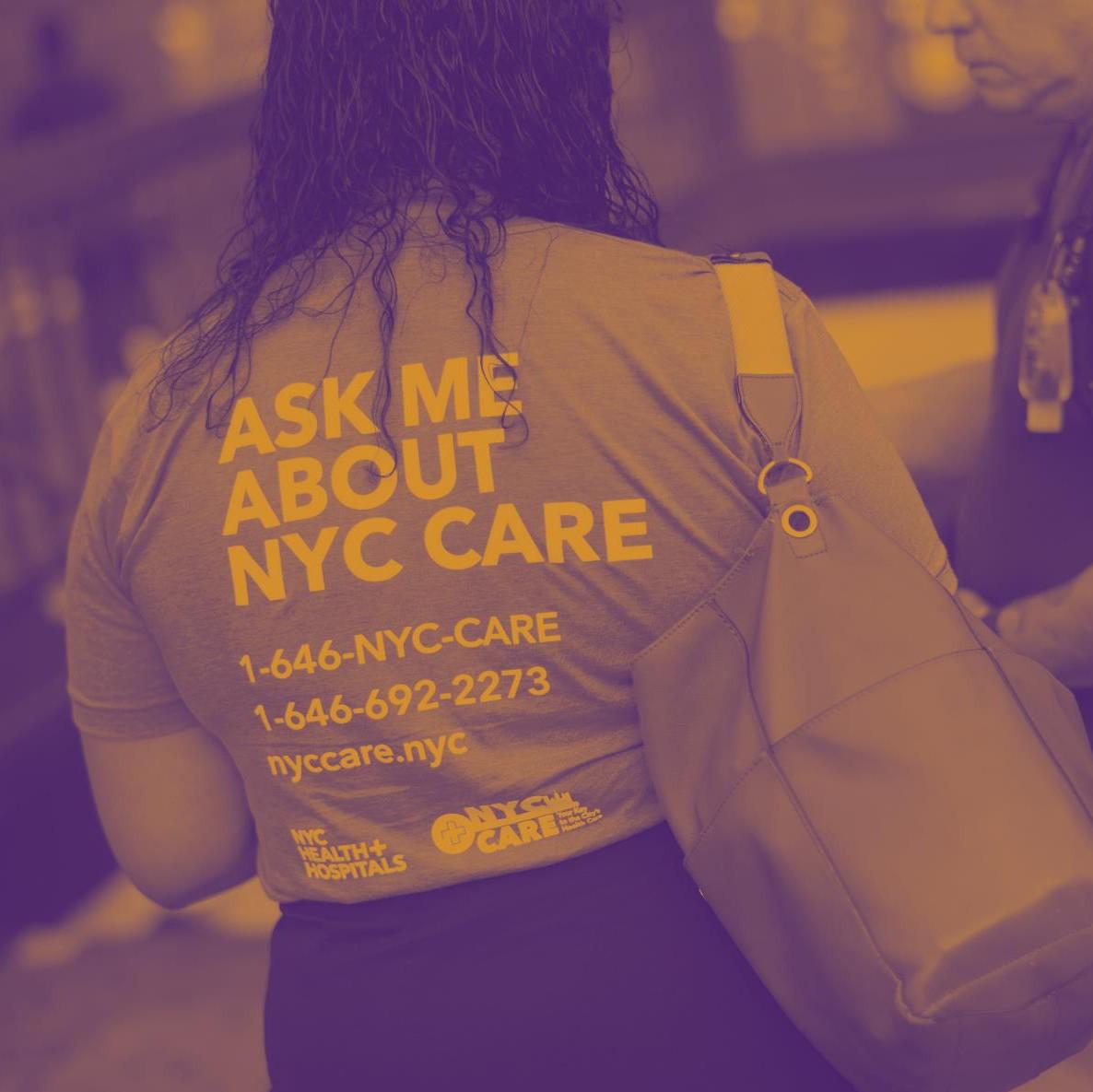 261
Health and Wellbeing
262
Health and Wellbeing
Structural racism has long shaped how resources, opportunities, and services are
distributed across institutions in the United States, including those protecting and
promoting health and well-being. These trends of displacement, enslavement,
segregation, and discrimination are rooted in historic and ongoing systems of
injustice that have structured access to housing, economic opportunity,
environmental conditions, and health care.
New York City sits on the ancestral land of the Lenape, Rockaway, and Canarsie
peoples. This system of exclusion continues to shape living conditions, exposure to
risk, and access to care across communities. Race has no biological basis; it is a
social construct that has shaped the distribution of opportunity and resources. Yet,
structural racism, not race, continues to influence institutions and drive disparities in
health outcomes across New York City.
Disparities in Health Outcomes
In New York City, neighborhoods most impacted by structural racism and uneven
resource allocation experience the greatest health burdens and barriers to
wellbeing. These structural conditions contribute to disparities across many health
indicators, including HIV, tuberculosis, maternal mortality, infant mortality, mental
health conditions, and chronic disease conditions such as asthma and diabetes.
For example, for the period of 2018-2022, Black New Yorkers were five times more
likely to die of a pregnancy-associated cause than white New Yorkers,
lxvi
and infant
mortality rates are more than three times higher among Black infants and twice as
high among Puerto Rican infants compared to white infants.
lxvii
Asthma
disproportionately affects Black and Latina/o/x children and those living in high-
poverty neighborhoods, and children in the Bronx have historically higher rates of
asthma-related hospitalizations than children in other NYC boroughs.
lxviii
Other urgent public health challenges, such as gun violence, are also
experienced inequitably across communities.
Discrimination and Inequities in Health Care and Medicolegal
Systems
The medical system is no stranger to structural racism, as people of color,
Condition of Thriving:
We endeavor to ensure that every person who resides in
New York City has the opportunity to thrive with:
Compassionate and culturally
responsive health, trauma, and mental health care
.
263
particularly Black New Yorkers, have experienced a long history of discrimination
and mistreatment at the hands of the American medical system itself. The
Commonwealth Fund highlights “studies have found Black Americans are
consistently undertreated for pain relative to white patients; one revealed half of
medical students and residents held one or more false beliefs about supposed
biological differences between Black and white patients, like the former have higher
pain tolerance than the latter.”
lxix
People with additional marginalized identities, including individuals with a non-
English language preference (NELP), LGBTQ+ communities, and people with low
incomes who rely on Medicaid or lack insurance also experience disparities in
care. Language barriers are associated with lower quality of care, poorer clinical
outcomes, longer hospital stays, and higher rates of hospital readmissions.
Access to language assistance services is therefore essential to ensuring that
health care is safe, effective, patient-centered, timely, and accessible for all
patients.
In addition, gaps in provider training affect the quality of care experienced by
LGBTQ+ patients. Many medical education programs provide limited instruction on
LGBTQ+ health beyond HIV-related topics, contributing to a lack of awareness of
LGBTQ+ patients’ needs and experiences. As a result, LGBTQ+ individuals —
particularly LGBTQ+ people of color — encounter stigma, inappropriate language,
and substandard care in health care settings. The absence of comprehensive
federal protections against discrimination in health care also creates an inconsistent
landscape for patients and providers across the country.
Disparities are also reflected in medicolegal systems responsible for investigating
deaths and identifying patterns that affect community health. Structural bias in
investigations, interpretation, or death determinations can reinforce inequities. Drug
overdose deaths, for example, disproportionately affect neighborhoods with
historically marginalized populations and often reveal unmet needs among families
and communities. City initiatives such as the Drug Intelligence and Intervention
Group (DIIG) program connect impacted families with trained social workers who
provide overdose prevention resources, housing assistance, financial services, and
other critical supports.
Challenges to Health Funding
Developing long-term public health strategies is challenging when external
constraints such as funding fluctuations and hiring limitations affect the capacity of
public health institutions. Sustained investment is essential for maintaining the
workforce,
264
infrastructure, and programs needed to prevent diseases, respond to emerging
threats, and address longstanding health inequities.
The COVID-19 pandemic brought unprecedented funding for public health efforts,
enabling the City to respond quickly and direct resources to communities
disproportionately impacted. However, much of this funding was temporary and
was not sustained at the federal, state, or local level. As a result, maintaining and
expanding the public health infrastructure developed during the pandemic presents
ongoing challenges.
Public health institutions are also operating within a shifting political and policy
environment in which scientific evidence, public health authority, and the role of
government in protecting community health are increasingly contested. The sum of
these factors, legal constraints and diminishing funding weaken the infrastructure
needed to sustain prevention-focused work and respond effectively to emerging
health threats.
Public health systems are most effective when they are supported consistently, and
not only during emergencies. Many of the most significant public health
achievements, including the control of infectious diseases, vaccinations, improved
food safety standards, and reductions in infant mortality were made possible
through sustained investment and prevention-focused strategies. Ensuring that
public health institutions have the resources and flexibility to act proactively is
critical to protecting the health and wellbeing of New Yorkers.
Unified Commitment
The agencies in this section recognize that advancing health and wellbeing requires
sustained investment in strong public health, health care, and medicolegal systems
that protect and serve New Yorkers. Addressing these longstanding disparities will
require coordinated action to confront the structural conditions that shape health
outcomes and ensure that every community, regardless of who they are, has an
equal opportunity to thrive.
265
Department of Health and Mental Hygiene
Mission and Commitment
The mission of the New York City Department of Health and Mental Hygiene (NYC
Health Department) is to protect and promote the health of all New Yorkers, and its
vision is a city where all New Yorkers can realize their full health potential, regardless
of who they are, where they are from, or where they live.
In 2016, the NYC Health Department launched Race to Justice to build its capacity to
address structural racism and health inequities and has committed to uprooting white
supremacy and its impact on health and well-being while shifting resources and power
to the communities that bear the greatest burden of marginalization, racism, and
health inequities. Additionally, the NYC Health Department declared racism a public
health crisis on June 8, 2020, and expanded on this declaration through direct actions
across the agency, including the Board of Health resolution declaring racism a public
health crisis in October of 2021.
Because racism is a race-explicit system, anti-racism requires race-explicit strategies.
Additionally, intersectionality, which acknowledges the unique impact and experience
of oppression when a person or community holds multiple marginalized identities, is a
critical strategy to fight the public health crisis of racism. The crisis of racism in this
country is long-standing, and our nation’s response will need to span generations and
be enshrined through deliberate and strategic government action to undo centuries of
harm.
Racial Equity Goals
Short-Term
1.
Goal
: Create and implement a structure to report bias (implicit and explicit) and
interpersonal, institutional, and structural racism within the NYC Health Department
a.
Outcome:
By the end of 2026,
•
Institute a reporting structure and process for staff to report bias and
racism that achieves 80% or more satisfaction with how complaints
are resolved from staff who use it.
•
Reduced differences in satisfaction rates with the reporting structure
and complaint resolution process between staff of color and staff who
identify as white.
b.
Strategies
:
•
Partner with the Office of General Counsel to develop workflow,
reporting mechanisms, and procedures for reporting bias (implicit
and explicit) and interpersonal, institutional, and structural racism
266
•
Develop and implement training for human resources,
administration, and racial equity staff on reporting process for all staff
c.
Indicators
:
•
Number of staff trained on the process for reporting
•
At least 50% of staff report feeling satisfied with the reporting
structure
•
Percent of staff who feel knowledgeable on how to report bias and
racism within the NYC Health Department increases from baseline
percent, disaggregated by race and ethnicity
•
Percent of staff who feel comfortable with reporting bias and racism
within the NYC Health Department increases from baseline percent,
disaggregated by race and ethnicity
•
Percent of staff who report feeling confident in how reporting bias and
racism are resolved increases from baseline, disaggregated by race
2.
Goal
: Identify priority neighborhoods considering current Action Center and Bureau
of Neighborhood Health catchment areas using measures of structural racism,
neighborhood conditions, and disease burden and HealthyNYC priority health
outcomes, to inform focused agency decision-making about investment and
programming to address health inequities and distribute resources where they are
most needed
a.
Outcome
: By the end of 2026, publish the priority neighborhoods as
determined by the NYC Health Department and the criteria used to
determine the priority neighborhoods.
b.
Strategies
:
•
Update the criteria for neighborhood prioritization with attention to
race and ethnicity, income, inequities in disease incidence and
prevalence, health and social resources, and other items, as
determined
•
Assess community priorities in the neighborhoods through meaningful
engagement to compare and align with the NYC Health Department’s
strategies and priorities
c.
Indicators:
•
The prioritization list aligns with the Health Department’s commitment
to addressing structural inequity including disinvestment, racism, and
poverty
•
Priority neighborhoods are used to inform decision-making related to
agency resource allocation
Medium-Term
1.
Goal
: Ensure that equity is embedded in enforcement practices and associated
policies to support dismantling systemic and structural racism and bias
267
a.
Outcome
:
•
By 2028, 100% of newly proposed changes to the NYC Health Code
to address environmental health issues are assessed using the
internal NYC Department of Health Environmental Health Division
Regulatory Analysis Tool, and all communications regarding
compliance with any such NYC Health Code changes that the Board
of Health adopts use the internal NYC Department of Health
Environmental Health Communications Equity Tool.
•
By 2028, address the top two priorities identified by Environmental
Health Division supervisors in the Community of Practice to enhance
equity in inspections and enforcement and ensure 100% of customer
service training for inspectors and supervisors includes implicit bias
training.
b.
Strategies
:
•
Apply the Environmental Health Division Regulatory Analysis Tool to
ensure newly proposed changes to the NYC Health Code to address
environmental health issues considering equity
•
Implement the Environmental Health Communications Equity Tool
on new communications to the regulated community to ensure
accessibility and promote compliance
•
Facilitate spaces for Environmental Health Division community-
facing staff and supervisors to address challenges and improve
equity in inspections
•
Equip all Environmental Health Division community-facing staff and
supervisors with training to enhance equity in their interactions within
the communities they serve
•
Embed equitable and consistent health inspection practices within
the Environmental Health for Equity Strategic Plan to address
systemic disparities
c.
Indicators
:
•
Percentage of proposed NYC Health Code changes addressed by
the Environmental Health Division that are assessed using the
Environmental Health Division Regulatory Analysis Tool
•
Percentage of communications projects for the regulated community
that use the Environmental Health Communications Equity Tool
•
Percentage of supervisors with increased knowledge on supervisor
resources after attending the Supervisor Community of Practice
•
Percentage of staff with an increase in knowledge after racial equity
training during Annual Customer Service Training
2.
Goal
: Develop and implement strategies to cultivate strong, trusting relationships
with not-for-profit service providers and vendors, including M/WBEs, as well as
identify and address any barriers to participation in contracting opportunities,
consistent with federal, state, and local law
268
a.
Outcome
: By 2028, ensure 100% of small business vendor invoices are
paid within 30 days.
b.
Strategies
:
•
Ensure timely payment of small business vendor invoices to build
healthy and strong relationships between vendors and the NYC
Health Department, by strengthening use of data and reporting to
signal when action is needed on invoices, and developing enhanced
agency SOPs to align with new City invoicing and audit standards
•
Support vendors, including M/WBEs, participation in agency
solicitations and contracting opportunities through procurement
practices, consistent with federal, state, and local law
•
Continue implementing and evaluating the agency’s established
M/WBE utilization goals to ensure they remain effective and
consistent with federal, state, and local law
c.
Indicators
:
•
Percent of invoices paid within 30 days or less
•
Value, number, and percent of contracts awarded to M/WBE firms,
disaggregated by demographic categories
3.
Goal
: Reduce preventable morbidity and mortality in Black birthing New Yorkers to
reduce the gap with white birthing New Yorkers
a.
Outcome
: By 2028, a reduction in mortality in Black birthing New Yorkers
will contribute to the citywide birth equity goal.
b.
Strategies
:
•
Invest in place-based approaches to reduce mortality rates for Black
people to reduce health care segregation and improve access to
care
•
Improve the quality of health care for pregnant and postpartum New
Yorkers in partnership with the communities in which they live
c.
Indicators
:
•
Number of referrals for Black birthing New Yorkers with complex
chronic illnesses
•
Number of enrollees in the Citywide Doula Initiative in Brooklyn
4.
Goal:
Develop, fund, and launch truth and reconciliation projects focused on
repairing health inequities rooted in historical government policies or actions
a.
Outcome
: By 2028,
•
Launch at least three truth and reconciliation projects focused on
repairing health inequities.
•
Increase in trust of the NYC Department of Health among the
communities involved in the truth and reconciliation projects.
b.
Strategies
:
•
Conduct qualitative interviews of key informants who had worked
and/or received services at NYC Health + Hospitals/Lincoln Detox
269
Center and/or Lincoln Recovery Center
•
Complete archival analysis of documents from New York State and
agencies pertaining to the closing and/or downsizing of city-run
substance use services in the South Bronx
•
Disseminate findings focused on the areas of redress the City can
implement to repair health inequities related to opioid and other
substance use in the South Bronx
•
Identify and fund at least two additional truth and reconciliation
projects in consultation with NYC Health Department staff
c.
Indicators
:
•
Number of NYC residents engaged in ongoing truth and
reconciliation projects
•
Trust increases at least 10% among community members who
attend a truth and reconciliation project event
•
At least the first step to repair health inequities identified in strategy 3
are taken by 2028
5.
Goal
: Establish the NYC Health Department as a Response Ready organization
that responds equitably, effectively, and rapidly to the full range of public health
issues that affect NYC residents, while looking after the wellness of its staff
a.
Outcome
: By 2028, achieve successful implementation of the Response
Ready Blueprint with activities tagged as addressing health and racial equity
and social justice implemented across all ten priority action areas for the
NYC Health Department.
b.
Strategies
:
•
Develop and maintain operational capacity to effectively manage
day-to-day and emergency response functions through planning and
training, interagency coordination, and ensuring the availability and
scalability of operations while supporting infrastructure, including by
enhancing our ability to assess and target critical community needs
in response and recovery and bring staff's lived experience and
community expertise into focus in our work
•
Recognizing the key role that trust in the Health Department plays in
working effectively with communities and addressing disparities
•
Build trust with staff, the public, partner organizations, and other
government agencies by communicating transparently,
acknowledging past errors, investing in long-term partnerships,
communicating timely public health guidance, and sharing learnings
from previous emergencies with staff and partner organizations
•
Function as a trusted employer and support a resilient public health
workforce by valuing the staff and supporting staff members’ mental
and physical health and well-being, and equity and parity in
opportunity among staff day-to-day and during emergencies
•
Work toward health and racial equity and social justice goals by
270
prioritizing services for disproportionately impacted communities,
centering equity in internal decision-making in day-to-day and
emergency response functions and engaging in long-term equity
work. This involves meaningfully incorporating input from staff at all
levels of the agency, community members, and partner
organizations
c.
Indicators:
•
Percent of activities assigned as a component of the Advancing
Equity pillar of the Response Ready Initiative that are being
implemented
•
Percentage of Core, Tier 1, and Tier 2 Agency Responders that have
taken the Race to Justice Core Workshop training
Long-Term
1.
Goal
: Ensure pay equity for agency employees that is inclusive of race, ethnicity,
and gender
.
51
a.
Outcomes:
By 2034,
•
Complete internal equity review and alignment that is inclusive of
race, ethnicity, and gender identity to advocate for pay equity and civil
service change.
•
Create data-informed brief to summarize findings from an agency-
wide pay parity analysis.
b.
Strategies
:
•
Require divisions to report on promotion and retention metrics
disaggregated by race and ethnicity at accountability meetings to
establish a baseline and identify where racial disparities exist
•
Conduct a title utilization and responsibility alignment review across
the agency by comparing:
o
Office title
o
Civil Service title
o
Required skills
o
Supervisory responsibilities
o
Required qualifications
•
Develop regular reporting mechanisms of disaggregated data by
race, ethnicity, gender identity, and title
•
Review salary bands against NYC True Cost of Living/TCOL
c.
Indicators
:
•
Number and percent of employees with promotions and pay
increases in higher-paid titles versus lower-paid titles, disaggregating
51
Implementation of any workforce-related changes in furtherance of the equity goals related to salary
adjustments highlighted in this report must be consistent with collective bargaining obligations. See p. 430 for
further information.
271
by race, ethnicity, and gender identity
•
Percent of employees at minimum versus incumbent pay rates, with a
breakdown for tenure by race, ethnicity, and gender identity
•
Percent of employees with completed Tasks & Standards and
Performance Evaluations
2.
Goal:
Eliminate ethnic and racial inequities in patient satisfaction for NYC Health
Department’s Article 28 and 36 programs, fostering inclusivity and equity and
elevating the standard of care offered
a.
Outcome
: By 2034, achieve less than a 5% inequity in patient satisfaction
scores among different racial and ethnic groups.
b.
Strategies
:
•
Implement a multilingual patient satisfaction survey for Article 28 and
36 programs, tailored to each clinic’s demographics, with a focus on
diversity, inclusion, and patient preferences
•
Analyze survey data, focusing on satisfaction levels, reasons for clinic
selection, and sources of information
•
Determine baseline disparities in patient satisfaction scores among
different racial and ethnic groups
•
Engage program leadership and staff to discuss findings and
improvement strategies to plan next steps
•
Develop a strategic plan to target and reduce inequities highlighted
by the survey analysis and carry out recommendations over the
following six years
c.
Indicators
:
•
Percent of patient satisfaction surveys available in the top five
languages spoken in each clinic
•
Number and percent of patient responses disaggregated by race and
ethnicity
•
Percent of inequity in patient satisfaction scores decreases
disaggregated by race and ethnicity year over year
•
80% of clinics that implement at least 75% of the recommendations
from the strategic plan
•
Percent decrease in inequities in patient satisfaction scores in clinics
that have implemented the recommendations from the strategic plan
decreases year over year
Community Equity Priorities Referenced
•
#1: Remove the gaps in race, gender identity, sexual orientation, age, and disability
in city jobs. Ensure that government work and staff reflect the city's commitment to
equity and social justice.
•
#3: Remove the gaps in race, gender identity, sexual orientation, age, and disability
in city pay, promotions, and contracts.
272
•
#9: Use and expand non-punitive responses to mental health and all crises. These
responses should rely less on police where possible. People should be allowed to
decide or contribute to decisions about their own care.
•
#11: Expand health, mental health, substance use, and disability services. They
must meet the needs of families and individuals harmed by racism and social
injustice.
•
#14: Expand access for those harmed by racial and social injustice to inform local
emergency planning. These include plans to prepare for, act in, and recover from
emergencies.
Spotlight Wins
•
Environmental Health
: The Environmental Health Division Regulatory Analysis
Tool evaluates newly proposed changes to the NYC Health Code related to
environmental health. For each proposed change, the division assembles a core
group of key internal stakeholders to conduct both quantitative and qualitative
analyses, identifying and addressing any potential inequities that may be created or
exacerbated by these changes, and assessing whether the proposed amendment
would advance equity. The Environmental Health Communications Equity Tool,
developed in collaboration with the Environmental Health Communications team,
provides equity-centered questions and prompts to ensure that equity is considered
at every stage of communication project planning and implementation. This tool is
currently being piloted, and the division will implement a formal feedback process
to continuously update and improve it.
•
HealthyNYC
: In 2024, the NYC Health Department launched the development of
the HealthyNYC Learning Collaboratives, which brings together teams of peers and
experts to work together to improve quality of services and health outcomes. The
HealthyNYC Learning Collaboratives convene diverse stakeholder groups around
the seven biggest drivers of loss of life expectancy, with the goal of implementing
quality improvement mechanisms to better serve New Yorkers and reduce
mortality.
•
Response Ready
: An important element of the Response Ready process was to
design the project to make it inclusive and reflect the diversity of the NYC Health
Department workforce. This included both the way equity was considered
throughout the project as well as how a consultation process was developed and
implemented. In the first phase of work, over 1,000 individuals contributed to the
definition of Response Ready. In the second phase of the work, over 65 staff
worked across 10 action areas to develop recommendations. The agency received
1,100 responses to an internal survey, held over 85 consultations, and received
approximately 320 perspectives from staff as part of those consultations. This
process resulted in a robust final product centering equity in the NYC Health
Department’s next steps for emergency response.
273
NYC Health + Hospitals
Mission and Commitment
As the largest municipal health care system in the country, NYC Health + Hospitals’
mission is to deliver high-quality health care services to all New Yorkers with
compassion, dignity, and respect.
Our vast network, comprising 11 acute care locations, five post-acute care facilities,
and over 30 community health centers, forms the backbone of New York City's safety-
net healthcare system. We serve approximately one million New Yorkers annually,
with 70 percent of patients identifying as either Black/African American,
Hispanic/Latina/o/x, or Asian American/Pacific Islander, and an estimated 30 percent
of patients with non-English language preference (NELP). We serve marginalized
groups who are more likely to experience poverty and face a disproportionate amount
of harmful daily stressors and barriers, which contribute to and exacerbate chronic
disease and health equity challenges. Over 70 percent of our patients either rely on
Medicaid or have no insurance. This reality underscores our critical role in providing
care to the city's most vulnerable and marginalized populations.
As we advance, we do so with a lucid understanding of the challenges before us and
an unwavering commitment to health equity. The disparities we see are not
inevitable—they are the result of choices made, and systems created.
NYC Health + Hospitals stands firm in its commitment to bridging gaps and breaking
down barriers to healthcare access. Health equity is not just about providing services
but about actively dismantling systemic barriers.
This report was developed in response to a City Requirement.
Racial Equity Goals
Short-Term
1.
Goal
: Foster a culture of inclusion and belonging from frontline staff to executive
leadership to strengthen culturally competent care
a.
Outcome
: By the end of 2029,
•
Achieve a 3.87 on employee engagement ratings.
52
•
Increase employee engagement in employee resource groups.
b.
Strategies
:
52
Measured on a one-to-five scale, with one representing the lowest level of engagement and five representing
the highest.
274
•
Source and review training
•
Roll out training System-wide and build effective communication
strategies to increase staff completion
•
Expand and strengthen the manager rollout of engagement results
and action planning from the employee engagement survey
•
Launch initiatives to strengthen employee sense of belonging
throughout the System, including participation in employee resource
groups
•
Increase employee opportunities for engagement via workshops and
training to strengthen retention
•
Monitor number of employee resource groups
•
Monitor number of employees participating in employee resource
groups
•
Work toward a 2029 goal of strengthening the Leader Index by
reinforcing consistent, supportive leadership practices that promote
listening, trust, and follow-through
•
Promote shared decision-making, encouraging and enabling leaders
to involve employees in decision making
•
Provide guidance and tools to help teams keep employees involved in
progress and next steps
c.
Indicators
:
•
Employee Ratings on Employee Satisfaction Surveys
53
Willingness to recommend this organization as a good place to
work
(baseline 3.84)
Diversity pillar
(baseline 4.00)
Belonging
(baseline 3.9)
•
Number of EEO trainings offered by NYC Health + Hospitals
•
Percent of staff completing EEO trainings
•
Percent of leadership completing EEO trainings
Medium-Term
1.
Goal
: Invest in robust language access improvements to ensure equitable care for
our diverse patient population
a.
Outcome
: By 2030, enhance the provision of language access services by
achieving a 93% average call satisfaction rate.
b.
Strategies
:
•
Update public-facing website with information regarding language
access services and patient rights around language access translated
into at least 15 languages
•
Increase language services in mobile health units, used as part of the
53
Measured on a one-to-five scale, with one representing the lowest score and five representing the highest
score.
275
Street Health Outreach + Wellness (SHOW) program to reach diverse
populations, with a focus on people experiencing homelessness
•
Conduct an inventory of current language access equipment to
determine new needs with stakeholders
•
Work with vendors to distribute and implement equipment System-
wide, with a focus on reducing wait time for interpretation
•
Increase community outreach with community-based organizations at
parades, marches, and festivals to promote language access and
other services
•
Launch a language access campaign and distribute promotional
materials to increase awareness
•
Create and launch a patient feedback collection process in the top 15
languages used to gain insight into the NELP patient population’s
experience with our services
•
Explore the use of AI assistive technologies with qualified translator
reviews
c.
Indicators
:
•
Number of languages offered on public-facing website
•
Percent of interpretation minutes used by staff in mobile health units
•
Number of community events participating in promoting language
access
•
Call satisfaction rates
•
Number of survey responses from NELP patients
2.
Goal
: Prioritize access to care to advance health equity for all patients
a.
Outcome
: By 2030, increase the number of uninsured New Yorkers
connected to affordable, high-quality primary, preventive, and specialty care,
regardless of their ability to pay.
b.
Strategies
:
•
Partner with community-based organizations, houses of worship, and
anchor institutions operating in Taskforce on Racial Inclusion & Equity
(TRIE) zip codes
•
Partner with elected officials and relevant city agencies to reach the
hardest to reach zip codes
•
Reach every TRIE zip code
c.
Indicator:
•
Number of uninsured New Yorkers connected to care, disaggregated
by race, ethnicity, and gender identity
•
Number of NYC Care outreach encounters, by TRIE zip code
Long-Term
1.
Goal:
Increase access to care
a.
Outcome:
By 2034, every New York City Health + Hospitals patient has a
276
primary care physician.
b.
Strategies:
•
Complete at least 100,000 outreach encounters per year
•
Maintain persistent multi-lingual public awareness and community
outreach campaigns regarding NYC Care and the right to health care
•
Reach underserved communities, based on agency disparity analysis
•
Improve data pipelines across the System to accurately capture
patients' data
•
Embed usage of automated Systems to monitor clinical outcomes
according to race, ethnicity and language to improve clinical outcomes
c.
Indicators
:
•
Number of outreach encounters in historically underserved
communities and TRIE zip codes per year
•
NYC Care enrollment by zip code and race and ethnicity
•
Clinical encounters by NYC Care members by zip code
2.
Goal
: Increase community awareness of LGBTQ+ services throughout NYC Health
+ Hospitals
a.
Outcome
: By 2034,
•
Increase the number of employees who would recommend NYC
Health + Hospitals to family and friends who need care.
•
100% of the five boroughs will have Pride Health services.
b.
Strategies:
•
Increase employee opportunities for engagement via workshops and
training to strengthen retention
•
Increase employee opportunities for engagement via the system’s
participation in Pride Month activities
•
Expand Pride Health services to more facilities across NYC in
collaboration with facility leadership to see an increase from the
current 8 out of 40 eligible facilities that have services
•
Conduct outreach to the LGBTQ+ community across the city so
community members are aware of these services
c.
Indicators
:
•
Number of employees who would recommend NYC H+H to family and
friends who need care
•
Mean score for employees who complete voluntary employment
feedback survey, self-select as, “Yes I identify as LGBTQ+”, and
answer “I would recommend this organization to family and friends
who need care”, with the goal of increasing rating from 3.48 to 3.57
54
•
Boroughs with implemented Pride Health services
•
Number of employees participating in systemwide Pride Month
activities, with goal of increasing from 164 to 2500
54
Measured on a one-to-five scale, with one representing the lowest score and five representing the highest
score.
277
3.
Goal
: Identify and reduce health disparities of vulnerable communities
a.
Outcome
: By 2034, advance anti-marginalization and repair strategies.
b.
Strategies
:
•
Strengthen our relationships with community organizations to address
the social determinants of health that contribute to health disparities
•
Prioritize initiatives that directly address health disparities, particularly
in maternal and infant health, chronic disease management, and
preventive care
•
Advocate for policies that address systemic inequities and tackle racial
disparities in healthcare and hospital system
•
Leverage the NYC Care Program to ensure New Yorkers who cannot
access insurance are being connected with affordable, high-quality
primary, preventive, and specialty care, regardless of their ability to
pay
•
Assess and refine metrics for health equity analysis for anti-
marginalization rubric
c.
Indicators
:
•
Number and percent of agency initiatives that meet established anti-
marginalization criteria
Community Equity Priorities Referenced
•
#11: Expand health, mental health, substance use, and disability services. They
must meet the needs of families and individuals harmed by racism and social
injustice.
Spotlight Wins
•
NYC Health + Hospitals has implemented policies and guidelines to promote
inclusive practices and affirming care to LGBTQ+ patients. For example, we have
successfully supported the integration of ‘Sexual Orientation and Gender Identity’
(SOGI) demographic data in the System’s electronic health records and created
and launched LGBTQ+ training programs to strengthen mental health providers’
skills. In addition, all 18 eligible NYC Health + Hospitals facilities have earned the
“LGBTQ+ Healthcare Equality Leader” designation in Human Rights Campaign
Foundation’s Healthcare Equality Index (HEI) annually since 2015 and all 5 eligible
long-term care facilities have earned the “LGBTQ+ Long-Term Care Equality
Leader” designation in the Human Rights Campaign Foundation and SAGE's Long-
Term Care Equality Index (LEI). We have also developed various resources
including ‘Transgender and Non-Binary Patient and Resident Room Assignment
Guidance', 'Trans Guide to Care’, ‘LBGTQ+ Affirming Clinic Toolkit’, and the
‘Pronoun Guide’. Finally, we successfully advocated for the inclusion of
transgender inclusive health benefits information in NYC Employee Benefits
Summary Plan—implemented in the fall of 2017.
278
•
NYC Health + Hospitals has expanded language access through the negotiation of
a new interpretation contract, the launch of an Essential Documents library which
provides quick access to critical documents in 13 languages as well as Braille,
large font, and audio files, and a new internal website that contains updated
language access information for staff. We are working on the implementation of
new interpretation contracts, securing additional equipment at facilities, and
providing access points for staff to improve language services, and hiring language
access coordinators for facilities’ external program
.
279
Office of Chief Medical Examiner
Mission and Commitment
The New York City Office of Chief Medical Examiner (OCME) has two mission critical
roles: to protect public health and to serve impartial justice through forensic science
and medicine. Our agency’s core purpose is to provide answers in support of families
and communities during times of profound need.
At OCME, we take pride in our diverse workforce, valuing each individual's unique
contributions. We are dedicated to providing fair and equitable services to the
communities we serve. By building inclusive structures and initiatives, we ensure all
stakeholders and members of the public we serve are treated with respect and
consideration. Our commitment to equity is integral to our mission and daily
operations.
OCME, an ethnically diverse agency, serves and recruits from one of the most diverse
cities in the world and as such, maintains the strictest standards in ensuring the
rendering of impartial determinations that are free from bias. The agency will continue
its successful training in this regard and will remain committed to broadening the
understanding of bias in its instruction and continue to enhance communication of
information between medical examiners, law enforcement, medical professionals, and
legal authorities to focus on the facts and not any preconceived notions of bias due to
race, gender, age, culture, and other attributes.
Our efforts include, but are not limited to, continued training for forensic specialists in
the promise and challenge of new technologies that provide greater detail and insight
into normal and suspicious deaths, honoring religious objections to autopsy, and
increasing partnerships with skilled genetic counselors and OCME’s family outreach
initiatives to support affected loved ones following sudden and unexpected loss.
In addition, we strive always to cultivate an unbiased environment through hiring a
more racial equity-aware and enlightened team of forensic specialists. We endeavor to
make the agency a critical resource for training professionals who come here for
OCME’s forensic excellence and groundbreaking technology that it offers.
Racial Equity Goals
Short-Term
1.
Goal
: Provide accessible and centralized racial equity trainings for all staff to fortify
OCME’s commitment to racial equity in and beyond our core areas of work
280
a.
Outcome
: By the end of 2026, expand the already robust racial equity
training to be specifically tailored to different sectors within the agency and
to roll out the training.
b.
Strategies
:
•
Assess understanding of what racial equity is throughout the agency
utilizing research techniques such as surveys, observation, and
group/one-on-one interviews
•
Partner with academic forensic bodies to design training modules that
address historical bias in the forensic science field
•
Continue the efforts of the OCME CARES campaign and integrate
racial equity principles
•
Provide comprehensive training programs, including managerial and
employee sessions, and facilitate focus groups
•
Create a centralized digital hub of information and training materials
on the OCME intranet which is accessible to all employees
c.
Indicators
:
•
Number of trainings created and completed by staff
2.
Goal
: Establish a biennial baseline demographic data review to identify and
address racial silos and disparities across OCME units and foster equitable
workplace opportunities
a.
Outcome
: By the end of 2026, ensure 100% of OCME units have access to
disaggregated employee and hiring data to make data-informed decisions.
b.
Strategies
:
•
Collect data to identify trends where racial inequity leads to a lack of
education and employment opportunities
•
Collaborate with the NYC Department of Health and Mental Hygiene
(DOHMH) to access internal recruiting, hiring, and retention efforts
data
•
Develop a method for collecting data that provides a breakdown of
recruiting, interviewing, and hiring across different racial groups in all
OCME units
55
c.
Indicators
:
•
Percent of OCME units with access to disaggregated employee and
hiring data
Medium-Term
1.
Goal
: Build an inclusive workplace that actively strives to eliminate occupational
segregation, strengthen employee retention and career advancement, and provide
more attainable career guidance and resources for employees of underrepresented
backgrounds
55
This information is used for informational or communications purposes, only.
281
a.
Outcome
: By 2028, establish at least one employee resource group (ERG)
where racial equity is addressed in areas such as mental/physical well-being,
education, job training, and job advancement.
b.
Strategies
:
•
Demonstrate how addressing racial equity fosters understanding and
tolerance to reduce workplace aggression and EEO-related issues
•
Establish EEO Focus Groups, Affinity Groups, and Employee
Resource Groups (ERGs) to foster employee participation in creating
support systems and tangible improvements in their work and life
environments
•
Launch a formalized internal mentorship and technical training
network linking staff with resources, pathways and opportunities for
advancement.
•
Review the resulting data from Focus Groups, Affinity Groups, and
ERGs, as well as Wellness activities to evaluate the impact of these
efforts and help determine the most valuable next steps
•
Examine the success of retention efforts so that our office can address
potential racial disparities in our staffing practices
c.
Indicators
:
•
Employee retention rate, disaggregated by race and ethnicity
•
Number of employees participating in ERGs, by race and ethnicity
•
Number of new internal programs and initiatives representing
employees across units and career levels
•
The percentage of internal promotions into forensic science roles,
disaggregated by race and ethnicity, prior and current role
56
2.
Goal
: Address any underrepresentation of staff in certain roles within the agency
through equitable hiring and recruitment practices for all vacancies
a.
Outcome
: By 2028, implement inclusive workforce practices that attract
diverse applicants.
b.
Strategies
:
•
Update website language to reflect our diverse workforce to attract
talent
•
Expand agency participation in internships, career fairs, and outreach
programs with schools to build diverse recruitment pipelines
•
Partner with Historically Black Colleges and Universities and local
institutions to promote opportunities in medical examiner, medicolegal
investigator and other specialized forensic science roles.
•
Develop a pilot program to partner with one or more schools or
outreach where the approach could be evaluated as to a successful
plan
•
Additionally, OCME will ensure all job descriptions utilize inclusive
language and focus on essential skills and qualifications
56
This information is used for informational or communications purposes, only.
282
•
OCME Human Resources will put a focus on ensuring programs
continue to use diverse interview panels and ensure interview
questions are inclusive and geared to skills needed for the position
c.
Indicators
:
•
Number of recruiting events attended
•
Demographic composition of applicants
57
•
Demographic composition of staff
•
Percentage of applicants sourced from new partnerships who are
successfully hired and retained, disaggregated by race and ethnicity
and role
60
•
Year-over-year demographic composition of candidates at each critical
hiring milestone: application, first interview, final panel and formal job
offer
60
Long-Term
1.
Goal:
OCME has had a 30% goal for M/WBE utilization and will continue to
implement and evaluate goals going forward to ensure they are consistent with
federal, state, and local law
a.
Outcome
: By 2034, maintain consistent implementation and assessment for
M/WBE utilization.
b.
Strategies
:
•
Partner with independent M/WBE contractors to fill various roles
within the overall scope of OCME needs. This may be in the areas of
security contracting, facilities, technician support, and administrative
needs.
•
Release RFIs to diverse populations that are historically underutilized
as vendors
•
Actively participate in procurement and M/WBE events to promote
our needed commodities
c.
Indicators
:
•
Percentage of agency contracts awarded to M/WBEs, disaggregated
by race and ethnicity
•
Percentage of M/WBE contract utilization broken down across distinct
internal OCME divisions (e.g. IT, laboratories, administration,
operations) to track M/WBE procurement by sector
2.
Goal:
Establish internal and external programs with universities and high schools
to highlight the options in a career in forensic science
a.
Outcome
: By 2034, establish partnerships with at least one university and
one high school, leveraging the life sciences corridor to be expanded in Kips
Bay with the construction of the new Manhattan Forensic Pathology Center in
the forthcoming SPARC Kips Bay facility.
57
This information is used for informational or communications purposes, only.
283
b.
Strategies
:
•
In 2024, OCME’s Forensics Week showcased the variety of work
OCME does. This will be taken to schools physically and virtually to
show what options exist throughout the agency
•
OCME will host classes in traditionally minority-based schools in
forensic science and pre-med Forensic Medicine
c.
Indicators
:
•
Number of partnerships established with academic institutions
•
Number of students from partner institutions who successfully
transition into paid internships, fellowships or permanent tracks in
forensic science roles at OCME
58
3.
Goal:
Continue to invest resources in and expand existing innovative OCME
programs that reduce racial disparities, such as the innovative Drug Intelligence
and Intervention Group (DIIG) program
a.
Outcome
: By 2034, strive to expand the DIIG concept to at least one area in
addition to drug fatalities.
b.
Strategies
:
•
Mirror the efforts of DIIG to gain insight about where more targeted
support with post-tragedy/fatality costs, psychological/emotional
trauma, education, housing, and medical concerns is needed
•
Partner with city agencies, nonprofits, and community-based
organizations to provide services in those areas
c.
Indicators
:
•
Number of families reached
•
Number of families that are connected to services, disaggregated by
race and ethnicity
Community Equity Priorities Referenced
•
#1: Remove the gaps in race, gender identity, sexual orientation, age, and disability
in city jobs. Ensure that government work and staff reflect the city's commitment to
equity and social justice.
•
#11: Expand health, mental health, substance use, and disability services. They
must meet the needs of families and individuals harmed by racism and social
injustice.
•
#14: Expand access for those harmed by racial and social injustice to inform local
emergency planning. These include plans to prepare for, act in, and recover from
emergencies.
58
This information is used for informational or communications purposes, only.
284
Spotlight Wins
•
To advance efforts in workplace inclusion, the Office of Equal Employment
Opportunity (EEO) and Wellness completed the distribution and collection of
feedback from all OCME staff regarding their experience of working in OCME.
o
As a result of a survey conducted in the first two quarters of 2024, EEO and
Wellness held their first Focus Group meeting in July 2024 which invited the
Department of Mortuary to share feedback about their specific issues in their
work environment.
o
This highlighted how racial silos may limit the shape of opportunities and
suggested that new programs developed over time would offer means of
career path growth to those interested in pursuing further Forensics studies.
o
This has resulted in ongoing assessment, both internally and externally, of
how OCME is seen by its employees and the public as an entity that uplifts
the potential of all people. The very nature of its work as the City’s mortuary
attests that it exists for the ongoing support of all walks of life.
o
OCME's Outreach Unit connects those coping with the loss of a loved one to
counseling services, burial information, and options for ongoing material
support and relief.
•
To highlight our core value of service, which calls us to meet the evolving needs of
our customers inside and outside the agency with innovation, treating everyone
equitably, and with dedication to the public good. The entire Procurement team and
a staff member of the Department of Forensic Biology of OCME, received the
annual New York City Excellence in Customer Service Awards on behalf of the
agency.
o
The uniqueness and sensitivity of OCME’s work extends to the highly
specific mix of goods and services required to keep the agency functioning
around the clock. Our committed Procurement professionals go the distance
to find the right external vendors to match our agency’s diverse needs, while
making sure procurements align with cost, equity, and sustainability
imperatives.
o
The customer service achievements of our team members attest to the
excellence that, more often than not, unfolds without fanfare every day in
countless ways around the agency.
•
Since launching in 2022, OCME has served more than 3,000 family members of
fatal overdose victims through the Drug Intelligence and Intervention Group (DIIG),
the first-of-its-kind model that offers support to surviving family members and close
contacts as they cope.
o
This program builds upon the City’s work to reduce opioid deaths, which
exhibit stark racial disparities.
o
This program goes beyond the traditional role of the medical examiner and
focuses on addressing gaps in unmet needs. Through this initiative, when
someone dies from an overdose, the OCME’s investigation and response
285
now includes skilled social workers to engage with the decedent’s family and
friends who may also be at risk, and to provide support and a “warm
handoff” to potentially lifesaving interventions. The wide-ranging services
and referrals include grief counseling, substance use services, housing
assistance services, health care, and more. This initiative is reaching
traditionally underserved populations.
•
Social workers are successfully reaching 73 percent of the people they’ve
attempted to contact and 78 percent of the people they’ve spoken with have been
provided or referred to at least one service.
•
In Spring 2024, Chief Medical Examiner Dr. Jason Graham announced the launch
of OCME CARES, the core values campaign to guide how employees interact with
each other in the workplace and all the communities served by the agency during
times of the most profound need. OCME CARES enhances the experience of our
employees and customers in the following ways.
o
Internal education to support cross-agency/unit communication and
opportunities for development and career growth leads to the removal of
barriers that may have developed between units.
o
OCME CARES highlights our core values, which serve as a guiding
compass for our organization’s actions, culture, and outlook. The five core
values of OCME are the following:
▪
Commitment: Dedicated to the mission at all times
▪
Accountability: Responsible to each other and the community
▪
Resilience: Adapt in the face of adversity
▪
Excellence: Achieve and maintain the highest quality
▪
Service: Innovate to meet evolving needs
261
Health and Wellbeing
262
Health and Wellbeing
Structural racism has long shaped how resources, opportunities, and services are
distributed across institutions in the United States, including those protecting and
promoting health and well-being. These trends of displacement, enslavement,
segregation, and discrimination are rooted in historic and ongoing systems of
injustice that have structured access to housing, economic opportunity,
environmental conditions, and health care.
New York City sits on the ancestral land of the Lenape, Rockaway, and Canarsie
peoples. This system of exclusion continues to shape living conditions, exposure to
risk, and access to care across communities. Race has no biological basis; it is a
social construct that has shaped the distribution of opportunity and resources. Yet,
structural racism, not race, continues to influence institutions and drive disparities in
health outcomes across New York City.
Disparities in Health Outcomes
In New York City, neighborhoods most impacted by structural racism and uneven
resource allocation experience the greatest health burdens and barriers to
wellbeing. These structural conditions contribute to disparities across many health
indicators, including HIV, tuberculosis, maternal mortality, infant mortality, mental
health conditions, and chronic disease conditions such as asthma and diabetes.
For example, for the period of 2018-2022, Black New Yorkers were five times more
likely to die of a pregnancy-associated cause than white New Yorkers,
lxvi
and infant
mortality rates are more than three times higher among Black infants and twice as
high among Puerto Rican infants compared to white infants.
lxvii
Asthma
disproportionately affects Black and Latina/o/x children and those living in high-
poverty neighborhoods, and children in the Bronx have historically higher rates of
asthma-related hospitalizations than children in other NYC boroughs.
lxviii
Other urgent public health challenges, such as gun violence, are also
experienced inequitably across communities.
Discrimination and Inequities in Health Care and Medicolegal
Systems
The medical system is no stranger to structural racism, as people of color,
Condition of Thriving:
We endeavor to ensure that every person who resides in
New York City has the opportunity to thrive with:
Compassionate and culturally
responsive health, trauma, and mental health care
.
263
particularly Black New Yorkers, have experienced a long history of discrimination
and mistreatment at the hands of the American medical system itself. The
Commonwealth Fund highlights “studies have found Black Americans are
consistently undertreated for pain relative to white patients; one revealed half of
medical students and residents held one or more false beliefs about supposed
biological differences between Black and white patients, like the former have higher
pain tolerance than the latter.”
lxix
People with additional marginalized identities, including individuals with a non-
English language preference (NELP), LGBTQ+ communities, and people with low
incomes who rely on Medicaid or lack insurance also experience disparities in
care. Language barriers are associated with lower quality of care, poorer clinical
outcomes, longer hospital stays, and higher rates of hospital readmissions.
Access to language assistance services is therefore essential to ensuring that
health care is safe, effective, patient-centered, timely, and accessible for all
patients.
In addition, gaps in provider training affect the quality of care experienced by
LGBTQ+ patients. Many medical education programs provide limited instruction on
LGBTQ+ health beyond HIV-related topics, contributing to a lack of awareness of
LGBTQ+ patients’ needs and experiences. As a result, LGBTQ+ individuals —
particularly LGBTQ+ people of color — encounter stigma, inappropriate language,
and substandard care in health care settings. The absence of comprehensive
federal protections against discrimination in health care also creates an inconsistent
landscape for patients and providers across the country.
Disparities are also reflected in medicolegal systems responsible for investigating
deaths and identifying patterns that affect community health. Structural bias in
investigations, interpretation, or death determinations can reinforce inequities. Drug
overdose deaths, for example, disproportionately affect neighborhoods with
historically marginalized populations and often reveal unmet needs among families
and communities. City initiatives such as the Drug Intelligence and Intervention
Group (DIIG) program connect impacted families with trained social workers who
provide overdose prevention resources, housing assistance, financial services, and
other critical supports.
Challenges to Health Funding
Developing long-term public health strategies is challenging when external
constraints such as funding fluctuations and hiring limitations affect the capacity of
public health institutions. Sustained investment is essential for maintaining the
workforce,
264
infrastructure, and programs needed to prevent diseases, respond to emerging
threats, and address longstanding health inequities.
The COVID-19 pandemic brought unprecedented funding for public health efforts,
enabling the City to respond quickly and direct resources to communities
disproportionately impacted. However, much of this funding was temporary and
was not sustained at the federal, state, or local level. As a result, maintaining and
expanding the public health infrastructure developed during the pandemic presents
ongoing challenges.
Public health institutions are also operating within a shifting political and policy
environment in which scientific evidence, public health authority, and the role of
government in protecting community health are increasingly contested. The sum of
these factors, legal constraints and diminishing funding weaken the infrastructure
needed to sustain prevention-focused work and respond effectively to emerging
health threats.
Public health systems are most effective when they are supported consistently, and
not only during emergencies. Many of the most significant public health
achievements, including the control of infectious diseases, vaccinations, improved
food safety standards, and reductions in infant mortality were made possible
through sustained investment and prevention-focused strategies. Ensuring that
public health institutions have the resources and flexibility to act proactively is
critical to protecting the health and wellbeing of New Yorkers.
Unified Commitment
The agencies in this section recognize that advancing health and wellbeing requires
sustained investment in strong public health, health care, and medicolegal systems
that protect and serve New Yorkers. Addressing these longstanding disparities will
require coordinated action to confront the structural conditions that shape health
outcomes and ensure that every community, regardless of who they are, has an
equal opportunity to thrive.
265
Department of Health and Mental Hygiene
Mission and Commitment
The mission of the New York City Department of Health and Mental Hygiene (NYC
Health Department) is to protect and promote the health of all New Yorkers, and its
vision is a city where all New Yorkers can realize their full health potential, regardless
of who they are, where they are from, or where they live.
In 2016, the NYC Health Department launched Race to Justice to build its capacity to
address structural racism and health inequities and has committed to uprooting white
supremacy and its impact on health and well-being while shifting resources and power
to the communities that bear the greatest burden of marginalization, racism, and
health inequities. Additionally, the NYC Health Department declared racism a public
health crisis on June 8, 2020, and expanded on this declaration through direct actions
across the agency, including the Board of Health resolution declaring racism a public
health crisis in October of 2021.
Because racism is a race-explicit system, anti-racism requires race-explicit strategies.
Additionally, intersectionality, which acknowledges the unique impact and experience
of oppression when a person or community holds multiple marginalized identities, is a
critical strategy to fight the public health crisis of racism. The crisis of racism in this
country is long-standing, and our nation’s response will need to span generations and
be enshrined through deliberate and strategic government action to undo centuries of
harm.
Racial Equity Goals
Short-Term
1.
Goal
: Create and implement a structure to report bias (implicit and explicit) and
interpersonal, institutional, and structural racism within the NYC Health Department
a.
Outcome:
By the end of 2026,
•
Institute a reporting structure and process for staff to report bias and
racism that achieves 80% or more satisfaction with how complaints
are resolved from staff who use it.
•
Reduced differences in satisfaction rates with the reporting structure
and complaint resolution process between staff of color and staff who
identify as white.
b.
Strategies
:
•
Partner with the Office of General Counsel to develop workflow,
reporting mechanisms, and procedures for reporting bias (implicit
and explicit) and interpersonal, institutional, and structural racism
266
•
Develop and implement training for human resources,
administration, and racial equity staff on reporting process for all staff
c.
Indicators
:
•
Number of staff trained on the process for reporting
•
At least 50% of staff report feeling satisfied with the reporting
structure
•
Percent of staff who feel knowledgeable on how to report bias and
racism within the NYC Health Department increases from baseline
percent, disaggregated by race and ethnicity
•
Percent of staff who feel comfortable with reporting bias and racism
within the NYC Health Department increases from baseline percent,
disaggregated by race and ethnicity
•
Percent of staff who report feeling confident in how reporting bias and
racism are resolved increases from baseline, disaggregated by race
2.
Goal
: Identify priority neighborhoods considering current Action Center and Bureau
of Neighborhood Health catchment areas using measures of structural racism,
neighborhood conditions, and disease burden and HealthyNYC priority health
outcomes, to inform focused agency decision-making about investment and
programming to address health inequities and distribute resources where they are
most needed
a.
Outcome
: By the end of 2026, publish the priority neighborhoods as
determined by the NYC Health Department and the criteria used to
determine the priority neighborhoods.
b.
Strategies
:
•
Update the criteria for neighborhood prioritization with attention to
race and ethnicity, income, inequities in disease incidence and
prevalence, health and social resources, and other items, as
determined
•
Assess community priorities in the neighborhoods through meaningful
engagement to compare and align with the NYC Health Department’s
strategies and priorities
c.
Indicators:
•
The prioritization list aligns with the Health Department’s commitment
to addressing structural inequity including disinvestment, racism, and
poverty
•
Priority neighborhoods are used to inform decision-making related to
agency resource allocation
Medium-Term
1.
Goal
: Ensure that equity is embedded in enforcement practices and associated
policies to support dismantling systemic and structural racism and bias
267
a.
Outcome
:
•
By 2028, 100% of newly proposed changes to the NYC Health Code
to address environmental health issues are assessed using the
internal NYC Department of Health Environmental Health Division
Regulatory Analysis Tool, and all communications regarding
compliance with any such NYC Health Code changes that the Board
of Health adopts use the internal NYC Department of Health
Environmental Health Communications Equity Tool.
•
By 2028, address the top two priorities identified by Environmental
Health Division supervisors in the Community of Practice to enhance
equity in inspections and enforcement and ensure 100% of customer
service training for inspectors and supervisors includes implicit bias
training.
b.
Strategies
:
•
Apply the Environmental Health Division Regulatory Analysis Tool to
ensure newly proposed changes to the NYC Health Code to address
environmental health issues considering equity
•
Implement the Environmental Health Communications Equity Tool
on new communications to the regulated community to ensure
accessibility and promote compliance
•
Facilitate spaces for Environmental Health Division community-
facing staff and supervisors to address challenges and improve
equity in inspections
•
Equip all Environmental Health Division community-facing staff and
supervisors with training to enhance equity in their interactions within
the communities they serve
•
Embed equitable and consistent health inspection practices within
the Environmental Health for Equity Strategic Plan to address
systemic disparities
c.
Indicators
:
•
Percentage of proposed NYC Health Code changes addressed by
the Environmental Health Division that are assessed using the
Environmental Health Division Regulatory Analysis Tool
•
Percentage of communications projects for the regulated community
that use the Environmental Health Communications Equity Tool
•
Percentage of supervisors with increased knowledge on supervisor
resources after attending the Supervisor Community of Practice
•
Percentage of staff with an increase in knowledge after racial equity
training during Annual Customer Service Training
2.
Goal
: Develop and implement strategies to cultivate strong, trusting relationships
with not-for-profit service providers and vendors, including M/WBEs, as well as
identify and address any barriers to participation in contracting opportunities,
consistent with federal, state, and local law
268
a.
Outcome
: By 2028, ensure 100% of small business vendor invoices are
paid within 30 days.
b.
Strategies
:
•
Ensure timely payment of small business vendor invoices to build
healthy and strong relationships between vendors and the NYC
Health Department, by strengthening use of data and reporting to
signal when action is needed on invoices, and developing enhanced
agency SOPs to align with new City invoicing and audit standards
•
Support vendors, including M/WBEs, participation in agency
solicitations and contracting opportunities through procurement
practices, consistent with federal, state, and local law
•
Continue implementing and evaluating the agency’s established
M/WBE utilization goals to ensure they remain effective and
consistent with federal, state, and local law
c.
Indicators
:
•
Percent of invoices paid within 30 days or less
•
Value, number, and percent of contracts awarded to M/WBE firms,
disaggregated by demographic categories
3.
Goal
: Reduce preventable morbidity and mortality in Black birthing New Yorkers to
reduce the gap with white birthing New Yorkers
a.
Outcome
: By 2028, a reduction in mortality in Black birthing New Yorkers
will contribute to the citywide birth equity goal.
b.
Strategies
:
•
Invest in place-based approaches to reduce mortality rates for Black
people to reduce health care segregation and improve access to
care
•
Improve the quality of health care for pregnant and postpartum New
Yorkers in partnership with the communities in which they live
c.
Indicators
:
•
Number of referrals for Black birthing New Yorkers with complex
chronic illnesses
•
Number of enrollees in the Citywide Doula Initiative in Brooklyn
4.
Goal:
Develop, fund, and launch truth and reconciliation projects focused on
repairing health inequities rooted in historical government policies or actions
a.
Outcome
: By 2028,
•
Launch at least three truth and reconciliation projects focused on
repairing health inequities.
•
Increase in trust of the NYC Department of Health among the
communities involved in the truth and reconciliation projects.
b.
Strategies
:
•
Conduct qualitative interviews of key informants who had worked
and/or received services at NYC Health + Hospitals/Lincoln Detox
269
Center and/or Lincoln Recovery Center
•
Complete archival analysis of documents from New York State and
agencies pertaining to the closing and/or downsizing of city-run
substance use services in the South Bronx
•
Disseminate findings focused on the areas of redress the City can
implement to repair health inequities related to opioid and other
substance use in the South Bronx
•
Identify and fund at least two additional truth and reconciliation
projects in consultation with NYC Health Department staff
c.
Indicators
:
•
Number of NYC residents engaged in ongoing truth and
reconciliation projects
•
Trust increases at least 10% among community members who
attend a truth and reconciliation project event
•
At least the first step to repair health inequities identified in strategy 3
are taken by 2028
5.
Goal
: Establish the NYC Health Department as a Response Ready organization
that responds equitably, effectively, and rapidly to the full range of public health
issues that affect NYC residents, while looking after the wellness of its staff
a.
Outcome
: By 2028, achieve successful implementation of the Response
Ready Blueprint with activities tagged as addressing health and racial equity
and social justice implemented across all ten priority action areas for the
NYC Health Department.
b.
Strategies
:
•
Develop and maintain operational capacity to effectively manage
day-to-day and emergency response functions through planning and
training, interagency coordination, and ensuring the availability and
scalability of operations while supporting infrastructure, including by
enhancing our ability to assess and target critical community needs
in response and recovery and bring staff's lived experience and
community expertise into focus in our work
•
Recognizing the key role that trust in the Health Department plays in
working effectively with communities and addressing disparities
•
Build trust with staff, the public, partner organizations, and other
government agencies by communicating transparently,
acknowledging past errors, investing in long-term partnerships,
communicating timely public health guidance, and sharing learnings
from previous emergencies with staff and partner organizations
•
Function as a trusted employer and support a resilient public health
workforce by valuing the staff and supporting staff members’ mental
and physical health and well-being, and equity and parity in
opportunity among staff day-to-day and during emergencies
•
Work toward health and racial equity and social justice goals by
270
prioritizing services for disproportionately impacted communities,
centering equity in internal decision-making in day-to-day and
emergency response functions and engaging in long-term equity
work. This involves meaningfully incorporating input from staff at all
levels of the agency, community members, and partner
organizations
c.
Indicators:
•
Percent of activities assigned as a component of the Advancing
Equity pillar of the Response Ready Initiative that are being
implemented
•
Percentage of Core, Tier 1, and Tier 2 Agency Responders that have
taken the Race to Justice Core Workshop training
Long-Term
1.
Goal
: Ensure pay equity for agency employees that is inclusive of race, ethnicity,
and gender
.
51
a.
Outcomes:
By 2034,
•
Complete internal equity review and alignment that is inclusive of
race, ethnicity, and gender identity to advocate for pay equity and civil
service change.
•
Create data-informed brief to summarize findings from an agency-
wide pay parity analysis.
b.
Strategies
:
•
Require divisions to report on promotion and retention metrics
disaggregated by race and ethnicity at accountability meetings to
establish a baseline and identify where racial disparities exist
•
Conduct a title utilization and responsibility alignment review across
the agency by comparing:
o
Office title
o
Civil Service title
o
Required skills
o
Supervisory responsibilities
o
Required qualifications
•
Develop regular reporting mechanisms of disaggregated data by
race, ethnicity, gender identity, and title
•
Review salary bands against NYC True Cost of Living/TCOL
c.
Indicators
:
•
Number and percent of employees with promotions and pay
increases in higher-paid titles versus lower-paid titles, disaggregating
51
Implementation of any workforce-related changes in furtherance of the equity goals related to salary
adjustments highlighted in this report must be consistent with collective bargaining obligations. See p. 430 for
further information.
271
by race, ethnicity, and gender identity
•
Percent of employees at minimum versus incumbent pay rates, with a
breakdown for tenure by race, ethnicity, and gender identity
•
Percent of employees with completed Tasks & Standards and
Performance Evaluations
2.
Goal:
Eliminate ethnic and racial inequities in patient satisfaction for NYC Health
Department’s Article 28 and 36 programs, fostering inclusivity and equity and
elevating the standard of care offered
a.
Outcome
: By 2034, achieve less than a 5% inequity in patient satisfaction
scores among different racial and ethnic groups.
b.
Strategies
:
•
Implement a multilingual patient satisfaction survey for Article 28 and
36 programs, tailored to each clinic’s demographics, with a focus on
diversity, inclusion, and patient preferences
•
Analyze survey data, focusing on satisfaction levels, reasons for clinic
selection, and sources of information
•
Determine baseline disparities in patient satisfaction scores among
different racial and ethnic groups
•
Engage program leadership and staff to discuss findings and
improvement strategies to plan next steps
•
Develop a strategic plan to target and reduce inequities highlighted
by the survey analysis and carry out recommendations over the
following six years
c.
Indicators
:
•
Percent of patient satisfaction surveys available in the top five
languages spoken in each clinic
•
Number and percent of patient responses disaggregated by race and
ethnicity
•
Percent of inequity in patient satisfaction scores decreases
disaggregated by race and ethnicity year over year
•
80% of clinics that implement at least 75% of the recommendations
from the strategic plan
•
Percent decrease in inequities in patient satisfaction scores in clinics
that have implemented the recommendations from the strategic plan
decreases year over year
Community Equity Priorities Referenced
•
#1: Remove the gaps in race, gender identity, sexual orientation, age, and disability
in city jobs. Ensure that government work and staff reflect the city's commitment to
equity and social justice.
•
#3: Remove the gaps in race, gender identity, sexual orientation, age, and disability
in city pay, promotions, and contracts.
272
•
#9: Use and expand non-punitive responses to mental health and all crises. These
responses should rely less on police where possible. People should be allowed to
decide or contribute to decisions about their own care.
•
#11: Expand health, mental health, substance use, and disability services. They
must meet the needs of families and individuals harmed by racism and social
injustice.
•
#14: Expand access for those harmed by racial and social injustice to inform local
emergency planning. These include plans to prepare for, act in, and recover from
emergencies.
Spotlight Wins
•
Environmental Health
: The Environmental Health Division Regulatory Analysis
Tool evaluates newly proposed changes to the NYC Health Code related to
environmental health. For each proposed change, the division assembles a core
group of key internal stakeholders to conduct both quantitative and qualitative
analyses, identifying and addressing any potential inequities that may be created or
exacerbated by these changes, and assessing whether the proposed amendment
would advance equity. The Environmental Health Communications Equity Tool,
developed in collaboration with the Environmental Health Communications team,
provides equity-centered questions and prompts to ensure that equity is considered
at every stage of communication project planning and implementation. This tool is
currently being piloted, and the division will implement a formal feedback process
to continuously update and improve it.
•
HealthyNYC
: In 2024, the NYC Health Department launched the development of
the HealthyNYC Learning Collaboratives, which brings together teams of peers and
experts to work together to improve quality of services and health outcomes. The
HealthyNYC Learning Collaboratives convene diverse stakeholder groups around
the seven biggest drivers of loss of life expectancy, with the goal of implementing
quality improvement mechanisms to better serve New Yorkers and reduce
mortality.
•
Response Ready
: An important element of the Response Ready process was to
design the project to make it inclusive and reflect the diversity of the NYC Health
Department workforce. This included both the way equity was considered
throughout the project as well as how a consultation process was developed and
implemented. In the first phase of work, over 1,000 individuals contributed to the
definition of Response Ready. In the second phase of the work, over 65 staff
worked across 10 action areas to develop recommendations. The agency received
1,100 responses to an internal survey, held over 85 consultations, and received
approximately 320 perspectives from staff as part of those consultations. This
process resulted in a robust final product centering equity in the NYC Health
Department’s next steps for emergency response.
273
NYC Health + Hospitals
Mission and Commitment
As the largest municipal health care system in the country, NYC Health + Hospitals’
mission is to deliver high-quality health care services to all New Yorkers with
compassion, dignity, and respect.
Our vast network, comprising 11 acute care locations, five post-acute care facilities,
and over 30 community health centers, forms the backbone of New York City's safety-
net healthcare system. We serve approximately one million New Yorkers annually,
with 70 percent of patients identifying as either Black/African American,
Hispanic/Latina/o/x, or Asian American/Pacific Islander, and an estimated 30 percent
of patients with non-English language preference (NELP). We serve marginalized
groups who are more likely to experience poverty and face a disproportionate amount
of harmful daily stressors and barriers, which contribute to and exacerbate chronic
disease and health equity challenges. Over 70 percent of our patients either rely on
Medicaid or have no insurance. This reality underscores our critical role in providing
care to the city's most vulnerable and marginalized populations.
As we advance, we do so with a lucid understanding of the challenges before us and
an unwavering commitment to health equity. The disparities we see are not
inevitable—they are the result of choices made, and systems created.
NYC Health + Hospitals stands firm in its commitment to bridging gaps and breaking
down barriers to healthcare access. Health equity is not just about providing services
but about actively dismantling systemic barriers.
This report was developed in response to a City Requirement.
Racial Equity Goals
Short-Term
1.
Goal
: Foster a culture of inclusion and belonging from frontline staff to executive
leadership to strengthen culturally competent care
a.
Outcome
: By the end of 2029,
•
Achieve a 3.87 on employee engagement ratings.
52
•
Increase employee engagement in employee resource groups.
b.
Strategies
:
52
Measured on a one-to-five scale, with one representing the lowest level of engagement and five representing
the highest.
274
•
Source and review training
•
Roll out training System-wide and build effective communication
strategies to increase staff completion
•
Expand and strengthen the manager rollout of engagement results
and action planning from the employee engagement survey
•
Launch initiatives to strengthen employee sense of belonging
throughout the System, including participation in employee resource
groups
•
Increase employee opportunities for engagement via workshops and
training to strengthen retention
•
Monitor number of employee resource groups
•
Monitor number of employees participating in employee resource
groups
•
Work toward a 2029 goal of strengthening the Leader Index by
reinforcing consistent, supportive leadership practices that promote
listening, trust, and follow-through
•
Promote shared decision-making, encouraging and enabling leaders
to involve employees in decision making
•
Provide guidance and tools to help teams keep employees involved in
progress and next steps
c.
Indicators
:
•
Employee Ratings on Employee Satisfaction Surveys
53
Willingness to recommend this organization as a good place to
work
(baseline 3.84)
Diversity pillar
(baseline 4.00)
Belonging
(baseline 3.9)
•
Number of EEO trainings offered by NYC Health + Hospitals
•
Percent of staff completing EEO trainings
•
Percent of leadership completing EEO trainings
Medium-Term
1.
Goal
: Invest in robust language access improvements to ensure equitable care for
our diverse patient population
a.
Outcome
: By 2030, enhance the provision of language access services by
achieving a 93% average call satisfaction rate.
b.
Strategies
:
•
Update public-facing website with information regarding language
access services and patient rights around language access translated
into at least 15 languages
•
Increase language services in mobile health units, used as part of the
53
Measured on a one-to-five scale, with one representing the lowest score and five representing the highest
score.
275
Street Health Outreach + Wellness (SHOW) program to reach diverse
populations, with a focus on people experiencing homelessness
•
Conduct an inventory of current language access equipment to
determine new needs with stakeholders
•
Work with vendors to distribute and implement equipment System-
wide, with a focus on reducing wait time for interpretation
•
Increase community outreach with community-based organizations at
parades, marches, and festivals to promote language access and
other services
•
Launch a language access campaign and distribute promotional
materials to increase awareness
•
Create and launch a patient feedback collection process in the top 15
languages used to gain insight into the NELP patient population’s
experience with our services
•
Explore the use of AI assistive technologies with qualified translator
reviews
c.
Indicators
:
•
Number of languages offered on public-facing website
•
Percent of interpretation minutes used by staff in mobile health units
•
Number of community events participating in promoting language
access
•
Call satisfaction rates
•
Number of survey responses from NELP patients
2.
Goal
: Prioritize access to care to advance health equity for all patients
a.
Outcome
: By 2030, increase the number of uninsured New Yorkers
connected to affordable, high-quality primary, preventive, and specialty care,
regardless of their ability to pay.
b.
Strategies
:
•
Partner with community-based organizations, houses of worship, and
anchor institutions operating in Taskforce on Racial Inclusion & Equity
(TRIE) zip codes
•
Partner with elected officials and relevant city agencies to reach the
hardest to reach zip codes
•
Reach every TRIE zip code
c.
Indicator:
•
Number of uninsured New Yorkers connected to care, disaggregated
by race, ethnicity, and gender identity
•
Number of NYC Care outreach encounters, by TRIE zip code
Long-Term
1.
Goal:
Increase access to care
a.
Outcome:
By 2034, every New York City Health + Hospitals patient has a
276
primary care physician.
b.
Strategies:
•
Complete at least 100,000 outreach encounters per year
•
Maintain persistent multi-lingual public awareness and community
outreach campaigns regarding NYC Care and the right to health care
•
Reach underserved communities, based on agency disparity analysis
•
Improve data pipelines across the System to accurately capture
patients' data
•
Embed usage of automated Systems to monitor clinical outcomes
according to race, ethnicity and language to improve clinical outcomes
c.
Indicators
:
•
Number of outreach encounters in historically underserved
communities and TRIE zip codes per year
•
NYC Care enrollment by zip code and race and ethnicity
•
Clinical encounters by NYC Care members by zip code
2.
Goal
: Increase community awareness of LGBTQ+ services throughout NYC Health
+ Hospitals
a.
Outcome
: By 2034,
•
Increase the number of employees who would recommend NYC
Health + Hospitals to family and friends who need care.
•
100% of the five boroughs will have Pride Health services.
b.
Strategies:
•
Increase employee opportunities for engagement via workshops and
training to strengthen retention
•
Increase employee opportunities for engagement via the system’s
participation in Pride Month activities
•
Expand Pride Health services to more facilities across NYC in
collaboration with facility leadership to see an increase from the
current 8 out of 40 eligible facilities that have services
•
Conduct outreach to the LGBTQ+ community across the city so
community members are aware of these services
c.
Indicators
:
•
Number of employees who would recommend NYC H+H to family and
friends who need care
•
Mean score for employees who complete voluntary employment
feedback survey, self-select as, “Yes I identify as LGBTQ+”, and
answer “I would recommend this organization to family and friends
who need care”, with the goal of increasing rating from 3.48 to 3.57
54
•
Boroughs with implemented Pride Health services
•
Number of employees participating in systemwide Pride Month
activities, with goal of increasing from 164 to 2500
54
Measured on a one-to-five scale, with one representing the lowest score and five representing the highest
score.
277
3.
Goal
: Identify and reduce health disparities of vulnerable communities
a.
Outcome
: By 2034, advance anti-marginalization and repair strategies.
b.
Strategies
:
•
Strengthen our relationships with community organizations to address
the social determinants of health that contribute to health disparities
•
Prioritize initiatives that directly address health disparities, particularly
in maternal and infant health, chronic disease management, and
preventive care
•
Advocate for policies that address systemic inequities and tackle racial
disparities in healthcare and hospital system
•
Leverage the NYC Care Program to ensure New Yorkers who cannot
access insurance are being connected with affordable, high-quality
primary, preventive, and specialty care, regardless of their ability to
pay
•
Assess and refine metrics for health equity analysis for anti-
marginalization rubric
c.
Indicators
:
•
Number and percent of agency initiatives that meet established anti-
marginalization criteria
Community Equity Priorities Referenced
•
#11: Expand health, mental health, substance use, and disability services. They
must meet the needs of families and individuals harmed by racism and social
injustice.
Spotlight Wins
•
NYC Health + Hospitals has implemented policies and guidelines to promote
inclusive practices and affirming care to LGBTQ+ patients. For example, we have
successfully supported the integration of ‘Sexual Orientation and Gender Identity’
(SOGI) demographic data in the System’s electronic health records and created
and launched LGBTQ+ training programs to strengthen mental health providers’
skills. In addition, all 18 eligible NYC Health + Hospitals facilities have earned the
“LGBTQ+ Healthcare Equality Leader” designation in Human Rights Campaign
Foundation’s Healthcare Equality Index (HEI) annually since 2015 and all 5 eligible
long-term care facilities have earned the “LGBTQ+ Long-Term Care Equality
Leader” designation in the Human Rights Campaign Foundation and SAGE's Long-
Term Care Equality Index (LEI). We have also developed various resources
including ‘Transgender and Non-Binary Patient and Resident Room Assignment
Guidance', 'Trans Guide to Care’, ‘LBGTQ+ Affirming Clinic Toolkit’, and the
‘Pronoun Guide’. Finally, we successfully advocated for the inclusion of
transgender inclusive health benefits information in NYC Employee Benefits
Summary Plan—implemented in the fall of 2017.
278
•
NYC Health + Hospitals has expanded language access through the negotiation of
a new interpretation contract, the launch of an Essential Documents library which
provides quick access to critical documents in 13 languages as well as Braille,
large font, and audio files, and a new internal website that contains updated
language access information for staff. We are working on the implementation of
new interpretation contracts, securing additional equipment at facilities, and
providing access points for staff to improve language services, and hiring language
access coordinators for facilities’ external program
.
279
Office of Chief Medical Examiner
Mission and Commitment
The New York City Office of Chief Medical Examiner (OCME) has two mission critical
roles: to protect public health and to serve impartial justice through forensic science
and medicine. Our agency’s core purpose is to provide answers in support of families
and communities during times of profound need.
At OCME, we take pride in our diverse workforce, valuing each individual's unique
contributions. We are dedicated to providing fair and equitable services to the
communities we serve. By building inclusive structures and initiatives, we ensure all
stakeholders and members of the public we serve are treated with respect and
consideration. Our commitment to equity is integral to our mission and daily
operations.
OCME, an ethnically diverse agency, serves and recruits from one of the most diverse
cities in the world and as such, maintains the strictest standards in ensuring the
rendering of impartial determinations that are free from bias. The agency will continue
its successful training in this regard and will remain committed to broadening the
understanding of bias in its instruction and continue to enhance communication of
information between medical examiners, law enforcement, medical professionals, and
legal authorities to focus on the facts and not any preconceived notions of bias due to
race, gender, age, culture, and other attributes.
Our efforts include, but are not limited to, continued training for forensic specialists in
the promise and challenge of new technologies that provide greater detail and insight
into normal and suspicious deaths, honoring religious objections to autopsy, and
increasing partnerships with skilled genetic counselors and OCME’s family outreach
initiatives to support affected loved ones following sudden and unexpected loss.
In addition, we strive always to cultivate an unbiased environment through hiring a
more racial equity-aware and enlightened team of forensic specialists. We endeavor to
make the agency a critical resource for training professionals who come here for
OCME’s forensic excellence and groundbreaking technology that it offers.
Racial Equity Goals
Short-Term
1.
Goal
: Provide accessible and centralized racial equity trainings for all staff to fortify
OCME’s commitment to racial equity in and beyond our core areas of work
280
a.
Outcome
: By the end of 2026, expand the already robust racial equity
training to be specifically tailored to different sectors within the agency and
to roll out the training.
b.
Strategies
:
•
Assess understanding of what racial equity is throughout the agency
utilizing research techniques such as surveys, observation, and
group/one-on-one interviews
•
Partner with academic forensic bodies to design training modules that
address historical bias in the forensic science field
•
Continue the efforts of the OCME CARES campaign and integrate
racial equity principles
•
Provide comprehensive training programs, including managerial and
employee sessions, and facilitate focus groups
•
Create a centralized digital hub of information and training materials
on the OCME intranet which is accessible to all employees
c.
Indicators
:
•
Number of trainings created and completed by staff
2.
Goal
: Establish a biennial baseline demographic data review to identify and
address racial silos and disparities across OCME units and foster equitable
workplace opportunities
a.
Outcome
: By the end of 2026, ensure 100% of OCME units have access to
disaggregated employee and hiring data to make data-informed decisions.
b.
Strategies
:
•
Collect data to identify trends where racial inequity leads to a lack of
education and employment opportunities
•
Collaborate with the NYC Department of Health and Mental Hygiene
(DOHMH) to access internal recruiting, hiring, and retention efforts
data
•
Develop a method for collecting data that provides a breakdown of
recruiting, interviewing, and hiring across different racial groups in all
OCME units
55
c.
Indicators
:
•
Percent of OCME units with access to disaggregated employee and
hiring data
Medium-Term
1.
Goal
: Build an inclusive workplace that actively strives to eliminate occupational
segregation, strengthen employee retention and career advancement, and provide
more attainable career guidance and resources for employees of underrepresented
backgrounds
55
This information is used for informational or communications purposes, only.
281
a.
Outcome
: By 2028, establish at least one employee resource group (ERG)
where racial equity is addressed in areas such as mental/physical well-being,
education, job training, and job advancement.
b.
Strategies
:
•
Demonstrate how addressing racial equity fosters understanding and
tolerance to reduce workplace aggression and EEO-related issues
•
Establish EEO Focus Groups, Affinity Groups, and Employee
Resource Groups (ERGs) to foster employee participation in creating
support systems and tangible improvements in their work and life
environments
•
Launch a formalized internal mentorship and technical training
network linking staff with resources, pathways and opportunities for
advancement.
•
Review the resulting data from Focus Groups, Affinity Groups, and
ERGs, as well as Wellness activities to evaluate the impact of these
efforts and help determine the most valuable next steps
•
Examine the success of retention efforts so that our office can address
potential racial disparities in our staffing practices
c.
Indicators
:
•
Employee retention rate, disaggregated by race and ethnicity
•
Number of employees participating in ERGs, by race and ethnicity
•
Number of new internal programs and initiatives representing
employees across units and career levels
•
The percentage of internal promotions into forensic science roles,
disaggregated by race and ethnicity, prior and current role
56
2.
Goal
: Address any underrepresentation of staff in certain roles within the agency
through equitable hiring and recruitment practices for all vacancies
a.
Outcome
: By 2028, implement inclusive workforce practices that attract
diverse applicants.
b.
Strategies
:
•
Update website language to reflect our diverse workforce to attract
talent
•
Expand agency participation in internships, career fairs, and outreach
programs with schools to build diverse recruitment pipelines
•
Partner with Historically Black Colleges and Universities and local
institutions to promote opportunities in medical examiner, medicolegal
investigator and other specialized forensic science roles.
•
Develop a pilot program to partner with one or more schools or
outreach where the approach could be evaluated as to a successful
plan
•
Additionally, OCME will ensure all job descriptions utilize inclusive
language and focus on essential skills and qualifications
56
This information is used for informational or communications purposes, only.
282
•
OCME Human Resources will put a focus on ensuring programs
continue to use diverse interview panels and ensure interview
questions are inclusive and geared to skills needed for the position
c.
Indicators
:
•
Number of recruiting events attended
•
Demographic composition of applicants
57
•
Demographic composition of staff
•
Percentage of applicants sourced from new partnerships who are
successfully hired and retained, disaggregated by race and ethnicity
and role
60
•
Year-over-year demographic composition of candidates at each critical
hiring milestone: application, first interview, final panel and formal job
offer
60
Long-Term
1.
Goal:
OCME has had a 30% goal for M/WBE utilization and will continue to
implement and evaluate goals going forward to ensure they are consistent with
federal, state, and local law
a.
Outcome
: By 2034, maintain consistent implementation and assessment for
M/WBE utilization.
b.
Strategies
:
•
Partner with independent M/WBE contractors to fill various roles
within the overall scope of OCME needs. This may be in the areas of
security contracting, facilities, technician support, and administrative
needs.
•
Release RFIs to diverse populations that are historically underutilized
as vendors
•
Actively participate in procurement and M/WBE events to promote
our needed commodities
c.
Indicators
:
•
Percentage of agency contracts awarded to M/WBEs, disaggregated
by race and ethnicity
•
Percentage of M/WBE contract utilization broken down across distinct
internal OCME divisions (e.g. IT, laboratories, administration,
operations) to track M/WBE procurement by sector
2.
Goal:
Establish internal and external programs with universities and high schools
to highlight the options in a career in forensic science
a.
Outcome
: By 2034, establish partnerships with at least one university and
one high school, leveraging the life sciences corridor to be expanded in Kips
Bay with the construction of the new Manhattan Forensic Pathology Center in
the forthcoming SPARC Kips Bay facility.
57
This information is used for informational or communications purposes, only.
283
b.
Strategies
:
•
In 2024, OCME’s Forensics Week showcased the variety of work
OCME does. This will be taken to schools physically and virtually to
show what options exist throughout the agency
•
OCME will host classes in traditionally minority-based schools in
forensic science and pre-med Forensic Medicine
c.
Indicators
:
•
Number of partnerships established with academic institutions
•
Number of students from partner institutions who successfully
transition into paid internships, fellowships or permanent tracks in
forensic science roles at OCME
58
3.
Goal:
Continue to invest resources in and expand existing innovative OCME
programs that reduce racial disparities, such as the innovative Drug Intelligence
and Intervention Group (DIIG) program
a.
Outcome
: By 2034, strive to expand the DIIG concept to at least one area in
addition to drug fatalities.
b.
Strategies
:
•
Mirror the efforts of DIIG to gain insight about where more targeted
support with post-tragedy/fatality costs, psychological/emotional
trauma, education, housing, and medical concerns is needed
•
Partner with city agencies, nonprofits, and community-based
organizations to provide services in those areas
c.
Indicators
:
•
Number of families reached
•
Number of families that are connected to services, disaggregated by
race and ethnicity
Community Equity Priorities Referenced
•
#1: Remove the gaps in race, gender identity, sexual orientation, age, and disability
in city jobs. Ensure that government work and staff reflect the city's commitment to
equity and social justice.
•
#11: Expand health, mental health, substance use, and disability services. They
must meet the needs of families and individuals harmed by racism and social
injustice.
•
#14: Expand access for those harmed by racial and social injustice to inform local
emergency planning. These include plans to prepare for, act in, and recover from
emergencies.
58
This information is used for informational or communications purposes, only.
284
Spotlight Wins
•
To advance efforts in workplace inclusion, the Office of Equal Employment
Opportunity (EEO) and Wellness completed the distribution and collection of
feedback from all OCME staff regarding their experience of working in OCME.
o
As a result of a survey conducted in the first two quarters of 2024, EEO and
Wellness held their first Focus Group meeting in July 2024 which invited the
Department of Mortuary to share feedback about their specific issues in their
work environment.
o
This highlighted how racial silos may limit the shape of opportunities and
suggested that new programs developed over time would offer means of
career path growth to those interested in pursuing further Forensics studies.
o
This has resulted in ongoing assessment, both internally and externally, of
how OCME is seen by its employees and the public as an entity that uplifts
the potential of all people. The very nature of its work as the City’s mortuary
attests that it exists for the ongoing support of all walks of life.
o
OCME's Outreach Unit connects those coping with the loss of a loved one to
counseling services, burial information, and options for ongoing material
support and relief.
•
To highlight our core value of service, which calls us to meet the evolving needs of
our customers inside and outside the agency with innovation, treating everyone
equitably, and with dedication to the public good. The entire Procurement team and
a staff member of the Department of Forensic Biology of OCME, received the
annual New York City Excellence in Customer Service Awards on behalf of the
agency.
o
The uniqueness and sensitivity of OCME’s work extends to the highly
specific mix of goods and services required to keep the agency functioning
around the clock. Our committed Procurement professionals go the distance
to find the right external vendors to match our agency’s diverse needs, while
making sure procurements align with cost, equity, and sustainability
imperatives.
o
The customer service achievements of our team members attest to the
excellence that, more often than not, unfolds without fanfare every day in
countless ways around the agency.
•
Since launching in 2022, OCME has served more than 3,000 family members of
fatal overdose victims through the Drug Intelligence and Intervention Group (DIIG),
the first-of-its-kind model that offers support to surviving family members and close
contacts as they cope.
o
This program builds upon the City’s work to reduce opioid deaths, which
exhibit stark racial disparities.
o
This program goes beyond the traditional role of the medical examiner and
focuses on addressing gaps in unmet needs. Through this initiative, when
someone dies from an overdose, the OCME’s investigation and response
285
now includes skilled social workers to engage with the decedent’s family and
friends who may also be at risk, and to provide support and a “warm
handoff” to potentially lifesaving interventions. The wide-ranging services
and referrals include grief counseling, substance use services, housing
assistance services, health care, and more. This initiative is reaching
traditionally underserved populations.
•
Social workers are successfully reaching 73 percent of the people they’ve
attempted to contact and 78 percent of the people they’ve spoken with have been
provided or referred to at least one service.
•
In Spring 2024, Chief Medical Examiner Dr. Jason Graham announced the launch
of OCME CARES, the core values campaign to guide how employees interact with
each other in the workplace and all the communities served by the agency during
times of the most profound need. OCME CARES enhances the experience of our
employees and customers in the following ways.
o
Internal education to support cross-agency/unit communication and
opportunities for development and career growth leads to the removal of
barriers that may have developed between units.
o
OCME CARES highlights our core values, which serve as a guiding
compass for our organization’s actions, culture, and outlook. The five core
values of OCME are the following:
▪
Commitment: Dedicated to the mission at all times
▪
Accountability: Responsible to each other and the community
▪
Resilience: Adapt in the face of adversity
▪
Excellence: Achieve and maintain the highest quality
▪
Service: Innovate to meet evolving needs
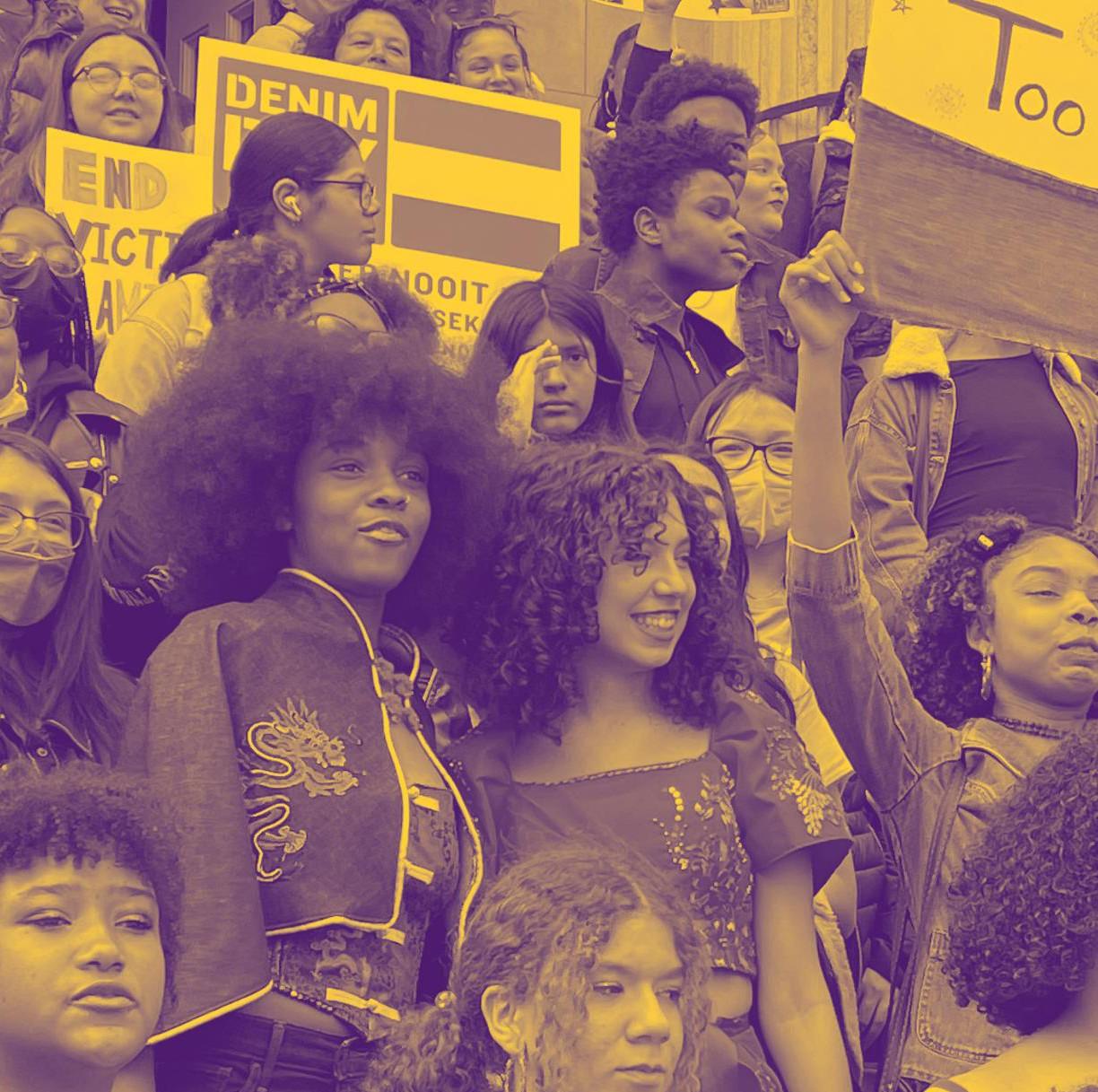 286
Community Safety,
Rights,
and
Accountability
287
Community Safety, Rights, and Accountability
Throughout our nation’s history, communities of color, particularly Black individuals,
have routinely experienced harm by racial violence from the legacy of slavery. Laws
and policies also promoted segregation and normalized social exclusion, contributing
to existing economic and social disparities. Additionally, racially biased criminal justice
policies and unequal emergency responses have left New York City’s Black and Brown
communities feeling unsafe. It is imperative to protect every individual’s rights, hold
responsible actors accountable, and improve public and community safety for every
New Yorker.
The Criminal Justice System
NYC data shows that people of color, particularly Black and Hispanic people, have
been disproportionately impacted by criminal summons practices: from 2020 to
2022, more than 85 percent of criminal summonses were issued to Black or
Hispanic people, though they represented 52 percent of NYC’s population.
lxx
These
disparities have profound and long-lasting consequences, eroding trust between
the City’s public safety institutions and the communities they serve, especially
communities of color. Addressing these systemic biases and inequities in policing is
foundational to the City’s commitment to fostering more inclusive and equitable
public safety practices.
Equity in the criminal justice system is also key to addressing our collective history
of racial inequalities. Mass incarceration continues to impact minority communities,
with its effects persisting and compounding intergenerationally. Historical evidence
shows that the U.S. criminal legal system has long been shaped by racial
discrimination and oppression, with policies and practices targeting Black
Americans contributing to persistent racial disparities in different forms of criminal
legal system contact.
lxxi
Current trends and policy priorities in areas such as
policing, prosecution, bail, and prevention programs and other community
interventions impact jail populations.
For many years, Black and Hispanic communities in New York City have been
overrepresented in its jails, making up approximately 88% of the population (55.9%
and 32.1%, respectively). Nationwide, we can observe similar disparities. Research
also reveals that by age 38, 27 percent of Black men and 16 percent of Hispanic
men in New York had been jailed, compared with 3 percent of white men.
lxxii
Additionally, Black men are often re-incarcerated, especially if they live in low-
income neighborhoods.
Condition of Thriving:
We endeavor to ensure that every person who resides in
New York City has the opportunity to thrive with:
Humane, empathetic, and
respectful treatment
.
288
These gaps not only reflect but also worsen broader inequalities in NYC and the
United States.
In the mid-twentieth century, changes in the understanding of mental health
disorders and developmental disabilities and subsequent policies, among other
things, led to the deinstitutionalization of public psychiatric hospitals. Without
subsequent funding to bolster community support, individuals discharged from
these institutions often found themselves without the support needed to
successfully reintegrate into their communities.
Studies show incarceration leads to many negative effects – on the incarcerated
individual, their community, and society at large, regardless of the interventions
offered in a carceral setting – such as disruptions to or loss of employment,
strained family relationships, social stigma, and trauma. These effects are
compounded when individuals enter custody with preexisting conditions and
disparities, such as psychiatric disorders, homelessness, substance misuse
issues, or lack of economic opportunity. Many jails and prisons fail to meet
regulatory requirements and minimum standards, furthering harm.
Probation is intended as an alternative to incarceration aimed at equipping
justice- involved individuals with the educational and employment skills
necessary to avoid reentering the justice system. Individuals from marginalized
communities are also disproportionately represented in probation populations.
Emergency Response and Community Resiliency
Pre-existing social and economic inequities also contribute to more severe
outcomes for the City’s most underserved communities before, during, and after
various emergency responses such as fires, pandemics and environmental threats.
For New Yorkers who experience the greatest burden of disasters, adverse
outcomes include loss of life, property, cultural identity, and generational wealth
and histories. Emergencies like the COVID-19 pandemic have demonstrated how
certain communities are disproportionately affected by disasters, underscoring the
need for an equitable approach to emergency management.
Redlining has historically shaped New York City, leading to racially segregated
neighborhoods. Communities of color are relegated to living in environmentally
hazardous areas, increasing disaster and emergency response risks. For
example, environmental justice communities are more likely to be located near
power plants and waste sites, increasing their exposure to toxins and hazardous
environments under normal conditions and potentially increasing vulnerability
during emergencies.
lxxiii
Compounding historic disinvestment in certain neighborhoods has left these areas
less resilient and less able to withstand natural disasters. The lack of infrastructure
289
improvements, such as residential home lifting and legal pathways for basement
apartments, leaves residents vulnerable to the impacts of natural hazards. This
history of neglect has made it harder for underserved communities to recover,
often leaving them exposed to future emergencies.
Economic disparities, such as the racial income and wealth gaps, further hinder
community wellbeing. Limited financial resources and time mean that some
residents face greater challenges in accessing aid when and after disaster hits. For
example, after a disaster strikes and the Federal Government designates the
impacted area as a declared disaster area, homeowners, renters, nonprofits, and
businesses can apply for disaster loans from the Small Business Administration
(SBA). However, the U.S. Government Accountability Office has reported inequities
in the SBA loan approval process, finding that SBA’s lending criteria, including
satisfactory credit scores, can pose barriers to underserved communities and that
applications are declined primarily because of insufficient credit scores or lack of
repayment ability.
lxxiv
This disproportionately affects low-income applicants,
potentially leaving low-income neighborhoods further disadvantaged post-disaster.
Additionally, disparities in access to broadband and technological devices present
barriers to access critical information during emergencies. Numerous underserved
communities lack reliable access to digital resources, including community spaces
and cultural institutions, which often serve as vital sources for information and
shelter.
The fields of emergency management and fire and life safety have also faced
challenges related to equity and representation. Historically, staff have primarily
consisted of white males, many with a military and/or law enforcement
background. Institutions in these fields have navigated complex and evolving steps
toward a diverse and inclusive workforce, reflecting broader societal shifts and
internal organizational change.
Unified Commitment
The agencies in this section recognize the need for robust and equitable approaches to
community safety, rights, and justice.
290
Department of Correction
Mission and Commitment
The New York City Department of Correction (DOC or the Department) is dedicated to
creating a safe and supportive environment while providing individuals in our care with
a path to successfully re-enter their communities. The Department provides for the
care and custody of people 18 years of age and older who are ordered to be held by
the courts and are awaiting trial or who are convicted and sentenced to one year or
less of jail time.
As a result of the
Nunez
class action lawsuit, the Department is subject to a federal
consent decree and is monitored by a court-appointed Federal Monitor and
Remediation Manager, who oversee several aspects of how the Department operates.
Although DOC does not determine who is placed into custody or how long they remain
incarcerated, the Department is nonetheless committed to supporting the people in its
care and will work to address inequity and structural racism by maintaining jails that
are safe and humane for both staff and those in custody.
It is the Department of Correction’s role and responsibility to provide for the safe,
secure, and humane confinement of persons in its custody. In addition, the
Department recognizes that everyone benefits when people in custody are given the
tools they need to have less adverse contact with the justice system in the future. DOC
will continue to create opportunities—by way of workforce, educational, and skill
development, and other programming and services—to meet a person in its care’s
needs and help individuals to reintegrate into their communities upon release. The
Department recognizes that public trust is strengthened through transparency and
accountability. Through ongoing evaluations, data-informed decision-making,
collaboration with oversight entities, and continuous assessment of its policies, the
Department aims to improve outcomes and strengthen public trust.
Racial Equity Goals
Short-Term
1.
Goal:
Prevent excessive or inappropriate uses of force and support de-escalation
of conflict so that force does not become necessary
a.
Outcome:
By the end of 2026, ensure all DOC uniformed members of
service have completed newly developed training courses related to conflict
resolution and appropriate use of force. Professional development for staff in
core correctional practices will support the goal of ensuring DOC jails are
safe and humane for staff and people in custody (PIC), which will reduce
harm for these marginalized communities. Improved training and safer, more
291
humane jails will also support increased recruitment and retention, which will
enable the Department to better provide for the custody, care, and control of
those within the jails. Improved staffing levels will contribute to further
violence reduction, as well as better program and service delivery for
individuals in DOC’s care.
b.
Strategies
:
•
Revise and implement training courses for staff that are effective in
preventing excessive or inappropriate use of force and supporting de-
escalation of conflict so that force does not become necessary, and
the jails are safer for all
c.
Indicators
:
•
Percent of uniformed members of service who have completed newly
developed training courses related to conflict resolution and
appropriate use of force
2.
Goal:
Ensure staff and those in DOC’s care remain safe from violence and
resulting injury so that no one is further marginalized and can ultimately thrive
a.
Outcome
: By 2026, continue to work to achieve an overall reduction in
violence in the jails, including violent incidents among people in DOC’s care
and assaults on staff by persons in DOC’s care.
b.
Strategies
:
•
Prioritize the hiring and retention of staff and expand partnerships with
government and nonprofit agencies to offer increased levels of service
delivery and programming, thus reducing idle time and supporting the
conditions necessary for treatment, rehabilitation, and effective reentry
•
Continue to review the dashboard provided by DCAS to determine
which titles experience underutilization, especially those in which
racial inequities exist
•
Conduct targeted recruitment for both uniformed and non-uniformed
titles by attending career fairs and cultural events throughout New
York State and utilizing insight data to inform future recruitment efforts
•
Develop a new survey to gauge employee satisfaction with the
Department as an employer and gain perspectives on different
aspects affecting employee decisions to remain at the Department,
such as Human Resources policies, pay and perks, work-life balance,
and relationships with peers
•
Track and evaluate violent incident rates disaggregated by racial
groups to identify any disparities and root causes
c.
Indicators
:
•
Number and percent of violent incidents disaggregated by race and
ethnicity
•
Recruitment and retention rates disaggregated by race and ethnicity
292
Medium-Term
1.
Goal:
Invest in and expand jail-based programs and services to bolster therapeutic
outcomes, support impacted individuals and communities in recovering from harm,
and create a safer and more humane environment for people in custody and staff
a.
Outcome:
By 2028, through continued collaboration with NYC Health +
Hospitals/Correctional Health Services, operationalize two remaining
59
therapeutic commands situated in North Central Bronx and Woodhull
Hospital. Outposted Therapeutic Housing Units (OTxHUs) are jail facilities
within a hospital that serve patients in DOC’s care who have serious health
conditions, following the jail-based therapeutic housing model. OTxHUs will
improve access to care for incarcerated persons who do not require inpatient
admission but would benefit from close, regular access to specialty and
subspecialty care available in hospitals.
b.
Strategies
:
•
Work with Correctional Health Services to support the design and
construction of the new facilities for persons with serious health
conditions who would benefit from close, regular access to specialty
and subspecialty care
•
Continue transition planning efforts, to include policy and training
development and logistics planning
•
Enhance services and strategically inform new partnerships by
developing a feedback scale to be implemented at the close of each
program or program cohort so that the Department can assess both
qualitative and quantitative data surrounding program efficacy
•
Further assess any programs as needed by investigating data
pertaining to program participation and infractions or recidivism,
where appropriate
•
Enhance reentry services and expand partnerships with government
and nonprofit partners by regularly assessing and updating the
streamlined processes in place to link incarcerated people with
discharge planning and housing, paying attention to options in a
wider selection of neighborhoods based on neighborhood of origin
and connection to person- and needs-based resources
•
Continue expanding partnerships with government and nonprofit
partners to support individuals both while incarcerated and post-
release for more continuous and sustainable change; base updates
and new partnerships on data garnered from needs assessments and
surveys of persons in custody to evaluate the efficacy and impact of
each program
c.
Indicators
:
•
Percentage of operational beds at new facilities
•
Number of individuals in DOC’s care being served at new facilities
59
The first of the three jail facilities, the Outposted Therapeutic Unit at Bellevue Hospital, opened in April 2026.
293
•
Percentage of program and service enrollment, disaggregated by
race and ethnicity
2.
Goal:
Build and improve robust data
60
pipelines that can be disaggregated by
various demographics, such as race, age, and gender identity to identify disparities
in service provision
a.
Outcome
: By 2028, leverage 100% of newly created data systems to better
disaggregate data Department-wide and within each system, and to better
support historical data tracking that can be used to analyze and respond to
trends in disparities.
b.
Strategies
:
•
Revamp incident reporting data flows and revise incident reporting
policies
•
Transition from paper-based logbooks to a digital logbook system to
track compliance with minimum standards and other regulatory
requirements more efficiently
61
•
Improve incident reporting and tracking across the Department to
support better data analysis, including disaggregation of certain
indicators
c.
Indicators
:
•
Number of applications developed that replace paper-based tracking
processes and/or create new data tracking systems
•
Number of paper-based tracking processes transitioned to data
systems that enable demographic disaggregation
3.
Goal:
Assess and evaluate implementation of accommodations and
programs/program changes to continue to enhance safety, dignity, and care for
transgender, gender non-conforming, non-binary, and intersex (TGNCNBI)
individuals in the Department’s care, and reduce instances of violence
a.
Outcome:
By 2028, track and report accommodations provided as well as
programs implemented or refined to support this population.
b.
Strategies:
•
Review trends in program participation as it relates to gender identity
to assess gaps and successes and determine appropriate changes
•
Continue to assess programs and services by soliciting feedback
directly from people in DOC’s care, so that offerings are targeted to
their unique needs and to specific subpopulations, reduce idle time,
and address harms
•
Identify trends within grievances related to gender identity and
implement identified solutions
60
The Department currently publishes reports containing disaggregated data, including the Population
Demographics Report, on its website.
https://www.nyc.gov/site/doc/about/demographics-reports.page
.
61
The Department is in the process of modernizing several of its data, tracking, and operational systems to
increase transparency and improve data pipelines.
294
•
Continue to expand our partnerships to provide human-centered,
culturally competent re-entry services specific to the LGBTQ+
community
c.
Indicators:
•
Instances of violence experienced by the population
•
Programs implemented and/or refined
•
Number of accommodations provided
Long-Term
1.
Goal:
Prioritize agency resources to focus on personal growth, wellness, and
community-connections for individuals in DOC’s care and staff
a.
Outcome
: By 2034, operationalization of all borough-based jail facilities will
strengthen connections to families, attorneys, courts, medical and mental
health care, and faith and community-based organizations. Being closer to
home and transit will enhance the network of support systems for people who
are detained and help prevent future returns to jail. Modern sites will also
serve as a catalyst for positive change in the community and the criminal
justice system. For staff, the benefits will include being closer to home and/or
mass transit, and new infrastructure that promotes their safety and wellness.
b.
Strategies
:
•
Center safety and well-being for those in custody and for staff by
providing space for quality education, health, and therapeutic
programming
•
Support smoother transitions back into the community
•
Collaborate with the Department of Design and Construction (DDC),
which is awarding separate Design-Build contracts for each of the four
new facilities, as well as early works packages at all four facilities,
resulting in a total of nine contracts
•
Conduct focus groups in partnership with the DDC and several
contracted partners representing groups affected by the borough-
based jail program, including currently and formerly incarcerated
individuals, staff, members of advocacy groups, and oversight
agencies, to help inform design and improve operations, and the
overall human experience
c.
Indicators
:
•
Number of Borough-Based jails that are operational
•
Percentage of individuals in care and staff reporting that operational
facilities support connection to families, services, and resources
2.
Goal:
Co-design, with people in custody, a racial equity and efficacy rubric for all
programs offered across DOC facilities to ensure the needs of people in custody
are met
a.
Outcome
: By 2034, 100% of Department programs must pass the racial
295
equity rubric.
b.
Strategies
:
•
Expand and create a more robust process and schedule for fully
assessing and restructuring programs based on the population’s
experience and feedback in tandem with the Federal Monitor’s
oversight, as well as employee feedback
•
Collaborate with relevant partner agencies to create focus groups to
gather this information and create ways to translate this information
into informative data
•
The feedback received from PIC focus groups will only be shared with
internal teams to ensure regular updates to materials reflect the needs
and requests of the population and are the most up-to-date with
agency and citywide goals and mission. The information revealed
during the focus groups will not be shared with any outside groups to
support a confidential setting for PIC to be able to have honest and
intimate conversations. This feedback would also inform DOC’s
budgetary process in terms of assessing which providers should
continue to deliver services and which DOC may want to reassess or
adjust.
•
Ensure Department programs continuously reference the rubric to
maintain racial equity standards
c.
Indicators:
•
Number of focus groups held
•
Number of participants in focus groups
•
Percent of Department programs assessed against the developed
rubric
•
Percent of Department programs that pass the developed rubric
Community Equity Priorities Referenced
•
#6: Collect, analyze, and share data on access to government services with the
public, categorizing it by specific groups harmed by racism and social injustice.
•
#18: Expand services to prevent, intervene, and provide care for people and
families harmed by policing, jails, and court supervision.
62
Spotlight Wins
•
The Department has made immense strides to ensure the visit process is simplified
and more family-friendly. DOC provides tele-visits and free DOC-Visitor buses from
Manhattan and Brooklyn to reduce barriers to visitation.
•
The Division of Programs and Community Partnerships has done phenomenal
62
DOC can only focus on the second part of this priority (“to transform jails into rehabilitation centers”).
296
work in advocating for and hiring Visit Facilitators who are present to make the
visitation process more accessible for families and, in partnership with the
Children's Museum of Manhattan (CMOM), child-friendly visits have been
prioritized and implemented.
New child-friendly visitation spaces were designed in
collaboration with CMOM and installed at the George R. Vierno Center
and at the
Rose M. Singer Center. It is the Department’s goal to install a child-friendly
visitation space in all facilities. Incarceration can leave lasting scars on families,
and DOC is committed to lessening the impacts of incarceration wherever possible.
Visitation areas like the ones developed with CMOM support parents and children
in maintaining a pivotal bond and provide elements of normalcy during a
challenging time. Strong visitation programs, especially those between parents and
children, help maintain family bonds, increase successful reintegration post-
release, and help break the cycle of incarceration.
•
The Department recently received a grant for $180,000 from the New York State
Office of Mental Health’s Suicide Prevention Center to expand wellness programs
for staff. Our CARE Unit will spearhead this initiative, which aims to improve mental
health in the workplace.
•
The Department recently promoted a new class of Captains, where 46 percent of
the staff members are Black and Brown employees.
297
Department of Probation
Mission and Commitment
The New York City Department of Probation (DOP) plays a critical role in advancing
public safety through community supervision, operating at the intersection of the
criminal and juvenile justice systems and the communities we serve. Through the use
of Evidence-Based Practices (EBP), and a balanced approach that combines
accountability, structure, treatment, and support, DOP works to ensure individuals on
probation are held responsible for their actions while also providing meaningful
opportunities for rehabilitation and growth.
Central to this work is the Department's commitment to helping individuals build stable,
productive lives. DOP connects people on probation with education, workforce
development, and supportive services that strengthen their ability to obtain and
maintain employment. The Department also works to repair and restore relationships
with families, neighbors, and communities recognizing that strong social connections
and community engagement are essential to long-term success and improved public
safety.
This Racial Equity Plan reflects DOP's vision of probation as a catalyst for fair and
inclusive transformation. The Department is committed to identifying and addressing
systemic barriers that have historically limited opportunity for many New Yorkers. By
focusing on equitable access to services, culturally responsive supervision practices,
and community-centered partnerships, DOP seeks to support individuals from diverse
backgrounds in breaking cycles of justice involvement and realizing their full potential.
Through these efforts, the New York City Department of Probation remains committed
to building a future where all New Yorkers regardless of race, ethnicity, national origin,
or immigration status have equitable access to opportunity and the support needed to
thrive, while strengthening safety and stability across our communities.
Racial Equity Goals
Short-Term
1.
Goal:
Provide ongoing anti-racism, and inclusive supervision training for all DOP
staff
a.
Outcome
: By 2027, ensure 100% of DOP staff complete annual racial equity
and cultural sensitivity training tailored to justice-involved populations,
including modules on LGBTQ+-affirming supervision and working with
transgender and gender-nonconforming (TGNC) individuals. By the end of
FY2026, convert the FY2024 one-time TGNC training into a tracked,
298
recurring annual requirement with documented completion rates reported as
a distinct equity metric.
b.
Strategies
:
•
Partner with DCAS and the NYC Commission on Human Rights to
develop and sustain agency-specific racial equity training,
incorporating modules on implicit bias, procedural justice, disability
awareness, and LGBTQIA+ inclusion
•
Formalize and sustain annual LGBTQ+-affirming supervision training
for 100 percent of DOP staff, converting the FY2024 one-time training
into a tracked, recurring requirement integrated into the annual staff
development cycle
•
Track training completion rates and integrate all equity training into the
annual staff development cycle
c.
Indicators
:
•
Percent of DOP staff completing annual racial equity and cultural
sensitivity training
•
Percent of DOP probation staff, officers and supervisors completing
annual LGBTQ+-affirming supervision training. Target: 100 percent by
FY2026, sustained annually
2.
Goal:
Implement equitable recruitment strategies to increase representation from
underserved communities
a.
Outcome
: By FY2027, increase applicants from underrepresented
neighborhoods for Probation Officer positions by at least 25% over the
FY2024 baseline.
b.
Strategies
:
•
Partner with community colleges, workforce programs, and
community-based organizations in underrepresented neighborhoods
•
Conduct targeted recruitment campaigns across boroughs with
historically underrepresented applicants
•
Expand outreach through city hiring initiatives focused on candidates
from underrepresented neighborhoods
c.
Indicators
:
•
Percent of applicants from underrepresented neighborhoods,
compared to FY2024 baseline, for solely informational and
communications purposes
•
Demographics distribution of Probation Officers applicants and hires,
disaggregated by race, ethnicity, and gender identity
63
3.
Goal:
Integrate a commitment to racial equity into Request for Proposals (RFP) for
risk-reduction and programming contracts to better serve diverse communities and
generate positive and equitable outcomes
63
For informational and communications purposes only.
299
a.
Outcome
: By FY2027, assess and revamp 100% of new RFPs to build
equity criteria into the selection process.
b.
Strategies
:
•
Develop and incorporate questions into requests for proposals (RFP)
to gauge applicants’ commitment to racial equity
•
Create and integrate criteria to assess for commitment to racial equity
into the selection methodology for RFPs consistent with federal, state,
and local law
c.
Indicators
:
•
Percent of new RFPs assessed
•
Percent of new RFPs updated with racial equity questions and criteria
4.
Goal
: Strengthen culturally responsive and affirming supervision, service access
and accountability for LGBTQ+ and TGNC individuals on probation, with a focus on
addressing the disproportionate barriers and inequitable outcomes experienced by
Black, Latino, Indigenous, and other historical marginalized communities
a.
Outcome
:
By FY2027, DOP will ensure that LGBTQ+ and TGNC individuals
on probation have equitable access to affirming supervision, condition
modifications, grievance pathways, housing referrals, mental health supports,
employment services, legal services, and other reentry resources, with
implementation informed by racial equity data and community partnerships.
b.
Strategies:
•
Develop and implement LGBTQ+ affirming and TGNC-responsive
supervision guidance and protocols in collaboration with the NYC
Commission on Gender Equity (CGE), the Mayor’s Office to End
Domestic and Gender-Based Violence (ENDGBV), NYC Office of
LGBTQIA+ Affairs, and LGBTQ+ community-based organizations
•
Expand partnerships and referral pathways with LGBTQ+ affirming
providers including housing, mental health, employment, legal, and
reentry organizations such as The Door, NYC Anti-Violence Project
(AVP), Legal Aid Society, Callen Lorde Community Health Center, the
Ali Forney Center and the Bronx Defenders
•
Integrate LGBTQ+ and TGNC case planning into supervision practices
by coordinating with community-based providers, healthcare providers
and NeON partners to address barriers related to safety, housing
stability, healthcare access, employment, and successful probation
completion
•
Review and update DOP policies, forms, supervision practices, and
client-facing materials to ensure inclusive language, respect for
affirmed names and pronouns, and equitable access to services, in
consultation with the NYC Commission on Gender Equity (CGE) and
community partners and stakeholders
•
Fortify confidential grievance and accountability processes for
reporting discrimination, harassment, and inequitable treatment by
300
coordinating with DOP's Equal Employment Opportunity Office, the
NYC Commission on Human Rights, and community partners
•
Collect, monitor, and analyze data on service access and supervision
outcomes for LGBTQ+ and TGNC individuals, disaggregated by race,
ethnicity, gender identity, and sexual orientation where appropriate
and voluntarily collected, to identify disparities and inform continuous
improvement
•
Engage LGBTQ+ and TGNC community organizations, people with
lived experience, NeON Advisory Boards, and service providers to
inform policy development, implementation, and ongoing evaluation of
affirming supervision practices
•
Provide recurring racial equity, LGBTQ+ cultural competency, TGNC-
responsive, and trauma-informed training for probation staff and
contracted providers. This would be in concert with the NYC
Department of Citywide Administrative Services (DCAS), NYC
Commission on Gender Equity, and other qualified training partners
•
Develop and maintain an internal performance tracking system to
assess implementation of LGBTQ+ affirming and TGNC-responsive
supervision practices, referral outcomes, service utilization, and equity
indicators
c.
Indicators:
•
Number and/or percentage of relevant DOP staff trained on LGBTQ+
affirming, TGNC-responsive, trauma-informed, and racially equitable
supervision practices
•
Number of LGBTQ+ affirming and TGNC-responsive community-
based providers included in DOP referral pathways, including
providers offering housing, mental health, employment, legal, crisis
response, and reentry supports
•
Number and/or percentage of LGBTQ+ and TGNC individuals on
probation who receive referrals to affirming services, where data is
voluntarily and safely available
•
Number and/or percentage of referred individuals who successfully
connect to affirming services, including housing, mental health,
employment, legal services, and other reentry support
•
Number of condition modification requests related to safety, housing
instability, mental health, employment, caregiving, or gender-affirming
needs, and the percentage reviewed, approved, or otherwise resolved
•
Number of grievances or complaints related to LGBTQ+ or TGNC
identity (i.e., misgendering, discrimination, harassment, denial of
service, or confidentiality concerns), and the percentage resolved
within established timeframes
•
DOP’s development and/or update of supervision guidance, referral
protocols, grievance procedures, or staff-facing resources to support
LGBTQ+ affirming and TGNC-responsive practice
301
•
Number of community engagement activities, provider consultations,
or lived-experience feedback opportunities used to inform
implementation
•
Shifts in service access, grievance trends, successful completion,
violation patterns, or other supervision outcomes for LGBTQ+ and
TGNC individuals, disaggregated by race, ethnicity, gender identity,
and sexual orientation where available and appropriate
Medium-Term
1.
Goal:
Ensure equitable access to information for New Yorkers of all language
backgrounds and literacy levels
a.
Outcome
: By FY2027, ensure that 100% of public-facing DOP materials are
translated and accessible in accordance with Local Law 30 requirements.
b.
Strategies
:
•
Conduct an audit of public-facing documents for translation and
accessibility needs including the clothing closet palm card, NeON
Works palm card, Your Guide to the Juvenile Justice Process, and
Adult Probation Basics
•
Translate materials into all Local Law 30 languages
•
Implement plain language standards for all public-facing materials
c.
Indicators
:
•
Percent of public-facing material available in all Local Law 30
languages
2.
Goal
: Provide immigration-responsive supervision
64
and equitable service access
regardless of immigration status
a.
Outcome
: By FY2027,
•
Ensure 100% of DOP staff complete training on immigration-
responsive supervision practices consistent with city law (Executive
Order 41 (2003), Executive Order 13 (2026) and Local Law 228) and
complete a full audit and modification of all supervision conditions,
program eligibility criteria, and DOP data practices that create
unintentional immigration-related compliance barriers.
•
Ensure that all individuals on probation regardless of immigration
status have equitable access to DOP supervision, programs, and
services without facing immigration-related barriers to compliance.
b.
Strategies
:
•
Train 100% of DOP probation officers and supervisory staff on
immigration-responsive supervision practices including city law,
appropriate limits on immigration status inquiries, how to respond to
64
Supervision is immigration-responsive when it does not create unintentional immigration-related compliance
barriers.
302
immigration-related fears, and referral pathways to immigration legal
services integrated into the annual training cycle alongside short-term
goal one
•
Audit all DOP supervision forms, intake documents, program eligibility
criteria, and data collection practices to identify requirements that
create barriers for undocumented individuals or those with
immigration-sensitive circumstances and modify or remove those
barriers consistent with NYC policy and applicable law (audit to be
completed by FY2027)
•
Formalize a partnership with the Mayor’s Office of Immigrant Affairs
(MOIA) or designated community-based immigration legal services
providers to ensure individuals on probation with immigration concerns
have access to confidential legal information and referrals
•
Strengthen internal protocol for how DOP staff document, track, and
publicly post requests by federal immigration authorities regarding an
individual on probation, consistent with Executive Order 41 and Local
Law 228
•
Expand multilingual supervision communications, program materials,
and support services for individuals with limited English proficiency,
tracking program participation and technical violation rates for LEP
individuals as a distinct equity indicator
c.
Indicators:
•
Percent of DOP probation officers and supervisors completing
immigration-responsive supervision training annually, with target of
100% by FY2027
•
Number of DOP forms, documents, and program eligibility criteria
reviewed for immigration barriers; number modified as a result
•
Audit complete by FY2027
•
Formal referral partnership with MOIA or equivalent immigration legal
services provider established by FY2027; number of individuals
referred annually thereafter
•
Percent of supervision communications available in required Local
Law 30 languages; program participation and technical violation rates
for LEP individuals disaggregated by language and borough
Long-Term
1.
Goal:
Expand equitable access to employment, education, and violence prevention
programs
a.
Outcome
: By FY2030 or sooner, ensure that at least 80% of individuals on
probation have access to workforce development, vocational training,
educational programming, or violence prevention and community
reintegration services with equitable access across all five boroughs and
priority investment in communities with the highest supervision caseloads.
303
b.
Strategies
:
•
Expand partnerships with workforce development providers and
increase capacity of programs offered through NeON Centers, with
attention to geographic equity across all boroughs
•
Develop additional vocational training opportunities tied to high-
demand industries, building on existing NeON programming including
photography, CDL training, welding, and job readiness
•
Formalize the Emerging Leaders SYEP pipeline as a structured equity
strategy, expanding access for youth and young adults facing
employment barriers due to justice involvement
•
Expand partnerships with community-based service providers for
violence prevention and community reintegration programming,
scaling citywide with attention to boroughs with the highest caseload
concentrations
•
Track program participation, completion, and outcomes disaggregated
by race, ethnicity, gender identity, age, and borough to identify access
gaps and drive resource decisions
c.
Indicators
:
•
Percent of individuals on probation participating in at least one
employment, vocational, educational, or violence prevention program
•
Percent of individuals on probation with access to vocational training
and violence prevention programs, disaggregated by borough
•
Program participation and completion rates disaggregated by race,
ethnicity, gender identity, and borough
2.
Goal:
Expand equitable access to mental health and substance use services for
individuals on probation
a.
Outcome
: By FY2030 or sooner, ensure that at least 75% of individuals on
probation with an identified mental health or substance use need are
connected to culturally responsive services within 30 days of assessment or
are actively on a waitlist for services and achieve a measurable reduction in
mental health-related technical violations compared to the FY2025 baseline.
All outcomes are tracked and reported disaggregated by race, ethnicity,
gender identity, age, and borough.
b.
Strategies
:
•
Expand co-located mental health and substance use services at
NeON Centers, partnering with NYC Health + Hospitals, community
mental health clinics, and harm reduction providers, prioritizing the
three borough offices with the highest rates of mental health-related
technical violations
•
Develop and implement trauma-informed supervision protocols for
individuals with serious mental illness (SMI) or active substance use
disorders, standardizing how Probation Officers respond to behavioral
compliance issues before issuing a technical violation
304
•
Require that all individuals on probation with a documented mental
health or substance use need receive a formal service connection
within 30 days of supervision start or clinical assessment, with
Probation Officer accountability for documented follow-through
•
Ensure all contracted mental health and substance use programs are
culturally responsive, staffed by providers with lived experience where
possible, and available in the top Local Law 30 languages with equity
performance measures included in all vendor contracts
•
Track and report mental health-related technical violations as a distinct
category disaggregated by race, ethnicity, gender identity, and
borough, and use this data to identify offices or boroughs with outlier
violation rates that may indicate inequitable application of supervision
conditions
•
Develop and standardize criteria for identifying and tracking mental
health-related technical violations
c.
Indicators
:
•
Percent of individuals with identified mental health or substance use
needs connected to services (or on waitlist) within 30 days
disaggregated by race, ethnicity, gender identity, and borough. Target:
75 percent by FY2027
•
Rate of mental health-related technical violations compared to FY2025
baseline disaggregated by race and borough
•
Percent of individuals completing assigned mental health or substance
use programming, disaggregated by demographics and tracked by
contracted provider
•
Percent of SMI/SUD cases with documented trauma-informed
supervision review before a technical violation is filed
•
Number of NeON sites with active co-located mental health or
substance use service provider. Target: all five borough NeON
locations by FY2027
•
Percent of contracted mental health and substance use providers
offering services in at least three Local Law 30 languages
•
Mental health-related technical violations are defined as violations
where mental health symptoms or treatment needs are identified as a
contributing factor to noncompliance
3.
Goal:
Reduce recidivism among youth and young adults through targeted, data-
informed interventions
a.
Outcome
: By FY2030 or sooner, reduce re-arrest rates among youth and
young adults (ages 16–24) under DOP supervision by at least 10%
compared to the FY2025 baseline, with outcomes tracked and reported
disaggregated by race, ethnicity, gender identity, and borough. By FY2026,
establish the data infrastructure necessary to monitor youth recidivism on a
consistent reporting cycle without reliance on manual extraction.
305
b.
Strategies
:
•
Expand trauma-informed and cognitive behavioral supervision models
for youth, prioritizing individuals identified as highest-risk through
DOP’s risk and needs assessment tools building on the existing
Arches Transformative Mentoring program which serves a
predominantly Black and Hispanic youth population
•
Increase access to education, employment, and vocational
programming through NeON Centers and community-based providers,
with a focus on youth at highest risk of reoffending, particularly those
without a high school diploma or stable employment
•
Strengthen partnerships with community-based organizations to
provide mentorship, violence interruption, and reentry support to youth
on probation, with priority investment in the Bronx, Brooklyn, and
Queens where youth supervision caseloads are highest. Formalize the
Emerging Leaders SYEP pipeline as a structured equity strategy
•
Implement ongoing case review processes to monitor youth outcomes
and adjust supervision plans based on individual risk trajectories,
ensuring no youth remains on a static supervision plan for more than
90 days without documented review
•
Develop and implement an automated data system to collect, track,
and analyze re-arrest rates and technical violations among youth
disaggregated by race, ethnicity, gender identity, and borough
replacing current manual extraction processes and enabling analysis
of which interventions are most effective for specific demographic
subgroups
c.
Indicators
:
•
Annual re-arrest rate for youth and young adults disaggregated by
race, ethnicity, gender identity, and borough
•
Technical violation rate for youth cohort, tracked separately from re-
arrests, disaggregated by demographics and reported quarterly
•
Percent of youth on probation enrolled in at least one NeON or
community-based organization program within 60 days of supervision
start
•
Percent of enrolled youth completing assigned programming,
disaggregated by race, gender identity, and borough
•
Percent of youth supervision cases with documented review within the
90-day standard
•
Automated youth recidivism tracking system operational by end of
FY2026
Community Equity Priorities Referenced
•
#1: Remove the gaps in race, gender identity, sexual orientation, age, and disability
in city jobs. Ensure that government work and staff reflect the city's commitment to
306
equity and social justice.
•
#4: Ensure NYC offices and partners get funds for community-based language
access services in the city's most spoken languages.
•
#11: Expand health, mental health, substance use, and disability services. They
must meet the needs of families and individuals harmed by racism and social
injustice.
•
#18: Expand services to prevent, intervene, and provide care for people and
families harmed by policing, jails, and court supervision.
Spotlight Wins
•
DOP has invested a significant portion of its budget in underserved communities
and will continue to do so through its NeON Centers. The NeON Centers have
created multiple vocational classes including photography, NeON Arts, CDL
training, welding, and job readiness courses which provide individuals on probation
with opportunities to gain skills that can lead to careers. DOP has expanded the
NeON Photography program from six (6) locations with 100 participants to ten (10)
locations servicing 200 participants, offering vocational training modeled after
college-level courses.
•
DOP’s Program and Evaluation Team continues to engage in ongoing
communication and collaboration with our program partners, contributing to
improved program performance and increased community engagement. During the
last fiscal year, the Arches Transformative Mentoring program went from 299
individuals served in FY23 to 343 in FY24, bringing the program to 75 percent of its
maximum capacity. The majority of Arches participants identify as Black or
Hispanic, reflecting the program’s reach into communities most impacted by the
justice system and reinforcing DOP’s equity commitments.
•
DOP helped submit more than 1,008 Emerging Leaders Summer Youth
Employment Program applications in 2024, approximately 200 more than in 2023.
The Emerging Leaders Program supports youth ages 14-24 who face employment
barriers, such as being justice-involved, by connecting them to paid, project-based
activities and paid summer job opportunities.
•
In recognizing the need for intersectional conversations, DOP partnered with DCAS
to host LGBTQIA+ training, reaching 80 percent of staff since 2023. In FY2024,
DOP also partnered with the NYC Commission on Human Rights to train all our
staff members on working with transgender and gender non-conforming
individuals.
307
Fire Department of the City of New York
Mission and Commitment
As first responders to emergencies, disasters and terrorist acts, the Fire Department of
the City of New York (FDNY or Department) protects the lives and property of New
York City residents and visitors. The Department advances public safety through its
fire prevention, investigation and education programs. The timely delivery of these
services enables the FDNY to make significant contributions to the safety of New York
City and homeland security efforts.
FDNY is committed to upholding and promoting inclusive values, as well as equal
employment opportunities throughout the Department.
The Department’s path toward
workplace equity and employment opportunities has been multifaceted, marked by
both progress and persistent challenges. The early challenges were defined by Irish
Americans' struggle to join the Department in the 19
th
century. African Americans
exemplified an indomitable spirit and struggled to be part of the FDNY family through
most of the 20
th
century culminating in the Vulcan Society lawsuit in the early 2000’s.
The Department continues to build on its campaigns of elevating everyday heroes to
help create a workforce that reflects the City’s demographics
and spirit of excellence.
Recognizing that its greatest strength is its people, FDNY takes a proactive role in
expanding opportunities for professional development through training, mentorship
programs, and coaching discussions.
FDNY works proactively to educate, engage, and empower communities to prevent
emergencies before they happen. By focusing on outreach, education, training, and
relationship-building, the Department helps reduce risk, increase preparedness, and
build trust with the diverse populations it serves in its work.
By understanding the nearly 160-year history of service, acknowledging both
challenges and triumphs, FDNY strengthens its collective ability to grow, adapt, and
meet future challenges. This integrated focus on community engagement and
employee development ensures the Department remains prepared to serve and
protect the residents of New York City with excellence and integrity.
Racial Equity Goals
Short-Term
1.
Goal:
Utilizing internal FDNY data and insights from an ongoing Deloitte study in
addition to FDNY’s regular assessments of attrition mitigation, identify recruitment
308
campaign strategies to support viable candidates from underrepresented
backgrounds for EMT and Firefighter positions
a.
Outcome
: By the end of 2026, assess the factors that contribute to the
hiring, promotion, and retention of EMTs and Firefighters across all applicant
demographics. Determine which factors most closely predict success of
these milestones.
b.
Strategies
:
•
Review the results of the after-action analysis for the most recent
Firefighter campaign. That analysis will include both quantitative and
qualitative elements to update our recruitment blueprint for the next
exam cycle
•
Leverage data from our last two EMT campaigns (where we recruited
more EMT candidates than the previous five campaign years) to
identify high-need areas and strategically expand our recruitment
reach
c.
Indicators
:
•
Percentage reduction in the disparity of conversion rates between
candidates from underrepresented backgrounds and majority
demographics at each stage of the hiring process
65
•
Percentage of applicants, candidates, and hires from historically
underrepresented groups.
68
•
Number of attrition mitigation programs and communication strategies
that show improved candidate engagement and persistence
•
Annual public reporting of recruitment outcomes disaggregated by
race, ethnicity, gender identity, geography, and other available
demographics.
68
•
Track trends for disparate impact at various stages of the hiring
process (i.e., application, examination, qualification, hiring, and
academy completion)
2.
Goal:
Strengthen equitable recruitment and assignment practices by using
disaggregated demographic and geographic data to inform equitable recruitment
strategies and support community-connected firefighter placement
a.
Outcome
: By the end of 2027, establish an equity-informed recruitment
framework that uses demographic, geographic, and workforce data to
increase representation from historically underrepresented communities
while continuing equitable assignment practices for newly graduated
firefighters.
b.
Strategies
:
•
Analyze recruitment outcomes using data disaggregated by race,
ethnicity, gender identity, geography, language, and socioeconomic
indicators
65
For informational and communication purposes only.
309
•
5Develop community-specific recruitment goals informed by
demographic data
•
Expand partnerships with schools, CUNY, workforce organizations,
and community-based organizations serving underrepresented
communities
c.
Indicators
:
•
Percentage of applicants and new hires from historically
underrepresented communities
66
•
Number of targeted recruitment partnerships established
•
Percentage of new firefighters and EMTs reflective of the communities
and neighborhoods they serve over time
Medium-Term
1.
Goal:
Ensure equitable accommodations and implement substantive interim
measures to provide privacy and comfort for women firefighters to foster an
inclusive work environment that supports diversity, promotes gender equity, and
ensures all members can perform their duties with dignity and respect
a.
Outcome
: By 2028, assess 100% of requests from firefighters and ensure
that all are on the pathway to receiving upgrades and/or substantive interim
measures.
b.
Strategies
:
•
Analyze current facilities in need of accommodation upgrades
•
Determine possibilities for upgrades and/or temporary remediation
•
Rearranging lockers to provide a hallway/separation
•
Constructing temporary changing rooms
•
Update records quarterly and provide Fire Operations and Personnel
with updates on renovations that affect applicable facilities
c.
Indicators
:
•
Number of discussions with Borough Commanders on ongoing
gender-related facility needs
•
Percentage of identified facility interim measures and equity
accommodations completed (compared to the number of
accommodations requested over time)
Long-Term
1.
Goal:
Analyze Citywide medical emergency response times alongside
neighborhood demographics to assess potential racial disparities and identify
opportunities for resource allocation or reallocation to ensure equitable service
delivery
66
For informational and communications purposes only.
310
a.
Outcome
: By 2034, reduce disparities in response times to medical
emergencies.
b.
Strategies
:
•
Utilize real-time data to monitor call volumes and health trends in
underserved communities, allowing for dynamic adjustments in
resource allocation
•
Employ predictive analytics to anticipate surges in call volumes and
proactively allocate resources to areas most likely to experience
increased demand
•
Develop a public awareness campaign to eliminate low acuity
transports to hospital emergency departments
c.
Indicators:
•
Number of minutes on average to respond to medical emergencies
across the city
•
Multi-year reduction in medical emergency response times across the
city
2.
Goal:
Implement a process for salary reviews to identify any racial disparities and
make recommendations
a.
Outcome
: By 2034, ensure any/all pay parity issues across the Department
are regularly reviewed. For actions that can be addressed internally at the
agency level, these actions will have been fully effectuated and measures to
avoid parity issues will have been implemented. For parity issues that require
external partner buy-in, a plan of action will have been drafted and shared
with those partners.
67
b.
Strategies
:
•
Create a review process to establish parameters for analyzing salaries
•
Execute review process in each Bureau
•
Analyze results and formulate recommendations in an action plan
•
Implement recommendations that are within the purview of the
Department, and seek partnership with other oversight agencies to
increase pay parity
•
Support policy recommendations requiring collaboration with OMB,
MOCS, DCAS, OLR, and other oversight partners
•
Participate as agency partners in working groups spearheaded by
oversight agencies
•
Support interagency working groups or ERGs focused on
compensation equity
c.
Indicators
:
•
Percent of discretionary salaries reviewed for racial parity
67
Implementation of any workforce-related changes in furtherance of the equity goals related to salary
adjustments highlighted in this report must be consistent with collective bargaining obligations. See p. 430 for
further information.
311
•
Percent of discretionary salary increases reviewed for racial parity and
corrective actions
Community Equity Priorities Referenced
•
#14: Expand access for those harmed by racial and social injustice to inform local
emergency planning. These include plans to prepare for, act in, and recover from
emergencies.
Spotlight Wins
•
FDNY launched the 5
th
edition of its premiere multi-media storytelling project, We
Are FDNY, in the first quarter of 2026. Featuring 24 members of the Department
across a dozen Bureaus/Units, the campaign highlights unique and diverse stories
from members that reflect all titles. We Are FDNY posters are displayed in
all FDNY firehouses, EMS stations, training academies, dispatch and civilian
offices.
Monthly newsletters, social media posts and workstation desktops feature
these unique stories.
•
FDNY recorded a new Implicit Bias Training in July 2024 with a live audience. The
edited version of the multi-module training focusing on personal development,
leadership skills, storytelling-based narratives, risk management and experiences
from the field will be uploaded on the agency Learning Management Services
portal as part of a learning development tool for all 17,500+ personnel.
•
FDNY launched targeted Community Risk Reduction (CRR) pilot programs in
districts most impacted by fire incidents, using data-driven strategies to reduce fire-
related injuries and fatalities and improve health outcomes in vulnerable
communities. These pilots integrate proactive outreach, fire safety education,
smoke alarm installations, and partnerships with community-based organizations to
address neighborhood-specific risks. By focusing resources on historically
underserved and high-risk areas, FDNY has strengthened its preventative
approach, enhanced community trust, and contributed to measurable
improvements in fire safety outcomes. The success of these pilots has positioned
FDNY as a national leader in community-centered fire prevention, earning
recognition for its innovative, equity-driven model.
•
FDNY has advanced efforts to document and elevate the lived experiences and
contributions of diverse members who have served the Department despite
systemic barriers, laying the foundation for a comprehensive historical narrative
timeline. Drawing from internal archives, member testimonies, and historical
records, this initiative highlights the resilience and impact of various demographics
across both uniformed and civilian roles. By beginning to integrate these narratives
into leadership discussions and training spaces, FDNY is fostering a deeper,
312
shared understanding of the Department’s history and its connection to present-
day equity goals. This work represents a critical step toward institutionalizing
inclusive storytelling and ensuring that the Department’s history reflects the full
breadth of those who have shaped it.
•
FDNY successfully implemented its commitment to strengthening community
connections by assigning newly graduated Probationary Firefighters who reside in
New York City to the division in which they live whenever feasible, based on
individual preference and operational needs. This milestone reinforces the
Department’s efforts to cultivate a workforce with strong community ties to the
neighborhoods it serves, helping build trust, enhance community engagement, and
draw on firefighters’ local knowledge and lived experience. This initiative was
successfully implemented while maintaining equitable initial firehouse assignments
and supporting the Department’s operational needs.
313
Mayor's Office of Criminal Justice
Mission and Commitment
The Mayor's Office of Criminal Justice (MOCJ) advises the mayor on the
maintenance and improvement of a fair and equitable justice system. Through
data, policy, program investment, contracting, and cross-system coordination,
MOCJ works to improve public safety, reduce unnecessary incarceration, expand
access to justice, and strengthen communities.
MOCJ will advance racial equity through four core pillars:
1. Workforce practices
2. Contracting and resource allocation
3. Program design and service delivery
4. Policy, legislative, and justice-system advocacy
These commitments will be supported by measurable outcomes, disaggregated
data where feasible, community participation, public reporting, and clear internal
ownership.
Public Feedback Incorporated
Community feedback called for stronger accountability, clearer metrics,
transparent and disaggregated data, meaningful community participation,
equitable workforce practices, targeted investment in prevention and supportive
services, equitable access to diversion, and measurable reductions in racial
disparities across criminal justice decision points. This updated plan is responsive
by assigning review cadences, establishing public reporting, strengthening
community engagement, and requiring corrective action when material disparities
are identified.
Implementation and Accountability
•
A cross-functional Racial Equity Planning (REP) Team will review progress
quarterly and publish an annual aggregate progress update.
•
Each goal will have a business owner, data owner, milestones, validated
measures, and corrective actions when progress is off track.
•
Data will be reported in aggregate, with privacy safeguards, consistent
definitions, documented limitations, and revisions to targets when
baselines, legal authority, or data-sharing conditions require adjustment.
314
Racial Equity Goals
Short-Term
1.
Goal:
Build a representative workforce and institutionalize equitable
recruitment, hiring, pay, development, and promotion practices
a.
Outcome:
•
By the end of 2026, train 100% of hiring managers and
executive leadership on equitable recruitment, structured
interviewing, and promotion practices.
•
By the end of FY 2027, apply approved protocols to 100% of
competitive recruitments and applicable discretionary promotion
or salary-review processes and complete an initial aggregate
workforce, promotion, and pay-equity analysis.
68
b.
Strategies:
•
Adopt a standardized recruitment and selection checklist
covering outreach, qualifications, structured interviews, scoring,
panel composition, documentation, and conflict safeguards
•
Expand recruitment pipelines through CUNY, workforce and
professional organizations, community-based partners, and City
fellowship and internship programs
•
Review promotion pathways, stretch and acting assignments,
professional development, salary actions, retention trends, and
employee feedback for barriers and corrective action
•
Complete quarterly review and annual aggregate update
c.
Indicators:
•
Training and protocol compliance rates
•
Data trends review and update in aggregate for applicant, interview,
selection, promotion, retention, representation, and salary
69
•
Number of diverse partnerships for recruitment pipelines
•
Number of corrective actions
2.
Goal:
Establish durable racial equity governance, public accountability, and
meaningful community participation
a.
Outcome:
By the end of FY 2027, maintain a cross-functional REP team,
assign an owner and data owner to each goal, complete quarterly progress
reviews, publish an annual progress update, and conduct at least four
engagement opportunities annually where feasible, including opportunities for
youth, justice-impacted people, providers, advocates, and residents of
communities disproportionately affected by violence and enforcement.
68
Implementation of any workforce-related changes in furtherance of the equity goals related to salary
adjustments highlighted in this report must be consistent with collective bargaining obligations. See p. 430 for
further information.
69
For informational and communication purposes only.
315
b.
Strategies:
•
Maintain an annual implementation work plan with milestones,
ownership, data sources, risks, dependencies, decisions, and
corrective actions
•
Utilize accessible neighborhood sessions, virtual meetings, surveys,
focus groups, and existing advisory structures
•
Translate public-facing materials consistent with applicable Language
Access requirements and available resources
•
Maintain a feedback disposition log explaining whether material
recommendations were adopted, modified, deferred, or not adopted
c.
Indicators:
•
Quarterly review completion
•
Annual report publication
•
Number of community engagement opportunities
•
Participation in community engagement opportunities, by target
stakeholder groups (youth, justice-impacted people, providers,
advocates, and residents of communities disproportionately affected
by violence and enforcement) and neighborhood
•
Number of public-facing materials translated
•
Percentage of recommendations adopted, modified, deferred, or not
adopted
3.
Goal:
Advance equitable contracting and transparent, data-informed resource
allocation
a.
Outcome
: By the end of FY2027, establish an aggregate baseline of MOCJ
program and contract investments by program area and geography where
reliable data exists, assess distribution against community need and justice-
system impact, and incorporate racial equity and accessibility criteria into
100% of applicable new program solicitations and evaluation tools, consistent
with governing law and City policy.
b.
Strategies:
•
Use a procurement and program-design equity rubric that addresses
community need, target populations, accessibility, cultural
responsiveness, participant voice, outcomes, and provider capacity
•
Conduct broad and targeted outreach to M/WBEs, emerging
providers, and organizations with trusted relationships in underserved
communities
•
Review aggregate allocations and improve forecasting, technical
assistance, and payment practices to reduce barriers for smaller
community-based organizations
•
Complete semi-annual reviews
c.
Indicators:
•
Percentage of program solicitations and evaluation tools incorporating
the equity rubric
316
•
Aggregate program and contract investments by program area and
geography
•
M/WBE participation and utilization, disaggregated by race and
ethnicity
•
Number of vendor outreach activities conducted
•
Number of bids received from M/WBEs, emerging providers, and
community-based organizations
•
Number and percentage of contract awards to M/WBEs, emerging
providers, and community-based organizations
•
Payment timeliness
•
Number of technical assistance engagements provided to vendors and
community-based organizations
Medium-Term
1.
Goal
: Ensure equitable access to and outcomes from MOCJ-funded programs,
including diversion and alternatives to incarceration
a.
Outcome
: By the end of 2028, apply an equity review to 100% of new
program designs and applicable solicitations and complete baseline reviews
of priority portfolios. Material disparities in eligibility, referral, enrollment,
service intensity, completion, or outcomes will receive a corrective-action
plan.
b.
Strategies
:
•
Map key decision points and barriers across diversion, alternatives to
incarceration, pretrial services, reentry, housing, employment,
education, mental health, legal support, and restorative justice
programs
•
Analyze aggregate participant and outcome data by race and ethnicity
and other relevant characteristics, where legally permissible and
operationally reliable
•
Review eligibility rules, referral practices, assessment tools, waitlists,
service location, hours of operation, digital access, language access,
disability access, participant costs, and provider feedback
mechanisms to identify and address barriers to equitable access
•
Complete semi-annual reviews
c.
Indicators
:
•
Percentage of new program designs and applicable solicitations that
undergo an equity review
•
Number of priority program portfolios completing baseline equity
reviews
•
Referral rates, disaggregated by race, ethnicity, gender identity and
other relevant characteristics where available
•
Eligibility rates, disaggregated by race, ethnicity, gender identity and
other relevant characteristics where available
317
•
Enrollment rates, disaggregated by race, ethnicity, gender identity and
other relevant characteristics where available
•
Program completion rates, disaggregated by race, ethnicity, gender
identity and other relevant characteristics where available
•
Participant outcomes, disaggregated by race, ethnicity, gender identity
and other relevant characteristics where available
•
Average time to service and waitlist duration
•
Diversion program utilization
•
Participant experience and satisfaction
•
Number of identified disparities with corrective action plans developed
and implemented
•
Percentage of applicable contracts incorporating equity reporting
requirements
2.
Goal:
Direct prevention and supportive-service strategies toward
communities disproportionately affected by violence, enforcement, and
chronic disinvestment
a.
Outcome:
By end of 2028, work with Office of Community Service
(OCS) to provide data that allows OCS the ability to use neighborhood-
level data and resident input to guide community safety investments.
Newly launched priority-neighborhood plans will include documented
resident engagement and a service strategy considering violence
prevention, restorative justice, mental health and trauma supports, arts
and youth programming, employment, housing, and other locally
identified needs.
b.
Strategies:
•
Combine data-driven prioritization with resident-led safety diagnoses
and transparent selection criteria
•
Engage residents in problem identification, co-design, implementation
review, and evaluation, including compensated participation when
legally and fiscally permissible
•
Coordinate investments and services across City agencies and
community organizations and assess whether resources align with
violence, victimization, justice-system involvement, and social need
•
Complete semi-annual reviews
d.
Indicators:
•
Number of priority neighborhood plans with documented resident co-
design
•
Investment and service capacity by priority geography
•
Number of resident engagement activities conducted
•
Resident participation in community engagement activities
•
Public safety indicators in priority neighborhoods
•
Resident-reported safety and trust
•
Racial and geographic concentration of violence and enforcement
318
•
Number of neighborhood investment decisions informed by
community input and neighborhood-level data
Long-Term
1.
Goal:
Embed a racial equity lens in all policy, legislative, budget, and major
operational recommendations addressing structural inequities in the criminal
justice system
a.
Outcome:
•
By the end of FY2028, finalize an equity-review rubric, define
applicability, train relevant staff, and begin annual quality-
assurance reviews.
•
By 2034, document a racial-equity review for 100% of priority
policies, legislation, budget proposals, and major operational
initiatives reviewed or recommended by MOCJ.
b.
Strategies:
•
Assess affected populations, historical and current disparities,
distribution of benefits and burdens, community input,
alternatives, mitigation, and monitoring approaches
•
Define full, expedited, and not-applicable review pathways and train
policy, program, finance, procurement, legal, research, and executive
staff on the equity review process
•
Include community and subject-matter input for high-impact proposals
and track whether reviews change decisions or require corrective
action
c.
Indicators:
•
Percentage of applicable policies, legislation, budget proposals, and
major operational initiatives with completed equity review process
•
Number of staff trained on the equity review process
•
Number of equity reviews resulting in mitigation strategies, alternative
approaches, monitoring requirements, or additional community
engagement
•
Annual quality assurance reviews completed
•
Number of quality assurance findings and corrective actions
implemented
•
Percentage of priority policies, legislation, budget proposals, and
major operational initiatives reviewed using the equity review rubric
2.
Goal:
Establish measurable targets that identify racial disparities at critical
criminal justice decision points
a.
Outcome:
•
By the end of FY2028, establish validated baselines and
numerical reduction targets for at least three priority disparities
within MOCJ’s coordination or influence, potentially including jail
319
admissions, pretrial detention, diversion access, court
supervision, electronic monitoring, case-processing time,
disposition, and program completion.
•
By 2034, demonstrate sustained reduction and publicly report
progress, limitations, and corrective actions.
b.
Strategies:
•
Use a recurring analytic framework with appropriate controls and
transparent methodology to examine outcomes by race and
ethnicity, geography, and other relevant characteristics
•
Work with the Criminal Justice Agency to assess Release
Assessment Tool recommendations, release decisions, and
outcomes in aggregate, while respecting judicial independence
and each partner’s authority
•
Assess diversion and alternatives-to-incarceration access and
convene justice-system partners to identify root causes, assign
actions, and monitor results
•
Complete annual reviews
c.
Indicators:
•
Number of validated baselines established for priority disparities
•
Number of numerical reduction targets established for priority
disparities
•
Jail admissions, pre-trial detention, diversion access, court
supervision, electronic monitoring, case-processing time,
disposition, and program outcomes, disaggregated by race and
ethnicity, geography, and other relevant characteristics where
available
•
Release Assessment Tool recommendations, release decisions,
and outcomes analyzed in aggregate
•
Percentage of corrective actions completed
•
Progress toward established disparity reduction targets
•
Public reporting of progress, limitations, and corrective actions
3.
Goal:
Review public safety practices and outcomes through a racial equity
lens
a.
Outcome:
By 2034, institutionalize recurring analysis of priority public-
safety practices and outcomes by race and ethnicity, geography, and
other relevant characteristics and use validated findings to inform
policy, training, resource allocation, program design, and supervisory or
oversight recommendations within MOCJ’s authority.
b.
Strategies:
•
Establish baseline disparity measures and conduct recurring
reviews of priority public safety data sets and initiatives
•
Where data and agency authority permit, examine enforcement
contacts, summons and arrest outcomes, recovery or hit rates,
320
victimization, complaints, deployment or service patterns, and
community-based alternatives
•
Interpret findings in collaboration with oversight entities,
agencies, community representatives, and experts; track
recommendations and publish aggregate findings while
protecting confidential and sensitive information
•
Complete annual review
c.
Indicators:
•
Number of priority data sets reviewed
•
Number of recommendations informed by findings
•
Number of recommendations implemented or alternative
corrective actions taken
•
Change in identified disparities
•
Community-reported trust, fairness, safety, and access to non-
enforcement responses, where measured
•
Number of recurring disparity analyses completed
•
Public release of aggregate findings
Community Equity Priorities Referenced
•
#1: Remove the gaps in race, gender identity, sexual orientation, age, and
disability in city jobs. Ensure that government work and staff reflect the city’s
commitment to equity and social justice.
•
#2: Fund communities harmed by racism and injustice to shape and get
updates on NYC government plans.
•
#6: Collect, analyze, and share data on access to government services with
the public, categorizing it by specific groups harmed by racism and social
injustice.
•
#9: Use and expand non-punitive responses to mental health and all crises.
These responses should rely less on police where possible. People should be
allowed to decide or contribute to decisions about their own care.
•
#11: Expand health, mental health, substance use, and disability services.
They must meet the needs of families and individuals harmed by racism and
social injustice.
•
#15: Close the racial, gender identity, age, and disability gaps in access and
opportunity to employment, and appropriately fund programs distributing
money to start a business.
•
#16: Reduce the number of people of all ages in jail, prison, or court
monitoring for criminal offenses, and transform jails into rehabilitation
centers.
•
#18: Expand services to prevent, intervene, and provide care for people and
families harmed by policing, jails, and court supervision.
321
Spotlight Wins
•
Workforce development and recruitment:
Since becoming a standalone agency
in FY24, MOCJ has expanded pathways into public service through NYC Urban
Fellows, DCAS Civil Service Fellows, Public Service Internships, and NYC Service.
From the 17 participants engaged through these programs, five—nearly one-
third—have entered City service through open positions at MOCJ.
•
Pretrial Release Assessment:
MOCJ worked with the New York City Criminal Justice Agency to revise the
City’s pretrial release assessment to establish objective criteria to assist
judges in determining likelihood of return to court in an effort to reduce racial
and other disparities in pretrial detention.
The goals above build on this work through recurring aggregate analysis of
recommendation patterns, release decisions, and outcomes linked to
partner action and public accountability.
322
NYC Emergency Management
Mission and Commitment
NYC Emergency Management (NYCEM) helps New Yorkers before, during, and after
emergencies through preparedness, education, and response.
NYCEM believes that equity in emergency management is a civil and human right. To
better serve all New Yorkers, we strive to directly engage communities in planning,
ensuring their concerns are heard and addressed. This includes expanding public
messaging and emergency notifications to target hard-to-reach populations and
working to build trust in government where it may have eroded. It also means
identifying and addressing internal staffing disparities and advocating for equitable
Federal management of recovery aid.
NYCEM is committed to building an emergency management culture and program that
reflects the city’s diversity and range of needs. This approach is closely aligned to
NYCEM’s mission: to help New Yorkers before, during, and after emergencies through
preparedness, education, and response. As outlined in our 2022-2026 Strategic Plan,
we are dedicated to closing emergency planning gaps to ensure the communities
hardest-hit by disasters are prioritized and receive the resources they need to be both
ready and resilient.
Racial Equity Goals
Short-Term
1.
Goal
: Collaborate with City leadership and subject matter experts to develop an
equity-focused lens on emergency planning, operations, and recovery
a.
Outcome
: By the end of 2026, include the Mayor’s Office of Equity & Racial
Justice (MOERJ) as an Emergency Operations Center (EOC) liaison to
provide an equity perspective on Steering Committee calls.
b.
Strategies
:
•
Cultivate a strong relationship with MOERJ to include the office as a
liaison during emergencies
c.
Indicators
:
•
Number of EOC liaisons/alternates
Medium-Term
1.
Goal
: Develop and implement citywide guidance that helps agencies incorporate
the needs of historically marginalized communities into their respective emergency
323
plans (with particular attention to individuals in congregate settings, public housing
and other populations disproportionately impacted by emergencies)
a.
Outcome
: By FY2028, NYCEM will develop, pilot, and begin implementing a
racially conscious emergency planning framework and technical assistance
for City agencies. This will support the integration of equitable preparedness,
response, and recovery practices in agency emergency plans, particularly for
agencies serving historically marginalized communities (i.e. NYCHA, DOC,
etc.).
b.
Strategies
:
•
Develop standardized emergency planning guidance for City
agencies that incorporates best practices and racial equity principles
into agency emergency plans
•
Create planning guidance that assists agencies in identifying and
addressing the needs of historically overlooked and underserved
communities. This includes residents of NYCHA developments,
people living in Taskforce on Racial Inclusion & Equity (TRIE)
neighborhoods, individuals in congregate settings, people with
disabilities and access and functional needs, immigrant communities,
and people with limited English proficiency.
•
Partner with MOERJ and other relevant agencies to incorporate
equity considerations into emergency planning templates, planning
checklists, and planning reviews
•
Pilot the guidance with agencies serving populations
disproportionately impacted by emergencies before broader
implementation
•
Collaborate with community-based organizations and subject matter
experts and involve them in the development and refinement of
planning guidance
c.
Indicators:
•
Percent of participating agency emergency plans that incorporate
NYCEM's equity planning guidance
•
Percent of participating agency plans that include strategies
addressing historically underserved populations
•
Number of community-based organizations and experts consulted for
emergency planning guidance
•
Number of external and city partners consulted for emergency
planning guidance
2.
Goal:
Enhance emergency management plans by incorporating a racial equity lens
to ensure all communities are served effectively through the integrated planning
and preparedness process.
a.
Outcome:
By 2028, NYCEM will apply a structured racial equity review for all
new emergency plans.
324
b.
Strategies:
•
Develop and begin applying a racial equity lens when updating or
developing an emergency planning document
•
Develop a structured process for including community partners in
emergency plan development and review, and ensure there is a
mechanism to incorporate feedback
•
Develop equity-related learning objectives for improving staff
familiarity with equity best practices in emergency responses
•
Evaluate options for format and delivery of learning opportunities on
equity best practices in emergency responses
•
Provide EOC Leadership Pathway participants with opportunities to
engage with experts in equity in emergency management
•
Continue including Disability, Access, and Functional Needs (DAFN)
and social vulnerability planning considerations as discussion areas
during the City's Integrated Planning and Preparedness Workshop
(IPPW)
•
Include agency subject matter experts (SMEs) on the exercise
planning teams and identify planning gaps during exercise
development
•
Incorporate racial equity considerations into EOC functional exercises
c.
Indicators:
•
Percent of plans that have gone through an internal racial equity
review
•
Number of Strengthening Communities partners engaged in plan
development/updates
•
Year-to-year representation of historically underserved communities in
emergency planning
•
Percent of plans where Strengthening Communities partners have
been engaged
•
Number of equity-focused learning opportunities for EOC Pathway
participants
•
Percent of participants and community members reporting increased
ability to apply emergency measures
•
Number of exercises with racial equity considerations
3.
Goal
: Increase public awareness and utilization of NYCEM’s multilingual
emergency communications and language access resources
a.
Outcome:
By FY2028, increase awareness and utilization of NYCEM's
multilingual emergency communication resources among communities with
historically lower engagement and higher emergency vulnerability.
b.
Strategies
:
•
Develop multilingual public education campaigns explaining available
emergency communication resources
325
•
Partner with NYC Mayor’s Office of Immigrant Affairs (MOIA),
community-based organizations, schools, libraries, NYCHA
developments, and faith-based organizations to promote Notify NYC
and other emergency communication tools
•
Create simple multilingual educational materials explaining how
emergency alerts are translated and distributed
•
Coordinate with MOIA and other language access partners to improve
outreach regarding existing multilingual emergency resources
•
Coordinate and host community/public education sessions on the
language and translation resources New Yorkers have access to in
case of an emergency
c.
Indicators
:
•
Year-to-year percentage of multilingual Notify NYC subscriptions
among targeted communities
•
Using community surveys to track and measure awareness of
multilingual emergency resources
•
Geographic distribution of multilingual subscribers across TRIE
neighborhoods
4.
Goal
: Increase NYCEM's community engagement and outreach to improve
emergency preparedness in TRIE neighborhoods
a.
Outcome
: By 2028, increase agency presence in the 33 TRIE
neighborhoods through Ready NY, Strengthening Communities, and
Community Emergency Response Team (CERT).
b.
Strategies
:
•
Evaluate existing NYCEM community engagement activities in TRIE
neighborhoods and identify potential gaps in programming
•
Tailor community engagement strategies to each TRIE neighborhood
to increase preparedness
•
Target CERT recruiting events in TRIE neighborhoods
c.
Indicators
:
•
Number of partnerships made within TRIE neighborhoods by
community engagement staff
•
Number of CERT recruiting events held in TRIE neighborhoods
5.
Goal:
Promote equitable recruitment and hiring process strategies
a.
Outcome
: By 2028, ensure robust recruitment plans and equitable hiring
processes are implemented for 100% of agency vacancies in staff and
leadership.
b.
Strategies
:
•
Continue paid college aide, DYCD summer youth employment
program, and Silver Star programs at NYCEM
•
Showcase NYCEM’s diverse workforce across recruitment events
(e.g. career fairs, veteran's events, city-sponsored mass recruitment
326
events)
•
Finalize and implement the Equitable Recruitment Checklist to
diversify candidate pools through increased engagement with a variety
of stakeholders (e.g., strengthening communities’ partners, John D.
Solomon alumni) and media
•
Continue ensuring NYCEM hiring panels are diverse, with Human
Capital Management (HCM) review and approval of panelists before
candidates are interviewed
c.
Indicators
:
•
Number of recruitment events attended
•
Percent of workforce representation across demographic groups
70
•
Number of students participating in NYCEM programs
•
Demographic composition of workforce across titles and divisions,
including executive leadership positions for routine operations and
emergency operations
73
6.
Goal:
Build NYCEM capacity to increase outreach to people speaking a language
other than English and multilingual New Yorkers to ensure that access is not a
barrier in emergency communication
a.
Outcome
: By 2028, increase the percentage of people speaking a language
other than English and multilingual New Yorkers who receive Notify NYC
notifications by 10%.
b.
Strategies
:
•
Identify funding for community groups to participate in reviewing
translated materials
•
Develop support for Spanish and Chinese (Traditional and Simplified)
in the Notify NYC mobile application
•
Promote WhatsApp emergency notification groups for public and
ethnic media engagement
•
Test CERT volunteers for language access skills to expand outreach
to multilingual communities
c.
Indicators
:
•
Number of multilingual subscribers to Notify NYC
•
Number of users in WhatsApp groups
•
Number of CERT volunteers certified for language access skills
7.
Goal
: Enhance heat season Cool Options messaging in TRIE neighborhood areas
to reduce heat-related illness among vulnerable populations
a.
Outcome
: By 2028, establish recurring “Cool Options” messaging in print,
media, and out-of-home marketing in 100% of TRIE neighborhoods.
b.
Strategies
:
•
Assess the effectiveness of the 2024 heat season messaging
campaign, identify the most effective messaging tools, and determine
70
For informational and communications purposes only.
327
which TRIE neighborhoods have already received Cool Options
messaging
•
Develop a multi-year roll-out plan to place Cool Options messaging in
every TRIE neighborhood, taking into account language accessibility,
ethnic media ad placements, and geographic balance
•
Begin designing graphics and developing long-term relationships with
media outlets and community-based ethnic newspapers in the
identified zip codes
•
The enhanced Cool Options messaging will begin in the summer of
2026 and grow progressively until Q4 2028, at which point every
identified zip code should have annual Cool Options messaging in
place
c.
Indicators
:
•
Percent of TRIE neighborhoods with recurring Cool Options
messaging
•
Percent of advertising and marketing spending in TRIE neighborhoods
annually
•
Number of emergency department visits and EMS calls related to heat
in TRIE neighborhoods
8.
Goal
: Ensure that NYCEM is better supporting residents of basement apartments
to combat flooding to reduce preventable deaths, which disproportionately affect
low-income and immigrant New Yorkers
a.
Outcome
: By 2028, increase enrollment in the Notify NYC Basement
Notifications group by 100%.
b.
Strategies:
•
Analyze data on basement apartments in NYC to better target NYCEM
strategies and determine program effectiveness
•
Increase the number of community events highlighting Notify
NYC/basement apartments group within TRIE neighborhoods
•
Engage Strengthening Communities in door-to-door canvassing for
basement apartments in TRIE neighborhoods
•
Partner with elected officials to encourage enrollment in the Notify
NYC Basement Notifications group
c.
Indicators
:
•
Number of community events participated in, including Ready NY and
Capacity building sessions
•
Year to year percentage of preparedness outcomes in targeted
communities
•
Number of Notify NYC enrollments in basement apartment group
Long-Term
1.
Goal:
NYCEM has had 30% goal for M/WBE utilization and will continue to
328
implement and evaluate goals going forward to ensure they are consistent with
federal, state, and local law
a.
Outcome
: By 2034, maintain consistent implementation and assessment for
M/WBE utilization.
b.
Strategies
:
•
Create a tracking system and regular reporting system to monitor
M/WBE contract utilization across the agency and analyze the
disparity within the disparity in agency contracting
c.
Indicators
:
•
Percent of all contracts awarded to M/WBE vendors
•
Number of M/WBE contracts awarded, disaggregated by race,
ethnicity, and gender
2.
Goal
: Incorporate a commitment to racial equity in recovery planning to equitably
support historically marginalized communities, who are disproportionately impacted
by emergencies and disparities in response
a.
Outcome
: By 2034, incorporate strategies, operations, and data tracking in
100% of recovery plans that focus on equitable outcomes for disaster
survivors.
b.
Strategies
:
•
Track recovery through a racial equity lens in NYCEM Recovery
Dashboards and post-disaster reports
•
Advocate/partner with organizations to allocate and distribute local
(i.e., non-Federal, non-State) recovery funding to historically
disadvantaged communities
•
Conduct analysis, overlaying collected damage assessment and
financial recovery data with socioeconomic layers, including TRIE
neighborhoods and high Social Vulnerability Index (SVI) areas, to
advocate for disaster declarations and equitable distribution of federal
recovery aid
•
Partner with academic institutions to learn recovery planning best
practices incorporating racial equity considerations
c.
Indicators
:
•
Number of recovery dashboards that include equity variables in the
analysis of damage and recovery aid
•
Number of reports that document past damage/recovery aid through a
racial equity lens
•
Number of academic partnerships to study best practices for
incorporating racial equity
•
Number of grants provided to low-to-moderate income (LMI)
communities in historically disadvantaged communities for when there
are major disasters
329
3.
Goal
: Ensure 2030 census data informs NYCEM's commitment to provide and
expand language support in communications to people speaking a language other
than English and multilingual New Yorkers through Notify NYC
a.
Outcome
: By 2034, review census data and identify additional languages to
support within the Notify NYC program.
b.
Strategies
:
•
Identify any additional languages that should be supported
•
Engage vendors to discuss potential for adding language support
c.
Indicators
:
•
Number of Notify NYC enrollments in newly supported languages
•
Number of additional top languages identified by NYC Census
•
Percent of additional top languages incorporated into Notify NYC
4.
Goal
: Incorporate a racial equity lens when coordinating hazard mitigation funding
applications from City agencies
a.
Outcome:
By 2034, incorporate a racial equity assessment into all mitigation
planning, funding requests, and federal advocacy.
b.
Strategies
:
•
Track hazard mitigation applications for funding and awards and
overlay with TRIE neighborhoods
•
Utilize analysis to provide insights into mitigation funding and racial
equity (i.e., where additional hazard mitigation funding could support
TRIE neighborhoods)
•
Incorporate analysis into mitigation advocacy opportunities to further
advocate for equitable mitigation funding
c.
Indicators
:
•
Dollars of mitigation funding requested and obtained for TRIE
neighborhoods
Community Equity Priorities Referenced
•
#4: Ensure NYC offices and partners get funds for community-based language
access services in the city's most spoken languages.
•
#14: Expand access for those harmed by racial and social injustice to inform local
emergency planning. These include plans to prepare for, act in, and recover from
emergencies.
Spotlight Wins
•
The 2024 NYC Hazard Mitigation Plan is a public document that identifies the
natural hazards facing New York City and specifies long-term strategies to reduce
those risks and the City's vulnerability to them. NYCEM made sure to incorporate
330
the perspectives and context of historic and on-going inequities and injustices,
including adding a goal to create a healthy and equitable environment, incorporate
perspectives and context of race and inequities based on historic redlining and
highlighting where vulnerable neighborhoods are located, and other improvements.
•
NYCEM is committed to ensuring equity in public communications and outreach.
Specifically, we have prioritized translating agency materials and emergency
messaging to reach all New Yorkers across a range of platforms. In 2021, NYCEM
rolled out multilingual Twitter (now known as X) notifications. In 2023, NYCEM
coordinated with OTI to enhance NYCEM’s website, enabling non-English
speakers to translate the website into multiple languages on desktops and within
cell phone browsers. NYCEM also natively translated the updated Cooling Center
Finder and the new Hurricane Evacuation Zone Finder in 12 languages. In addition,
in 2023, NYCEM launched a Notify NYC notification group for residents living in
basements which may be prone to flooding and other hazards. This group’s
enrollment is largely concentrated in majority-minority neighborhoods.
•
In 2023, the Strengthening Communities program added 20 new networks to its
roster, expanding the program to a total of 35 community networks across all five
boroughs. Most of these networks overlap with TRIE neighborhoods (32 out of 35
Strengthening Communities networks are in TRIE neighborhoods, with the other 3
operating citywide), advancing NYCEM’s efforts towards more equitable response
and recovery operations in hard-to-reach communities.
NYCEM utilizes a thoughtful awards program entitled “Annual Performance
Awards” that recognize and celebrates our staff and the invaluable contributions
our employees have made at NYCEM. All staff are invited to submit nominations.
The committee making the decision awards is comprised of 100 percent women
and 25 percent minority. The Chief Equity & Diversity Officer (CEDO) who leads
the Office of Inclusion, Diversity, Equity, and Accessibility (IDEA) serves on the
NYCEM Awards committee for the purpose of embedding EEO/Diversity and
Inclusion events/awards. The CEDO will continue to work with the awards
committee on its inclusion of the Lonestar Award for the NYCEM employee who
demonstrates a strong commitment to IDEA on or outside of the job into the
employee recognition program. This plan year’s NYCEM Annual Performance
Awards and Nominations took place during the January Birthday Babies/ Awards
Ceremony, January 28, 2026.
•
Office of Inclusion, Diversity, Equity and Accessibility (IDEA) developed a Cultural
Sensitivity in the Workplace training for all staff held July 14, 2025.
•
IDEA leads NYCEM's implementation of the agency Racial Equity Plan, collecting
metrics across Bureaus/Offices, reviewing progress, and guiding teams in
achieving goals and objectives over time.
331
•
NYCEM employees Eric Stoessel and Thea Paulucci created the LGBTQ+
Emergency Managers ERG on June 2, 2025. The ERG’s purpose is for queer-
identifying colleagues and allies to network, hold social events and participate in
volunteer projects.
•
The 2025 NYC Hazard Mitigation Plan is a public document that identifies the
natural hazards facing New York City and specifies long-term strategies to reduce
those risks and the City's vulnerability to them. This document serves as
foundational overview for citywide capabilities and strategies
.
NYCEM made sure
to incorporate the perspectives and context of historic and on-going inequities and
injustices, including by adding a goal to create a healthy & equitable environment,
incorporating perspectives and context of race and inequities based on historic
redlining, and highlighting where vulnerable neighborhoods are located, along with
other improvements.
332
New York City Police Department
Mission and Commitment
The mission of the New York City Police Department (NYPD) is to enhance the quality
of life in New York City (NYC) by working in partnership with the community to enforce
the law, preserve peace, protect the people, reduce fear, and maintain order.
The NYPD acknowledges its responsibility to address disparities and is committed to
implementing these initiatives to promote equity, fairness, and inclusivity within
the NYPD and in its service to the broader community.
Building on its existing diversity efforts, the NYPD is looking to further increase
representation within its ranks, particularly in leadership positions and in specialized
units. This demonstrates the NYPD's understanding that a diverse workforce at all
levels is crucial for effective community policing and building trust.
As the NYPD continues to build on its progress, these initiatives have the potential to
create a more trusted, responsive, and just police force that better serves all New
York City residents.
Racial Equity Goals
Short-Term
1.
Goal:
Strengthen equitable workforce practices and systems to remove
unnecessary barriers and support equitable opportunity throughout an
employee’s career
a.
Outcome:
By the end of 2026, improve equitable access to employment
opportunities and strengthen career pathways across the department by
reducing barriers to recruitment and hiring and expanding opportunities for
retention, mentorship, leadership development, and career advancement.
b.
Strategies:
•
Assess the NYPD's Police Officer hiring process by focusing on
outreach, the background check, the psychological exam, the job
standards test, and the disqualifications process
•
Develop recommendations through the Panel on Applicant Hiring
and implement recommendations to reduce unnecessary barriers in
the hiring process
•
Identify and analyze barriers that underrepresented groups face in
recruitment, hiring, retention, and career advancement opportunities
across the department
•
Leverage existing workforce development initiatives such as the
333
Rank to Rise Mentorship Program and develop additional initiatives
to address workforce equity gaps identified through disaggregated
demographic analyses
•
Continuously monitor and evaluate progress toward workforce
equity goals and use workforce demographic data to refine
recruitment, hiring, retention, mentorship, leadership development,
and career advancement strategies
•
Develop a plan of action to improve the process and mitigate any
disparate outcomes
c.
Indicators:
•
Length of recruitment and hiring timeline
•
Rate of attrition throughout the recruitment and hiring process
•
Demographics of applicant pool and new hires
•
Workforce demographics, disaggregated by bureau, rank,
race/ethnicity, and gender
•
Retention rate of historically underrepresented groups
•
Percentage of recommendations from the Panel on Applicant Hiring
implemented
•
Percentage of workforce participating in a mentorship/leadership
development program disaggregated by bureau, rank, race/ethnicity
and gender
•
Number of targeted recruitment initiatives conducted in the 33
Taskforce on Racial Inclusion & Equity (TRIE) neighborhoods
71
2.
Goal
: Build agency-wide capacity to recognize and address implicit bias, race-based
trauma, and hate crimes by developing and piloting comprehensive training for new
hires and integrating key concepts into ongoing professional development
a.
Outcome:
By the end of 2026, implement and institutionalize a
comprehensive training curriculum for 100% of new hires with core concepts
embedded into ongoing workforce development.
b.
Strategies:
•
Identify and engage key stakeholders and community
experts in the development of the curriculum
•
Conduct a needs assessment to identify specific training
requirements and pilot training curriculum
•
Integrate implicit bias, race-based trauma, and hate crime
training concepts into existing leadership development
opportunities
c.
Indicators:
•
Number of community experts engaged in development of material
71
A TRIE Neighborhood in New York City is a designated area identified by the Taskforce on Racial
Inclusion & Equity as a priority due to significant racial and economic disparities, particularly exacerbated
during the COVID-19 pandemic. These neighborhoods receive targeted resources and support to
improve health equity and socioeconomic conditions.
334
•
Percentage of new hires completing the training curriculum
•
Percentage of employees demonstrating an increase in understanding
of implicit bias, race-based trauma, hate crimes, through pre- and
post-assessments
3.
Goal:
Center community voices in the development of an equitable enforcement
approach within the NYPD to address systemic issues while fostering trust and
collaboration with the communities served
a.
Outcome:
By the end of 2027, collect community feedback on equitable
policing approaches in all 33 TRIE neighborhoods.
b.
Strategies:
•
Organize community forums and workshops in all 33 TRIE
neighborhoods to discuss policing needs and concerns
•
Collaborate with local community-based organizations, to
facilitate discussions, gather community-informed feedback
•
Incorporate community-informed feedback into the Department’s
equity review processes to help inform priorities,
recommendations, and implementation planning
•
Assess changes in community trust, participation, and
engagement to inform continuous improvement of equitable
policing efforts
c.
Indicators:
•
Number of community forums and workshops held, and attendance
rates, by TRIE neighborhood
•
Survey results measuring community perceptions of police engagement
and trust
•
Percentage of TRIE neighborhoods engaged through community
forums, workshops, or other community engagement activities
Medium-Term
1.
Goal:
Quantify, track, and analyze racial disparities in stops, frisks, and searches
in an effort to reduce identified disparities and support continuous improvement
a.
Outcome:
The Racial Disparities Review Committee will regularly
analyze the Department's Stop, Question, and Frisk (SQF) practices,
review data, and identify opportunities to reduce racial disparities in
enforcement.
b.
Strategies:
•
Use data to monitor, analyze, and seek to reduce racial disparities in
the Department's SQF enforcement
•
Identify and seek to reduce unaccounted-for racial disparities
•
Prepare data models to analyze trends in Department-level and
command-level disparities
•
Focus on outlier commands driving unaccounted-for racial
335
disparities in SQF enforcement
•
Report to the public regarding racial disparities in SQF enforcement
c.
Indicators:
•
Reduction in unaccounted-for racial disparities in stop activity
•
Reduction in unaccounted-for racial disparities in post-stop
outcomes
2.
Goal:
Increase the representation of underrepresented groups in specialized
units across the NYPD
a.
Outcome:
By 2028, increase representation of underrepresented
groups across all the specialized units of the NYPD through
targeted outreach and data-informed recruitment strategies.
b.
Strategies:
•
Identify which units are considered specialized within each of the bureaus
•
Identify specific underrepresented groups and identify clear, measurable
steps to increase outreach
•
Create outreach programs specifically designed to attract candidates from
underrepresented groups
•
Implement a data-driven approach to monitor representation levels over
time
c.
Indicators:
•
Demographics of the workforce in specialized units, disaggregated by
bureau, rank, race, ethnicity, and gender identity, and other relevant
demographic characteristics
3.
Goal:
Train all recruits using scenario-based training focusing on identifying
unconscious bias, race-based trauma, and hate crimes to foster mutual
respect, enhance trust, and ensure that all community members are treated
with dignity and understanding
a.
Outcome:
By 2028, ensure incoming recruits on cultural competence,
communication skills, and sensitivity needed to effectively interact with
diverse communities, including immigrants, religious groups, the
LGBTQIA+ community, families experiencing domestic violence, the
deaf or hard-of-hearing, the blind and low vision, and people with
developmental, learning, mobility, and mental health disabilities,
including individuals who are neuro-divergent.
b.
Strategies:
•
Implement a pilot training program with select officers and collect
feedback to make necessary adjustments to the curriculum
•
Roll out the comprehensive training curriculum to all relevant units
•
Establish a system for ongoing monitoring, evaluation, and
updates to
the curriculum to reflect emerging research, community feedback, and
operational needs
336
c.
Indicators:
•
Percentage of recruits who complete the training curriculum
•
Percentage of participants demonstrating improved cultural
competency proficiency in post-training assessments
4.
Goal:
Develop and implement pilot community policing initiatives in selected
TRIE neighborhoods, focusing on prevention and early intervention strategies to
address local concerns
a.
Outcome:
By 2028, implement at least one community-driven policing
initiative in each of the TRIE neighborhoods, resulting in measurable
improvements in community satisfaction and trust.
b.
Strategies:
•
Collaborate with community stakeholders to design and tailor
community policing programs that address local needs
•
Identify and implement pilot community policing programs in
selected TRIE neighborhoods, focusing on prevention and early
intervention
c.
Indicators:
•
Community satisfaction with police services, measured through
surveys
•
Crime rates in pilot neighborhoods before and after
implementation
•
Number of pilot community policing initiatives implemented in
TRIE neighborhoods
5.
Goal:
Collaborate with relevant city agencies/offices on expanding co-creation of
tailored, comprehensive community safety and crime prevention plans with
residents in neighborhoods disproportionately impacted by violence
a.
Outcome:
By 2028, implement community safety and crime
prevention plans in all target neighborhoods, resulting in
measurable reductions in crime in communities where plans have
been implemented.
b.
Strategies:
•
Partner with the Mayor's Office of Criminal Justice, Department of
Health and Mental Hygiene, NYC Housing Authority, Mayor's Office to
Prevent Gun Violence, and community-based organizations to jointly
create community safety and crime prevention plans
•
Engage precinct community councils—residents, faith leaders, youth,
small businesses, nonprofits—in each target neighborhood;
convene quarterly to develop evaluation criteria, priorities, and
implementation strategies
c.
Indicators:
•
All indicators disaggregated by race, ethnicity, age and other
demographics
337
o
Crime rates before and after plans implemented
o
Community trust before and after plans implemented
o
Number of community safety and crime prevention plans
developed and implemented
Long-Term
1.
Goal:
Create a more representative and inclusive NYPD at all levels through
equitable recruitment, retention, and advancement practices
a.
Outcome:
By 2034, increase representation in all executive titles and
ranks of the NYPD to better reflect the internal demographics of the NYPD
and the diverse population of New York City, ensuring a more
representative and inclusive command structure.
b.
Strategies:
•
Collect and analyze workforce demographic data on gender,
race, ethnicity, age, and other relevant demographic factors
across all leadership levels
•
Create formal mentoring and development programs to
prepare employees from underrepresented groups for
leadership roles through network development and career
guidance
•
Examine promotion rates to identify any disparities and
implement a data-driven approach to ensure all members of
service are promoted fairly on an equitable basis across the
Department
c.
Indicators:
•
Workforce demographics of NYPD leadership, disaggregated by race,
ethnicity, gender identity, age, and other relevant demographic
characteristics
•
Comparison of NYPD leadership demographics to the overall NYPD
demographics
•
Promotion rates for employees disaggregated by race, ethnicity, and
gender identity
•
Time to promotion for employees disaggregated by race, ethnicity, and
gender identity
2.
Goal:
Fully integrate equity principles into every aspect of NYPD operations and
culture, creating a fair and just policing environment that builds trust with all
communities served
a.
Outcome:
By 2034, ensure equity principles become an intrinsic part of
NYPD's decision-making processes, policies, and daily operations,
resulting in measurable improvements in fair policing practices and
community trust.
338
b.
Strategies:
•
Implement a comprehensive equity impact assessment process for all new
policies and initiatives
•
Establish an Innovation and Recognition Program to incentivize equity-
focused solutions from officers and precincts
c.
Indicators:
•
Percent of new policies and initiatives that undergo equity impact
assessments before implementation
•
Number of officers or commands recognized for developing and
implementing equity-focused initiatives
•
Number of equity impact assessments completed annually
Community Equity Priorities Referenced
•
#1: Remove the gaps in race, gender identity, sexual orientation, age, and
disability in city jobs. Ensure that government work and staff reflect the city’s
commitment to equity and social justice.
•
#3: Remove the gaps in race, gender identity, sexual orientation, age, and
disability in city pay, promotions, and contracts.
•
#6: Collect, analyze, and share data on access to government services with the
public, categorizing it by specific groups harmed by racism and social injustice.
•
#18: Expand services to prevent, intervene, and provide care for people and
families harmed by policing, jails, and court supervision.
Spotlight Wins
•
The Women's Institute:
A leadership development program designed to address
the underrepresentation of women in executive roles. The program brings together
100 NYPD women from diverse backgrounds, ages, abilities, and identities,
equipping participants with networking, mentorship, and professional development
opportunities to support career advancement. Participants collaborate to research
issues disproportionately affecting women in the workplace and develop evidence-
based recommendations for Department leadership. By expanding leadership
development opportunities and addressing barriers to advancement, the Women’s
Institute supports a more representative leadership pipeline and promotes
workforce equity across the Department. The Women’s Institute and its goals were
incorporated into the Rank to Rise Mentorship Program, which was launched in
February 2026.
•
The Rank to Rise Mentorship Program:
A Department-wide voluntary
mentorship program designed to support leadership development, foster career
growth, increase retention, and raise morale across all ranks and titles within the
department, including executive-to-executive mentorship opportunities.
339
•
ASL Initiative:
The NYPD's American Sign Language (ASL) Interpreter
Certification Pathway is a first-of-its-kind initiative designed to improve
communication and accessibility for the approximately 200,000 Deaf and Hard of
Hearing New Yorkers. In partnership with the Mayor’s Office for People with
Disabilities, the program trains officers in ASL fundamentals, interpreting
techniques, and emergency communication to strengthen interactions and reduce
communication barriers. Building on ongoing ADA efforts, the program includes a
budget for an ASL curriculum, hiring a Deaf instructor, and covering the cost and
preparation of the Registry of Interpreters for the Deaf (RID) test for officers.
Additionally, the initiative establishes the NYPD's first dedicated ASL Response
Team, providing on-call state-certified interpreters and conducting comprehensive
courses to deepen officers' understanding of Deaf cultural norms. This effort
enhances safety, understanding, and cooperation, ensuring concise
communication in high-pressure scenarios and fostering a safe environment for the
Deaf and Hard of Hearing community.
•
Equitable Decision Making:
Equips civilian and uniformed supervisors with tools
to recognize how day-to-day management decisions can impact workforce equity
and organizational culture. The training focuses on staff development,
transparency, equitable distribution of training opportunities, overtime
management, performance evaluations, and command assignments, helping
leaders identify potential bias and disparate impacts in decision-making. By
promoting more equitable and consistent management practices, the program
supports fair access to professional development, career advancement, and
leadership opportunities.
•
The New York Police Department (NYPD) has made significant strides in areas of
public service, community engagement, crime reduction, and organizational
development. Below is a summary of key accomplishments:
o
Neighborhood Policing Program
: Launched in 2015, has been one of the
most significant milestones in fostering trust between officers and the
communities they serve. Through Neighborhood Coordination Officers
(NCOs), the program assigned officers to specific sectors of neighborhoods,
giving residents a consistent point of contact to address local concerns.
According to NYPD data, over 70 percent of surveyed residents in
participating neighborhoods reported improved relations with local officers.
o
NYPD Community Center
: Opened in 2019, a historic first-of-its-kind
venue and partnership that provides a variety of high-quality educational,
recreational and social programming for young people and adults. It serves
as a place for family events, community meetings and a range of other
enrichment opportunities. The center, located in the Brooklyn community of
East New York, is the former site of a courthouse that underwent extensive
renovations. The building now features classrooms, a computer lab, fitness
340
center, dance studio, music room, and counseling space.
o
Police Athletic League (PAL) and the Explorers Program
: Engage
thousands of young people annually in mentorship, leadership training, and
crime prevention education. By 2023, over 20,000 youth had participated in
the Explorers Program, with many graduates pursuing careers in law
enforcement, community service, or related fields.
o
Crisis Management System (CMS) Partnership
: The NYPD has
developed partnerships with social services and nonprofits, such as the
Crisis Management System (CMS), which focuses on violence interruption
in neighborhoods with high rates of gun violence. The CMS, often described
as “violence interrupters,” works to mediate conflicts before they escalate.
The collaboration between the NYPD and community-based organizations
earned praise for significantly reducing gun violence in high-crime areas.
o
Crime Reduction and Prevention Strategies:
The NYPD has seen
remarkable crime reductions through strategic initiatives, including the
CompStat system, which uses data-driven analysis to deploy officers where
crime is most likely to occur. This was complemented by proactive measures
such as Operation Impact (2003), where officers were deployed to high-crime
areas. Between 2003 and 2023, New York City's major crime rates declined
by over 40 percent, with homicides falling from 596 in 2003 to around 391 by
2023, according to NYPD reports.
o
Crisis Intervention Training (CIT) Program:
The NYPD revamped its
training curriculum and increased its focus on de-escalation tactics, crisis
intervention, and bias awareness. A comprehensive Crisis Intervention
Training (CIT) program was introduced in 2015 and has since expanded to
train all officers on responding to individuals with mental health needs. The
training program has been recognized as a model for large urban police
departments. Additionally, in 2022, the NYPD received commendation for
integrating implicit bias training for all recruits and in-service officers.
286
Community Safety,
Rights,
and
Accountability
287
Community Safety, Rights, and Accountability
Throughout our nation’s history, communities of color, particularly Black individuals,
have routinely experienced harm by racial violence from the legacy of slavery. Laws
and policies also promoted segregation and normalized social exclusion, contributing
to existing economic and social disparities. Additionally, racially biased criminal justice
policies and unequal emergency responses have left New York City’s Black and Brown
communities feeling unsafe. It is imperative to protect every individual’s rights, hold
responsible actors accountable, and improve public and community safety for every
New Yorker.
The Criminal Justice System
NYC data shows that people of color, particularly Black and Hispanic people, have
been disproportionately impacted by criminal summons practices: from 2020 to
2022, more than 85 percent of criminal summonses were issued to Black or
Hispanic people, though they represented 52 percent of NYC’s population.
lxx
These
disparities have profound and long-lasting consequences, eroding trust between
the City’s public safety institutions and the communities they serve, especially
communities of color. Addressing these systemic biases and inequities in policing is
foundational to the City’s commitment to fostering more inclusive and equitable
public safety practices.
Equity in the criminal justice system is also key to addressing our collective history
of racial inequalities. Mass incarceration continues to impact minority communities,
with its effects persisting and compounding intergenerationally. Historical evidence
shows that the U.S. criminal legal system has long been shaped by racial
discrimination and oppression, with policies and practices targeting Black
Americans contributing to persistent racial disparities in different forms of criminal
legal system contact.
lxxi
Current trends and policy priorities in areas such as
policing, prosecution, bail, and prevention programs and other community
interventions impact jail populations.
For many years, Black and Hispanic communities in New York City have been
overrepresented in its jails, making up approximately 88% of the population (55.9%
and 32.1%, respectively). Nationwide, we can observe similar disparities. Research
also reveals that by age 38, 27 percent of Black men and 16 percent of Hispanic
men in New York had been jailed, compared with 3 percent of white men.
lxxii
Additionally, Black men are often re-incarcerated, especially if they live in low-
income neighborhoods.
Condition of Thriving:
We endeavor to ensure that every person who resides in
New York City has the opportunity to thrive with:
Humane, empathetic, and
respectful treatment
.
288
These gaps not only reflect but also worsen broader inequalities in NYC and the
United States.
In the mid-twentieth century, changes in the understanding of mental health
disorders and developmental disabilities and subsequent policies, among other
things, led to the deinstitutionalization of public psychiatric hospitals. Without
subsequent funding to bolster community support, individuals discharged from
these institutions often found themselves without the support needed to
successfully reintegrate into their communities.
Studies show incarceration leads to many negative effects – on the incarcerated
individual, their community, and society at large, regardless of the interventions
offered in a carceral setting – such as disruptions to or loss of employment,
strained family relationships, social stigma, and trauma. These effects are
compounded when individuals enter custody with preexisting conditions and
disparities, such as psychiatric disorders, homelessness, substance misuse
issues, or lack of economic opportunity. Many jails and prisons fail to meet
regulatory requirements and minimum standards, furthering harm.
Probation is intended as an alternative to incarceration aimed at equipping
justice- involved individuals with the educational and employment skills
necessary to avoid reentering the justice system. Individuals from marginalized
communities are also disproportionately represented in probation populations.
Emergency Response and Community Resiliency
Pre-existing social and economic inequities also contribute to more severe
outcomes for the City’s most underserved communities before, during, and after
various emergency responses such as fires, pandemics and environmental threats.
For New Yorkers who experience the greatest burden of disasters, adverse
outcomes include loss of life, property, cultural identity, and generational wealth
and histories. Emergencies like the COVID-19 pandemic have demonstrated how
certain communities are disproportionately affected by disasters, underscoring the
need for an equitable approach to emergency management.
Redlining has historically shaped New York City, leading to racially segregated
neighborhoods. Communities of color are relegated to living in environmentally
hazardous areas, increasing disaster and emergency response risks. For
example, environmental justice communities are more likely to be located near
power plants and waste sites, increasing their exposure to toxins and hazardous
environments under normal conditions and potentially increasing vulnerability
during emergencies.
lxxiii
Compounding historic disinvestment in certain neighborhoods has left these areas
less resilient and less able to withstand natural disasters. The lack of infrastructure
289
improvements, such as residential home lifting and legal pathways for basement
apartments, leaves residents vulnerable to the impacts of natural hazards. This
history of neglect has made it harder for underserved communities to recover,
often leaving them exposed to future emergencies.
Economic disparities, such as the racial income and wealth gaps, further hinder
community wellbeing. Limited financial resources and time mean that some
residents face greater challenges in accessing aid when and after disaster hits. For
example, after a disaster strikes and the Federal Government designates the
impacted area as a declared disaster area, homeowners, renters, nonprofits, and
businesses can apply for disaster loans from the Small Business Administration
(SBA). However, the U.S. Government Accountability Office has reported inequities
in the SBA loan approval process, finding that SBA’s lending criteria, including
satisfactory credit scores, can pose barriers to underserved communities and that
applications are declined primarily because of insufficient credit scores or lack of
repayment ability.
lxxiv
This disproportionately affects low-income applicants,
potentially leaving low-income neighborhoods further disadvantaged post-disaster.
Additionally, disparities in access to broadband and technological devices present
barriers to access critical information during emergencies. Numerous underserved
communities lack reliable access to digital resources, including community spaces
and cultural institutions, which often serve as vital sources for information and
shelter.
The fields of emergency management and fire and life safety have also faced
challenges related to equity and representation. Historically, staff have primarily
consisted of white males, many with a military and/or law enforcement
background. Institutions in these fields have navigated complex and evolving steps
toward a diverse and inclusive workforce, reflecting broader societal shifts and
internal organizational change.
Unified Commitment
The agencies in this section recognize the need for robust and equitable approaches to
community safety, rights, and justice.
290
Department of Correction
Mission and Commitment
The New York City Department of Correction (DOC or the Department) is dedicated to
creating a safe and supportive environment while providing individuals in our care with
a path to successfully re-enter their communities. The Department provides for the
care and custody of people 18 years of age and older who are ordered to be held by
the courts and are awaiting trial or who are convicted and sentenced to one year or
less of jail time.
As a result of the
Nunez
class action lawsuit, the Department is subject to a federal
consent decree and is monitored by a court-appointed Federal Monitor and
Remediation Manager, who oversee several aspects of how the Department operates.
Although DOC does not determine who is placed into custody or how long they remain
incarcerated, the Department is nonetheless committed to supporting the people in its
care and will work to address inequity and structural racism by maintaining jails that
are safe and humane for both staff and those in custody.
It is the Department of Correction’s role and responsibility to provide for the safe,
secure, and humane confinement of persons in its custody. In addition, the
Department recognizes that everyone benefits when people in custody are given the
tools they need to have less adverse contact with the justice system in the future. DOC
will continue to create opportunities—by way of workforce, educational, and skill
development, and other programming and services—to meet a person in its care’s
needs and help individuals to reintegrate into their communities upon release. The
Department recognizes that public trust is strengthened through transparency and
accountability. Through ongoing evaluations, data-informed decision-making,
collaboration with oversight entities, and continuous assessment of its policies, the
Department aims to improve outcomes and strengthen public trust.
Racial Equity Goals
Short-Term
1.
Goal:
Prevent excessive or inappropriate uses of force and support de-escalation
of conflict so that force does not become necessary
a.
Outcome:
By the end of 2026, ensure all DOC uniformed members of
service have completed newly developed training courses related to conflict
resolution and appropriate use of force. Professional development for staff in
core correctional practices will support the goal of ensuring DOC jails are
safe and humane for staff and people in custody (PIC), which will reduce
harm for these marginalized communities. Improved training and safer, more
291
humane jails will also support increased recruitment and retention, which will
enable the Department to better provide for the custody, care, and control of
those within the jails. Improved staffing levels will contribute to further
violence reduction, as well as better program and service delivery for
individuals in DOC’s care.
b.
Strategies
:
•
Revise and implement training courses for staff that are effective in
preventing excessive or inappropriate use of force and supporting de-
escalation of conflict so that force does not become necessary, and
the jails are safer for all
c.
Indicators
:
•
Percent of uniformed members of service who have completed newly
developed training courses related to conflict resolution and
appropriate use of force
2.
Goal:
Ensure staff and those in DOC’s care remain safe from violence and
resulting injury so that no one is further marginalized and can ultimately thrive
a.
Outcome
: By 2026, continue to work to achieve an overall reduction in
violence in the jails, including violent incidents among people in DOC’s care
and assaults on staff by persons in DOC’s care.
b.
Strategies
:
•
Prioritize the hiring and retention of staff and expand partnerships with
government and nonprofit agencies to offer increased levels of service
delivery and programming, thus reducing idle time and supporting the
conditions necessary for treatment, rehabilitation, and effective reentry
•
Continue to review the dashboard provided by DCAS to determine
which titles experience underutilization, especially those in which
racial inequities exist
•
Conduct targeted recruitment for both uniformed and non-uniformed
titles by attending career fairs and cultural events throughout New
York State and utilizing insight data to inform future recruitment efforts
•
Develop a new survey to gauge employee satisfaction with the
Department as an employer and gain perspectives on different
aspects affecting employee decisions to remain at the Department,
such as Human Resources policies, pay and perks, work-life balance,
and relationships with peers
•
Track and evaluate violent incident rates disaggregated by racial
groups to identify any disparities and root causes
c.
Indicators
:
•
Number and percent of violent incidents disaggregated by race and
ethnicity
•
Recruitment and retention rates disaggregated by race and ethnicity
292
Medium-Term
1.
Goal:
Invest in and expand jail-based programs and services to bolster therapeutic
outcomes, support impacted individuals and communities in recovering from harm,
and create a safer and more humane environment for people in custody and staff
a.
Outcome:
By 2028, through continued collaboration with NYC Health +
Hospitals/Correctional Health Services, operationalize two remaining
59
therapeutic commands situated in North Central Bronx and Woodhull
Hospital. Outposted Therapeutic Housing Units (OTxHUs) are jail facilities
within a hospital that serve patients in DOC’s care who have serious health
conditions, following the jail-based therapeutic housing model. OTxHUs will
improve access to care for incarcerated persons who do not require inpatient
admission but would benefit from close, regular access to specialty and
subspecialty care available in hospitals.
b.
Strategies
:
•
Work with Correctional Health Services to support the design and
construction of the new facilities for persons with serious health
conditions who would benefit from close, regular access to specialty
and subspecialty care
•
Continue transition planning efforts, to include policy and training
development and logistics planning
•
Enhance services and strategically inform new partnerships by
developing a feedback scale to be implemented at the close of each
program or program cohort so that the Department can assess both
qualitative and quantitative data surrounding program efficacy
•
Further assess any programs as needed by investigating data
pertaining to program participation and infractions or recidivism,
where appropriate
•
Enhance reentry services and expand partnerships with government
and nonprofit partners by regularly assessing and updating the
streamlined processes in place to link incarcerated people with
discharge planning and housing, paying attention to options in a
wider selection of neighborhoods based on neighborhood of origin
and connection to person- and needs-based resources
•
Continue expanding partnerships with government and nonprofit
partners to support individuals both while incarcerated and post-
release for more continuous and sustainable change; base updates
and new partnerships on data garnered from needs assessments and
surveys of persons in custody to evaluate the efficacy and impact of
each program
c.
Indicators
:
•
Percentage of operational beds at new facilities
•
Number of individuals in DOC’s care being served at new facilities
59
The first of the three jail facilities, the Outposted Therapeutic Unit at Bellevue Hospital, opened in April 2026.
293
•
Percentage of program and service enrollment, disaggregated by
race and ethnicity
2.
Goal:
Build and improve robust data
60
pipelines that can be disaggregated by
various demographics, such as race, age, and gender identity to identify disparities
in service provision
a.
Outcome
: By 2028, leverage 100% of newly created data systems to better
disaggregate data Department-wide and within each system, and to better
support historical data tracking that can be used to analyze and respond to
trends in disparities.
b.
Strategies
:
•
Revamp incident reporting data flows and revise incident reporting
policies
•
Transition from paper-based logbooks to a digital logbook system to
track compliance with minimum standards and other regulatory
requirements more efficiently
61
•
Improve incident reporting and tracking across the Department to
support better data analysis, including disaggregation of certain
indicators
c.
Indicators
:
•
Number of applications developed that replace paper-based tracking
processes and/or create new data tracking systems
•
Number of paper-based tracking processes transitioned to data
systems that enable demographic disaggregation
3.
Goal:
Assess and evaluate implementation of accommodations and
programs/program changes to continue to enhance safety, dignity, and care for
transgender, gender non-conforming, non-binary, and intersex (TGNCNBI)
individuals in the Department’s care, and reduce instances of violence
a.
Outcome:
By 2028, track and report accommodations provided as well as
programs implemented or refined to support this population.
b.
Strategies:
•
Review trends in program participation as it relates to gender identity
to assess gaps and successes and determine appropriate changes
•
Continue to assess programs and services by soliciting feedback
directly from people in DOC’s care, so that offerings are targeted to
their unique needs and to specific subpopulations, reduce idle time,
and address harms
•
Identify trends within grievances related to gender identity and
implement identified solutions
60
The Department currently publishes reports containing disaggregated data, including the Population
Demographics Report, on its website.
https://www.nyc.gov/site/doc/about/demographics-reports.page
.
61
The Department is in the process of modernizing several of its data, tracking, and operational systems to
increase transparency and improve data pipelines.
294
•
Continue to expand our partnerships to provide human-centered,
culturally competent re-entry services specific to the LGBTQ+
community
c.
Indicators:
•
Instances of violence experienced by the population
•
Programs implemented and/or refined
•
Number of accommodations provided
Long-Term
1.
Goal:
Prioritize agency resources to focus on personal growth, wellness, and
community-connections for individuals in DOC’s care and staff
a.
Outcome
: By 2034, operationalization of all borough-based jail facilities will
strengthen connections to families, attorneys, courts, medical and mental
health care, and faith and community-based organizations. Being closer to
home and transit will enhance the network of support systems for people who
are detained and help prevent future returns to jail. Modern sites will also
serve as a catalyst for positive change in the community and the criminal
justice system. For staff, the benefits will include being closer to home and/or
mass transit, and new infrastructure that promotes their safety and wellness.
b.
Strategies
:
•
Center safety and well-being for those in custody and for staff by
providing space for quality education, health, and therapeutic
programming
•
Support smoother transitions back into the community
•
Collaborate with the Department of Design and Construction (DDC),
which is awarding separate Design-Build contracts for each of the four
new facilities, as well as early works packages at all four facilities,
resulting in a total of nine contracts
•
Conduct focus groups in partnership with the DDC and several
contracted partners representing groups affected by the borough-
based jail program, including currently and formerly incarcerated
individuals, staff, members of advocacy groups, and oversight
agencies, to help inform design and improve operations, and the
overall human experience
c.
Indicators
:
•
Number of Borough-Based jails that are operational
•
Percentage of individuals in care and staff reporting that operational
facilities support connection to families, services, and resources
2.
Goal:
Co-design, with people in custody, a racial equity and efficacy rubric for all
programs offered across DOC facilities to ensure the needs of people in custody
are met
a.
Outcome
: By 2034, 100% of Department programs must pass the racial
295
equity rubric.
b.
Strategies
:
•
Expand and create a more robust process and schedule for fully
assessing and restructuring programs based on the population’s
experience and feedback in tandem with the Federal Monitor’s
oversight, as well as employee feedback
•
Collaborate with relevant partner agencies to create focus groups to
gather this information and create ways to translate this information
into informative data
•
The feedback received from PIC focus groups will only be shared with
internal teams to ensure regular updates to materials reflect the needs
and requests of the population and are the most up-to-date with
agency and citywide goals and mission. The information revealed
during the focus groups will not be shared with any outside groups to
support a confidential setting for PIC to be able to have honest and
intimate conversations. This feedback would also inform DOC’s
budgetary process in terms of assessing which providers should
continue to deliver services and which DOC may want to reassess or
adjust.
•
Ensure Department programs continuously reference the rubric to
maintain racial equity standards
c.
Indicators:
•
Number of focus groups held
•
Number of participants in focus groups
•
Percent of Department programs assessed against the developed
rubric
•
Percent of Department programs that pass the developed rubric
Community Equity Priorities Referenced
•
#6: Collect, analyze, and share data on access to government services with the
public, categorizing it by specific groups harmed by racism and social injustice.
•
#18: Expand services to prevent, intervene, and provide care for people and
families harmed by policing, jails, and court supervision.
62
Spotlight Wins
•
The Department has made immense strides to ensure the visit process is simplified
and more family-friendly. DOC provides tele-visits and free DOC-Visitor buses from
Manhattan and Brooklyn to reduce barriers to visitation.
•
The Division of Programs and Community Partnerships has done phenomenal
62
DOC can only focus on the second part of this priority (“to transform jails into rehabilitation centers”).
296
work in advocating for and hiring Visit Facilitators who are present to make the
visitation process more accessible for families and, in partnership with the
Children's Museum of Manhattan (CMOM), child-friendly visits have been
prioritized and implemented.
New child-friendly visitation spaces were designed in
collaboration with CMOM and installed at the George R. Vierno Center
and at the
Rose M. Singer Center. It is the Department’s goal to install a child-friendly
visitation space in all facilities. Incarceration can leave lasting scars on families,
and DOC is committed to lessening the impacts of incarceration wherever possible.
Visitation areas like the ones developed with CMOM support parents and children
in maintaining a pivotal bond and provide elements of normalcy during a
challenging time. Strong visitation programs, especially those between parents and
children, help maintain family bonds, increase successful reintegration post-
release, and help break the cycle of incarceration.
•
The Department recently received a grant for $180,000 from the New York State
Office of Mental Health’s Suicide Prevention Center to expand wellness programs
for staff. Our CARE Unit will spearhead this initiative, which aims to improve mental
health in the workplace.
•
The Department recently promoted a new class of Captains, where 46 percent of
the staff members are Black and Brown employees.
297
Department of Probation
Mission and Commitment
The New York City Department of Probation (DOP) plays a critical role in advancing
public safety through community supervision, operating at the intersection of the
criminal and juvenile justice systems and the communities we serve. Through the use
of Evidence-Based Practices (EBP), and a balanced approach that combines
accountability, structure, treatment, and support, DOP works to ensure individuals on
probation are held responsible for their actions while also providing meaningful
opportunities for rehabilitation and growth.
Central to this work is the Department's commitment to helping individuals build stable,
productive lives. DOP connects people on probation with education, workforce
development, and supportive services that strengthen their ability to obtain and
maintain employment. The Department also works to repair and restore relationships
with families, neighbors, and communities recognizing that strong social connections
and community engagement are essential to long-term success and improved public
safety.
This Racial Equity Plan reflects DOP's vision of probation as a catalyst for fair and
inclusive transformation. The Department is committed to identifying and addressing
systemic barriers that have historically limited opportunity for many New Yorkers. By
focusing on equitable access to services, culturally responsive supervision practices,
and community-centered partnerships, DOP seeks to support individuals from diverse
backgrounds in breaking cycles of justice involvement and realizing their full potential.
Through these efforts, the New York City Department of Probation remains committed
to building a future where all New Yorkers regardless of race, ethnicity, national origin,
or immigration status have equitable access to opportunity and the support needed to
thrive, while strengthening safety and stability across our communities.
Racial Equity Goals
Short-Term
1.
Goal:
Provide ongoing anti-racism, and inclusive supervision training for all DOP
staff
a.
Outcome
: By 2027, ensure 100% of DOP staff complete annual racial equity
and cultural sensitivity training tailored to justice-involved populations,
including modules on LGBTQ+-affirming supervision and working with
transgender and gender-nonconforming (TGNC) individuals. By the end of
FY2026, convert the FY2024 one-time TGNC training into a tracked,
298
recurring annual requirement with documented completion rates reported as
a distinct equity metric.
b.
Strategies
:
•
Partner with DCAS and the NYC Commission on Human Rights to
develop and sustain agency-specific racial equity training,
incorporating modules on implicit bias, procedural justice, disability
awareness, and LGBTQIA+ inclusion
•
Formalize and sustain annual LGBTQ+-affirming supervision training
for 100 percent of DOP staff, converting the FY2024 one-time training
into a tracked, recurring requirement integrated into the annual staff
development cycle
•
Track training completion rates and integrate all equity training into the
annual staff development cycle
c.
Indicators
:
•
Percent of DOP staff completing annual racial equity and cultural
sensitivity training
•
Percent of DOP probation staff, officers and supervisors completing
annual LGBTQ+-affirming supervision training. Target: 100 percent by
FY2026, sustained annually
2.
Goal:
Implement equitable recruitment strategies to increase representation from
underserved communities
a.
Outcome
: By FY2027, increase applicants from underrepresented
neighborhoods for Probation Officer positions by at least 25% over the
FY2024 baseline.
b.
Strategies
:
•
Partner with community colleges, workforce programs, and
community-based organizations in underrepresented neighborhoods
•
Conduct targeted recruitment campaigns across boroughs with
historically underrepresented applicants
•
Expand outreach through city hiring initiatives focused on candidates
from underrepresented neighborhoods
c.
Indicators
:
•
Percent of applicants from underrepresented neighborhoods,
compared to FY2024 baseline, for solely informational and
communications purposes
•
Demographics distribution of Probation Officers applicants and hires,
disaggregated by race, ethnicity, and gender identity
63
3.
Goal:
Integrate a commitment to racial equity into Request for Proposals (RFP) for
risk-reduction and programming contracts to better serve diverse communities and
generate positive and equitable outcomes
63
For informational and communications purposes only.
299
a.
Outcome
: By FY2027, assess and revamp 100% of new RFPs to build
equity criteria into the selection process.
b.
Strategies
:
•
Develop and incorporate questions into requests for proposals (RFP)
to gauge applicants’ commitment to racial equity
•
Create and integrate criteria to assess for commitment to racial equity
into the selection methodology for RFPs consistent with federal, state,
and local law
c.
Indicators
:
•
Percent of new RFPs assessed
•
Percent of new RFPs updated with racial equity questions and criteria
4.
Goal
: Strengthen culturally responsive and affirming supervision, service access
and accountability for LGBTQ+ and TGNC individuals on probation, with a focus on
addressing the disproportionate barriers and inequitable outcomes experienced by
Black, Latino, Indigenous, and other historical marginalized communities
a.
Outcome
:
By FY2027, DOP will ensure that LGBTQ+ and TGNC individuals
on probation have equitable access to affirming supervision, condition
modifications, grievance pathways, housing referrals, mental health supports,
employment services, legal services, and other reentry resources, with
implementation informed by racial equity data and community partnerships.
b.
Strategies:
•
Develop and implement LGBTQ+ affirming and TGNC-responsive
supervision guidance and protocols in collaboration with the NYC
Commission on Gender Equity (CGE), the Mayor’s Office to End
Domestic and Gender-Based Violence (ENDGBV), NYC Office of
LGBTQIA+ Affairs, and LGBTQ+ community-based organizations
•
Expand partnerships and referral pathways with LGBTQ+ affirming
providers including housing, mental health, employment, legal, and
reentry organizations such as The Door, NYC Anti-Violence Project
(AVP), Legal Aid Society, Callen Lorde Community Health Center, the
Ali Forney Center and the Bronx Defenders
•
Integrate LGBTQ+ and TGNC case planning into supervision practices
by coordinating with community-based providers, healthcare providers
and NeON partners to address barriers related to safety, housing
stability, healthcare access, employment, and successful probation
completion
•
Review and update DOP policies, forms, supervision practices, and
client-facing materials to ensure inclusive language, respect for
affirmed names and pronouns, and equitable access to services, in
consultation with the NYC Commission on Gender Equity (CGE) and
community partners and stakeholders
•
Fortify confidential grievance and accountability processes for
reporting discrimination, harassment, and inequitable treatment by
300
coordinating with DOP's Equal Employment Opportunity Office, the
NYC Commission on Human Rights, and community partners
•
Collect, monitor, and analyze data on service access and supervision
outcomes for LGBTQ+ and TGNC individuals, disaggregated by race,
ethnicity, gender identity, and sexual orientation where appropriate
and voluntarily collected, to identify disparities and inform continuous
improvement
•
Engage LGBTQ+ and TGNC community organizations, people with
lived experience, NeON Advisory Boards, and service providers to
inform policy development, implementation, and ongoing evaluation of
affirming supervision practices
•
Provide recurring racial equity, LGBTQ+ cultural competency, TGNC-
responsive, and trauma-informed training for probation staff and
contracted providers. This would be in concert with the NYC
Department of Citywide Administrative Services (DCAS), NYC
Commission on Gender Equity, and other qualified training partners
•
Develop and maintain an internal performance tracking system to
assess implementation of LGBTQ+ affirming and TGNC-responsive
supervision practices, referral outcomes, service utilization, and equity
indicators
c.
Indicators:
•
Number and/or percentage of relevant DOP staff trained on LGBTQ+
affirming, TGNC-responsive, trauma-informed, and racially equitable
supervision practices
•
Number of LGBTQ+ affirming and TGNC-responsive community-
based providers included in DOP referral pathways, including
providers offering housing, mental health, employment, legal, crisis
response, and reentry supports
•
Number and/or percentage of LGBTQ+ and TGNC individuals on
probation who receive referrals to affirming services, where data is
voluntarily and safely available
•
Number and/or percentage of referred individuals who successfully
connect to affirming services, including housing, mental health,
employment, legal services, and other reentry support
•
Number of condition modification requests related to safety, housing
instability, mental health, employment, caregiving, or gender-affirming
needs, and the percentage reviewed, approved, or otherwise resolved
•
Number of grievances or complaints related to LGBTQ+ or TGNC
identity (i.e., misgendering, discrimination, harassment, denial of
service, or confidentiality concerns), and the percentage resolved
within established timeframes
•
DOP’s development and/or update of supervision guidance, referral
protocols, grievance procedures, or staff-facing resources to support
LGBTQ+ affirming and TGNC-responsive practice
301
•
Number of community engagement activities, provider consultations,
or lived-experience feedback opportunities used to inform
implementation
•
Shifts in service access, grievance trends, successful completion,
violation patterns, or other supervision outcomes for LGBTQ+ and
TGNC individuals, disaggregated by race, ethnicity, gender identity,
and sexual orientation where available and appropriate
Medium-Term
1.
Goal:
Ensure equitable access to information for New Yorkers of all language
backgrounds and literacy levels
a.
Outcome
: By FY2027, ensure that 100% of public-facing DOP materials are
translated and accessible in accordance with Local Law 30 requirements.
b.
Strategies
:
•
Conduct an audit of public-facing documents for translation and
accessibility needs including the clothing closet palm card, NeON
Works palm card, Your Guide to the Juvenile Justice Process, and
Adult Probation Basics
•
Translate materials into all Local Law 30 languages
•
Implement plain language standards for all public-facing materials
c.
Indicators
:
•
Percent of public-facing material available in all Local Law 30
languages
2.
Goal
: Provide immigration-responsive supervision
64
and equitable service access
regardless of immigration status
a.
Outcome
: By FY2027,
•
Ensure 100% of DOP staff complete training on immigration-
responsive supervision practices consistent with city law (Executive
Order 41 (2003), Executive Order 13 (2026) and Local Law 228) and
complete a full audit and modification of all supervision conditions,
program eligibility criteria, and DOP data practices that create
unintentional immigration-related compliance barriers.
•
Ensure that all individuals on probation regardless of immigration
status have equitable access to DOP supervision, programs, and
services without facing immigration-related barriers to compliance.
b.
Strategies
:
•
Train 100% of DOP probation officers and supervisory staff on
immigration-responsive supervision practices including city law,
appropriate limits on immigration status inquiries, how to respond to
64
Supervision is immigration-responsive when it does not create unintentional immigration-related compliance
barriers.
302
immigration-related fears, and referral pathways to immigration legal
services integrated into the annual training cycle alongside short-term
goal one
•
Audit all DOP supervision forms, intake documents, program eligibility
criteria, and data collection practices to identify requirements that
create barriers for undocumented individuals or those with
immigration-sensitive circumstances and modify or remove those
barriers consistent with NYC policy and applicable law (audit to be
completed by FY2027)
•
Formalize a partnership with the Mayor’s Office of Immigrant Affairs
(MOIA) or designated community-based immigration legal services
providers to ensure individuals on probation with immigration concerns
have access to confidential legal information and referrals
•
Strengthen internal protocol for how DOP staff document, track, and
publicly post requests by federal immigration authorities regarding an
individual on probation, consistent with Executive Order 41 and Local
Law 228
•
Expand multilingual supervision communications, program materials,
and support services for individuals with limited English proficiency,
tracking program participation and technical violation rates for LEP
individuals as a distinct equity indicator
c.
Indicators:
•
Percent of DOP probation officers and supervisors completing
immigration-responsive supervision training annually, with target of
100% by FY2027
•
Number of DOP forms, documents, and program eligibility criteria
reviewed for immigration barriers; number modified as a result
•
Audit complete by FY2027
•
Formal referral partnership with MOIA or equivalent immigration legal
services provider established by FY2027; number of individuals
referred annually thereafter
•
Percent of supervision communications available in required Local
Law 30 languages; program participation and technical violation rates
for LEP individuals disaggregated by language and borough
Long-Term
1.
Goal:
Expand equitable access to employment, education, and violence prevention
programs
a.
Outcome
: By FY2030 or sooner, ensure that at least 80% of individuals on
probation have access to workforce development, vocational training,
educational programming, or violence prevention and community
reintegration services with equitable access across all five boroughs and
priority investment in communities with the highest supervision caseloads.
303
b.
Strategies
:
•
Expand partnerships with workforce development providers and
increase capacity of programs offered through NeON Centers, with
attention to geographic equity across all boroughs
•
Develop additional vocational training opportunities tied to high-
demand industries, building on existing NeON programming including
photography, CDL training, welding, and job readiness
•
Formalize the Emerging Leaders SYEP pipeline as a structured equity
strategy, expanding access for youth and young adults facing
employment barriers due to justice involvement
•
Expand partnerships with community-based service providers for
violence prevention and community reintegration programming,
scaling citywide with attention to boroughs with the highest caseload
concentrations
•
Track program participation, completion, and outcomes disaggregated
by race, ethnicity, gender identity, age, and borough to identify access
gaps and drive resource decisions
c.
Indicators
:
•
Percent of individuals on probation participating in at least one
employment, vocational, educational, or violence prevention program
•
Percent of individuals on probation with access to vocational training
and violence prevention programs, disaggregated by borough
•
Program participation and completion rates disaggregated by race,
ethnicity, gender identity, and borough
2.
Goal:
Expand equitable access to mental health and substance use services for
individuals on probation
a.
Outcome
: By FY2030 or sooner, ensure that at least 75% of individuals on
probation with an identified mental health or substance use need are
connected to culturally responsive services within 30 days of assessment or
are actively on a waitlist for services and achieve a measurable reduction in
mental health-related technical violations compared to the FY2025 baseline.
All outcomes are tracked and reported disaggregated by race, ethnicity,
gender identity, age, and borough.
b.
Strategies
:
•
Expand co-located mental health and substance use services at
NeON Centers, partnering with NYC Health + Hospitals, community
mental health clinics, and harm reduction providers, prioritizing the
three borough offices with the highest rates of mental health-related
technical violations
•
Develop and implement trauma-informed supervision protocols for
individuals with serious mental illness (SMI) or active substance use
disorders, standardizing how Probation Officers respond to behavioral
compliance issues before issuing a technical violation
304
•
Require that all individuals on probation with a documented mental
health or substance use need receive a formal service connection
within 30 days of supervision start or clinical assessment, with
Probation Officer accountability for documented follow-through
•
Ensure all contracted mental health and substance use programs are
culturally responsive, staffed by providers with lived experience where
possible, and available in the top Local Law 30 languages with equity
performance measures included in all vendor contracts
•
Track and report mental health-related technical violations as a distinct
category disaggregated by race, ethnicity, gender identity, and
borough, and use this data to identify offices or boroughs with outlier
violation rates that may indicate inequitable application of supervision
conditions
•
Develop and standardize criteria for identifying and tracking mental
health-related technical violations
c.
Indicators
:
•
Percent of individuals with identified mental health or substance use
needs connected to services (or on waitlist) within 30 days
disaggregated by race, ethnicity, gender identity, and borough. Target:
75 percent by FY2027
•
Rate of mental health-related technical violations compared to FY2025
baseline disaggregated by race and borough
•
Percent of individuals completing assigned mental health or substance
use programming, disaggregated by demographics and tracked by
contracted provider
•
Percent of SMI/SUD cases with documented trauma-informed
supervision review before a technical violation is filed
•
Number of NeON sites with active co-located mental health or
substance use service provider. Target: all five borough NeON
locations by FY2027
•
Percent of contracted mental health and substance use providers
offering services in at least three Local Law 30 languages
•
Mental health-related technical violations are defined as violations
where mental health symptoms or treatment needs are identified as a
contributing factor to noncompliance
3.
Goal:
Reduce recidivism among youth and young adults through targeted, data-
informed interventions
a.
Outcome
: By FY2030 or sooner, reduce re-arrest rates among youth and
young adults (ages 16–24) under DOP supervision by at least 10%
compared to the FY2025 baseline, with outcomes tracked and reported
disaggregated by race, ethnicity, gender identity, and borough. By FY2026,
establish the data infrastructure necessary to monitor youth recidivism on a
consistent reporting cycle without reliance on manual extraction.
305
b.
Strategies
:
•
Expand trauma-informed and cognitive behavioral supervision models
for youth, prioritizing individuals identified as highest-risk through
DOP’s risk and needs assessment tools building on the existing
Arches Transformative Mentoring program which serves a
predominantly Black and Hispanic youth population
•
Increase access to education, employment, and vocational
programming through NeON Centers and community-based providers,
with a focus on youth at highest risk of reoffending, particularly those
without a high school diploma or stable employment
•
Strengthen partnerships with community-based organizations to
provide mentorship, violence interruption, and reentry support to youth
on probation, with priority investment in the Bronx, Brooklyn, and
Queens where youth supervision caseloads are highest. Formalize the
Emerging Leaders SYEP pipeline as a structured equity strategy
•
Implement ongoing case review processes to monitor youth outcomes
and adjust supervision plans based on individual risk trajectories,
ensuring no youth remains on a static supervision plan for more than
90 days without documented review
•
Develop and implement an automated data system to collect, track,
and analyze re-arrest rates and technical violations among youth
disaggregated by race, ethnicity, gender identity, and borough
replacing current manual extraction processes and enabling analysis
of which interventions are most effective for specific demographic
subgroups
c.
Indicators
:
•
Annual re-arrest rate for youth and young adults disaggregated by
race, ethnicity, gender identity, and borough
•
Technical violation rate for youth cohort, tracked separately from re-
arrests, disaggregated by demographics and reported quarterly
•
Percent of youth on probation enrolled in at least one NeON or
community-based organization program within 60 days of supervision
start
•
Percent of enrolled youth completing assigned programming,
disaggregated by race, gender identity, and borough
•
Percent of youth supervision cases with documented review within the
90-day standard
•
Automated youth recidivism tracking system operational by end of
FY2026
Community Equity Priorities Referenced
•
#1: Remove the gaps in race, gender identity, sexual orientation, age, and disability
in city jobs. Ensure that government work and staff reflect the city's commitment to
306
equity and social justice.
•
#4: Ensure NYC offices and partners get funds for community-based language
access services in the city's most spoken languages.
•
#11: Expand health, mental health, substance use, and disability services. They
must meet the needs of families and individuals harmed by racism and social
injustice.
•
#18: Expand services to prevent, intervene, and provide care for people and
families harmed by policing, jails, and court supervision.
Spotlight Wins
•
DOP has invested a significant portion of its budget in underserved communities
and will continue to do so through its NeON Centers. The NeON Centers have
created multiple vocational classes including photography, NeON Arts, CDL
training, welding, and job readiness courses which provide individuals on probation
with opportunities to gain skills that can lead to careers. DOP has expanded the
NeON Photography program from six (6) locations with 100 participants to ten (10)
locations servicing 200 participants, offering vocational training modeled after
college-level courses.
•
DOP’s Program and Evaluation Team continues to engage in ongoing
communication and collaboration with our program partners, contributing to
improved program performance and increased community engagement. During the
last fiscal year, the Arches Transformative Mentoring program went from 299
individuals served in FY23 to 343 in FY24, bringing the program to 75 percent of its
maximum capacity. The majority of Arches participants identify as Black or
Hispanic, reflecting the program’s reach into communities most impacted by the
justice system and reinforcing DOP’s equity commitments.
•
DOP helped submit more than 1,008 Emerging Leaders Summer Youth
Employment Program applications in 2024, approximately 200 more than in 2023.
The Emerging Leaders Program supports youth ages 14-24 who face employment
barriers, such as being justice-involved, by connecting them to paid, project-based
activities and paid summer job opportunities.
•
In recognizing the need for intersectional conversations, DOP partnered with DCAS
to host LGBTQIA+ training, reaching 80 percent of staff since 2023. In FY2024,
DOP also partnered with the NYC Commission on Human Rights to train all our
staff members on working with transgender and gender non-conforming
individuals.
307
Fire Department of the City of New York
Mission and Commitment
As first responders to emergencies, disasters and terrorist acts, the Fire Department of
the City of New York (FDNY or Department) protects the lives and property of New
York City residents and visitors. The Department advances public safety through its
fire prevention, investigation and education programs. The timely delivery of these
services enables the FDNY to make significant contributions to the safety of New York
City and homeland security efforts.
FDNY is committed to upholding and promoting inclusive values, as well as equal
employment opportunities throughout the Department.
The Department’s path toward
workplace equity and employment opportunities has been multifaceted, marked by
both progress and persistent challenges. The early challenges were defined by Irish
Americans' struggle to join the Department in the 19
th
century. African Americans
exemplified an indomitable spirit and struggled to be part of the FDNY family through
most of the 20
th
century culminating in the Vulcan Society lawsuit in the early 2000’s.
The Department continues to build on its campaigns of elevating everyday heroes to
help create a workforce that reflects the City’s demographics
and spirit of excellence.
Recognizing that its greatest strength is its people, FDNY takes a proactive role in
expanding opportunities for professional development through training, mentorship
programs, and coaching discussions.
FDNY works proactively to educate, engage, and empower communities to prevent
emergencies before they happen. By focusing on outreach, education, training, and
relationship-building, the Department helps reduce risk, increase preparedness, and
build trust with the diverse populations it serves in its work.
By understanding the nearly 160-year history of service, acknowledging both
challenges and triumphs, FDNY strengthens its collective ability to grow, adapt, and
meet future challenges. This integrated focus on community engagement and
employee development ensures the Department remains prepared to serve and
protect the residents of New York City with excellence and integrity.
Racial Equity Goals
Short-Term
1.
Goal:
Utilizing internal FDNY data and insights from an ongoing Deloitte study in
addition to FDNY’s regular assessments of attrition mitigation, identify recruitment
308
campaign strategies to support viable candidates from underrepresented
backgrounds for EMT and Firefighter positions
a.
Outcome
: By the end of 2026, assess the factors that contribute to the
hiring, promotion, and retention of EMTs and Firefighters across all applicant
demographics. Determine which factors most closely predict success of
these milestones.
b.
Strategies
:
•
Review the results of the after-action analysis for the most recent
Firefighter campaign. That analysis will include both quantitative and
qualitative elements to update our recruitment blueprint for the next
exam cycle
•
Leverage data from our last two EMT campaigns (where we recruited
more EMT candidates than the previous five campaign years) to
identify high-need areas and strategically expand our recruitment
reach
c.
Indicators
:
•
Percentage reduction in the disparity of conversion rates between
candidates from underrepresented backgrounds and majority
demographics at each stage of the hiring process
65
•
Percentage of applicants, candidates, and hires from historically
underrepresented groups.
68
•
Number of attrition mitigation programs and communication strategies
that show improved candidate engagement and persistence
•
Annual public reporting of recruitment outcomes disaggregated by
race, ethnicity, gender identity, geography, and other available
demographics.
68
•
Track trends for disparate impact at various stages of the hiring
process (i.e., application, examination, qualification, hiring, and
academy completion)
2.
Goal:
Strengthen equitable recruitment and assignment practices by using
disaggregated demographic and geographic data to inform equitable recruitment
strategies and support community-connected firefighter placement
a.
Outcome
: By the end of 2027, establish an equity-informed recruitment
framework that uses demographic, geographic, and workforce data to
increase representation from historically underrepresented communities
while continuing equitable assignment practices for newly graduated
firefighters.
b.
Strategies
:
•
Analyze recruitment outcomes using data disaggregated by race,
ethnicity, gender identity, geography, language, and socioeconomic
indicators
65
For informational and communication purposes only.
309
•
5Develop community-specific recruitment goals informed by
demographic data
•
Expand partnerships with schools, CUNY, workforce organizations,
and community-based organizations serving underrepresented
communities
c.
Indicators
:
•
Percentage of applicants and new hires from historically
underrepresented communities
66
•
Number of targeted recruitment partnerships established
•
Percentage of new firefighters and EMTs reflective of the communities
and neighborhoods they serve over time
Medium-Term
1.
Goal:
Ensure equitable accommodations and implement substantive interim
measures to provide privacy and comfort for women firefighters to foster an
inclusive work environment that supports diversity, promotes gender equity, and
ensures all members can perform their duties with dignity and respect
a.
Outcome
: By 2028, assess 100% of requests from firefighters and ensure
that all are on the pathway to receiving upgrades and/or substantive interim
measures.
b.
Strategies
:
•
Analyze current facilities in need of accommodation upgrades
•
Determine possibilities for upgrades and/or temporary remediation
•
Rearranging lockers to provide a hallway/separation
•
Constructing temporary changing rooms
•
Update records quarterly and provide Fire Operations and Personnel
with updates on renovations that affect applicable facilities
c.
Indicators
:
•
Number of discussions with Borough Commanders on ongoing
gender-related facility needs
•
Percentage of identified facility interim measures and equity
accommodations completed (compared to the number of
accommodations requested over time)
Long-Term
1.
Goal:
Analyze Citywide medical emergency response times alongside
neighborhood demographics to assess potential racial disparities and identify
opportunities for resource allocation or reallocation to ensure equitable service
delivery
66
For informational and communications purposes only.
310
a.
Outcome
: By 2034, reduce disparities in response times to medical
emergencies.
b.
Strategies
:
•
Utilize real-time data to monitor call volumes and health trends in
underserved communities, allowing for dynamic adjustments in
resource allocation
•
Employ predictive analytics to anticipate surges in call volumes and
proactively allocate resources to areas most likely to experience
increased demand
•
Develop a public awareness campaign to eliminate low acuity
transports to hospital emergency departments
c.
Indicators:
•
Number of minutes on average to respond to medical emergencies
across the city
•
Multi-year reduction in medical emergency response times across the
city
2.
Goal:
Implement a process for salary reviews to identify any racial disparities and
make recommendations
a.
Outcome
: By 2034, ensure any/all pay parity issues across the Department
are regularly reviewed. For actions that can be addressed internally at the
agency level, these actions will have been fully effectuated and measures to
avoid parity issues will have been implemented. For parity issues that require
external partner buy-in, a plan of action will have been drafted and shared
with those partners.
67
b.
Strategies
:
•
Create a review process to establish parameters for analyzing salaries
•
Execute review process in each Bureau
•
Analyze results and formulate recommendations in an action plan
•
Implement recommendations that are within the purview of the
Department, and seek partnership with other oversight agencies to
increase pay parity
•
Support policy recommendations requiring collaboration with OMB,
MOCS, DCAS, OLR, and other oversight partners
•
Participate as agency partners in working groups spearheaded by
oversight agencies
•
Support interagency working groups or ERGs focused on
compensation equity
c.
Indicators
:
•
Percent of discretionary salaries reviewed for racial parity
67
Implementation of any workforce-related changes in furtherance of the equity goals related to salary
adjustments highlighted in this report must be consistent with collective bargaining obligations. See p. 430 for
further information.
311
•
Percent of discretionary salary increases reviewed for racial parity and
corrective actions
Community Equity Priorities Referenced
•
#14: Expand access for those harmed by racial and social injustice to inform local
emergency planning. These include plans to prepare for, act in, and recover from
emergencies.
Spotlight Wins
•
FDNY launched the 5
th
edition of its premiere multi-media storytelling project, We
Are FDNY, in the first quarter of 2026. Featuring 24 members of the Department
across a dozen Bureaus/Units, the campaign highlights unique and diverse stories
from members that reflect all titles. We Are FDNY posters are displayed in
all FDNY firehouses, EMS stations, training academies, dispatch and civilian
offices.
Monthly newsletters, social media posts and workstation desktops feature
these unique stories.
•
FDNY recorded a new Implicit Bias Training in July 2024 with a live audience. The
edited version of the multi-module training focusing on personal development,
leadership skills, storytelling-based narratives, risk management and experiences
from the field will be uploaded on the agency Learning Management Services
portal as part of a learning development tool for all 17,500+ personnel.
•
FDNY launched targeted Community Risk Reduction (CRR) pilot programs in
districts most impacted by fire incidents, using data-driven strategies to reduce fire-
related injuries and fatalities and improve health outcomes in vulnerable
communities. These pilots integrate proactive outreach, fire safety education,
smoke alarm installations, and partnerships with community-based organizations to
address neighborhood-specific risks. By focusing resources on historically
underserved and high-risk areas, FDNY has strengthened its preventative
approach, enhanced community trust, and contributed to measurable
improvements in fire safety outcomes. The success of these pilots has positioned
FDNY as a national leader in community-centered fire prevention, earning
recognition for its innovative, equity-driven model.
•
FDNY has advanced efforts to document and elevate the lived experiences and
contributions of diverse members who have served the Department despite
systemic barriers, laying the foundation for a comprehensive historical narrative
timeline. Drawing from internal archives, member testimonies, and historical
records, this initiative highlights the resilience and impact of various demographics
across both uniformed and civilian roles. By beginning to integrate these narratives
into leadership discussions and training spaces, FDNY is fostering a deeper,
312
shared understanding of the Department’s history and its connection to present-
day equity goals. This work represents a critical step toward institutionalizing
inclusive storytelling and ensuring that the Department’s history reflects the full
breadth of those who have shaped it.
•
FDNY successfully implemented its commitment to strengthening community
connections by assigning newly graduated Probationary Firefighters who reside in
New York City to the division in which they live whenever feasible, based on
individual preference and operational needs. This milestone reinforces the
Department’s efforts to cultivate a workforce with strong community ties to the
neighborhoods it serves, helping build trust, enhance community engagement, and
draw on firefighters’ local knowledge and lived experience. This initiative was
successfully implemented while maintaining equitable initial firehouse assignments
and supporting the Department’s operational needs.
313
Mayor's Office of Criminal Justice
Mission and Commitment
The Mayor's Office of Criminal Justice (MOCJ) advises the mayor on the
maintenance and improvement of a fair and equitable justice system. Through
data, policy, program investment, contracting, and cross-system coordination,
MOCJ works to improve public safety, reduce unnecessary incarceration, expand
access to justice, and strengthen communities.
MOCJ will advance racial equity through four core pillars:
1. Workforce practices
2. Contracting and resource allocation
3. Program design and service delivery
4. Policy, legislative, and justice-system advocacy
These commitments will be supported by measurable outcomes, disaggregated
data where feasible, community participation, public reporting, and clear internal
ownership.
Public Feedback Incorporated
Community feedback called for stronger accountability, clearer metrics,
transparent and disaggregated data, meaningful community participation,
equitable workforce practices, targeted investment in prevention and supportive
services, equitable access to diversion, and measurable reductions in racial
disparities across criminal justice decision points. This updated plan is responsive
by assigning review cadences, establishing public reporting, strengthening
community engagement, and requiring corrective action when material disparities
are identified.
Implementation and Accountability
•
A cross-functional Racial Equity Planning (REP) Team will review progress
quarterly and publish an annual aggregate progress update.
•
Each goal will have a business owner, data owner, milestones, validated
measures, and corrective actions when progress is off track.
•
Data will be reported in aggregate, with privacy safeguards, consistent
definitions, documented limitations, and revisions to targets when
baselines, legal authority, or data-sharing conditions require adjustment.
314
Racial Equity Goals
Short-Term
1.
Goal:
Build a representative workforce and institutionalize equitable
recruitment, hiring, pay, development, and promotion practices
a.
Outcome:
•
By the end of 2026, train 100% of hiring managers and
executive leadership on equitable recruitment, structured
interviewing, and promotion practices.
•
By the end of FY 2027, apply approved protocols to 100% of
competitive recruitments and applicable discretionary promotion
or salary-review processes and complete an initial aggregate
workforce, promotion, and pay-equity analysis.
68
b.
Strategies:
•
Adopt a standardized recruitment and selection checklist
covering outreach, qualifications, structured interviews, scoring,
panel composition, documentation, and conflict safeguards
•
Expand recruitment pipelines through CUNY, workforce and
professional organizations, community-based partners, and City
fellowship and internship programs
•
Review promotion pathways, stretch and acting assignments,
professional development, salary actions, retention trends, and
employee feedback for barriers and corrective action
•
Complete quarterly review and annual aggregate update
c.
Indicators:
•
Training and protocol compliance rates
•
Data trends review and update in aggregate for applicant, interview,
selection, promotion, retention, representation, and salary
69
•
Number of diverse partnerships for recruitment pipelines
•
Number of corrective actions
2.
Goal:
Establish durable racial equity governance, public accountability, and
meaningful community participation
a.
Outcome:
By the end of FY 2027, maintain a cross-functional REP team,
assign an owner and data owner to each goal, complete quarterly progress
reviews, publish an annual progress update, and conduct at least four
engagement opportunities annually where feasible, including opportunities for
youth, justice-impacted people, providers, advocates, and residents of
communities disproportionately affected by violence and enforcement.
68
Implementation of any workforce-related changes in furtherance of the equity goals related to salary
adjustments highlighted in this report must be consistent with collective bargaining obligations. See p. 430 for
further information.
69
For informational and communication purposes only.
315
b.
Strategies:
•
Maintain an annual implementation work plan with milestones,
ownership, data sources, risks, dependencies, decisions, and
corrective actions
•
Utilize accessible neighborhood sessions, virtual meetings, surveys,
focus groups, and existing advisory structures
•
Translate public-facing materials consistent with applicable Language
Access requirements and available resources
•
Maintain a feedback disposition log explaining whether material
recommendations were adopted, modified, deferred, or not adopted
c.
Indicators:
•
Quarterly review completion
•
Annual report publication
•
Number of community engagement opportunities
•
Participation in community engagement opportunities, by target
stakeholder groups (youth, justice-impacted people, providers,
advocates, and residents of communities disproportionately affected
by violence and enforcement) and neighborhood
•
Number of public-facing materials translated
•
Percentage of recommendations adopted, modified, deferred, or not
adopted
3.
Goal:
Advance equitable contracting and transparent, data-informed resource
allocation
a.
Outcome
: By the end of FY2027, establish an aggregate baseline of MOCJ
program and contract investments by program area and geography where
reliable data exists, assess distribution against community need and justice-
system impact, and incorporate racial equity and accessibility criteria into
100% of applicable new program solicitations and evaluation tools, consistent
with governing law and City policy.
b.
Strategies:
•
Use a procurement and program-design equity rubric that addresses
community need, target populations, accessibility, cultural
responsiveness, participant voice, outcomes, and provider capacity
•
Conduct broad and targeted outreach to M/WBEs, emerging
providers, and organizations with trusted relationships in underserved
communities
•
Review aggregate allocations and improve forecasting, technical
assistance, and payment practices to reduce barriers for smaller
community-based organizations
•
Complete semi-annual reviews
c.
Indicators:
•
Percentage of program solicitations and evaluation tools incorporating
the equity rubric
316
•
Aggregate program and contract investments by program area and
geography
•
M/WBE participation and utilization, disaggregated by race and
ethnicity
•
Number of vendor outreach activities conducted
•
Number of bids received from M/WBEs, emerging providers, and
community-based organizations
•
Number and percentage of contract awards to M/WBEs, emerging
providers, and community-based organizations
•
Payment timeliness
•
Number of technical assistance engagements provided to vendors and
community-based organizations
Medium-Term
1.
Goal
: Ensure equitable access to and outcomes from MOCJ-funded programs,
including diversion and alternatives to incarceration
a.
Outcome
: By the end of 2028, apply an equity review to 100% of new
program designs and applicable solicitations and complete baseline reviews
of priority portfolios. Material disparities in eligibility, referral, enrollment,
service intensity, completion, or outcomes will receive a corrective-action
plan.
b.
Strategies
:
•
Map key decision points and barriers across diversion, alternatives to
incarceration, pretrial services, reentry, housing, employment,
education, mental health, legal support, and restorative justice
programs
•
Analyze aggregate participant and outcome data by race and ethnicity
and other relevant characteristics, where legally permissible and
operationally reliable
•
Review eligibility rules, referral practices, assessment tools, waitlists,
service location, hours of operation, digital access, language access,
disability access, participant costs, and provider feedback
mechanisms to identify and address barriers to equitable access
•
Complete semi-annual reviews
c.
Indicators
:
•
Percentage of new program designs and applicable solicitations that
undergo an equity review
•
Number of priority program portfolios completing baseline equity
reviews
•
Referral rates, disaggregated by race, ethnicity, gender identity and
other relevant characteristics where available
•
Eligibility rates, disaggregated by race, ethnicity, gender identity and
other relevant characteristics where available
317
•
Enrollment rates, disaggregated by race, ethnicity, gender identity and
other relevant characteristics where available
•
Program completion rates, disaggregated by race, ethnicity, gender
identity and other relevant characteristics where available
•
Participant outcomes, disaggregated by race, ethnicity, gender identity
and other relevant characteristics where available
•
Average time to service and waitlist duration
•
Diversion program utilization
•
Participant experience and satisfaction
•
Number of identified disparities with corrective action plans developed
and implemented
•
Percentage of applicable contracts incorporating equity reporting
requirements
2.
Goal:
Direct prevention and supportive-service strategies toward
communities disproportionately affected by violence, enforcement, and
chronic disinvestment
a.
Outcome:
By end of 2028, work with Office of Community Service
(OCS) to provide data that allows OCS the ability to use neighborhood-
level data and resident input to guide community safety investments.
Newly launched priority-neighborhood plans will include documented
resident engagement and a service strategy considering violence
prevention, restorative justice, mental health and trauma supports, arts
and youth programming, employment, housing, and other locally
identified needs.
b.
Strategies:
•
Combine data-driven prioritization with resident-led safety diagnoses
and transparent selection criteria
•
Engage residents in problem identification, co-design, implementation
review, and evaluation, including compensated participation when
legally and fiscally permissible
•
Coordinate investments and services across City agencies and
community organizations and assess whether resources align with
violence, victimization, justice-system involvement, and social need
•
Complete semi-annual reviews
d.
Indicators:
•
Number of priority neighborhood plans with documented resident co-
design
•
Investment and service capacity by priority geography
•
Number of resident engagement activities conducted
•
Resident participation in community engagement activities
•
Public safety indicators in priority neighborhoods
•
Resident-reported safety and trust
•
Racial and geographic concentration of violence and enforcement
318
•
Number of neighborhood investment decisions informed by
community input and neighborhood-level data
Long-Term
1.
Goal:
Embed a racial equity lens in all policy, legislative, budget, and major
operational recommendations addressing structural inequities in the criminal
justice system
a.
Outcome:
•
By the end of FY2028, finalize an equity-review rubric, define
applicability, train relevant staff, and begin annual quality-
assurance reviews.
•
By 2034, document a racial-equity review for 100% of priority
policies, legislation, budget proposals, and major operational
initiatives reviewed or recommended by MOCJ.
b.
Strategies:
•
Assess affected populations, historical and current disparities,
distribution of benefits and burdens, community input,
alternatives, mitigation, and monitoring approaches
•
Define full, expedited, and not-applicable review pathways and train
policy, program, finance, procurement, legal, research, and executive
staff on the equity review process
•
Include community and subject-matter input for high-impact proposals
and track whether reviews change decisions or require corrective
action
c.
Indicators:
•
Percentage of applicable policies, legislation, budget proposals, and
major operational initiatives with completed equity review process
•
Number of staff trained on the equity review process
•
Number of equity reviews resulting in mitigation strategies, alternative
approaches, monitoring requirements, or additional community
engagement
•
Annual quality assurance reviews completed
•
Number of quality assurance findings and corrective actions
implemented
•
Percentage of priority policies, legislation, budget proposals, and
major operational initiatives reviewed using the equity review rubric
2.
Goal:
Establish measurable targets that identify racial disparities at critical
criminal justice decision points
a.
Outcome:
•
By the end of FY2028, establish validated baselines and
numerical reduction targets for at least three priority disparities
within MOCJ’s coordination or influence, potentially including jail
319
admissions, pretrial detention, diversion access, court
supervision, electronic monitoring, case-processing time,
disposition, and program completion.
•
By 2034, demonstrate sustained reduction and publicly report
progress, limitations, and corrective actions.
b.
Strategies:
•
Use a recurring analytic framework with appropriate controls and
transparent methodology to examine outcomes by race and
ethnicity, geography, and other relevant characteristics
•
Work with the Criminal Justice Agency to assess Release
Assessment Tool recommendations, release decisions, and
outcomes in aggregate, while respecting judicial independence
and each partner’s authority
•
Assess diversion and alternatives-to-incarceration access and
convene justice-system partners to identify root causes, assign
actions, and monitor results
•
Complete annual reviews
c.
Indicators:
•
Number of validated baselines established for priority disparities
•
Number of numerical reduction targets established for priority
disparities
•
Jail admissions, pre-trial detention, diversion access, court
supervision, electronic monitoring, case-processing time,
disposition, and program outcomes, disaggregated by race and
ethnicity, geography, and other relevant characteristics where
available
•
Release Assessment Tool recommendations, release decisions,
and outcomes analyzed in aggregate
•
Percentage of corrective actions completed
•
Progress toward established disparity reduction targets
•
Public reporting of progress, limitations, and corrective actions
3.
Goal:
Review public safety practices and outcomes through a racial equity
lens
a.
Outcome:
By 2034, institutionalize recurring analysis of priority public-
safety practices and outcomes by race and ethnicity, geography, and
other relevant characteristics and use validated findings to inform
policy, training, resource allocation, program design, and supervisory or
oversight recommendations within MOCJ’s authority.
b.
Strategies:
•
Establish baseline disparity measures and conduct recurring
reviews of priority public safety data sets and initiatives
•
Where data and agency authority permit, examine enforcement
contacts, summons and arrest outcomes, recovery or hit rates,
320
victimization, complaints, deployment or service patterns, and
community-based alternatives
•
Interpret findings in collaboration with oversight entities,
agencies, community representatives, and experts; track
recommendations and publish aggregate findings while
protecting confidential and sensitive information
•
Complete annual review
c.
Indicators:
•
Number of priority data sets reviewed
•
Number of recommendations informed by findings
•
Number of recommendations implemented or alternative
corrective actions taken
•
Change in identified disparities
•
Community-reported trust, fairness, safety, and access to non-
enforcement responses, where measured
•
Number of recurring disparity analyses completed
•
Public release of aggregate findings
Community Equity Priorities Referenced
•
#1: Remove the gaps in race, gender identity, sexual orientation, age, and
disability in city jobs. Ensure that government work and staff reflect the city’s
commitment to equity and social justice.
•
#2: Fund communities harmed by racism and injustice to shape and get
updates on NYC government plans.
•
#6: Collect, analyze, and share data on access to government services with
the public, categorizing it by specific groups harmed by racism and social
injustice.
•
#9: Use and expand non-punitive responses to mental health and all crises.
These responses should rely less on police where possible. People should be
allowed to decide or contribute to decisions about their own care.
•
#11: Expand health, mental health, substance use, and disability services.
They must meet the needs of families and individuals harmed by racism and
social injustice.
•
#15: Close the racial, gender identity, age, and disability gaps in access and
opportunity to employment, and appropriately fund programs distributing
money to start a business.
•
#16: Reduce the number of people of all ages in jail, prison, or court
monitoring for criminal offenses, and transform jails into rehabilitation
centers.
•
#18: Expand services to prevent, intervene, and provide care for people and
families harmed by policing, jails, and court supervision.
321
Spotlight Wins
•
Workforce development and recruitment:
Since becoming a standalone agency
in FY24, MOCJ has expanded pathways into public service through NYC Urban
Fellows, DCAS Civil Service Fellows, Public Service Internships, and NYC Service.
From the 17 participants engaged through these programs, five—nearly one-
third—have entered City service through open positions at MOCJ.
•
Pretrial Release Assessment:
MOCJ worked with the New York City Criminal Justice Agency to revise the
City’s pretrial release assessment to establish objective criteria to assist
judges in determining likelihood of return to court in an effort to reduce racial
and other disparities in pretrial detention.
The goals above build on this work through recurring aggregate analysis of
recommendation patterns, release decisions, and outcomes linked to
partner action and public accountability.
322
NYC Emergency Management
Mission and Commitment
NYC Emergency Management (NYCEM) helps New Yorkers before, during, and after
emergencies through preparedness, education, and response.
NYCEM believes that equity in emergency management is a civil and human right. To
better serve all New Yorkers, we strive to directly engage communities in planning,
ensuring their concerns are heard and addressed. This includes expanding public
messaging and emergency notifications to target hard-to-reach populations and
working to build trust in government where it may have eroded. It also means
identifying and addressing internal staffing disparities and advocating for equitable
Federal management of recovery aid.
NYCEM is committed to building an emergency management culture and program that
reflects the city’s diversity and range of needs. This approach is closely aligned to
NYCEM’s mission: to help New Yorkers before, during, and after emergencies through
preparedness, education, and response. As outlined in our 2022-2026 Strategic Plan,
we are dedicated to closing emergency planning gaps to ensure the communities
hardest-hit by disasters are prioritized and receive the resources they need to be both
ready and resilient.
Racial Equity Goals
Short-Term
1.
Goal
: Collaborate with City leadership and subject matter experts to develop an
equity-focused lens on emergency planning, operations, and recovery
a.
Outcome
: By the end of 2026, include the Mayor’s Office of Equity & Racial
Justice (MOERJ) as an Emergency Operations Center (EOC) liaison to
provide an equity perspective on Steering Committee calls.
b.
Strategies
:
•
Cultivate a strong relationship with MOERJ to include the office as a
liaison during emergencies
c.
Indicators
:
•
Number of EOC liaisons/alternates
Medium-Term
1.
Goal
: Develop and implement citywide guidance that helps agencies incorporate
the needs of historically marginalized communities into their respective emergency
323
plans (with particular attention to individuals in congregate settings, public housing
and other populations disproportionately impacted by emergencies)
a.
Outcome
: By FY2028, NYCEM will develop, pilot, and begin implementing a
racially conscious emergency planning framework and technical assistance
for City agencies. This will support the integration of equitable preparedness,
response, and recovery practices in agency emergency plans, particularly for
agencies serving historically marginalized communities (i.e. NYCHA, DOC,
etc.).
b.
Strategies
:
•
Develop standardized emergency planning guidance for City
agencies that incorporates best practices and racial equity principles
into agency emergency plans
•
Create planning guidance that assists agencies in identifying and
addressing the needs of historically overlooked and underserved
communities. This includes residents of NYCHA developments,
people living in Taskforce on Racial Inclusion & Equity (TRIE)
neighborhoods, individuals in congregate settings, people with
disabilities and access and functional needs, immigrant communities,
and people with limited English proficiency.
•
Partner with MOERJ and other relevant agencies to incorporate
equity considerations into emergency planning templates, planning
checklists, and planning reviews
•
Pilot the guidance with agencies serving populations
disproportionately impacted by emergencies before broader
implementation
•
Collaborate with community-based organizations and subject matter
experts and involve them in the development and refinement of
planning guidance
c.
Indicators:
•
Percent of participating agency emergency plans that incorporate
NYCEM's equity planning guidance
•
Percent of participating agency plans that include strategies
addressing historically underserved populations
•
Number of community-based organizations and experts consulted for
emergency planning guidance
•
Number of external and city partners consulted for emergency
planning guidance
2.
Goal:
Enhance emergency management plans by incorporating a racial equity lens
to ensure all communities are served effectively through the integrated planning
and preparedness process.
a.
Outcome:
By 2028, NYCEM will apply a structured racial equity review for all
new emergency plans.
324
b.
Strategies:
•
Develop and begin applying a racial equity lens when updating or
developing an emergency planning document
•
Develop a structured process for including community partners in
emergency plan development and review, and ensure there is a
mechanism to incorporate feedback
•
Develop equity-related learning objectives for improving staff
familiarity with equity best practices in emergency responses
•
Evaluate options for format and delivery of learning opportunities on
equity best practices in emergency responses
•
Provide EOC Leadership Pathway participants with opportunities to
engage with experts in equity in emergency management
•
Continue including Disability, Access, and Functional Needs (DAFN)
and social vulnerability planning considerations as discussion areas
during the City's Integrated Planning and Preparedness Workshop
(IPPW)
•
Include agency subject matter experts (SMEs) on the exercise
planning teams and identify planning gaps during exercise
development
•
Incorporate racial equity considerations into EOC functional exercises
c.
Indicators:
•
Percent of plans that have gone through an internal racial equity
review
•
Number of Strengthening Communities partners engaged in plan
development/updates
•
Year-to-year representation of historically underserved communities in
emergency planning
•
Percent of plans where Strengthening Communities partners have
been engaged
•
Number of equity-focused learning opportunities for EOC Pathway
participants
•
Percent of participants and community members reporting increased
ability to apply emergency measures
•
Number of exercises with racial equity considerations
3.
Goal
: Increase public awareness and utilization of NYCEM’s multilingual
emergency communications and language access resources
a.
Outcome:
By FY2028, increase awareness and utilization of NYCEM's
multilingual emergency communication resources among communities with
historically lower engagement and higher emergency vulnerability.
b.
Strategies
:
•
Develop multilingual public education campaigns explaining available
emergency communication resources
325
•
Partner with NYC Mayor’s Office of Immigrant Affairs (MOIA),
community-based organizations, schools, libraries, NYCHA
developments, and faith-based organizations to promote Notify NYC
and other emergency communication tools
•
Create simple multilingual educational materials explaining how
emergency alerts are translated and distributed
•
Coordinate with MOIA and other language access partners to improve
outreach regarding existing multilingual emergency resources
•
Coordinate and host community/public education sessions on the
language and translation resources New Yorkers have access to in
case of an emergency
c.
Indicators
:
•
Year-to-year percentage of multilingual Notify NYC subscriptions
among targeted communities
•
Using community surveys to track and measure awareness of
multilingual emergency resources
•
Geographic distribution of multilingual subscribers across TRIE
neighborhoods
4.
Goal
: Increase NYCEM's community engagement and outreach to improve
emergency preparedness in TRIE neighborhoods
a.
Outcome
: By 2028, increase agency presence in the 33 TRIE
neighborhoods through Ready NY, Strengthening Communities, and
Community Emergency Response Team (CERT).
b.
Strategies
:
•
Evaluate existing NYCEM community engagement activities in TRIE
neighborhoods and identify potential gaps in programming
•
Tailor community engagement strategies to each TRIE neighborhood
to increase preparedness
•
Target CERT recruiting events in TRIE neighborhoods
c.
Indicators
:
•
Number of partnerships made within TRIE neighborhoods by
community engagement staff
•
Number of CERT recruiting events held in TRIE neighborhoods
5.
Goal:
Promote equitable recruitment and hiring process strategies
a.
Outcome
: By 2028, ensure robust recruitment plans and equitable hiring
processes are implemented for 100% of agency vacancies in staff and
leadership.
b.
Strategies
:
•
Continue paid college aide, DYCD summer youth employment
program, and Silver Star programs at NYCEM
•
Showcase NYCEM’s diverse workforce across recruitment events
(e.g. career fairs, veteran's events, city-sponsored mass recruitment
326
events)
•
Finalize and implement the Equitable Recruitment Checklist to
diversify candidate pools through increased engagement with a variety
of stakeholders (e.g., strengthening communities’ partners, John D.
Solomon alumni) and media
•
Continue ensuring NYCEM hiring panels are diverse, with Human
Capital Management (HCM) review and approval of panelists before
candidates are interviewed
c.
Indicators
:
•
Number of recruitment events attended
•
Percent of workforce representation across demographic groups
70
•
Number of students participating in NYCEM programs
•
Demographic composition of workforce across titles and divisions,
including executive leadership positions for routine operations and
emergency operations
73
6.
Goal:
Build NYCEM capacity to increase outreach to people speaking a language
other than English and multilingual New Yorkers to ensure that access is not a
barrier in emergency communication
a.
Outcome
: By 2028, increase the percentage of people speaking a language
other than English and multilingual New Yorkers who receive Notify NYC
notifications by 10%.
b.
Strategies
:
•
Identify funding for community groups to participate in reviewing
translated materials
•
Develop support for Spanish and Chinese (Traditional and Simplified)
in the Notify NYC mobile application
•
Promote WhatsApp emergency notification groups for public and
ethnic media engagement
•
Test CERT volunteers for language access skills to expand outreach
to multilingual communities
c.
Indicators
:
•
Number of multilingual subscribers to Notify NYC
•
Number of users in WhatsApp groups
•
Number of CERT volunteers certified for language access skills
7.
Goal
: Enhance heat season Cool Options messaging in TRIE neighborhood areas
to reduce heat-related illness among vulnerable populations
a.
Outcome
: By 2028, establish recurring “Cool Options” messaging in print,
media, and out-of-home marketing in 100% of TRIE neighborhoods.
b.
Strategies
:
•
Assess the effectiveness of the 2024 heat season messaging
campaign, identify the most effective messaging tools, and determine
70
For informational and communications purposes only.
327
which TRIE neighborhoods have already received Cool Options
messaging
•
Develop a multi-year roll-out plan to place Cool Options messaging in
every TRIE neighborhood, taking into account language accessibility,
ethnic media ad placements, and geographic balance
•
Begin designing graphics and developing long-term relationships with
media outlets and community-based ethnic newspapers in the
identified zip codes
•
The enhanced Cool Options messaging will begin in the summer of
2026 and grow progressively until Q4 2028, at which point every
identified zip code should have annual Cool Options messaging in
place
c.
Indicators
:
•
Percent of TRIE neighborhoods with recurring Cool Options
messaging
•
Percent of advertising and marketing spending in TRIE neighborhoods
annually
•
Number of emergency department visits and EMS calls related to heat
in TRIE neighborhoods
8.
Goal
: Ensure that NYCEM is better supporting residents of basement apartments
to combat flooding to reduce preventable deaths, which disproportionately affect
low-income and immigrant New Yorkers
a.
Outcome
: By 2028, increase enrollment in the Notify NYC Basement
Notifications group by 100%.
b.
Strategies:
•
Analyze data on basement apartments in NYC to better target NYCEM
strategies and determine program effectiveness
•
Increase the number of community events highlighting Notify
NYC/basement apartments group within TRIE neighborhoods
•
Engage Strengthening Communities in door-to-door canvassing for
basement apartments in TRIE neighborhoods
•
Partner with elected officials to encourage enrollment in the Notify
NYC Basement Notifications group
c.
Indicators
:
•
Number of community events participated in, including Ready NY and
Capacity building sessions
•
Year to year percentage of preparedness outcomes in targeted
communities
•
Number of Notify NYC enrollments in basement apartment group
Long-Term
1.
Goal:
NYCEM has had 30% goal for M/WBE utilization and will continue to
328
implement and evaluate goals going forward to ensure they are consistent with
federal, state, and local law
a.
Outcome
: By 2034, maintain consistent implementation and assessment for
M/WBE utilization.
b.
Strategies
:
•
Create a tracking system and regular reporting system to monitor
M/WBE contract utilization across the agency and analyze the
disparity within the disparity in agency contracting
c.
Indicators
:
•
Percent of all contracts awarded to M/WBE vendors
•
Number of M/WBE contracts awarded, disaggregated by race,
ethnicity, and gender
2.
Goal
: Incorporate a commitment to racial equity in recovery planning to equitably
support historically marginalized communities, who are disproportionately impacted
by emergencies and disparities in response
a.
Outcome
: By 2034, incorporate strategies, operations, and data tracking in
100% of recovery plans that focus on equitable outcomes for disaster
survivors.
b.
Strategies
:
•
Track recovery through a racial equity lens in NYCEM Recovery
Dashboards and post-disaster reports
•
Advocate/partner with organizations to allocate and distribute local
(i.e., non-Federal, non-State) recovery funding to historically
disadvantaged communities
•
Conduct analysis, overlaying collected damage assessment and
financial recovery data with socioeconomic layers, including TRIE
neighborhoods and high Social Vulnerability Index (SVI) areas, to
advocate for disaster declarations and equitable distribution of federal
recovery aid
•
Partner with academic institutions to learn recovery planning best
practices incorporating racial equity considerations
c.
Indicators
:
•
Number of recovery dashboards that include equity variables in the
analysis of damage and recovery aid
•
Number of reports that document past damage/recovery aid through a
racial equity lens
•
Number of academic partnerships to study best practices for
incorporating racial equity
•
Number of grants provided to low-to-moderate income (LMI)
communities in historically disadvantaged communities for when there
are major disasters
329
3.
Goal
: Ensure 2030 census data informs NYCEM's commitment to provide and
expand language support in communications to people speaking a language other
than English and multilingual New Yorkers through Notify NYC
a.
Outcome
: By 2034, review census data and identify additional languages to
support within the Notify NYC program.
b.
Strategies
:
•
Identify any additional languages that should be supported
•
Engage vendors to discuss potential for adding language support
c.
Indicators
:
•
Number of Notify NYC enrollments in newly supported languages
•
Number of additional top languages identified by NYC Census
•
Percent of additional top languages incorporated into Notify NYC
4.
Goal
: Incorporate a racial equity lens when coordinating hazard mitigation funding
applications from City agencies
a.
Outcome:
By 2034, incorporate a racial equity assessment into all mitigation
planning, funding requests, and federal advocacy.
b.
Strategies
:
•
Track hazard mitigation applications for funding and awards and
overlay with TRIE neighborhoods
•
Utilize analysis to provide insights into mitigation funding and racial
equity (i.e., where additional hazard mitigation funding could support
TRIE neighborhoods)
•
Incorporate analysis into mitigation advocacy opportunities to further
advocate for equitable mitigation funding
c.
Indicators
:
•
Dollars of mitigation funding requested and obtained for TRIE
neighborhoods
Community Equity Priorities Referenced
•
#4: Ensure NYC offices and partners get funds for community-based language
access services in the city's most spoken languages.
•
#14: Expand access for those harmed by racial and social injustice to inform local
emergency planning. These include plans to prepare for, act in, and recover from
emergencies.
Spotlight Wins
•
The 2024 NYC Hazard Mitigation Plan is a public document that identifies the
natural hazards facing New York City and specifies long-term strategies to reduce
those risks and the City's vulnerability to them. NYCEM made sure to incorporate
330
the perspectives and context of historic and on-going inequities and injustices,
including adding a goal to create a healthy and equitable environment, incorporate
perspectives and context of race and inequities based on historic redlining and
highlighting where vulnerable neighborhoods are located, and other improvements.
•
NYCEM is committed to ensuring equity in public communications and outreach.
Specifically, we have prioritized translating agency materials and emergency
messaging to reach all New Yorkers across a range of platforms. In 2021, NYCEM
rolled out multilingual Twitter (now known as X) notifications. In 2023, NYCEM
coordinated with OTI to enhance NYCEM’s website, enabling non-English
speakers to translate the website into multiple languages on desktops and within
cell phone browsers. NYCEM also natively translated the updated Cooling Center
Finder and the new Hurricane Evacuation Zone Finder in 12 languages. In addition,
in 2023, NYCEM launched a Notify NYC notification group for residents living in
basements which may be prone to flooding and other hazards. This group’s
enrollment is largely concentrated in majority-minority neighborhoods.
•
In 2023, the Strengthening Communities program added 20 new networks to its
roster, expanding the program to a total of 35 community networks across all five
boroughs. Most of these networks overlap with TRIE neighborhoods (32 out of 35
Strengthening Communities networks are in TRIE neighborhoods, with the other 3
operating citywide), advancing NYCEM’s efforts towards more equitable response
and recovery operations in hard-to-reach communities.
NYCEM utilizes a thoughtful awards program entitled “Annual Performance
Awards” that recognize and celebrates our staff and the invaluable contributions
our employees have made at NYCEM. All staff are invited to submit nominations.
The committee making the decision awards is comprised of 100 percent women
and 25 percent minority. The Chief Equity & Diversity Officer (CEDO) who leads
the Office of Inclusion, Diversity, Equity, and Accessibility (IDEA) serves on the
NYCEM Awards committee for the purpose of embedding EEO/Diversity and
Inclusion events/awards. The CEDO will continue to work with the awards
committee on its inclusion of the Lonestar Award for the NYCEM employee who
demonstrates a strong commitment to IDEA on or outside of the job into the
employee recognition program. This plan year’s NYCEM Annual Performance
Awards and Nominations took place during the January Birthday Babies/ Awards
Ceremony, January 28, 2026.
•
Office of Inclusion, Diversity, Equity and Accessibility (IDEA) developed a Cultural
Sensitivity in the Workplace training for all staff held July 14, 2025.
•
IDEA leads NYCEM's implementation of the agency Racial Equity Plan, collecting
metrics across Bureaus/Offices, reviewing progress, and guiding teams in
achieving goals and objectives over time.
331
•
NYCEM employees Eric Stoessel and Thea Paulucci created the LGBTQ+
Emergency Managers ERG on June 2, 2025. The ERG’s purpose is for queer-
identifying colleagues and allies to network, hold social events and participate in
volunteer projects.
•
The 2025 NYC Hazard Mitigation Plan is a public document that identifies the
natural hazards facing New York City and specifies long-term strategies to reduce
those risks and the City's vulnerability to them. This document serves as
foundational overview for citywide capabilities and strategies
.
NYCEM made sure
to incorporate the perspectives and context of historic and on-going inequities and
injustices, including by adding a goal to create a healthy & equitable environment,
incorporating perspectives and context of race and inequities based on historic
redlining, and highlighting where vulnerable neighborhoods are located, along with
other improvements.
332
New York City Police Department
Mission and Commitment
The mission of the New York City Police Department (NYPD) is to enhance the quality
of life in New York City (NYC) by working in partnership with the community to enforce
the law, preserve peace, protect the people, reduce fear, and maintain order.
The NYPD acknowledges its responsibility to address disparities and is committed to
implementing these initiatives to promote equity, fairness, and inclusivity within
the NYPD and in its service to the broader community.
Building on its existing diversity efforts, the NYPD is looking to further increase
representation within its ranks, particularly in leadership positions and in specialized
units. This demonstrates the NYPD's understanding that a diverse workforce at all
levels is crucial for effective community policing and building trust.
As the NYPD continues to build on its progress, these initiatives have the potential to
create a more trusted, responsive, and just police force that better serves all New
York City residents.
Racial Equity Goals
Short-Term
1.
Goal:
Strengthen equitable workforce practices and systems to remove
unnecessary barriers and support equitable opportunity throughout an
employee’s career
a.
Outcome:
By the end of 2026, improve equitable access to employment
opportunities and strengthen career pathways across the department by
reducing barriers to recruitment and hiring and expanding opportunities for
retention, mentorship, leadership development, and career advancement.
b.
Strategies:
•
Assess the NYPD's Police Officer hiring process by focusing on
outreach, the background check, the psychological exam, the job
standards test, and the disqualifications process
•
Develop recommendations through the Panel on Applicant Hiring
and implement recommendations to reduce unnecessary barriers in
the hiring process
•
Identify and analyze barriers that underrepresented groups face in
recruitment, hiring, retention, and career advancement opportunities
across the department
•
Leverage existing workforce development initiatives such as the
333
Rank to Rise Mentorship Program and develop additional initiatives
to address workforce equity gaps identified through disaggregated
demographic analyses
•
Continuously monitor and evaluate progress toward workforce
equity goals and use workforce demographic data to refine
recruitment, hiring, retention, mentorship, leadership development,
and career advancement strategies
•
Develop a plan of action to improve the process and mitigate any
disparate outcomes
c.
Indicators:
•
Length of recruitment and hiring timeline
•
Rate of attrition throughout the recruitment and hiring process
•
Demographics of applicant pool and new hires
•
Workforce demographics, disaggregated by bureau, rank,
race/ethnicity, and gender
•
Retention rate of historically underrepresented groups
•
Percentage of recommendations from the Panel on Applicant Hiring
implemented
•
Percentage of workforce participating in a mentorship/leadership
development program disaggregated by bureau, rank, race/ethnicity
and gender
•
Number of targeted recruitment initiatives conducted in the 33
Taskforce on Racial Inclusion & Equity (TRIE) neighborhoods
71
2.
Goal
: Build agency-wide capacity to recognize and address implicit bias, race-based
trauma, and hate crimes by developing and piloting comprehensive training for new
hires and integrating key concepts into ongoing professional development
a.
Outcome:
By the end of 2026, implement and institutionalize a
comprehensive training curriculum for 100% of new hires with core concepts
embedded into ongoing workforce development.
b.
Strategies:
•
Identify and engage key stakeholders and community
experts in the development of the curriculum
•
Conduct a needs assessment to identify specific training
requirements and pilot training curriculum
•
Integrate implicit bias, race-based trauma, and hate crime
training concepts into existing leadership development
opportunities
c.
Indicators:
•
Number of community experts engaged in development of material
71
A TRIE Neighborhood in New York City is a designated area identified by the Taskforce on Racial
Inclusion & Equity as a priority due to significant racial and economic disparities, particularly exacerbated
during the COVID-19 pandemic. These neighborhoods receive targeted resources and support to
improve health equity and socioeconomic conditions.
334
•
Percentage of new hires completing the training curriculum
•
Percentage of employees demonstrating an increase in understanding
of implicit bias, race-based trauma, hate crimes, through pre- and
post-assessments
3.
Goal:
Center community voices in the development of an equitable enforcement
approach within the NYPD to address systemic issues while fostering trust and
collaboration with the communities served
a.
Outcome:
By the end of 2027, collect community feedback on equitable
policing approaches in all 33 TRIE neighborhoods.
b.
Strategies:
•
Organize community forums and workshops in all 33 TRIE
neighborhoods to discuss policing needs and concerns
•
Collaborate with local community-based organizations, to
facilitate discussions, gather community-informed feedback
•
Incorporate community-informed feedback into the Department’s
equity review processes to help inform priorities,
recommendations, and implementation planning
•
Assess changes in community trust, participation, and
engagement to inform continuous improvement of equitable
policing efforts
c.
Indicators:
•
Number of community forums and workshops held, and attendance
rates, by TRIE neighborhood
•
Survey results measuring community perceptions of police engagement
and trust
•
Percentage of TRIE neighborhoods engaged through community
forums, workshops, or other community engagement activities
Medium-Term
1.
Goal:
Quantify, track, and analyze racial disparities in stops, frisks, and searches
in an effort to reduce identified disparities and support continuous improvement
a.
Outcome:
The Racial Disparities Review Committee will regularly
analyze the Department's Stop, Question, and Frisk (SQF) practices,
review data, and identify opportunities to reduce racial disparities in
enforcement.
b.
Strategies:
•
Use data to monitor, analyze, and seek to reduce racial disparities in
the Department's SQF enforcement
•
Identify and seek to reduce unaccounted-for racial disparities
•
Prepare data models to analyze trends in Department-level and
command-level disparities
•
Focus on outlier commands driving unaccounted-for racial
335
disparities in SQF enforcement
•
Report to the public regarding racial disparities in SQF enforcement
c.
Indicators:
•
Reduction in unaccounted-for racial disparities in stop activity
•
Reduction in unaccounted-for racial disparities in post-stop
outcomes
2.
Goal:
Increase the representation of underrepresented groups in specialized
units across the NYPD
a.
Outcome:
By 2028, increase representation of underrepresented
groups across all the specialized units of the NYPD through
targeted outreach and data-informed recruitment strategies.
b.
Strategies:
•
Identify which units are considered specialized within each of the bureaus
•
Identify specific underrepresented groups and identify clear, measurable
steps to increase outreach
•
Create outreach programs specifically designed to attract candidates from
underrepresented groups
•
Implement a data-driven approach to monitor representation levels over
time
c.
Indicators:
•
Demographics of the workforce in specialized units, disaggregated by
bureau, rank, race, ethnicity, and gender identity, and other relevant
demographic characteristics
3.
Goal:
Train all recruits using scenario-based training focusing on identifying
unconscious bias, race-based trauma, and hate crimes to foster mutual
respect, enhance trust, and ensure that all community members are treated
with dignity and understanding
a.
Outcome:
By 2028, ensure incoming recruits on cultural competence,
communication skills, and sensitivity needed to effectively interact with
diverse communities, including immigrants, religious groups, the
LGBTQIA+ community, families experiencing domestic violence, the
deaf or hard-of-hearing, the blind and low vision, and people with
developmental, learning, mobility, and mental health disabilities,
including individuals who are neuro-divergent.
b.
Strategies:
•
Implement a pilot training program with select officers and collect
feedback to make necessary adjustments to the curriculum
•
Roll out the comprehensive training curriculum to all relevant units
•
Establish a system for ongoing monitoring, evaluation, and
updates to
the curriculum to reflect emerging research, community feedback, and
operational needs
336
c.
Indicators:
•
Percentage of recruits who complete the training curriculum
•
Percentage of participants demonstrating improved cultural
competency proficiency in post-training assessments
4.
Goal:
Develop and implement pilot community policing initiatives in selected
TRIE neighborhoods, focusing on prevention and early intervention strategies to
address local concerns
a.
Outcome:
By 2028, implement at least one community-driven policing
initiative in each of the TRIE neighborhoods, resulting in measurable
improvements in community satisfaction and trust.
b.
Strategies:
•
Collaborate with community stakeholders to design and tailor
community policing programs that address local needs
•
Identify and implement pilot community policing programs in
selected TRIE neighborhoods, focusing on prevention and early
intervention
c.
Indicators:
•
Community satisfaction with police services, measured through
surveys
•
Crime rates in pilot neighborhoods before and after
implementation
•
Number of pilot community policing initiatives implemented in
TRIE neighborhoods
5.
Goal:
Collaborate with relevant city agencies/offices on expanding co-creation of
tailored, comprehensive community safety and crime prevention plans with
residents in neighborhoods disproportionately impacted by violence
a.
Outcome:
By 2028, implement community safety and crime
prevention plans in all target neighborhoods, resulting in
measurable reductions in crime in communities where plans have
been implemented.
b.
Strategies:
•
Partner with the Mayor's Office of Criminal Justice, Department of
Health and Mental Hygiene, NYC Housing Authority, Mayor's Office to
Prevent Gun Violence, and community-based organizations to jointly
create community safety and crime prevention plans
•
Engage precinct community councils—residents, faith leaders, youth,
small businesses, nonprofits—in each target neighborhood;
convene quarterly to develop evaluation criteria, priorities, and
implementation strategies
c.
Indicators:
•
All indicators disaggregated by race, ethnicity, age and other
demographics
337
o
Crime rates before and after plans implemented
o
Community trust before and after plans implemented
o
Number of community safety and crime prevention plans
developed and implemented
Long-Term
1.
Goal:
Create a more representative and inclusive NYPD at all levels through
equitable recruitment, retention, and advancement practices
a.
Outcome:
By 2034, increase representation in all executive titles and
ranks of the NYPD to better reflect the internal demographics of the NYPD
and the diverse population of New York City, ensuring a more
representative and inclusive command structure.
b.
Strategies:
•
Collect and analyze workforce demographic data on gender,
race, ethnicity, age, and other relevant demographic factors
across all leadership levels
•
Create formal mentoring and development programs to
prepare employees from underrepresented groups for
leadership roles through network development and career
guidance
•
Examine promotion rates to identify any disparities and
implement a data-driven approach to ensure all members of
service are promoted fairly on an equitable basis across the
Department
c.
Indicators:
•
Workforce demographics of NYPD leadership, disaggregated by race,
ethnicity, gender identity, age, and other relevant demographic
characteristics
•
Comparison of NYPD leadership demographics to the overall NYPD
demographics
•
Promotion rates for employees disaggregated by race, ethnicity, and
gender identity
•
Time to promotion for employees disaggregated by race, ethnicity, and
gender identity
2.
Goal:
Fully integrate equity principles into every aspect of NYPD operations and
culture, creating a fair and just policing environment that builds trust with all
communities served
a.
Outcome:
By 2034, ensure equity principles become an intrinsic part of
NYPD's decision-making processes, policies, and daily operations,
resulting in measurable improvements in fair policing practices and
community trust.
338
b.
Strategies:
•
Implement a comprehensive equity impact assessment process for all new
policies and initiatives
•
Establish an Innovation and Recognition Program to incentivize equity-
focused solutions from officers and precincts
c.
Indicators:
•
Percent of new policies and initiatives that undergo equity impact
assessments before implementation
•
Number of officers or commands recognized for developing and
implementing equity-focused initiatives
•
Number of equity impact assessments completed annually
Community Equity Priorities Referenced
•
#1: Remove the gaps in race, gender identity, sexual orientation, age, and
disability in city jobs. Ensure that government work and staff reflect the city’s
commitment to equity and social justice.
•
#3: Remove the gaps in race, gender identity, sexual orientation, age, and
disability in city pay, promotions, and contracts.
•
#6: Collect, analyze, and share data on access to government services with the
public, categorizing it by specific groups harmed by racism and social injustice.
•
#18: Expand services to prevent, intervene, and provide care for people and
families harmed by policing, jails, and court supervision.
Spotlight Wins
•
The Women's Institute:
A leadership development program designed to address
the underrepresentation of women in executive roles. The program brings together
100 NYPD women from diverse backgrounds, ages, abilities, and identities,
equipping participants with networking, mentorship, and professional development
opportunities to support career advancement. Participants collaborate to research
issues disproportionately affecting women in the workplace and develop evidence-
based recommendations for Department leadership. By expanding leadership
development opportunities and addressing barriers to advancement, the Women’s
Institute supports a more representative leadership pipeline and promotes
workforce equity across the Department. The Women’s Institute and its goals were
incorporated into the Rank to Rise Mentorship Program, which was launched in
February 2026.
•
The Rank to Rise Mentorship Program:
A Department-wide voluntary
mentorship program designed to support leadership development, foster career
growth, increase retention, and raise morale across all ranks and titles within the
department, including executive-to-executive mentorship opportunities.
339
•
ASL Initiative:
The NYPD's American Sign Language (ASL) Interpreter
Certification Pathway is a first-of-its-kind initiative designed to improve
communication and accessibility for the approximately 200,000 Deaf and Hard of
Hearing New Yorkers. In partnership with the Mayor’s Office for People with
Disabilities, the program trains officers in ASL fundamentals, interpreting
techniques, and emergency communication to strengthen interactions and reduce
communication barriers. Building on ongoing ADA efforts, the program includes a
budget for an ASL curriculum, hiring a Deaf instructor, and covering the cost and
preparation of the Registry of Interpreters for the Deaf (RID) test for officers.
Additionally, the initiative establishes the NYPD's first dedicated ASL Response
Team, providing on-call state-certified interpreters and conducting comprehensive
courses to deepen officers' understanding of Deaf cultural norms. This effort
enhances safety, understanding, and cooperation, ensuring concise
communication in high-pressure scenarios and fostering a safe environment for the
Deaf and Hard of Hearing community.
•
Equitable Decision Making:
Equips civilian and uniformed supervisors with tools
to recognize how day-to-day management decisions can impact workforce equity
and organizational culture. The training focuses on staff development,
transparency, equitable distribution of training opportunities, overtime
management, performance evaluations, and command assignments, helping
leaders identify potential bias and disparate impacts in decision-making. By
promoting more equitable and consistent management practices, the program
supports fair access to professional development, career advancement, and
leadership opportunities.
•
The New York Police Department (NYPD) has made significant strides in areas of
public service, community engagement, crime reduction, and organizational
development. Below is a summary of key accomplishments:
o
Neighborhood Policing Program
: Launched in 2015, has been one of the
most significant milestones in fostering trust between officers and the
communities they serve. Through Neighborhood Coordination Officers
(NCOs), the program assigned officers to specific sectors of neighborhoods,
giving residents a consistent point of contact to address local concerns.
According to NYPD data, over 70 percent of surveyed residents in
participating neighborhoods reported improved relations with local officers.
o
NYPD Community Center
: Opened in 2019, a historic first-of-its-kind
venue and partnership that provides a variety of high-quality educational,
recreational and social programming for young people and adults. It serves
as a place for family events, community meetings and a range of other
enrichment opportunities. The center, located in the Brooklyn community of
East New York, is the former site of a courthouse that underwent extensive
renovations. The building now features classrooms, a computer lab, fitness
340
center, dance studio, music room, and counseling space.
o
Police Athletic League (PAL) and the Explorers Program
: Engage
thousands of young people annually in mentorship, leadership training, and
crime prevention education. By 2023, over 20,000 youth had participated in
the Explorers Program, with many graduates pursuing careers in law
enforcement, community service, or related fields.
o
Crisis Management System (CMS) Partnership
: The NYPD has
developed partnerships with social services and nonprofits, such as the
Crisis Management System (CMS), which focuses on violence interruption
in neighborhoods with high rates of gun violence. The CMS, often described
as “violence interrupters,” works to mediate conflicts before they escalate.
The collaboration between the NYPD and community-based organizations
earned praise for significantly reducing gun violence in high-crime areas.
o
Crime Reduction and Prevention Strategies:
The NYPD has seen
remarkable crime reductions through strategic initiatives, including the
CompStat system, which uses data-driven analysis to deploy officers where
crime is most likely to occur. This was complemented by proactive measures
such as Operation Impact (2003), where officers were deployed to high-crime
areas. Between 2003 and 2023, New York City's major crime rates declined
by over 40 percent, with homicides falling from 596 in 2003 to around 391 by
2023, according to NYPD reports.
o
Crisis Intervention Training (CIT) Program:
The NYPD revamped its
training curriculum and increased its focus on de-escalation tactics, crisis
intervention, and bias awareness. A comprehensive Crisis Intervention
Training (CIT) program was introduced in 2015 and has since expanded to
train all officers on responding to individuals with mental health needs. The
training program has been recognized as a model for large urban police
departments. Additionally, in 2022, the NYPD received commendation for
integrating implicit bias training for all recruits and in-service officers.
 341
Good
Governance
and
Inclusive
Decision-Making
342
Good Governance and Inclusive Decision-Making
To achieve racial equity, the City must hold itself to unwavering standards of
governance, including building a representative and inclusive workforce, dismantling
discrimination across the city, advancing accountability and integrity in our operations,
implementing just enforcement and regulatory mechanisms, promoting transparency,
and centering communities and participatory processes.
Representation and Inclusivity
Structural and institutional racism have historically impacted access to employment,
leading to occupational segregation. This has not only caused disparities in wealth
building, but also disparities in access to benefits such as health care, paid time off,
and financial programs. Like employers across the country, there is significant
occupational segregation in the City’s workforce.
Jim Crow laws enforced racial segregation and discrimination, severely limiting
employment opportunities for African Americans, relegating them to low-wage, low-
skill jobs. Even as the New Deal introduced workforce protections like minimum
wage laws, Social Security benefits, and overtime pay, these provisions often
excluded people of color.
lxxv
Additionally, school segregation and discrimination in
college admissions created significant barriers to entry across various industries.
Access to government jobs—traditionally viewed as “good” jobs due to their
benefits and potential for economic stability—was also affected by these structural
inequalities. The civil service system, though designed to promote fairness in hiring
through a competitive process, was still subject to bias and failed to address the
systemic discrimination and barriers faced by people of color. It is important to note
that most City positions are in the competitive class, for which New York State Civil
Service Law requires candidates to take a test to determine their merit and fitness
for the job. This, at times, has had an adverse impact on enhancing representation
in various job titles. We recognize that these inequities contribute to persistent
occupational segregation, pay disparities, and limited upward mobility for
marginalized communities.
While considerable progress has been made to address these historical harms,
disparities still exist. Data suggests that diversity in New York’s state and local
government agencies has increased over the last decade.
lxxvi
Despite the City’s
workforce diversity, racial disparities remain across civil service titles. Although
approximately 60 percent of the City’s workforce identify as people of color
lxxvii
,
Condition of Thriving:
We endeavor to ensure that every person who resides in New
York City has the opportunity to thrive with:
Access and opportunity to participate
meaningfully in government decision-making
.
343
they are disproportionately represented in lower-paying civil service titles.
Civil Rights and Discrimination
The federal government passed the Civil Rights Act of 1964 to outlaw segregation in
public spaces because exclusion and threats of violence denied Black people
access to basic services such as hotels, restaurants, salons, and gas stations.
Anti-discrimination laws, like the NYC Human Rights Law, passed in 1965, were
created to prevent and prohibit race and color discrimination, and signal the legal
consequences for discrimination. Today, the NYC Human Rights Law is one of the
broadest anti- discrimination laws in the country, with over 25 protected categories,
including race, color, national origin, ethnicity, disability, gender identity, and
sexual orientation. The NYC Human Rights Law prohibits housing providers,
employers, and public spaces from discriminating against people on the basis of
their identity. The City is committed to vigorously enforcing the Human Rights Law
by investigating individual allegations of discrimination, and identifying larger
patterns and practices of discrimination, which often disproportionately harm
people of color.
While pursuing individual cases of discrimination makes up a significant portion of
the City’s enforcement, barriers remain for individuals to report discrimination and
harassment. There is significant evidence indicating that communities most
impacted by discrimination and bias under-report these experiences. Individuals
may not report discrimination for many reasons including, a lack of awareness of
legal rights, the emotional impact of reporting, time constraints, and fear of
retaliation. However, it is also well documented that distrust in government is a
major factor. A recent report indicated that government is distrusted in many
countries around the world, with government distrusted in 17 of the 28 countries
surveyed.
lxxviii
These factors likely impact reporting to the City. In recent years, less
than 20 percent of claims were race-related,
lxxix
even though racial discrimination
persists across New York City.
Accountability and Integrity
It is important to recognize that the City’s institutions, staff members, and vendors
can also inflict harm upon New Yorkers. As such, when we think about advancing
racial equity through the law, we must apply many lenses, including the lenses of
justice and equity, into all aspects of our internal- and external-legal matters.
In promoting integrity and equity for all New Yorkers, the City investigates individuals,
including government actors, who steal or waste valuable public resources – including
those intended to benefit vulnerable New Yorkers. These individuals who pose risks
to the efficient and appropriate use of resources, or allow such risks to persist
344
unchecked, undermine integrity and transparency in City government.
Systemic corruption and misuse of public resources, when they occur, often
disproportionately impact marginalized communities, particularly communities of
color, to the extent that unethical or corrupt government entities or third parties
divert public resources from their intended recipients. Recent examples of the
City’s work in this respect include a Florida woman charged with a years-long
scheme to defraud approximately 120 low-income New York City residents out of
tens of thousands of dollars of their Supplemental Nutrition Assistance Program
benefits,
lxxx
and the arrest of a former senior fiscal officer for embezzling nearly
$2.3 million from a nonprofit organization that received City funding to provide
employment and education services for economically disadvantaged people and
those with emotional, developmental, and/or physical disabilities.
lxxxi
It is
imperative that the City’s legal and regulatory enforcement ensure that racial
inequities are not further exacerbated.
Just Enforcement and Processes
When City enforcement agencies issue summonses to residents, when a city
agency files disciplinary charges against an employee, when a parent files a
complaint regarding special education services for a child, or when other types of
civil violations are alleged, the City seeks to adjudicate these matters in a
manner that ensures fairness and equal treatment to all parties regardless of
race or other status.
All administrative law judges and hearing officers in City administrative tribunals
are bound by a judicial code of ethics, which includes a duty to act in a manner
without bias or prejudice based on socioeconomic status or any status protected
by the New York City Human Rights Law and New York State Human Rights Law.
Ethical rules also require administrative adjudicators to take specific steps to
ensure that unrepresented parties are fully heard, including explaining the
procedures, using plain language, providing translation and interpreters to
overcome language barriers, and supplying information about low- or no-cost legal
resources that may be available to those who lack the wherewithal to secure legal
representation.
The City also has a Center for Creative Conflict Resolution, which is the City’s
central resource for conflict resolution services and restorative justice work, and
central to that work is equity and fair treatment.
However, many factors outside of the adjudicatory process might result in
unintended disparities – including enforcement strategies, fine structures,
disciplinary decisions, and the laws and rules that define violations.
345
Transparency
Through the Municipal Library and Municipal Archives, the City works to preserve and
provide access to records of New York City’s municipal government dating from the
first colonial settlements in the 1600s to the present day. The work of countless City
clerks, librarians, and archivists over the past four centuries has allowed the City to not
only preserve history, but to learn from it.
The Office of the United Nations High Commissioner for Human Rights stated that
preserving and learning from history is “key to strengthen the global fight against
racism.”
lxxxii
In this spirit, the City has long been organizing and cataloging records
that document government decision-making and engagement with residents.
However, records from the earliest collections in the 17
th
and 18
th
centuries are
handwritten in English and cursive, making it difficult to decipher and make
accessible to multilingual users with accuracy in real time. Collections must better
reflect New York City’s diverse communities, which requires not only expanding
the types of records transferred to the Archives, but also ensuring that City
agencies better document and report on stories and perspectives of
underrepresented communities. Unfortunately, adherence to the City’s charter
mandate requirements for transferring archival records, managing records, and
adding content to the Government Publications Portal has been inconsistent,
leaving gaps in how government interactions with diverse communities are
recorded and preserved.
Further, there are significant challenges in how terminology used by past record
keepers to describe materials may now be considered offensive or insensitive. The
City is actively leading initiatives to identify and remediate these inadvertent
descriptions or cataloging terms to ensure that the City’s records are inclusive. By
eliminating outdated terminology and including more complete descriptions, we can
better ensure that the records are accessible and meaningful to all New Yorkers.
In addition, the fields of library science, archive, and records management have
historically lacked diversity. The profession remains disproportionately represented by
white people, with the national ACENSUS II survey of archivists reporting that
approximately 16 percent of respondents were people of color, while about 84 percent
were white.
lxxxiii
These disparities appear not only in staffing, but also in pay. In New
York City, underrepresentation persists despite a diverse applicant pool and is
reflected in the City’s Records Management Division.
Community-Driven and Participatory
Democracy, or government by the people, centers people’s voices in decision-making
and ultimately depends on the ability and will of people to manifest their individual and
346
collective power to organize for change. Civic engagement is both a right and
responsibility and can include a range of activities such as voting, participating in
public meetings, participatory budgeting, deliberative forums, and serving on
voluntary boards.
However, the United States has a well-documented history of systemically
restricting the power and influence of diverse communities in civic affairs and
governance. This includes suppression of voting rights and systemic exclusion that
restricts civic participation based on property ownership or English literacy
requirements. When those in governing power systematically exclude and silence
people along the lines of race, ethnicity, gender, class, religion, and other
characteristics, they reduce people’s power to one (1) advocate for their own well-
being, two (2) define what is of benefit to communities, and three (3) develop a
strong and reliable safety net for the most vulnerable members of society. Civic
exclusion and disparities often go hand in hand.
In New York City, barriers to civic engagement are multi-dimensional and can be
reinforced by different forms of discrimination, including disparities in access to
housing, education, economic opportunity, and the criminal justice system. These
disparities can compound barriers to political participation. Historically, redlining
and discriminatory mortgage lending practices have contributed to economic
disinvestment in communities and neighborhoods of color. School segregation
disproportionately isolates Black and Latino students in under-resourced schools,
perpetuating cycles of inequality and limiting equal educational opportunities.
lxxxiv
Additionally, disparities in the criminal justice system, including over-policing and
harsh sentencing, disproportionately affect communities of color and can
contribute to a pervasive mistrust of political institutions.
Health care inequality can adversely affect overall health and, in turn, create
additional barriers to civic engagement. Employment discrimination and income
disparities can restrict access to resources crucial for civic engagement, such as
transportation to polling stations and time for voting. Finally, the digital divide
remains a critical issue. Low-income communities across the city may have less
reliable broadband services, high-quality devices, and other resources necessary to
engage with the world around them online.
lxxxv
Whether seeking employment
opportunities, engaging with school assignments, or participating in civic and
political processes, limited digital access can disadvantage communities in various
ways and hinder their ability to fully participate in society.
Language barriers compound these issues by further isolating marginalized
communities from the democratic process. In New York City, nearly half of the
population speaks languages other than English. Limited access to multilingual
materials and services can make it more difficult for residents to access public
resources and information about opportunities for civic engagement. Additionally,
the language barrier can be compounded by the digital divide, as voters who
347
prefer translated materials in a language other than English may also have limited
digital access and struggle to find up-to-date information about voter registration
and polling locations in their language. These intersecting factors can create
complex barriers to civic engagement, including reduced participation in local
policymaking structures like public hearings or community boards, as well as voter
participation, reflecting broader patterns of disenfranchisement that can perpetuate
inequality and limit the political power of marginalized communities in New York
City.
Unified Commitment
The agencies in this section are committed to building and maintaining a local
governance structure that is adaptive, responsive, and equitable for all
communities.
348
Civic Engagement Commission
Mission and Commitment
The purpose of the Civic Engagement Commission is to enhance civic participation,
increase civic trust, and strengthen democracy in New York City.
The CEC has made strides in racial equity and inclusion and is committed to
advancing racial equity in NYC. Specifically, within The People’s Money program, CEC
has adopted a population size and poverty level formula to guide the budget allocation
for the implementation of the participatory budgeting (PB) initiatives. Most of the
participatory budgeting program engagement happens within the Taskforce on Racial
Inclusion & Equity (TRIE) neighborhoods. More specifically, the Commission has
partnered with non-profits in each neighborhood and invested in their capacity to
engage residents in civic engagement. CEC's voter language assistance services rely
on a methodology that was publicly vetted and reviewed by communities in order to
determine the languages we focus on voter interpreter assistance. Our community
board training includes topics such as language access and conflict resolution
between board members, both of which are important strategies for creating more
inclusive civic engagement.
In further developing our racial equity work and developing our plan, CEC will actively
seek ways we can measure our reach and engagement with diverse communities, as
well as how we are impacting civic trust as an outcome of engagement.
Racial Equity Goals
Short-Term
1.
Goal
: Ensure all CEC public facing material is accessible to diverse communities
through meeting Local Law 30
72
and plain language requirements
a.
Outcome
: By 2027, 100% of our information assets are available in all Local
Law 30 languages.
b.
Strategies
:
•
Collaborate with programmatic teams to compile an inventory of
information assets and determine workflow for remaining translation
•
Develop rubrics to assess the accessibility, clarity, and cultural
competence of our public facing assets
•
Leverage Language Access Advisory Committee (LAAC) to ensure
translations are culturally competent
72
NYC Administrative Code sec. 23-1101
et seq
349
c.
Indicators
:
•
Number of assets translated into all Local Law 30 languages
•
Percent of CEC assets reviewed through rubrics
2.
Goal:
Develop culturally competent communication and outreach strategies that
leverage the arts to engage New Yorkers of diverse backgrounds
a.
Outcome
: By 2027, 100% of artistic and communication strategies pass a
rubric assessing accessibility and cultural competence.
b.
Strategies
:
•
Develop rubrics to assess the cultural competency of our
communication and artistic strategies
•
Collaborate with arts and culture organizations with a focus on TRIE
neighborhoods, including youth serving groups, to increase New
Yorker engagement with The People’s Money process
c.
Indicators
:
•
Number of art interventions
73
•
Number of people reached
•
Number of new partnerships with diverse arts and culture
organizations
Medium-Term
1.
Goal
: Develop disaggregated data pipelines for all participatory budgeting phases
(idea generation, borough assemblies to create ballots, voting, and project
implementation) so that we can determine how we reach diverse communities and
identify any potential disparities
a.
Outcome
: By 2029, 100% of participatory budgeting processes have data
analytics dashboards created and made available to the public.
b.
Strategies
:
•
Collaborate with participatory budgeting staff to develop data
collection tools and strategies to measure how we are reaching
diverse communities
c.
Indicators
:
•
Number of data collection tools identified/developed to better track
key indicators
•
Percent of participatory budgeting phases that have an analytics
dashboard
•
Number of recommendations and strategy improvements made
based on increased understanding of the footprint of our participatory
budgeting operations
73
Art that often exists in public spaces and communities, bringing it directly to people (rather than
confined to a gallery) and often creates dialogue, awareness, and challenges perceptions.
350
2.
Goal
: Increase the technical capacity of Community Board members to carry out
their duties to reduce poverty, discrimination, and inequality
a.
Outcome
: By 2029, ensure that at least 75% of Community Board members
who received capacity building training report an increase in knowledge on
equity, and particularly racial equity.
b.
Strategies
:
•
Source and provide capacity building trainings on topics such as
youth outreach, conflict resolution, fair and affordable housing,
diversity and accessibility, the city’s budget, language access,
parliamentary procedures, home ownership, harassment and
discrimination, and the 2021 legislation on racial equity reports for
rezoning
•
Work to increase attendance and re-enrollment to workshops
•
Create outreach strategies to target each community board by
deploying CEC staff to attend at least one CB session a year
c.
Indicators
:
•
Number of trainings
•
Number of attendees
•
Number of topics covered
•
Self-reported learning outcomes with Post workshop survey
3.
Goal
: Reduce language barriers for voters who prefer interpreter assistance in
elections
a.
Outcome
: By 2029, increase voting participation by New Yorkers who prefer
interpreter assistance in poll sites.
b.
Strategies
:
•
Facilitate language forums to inform voters of their rights to language
services, ability to bring interpreters to the poll site, and information
on what’s on the ballot
•
To promote outreach and community engagement, the CEC will
continue to build partnerships with youth and older adult serving
organizations, faith leaders, TRIE Neighborhood Initiative partners,
the NYC Campaign Finance Board, Libraries, NYC Public Schools,
as well as elected officials
•
Increase voter language accessibility in NYC poll sites by providing
interpretation services
c.
Indicators
:
•
Number people that voted by using the poll site service
•
Number of sessions
•
Number of attendees
•
Satisfaction feedback survey
•
Number of poll sites by language
•
Number of interpreters by language
•
Number of languages
351
4.
Goal
: Collaborate with other agencies to introduce and encourage the usage of
participatory processes to determine agency resource allocation or agency policy
a.
Outcome
: By 2029, pilot with at least two city agencies to leverage to
increase use of participatory processes.
b.
Strategies
:
•
Engage with city agencies to have them facilitate their own Idea
Generation Sessions as part of The People’s Money
•
Engage with city agencies to have them support the planning and
management of the projects that get to be implemented through The
People’s Money
•
Engage with city agencies to use data collected through The People’s
Money for policy making and priority setting
c.
Indicators
:
•
Number of interagency relationships established
•
Number of interagency initiatives launched
Long-Term
1.
Goal
: Invest in historically underserved neighborhoods to strengthen civic
engagement infrastructure, including investing in non-profit and community-based
organizations providing essential services (e.g., employment support, disaster
relief, housing support, economic development, arts and culture, etc.)
a.
Outcome
: By 2034, increase and spend more of the participatory budgeting
programmatic budget on diverse partnerships.
b.
Strategies
:
•
Apply lessons learned from data analysis to proactively seek diverse
partners that are led by and that service CEC priority populations that
we have not been able to work with before
•
Enhance our budget management databases and practices to better
report on demographic information from the organizations that we
fund and other relevant information to assess that we are
empowering through our operation budgets organizations led by CEC
priority populations
•
Increase capacity building for partnerships to generate greater impact
on communities CEC serves
c.
Indicators
:
•
Number of priority populations specific partners
•
Number of distinct organizations in TRIE neighborhoods funded
•
Percent of total PB funding for partners serving
2.
Goal
: Increase agency among low income and diverse New Yorkers on how the
city allocates funding to invest in community priorities
352
a.
Outcome
: By 2034, reach 100% of equitable representation in The People’s
Money’s/Participatory Budgeting cycle including idea generation sessions,
borough assembly committees, and the voting process in all boroughs in
terms of race, ethnicity, and gender identity as captured by the most up to
date census data.
b.
Strategies
:
•
Identify and address barriers to participation for priority populations
and residents of TRIE neighborhoods
•
Advocate for more funding to the participatory budgeting program to
scale impact
•
Continue to collaborate with City agencies like the public libraries,
Mayor’s Office of Immigrant Affairs, Department for the Aging,
Department of Youth and Community Development, NYC Public
Schools and community-based and led organizations who serve CEC
priority populations to promote awareness and outreach
c.
Indicators
:
•
Percent of idea generation sessions held with priority populations
and/or in TRIE neighborhoods
•
Percent of ideas produced from sessions in equity neighborhoods
and/or from high-priority populations
•
Demographics of each Borough Assembly Committee
•
Percent of voters self-identifying residence in a TRIE neighborhood
•
Percent of voters self-identifying with at least one high-priority
population
Community Equity Priorities Referenced
•
#2: Fund communities harmed by racism and injustice to shape and get updates on
NYC government plans.
•
#4: Ensure NYC offices and partners get funds for community-based language
access services in the city's most spoken languages.
•
#6: Collect, analyze, and share data on access to government services with the
public, categorizing it by specific groups harmed by racism and social injustice.
Spotlight Wins
•
The People’s Money Year One Outcomes:
o
Project Implementation:
In the first cycle of The People’s Money, 46
Projects were selected to be funded for a total of $5 million. 33 projects were
funded at $50,000 in each one of the 33 TRIE Neighborhoods. The
remaining 13 were larger in scale, and their funding was allocated based on
population and poverty level distribution between the five boroughs: four
projects were implemented in Brooklyn, three in the Bronx, three in Queens,
two in Manhattan, and one in Staten Island for a total of $3.35 million.
353
•
The People’s Money Year Two Outcomes:
Community Outreach & Ballots:
In Year Two (2), the CEC partnered with 84
community partners including 30 TRIE organizations. Together, they mobilized
New Yorkers citywide to cast a total of 139,688 ballots. Over 50 percent of the
total ballots (81,704) were cast by residents of TRIE Neighborhood zip codes.
Additionally, 35,613 ballots were in a language other than English.
Survey Results:
Based on the survey data retrieved from 107,744 voters, we
found our community outreach successfully engaged groups that are
underrepresented in traditional civic engagement processes. Minority voters
made up the majority of survey respondents, and 37.6 percent identified as
Hispanic or Latino. Other highlights include the participation of English
Language Learners (24 percent of respondents), Public Housing Residents (10
percent of respondents), and Justice-Impacted Individuals (3 percent).
•
TRIE Neighborhood Initiative Outcomes:
Coalition-Building:
In FY 2023-2024, the CEC invested $1,575,500 in 30 TRIE
Partnerships, which funds CBOs in priority NYC Neighborhoods to build a
coalition, conduct community outreach to engage residents in The People’s
Money, and to host civic engagement workshops. Twenty percent (20 percent)
of the TRIE Partnership funding was reinvested into TRIE Coalition Partnership
as a means to strengthen community-building and civic infrastructure within
TRIE Neighborhoods.
354
Commission on Human Rights
Mission and Commitment
For more than 80 years, the Commission on Human Rights ("CCHR" or the
"Commission") has fought for a city free from discrimination where all New Yorkers
can live, work, and thrive with dignity. Our mission was born out of the need to
address racial tension and disparities, a commitment that remains as vital today as
ever. We believe that diversity is the cornerstone of our city's strength.
Honoring our differences, the Commission uses the power of law, education, and
community engagement to unify our city, even at our most challenging times. By
centering equity in the daily lives of all New Yorkers, we draw on the rich histories
and lived experiences of the communities we serve. Our work continues to grow
and evolve to meet the ever-changing needs of all New Yorkers.
To advance fundamental rights for all New Yorkers, the Commission is committed to:
•
Forge pathways to justice for individuals impacted by discrimination, resulting in
individual remedies and systemic policy change through robust litigation.
•
Cultivate respect, understanding, and inclusion to combat discrimination via
education, outreach, and community engagement.
•
Shape laws and policies that eliminate root causes of discrimination and
advance equality, working with government and community partners.
To successfully address racial inequities and promote social justice, the
Commission's role is to build bridges, foster meaningful dialogue, and work with
stakeholders to identify and address gaps in the Law in a way that is responsive
to the lived experiences of New Yorkers most impacted by bias, hate, and
exclusion. Together, these efforts cultivate a city where everyone can live, work,
and thrive regardless of identity.
Racial Equity Goals
Short-Term
1.
Goal:
Increase strategic partnerships with organizations in communities
facing resource disparities, with a focus on
Taskforce on Racial Inclusion
& Equity (TRIE) neighborhoods
a.
Outcome:
In FY 2027, participate in at least one legal intake per
borough to strengthen partnerships and visibility, focused on the
highest need areas of NYC.
b.
Strategies:
355
•
Work with partners imbedded in communities to enhance
agency responsiveness and inform trainings and outreach
•
Pilot
new models of intake and collaboration in each borough
to
address some hurdles to reporting for marginalized
communities
c.
Indicators:
•
Number of legal intake events conducted, by borough
•
Number of strategic partnerships established with
organizations in TRIE neighborhoods, disaggregated by
neighborhood
•
Number of TRIE neighborhoods engaged
Medium-Term
1.
Goal:
Expand Commission investigations to root out patterns and
practices of discrimination relating to race, color, and national origin in
employment and public places
a.
Outcome:
By the end of 2028, launch up to five Commission-
initiated investigations, which will be informed by prior Commission
cases, to identify and eliminate racially discriminatory policies and
practices, including those that have a disparate impact on Black
New Yorkers.
b.
Strategies:
•
Strengthen the capacity to utilize statistical data and experts
to identify disparate impact
•
Continue to strengthen information sharing with community-based
organizations to identify repeat violators of the NYC Human Rights
Law
•
Use agency data to identify repeat violators of the NYC Human
Rights Law based on situations where individuals may report issues
but not file a complaint
c.
Indicators:
•
Number of Commission-initiated investigations that address policies
and practices with a disparate impact on Black New Yorkers in
employment and public places
Long-Term
1.
Goal:
Enhance accessibility of services to reduce barriers to reporting and
addressing discrimination
a.
Outcome:
By the end of 2037, ensure that agency communications and
intake services are accessible.
356
b.
Strategies:
•
Review agency materials and create new materials that are at 5
th
grade reading level
•
Invest in and deploy new communication channels for intake
appointments, complaint filing, document sharing, and ongoing
engagement with complainants
•
Removal of barriers to complaint filing, such as need for
notarization
c.
Indicators:
•
Number of public facing materials that are accessible
•
Percentage of agency communication and intake materials that
meet established accessibility standards
•
New technologies put into practice for communicating with
members of the public
•
Percentage of language access requests that are fulfilled
Community Equity Priorities Referenced
•
#6: Collect, analyze, and share data on access to government services with
the public, categorizing it by specific groups harmed by racism and social
injustice.
•
#17: Remove the gaps in racial, gender identity, sexual orientation, age, and
disability access to job training and funds to start businesses.
Spotlight Wins
•
In 2024, the Commission and the Fair Housing Justice Center reached a
landmark settlement to address pervasive housing discrimination. This is the
Commission's largest housing settlement, resulting in the payment of $1 million
in civil penalties to NYC and an agreement from the housing provider to set
aside 850 apartments for New Yorkers with housing vouchers. This settlement
is significant for equity and racial justice because 60-70 percent of voucher
holders identify as Black, Latino, or Asian - nationally and in NYC.
•
The Commission is educating about and enforcing new housing protections for
individuals impacted by the criminal legal system, which took effect on January
1, 2025, as part of the Fair Chance Housing Law. Passed in 2024, this
amendment to the NYC Human Rights Law paves the way to housing by
limiting the use of criminal background checks in housing decisions.
357
Department of Citywide Administrative Services
Mission and Commitment
The NYC Department of Citywide Administrative Services (DCAS) makes city
government work for all New Yorkers. Our commitment to equity, effectiveness, and
sustainability guides our work in providing City agencies with the resources and
support needed to succeed, including:
•
Recruiting, hiring, and training City employees
•
Managing 56 public buildings
•
Acquiring, selling, and leasing City property
•
Purchasing over $1 billion in goods and services for City agencies
•
Overseeing the greenest municipal vehicle fleet in the country
•
Leading the City's efforts to reduce carbon emissions from government
operations
At DCAS, equity is a core value. Our commitment to equity, effectiveness and
sustainability guides our work providing City agencies with the resources and support
needed to succeed. DCAS acts on its commitment to equity by providing services that
help municipal government uplift and empower all New Yorkers.
This commitment includes recruiting and retaining a workforce that reflects the talents
and diversity of the city DCAS serves. DCAS provides the Workforce Profile Report, a
snapshot of key demographic information and other characteristics about the City’s
workforce, to help City agencies shape strategies to improve diversity and increase
equity. As a source of centralized training within the New York City government for
employees at all levels and agencies, DCAS is committed to providing professional
development opportunities to facilitate career growth, along with training and tools to
fight bias and discrimination in the workplace, including through the NYCityLearn
platform.
DCAS also plays an essential role in progressing the City’s major emissions reduction
goals, which benefit all New Yorkers, and more critically, communities
disproportionately impacted by poor air quality. DCAS and its partner agencies have
committed to incorporating equity measures into decarbonization planning and
decision-making.
Collectively, these efforts will expand economic opportunities, address systemic
issues, and move the agency and the city closer to achieving racial equity.
358
Racial Equity Goals
Short-Term
1.
Goal:
Deepen M/WBE vendor outreach and engagement efforts to enhance their
capacity to participate in contracting opportunities. DCAS will continue to
implement and evaluate goals going forward to ensure they are consistent with
federal, state and local law
a.
Outcome:
By the end of 2026, conduct 180 one-on-one vendor
engagement sessions annually.
b.
Strategies:
•
Inventory current outreach efforts and use M/WBE data to inform
outreach strategies and initiatives
•
Host networking events with construction project managers to provide
opportunities for M/WBE vendors to learn about subcontracting
opportunities
•
Expand additional one-on-one virtual sessions for vendors and use
sessions to identify barriers to M/WBE participation in contracting
opportunities and provide recommendations
•
Educate DCAS Project Managers on the breadth of the M/WBE
program, ways to improve their M/WBE search, and the challenges
vendors face in the M/WBE contracting process
•
Implement outreach strategies, such as social media campaigns, and
host M/WBE targeted events in collaboration with SBS, Office of
M/WBE, MOCS and other agency partners
c.
Indicators:
•
Number of vendor engagement sessions held
•
Number of vendors served
•
Number of vendors satisfied with vendor engagement sessions
2.
Goal:
Build knowledge and capacity of city employees, including supervisory, and
managerial employees, to identify, respond to, and combat racism and racial
discrimination in the workplace
a.
Outcome:
By the end of the first training cycle in FY27, ensure 100% of city
employees have completed the mandated Everybody Matters EEO training
that incorporates new anti-racism training.
b.
Strategies:
•
Convene a working group with agency partners such as the Mayor’s
Office of Equity & Racial Justice (MOERJ) and the City Commission
on Human Rights (CCHR) and other stakeholders to define goals,
outline content, and develop an implementation plan that includes
engaging a vendor and/or NYCityLearn on content development and
delivery
359
•
Relaunch the Everybody Matters EEO training which will include anti-
racism training content Citywide by communicating the training
mandate and compliance expectations to agencies, monitoring
compliance, and conducting outreach to agencies with low
compliance rates
•
At the end of the training cycle, update the training module as
necessary to incorporate feedback, current policies, new legislation,
etc.
c.
Indicators:
•
Percent of city employees that completed the training
•
Percent of DCAS employees that completed the training
•
Percent of agencies that have achieved 100% employee compliance
Medium-Term
1.
Goal:
Incorporate innovative procurement methods while maintaining compliance
with federal, state and local law
a.
Outcome:
By 2028, standardized process to identify opportunities for
agencies to procure goods under $1.5M using the M/WBE methods.
b.
Strategies:
•
Review contracts to determine eligibility for unbundling (breaking
large contracts into smaller contracts) and vet for approval
•
Communicate to agencies once eligible contracts are unbundled
c.
Indicators:
•
Percent of eligible contracts unbundled
•
Number of contract delegations to agencies
2.
Goal:
Complete a citywide pay equity analysis through a selected third-party
vendor to study potential pay disparities within 30 selected civil service job titles
and make policy recommendations
a.
Outcome
: By May 2027, the selected vendor must submit the first of three
pay equity analysis reports to the City (as per Local Law 27) outlining the
methodology developed to complete the job title evaluation, initial pay equity
analysis findings and recommendations for consideration to close any
identified gaps. The second and third pay equity analysis reports shall be
due 1 year and 2 years, respectively, after the first report has been
published.
b.
Strategies:
•
Review data (e.g. background information, job descriptions, title
specifications, pay authorizations and promotion trees) for the 15 civil
service titles with the greatest deviation from citywide gender
demographics and the 15 civil service titles with the greatest
deviation from citywide racial or ethnic demographics as of June 30,
2025
360
•
Using methodology approved by the City (including desk audits), the
third-party vendor will assess the potential presence of pay disparity
within the selected job titles
c.
Indicators:
•
Number of civil service titles reviewed
•
Number of civil service titles where pay inequities were identified
•
Number of impacted employees (pay difference between employees
performing similar work after accounting for job-related factors, e.g.
years of experience and education)
•
Number and rate of salary adjustments needed, if applicable
3.
Goal:
Reduce barriers to employment within city government by reforming the
city’s minimum qualification requirements (MQR) for civil service titles
a.
Outcome:
By 2028, review 150 civil service titles.
b.
Strategies:
•
Revise qualification requirements to credit relevant work experience
and practical skills to expand qualifying pathways
•
Titles recommended for revision will be reviewed by user agencies,
OLR, and the union, and if the revision is approved, the MQR of the
civil service title will be updated and a new title description published
c.
Indicators:
•
Number of civil service titles reviewed
•
Number of civil service titles revised
•
Number of jobs impacted by change to MQRs
•
Number of job applications for positions with revised MQRs
•
Number of candidates on civil service lists for titles with revised
MQRs
Long-Term
1.
Goal:
DCAS has had a 30% goal for M/WBE utilization and will continue to
implement and evaluate goals going forward to ensure they are consistent with
federal, state and local law
a.
Outcome:
By 2034, maintain implementation consistent with local law.
b.
Strategies:
•
Expand inclusive procurement practices
•
Develop design-build contract opportunities with a value ranging from
$1M to $80M and set M/WBE utilization goals for multi-year contracts
•
For applicable contracts, review the scope of work and
subcontracting areas with project managers
•
Engage M/WBEs as prime contractors, subcontractors, and through
joint ventures, as applicable
•
Conduct research to better understand barriers to entry for M/WBE
firms interested in pursuing joint ventures
361
c.
Indicators:
•
Number of new vendors submitting responses to solicitations for
DCAS contracts
•
Number of M/WBE vendors with DCAS contracts, disaggregated by
race, ethnicity, and gender
•
Number of M/WBE vendors awarded prime contracts
•
Number of M/WBE vendors receiving contracts for small purchases
•
Dollar amount of contracts awarded to M/WBEs
•
Use of M/WBE Non-Competitive Small Purchase Method (NCSP) by
agencies citywide
2.
Goal:
Advance environmental justice in NYS Disadvantaged Communities (DACs)
by fulfilling the City’s mandate for emissions reduction
a.
Outcome:
By 2030, expand the electric truck program by 30% and
install at least 50% of fast electrical chargers in Disadvantaged Communities
(DACs).
b.
Strategies
:
•
Identify target locations within DACs and assess feasibility of sites to
host charging stations
•
Establish contracts and MOUs with vendors and primary
stakeholders, and conduct prep work for installation
•
Install fast EV charging networks, and continuously test and inspect
•
Increase number of electric trucks in fleet
c.
Indicators:
•
Number and percent of fast chargers in DAC communities
•
Number of additional sites identified
•
Percent of additional sites confirmed and planned for installation
•
Number of electric trucks purchased or on order
Community Equity Priorities Referenced
•
#1: Remove the gaps in race, gender identity, sexual orientation, age, and disability
in city jobs. Ensure that government work and staff reflect the city's commitment to
equity and social justice.
•
#3: Remove the gaps in race, gender identity, sexual orientation, age and disability
in city pay, promotions, and contracts.
Spotlight Wins
Expand Employee Knowledge of Equity and Inclusion Topics in the Workplace
•
Increase in completed equity and inclusion trainings by City
employees/participants:
In FY24 City employees completed 435,996 DCAS-
provided training courses in equity and inclusion, a three percent increase from
FY23. This includes the “Everybody Matters” course, which covers the City’s Equal
362
Employment Opportunity Policy, who is protected, what constitutes discrimination,
and who is entitled to an accommodation. Additionally, Structured Interviewing and
Unconscious Bias courses train employees in how to identify unconscious biases
and the impact of bias on decision-making, providing tools for making fair
employment decisions and best practice guidance in this area, including a review
of the Uniform Guidelines on Employee Selection Procedures (UGESP).
•
DCAS’s Race Equity Initiative (REI) for DCAS Employees:
DCAS launched its
“REI Champions” program for DCAS employees. Twenty (20) DCAS employees
were selected for the program: eight (8) as learning series specialists that
contribute resources for the monthly learning series and twelve (12) as trainers to
facilitate unconscious bias, structured interviewing, and bystander intervention
training across the agency. In November 2024, DCAS launched Structured
Interviewing training for its HR personnel and over 300 hiring managers.
Reduce the environmental impact of carbon emissions in Disadvantaged
Communities (DACs)
•
DCAS achieved 50x25 GHG reduction and major air quality improvement through
implementation of NY State’s largest EV fleet (5,700+), hybrid fleet (4,300+),
electric charging network (2,400+) and biofuels program with all fleet, off-road
equipment and the Staten Island Ferry now completely using biofuels. Orders are
in place for 6,100 EVs, and 32 additional solar carports will be ordered in 2026
which will be placed at NYC Parks parking lots in DACs and made available to fleet
and the general public.
Increase Access to City Jobs
Pathway Programs
•
CTE Automotive Technology Internships and EV Training:
In 2024, DCAS
expanded its High School Automotive Internship Program from a summer, paid-
learning opportunity to a year-round series of seasonal cohorts to broaden student
access and engagement.
•
Expansion of the Civil Service Pathways Fellowship (CSPF) Program from
200 to 400 seats:
CSPF is a two-year program for City University of New York
(CUNY) graduates that creates a pipeline to civil service careers.
•
Modern Youth Apprenticeship program:
In FY26, DCAS launched
a first-of-its-
kind pathway to help young New Yorkers, ages 16-24, launch good-paying careers
in city agencies more easily. Up to 500 young adults at a time will be hired into the
Youth Apprentice title for up to six years across city agencies.
Targeted Recruitment
DCAS doubled its efforts to engage communities across the five boroughs, especially
with justice-impacted individuals. In FY25, DCAS participated in 308 career outreach
363
events, a 66 percent increase from FY24, reaching more than 15,075 participants.
DCAS also hosted targeted hiring events for early-career professionals and individuals
with disabilities. DCAS also partnered with DOC and ACS to conduct ten “Civil Service
101” information sessions reaching 128 participants across DOC facilities on Rikers
Island and ACS-operated youth detention centers in the Bronx and Brooklyn.
Remove Barriers to City Employment
•
Minimum Qualification Review
: In June 2023, DCAS began reforming the city’s
Minimum Qualification Requirements for entry level civil service titles. To date,
DCAS has completed review of 70 titles with the potential to impact over 54,700
jobs.
•
New Exam Fee Waivers for NYC Public High School students and first-time
civil service test takers:
Effective July 1, 2026 (as per Local Law 57 of 2025) New
York City civil service exams are now completely free for NYC high school students
and first-time test takers.
•
Bridge Exams:
Candidates apply for one exam, pay one application fee, and take
a single test that can be used for multiple titles. In 2025, this format was used for
public safety titles, resulting in over 3,800 applications.
•
Translatable Notice of Examinations (NOE):
Beginning in FY27, DCAS NOEs
will be translatable in candidates’ preferred language.
Support Employee Advancement
•
Launch of the EPIC Program:
DCAS’s Education Propelling into Career (EPIC)
Program allows eligible municipal employees to earn a high school equivalency
diploma and 27 college credits, expanding career opportunities.
•
DCAS EV Basics & Safety Training Program for City Employees:
The program
is part of a previously announced $1.4M public-private investment in the City's
Green Economy Action Plan to train the municipal workforce for nearly 400,000
projected 'green collar' jobs expected over the next decade. In accordance with
NYSDOL guidelines eligible employees must earn no more than $91,000 annually,
and more than one-quarter must reside in Disadvantaged Communities.
•
Compensation Primers:
In June 2024, DCAS released Compensation Primers for
non-managerial, managerial and Original Jurisdiction (OJ) employees. These
comprehensive guides are the first of its kind in City government and explain all
aspects of municipal employee compensation, including how wages are
determined and what retirement and education benefits City employees are entitled
to.
364
Capture Employee Viewpoints
•
Citywide Employee Viewpoint Survey (CEVS)
: Launched in September
2025. Over 16,300 employees completed the survey, representing an approximate
10% completion rate.
•
Citywide Exit Survey Analysis
DCAS’s second annual Exit Survey Analysis was
released in April of 2026. Employees reported positive experiences in their
workplace, good relationships with their managers and coworkers, feeling
supported in their work, and a sense of respect and belonging.
•
Career Counseling Feedback Survey (Local Law 75 – 2024):
The first career
counseling report was published in January 2026.
•
Citywide Workplace Climate Survey (Local Law 101 - 2018):
The survey aims to
assess employees’ understanding of the city’s EEO policy and the complaint and
investigation process and their experiences with workplace discrimination.
Perceptions of workplace safety and compliance have steadily improved, and a
strong majority of survey participants believe their agency actively prevents EEO
violations.
365
Department of Investigation
Mission and Commitment
The New York City Department of Investigation (DOI) is a law enforcement agency
that promotes and maintains integrity and efficiency in City government by
investigating potential corruption, gross mismanagement, waste, and abuse by City
agencies, entities, employees, and contractors. DOI serves New Yorkers by acting as
an independent and nonpartisan watchdog for City government. DOI has oversight of
more than 45 mayoral agencies with over 300,000 employees, as well as dozens of
City boards and commissions. As an agency charged with promoting accountability
and integrity across City government, DOI recognizes the importance of advancing
equitable and inclusive practices within its own workforce. DOI targets corruption
through investigations that lead to arrests, public reports, and recommendations for
policy and procedural reforms intended to strengthen agencies’ internal controls and
improve their operations. DOI’s mission is to identify and seek to prevent criminal
misconduct, waste, abuse, and mismanagement, and to ensure wrongdoers - whether
public officials, City employees, contractors, or other third parties - are held
accountable, and thereby improve the way City government functions. DOI recognizes
that racial equity is advanced not only through workforce diversity and inclusion, but
also through ensuring that City government systems operate with integrity,
accountability, and transparency. As the City's independent watchdog, DOI's work
helps strengthen public trust, which in turn supports equitable outcomes for New
Yorkers.
As an agency responsible for the oversight of over 300,000 public employees, we
recognize that, beyond our investigative mission, we have a responsibility to be a
leader in promoting diversity and inclusion within our own workforce. Law
enforcement agencies have historically faced challenges in recruiting, hiring, retaining,
and advancing a workforce that reflects the diversity of the communities they serve.
Public-facing agencies, especially law enforcement, should be comprised of a
demographic makeup comparable to that of the community which they serve, as this
will improve communication and relationships in both directions. All underutilization
should be addressed and analyzed to determine the root cause and, if feasible, to
implement an action plan towards a solution. For example, throughout FY2025 and
FY2026, DOI experienced underutilization of employees who self-identified as Black or
African American, specifically in the Technicians category. This category is comprised
of Confidential Investigators and Special Investigators and represents the largest job
category in the agency. This ongoing issue continues to be analyzed and addressed
by the Executive Division, the EEO Office, Human Resources, and other relevant
members of the agency. It is through this lens that our plan goals were prepared.
DOI recognizes that workforce representation is a racial equity issue and is committed
to identifying and addressing barriers that contribute to disparities in recruitment,
366
hiring, retention, and advancement.
Racial Equity Goals
Short-Term
1.
Goal
: Ensure that DOI Hiring Managers recognize and address any potential racial
biases that may occur during the interview phase of the hiring process
a.
Outcome
: By the end of calendar year 2026, ensure hiring managers have
learned and adopted an inclusive hiring framework.
b.
Strategies
:
•
Develop and train hiring managers on a comprehensive hiring guide
to promote equity in the hiring process
•
Collaborate with DCAS Learning and Development to deploy
Unconscious Bias training in order to provide training that helps hiring
managers at DOI identify and mitigate bias throughout the hiring
process
•
Incorporate the EEO Office and Human Resources in the hiring
process, including question development, conducting interviews,
candidate review, and selection
c.
Indicators
:
•
Percentage of hiring managers who have acknowledged their
compliance with the DOI Hiring Manager Guidebook
•
Percentage of hiring managers who have attended and completed
Unconscious Bias training
•
Demographics of recent hires and previous hires to assess training
impact
1
Medium-Term
1.
Goal
: Ensure that DOI’s hiring practices address any identified racial disparities
that may occur in the recruitment phase of the hiring process
a.
Outcome
: By 2028, strengthen the agency’s commitment to address any
identified racial disparities by ensuring equitable outreach to racially diverse
and underrepresented communities.
b.
Strategies
:
•
Monitor and analyze utilization statistics to assess whether
recruitment practices are improving employment of underrepresented
staff, particularly in the Technicians job group
•
Expand strategies to increase diversity in recruitment, including
posting on diversity-focused job boards, attending diversity-focused
job fairs, and conducting outreach to schools and professional
organizations
1
For informational and communication purposes only.
367
•
Perform regular assessments of job requirements, qualifications, and
recruitment processes to identify and address barriers that may
disproportionately impact applicants from historically disadvantaged
communities
c.
Indicators
:
•
Percentage of recruitment events that occur at, or are focused on,
diverse or underrepresented demographic groups
•
Percentage of recruitment budget dedicated to events that involve
diverse or underrepresented demographic groups
•
Consistent adherence to utilization of statistical goals through
verifiable data
2.
Goal:
DOI has a 10% goal for M/WBE utilization in our discretionary operational
budget, and will continue to implement and evaluate goals going forward to ensure
they are consistent with federal, state, and local laws
a.
Outcome:
By 2028, evaluate progress on the implementation of goals.
b.
Strategies:
•
Continue to identify contracting opportunities for M/WBE firms,
including micro-purchases, small purchases, monitorships, and sub-
contractors, and to directly engage with M/WBE vendors regarding
opportunities
•
Collaborate with internal stakeholders to identify ways to improve
M/WBE interest in DOI contracting opportunities
•
Perform regular assessments of eligibility requirements and
qualifications to minimize barriers to access DOI contracts, including
for M/WBE vendors
c.
Indicators:
•
Percentage of all contracts awarded to M/WBE vendors
•
Number of M/WBE contracts awarded, disaggregated by race,
ethnicity, and gender
Long-Term
1.
Goal
: Advance racial equity and ensure pay parity within DOI's workforce in terms
of hiring and promotions
2
a.
Outcome
: By 2034, ensure hiring and pay parity across all titles and levels
at DOI are fair and equitable.
b.
Strategies
:
•
Perform annual analysis of demographics and pay data, and report
results to agency leadership, to address any potential pay disparities
2
Subject to Office of Management and Budget policies. Additionally, when applicable, implementation of any
workforce-related changes in furtherance of equity goals related to salary adjustments highlighted in this report
must be consistent with collective bargaining obligations. See p. 430 for further information.
368
•
Perform annual analysis of recruitment strategies, qualified
applications, job offers, and selected candidates, to determine if
recruitment and interview practices have reduced any identified racial
disparities in hiring
•
Perform annual analysis of promotional opportunities and
demographic data to both assess agency awareness of available
promotions and to understand the impact on demographic distribution
c.
Indicators
:
•
Percentage of salaries that pass internal pay parity analysis
•
Percentage of qualified applications per job opening
•
Consistent adherence to utilization of statistical goals through
verifiable data
•
Consistent adherence to equitable promotions utilizing statistical
goals through verifiable data
Community Priorities Referenced
•
#1: Remove the gaps in race, gender identity, sexual orientation, age, and disability
in city jobs. Ensure that government work and staff reflect the city's commitment to
equity and social justice.
•
#3: Remove the gaps in race, gender identity, sexual orientation, age and disability
in city pay, promotions, and contracts.
Spotlight Wins
•
In 2024, DOI launched an Employee Resource Group (ERG) program designed to
allow employees with similar interests or common characteristics, including cultural
heritage, to create affinity groups. These ERGs have hosted diverse speakers on a
variety of topics and have led diversity and professional development initiatives that
are open to all staff.
•
DOI maintains a robust Equal Employment Opportunity Program led by its EEO
Officer. The EEO Office leads workforce analysis efforts and consistently works
with leadership, human resources, and hiring managers to improve diversity in
DOI’s workforce. DOI is overall a diverse work environment with a commitment to
maintaining a fair and equitable workplace for all employees. DOI continues to
make strong efforts to identify and address the underrepresentation of minority
groups in its workforce.
•
DOI is also a leader when it comes to providing contracting opportunities for
minority-owned businesses and firms. As a law enforcement agency, DOI offers
unique contracting opportunities to work on interesting and sensitive law
enforcement matters.
369
Department of Records and Information Services
Mission and Commitment
The mission of the Department of Records and Information Services (DORIS) is to
foster a more equitable civic life by preserving and providing access to the historical
and contemporary records of New York City municipal government. To achieve this,
the Department ensures that City records are properly maintained following
professional library, archival and record management practices and makes materials
available to diverse communities both online and in person.
DORIS is dedicated to fostering an environment that is equitable, diverse, and
inclusive. DORIS is committed to ensuring access to its services for all individuals and
to actively identifying, preventing, and eliminating barriers which may prevent access
to its resources.
As stewards of historical and contemporary records of city government, DORIS has a
unique responsibility to facilitate every New Yorker’s access to records documenting
government decisions and interactions. This also includes and encourages the agency
to review how government actions may have caused harm to marginalized
communities, fostering a sense of transparency and accountability.
As part of our commitment to racial equity, DORIS also has a responsibility to maintain
a diverse workforce and, to this end, will continue outreach efforts to youth and young
adults to guide them towards records management, library, archival, and conservation
sciences programs, as well as provide paid internships to engage new audiences in
the field. Through these actions, DORIS is dedicated to advancing racial equity,
addressing historical harms, and ensuring that our city’s records are accessible,
inclusive, and reflective of all communities.
Racial Equity Goals
Short-Term
1.
Goal:
Analyze and leverage programming to highlight and uplift the histories of
historically marginalized communities so that DORIS remains vigilant and aware of
historical harm and community resilience
a.
Outcome
: By 2027, increase the percentage of programs and events that
include content addressing subjects that have been historically overlooked
to 25% of all programming.
b.
Strategies
:
•
Conduct a needs assessment to identify underrepresented histories
in current programming
370
•
Identify primary communities for outreach using data and collaborate
with civic partners within target communities to tailor communication
•
Develop a calendar of events to highlight themes of historical harm
and resilience and evaluate impact of programming through feedback
from community stakeholders to ensure continued relevance and
inclusivity
c.
Indicators
:
•
Number of programming events connected to the library and archival
collections
•
Percent of programming events that reflect the histories of historically
marginalized communities
•
Percent of participants reporting increased awareness of DORIS
collections and services
2.
Goal:
Expand access to our library and archival collections by increasing
partnerships with community-based organizations in historically underserved
neighborhoods in the city by 20%, so that all New Yorkers have the opportunity to
readily learn and interact with the agency’s services
a.
Outcome
: By 2027, increase partnerships with community-based
organizations in Taskforce on Racial Inclusion & Equity (TRIE)
neighborhoods and/or historically underserved areas of the city as part of
volunteer and programming outreach by 20%.
b.
Strategies
:
•
Identify community-based organizations in historically underserved
neighborhoods and develop partnership agreements that outline
mutual goals and shared access to collections and services
•
Co-create outreach programs tailored to local needs and interests
and regularly assess partnership impact and adjust programming
based on feedback from partner organizations
c.
Indicators
:
•
Increase in number of new partnerships with community-based
organizations in historically underserved neighborhoods
•
Increase in number of New Yorkers in historically underserved
neighborhoods participating in DORIS programming
•
Increase in number of participants reporting awareness of DORIS
collections and services
Medium-Term
1.
Goal:
Advance equity in information management, preservation, and access by
developing and implementing targeted training for DORIS staff and records officers
across city agencies biannually with greater than 90% participation
371
a.
Outcome
:
By 2028, publish training resources for record officers across city
agencies and ensure 100% of agency-wide and division-specific trainings
are implemented.
b.
Strategies
:
•
Conduct gap analysis to identify staff knowledge of equity concepts in
information management
•
Develop or source training modules on equity and anti-racism in
library and archival practices
•
Develop collaborative framework for implementing this across records
management, library, and archival teams
•
Evaluate training effectiveness through post-training surveys and
regular staff feedback
c.
Indicators
:
•
Percent of required city employees who complete enhanced Online
Records Management training
•
Percent of agency divisions that engage with specific trainings on
equity
•
Number of accepted and standardized Subjects and Names added to
the collection guides’ site
•
Number of agency record retention schedules reviewed using a racial
equity framework
2.
Goal:
Develop and implement tools and platforms to improve public access to our
collections, focusing on reaching diverse, historically underrepresented
communities, and involving them in identifying and describing figures in our digital
records to deepen understanding of our shared history
a.
Outcome
: By 2028, increase events that engage communities of color in
remediating online content and/or metadata associated with the collections
of the Archives and Library by 25%.
b.
Strategies
:
•
Identify baseline data for accessibility in user-experience on digital
platforms across the agency using Google analytics and census data
•
Conduct user research to understand accessibility challenges faced
by marginalized communities
•
Research available technological solutions to language and broader
accessibility barriers to collections
•
Improve online platforms that showcase collections to expand user
access and ease
•
Deploy training to all staff on using accessibility equipment and
software
•
Host community information-gathering sessions around the tools so
we can incorporate feedback
372
c.
Indicators
:
•
Number of visits by users in TRIE neighborhoods and/or historically
underserved communities
•
Increased percent of public-facing staff trained to use tools and
platforms
•
Number of engagement sessions held to receive input from
underrepresented communities
3.
Goal:
Leverage primary source materials from the Archives and Library to promote
informed discussions on structural racism and racial equity, particularly for
educators and students
a.
Outcome
: Empower students to have meaningful and informed
conversations on structural racism and racial equity by expanding the
showcasing of primary source content from our collections about historically
underrepresented communities by 10% to bolster curricula used by the
Department of Education and CUNY.
b.
Strategies
:
•
Collaborate with NYC Public Schools and the City University of New
York to identify curricula needs and select primary sources to
integrate from the Archives and Library collections that highlight
issues of structural racism and inequities
•
Develop educator toolkits or support their development in partnership
with volunteers, academic experts, and racial equity organizations
•
Analyze data to identify primary communities for outreach and identify
civic partners within the communities to tailor educational materials,
such as blogs, or curriculum aids to content that addresses structural
racism
c.
Indicators
:
•
Number of NYCPS or CUNY curricula that incorporate content from
the Municipal Library and/or Archives that reflect the City’s diversity
and/or can be used to facilitate discussions about inequities
•
Number of educator toolkits developed by DORIS that speak to
structural racism and inequities
•
Number of students and educators engaged in the agency’s
educational programs
•
Percent of students and educators engaged who are located in
schools within TRIE neighborhoods
4.
Goal:
Implement equitable and inclusive recruitment practices to ensure DORIS
addresses any underrepresentation of staff in certain roles within the agency
through equitable recruitment and hiring practices for all vacancies
a.
Outcome
: By 2028, ensure 100% of open positions have an actionable
recruitment plan to increase applications from individuals from
underrepresented communities and provide a representative applicant pool.
373
b.
Strategies
:
•
Conduct a review of the current workforce to identify any disparities,
disaggregated by demographic information
•
Develop internship and fellowship programs in library and archival
professions
•
Partner with local schools, colleges, and professional organizations to
promote careers in these fields
c.
Indicators
:
•
Demographics of workforce, new staff, and applicants
74
•
Number of new partnerships developed to foster recruitment pipelines
•
Number of outreach and recruitment events aimed at students from
underrepresented communities
•
Number of community members engaged at job fairs and
presentations.
Long-Term
1.
Goal:
Implement pay equity analysis to address traditional racial disparities and
occupational segregation in library, archives, and record management positions so
that all work is valued
a.
Outcome
: By 2034, develop an assessment to determine pay equity across
DORIS and ensure 100% of full-time staff meet internal pay equity
standards.
b.
Strategies
:
•
Conduct a comprehensive review of pay to identify disparities based
on race and position analyzing compensation against the True Cost
of Living (TCOL) standard published by the NYC
•
Analyze city salaries and industry pay practices to develop a
framework for implementing an equitable pay structure across job
titles and functions, including records titles across all city agencies
•
Develop and implement a policy to regularly review and adjust pay to
maintain equity
75
c.
Indicators
:
•
Percent of salaries that pass pay equity assessment and TCOL
measure
•
Percent change in compensation differences over time, across
demographic groups, referencing average pay by title, disaggregated
by race, gender, and ethnicity
•
Percent of staff salaries reviewed against and meeting internal pay
equity standards
74
For informational and communication purposes only.
75
Implementation of any workforce-related changes in furtherance of the equity goals related to salary
adjustments highlighted in this report must be consistent with collective bargaining obligations. See p. 430 for
further information.
374
2.
Goal:
Identify and address any occupational segregation in the Records Officer
titles within the agency’s workforce so employees of color are not underutilized in
comparison to their representation in the profession
a.
Outcome
: By 2034, eliminate under-representation in 100% of job category
titles using the guidance of the Mayor’s Office of Equity & Racial Justice.
b.
Strategies
:
•
Analyze the demographics of current staff by job category titles
•
Provide professional development, training, and mentorship programs
to support employees in advancing to these positions and leadership
roles
•
Analyze hiring, promotion and retention trends in Record Officer titles
to identify any barriers
•
Work with organizations who offer job placement for underserved
communities
c.
Indicators
:
•
Percent of agency employees participating in mentorship
opportunities
•
Underutilization data for library, archives, records management
positions (specifically management specialist job titles)
Community Equity Priorities Referenced
•
#1: Remove the gaps in race, gender identity, sexual orientation, age, and disability
in city jobs. Ensure that government work and staff reflect the city's commitment to
equity and social justice.
•
#3: Remove the gaps in race, gender identity, sexual orientation, age, and disability
in city pay, promotions, and contracts.
Spotlight Wins
•
The agency successfully developed and began implementing the first phase of the
plan to address gaps in collection descriptions through the
In Her Own Name
project. This initiative aims to update metadata for women in the digital collections
who are identified only by their husband’s name or title. As a starting point, we
have earmarked hundreds of images of women from diverse racial and ethnic
backgrounds to be identified through research conducted by volunteers at agency-
hosted events. The agency is also developing a similar initiative focused on
identifying individuals in images from the David Dinkins Administration.
•
The agency has developed several curriculum aids that leverage the rich
collections of the Archives and Library. These resources are designed to support
K-12 educators by deepening students’ understanding of key topics and themes, all
while engaging them with primary sources unique to our institution. Our latest
educational toolkits cover a range of compelling subjects, including
Community
375
Activism in NYC’s Chinatown
,
LGBTQ Activism in 1970s and 1980s NYC
,
Asian
Americans’ Academic Experiences
, and the
Electrification of NYC
. Each toolkit
includes primary source materials, background information, discussion questions,
and activities tailored to enrich classroom instruction. With the assistance of
volunteers, the agency is working to identify more underrepresented stories of
diverse communities to be explored using the collections of the Archives and
Library. Additionally, the agency offers free educational programming to local
schools and prioritizes schools in TRIE neighborhoods for outreach.
376
Law Department
Mission and Commitment
The Law Department's mission is to provide legal representation to the City of New
York in the tradition of excellence and dedication, in the furtherance of the
operation of its government. The Law Department, led by the Corporation Counsel,
fosters a work environment which reflects our core values of justice, diversity,
integrity, excellence, supportive work environment, teamwork, dedication, respect,
and professionalism.
The New York City Law Department's lawyers and support professionals work
collaboratively to pursue justice while providing the City with the highest quality
legal representation. The Law Department represents the City, the Mayor, other
elected officials, and the City's many agencies in all affirmative and defensive civil
litigation, as well as juvenile delinquency proceedings in Family Court and
Administrative Code enforcement proceedings in Criminal Court. The Law
Department attorneys also draft and review local and State legislation, real estate
leases, procurement contracts, and financial instruments for the sale of municipal
bonds, and provide legal counsel to City officials on a wide range of issues such as
immigration, education, and environmental policy.
The Law Department remains one of the most diverse law offices in the country. In
addition, 22.5 percent of the department’s contracts are with minority and/or women
business enterprises (M/WBEs). To promote equity, the Law Department seeks to
increase the agency's visibility and enhance policies which impact the recruitment
and retention of candidates from underrepresented groups. To build a work
environment that continues to value and promote racial equity, the Law Department
plans to evaluate additional programming to be offered/delivered to its workforce,
including programs related to the intersection of law and racial equity.
Racial Equity Goals
Short-Term
1.
Goal:
Build an environment that values racial equity and provides our colleagues
with a greater knowledge of the related theories of justice so they may apply that
knowledge when providing counsel to or defending City agencies
a.
Outcome:
By the end of 2027, provide two additional staff racial
equity programs and trainings that address the intersectionality of
law and racism.
b.
Strategies:
•
Continue to review and deploy relevant trainings offered by the
377
Department of Citywide Administrative Services in addition to the
trainings on Microaggressions, Dimensions of Racism, Applying a
Gender Lens, Social Emotional Learning, Inclusive Environment
System, and Psychological Safety offered to staff in FY 2024
•
Source internally or externally through a vendor a training on the
intersection of law and racial equity
•
Explore adding equity to the core values of the organization
c.
Indicators:
•
Number of racial equity trainings offered by the agency
•
Percent of staff who complete racial equity trainings
2.
Goal:
Target citywide and community partnerships to increase connections
between the Law Department and institutions or networks that engage
individuals from racially diverse communities
a.
Outcome:
By the end of 2026, increase Law Department's
partnerships with institutions, agencies, and networks that engage
individuals from racially diverse communities by 5%.
b.
Strategies:
•
Continue attending panels at various educational institutions
and professional organizations that serve underrepresented
communities
•
Explore partnering with new organizations and
other government agencies that serve
underrepresented communities
•
Identify and disseminate voluntary pro bono opportunities
for Department attorneys
c.
Indicators:
•
Number of new partner organizations
•
Number of people engaging with the agency at events and online
Medium-Term
1.
Goal:
Enhance recruitment and retention strategies to build avenues
of opportunity for diverse legal professionals
a.
Outcome:
By 2026 and continuing into 2027, evaluate and update,
where appropriate, the Law Department's recruitment plans to increase
the pool of diverse candidates for all
vacancies.
b.
Strategies:
•
Re-engage with iMentor, a High School Mentorship Program
targeting prospective first-generation students from
historically marginalized communities to establish an
individualized partnership or to encourage Law Department
staff to become mentors
•
Continue engagement with PENCIL Ladders for Leaders and
378
provide internships to high-school and college students
interested in law careers
•
Continue to participate in job fairs across the country, which
attract law students and attorneys, from underrepresented
backgrounds
•
Expand participation in the Law School Ambassador Program
to raise awareness about employment opportunities with the
Law Department
c.
Indicators:
•
Number of Job Fairs attended
•
Percent of Assistant Corporation Counsels participating
as Ambassadors
•
Number of students, ages 16-24, engaging with the Law Department
•
Workforce demographics
Long-Term
1.
Goal:
Expand opportunities for unionized civil service members to better
achieve a rate of pay consistent with the NYC True Cost of Living standards
a.
Outcome:
By 2034, increase the rate of pay for unionized civil
service members at the Law Department.
b.
Strategies:
•
Review and analyze salary and title structures for staff subject
to collective bargaining agreements to ensure equity
•
Endeavor to implement a uniform organizational structure across
all divisions and a review - every five (5) years - of salaries,
responsibilities, and titles
c.
Indicators:
•
Percent difference in pay in title compared to other agencies
with similar titles
•
Demographics of civil service members leaving the
agency annually
•
Percent increase in salary for unionized civil service members
Community Equity Priorities Referenced
•
#1: Remove the gaps in race, gender identity, sexual orientation, age, and
disability in city jobs. Ensure that government work and staff reflect the city’s
commitment to equity and social justice.
•
#3: Remove the gaps in race, gender identity, sexual orientation, age, and
disability gaps in city pay, promotions, and contracts.
76
76
The Law Department’s plan focuses on the first part of this priority (“Remove the gaps in race, gender, sexual
orientation, age, and disability gaps in city pay, promotions”).
379
Spotlight Wins
•
The Corporation Counsel, Legal Recruitment, and Human Resources Offices
hosted high school students, for the second summer, in 2025 as part of the
agency’s goal to support pipeline programs. This summer, in 2026, the agency
onboarded high school and college students for internships at the agency’s
100 Church Street location. This program was made possible through an
ongoing community partnership with Pencil Ladders for Leaders.
•
At the beginning of 2024, the agency in collaboration with external partners,
provided additional trainings, including Microaggressions, Dimensions of
Racism, Applying a Gender Lens, Social Emotional Learning, Inclusive
Environment System, and Psychological Safety. We trained 1181 out of 1521
employees in Microaggressions. Our attendance for the Dimensions of Racism,
Applying a Gender Lens, Social Emotional Learning, Inclusive Environment
System, and Psychological Safety workshops ranged from 25-75 participants
each. We sent 5-10 senior and mid-level managers to training on Building an
Inclusive Culture Understanding Unconscious Bias, Creating a Culture of
Inclusion: From Microaggressions to Microaffirmations, and Managing a
Multigenerational Workforce: Leveraging the Talents of 5 Generations.
•
The civil service title with the largest number of employees at the agency is the
Assistant Corporation Counsel, which is not a title subject to collective
bargaining. The Agency conducted an extensive review of salaries, resulting in
a revised compensation structure, which improved pay equity for all 721
Assistant Corporation Counsels.
380
Mayor’s Office of Management and Budget
Mission and Commitment
The Mayor’s Office of Management and Budget (OMB) fulfills its mission by:
•
Serving as the Mayor’s chief financial advisor;
•
Developing and executing the City’s expense and capital budgets;
•
Overseeing the budgets of nearly 90 City agencies and related entities;
•
Enhancing operations management citywide, and evaluating the efficiency
and cost-effectiveness of City services and proposals, and the fiscal impact
of local, state, and national legislation;
•
Providing vital information to government officials on the local,
national, and world economies;
•
Implementing the City's borrowing and bond programs and conducting
legal reviews of capital projects for financing with bond proceeds; and
•
Integrating environmental sustainability and resiliency into the City's
financial planning to address current and future climate risks.
OMB’s mandate is to ensure that the City’s resources are managed and allocated
effectively and efficiently, and the agency will continue to work with the Office of
Equity & Racial Justice to explore ways of integrating equity considerations in the
budget process. In parallel, OMB will redouble its efforts to cultivate an internal
workforce that is equitable and inclusive at all levels, including leadership and
decision-making roles.
The agency is committed to doing so with a key focus on recruitment and retention
efforts.
Racial Equity Goals
Short-Term
1.
Goal
: Continue to support a diverse workforce across all levels of the agency
a.
Outcome
: By the end of 2026, ensure recruitment plans are developed for all
open positions in order to expand outreach and increase applications from
underrepresented communities based on agency disparity analysis.
b.
Strategies
:
•
Conduct an extensive analysis of demographic data as it applies
to job applicants, employees, promotions, and separating
employees, on an annual basis to help inform recruitment, hiring,
promotion, and retention efforts
•
Continue targeted outreach to diverse applicant pools through
expanded use of job boards and partnerships with community
381
organizations and educational institutions
•
Coordinate with the Learning and Development OMB unit to
identify ways to better train managers and others involved in the
recruitment process, building on efforts that require all employees
involved in the hiring process to take the structured interviewing
and unconscious bias courses offered by DCAS
•
Identify and expand leadership development opportunities that
diversify advancement and decision making
c.
Indicators
:
•
Demographics of workforce by position level
•
Demographics of new hires
•
Demographics of applicants
77
•
Number of outreach events
•
Number of training courses offered
2.
Goal:
Assist city agencies in factoring equity into budgetary planning and
decision-making consistent with mayoral directives and in compliance with
federal, state, and local laws
a.
Outcome
: In calendar year 2026, develop the tools that will assist
City agencies in incorporating equity considerations into their
budgetary planning and requests, and ensure that agencies utilize
the tools in preparation for submissions for the Fiscal Year 2028
Preliminary Budget.
b.
Strategies
:
•
Collaborate with the Mayor’s Office of Equity & Racial Justice
(MOERJ) to define criteria for agencies to use in evaluating
budget and policy proposals
•
Develop guidance that supports agencies in applying such
equity criteria to their budget and policy proposals
•
Review agency requests in light of such equity criteria, in
addition to other budgetary requirements and constraints
c.
Indicators
:
•
Percent of agencies that incorporate consideration of equity
criteria when submitting budget requests
Medium-Term
1.
Goal
: Foster an inclusive workplace where employees feel a sense of belonging
through investing in mentorship, support services, and professional development
opportunities
a.
Outcome
: By 2028, ensure at least 75% of employees share positive
feedback related to workplace inclusion, belonging and opportunities
for advancement through employee climate survey.
77
For informational and communications purposes only.
382
b.
Strategies
:
•
Build disaggregated participant data pipelines for OMB’s
mentorship program to better track participation rate of
senior managers and staff with fewer years of experience
•
Encourage greater participation of underrepresented gender
and racial/ethnic groups in mentorship programs
•
Develop new programming and events which celebrate
different cultures and heritages
•
Promote leadership development and advancement
opportunities for employees from underrepresented groups
based on agency disparity analysis
•
Create and advance Employee Resources Groups (ERGs)
c.
Indicators
:
•
Percent of employees sharing positive feedback through
surveys and focus groups on workplace inclusivity and
opportunities for advancement
•
Attrition data by race, ethnicity, and gender
2.
Goal:
Advance pay equity across all roles
78
to address the effects of
occupational segregation and gender discrimination
a.
Outcome:
By 2028, ensure 100% of OMB staff salaries are reviewed
against and meet internal pay equity standards on an ongoing basis.
b.
Strategies:
•
Continue to thoroughly review compensation data to identify
and address potential pay disparities
•
Continue to ensure consistent standards are applied in the
hiring process to promote equity at the point of hire
•
Conduct bi-annual competitive citywide salary reviews to
assess and maintain compensation alignment
•
Reference NYC's True Cost of Living (TCOL) measure as a
benchmark in pay equity analyses to inform compensation
decisions
c.
Indicators
:
•
Percent of salaries that pass internal pay parity analysis
•
Average pay by title disaggregated by race, gender and ethnicity
3.
Goal:
OMB has had a 30% goal for M/WBE utilization and will continue to
implement strategies to make further progress toward the goal, consistent
with federal, state, and local law.
a.
Outcome:
By 2028, maintain consistent implementation and
assessment for M/WBE utilization.
78
Implementation of any workforce-related changes in furtherance of the equity goals related to salary
adjustments highlighted in this report must be consistent with collective bargaining obligations. See p. 430 for
further information.
383
b.
Strategies
:
•
Continue to attend M/WBE outreach events and procurement
fairs while also fielding calls and conducting procurement-
specific outreach to qualified M/WBE vendors
•
Develop marketing strategies focused on underrepresented
vendors
•
Evaluate and update procurement policies/criteria to remove
potential barriers for underrepresented businesses
•
Convene annual meeting summarizing agency spending with
M/WBEs and discuss potential barriers to participation
•
Actively review and adjust the agency’s goal setting protocol
for opportunities to improve M/WBE inclusion and target
historically underutilized firms
c.
Indicators:
•
Percent of all contract payments paid to M/WBE vendors
•
Dollar value of contract payments paid to all M/WBE vendors
•
Dollar value of contract payments paid to MBE vendors in the
most recent fiscal year disaggregated by race and ethnicity
•
Dollar value of contract payments paid to Non-Minority WBE
vendors city
Long-Term
1.
Goal:
Expand public reporting to improve public insight into city investments
and equity commitments
a.
Outcome:
By 2034, implement a reporting system that highlights the
City’s progress towards equity goals from a budgetary perspective.
b.
Strategies:
•
Collaborate with the Mayor’s Office of Equity & Racial Justice
(MOERJ) to define reporting requirements, core metrics,
agency responsibilities for data tracking and reporting, and
the scope of work of the reporting system
•
Identify interagency stakeholders who will coordinate, guide,
and organize the information-gathering necessary for the
reporting instrument
•
Ensure that the reporting format is not in conflict with other
budgetary reporting or financial system requirements, and
ensure that the format aligns with best practices in
accessibility and user experience
•
Conduct periodic reviews to maintain alignment with strategic
goals, improve data quality, accessibility and usability
c.
Indicators:
•
Completion of citywide public reporting system and
governance structure
384
•
Number (or percent) of citywide investments and equity
commitments included in public reporting
•
Launch of public reporting tool/platform
Community Equity Priorities Referenced
•
#1: Remove the gaps in race, gender identity, sexual orientation, age, and
disability in city jobs. Ensure that government work and staff reflect the city's
commitment to equity and social justice.
•
#3: Remove the gaps in race, gender identity, sexual orientation, age,
and
disability in city pay, promotions, and contracts.
•
#6: Collect, analyze, and share data on access to government services with
the public, categorizing it by specific groups harmed by racism and social
injustice.
Spotlight Wins
•
OMB has invested in a variety of initiatives to increase employees’ sense of
belonging and access to professional development. For example, the OMB
Mentorship program is in its fifth
year and has increased to a total of 104
participants, approximately 25 percent of the agency. Additionally, OMB has
significantly expanded its professional development opportunities through the
OMB Leadership Development Program “Catalyst,” which focuses on mindset,
relationships, culture, feedback, coaching, and performance. From 2023-2025,
we’ve had 85 participants in the summer cohort program. Also, the agency
launched the OMB Employee Equity Group (EEG) program in 2023, including
two existing EEGs: PRIDE and BOLD (Black employee equity group) and
adding a third: WIN (Women’s Initiative Network).
•
OMB has developed a yearly cycle of in-person events celebrating diverse
cultures. During 2024-2026, OMB hosted events centered on the following
areas: Black History Month, Women’s History Month, Earth Day, Mental Health
Awareness Month, Asian American Pacific Islander Heritage Month, Pride
Month, Caribbean American Heritage Month, Arab American Heritage Month,
and Hispanic Heritage Month. Each of these events was popular with all staff,
often reaching maximum capacity based on available venue size. Each event
included extensive planning to provide a mix of educational, community-
building, and celebratory opportunities for all staff.
385
Office of Administrative Trials and Hearings
Mission and Commitment
The City of New York’s Office of Administrative Trials and Hearings (OATH) is the
City’s central, independent, administrative law tribunal. OATH’s mission is to
ensure that everyone who appears at OATH receives access to justice, a fair
opportunity to be heard, and a timely resolution of their case.
We are committed to ensuring OATH’s staff treat all parties fairly and impartially,
that all OATH adjudicators conduct themselves ethically and with the utmost level
of professionalism, that OATH continually promotes access to justice for all, that
OATH strives for the highest standards with respect to hiring, workforce
development, contracting, and other internal practices, and that OATH makes
information available to all parties, regardless of status, so that everyone has a full
and fair opportunity to be heard when they attend an OATH proceeding. These are
the areas that OATH has addressed and must continue to address.
Racial Equity Goals
Short-Term
1.
Goal
: Strengthen training for agency leadership to build internal knowledge
and commitment to racial equity work
a.
Outcome
: By the end of 2027, ensure at least 90% of OATH
leadership have undergone racial equity training and demonstrated
an increased understanding of how equity considerations relate to
OATH’s mission, workforce, and public-facing services.
b.
Strategies
:
•
Source and collaborate with partner agencies to provide appropriate
training for OATH leadership
•
Build leadership buy-in and facilitate additional conversations on the
application of trainings in OATH’s work
c.
Indicators:
•
Percent of senior leadership who completed training
•
Percent of leadership demonstrating increased knowledge in post-
training assessments
•
Percent of leadership demonstrating deeper understanding in post-
training assessments
2.
Goal
: Ensure all agency public-facing material is anti-marginalizing so that
New Yorkers of different language preferences and literacy levels can access
our agency’s information and services
386
a.
Outcome
: By the end of 2026, ensure 100% of the agency’s online
informational materials, forms, and applications are written in plain
language and translated into at least all Local Law 30 languages.
b.
Strategies:
•
Conduct an inventory of agency’s online material to identify gaps in
language access and plain language
•
Work with translation vendors to update identified material, and
update agency website with new material
c.
Indicators:
•
Percent of agency online informational materials, forms, and
applications written in plain language
•
Percent of agency online informational materials, forms, and
applications translated into all Local Law 30 languages
Medium-Term
1.
Goal
: OATH has had a 30% goal for M/WBE utilization and will continue to
implement and evaluate goals going forward to ensure they are consistent
with federal, state and local law
a.
Outcome:
By 2028, maintain consistent implementation and
assessment for M/WBE utilization.
b.
Strategies:
•
Review submitted purchase requisitions
c.
Indicators:
•
Percent of all contracts awarded to M/WBE vendors
•
Number of M/WBE contracts awarded disaggregated by race,
ethnicity, and gender identity
2.
Goal:
Build diverse recruitment pipelines to ensure equitable access
to information about agency vacancies
a.
Outcome
: By 2028, build at least 5 new recruitment pipelines
through partnerships with diverse professional networks.
b.
Strategies:
•
Expand agency participation in recruitment fairs, workshops, and
networking events
•
Develop and institutionalize contact databases through leveraging
internal and external agency networks
•
Join networking listserves that allow access to diverse recruitment
pipelines
c.
Indicators:
•
Percent of new partnerships developed with groups for
underrepresented communities
•
Number of new hires informed of opportunity through new
partnerships
387
•
Retention rate of hires recruited from established partnerships
•
Rate of change in employee demographics based on available data
3.
Goal:
Prioritize racial equity training for all agency personnel to understand
the need for the work and how personnel can uphold these values
a.
Outcome
: By 2028, 100% of agency personnel are fully trained on
racial equity values.
b.
Strategies:
•
Source and collaborate with partner agencies to provide training for
OATH personnel on racial equity
•
Communicate to personnel on importance of trainings and facilitate
additional conversations on the application of trainings in OATH’s
work
c.
Indicators:
•
Percent of agency personnel trained on racial equity values
•
Percent of agency personnel demonstrating deeper understanding in
post-training assessments
4.
Goal
: Promote the use of restorative practices and conflict resolution
services throughout city government and in the city government’s interaction
with the public through the Center for Creative Conflict Resolution (CCCR)
a.
Outcome
: By 2028, improve access to restorative practices, mediation,
and conflict resolution services through CCCR to strengthen workplace
equity, improve organizational culture, and support community-centered
approaches to conflict resolution.
b.
Strategies
:
•
Encourage agency leaders to maintain an active Alternative Dispute
Resolution Coordinator (ADRC) for their agency
•
Build the internal capacity of the Alternative Dispute Resolution
Coordinator (ADRC) network through continued quarterly meetings,
workshops and 1:1 consultations
•
With the support of MOERJ, connect ADRC's directly with those in
agencies responsible for racial equity work
•
Provide ongoing outreach about CCCR services through
presentations and workshop opportunities
•
Expand CCCR training, mediation, coaching, group facilitation and
restorative practices to mayoral and non-mayoral agencies that are
not already working with CCCR
•
Support agencies in incorporating restorative practices, conflict
resolution skills, and employee engagement strategies into the
workplace culture
•
Identify public-facing agency opportunities in collaboration with sister
agencies’ leadership and ADRCs where restorative or alternative
dispute resolution approaches may be appropriate as alternatives or
388
supplements to punitive enforcement
•
Support agency personnel involved in equity and racial justice work
through CCCR trainings, coaching, facilitation, restorative practices,
consultations and other technical support
•
Track the use of CCCR services, participant satisfaction, and new
design initiatives to assess increased opportunities for building trust,
improving communication, and enhancing conflict resolution capacity
c.
Indicators:
•
Number of external partners receiving CCCR services (Mayoral, Non-
Mayoral, or Elective Offices)
•
Number of agencies incorporating restorative practices into
workplace or public-facing programs
•
Participant satisfaction with CCCR services
•
Number of public-facing restorative or alternative dispute resolution
sessions
•
Number of CCCR services provided
•
Number of City employes trained in conflict resolution or restorative
practices
5.
Goal:
Proactively review, update, and communicate established policies
agencywide to foster a culture of transparency and inclusion
a.
Outcome
: By 2030, 100% of agency personnel are able to view all
agency policies.
b.
Strategies:
•
Review all established policies with an eye toward transparency and
inclusion
•
Create SharePoint or equivalent folders with published policies and
FAQs
•
Develop protocol for updates to internal policies to keep up with
changes in data
c.
Indicators:
•
Number of communications on existing policies, additional policies, or
changes to existing policies
•
Number of policies revised incorporating best practices on inclusion
and transparency
Long-Term
1.
Goal:
Build an inclusive workplace where employees are supported and
advance their careers, particularly those of underrepresented groups based on
agency disparity analysis
a.
Outcome
: By 2034, 100% of agency divisions are representative of the
City’s population.
389
b.
Strategies:
•
Create yearly “stay interviews” to understand the experiences of
existing staff in under-represented populations
•
Administer survey capturing employee suggestions to foster a more
inclusive workplace
•
Host professional development events within the agency that promote
career development
c.
Indicators:
•
Percent of stay interviews analyzed
•
Number of career counseling sessions conducted in a year
•
Percent of career counseling sessions conducted for
underrepresented staff
•
Percent attrition of all staff
•
Percent attrition of underrepresented staff
•
Number of professional development events held yearly
Community Equity Priorities Referenced
•
#1:
Remove the gaps in race, gender identity, sexual orientation, age, and
disability in city jobs. Ensure that government work and staff reflect the city's
commitment to equity and social justice.
•
#3: Remove the gaps in race, gender identity, sexual orientation, age, and
disability in city pay, promotions, and contracts.
•
#4:
Ensure NYC offices and partners get funds for community-based
language access services in the city's most spoken languages.
•
#16:
Ensure all city employees and their agencies, including the police and
social service providers, are held accountable for any harm and abuse of
power.
Spotlight Wins
•
OATH ensures information is accessible by providing it in plain language and
translating it into the top 10 languages spoken in NYC. Everyone has access
to free translation services for help sessions, trials, hearings, community
service and mediations. OATH also makes all forms and applications
available in the top ten languages and has also made other documents such
as outreach flyers, informational fact sheets, and handouts available in the
top ten languages. In addition, OATH has redesigned a majority of the
summonses that agencies use to have clearer plain language instructions,
fewer words, and a helpful QR code which will redirect the reader to more
information.
•
Not having a lawyer should not limit one’s ability to navigate OATH’s
processes. OATH has a Help Center which ensures that unrepresented
390
respondents receive non-legal answers to their questions, are aware of their
rights, and understand the hearing process. A resident is afforded the
opportunity to have a Help Session, which is a one-on-one meeting with a
Procedural Justice Coordinator, in their language of preference. More than a
dozen explanatory fact sheets on enforcement agency processes and
OATH’s hearing process are available at the Help Center and may be
translated into the top ten languages. These include, but are not limited to,
the following fact sheets: DOB Certificates of Correction; DOB Stipulations;
DCA Settlements; Helpful Information for Haircutters, Hair Salons, and
Barbershops; and Summonses Where Your Property Was Taken Away.
•
OATH leverages technology to make our adjudications more accessible to
parties. A text-message reminder system is available to all OATH
respondents to help ensure that people never miss a hearing and get real-
time updates about the status of their case. Since the inception of the text-
message reminder system in September 2020, approximately 13,128
respondents have registered for these reminders. The text message system
can also be utilized to initiate contact with our Help Center. In addition,
during the pandemic, OATH added a call-back option to the Hearings
Division remote hearings system, allowing respondents to avoid waiting on
hold and instead request a call-back when their hearing is ready to go
forward. Since this option was launched, around 82 percent of respondents
have taken advantage of it. For outreach materials, OATH also created its
own QR Code, which takes users to a specific page on the OATH website
called “You Received a Summons, Now What?” This webpage enumerates
all the options available for someone who has just received a summons
including links to other webpages and online forms such as reschedule form,
payment websites, hearing request forms and other pertinent information.
OATH also meets people where they are. We have offices in every borough
where people can come in person to ask questions and take care of OATH
business. Each year, thousands of respondents come to our borough offices
to get work done.
•
Affinity-group bar associations have posted OATH job openings to their
members, increasing and diversifying our potential recruitment pool.
•
Integrally tied to racial justice and equity is the issue of interpersonal and
group conflict and conflict resolution, and OATH’s Center for Creative
Conflict Resolution (CCCR) has been doing important work in this space.
Since 2016, CCCR has been addressing workplace conflicts that include
implicit bias and in-group/out-group biases, through early-intervention
interest-based processes like mediation, coaching, training, and
consultations. In 2023 alone, CCCR provided over 500 processes across city
agencies and mayoral offices. CCCR is in the early stages of developing a
two-part best practices model that is rooted in the theories and principles of
391
Restorative Practices aimed at fostering Restorative Work Environments
(RWE) in City government workplaces and training and offering technical
assistance to agencies that want to incorporate Restorative Practices into
their public-facing work.
392
Office of Labor Relations
Mission and Commitment
The City of New York values our employees, retirees, and their families and
recognizes our employees are the engine that keeps our city running. The NYC Office
of Labor Relations (OLR) is a Mayoral agency whose mission is to negotiate and
implement fair collective bargaining agreements while being responsible to NYC
taxpayers; provide benefits that support the health and well-being of our workforce;
and support the needs of our partner
agencies and municipal unions.
More specifically, OLR’s purpose is to:
•
Represent the Mayor in the conduct of all labor relations between the City of
New York and labor unions representing employees of the City, including
collective bargaining negotiations between the city and its 149 collective
bargaining units.
•
Administer programs to support the health and well-being of NYC staff, retirees
and their families through the Health Benefits Program, Management Benefits
Fund, Employee Assistance Program, WorkWell NYC and Citywide Tax
Favored Benefit Programs including the Deferred Compensation Plan and
NYCE IRA.
•
Act as a resource to agencies regarding workforce labor issues, including
contract administration, personnel and payroll issues, labor-management
meetings, adjudicating Step Three employee grievances and representing the
City in arbitration, legislative and policy matters.
•
Collaborate with the Municipal Labor Committee (MLC) to achieve affordable
and high-quality healthcare for City employees, retirees, and their dependents.
OLR, through the collective bargaining process, is committed to treating all unions and
the employees they represent in an equitable and fair manner. Furthermore, as the
administrator of City health benefits, the deferred compensation plan, and other
employee benefit programs, OLR is in a position to make efforts to improve access to
benefits for all City employees and address any disparities. In collaboration with other
agencies (i.e., DCAS, OMB and the Pay Equity Cabinet), OLR is also working to
examine potential pay inequity in New York City through the identification (a) of any
gender and/or race pay disparities within selected civil service titles and (b) the
existence and magnitude of any occupational segregation in the City’s workforce.
Racial Equity Goals
Short-Term
1.
Goal:
OLR has had a 30% goal for M/WBE utilization and will continue to
393
implement and evaluate goals going forward to ensure they are consistent with
federal, state and local law
a.
Outcome:
Through 2026, maintain consistent implementation and
assessment for M/WBE utilization.
b.
Strategies:
•
Incorporate language emphasizing racial equity and related
expectations in RFP/RFX/RFI’s and micro-purchases, where
appropriate
•
Reinforce requirement for M/WBE database to be used to source
goods and services
c.
Indicators:
•
Percentage of micro-purchases and contracts awarded to M/WBEs
2.
Goal
: Build disaggregated data pipelines for OLR programs to identify potential
racial disparities in participation and barriers to access programs and services
a.
Outcome:
By the end of 2026, analyze existing demographic data, with a
focus on gender and race, of the participants in 100% of City funded benefit
programs administered by OLR, and identify and implement appropriate
methods to collect data from other OLR programs while ensuring that data
collection does not create unintended barriers to participation.
b.
Strategies
:
•
Gather and analyze existing participation data across programs to
identify any disparities among underrepresented groups
•
Where demographic data is not currently available, develop plans to
collect data or identify alternate measures (i.e., salary levels, home
address/zip codes, union representation). An example includes
incorporating demographic questions on all registration forms (i.e., flu
clinics, financial planning seminars, other requests for services)
•
Identify potential challenges with collecting data and ensure that data
requirements do not create barriers to participation
•
Implement a clear and adequately resourced process and structure
for regularly tracking and analyzing participation in OLR programs
•
Compare OLR program participation data with the NYC Government
Workforce Profile Report to assess alignment with workforce
demographics by race and gender
c.
Indicators:
•
Number of programs for which demographic data is and is not
collected
•
Number of participants in each demographic group/program
3.
Goal
: Review OLR’s current hiring and promotional practices to ensure equity
throughout the employment process, including job postings, interviews, hiring, and
promotions to reduce potential workforce disparities
a.
Outcome
: By the end of 2026, establish a clear and consistent hiring and
394
promotion process of OLR staff across 100% of agency divisions.
b.
Strategies
:
•
Identify job titles to target for initial changes
•
Review language of job postings and locations of postings for non-
competitive jobs
•
Distribute all job postings to all CUNY schools and HBCUs, and
develop relationships with career counselors
•
Reach out to a broader array of professional associations to help with
job postings to diversify the pool of applicants
•
Develop structured interview guidelines and protocols for interview
committee such as diversity of the interview team
•
Train hiring managers on updated hiring and interview protocols
•
Determine whether DCAS or OLR can track race, gender and
ethnicity of applicants
c.
Indicators
:
•
Number and demographics of staff hired and/or promoted
1
Medium-Term
1.
Goal:
Leverage OLR purchasing and contracting authority to advance equity
among our partners and strengthen their commitment to racial equity in the delivery
of services. OLR will continue to implement and evaluate its goals going forward to
ensure they are consistent with federal, state and local law.
a.
Outcome
: By 2028, collaborate with 100% of vendors to assess their equity
programs and policies.
b.
Strategies:
•
Identify existing use of subcontractors by vendor to establish baseline
•
Review agency partnerships and request reports from different
entities
•
Engage vendors in discussions regarding equity priorities and how
that benefits the City’s workforce, particularly where historical
disparities in service delivery have been identified, and consider
demonstrated commitments to equity when evaluating contract
renewals
•
OLR’s Legal Division will continue to partner with OCB and DC 37
regarding arbitrator panels composition to ensure broad
representation
c.
Indicators:
•
Number of vendors with demonstrated commitment to racial equity
2.
Goal:
Ensure all NYC employees maximize their benefits and obtain the full value
of their employment by increasing participation in OLR programs through targeted
1
For informational and communications purposes only.
395
and tailored outreach and inclusive program design
a.
Outcome:
By 2028, expand the number of historically underrepresented
participants, as identified through agency analysis, across 100% of City
funded benefit programs administered by OLR.
b.
Strategies:
•
Create targeted or new campaigns/programs to reach
underrepresented communities of color
•
Build upon new targeted campaigns for Health Programs (ex.
Smoking Cessation, Diabetes Prevention, Cancer Screening),
Deferred Comp, EAP, WorkWell NYC
•
Review OLR’s website, videos, informational materials, and other
communications
•
Work with communications experts to assess OLR collateral, forms
and website content and make improvements as appropriate
•
Simplify enrollment, educational, and communication materials to
reduce barriers to accessing OLR programs, particularly for
employees from historically underrepresented backgrounds
c.
Indicators
:
•
Number of programs identified as requiring changes to address
participation barriers
•
Number and demographics of staff enrolled in OLR programs
•
Number of changes implemented to simplify enrollment and improve
access
3.
Goal
: Collaborate with the Pay Equity Cabinet to identify potential inequities and
occupational segregation within our city workforce and develop recommendations
for addressing identified issues
a.
Outcome
: By 2028, publish a report identifying any disparities, if any, within
the job titles analyzed.
b.
Strategies:
•
Participate in a subcommittee working with an external party that will
conduct review of pay equity
•
Work with DCAS and the external party to develop the scope and
methodology of the study and formulate recommendations
•
Collaborate with DCAS, Pay Equity Cabinet, Law Department, OMB
and Mayor’s Office to develop recommendations for implementation
c.
Indicators
:
•
Number of recommendations developed and delivered
Long-Term
1.
Goal
: Invest and commit a percentage of the OLR budget to advance racial equity
as it pertains to staffing, contracting, and programming
a.
Outcome
: By 2034, expand participation of historically underrepresented
396
groups across OLR contracting, programming, and staffing.
b.
Strategies
:
•
Continuously review representation across OLR programs and
vendor staff/subcontractors, ensuring equitable participation across
all categories
•
Dedicate staff resources to maintaining the demographic data for
both internal and external usage
•
Work with our vendors to ensure they have diverse workforces,
contractors, and programs that effectively serve a diverse audience
c.
Indicators
:
•
Demographic composition of program participants
Community Equity Priorities Referenced
•
#1: Remove the gaps in race, gender identity, sexual orientation, age, and disability
in city jobs. Ensure that government work and staff reflect the city’s commitment to
equity and social justice.
Spotlight Wins
•
WorkWell NYC’s Project B.U.I.L.D. (Building Understanding, Inclusion, Learning,
and Diversity) is committed to addressing matters of injustice and inequity by
providing platforms to educate and develop awareness to improve the health and
wellness of City employees in and out of the workplace. Examples of programs
include Art is Life employee showcase – highlighting city employees’ visual,
performance and literary arts to support building understanding and community;
education programs on identities, equity, race and justice, and allyship in the
workplace. The 2026 Art is Life program, attracted 250 artist submissions and over
1,000 registrants to attend the gallery showcase and the first ever live performance
at a professional Off-Broadway theater.
•
The Health Benefits Program has added a new customer service call center to help
enhance accessibility to retirees’ health benefits. The call center handles
approximately 12,000 calls per month and serves approximately 300 in-person
visitors monthly.
•
OLR’s Legal Division internship program conducts broad outreach for all positions
and internships through multiple channels (including but not limited to HBCUs,
CUNY, SUNY, and various diverse bar associations and professional
organizations). The program received a record number of law student applications
for the Summer 2026 term.
•
During our most recent round of labor negotiations, OLR reached an agreement
with DC 37 to provide a $7,000 salary increase for 911 operators, funded through
397
resources dedicated to titles experiencing recruitment and retention challenges.
Additionally, the agreement increased compensation for more than 100 City titles to
at least $18 per hour and provided additional increases and bonuses for other titles
through the parties’ equity fund.
398
Looking Ahead
Plan Implementation
With the final Citywide Racial Equity Plan published, MOERJ will work closely
with agencies operationalizing their short-, medium-, and long-term goals. The
MOERJ team will source and craft tools and resources for agencies to
accomplish their diverse goals and provide one-to-one technical assistance as
well as guidance on tracking and reporting. MOERJ will also create spaces for
agencies to come together, share, and sharpen their knowledge on racial equity
work, with the goal of cultivating a community of internal change-makers to
sustain and power the work ahead.
Equity in Budgeting
In creating the City’s first racial equity planning process, MOERJ was committed to
building the strategic framework necessary to not only advance equity but support
structural reform.
MOERJ ensured the framework addressed the core levers of government so the plan
could be transformative and sustainable. This meant centering things like service
delivery, staffing, contracting, and budgeting from inception.
Centering budgeting during the racial equity planning process included working with
agencies to consider if and how they allocate funds in their budget to remedy
disinvestment and past harm as they contemplated how to approach their agency’s
plan and began to develop it. This could mean reallocating funds to meet the needs of
historically marginalized communities, expanding services in key neighborhoods
experiencing long-standing disparities, and more.
As we continue moving this process forward, we are committed to collaborating with
our budget colleagues and other stakeholders to build and continue to strengthen a
citywide equity in budgeting framework.
This work will be a foundational starting point and will evolve through implementation,
learning, and ongoing collaboration. This includes partnering with the NYC Office of
Management & Budget and other stakeholders on the following:
•
Building a framework for a citywide equity in budgeting process, including review
of best practices of other municipalities and considering complementary New
York City budgeting approaches like climate budgeting
399
•
Integrating a foundational equity budget review process in the Fiscal Year 2028
Preliminary Budget, providing an initial structure while ensuring opportunities to
refine and improve the approach in future years
•
Collaborate on timelines, assessment tools, and review processes that would
allow agencies to evaluate where and how funding needs meet Racial Equity
Plan objectives and goals, while simultaneously tracking progress prior to the
release of the next Preliminary Racial Equity Plan in January 2028.
Data Disaggregation Vision
Included in the Preliminary and Final Racial Equity Plan is a north star in our vision for
racial equity focused on data disaggregation (by race, ethnicity, gender identity, and
other characteristics, including all those listed in the NYC Charter) across agencies to
understand and act on unaddressed needs and historical inequities impacting
communities today. MOERJ is continuing to build on guidance provided to agencies
during the first preliminary planning cycle, with an emphasis on race and ethnicity,
gender identity, and/or geography. For this cycle, MOERJ considered existing data
disaggregation policies (including
Executive Order No, 45 of 2019
) as well as data
gaps. Direct support was provided to agencies while building and refining plans to
incorporate and expand on data disaggregation work that can help continually identify
and address inequities.
As we move toward implementation and future planning cycles, we are developing
an updated vision and standard for data disaggregation that we aspire to work
towards as a city, recognizing that working towards a new vision will take time,
resources, and infrastructure to do so, and will not happen within a single racial
equity planning cycle.
The following
working
principles and standards provide the foundation from which
we will build together. MOERJ will work with City agencies to review these working
principles and guidance and gather input from stakeholders both inside and outside
of government before they are finalized.
Data Disaggregation:
Working Principles
The following working principles for data disaggregation are informed by best practices
in equitable data collection and applicable federal statistical guidance
79
.
Equity:
Data collection and analysis should center the goal of identifying and
addressing disparities. We should design data systems that illuminate inequities, with
79
Includes U.S. Office of Management and Budget’s 2024 revision to Statistical Policy Directive No. 15 (SPD
15)
Standards for Maintaining, Collecting, and Presenting Federal Data on Race and Ethnicity.
400
particular attention to communities that have been historically underserved,
marginalized, or adversely affected by persistent poverty or inequality.
Self-Identification:
Whenever feasible, demographic data should be collected through
self-report, allowing individuals to identify themselves according to their own
understanding of their identity. When self-identification is not possible, we should
document the alternative method used and its limitations.
Transparency and Informed Consent:
We should clearly communicate to
respondents why demographic data is being collected, how it will be used, with whom
it may be shared, and how it will be protected. Responses to demographic questions
should generally be voluntary and we should document response rates to assess data
quality.
Data Minimization:
We should only collect the demographic data necessary for
clearly defined equity analysis purposes. The level of detail collected should be
proportionate to a particular agency’s analytical needs and capacity to protect the data.
We should articulate specific use cases before expanding demographic data
collection.
Privacy and Security:
All demographic data collection must comply with applicable
privacy laws and the standards including applicable policies and protocols of the Chief
Privacy Officer, and with privacy standards developed pursuant to NYC Charter
Section § 3401(d)(2)(c). We should implement appropriate technical and administrative
safeguards, including data anonymization, access controls, and secure storage
protocols.
Community Engagement:
We should engage with affected communities in
developing data collection approaches, ensuring that categories and terminology
reflect community preferences and lived experiences. This engagement is particularly
important when collecting data about communities that have experienced historical
discrimination or marginalization.
Data Disaggregation:
Working Standards
The following working standards aim to establish proposed demographic categories
and data specifications envisioned to enable the City to identify and understand
disparities within and across populations. It aims to do this while allowing the specific
measures, response options, and level of detail to vary according to purpose,
necessity of the data collection, privacy and confidentiality considerations, response
burden, population and context, and intended analysis.
These working standards include more detailed race and ethnicity categories,
including further disaggregation in broad categories like Asian and Hispanic or Latino
as well as write-in options; income and socioeconomic status and measures; and
401
additional demographic categories relevant to understanding disparities and
experiences of communities that may otherwise be concealed in broader categories.
The working standards are a starting point and proposed to provide a meaningful level
of detail for equity analysis, while allowing for additional categories when appropriate
to the population, data collection purpose, etc.
Overall Race and Ethnicity Categories
•
American Indian or Alaska Native:
A person having origins in any of the
original peoples of North and South America who maintains cultural
identification through tribal affiliation or community attachment
•
Asian:
A person having origins in any of the original peoples of the Far East,
Southeast Asia, or the Indian subcontinent
•
Black or African American:
A person having origins in any of the Black racial
groups of Africa
•
Hispanic or Latino:
A person of Cuban, Mexican, Puerto Rican, South or
Central American, or other Spanish culture or origin regardless of race
•
Middle Eastern or North African:
A person having origins in any of the original
peoples of the Middle East or North Africa
•
Native Hawaiian or Pacific Islander:
A person having origins in any of the
original peoples of Hawaii, Guam, Samoa, or other Pacific Islands
•
White:
A person having origins in any of the original peoples of Europe
Detailed Race and Ethnicity Categories
Asian Detailed Categories:
Bangladeshi, Bhutanese, Burmese, Cambodian,
Chinese, Filipino, Hmong, Asian Indian, Indonesian, Japanese, Korean, Laotian,
Malaysian, Mongolian, Nepalese, Okinawan, Pakistani, Sri Lankan, Taiwanese, Thai,
Vietnamese
Black or African American Detailed Categories:
African American, Afro-Caribbean
(including Jamaican, Haitian, Trinidadian, Guyanese, Barbadian), African (including
Nigerian, Ethiopian, Ghanaian, Somali, Eritrean, Kenyan, Liberian, Senegalese, Sierra
Leonean)
Hispanic or Latino Detailed Categories:
Mexican, Puerto Rican, Cuban,
Salvadoran, Dominican, Guatemalan, Colombian, Honduran, Ecuadorian, Peruvian,
Nicaraguan, Venezuelan, Argentinian, Chilean, Panamanian, Costa Rican, Bolivian,
Uruguayan, Paraguayan
Middle Eastern or North African Detailed Categories:
Afghan, Algerian, Bahraini,
Egyptian, Emirati, Iranian, Iraqi, Israeli, Jordanian, Kuwaiti, Lebanese, Libyan,
Moroccan, Omani, Palestinian, Qatari, Saudi Arabian, Syrian, Tunisian, Turkish,
Yemeni
402
Native Hawaiian or Pacific Islander Detailed Categories:
Native Hawaiian,
Samoan, Chamorro, Tongan, Fijian, Marshallese, Palauan, Tahitian, Chuukese,
Pohnpeian, Kosraean, Yapese, Carolinian
Additional Write-In Options:
Race and ethnicity questions should include a write-in
option allowing respondents to specify identities not listed. A process should be
established for reviewing write-in responses to identify emerging communities and
evaluate whether additional standard categories should be added.
Sexual Orientation and Gender Identity (SOGI) Data
Collecting data on sexual orientation and gender identity enables us to identify and
address disparities affecting LGBTQIA+ communities. These data shall be collected
following established best practices to ensure accuracy and protect respondent
privacy. It is critical that it is collected following established best practices to ensure
accuracy and protect respondent privacy.
Given the sensitive nature of SOGI data, it is critical to implement enhanced privacy
protections and build working guidelines for use:
•
SOGI data collected should have a clear, analytical purpose
•
Access to individual-level SOGI data should be strictly limited
•
Aggregate reporting thresholds should be applied to prevent re-identification
•
Respondents should be clearly informed about how SOGI data will be used and
protected
•
Respondents should be able to update their SOGI data wherever possible and
SOGI data should not be used to negatively impact a respondent’s access to
services or benefits
•
Staff who collect SOGI data from New Yorkers should understand the purpose
of the data collection and how to discuss it in an inclusive and respectful
manner.
•
SOGI terminology can be nuanced and evolve over time. Before using question
or categories in data collection, surveys, research, or equity analysis, it is
important to establish a shared understanding of terms being used and
recognize that people may use different terms to describe themselves.
Definitions should be used to support respectful, consistent data collection while
preserving opportunities for self-identification.
•
For definitions and additional guidance on terminology, staff should consult
current resources including the
NYC Commission on Human Rights’ Gender
Identity/Gender Expression Legal Enforcement Guidance
and definitions
contained in the
NYC Human Rights Law and implementing regulations
.
The following three-part SOGI data measure may be considered as a framework, with
responses options that allow respondents to self-describe or decline to answer.
403
The specific SOGI measures and level of detail selected should be guided by purpose,
necessity, privacy and confidentiality risks, respondent burden, and intended analysis.
As these are working guidelines, specific question stems or survey wording are not yet
included in this stage but will be considered based on feedback and input.
Overall Categories and Terms
80
•
Current Gender Identity
o
Woman
o
Man
o
Non-Binary
o
Prefer to self-describe (write-in text box)
o
Prefer not to answer
o
Don’t know
•
Sex Assigned at Birth
81
o
Female
o
Male
o
Intersex
o
Don’t know
o
Prefer not to answer
•
Sexual Orientation
o
Straight/Heterosexual
o
Lesbian
o
Gay
o
Bisexual
o
Queer
o
Asexual
o
Pansexual
o
Prefer to self-describe (write-in text box)
o
Questioning/Unsure
o
Prefer not to answer
Income and Socio-Economic Status
When we collect income data, we should consider standardized bands relative to both
the Federal Poverty Level (FPL) and Area Median Income (AMI), as appropriate to the
agency’s function. Standard income bands can include: below 100% FPL, 100–200%
FPL, 200–300% FPL, 300–400% FPL, and above 400% FPL. For housing-related
programs, agencies can additionally use AMI-based thresholds consistent with those
80
Gender identity and sex assigned at birth are presented as a two-step measure. Collecting these two
measures together,
when appropriate and necessary,
can provide a more complete understanding of gender-
related demographic information and can support more meaningful equity analysis.
81
Inclusion of sex assigned at birth as part of a two-step measure doesn’t imply that it should be collected in all
contexts. While this measure may be appropriate for certain health-related purposes or large-scale population
surveys, it may be unnecessary or inappropriate for some administrative data collection. In contexts where sex
assigned at birth is not necessary for the intended purpose, alternative questions can be considered.
404
used by the Department of Housing Preservation and Development (HPD). Agencies
can cross-tabulate race and ethnicity with income data to identify intersectional
disparities.
Where the NYC True Cost of Living Measure cost-of-living-adjusted income measures
are available, it would be encouraged to use them alongside nominal income to
present a more accurate picture of economic hardship across neighborhoods and
demographic groups.
Geographic Data
Geographic disaggregation is essential for identifying neighborhood-level disparities
and targeting interventions.
The following geographic units for disaggregation should be considered, alongside
other maps and geographical boundaries (e.g. Taskforce on Racial Inclusion & Equity
Neighborhood Map):
•
Neighborhood Tabulation Areas (NTAs)
•
Community Districts (CDs)
•
Census Tract
•
Borough (high-level geographic comparison)
Additional Demographic Categories
Beyond the categories already mentioned, we should collect and disaggregate data by
the following characteristics as relevant to their programs and functions: language
(primary language spoken at home and English language ability), age (using age
bands appropriate to an agency’s function), and disability status (consistent with
definitions under the Americans with Disabilities Act), and Veteran status.
Advanced Methodologies for Equity Analysis
Methodologies that go deeper enable meaningful equity analysis. Advanced
approaches are essential to achieving levels of granularity that allow for identification
of disparity among or within groups.
This includes developing capacity to conduct intersectional analysis examining how
multiple demographic characteristics interact to produce compound disparities.
Intersectionality is essential for understanding the experiences of individuals who face
compounded discrimination or disadvantages.
405
Proposed Intersectional Dimensions
•
Race and Ethnicity × Gender Identity
•
Race and Ethnicity × Age
•
Race and Ethnicity × Geography (Neighborhood)
•
Race and Ethnicity × Income
•
Race and Ethnicity × Language Access
•
Race and Ethnicity × Disability Status
Responding to Disparity Findings
The collection and reporting of disaggregated data serves us well when it informs
decisions that advance racial equity.
When the City identifies a statistically significant disparity in an outcome indicator, the
following actions should be taken:
•
Investigate contributing factors through an operational lens, examining whether
the disparity stems from policy design, access or outreach patterns, geographic
distribution of services, eligibility criteria, or systemic factors
•
Document the finding and its contributing factors in the Racial Equity Plan
(REP)
•
Connect the finding to a specific strategy or action in the Plan that addresses
the identified disparity
•
Report on progress in reducing the disparity in subsequent REP submissions.
We should use disparity findings to inform resource allocation, service delivery
design, staffing decisions, and geographic targeting of interventions
Future Planning and Conclusion
MOERJ aims to remain on the racial equity planning schedule outlined in the New York
City Charter. In future planning cycles, we will engage our current agency partners to
continuously reflect and update their plans and, as city entities shift, evaluate including
additional city agencies to participate in the process.
The Citywide Racial Equity Plan marks the beginning of our City’s collective work to
close gaps in opportunity and outcomes for all New Yorkers. Although City agencies
have initiated processes and practices to address racial disparities in their lines of
work, this plan, for the first time, institutionalizes and streamlines existing and new
commitments to racial equity across agencies. The goal is to holistically deliver for
New Yorkers since structural racism is a cross-cutting and compounding issue.
Recognizing that we are far from overturning the intergenerational impact of over 400
years of colonialism, slavery, and exploitation, we are committed to learning from
others on this path toward racial equity and listening to New Yorkers – particularly
those most impacted by structural racism–to hold our City accountable to this process.
406
Acknowledgments
The Citywide Racial Equity Plan illustrates the collective labor, commitment, and
perseverance of numerous communities, City leadership, MOERJ staff, City agency
staff, advisors, and the City entities that championed this work and paved the path for
us. We thank them for their monumental contribution to this plan and process.
New Yorkers
Thank you to over one million New Yorkers who flipped their ballot and voted on
three historic measures in November 2022. We appreciate their commitment to
civic engagement and want to uplift their choice to bring this process and plan to life.
We recognize that the ballot measures would not have been possible to vote on
without the work of New Yorkers, past and present, who fought for racial equity and
social justice. This plan is dedicated to the hundreds of thousands of New Yorkers
who have suffered and continue to do so in the name of freedom and equity.
We also thank every New Yorker who engaged in the public review process of the
Preliminary Racial Equity Plan and provided input on it. From providing feedback
through MOERJ’s public survey to attending townhalls organized by our Racial
Equity Plan accountability partner, the Commission on Racial Equity (CORE), the
time, voice, experience, and knowledge of every New Yorker who participated was
and will continue to be crucial to ensuring it speaks to the needs of the people.
Mayor’s Office of Equity and Racial Justice (MOERJ)
Afua Atta-Mensah,
NYC Chief Equity Officer and MOERJ Commissioner
Dabash Negash,
Deputy Commissioner
Maia Molina-Schaefer
, Chief of Staff
Peggy Chan,
Senior Operations Advisor
Shehab Chowdhury,
Senior Advisor
Zubair Merchant,
Policy Director
Nicole Joseph,
Program Manager
Tejaswi Thapa,
Data & Performance Manager
Equity Planning Managers
Jennaye Brown
Sarita Covington
Annisha Davis
Lauren Deering
Hagir Elzin
Charmaine Gentles
Lesley Santos
Jada Young
407
We also thank our many current and former MOERJ colleagues for their
commitment to racial equity and their valuable contributions to New York City’s first
Racial Equity Planning process, including Sideya Sherman, inaugural and former
New York City Chief Equity Officer & MOERJ Commissioner, Drashti Brahmbhatt,
former Director of Equity Planning & Technical Assistance/Training, and Eman
Abdelfadeel, former Equity Planning Manager.
NYC Agencies and Staff
We thank our city agencies and their staff for working diligently to develop their
agency’s first Racial Equity Plan and contributing to our City’s vision for racial
equity.
Administration for Children's Services (ACS)
Brooklyn Navy Yard Development Corporation (BNYDC)
Business Integrity Commission (BIC)
Civic Engagement Commission (CEC)
Commission on Human Rights (CCHR)
Department for the Aging (NYC Aging)
Department of Buildings (DOB)
Department of City Planning (DCP)
Department of Citywide Administrative Services (DCAS)
Department of Consumer and Worker Protection (DCWP)
Department of Correction (DOC)
Department of Cultural Affairs (DCLA)
Department of Design and Construction (DDC)
Department of Environmental Protection (DEP)
Department of Finance (DOF)
Department of Health and Mental Hygiene (DOHMH)
Department of Investigation (DOI)
Department of Parks and Recreation (DPR)
Department of Probation (DOP)
Department of Records and Information Services (DORIS)
Department of Sanitation (DSNY)
Department of Small Business Services (SBS)
Department of Social Services (DSS) / HRA / DHS
Department of Transportation (DOT)
Department of Veterans' Services (DVS)
Department of Youth and Community Development (DYCD)
Economic Development Corporation (EDC)
Fire Department (FDNY)
Housing Preservation and Development (HPD)
Landmarks Preservation Commission (LPC)
Law Department (LAW)
Mayor's Office of Contract Services (MOCS)
408
Mayor's Office of Criminal Justice (MOCJ)
Mayor's Office of Management and Budget (OMB)
Mayor's Office of Media and Entertainment (MOME)
NYC Emergency Management (NYCEM)
NYC Health + Hospitals (H+H)
NYC Housing Authority (NYCHA)
NYC Public Schools (NYCPS)
Office of Administrative Trials and Hearings (OATH)
Office of Labor Relations (OLR)
Office of Technology and Innovation (OTI)
Office of Chief Medical Examiner (OCME)
Police Department (NYPD)
Taxi and Limousine Commission (TLC)
City Agency/Office Advisors and Collaborators
We thank our other colleagues in NYC government who contributed to the racial equity
planning process and/or review of the preliminary plan.
Mayor’s Office of Operations
Mayor’s Office for Economic Opportunity
Mayor’s Office of Climate and Environmental Justice
Mayor’s Office of Minority and Women-Owned Business Enterprises
Office of the Chief Counsel to the Mayor
Law Department
We also thank the NYC Commission on Racial Equity (CORE) leadership, Chair &
Executive Director Linda Tigani and the Commissioners, as well as the staff for
gathering and sharing community input on the Preliminary Plan to inform the Final
Racial Equity Plan.
Racial Equity Advisory Board
We thank our present and past board members who provided important guidance that
shaped NYC’s first Racial Equity Plan.
We especially honor the memory of the late Dr. Hazel Dukes, who served on the
board and was a tireless advocate for racial equity for over seven decades. We are
forever grateful for her courage, strength, and lifelong commitment to civil and racial
justice.
Current Board Members
Ana Bermúdez,
Former Commissioner, New York City Department of Probation
409
Grace Bonilla,
President & CEO, The United Way of New York City
Fred Davie,
Senior Strategic Advisor to the President, Union Theological Seminary
Jennifer Jones Austin,
Chair, Civilian Complaint Review Board
Michael McAfee,
President & CEO, PolicyLink
Michael Nutter,
Former Mayor of Philadelphia
Udai Tambar,
CEO, New York Junior Tennis & Learning
Phil Thompson,
Former Deputy Mayor for Strategic Policy Initiatives
Carl Weisbrod,
Former Chairman, New York City Planning Commission
Jo-Ann Yoo,
Deputy Executive Director, Asian Americans for Equality
Former Board Members
Dr. Hazel Dukes,
Former President, NAACP New York State Conference
Dr. Torian Easterling,
Senior Vice President for Population & Community Health
and Chief Strategic & Innovation Officer, One Brooklyn Health
Jacques Jiha,
Former Director, NYC Mayor's Office of Management and Budget
Melva Miller,
Former CEO, Association for a Better New York
Racial Justice Commission (RJC)
Former Members
Jennifer Jones Austin,
Chair, Civilian Complaint Review Board (Chair, RJC)
Henry Garrido,
Executive Director, DC 37 AFSCME (Vice Chair, RJC)
K. Bain,
Founder and Executive Director, Community Capacity Development
Ana M. Bermúdez,
Former Commissioner, The New York City Department of
Probation
Rev. Fred Davie,
Executive Vice President, Union Theological Seminary and
Former Chair, Civilian Complaint Review Board
Lurie Daniel Favors,
Executive Director, Center for Law and Social Justice at
Medgar Evers College
Darrick Hamilton,
Founding Director, Institute on Race, Power and Political
Economy at The New School and Henry Cohen Professor of Economics and Urban
Policy
Christopher Kui,
President, Rise Now Inc.
Yesenia Mata,
Commissioner, NYC Department of Veterans’ Services
Phil Thompson,
Former Deputy Mayor for Strategic Policy Initiatives
Jo-Ann Yoo,
Deputy Executive Director, Asian Americans for Equality
Former Staff
Anusha Venkataraman,
Executive Director
Harold Miller,
Deputy Executive Director for External Affairs
Melanie Ash,
General Counsel
410
Erin Berry,
Deputy General Counsel
Bianca Isaias,
Associate General Counsel
Rachel Cato,
Chief of Operations
Tashawn Morgan,
Deputy Chief of Staff
Kapil Longani,
Senior Advisor
Jimmy Pan,
Policy Director and Special Counsel
Sam Stanton,
Senior Policy Advisor and Legal Counsel
Eden Mulate,
Policy Advisor
Jacqueline Kennedy,
Public Engagement Director
Steph Halpin,
Communications Director
Chi Nguyễn,
Senior Advisor
Davina Lee,
Intern
411
Appendix
Appendix A: Glossary
Disaggregated data:
Charter § 3400 defines “disaggregated data” as follows:
Data collected from or about multiple persons or households, analyzed
and presented as separate categories by different characteristics, such as
race, cultural background, neighborhood, language, or gender, at a
specified level of detail or granularity.
Disparity
: “Disparity” means a lack of equality. As used in these preliminary plans,
the term refers to a disparity between the experiences, circumstances, or outcomes
of white New Yorkers and New Yorkers of color, except where the context indicates
otherwise.
Diverse Workforce:
A “diverse” workforce is one that includes people with a broad
variety of backgrounds and experiences, relating to a wide range of characteristics,
which may include (among other things) race, national origin, gender (including
gender identity), economic status, education institutions attended, family
circumstances, languages spoken, neighborhood(s) of residence, cultural
awareness, challenges faced, prior work experiences.
Employee Resource Group (ERG):
Groups within an organization that allow
employees to connect around shared experiences and/or interests.
Equity
: Charter § 3400 defines “equity” as follows:
Equity as an outcome shall mean the achievement of a city where the
worth, talents, and contributions of all people are valued and recognized,
irrespective of race, gender, sexual orientation, gender identity, age, mental
or physical disability, national or ethnic origin, immigration status, education,
or economic status, and where these characteristics of identity, whether
taken individually or through the ways in which they intersect, are not
predictors or determinants of economic, political, social, or psychological
outcomes, as they neither confer privilege nor deny opportunities.
Equity as a process means the closing of gaps in policy, practice, and
allocation of city resources through the prioritization of access, opportunities,
and resources to those people and communities with the greatest need,
whether due to historical or current marginalization or oppression,
underinvestment, disinvestment, or under-resourcing of those people and
communities, or due to the way in which their intersecting characteristics of
identity serve to magnify inequities.
Local Law 30 Languages
: Charter § 15(c) and Administrative Code § 1102,
412
enacted by Local Law 30 of 2017, requires that city agencies provide
language access services in 10 designated languages: Spanish, Chinese
(Cantonese, Mandarin, and Formosan), Russian, Bengali, Haitian Creole,
Korean, Arabic, Urdu, French, and Polish.
Marginalization
: Charter § 3400 defines “marginalization” as follows:
The effects of past or current policies or actions that have had a long-term
negative impact on an individual, family, community, or neighborhood,
including, but not limited to, any collateral consequences of disproportionate
law enforcement, any underinvestment in neighborhoods, or any
disproportionately penalizing enforcement method. The term “anti-
marginalization” means actions and policies that reverse and prevent the
effects of past or current marginalization.
Minority-Owned Business Enterprise (MBE):
Section 1304 of the Charter
defines “minority owned business enterprise” and “women owned business
enterprise” as:
Business enterprises authorized to do business in this state, including sole
proprietorships, partnerships and corporations, in which (i) at least fifty-one
percent of the ownership interest is held by United States citizens or lawful
permanent residents who are either minority group members or women; (ii)
the ownership interest of such individuals is real, substantial and continuing;
and (iii) such individuals have and exercise the authority to control
independently the day to day business decisions of the enterprise.
M/WBE:
A term used to refer to MBEs and WBEs.
Occupational segregation:
Charter § 3400 defines “occupational segregation” as:
The under-representation or over-representation of a group, identified on
the basis of a shared characteristic protected by the employment related
provisions of the city's human rights law, in a position or field of work to the
detriment of that group's ability to obtain higher levels of pay, responsibility,
flexibility, stability, or other indicators of job desirability.
Racial Equity:
Charter § 3400 defines “racial equity” as follows:
The term “racial equity” shall mean, when referring to an outcome, the
achievement of equity with a particular focus on race or the intersection of
race with other characteristics of identity. When referring to a process, the
term “racial equity” shall mean the closing of gaps in policy, practice, and
allocation of city resources through the prioritization of access,
opportunities, and resources to those people and communities who, based
on or at least in part due to race, have historically faced or currently face
marginalization or oppression, underinvestment, disinvestment, or under-
resourcing
413
Racial Equity Lens:
A data-driven analytical process created and used to identify
how policy, decisions, and programs might create intentional and
unintentional disparate impacts or reinforce historical inequities.
Racism:
The term racism can describe the idea that a particular racial group is
better than others and is commonly recognized as an individual or group’s
negative beliefs and/or behavior towards others motivated by such ideas
(interpersonal). But, just as often, it refers to policies and practices that
create unequal outcomes, whether or not those institutions intend to do so
(institutional), existing inequities that spread within a system of various
institutions (systemic), as well as different systems that interact to
perpetuate widespread racial inequality (structural).
Taskforce on Racial Inclusion & Equity (TRIE) Neighborhoods
: The Taskforce
on Racial Inclusion & Equity (TRIE) was established in 2020 in response to
the disproportionate impact of COVID-19 on communities of color. In
partnership with the NYC Department of Health & Hygiene (DOHMH), and
utilizing pandemic, health as well as socioeconomic indicators, the
Taskforce identified
33 neighborhoods
, now known as “TRIE
neighborhoods”.
Underserved community:
As used in these Racial Equity Plans, “underserved
community” refers to a racial group that is employed or receiving a service
or benefit at a lower rate than the majority racial group.
Women-Owned Business Enterprise (WBE
)
:
See the definition of “minority-
owned business enterprise”.
414
Appendix B: Preamble and Statement of Values
In 2022, New Yorkers overwhelmingly passed three historic ballot measures that
embed racial equity and justice in City government. The first measure was the addition
of a
preamble
to the New York City Charter. A preamble is a statement at the
beginning of a legal document that explains its purpose or goals. By adding a
preamble, New Yorkers adopted a vision and statement of foundational values
intended to guide City government in fulfilling its duties. In other words, City agencies
and officials need to consider the preamble in carrying out their duties and mandates
as they relate to planning, programs, and audits.
The preamble outlines three core foundational values:
i.
Our government
Justly Values all Talents and Contributions
ii.
Our government
Ensures the Conditions of Thriving for Every Person
iii.
Our government
Embraces Vigilance, Remedy, and Reconstruction
The preamble reads:
We, the people of New York city, declare that our city is a multiracial
democracy, and that our diversity is our strength. We honor and respect the
cultures, languages, and histories of all who call and have called this land
home, and we celebrate their revolutionary imagination, courage, and
resiliency.
We strive to be a city where the value, talents, and contributions of every New
Yorker are recognized and embraced, and where equity and inclusiveness,
community empowerment, accessibility, and opportunity for every New Yorker
are the unwavering standards to which we are held accountable in all aspects
of governance, business, and service delivery.
We endeavor to ensure that every person who resides in New York city has the
opportunity to thrive with:
i.
A safe, healthy, and sustainable living environment;
ii.
A resilient neighborhood served by quality and accessible
infrastructure and services as well as a robust local economy;
iii.
Vibrant and welcoming public spaces throughout New York city, where
everyone belongs and can move freely;
iv.
Resources necessary to prosper economically and build wealth;
v.
Safe, secure, and affordable housing;
vi.
Quality and culturally-relevant child and youth supports, including early
childhood and pre-kindergarten through twelfth grade education;
415
vii.
Compassionate and culturally-responsive health, trauma, and mental
health care;
viii.
Access and opportunity to participate meaningfully in government
decision-making; and
ix.
Humane, empathetic, and respectful treatment.
We recognize that New York city sits on the traditional territories of the original
inhabitants, the Lenape, and we endeavor to honor their stewardship of the land
by protecting our environment and all living things.
We acknowledge the grave injustices and atrocities that form part of our
country’s history, including the forced labor of enslaved Africans, the
colonialism that displaced Indigenous people from their lands, the devaluing
and underpaying of immigrant workers, and the discrimination, racial
segregation, mass incarceration, and other forms of violence and systemic
inequity that continue to be experienced by marginalized groups, including, but
not limited to, Black, Indigenous, Latinx, Asian, Pacific Islander, Middle
Eastern, and other People of Color, women, religious minorities, immigrants,
people who are LGBTQ+, and people with disabilities. We also recognize that
these systemic injustices are at the foundation of so many of society’s
structures and institutions, and have caused profound physical, emotional,
social, and psychological harm and trauma to individuals, families, and
communities. They have also resulted in widespread loss of economic
opportunity and intergenerational wealth. The effects of these harms are
deeply engrained, systemic, and continuing. We are ever mindful that vigilance
is required to prevent the recurrence of past or worsening of continuing harms.
We must act intentionally to remedy these past and continuing harms and to
reconstruct, revise and reimagine our foundations, structures, institutions, and
laws to promote justice and equity for all New Yorkers.
The collective values set out in this preamble will guide the operation of our
city government and inform and shape how the city carries out the duties,
obligations, and authorities, and upholds and protects the rights set out in the
charter. We, the people of New York city, united in our resolve to build a just
and equitable city for all, recognize the efforts of those New Yorkers, past and
present, who fought for racial equity and social justice, honor the contributions
of those New Yorkers who have suffered in the name of freedom, and
acknowledge all who fought, struggled, and dreamed for a better life and a
better city. Together, we stand on their shoulders as we move boldly toward a
brighter tomorrow for ourselves, our children, and future generations.
416
Appendix C: Historical Timeline
Note
: This timeline is not meant to be a comprehensive summary of all historical
events.
•
Pre-1624
:
Lenape People reside on Lenapehoking land
and have done
so for over 11,000 years. The Munsee tribe inhabited modern-day New
York region. Prior to European contact, the Lenape numbered 20,000.
They traded, farmed, and hunted, were closely connected with the land,
and are its rightful stewards.
•
1624: The Dutch established settlement on Lenapehoking land.
Specifically, the colony of New Amsterdam, colonizing Lenapehoking, the
land of the Lenape people. This marked the beginning of Dutch settlement
in what is now NYC, alongside the introduction of slavery in the region in
1626.
•
1653: New Amsterdam is chartered
and paves the way for the
formal establishment of the city of New York later.
•
1664
:
British colonize New Amsterdam
, seizing control from the Dutch
and renaming it New York. This expanded English colonial practices,
including the use of enslaved African labor, which became a key
economic driver in the growing colony.
•
1703
:
42% of NYC households
enslaved at least one person.
•
1712
:
First New York rebellion of enslaved Black People
to fight for
their abolition. Twenty percent of the NYC population were enslaved.
•
1741
:
New York rebellion of enslaved Black people,
Black resistance to
slavery and colonial rule emerged amid contested events knows as the
1741 Conspiracy, where coerced and disputed testimony helped drive
prosecutions that resulted in executions and forced exile.
•
1762: Wall Street Slave Market ends
, banning the public sale of
enslaved people. However, the economic entanglement of slavery
with the financial institutions in NYC persisted for decades.
•
1776-87
:
American Revolution and independence
. U.S. adopts the
Declaration of Independence on July 4, 1776, declaring “All men are created
equal, that they are endowed by their Creator with certain unalienable
Rights, that among these are Life, Liberty and the pursuit of Happiness.”
Slavery continued to exist in NYC, contradicting stated ideals. Lenape
people are fewer than 3,000, killed through infectious diseases, war, and
genocide. New York briefly serves as the Nation’s first capital.
•
1801
:
Brooklyn Navy Yard
established as a federal navy shipyard.
•
1827
:
New York bans slavery
, following gradual emancipation
laws. Nevertheless, NYC remained a large hub for slavery.
•
1830: Department of Finance
established.
•
1838
:
Weeksville Free Community
established by free African Americans
and founded in Brooklyn, becoming one of the first self-sufficient Black
417
communities in the U.S. and offering refuge from racial discrimination and
economic exclusion in NYC.
•
1845
:
New York Police Department
established.
•
1849
:
City Law Department
established.
•
1857
:
Seneca Village, a predominantly Black community founded in
the 1820s, razed.
Located in what is now Central Park, it was forcibly
cleared by the City under eminent domain to make way for the park’s
construction.
•
1862
:
Department of Buildings
established.
•
1863
:
Emancipation Proclamation issued by President Lincoln
, declaring
the freedom of enslaved people in Confederate states and marking a turning
point in the national abolition of slavery.
•
1863: Draft Riots
, a violent response to the Civil War draft, during which
mobs attacked Black people, leading to the lynching of 11 Black men and
widespread destruction in African American neighborhoods.
•
1865: Fire Department
established.
•
1870
:
Department of Health
established.
•
1873
:
Department of Investigation
established.
•
1879
:
Tenement Housing Act passes
, mandating reforms in building
design to improve the health and safety conditions in urban housing, which
were primarily inhabited by the working poor, including many African
Americans and immigrants.
•
1880-1918
:
Immigration wave.
Social, political, and economic
movements lead to waves from Southern and Eastern Europe (Italy,
Poland, Russia, Greece), reshaping NYC’s neighborhoods and
workforce
•
1881
:
Department of Sanitation
established.
•
1895
:
Department of Correction
established.
•
1896
:
Plessy v. Ferguson
. The Supreme Court rules segregation as a
practice is valid as long as public and private institutions can be separate
but equal.
•
1898
:
Incorporation of NYC
, brought together Manhattan, Brooklyn,
Queens, the Bronx and Staten Island into a single municipality and laid
the groundwork for modern urban planning, which would often
disadvantage communities of color.
•
1900-1920
:
Progressive Era Reforms
. Push to establish more open and
responsible government including expanded political rights for women and
U.S. workers, as well as other policy reforms that aimed to regulate
industry and protect consumers.
•
1911
:
The Triangle Shirtwaist Factory
, a fire in a garment factory
that employed mostly young, immigrant women, kills 146 workers. The
lack of accessible exits and sprinklers in the building, leading to the
high death toll, sparks a movement for better working conditions for
sweatshop and factory workers. The tragedy leads to the NYS Factory
418
Investigating Commission, which creates new state labor laws and
influences factory safety regulation nationally, laying the groundwork
for federal workplace safety policy.
•
1910-40s
:
Great Migration,
a decades-long migration of Black Americans
from the South to the North due to Jim Crow practices and formalization of
segregation in the South.
•
1914-19
:
Influenza Crisis and World War I
.
•
1918
:
Department of Probation
and
Office of Chief Medical Examiner
formed.
•
1920s-30s
:
Harlem Renaissance
, centered in Harlem celebrating African
American arts, literature, and thought. It advanced and elevated Black voices,
challenged stereotypes, and fostered a sense of racial pride and identity. This
cultural flowering was intrinsically linked to the Great Migration, as the influx of
Black Americans from the South to Northern cities like New York provided the
critical mass of talent and energy to fuel the movement.
•
1929-1939
:
Wall Street Crash and Great Depression
, a period of severe
economic downturn that disproportionately affected marginalized
communities in New York, exacerbating unemployment and poverty among
Black Americans.
•
1934
:
Department of Parks and Recreation
established.
•
1934
:
NYC Housing Authority
established. First Houses open in 1935.
•
1936: The City Planning Commission is created by the 1936 Charter;
the
Department of City Planning is established and begins operating in 1938.
•
1935 & 1943
:
Harlem Uprisings
: Community resistance by Black New
Yorkers protesting economic exploitation and racial injustice.
•
1940-45
:
World War II
. NYC became a key industrial and military hub, with
African Americans contributing significantly to the war effort. However, racial
segregation in housing and employment persisted, leading to tensions that
would contribute to the postwar civil rights movement.
•
1940s-1950: Black New Yorkers desegregate spaces
, engaging in direct
action campaigns to desegregate restaurants, theaters, and other public
spaces, and contributing to broader efforts to dismantle racial segregation
in the North.
•
1947
:
Jackie Robinson joins the Brooklyn Dodgers
, becoming the first
African American to play in the MLB in the modern era, breaking the sport’s
racial barrier, and symbolizing broader challenges to racial segregation.
•
1949: Federal Housing Act sparks urban renewal
, funding projects
across the U.S. and in NYC. Many of these projects displaced African
American and immigrant communities, perpetuating racial segregation.
•
1954
:
Brown v. Board of Education
Supreme Court ruling
,
declaring segregation in public schools unconstitutional and
overturning
Plessy v. Ferguson
.
•
1955: Commission on Human Rights
established.
•
1963
:
Cross Bronx Expressway completed
, creating a major highway that
419
cut through the heart of the Bronx and displacing at least 40,000 residents
(largely Black and immigrant communities) and businesses.
•
1964
:
Civil Rights Act
signed.
•
1964
:
NYC School Student Boycott
, where more than 400,000 students
and parents participated in a citywide boycott of public schools to protest
the ongoing de facto segregation in New York’s educational system,
highlighting racial inequities in schooling and the failure to adopt an effective
racial integration plan.
•
1965
:
Immigration and Nationality Act of 1965 passes
, fundamentally
changing U.S. immigration policy by eliminating national-origin quotas and
prioritizing family reunification and skilled labor. This increased immigration
from Asia, Africa, and Latin America, shaping NYC neighborhoods for
decades to come.
•
1965: Landmarks Preservation Commission
established.
•
1965
:
NYC Human Rights Law
passes, expanding the jurisdiction of the
City’s Commission on Human Rights to address discrimination in housing,
employment, and public accommodations, particularly benefiting
marginalized racial and ethnic groups.
•
1966: Human Resources Administration/Department of Social Services
established.
•
1966: The Civilian Complaint Review Board (CCRB) is established
in
response to growing demands for accountability, creating an independent
body to investigate police misconduct and make disciplinary
recommendations to the NYPD Commissioner.
•
1967: Office of Labor Relations
established.
•
1968-1970: NYC Mayor Lindsay signs executive orders
prohibiting
discrimination in City employment and contracting based on race, sex, age,
and disability.
•
1969
:
Stonewall Uprisings
led by LGBTQ+ people of color, particularly
Black and Latina Trans women. A series of spontaneous demonstrations
against police harassment which sparked the modern LGBTQ+ rights
movement.
•
1969: Students at City College (one of the earliest free public
institutions of higher education in the U.S.), occupy buildings
to protest
admissions policies and a curriculum that failed to acknowledge their
histories and cultures, demanding greater representation of Black and
Puerto Rican students and studies, given the school’s location in Harlem.
•
1969: Department of Consumer Affairs
and
the New York City
Health & Hospitals Corporation
established.
•
1969-76: Young Lords activism.
Led by Puerto Rican youth, African
Americans, and Latino New Yorkers, the group demanded better City
services like sanitation, education, and health care. In 1970, they
occupied Lincoln Hospital in the South Bronx to demand accessible and
adequate care in what they called “the Butcher Shop,” where patients of
420
color experienced high mortality rates. Their work drew national attention
through its framing of racial and economic justice as a public health
issue.
•
1970s: NYC public school desegregation efforts through busing and
other measures face significant resistance
, highlighting the ongoing
racial divide in education despite legal mandates for integration.
•
1970s-80s: The Bronx is burning.
A wave of landlord arson, redlining, and
City disinvestment led to the intentional destruction of housing at a massive
scale, displacing Black and Brown residents and devastating entire
neighborhoods.
•
1971: Taxi and Limousine Commission
established.
•
1973: DJ Kool Herc pioneers hip-hop
at Bronx party.
•
1975
:
NYC fiscal crisis
nearly bankrupts NYC, leading to severe cuts in
public services and programs, which disproportionately impact low-income
and marginalized communities.
•
1975-79: Department for the Aging, Department of Records &
Information Services, Department of Environmental Protection,
Department of Transportation, Department of Cultural Affairs,
Department of Housing Preservation & Development, Office of
Administrative Trials and Hearings
all established.
•
1977: NYC Blackout.
A massive power outage during an economic
recession heavily impacts New York and struggling New Yorkers.
•
1978: NYC Mayor Koch
signs executive order prohibiting discrimination
based on sexual orientation in City employment, services and contracting.
•
1980s-90s
:
War on Drugs
, U.S. government campaign to reduce illegal
drug use through harsh law enforcement and penalties, disproportionately
impacting communities of color and leading to mass incarceration.
•
1981: First mainstream news on HIV/AIDS.
The New York Times
publishes one of the first major articles on AIDS amid widespread
government indifference. While initially framed as a disease affecting only
gay men, the epidemic devastates Black and Brown communities, sex
workers, and people who use intravenous drugs. With little institutional
support, people living with HIV/AIDS in New York City organize their own
care, advocacy, and survival, eventually forming more than 200 grassroots
organizations.
•
1988: Tompkins Square Uprising
, where clashes between police and
demonstrators in the park erupt over gentrification, homelessness, and
police brutality, exposing deep social tensions in the city.
•
1988: Mayor’s Office of Contract Services
established.
•
1989: Charter amendments adopted by referendum provide for
the establishment of the Equal Employment Practices
Commission and an Office of Financial and Economic
Opportunity
authorized to establish programs for minority and women
owned businesses.
421
•
1989:
Central Park Five Case
, where five Black and Latino teenagers were
wrongfully convicted in 1990 of rape in Central Park. The case was highly
publicized, and they were imprisoned based on coerced confessions. In
2002, they were exonerated after another person confessed to the crime,
raising significant concerns about racial bias in the criminal justice system
and the treatment of youth of color.
•
1990: David Dinkins
becomes the first Black mayor of New York City.
•
1990: Americans with Disabilities Act (ADA) is enacted,
expanding civil
rights protections for people with disabilities and reshaping access to New
York City’s public services, infrastructure, and employment.
•
1990s-2000s: Stop-and-Frisk policing
leads to disproportionate stops of
Black and Latino men for searches without probable cause. The majority of
these stops do not result in arrests or reductions in crime. Continuing a
pattern of hyper surveillance and racialized harm, the policy adds to growing
mistrust between communities of color and the NYPD.
•
1990s-Present: Gentrification in NYC.
Public policy changes and new
private developments lead to rising costs and the displacement of long-time,
low-income residents as higher-income newcomers transform
neighborhoods.
•
1991: Economic Development Corporation
and
Department of Business
Services
established.
•
1992: The City’s first program for minority and women owned
businesses is established
by regulation.
•
1993: Department of Homeless Services
formed as separate agency.
•
1993: The CCRB is re-established
as an all-civilian agency independent of the
NYPD with authority to investigate misconduct and recommend discipline to the
police commissioner.
•
1994: Department of Information Technology &
Telecommunications (currently OTI)
established.
•
1996: Administration for Children’s Services, Department of Youth &
Community Development, Mayor’s Office of Criminal Justice,
Department of Design & Construction,
and
Department of Citywide
Administrative Services
all established.
•
1999: Killing of Amadou Diallo.
An unarmed 23-year-old West African
immigrant is shot 41 times by four NYPD officers in the Bronx and
killed. His killing ignited widespread protests against police brutality and
racial profiling.
•
2001
:
The September 11 terrorist attacks
kill nearly 3,000 people in New
York, including hundreds of firefighters, police officers, and emergency
medical workers who die in the response and recovery effort. In the years
that follow, Arab, South Asian, and Muslim communities raise concerns
about surveillance and civil rights violations.
•
2001-02: Business Integrity Commission
established,
Department of
Education
reorganized under mayoral control,
Department of Business
422
Services
renamed
Department of Small Business Services,
and
NYC
Emergency Management
granted departmental status.
•
2005: Local Law 129 enacted
. Participation goals created for M/WBE
program, increasing number of M/WBEs certified (700 to 3,500).
•
2006: Killing of Sean Bell.
An unarmed 23-year-old is killed by NYPD
officers after 50 shots are fired into his car in Queens. His killing sparks
protests against police brutality, impunity, and racial profiling.
•
2007-08: Great Recession
. Financial crisis triggered by the collapse of the
housing market leads to a deep recession that causes widespread job losses
and evictions, with Black and Brown communities disproportionately
affected.
•
2010: Mayor’s Office of Media & Entertainment
established.
•
2011: The Occupy Wall Street movement emerges in Zuccotti Park
,
driven by widespread frustration with corporate power, high unemployment,
and deep economic inequality. The movement popularizes the slogan
“We
are the 99%,”
highlighting extreme concentration of wealth in the United
States.
•
2012: Superstorm Sandy
causes widespread destruction in NYC,
particularly in low-lying and coastal areas, with marginalized communities
facing disproportionate damage and slower recovery efforts.
•
2012: Trayvon Martin, an unarmed 17-year-old Black teenager is fatally
shot
in Florida by George Zimmerman, a civilian neighborhood watch
volunteer. His killing and Zimmerman’s 2013 acquittal spark national
outrage and galvanize the Black Lives Matter (BLM) movement.
•
2014: Killing of Eric Garner.
An unarmed 43-year-old Black man is killed
by NYPD officers during an arrest for allegedly selling loose cigarettes. His
killing is captured on video, where he repeatedly says, “I can’t breathe”.
•
2014: Killing of Mike Brown, Jr.
An unarmed 18-year-old Black teen is
shot by police in Ferguson, MO, sparking national protests, including in
NYC, against police violence and racial injustice fueling growth of the BLM
movement.
•
2016: Department of Veterans’ Services
established.
•
2017: Local Law 30 enacted,
strengthening language access
requirements across NYC agencies to ensure meaningful access to
services for New Yorkers with limited English proficiency.
•
2017: Travel Ban.
The Trump administration restricts entry into the U.S.
from several Muslim-majority countries, sparking mass protests across the
nation.
•
2018: Civic Engagement Commission
established.
•
2020: Killing of Breonna Taylor.
A 26-year-old Black woman is shot and
killed by police in Louisville, KY in her apartment during a nighttime police
raid. Her death and the delayed response to it sparks nationwide protests
against excessive force and drives momentum of the
Say Her Name
movement.
423
•
2020
:
NYC is the national epicenter of the COVID-19 pandemic
, with
Black, Brown, and working-class communities disproportionately impacted
due to structural health and socioeconomic inequities. COVID-19 widens
existing racial gaps in life expectancy, making inequities in health
outcomes more visible.
•
2020: NYC Taskforce on Racial Inclusion & Equity (TRIE) forms
under
former NYC Mayor de Blasio and former NYC First Lady Chirlane McCray to
identify disparities and respond to disproportionate effects.
•
2020: Murder of George Floyd and protests
. An unarmed 46-year-old
Black man is murdered in Minneapolis, MN, when a police officer kneels on
his neck for over nine minutes. This sparks international protests, including
in NYC, demanding an end to police brutality.
•
2021: Stop Asian Hate Movement
, emerges in response to increased
anti- Asian racism and violence during the pandemic. It aims to raise
awareness, combat discrimination, and promote safety and equality for
Asian Americans and Pacific Islanders in the U.S.
•
2021: NYC Racial Justice Commission, a charter revision commission
under Mayor de Blasio, tasked with examining structural racism and putting
forward ballot questions aimed at removing barriers and promoting racial
equity.
•
2021: NYC Board of Health passes resolution officially declaring
racism a public health crisis
.
•
2022
:
NYC voters pass racial justice ballot measures
, marking a
significant step toward institutionalizing racial justice reforms in the city.
•
2023: Killing of Jordan Neely
. A 30-year-old Black man experiencing
homelessness and mental health distress dies after being placed in a
chokehold on the NYC subway by Daniel Penny, a civilian. His death, and
Penny’s subsequent acquittal, sparks protests and renewed debate over
public safety, vigilantism, and the criminalization of poverty and mental
illness.
•
2023: Local Law 12
is enacted, requiring every NYC agency, in consultation
with the Mayor's Office for People with Disabilities (MOPD), to develop and
implement a five-year accessibility plan to ensure workplaces, services,
programs, and communications are accessible and inclusive of people with
disabilities.
•
2023
:
Advisory board launched
under former NYC Mayor Adams to
guide implementation of Racial Justice Charter amendments;
NYC
Mayor’s Office of Equity & Racial Justice
and
Commission on Racial
Equity
established.
•
2026
:
Mayor Zohran Mamdani releases New York City’s first-ever
Preliminary and Final Citywide Racial Equity Plan.
341
Good
Governance
and
Inclusive
Decision-Making
342
Good Governance and Inclusive Decision-Making
To achieve racial equity, the City must hold itself to unwavering standards of
governance, including building a representative and inclusive workforce, dismantling
discrimination across the city, advancing accountability and integrity in our operations,
implementing just enforcement and regulatory mechanisms, promoting transparency,
and centering communities and participatory processes.
Representation and Inclusivity
Structural and institutional racism have historically impacted access to employment,
leading to occupational segregation. This has not only caused disparities in wealth
building, but also disparities in access to benefits such as health care, paid time off,
and financial programs. Like employers across the country, there is significant
occupational segregation in the City’s workforce.
Jim Crow laws enforced racial segregation and discrimination, severely limiting
employment opportunities for African Americans, relegating them to low-wage, low-
skill jobs. Even as the New Deal introduced workforce protections like minimum
wage laws, Social Security benefits, and overtime pay, these provisions often
excluded people of color.
lxxv
Additionally, school segregation and discrimination in
college admissions created significant barriers to entry across various industries.
Access to government jobs—traditionally viewed as “good” jobs due to their
benefits and potential for economic stability—was also affected by these structural
inequalities. The civil service system, though designed to promote fairness in hiring
through a competitive process, was still subject to bias and failed to address the
systemic discrimination and barriers faced by people of color. It is important to note
that most City positions are in the competitive class, for which New York State Civil
Service Law requires candidates to take a test to determine their merit and fitness
for the job. This, at times, has had an adverse impact on enhancing representation
in various job titles. We recognize that these inequities contribute to persistent
occupational segregation, pay disparities, and limited upward mobility for
marginalized communities.
While considerable progress has been made to address these historical harms,
disparities still exist. Data suggests that diversity in New York’s state and local
government agencies has increased over the last decade.
lxxvi
Despite the City’s
workforce diversity, racial disparities remain across civil service titles. Although
approximately 60 percent of the City’s workforce identify as people of color
lxxvii
,
Condition of Thriving:
We endeavor to ensure that every person who resides in New
York City has the opportunity to thrive with:
Access and opportunity to participate
meaningfully in government decision-making
.
343
they are disproportionately represented in lower-paying civil service titles.
Civil Rights and Discrimination
The federal government passed the Civil Rights Act of 1964 to outlaw segregation in
public spaces because exclusion and threats of violence denied Black people
access to basic services such as hotels, restaurants, salons, and gas stations.
Anti-discrimination laws, like the NYC Human Rights Law, passed in 1965, were
created to prevent and prohibit race and color discrimination, and signal the legal
consequences for discrimination. Today, the NYC Human Rights Law is one of the
broadest anti- discrimination laws in the country, with over 25 protected categories,
including race, color, national origin, ethnicity, disability, gender identity, and
sexual orientation. The NYC Human Rights Law prohibits housing providers,
employers, and public spaces from discriminating against people on the basis of
their identity. The City is committed to vigorously enforcing the Human Rights Law
by investigating individual allegations of discrimination, and identifying larger
patterns and practices of discrimination, which often disproportionately harm
people of color.
While pursuing individual cases of discrimination makes up a significant portion of
the City’s enforcement, barriers remain for individuals to report discrimination and
harassment. There is significant evidence indicating that communities most
impacted by discrimination and bias under-report these experiences. Individuals
may not report discrimination for many reasons including, a lack of awareness of
legal rights, the emotional impact of reporting, time constraints, and fear of
retaliation. However, it is also well documented that distrust in government is a
major factor. A recent report indicated that government is distrusted in many
countries around the world, with government distrusted in 17 of the 28 countries
surveyed.
lxxviii
These factors likely impact reporting to the City. In recent years, less
than 20 percent of claims were race-related,
lxxix
even though racial discrimination
persists across New York City.
Accountability and Integrity
It is important to recognize that the City’s institutions, staff members, and vendors
can also inflict harm upon New Yorkers. As such, when we think about advancing
racial equity through the law, we must apply many lenses, including the lenses of
justice and equity, into all aspects of our internal- and external-legal matters.
In promoting integrity and equity for all New Yorkers, the City investigates individuals,
including government actors, who steal or waste valuable public resources – including
those intended to benefit vulnerable New Yorkers. These individuals who pose risks
to the efficient and appropriate use of resources, or allow such risks to persist
344
unchecked, undermine integrity and transparency in City government.
Systemic corruption and misuse of public resources, when they occur, often
disproportionately impact marginalized communities, particularly communities of
color, to the extent that unethical or corrupt government entities or third parties
divert public resources from their intended recipients. Recent examples of the
City’s work in this respect include a Florida woman charged with a years-long
scheme to defraud approximately 120 low-income New York City residents out of
tens of thousands of dollars of their Supplemental Nutrition Assistance Program
benefits,
lxxx
and the arrest of a former senior fiscal officer for embezzling nearly
$2.3 million from a nonprofit organization that received City funding to provide
employment and education services for economically disadvantaged people and
those with emotional, developmental, and/or physical disabilities.
lxxxi
It is
imperative that the City’s legal and regulatory enforcement ensure that racial
inequities are not further exacerbated.
Just Enforcement and Processes
When City enforcement agencies issue summonses to residents, when a city
agency files disciplinary charges against an employee, when a parent files a
complaint regarding special education services for a child, or when other types of
civil violations are alleged, the City seeks to adjudicate these matters in a
manner that ensures fairness and equal treatment to all parties regardless of
race or other status.
All administrative law judges and hearing officers in City administrative tribunals
are bound by a judicial code of ethics, which includes a duty to act in a manner
without bias or prejudice based on socioeconomic status or any status protected
by the New York City Human Rights Law and New York State Human Rights Law.
Ethical rules also require administrative adjudicators to take specific steps to
ensure that unrepresented parties are fully heard, including explaining the
procedures, using plain language, providing translation and interpreters to
overcome language barriers, and supplying information about low- or no-cost legal
resources that may be available to those who lack the wherewithal to secure legal
representation.
The City also has a Center for Creative Conflict Resolution, which is the City’s
central resource for conflict resolution services and restorative justice work, and
central to that work is equity and fair treatment.
However, many factors outside of the adjudicatory process might result in
unintended disparities – including enforcement strategies, fine structures,
disciplinary decisions, and the laws and rules that define violations.
345
Transparency
Through the Municipal Library and Municipal Archives, the City works to preserve and
provide access to records of New York City’s municipal government dating from the
first colonial settlements in the 1600s to the present day. The work of countless City
clerks, librarians, and archivists over the past four centuries has allowed the City to not
only preserve history, but to learn from it.
The Office of the United Nations High Commissioner for Human Rights stated that
preserving and learning from history is “key to strengthen the global fight against
racism.”
lxxxii
In this spirit, the City has long been organizing and cataloging records
that document government decision-making and engagement with residents.
However, records from the earliest collections in the 17
th
and 18
th
centuries are
handwritten in English and cursive, making it difficult to decipher and make
accessible to multilingual users with accuracy in real time. Collections must better
reflect New York City’s diverse communities, which requires not only expanding
the types of records transferred to the Archives, but also ensuring that City
agencies better document and report on stories and perspectives of
underrepresented communities. Unfortunately, adherence to the City’s charter
mandate requirements for transferring archival records, managing records, and
adding content to the Government Publications Portal has been inconsistent,
leaving gaps in how government interactions with diverse communities are
recorded and preserved.
Further, there are significant challenges in how terminology used by past record
keepers to describe materials may now be considered offensive or insensitive. The
City is actively leading initiatives to identify and remediate these inadvertent
descriptions or cataloging terms to ensure that the City’s records are inclusive. By
eliminating outdated terminology and including more complete descriptions, we can
better ensure that the records are accessible and meaningful to all New Yorkers.
In addition, the fields of library science, archive, and records management have
historically lacked diversity. The profession remains disproportionately represented by
white people, with the national ACENSUS II survey of archivists reporting that
approximately 16 percent of respondents were people of color, while about 84 percent
were white.
lxxxiii
These disparities appear not only in staffing, but also in pay. In New
York City, underrepresentation persists despite a diverse applicant pool and is
reflected in the City’s Records Management Division.
Community-Driven and Participatory
Democracy, or government by the people, centers people’s voices in decision-making
and ultimately depends on the ability and will of people to manifest their individual and
346
collective power to organize for change. Civic engagement is both a right and
responsibility and can include a range of activities such as voting, participating in
public meetings, participatory budgeting, deliberative forums, and serving on
voluntary boards.
However, the United States has a well-documented history of systemically
restricting the power and influence of diverse communities in civic affairs and
governance. This includes suppression of voting rights and systemic exclusion that
restricts civic participation based on property ownership or English literacy
requirements. When those in governing power systematically exclude and silence
people along the lines of race, ethnicity, gender, class, religion, and other
characteristics, they reduce people’s power to one (1) advocate for their own well-
being, two (2) define what is of benefit to communities, and three (3) develop a
strong and reliable safety net for the most vulnerable members of society. Civic
exclusion and disparities often go hand in hand.
In New York City, barriers to civic engagement are multi-dimensional and can be
reinforced by different forms of discrimination, including disparities in access to
housing, education, economic opportunity, and the criminal justice system. These
disparities can compound barriers to political participation. Historically, redlining
and discriminatory mortgage lending practices have contributed to economic
disinvestment in communities and neighborhoods of color. School segregation
disproportionately isolates Black and Latino students in under-resourced schools,
perpetuating cycles of inequality and limiting equal educational opportunities.
lxxxiv
Additionally, disparities in the criminal justice system, including over-policing and
harsh sentencing, disproportionately affect communities of color and can
contribute to a pervasive mistrust of political institutions.
Health care inequality can adversely affect overall health and, in turn, create
additional barriers to civic engagement. Employment discrimination and income
disparities can restrict access to resources crucial for civic engagement, such as
transportation to polling stations and time for voting. Finally, the digital divide
remains a critical issue. Low-income communities across the city may have less
reliable broadband services, high-quality devices, and other resources necessary to
engage with the world around them online.
lxxxv
Whether seeking employment
opportunities, engaging with school assignments, or participating in civic and
political processes, limited digital access can disadvantage communities in various
ways and hinder their ability to fully participate in society.
Language barriers compound these issues by further isolating marginalized
communities from the democratic process. In New York City, nearly half of the
population speaks languages other than English. Limited access to multilingual
materials and services can make it more difficult for residents to access public
resources and information about opportunities for civic engagement. Additionally,
the language barrier can be compounded by the digital divide, as voters who
347
prefer translated materials in a language other than English may also have limited
digital access and struggle to find up-to-date information about voter registration
and polling locations in their language. These intersecting factors can create
complex barriers to civic engagement, including reduced participation in local
policymaking structures like public hearings or community boards, as well as voter
participation, reflecting broader patterns of disenfranchisement that can perpetuate
inequality and limit the political power of marginalized communities in New York
City.
Unified Commitment
The agencies in this section are committed to building and maintaining a local
governance structure that is adaptive, responsive, and equitable for all
communities.
348
Civic Engagement Commission
Mission and Commitment
The purpose of the Civic Engagement Commission is to enhance civic participation,
increase civic trust, and strengthen democracy in New York City.
The CEC has made strides in racial equity and inclusion and is committed to
advancing racial equity in NYC. Specifically, within The People’s Money program, CEC
has adopted a population size and poverty level formula to guide the budget allocation
for the implementation of the participatory budgeting (PB) initiatives. Most of the
participatory budgeting program engagement happens within the Taskforce on Racial
Inclusion & Equity (TRIE) neighborhoods. More specifically, the Commission has
partnered with non-profits in each neighborhood and invested in their capacity to
engage residents in civic engagement. CEC's voter language assistance services rely
on a methodology that was publicly vetted and reviewed by communities in order to
determine the languages we focus on voter interpreter assistance. Our community
board training includes topics such as language access and conflict resolution
between board members, both of which are important strategies for creating more
inclusive civic engagement.
In further developing our racial equity work and developing our plan, CEC will actively
seek ways we can measure our reach and engagement with diverse communities, as
well as how we are impacting civic trust as an outcome of engagement.
Racial Equity Goals
Short-Term
1.
Goal
: Ensure all CEC public facing material is accessible to diverse communities
through meeting Local Law 30
72
and plain language requirements
a.
Outcome
: By 2027, 100% of our information assets are available in all Local
Law 30 languages.
b.
Strategies
:
•
Collaborate with programmatic teams to compile an inventory of
information assets and determine workflow for remaining translation
•
Develop rubrics to assess the accessibility, clarity, and cultural
competence of our public facing assets
•
Leverage Language Access Advisory Committee (LAAC) to ensure
translations are culturally competent
72
NYC Administrative Code sec. 23-1101
et seq
349
c.
Indicators
:
•
Number of assets translated into all Local Law 30 languages
•
Percent of CEC assets reviewed through rubrics
2.
Goal:
Develop culturally competent communication and outreach strategies that
leverage the arts to engage New Yorkers of diverse backgrounds
a.
Outcome
: By 2027, 100% of artistic and communication strategies pass a
rubric assessing accessibility and cultural competence.
b.
Strategies
:
•
Develop rubrics to assess the cultural competency of our
communication and artistic strategies
•
Collaborate with arts and culture organizations with a focus on TRIE
neighborhoods, including youth serving groups, to increase New
Yorker engagement with The People’s Money process
c.
Indicators
:
•
Number of art interventions
73
•
Number of people reached
•
Number of new partnerships with diverse arts and culture
organizations
Medium-Term
1.
Goal
: Develop disaggregated data pipelines for all participatory budgeting phases
(idea generation, borough assemblies to create ballots, voting, and project
implementation) so that we can determine how we reach diverse communities and
identify any potential disparities
a.
Outcome
: By 2029, 100% of participatory budgeting processes have data
analytics dashboards created and made available to the public.
b.
Strategies
:
•
Collaborate with participatory budgeting staff to develop data
collection tools and strategies to measure how we are reaching
diverse communities
c.
Indicators
:
•
Number of data collection tools identified/developed to better track
key indicators
•
Percent of participatory budgeting phases that have an analytics
dashboard
•
Number of recommendations and strategy improvements made
based on increased understanding of the footprint of our participatory
budgeting operations
73
Art that often exists in public spaces and communities, bringing it directly to people (rather than
confined to a gallery) and often creates dialogue, awareness, and challenges perceptions.
350
2.
Goal
: Increase the technical capacity of Community Board members to carry out
their duties to reduce poverty, discrimination, and inequality
a.
Outcome
: By 2029, ensure that at least 75% of Community Board members
who received capacity building training report an increase in knowledge on
equity, and particularly racial equity.
b.
Strategies
:
•
Source and provide capacity building trainings on topics such as
youth outreach, conflict resolution, fair and affordable housing,
diversity and accessibility, the city’s budget, language access,
parliamentary procedures, home ownership, harassment and
discrimination, and the 2021 legislation on racial equity reports for
rezoning
•
Work to increase attendance and re-enrollment to workshops
•
Create outreach strategies to target each community board by
deploying CEC staff to attend at least one CB session a year
c.
Indicators
:
•
Number of trainings
•
Number of attendees
•
Number of topics covered
•
Self-reported learning outcomes with Post workshop survey
3.
Goal
: Reduce language barriers for voters who prefer interpreter assistance in
elections
a.
Outcome
: By 2029, increase voting participation by New Yorkers who prefer
interpreter assistance in poll sites.
b.
Strategies
:
•
Facilitate language forums to inform voters of their rights to language
services, ability to bring interpreters to the poll site, and information
on what’s on the ballot
•
To promote outreach and community engagement, the CEC will
continue to build partnerships with youth and older adult serving
organizations, faith leaders, TRIE Neighborhood Initiative partners,
the NYC Campaign Finance Board, Libraries, NYC Public Schools,
as well as elected officials
•
Increase voter language accessibility in NYC poll sites by providing
interpretation services
c.
Indicators
:
•
Number people that voted by using the poll site service
•
Number of sessions
•
Number of attendees
•
Satisfaction feedback survey
•
Number of poll sites by language
•
Number of interpreters by language
•
Number of languages
351
4.
Goal
: Collaborate with other agencies to introduce and encourage the usage of
participatory processes to determine agency resource allocation or agency policy
a.
Outcome
: By 2029, pilot with at least two city agencies to leverage to
increase use of participatory processes.
b.
Strategies
:
•
Engage with city agencies to have them facilitate their own Idea
Generation Sessions as part of The People’s Money
•
Engage with city agencies to have them support the planning and
management of the projects that get to be implemented through The
People’s Money
•
Engage with city agencies to use data collected through The People’s
Money for policy making and priority setting
c.
Indicators
:
•
Number of interagency relationships established
•
Number of interagency initiatives launched
Long-Term
1.
Goal
: Invest in historically underserved neighborhoods to strengthen civic
engagement infrastructure, including investing in non-profit and community-based
organizations providing essential services (e.g., employment support, disaster
relief, housing support, economic development, arts and culture, etc.)
a.
Outcome
: By 2034, increase and spend more of the participatory budgeting
programmatic budget on diverse partnerships.
b.
Strategies
:
•
Apply lessons learned from data analysis to proactively seek diverse
partners that are led by and that service CEC priority populations that
we have not been able to work with before
•
Enhance our budget management databases and practices to better
report on demographic information from the organizations that we
fund and other relevant information to assess that we are
empowering through our operation budgets organizations led by CEC
priority populations
•
Increase capacity building for partnerships to generate greater impact
on communities CEC serves
c.
Indicators
:
•
Number of priority populations specific partners
•
Number of distinct organizations in TRIE neighborhoods funded
•
Percent of total PB funding for partners serving
2.
Goal
: Increase agency among low income and diverse New Yorkers on how the
city allocates funding to invest in community priorities
352
a.
Outcome
: By 2034, reach 100% of equitable representation in The People’s
Money’s/Participatory Budgeting cycle including idea generation sessions,
borough assembly committees, and the voting process in all boroughs in
terms of race, ethnicity, and gender identity as captured by the most up to
date census data.
b.
Strategies
:
•
Identify and address barriers to participation for priority populations
and residents of TRIE neighborhoods
•
Advocate for more funding to the participatory budgeting program to
scale impact
•
Continue to collaborate with City agencies like the public libraries,
Mayor’s Office of Immigrant Affairs, Department for the Aging,
Department of Youth and Community Development, NYC Public
Schools and community-based and led organizations who serve CEC
priority populations to promote awareness and outreach
c.
Indicators
:
•
Percent of idea generation sessions held with priority populations
and/or in TRIE neighborhoods
•
Percent of ideas produced from sessions in equity neighborhoods
and/or from high-priority populations
•
Demographics of each Borough Assembly Committee
•
Percent of voters self-identifying residence in a TRIE neighborhood
•
Percent of voters self-identifying with at least one high-priority
population
Community Equity Priorities Referenced
•
#2: Fund communities harmed by racism and injustice to shape and get updates on
NYC government plans.
•
#4: Ensure NYC offices and partners get funds for community-based language
access services in the city's most spoken languages.
•
#6: Collect, analyze, and share data on access to government services with the
public, categorizing it by specific groups harmed by racism and social injustice.
Spotlight Wins
•
The People’s Money Year One Outcomes:
o
Project Implementation:
In the first cycle of The People’s Money, 46
Projects were selected to be funded for a total of $5 million. 33 projects were
funded at $50,000 in each one of the 33 TRIE Neighborhoods. The
remaining 13 were larger in scale, and their funding was allocated based on
population and poverty level distribution between the five boroughs: four
projects were implemented in Brooklyn, three in the Bronx, three in Queens,
two in Manhattan, and one in Staten Island for a total of $3.35 million.
353
•
The People’s Money Year Two Outcomes:
Community Outreach & Ballots:
In Year Two (2), the CEC partnered with 84
community partners including 30 TRIE organizations. Together, they mobilized
New Yorkers citywide to cast a total of 139,688 ballots. Over 50 percent of the
total ballots (81,704) were cast by residents of TRIE Neighborhood zip codes.
Additionally, 35,613 ballots were in a language other than English.
Survey Results:
Based on the survey data retrieved from 107,744 voters, we
found our community outreach successfully engaged groups that are
underrepresented in traditional civic engagement processes. Minority voters
made up the majority of survey respondents, and 37.6 percent identified as
Hispanic or Latino. Other highlights include the participation of English
Language Learners (24 percent of respondents), Public Housing Residents (10
percent of respondents), and Justice-Impacted Individuals (3 percent).
•
TRIE Neighborhood Initiative Outcomes:
Coalition-Building:
In FY 2023-2024, the CEC invested $1,575,500 in 30 TRIE
Partnerships, which funds CBOs in priority NYC Neighborhoods to build a
coalition, conduct community outreach to engage residents in The People’s
Money, and to host civic engagement workshops. Twenty percent (20 percent)
of the TRIE Partnership funding was reinvested into TRIE Coalition Partnership
as a means to strengthen community-building and civic infrastructure within
TRIE Neighborhoods.
354
Commission on Human Rights
Mission and Commitment
For more than 80 years, the Commission on Human Rights ("CCHR" or the
"Commission") has fought for a city free from discrimination where all New Yorkers
can live, work, and thrive with dignity. Our mission was born out of the need to
address racial tension and disparities, a commitment that remains as vital today as
ever. We believe that diversity is the cornerstone of our city's strength.
Honoring our differences, the Commission uses the power of law, education, and
community engagement to unify our city, even at our most challenging times. By
centering equity in the daily lives of all New Yorkers, we draw on the rich histories
and lived experiences of the communities we serve. Our work continues to grow
and evolve to meet the ever-changing needs of all New Yorkers.
To advance fundamental rights for all New Yorkers, the Commission is committed to:
•
Forge pathways to justice for individuals impacted by discrimination, resulting in
individual remedies and systemic policy change through robust litigation.
•
Cultivate respect, understanding, and inclusion to combat discrimination via
education, outreach, and community engagement.
•
Shape laws and policies that eliminate root causes of discrimination and
advance equality, working with government and community partners.
To successfully address racial inequities and promote social justice, the
Commission's role is to build bridges, foster meaningful dialogue, and work with
stakeholders to identify and address gaps in the Law in a way that is responsive
to the lived experiences of New Yorkers most impacted by bias, hate, and
exclusion. Together, these efforts cultivate a city where everyone can live, work,
and thrive regardless of identity.
Racial Equity Goals
Short-Term
1.
Goal:
Increase strategic partnerships with organizations in communities
facing resource disparities, with a focus on
Taskforce on Racial Inclusion
& Equity (TRIE) neighborhoods
a.
Outcome:
In FY 2027, participate in at least one legal intake per
borough to strengthen partnerships and visibility, focused on the
highest need areas of NYC.
b.
Strategies:
355
•
Work with partners imbedded in communities to enhance
agency responsiveness and inform trainings and outreach
•
Pilot
new models of intake and collaboration in each borough
to
address some hurdles to reporting for marginalized
communities
c.
Indicators:
•
Number of legal intake events conducted, by borough
•
Number of strategic partnerships established with
organizations in TRIE neighborhoods, disaggregated by
neighborhood
•
Number of TRIE neighborhoods engaged
Medium-Term
1.
Goal:
Expand Commission investigations to root out patterns and
practices of discrimination relating to race, color, and national origin in
employment and public places
a.
Outcome:
By the end of 2028, launch up to five Commission-
initiated investigations, which will be informed by prior Commission
cases, to identify and eliminate racially discriminatory policies and
practices, including those that have a disparate impact on Black
New Yorkers.
b.
Strategies:
•
Strengthen the capacity to utilize statistical data and experts
to identify disparate impact
•
Continue to strengthen information sharing with community-based
organizations to identify repeat violators of the NYC Human Rights
Law
•
Use agency data to identify repeat violators of the NYC Human
Rights Law based on situations where individuals may report issues
but not file a complaint
c.
Indicators:
•
Number of Commission-initiated investigations that address policies
and practices with a disparate impact on Black New Yorkers in
employment and public places
Long-Term
1.
Goal:
Enhance accessibility of services to reduce barriers to reporting and
addressing discrimination
a.
Outcome:
By the end of 2037, ensure that agency communications and
intake services are accessible.
356
b.
Strategies:
•
Review agency materials and create new materials that are at 5
th
grade reading level
•
Invest in and deploy new communication channels for intake
appointments, complaint filing, document sharing, and ongoing
engagement with complainants
•
Removal of barriers to complaint filing, such as need for
notarization
c.
Indicators:
•
Number of public facing materials that are accessible
•
Percentage of agency communication and intake materials that
meet established accessibility standards
•
New technologies put into practice for communicating with
members of the public
•
Percentage of language access requests that are fulfilled
Community Equity Priorities Referenced
•
#6: Collect, analyze, and share data on access to government services with
the public, categorizing it by specific groups harmed by racism and social
injustice.
•
#17: Remove the gaps in racial, gender identity, sexual orientation, age, and
disability access to job training and funds to start businesses.
Spotlight Wins
•
In 2024, the Commission and the Fair Housing Justice Center reached a
landmark settlement to address pervasive housing discrimination. This is the
Commission's largest housing settlement, resulting in the payment of $1 million
in civil penalties to NYC and an agreement from the housing provider to set
aside 850 apartments for New Yorkers with housing vouchers. This settlement
is significant for equity and racial justice because 60-70 percent of voucher
holders identify as Black, Latino, or Asian - nationally and in NYC.
•
The Commission is educating about and enforcing new housing protections for
individuals impacted by the criminal legal system, which took effect on January
1, 2025, as part of the Fair Chance Housing Law. Passed in 2024, this
amendment to the NYC Human Rights Law paves the way to housing by
limiting the use of criminal background checks in housing decisions.
357
Department of Citywide Administrative Services
Mission and Commitment
The NYC Department of Citywide Administrative Services (DCAS) makes city
government work for all New Yorkers. Our commitment to equity, effectiveness, and
sustainability guides our work in providing City agencies with the resources and
support needed to succeed, including:
•
Recruiting, hiring, and training City employees
•
Managing 56 public buildings
•
Acquiring, selling, and leasing City property
•
Purchasing over $1 billion in goods and services for City agencies
•
Overseeing the greenest municipal vehicle fleet in the country
•
Leading the City's efforts to reduce carbon emissions from government
operations
At DCAS, equity is a core value. Our commitment to equity, effectiveness and
sustainability guides our work providing City agencies with the resources and support
needed to succeed. DCAS acts on its commitment to equity by providing services that
help municipal government uplift and empower all New Yorkers.
This commitment includes recruiting and retaining a workforce that reflects the talents
and diversity of the city DCAS serves. DCAS provides the Workforce Profile Report, a
snapshot of key demographic information and other characteristics about the City’s
workforce, to help City agencies shape strategies to improve diversity and increase
equity. As a source of centralized training within the New York City government for
employees at all levels and agencies, DCAS is committed to providing professional
development opportunities to facilitate career growth, along with training and tools to
fight bias and discrimination in the workplace, including through the NYCityLearn
platform.
DCAS also plays an essential role in progressing the City’s major emissions reduction
goals, which benefit all New Yorkers, and more critically, communities
disproportionately impacted by poor air quality. DCAS and its partner agencies have
committed to incorporating equity measures into decarbonization planning and
decision-making.
Collectively, these efforts will expand economic opportunities, address systemic
issues, and move the agency and the city closer to achieving racial equity.
358
Racial Equity Goals
Short-Term
1.
Goal:
Deepen M/WBE vendor outreach and engagement efforts to enhance their
capacity to participate in contracting opportunities. DCAS will continue to
implement and evaluate goals going forward to ensure they are consistent with
federal, state and local law
a.
Outcome:
By the end of 2026, conduct 180 one-on-one vendor
engagement sessions annually.
b.
Strategies:
•
Inventory current outreach efforts and use M/WBE data to inform
outreach strategies and initiatives
•
Host networking events with construction project managers to provide
opportunities for M/WBE vendors to learn about subcontracting
opportunities
•
Expand additional one-on-one virtual sessions for vendors and use
sessions to identify barriers to M/WBE participation in contracting
opportunities and provide recommendations
•
Educate DCAS Project Managers on the breadth of the M/WBE
program, ways to improve their M/WBE search, and the challenges
vendors face in the M/WBE contracting process
•
Implement outreach strategies, such as social media campaigns, and
host M/WBE targeted events in collaboration with SBS, Office of
M/WBE, MOCS and other agency partners
c.
Indicators:
•
Number of vendor engagement sessions held
•
Number of vendors served
•
Number of vendors satisfied with vendor engagement sessions
2.
Goal:
Build knowledge and capacity of city employees, including supervisory, and
managerial employees, to identify, respond to, and combat racism and racial
discrimination in the workplace
a.
Outcome:
By the end of the first training cycle in FY27, ensure 100% of city
employees have completed the mandated Everybody Matters EEO training
that incorporates new anti-racism training.
b.
Strategies:
•
Convene a working group with agency partners such as the Mayor’s
Office of Equity & Racial Justice (MOERJ) and the City Commission
on Human Rights (CCHR) and other stakeholders to define goals,
outline content, and develop an implementation plan that includes
engaging a vendor and/or NYCityLearn on content development and
delivery
359
•
Relaunch the Everybody Matters EEO training which will include anti-
racism training content Citywide by communicating the training
mandate and compliance expectations to agencies, monitoring
compliance, and conducting outreach to agencies with low
compliance rates
•
At the end of the training cycle, update the training module as
necessary to incorporate feedback, current policies, new legislation,
etc.
c.
Indicators:
•
Percent of city employees that completed the training
•
Percent of DCAS employees that completed the training
•
Percent of agencies that have achieved 100% employee compliance
Medium-Term
1.
Goal:
Incorporate innovative procurement methods while maintaining compliance
with federal, state and local law
a.
Outcome:
By 2028, standardized process to identify opportunities for
agencies to procure goods under $1.5M using the M/WBE methods.
b.
Strategies:
•
Review contracts to determine eligibility for unbundling (breaking
large contracts into smaller contracts) and vet for approval
•
Communicate to agencies once eligible contracts are unbundled
c.
Indicators:
•
Percent of eligible contracts unbundled
•
Number of contract delegations to agencies
2.
Goal:
Complete a citywide pay equity analysis through a selected third-party
vendor to study potential pay disparities within 30 selected civil service job titles
and make policy recommendations
a.
Outcome
: By May 2027, the selected vendor must submit the first of three
pay equity analysis reports to the City (as per Local Law 27) outlining the
methodology developed to complete the job title evaluation, initial pay equity
analysis findings and recommendations for consideration to close any
identified gaps. The second and third pay equity analysis reports shall be
due 1 year and 2 years, respectively, after the first report has been
published.
b.
Strategies:
•
Review data (e.g. background information, job descriptions, title
specifications, pay authorizations and promotion trees) for the 15 civil
service titles with the greatest deviation from citywide gender
demographics and the 15 civil service titles with the greatest
deviation from citywide racial or ethnic demographics as of June 30,
2025
360
•
Using methodology approved by the City (including desk audits), the
third-party vendor will assess the potential presence of pay disparity
within the selected job titles
c.
Indicators:
•
Number of civil service titles reviewed
•
Number of civil service titles where pay inequities were identified
•
Number of impacted employees (pay difference between employees
performing similar work after accounting for job-related factors, e.g.
years of experience and education)
•
Number and rate of salary adjustments needed, if applicable
3.
Goal:
Reduce barriers to employment within city government by reforming the
city’s minimum qualification requirements (MQR) for civil service titles
a.
Outcome:
By 2028, review 150 civil service titles.
b.
Strategies:
•
Revise qualification requirements to credit relevant work experience
and practical skills to expand qualifying pathways
•
Titles recommended for revision will be reviewed by user agencies,
OLR, and the union, and if the revision is approved, the MQR of the
civil service title will be updated and a new title description published
c.
Indicators:
•
Number of civil service titles reviewed
•
Number of civil service titles revised
•
Number of jobs impacted by change to MQRs
•
Number of job applications for positions with revised MQRs
•
Number of candidates on civil service lists for titles with revised
MQRs
Long-Term
1.
Goal:
DCAS has had a 30% goal for M/WBE utilization and will continue to
implement and evaluate goals going forward to ensure they are consistent with
federal, state and local law
a.
Outcome:
By 2034, maintain implementation consistent with local law.
b.
Strategies:
•
Expand inclusive procurement practices
•
Develop design-build contract opportunities with a value ranging from
$1M to $80M and set M/WBE utilization goals for multi-year contracts
•
For applicable contracts, review the scope of work and
subcontracting areas with project managers
•
Engage M/WBEs as prime contractors, subcontractors, and through
joint ventures, as applicable
•
Conduct research to better understand barriers to entry for M/WBE
firms interested in pursuing joint ventures
361
c.
Indicators:
•
Number of new vendors submitting responses to solicitations for
DCAS contracts
•
Number of M/WBE vendors with DCAS contracts, disaggregated by
race, ethnicity, and gender
•
Number of M/WBE vendors awarded prime contracts
•
Number of M/WBE vendors receiving contracts for small purchases
•
Dollar amount of contracts awarded to M/WBEs
•
Use of M/WBE Non-Competitive Small Purchase Method (NCSP) by
agencies citywide
2.
Goal:
Advance environmental justice in NYS Disadvantaged Communities (DACs)
by fulfilling the City’s mandate for emissions reduction
a.
Outcome:
By 2030, expand the electric truck program by 30% and
install at least 50% of fast electrical chargers in Disadvantaged Communities
(DACs).
b.
Strategies
:
•
Identify target locations within DACs and assess feasibility of sites to
host charging stations
•
Establish contracts and MOUs with vendors and primary
stakeholders, and conduct prep work for installation
•
Install fast EV charging networks, and continuously test and inspect
•
Increase number of electric trucks in fleet
c.
Indicators:
•
Number and percent of fast chargers in DAC communities
•
Number of additional sites identified
•
Percent of additional sites confirmed and planned for installation
•
Number of electric trucks purchased or on order
Community Equity Priorities Referenced
•
#1: Remove the gaps in race, gender identity, sexual orientation, age, and disability
in city jobs. Ensure that government work and staff reflect the city's commitment to
equity and social justice.
•
#3: Remove the gaps in race, gender identity, sexual orientation, age and disability
in city pay, promotions, and contracts.
Spotlight Wins
Expand Employee Knowledge of Equity and Inclusion Topics in the Workplace
•
Increase in completed equity and inclusion trainings by City
employees/participants:
In FY24 City employees completed 435,996 DCAS-
provided training courses in equity and inclusion, a three percent increase from
FY23. This includes the “Everybody Matters” course, which covers the City’s Equal
362
Employment Opportunity Policy, who is protected, what constitutes discrimination,
and who is entitled to an accommodation. Additionally, Structured Interviewing and
Unconscious Bias courses train employees in how to identify unconscious biases
and the impact of bias on decision-making, providing tools for making fair
employment decisions and best practice guidance in this area, including a review
of the Uniform Guidelines on Employee Selection Procedures (UGESP).
•
DCAS’s Race Equity Initiative (REI) for DCAS Employees:
DCAS launched its
“REI Champions” program for DCAS employees. Twenty (20) DCAS employees
were selected for the program: eight (8) as learning series specialists that
contribute resources for the monthly learning series and twelve (12) as trainers to
facilitate unconscious bias, structured interviewing, and bystander intervention
training across the agency. In November 2024, DCAS launched Structured
Interviewing training for its HR personnel and over 300 hiring managers.
Reduce the environmental impact of carbon emissions in Disadvantaged
Communities (DACs)
•
DCAS achieved 50x25 GHG reduction and major air quality improvement through
implementation of NY State’s largest EV fleet (5,700+), hybrid fleet (4,300+),
electric charging network (2,400+) and biofuels program with all fleet, off-road
equipment and the Staten Island Ferry now completely using biofuels. Orders are
in place for 6,100 EVs, and 32 additional solar carports will be ordered in 2026
which will be placed at NYC Parks parking lots in DACs and made available to fleet
and the general public.
Increase Access to City Jobs
Pathway Programs
•
CTE Automotive Technology Internships and EV Training:
In 2024, DCAS
expanded its High School Automotive Internship Program from a summer, paid-
learning opportunity to a year-round series of seasonal cohorts to broaden student
access and engagement.
•
Expansion of the Civil Service Pathways Fellowship (CSPF) Program from
200 to 400 seats:
CSPF is a two-year program for City University of New York
(CUNY) graduates that creates a pipeline to civil service careers.
•
Modern Youth Apprenticeship program:
In FY26, DCAS launched
a first-of-its-
kind pathway to help young New Yorkers, ages 16-24, launch good-paying careers
in city agencies more easily. Up to 500 young adults at a time will be hired into the
Youth Apprentice title for up to six years across city agencies.
Targeted Recruitment
DCAS doubled its efforts to engage communities across the five boroughs, especially
with justice-impacted individuals. In FY25, DCAS participated in 308 career outreach
363
events, a 66 percent increase from FY24, reaching more than 15,075 participants.
DCAS also hosted targeted hiring events for early-career professionals and individuals
with disabilities. DCAS also partnered with DOC and ACS to conduct ten “Civil Service
101” information sessions reaching 128 participants across DOC facilities on Rikers
Island and ACS-operated youth detention centers in the Bronx and Brooklyn.
Remove Barriers to City Employment
•
Minimum Qualification Review
: In June 2023, DCAS began reforming the city’s
Minimum Qualification Requirements for entry level civil service titles. To date,
DCAS has completed review of 70 titles with the potential to impact over 54,700
jobs.
•
New Exam Fee Waivers for NYC Public High School students and first-time
civil service test takers:
Effective July 1, 2026 (as per Local Law 57 of 2025) New
York City civil service exams are now completely free for NYC high school students
and first-time test takers.
•
Bridge Exams:
Candidates apply for one exam, pay one application fee, and take
a single test that can be used for multiple titles. In 2025, this format was used for
public safety titles, resulting in over 3,800 applications.
•
Translatable Notice of Examinations (NOE):
Beginning in FY27, DCAS NOEs
will be translatable in candidates’ preferred language.
Support Employee Advancement
•
Launch of the EPIC Program:
DCAS’s Education Propelling into Career (EPIC)
Program allows eligible municipal employees to earn a high school equivalency
diploma and 27 college credits, expanding career opportunities.
•
DCAS EV Basics & Safety Training Program for City Employees:
The program
is part of a previously announced $1.4M public-private investment in the City's
Green Economy Action Plan to train the municipal workforce for nearly 400,000
projected 'green collar' jobs expected over the next decade. In accordance with
NYSDOL guidelines eligible employees must earn no more than $91,000 annually,
and more than one-quarter must reside in Disadvantaged Communities.
•
Compensation Primers:
In June 2024, DCAS released Compensation Primers for
non-managerial, managerial and Original Jurisdiction (OJ) employees. These
comprehensive guides are the first of its kind in City government and explain all
aspects of municipal employee compensation, including how wages are
determined and what retirement and education benefits City employees are entitled
to.
364
Capture Employee Viewpoints
•
Citywide Employee Viewpoint Survey (CEVS)
: Launched in September
2025. Over 16,300 employees completed the survey, representing an approximate
10% completion rate.
•
Citywide Exit Survey Analysis
DCAS’s second annual Exit Survey Analysis was
released in April of 2026. Employees reported positive experiences in their
workplace, good relationships with their managers and coworkers, feeling
supported in their work, and a sense of respect and belonging.
•
Career Counseling Feedback Survey (Local Law 75 – 2024):
The first career
counseling report was published in January 2026.
•
Citywide Workplace Climate Survey (Local Law 101 - 2018):
The survey aims to
assess employees’ understanding of the city’s EEO policy and the complaint and
investigation process and their experiences with workplace discrimination.
Perceptions of workplace safety and compliance have steadily improved, and a
strong majority of survey participants believe their agency actively prevents EEO
violations.
365
Department of Investigation
Mission and Commitment
The New York City Department of Investigation (DOI) is a law enforcement agency
that promotes and maintains integrity and efficiency in City government by
investigating potential corruption, gross mismanagement, waste, and abuse by City
agencies, entities, employees, and contractors. DOI serves New Yorkers by acting as
an independent and nonpartisan watchdog for City government. DOI has oversight of
more than 45 mayoral agencies with over 300,000 employees, as well as dozens of
City boards and commissions. As an agency charged with promoting accountability
and integrity across City government, DOI recognizes the importance of advancing
equitable and inclusive practices within its own workforce. DOI targets corruption
through investigations that lead to arrests, public reports, and recommendations for
policy and procedural reforms intended to strengthen agencies’ internal controls and
improve their operations. DOI’s mission is to identify and seek to prevent criminal
misconduct, waste, abuse, and mismanagement, and to ensure wrongdoers - whether
public officials, City employees, contractors, or other third parties - are held
accountable, and thereby improve the way City government functions. DOI recognizes
that racial equity is advanced not only through workforce diversity and inclusion, but
also through ensuring that City government systems operate with integrity,
accountability, and transparency. As the City's independent watchdog, DOI's work
helps strengthen public trust, which in turn supports equitable outcomes for New
Yorkers.
As an agency responsible for the oversight of over 300,000 public employees, we
recognize that, beyond our investigative mission, we have a responsibility to be a
leader in promoting diversity and inclusion within our own workforce. Law
enforcement agencies have historically faced challenges in recruiting, hiring, retaining,
and advancing a workforce that reflects the diversity of the communities they serve.
Public-facing agencies, especially law enforcement, should be comprised of a
demographic makeup comparable to that of the community which they serve, as this
will improve communication and relationships in both directions. All underutilization
should be addressed and analyzed to determine the root cause and, if feasible, to
implement an action plan towards a solution. For example, throughout FY2025 and
FY2026, DOI experienced underutilization of employees who self-identified as Black or
African American, specifically in the Technicians category. This category is comprised
of Confidential Investigators and Special Investigators and represents the largest job
category in the agency. This ongoing issue continues to be analyzed and addressed
by the Executive Division, the EEO Office, Human Resources, and other relevant
members of the agency. It is through this lens that our plan goals were prepared.
DOI recognizes that workforce representation is a racial equity issue and is committed
to identifying and addressing barriers that contribute to disparities in recruitment,
366
hiring, retention, and advancement.
Racial Equity Goals
Short-Term
1.
Goal
: Ensure that DOI Hiring Managers recognize and address any potential racial
biases that may occur during the interview phase of the hiring process
a.
Outcome
: By the end of calendar year 2026, ensure hiring managers have
learned and adopted an inclusive hiring framework.
b.
Strategies
:
•
Develop and train hiring managers on a comprehensive hiring guide
to promote equity in the hiring process
•
Collaborate with DCAS Learning and Development to deploy
Unconscious Bias training in order to provide training that helps hiring
managers at DOI identify and mitigate bias throughout the hiring
process
•
Incorporate the EEO Office and Human Resources in the hiring
process, including question development, conducting interviews,
candidate review, and selection
c.
Indicators
:
•
Percentage of hiring managers who have acknowledged their
compliance with the DOI Hiring Manager Guidebook
•
Percentage of hiring managers who have attended and completed
Unconscious Bias training
•
Demographics of recent hires and previous hires to assess training
impact
1
Medium-Term
1.
Goal
: Ensure that DOI’s hiring practices address any identified racial disparities
that may occur in the recruitment phase of the hiring process
a.
Outcome
: By 2028, strengthen the agency’s commitment to address any
identified racial disparities by ensuring equitable outreach to racially diverse
and underrepresented communities.
b.
Strategies
:
•
Monitor and analyze utilization statistics to assess whether
recruitment practices are improving employment of underrepresented
staff, particularly in the Technicians job group
•
Expand strategies to increase diversity in recruitment, including
posting on diversity-focused job boards, attending diversity-focused
job fairs, and conducting outreach to schools and professional
organizations
1
For informational and communication purposes only.
367
•
Perform regular assessments of job requirements, qualifications, and
recruitment processes to identify and address barriers that may
disproportionately impact applicants from historically disadvantaged
communities
c.
Indicators
:
•
Percentage of recruitment events that occur at, or are focused on,
diverse or underrepresented demographic groups
•
Percentage of recruitment budget dedicated to events that involve
diverse or underrepresented demographic groups
•
Consistent adherence to utilization of statistical goals through
verifiable data
2.
Goal:
DOI has a 10% goal for M/WBE utilization in our discretionary operational
budget, and will continue to implement and evaluate goals going forward to ensure
they are consistent with federal, state, and local laws
a.
Outcome:
By 2028, evaluate progress on the implementation of goals.
b.
Strategies:
•
Continue to identify contracting opportunities for M/WBE firms,
including micro-purchases, small purchases, monitorships, and sub-
contractors, and to directly engage with M/WBE vendors regarding
opportunities
•
Collaborate with internal stakeholders to identify ways to improve
M/WBE interest in DOI contracting opportunities
•
Perform regular assessments of eligibility requirements and
qualifications to minimize barriers to access DOI contracts, including
for M/WBE vendors
c.
Indicators:
•
Percentage of all contracts awarded to M/WBE vendors
•
Number of M/WBE contracts awarded, disaggregated by race,
ethnicity, and gender
Long-Term
1.
Goal
: Advance racial equity and ensure pay parity within DOI's workforce in terms
of hiring and promotions
2
a.
Outcome
: By 2034, ensure hiring and pay parity across all titles and levels
at DOI are fair and equitable.
b.
Strategies
:
•
Perform annual analysis of demographics and pay data, and report
results to agency leadership, to address any potential pay disparities
2
Subject to Office of Management and Budget policies. Additionally, when applicable, implementation of any
workforce-related changes in furtherance of equity goals related to salary adjustments highlighted in this report
must be consistent with collective bargaining obligations. See p. 430 for further information.
368
•
Perform annual analysis of recruitment strategies, qualified
applications, job offers, and selected candidates, to determine if
recruitment and interview practices have reduced any identified racial
disparities in hiring
•
Perform annual analysis of promotional opportunities and
demographic data to both assess agency awareness of available
promotions and to understand the impact on demographic distribution
c.
Indicators
:
•
Percentage of salaries that pass internal pay parity analysis
•
Percentage of qualified applications per job opening
•
Consistent adherence to utilization of statistical goals through
verifiable data
•
Consistent adherence to equitable promotions utilizing statistical
goals through verifiable data
Community Priorities Referenced
•
#1: Remove the gaps in race, gender identity, sexual orientation, age, and disability
in city jobs. Ensure that government work and staff reflect the city's commitment to
equity and social justice.
•
#3: Remove the gaps in race, gender identity, sexual orientation, age and disability
in city pay, promotions, and contracts.
Spotlight Wins
•
In 2024, DOI launched an Employee Resource Group (ERG) program designed to
allow employees with similar interests or common characteristics, including cultural
heritage, to create affinity groups. These ERGs have hosted diverse speakers on a
variety of topics and have led diversity and professional development initiatives that
are open to all staff.
•
DOI maintains a robust Equal Employment Opportunity Program led by its EEO
Officer. The EEO Office leads workforce analysis efforts and consistently works
with leadership, human resources, and hiring managers to improve diversity in
DOI’s workforce. DOI is overall a diverse work environment with a commitment to
maintaining a fair and equitable workplace for all employees. DOI continues to
make strong efforts to identify and address the underrepresentation of minority
groups in its workforce.
•
DOI is also a leader when it comes to providing contracting opportunities for
minority-owned businesses and firms. As a law enforcement agency, DOI offers
unique contracting opportunities to work on interesting and sensitive law
enforcement matters.
369
Department of Records and Information Services
Mission and Commitment
The mission of the Department of Records and Information Services (DORIS) is to
foster a more equitable civic life by preserving and providing access to the historical
and contemporary records of New York City municipal government. To achieve this,
the Department ensures that City records are properly maintained following
professional library, archival and record management practices and makes materials
available to diverse communities both online and in person.
DORIS is dedicated to fostering an environment that is equitable, diverse, and
inclusive. DORIS is committed to ensuring access to its services for all individuals and
to actively identifying, preventing, and eliminating barriers which may prevent access
to its resources.
As stewards of historical and contemporary records of city government, DORIS has a
unique responsibility to facilitate every New Yorker’s access to records documenting
government decisions and interactions. This also includes and encourages the agency
to review how government actions may have caused harm to marginalized
communities, fostering a sense of transparency and accountability.
As part of our commitment to racial equity, DORIS also has a responsibility to maintain
a diverse workforce and, to this end, will continue outreach efforts to youth and young
adults to guide them towards records management, library, archival, and conservation
sciences programs, as well as provide paid internships to engage new audiences in
the field. Through these actions, DORIS is dedicated to advancing racial equity,
addressing historical harms, and ensuring that our city’s records are accessible,
inclusive, and reflective of all communities.
Racial Equity Goals
Short-Term
1.
Goal:
Analyze and leverage programming to highlight and uplift the histories of
historically marginalized communities so that DORIS remains vigilant and aware of
historical harm and community resilience
a.
Outcome
: By 2027, increase the percentage of programs and events that
include content addressing subjects that have been historically overlooked
to 25% of all programming.
b.
Strategies
:
•
Conduct a needs assessment to identify underrepresented histories
in current programming
370
•
Identify primary communities for outreach using data and collaborate
with civic partners within target communities to tailor communication
•
Develop a calendar of events to highlight themes of historical harm
and resilience and evaluate impact of programming through feedback
from community stakeholders to ensure continued relevance and
inclusivity
c.
Indicators
:
•
Number of programming events connected to the library and archival
collections
•
Percent of programming events that reflect the histories of historically
marginalized communities
•
Percent of participants reporting increased awareness of DORIS
collections and services
2.
Goal:
Expand access to our library and archival collections by increasing
partnerships with community-based organizations in historically underserved
neighborhoods in the city by 20%, so that all New Yorkers have the opportunity to
readily learn and interact with the agency’s services
a.
Outcome
: By 2027, increase partnerships with community-based
organizations in Taskforce on Racial Inclusion & Equity (TRIE)
neighborhoods and/or historically underserved areas of the city as part of
volunteer and programming outreach by 20%.
b.
Strategies
:
•
Identify community-based organizations in historically underserved
neighborhoods and develop partnership agreements that outline
mutual goals and shared access to collections and services
•
Co-create outreach programs tailored to local needs and interests
and regularly assess partnership impact and adjust programming
based on feedback from partner organizations
c.
Indicators
:
•
Increase in number of new partnerships with community-based
organizations in historically underserved neighborhoods
•
Increase in number of New Yorkers in historically underserved
neighborhoods participating in DORIS programming
•
Increase in number of participants reporting awareness of DORIS
collections and services
Medium-Term
1.
Goal:
Advance equity in information management, preservation, and access by
developing and implementing targeted training for DORIS staff and records officers
across city agencies biannually with greater than 90% participation
371
a.
Outcome
:
By 2028, publish training resources for record officers across city
agencies and ensure 100% of agency-wide and division-specific trainings
are implemented.
b.
Strategies
:
•
Conduct gap analysis to identify staff knowledge of equity concepts in
information management
•
Develop or source training modules on equity and anti-racism in
library and archival practices
•
Develop collaborative framework for implementing this across records
management, library, and archival teams
•
Evaluate training effectiveness through post-training surveys and
regular staff feedback
c.
Indicators
:
•
Percent of required city employees who complete enhanced Online
Records Management training
•
Percent of agency divisions that engage with specific trainings on
equity
•
Number of accepted and standardized Subjects and Names added to
the collection guides’ site
•
Number of agency record retention schedules reviewed using a racial
equity framework
2.
Goal:
Develop and implement tools and platforms to improve public access to our
collections, focusing on reaching diverse, historically underrepresented
communities, and involving them in identifying and describing figures in our digital
records to deepen understanding of our shared history
a.
Outcome
: By 2028, increase events that engage communities of color in
remediating online content and/or metadata associated with the collections
of the Archives and Library by 25%.
b.
Strategies
:
•
Identify baseline data for accessibility in user-experience on digital
platforms across the agency using Google analytics and census data
•
Conduct user research to understand accessibility challenges faced
by marginalized communities
•
Research available technological solutions to language and broader
accessibility barriers to collections
•
Improve online platforms that showcase collections to expand user
access and ease
•
Deploy training to all staff on using accessibility equipment and
software
•
Host community information-gathering sessions around the tools so
we can incorporate feedback
372
c.
Indicators
:
•
Number of visits by users in TRIE neighborhoods and/or historically
underserved communities
•
Increased percent of public-facing staff trained to use tools and
platforms
•
Number of engagement sessions held to receive input from
underrepresented communities
3.
Goal:
Leverage primary source materials from the Archives and Library to promote
informed discussions on structural racism and racial equity, particularly for
educators and students
a.
Outcome
: Empower students to have meaningful and informed
conversations on structural racism and racial equity by expanding the
showcasing of primary source content from our collections about historically
underrepresented communities by 10% to bolster curricula used by the
Department of Education and CUNY.
b.
Strategies
:
•
Collaborate with NYC Public Schools and the City University of New
York to identify curricula needs and select primary sources to
integrate from the Archives and Library collections that highlight
issues of structural racism and inequities
•
Develop educator toolkits or support their development in partnership
with volunteers, academic experts, and racial equity organizations
•
Analyze data to identify primary communities for outreach and identify
civic partners within the communities to tailor educational materials,
such as blogs, or curriculum aids to content that addresses structural
racism
c.
Indicators
:
•
Number of NYCPS or CUNY curricula that incorporate content from
the Municipal Library and/or Archives that reflect the City’s diversity
and/or can be used to facilitate discussions about inequities
•
Number of educator toolkits developed by DORIS that speak to
structural racism and inequities
•
Number of students and educators engaged in the agency’s
educational programs
•
Percent of students and educators engaged who are located in
schools within TRIE neighborhoods
4.
Goal:
Implement equitable and inclusive recruitment practices to ensure DORIS
addresses any underrepresentation of staff in certain roles within the agency
through equitable recruitment and hiring practices for all vacancies
a.
Outcome
: By 2028, ensure 100% of open positions have an actionable
recruitment plan to increase applications from individuals from
underrepresented communities and provide a representative applicant pool.
373
b.
Strategies
:
•
Conduct a review of the current workforce to identify any disparities,
disaggregated by demographic information
•
Develop internship and fellowship programs in library and archival
professions
•
Partner with local schools, colleges, and professional organizations to
promote careers in these fields
c.
Indicators
:
•
Demographics of workforce, new staff, and applicants
74
•
Number of new partnerships developed to foster recruitment pipelines
•
Number of outreach and recruitment events aimed at students from
underrepresented communities
•
Number of community members engaged at job fairs and
presentations.
Long-Term
1.
Goal:
Implement pay equity analysis to address traditional racial disparities and
occupational segregation in library, archives, and record management positions so
that all work is valued
a.
Outcome
: By 2034, develop an assessment to determine pay equity across
DORIS and ensure 100% of full-time staff meet internal pay equity
standards.
b.
Strategies
:
•
Conduct a comprehensive review of pay to identify disparities based
on race and position analyzing compensation against the True Cost
of Living (TCOL) standard published by the NYC
•
Analyze city salaries and industry pay practices to develop a
framework for implementing an equitable pay structure across job
titles and functions, including records titles across all city agencies
•
Develop and implement a policy to regularly review and adjust pay to
maintain equity
75
c.
Indicators
:
•
Percent of salaries that pass pay equity assessment and TCOL
measure
•
Percent change in compensation differences over time, across
demographic groups, referencing average pay by title, disaggregated
by race, gender, and ethnicity
•
Percent of staff salaries reviewed against and meeting internal pay
equity standards
74
For informational and communication purposes only.
75
Implementation of any workforce-related changes in furtherance of the equity goals related to salary
adjustments highlighted in this report must be consistent with collective bargaining obligations. See p. 430 for
further information.
374
2.
Goal:
Identify and address any occupational segregation in the Records Officer
titles within the agency’s workforce so employees of color are not underutilized in
comparison to their representation in the profession
a.
Outcome
: By 2034, eliminate under-representation in 100% of job category
titles using the guidance of the Mayor’s Office of Equity & Racial Justice.
b.
Strategies
:
•
Analyze the demographics of current staff by job category titles
•
Provide professional development, training, and mentorship programs
to support employees in advancing to these positions and leadership
roles
•
Analyze hiring, promotion and retention trends in Record Officer titles
to identify any barriers
•
Work with organizations who offer job placement for underserved
communities
c.
Indicators
:
•
Percent of agency employees participating in mentorship
opportunities
•
Underutilization data for library, archives, records management
positions (specifically management specialist job titles)
Community Equity Priorities Referenced
•
#1: Remove the gaps in race, gender identity, sexual orientation, age, and disability
in city jobs. Ensure that government work and staff reflect the city's commitment to
equity and social justice.
•
#3: Remove the gaps in race, gender identity, sexual orientation, age, and disability
in city pay, promotions, and contracts.
Spotlight Wins
•
The agency successfully developed and began implementing the first phase of the
plan to address gaps in collection descriptions through the
In Her Own Name
project. This initiative aims to update metadata for women in the digital collections
who are identified only by their husband’s name or title. As a starting point, we
have earmarked hundreds of images of women from diverse racial and ethnic
backgrounds to be identified through research conducted by volunteers at agency-
hosted events. The agency is also developing a similar initiative focused on
identifying individuals in images from the David Dinkins Administration.
•
The agency has developed several curriculum aids that leverage the rich
collections of the Archives and Library. These resources are designed to support
K-12 educators by deepening students’ understanding of key topics and themes, all
while engaging them with primary sources unique to our institution. Our latest
educational toolkits cover a range of compelling subjects, including
Community
375
Activism in NYC’s Chinatown
,
LGBTQ Activism in 1970s and 1980s NYC
,
Asian
Americans’ Academic Experiences
, and the
Electrification of NYC
. Each toolkit
includes primary source materials, background information, discussion questions,
and activities tailored to enrich classroom instruction. With the assistance of
volunteers, the agency is working to identify more underrepresented stories of
diverse communities to be explored using the collections of the Archives and
Library. Additionally, the agency offers free educational programming to local
schools and prioritizes schools in TRIE neighborhoods for outreach.
376
Law Department
Mission and Commitment
The Law Department's mission is to provide legal representation to the City of New
York in the tradition of excellence and dedication, in the furtherance of the
operation of its government. The Law Department, led by the Corporation Counsel,
fosters a work environment which reflects our core values of justice, diversity,
integrity, excellence, supportive work environment, teamwork, dedication, respect,
and professionalism.
The New York City Law Department's lawyers and support professionals work
collaboratively to pursue justice while providing the City with the highest quality
legal representation. The Law Department represents the City, the Mayor, other
elected officials, and the City's many agencies in all affirmative and defensive civil
litigation, as well as juvenile delinquency proceedings in Family Court and
Administrative Code enforcement proceedings in Criminal Court. The Law
Department attorneys also draft and review local and State legislation, real estate
leases, procurement contracts, and financial instruments for the sale of municipal
bonds, and provide legal counsel to City officials on a wide range of issues such as
immigration, education, and environmental policy.
The Law Department remains one of the most diverse law offices in the country. In
addition, 22.5 percent of the department’s contracts are with minority and/or women
business enterprises (M/WBEs). To promote equity, the Law Department seeks to
increase the agency's visibility and enhance policies which impact the recruitment
and retention of candidates from underrepresented groups. To build a work
environment that continues to value and promote racial equity, the Law Department
plans to evaluate additional programming to be offered/delivered to its workforce,
including programs related to the intersection of law and racial equity.
Racial Equity Goals
Short-Term
1.
Goal:
Build an environment that values racial equity and provides our colleagues
with a greater knowledge of the related theories of justice so they may apply that
knowledge when providing counsel to or defending City agencies
a.
Outcome:
By the end of 2027, provide two additional staff racial
equity programs and trainings that address the intersectionality of
law and racism.
b.
Strategies:
•
Continue to review and deploy relevant trainings offered by the
377
Department of Citywide Administrative Services in addition to the
trainings on Microaggressions, Dimensions of Racism, Applying a
Gender Lens, Social Emotional Learning, Inclusive Environment
System, and Psychological Safety offered to staff in FY 2024
•
Source internally or externally through a vendor a training on the
intersection of law and racial equity
•
Explore adding equity to the core values of the organization
c.
Indicators:
•
Number of racial equity trainings offered by the agency
•
Percent of staff who complete racial equity trainings
2.
Goal:
Target citywide and community partnerships to increase connections
between the Law Department and institutions or networks that engage
individuals from racially diverse communities
a.
Outcome:
By the end of 2026, increase Law Department's
partnerships with institutions, agencies, and networks that engage
individuals from racially diverse communities by 5%.
b.
Strategies:
•
Continue attending panels at various educational institutions
and professional organizations that serve underrepresented
communities
•
Explore partnering with new organizations and
other government agencies that serve
underrepresented communities
•
Identify and disseminate voluntary pro bono opportunities
for Department attorneys
c.
Indicators:
•
Number of new partner organizations
•
Number of people engaging with the agency at events and online
Medium-Term
1.
Goal:
Enhance recruitment and retention strategies to build avenues
of opportunity for diverse legal professionals
a.
Outcome:
By 2026 and continuing into 2027, evaluate and update,
where appropriate, the Law Department's recruitment plans to increase
the pool of diverse candidates for all
vacancies.
b.
Strategies:
•
Re-engage with iMentor, a High School Mentorship Program
targeting prospective first-generation students from
historically marginalized communities to establish an
individualized partnership or to encourage Law Department
staff to become mentors
•
Continue engagement with PENCIL Ladders for Leaders and
378
provide internships to high-school and college students
interested in law careers
•
Continue to participate in job fairs across the country, which
attract law students and attorneys, from underrepresented
backgrounds
•
Expand participation in the Law School Ambassador Program
to raise awareness about employment opportunities with the
Law Department
c.
Indicators:
•
Number of Job Fairs attended
•
Percent of Assistant Corporation Counsels participating
as Ambassadors
•
Number of students, ages 16-24, engaging with the Law Department
•
Workforce demographics
Long-Term
1.
Goal:
Expand opportunities for unionized civil service members to better
achieve a rate of pay consistent with the NYC True Cost of Living standards
a.
Outcome:
By 2034, increase the rate of pay for unionized civil
service members at the Law Department.
b.
Strategies:
•
Review and analyze salary and title structures for staff subject
to collective bargaining agreements to ensure equity
•
Endeavor to implement a uniform organizational structure across
all divisions and a review - every five (5) years - of salaries,
responsibilities, and titles
c.
Indicators:
•
Percent difference in pay in title compared to other agencies
with similar titles
•
Demographics of civil service members leaving the
agency annually
•
Percent increase in salary for unionized civil service members
Community Equity Priorities Referenced
•
#1: Remove the gaps in race, gender identity, sexual orientation, age, and
disability in city jobs. Ensure that government work and staff reflect the city’s
commitment to equity and social justice.
•
#3: Remove the gaps in race, gender identity, sexual orientation, age, and
disability gaps in city pay, promotions, and contracts.
76
76
The Law Department’s plan focuses on the first part of this priority (“Remove the gaps in race, gender, sexual
orientation, age, and disability gaps in city pay, promotions”).
379
Spotlight Wins
•
The Corporation Counsel, Legal Recruitment, and Human Resources Offices
hosted high school students, for the second summer, in 2025 as part of the
agency’s goal to support pipeline programs. This summer, in 2026, the agency
onboarded high school and college students for internships at the agency’s
100 Church Street location. This program was made possible through an
ongoing community partnership with Pencil Ladders for Leaders.
•
At the beginning of 2024, the agency in collaboration with external partners,
provided additional trainings, including Microaggressions, Dimensions of
Racism, Applying a Gender Lens, Social Emotional Learning, Inclusive
Environment System, and Psychological Safety. We trained 1181 out of 1521
employees in Microaggressions. Our attendance for the Dimensions of Racism,
Applying a Gender Lens, Social Emotional Learning, Inclusive Environment
System, and Psychological Safety workshops ranged from 25-75 participants
each. We sent 5-10 senior and mid-level managers to training on Building an
Inclusive Culture Understanding Unconscious Bias, Creating a Culture of
Inclusion: From Microaggressions to Microaffirmations, and Managing a
Multigenerational Workforce: Leveraging the Talents of 5 Generations.
•
The civil service title with the largest number of employees at the agency is the
Assistant Corporation Counsel, which is not a title subject to collective
bargaining. The Agency conducted an extensive review of salaries, resulting in
a revised compensation structure, which improved pay equity for all 721
Assistant Corporation Counsels.
380
Mayor’s Office of Management and Budget
Mission and Commitment
The Mayor’s Office of Management and Budget (OMB) fulfills its mission by:
•
Serving as the Mayor’s chief financial advisor;
•
Developing and executing the City’s expense and capital budgets;
•
Overseeing the budgets of nearly 90 City agencies and related entities;
•
Enhancing operations management citywide, and evaluating the efficiency
and cost-effectiveness of City services and proposals, and the fiscal impact
of local, state, and national legislation;
•
Providing vital information to government officials on the local,
national, and world economies;
•
Implementing the City's borrowing and bond programs and conducting
legal reviews of capital projects for financing with bond proceeds; and
•
Integrating environmental sustainability and resiliency into the City's
financial planning to address current and future climate risks.
OMB’s mandate is to ensure that the City’s resources are managed and allocated
effectively and efficiently, and the agency will continue to work with the Office of
Equity & Racial Justice to explore ways of integrating equity considerations in the
budget process. In parallel, OMB will redouble its efforts to cultivate an internal
workforce that is equitable and inclusive at all levels, including leadership and
decision-making roles.
The agency is committed to doing so with a key focus on recruitment and retention
efforts.
Racial Equity Goals
Short-Term
1.
Goal
: Continue to support a diverse workforce across all levels of the agency
a.
Outcome
: By the end of 2026, ensure recruitment plans are developed for all
open positions in order to expand outreach and increase applications from
underrepresented communities based on agency disparity analysis.
b.
Strategies
:
•
Conduct an extensive analysis of demographic data as it applies
to job applicants, employees, promotions, and separating
employees, on an annual basis to help inform recruitment, hiring,
promotion, and retention efforts
•
Continue targeted outreach to diverse applicant pools through
expanded use of job boards and partnerships with community
381
organizations and educational institutions
•
Coordinate with the Learning and Development OMB unit to
identify ways to better train managers and others involved in the
recruitment process, building on efforts that require all employees
involved in the hiring process to take the structured interviewing
and unconscious bias courses offered by DCAS
•
Identify and expand leadership development opportunities that
diversify advancement and decision making
c.
Indicators
:
•
Demographics of workforce by position level
•
Demographics of new hires
•
Demographics of applicants
77
•
Number of outreach events
•
Number of training courses offered
2.
Goal:
Assist city agencies in factoring equity into budgetary planning and
decision-making consistent with mayoral directives and in compliance with
federal, state, and local laws
a.
Outcome
: In calendar year 2026, develop the tools that will assist
City agencies in incorporating equity considerations into their
budgetary planning and requests, and ensure that agencies utilize
the tools in preparation for submissions for the Fiscal Year 2028
Preliminary Budget.
b.
Strategies
:
•
Collaborate with the Mayor’s Office of Equity & Racial Justice
(MOERJ) to define criteria for agencies to use in evaluating
budget and policy proposals
•
Develop guidance that supports agencies in applying such
equity criteria to their budget and policy proposals
•
Review agency requests in light of such equity criteria, in
addition to other budgetary requirements and constraints
c.
Indicators
:
•
Percent of agencies that incorporate consideration of equity
criteria when submitting budget requests
Medium-Term
1.
Goal
: Foster an inclusive workplace where employees feel a sense of belonging
through investing in mentorship, support services, and professional development
opportunities
a.
Outcome
: By 2028, ensure at least 75% of employees share positive
feedback related to workplace inclusion, belonging and opportunities
for advancement through employee climate survey.
77
For informational and communications purposes only.
382
b.
Strategies
:
•
Build disaggregated participant data pipelines for OMB’s
mentorship program to better track participation rate of
senior managers and staff with fewer years of experience
•
Encourage greater participation of underrepresented gender
and racial/ethnic groups in mentorship programs
•
Develop new programming and events which celebrate
different cultures and heritages
•
Promote leadership development and advancement
opportunities for employees from underrepresented groups
based on agency disparity analysis
•
Create and advance Employee Resources Groups (ERGs)
c.
Indicators
:
•
Percent of employees sharing positive feedback through
surveys and focus groups on workplace inclusivity and
opportunities for advancement
•
Attrition data by race, ethnicity, and gender
2.
Goal:
Advance pay equity across all roles
78
to address the effects of
occupational segregation and gender discrimination
a.
Outcome:
By 2028, ensure 100% of OMB staff salaries are reviewed
against and meet internal pay equity standards on an ongoing basis.
b.
Strategies:
•
Continue to thoroughly review compensation data to identify
and address potential pay disparities
•
Continue to ensure consistent standards are applied in the
hiring process to promote equity at the point of hire
•
Conduct bi-annual competitive citywide salary reviews to
assess and maintain compensation alignment
•
Reference NYC's True Cost of Living (TCOL) measure as a
benchmark in pay equity analyses to inform compensation
decisions
c.
Indicators
:
•
Percent of salaries that pass internal pay parity analysis
•
Average pay by title disaggregated by race, gender and ethnicity
3.
Goal:
OMB has had a 30% goal for M/WBE utilization and will continue to
implement strategies to make further progress toward the goal, consistent
with federal, state, and local law.
a.
Outcome:
By 2028, maintain consistent implementation and
assessment for M/WBE utilization.
78
Implementation of any workforce-related changes in furtherance of the equity goals related to salary
adjustments highlighted in this report must be consistent with collective bargaining obligations. See p. 430 for
further information.
383
b.
Strategies
:
•
Continue to attend M/WBE outreach events and procurement
fairs while also fielding calls and conducting procurement-
specific outreach to qualified M/WBE vendors
•
Develop marketing strategies focused on underrepresented
vendors
•
Evaluate and update procurement policies/criteria to remove
potential barriers for underrepresented businesses
•
Convene annual meeting summarizing agency spending with
M/WBEs and discuss potential barriers to participation
•
Actively review and adjust the agency’s goal setting protocol
for opportunities to improve M/WBE inclusion and target
historically underutilized firms
c.
Indicators:
•
Percent of all contract payments paid to M/WBE vendors
•
Dollar value of contract payments paid to all M/WBE vendors
•
Dollar value of contract payments paid to MBE vendors in the
most recent fiscal year disaggregated by race and ethnicity
•
Dollar value of contract payments paid to Non-Minority WBE
vendors city
Long-Term
1.
Goal:
Expand public reporting to improve public insight into city investments
and equity commitments
a.
Outcome:
By 2034, implement a reporting system that highlights the
City’s progress towards equity goals from a budgetary perspective.
b.
Strategies:
•
Collaborate with the Mayor’s Office of Equity & Racial Justice
(MOERJ) to define reporting requirements, core metrics,
agency responsibilities for data tracking and reporting, and
the scope of work of the reporting system
•
Identify interagency stakeholders who will coordinate, guide,
and organize the information-gathering necessary for the
reporting instrument
•
Ensure that the reporting format is not in conflict with other
budgetary reporting or financial system requirements, and
ensure that the format aligns with best practices in
accessibility and user experience
•
Conduct periodic reviews to maintain alignment with strategic
goals, improve data quality, accessibility and usability
c.
Indicators:
•
Completion of citywide public reporting system and
governance structure
384
•
Number (or percent) of citywide investments and equity
commitments included in public reporting
•
Launch of public reporting tool/platform
Community Equity Priorities Referenced
•
#1: Remove the gaps in race, gender identity, sexual orientation, age, and
disability in city jobs. Ensure that government work and staff reflect the city's
commitment to equity and social justice.
•
#3: Remove the gaps in race, gender identity, sexual orientation, age,
and
disability in city pay, promotions, and contracts.
•
#6: Collect, analyze, and share data on access to government services with
the public, categorizing it by specific groups harmed by racism and social
injustice.
Spotlight Wins
•
OMB has invested in a variety of initiatives to increase employees’ sense of
belonging and access to professional development. For example, the OMB
Mentorship program is in its fifth
year and has increased to a total of 104
participants, approximately 25 percent of the agency. Additionally, OMB has
significantly expanded its professional development opportunities through the
OMB Leadership Development Program “Catalyst,” which focuses on mindset,
relationships, culture, feedback, coaching, and performance. From 2023-2025,
we’ve had 85 participants in the summer cohort program. Also, the agency
launched the OMB Employee Equity Group (EEG) program in 2023, including
two existing EEGs: PRIDE and BOLD (Black employee equity group) and
adding a third: WIN (Women’s Initiative Network).
•
OMB has developed a yearly cycle of in-person events celebrating diverse
cultures. During 2024-2026, OMB hosted events centered on the following
areas: Black History Month, Women’s History Month, Earth Day, Mental Health
Awareness Month, Asian American Pacific Islander Heritage Month, Pride
Month, Caribbean American Heritage Month, Arab American Heritage Month,
and Hispanic Heritage Month. Each of these events was popular with all staff,
often reaching maximum capacity based on available venue size. Each event
included extensive planning to provide a mix of educational, community-
building, and celebratory opportunities for all staff.
385
Office of Administrative Trials and Hearings
Mission and Commitment
The City of New York’s Office of Administrative Trials and Hearings (OATH) is the
City’s central, independent, administrative law tribunal. OATH’s mission is to
ensure that everyone who appears at OATH receives access to justice, a fair
opportunity to be heard, and a timely resolution of their case.
We are committed to ensuring OATH’s staff treat all parties fairly and impartially,
that all OATH adjudicators conduct themselves ethically and with the utmost level
of professionalism, that OATH continually promotes access to justice for all, that
OATH strives for the highest standards with respect to hiring, workforce
development, contracting, and other internal practices, and that OATH makes
information available to all parties, regardless of status, so that everyone has a full
and fair opportunity to be heard when they attend an OATH proceeding. These are
the areas that OATH has addressed and must continue to address.
Racial Equity Goals
Short-Term
1.
Goal
: Strengthen training for agency leadership to build internal knowledge
and commitment to racial equity work
a.
Outcome
: By the end of 2027, ensure at least 90% of OATH
leadership have undergone racial equity training and demonstrated
an increased understanding of how equity considerations relate to
OATH’s mission, workforce, and public-facing services.
b.
Strategies
:
•
Source and collaborate with partner agencies to provide appropriate
training for OATH leadership
•
Build leadership buy-in and facilitate additional conversations on the
application of trainings in OATH’s work
c.
Indicators:
•
Percent of senior leadership who completed training
•
Percent of leadership demonstrating increased knowledge in post-
training assessments
•
Percent of leadership demonstrating deeper understanding in post-
training assessments
2.
Goal
: Ensure all agency public-facing material is anti-marginalizing so that
New Yorkers of different language preferences and literacy levels can access
our agency’s information and services
386
a.
Outcome
: By the end of 2026, ensure 100% of the agency’s online
informational materials, forms, and applications are written in plain
language and translated into at least all Local Law 30 languages.
b.
Strategies:
•
Conduct an inventory of agency’s online material to identify gaps in
language access and plain language
•
Work with translation vendors to update identified material, and
update agency website with new material
c.
Indicators:
•
Percent of agency online informational materials, forms, and
applications written in plain language
•
Percent of agency online informational materials, forms, and
applications translated into all Local Law 30 languages
Medium-Term
1.
Goal
: OATH has had a 30% goal for M/WBE utilization and will continue to
implement and evaluate goals going forward to ensure they are consistent
with federal, state and local law
a.
Outcome:
By 2028, maintain consistent implementation and
assessment for M/WBE utilization.
b.
Strategies:
•
Review submitted purchase requisitions
c.
Indicators:
•
Percent of all contracts awarded to M/WBE vendors
•
Number of M/WBE contracts awarded disaggregated by race,
ethnicity, and gender identity
2.
Goal:
Build diverse recruitment pipelines to ensure equitable access
to information about agency vacancies
a.
Outcome
: By 2028, build at least 5 new recruitment pipelines
through partnerships with diverse professional networks.
b.
Strategies:
•
Expand agency participation in recruitment fairs, workshops, and
networking events
•
Develop and institutionalize contact databases through leveraging
internal and external agency networks
•
Join networking listserves that allow access to diverse recruitment
pipelines
c.
Indicators:
•
Percent of new partnerships developed with groups for
underrepresented communities
•
Number of new hires informed of opportunity through new
partnerships
387
•
Retention rate of hires recruited from established partnerships
•
Rate of change in employee demographics based on available data
3.
Goal:
Prioritize racial equity training for all agency personnel to understand
the need for the work and how personnel can uphold these values
a.
Outcome
: By 2028, 100% of agency personnel are fully trained on
racial equity values.
b.
Strategies:
•
Source and collaborate with partner agencies to provide training for
OATH personnel on racial equity
•
Communicate to personnel on importance of trainings and facilitate
additional conversations on the application of trainings in OATH’s
work
c.
Indicators:
•
Percent of agency personnel trained on racial equity values
•
Percent of agency personnel demonstrating deeper understanding in
post-training assessments
4.
Goal
: Promote the use of restorative practices and conflict resolution
services throughout city government and in the city government’s interaction
with the public through the Center for Creative Conflict Resolution (CCCR)
a.
Outcome
: By 2028, improve access to restorative practices, mediation,
and conflict resolution services through CCCR to strengthen workplace
equity, improve organizational culture, and support community-centered
approaches to conflict resolution.
b.
Strategies
:
•
Encourage agency leaders to maintain an active Alternative Dispute
Resolution Coordinator (ADRC) for their agency
•
Build the internal capacity of the Alternative Dispute Resolution
Coordinator (ADRC) network through continued quarterly meetings,
workshops and 1:1 consultations
•
With the support of MOERJ, connect ADRC's directly with those in
agencies responsible for racial equity work
•
Provide ongoing outreach about CCCR services through
presentations and workshop opportunities
•
Expand CCCR training, mediation, coaching, group facilitation and
restorative practices to mayoral and non-mayoral agencies that are
not already working with CCCR
•
Support agencies in incorporating restorative practices, conflict
resolution skills, and employee engagement strategies into the
workplace culture
•
Identify public-facing agency opportunities in collaboration with sister
agencies’ leadership and ADRCs where restorative or alternative
dispute resolution approaches may be appropriate as alternatives or
388
supplements to punitive enforcement
•
Support agency personnel involved in equity and racial justice work
through CCCR trainings, coaching, facilitation, restorative practices,
consultations and other technical support
•
Track the use of CCCR services, participant satisfaction, and new
design initiatives to assess increased opportunities for building trust,
improving communication, and enhancing conflict resolution capacity
c.
Indicators:
•
Number of external partners receiving CCCR services (Mayoral, Non-
Mayoral, or Elective Offices)
•
Number of agencies incorporating restorative practices into
workplace or public-facing programs
•
Participant satisfaction with CCCR services
•
Number of public-facing restorative or alternative dispute resolution
sessions
•
Number of CCCR services provided
•
Number of City employes trained in conflict resolution or restorative
practices
5.
Goal:
Proactively review, update, and communicate established policies
agencywide to foster a culture of transparency and inclusion
a.
Outcome
: By 2030, 100% of agency personnel are able to view all
agency policies.
b.
Strategies:
•
Review all established policies with an eye toward transparency and
inclusion
•
Create SharePoint or equivalent folders with published policies and
FAQs
•
Develop protocol for updates to internal policies to keep up with
changes in data
c.
Indicators:
•
Number of communications on existing policies, additional policies, or
changes to existing policies
•
Number of policies revised incorporating best practices on inclusion
and transparency
Long-Term
1.
Goal:
Build an inclusive workplace where employees are supported and
advance their careers, particularly those of underrepresented groups based on
agency disparity analysis
a.
Outcome
: By 2034, 100% of agency divisions are representative of the
City’s population.
389
b.
Strategies:
•
Create yearly “stay interviews” to understand the experiences of
existing staff in under-represented populations
•
Administer survey capturing employee suggestions to foster a more
inclusive workplace
•
Host professional development events within the agency that promote
career development
c.
Indicators:
•
Percent of stay interviews analyzed
•
Number of career counseling sessions conducted in a year
•
Percent of career counseling sessions conducted for
underrepresented staff
•
Percent attrition of all staff
•
Percent attrition of underrepresented staff
•
Number of professional development events held yearly
Community Equity Priorities Referenced
•
#1:
Remove the gaps in race, gender identity, sexual orientation, age, and
disability in city jobs. Ensure that government work and staff reflect the city's
commitment to equity and social justice.
•
#3: Remove the gaps in race, gender identity, sexual orientation, age, and
disability in city pay, promotions, and contracts.
•
#4:
Ensure NYC offices and partners get funds for community-based
language access services in the city's most spoken languages.
•
#16:
Ensure all city employees and their agencies, including the police and
social service providers, are held accountable for any harm and abuse of
power.
Spotlight Wins
•
OATH ensures information is accessible by providing it in plain language and
translating it into the top 10 languages spoken in NYC. Everyone has access
to free translation services for help sessions, trials, hearings, community
service and mediations. OATH also makes all forms and applications
available in the top ten languages and has also made other documents such
as outreach flyers, informational fact sheets, and handouts available in the
top ten languages. In addition, OATH has redesigned a majority of the
summonses that agencies use to have clearer plain language instructions,
fewer words, and a helpful QR code which will redirect the reader to more
information.
•
Not having a lawyer should not limit one’s ability to navigate OATH’s
processes. OATH has a Help Center which ensures that unrepresented
390
respondents receive non-legal answers to their questions, are aware of their
rights, and understand the hearing process. A resident is afforded the
opportunity to have a Help Session, which is a one-on-one meeting with a
Procedural Justice Coordinator, in their language of preference. More than a
dozen explanatory fact sheets on enforcement agency processes and
OATH’s hearing process are available at the Help Center and may be
translated into the top ten languages. These include, but are not limited to,
the following fact sheets: DOB Certificates of Correction; DOB Stipulations;
DCA Settlements; Helpful Information for Haircutters, Hair Salons, and
Barbershops; and Summonses Where Your Property Was Taken Away.
•
OATH leverages technology to make our adjudications more accessible to
parties. A text-message reminder system is available to all OATH
respondents to help ensure that people never miss a hearing and get real-
time updates about the status of their case. Since the inception of the text-
message reminder system in September 2020, approximately 13,128
respondents have registered for these reminders. The text message system
can also be utilized to initiate contact with our Help Center. In addition,
during the pandemic, OATH added a call-back option to the Hearings
Division remote hearings system, allowing respondents to avoid waiting on
hold and instead request a call-back when their hearing is ready to go
forward. Since this option was launched, around 82 percent of respondents
have taken advantage of it. For outreach materials, OATH also created its
own QR Code, which takes users to a specific page on the OATH website
called “You Received a Summons, Now What?” This webpage enumerates
all the options available for someone who has just received a summons
including links to other webpages and online forms such as reschedule form,
payment websites, hearing request forms and other pertinent information.
OATH also meets people where they are. We have offices in every borough
where people can come in person to ask questions and take care of OATH
business. Each year, thousands of respondents come to our borough offices
to get work done.
•
Affinity-group bar associations have posted OATH job openings to their
members, increasing and diversifying our potential recruitment pool.
•
Integrally tied to racial justice and equity is the issue of interpersonal and
group conflict and conflict resolution, and OATH’s Center for Creative
Conflict Resolution (CCCR) has been doing important work in this space.
Since 2016, CCCR has been addressing workplace conflicts that include
implicit bias and in-group/out-group biases, through early-intervention
interest-based processes like mediation, coaching, training, and
consultations. In 2023 alone, CCCR provided over 500 processes across city
agencies and mayoral offices. CCCR is in the early stages of developing a
two-part best practices model that is rooted in the theories and principles of
391
Restorative Practices aimed at fostering Restorative Work Environments
(RWE) in City government workplaces and training and offering technical
assistance to agencies that want to incorporate Restorative Practices into
their public-facing work.
392
Office of Labor Relations
Mission and Commitment
The City of New York values our employees, retirees, and their families and
recognizes our employees are the engine that keeps our city running. The NYC Office
of Labor Relations (OLR) is a Mayoral agency whose mission is to negotiate and
implement fair collective bargaining agreements while being responsible to NYC
taxpayers; provide benefits that support the health and well-being of our workforce;
and support the needs of our partner
agencies and municipal unions.
More specifically, OLR’s purpose is to:
•
Represent the Mayor in the conduct of all labor relations between the City of
New York and labor unions representing employees of the City, including
collective bargaining negotiations between the city and its 149 collective
bargaining units.
•
Administer programs to support the health and well-being of NYC staff, retirees
and their families through the Health Benefits Program, Management Benefits
Fund, Employee Assistance Program, WorkWell NYC and Citywide Tax
Favored Benefit Programs including the Deferred Compensation Plan and
NYCE IRA.
•
Act as a resource to agencies regarding workforce labor issues, including
contract administration, personnel and payroll issues, labor-management
meetings, adjudicating Step Three employee grievances and representing the
City in arbitration, legislative and policy matters.
•
Collaborate with the Municipal Labor Committee (MLC) to achieve affordable
and high-quality healthcare for City employees, retirees, and their dependents.
OLR, through the collective bargaining process, is committed to treating all unions and
the employees they represent in an equitable and fair manner. Furthermore, as the
administrator of City health benefits, the deferred compensation plan, and other
employee benefit programs, OLR is in a position to make efforts to improve access to
benefits for all City employees and address any disparities. In collaboration with other
agencies (i.e., DCAS, OMB and the Pay Equity Cabinet), OLR is also working to
examine potential pay inequity in New York City through the identification (a) of any
gender and/or race pay disparities within selected civil service titles and (b) the
existence and magnitude of any occupational segregation in the City’s workforce.
Racial Equity Goals
Short-Term
1.
Goal:
OLR has had a 30% goal for M/WBE utilization and will continue to
393
implement and evaluate goals going forward to ensure they are consistent with
federal, state and local law
a.
Outcome:
Through 2026, maintain consistent implementation and
assessment for M/WBE utilization.
b.
Strategies:
•
Incorporate language emphasizing racial equity and related
expectations in RFP/RFX/RFI’s and micro-purchases, where
appropriate
•
Reinforce requirement for M/WBE database to be used to source
goods and services
c.
Indicators:
•
Percentage of micro-purchases and contracts awarded to M/WBEs
2.
Goal
: Build disaggregated data pipelines for OLR programs to identify potential
racial disparities in participation and barriers to access programs and services
a.
Outcome:
By the end of 2026, analyze existing demographic data, with a
focus on gender and race, of the participants in 100% of City funded benefit
programs administered by OLR, and identify and implement appropriate
methods to collect data from other OLR programs while ensuring that data
collection does not create unintended barriers to participation.
b.
Strategies
:
•
Gather and analyze existing participation data across programs to
identify any disparities among underrepresented groups
•
Where demographic data is not currently available, develop plans to
collect data or identify alternate measures (i.e., salary levels, home
address/zip codes, union representation). An example includes
incorporating demographic questions on all registration forms (i.e., flu
clinics, financial planning seminars, other requests for services)
•
Identify potential challenges with collecting data and ensure that data
requirements do not create barriers to participation
•
Implement a clear and adequately resourced process and structure
for regularly tracking and analyzing participation in OLR programs
•
Compare OLR program participation data with the NYC Government
Workforce Profile Report to assess alignment with workforce
demographics by race and gender
c.
Indicators:
•
Number of programs for which demographic data is and is not
collected
•
Number of participants in each demographic group/program
3.
Goal
: Review OLR’s current hiring and promotional practices to ensure equity
throughout the employment process, including job postings, interviews, hiring, and
promotions to reduce potential workforce disparities
a.
Outcome
: By the end of 2026, establish a clear and consistent hiring and
394
promotion process of OLR staff across 100% of agency divisions.
b.
Strategies
:
•
Identify job titles to target for initial changes
•
Review language of job postings and locations of postings for non-
competitive jobs
•
Distribute all job postings to all CUNY schools and HBCUs, and
develop relationships with career counselors
•
Reach out to a broader array of professional associations to help with
job postings to diversify the pool of applicants
•
Develop structured interview guidelines and protocols for interview
committee such as diversity of the interview team
•
Train hiring managers on updated hiring and interview protocols
•
Determine whether DCAS or OLR can track race, gender and
ethnicity of applicants
c.
Indicators
:
•
Number and demographics of staff hired and/or promoted
1
Medium-Term
1.
Goal:
Leverage OLR purchasing and contracting authority to advance equity
among our partners and strengthen their commitment to racial equity in the delivery
of services. OLR will continue to implement and evaluate its goals going forward to
ensure they are consistent with federal, state and local law.
a.
Outcome
: By 2028, collaborate with 100% of vendors to assess their equity
programs and policies.
b.
Strategies:
•
Identify existing use of subcontractors by vendor to establish baseline
•
Review agency partnerships and request reports from different
entities
•
Engage vendors in discussions regarding equity priorities and how
that benefits the City’s workforce, particularly where historical
disparities in service delivery have been identified, and consider
demonstrated commitments to equity when evaluating contract
renewals
•
OLR’s Legal Division will continue to partner with OCB and DC 37
regarding arbitrator panels composition to ensure broad
representation
c.
Indicators:
•
Number of vendors with demonstrated commitment to racial equity
2.
Goal:
Ensure all NYC employees maximize their benefits and obtain the full value
of their employment by increasing participation in OLR programs through targeted
1
For informational and communications purposes only.
395
and tailored outreach and inclusive program design
a.
Outcome:
By 2028, expand the number of historically underrepresented
participants, as identified through agency analysis, across 100% of City
funded benefit programs administered by OLR.
b.
Strategies:
•
Create targeted or new campaigns/programs to reach
underrepresented communities of color
•
Build upon new targeted campaigns for Health Programs (ex.
Smoking Cessation, Diabetes Prevention, Cancer Screening),
Deferred Comp, EAP, WorkWell NYC
•
Review OLR’s website, videos, informational materials, and other
communications
•
Work with communications experts to assess OLR collateral, forms
and website content and make improvements as appropriate
•
Simplify enrollment, educational, and communication materials to
reduce barriers to accessing OLR programs, particularly for
employees from historically underrepresented backgrounds
c.
Indicators
:
•
Number of programs identified as requiring changes to address
participation barriers
•
Number and demographics of staff enrolled in OLR programs
•
Number of changes implemented to simplify enrollment and improve
access
3.
Goal
: Collaborate with the Pay Equity Cabinet to identify potential inequities and
occupational segregation within our city workforce and develop recommendations
for addressing identified issues
a.
Outcome
: By 2028, publish a report identifying any disparities, if any, within
the job titles analyzed.
b.
Strategies:
•
Participate in a subcommittee working with an external party that will
conduct review of pay equity
•
Work with DCAS and the external party to develop the scope and
methodology of the study and formulate recommendations
•
Collaborate with DCAS, Pay Equity Cabinet, Law Department, OMB
and Mayor’s Office to develop recommendations for implementation
c.
Indicators
:
•
Number of recommendations developed and delivered
Long-Term
1.
Goal
: Invest and commit a percentage of the OLR budget to advance racial equity
as it pertains to staffing, contracting, and programming
a.
Outcome
: By 2034, expand participation of historically underrepresented
396
groups across OLR contracting, programming, and staffing.
b.
Strategies
:
•
Continuously review representation across OLR programs and
vendor staff/subcontractors, ensuring equitable participation across
all categories
•
Dedicate staff resources to maintaining the demographic data for
both internal and external usage
•
Work with our vendors to ensure they have diverse workforces,
contractors, and programs that effectively serve a diverse audience
c.
Indicators
:
•
Demographic composition of program participants
Community Equity Priorities Referenced
•
#1: Remove the gaps in race, gender identity, sexual orientation, age, and disability
in city jobs. Ensure that government work and staff reflect the city’s commitment to
equity and social justice.
Spotlight Wins
•
WorkWell NYC’s Project B.U.I.L.D. (Building Understanding, Inclusion, Learning,
and Diversity) is committed to addressing matters of injustice and inequity by
providing platforms to educate and develop awareness to improve the health and
wellness of City employees in and out of the workplace. Examples of programs
include Art is Life employee showcase – highlighting city employees’ visual,
performance and literary arts to support building understanding and community;
education programs on identities, equity, race and justice, and allyship in the
workplace. The 2026 Art is Life program, attracted 250 artist submissions and over
1,000 registrants to attend the gallery showcase and the first ever live performance
at a professional Off-Broadway theater.
•
The Health Benefits Program has added a new customer service call center to help
enhance accessibility to retirees’ health benefits. The call center handles
approximately 12,000 calls per month and serves approximately 300 in-person
visitors monthly.
•
OLR’s Legal Division internship program conducts broad outreach for all positions
and internships through multiple channels (including but not limited to HBCUs,
CUNY, SUNY, and various diverse bar associations and professional
organizations). The program received a record number of law student applications
for the Summer 2026 term.
•
During our most recent round of labor negotiations, OLR reached an agreement
with DC 37 to provide a $7,000 salary increase for 911 operators, funded through
397
resources dedicated to titles experiencing recruitment and retention challenges.
Additionally, the agreement increased compensation for more than 100 City titles to
at least $18 per hour and provided additional increases and bonuses for other titles
through the parties’ equity fund.
398
Looking Ahead
Plan Implementation
With the final Citywide Racial Equity Plan published, MOERJ will work closely
with agencies operationalizing their short-, medium-, and long-term goals. The
MOERJ team will source and craft tools and resources for agencies to
accomplish their diverse goals and provide one-to-one technical assistance as
well as guidance on tracking and reporting. MOERJ will also create spaces for
agencies to come together, share, and sharpen their knowledge on racial equity
work, with the goal of cultivating a community of internal change-makers to
sustain and power the work ahead.
Equity in Budgeting
In creating the City’s first racial equity planning process, MOERJ was committed to
building the strategic framework necessary to not only advance equity but support
structural reform.
MOERJ ensured the framework addressed the core levers of government so the plan
could be transformative and sustainable. This meant centering things like service
delivery, staffing, contracting, and budgeting from inception.
Centering budgeting during the racial equity planning process included working with
agencies to consider if and how they allocate funds in their budget to remedy
disinvestment and past harm as they contemplated how to approach their agency’s
plan and began to develop it. This could mean reallocating funds to meet the needs of
historically marginalized communities, expanding services in key neighborhoods
experiencing long-standing disparities, and more.
As we continue moving this process forward, we are committed to collaborating with
our budget colleagues and other stakeholders to build and continue to strengthen a
citywide equity in budgeting framework.
This work will be a foundational starting point and will evolve through implementation,
learning, and ongoing collaboration. This includes partnering with the NYC Office of
Management & Budget and other stakeholders on the following:
•
Building a framework for a citywide equity in budgeting process, including review
of best practices of other municipalities and considering complementary New
York City budgeting approaches like climate budgeting
399
•
Integrating a foundational equity budget review process in the Fiscal Year 2028
Preliminary Budget, providing an initial structure while ensuring opportunities to
refine and improve the approach in future years
•
Collaborate on timelines, assessment tools, and review processes that would
allow agencies to evaluate where and how funding needs meet Racial Equity
Plan objectives and goals, while simultaneously tracking progress prior to the
release of the next Preliminary Racial Equity Plan in January 2028.
Data Disaggregation Vision
Included in the Preliminary and Final Racial Equity Plan is a north star in our vision for
racial equity focused on data disaggregation (by race, ethnicity, gender identity, and
other characteristics, including all those listed in the NYC Charter) across agencies to
understand and act on unaddressed needs and historical inequities impacting
communities today. MOERJ is continuing to build on guidance provided to agencies
during the first preliminary planning cycle, with an emphasis on race and ethnicity,
gender identity, and/or geography. For this cycle, MOERJ considered existing data
disaggregation policies (including
Executive Order No, 45 of 2019
) as well as data
gaps. Direct support was provided to agencies while building and refining plans to
incorporate and expand on data disaggregation work that can help continually identify
and address inequities.
As we move toward implementation and future planning cycles, we are developing
an updated vision and standard for data disaggregation that we aspire to work
towards as a city, recognizing that working towards a new vision will take time,
resources, and infrastructure to do so, and will not happen within a single racial
equity planning cycle.
The following
working
principles and standards provide the foundation from which
we will build together. MOERJ will work with City agencies to review these working
principles and guidance and gather input from stakeholders both inside and outside
of government before they are finalized.
Data Disaggregation:
Working Principles
The following working principles for data disaggregation are informed by best practices
in equitable data collection and applicable federal statistical guidance
79
.
Equity:
Data collection and analysis should center the goal of identifying and
addressing disparities. We should design data systems that illuminate inequities, with
79
Includes U.S. Office of Management and Budget’s 2024 revision to Statistical Policy Directive No. 15 (SPD
15)
Standards for Maintaining, Collecting, and Presenting Federal Data on Race and Ethnicity.
400
particular attention to communities that have been historically underserved,
marginalized, or adversely affected by persistent poverty or inequality.
Self-Identification:
Whenever feasible, demographic data should be collected through
self-report, allowing individuals to identify themselves according to their own
understanding of their identity. When self-identification is not possible, we should
document the alternative method used and its limitations.
Transparency and Informed Consent:
We should clearly communicate to
respondents why demographic data is being collected, how it will be used, with whom
it may be shared, and how it will be protected. Responses to demographic questions
should generally be voluntary and we should document response rates to assess data
quality.
Data Minimization:
We should only collect the demographic data necessary for
clearly defined equity analysis purposes. The level of detail collected should be
proportionate to a particular agency’s analytical needs and capacity to protect the data.
We should articulate specific use cases before expanding demographic data
collection.
Privacy and Security:
All demographic data collection must comply with applicable
privacy laws and the standards including applicable policies and protocols of the Chief
Privacy Officer, and with privacy standards developed pursuant to NYC Charter
Section § 3401(d)(2)(c). We should implement appropriate technical and administrative
safeguards, including data anonymization, access controls, and secure storage
protocols.
Community Engagement:
We should engage with affected communities in
developing data collection approaches, ensuring that categories and terminology
reflect community preferences and lived experiences. This engagement is particularly
important when collecting data about communities that have experienced historical
discrimination or marginalization.
Data Disaggregation:
Working Standards
The following working standards aim to establish proposed demographic categories
and data specifications envisioned to enable the City to identify and understand
disparities within and across populations. It aims to do this while allowing the specific
measures, response options, and level of detail to vary according to purpose,
necessity of the data collection, privacy and confidentiality considerations, response
burden, population and context, and intended analysis.
These working standards include more detailed race and ethnicity categories,
including further disaggregation in broad categories like Asian and Hispanic or Latino
as well as write-in options; income and socioeconomic status and measures; and
401
additional demographic categories relevant to understanding disparities and
experiences of communities that may otherwise be concealed in broader categories.
The working standards are a starting point and proposed to provide a meaningful level
of detail for equity analysis, while allowing for additional categories when appropriate
to the population, data collection purpose, etc.
Overall Race and Ethnicity Categories
•
American Indian or Alaska Native:
A person having origins in any of the
original peoples of North and South America who maintains cultural
identification through tribal affiliation or community attachment
•
Asian:
A person having origins in any of the original peoples of the Far East,
Southeast Asia, or the Indian subcontinent
•
Black or African American:
A person having origins in any of the Black racial
groups of Africa
•
Hispanic or Latino:
A person of Cuban, Mexican, Puerto Rican, South or
Central American, or other Spanish culture or origin regardless of race
•
Middle Eastern or North African:
A person having origins in any of the original
peoples of the Middle East or North Africa
•
Native Hawaiian or Pacific Islander:
A person having origins in any of the
original peoples of Hawaii, Guam, Samoa, or other Pacific Islands
•
White:
A person having origins in any of the original peoples of Europe
Detailed Race and Ethnicity Categories
Asian Detailed Categories:
Bangladeshi, Bhutanese, Burmese, Cambodian,
Chinese, Filipino, Hmong, Asian Indian, Indonesian, Japanese, Korean, Laotian,
Malaysian, Mongolian, Nepalese, Okinawan, Pakistani, Sri Lankan, Taiwanese, Thai,
Vietnamese
Black or African American Detailed Categories:
African American, Afro-Caribbean
(including Jamaican, Haitian, Trinidadian, Guyanese, Barbadian), African (including
Nigerian, Ethiopian, Ghanaian, Somali, Eritrean, Kenyan, Liberian, Senegalese, Sierra
Leonean)
Hispanic or Latino Detailed Categories:
Mexican, Puerto Rican, Cuban,
Salvadoran, Dominican, Guatemalan, Colombian, Honduran, Ecuadorian, Peruvian,
Nicaraguan, Venezuelan, Argentinian, Chilean, Panamanian, Costa Rican, Bolivian,
Uruguayan, Paraguayan
Middle Eastern or North African Detailed Categories:
Afghan, Algerian, Bahraini,
Egyptian, Emirati, Iranian, Iraqi, Israeli, Jordanian, Kuwaiti, Lebanese, Libyan,
Moroccan, Omani, Palestinian, Qatari, Saudi Arabian, Syrian, Tunisian, Turkish,
Yemeni
402
Native Hawaiian or Pacific Islander Detailed Categories:
Native Hawaiian,
Samoan, Chamorro, Tongan, Fijian, Marshallese, Palauan, Tahitian, Chuukese,
Pohnpeian, Kosraean, Yapese, Carolinian
Additional Write-In Options:
Race and ethnicity questions should include a write-in
option allowing respondents to specify identities not listed. A process should be
established for reviewing write-in responses to identify emerging communities and
evaluate whether additional standard categories should be added.
Sexual Orientation and Gender Identity (SOGI) Data
Collecting data on sexual orientation and gender identity enables us to identify and
address disparities affecting LGBTQIA+ communities. These data shall be collected
following established best practices to ensure accuracy and protect respondent
privacy. It is critical that it is collected following established best practices to ensure
accuracy and protect respondent privacy.
Given the sensitive nature of SOGI data, it is critical to implement enhanced privacy
protections and build working guidelines for use:
•
SOGI data collected should have a clear, analytical purpose
•
Access to individual-level SOGI data should be strictly limited
•
Aggregate reporting thresholds should be applied to prevent re-identification
•
Respondents should be clearly informed about how SOGI data will be used and
protected
•
Respondents should be able to update their SOGI data wherever possible and
SOGI data should not be used to negatively impact a respondent’s access to
services or benefits
•
Staff who collect SOGI data from New Yorkers should understand the purpose
of the data collection and how to discuss it in an inclusive and respectful
manner.
•
SOGI terminology can be nuanced and evolve over time. Before using question
or categories in data collection, surveys, research, or equity analysis, it is
important to establish a shared understanding of terms being used and
recognize that people may use different terms to describe themselves.
Definitions should be used to support respectful, consistent data collection while
preserving opportunities for self-identification.
•
For definitions and additional guidance on terminology, staff should consult
current resources including the
NYC Commission on Human Rights’ Gender
Identity/Gender Expression Legal Enforcement Guidance
and definitions
contained in the
NYC Human Rights Law and implementing regulations
.
The following three-part SOGI data measure may be considered as a framework, with
responses options that allow respondents to self-describe or decline to answer.
403
The specific SOGI measures and level of detail selected should be guided by purpose,
necessity, privacy and confidentiality risks, respondent burden, and intended analysis.
As these are working guidelines, specific question stems or survey wording are not yet
included in this stage but will be considered based on feedback and input.
Overall Categories and Terms
80
•
Current Gender Identity
o
Woman
o
Man
o
Non-Binary
o
Prefer to self-describe (write-in text box)
o
Prefer not to answer
o
Don’t know
•
Sex Assigned at Birth
81
o
Female
o
Male
o
Intersex
o
Don’t know
o
Prefer not to answer
•
Sexual Orientation
o
Straight/Heterosexual
o
Lesbian
o
Gay
o
Bisexual
o
Queer
o
Asexual
o
Pansexual
o
Prefer to self-describe (write-in text box)
o
Questioning/Unsure
o
Prefer not to answer
Income and Socio-Economic Status
When we collect income data, we should consider standardized bands relative to both
the Federal Poverty Level (FPL) and Area Median Income (AMI), as appropriate to the
agency’s function. Standard income bands can include: below 100% FPL, 100–200%
FPL, 200–300% FPL, 300–400% FPL, and above 400% FPL. For housing-related
programs, agencies can additionally use AMI-based thresholds consistent with those
80
Gender identity and sex assigned at birth are presented as a two-step measure. Collecting these two
measures together,
when appropriate and necessary,
can provide a more complete understanding of gender-
related demographic information and can support more meaningful equity analysis.
81
Inclusion of sex assigned at birth as part of a two-step measure doesn’t imply that it should be collected in all
contexts. While this measure may be appropriate for certain health-related purposes or large-scale population
surveys, it may be unnecessary or inappropriate for some administrative data collection. In contexts where sex
assigned at birth is not necessary for the intended purpose, alternative questions can be considered.
404
used by the Department of Housing Preservation and Development (HPD). Agencies
can cross-tabulate race and ethnicity with income data to identify intersectional
disparities.
Where the NYC True Cost of Living Measure cost-of-living-adjusted income measures
are available, it would be encouraged to use them alongside nominal income to
present a more accurate picture of economic hardship across neighborhoods and
demographic groups.
Geographic Data
Geographic disaggregation is essential for identifying neighborhood-level disparities
and targeting interventions.
The following geographic units for disaggregation should be considered, alongside
other maps and geographical boundaries (e.g. Taskforce on Racial Inclusion & Equity
Neighborhood Map):
•
Neighborhood Tabulation Areas (NTAs)
•
Community Districts (CDs)
•
Census Tract
•
Borough (high-level geographic comparison)
Additional Demographic Categories
Beyond the categories already mentioned, we should collect and disaggregate data by
the following characteristics as relevant to their programs and functions: language
(primary language spoken at home and English language ability), age (using age
bands appropriate to an agency’s function), and disability status (consistent with
definitions under the Americans with Disabilities Act), and Veteran status.
Advanced Methodologies for Equity Analysis
Methodologies that go deeper enable meaningful equity analysis. Advanced
approaches are essential to achieving levels of granularity that allow for identification
of disparity among or within groups.
This includes developing capacity to conduct intersectional analysis examining how
multiple demographic characteristics interact to produce compound disparities.
Intersectionality is essential for understanding the experiences of individuals who face
compounded discrimination or disadvantages.
405
Proposed Intersectional Dimensions
•
Race and Ethnicity × Gender Identity
•
Race and Ethnicity × Age
•
Race and Ethnicity × Geography (Neighborhood)
•
Race and Ethnicity × Income
•
Race and Ethnicity × Language Access
•
Race and Ethnicity × Disability Status
Responding to Disparity Findings
The collection and reporting of disaggregated data serves us well when it informs
decisions that advance racial equity.
When the City identifies a statistically significant disparity in an outcome indicator, the
following actions should be taken:
•
Investigate contributing factors through an operational lens, examining whether
the disparity stems from policy design, access or outreach patterns, geographic
distribution of services, eligibility criteria, or systemic factors
•
Document the finding and its contributing factors in the Racial Equity Plan
(REP)
•
Connect the finding to a specific strategy or action in the Plan that addresses
the identified disparity
•
Report on progress in reducing the disparity in subsequent REP submissions.
We should use disparity findings to inform resource allocation, service delivery
design, staffing decisions, and geographic targeting of interventions
Future Planning and Conclusion
MOERJ aims to remain on the racial equity planning schedule outlined in the New York
City Charter. In future planning cycles, we will engage our current agency partners to
continuously reflect and update their plans and, as city entities shift, evaluate including
additional city agencies to participate in the process.
The Citywide Racial Equity Plan marks the beginning of our City’s collective work to
close gaps in opportunity and outcomes for all New Yorkers. Although City agencies
have initiated processes and practices to address racial disparities in their lines of
work, this plan, for the first time, institutionalizes and streamlines existing and new
commitments to racial equity across agencies. The goal is to holistically deliver for
New Yorkers since structural racism is a cross-cutting and compounding issue.
Recognizing that we are far from overturning the intergenerational impact of over 400
years of colonialism, slavery, and exploitation, we are committed to learning from
others on this path toward racial equity and listening to New Yorkers – particularly
those most impacted by structural racism–to hold our City accountable to this process.
406
Acknowledgments
The Citywide Racial Equity Plan illustrates the collective labor, commitment, and
perseverance of numerous communities, City leadership, MOERJ staff, City agency
staff, advisors, and the City entities that championed this work and paved the path for
us. We thank them for their monumental contribution to this plan and process.
New Yorkers
Thank you to over one million New Yorkers who flipped their ballot and voted on
three historic measures in November 2022. We appreciate their commitment to
civic engagement and want to uplift their choice to bring this process and plan to life.
We recognize that the ballot measures would not have been possible to vote on
without the work of New Yorkers, past and present, who fought for racial equity and
social justice. This plan is dedicated to the hundreds of thousands of New Yorkers
who have suffered and continue to do so in the name of freedom and equity.
We also thank every New Yorker who engaged in the public review process of the
Preliminary Racial Equity Plan and provided input on it. From providing feedback
through MOERJ’s public survey to attending townhalls organized by our Racial
Equity Plan accountability partner, the Commission on Racial Equity (CORE), the
time, voice, experience, and knowledge of every New Yorker who participated was
and will continue to be crucial to ensuring it speaks to the needs of the people.
Mayor’s Office of Equity and Racial Justice (MOERJ)
Afua Atta-Mensah,
NYC Chief Equity Officer and MOERJ Commissioner
Dabash Negash,
Deputy Commissioner
Maia Molina-Schaefer
, Chief of Staff
Peggy Chan,
Senior Operations Advisor
Shehab Chowdhury,
Senior Advisor
Zubair Merchant,
Policy Director
Nicole Joseph,
Program Manager
Tejaswi Thapa,
Data & Performance Manager
Equity Planning Managers
Jennaye Brown
Sarita Covington
Annisha Davis
Lauren Deering
Hagir Elzin
Charmaine Gentles
Lesley Santos
Jada Young
407
We also thank our many current and former MOERJ colleagues for their
commitment to racial equity and their valuable contributions to New York City’s first
Racial Equity Planning process, including Sideya Sherman, inaugural and former
New York City Chief Equity Officer & MOERJ Commissioner, Drashti Brahmbhatt,
former Director of Equity Planning & Technical Assistance/Training, and Eman
Abdelfadeel, former Equity Planning Manager.
NYC Agencies and Staff
We thank our city agencies and their staff for working diligently to develop their
agency’s first Racial Equity Plan and contributing to our City’s vision for racial
equity.
Administration for Children's Services (ACS)
Brooklyn Navy Yard Development Corporation (BNYDC)
Business Integrity Commission (BIC)
Civic Engagement Commission (CEC)
Commission on Human Rights (CCHR)
Department for the Aging (NYC Aging)
Department of Buildings (DOB)
Department of City Planning (DCP)
Department of Citywide Administrative Services (DCAS)
Department of Consumer and Worker Protection (DCWP)
Department of Correction (DOC)
Department of Cultural Affairs (DCLA)
Department of Design and Construction (DDC)
Department of Environmental Protection (DEP)
Department of Finance (DOF)
Department of Health and Mental Hygiene (DOHMH)
Department of Investigation (DOI)
Department of Parks and Recreation (DPR)
Department of Probation (DOP)
Department of Records and Information Services (DORIS)
Department of Sanitation (DSNY)
Department of Small Business Services (SBS)
Department of Social Services (DSS) / HRA / DHS
Department of Transportation (DOT)
Department of Veterans' Services (DVS)
Department of Youth and Community Development (DYCD)
Economic Development Corporation (EDC)
Fire Department (FDNY)
Housing Preservation and Development (HPD)
Landmarks Preservation Commission (LPC)
Law Department (LAW)
Mayor's Office of Contract Services (MOCS)
408
Mayor's Office of Criminal Justice (MOCJ)
Mayor's Office of Management and Budget (OMB)
Mayor's Office of Media and Entertainment (MOME)
NYC Emergency Management (NYCEM)
NYC Health + Hospitals (H+H)
NYC Housing Authority (NYCHA)
NYC Public Schools (NYCPS)
Office of Administrative Trials and Hearings (OATH)
Office of Labor Relations (OLR)
Office of Technology and Innovation (OTI)
Office of Chief Medical Examiner (OCME)
Police Department (NYPD)
Taxi and Limousine Commission (TLC)
City Agency/Office Advisors and Collaborators
We thank our other colleagues in NYC government who contributed to the racial equity
planning process and/or review of the preliminary plan.
Mayor’s Office of Operations
Mayor’s Office for Economic Opportunity
Mayor’s Office of Climate and Environmental Justice
Mayor’s Office of Minority and Women-Owned Business Enterprises
Office of the Chief Counsel to the Mayor
Law Department
We also thank the NYC Commission on Racial Equity (CORE) leadership, Chair &
Executive Director Linda Tigani and the Commissioners, as well as the staff for
gathering and sharing community input on the Preliminary Plan to inform the Final
Racial Equity Plan.
Racial Equity Advisory Board
We thank our present and past board members who provided important guidance that
shaped NYC’s first Racial Equity Plan.
We especially honor the memory of the late Dr. Hazel Dukes, who served on the
board and was a tireless advocate for racial equity for over seven decades. We are
forever grateful for her courage, strength, and lifelong commitment to civil and racial
justice.
Current Board Members
Ana Bermúdez,
Former Commissioner, New York City Department of Probation
409
Grace Bonilla,
President & CEO, The United Way of New York City
Fred Davie,
Senior Strategic Advisor to the President, Union Theological Seminary
Jennifer Jones Austin,
Chair, Civilian Complaint Review Board
Michael McAfee,
President & CEO, PolicyLink
Michael Nutter,
Former Mayor of Philadelphia
Udai Tambar,
CEO, New York Junior Tennis & Learning
Phil Thompson,
Former Deputy Mayor for Strategic Policy Initiatives
Carl Weisbrod,
Former Chairman, New York City Planning Commission
Jo-Ann Yoo,
Deputy Executive Director, Asian Americans for Equality
Former Board Members
Dr. Hazel Dukes,
Former President, NAACP New York State Conference
Dr. Torian Easterling,
Senior Vice President for Population & Community Health
and Chief Strategic & Innovation Officer, One Brooklyn Health
Jacques Jiha,
Former Director, NYC Mayor's Office of Management and Budget
Melva Miller,
Former CEO, Association for a Better New York
Racial Justice Commission (RJC)
Former Members
Jennifer Jones Austin,
Chair, Civilian Complaint Review Board (Chair, RJC)
Henry Garrido,
Executive Director, DC 37 AFSCME (Vice Chair, RJC)
K. Bain,
Founder and Executive Director, Community Capacity Development
Ana M. Bermúdez,
Former Commissioner, The New York City Department of
Probation
Rev. Fred Davie,
Executive Vice President, Union Theological Seminary and
Former Chair, Civilian Complaint Review Board
Lurie Daniel Favors,
Executive Director, Center for Law and Social Justice at
Medgar Evers College
Darrick Hamilton,
Founding Director, Institute on Race, Power and Political
Economy at The New School and Henry Cohen Professor of Economics and Urban
Policy
Christopher Kui,
President, Rise Now Inc.
Yesenia Mata,
Commissioner, NYC Department of Veterans’ Services
Phil Thompson,
Former Deputy Mayor for Strategic Policy Initiatives
Jo-Ann Yoo,
Deputy Executive Director, Asian Americans for Equality
Former Staff
Anusha Venkataraman,
Executive Director
Harold Miller,
Deputy Executive Director for External Affairs
Melanie Ash,
General Counsel
410
Erin Berry,
Deputy General Counsel
Bianca Isaias,
Associate General Counsel
Rachel Cato,
Chief of Operations
Tashawn Morgan,
Deputy Chief of Staff
Kapil Longani,
Senior Advisor
Jimmy Pan,
Policy Director and Special Counsel
Sam Stanton,
Senior Policy Advisor and Legal Counsel
Eden Mulate,
Policy Advisor
Jacqueline Kennedy,
Public Engagement Director
Steph Halpin,
Communications Director
Chi Nguyễn,
Senior Advisor
Davina Lee,
Intern
411
Appendix
Appendix A: Glossary
Disaggregated data:
Charter § 3400 defines “disaggregated data” as follows:
Data collected from or about multiple persons or households, analyzed
and presented as separate categories by different characteristics, such as
race, cultural background, neighborhood, language, or gender, at a
specified level of detail or granularity.
Disparity
: “Disparity” means a lack of equality. As used in these preliminary plans,
the term refers to a disparity between the experiences, circumstances, or outcomes
of white New Yorkers and New Yorkers of color, except where the context indicates
otherwise.
Diverse Workforce:
A “diverse” workforce is one that includes people with a broad
variety of backgrounds and experiences, relating to a wide range of characteristics,
which may include (among other things) race, national origin, gender (including
gender identity), economic status, education institutions attended, family
circumstances, languages spoken, neighborhood(s) of residence, cultural
awareness, challenges faced, prior work experiences.
Employee Resource Group (ERG):
Groups within an organization that allow
employees to connect around shared experiences and/or interests.
Equity
: Charter § 3400 defines “equity” as follows:
Equity as an outcome shall mean the achievement of a city where the
worth, talents, and contributions of all people are valued and recognized,
irrespective of race, gender, sexual orientation, gender identity, age, mental
or physical disability, national or ethnic origin, immigration status, education,
or economic status, and where these characteristics of identity, whether
taken individually or through the ways in which they intersect, are not
predictors or determinants of economic, political, social, or psychological
outcomes, as they neither confer privilege nor deny opportunities.
Equity as a process means the closing of gaps in policy, practice, and
allocation of city resources through the prioritization of access, opportunities,
and resources to those people and communities with the greatest need,
whether due to historical or current marginalization or oppression,
underinvestment, disinvestment, or under-resourcing of those people and
communities, or due to the way in which their intersecting characteristics of
identity serve to magnify inequities.
Local Law 30 Languages
: Charter § 15(c) and Administrative Code § 1102,
412
enacted by Local Law 30 of 2017, requires that city agencies provide
language access services in 10 designated languages: Spanish, Chinese
(Cantonese, Mandarin, and Formosan), Russian, Bengali, Haitian Creole,
Korean, Arabic, Urdu, French, and Polish.
Marginalization
: Charter § 3400 defines “marginalization” as follows:
The effects of past or current policies or actions that have had a long-term
negative impact on an individual, family, community, or neighborhood,
including, but not limited to, any collateral consequences of disproportionate
law enforcement, any underinvestment in neighborhoods, or any
disproportionately penalizing enforcement method. The term “anti-
marginalization” means actions and policies that reverse and prevent the
effects of past or current marginalization.
Minority-Owned Business Enterprise (MBE):
Section 1304 of the Charter
defines “minority owned business enterprise” and “women owned business
enterprise” as:
Business enterprises authorized to do business in this state, including sole
proprietorships, partnerships and corporations, in which (i) at least fifty-one
percent of the ownership interest is held by United States citizens or lawful
permanent residents who are either minority group members or women; (ii)
the ownership interest of such individuals is real, substantial and continuing;
and (iii) such individuals have and exercise the authority to control
independently the day to day business decisions of the enterprise.
M/WBE:
A term used to refer to MBEs and WBEs.
Occupational segregation:
Charter § 3400 defines “occupational segregation” as:
The under-representation or over-representation of a group, identified on
the basis of a shared characteristic protected by the employment related
provisions of the city's human rights law, in a position or field of work to the
detriment of that group's ability to obtain higher levels of pay, responsibility,
flexibility, stability, or other indicators of job desirability.
Racial Equity:
Charter § 3400 defines “racial equity” as follows:
The term “racial equity” shall mean, when referring to an outcome, the
achievement of equity with a particular focus on race or the intersection of
race with other characteristics of identity. When referring to a process, the
term “racial equity” shall mean the closing of gaps in policy, practice, and
allocation of city resources through the prioritization of access,
opportunities, and resources to those people and communities who, based
on or at least in part due to race, have historically faced or currently face
marginalization or oppression, underinvestment, disinvestment, or under-
resourcing
413
Racial Equity Lens:
A data-driven analytical process created and used to identify
how policy, decisions, and programs might create intentional and
unintentional disparate impacts or reinforce historical inequities.
Racism:
The term racism can describe the idea that a particular racial group is
better than others and is commonly recognized as an individual or group’s
negative beliefs and/or behavior towards others motivated by such ideas
(interpersonal). But, just as often, it refers to policies and practices that
create unequal outcomes, whether or not those institutions intend to do so
(institutional), existing inequities that spread within a system of various
institutions (systemic), as well as different systems that interact to
perpetuate widespread racial inequality (structural).
Taskforce on Racial Inclusion & Equity (TRIE) Neighborhoods
: The Taskforce
on Racial Inclusion & Equity (TRIE) was established in 2020 in response to
the disproportionate impact of COVID-19 on communities of color. In
partnership with the NYC Department of Health & Hygiene (DOHMH), and
utilizing pandemic, health as well as socioeconomic indicators, the
Taskforce identified
33 neighborhoods
, now known as “TRIE
neighborhoods”.
Underserved community:
As used in these Racial Equity Plans, “underserved
community” refers to a racial group that is employed or receiving a service
or benefit at a lower rate than the majority racial group.
Women-Owned Business Enterprise (WBE
)
:
See the definition of “minority-
owned business enterprise”.
414
Appendix B: Preamble and Statement of Values
In 2022, New Yorkers overwhelmingly passed three historic ballot measures that
embed racial equity and justice in City government. The first measure was the addition
of a
preamble
to the New York City Charter. A preamble is a statement at the
beginning of a legal document that explains its purpose or goals. By adding a
preamble, New Yorkers adopted a vision and statement of foundational values
intended to guide City government in fulfilling its duties. In other words, City agencies
and officials need to consider the preamble in carrying out their duties and mandates
as they relate to planning, programs, and audits.
The preamble outlines three core foundational values:
i.
Our government
Justly Values all Talents and Contributions
ii.
Our government
Ensures the Conditions of Thriving for Every Person
iii.
Our government
Embraces Vigilance, Remedy, and Reconstruction
The preamble reads:
We, the people of New York city, declare that our city is a multiracial
democracy, and that our diversity is our strength. We honor and respect the
cultures, languages, and histories of all who call and have called this land
home, and we celebrate their revolutionary imagination, courage, and
resiliency.
We strive to be a city where the value, talents, and contributions of every New
Yorker are recognized and embraced, and where equity and inclusiveness,
community empowerment, accessibility, and opportunity for every New Yorker
are the unwavering standards to which we are held accountable in all aspects
of governance, business, and service delivery.
We endeavor to ensure that every person who resides in New York city has the
opportunity to thrive with:
i.
A safe, healthy, and sustainable living environment;
ii.
A resilient neighborhood served by quality and accessible
infrastructure and services as well as a robust local economy;
iii.
Vibrant and welcoming public spaces throughout New York city, where
everyone belongs and can move freely;
iv.
Resources necessary to prosper economically and build wealth;
v.
Safe, secure, and affordable housing;
vi.
Quality and culturally-relevant child and youth supports, including early
childhood and pre-kindergarten through twelfth grade education;
415
vii.
Compassionate and culturally-responsive health, trauma, and mental
health care;
viii.
Access and opportunity to participate meaningfully in government
decision-making; and
ix.
Humane, empathetic, and respectful treatment.
We recognize that New York city sits on the traditional territories of the original
inhabitants, the Lenape, and we endeavor to honor their stewardship of the land
by protecting our environment and all living things.
We acknowledge the grave injustices and atrocities that form part of our
country’s history, including the forced labor of enslaved Africans, the
colonialism that displaced Indigenous people from their lands, the devaluing
and underpaying of immigrant workers, and the discrimination, racial
segregation, mass incarceration, and other forms of violence and systemic
inequity that continue to be experienced by marginalized groups, including, but
not limited to, Black, Indigenous, Latinx, Asian, Pacific Islander, Middle
Eastern, and other People of Color, women, religious minorities, immigrants,
people who are LGBTQ+, and people with disabilities. We also recognize that
these systemic injustices are at the foundation of so many of society’s
structures and institutions, and have caused profound physical, emotional,
social, and psychological harm and trauma to individuals, families, and
communities. They have also resulted in widespread loss of economic
opportunity and intergenerational wealth. The effects of these harms are
deeply engrained, systemic, and continuing. We are ever mindful that vigilance
is required to prevent the recurrence of past or worsening of continuing harms.
We must act intentionally to remedy these past and continuing harms and to
reconstruct, revise and reimagine our foundations, structures, institutions, and
laws to promote justice and equity for all New Yorkers.
The collective values set out in this preamble will guide the operation of our
city government and inform and shape how the city carries out the duties,
obligations, and authorities, and upholds and protects the rights set out in the
charter. We, the people of New York city, united in our resolve to build a just
and equitable city for all, recognize the efforts of those New Yorkers, past and
present, who fought for racial equity and social justice, honor the contributions
of those New Yorkers who have suffered in the name of freedom, and
acknowledge all who fought, struggled, and dreamed for a better life and a
better city. Together, we stand on their shoulders as we move boldly toward a
brighter tomorrow for ourselves, our children, and future generations.
416
Appendix C: Historical Timeline
Note
: This timeline is not meant to be a comprehensive summary of all historical
events.
•
Pre-1624
:
Lenape People reside on Lenapehoking land
and have done
so for over 11,000 years. The Munsee tribe inhabited modern-day New
York region. Prior to European contact, the Lenape numbered 20,000.
They traded, farmed, and hunted, were closely connected with the land,
and are its rightful stewards.
•
1624: The Dutch established settlement on Lenapehoking land.
Specifically, the colony of New Amsterdam, colonizing Lenapehoking, the
land of the Lenape people. This marked the beginning of Dutch settlement
in what is now NYC, alongside the introduction of slavery in the region in
1626.
•
1653: New Amsterdam is chartered
and paves the way for the
formal establishment of the city of New York later.
•
1664
:
British colonize New Amsterdam
, seizing control from the Dutch
and renaming it New York. This expanded English colonial practices,
including the use of enslaved African labor, which became a key
economic driver in the growing colony.
•
1703
:
42% of NYC households
enslaved at least one person.
•
1712
:
First New York rebellion of enslaved Black People
to fight for
their abolition. Twenty percent of the NYC population were enslaved.
•
1741
:
New York rebellion of enslaved Black people,
Black resistance to
slavery and colonial rule emerged amid contested events knows as the
1741 Conspiracy, where coerced and disputed testimony helped drive
prosecutions that resulted in executions and forced exile.
•
1762: Wall Street Slave Market ends
, banning the public sale of
enslaved people. However, the economic entanglement of slavery
with the financial institutions in NYC persisted for decades.
•
1776-87
:
American Revolution and independence
. U.S. adopts the
Declaration of Independence on July 4, 1776, declaring “All men are created
equal, that they are endowed by their Creator with certain unalienable
Rights, that among these are Life, Liberty and the pursuit of Happiness.”
Slavery continued to exist in NYC, contradicting stated ideals. Lenape
people are fewer than 3,000, killed through infectious diseases, war, and
genocide. New York briefly serves as the Nation’s first capital.
•
1801
:
Brooklyn Navy Yard
established as a federal navy shipyard.
•
1827
:
New York bans slavery
, following gradual emancipation
laws. Nevertheless, NYC remained a large hub for slavery.
•
1830: Department of Finance
established.
•
1838
:
Weeksville Free Community
established by free African Americans
and founded in Brooklyn, becoming one of the first self-sufficient Black
417
communities in the U.S. and offering refuge from racial discrimination and
economic exclusion in NYC.
•
1845
:
New York Police Department
established.
•
1849
:
City Law Department
established.
•
1857
:
Seneca Village, a predominantly Black community founded in
the 1820s, razed.
Located in what is now Central Park, it was forcibly
cleared by the City under eminent domain to make way for the park’s
construction.
•
1862
:
Department of Buildings
established.
•
1863
:
Emancipation Proclamation issued by President Lincoln
, declaring
the freedom of enslaved people in Confederate states and marking a turning
point in the national abolition of slavery.
•
1863: Draft Riots
, a violent response to the Civil War draft, during which
mobs attacked Black people, leading to the lynching of 11 Black men and
widespread destruction in African American neighborhoods.
•
1865: Fire Department
established.
•
1870
:
Department of Health
established.
•
1873
:
Department of Investigation
established.
•
1879
:
Tenement Housing Act passes
, mandating reforms in building
design to improve the health and safety conditions in urban housing, which
were primarily inhabited by the working poor, including many African
Americans and immigrants.
•
1880-1918
:
Immigration wave.
Social, political, and economic
movements lead to waves from Southern and Eastern Europe (Italy,
Poland, Russia, Greece), reshaping NYC’s neighborhoods and
workforce
•
1881
:
Department of Sanitation
established.
•
1895
:
Department of Correction
established.
•
1896
:
Plessy v. Ferguson
. The Supreme Court rules segregation as a
practice is valid as long as public and private institutions can be separate
but equal.
•
1898
:
Incorporation of NYC
, brought together Manhattan, Brooklyn,
Queens, the Bronx and Staten Island into a single municipality and laid
the groundwork for modern urban planning, which would often
disadvantage communities of color.
•
1900-1920
:
Progressive Era Reforms
. Push to establish more open and
responsible government including expanded political rights for women and
U.S. workers, as well as other policy reforms that aimed to regulate
industry and protect consumers.
•
1911
:
The Triangle Shirtwaist Factory
, a fire in a garment factory
that employed mostly young, immigrant women, kills 146 workers. The
lack of accessible exits and sprinklers in the building, leading to the
high death toll, sparks a movement for better working conditions for
sweatshop and factory workers. The tragedy leads to the NYS Factory
418
Investigating Commission, which creates new state labor laws and
influences factory safety regulation nationally, laying the groundwork
for federal workplace safety policy.
•
1910-40s
:
Great Migration,
a decades-long migration of Black Americans
from the South to the North due to Jim Crow practices and formalization of
segregation in the South.
•
1914-19
:
Influenza Crisis and World War I
.
•
1918
:
Department of Probation
and
Office of Chief Medical Examiner
formed.
•
1920s-30s
:
Harlem Renaissance
, centered in Harlem celebrating African
American arts, literature, and thought. It advanced and elevated Black voices,
challenged stereotypes, and fostered a sense of racial pride and identity. This
cultural flowering was intrinsically linked to the Great Migration, as the influx of
Black Americans from the South to Northern cities like New York provided the
critical mass of talent and energy to fuel the movement.
•
1929-1939
:
Wall Street Crash and Great Depression
, a period of severe
economic downturn that disproportionately affected marginalized
communities in New York, exacerbating unemployment and poverty among
Black Americans.
•
1934
:
Department of Parks and Recreation
established.
•
1934
:
NYC Housing Authority
established. First Houses open in 1935.
•
1936: The City Planning Commission is created by the 1936 Charter;
the
Department of City Planning is established and begins operating in 1938.
•
1935 & 1943
:
Harlem Uprisings
: Community resistance by Black New
Yorkers protesting economic exploitation and racial injustice.
•
1940-45
:
World War II
. NYC became a key industrial and military hub, with
African Americans contributing significantly to the war effort. However, racial
segregation in housing and employment persisted, leading to tensions that
would contribute to the postwar civil rights movement.
•
1940s-1950: Black New Yorkers desegregate spaces
, engaging in direct
action campaigns to desegregate restaurants, theaters, and other public
spaces, and contributing to broader efforts to dismantle racial segregation
in the North.
•
1947
:
Jackie Robinson joins the Brooklyn Dodgers
, becoming the first
African American to play in the MLB in the modern era, breaking the sport’s
racial barrier, and symbolizing broader challenges to racial segregation.
•
1949: Federal Housing Act sparks urban renewal
, funding projects
across the U.S. and in NYC. Many of these projects displaced African
American and immigrant communities, perpetuating racial segregation.
•
1954
:
Brown v. Board of Education
Supreme Court ruling
,
declaring segregation in public schools unconstitutional and
overturning
Plessy v. Ferguson
.
•
1955: Commission on Human Rights
established.
•
1963
:
Cross Bronx Expressway completed
, creating a major highway that
419
cut through the heart of the Bronx and displacing at least 40,000 residents
(largely Black and immigrant communities) and businesses.
•
1964
:
Civil Rights Act
signed.
•
1964
:
NYC School Student Boycott
, where more than 400,000 students
and parents participated in a citywide boycott of public schools to protest
the ongoing de facto segregation in New York’s educational system,
highlighting racial inequities in schooling and the failure to adopt an effective
racial integration plan.
•
1965
:
Immigration and Nationality Act of 1965 passes
, fundamentally
changing U.S. immigration policy by eliminating national-origin quotas and
prioritizing family reunification and skilled labor. This increased immigration
from Asia, Africa, and Latin America, shaping NYC neighborhoods for
decades to come.
•
1965: Landmarks Preservation Commission
established.
•
1965
:
NYC Human Rights Law
passes, expanding the jurisdiction of the
City’s Commission on Human Rights to address discrimination in housing,
employment, and public accommodations, particularly benefiting
marginalized racial and ethnic groups.
•
1966: Human Resources Administration/Department of Social Services
established.
•
1966: The Civilian Complaint Review Board (CCRB) is established
in
response to growing demands for accountability, creating an independent
body to investigate police misconduct and make disciplinary
recommendations to the NYPD Commissioner.
•
1967: Office of Labor Relations
established.
•
1968-1970: NYC Mayor Lindsay signs executive orders
prohibiting
discrimination in City employment and contracting based on race, sex, age,
and disability.
•
1969
:
Stonewall Uprisings
led by LGBTQ+ people of color, particularly
Black and Latina Trans women. A series of spontaneous demonstrations
against police harassment which sparked the modern LGBTQ+ rights
movement.
•
1969: Students at City College (one of the earliest free public
institutions of higher education in the U.S.), occupy buildings
to protest
admissions policies and a curriculum that failed to acknowledge their
histories and cultures, demanding greater representation of Black and
Puerto Rican students and studies, given the school’s location in Harlem.
•
1969: Department of Consumer Affairs
and
the New York City
Health & Hospitals Corporation
established.
•
1969-76: Young Lords activism.
Led by Puerto Rican youth, African
Americans, and Latino New Yorkers, the group demanded better City
services like sanitation, education, and health care. In 1970, they
occupied Lincoln Hospital in the South Bronx to demand accessible and
adequate care in what they called “the Butcher Shop,” where patients of
420
color experienced high mortality rates. Their work drew national attention
through its framing of racial and economic justice as a public health
issue.
•
1970s: NYC public school desegregation efforts through busing and
other measures face significant resistance
, highlighting the ongoing
racial divide in education despite legal mandates for integration.
•
1970s-80s: The Bronx is burning.
A wave of landlord arson, redlining, and
City disinvestment led to the intentional destruction of housing at a massive
scale, displacing Black and Brown residents and devastating entire
neighborhoods.
•
1971: Taxi and Limousine Commission
established.
•
1973: DJ Kool Herc pioneers hip-hop
at Bronx party.
•
1975
:
NYC fiscal crisis
nearly bankrupts NYC, leading to severe cuts in
public services and programs, which disproportionately impact low-income
and marginalized communities.
•
1975-79: Department for the Aging, Department of Records &
Information Services, Department of Environmental Protection,
Department of Transportation, Department of Cultural Affairs,
Department of Housing Preservation & Development, Office of
Administrative Trials and Hearings
all established.
•
1977: NYC Blackout.
A massive power outage during an economic
recession heavily impacts New York and struggling New Yorkers.
•
1978: NYC Mayor Koch
signs executive order prohibiting discrimination
based on sexual orientation in City employment, services and contracting.
•
1980s-90s
:
War on Drugs
, U.S. government campaign to reduce illegal
drug use through harsh law enforcement and penalties, disproportionately
impacting communities of color and leading to mass incarceration.
•
1981: First mainstream news on HIV/AIDS.
The New York Times
publishes one of the first major articles on AIDS amid widespread
government indifference. While initially framed as a disease affecting only
gay men, the epidemic devastates Black and Brown communities, sex
workers, and people who use intravenous drugs. With little institutional
support, people living with HIV/AIDS in New York City organize their own
care, advocacy, and survival, eventually forming more than 200 grassroots
organizations.
•
1988: Tompkins Square Uprising
, where clashes between police and
demonstrators in the park erupt over gentrification, homelessness, and
police brutality, exposing deep social tensions in the city.
•
1988: Mayor’s Office of Contract Services
established.
•
1989: Charter amendments adopted by referendum provide for
the establishment of the Equal Employment Practices
Commission and an Office of Financial and Economic
Opportunity
authorized to establish programs for minority and women
owned businesses.
421
•
1989:
Central Park Five Case
, where five Black and Latino teenagers were
wrongfully convicted in 1990 of rape in Central Park. The case was highly
publicized, and they were imprisoned based on coerced confessions. In
2002, they were exonerated after another person confessed to the crime,
raising significant concerns about racial bias in the criminal justice system
and the treatment of youth of color.
•
1990: David Dinkins
becomes the first Black mayor of New York City.
•
1990: Americans with Disabilities Act (ADA) is enacted,
expanding civil
rights protections for people with disabilities and reshaping access to New
York City’s public services, infrastructure, and employment.
•
1990s-2000s: Stop-and-Frisk policing
leads to disproportionate stops of
Black and Latino men for searches without probable cause. The majority of
these stops do not result in arrests or reductions in crime. Continuing a
pattern of hyper surveillance and racialized harm, the policy adds to growing
mistrust between communities of color and the NYPD.
•
1990s-Present: Gentrification in NYC.
Public policy changes and new
private developments lead to rising costs and the displacement of long-time,
low-income residents as higher-income newcomers transform
neighborhoods.
•
1991: Economic Development Corporation
and
Department of Business
Services
established.
•
1992: The City’s first program for minority and women owned
businesses is established
by regulation.
•
1993: Department of Homeless Services
formed as separate agency.
•
1993: The CCRB is re-established
as an all-civilian agency independent of the
NYPD with authority to investigate misconduct and recommend discipline to the
police commissioner.
•
1994: Department of Information Technology &
Telecommunications (currently OTI)
established.
•
1996: Administration for Children’s Services, Department of Youth &
Community Development, Mayor’s Office of Criminal Justice,
Department of Design & Construction,
and
Department of Citywide
Administrative Services
all established.
•
1999: Killing of Amadou Diallo.
An unarmed 23-year-old West African
immigrant is shot 41 times by four NYPD officers in the Bronx and
killed. His killing ignited widespread protests against police brutality and
racial profiling.
•
2001
:
The September 11 terrorist attacks
kill nearly 3,000 people in New
York, including hundreds of firefighters, police officers, and emergency
medical workers who die in the response and recovery effort. In the years
that follow, Arab, South Asian, and Muslim communities raise concerns
about surveillance and civil rights violations.
•
2001-02: Business Integrity Commission
established,
Department of
Education
reorganized under mayoral control,
Department of Business
422
Services
renamed
Department of Small Business Services,
and
NYC
Emergency Management
granted departmental status.
•
2005: Local Law 129 enacted
. Participation goals created for M/WBE
program, increasing number of M/WBEs certified (700 to 3,500).
•
2006: Killing of Sean Bell.
An unarmed 23-year-old is killed by NYPD
officers after 50 shots are fired into his car in Queens. His killing sparks
protests against police brutality, impunity, and racial profiling.
•
2007-08: Great Recession
. Financial crisis triggered by the collapse of the
housing market leads to a deep recession that causes widespread job losses
and evictions, with Black and Brown communities disproportionately
affected.
•
2010: Mayor’s Office of Media & Entertainment
established.
•
2011: The Occupy Wall Street movement emerges in Zuccotti Park
,
driven by widespread frustration with corporate power, high unemployment,
and deep economic inequality. The movement popularizes the slogan
“We
are the 99%,”
highlighting extreme concentration of wealth in the United
States.
•
2012: Superstorm Sandy
causes widespread destruction in NYC,
particularly in low-lying and coastal areas, with marginalized communities
facing disproportionate damage and slower recovery efforts.
•
2012: Trayvon Martin, an unarmed 17-year-old Black teenager is fatally
shot
in Florida by George Zimmerman, a civilian neighborhood watch
volunteer. His killing and Zimmerman’s 2013 acquittal spark national
outrage and galvanize the Black Lives Matter (BLM) movement.
•
2014: Killing of Eric Garner.
An unarmed 43-year-old Black man is killed
by NYPD officers during an arrest for allegedly selling loose cigarettes. His
killing is captured on video, where he repeatedly says, “I can’t breathe”.
•
2014: Killing of Mike Brown, Jr.
An unarmed 18-year-old Black teen is
shot by police in Ferguson, MO, sparking national protests, including in
NYC, against police violence and racial injustice fueling growth of the BLM
movement.
•
2016: Department of Veterans’ Services
established.
•
2017: Local Law 30 enacted,
strengthening language access
requirements across NYC agencies to ensure meaningful access to
services for New Yorkers with limited English proficiency.
•
2017: Travel Ban.
The Trump administration restricts entry into the U.S.
from several Muslim-majority countries, sparking mass protests across the
nation.
•
2018: Civic Engagement Commission
established.
•
2020: Killing of Breonna Taylor.
A 26-year-old Black woman is shot and
killed by police in Louisville, KY in her apartment during a nighttime police
raid. Her death and the delayed response to it sparks nationwide protests
against excessive force and drives momentum of the
Say Her Name
movement.
423
•
2020
:
NYC is the national epicenter of the COVID-19 pandemic
, with
Black, Brown, and working-class communities disproportionately impacted
due to structural health and socioeconomic inequities. COVID-19 widens
existing racial gaps in life expectancy, making inequities in health
outcomes more visible.
•
2020: NYC Taskforce on Racial Inclusion & Equity (TRIE) forms
under
former NYC Mayor de Blasio and former NYC First Lady Chirlane McCray to
identify disparities and respond to disproportionate effects.
•
2020: Murder of George Floyd and protests
. An unarmed 46-year-old
Black man is murdered in Minneapolis, MN, when a police officer kneels on
his neck for over nine minutes. This sparks international protests, including
in NYC, demanding an end to police brutality.
•
2021: Stop Asian Hate Movement
, emerges in response to increased
anti- Asian racism and violence during the pandemic. It aims to raise
awareness, combat discrimination, and promote safety and equality for
Asian Americans and Pacific Islanders in the U.S.
•
2021: NYC Racial Justice Commission, a charter revision commission
under Mayor de Blasio, tasked with examining structural racism and putting
forward ballot questions aimed at removing barriers and promoting racial
equity.
•
2021: NYC Board of Health passes resolution officially declaring
racism a public health crisis
.
•
2022
:
NYC voters pass racial justice ballot measures
, marking a
significant step toward institutionalizing racial justice reforms in the city.
•
2023: Killing of Jordan Neely
. A 30-year-old Black man experiencing
homelessness and mental health distress dies after being placed in a
chokehold on the NYC subway by Daniel Penny, a civilian. His death, and
Penny’s subsequent acquittal, sparks protests and renewed debate over
public safety, vigilantism, and the criminalization of poverty and mental
illness.
•
2023: Local Law 12
is enacted, requiring every NYC agency, in consultation
with the Mayor's Office for People with Disabilities (MOPD), to develop and
implement a five-year accessibility plan to ensure workplaces, services,
programs, and communications are accessible and inclusive of people with
disabilities.
•
2023
:
Advisory board launched
under former NYC Mayor Adams to
guide implementation of Racial Justice Charter amendments;
NYC
Mayor’s Office of Equity & Racial Justice
and
Commission on Racial
Equity
established.
•
2026
:
Mayor Zohran Mamdani releases New York City’s first-ever
Preliminary and Final Citywide Racial Equity Plan.
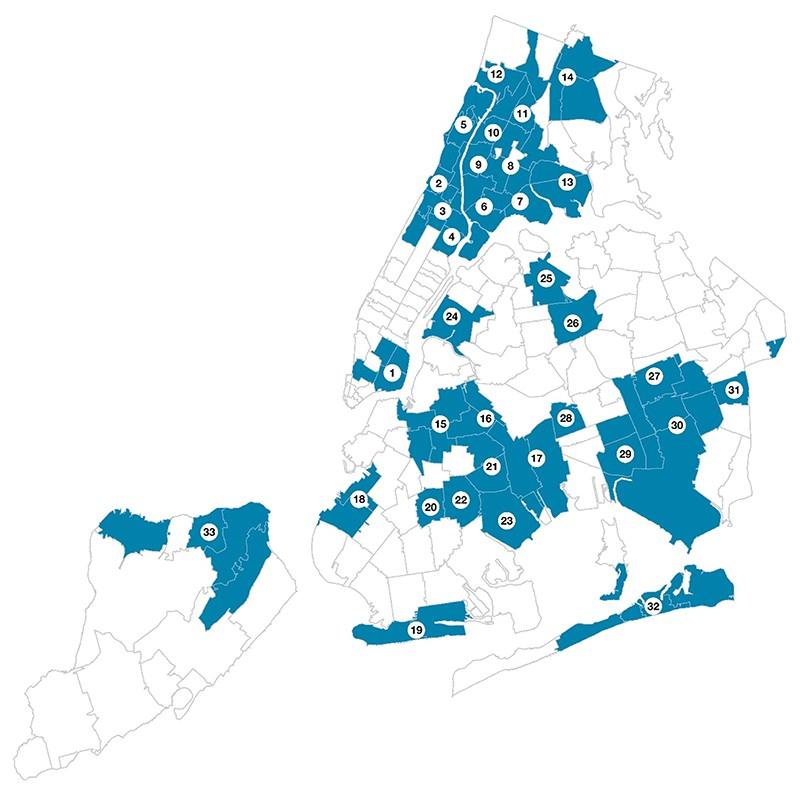 424
Figure C-1.
Communities Identified as Hardest-Hit by COVID-19 and Other Health and Socioeconomic
Disparities, by Community District
Source:
NYC Mayor’s Office of Equity & Racial Justice
Appendix D: NYC Neighborhood Maps
NYC Taskforce on Racial Inclusion & Equity (TRIE) Map
The map below shows the communities identified by the NYC Taskforce on Racial
Inclusion & Equity (TRIE) as hardest hit by COVID-19 and facing significant health and
socioeconomic disparities. When the Taskforce was established, these communities
accounted for over 50 percent of New York City’s COVID-19 cases. This map provides
historical and geographic context for communities of focus through the TRIE
Neighborhood Initiative.
424
Figure C-1.
Communities Identified as Hardest-Hit by COVID-19 and Other Health and Socioeconomic
Disparities, by Community District
Source:
NYC Mayor’s Office of Equity & Racial Justice
Appendix D: NYC Neighborhood Maps
NYC Taskforce on Racial Inclusion & Equity (TRIE) Map
The map below shows the communities identified by the NYC Taskforce on Racial
Inclusion & Equity (TRIE) as hardest hit by COVID-19 and facing significant health and
socioeconomic disparities. When the Taskforce was established, these communities
accounted for over 50 percent of New York City’s COVID-19 cases. This map provides
historical and geographic context for communities of focus through the TRIE
Neighborhood Initiative.
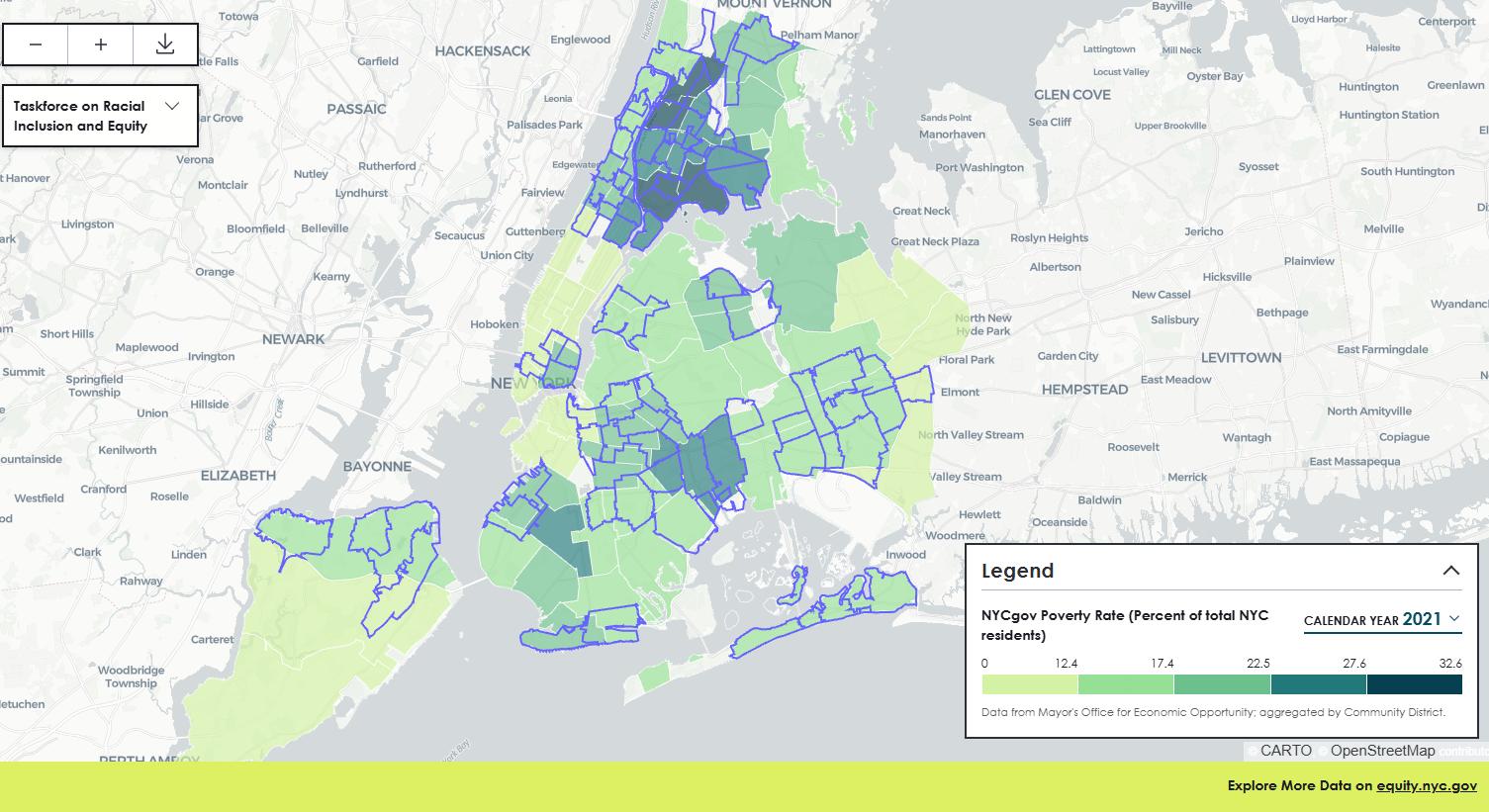 425
Figure C-2.
NYC Poverty Rates by Community District and TRIE Neighborhood Boundaries
Source:
NYC Mayor’s Office for Economic Opportunity, NYCgov Poverty Measure, 2021
NYC Poverty Rates and TRIE Neighborhood Map
The following map displays NYC poverty rates by community district, overlaid with NYC Taskforce on Racial Inclusion & Equity
(TRIE) neighborhood boundaries. The NYC poverty rate refers to the percentage of the city population in poverty, as measured by
the NYC Opportunity poverty measure, which accounts for housing and transportation costs, as well as benefits such as SNAP,
housing subsidies, and tax credits.
425
Figure C-2.
NYC Poverty Rates by Community District and TRIE Neighborhood Boundaries
Source:
NYC Mayor’s Office for Economic Opportunity, NYCgov Poverty Measure, 2021
NYC Poverty Rates and TRIE Neighborhood Map
The following map displays NYC poverty rates by community district, overlaid with NYC Taskforce on Racial Inclusion & Equity
(TRIE) neighborhood boundaries. The NYC poverty rate refers to the percentage of the city population in poverty, as measured by
the NYC Opportunity poverty measure, which accounts for housing and transportation costs, as well as benefits such as SNAP,
housing subsidies, and tax credits.
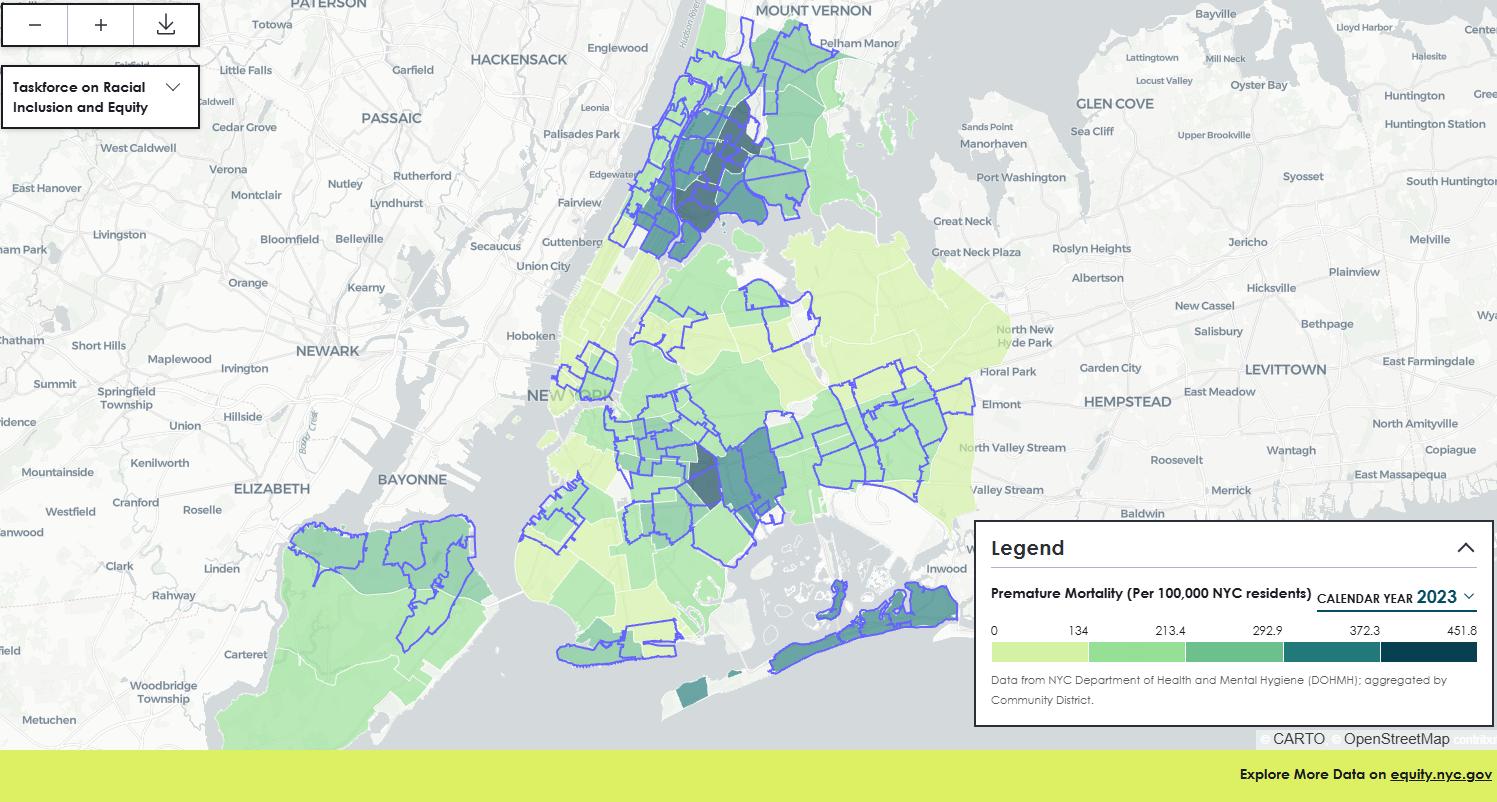 426
Figure C-3.
NYC Premature Mortality Rates by Community District and TRIE Neighborhood Boundaries
Source:
NYC Department of Health and Mental Hygiene, 2023
NYC Premature Mortality and TRIE Neighborhood Map
The following map displays NYC premature mortality (age-adjusted rate of deaths under age 65 per 100,000 people) by
community district, overlaid with NYC Taskforce on Racial Inclusion & Equity (TRIE) neighborhood boundaries.
426
Figure C-3.
NYC Premature Mortality Rates by Community District and TRIE Neighborhood Boundaries
Source:
NYC Department of Health and Mental Hygiene, 2023
NYC Premature Mortality and TRIE Neighborhood Map
The following map displays NYC premature mortality (age-adjusted rate of deaths under age 65 per 100,000 people) by
community district, overlaid with NYC Taskforce on Racial Inclusion & Equity (TRIE) neighborhood boundaries.
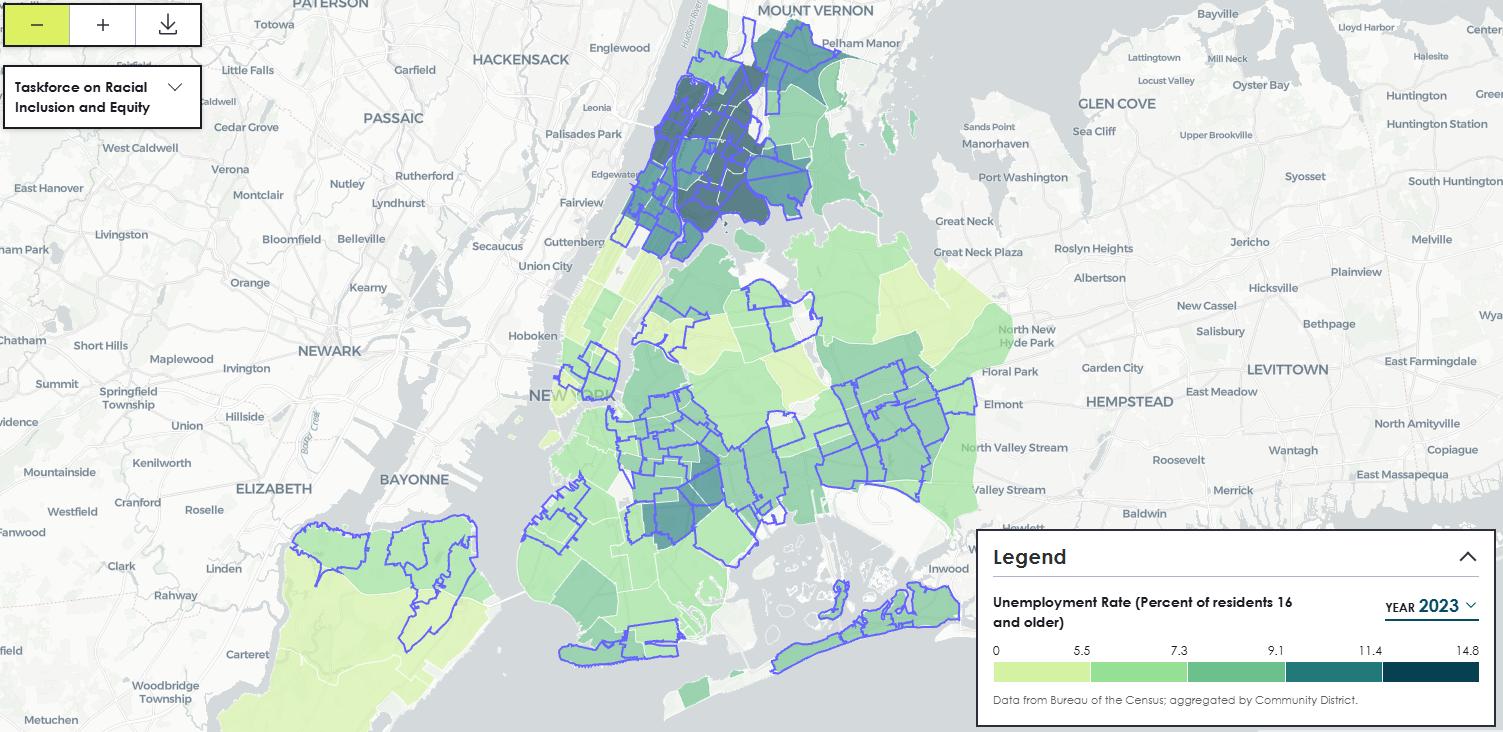 427
Figure C-4.
NYC Unemployment Rates by Community District and TRIE Neighborhood Boundaries.
Source:
U.S. Census Bureau, 2023.
NYC Unemployment and TRIE Neighborhood Map
The following map displays the unemployment rate among residents ages 16 and older, excluding people serving in the
Armed Forces and those not in the labor force, by community district, overlaid with NYC Taskforce on Racial Inclusion &
Equity (TRIE) neighborhood boundaries.
427
Figure C-4.
NYC Unemployment Rates by Community District and TRIE Neighborhood Boundaries.
Source:
U.S. Census Bureau, 2023.
NYC Unemployment and TRIE Neighborhood Map
The following map displays the unemployment rate among residents ages 16 and older, excluding people serving in the
Armed Forces and those not in the labor force, by community district, overlaid with NYC Taskforce on Racial Inclusion &
Equity (TRIE) neighborhood boundaries.
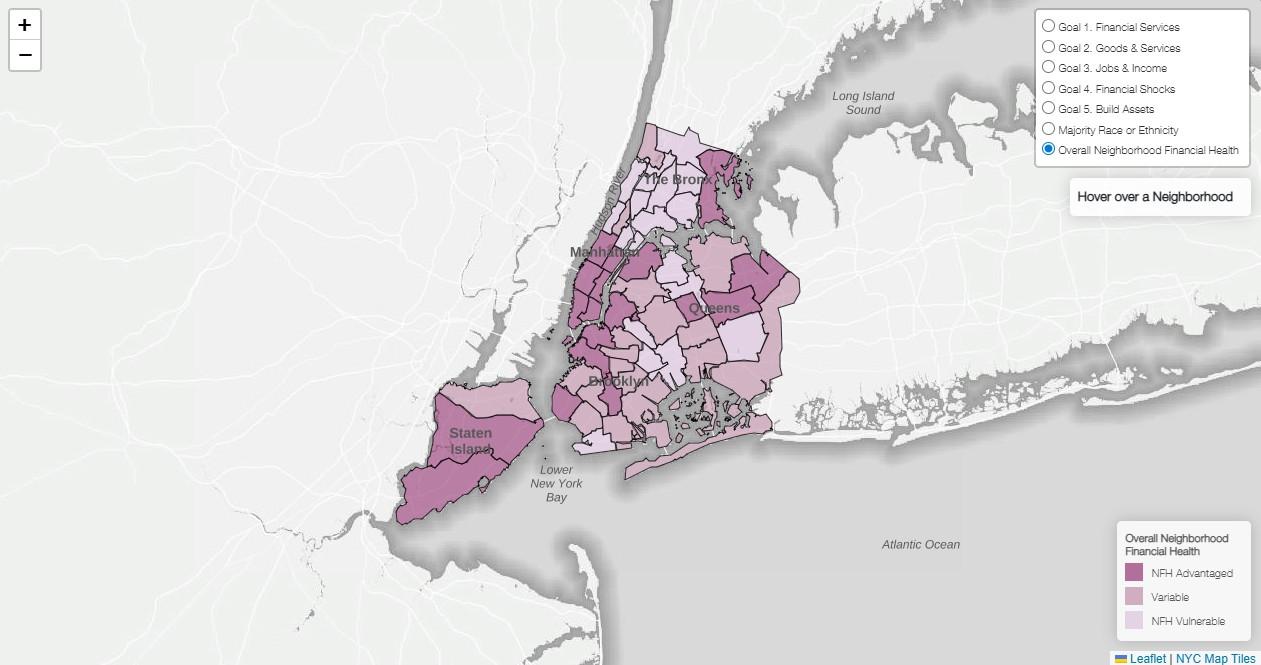 428
Figure C-5.
NYC Neighborhood Financial Health Index by Neighborhood.
Source:
NYC Department of Consumer & Worker Protection, Office of Financial Empowerment, 2021.
NYC Neighborhood Financial Health Index
The Neighborhood Financial Health Index, developed by the NYC Department of Consumer & Worker Protection
(DCWP) Office of Financial Empowerment, assesses the financial health of New York City neighborhoods across
five
distinct goals
using 2021 data. The map assigns each neighborhood an index score from zero (0) to ten (10) for each
financial health goal, with higher scores indicating better financial health. The map also displays an overall evaluation of
neighborhood financial health, which considers all five goals and neighborhood demographic information.
429
Appendix E: Citywide Policies on Employment
The City of New York is committed to incorporating equity principles in all of its
employment policies and practices. The City seeks to recruit individuals with the
knowledge and skills necessary to serve the extraordinarily diverse communities
that comprise its population. The City pursues this interest with outreach to all
communities where such talent may be found, and with a particular focus on
communities that may be underrepresented in parts of our workforce. Through the
New York City public schools, the community colleges and workforce development
programs run by several agencies, the City seeks to ensure opportunities are
available for all New Yorkers to pursue training that prepares them for a rewarding
career and equips them to compete successfully in both the public and private
sectors.
The City strives to provide an employment environment where all employees feel
that they can succeed and that the life experiences and perspectives they bring to
the job are valued. Managers, supervisors and employees are trained in principles
of nondiscrimination, equity, and inclusion. Agencies are required to disseminate
their equal employment policies and to have internal complaint procedures that
employees may use to raise issues about any incidents of discrimination.
The City’s policies and practices are designed to respect the requirements of the
Equal Protection Clauses in our federal and State Constitutions, and the
protections against discrimination in federal and state laws and our own local laws.
In accordance with these laws, hiring decisions, promotion decisions and
assignments are not to be made on the basis of race or national origin, except in
the very rare instances when the Constitution and applicable laws allow those
factors to be considered. Officers and employees with roles in decisions about
hiring and promotion, and those with other managerial and supervisory
responsibilities, must be knowledgeable about and accountable for complying with
laws and carrying out the City’s equal employment policies, including those
focused on racial equity.
New York City’s laws and policies address racial equity in the workplace in
numerous ways.
The New York City Human Rights Law
82
prohibits employment discrimination
based on race, ethnicity, national origin, and many other protected characteristics.
It prohibits intentional discrimination. It also regulates employment practices that
appear to be neutral but disproportionately impact one protected group more than
others. Policies or practices that have such an impact are unlawful unless they
bear a significant relationship to a significant business objective of the covered
82
New York City Administrative Code § 8-101 et seq.
430
entity.
83
The Human Rights Law regulates the circumstances when an employer may
consider the criminal history, unemployment history or credit record of an
employee or job applicant. These topics have been associated with
disproportionate impact on particular racial groups.
The City Charter and Administrative Code establish a detailed framework to ensure
the City’s employment practices both comply with federal, state and local anti-
discrimination laws and advance the goal of racial equity. They address issues of
policy and oversight; messaging; data collection and analysis; recruitment,
retention, promotion, job segregation and pay equity, training, information sharing
and accountability.
84
Throughout this plan, several agencies identify practices and proposed salary
adjustments that would further their equity goals. As changes to pay rates are
among the mandatory subjects of collective bargaining under the Taylor Law and
New York City Collective Bargaining Law, any adjustments to compensation or
other terms and conditions of employment must be consistent with applicable
collective bargaining agreements or negotiated with employees' collective
bargaining representatives.
83
In addition, a policy with a disparate impact is unlawful if a challenger shows substantial evidence that an
alternative policy or practice with less disparate impact is available, and the covered entity fails to prove that such
alternative policy or practice would not serve the covered entity as well.
New York City
Administrative Code § 8-
107(17).
84
The provisions discussed in this section are found in New York City Charter § 814 (responsibilities of
DCAS); §814.1 (training on recruitment practices); §815 (responsibilities of agency heads); §815.1
(training); §830-832 (Equal Employment Practices Commission; and §3401 (Office of Racial Equity).
431
Appendix F: Community Equity Priorities
At the time of creating the Preliminary Citywide Racial Equity Plan, the
Commission on Racial Equity (CORE) had developed
Draft Community Equity
Priorities
through a public engagement process. Those priorities were presented to
MOERJ and city agencies and they informed and were incorporated in the
Preliminary Racial Equity Plan.
Since then, a final set of Community Equity Priorities were released and MOERJ
worked with agencies to incorporate them in this final Racial Equity Plan, as they
made adjustments to their plans.
Fundamental Value in our NYC Charter: Our government justly values all
talents and contributions
1. Remove the gaps in race, gender identity, sexual orientation, age, and
disability in city jobs. Ensure that government work and staff reflect the city's
commitment to equity and social justice.
2. Fund communities harmed by racism and injustice to shape and get updates
on NYC government plans.
3. Remove the gaps in race, gender identity, sexual orientation, age, and
disability in city pay, promotions, and contracts.
4. Ensure NYC offices and partners get funds for community-based language
access services in the city's most spoken languages.
5. Check for and remove any formulas and computer processes that may be
biased based on race, ethnicity, or poverty. This will prevent inequities in health
care, housing, policing, criminal justice, employment, social service and more.
6. Collect, analyze, and share data on access to government services with the
public, categorizing it by specific groups harmed by racism and social
injustice.
New Priority.
Fundamental Value in our NYC Charter: Our government ensures the condition
of thriving for every person
7. Expand access to safe, stable housing for those at risk of homelessness, eviction,
and deed theft without delay. Access should be available to individuals and
families.
8. Evaluate and remove fines and fees to reduce the impact on low-income people of
all ages.
9. Use and expand non-punitive responses to mental health and all crises. These
responses should rely less on police where possible. People should be allowed to
decide or contribute to decisions about their own care.
10. Reduce racial and economic segregation and education gap by increasing support
to schools. Help every student and family with education and other health related
social needs.
11. Expand health, mental health, substance use, and disability services. They must
432
meet the needs of families and individuals harmed by racism and social injustice.
12. Remove costs and barriers to CUNY enrollment and retention.
13. Increase access and lower the cost to basic needs such as quality food,
transportation, medical, and housing.
New Priority.
Fundamental Value in our NYC Charter: Our government embraces vigilance,
remedy, and reconstruction
14. Expand access for those harmed by racial and social injustice to inform local
emergency planning. These include plans to prepare for, act in, and recover
from emergencies.
15. Remove barriers and increase access for people harmed by racial and social
injustice to learn about, buy, and keep ownership of property.
16. Ensure all city employees and their agencies, including the police and social
service providers, are held accountable for any harm and abuse of power.
17. Remove the gaps in racial, gender identity, sexual orientation, age, and
disability access to job training and funds to start businesses.
18. Expand services to prevent, intervene, and provide care for people and families
harmed by policing, jails, and court supervision.
433
End Notes
i
National Archives, "The Declaration of Independence: A Transcription," U.S. National Archives and Records
Administration.
National Archives source
ii
New York City Racial Justice Commission, City of New York,
NYC for Racial Justice: The Final Report of the Racial
Justice Commission
(New York City, December 2021).
Official report
iii
Herbert C. Kraft,
The Lenape: Archaeology, History, and Ethnography
(Newark, NJ: New Jersey Historical
Society, 1986).
iv
W. Kyle Whyte, “Settler Colonialism, Ecology, and Environmental Injustice,”
Environment and Society
9,
no. 1 (2018): 125–44.
v
National Park Service,
Discover the African Burial Ground National Monument: A Lightning Lesson from
Teaching with Historic Places.
(Washington, DC: U.S. Department of the Interior, 2017), 8.
National Park
Service source
vi
National Park Service,
Historic Sites Relating to the Underground Railroad, Abolitionism, and African American
Life in Oneida County and Beyond
(2021), 26.
National Park Service source
vii
New York City Comptroller,
The Racial Wealth Gap in New York
(December 6, 2023).
New York City
Comptroller source
viii
New York City Charter, “Preamble.”
Official New York City Charter — Preamble
ix
New York City Commission on Racial Equity,
Finalizing the Community Equity Priorities
.
Official PDF
source
.
x
New York City Department of Health and Mental Hygiene (DOHMH),
Summary of Vital Statistics
,
2021
(New York: Bureau of Vital Statistics, 2021).
Official NYC Health Department source
xi
Jake Bryant et al.,
Advancing Racial Equity in US Pre-K–12 Education
(McKinsey & Company, July 21,
2023).
McKinsey & Company source
xii
New York City Administration for Children’s Services (ACS),
Demographics of Children and Parents at
Steps in the Child Welfare System, FY 2025
(New York, 2025).
Official ACS source
xiii
New York City Administration for Children’s Services (ACS),
Demographics of Children and Parents at Steps
in the Child Welfare System, FY 2023
(New York, 2023).
Official ACS source
xiv
New York City Mayor’s Office for Economic Opportunity, “Youth in Child Detention,”
EquityNYC
.
Official
EquityNYC source
xv
Alma Carten, “How Racism Has Shaped Welfare Policy in America since 1935,”
The Conversation
,
August 22, 2016.
The conversation article
xvi
U.S. Census Bureau,
2022 American Community Survey 1-Year Estimates
, tables B01003, B03002,
S1701, and S1601.
U.S. Census Bureau data
xvii
Poverty Tracker Research Group at Columbia University,
The State of Poverty and Disadvantage in
New York City
, vol. 6 (New York: Robin Hood, 2024).
Robin Hood report
xviii
Steven W. Mumford, “Doing More with Less: Racial Diversity in Nonprofit Leadership and Organizational
434
Resilience,”
Journal of Public and Nonprofit Affairs
8, no.1 (2022): 29-57.
JPNA Article
xix
U.S. Census Bureau,
2024 American Community Survey 1-Year Estimates
, tables S0101 and S0101H.
U.S.
Census Bureau Data
xx
Chai Jindasurat-Yasui,
In Every County, Across All Budget Sizes: White Overrepresentation in the New York
City Area’s Nonprofit Leadership
(New York: Nonprofit New York, April 2023).
Nonprofit New York report
.
xxi
Connecticut Veterans Legal Center,
Discretionary Injustice: How Racial Disparities in the Military’s
Administrative Separation System Harm Black Veterans
(West Haven, CT, November 2022), 6.
Connecticut
Veterans Legal Center Report
xxii
Monk v. United States
, No. 3:22-cv-01503, Complaint, 9 (U.S. District Court for the District of Connecticut,
November 28, 2022).
Complaint
xxiii
Baylee Crone et al., “Health Service Access Among Homeless Veterans: Health Access Challenges Faced
by Homeless African American Veterans,”
Journal of Racial and Ethnic Health Disparities
9, no. 5 (2022): 1828–
44.
Journal of Racial and Ethnic Health Disparities Article
xxiv
New York City Department of Health and Mental Hygiene (DOHMH), Summary of Vital Statistics, 2020: Life
Expectancy, 2020, 32.
Official NYC Health Department source
xxv
Danyelle Solomon et al., “Systematic Inequality and Economic Opportunity” (Washington, DC: Center for
American Progress, August 7, 2019).
CAP report
xxvi
Tiffany N. Ford, “Historical Unemployment for Black Women and Men in the United States: 1954-2021,”
Brookings Institution
, February 13, 2023.
Brookings article
xxvii
Christian E. Weller, “African Americans Face Systematic Obstacles to Getting Good Jobs,” (Washington, DC:
Center for American Progress, September 2019), 1–10.
CAP report
xxviii
U.S. Census Bureau,
2024 American Community Survey 1-Year Estimates
, table C24010.
U.S.
Census Bureau Data
xxix
Barbra Ramos, “Diversity Takes a Step Back in Theatrical Films – but Strides Forward in Streaming,”
UCLA
Newsroom
, March 30, 2023.
UCLA Newsroom summary of 2023 Hollywood Diversity Report
xxx
Nancy Yuen, et al.,
The Prevalence and Portrayal of Asian and Pacific Islanders across 1,300 Popular Films
,
USC Annenberg Inclusion Initiative, May 2021.
Annenberg report
xxxi
Camilo Becdach et al., “Latinos in Hollywood: Amplifying Voices, Expanding Horizons,” McKinsey &
Company, March 7, 2024.
McKinsey & Company source
xxxii
Stacy L. Smith & The Annenberg Inclusion Initiative, “Native American Representation Across 1,600 Popular
Films: The Lily Gladstone Effect,” USC Annenberg Inclusion Initiative October 2023.
Annenberg report
xxxiii
Stacy L. Smith et al.,
Inclusion in the Music Business: Gender & Race/Ethnicity Across Executives,
Artists & Talent Teams
, USC Annenberg Inclusion Initiative, June 2021.
Annenberg report
xxxiv
Stacy L. Smith et al.,
Inclusion in the Recording Studio? Gender & Race/Ethnicity of Artists,
Songwriters & Producers across 1,200 Popular Songs from 2012 to 2023
, USC Annenberg Inclusion
Initiative, January 2024.
Annenberg report
xxxv
Johanna Weststar and Ava Lentini, International Game Developers Association,
Developer Satisfaction
Survey 2023 Summary Report
, March 14, 2024.
Summary report
435
xxxvi
Tien Green and Mónica Anderson, “U.S. Journalists' Beats Vary Widely by Gender and Other Factors,”
Pew Research Center
, April 4, 2023.
Pew Research Center article
xxxvii
Pew Research Center, “Black Americans’ Experiences with News,” September 26, 2023.
Pew
Research Center report
xxxviii
MGT Consulting Group,
City of New York Disparity Study
, May 2018.
Official City of New York study
xxxix
New York City Department of Small Business Services (SBS), “Black Entrepreneurs NYC (BE NYC).”
BE
NYC Means Equal Entrepreneurship page
xl
New York City Economic Development Corporation (NYCEDC),
State of the New York City Economy 2024
,
(New York: NYCEDC, 2025), 48.
Official NYCEDC report
.
xli
U.S. Congress, Joint Economic Committee Democrats,
People of Color and Low-Income Communities Are
Disproportionately Harmed by Banking and Financial Exclusion
, August 22, 2022.
U.S. Joint Economic
Committee report
xlii
National Community Reinvestment Coalition, “HOLC ‘Redlining’ Maps: The Persistent Structure of
Segregation and Economic Inequality,” March 8, 2022.
NCRC article
xliii
New York City Department of Housing Preservation and Development (HPD),
2021 New York City Housing
and Vacancy Survey: Selected Initial Findings
(New York: NYC Department for Housing Preservation and
Development, 2021), 20-21.
Official NYC HPD source
xliv
Shelley v. Kraemer
, 334 U.S.1 (1948). Legal Information Institute, Cornell Law School.
Cornell LII case
summary
xlv
Cristina Kim, “How Discriminatory Covenants Shaped San Diego Homeownership,”
KPBS Public Media
,
November 17, 2021.
KPBS article
xlvi
New York City Department of Housing Preservation and Development (HPD),
2023 New York City Housing
and Vacancy Survey: Selected Initial Findings
(New York: NYC Department for Housing Preservation and
Development, 2021), 45, table 14.
Official NYC HPD source
xlvii
Andre M. Perry and Jonathan Rothwell, “ How Racial Bias in Appraisals Affects the Devaluation of
Homes in Majority-Black Neighborhoods.”
Brookings Institution
, December 5, 2022.
Brookings article
xlviii
New York City Comptroller,
The Racial Wealth Gap in New York
(December 6, 2023).
New York City
Comptroller source
xlix
New York City Independent Budget Office,
How Federal Budget Changes Could Reshape the New York City
Public Housing Authority
, September 25, 2025, citing U.S. Department of Housing and Urban Development,
Office of Policy Development and Research, “Assisted Housing: National and Local.”
IBO report
l
New York City Department of City Planning (DCP),
The Newest New Yorkers 2026
, 113, table 4.5, 2023.
Official NYC DCP source
li
New York City Housing Authority (NYCHA),
Physical Needs Assessment
, 2023.
Official NYCHA source
lii
New York City Landmarks Preservation Commission (LPC), “LPC Launches Seneca Village Unearthed,
an Online Exhibit and Collection of Artifacts,” February 20, 2020.
LPC Digital Exhibit
436
liii
The New York Historical Society, “Before Rosa Parks: Taking on New York’s Segregated Street Cars,”
New York Historical Society
, n.d.
From the Stacks page
liv
Historical Society of the New York Courts, “Elizabeth Jennings and the Desegregation of Public
Transportation in New York City,” February 3, 2016.
Notable cases page
lv
Hannah Richardson, “Exploring 2022’s Big Transit Themes with New Equity Dashboard Data: Part Two,”
TransitCenter
, December 21, 2022.
TransitCenter post
lvi
New York City Mayor’s Office for Economic Opportunity, “Travel time to Work”
EquityNYC
, 2023.
Official
EquityNYC source
lvii
National Skills Coalition,
Closing the Digital Skills Divide: The Payoff for Workers, Business, and the
Economy. February 2023.
National Skills Coalition Report
lviii
WE ACT for Environmental Justice, “WE ACT Applauds New York State Legislature for Passing Bills to
Reduce the Cumulative Impacts of Pollution on Disadvantaged Communities,” April 2022.
WE ACT statement
;
Mayor’s Office of Climate and Environmental Justice (MOCEJ),
EJNYC: A Study of Environmental Justice
Issues in New York City
(New York, 2024).
Official MOCEJ source
lix
Vernice D. Miller, “Planning, Power and Politics: A Case Study of the Land Use and Siting History of the
North River Water Pollution Control Plant,”
Fordham Urban Law Journal
21 (1994): 707.
Law Journal
article
lx
New York City Mayor’s Office of Climate and Environmental Justice (MOCEJ),
EJ NYC: A Study of
Environmental Justice Issues in New York City
(New York, 2024), 144.
Official MOCEJ source
lxi
U.S. Environmental Protection Agency,
Water Affordability Needs Assessment: Report to Congress
(Washington, DC: U.S. Environmental Protection Agency, December 2024).
Official EPA source
lxii
New York City Municipal Water Finance Authority,
Water and Sewer System Second General
Resolution Revenue Bonds, Fiscal 2025 Series DD
(New York: New York City Municipal Water Finance
Authority, 2025), 35.
Official NYC Municipal Water Authority source
lxiii
NYC Office of Technology and Innovation (OTI),
The New York City Digital Equity Roadmap
(New York: City
of New York, 2025), 5-18.
Official NYC OTI source
.
lxiv
NYC Office of Technology and Innovation (OTI),
The New York City Digital Equity Roadmap
(New York: City
of New York, 2025), 16.
Official NYC OTI source
; Rachel Neches and Eli Dvorkin,
Understanding and
Overcoming the Bronx Digital Divide
(New York: Center for an Urban Future, July 2025).
Center for Urban
Future report
lxv
New York State Empire State Development, ConnectALL Office,
Five-Year Action Plan: Broadband Equity,
Access, and Deployment (BEAD) Program
(Albany, NY: ConnectALL Office, September 2023), 61.
Five-Year
Action Plan
lxvi
New York City Department of Health and Mental Hygiene (DOHMH),
Pregnancy-Associated Mortality in New
York City, 2022
(New York: New York City Maternal Mortality Review Committee, 2025), 2.
Official NYC Health
Department source
lxvii
New York City Department of Health and Mental Hygiene (DOHMH),
Summary of Vital Statistics, 2023
(New York: Bureau of Vital Statistics, 2023), 24.
Official NYC Health Department source
lxviii
New York City Department of Health and Mental Hygiene (DOHMH),
Disparities among Children with
437
Asthma in New York City
, Epi Data Brief, no. 126 (2021), 1-3.
Official NYC Health Department source
lxix
Martha Hostetter and Sarah Klein, “Understanding and Ameliorating Medical Mistrust Among Black
Americans,”
Commonwealth Fund
, January 14, 2021.
Commonwealth Fund article
.
lxx
Anna Stenkamp and Michael Rempel,
Racial and Neighborhood Disparities in New York City Criminal
Summons Practices
(Data Collaborative for Justice at John Jay College, March 2024).
John Jay study
lxxi
Elizabeth Hinton, et al.,
An Unjust Burden: The Disparate Treatment of Black Americans in the Criminal
Justice System
(New York: Vera Institute of Justice, May 2018).
Vera Evidence Brief
; Nazgol Ghandnoosh,
“One in Five: Ending Racial Inequity in Incarceration,” The Sentencing Project, October 11, 2023.
Sentencing
Project report
lxxii
Nazgol Ghandnoosh, “One in Five.”
lxxiii
New York City Mayor’s Office of Climate and Environmental Justice (MOCEJ),
EJ NYC: A Study of
Environmental Justice Issues in New York City
(New York, 2024), 95-101.
Official MOCEJ source
lxxiv
U.S. Government Accountability Office,
Disaster Loan Program: SBA Should Include Key Issues in Its
Review of How the Program Affects Underserved Communities
, GAO-24-106682 (Washington, DC: U.S.
Government Accountability Office, November 2023).
GAO Study
lxxv
Danyelle Solomon et al.,
Systematic Inequality and Economic Opportunity
(Washington, DC: Center for
American Progress, August 7, 2019).
CAP report
lxxvi
Laura Schultz et al.,
New York State’s Civil Service Examination Process and Its Impact on Diversity in the
Public Sector
(Albany: Rockefeller Institute of Government, SUNY, June 2023), commissioned by the New York
State Department of Civil Service.
New York State report
lxxvii
New York City Department of Administrative Services (DCAS),
FY 2024 New York City Government
Workforce Profile Report
.
Official DCAS report
lxxviii
Edelman Trust Institute,
2024 Edelman Trust Barometer Global Report
(New York: Edelman, 2024).
Edelman report
lxxix
New York City Commission on Human Rights (CCHR),
Annual Reports 2023-2025
(New York, 2023-
2025).
Official CCHR reports
lxxx
New York City Department of Investigation (DOI), “Florida Woman Pleads Guilty to Defrauding New York City
SNAP Recipients.” January 4, 2024.
NYC DOI statement
lxxxi
U.S. Attorney’s Office for the Eastern District of New York, “Former Fiscal Officer for Non-Profit
Company Pleads Guilty to Stealing Nearly $2.3 Million,” September 25, 2024.
Office’s statement
lxxxii
Office of the United Nations High Commissioner for Human Rights, “Learning from Historical Tragedies Is
Key to Strengthen the Global Fight against Racism,” March 20, 2015.
Release
lxxxiii
Makala Skinner and Ioana G. Hulbert, ACENSUS II All Archivists Survey Report (Ithaka S+R, August
22, 2022).
Research report
lxxxiii
The Civil Rights Project at UCLA, “NYC School Segregation: A Report Card from the UCLA Civil
Rights Project,” June 2021.
Report
lxxxv
Dania V. Francis and Christian E. Weller, “Economic Inequality, the Digital Divide, and Remote
Learning during COVID-19,”
The Review of Black Political Economy
49, no. 1 (May 2021).
Research
article
428
Figure C-5.
NYC Neighborhood Financial Health Index by Neighborhood.
Source:
NYC Department of Consumer & Worker Protection, Office of Financial Empowerment, 2021.
NYC Neighborhood Financial Health Index
The Neighborhood Financial Health Index, developed by the NYC Department of Consumer & Worker Protection
(DCWP) Office of Financial Empowerment, assesses the financial health of New York City neighborhoods across
five
distinct goals
using 2021 data. The map assigns each neighborhood an index score from zero (0) to ten (10) for each
financial health goal, with higher scores indicating better financial health. The map also displays an overall evaluation of
neighborhood financial health, which considers all five goals and neighborhood demographic information.
429
Appendix E: Citywide Policies on Employment
The City of New York is committed to incorporating equity principles in all of its
employment policies and practices. The City seeks to recruit individuals with the
knowledge and skills necessary to serve the extraordinarily diverse communities
that comprise its population. The City pursues this interest with outreach to all
communities where such talent may be found, and with a particular focus on
communities that may be underrepresented in parts of our workforce. Through the
New York City public schools, the community colleges and workforce development
programs run by several agencies, the City seeks to ensure opportunities are
available for all New Yorkers to pursue training that prepares them for a rewarding
career and equips them to compete successfully in both the public and private
sectors.
The City strives to provide an employment environment where all employees feel
that they can succeed and that the life experiences and perspectives they bring to
the job are valued. Managers, supervisors and employees are trained in principles
of nondiscrimination, equity, and inclusion. Agencies are required to disseminate
their equal employment policies and to have internal complaint procedures that
employees may use to raise issues about any incidents of discrimination.
The City’s policies and practices are designed to respect the requirements of the
Equal Protection Clauses in our federal and State Constitutions, and the
protections against discrimination in federal and state laws and our own local laws.
In accordance with these laws, hiring decisions, promotion decisions and
assignments are not to be made on the basis of race or national origin, except in
the very rare instances when the Constitution and applicable laws allow those
factors to be considered. Officers and employees with roles in decisions about
hiring and promotion, and those with other managerial and supervisory
responsibilities, must be knowledgeable about and accountable for complying with
laws and carrying out the City’s equal employment policies, including those
focused on racial equity.
New York City’s laws and policies address racial equity in the workplace in
numerous ways.
The New York City Human Rights Law
82
prohibits employment discrimination
based on race, ethnicity, national origin, and many other protected characteristics.
It prohibits intentional discrimination. It also regulates employment practices that
appear to be neutral but disproportionately impact one protected group more than
others. Policies or practices that have such an impact are unlawful unless they
bear a significant relationship to a significant business objective of the covered
82
New York City Administrative Code § 8-101 et seq.
430
entity.
83
The Human Rights Law regulates the circumstances when an employer may
consider the criminal history, unemployment history or credit record of an
employee or job applicant. These topics have been associated with
disproportionate impact on particular racial groups.
The City Charter and Administrative Code establish a detailed framework to ensure
the City’s employment practices both comply with federal, state and local anti-
discrimination laws and advance the goal of racial equity. They address issues of
policy and oversight; messaging; data collection and analysis; recruitment,
retention, promotion, job segregation and pay equity, training, information sharing
and accountability.
84
Throughout this plan, several agencies identify practices and proposed salary
adjustments that would further their equity goals. As changes to pay rates are
among the mandatory subjects of collective bargaining under the Taylor Law and
New York City Collective Bargaining Law, any adjustments to compensation or
other terms and conditions of employment must be consistent with applicable
collective bargaining agreements or negotiated with employees' collective
bargaining representatives.
83
In addition, a policy with a disparate impact is unlawful if a challenger shows substantial evidence that an
alternative policy or practice with less disparate impact is available, and the covered entity fails to prove that such
alternative policy or practice would not serve the covered entity as well.
New York City
Administrative Code § 8-
107(17).
84
The provisions discussed in this section are found in New York City Charter § 814 (responsibilities of
DCAS); §814.1 (training on recruitment practices); §815 (responsibilities of agency heads); §815.1
(training); §830-832 (Equal Employment Practices Commission; and §3401 (Office of Racial Equity).
431
Appendix F: Community Equity Priorities
At the time of creating the Preliminary Citywide Racial Equity Plan, the
Commission on Racial Equity (CORE) had developed
Draft Community Equity
Priorities
through a public engagement process. Those priorities were presented to
MOERJ and city agencies and they informed and were incorporated in the
Preliminary Racial Equity Plan.
Since then, a final set of Community Equity Priorities were released and MOERJ
worked with agencies to incorporate them in this final Racial Equity Plan, as they
made adjustments to their plans.
Fundamental Value in our NYC Charter: Our government justly values all
talents and contributions
1. Remove the gaps in race, gender identity, sexual orientation, age, and
disability in city jobs. Ensure that government work and staff reflect the city's
commitment to equity and social justice.
2. Fund communities harmed by racism and injustice to shape and get updates
on NYC government plans.
3. Remove the gaps in race, gender identity, sexual orientation, age, and
disability in city pay, promotions, and contracts.
4. Ensure NYC offices and partners get funds for community-based language
access services in the city's most spoken languages.
5. Check for and remove any formulas and computer processes that may be
biased based on race, ethnicity, or poverty. This will prevent inequities in health
care, housing, policing, criminal justice, employment, social service and more.
6. Collect, analyze, and share data on access to government services with the
public, categorizing it by specific groups harmed by racism and social
injustice.
New Priority.
Fundamental Value in our NYC Charter: Our government ensures the condition
of thriving for every person
7. Expand access to safe, stable housing for those at risk of homelessness, eviction,
and deed theft without delay. Access should be available to individuals and
families.
8. Evaluate and remove fines and fees to reduce the impact on low-income people of
all ages.
9. Use and expand non-punitive responses to mental health and all crises. These
responses should rely less on police where possible. People should be allowed to
decide or contribute to decisions about their own care.
10. Reduce racial and economic segregation and education gap by increasing support
to schools. Help every student and family with education and other health related
social needs.
11. Expand health, mental health, substance use, and disability services. They must
432
meet the needs of families and individuals harmed by racism and social injustice.
12. Remove costs and barriers to CUNY enrollment and retention.
13. Increase access and lower the cost to basic needs such as quality food,
transportation, medical, and housing.
New Priority.
Fundamental Value in our NYC Charter: Our government embraces vigilance,
remedy, and reconstruction
14. Expand access for those harmed by racial and social injustice to inform local
emergency planning. These include plans to prepare for, act in, and recover
from emergencies.
15. Remove barriers and increase access for people harmed by racial and social
injustice to learn about, buy, and keep ownership of property.
16. Ensure all city employees and their agencies, including the police and social
service providers, are held accountable for any harm and abuse of power.
17. Remove the gaps in racial, gender identity, sexual orientation, age, and
disability access to job training and funds to start businesses.
18. Expand services to prevent, intervene, and provide care for people and families
harmed by policing, jails, and court supervision.
433
End Notes
i
National Archives, "The Declaration of Independence: A Transcription," U.S. National Archives and Records
Administration.
National Archives source
ii
New York City Racial Justice Commission, City of New York,
NYC for Racial Justice: The Final Report of the Racial
Justice Commission
(New York City, December 2021).
Official report
iii
Herbert C. Kraft,
The Lenape: Archaeology, History, and Ethnography
(Newark, NJ: New Jersey Historical
Society, 1986).
iv
W. Kyle Whyte, “Settler Colonialism, Ecology, and Environmental Injustice,”
Environment and Society
9,
no. 1 (2018): 125–44.
v
National Park Service,
Discover the African Burial Ground National Monument: A Lightning Lesson from
Teaching with Historic Places.
(Washington, DC: U.S. Department of the Interior, 2017), 8.
National Park
Service source
vi
National Park Service,
Historic Sites Relating to the Underground Railroad, Abolitionism, and African American
Life in Oneida County and Beyond
(2021), 26.
National Park Service source
vii
New York City Comptroller,
The Racial Wealth Gap in New York
(December 6, 2023).
New York City
Comptroller source
viii
New York City Charter, “Preamble.”
Official New York City Charter — Preamble
ix
New York City Commission on Racial Equity,
Finalizing the Community Equity Priorities
.
Official PDF
source
.
x
New York City Department of Health and Mental Hygiene (DOHMH),
Summary of Vital Statistics
,
2021
(New York: Bureau of Vital Statistics, 2021).
Official NYC Health Department source
xi
Jake Bryant et al.,
Advancing Racial Equity in US Pre-K–12 Education
(McKinsey & Company, July 21,
2023).
McKinsey & Company source
xii
New York City Administration for Children’s Services (ACS),
Demographics of Children and Parents at
Steps in the Child Welfare System, FY 2025
(New York, 2025).
Official ACS source
xiii
New York City Administration for Children’s Services (ACS),
Demographics of Children and Parents at Steps
in the Child Welfare System, FY 2023
(New York, 2023).
Official ACS source
xiv
New York City Mayor’s Office for Economic Opportunity, “Youth in Child Detention,”
EquityNYC
.
Official
EquityNYC source
xv
Alma Carten, “How Racism Has Shaped Welfare Policy in America since 1935,”
The Conversation
,
August 22, 2016.
The conversation article
xvi
U.S. Census Bureau,
2022 American Community Survey 1-Year Estimates
, tables B01003, B03002,
S1701, and S1601.
U.S. Census Bureau data
xvii
Poverty Tracker Research Group at Columbia University,
The State of Poverty and Disadvantage in
New York City
, vol. 6 (New York: Robin Hood, 2024).
Robin Hood report
xviii
Steven W. Mumford, “Doing More with Less: Racial Diversity in Nonprofit Leadership and Organizational
434
Resilience,”
Journal of Public and Nonprofit Affairs
8, no.1 (2022): 29-57.
JPNA Article
xix
U.S. Census Bureau,
2024 American Community Survey 1-Year Estimates
, tables S0101 and S0101H.
U.S.
Census Bureau Data
xx
Chai Jindasurat-Yasui,
In Every County, Across All Budget Sizes: White Overrepresentation in the New York
City Area’s Nonprofit Leadership
(New York: Nonprofit New York, April 2023).
Nonprofit New York report
.
xxi
Connecticut Veterans Legal Center,
Discretionary Injustice: How Racial Disparities in the Military’s
Administrative Separation System Harm Black Veterans
(West Haven, CT, November 2022), 6.
Connecticut
Veterans Legal Center Report
xxii
Monk v. United States
, No. 3:22-cv-01503, Complaint, 9 (U.S. District Court for the District of Connecticut,
November 28, 2022).
Complaint
xxiii
Baylee Crone et al., “Health Service Access Among Homeless Veterans: Health Access Challenges Faced
by Homeless African American Veterans,”
Journal of Racial and Ethnic Health Disparities
9, no. 5 (2022): 1828–
44.
Journal of Racial and Ethnic Health Disparities Article
xxiv
New York City Department of Health and Mental Hygiene (DOHMH), Summary of Vital Statistics, 2020: Life
Expectancy, 2020, 32.
Official NYC Health Department source
xxv
Danyelle Solomon et al., “Systematic Inequality and Economic Opportunity” (Washington, DC: Center for
American Progress, August 7, 2019).
CAP report
xxvi
Tiffany N. Ford, “Historical Unemployment for Black Women and Men in the United States: 1954-2021,”
Brookings Institution
, February 13, 2023.
Brookings article
xxvii
Christian E. Weller, “African Americans Face Systematic Obstacles to Getting Good Jobs,” (Washington, DC:
Center for American Progress, September 2019), 1–10.
CAP report
xxviii
U.S. Census Bureau,
2024 American Community Survey 1-Year Estimates
, table C24010.
U.S.
Census Bureau Data
xxix
Barbra Ramos, “Diversity Takes a Step Back in Theatrical Films – but Strides Forward in Streaming,”
UCLA
Newsroom
, March 30, 2023.
UCLA Newsroom summary of 2023 Hollywood Diversity Report
xxx
Nancy Yuen, et al.,
The Prevalence and Portrayal of Asian and Pacific Islanders across 1,300 Popular Films
,
USC Annenberg Inclusion Initiative, May 2021.
Annenberg report
xxxi
Camilo Becdach et al., “Latinos in Hollywood: Amplifying Voices, Expanding Horizons,” McKinsey &
Company, March 7, 2024.
McKinsey & Company source
xxxii
Stacy L. Smith & The Annenberg Inclusion Initiative, “Native American Representation Across 1,600 Popular
Films: The Lily Gladstone Effect,” USC Annenberg Inclusion Initiative October 2023.
Annenberg report
xxxiii
Stacy L. Smith et al.,
Inclusion in the Music Business: Gender & Race/Ethnicity Across Executives,
Artists & Talent Teams
, USC Annenberg Inclusion Initiative, June 2021.
Annenberg report
xxxiv
Stacy L. Smith et al.,
Inclusion in the Recording Studio? Gender & Race/Ethnicity of Artists,
Songwriters & Producers across 1,200 Popular Songs from 2012 to 2023
, USC Annenberg Inclusion
Initiative, January 2024.
Annenberg report
xxxv
Johanna Weststar and Ava Lentini, International Game Developers Association,
Developer Satisfaction
Survey 2023 Summary Report
, March 14, 2024.
Summary report
435
xxxvi
Tien Green and Mónica Anderson, “U.S. Journalists' Beats Vary Widely by Gender and Other Factors,”
Pew Research Center
, April 4, 2023.
Pew Research Center article
xxxvii
Pew Research Center, “Black Americans’ Experiences with News,” September 26, 2023.
Pew
Research Center report
xxxviii
MGT Consulting Group,
City of New York Disparity Study
, May 2018.
Official City of New York study
xxxix
New York City Department of Small Business Services (SBS), “Black Entrepreneurs NYC (BE NYC).”
BE
NYC Means Equal Entrepreneurship page
xl
New York City Economic Development Corporation (NYCEDC),
State of the New York City Economy 2024
,
(New York: NYCEDC, 2025), 48.
Official NYCEDC report
.
xli
U.S. Congress, Joint Economic Committee Democrats,
People of Color and Low-Income Communities Are
Disproportionately Harmed by Banking and Financial Exclusion
, August 22, 2022.
U.S. Joint Economic
Committee report
xlii
National Community Reinvestment Coalition, “HOLC ‘Redlining’ Maps: The Persistent Structure of
Segregation and Economic Inequality,” March 8, 2022.
NCRC article
xliii
New York City Department of Housing Preservation and Development (HPD),
2021 New York City Housing
and Vacancy Survey: Selected Initial Findings
(New York: NYC Department for Housing Preservation and
Development, 2021), 20-21.
Official NYC HPD source
xliv
Shelley v. Kraemer
, 334 U.S.1 (1948). Legal Information Institute, Cornell Law School.
Cornell LII case
summary
xlv
Cristina Kim, “How Discriminatory Covenants Shaped San Diego Homeownership,”
KPBS Public Media
,
November 17, 2021.
KPBS article
xlvi
New York City Department of Housing Preservation and Development (HPD),
2023 New York City Housing
and Vacancy Survey: Selected Initial Findings
(New York: NYC Department for Housing Preservation and
Development, 2021), 45, table 14.
Official NYC HPD source
xlvii
Andre M. Perry and Jonathan Rothwell, “ How Racial Bias in Appraisals Affects the Devaluation of
Homes in Majority-Black Neighborhoods.”
Brookings Institution
, December 5, 2022.
Brookings article
xlviii
New York City Comptroller,
The Racial Wealth Gap in New York
(December 6, 2023).
New York City
Comptroller source
xlix
New York City Independent Budget Office,
How Federal Budget Changes Could Reshape the New York City
Public Housing Authority
, September 25, 2025, citing U.S. Department of Housing and Urban Development,
Office of Policy Development and Research, “Assisted Housing: National and Local.”
IBO report
l
New York City Department of City Planning (DCP),
The Newest New Yorkers 2026
, 113, table 4.5, 2023.
Official NYC DCP source
li
New York City Housing Authority (NYCHA),
Physical Needs Assessment
, 2023.
Official NYCHA source
lii
New York City Landmarks Preservation Commission (LPC), “LPC Launches Seneca Village Unearthed,
an Online Exhibit and Collection of Artifacts,” February 20, 2020.
LPC Digital Exhibit
436
liii
The New York Historical Society, “Before Rosa Parks: Taking on New York’s Segregated Street Cars,”
New York Historical Society
, n.d.
From the Stacks page
liv
Historical Society of the New York Courts, “Elizabeth Jennings and the Desegregation of Public
Transportation in New York City,” February 3, 2016.
Notable cases page
lv
Hannah Richardson, “Exploring 2022’s Big Transit Themes with New Equity Dashboard Data: Part Two,”
TransitCenter
, December 21, 2022.
TransitCenter post
lvi
New York City Mayor’s Office for Economic Opportunity, “Travel time to Work”
EquityNYC
, 2023.
Official
EquityNYC source
lvii
National Skills Coalition,
Closing the Digital Skills Divide: The Payoff for Workers, Business, and the
Economy. February 2023.
National Skills Coalition Report
lviii
WE ACT for Environmental Justice, “WE ACT Applauds New York State Legislature for Passing Bills to
Reduce the Cumulative Impacts of Pollution on Disadvantaged Communities,” April 2022.
WE ACT statement
;
Mayor’s Office of Climate and Environmental Justice (MOCEJ),
EJNYC: A Study of Environmental Justice
Issues in New York City
(New York, 2024).
Official MOCEJ source
lix
Vernice D. Miller, “Planning, Power and Politics: A Case Study of the Land Use and Siting History of the
North River Water Pollution Control Plant,”
Fordham Urban Law Journal
21 (1994): 707.
Law Journal
article
lx
New York City Mayor’s Office of Climate and Environmental Justice (MOCEJ),
EJ NYC: A Study of
Environmental Justice Issues in New York City
(New York, 2024), 144.
Official MOCEJ source
lxi
U.S. Environmental Protection Agency,
Water Affordability Needs Assessment: Report to Congress
(Washington, DC: U.S. Environmental Protection Agency, December 2024).
Official EPA source
lxii
New York City Municipal Water Finance Authority,
Water and Sewer System Second General
Resolution Revenue Bonds, Fiscal 2025 Series DD
(New York: New York City Municipal Water Finance
Authority, 2025), 35.
Official NYC Municipal Water Authority source
lxiii
NYC Office of Technology and Innovation (OTI),
The New York City Digital Equity Roadmap
(New York: City
of New York, 2025), 5-18.
Official NYC OTI source
.
lxiv
NYC Office of Technology and Innovation (OTI),
The New York City Digital Equity Roadmap
(New York: City
of New York, 2025), 16.
Official NYC OTI source
; Rachel Neches and Eli Dvorkin,
Understanding and
Overcoming the Bronx Digital Divide
(New York: Center for an Urban Future, July 2025).
Center for Urban
Future report
lxv
New York State Empire State Development, ConnectALL Office,
Five-Year Action Plan: Broadband Equity,
Access, and Deployment (BEAD) Program
(Albany, NY: ConnectALL Office, September 2023), 61.
Five-Year
Action Plan
lxvi
New York City Department of Health and Mental Hygiene (DOHMH),
Pregnancy-Associated Mortality in New
York City, 2022
(New York: New York City Maternal Mortality Review Committee, 2025), 2.
Official NYC Health
Department source
lxvii
New York City Department of Health and Mental Hygiene (DOHMH),
Summary of Vital Statistics, 2023
(New York: Bureau of Vital Statistics, 2023), 24.
Official NYC Health Department source
lxviii
New York City Department of Health and Mental Hygiene (DOHMH),
Disparities among Children with
437
Asthma in New York City
, Epi Data Brief, no. 126 (2021), 1-3.
Official NYC Health Department source
lxix
Martha Hostetter and Sarah Klein, “Understanding and Ameliorating Medical Mistrust Among Black
Americans,”
Commonwealth Fund
, January 14, 2021.
Commonwealth Fund article
.
lxx
Anna Stenkamp and Michael Rempel,
Racial and Neighborhood Disparities in New York City Criminal
Summons Practices
(Data Collaborative for Justice at John Jay College, March 2024).
John Jay study
lxxi
Elizabeth Hinton, et al.,
An Unjust Burden: The Disparate Treatment of Black Americans in the Criminal
Justice System
(New York: Vera Institute of Justice, May 2018).
Vera Evidence Brief
; Nazgol Ghandnoosh,
“One in Five: Ending Racial Inequity in Incarceration,” The Sentencing Project, October 11, 2023.
Sentencing
Project report
lxxii
Nazgol Ghandnoosh, “One in Five.”
lxxiii
New York City Mayor’s Office of Climate and Environmental Justice (MOCEJ),
EJ NYC: A Study of
Environmental Justice Issues in New York City
(New York, 2024), 95-101.
Official MOCEJ source
lxxiv
U.S. Government Accountability Office,
Disaster Loan Program: SBA Should Include Key Issues in Its
Review of How the Program Affects Underserved Communities
, GAO-24-106682 (Washington, DC: U.S.
Government Accountability Office, November 2023).
GAO Study
lxxv
Danyelle Solomon et al.,
Systematic Inequality and Economic Opportunity
(Washington, DC: Center for
American Progress, August 7, 2019).
CAP report
lxxvi
Laura Schultz et al.,
New York State’s Civil Service Examination Process and Its Impact on Diversity in the
Public Sector
(Albany: Rockefeller Institute of Government, SUNY, June 2023), commissioned by the New York
State Department of Civil Service.
New York State report
lxxvii
New York City Department of Administrative Services (DCAS),
FY 2024 New York City Government
Workforce Profile Report
.
Official DCAS report
lxxviii
Edelman Trust Institute,
2024 Edelman Trust Barometer Global Report
(New York: Edelman, 2024).
Edelman report
lxxix
New York City Commission on Human Rights (CCHR),
Annual Reports 2023-2025
(New York, 2023-
2025).
Official CCHR reports
lxxx
New York City Department of Investigation (DOI), “Florida Woman Pleads Guilty to Defrauding New York City
SNAP Recipients.” January 4, 2024.
NYC DOI statement
lxxxi
U.S. Attorney’s Office for the Eastern District of New York, “Former Fiscal Officer for Non-Profit
Company Pleads Guilty to Stealing Nearly $2.3 Million,” September 25, 2024.
Office’s statement
lxxxii
Office of the United Nations High Commissioner for Human Rights, “Learning from Historical Tragedies Is
Key to Strengthen the Global Fight against Racism,” March 20, 2015.
Release
lxxxiii
Makala Skinner and Ioana G. Hulbert, ACENSUS II All Archivists Survey Report (Ithaka S+R, August
22, 2022).
Research report
lxxxiii
The Civil Rights Project at UCLA, “NYC School Segregation: A Report Card from the UCLA Civil
Rights Project,” June 2021.
Report
lxxxv
Dania V. Francis and Christian E. Weller, “Economic Inequality, the Digital Divide, and Remote
Learning during COVID-19,”
The Review of Black Political Economy
49, no. 1 (May 2021).
Research
article