



DCWP, Harvard Kennedy School Identify Nationwide Benchmarks for Stronger Enforcement of Paid Sick Leave Laws
August 6, 2026
New Study Arms Enforcers with Tools to Safeguard Sick Leave and Challenge Noncompliant Employers
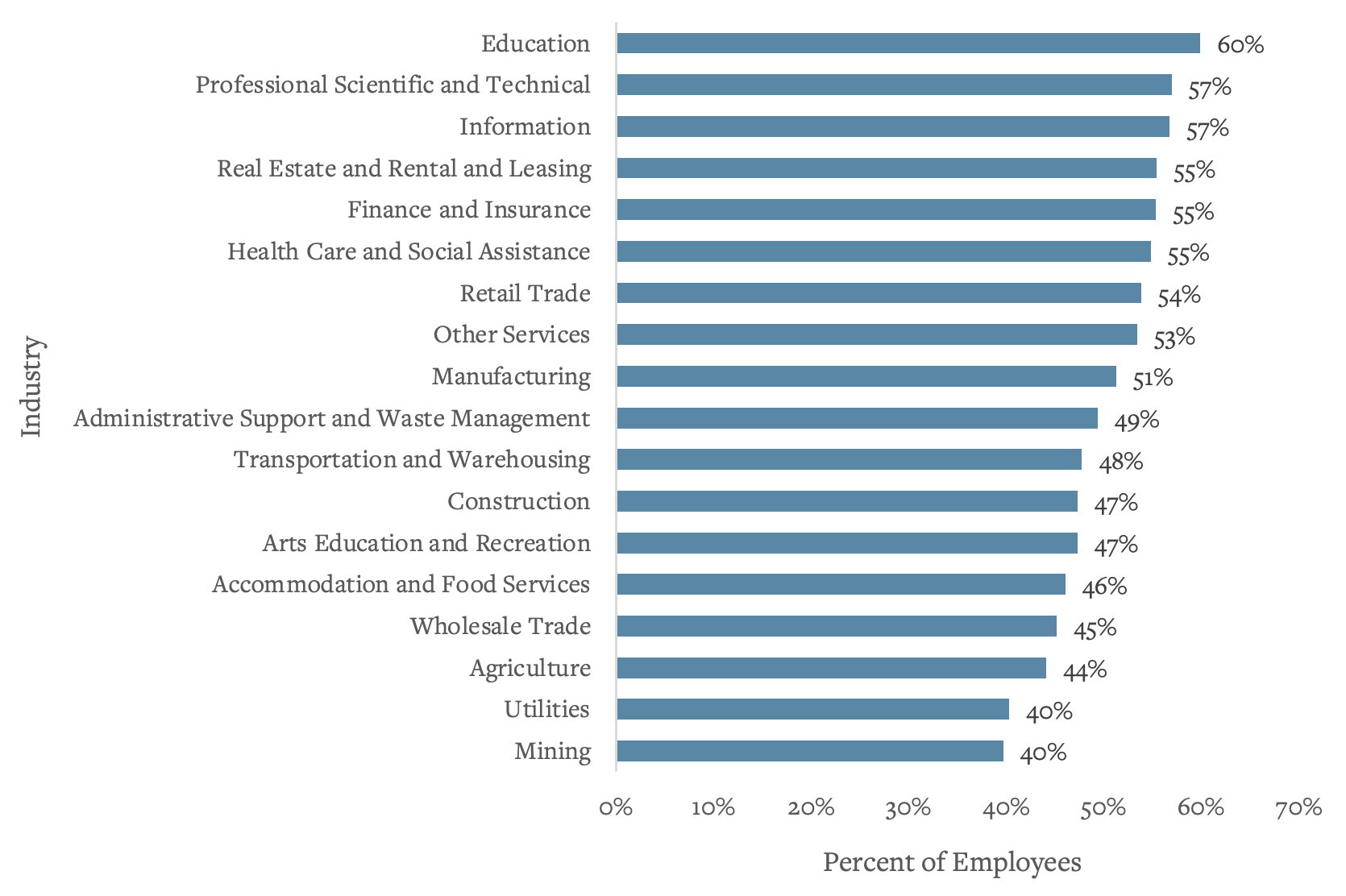
NEW YORK, NY – Today, Commissioner Samuel A.A. Levine, the New York City Department of Consumer and Worker Protection (DCWP) and researchers from the Harvard Kennedy School’s SHIFT Project and Strategic Enforcement Lab reported that 50% of employees with access to paid sick leave, known as Protected Time Off in New York City, use leave at least one day a year. This percentage is consistent across industries, occupations, and demographic groups. If an employer’s records show low use of leave, it is overwhelmingly likely that its employees are attending work while sick or injured and that the employer is violating the law.
“Paid sick leave is not a luxury, it’s a right that allows workers to care for themselves and their loved ones without risking their livelihoods,” said DCWP Commissioner Samuel A.A. Levine. “This report provides agencies and municipalities across the nation a powerful tool for monitoring employer compliance. At DCWP, we will continue to use every tool available to hold bad actors accountable and ensure that New Yorkers can utilize the time they have earned and need.”
“Too often, low numbers in an employer’s records are taken as proof that workers don’t need or want to take time off,” said Daniel Schneider, co‑director of The Shift Project and Malcolm Wiener Professor of Social Policy at Harvard Kennedy School. “What our research shows is that when only a small share of workers are using the leave they’re entitled to, it’s usually a sign of barriers to access or misunderstandings about their rights—not a sign of good health or low demand—and agencies should treat it as an important warning signal.”
“Cities and states have a critical role to play in protecting workers’ rights, especially given recent rollbacks at the federal level. This report is a great example of city leadership: New York City’s Department of Consumer and Worker Protection created a tool to proactively identify corporations that are violating the law and denying paid sick leave to workers—and then worked with Harvard Kennedy School researchers to adapt it for broader use by enforcers nationwide,” said Terri Gerstein, Director of the NYU Wagner Labor Initiative. “To potential critics, it’s worth noting that the report uses an extremely conservative benchmark: if more than half of employees don’t take a single paid sick day each year, this is so far from the norm that it indicates noncompliance. This is common sense—and also, as the report indicates, statistically sound.”
“The essence of paid sick leave laws protecting workers across the country is genuine access to time off,” said Brian Walsh, Associate Director of City of Minneapolis Labor Standards Enforcement. “This report and its statistics help everyone, especially enforcement agencies, make that access real. It’s a truly invaluable tool.”
Implications for Enforcement of Sick Time Laws Nationwide
The ability to take paid time off from work to access needed medical care or to provide caregiving for a family member is a crucial tool for enhancing the wellbeing of working people and the broader public. Over the past 20 years, 18 states and nearly two dozen cities and counties have enacted laws that provide workers with paid sick leave and job protections for using that time.
However, employer non-compliance remains a significant problem. Eligibility to use sick leave use hinges on a worker having a qualifying event—such as being sick. Employers with very low sick leave utilization may cite lawful reasons, such as:
- Employees didn’t need to use sick leave.
- Employees voluntarily chose to work through illness.
- Employees preferred to schedule medical appointments on non-work time.
The report’s analysis shows why these claims are not plausible. Analyzing National Health Interview Survey (NHIS) responses from private-sector workers with paid sick leave, it provides first-ever national benchmarks for identifying violations. The report finds that the need to use sick leave is nearly universal, with limited variation by demographics or job characteristics. It concludes that when an agency is investigating alleged violations of a state or local sick time law, and the percentage of employees who used paid sick leave is significantly below the industry average, the employer is likely violating the law. Building upon analysis of NYC’s Protected Time Off Laws released earlier this year, the new report cautions that the 50% benchmark for paid sick leave usage is conservative.
Key Findings
- 50% of employees with access to paid sick leave used it for their own illness, injury, or disability in the past year.
- Actual usage is likely substantially higher than the 50% benchmark, as NHIS data only captures full days missed for an employee’s own illness and does not include caregiving or other protected uses.
- Usage rates remain consistent across age, race, and every major industry (including both full- and part-time workers), underscoring its near-universal relevance.
- Low usage of paid sick leave in payroll records is far more likely to indicate barriers to access than a lack of need.
Worker protection agencies nationwide can use this report to ensure that employers in their jurisdictions are not imposing unlawful barriers to use of sick leave.
Percent of Employees Utilizing Paid Sick Leave by Industry
New York City’s Protected Time Off Law
Under New York City’s Protected Time Off Law, most employees have up to 40 or 56 hours of paid protected time off per year for a wide range of covered needs, including illness, injury, and family care. Employers must also provide 20 hours of paid prenatal leave in addition to protected time off.
DCWP encourages employers to conduct self-audit and eliminate unlawful barriers to use. The agency has created a Protected Time Off Usage Compliance Tracker. Common violations that can lead to low use rates, include:
- Failing to offer a protected time off benefit.
- Nonexistent or insufficient written policies.
- Unlawful administration systems.
- Absence control policies that discipline workers for last-minute callouts or “no call, no show.”
- Unlawful restrictions on employees’ use of sick leave
Employers must provide written notice of workers’ rights to protected time off and paid prenatal leave. Advance notice may be required only for foreseeable uses, such as scheduled medical appointments or court hearings. Workers do not have to provide advance notice for unexpected needs, including illness or child care disruptions, and do not have to disclose details about why they used leave. Documentation may be required only after four or more consecutive workdays of leave.
Workers and employers can visit nyc.gov/workers for more information about the laws that DCWP enforces or to file a complaint. Complaints can be filed anonymously, regardless of immigration status. It is illegal for employers to retaliate against employees for filing complaints.
The NYC Department of Consumer and Worker Protection (DCWP) is the nation’s leading municipal enforcement agency charged with delivering economic justice. DCWP leverages its authority to bring New Yorkers real economic relief and protect them from predatory, deceptive, and unfair practices that violate their rights as consumers and workers. This includes pioneering cutting-edge protections, such as the City’s Consumer Protection Law, Protected Time Off Law, Fair Workweek Law, and Delivery Worker Laws, including the Minimum Pay Rate for delivery workers. Through licensing more than 45,000 businesses in over 45 industries, DCWP ensures fair competition and a level playing field for responsible small businesses that are integral to New York City’s vibrant communities. DCWP also provides essential services such as free tax preparation and financial counseling to ensure New Yorkers keep more of what they earn and can plan for their futures. DCWP is committed to making sure New York City is a fairer, more affordable place to live. For more information about DCWP and its work, visit DCWP at nyc.gov/dcwp or follow on X, Facebook, Instagram, TikTok, and YouTube.
###
Media Contact:
Stephany Vasquez Sanchez
Department of Consumer and Worker Protection
(212) 436-0042
press@dcwp.nyc.gov